Ink
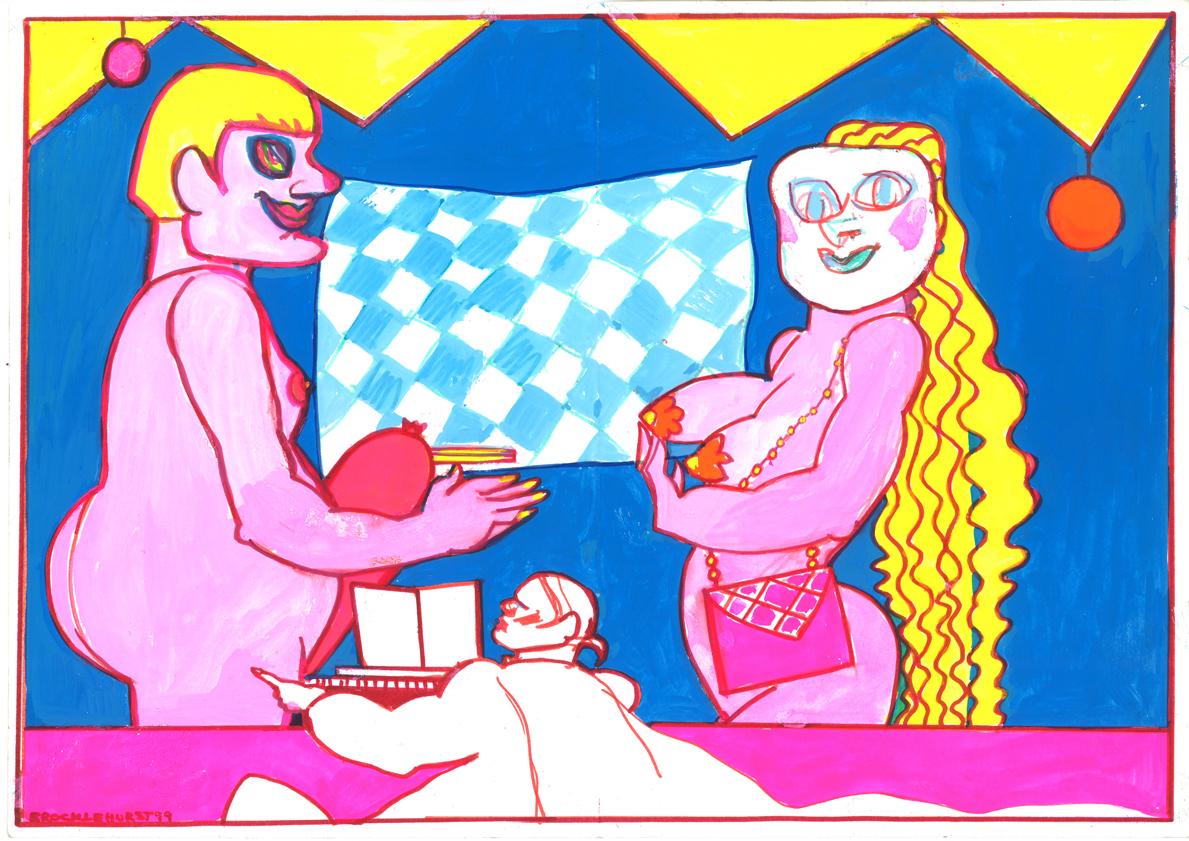
Jo Brocklehurst, Illustration for review of Die Eingeborene, 1999
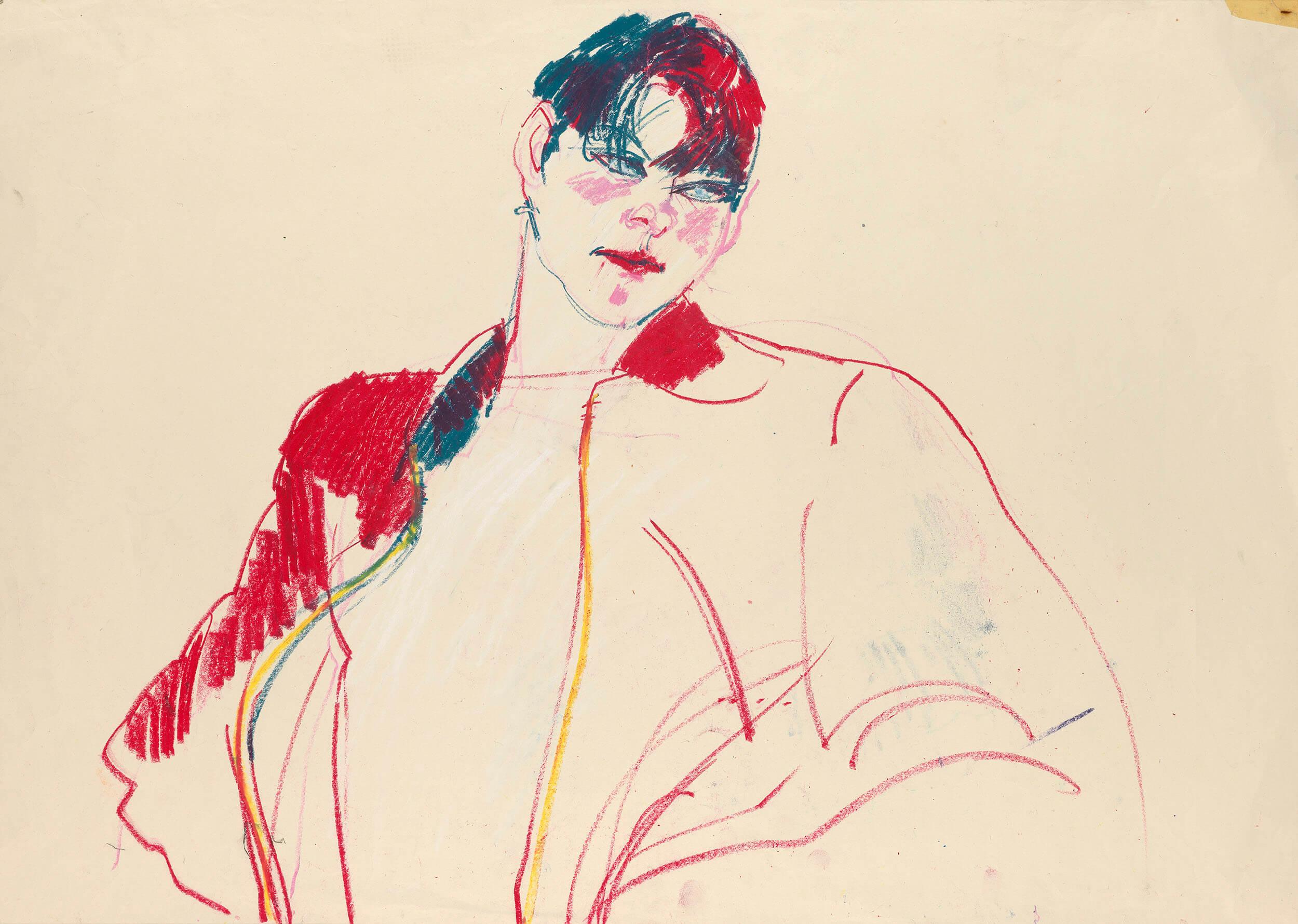
Jo (Josephine) Brocklehurst (1935 - 2006) studied at Central Saint Martins and began her career as a fashion illustrator. She later focused on portraiture, drawing directly from models at her studio in West Hampstead and in nightclubs and theatres in Berlin, London and New York. Her work documents the alternative subcultures of the 1970s, 80s and 90s that went on to shape mainstream fashion and performance scenes. In 1999, Brocklehurst was artist in residence at newspaper Berliner Zeitung during Berliner Theatertreffen, a festival of new German theatre. The paper wanted to revive the Weimar tradition of theatre reviews being accompanied by illustrations, rather than using photographs. Brocklehurst drew behind the scenes and from her seat during performances. She worked up images like this one overnight for publication the following morning. This illustration accompanied a review of Die Eingeborene, published in Berliner Zeitung on 11 May 1999.
Content warning: sex references
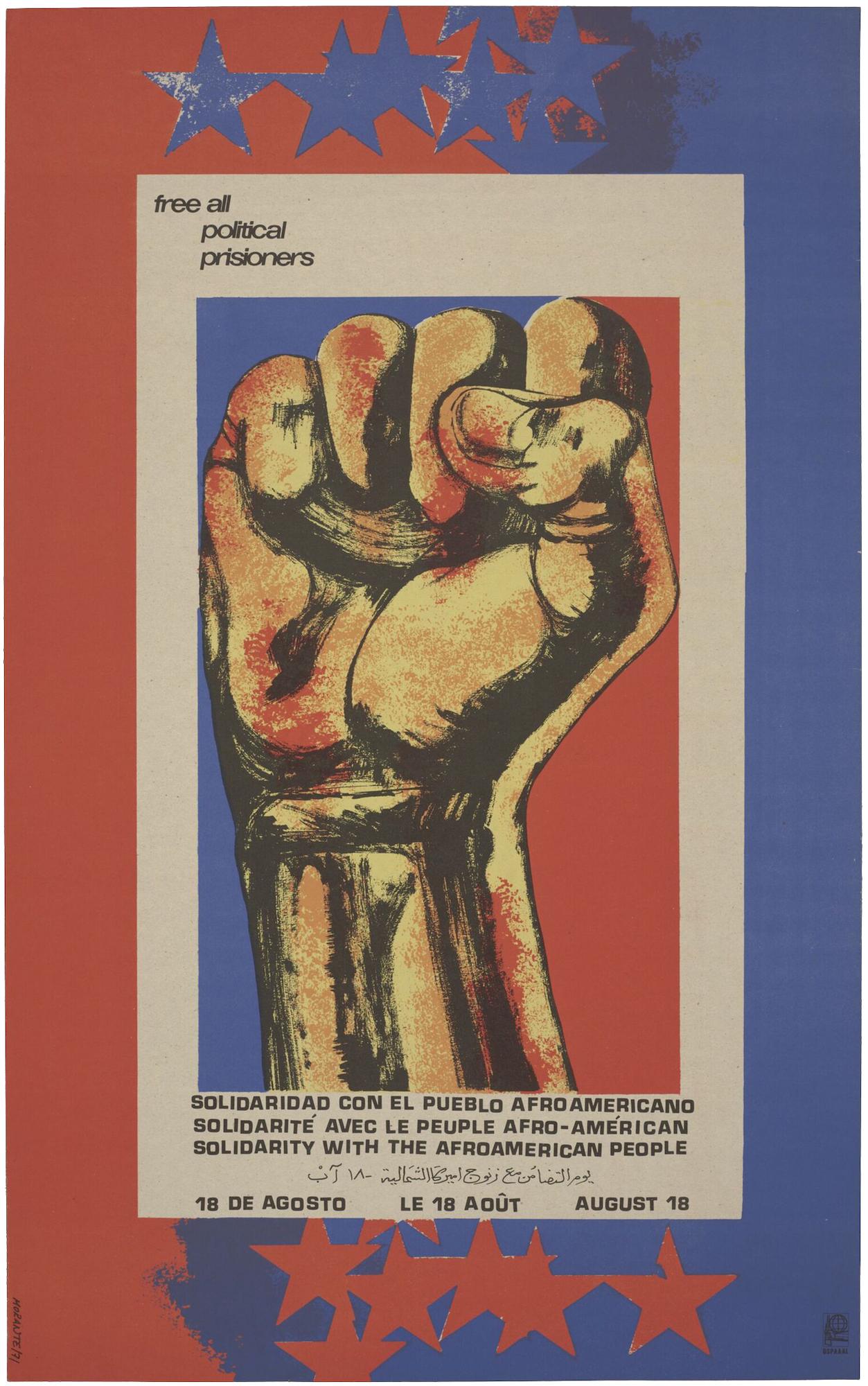
free all political prisoners - SOLIDARITY WITH THE AFROAMERICAN PEOPLE - AUGUST 18, 1971
Between the 1960s and 1990s, more than fifty designers worked at OSPAAAL. Based in Cuba, they made magazines and posters that were sent around the world. Their aim was to promote radical political ideas. Many of their posters celebrate socialist revolutions and liberation movements from the Global South. They also criticised the foreign policy of the U.S.A. and supported the Black Power movement.
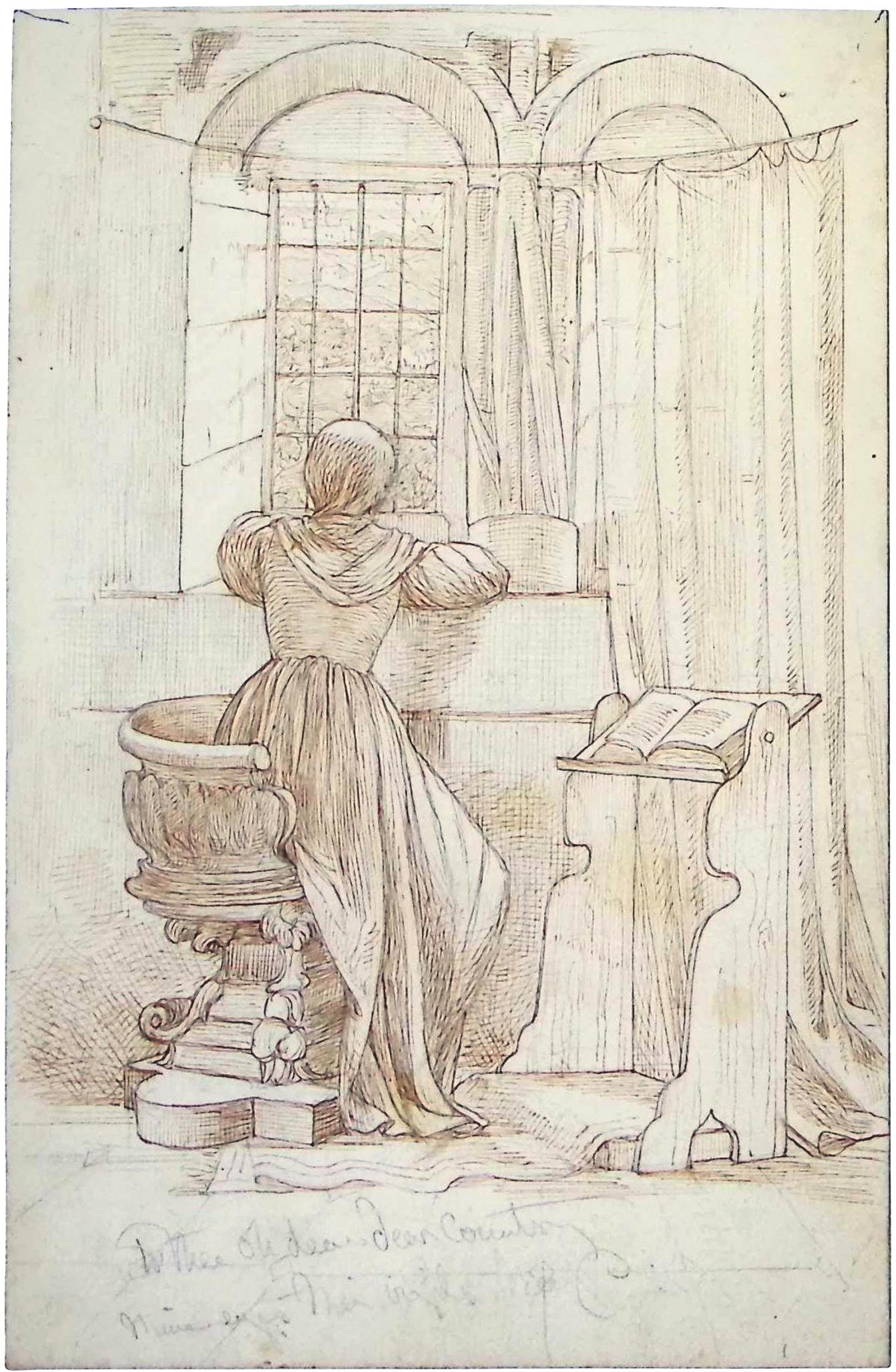
Untitled (For thee, oh dear, dear country), Date unknown
Eleanor Vere Boyle (1825 – 1916) illustrated poetry and prose by some of the most popular authors of her time. She regularly drew and painted using ink and watercolour, sketching landscapes, animals and her children from life. She also made drawings from her imagination, often reflecting spiritual themes.
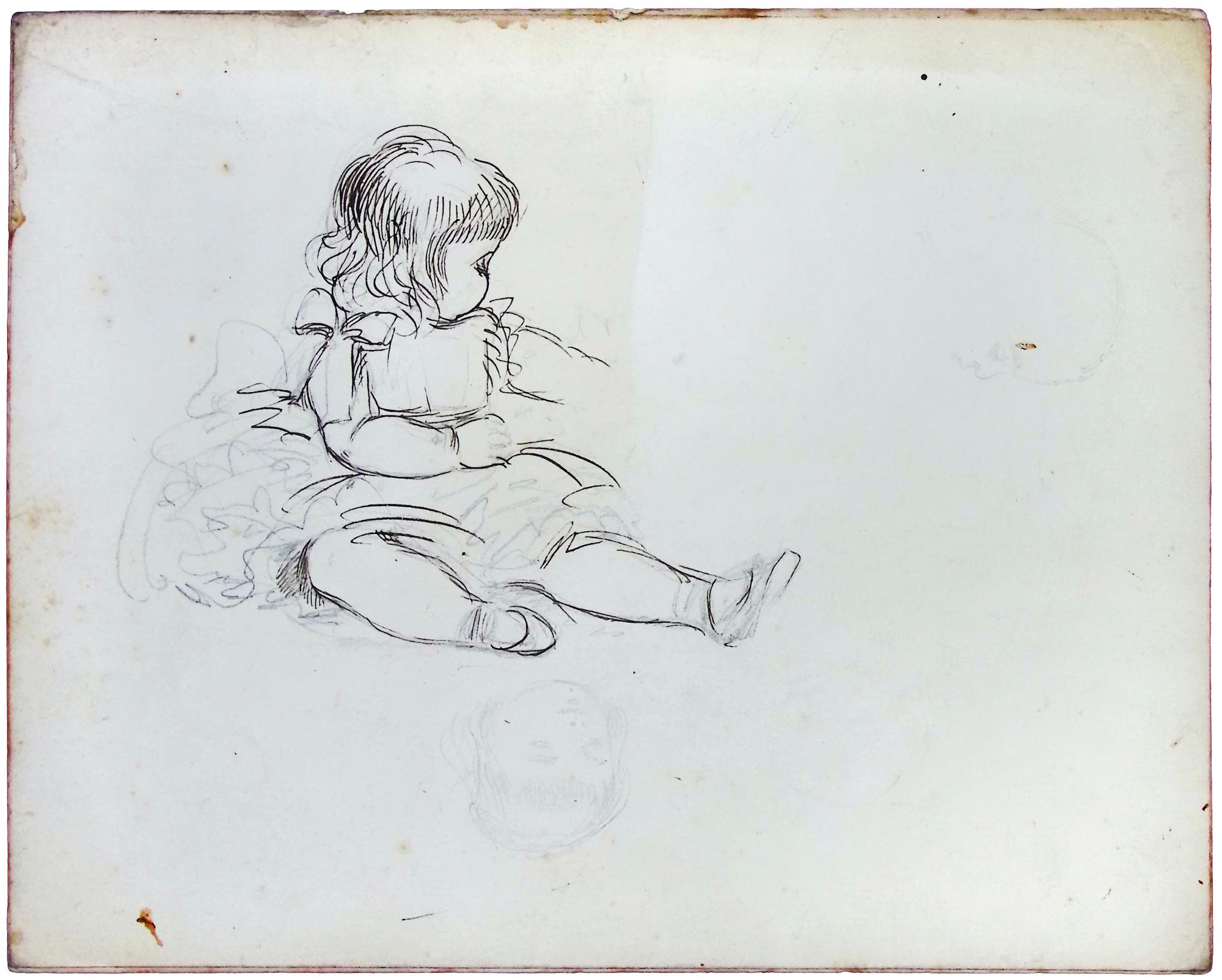
Untitled, Date unknown
Eleanor Vere Boyle (1825 – 1916) illustrated poetry and prose by some of the most popular authors of her time. She regularly drew and painted using ink and watercolour, sketching landscapes, animals and her children from life. She also made drawings from her imagination, often reflecting spiritual themes.
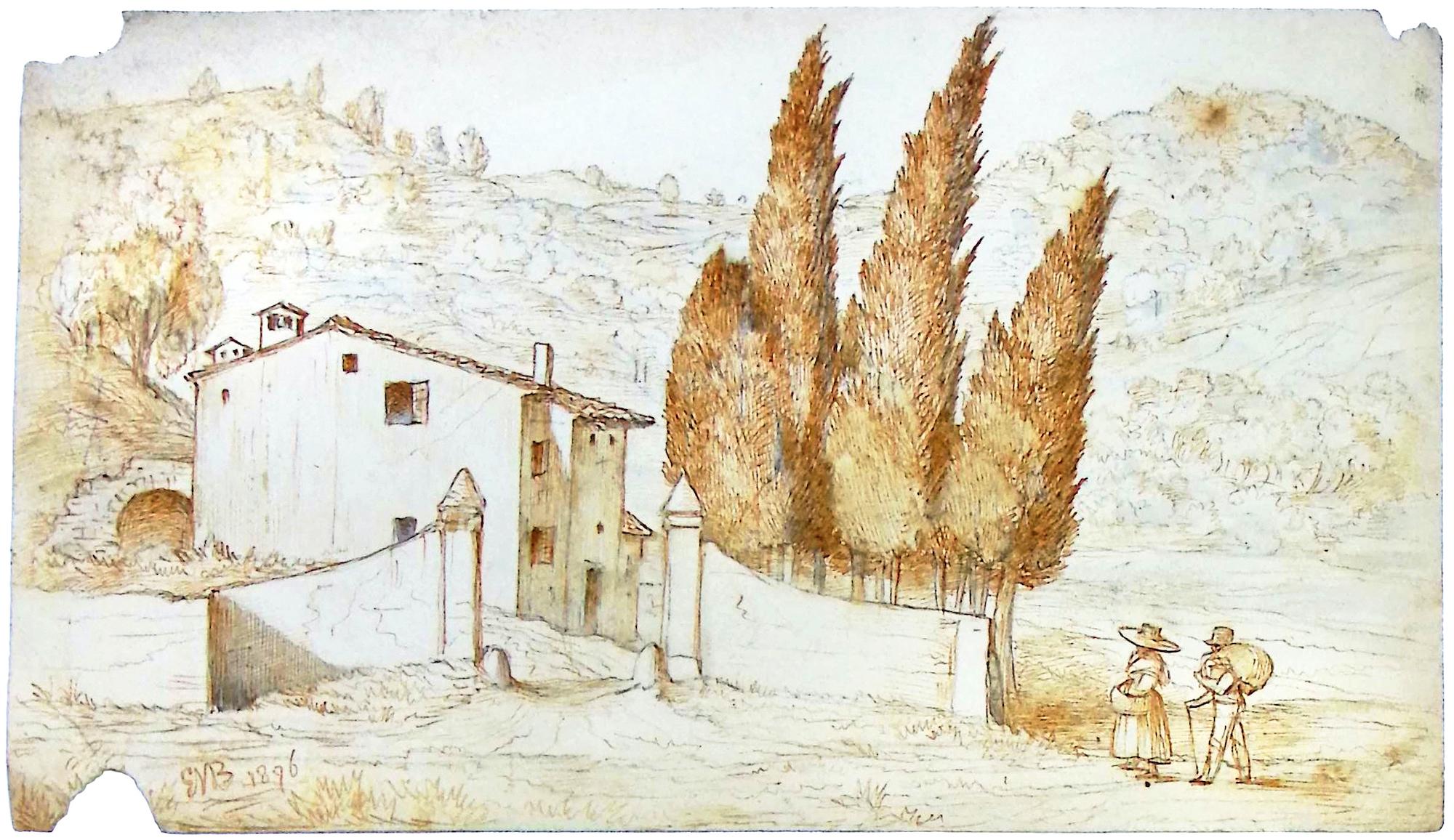
Untitled, 1896
Eleanor Vere Boyle (1825 – 1916) illustrated poetry and prose by some of the most popular authors of her time. She regularly drew and painted using ink and watercolour, sketching landscapes, animals and her children from life. She also made drawings from her imagination, often reflecting spiritual themes.
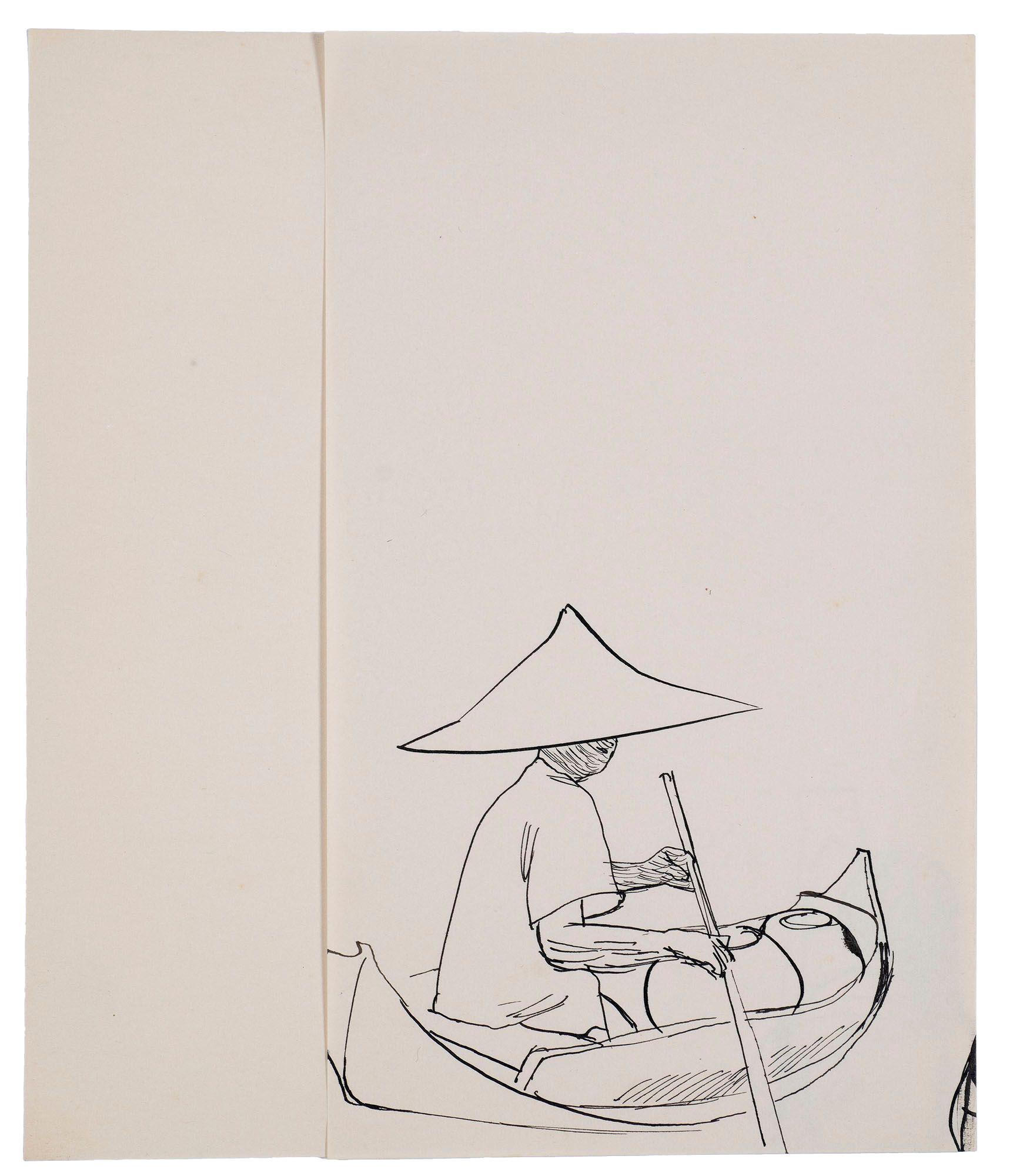
Jacqueline Ayer, Untitled, c. 1956
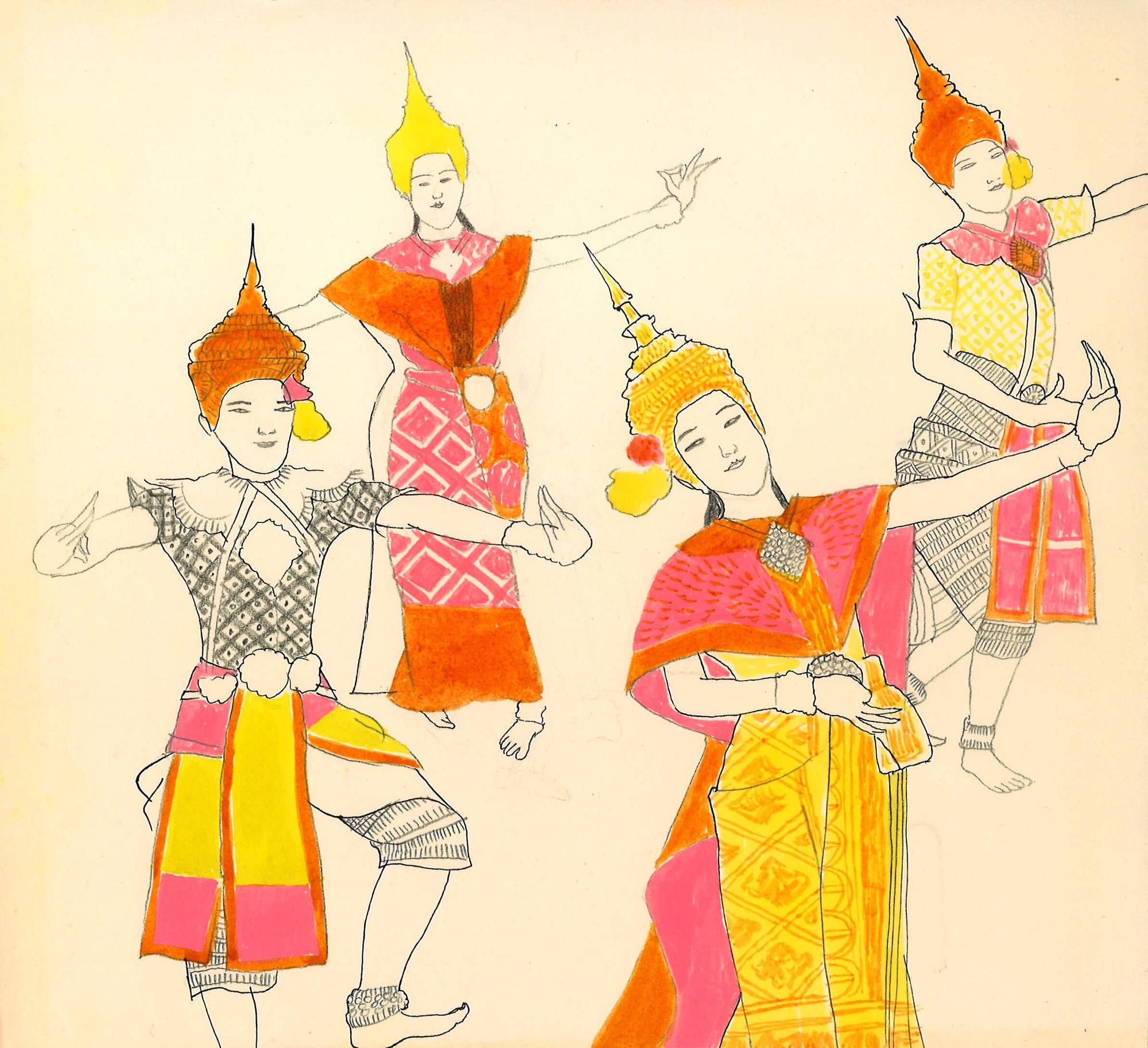
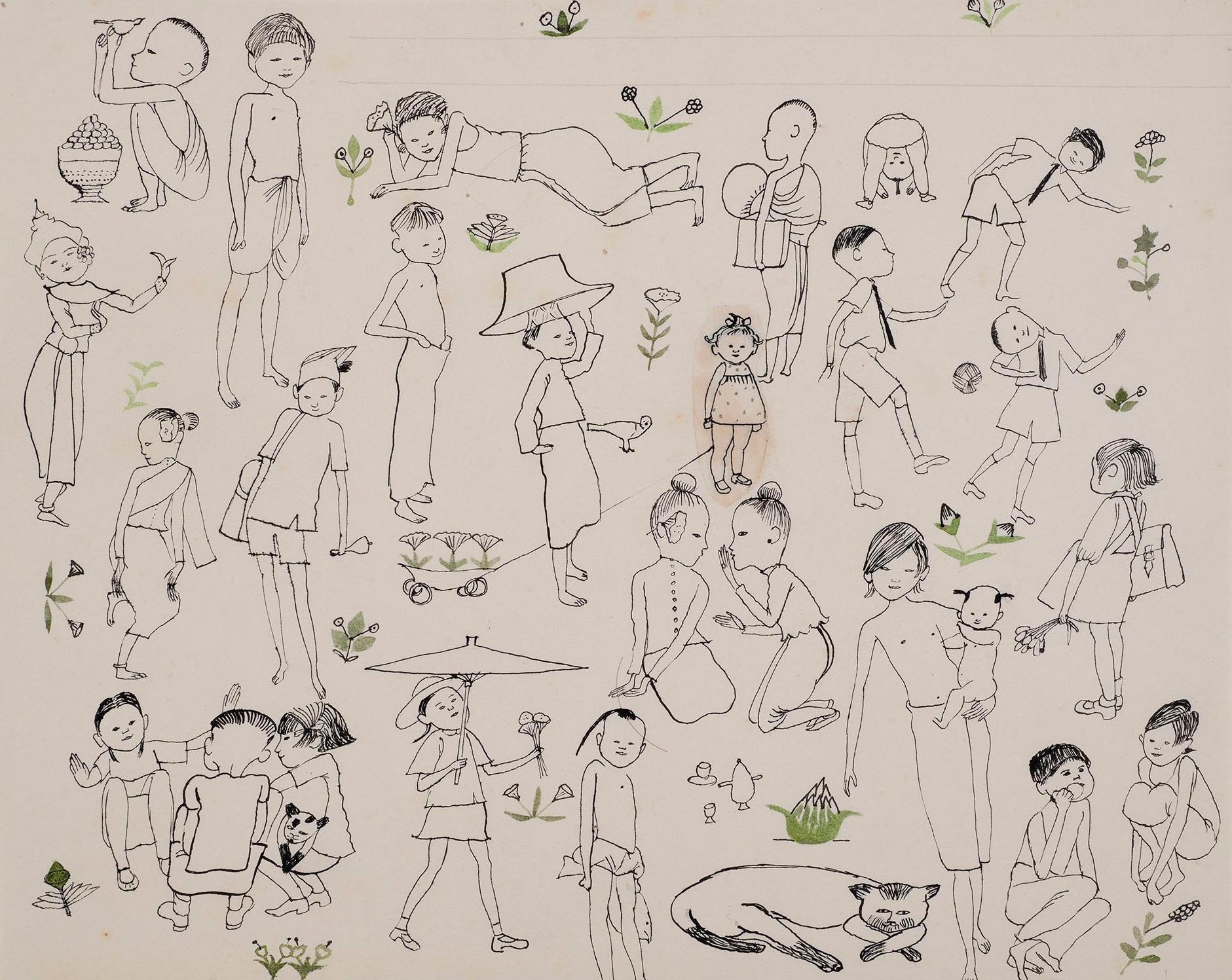
Jacqueline Ayer (1930–2012) had a career that spanned many creative fields. She began as a fashion illustrator, and later turned her hand to children’s books, textiles and garments, as she worked in New York, Paris, London, Bangkok, Hong Kong and across India. Ayer wrote and illustrated five of her own books, four of which gave insight into 1960s Thailand to US and UK audiences, while the fifth was set in Hong Kong. Using reportage drawing to create books about Asia for children was a unique and refreshing approach.
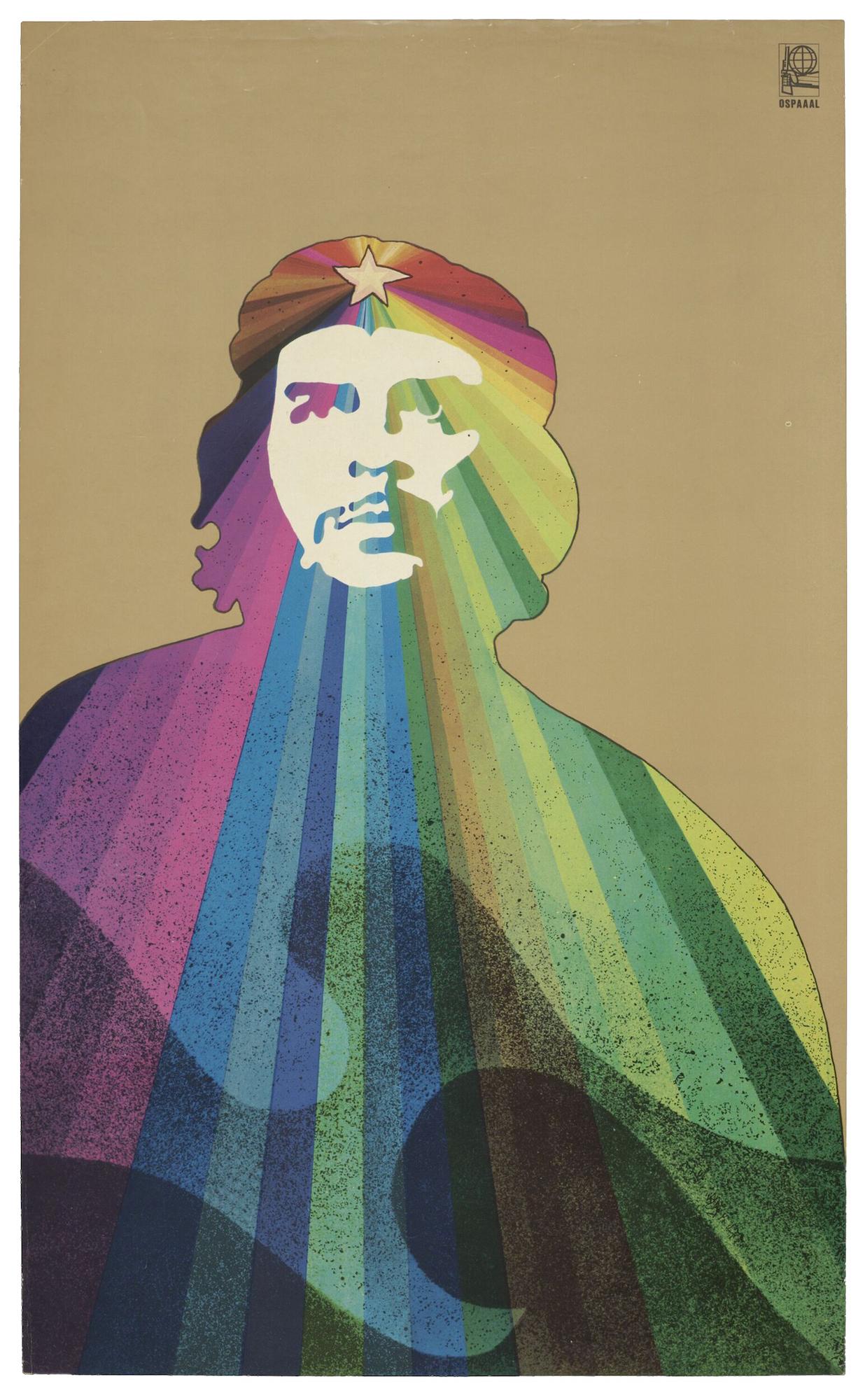
Untitled, 1969
Between the 1960s and 1990s, more than fifty designers worked at OSPAAAL (the Organisation of Solidarity with the People of Africa, Asia and Latin America). Based in Cuba, they made magazines and posters that were sent around the world. Their aim was to promote radical political ideas. Many of their posters celebrate socialist revolutions and liberation movements from the Global South. This design adapts a photograph of Argentinian radical Ernesto (‘Che’) Guevara by Alberto Korda. The photograph was used as the basis of several OSPAAAL poster designs.
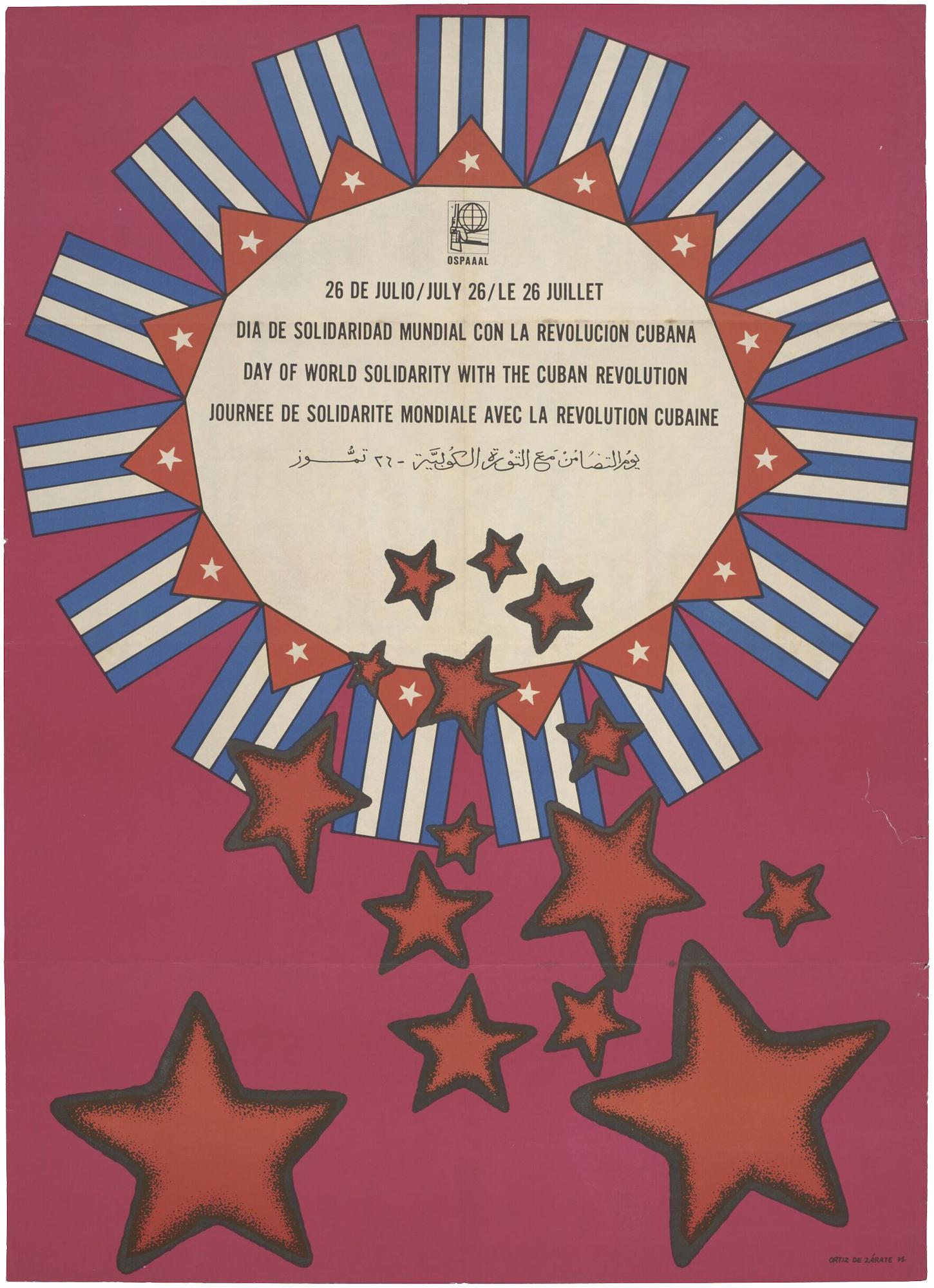
JULY 26 - DAY OF WORLD SOLIDARITY WITH THE CUBAN REVOLUTION, 1975
Between the 1960s and 1990s, more than fifty designers worked at OSPAAAL. Based in Cuba, they made magazines and posters that were sent around the world. Their aim was to promote radical political ideas. Many of their posters celebrate socialist revolutions and liberation movements from the Global South. This design promotes 26 July as a day of solidarity with the Cuban Revolution. The revolutionary 26th of July Movement led by Fidel Castro took power in Cuba in 1959.
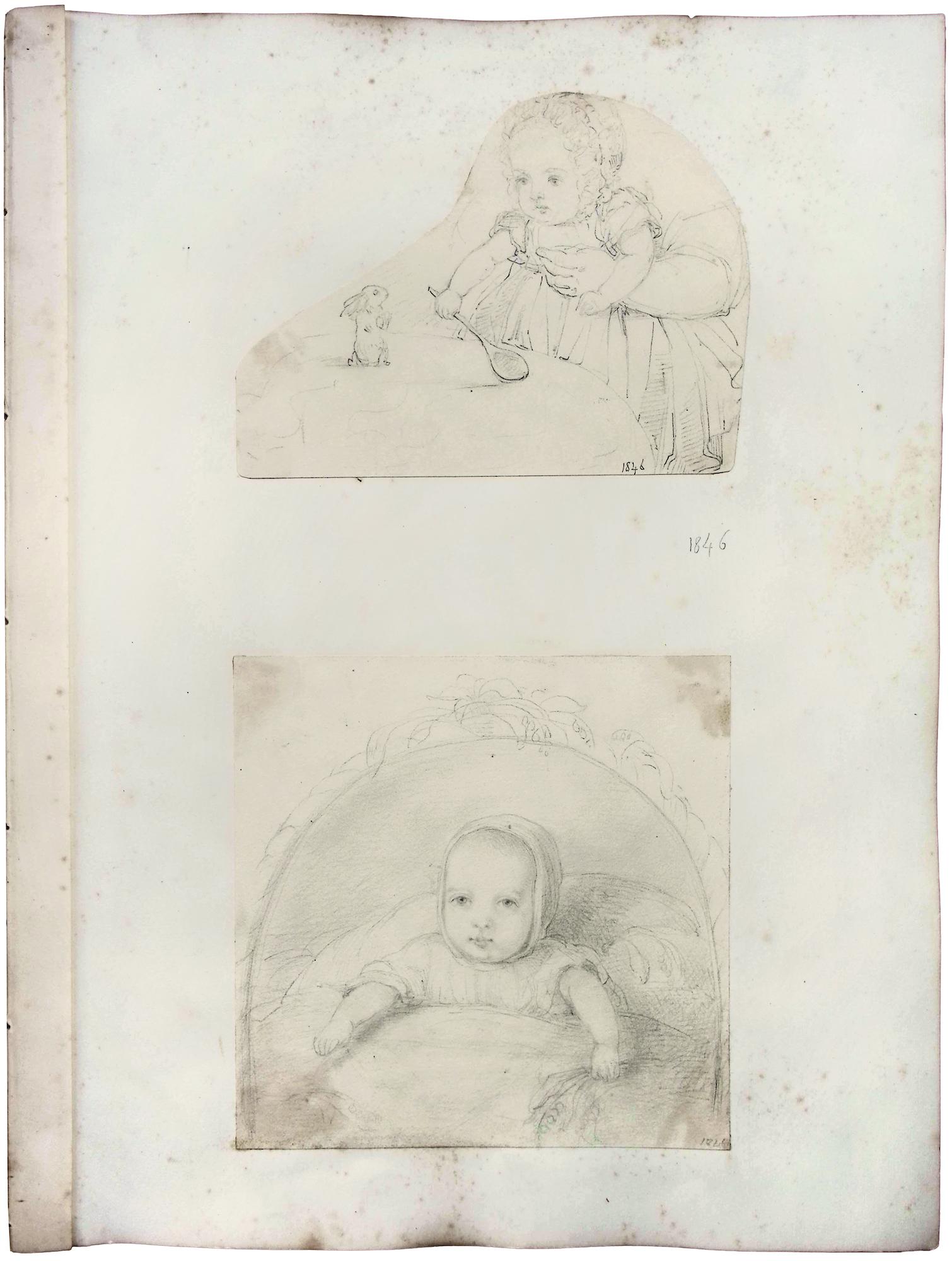
Untitled, 1846
Eleanor Vere Boyle (1825 – 1916) illustrated poetry and prose by some of the most popular authors of her time. She regularly drew and painted using ink and watercolour, sketching landscapes, animals and her children from life. She also made drawings from her imagination, often reflecting spiritual themes.
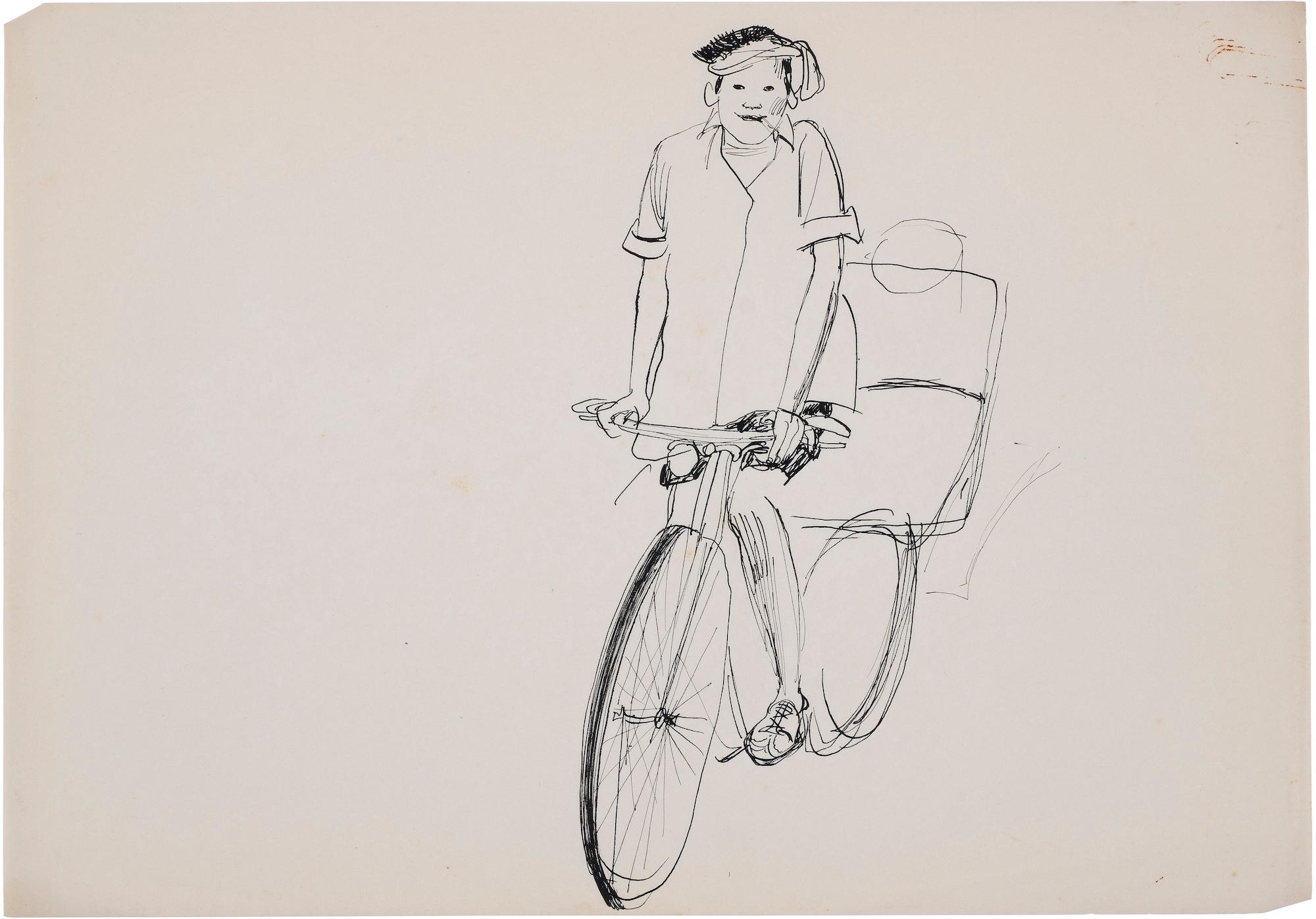
Jacqueline Ayer, Untitled, c. 1956
Jacqueline Ayer (1930–2012) had a career that spanned many creative fields. She began as a fashion illustrator, and later turned her hand to children’s books, textiles and garments, as she worked in New York, Paris, London, Bangkok, Hong Kong and across India.
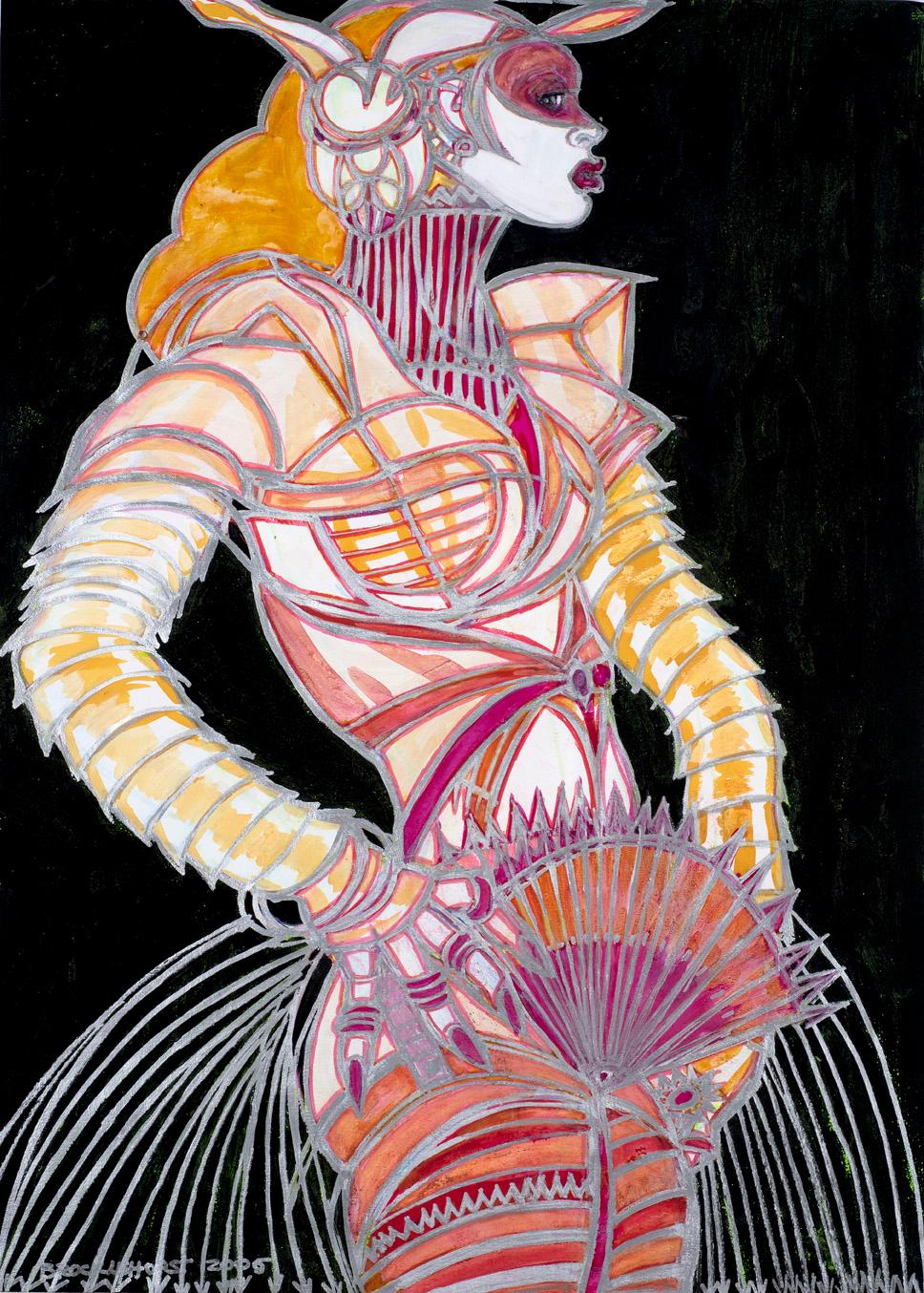
Jo Brocklehurst, Untitled (from Brocklehurst Through the Looking-Glass), 2005
Jo (Josephine) Brocklehurst (1935 - 2006) studied at Central Saint Martins and began her career as a fashion illustrator. She later focused on portraiture, drawing directly from models at her studio in West Hampstead and in nightclubs and theatres in Berlin, London and New York. Her work documents the alternative subcultures of the 1970s, 80s and 90s that went on to shape mainstream fashion and performance scenes. This work is from Brocklehurst Through the Looking-Glass, Brocklehurst’s final series. With an image of herself as a child as the centrepiece, Brocklehurst made hundreds of drawings that re-imagined characters from Lewis Carroll’s Alice novels. Her models were friends and dedicated club-goers who designed and made their own clothes. Works from the series were framed with bright plastic gemstones and hung on every available space at Brocklehurst’s home studio. She used metallic and neon inks that transformed under ultraviolet lights that she switched on for her guests in the evenings.
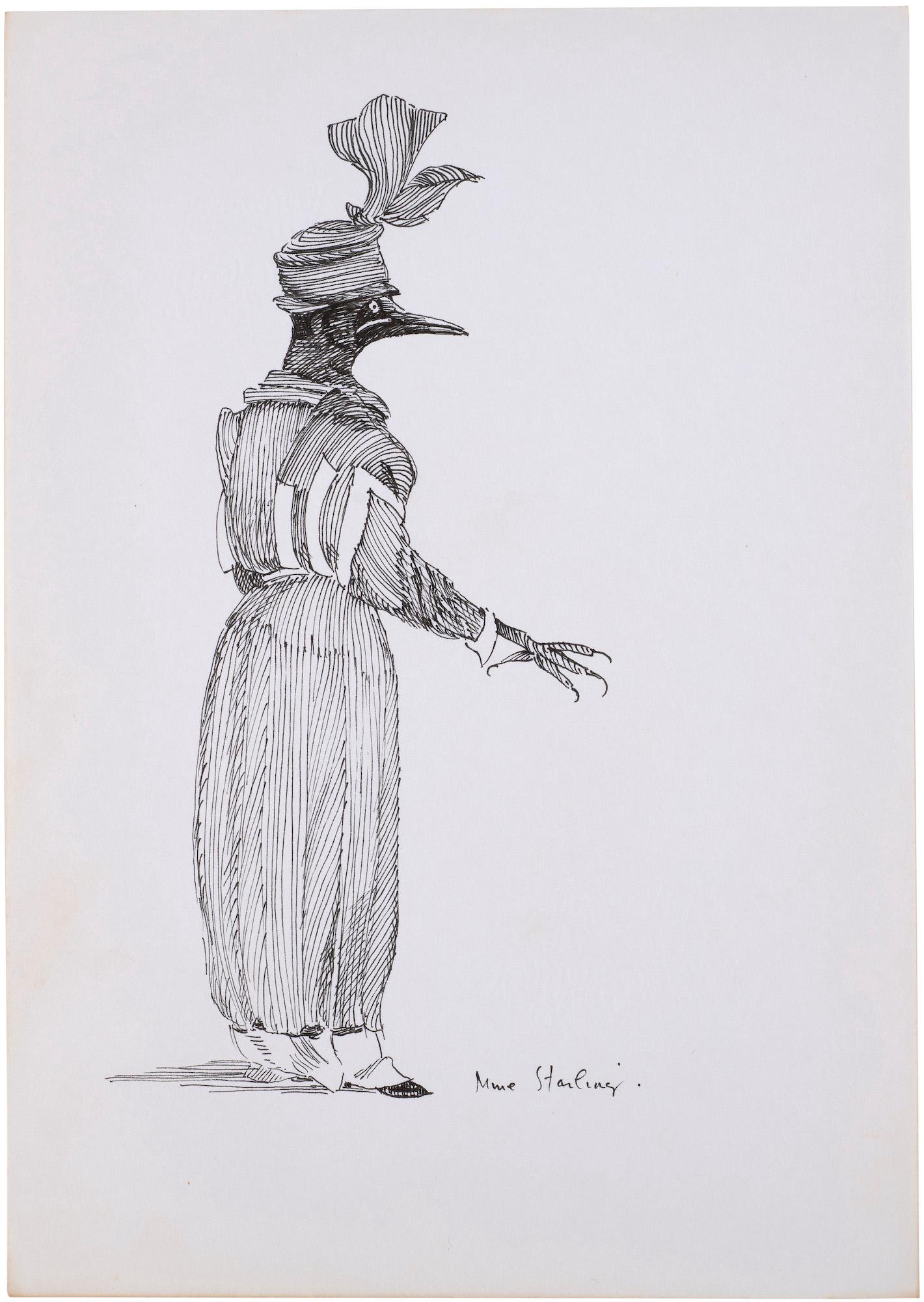
Jacqueline Ayer, Untitled, Date unknown
Jacqueline Ayer (1930–2012) had a career that spanned many creative fields. She began as a fashion illustrator, and later turned her hand to children’s books, textiles and garments, as she worked in New York, Paris, London, Bangkok, Hong Kong and across India. Ayer often used a sketchbook to record her observations and ideas for book narratives and fashion designs. The context for this drawing is unknown.
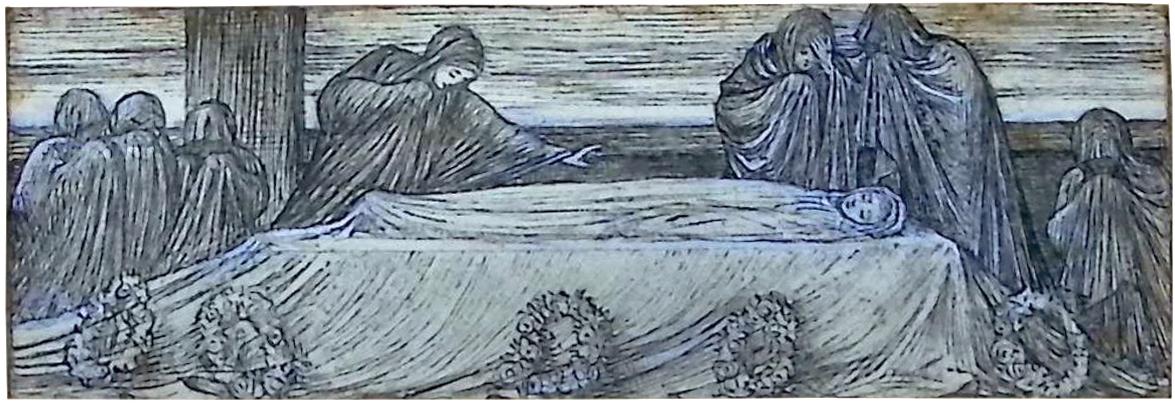
Untitled (illustration for Ros Roserum ex horto Poetarum, 'THE FUNERAL OF THE ROSE'), c. 1885
Eleanor Vere Boyle (1825 – 1916) illustrated poetry and prose by some of the most popular authors of her time. She regularly drew and painted using ink and watercolour, sketching landscapes, animals and her children from life. She also made drawings from her imagination, often reflecting spiritual themes. This illustration is from her book, Ros Roserum ex horto Poetarum (1885). Boyle provided her publishers with black and white drawings that were then converted into etchings by the printer.
Content warning: child loss
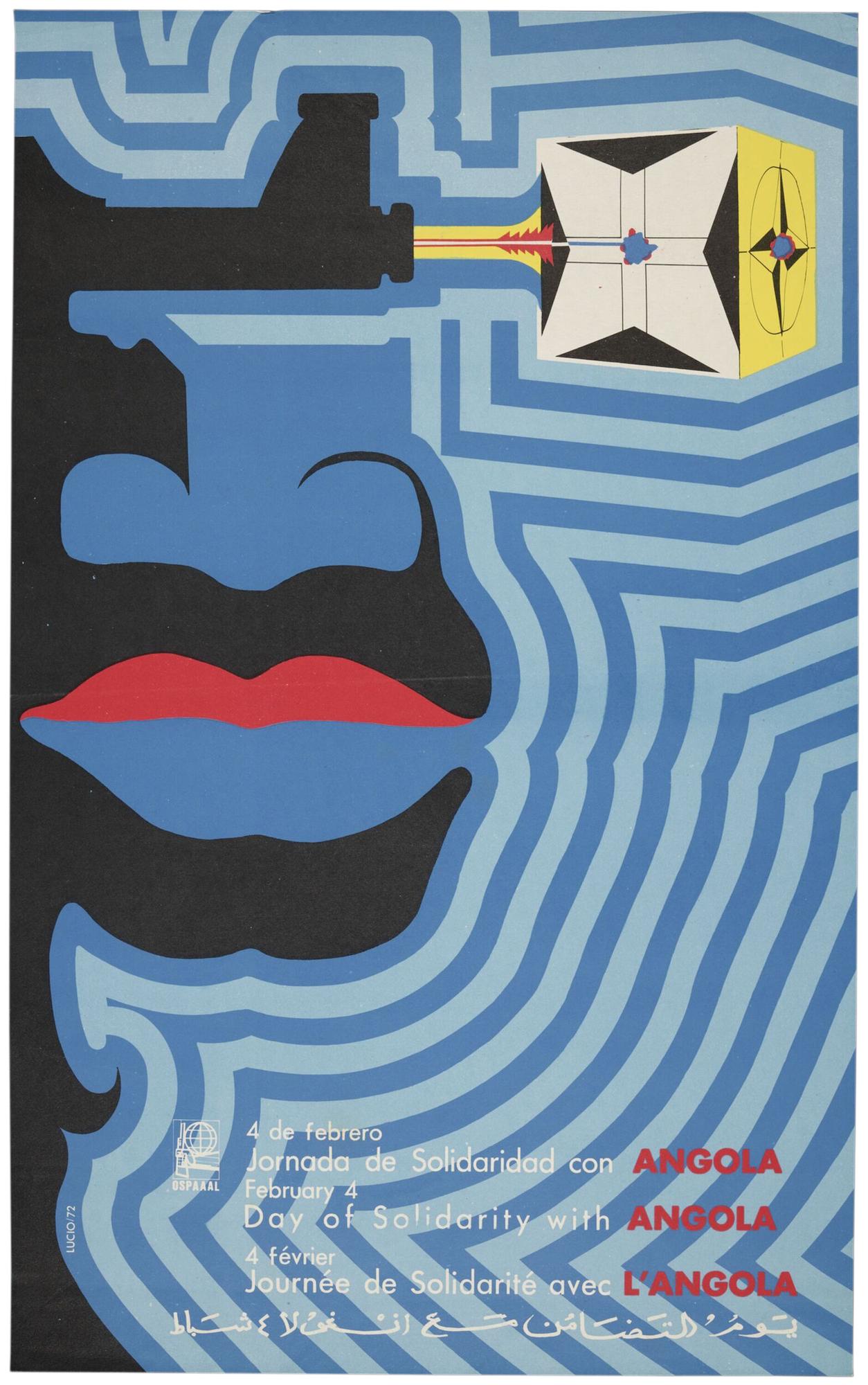
February 4 - Day of Solidarity with ANGOLA, 1972
Between the 1960s and 1990s, more than fifty designers worked at OSPAAAL. Based in Cuba, they made magazines and posters that were sent around the world. Their aim was to promote radical political ideas. Many of their posters celebrated socialist revolutions and liberation movements from the Global South. This poster commemorates the beginning of the Angolan War of Independence on 4 February 1961.
Content warning: weaponry
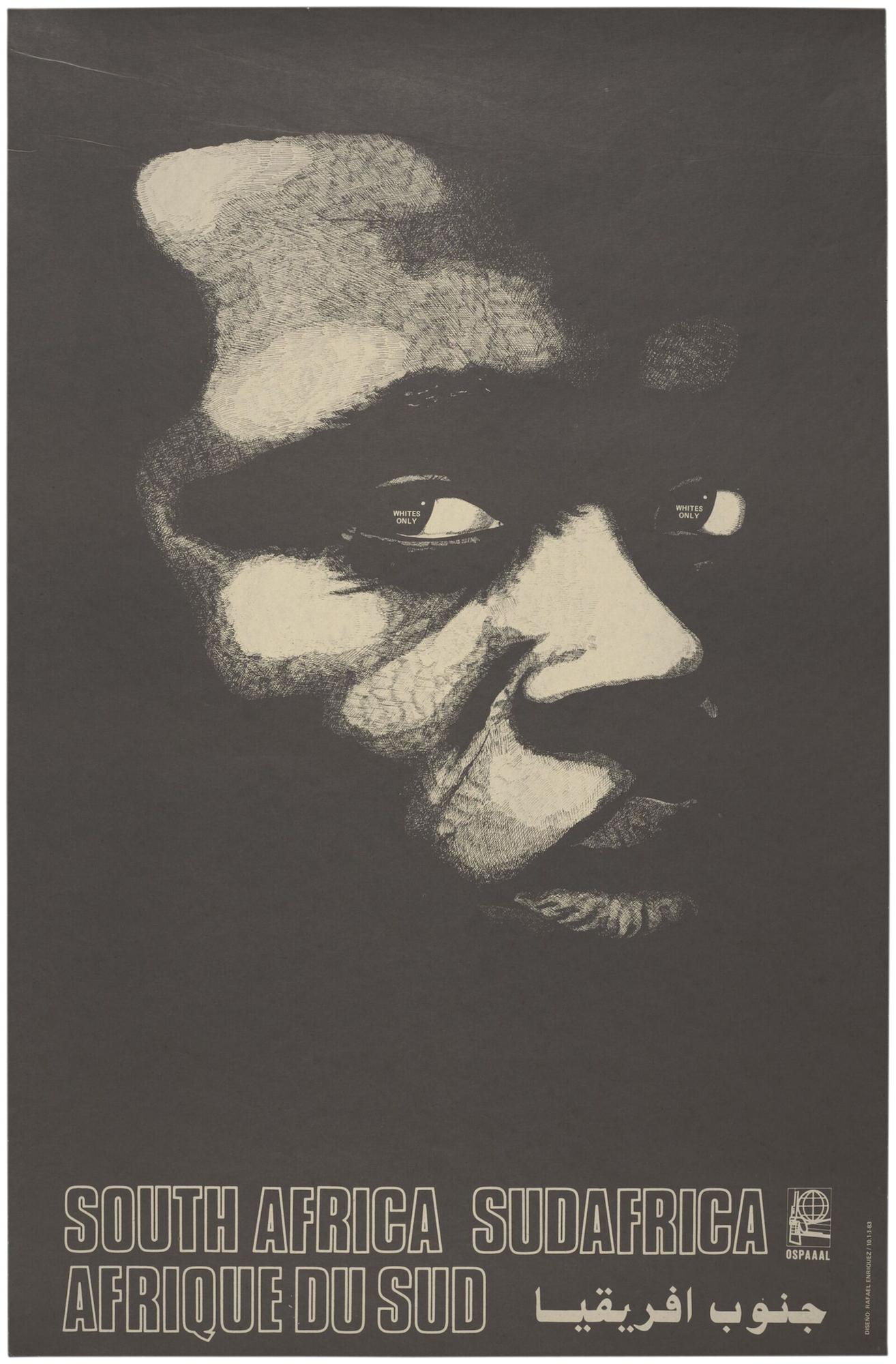
SOUTH AFRICA, 1983
Between the 1960s and 1990s, more than fifty designers worked at OSPAAAL (the Organisation of Solidarity with the People of Africa, Asia and Latin America). Based in Cuba, they made magazines and posters that were sent around the world. Their aim was to promote radical political ideas. Many of their posters celebrate socialist revolutions and liberation movements from the Global South. OSPAAAL opposed the apartheid system that enforced racial segregation in South Africa from 1948 to 1994. Rafael Enríquez Vega’s portrait of an unknown Black man with the words ‘Whites Only’ reflected in his eyes represents the denial of the rights of Black South Africans.
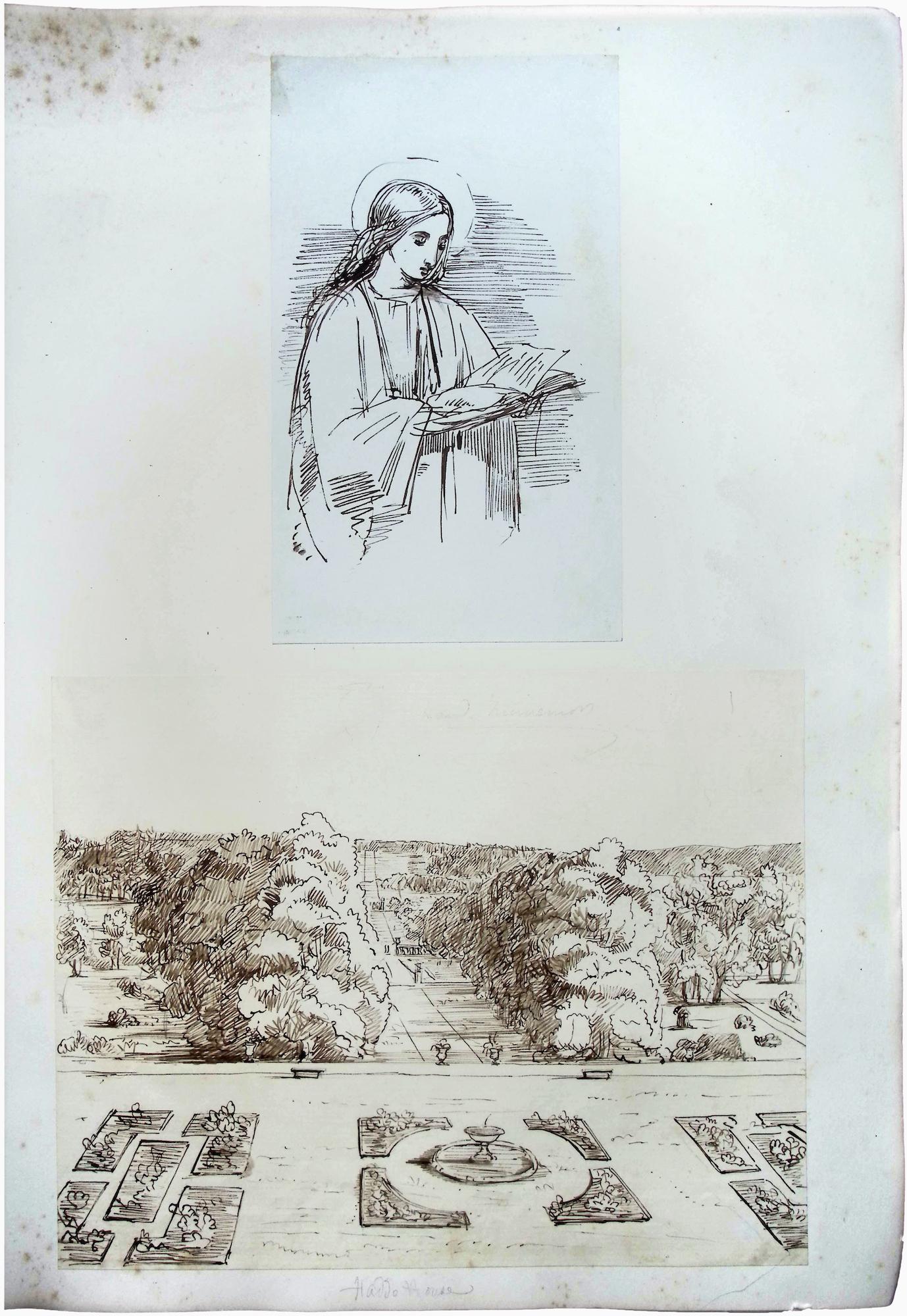
Untitled (Haddo House), Date unknown
Eleanor Vere Boyle (1825 – 1916) illustrated poetry and prose by some of the most popular authors of her time. She regularly drew and painted using ink and watercolour, sketching landscapes, animals and her children from life. She also made drawings from her imagination, often reflecting spiritual themes.
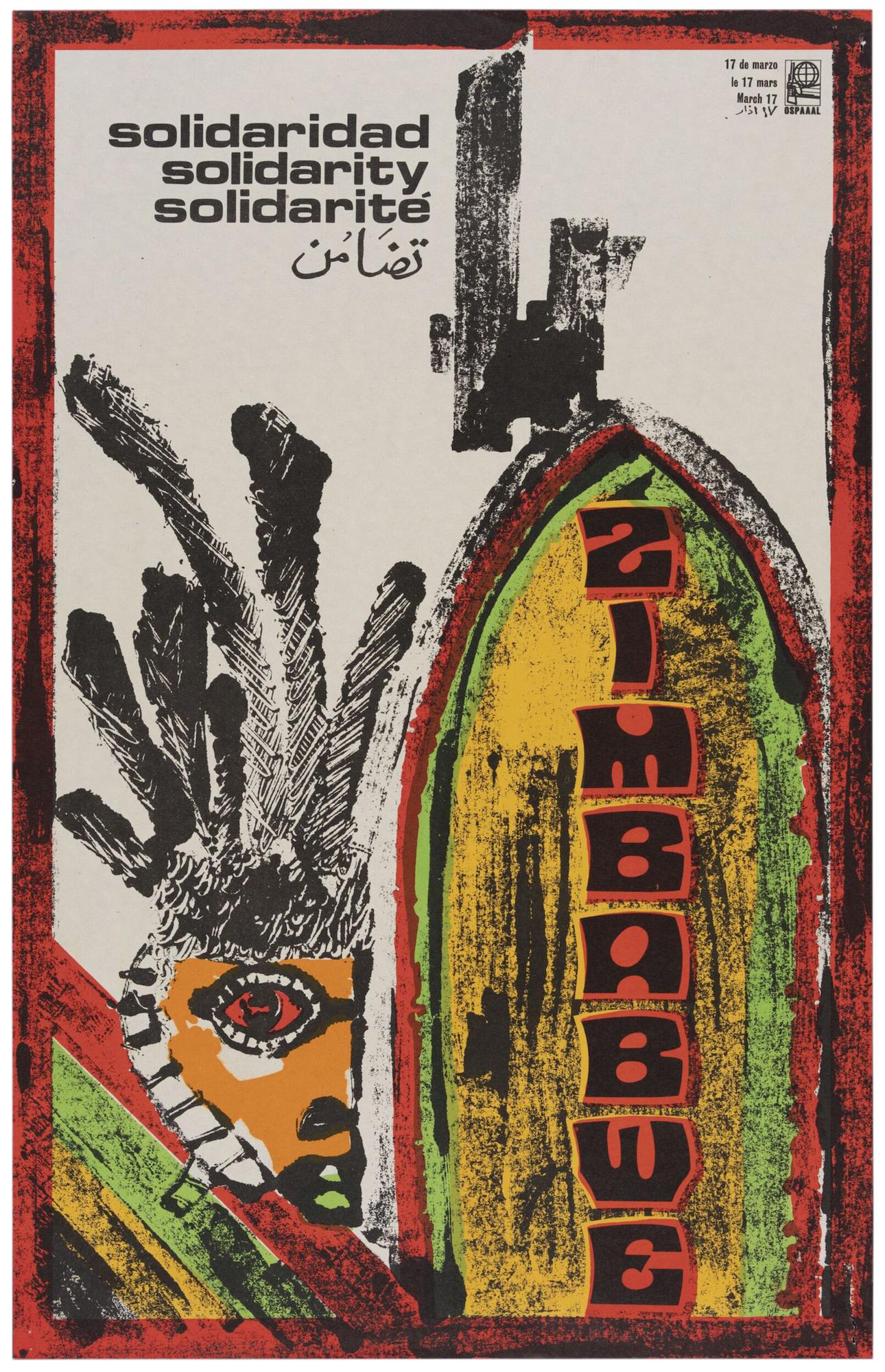
solidarity ZIMBABWE - March 17, c. 1970
Between the 1960s and 1990s, more than fifty designers worked at OSPAAAL. Based in Cuba, they made magazines and posters that were sent around the world. Their aim was to promote radical political ideas. Many of their posters celebrate socialist revolutions and liberation movements from the Global South.
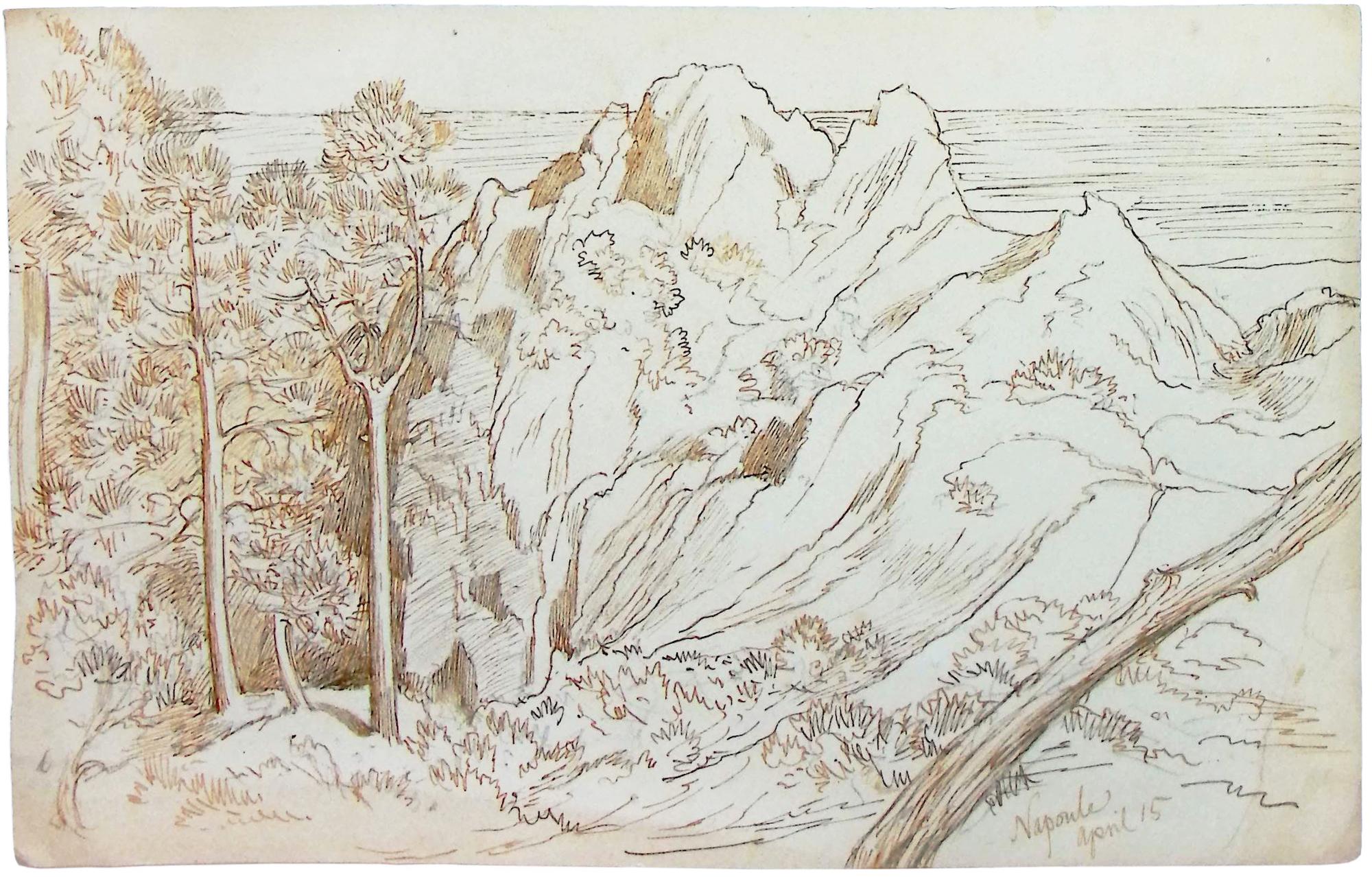
Untitled (Napoule), Date unknown
Eleanor Vere Boyle (1825 – 1916) illustrated poetry and prose by some of the most popular authors of her time. She regularly drew and painted using ink and watercolour, sketching landscapes, animals and her children from life. She also made drawings from her imagination, often reflecting spiritual themes.
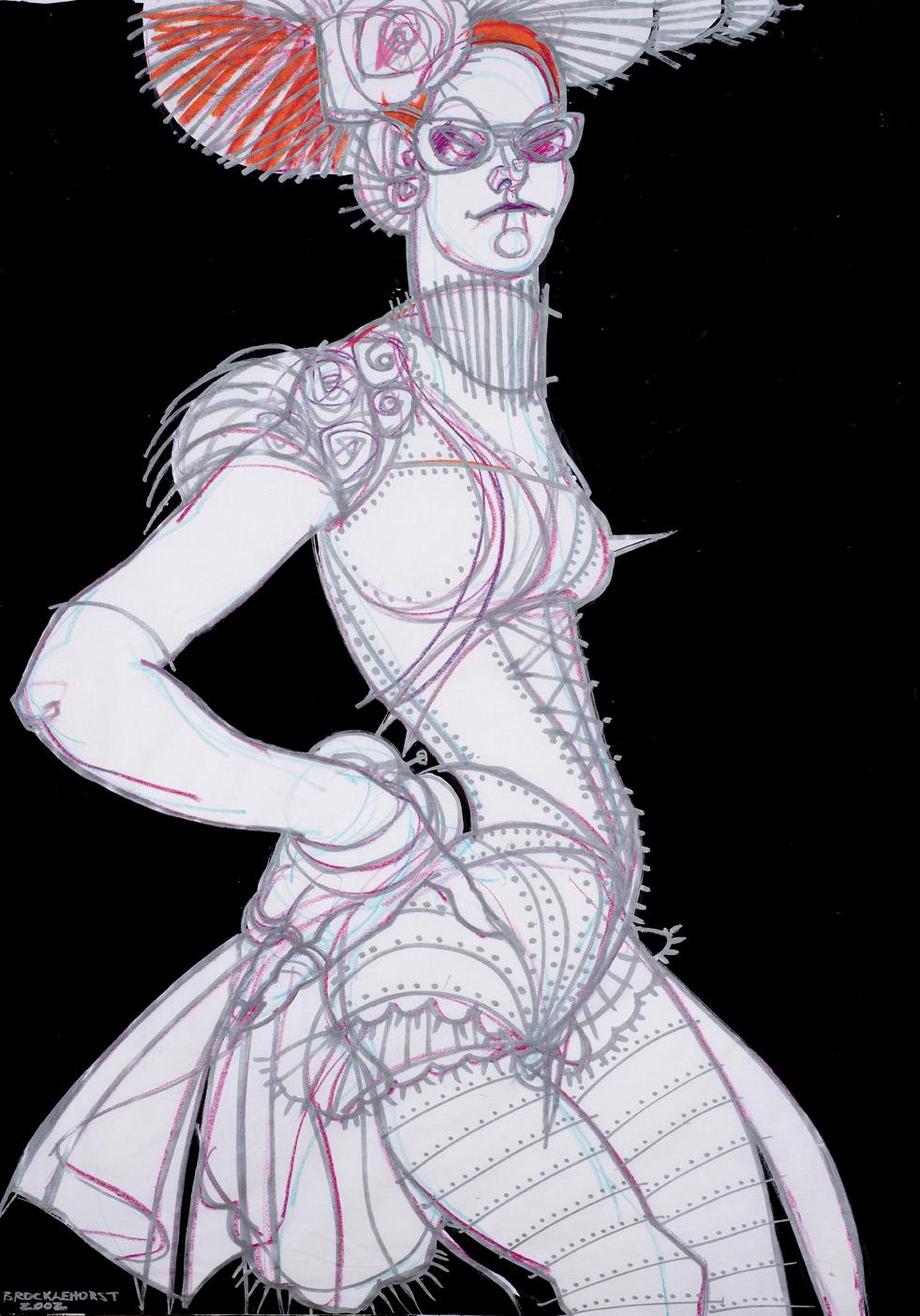
Jo Brocklehurst, Untitled (from Brocklehurst Through the Looking-Glass), 2002
Jo (Josephine) Brocklehurst (1935 - 2006) studied at Central Saint Martins and began her career as a fashion illustrator. She later focused on portraiture, drawing directly from models at her studio in West Hampstead and in nightclubs and theatres in Berlin, London and New York. Her work documents the alternative subcultures of the 1970s, 80s and 90s that went on to shape mainstream fashion and performance scenes. This work is from Brocklehurst Through the Looking-Glass, Brocklehurst’s final series. With an image of herself as a child as the centrepiece, Brocklehurst made hundreds of drawings that re-imagined characters from Lewis Carroll’s Alice novels. Her models were friends and dedicated club-goers who designed and made their own clothes. Brocklehurst’s regular collaborator Isabelle Bricknall was the model for this work. Works from the series were framed with bright plastic gemstones and hung on every available space at Brocklehurst’s home studio. She used metallic and neon inks that transformed under ultraviolet lights that she switched on for her guests in the evenings.
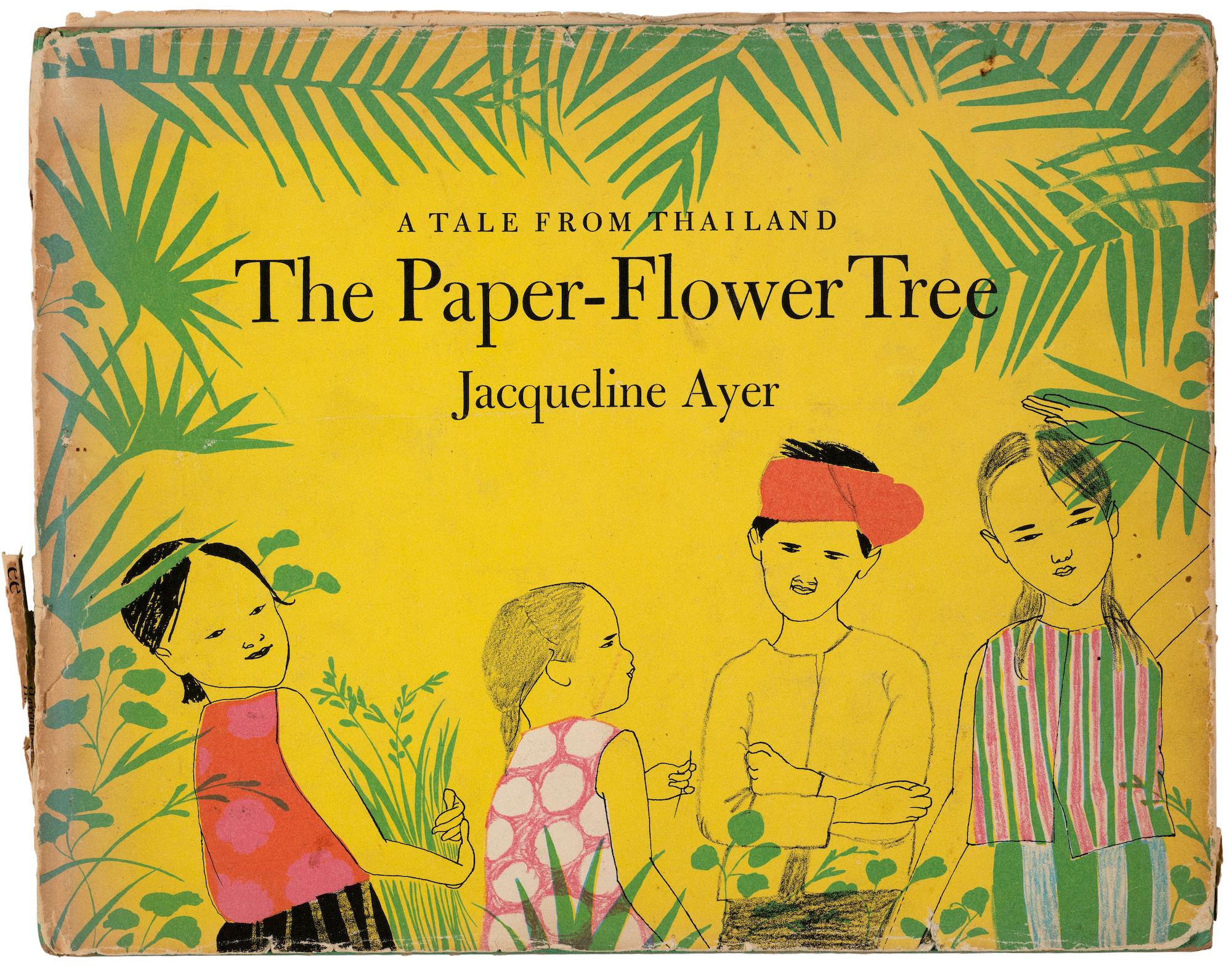
Jacqueline Ayer, The Paper-Flower Tree, 1962
Ayer’s eldest daughter, Margot, remembers the experience that inspired her mother’s second picturebook, The Paper-Flower Tree. Instead of buying one paper flower from a tradesman, her mother bought the entire tree – leaving Margot anxious that he would no longer have a livelihood.
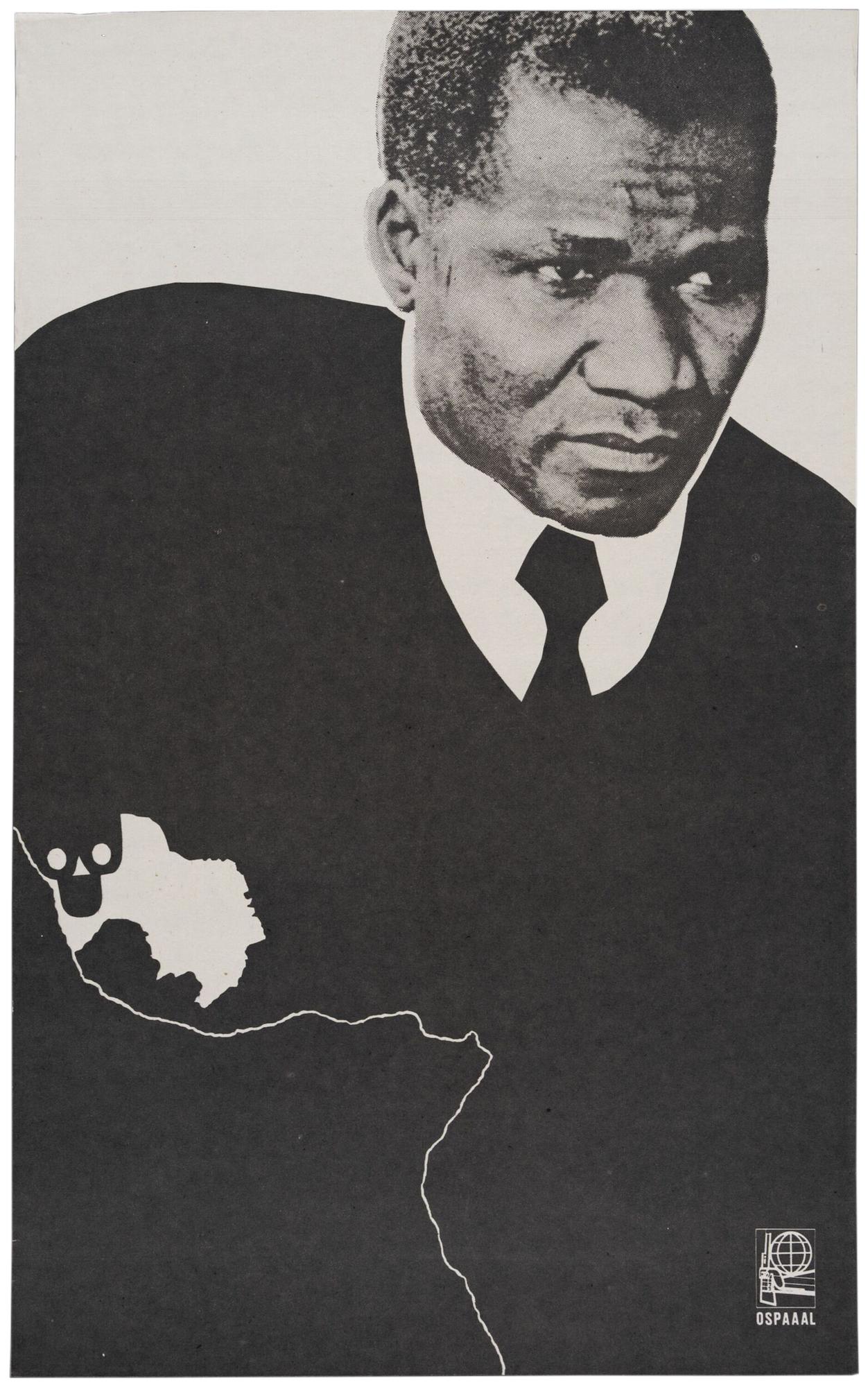
Untitled (Sékou Touré), 1971
Between the 1960s and 1990s, more than fifty designers worked at OSPAAAL (the Organisation of Solidarity with the People of Africa, Asia and Latin America). Based in Cuba, they made magazines and posters that were sent around the world. Their aim was to promote radical political ideas. Many of their posters celebrate socialist revolutions and liberation movements from the Global South. This design is a portrait of Ahmed Sékou Touré, the first President of Guinea after the country gained independence from French colonial rule. On his chest is an outline of the African continent, with Guinea highlighted and a skull over the Guinea-Bissau, which was under Portuguese colonial rule at the time of the poster’s issue.
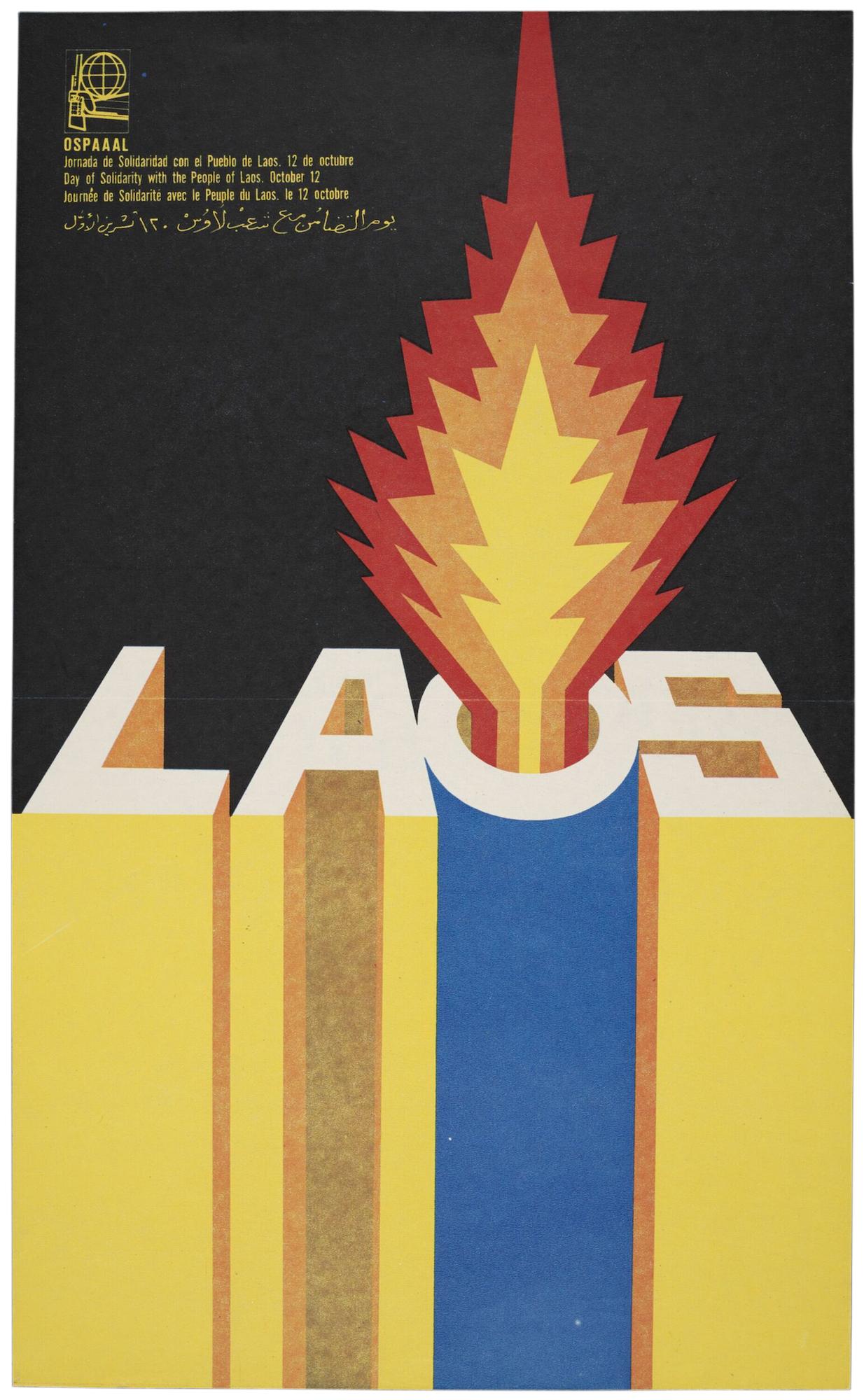
Day of Soldarity With The People Of Laos - October 12, 1970
Between the 1960s and 1990s, more than fifty designers worked at OSPAAAL. Based in Cuba, they made magazines and posters that were sent around the world. Their aim was to promote radical political ideas. Many of their posters celebrate socialist revolutions and liberation movements from the Global South. This design encouraged solidarity with Laotian people on the same date as the founding of the nationalist movement Lao Issara (‘Free Laos’) on 12 October 1945.
Content warning: weaponry
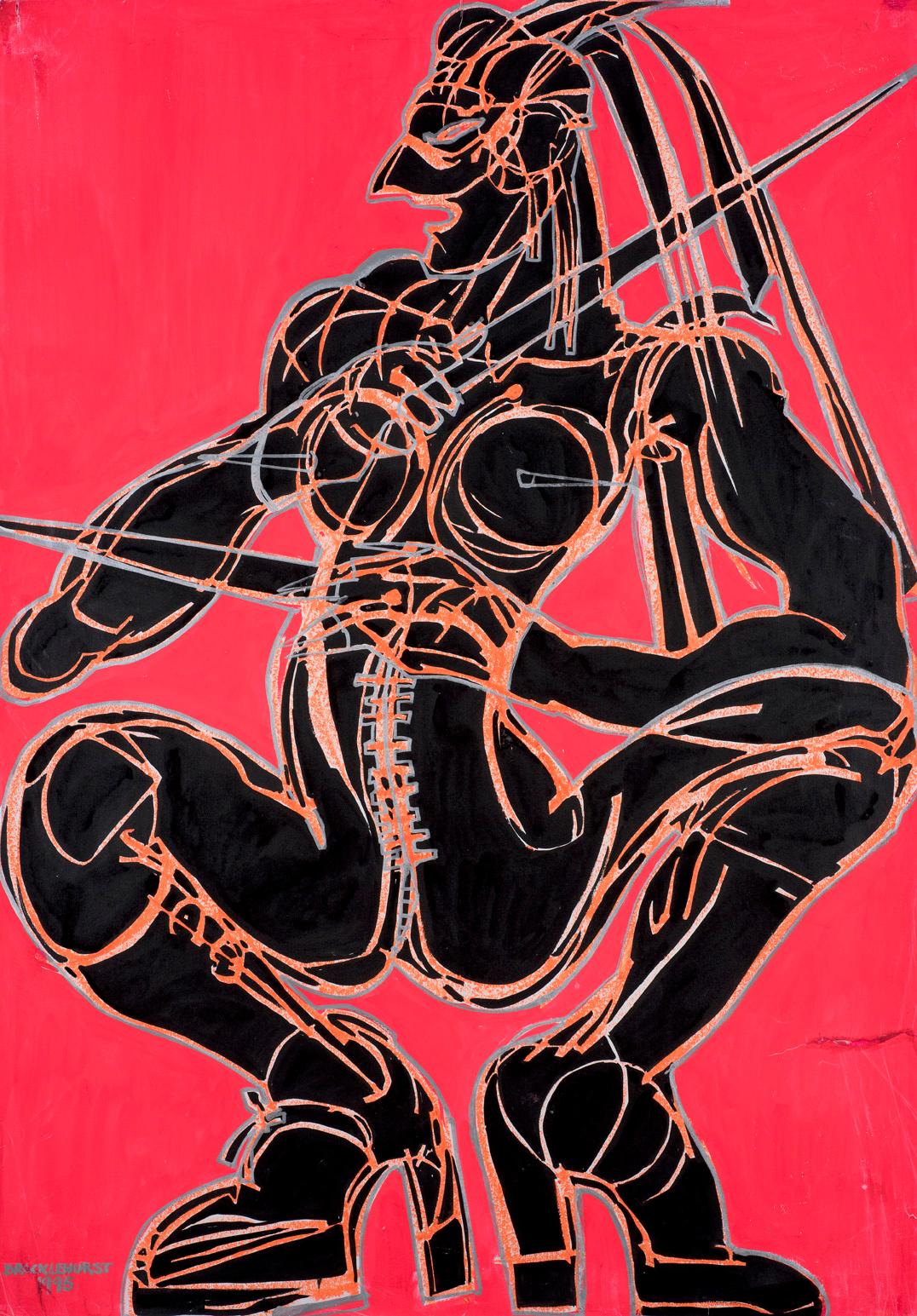
Jo Brocklehurst, Untitled (portrait of Eryka Isaak), 1995
Jo (Josephine) Brocklehurst (1935 - 2006) studied at Central Saint Martins and began her career as a fashion illustrator. She later focused on portraiture, drawing directly from models at her studio in West Hampstead and in nightclubs and theatres in Berlin, London and New York. Her work documents the alternative subcultures of the 1970s, 80s and 90s that went on to shape mainstream fashion and performance scenes. In the 1990s, Brocklehurst began drawing the fashion designers and performers finding space for experimentation in the fetish clubs of Soho and King’s Cross.
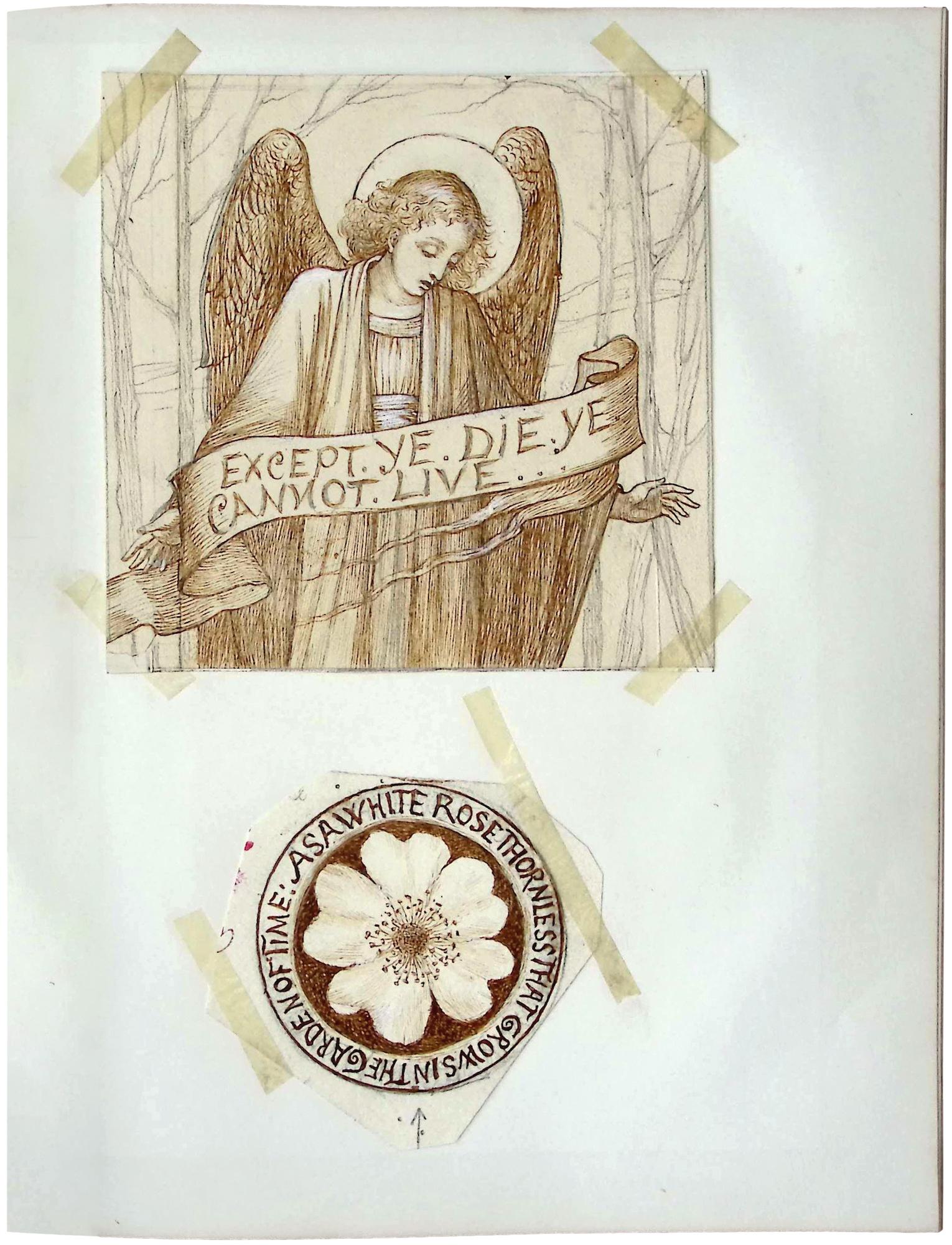
Untitled (illustrations for A Book of Heavenly Birthdays), c. 1893
Eleanor Vere Boyle (1825 – 1916) illustrated poetry and prose by some of the most popular authors of her time. She regularly drew and painted using ink and watercolour, sketching landscapes, animals and her children from life. She also made drawings from her imagination, often reflecting spiritual themes. These drawings were used as some of the final illustrations printed in the artists' publication A Book of Heavenly Birthdays (1893, London Elliot Stock)
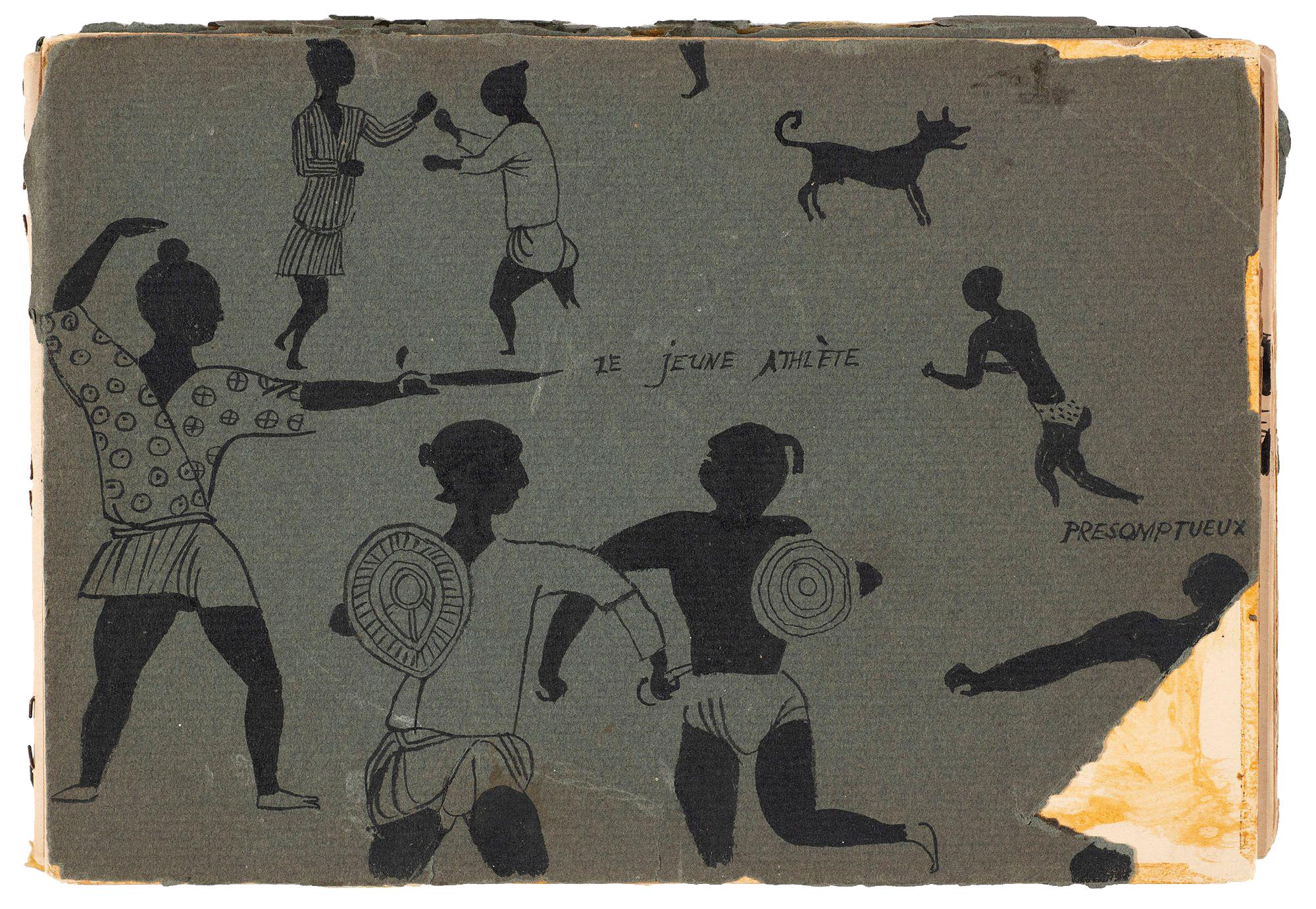
Jacqueline Ayer, Untitled (Handmade book for Charli), c. 1954
Jacqueline Ayer (1930–2012) had a career that spanned many creative fields. She began as a fashion illustrator, and later turned her hand to children’s books, textiles and garments, as she worked in New York, Paris, London, Bangkok, Hong Kong and across India. As a child and throughout her artistic career, Ayer experimented with book layouts, bringing images together in a sequential format as she made gifts for friends and family.
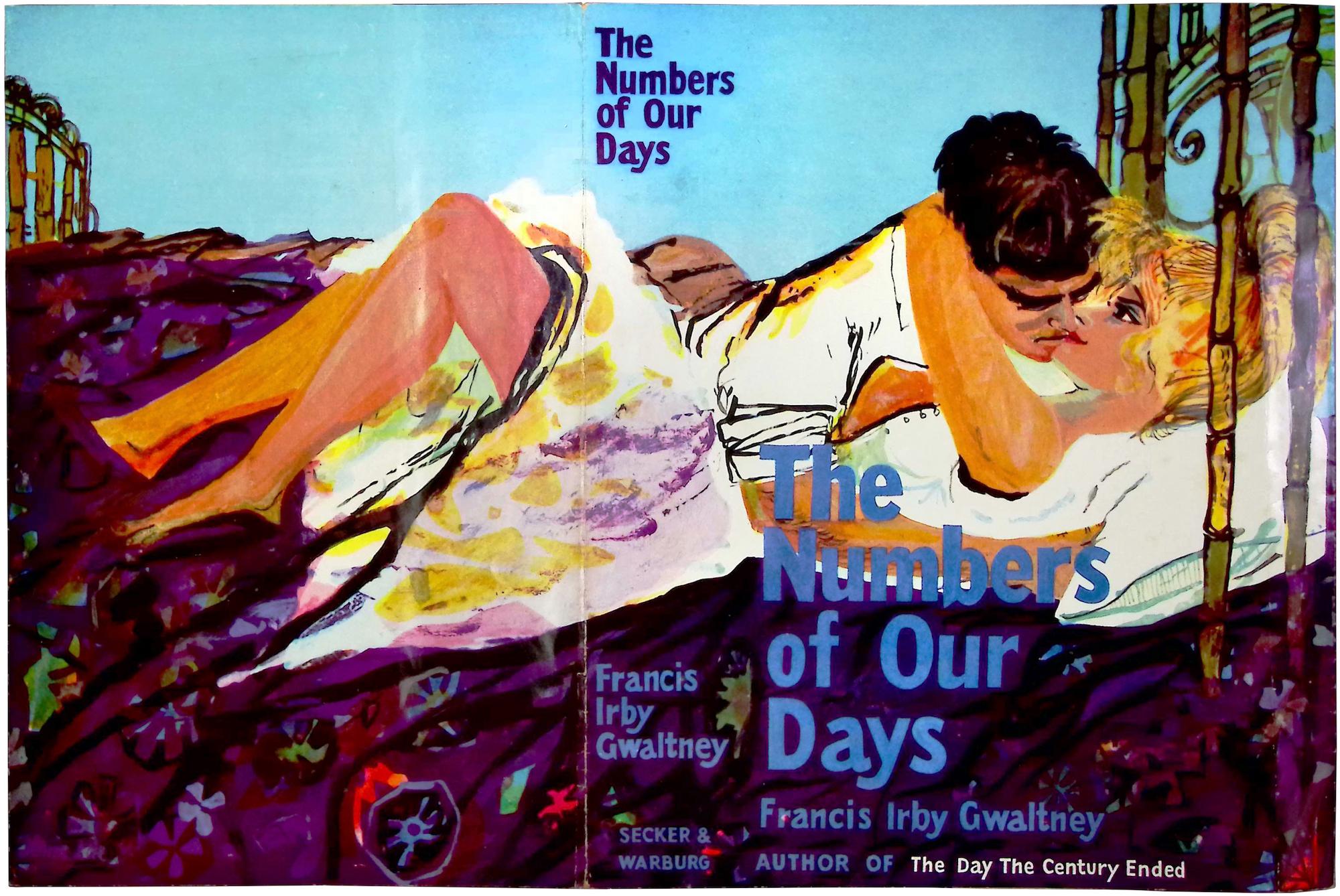
Cover jacket for "The Numbers of Our Days", 1959
British illustrator Janina Ede (1937-2018) created covers and illustrations for over 100 books from the 1950s to the 1980s.
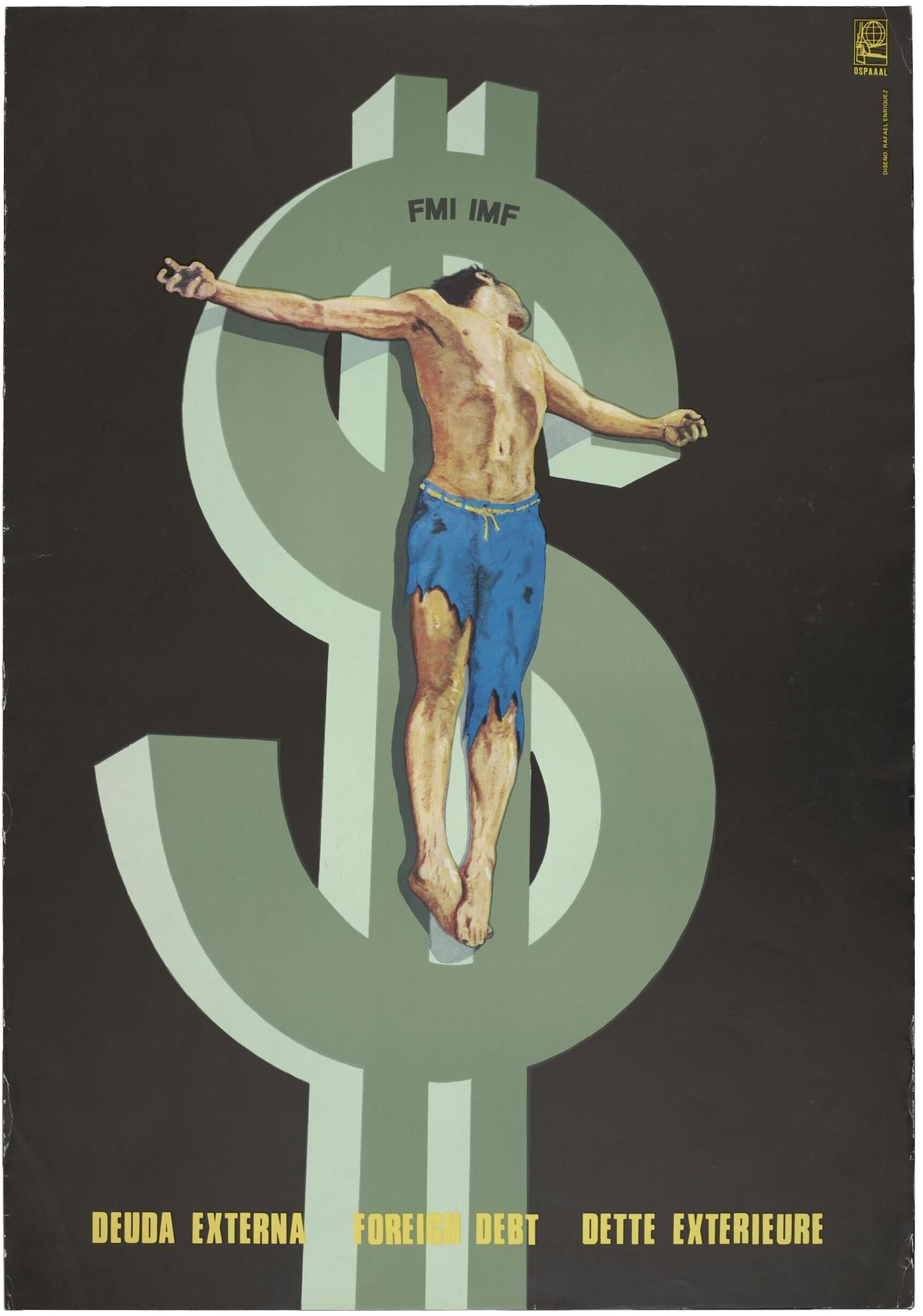
FOREIGN DEBT, 1983
Between the 1960s and 1990s, more than fifty designers worked at OSPAAAL (the Organisation of Solidarity with the People of Africa, Asia and Latin America). Based in Cuba, they made magazines and posters that were sent around the world. Their aim was to promote radical political ideas. Many of their posters celebrate socialist revolutions and liberation movements from the Global South. From 1977 onwards, Rafael Enríquez Vega was creative director at OSPAAAL and a prolific poster designer. In Foreign Debt, he uses a crucifix to accuse the International Monetary Fund of sustaining the U.S. dollar by sacrificing the economies of developing countries.
Content warning: capital punishment, torture
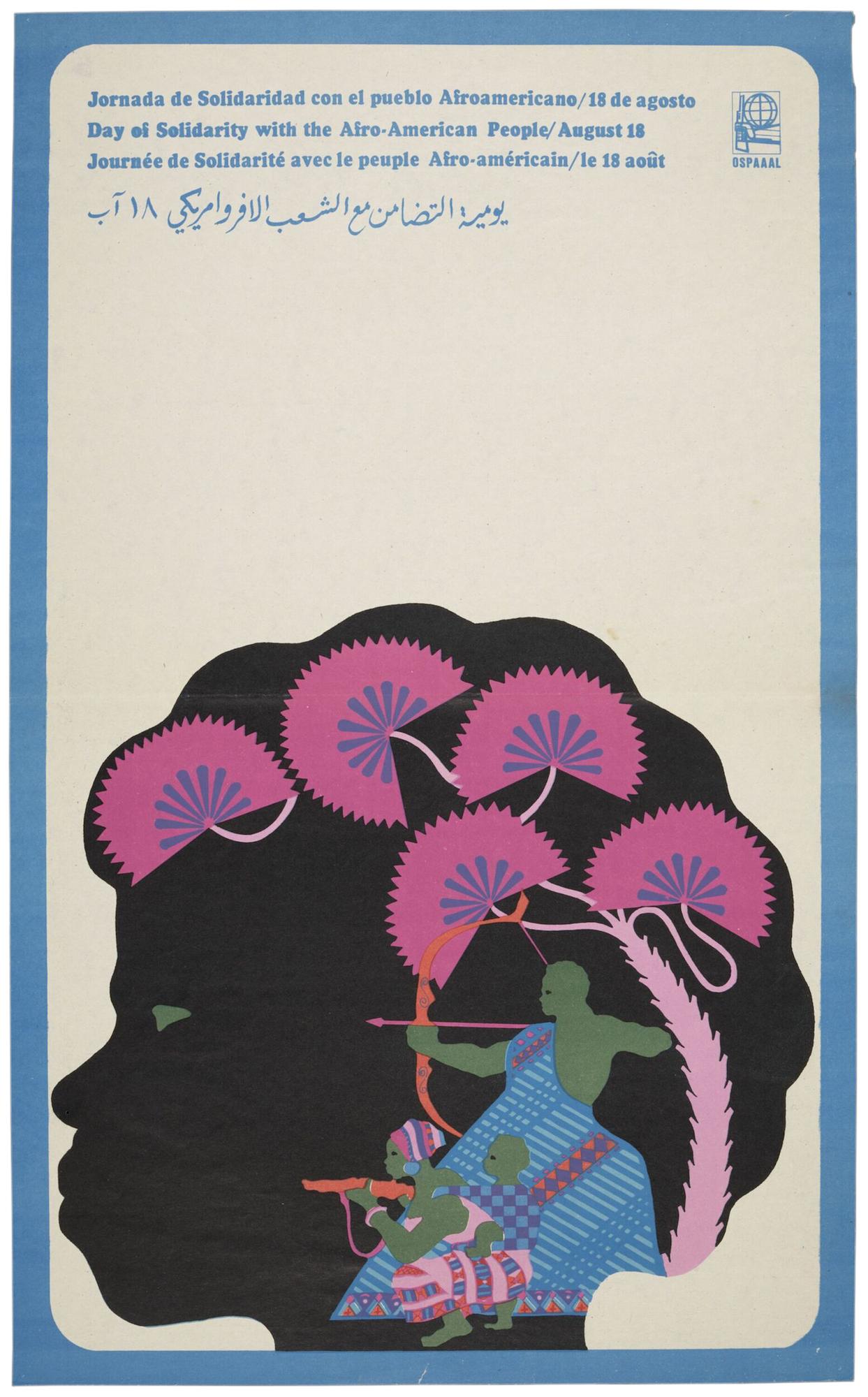
Day of Solidarity with the Afro-American People - August 18, 1969
Between the 1960s and 1990s, more than fifty designers worked at OSPAAAL (the Organisation of Solidarity with the People of Africa, Asia and Latin America). Based in Cuba, they made magazines and posters that were sent around the world. Their aim was to promote radical political ideas. Many of their posters celebrate socialist revolutions and liberation movements from the Global South. They also criticised the foreign policy of the U.S.A. and supported the Black Power movement.
Content warning: weaponry
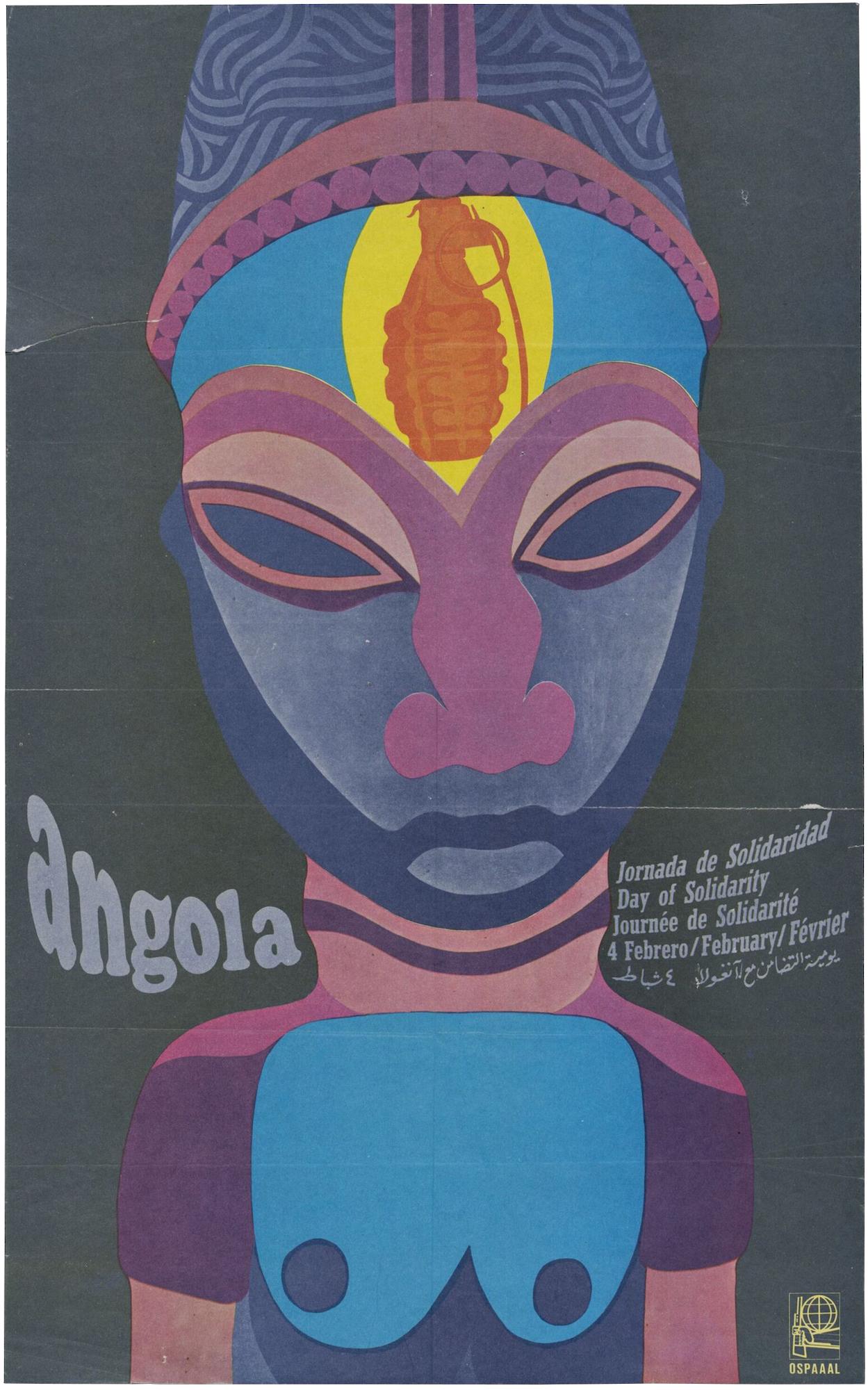
angola - Day of Solidarity - 4 February, 1969
Between the 1960s and 1990s, more than fifty designers worked at OSPAAAL. Based in Cuba, they made magazines and posters that were sent around the world. Their aim was to promote radical political ideas. Many of their posters celebrate socialist revolutions and liberation movements from the Global South. This poster commemorates the beginning of the Angolan War of Independence on 4 February 1961.
Content warning: weaponry
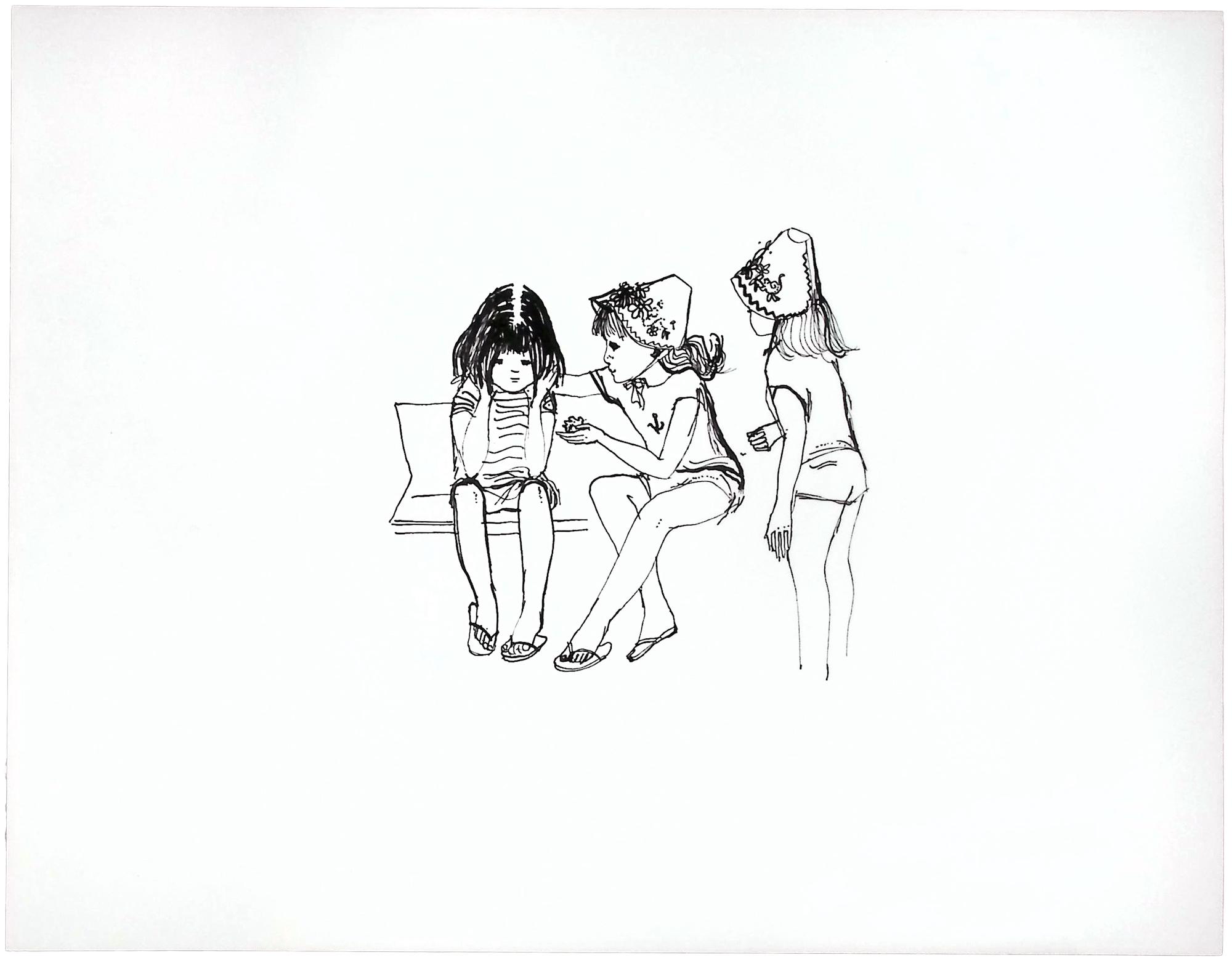
Untitled, c. 1968
British illustrator Janina Ede (1937-2018) created covers and illustrations for over 100 books from the 1950s to the 1980s. In the 1960s, Ede began working on children’s books. The Patchwork Pack (1968) by Freda Collins is about a group of ‘Brownies’ – the name given to members of the worldwide girl-guiding movement.
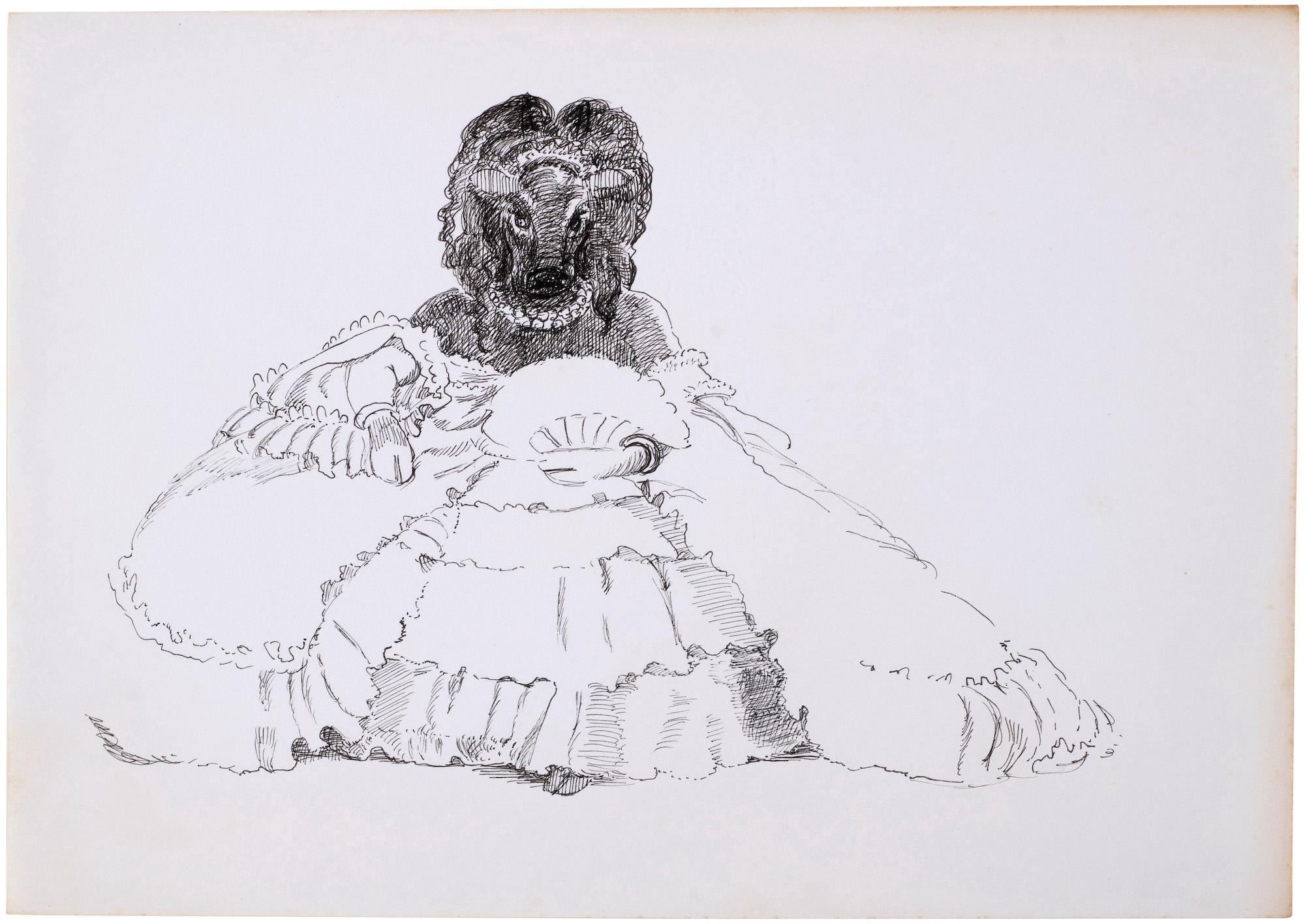
Jacqueline Ayer, Untitled, Date unknown
Jacqueline Ayer (1930–2012) had a career that spanned many creative fields. She began as a fashion illustrator, and later turned her hand to children’s books, textiles and garments, as she worked in New York, Paris, London, Bangkok, Hong Kong and across India. Ayer often used a sketchbook to record her observations and ideas for book narratives and fashion designs. The context for this drawing is unknown.
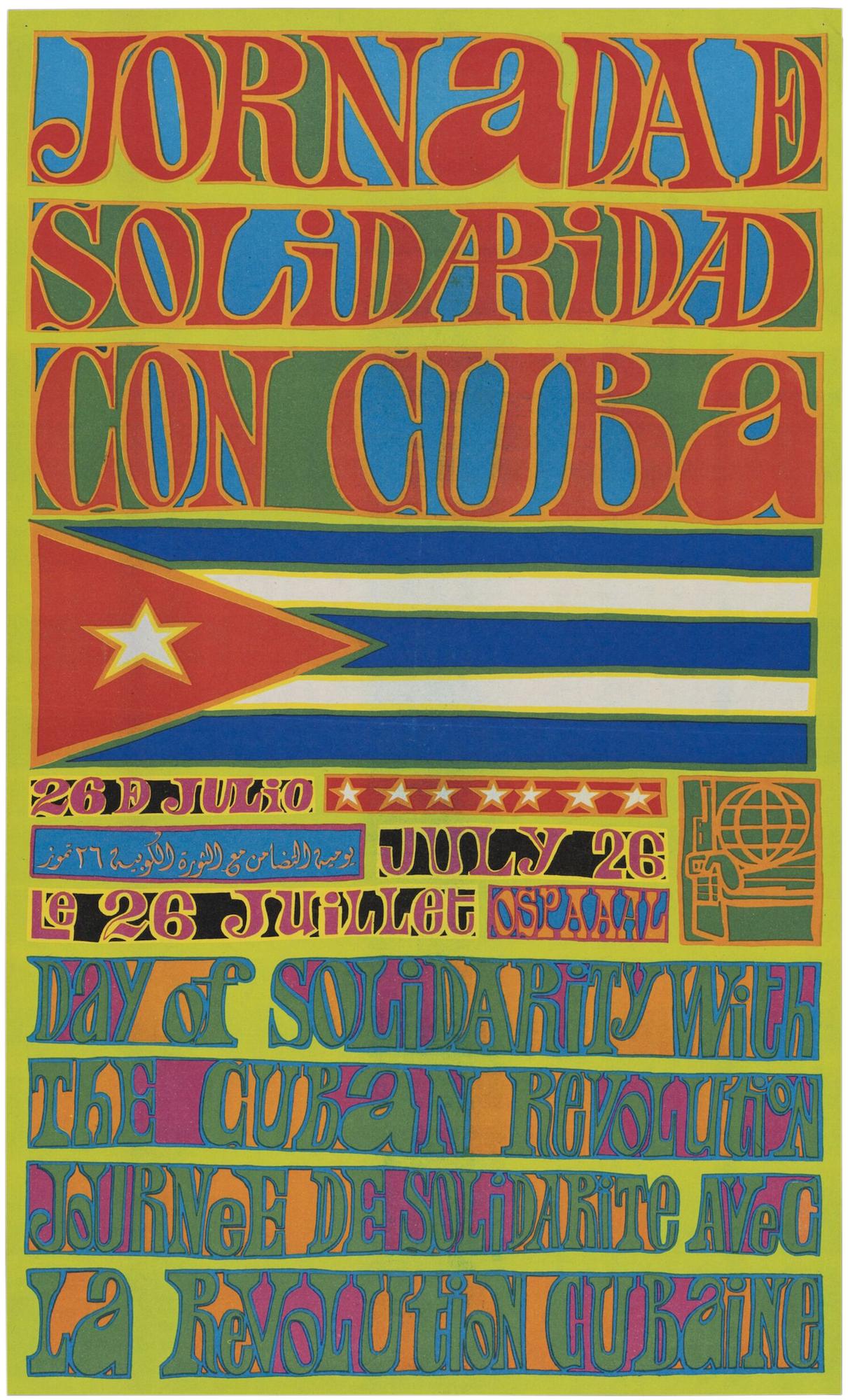
July 26 - Day of Solidarity with the Cuban Revolution, 1969
Between the 1960s and 1990s, more than fifty designers worked at OSPAAAL. Based in Cuba, they made magazines and posters that were sent around the world. Their aim was to promote radical political ideas. Many of their posters celebrate socialist revolutions and liberation movements from the Global South. This design promotes 26 July as a day of solidarity with the Cuban Revolution. The revolutionary 26th of July Movement led by Fidel Castro took power in Cuba in 1959.
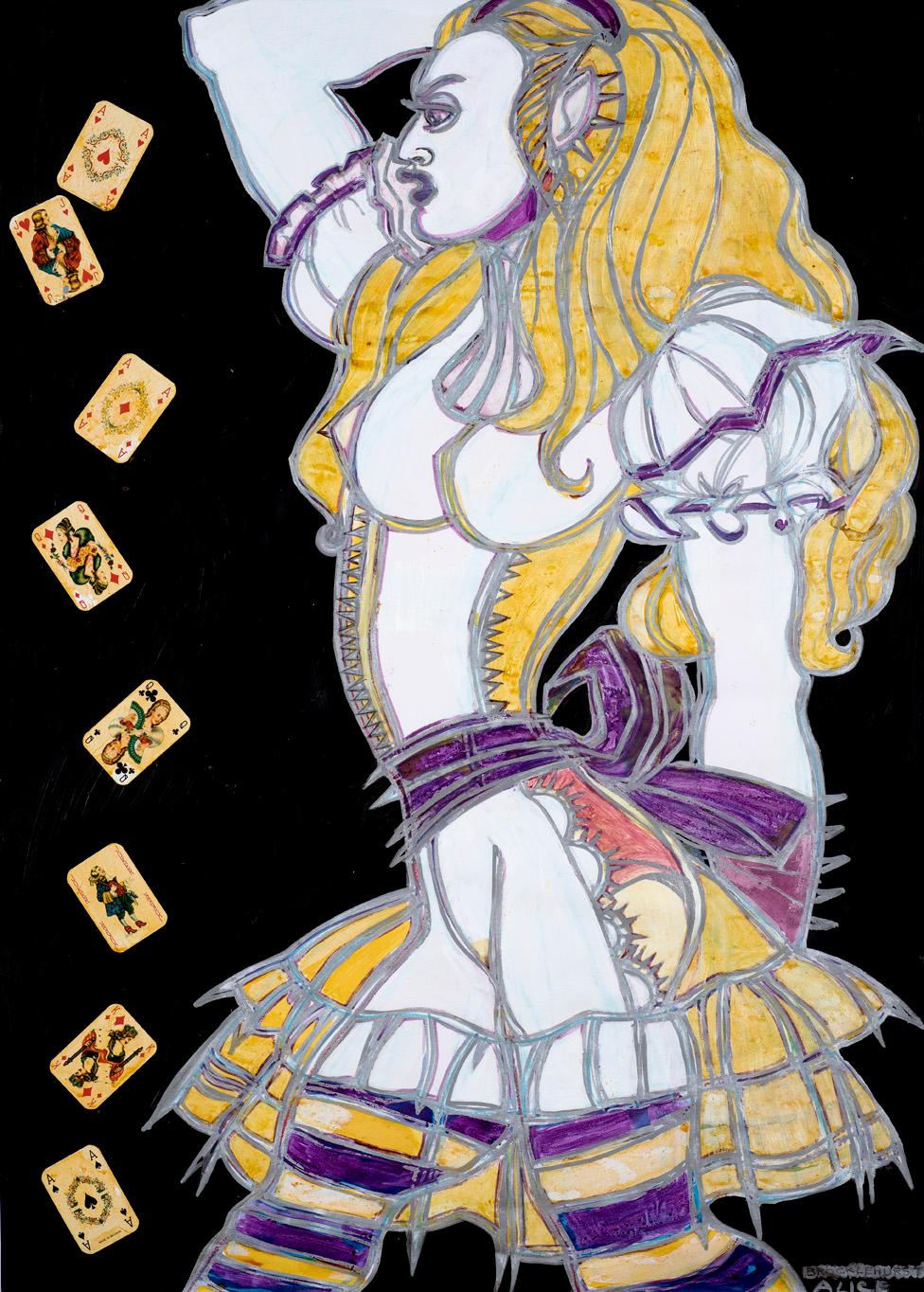
Jo Brocklehurst, Untitled (Alice from Brocklehurst Through the Looking-Glass), 2000s
Jo (Josephine) Brocklehurst (1935 - 2006) studied at Central Saint Martins and began her career as a fashion illustrator. She later focused on portraiture, drawing directly from models at her studio in West Hampstead and in nightclubs and theatres in Berlin, London and New York. Her work documents the alternative subcultures of the 1970s, 80s and 90s that went on to shape mainstream fashion and performance scenes. This work is from Brocklehurst Through the Looking-Glass, Brocklehurst’s final series. With an image of herself as a child as the centrepiece, Brocklehurst made hundreds of drawings that re-imagined characters from Lewis Carroll’s Alice novels. Her models were friends and dedicated club-goers who designed and made their own clothes. Works from the series were framed with bright plastic gemstones and hung on every available space at Brocklehurst’s home studio. She used metallic and neon inks that transformed under ultraviolet lights that she switched on for her guests in the evenings.
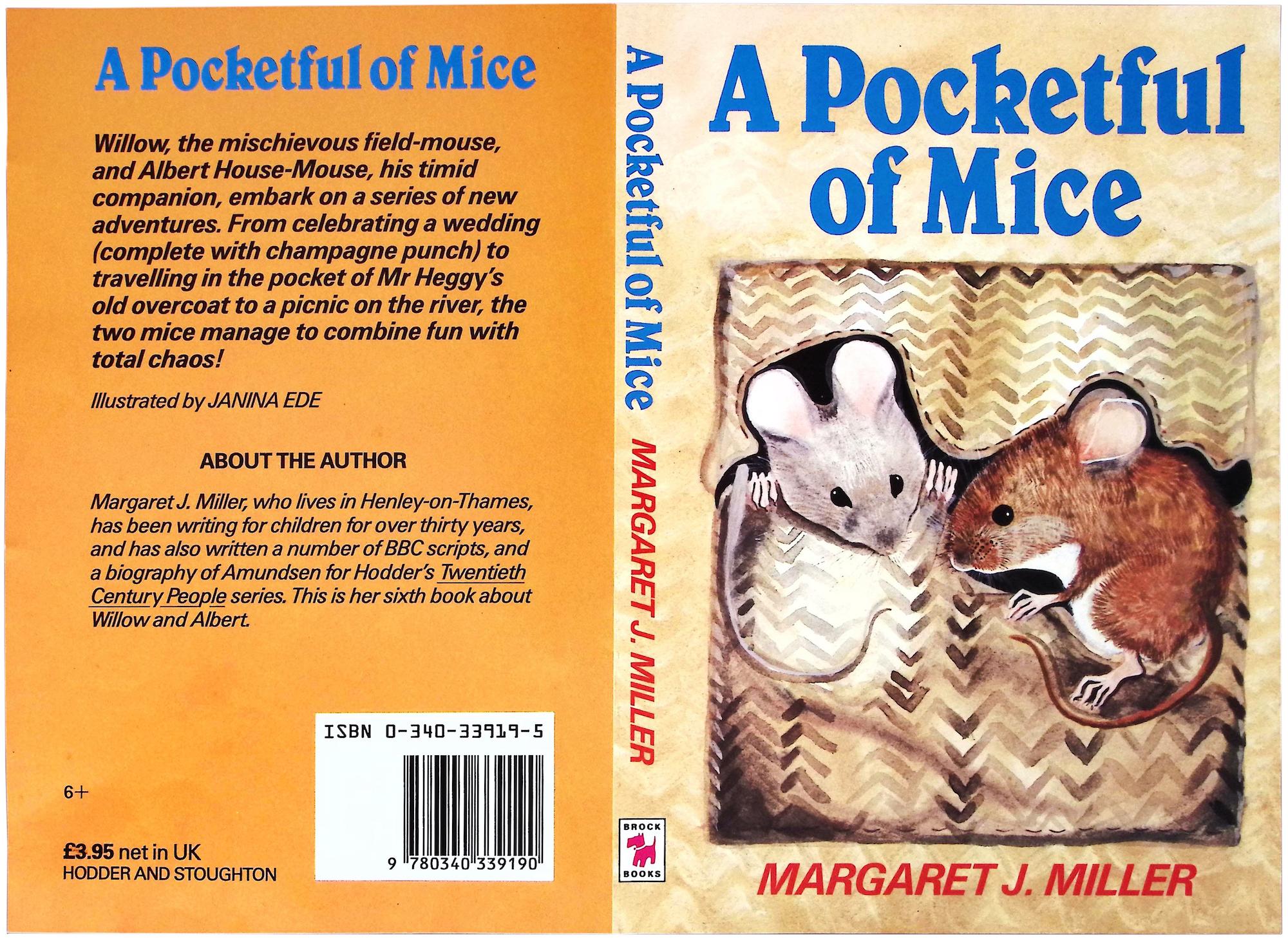
Printed book cover proof for A Pocket Full of Mice , c. 1984
British illustrator Janina Ede (1937-2018) created covers and illustrations for over 100 books from the 1950s to the 1980s. Many of her illustrations feature animals, which she drew from life.
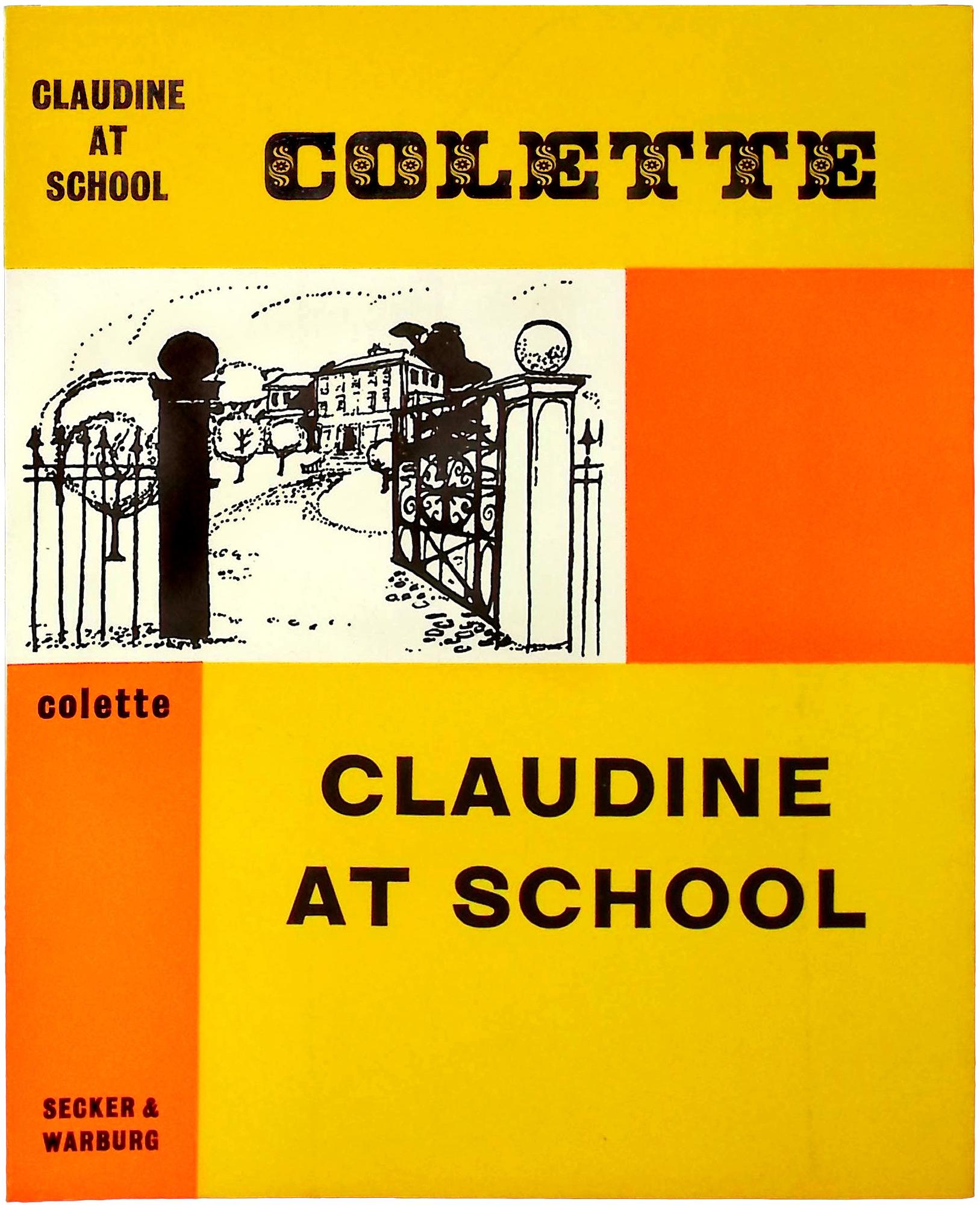
Book cover proof for Colette's "Claudine at School", 1960
British illustrator Janina Ede (1937-2018) created covers and illustrations for over 100 books from the 1950s to the 1980s. She designed the covers of several books by French author and pioneer of autofiction Sidonie-Gabrielle Colette. Claudine at School was Colette’s first novel, written in 1900. It follows the story of the eponymous Claudine, navigating school and lesbian relationships.
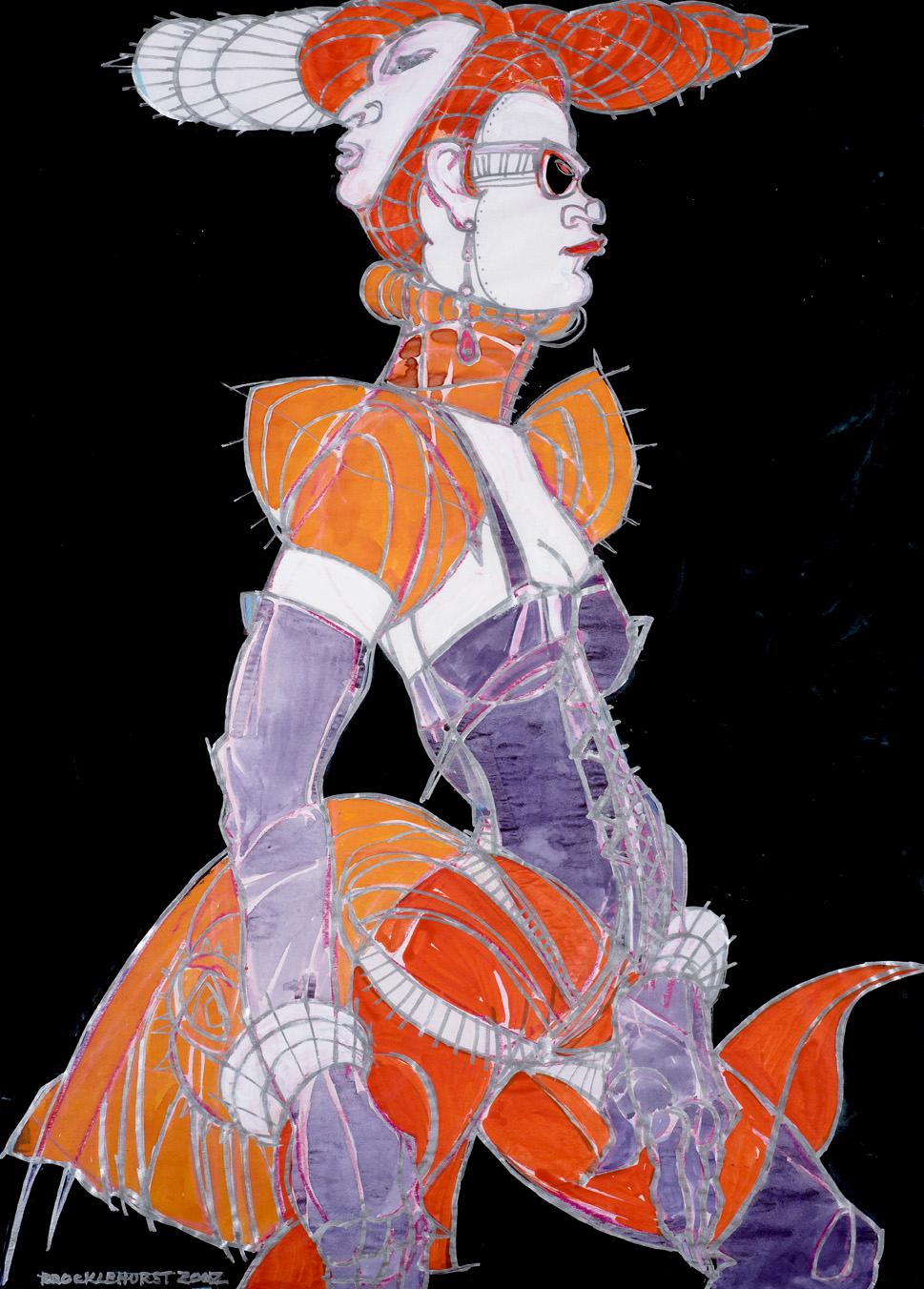
Jo Brocklehurst, Untitled (from Brocklehurst Through the Looking-Glass), 2000s
Jo (Josephine) Brocklehurst (1935 - 2006) studied at Central Saint Martins and began her career as a fashion illustrator. She later focused on portraiture, drawing directly from models at her studio in West Hampstead and in nightclubs and theatres in Berlin, London and New York. Her work documents the alternative subcultures of the 1970s, 80s and 90s that went on to shape mainstream fashion and performance scenes. This work is from Brocklehurst Through the Looking-Glass, Brocklehurst’s final series. With an image of herself as a child as the centrepiece, Brocklehurst made hundreds of drawings that re-imagined characters from Lewis Carroll’s Alice novels. Her models were friends and dedicated club-goers who designed and made their own clothes. Brocklehurst’s regular collaborator Isabelle Bricknall was the model for this work. Works from the series were framed with bright plastic gemstones and hung on every available space at Brocklehurst’s home studio. She used metallic and neon inks that transformed under ultraviolet lights that she switched on for her guests in the evenings.
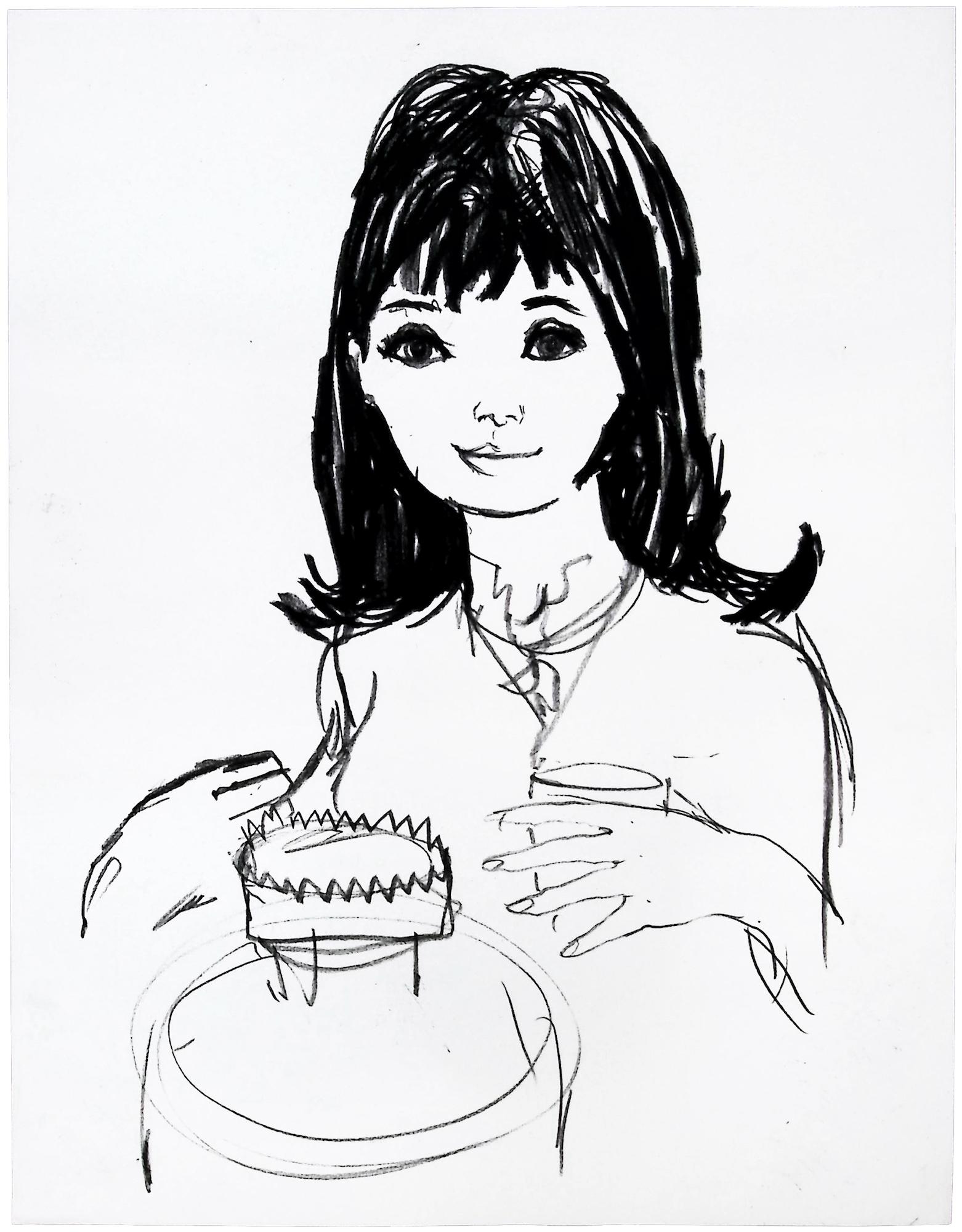
Untitled, Date unknown
British illustrator Janina Ede (1937-2018) created covers and illustrations for over 100 books from the 1950s to the 1980s. Ede often worked using just black ink, combining pen and brushwork to create bold illustrations with fine details.
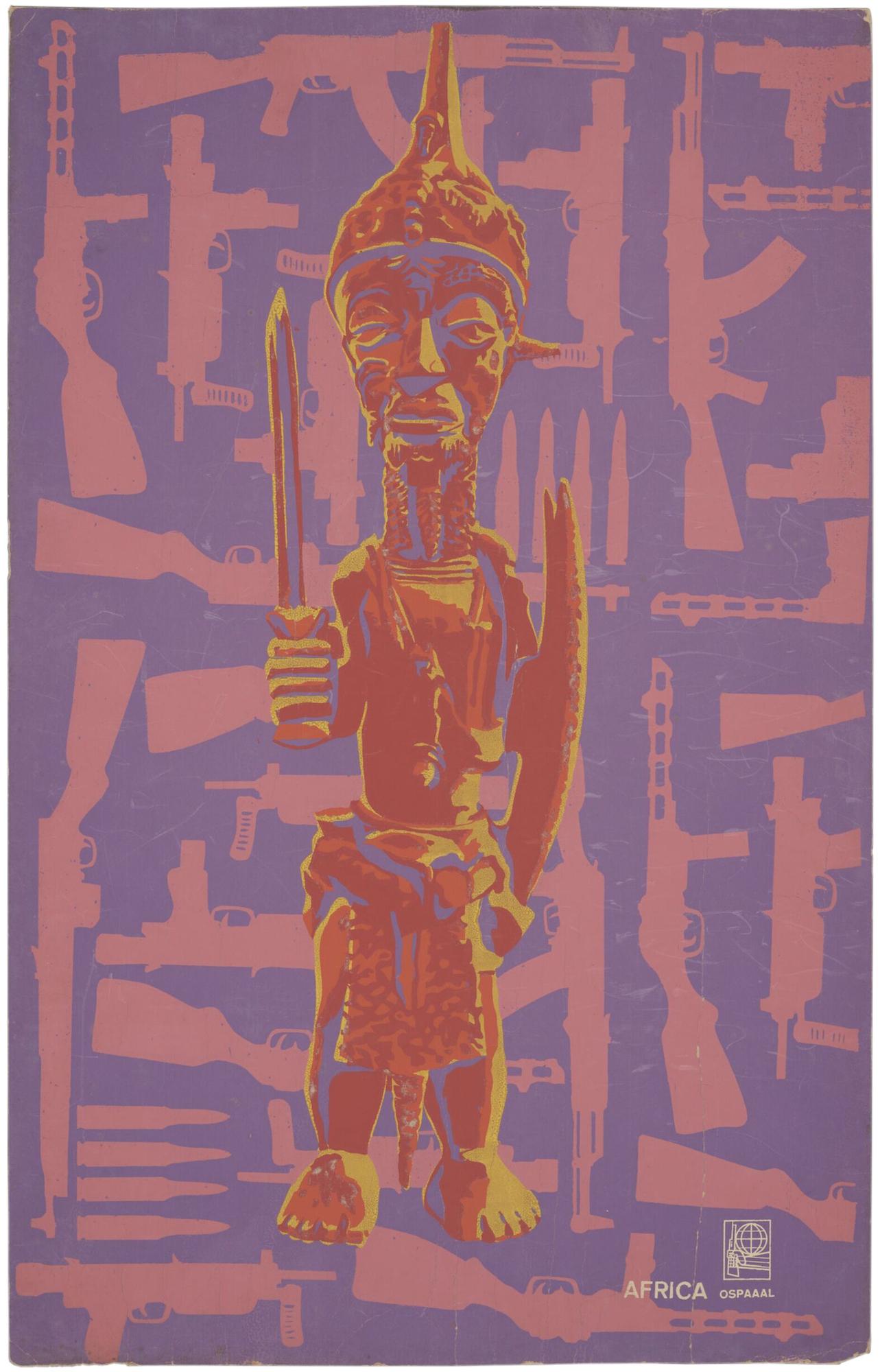
AFRICA, 1969
Between the 1960s and 1990s, more than fifty designers worked at OSPAAAL (the Organisation of Solidarity with the People of Africa, Asia and Latin America). Based in Cuba, they made magazines and posters that were sent around the world. Their aim was to promote radical political ideas. Many of their posters celebrate socialist revolutions and liberation movements from the Global South. Many OSPAAAL designers combined images of Indigenous art and craft with weaponry. Their aim was to argue for the right to self-determination and support liberation movements opposing colonial and imperial powers. However, the designers did not always know the meaning or origin of the iconography they used.
Content warning: weaponry

Untitled, Date unknown
Eleanor Vere Boyle (1825 – 1916) illustrated poetry and prose by some of the most popular authors of her time. She regularly drew and painted using ink and watercolour, sketching landscapes, animals and her children from life. She also made drawings from her imagination, often reflecting spiritual themes.
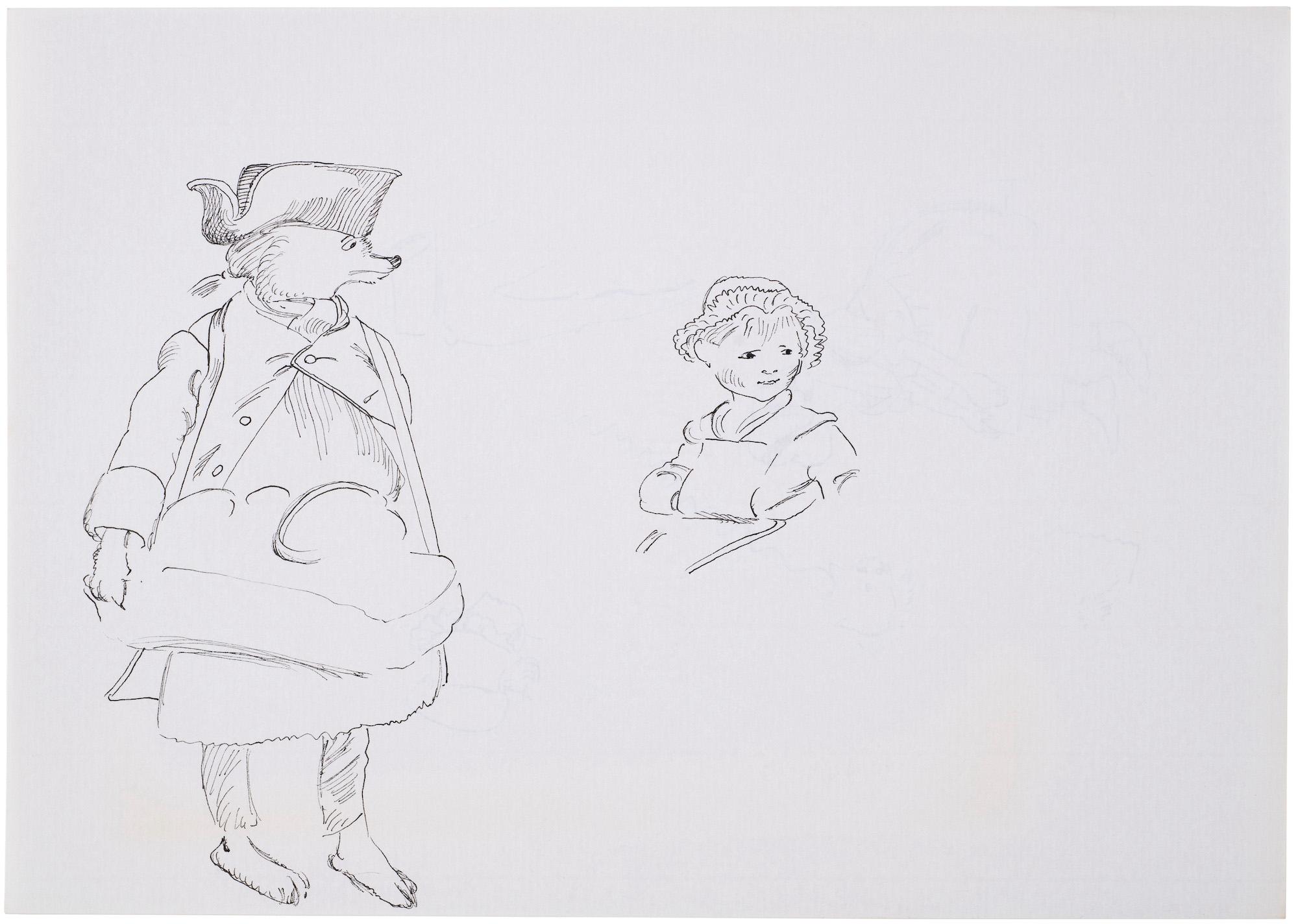
Jacqueline Ayer, Untitled, Date unknown
Jacqueline Ayer (1930–2012) had a career that spanned many creative fields. She began as a fashion illustrator, and later turned her hand to children’s books, textiles and garments, as she worked in New York, Paris, London, Bangkok, Hong Kong and across India. Ayer often used a sketchbook to record her observations and ideas for book narratives and fashion designs. The context for this drawing is unknown.

HIROSHIMA - DAY OF WORLD SOLIDARITY WITH THE STRUGGLE OF THE JAPANESE PEOPLE (August 6), 1972
Between the 1960s and 1990s, more than fifty designers worked at OSPAAAL (the Organisation of Solidarity with the People of Africa, Asia and Latin America). Based in Cuba, they made magazines and posters that were sent around the world. Their aim was to promote radical political ideas. Many of their posters celebrate socialist revolutions and liberation movements from the Global South. OSPAAAL marked the date of the atomic bombing of the city of Hiroshima by the U.S.A. as a day of solidarity with Japanese citizens.
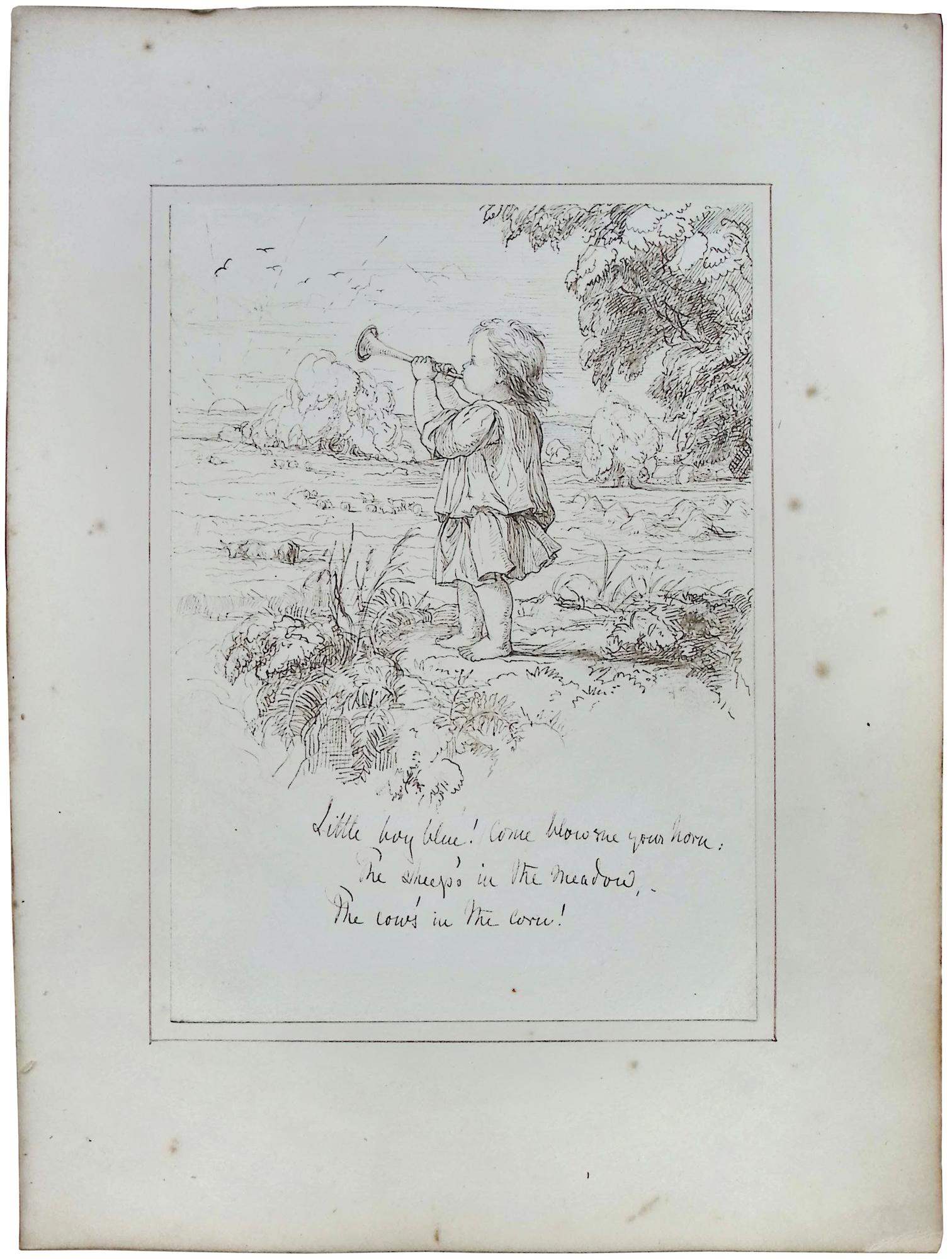
Untitled (illustration for Child's Play, 'Little boy blue'), c. 1851
Eleanor Vere Boyle (1825 – 1916) illustrated poetry and prose by some of the most popular authors of her time. She regularly drew and painted using ink and watercolour, sketching landscapes, animals and her children from life. She also made drawings from her imagination, often reflecting spiritual themes. This illustration is from her first book, Child’s Play (1851). Boyle provided her publishers with black and white drawings that were then converted into etchings by the printer. These were later reproduced as lithographs, in colours chosen by Boyle.
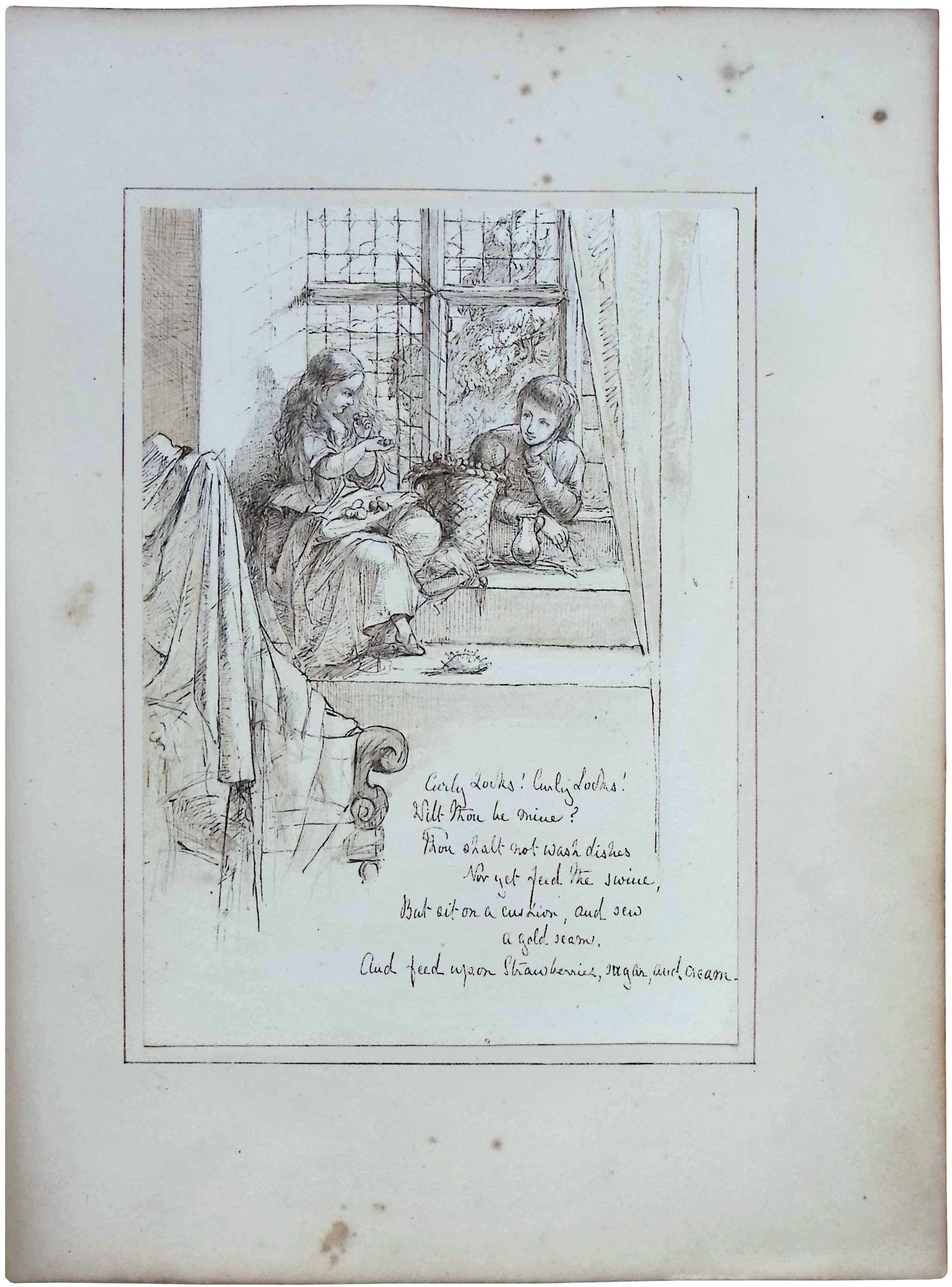
Untitled (illustration for Child's Play, 'Curly Locks'), c. 1851
Eleanor Vere Boyle (1825 – 1916) illustrated poetry and prose by some of the most popular authors of her time. She regularly drew and painted using ink and watercolour, sketching landscapes, animals and her children from life. She also made drawings from her imagination, often reflecting spiritual themes. This illustration is from her first book, Child’s Play (1851). Boyle provided her publishers with black and white drawings that were then converted into etchings by the printer. These were later reproduced as lithographs, in colours chosen by Boyle.
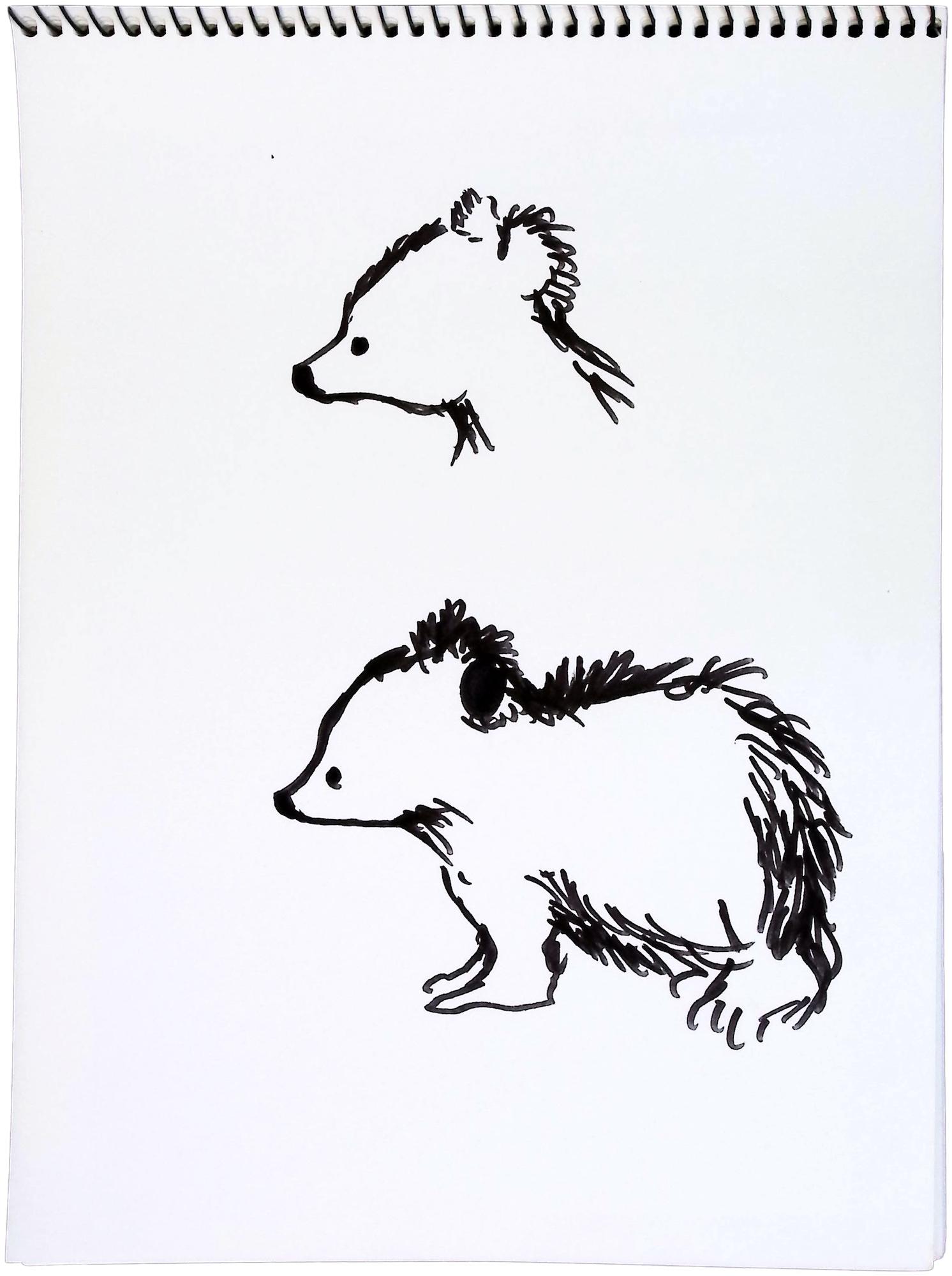
Untitled, Date unknown
British illustrator Janina Ede (1937-2018) created covers and illustrations for over 100 books from the 1950s to the 1980s. Many of her illustrations feature animals, which she drew from life.
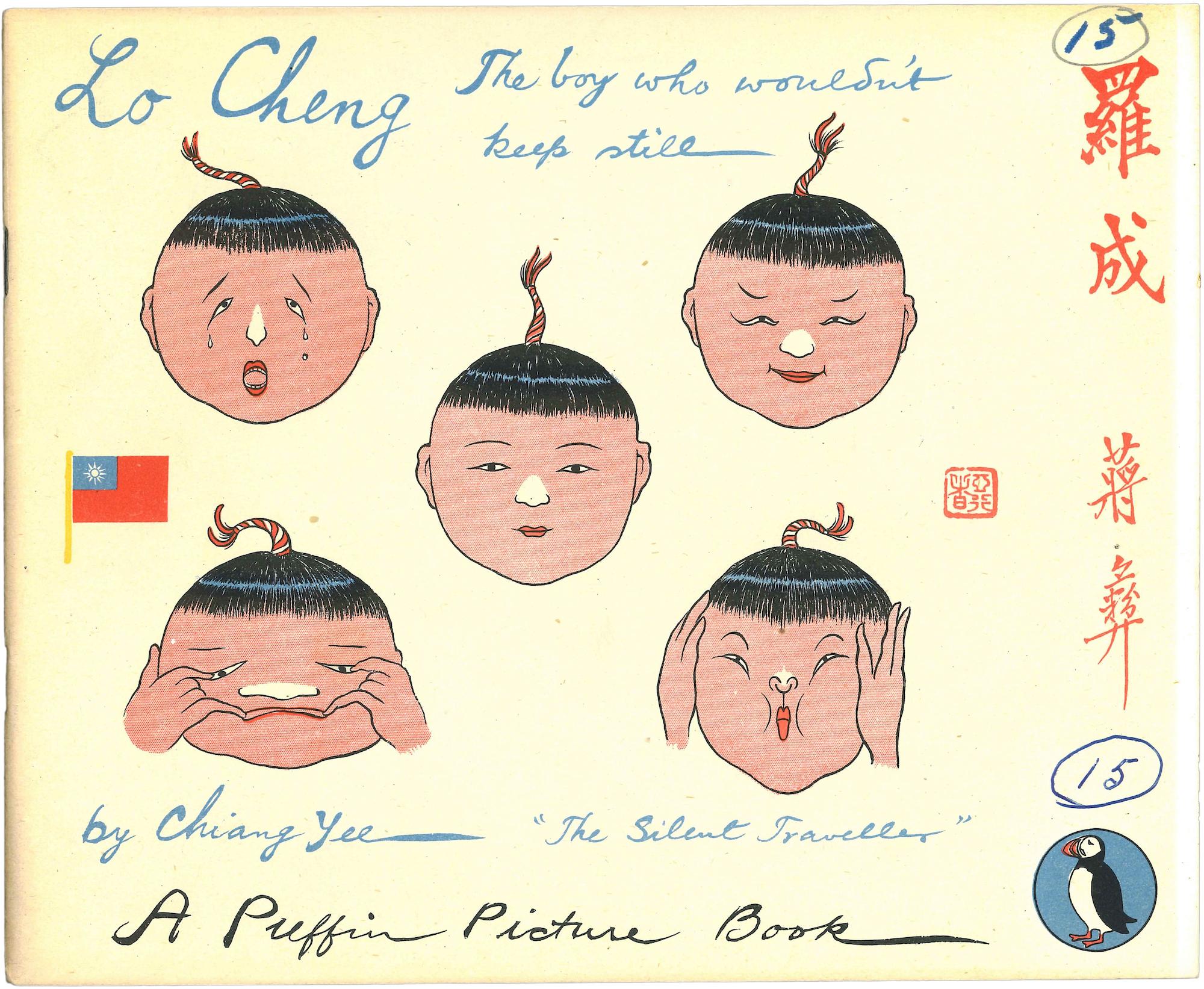
Lo Cheng, The boy who wouldn’t keep still, 1942
The Puffin Picture Books series was established by designer and editor Noel Carrington (1895-1989). In 1933, artist Pearl Binder (1904-1990) sent Carrington a package of Soviet children’s books. “They were produced by the million on very cheap paper, but the drawings were vigorous and the colour delightful” he later remembered. These books inspired Carrington to edit a series of affordable books that would encourage “the child’s awakening interest in its surroundings... I felt that colour was essential, and that artists could... be more successful in books of this nature than the camera”. Many artists and illustrators worked on the series, adapting their ways of working to lithographic printing and the Puffin Picture Book format. Most of the 120 books in the series were printed on one large sheet of paper: one side in colour and one in black-and-white. Each sheet was cut, folded and stapled to create a softcover book.
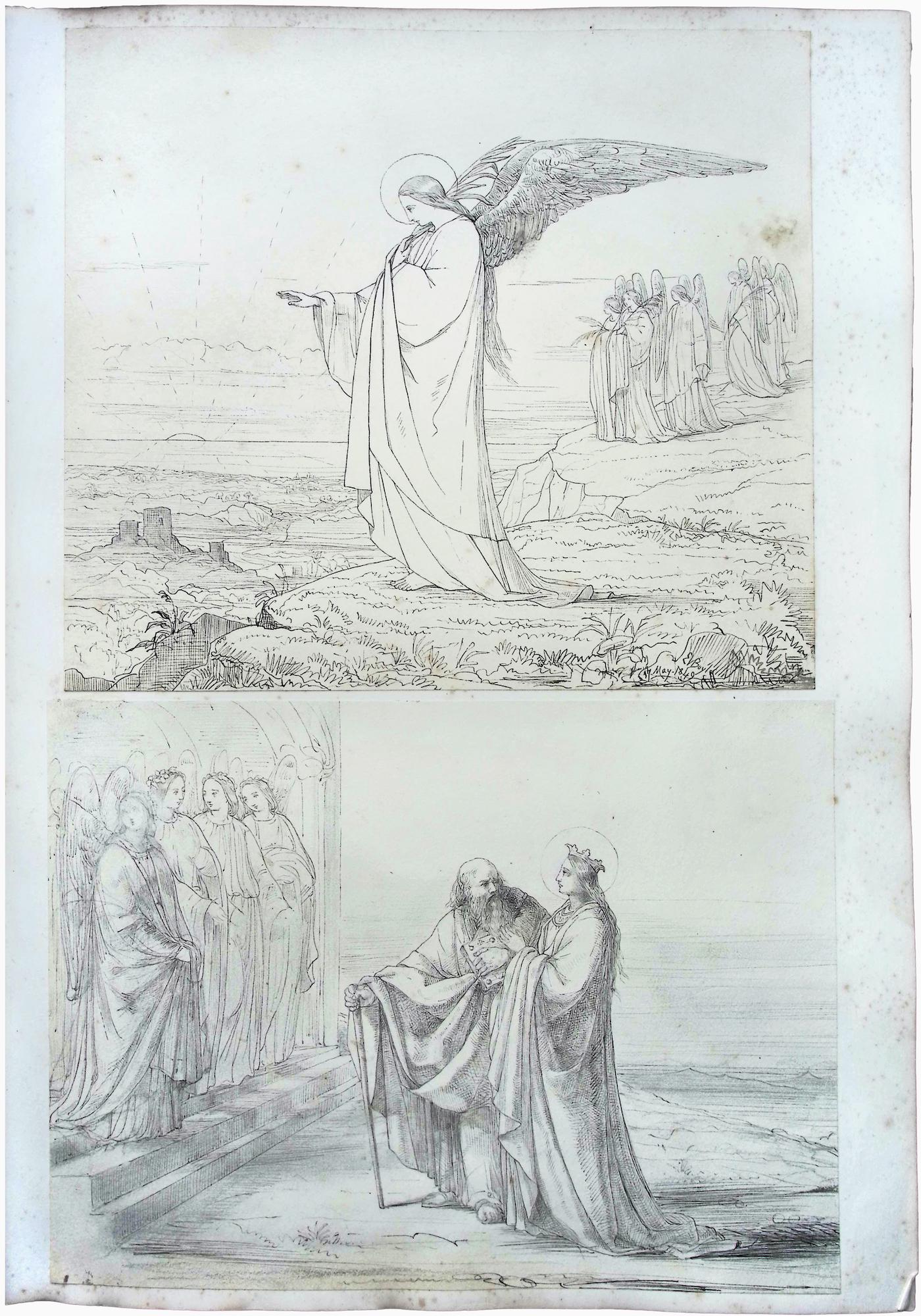
Untitled, Date unknown
Eleanor Vere Boyle (1825 – 1916) illustrated poetry and prose by some of the most popular authors of her time. She regularly drew and painted using ink and watercolour, sketching landscapes, animals and her children from life. She also made drawings from her imagination, often reflecting spiritual themes.
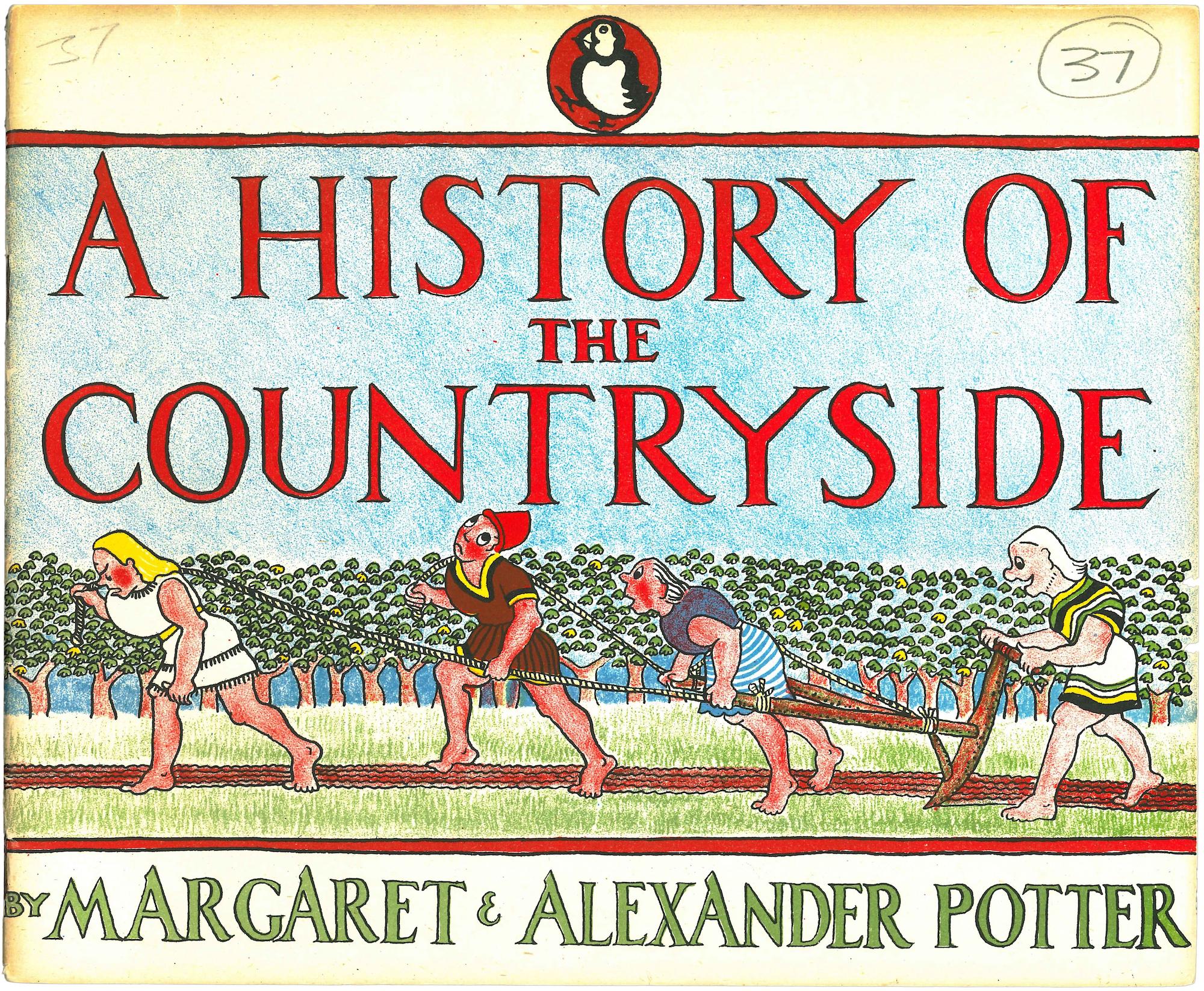
A History of the Countryside, 1944
The Puffin Picture Books series was established by designer and editor Noel Carrington (1895-1989). In 1933, artist Pearl Binder (1904-1990) sent Carrington a package of Soviet children’s books. “They were produced by the million on very cheap paper, but the drawings were vigorous and the colour delightful” he later remembered. These books inspired Carrington to edit a series of affordable books that would encourage “the child’s awakening interest in its surroundings... I felt that colour was essential, and that artists could... be more successful in books of this nature than the camera”. Many artists and illustrators worked on the series, adapting their ways of working to lithographic printing and the Puffin Picture Book format. Most of the 120 books in the series were printed on one large sheet of paper: one side in colour and one in black-and-white. Each sheet was cut, folded and stapled to create a softcover book.
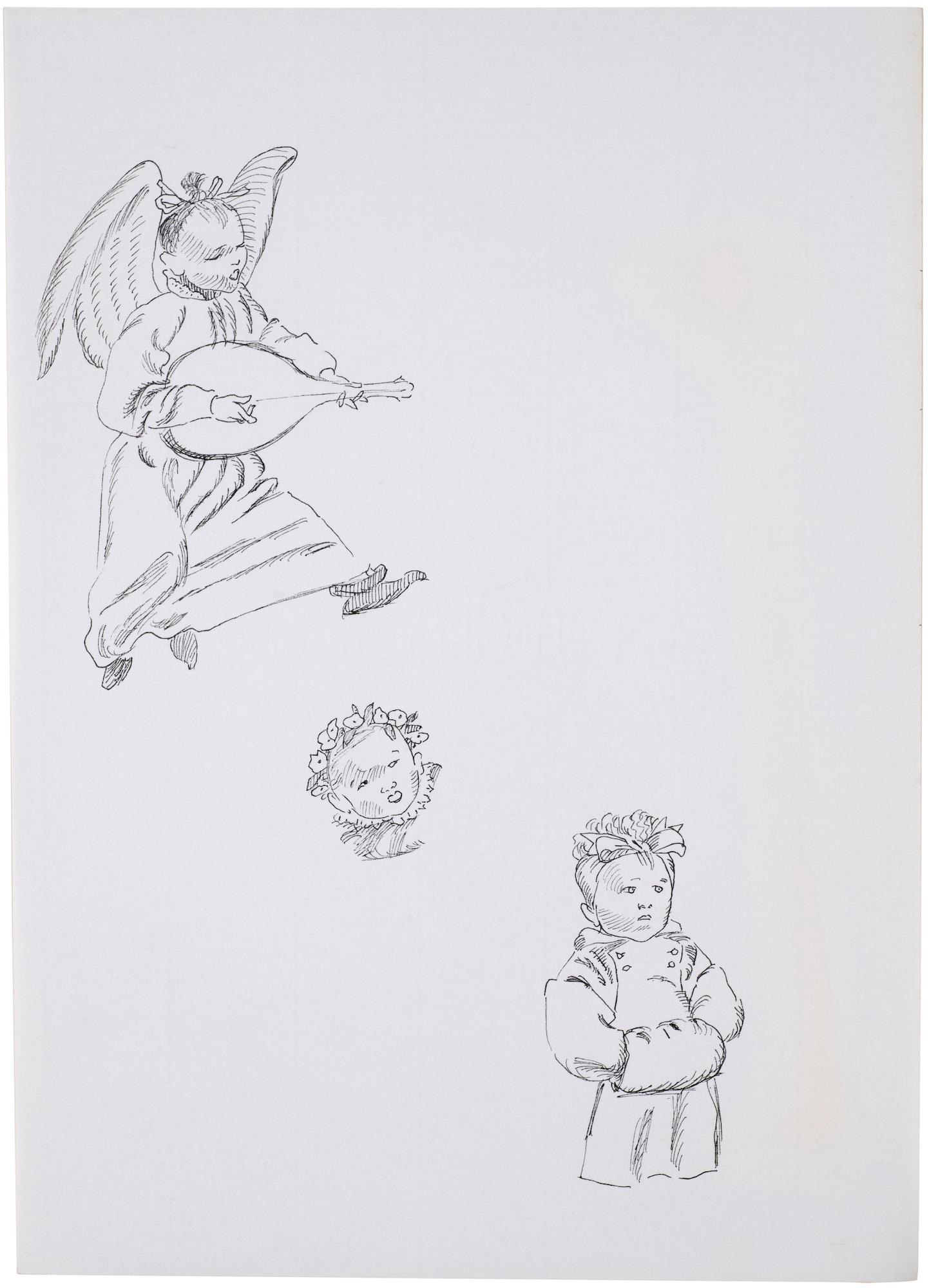
Jacqueline Ayer, Untitled, Date unknown
Jacqueline Ayer (1930–2012) had a career that spanned many creative fields. She began as a fashion illustrator, and later turned her hand to children’s books, textiles and garments, as she worked in New York, Paris, London, Bangkok, Hong Kong and across India. Ayer often used a sketchbook to record her observations and ideas for book narratives and fashion designs. The context for this drawing is unknown.
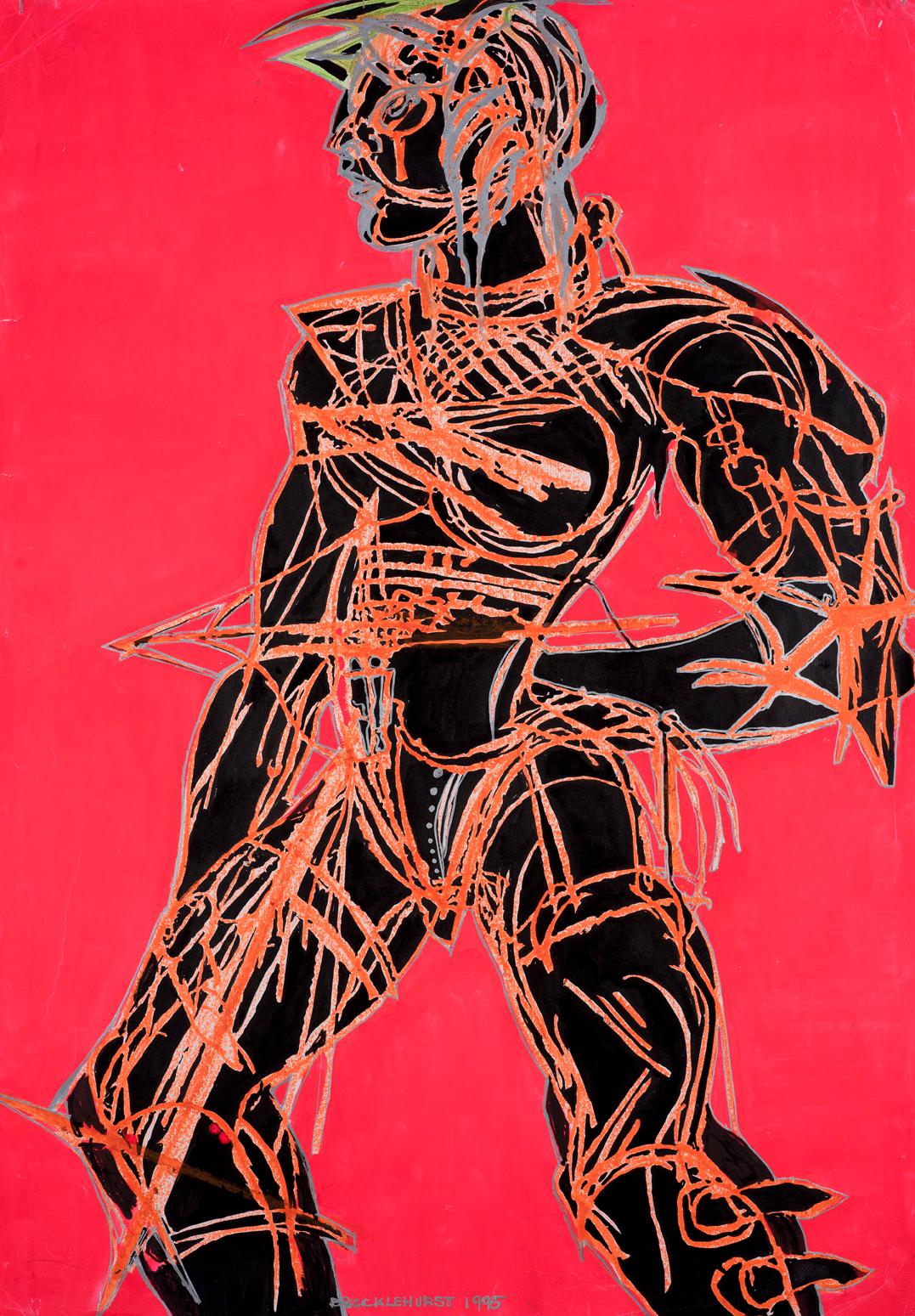
Jo Brocklehurst, Untitled (portrait of Liz de Havilland), 1995
Jo (Josephine) Brocklehurst (1935 - 2006) studied at Central Saint Martins and began her career as a fashion illustrator. She later focused on portraiture, drawing directly from models at her studio in West Hampstead and in nightclubs and theatres in Berlin, London and New York. Her work documents the alternative subcultures of the 1970s, 80s and 90s that went on to shape mainstream fashion and performance scenes. In the 1990s, Brocklehurst began drawing the fashion designers and performers finding space for experimentation in the fetish clubs of Soho and King’s Cross.
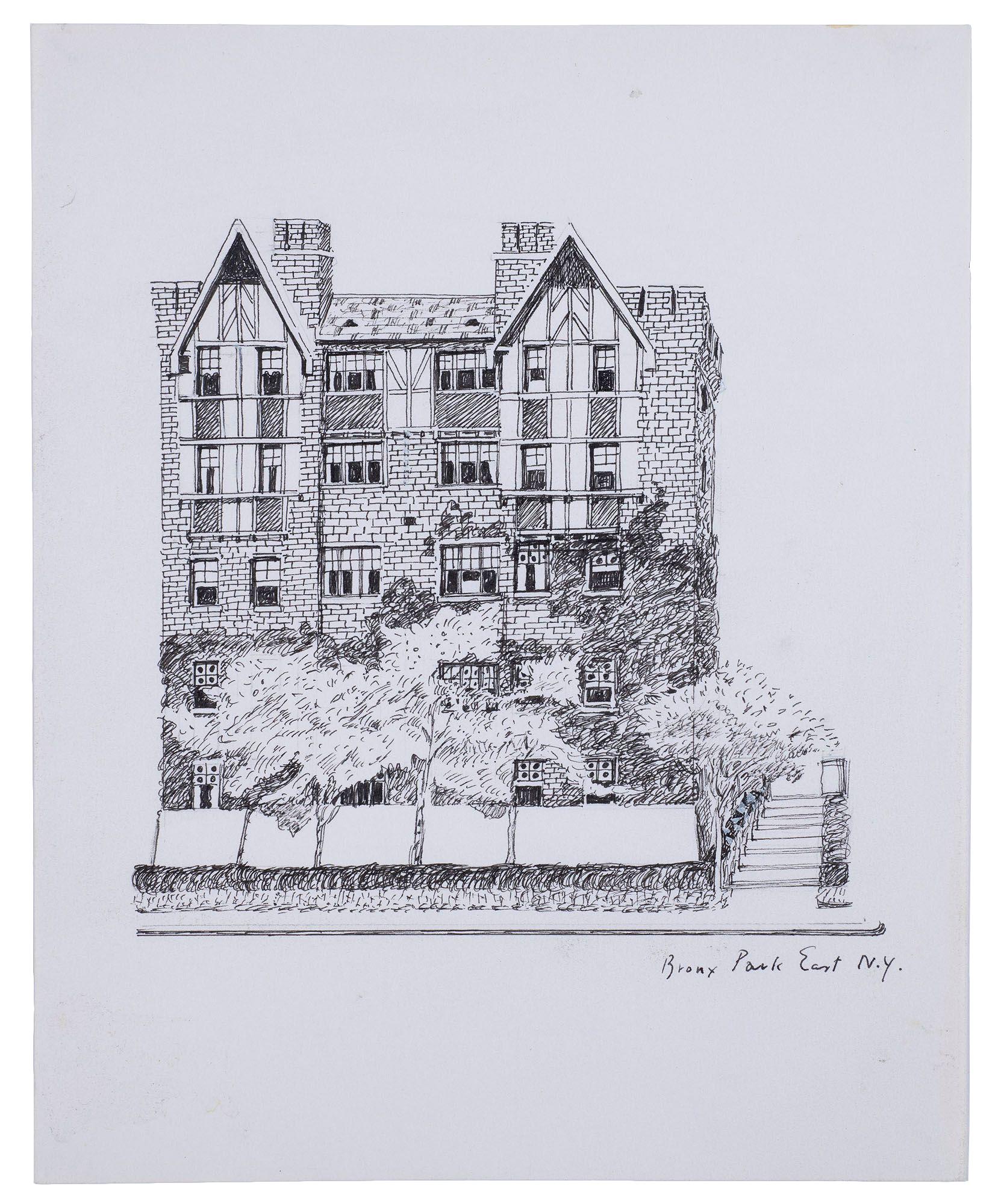
Jacqueline Ayer, Untitled (Bronx Park East NY), 2009
Jacqueline Ayer (1930–2012) had a career that spanned many creative fields. She began as a fashion illustrator, and later turned her hand to children’s books, textiles and garments, as she worked in New York, Paris, London, Bangkok, Hong Kong and across India. Jacqueline described her childhood home as ‘a faux Tudor gardened paradise’. She drew this sketch to accompany her autobiography, as yet unpublished.
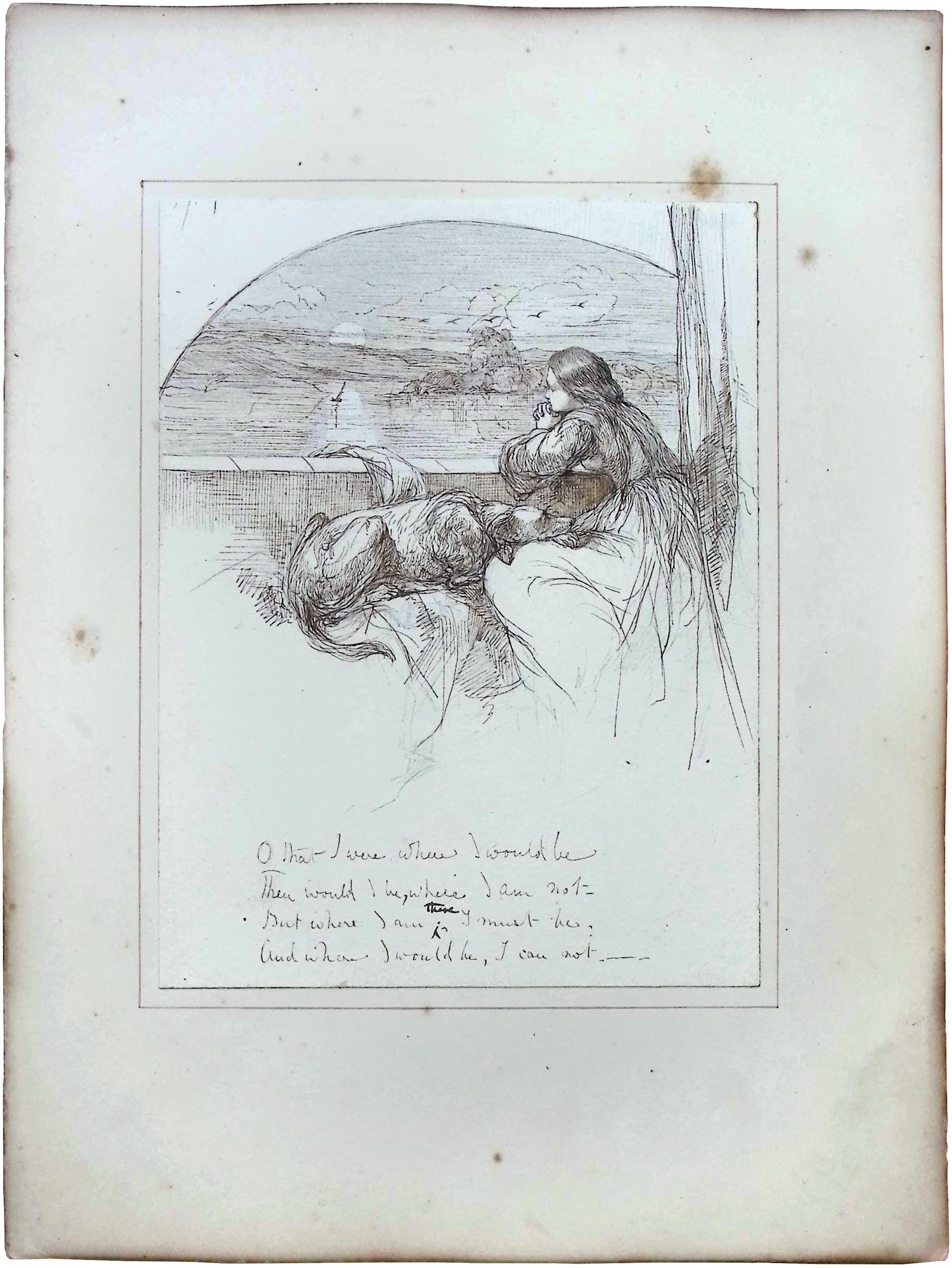
Untitled (illustration for Child's Play, 'O That I Were Where I Would Be'), c. 1851
Eleanor Vere Boyle (1825 – 1916) illustrated poetry and prose by some of the most popular authors of her time. She regularly drew and painted using ink and watercolour, sketching landscapes, animals and her children from life. She also made drawings from her imagination, often reflecting spiritual themes. This illustration is from her first book, Child’s Play (1851). Boyle provided her publishers with black and white drawings that were then converted into etchings by the printer. These were later reproduced as lithographs, in colours chosen by Boyle.
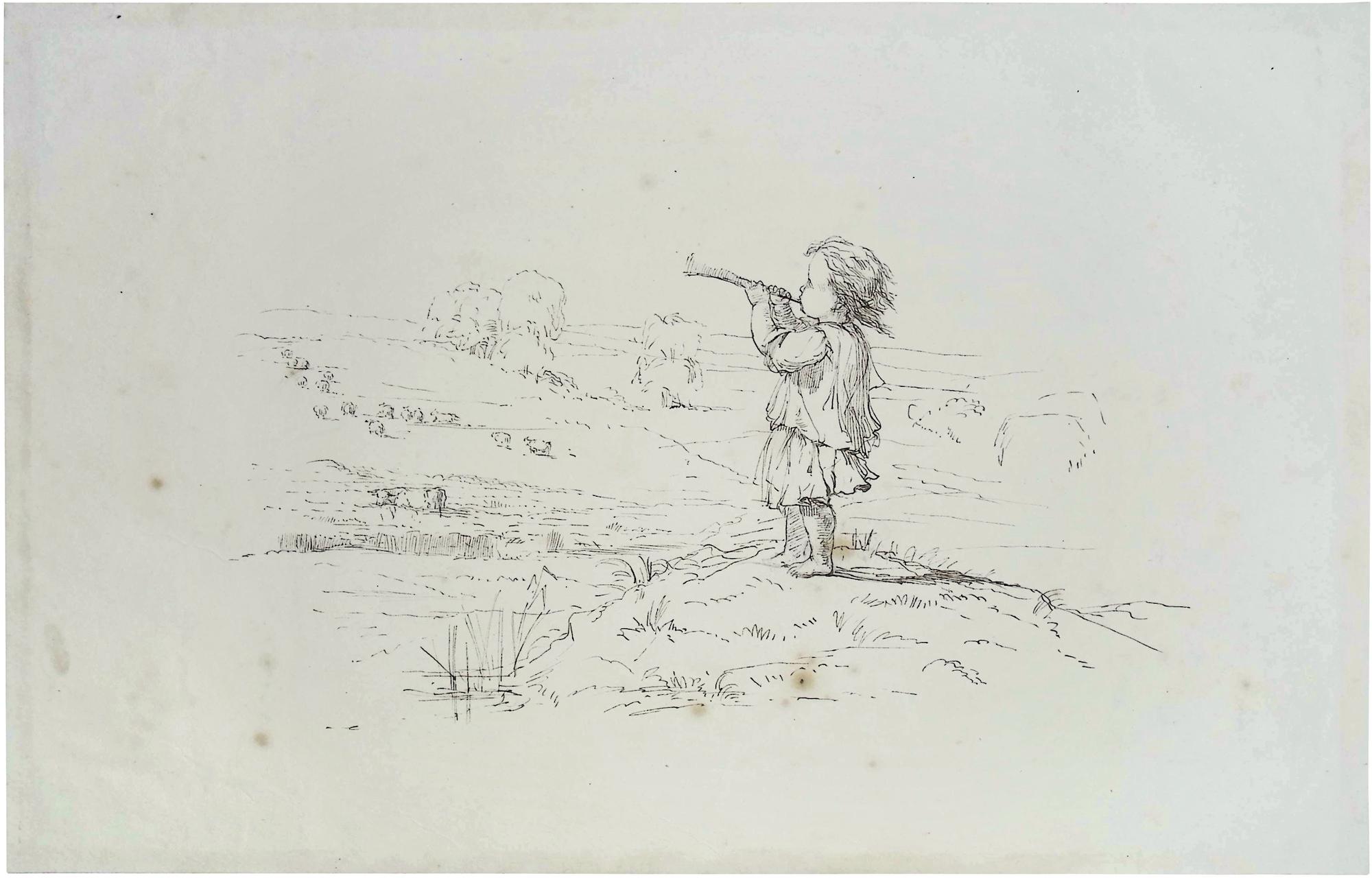
Untitled (draft illustration for Child's Play, 'Little boy blue'), Date unknown
Eleanor Vere Boyle (1825 – 1916) illustrated poetry and prose by some of the most popular authors of her time. She regularly drew and painted using ink and watercolour, sketching landscapes, animals and her children from life. She also made drawings from her imagination, often reflecting spiritual themes. This draft illustration was finalised and featured in her first book, Child’s Play (1851).
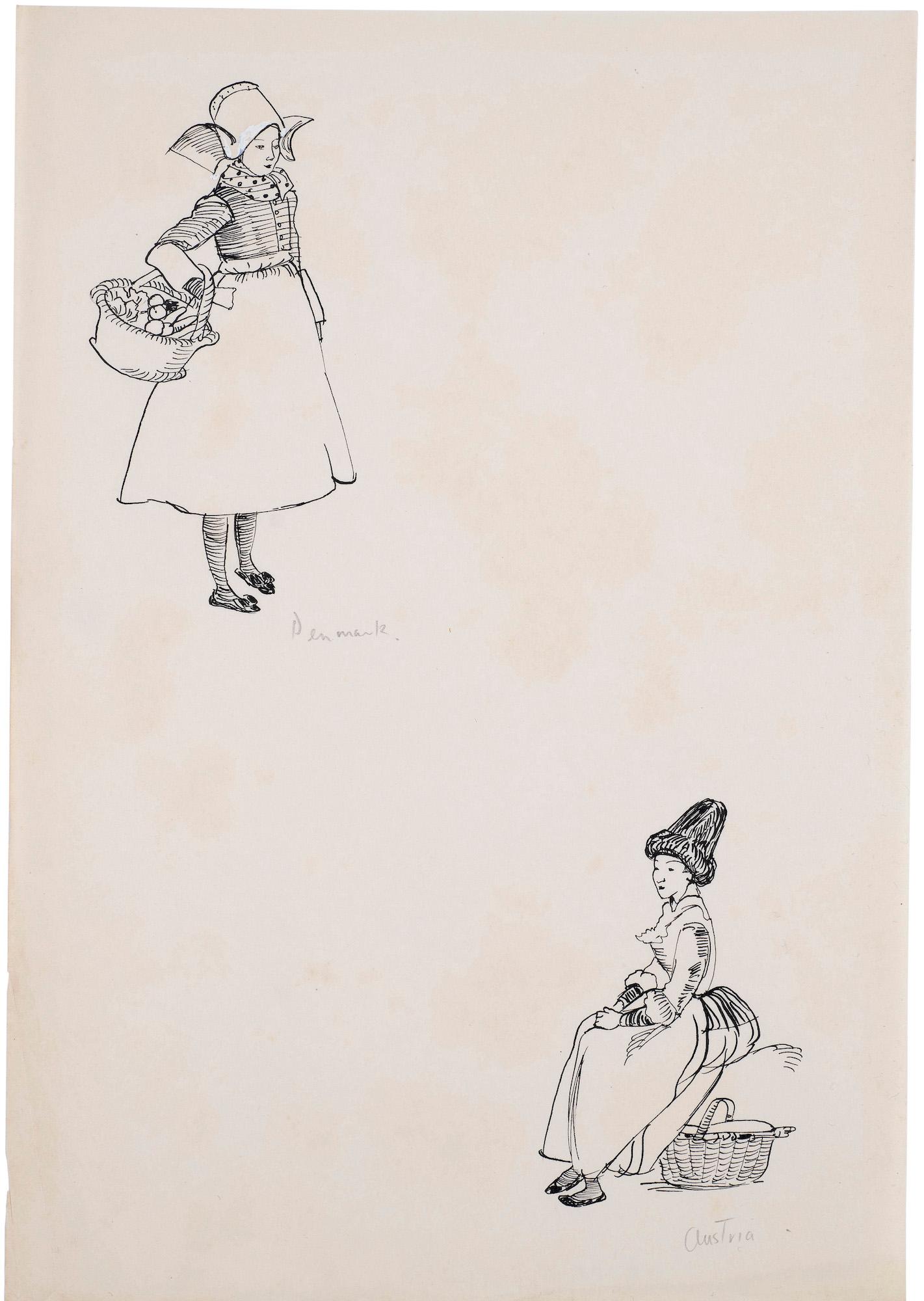
Jacqueline Ayer, Untitled, c. 1975
Jacqueline Ayer (1930–2012) had a career that spanned many creative fields. She began as a fashion illustrator, and later turned her hand to children’s books, textiles and garments, as she worked in New York, Paris, London, Bangkok, Hong Kong and across India.
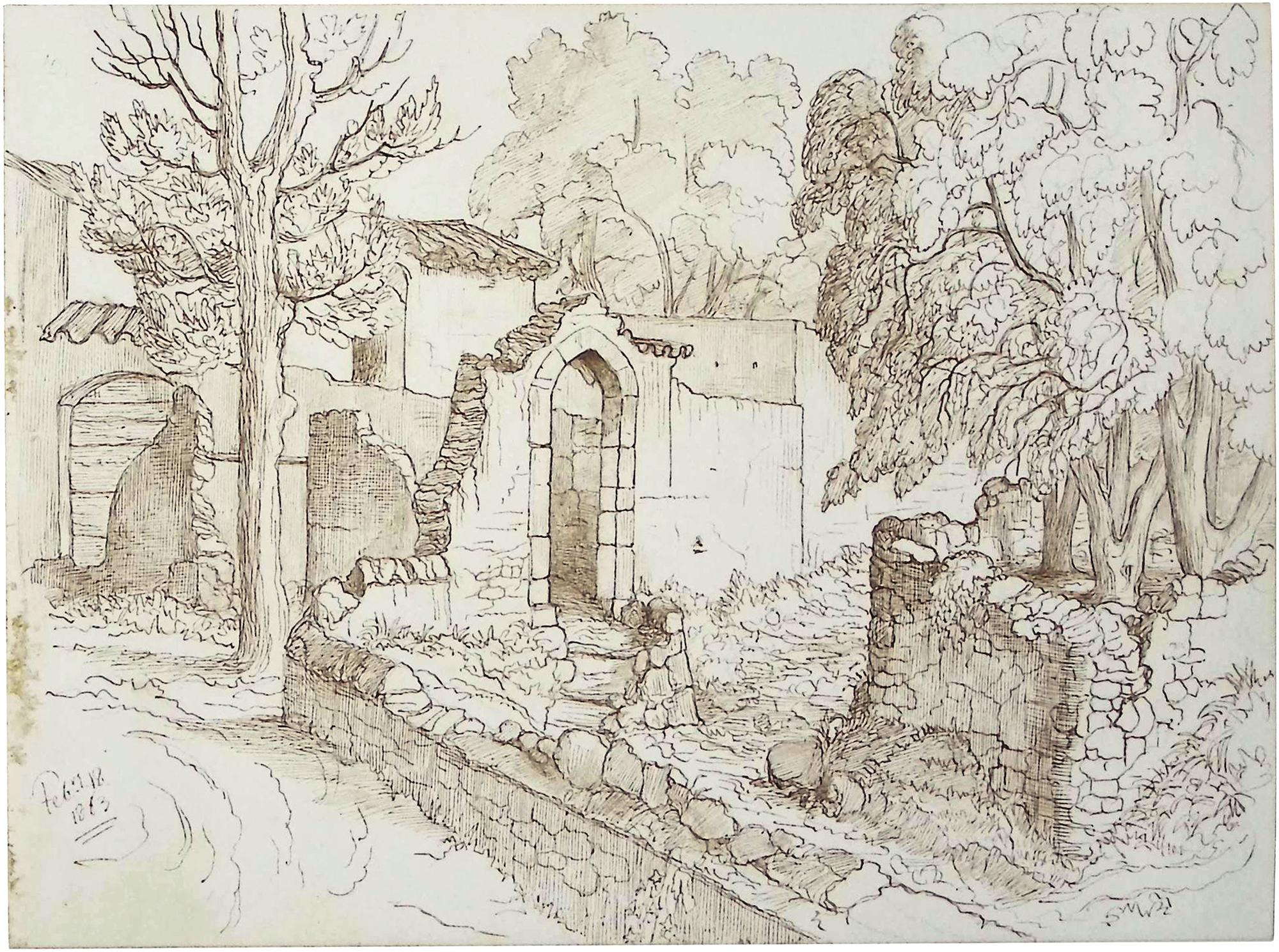
Untitled (Ruined Farm), 1863
Eleanor Vere Boyle (1825 – 1916) illustrated poetry and prose by some of the most popular authors of her time. She regularly drew and painted using ink and watercolour, sketching landscapes, animals and her children from life. She also made drawings from her imagination, often reflecting spiritual themes.
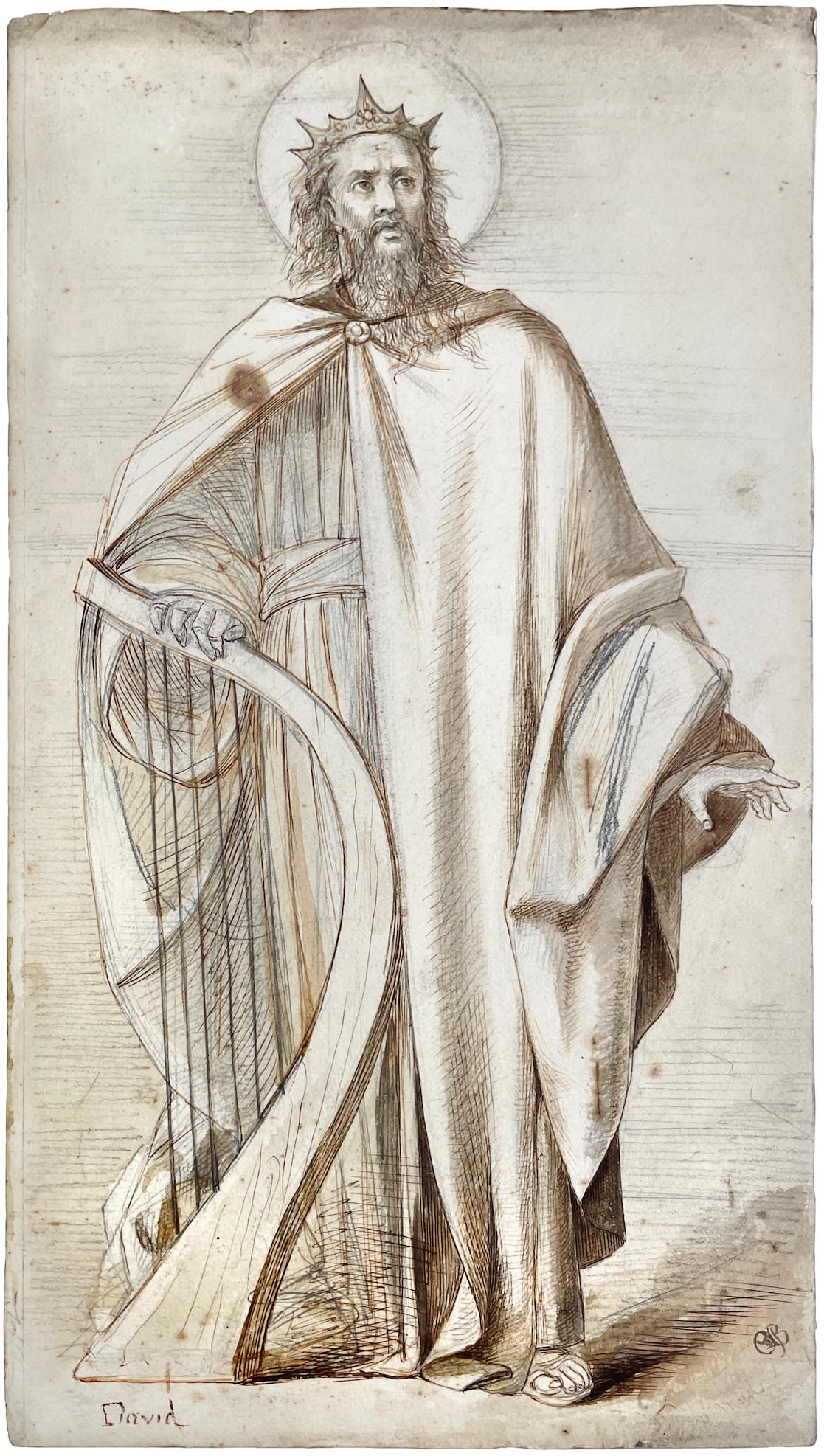
Untitled (David), Date unknown
Eleanor Vere Boyle (1825 – 1916) illustrated poetry and prose by some of the most popular authors of her time. She regularly drew and painted using ink and watercolour, sketching landscapes, animals and her children from life. She also made drawings from her imagination, often reflecting spiritual themes.

Untitled, 1969
Between the 1960s and 1990s, more than fifty designers worked at OSPAAAL (the Organisation of Solidarity with the People of Africa, Asia and Latin America). Based in Cuba, they made magazines and posters that were sent around the world. Their aim was to promote radical political ideas. Many of their posters celebrate socialist revolutions and liberation movements from the Global South. Alfredo Rostgaard’s poster depicts Jesus Christ carrying a rifle on his back. On the reverse of the poster is a quote from Camilo Torres, a Roman Catholic priest and guerrilla who fought with the revolutionary Colombian National Liberation Army. Torres combined his religious faith with Marxist politics and believed that “If Jesus were alive today, he would be a guerrillero”.
Content warning: weaponry
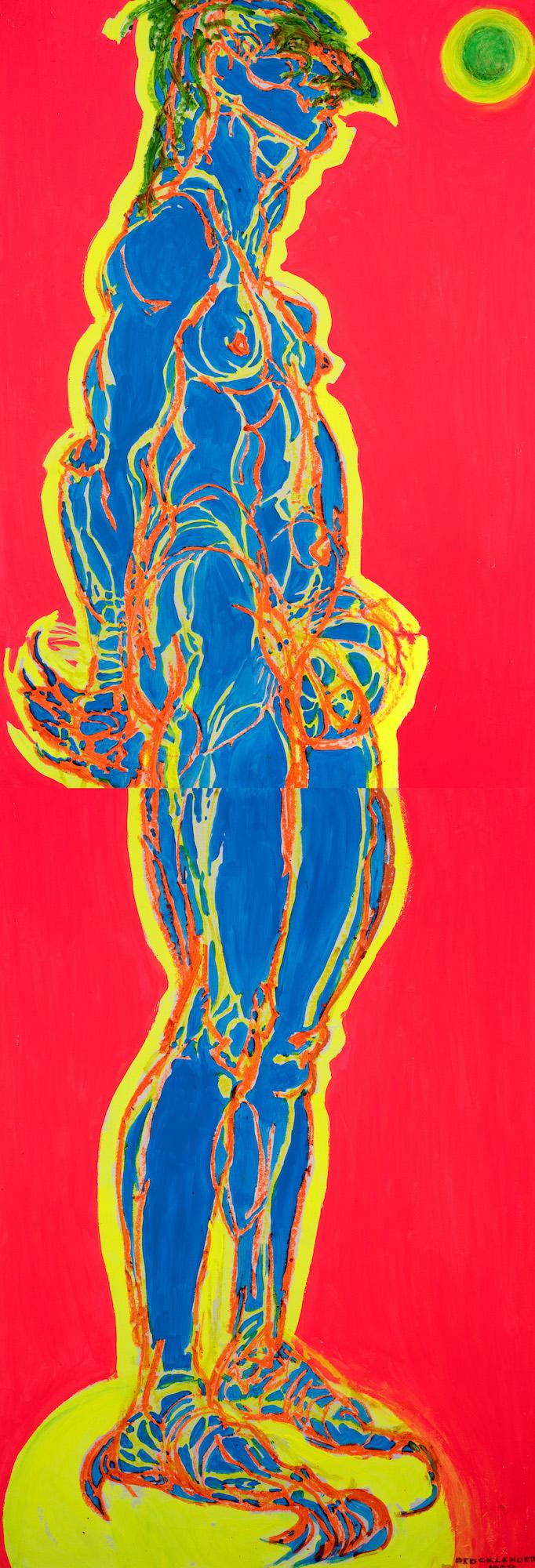
Jo Brocklehurst, Untitled, 1988
Jo (Josephine) Brocklehurst (1935 - 2006) studied at Central Saint Martins and began her career as a fashion illustrator. She later focused on portraiture, drawing directly from models at her studio in West Hampstead and in nightclubs and theatres in Berlin, London and New York. Her work documents the alternative subcultures of the 1970s, 80s and 90s that went on to shape mainstream fashion and performance scenes.
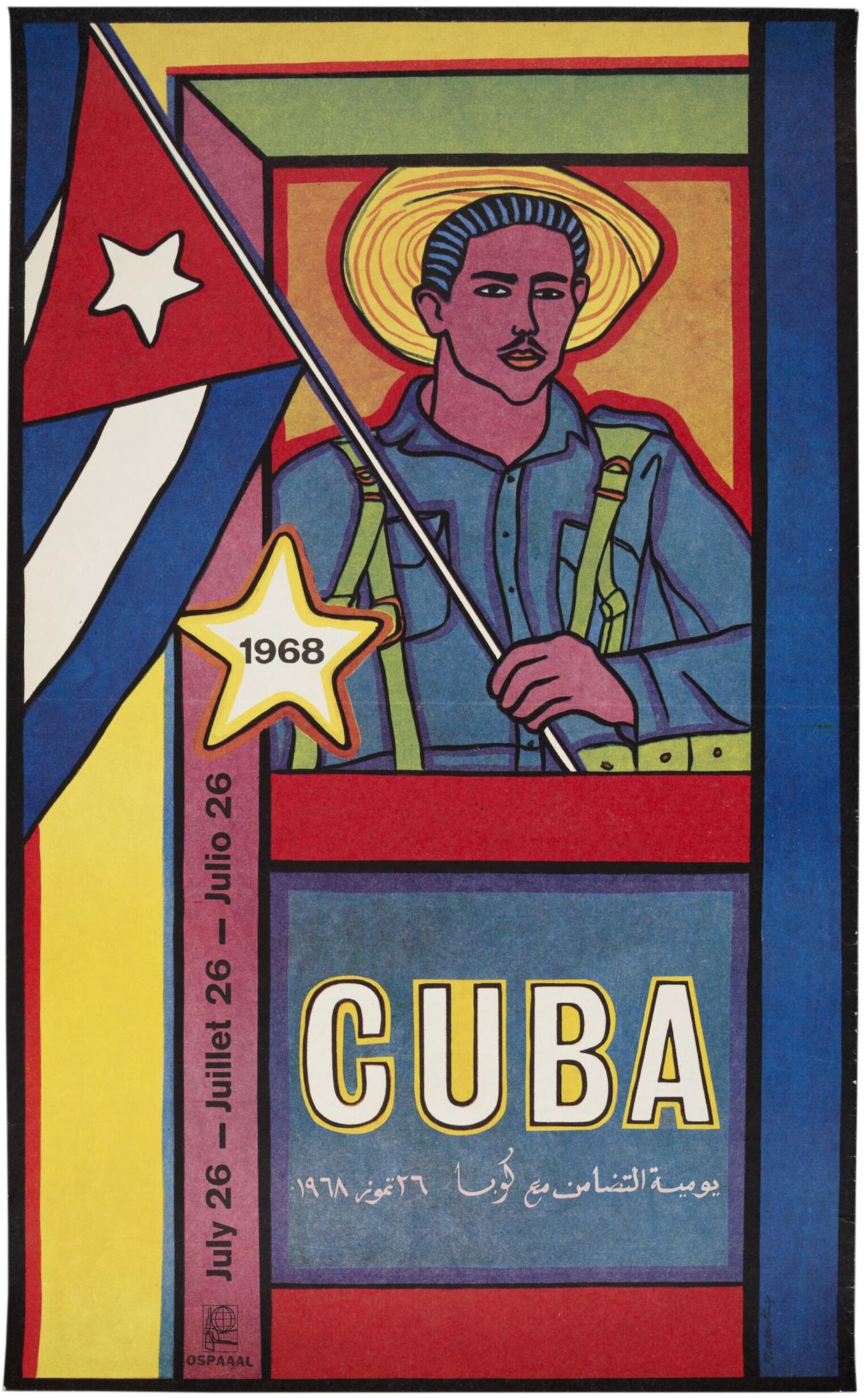
CUBA - July 26 - 1968, 1968
Between the 1960s and 1990s, more than fifty designers worked at OSPAAAL. Based in Cuba, they made magazines and posters that were sent around the world. Their aim was to promote radical political ideas. Many of their posters celebrate socialist revolutions and liberation movements from the Global South. From the 1960s, painter Raúl Martinez started working as a graphic designer, drawn to the social impact of posters and magazines. He was known for his portraits of well-known revolutionary icons, but to commemorate the 26th of July Movement he portrayed an anonymous Cuban patriot.
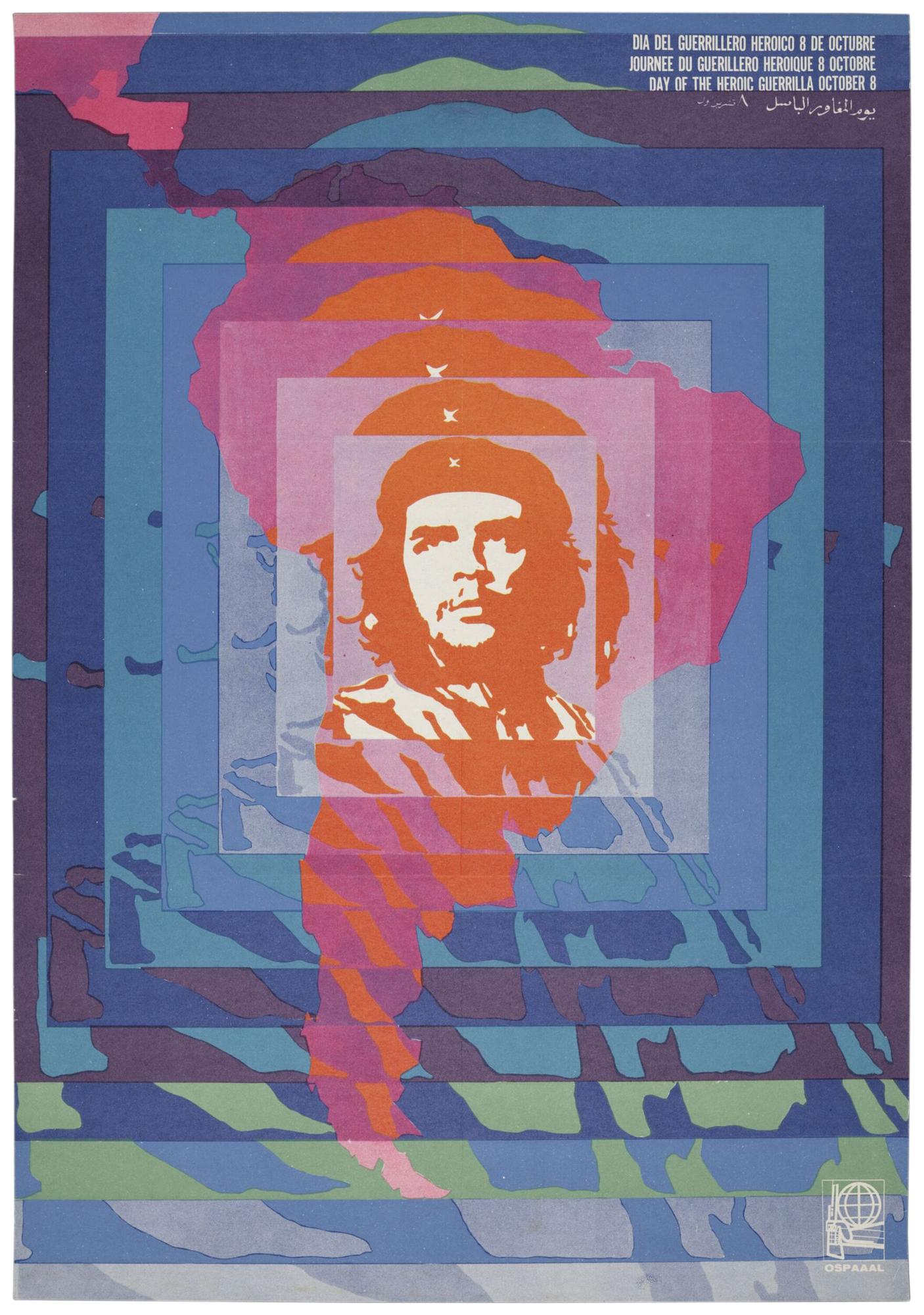
DAY OF THE HEROIC GUERRILLA - OCTOBER 8, 1968
Between the 1960s and 1990s, more than fifty designers worked at OSPAAAL (the Organisation of Solidarity with the People of Africa, Asia and Latin America). Based in Cuba, they made magazines and posters that were sent around the world. Their aim was to promote radical political ideas. Many of their posters celebrate socialist revolutions and liberation movements from the Global South. From 1968, 9 October was designated as the ‘Day of the Heroic Guerilla’ to mark the anniversary of Che Guevara’s death. Helena Serrano was working at the Cuban government’s propaganda commission when she was asked to produce this poster, her only design for OSPAAAL.
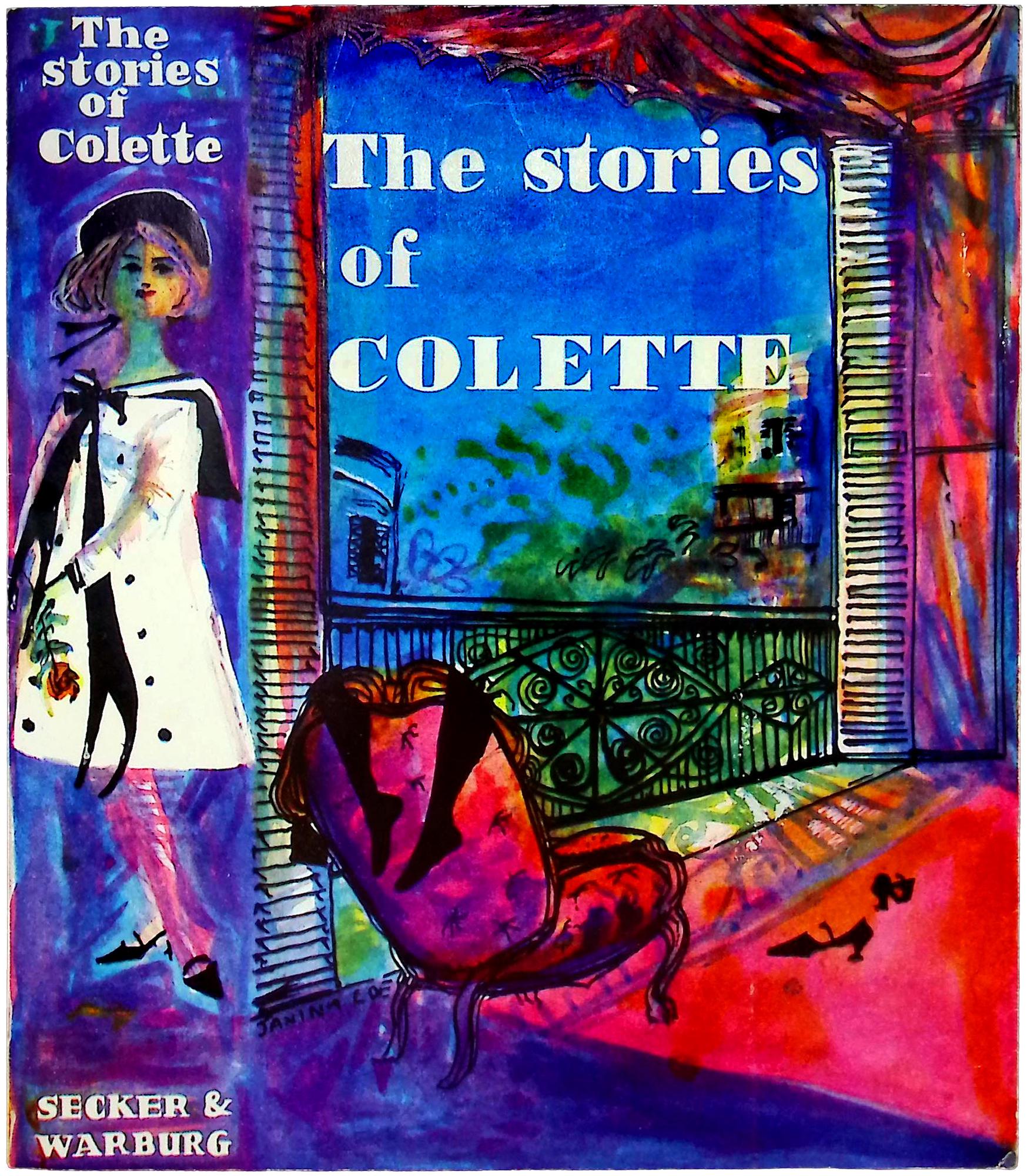
Book cover proof for "The Stories of Colette", 1958
British illustrator Janina Ede (1937-2018) created covers and illustrations for over 100 books from the 1950s to the 1980s. She designed the covers of several books by French author and pioneer of autofiction Sidonie-Gabrielle Colette.
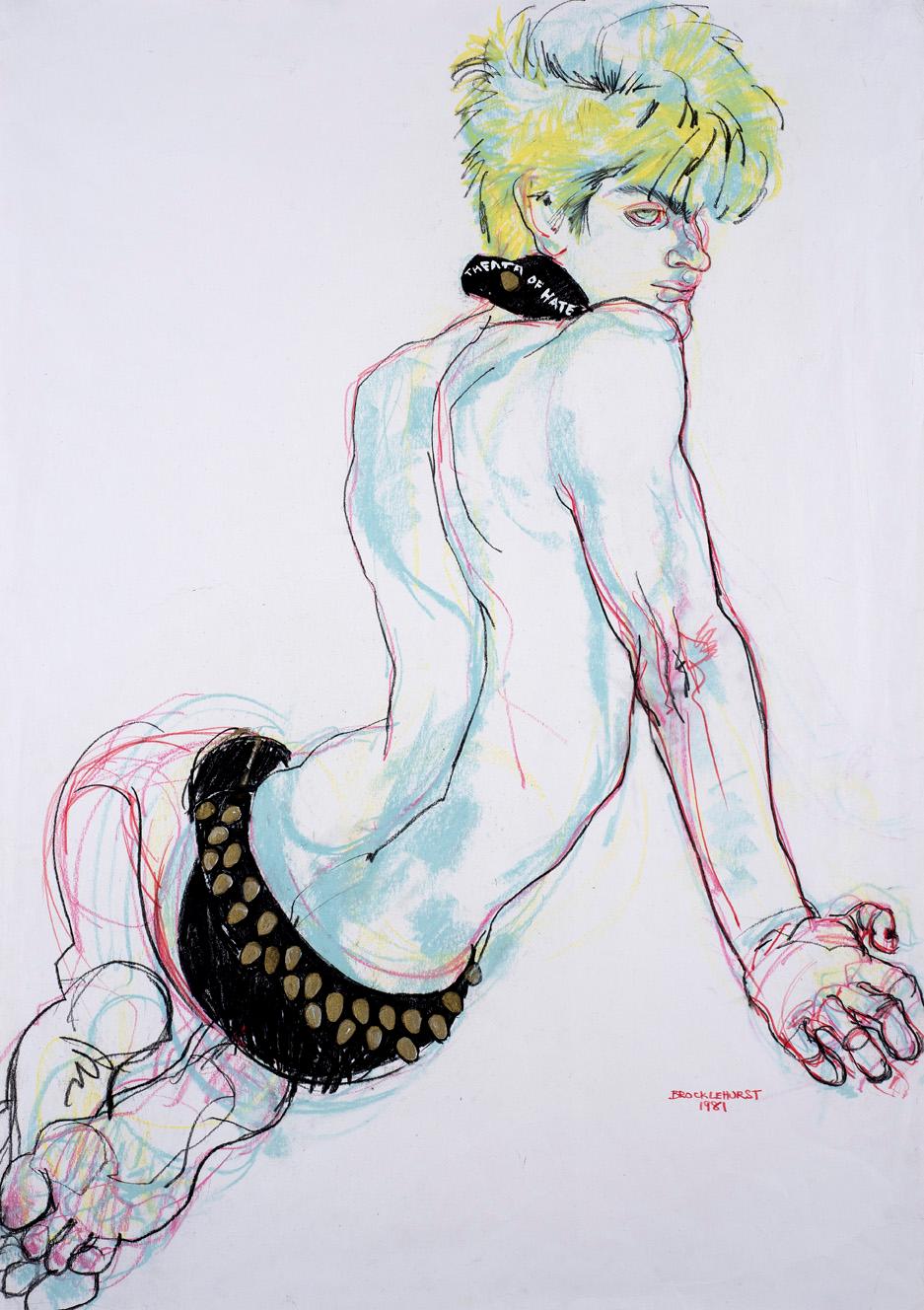
Jo Brocklehurst, Untitled (portrait of Tony Drayton), 1981
Jo (Josephine) Brocklehurst (1935 - 2006) studied at Central Saint Martins and began her career as a fashion illustrator. She later focused on portraiture, drawing directly from models at her studio in West Hampstead and in nightclubs and theatres in Berlin, London and New York. Her work documents the alternative subcultures of the 1970s, 80s and 90s that went on to shape mainstream fashion and performance scenes. In the 1980s, Brocklehurst drew a series portraits of members of the Kill Your Pet Puppy collective who were living in a squat close to her studio. Attracted to their anarcho-punk dress and ethos, she said “I felt that they understood very well what was going on in the world, what was in it for them”. This portrait is of Tony Drayton, founder of Kill Your Pet Puppy and punk fanzine Ripped And Torn.
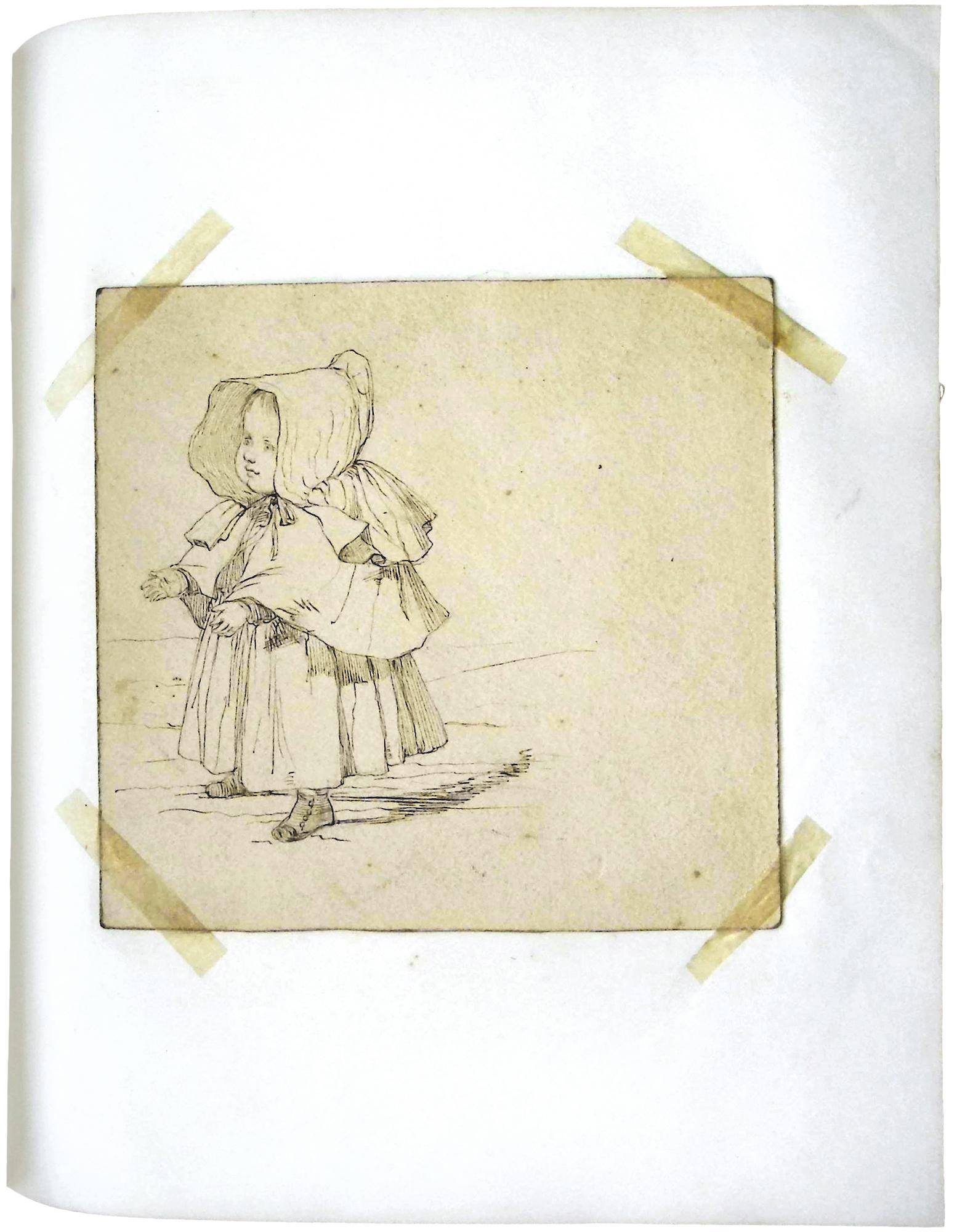
Untitled, Date unknown
Eleanor Vere Boyle (1825 – 1916) illustrated poetry and prose by some of the most popular authors of her time. She regularly drew and painted using ink and watercolour, sketching landscapes, animals and her children from life. She also made drawings from her imagination, often reflecting spiritual themes.
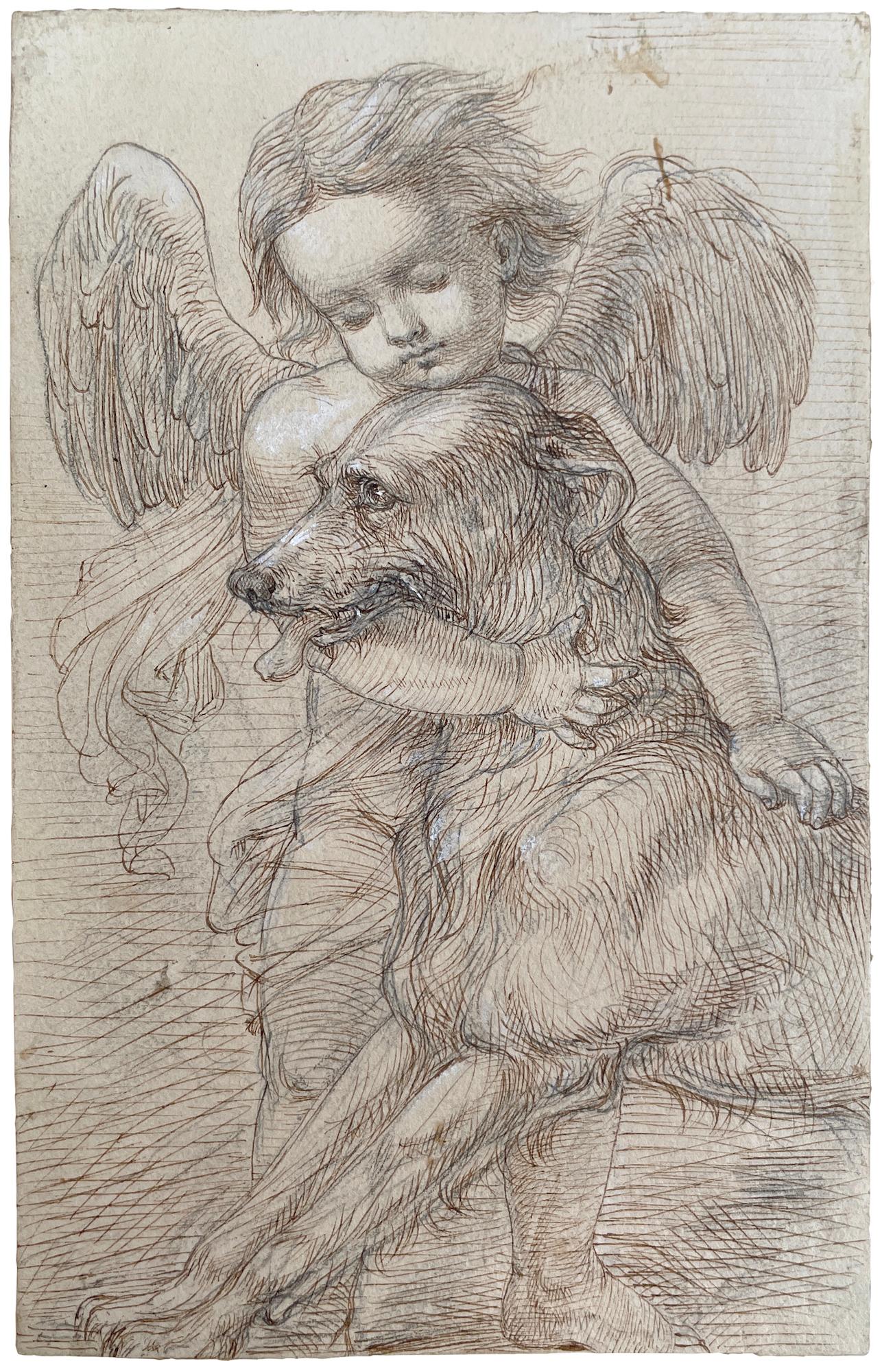
Untitled, 1855
Eleanor Vere Boyle (1825 – 1916) illustrated poetry and prose by some of the most popular authors of her time. She regularly drew and painted using ink and watercolour, sketching landscapes, animals and her children from life. She also made drawings from her imagination, often reflecting spiritual themes.
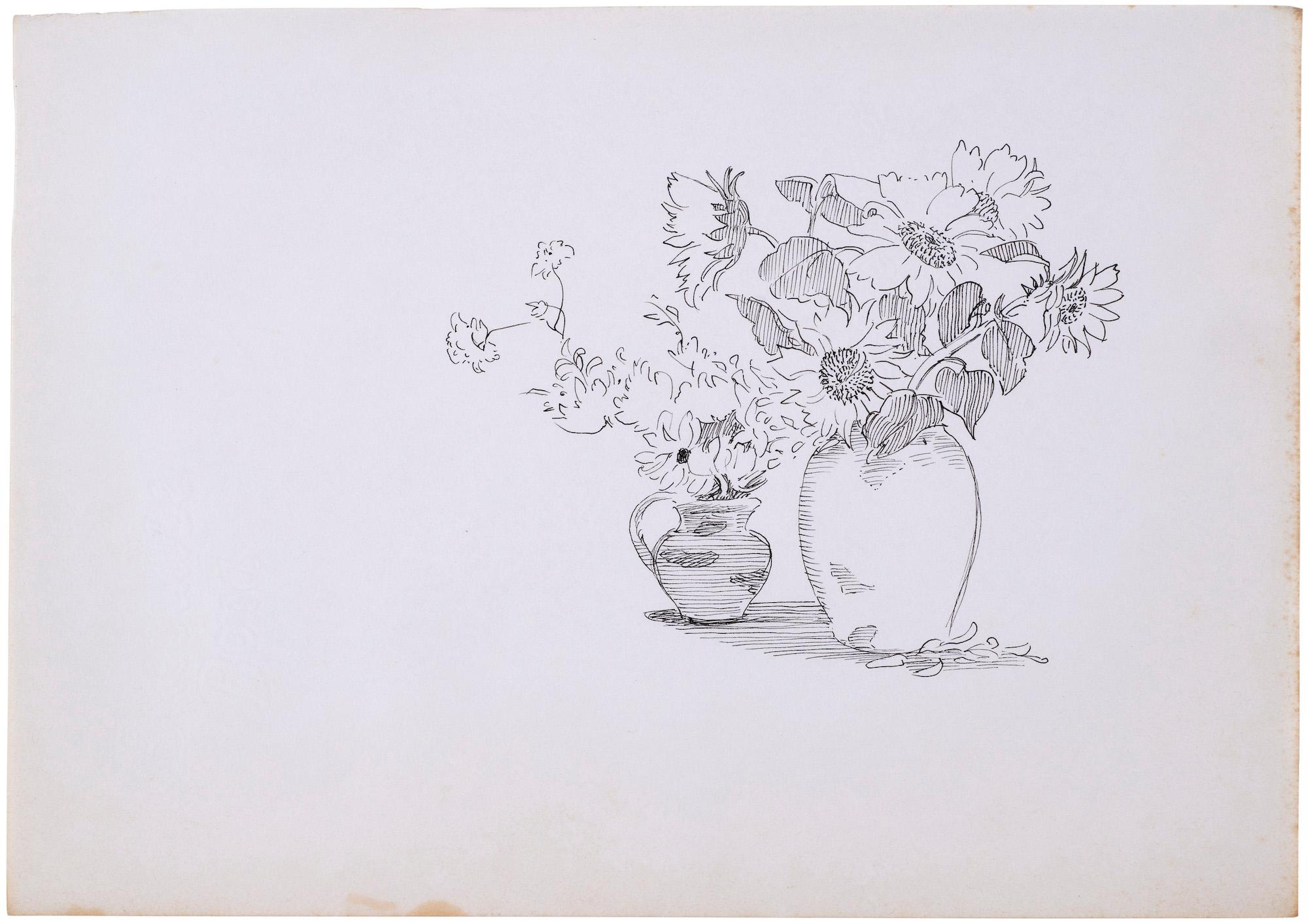
Jacqueline Ayer, Untitled, Date unknown
Jacqueline Ayer (1930–2012) had a career that spanned many creative fields. She began as a fashion illustrator, and later turned her hand to children’s books, textiles and garments, as she worked in New York, Paris, London, Bangkok, Hong Kong and across India. Ayer often used a sketchbook to record her observations and ideas for book narratives and fashion designs. The context for this drawing is unknown.
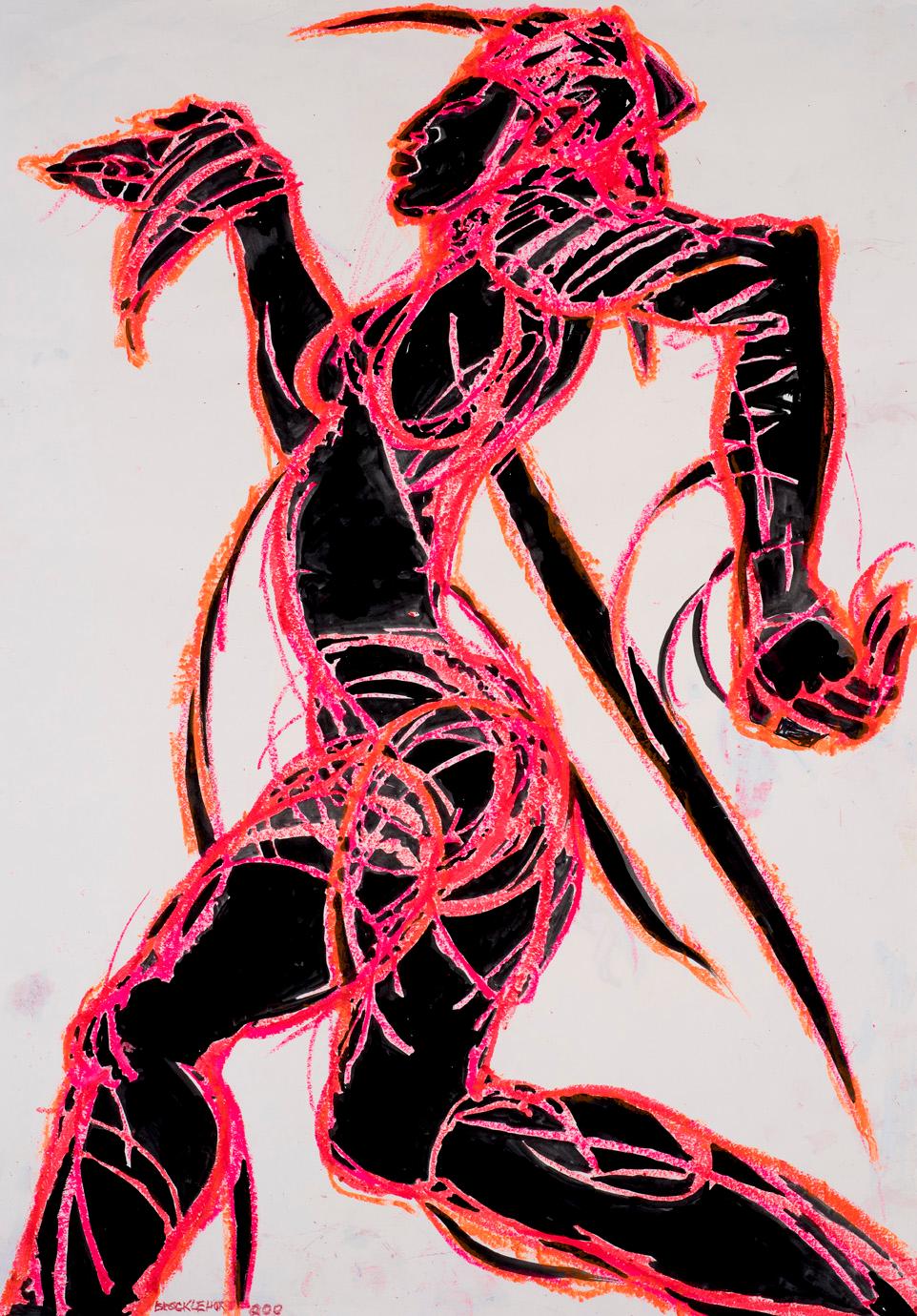
Jo Brocklehurst, Untitled (portrait of Josephine Leask), 2000
Jo (Josephine) Brocklehurst (1935 - 2006) studied at Central Saint Martins and began her career as a fashion illustrator. She later focused on portraiture, drawing directly from models at her studio in West Hampstead and in nightclubs and theatres in Berlin, London and New York. Her work documents the alternative subcultures of the 1970s, 80s and 90s that went on to shape mainstream fashion and performance scenes. In 2000, Brocklehurst created a series of drawings in sessions with dancer Josephine Leask. Leask’s 1999 article Welcome to the Club, published in ballettanz magazine, described the ways that nightclubs were acting as alternative theatres for cutting-edge contemporary dance. These drawings were shown as part of Leask’s lecture-performance on the same theme at the 2000 Salzburg Festival.
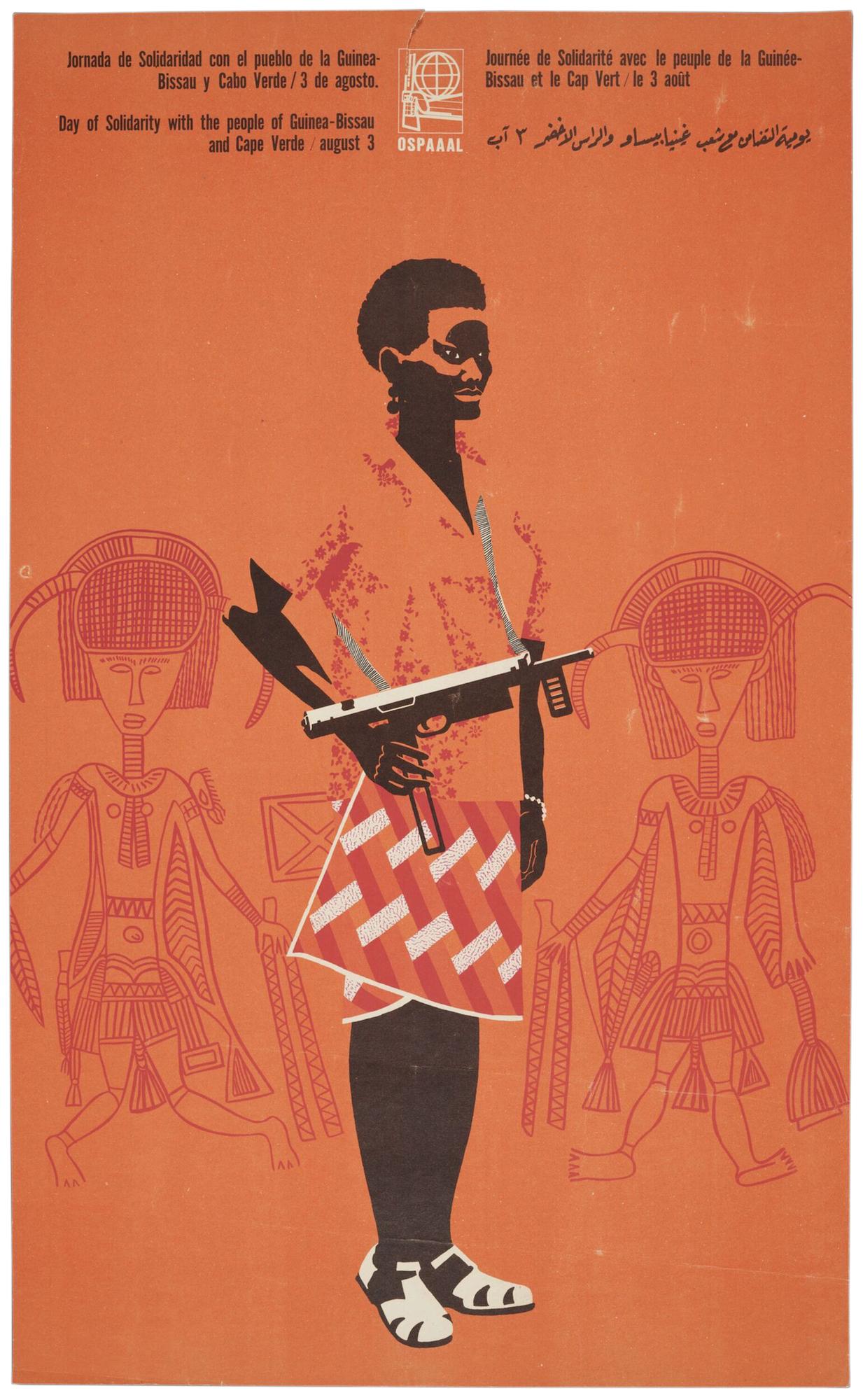
Day of Solidarity with the people of Guinea-Bissau and Cape Verde - august 3, 1968
Between the 1960s and 1990s, more than fifty designers worked at OSPAAAL (the Organisation of Solidarity with the People of Africa, Asia and Latin America). Based in Cuba, they made magazines and posters that were sent around the world. Their aim was to promote radical political ideas. Many of their posters celebrate socialist revolutions and liberation movements from the Global South. This poster was designed to mark a day of solidarity with liberation movements in Cape Verde and Guinea-Bissau seeking independence from Portuguese colonial rule, on the date of the Pidjiguiti massacre. Many OSPAAAL designers combined images of Indigenous art and craft with contemporary weaponry. Their aim was to argue for the right to self-determination and support liberation movements opposing colonial and imperial powers. However, the designers did not always know the meaning or origin of the iconography they used.
Content warning: weaponry
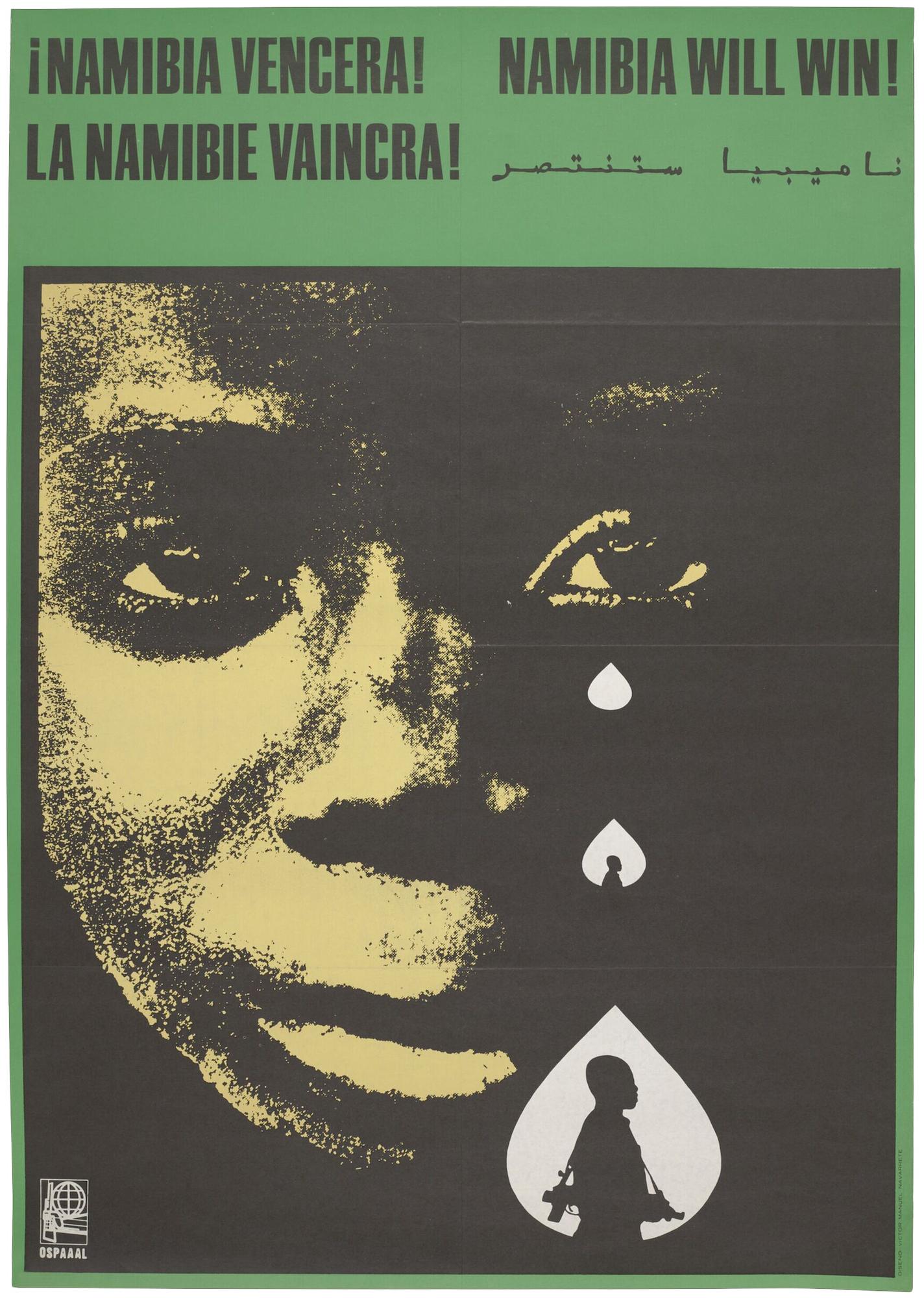
NAMIBIA WILL WIN!, 1977
Between the 1960s and 1990s, more than fifty designers worked at OSPAAAL (the Organisation of Solidarity with the People of Africa, Asia and Latin America). Based in Cuba, they made magazines and posters that were sent around the world. Their aim was to promote radical political ideas. Many of their posters celebrate socialist revolutions and liberation movements from the Global South. This poster was made in support of Namibia’s movement for independence from South African rule. OSPAAAL’s designers regularly used adapted photographs from the organisation’s news desk. Photographs were sometimes used out of context, with the same photographs appearing in posters and magazine illustrations to represent different themes. The identity of the child in this poster is not known.
Content warning: weaponry
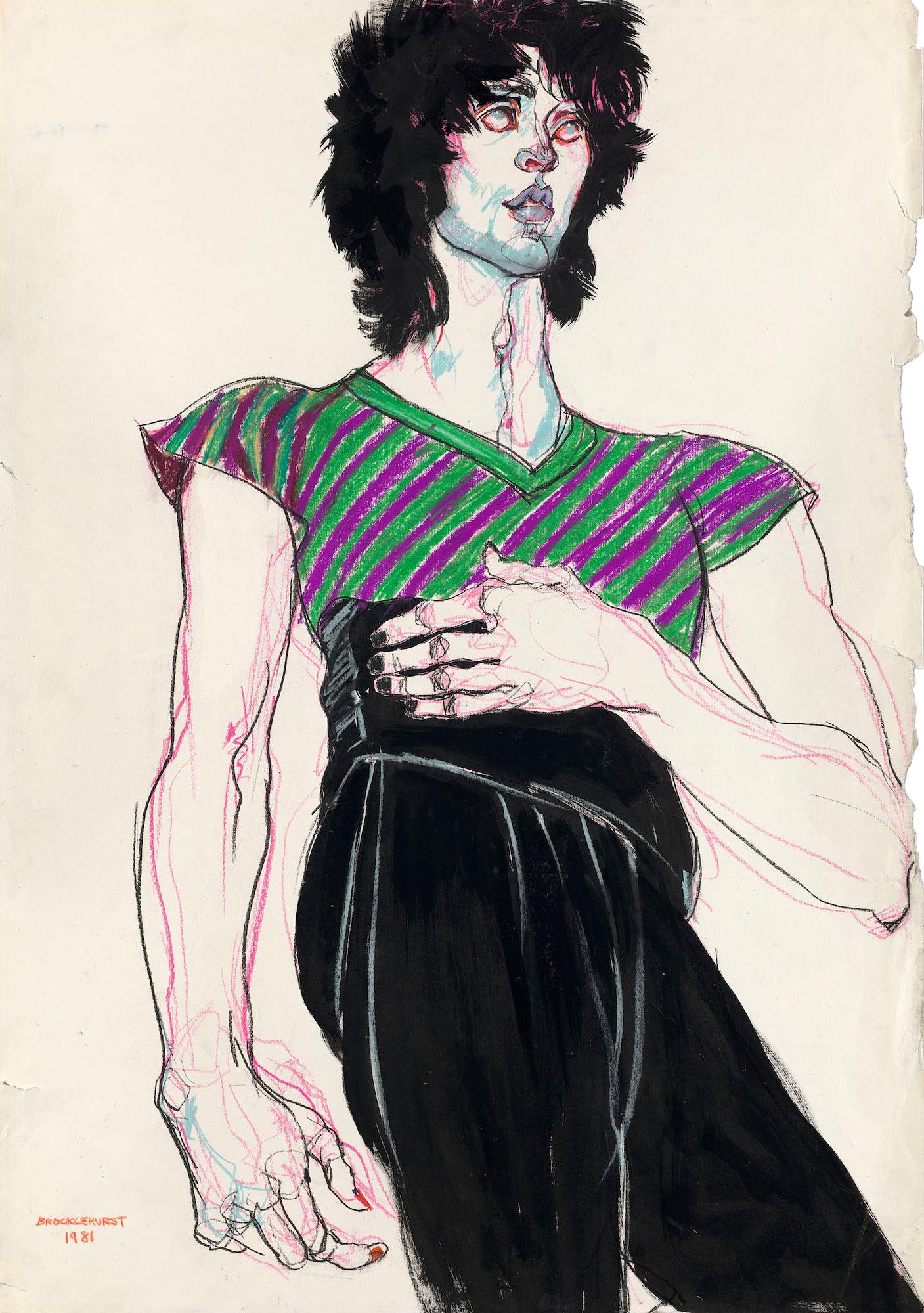
Jo Brocklehurst, Untitled, 1981
Jo (Josephine) Brocklehurst (1935 - 2006) studied at Central Saint Martins and began her career as a fashion illustrator. She later focused on portraiture, drawing directly from models at her studio in West Hampstead and in nightclubs and theatres in Berlin, London and New York. Her work documents the alternative subcultures of the 1970s, 80s and 90s that went on to shape mainstream fashion and performance scenes.
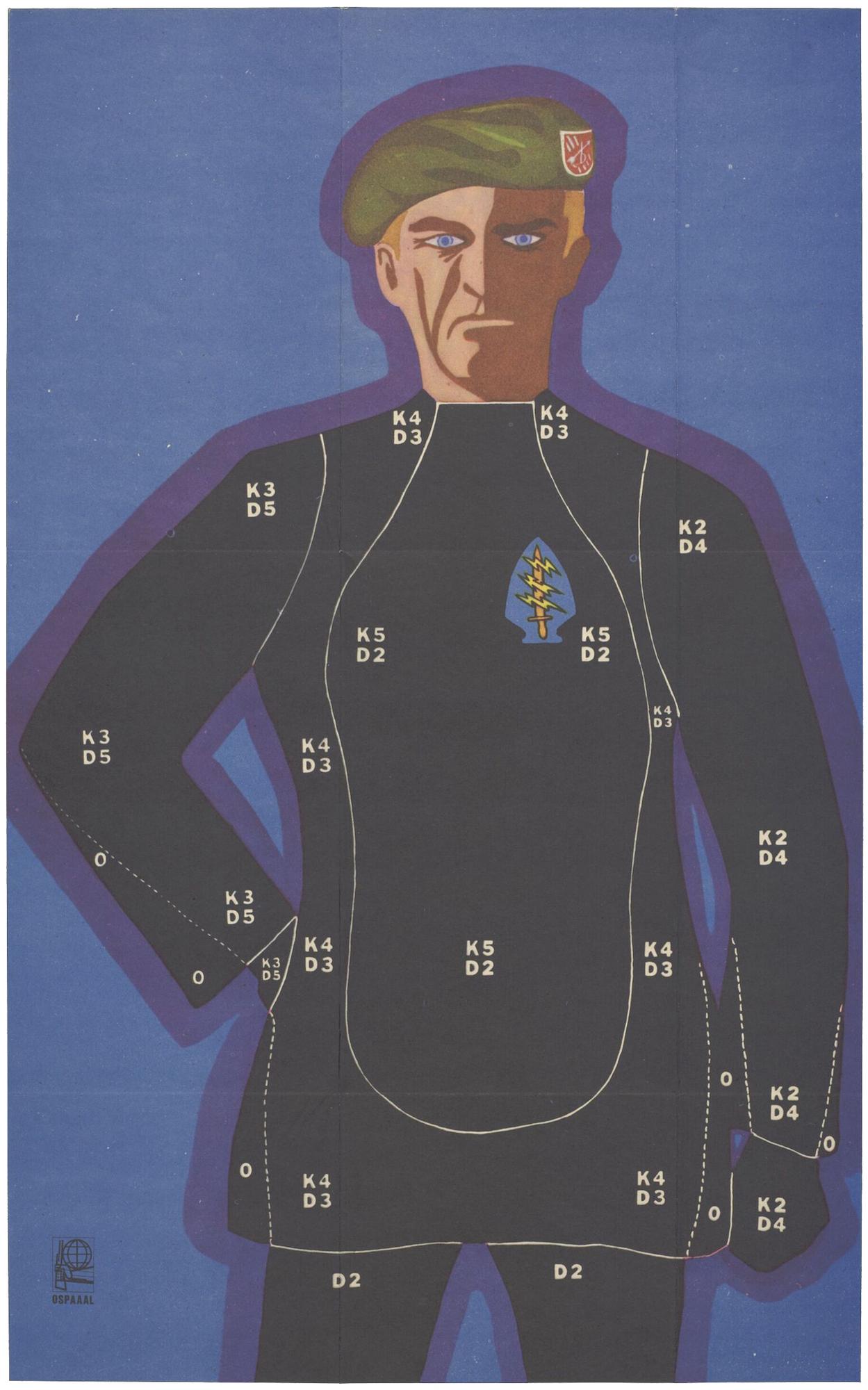
Untitled, 1969
Between the 1960s and 1990s, more than fifty designers worked at OSPAAAL (the Organisation of Solidarity with the People of Africa, Asia and Latin America). Based in Cuba, they made magazines and posters that were sent around the world. Their aim was to promote radical political ideas. Many of their posters celebrate socialist revolutions and liberation movements from the Global South. They also criticised the foreign policy of the U.S.A., particularly in relation to Cuva. Alfredo Rostgaard was OSPAAAL’s creative director from 1966 to 1976. His began his career as a caricaturist for socialist children’s comic Mella. For this design, he created a caricature of a United States Special Forces soldier, combined with a shooting target map.
Content warning: weaponry
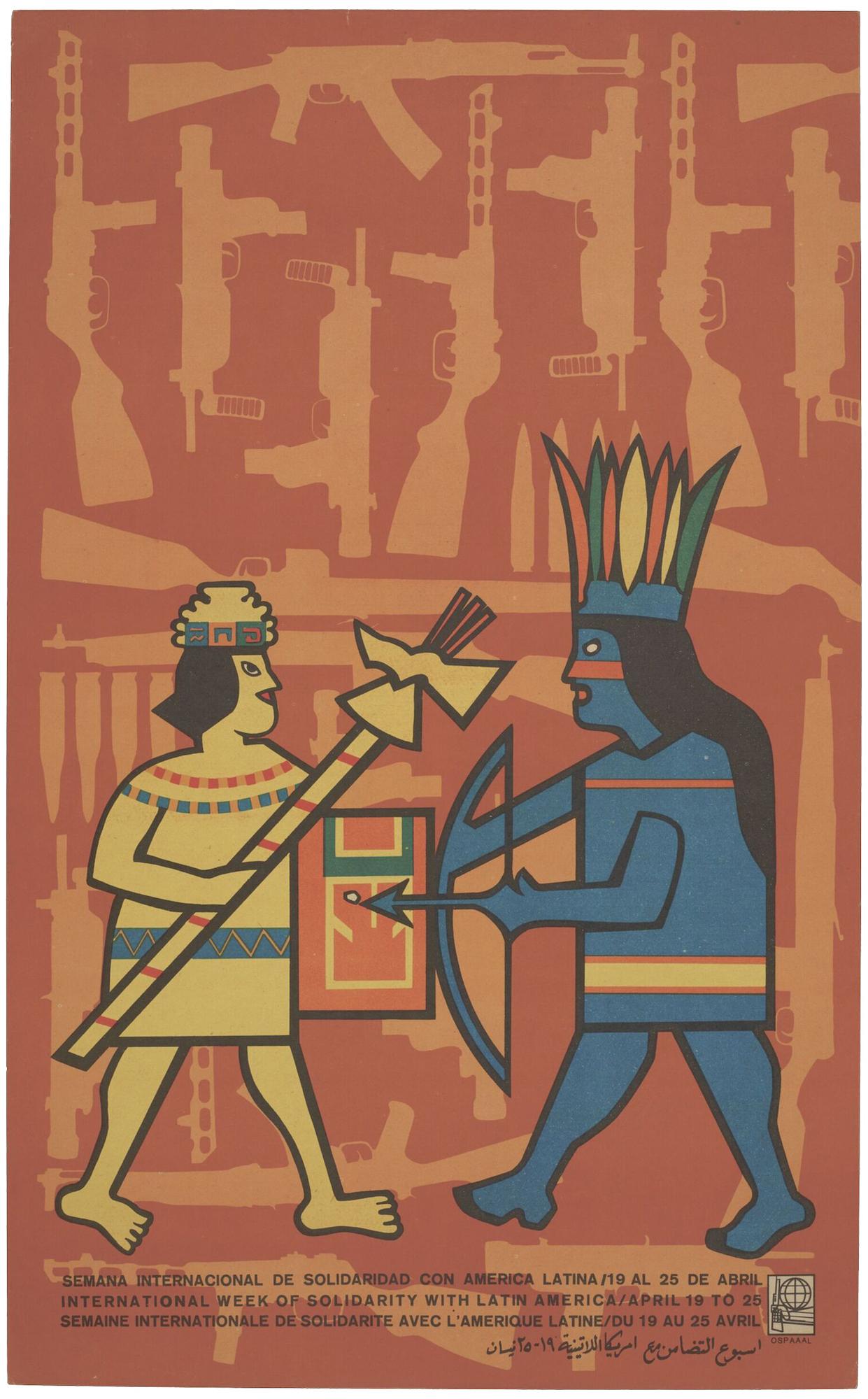
INTERNATIONAL WEEK OF SOLIDARITY WITH LATIN AMERICA - APRIL 19 TO 25, 1969
Between the 1960s and 1990s, more than fifty designers worked at OSPAAAL (the Organisation of Solidarity with the People of Africa, Asia and Latin America). Based in Cuba, they made magazines and posters that were sent around the world. Their aim was to promote radical political ideas. Many of their posters celebrate socialist revolutions and liberation movements from the Global South. Many OSPAAAL designers combined images of Indigenous art and craft with contemporary weaponry. Their aim was to argue for the right to self-determination and support liberation movements opposing colonial and imperial powers. However, the designers did not always know the meaning or origin of the iconography they used.
Content warning: weaponry
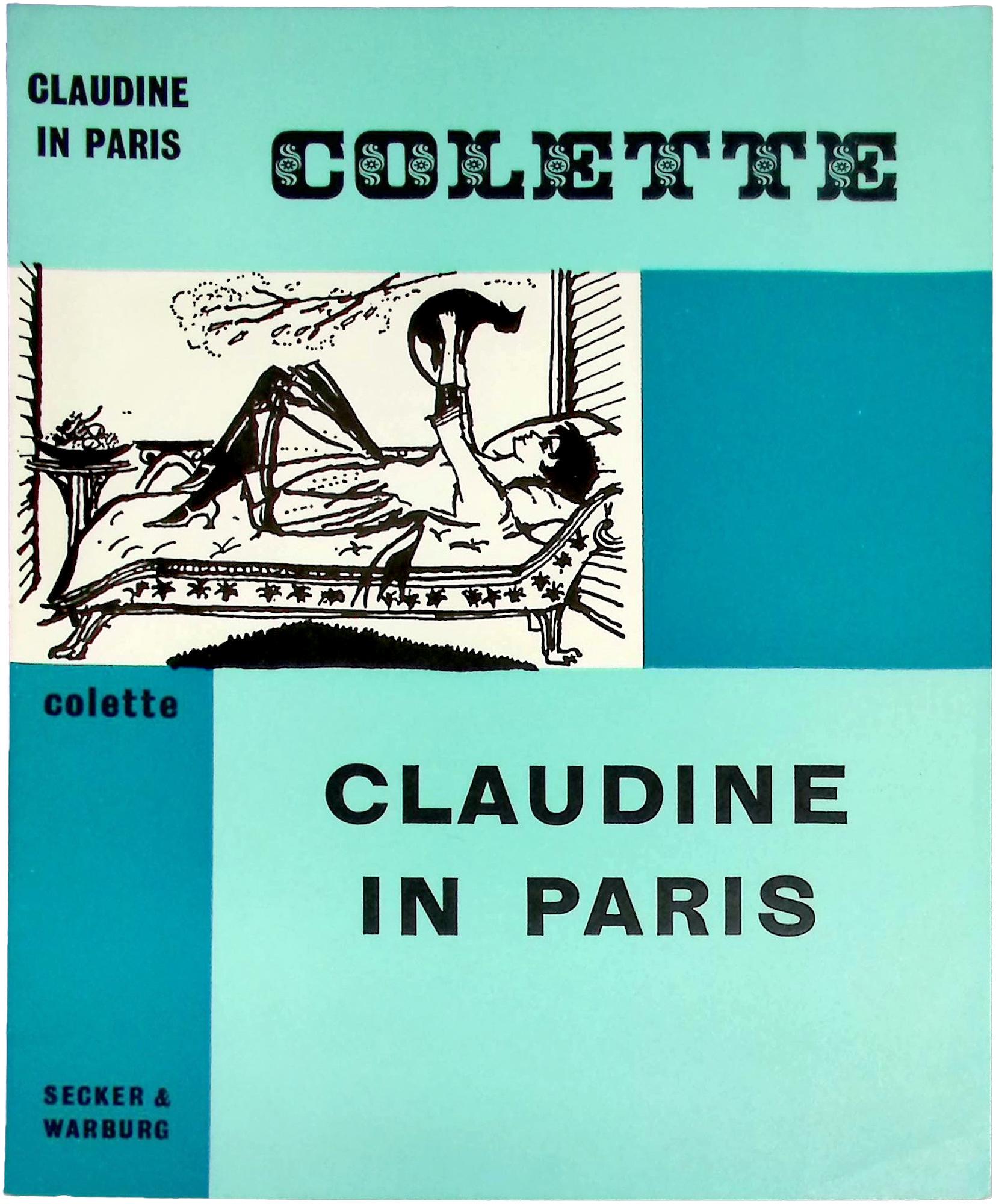
Book cover proof for Colette's "Claudine in Paris", 1960
British illustrator Janina Ede (1937-2018) created covers and illustrations for over 100 books from the 1950s to the 1980s. She designed the covers of several books by French author and pioneer of autofiction Sidonie-Gabrielle Colette.
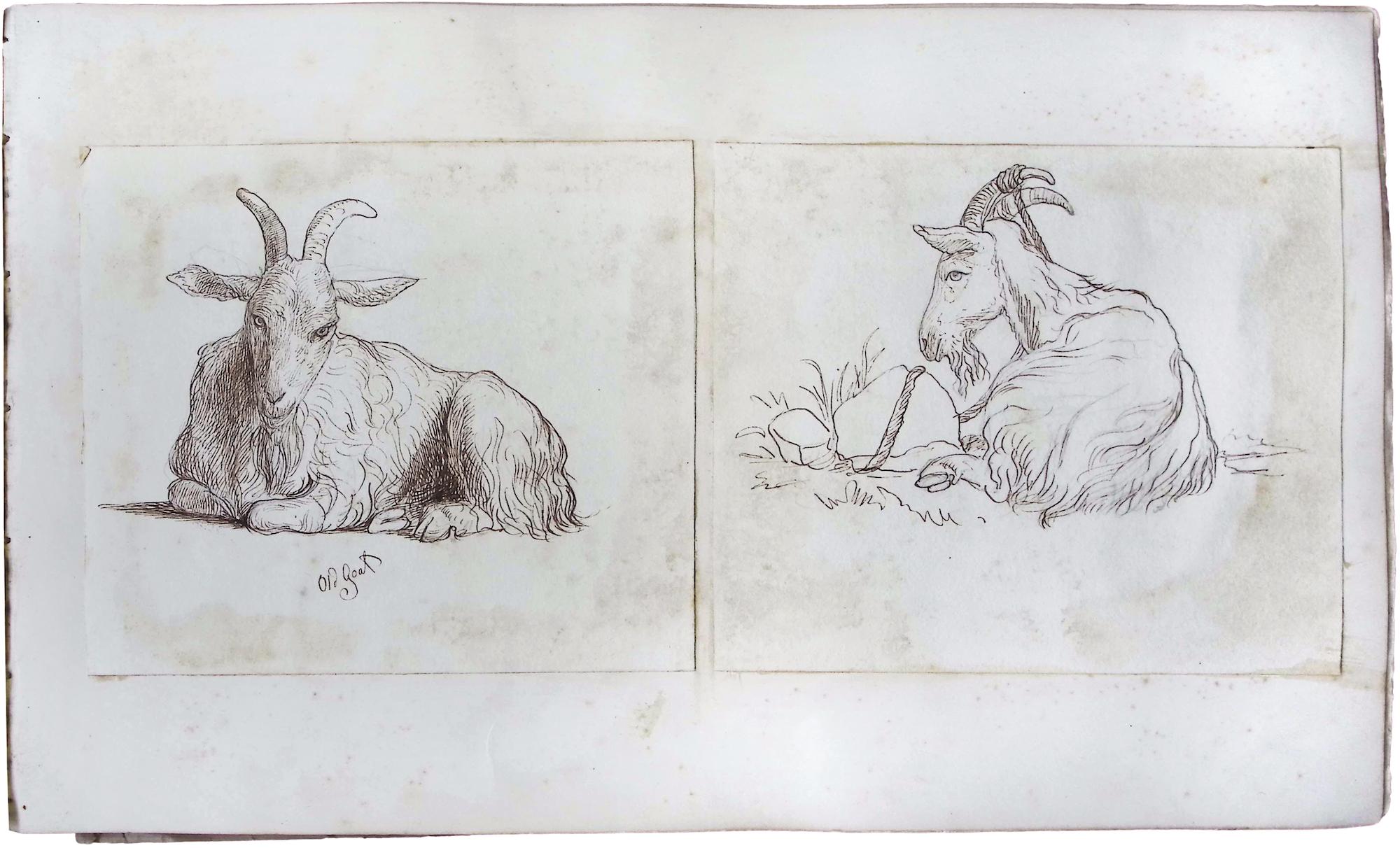
Untitled
Eleanor Vere Boyle (1825 – 1916) illustrated poetry and prose by some of the most popular authors of her time. She regularly drew and painted using ink and watercolour, sketching landscapes, animals and her children from life. She also made drawings from her imagination, often reflecting spiritual themes.
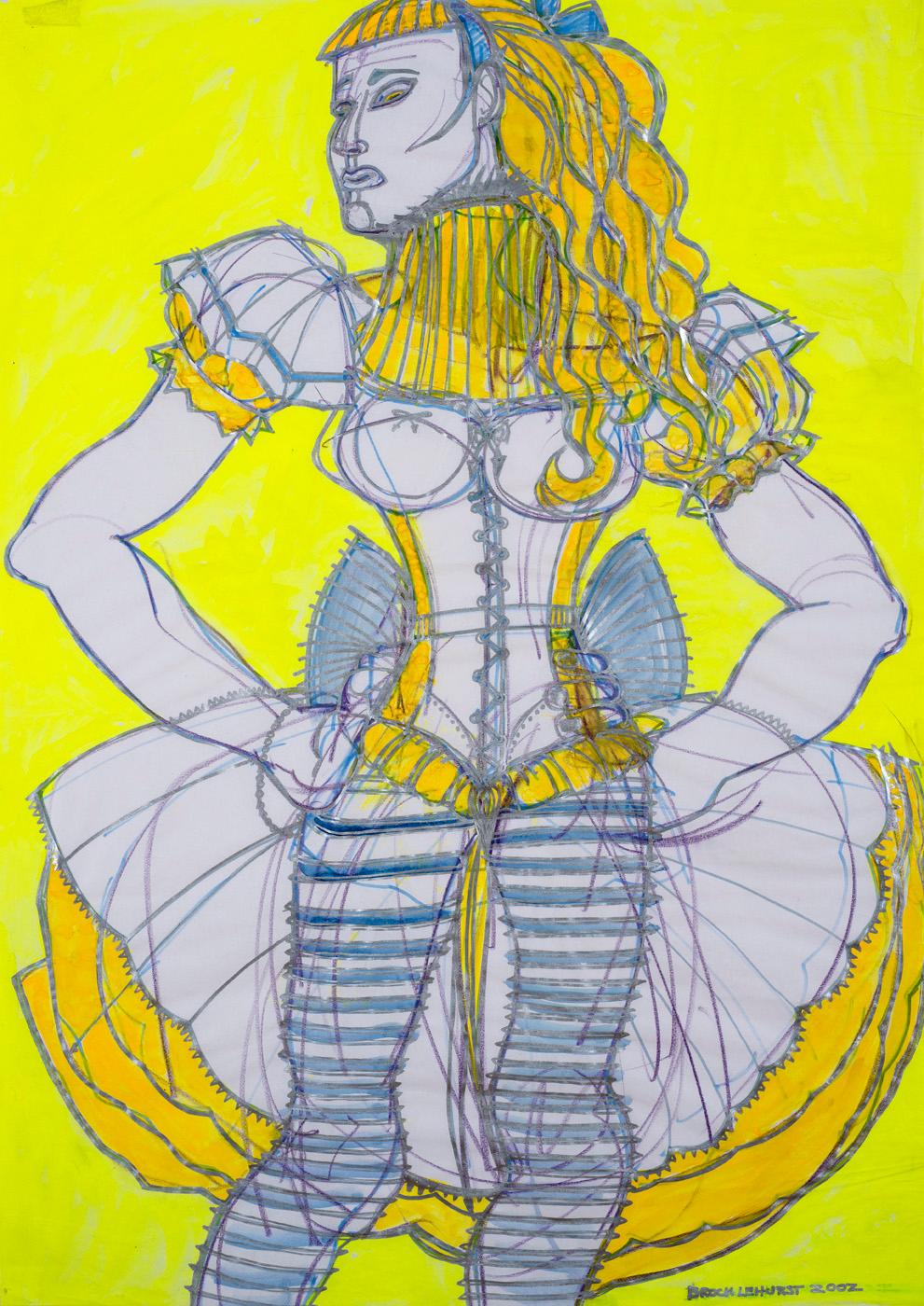
Jo Brocklehurst, Untitled (Alice from Brocklehurst Through the Looking-Glass), 2002
Jo (Josephine) Brocklehurst (1935 - 2006) studied at Central Saint Martins and began her career as a fashion illustrator. She later focused on portraiture, drawing directly from models at her studio in West Hampstead and in nightclubs and theatres in Berlin, London and New York. Her work documents the alternative subcultures of the 1970s, 80s and 90s that went on to shape mainstream fashion and performance scenes. This work is from Brocklehurst Through the Looking-Glass, Brocklehurst’s final series. With an image of herself as a child as the centrepiece, Brocklehurst made hundreds of drawings that re-imagined characters from Lewis Carroll’s Alice novels. Her models were friends and dedicated club-goers who designed and made their own clothes. Works from the series were framed with bright plastic gemstones and hung on every available space at Brocklehurst’s home studio. She used metallic and neon inks that transformed under ultraviolet lights that she switched on for her guests in the evenings.
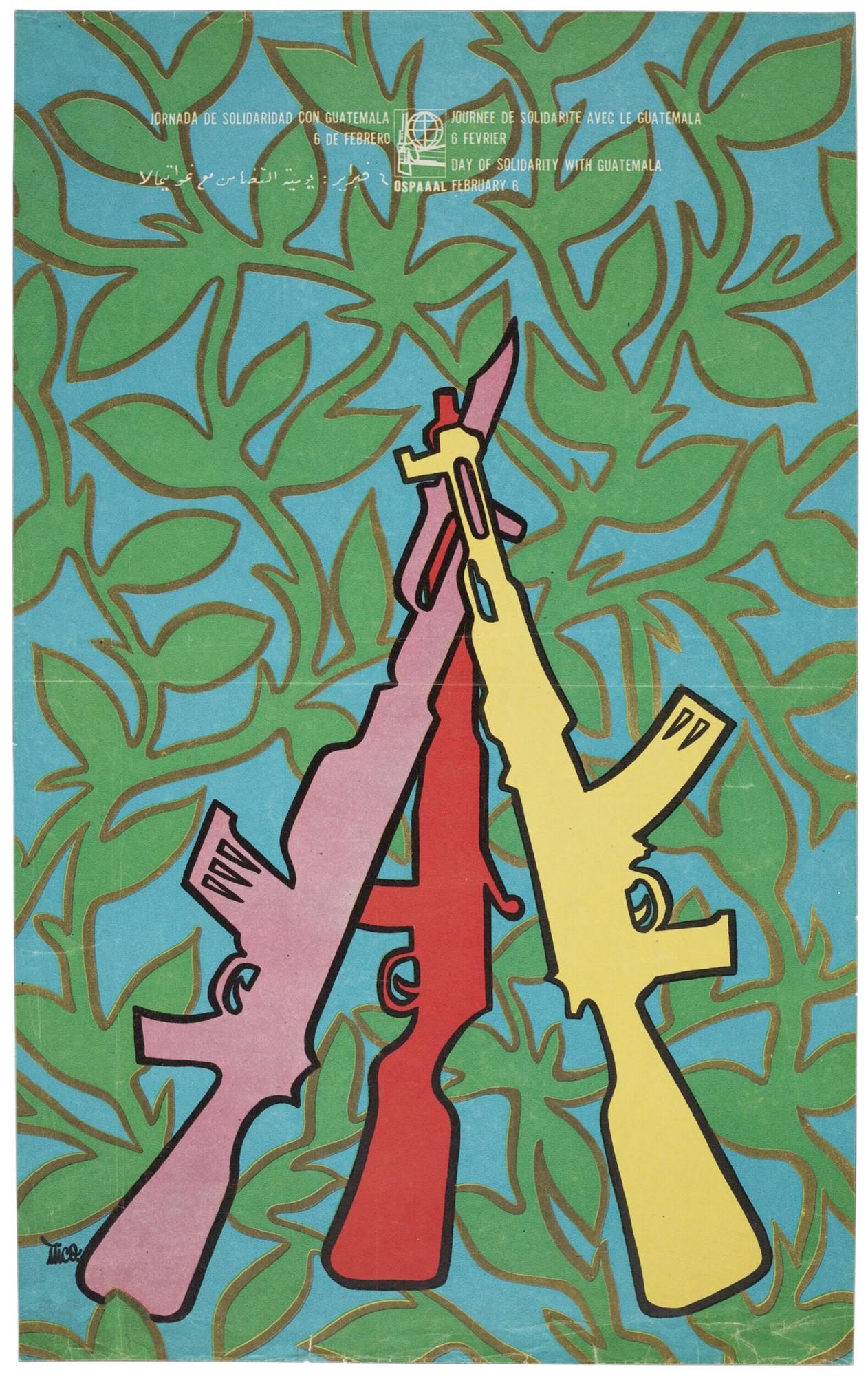
DAY OF SOLIDARITY WITH GUATEMALA - FEBRUARY 6, 1970
Between the 1960s and 1990s, more than fifty designers worked at OSPAAAL (the Organisation of Solidarity with the People of Africa, Asia and Latin America). Based in Cuba, they made magazines and posters that were sent around the world. Their aim was to promote radical political ideas. Many of their posters celebrate socialist revolutions and liberation movements from the Global South.
Content warning: weaponry
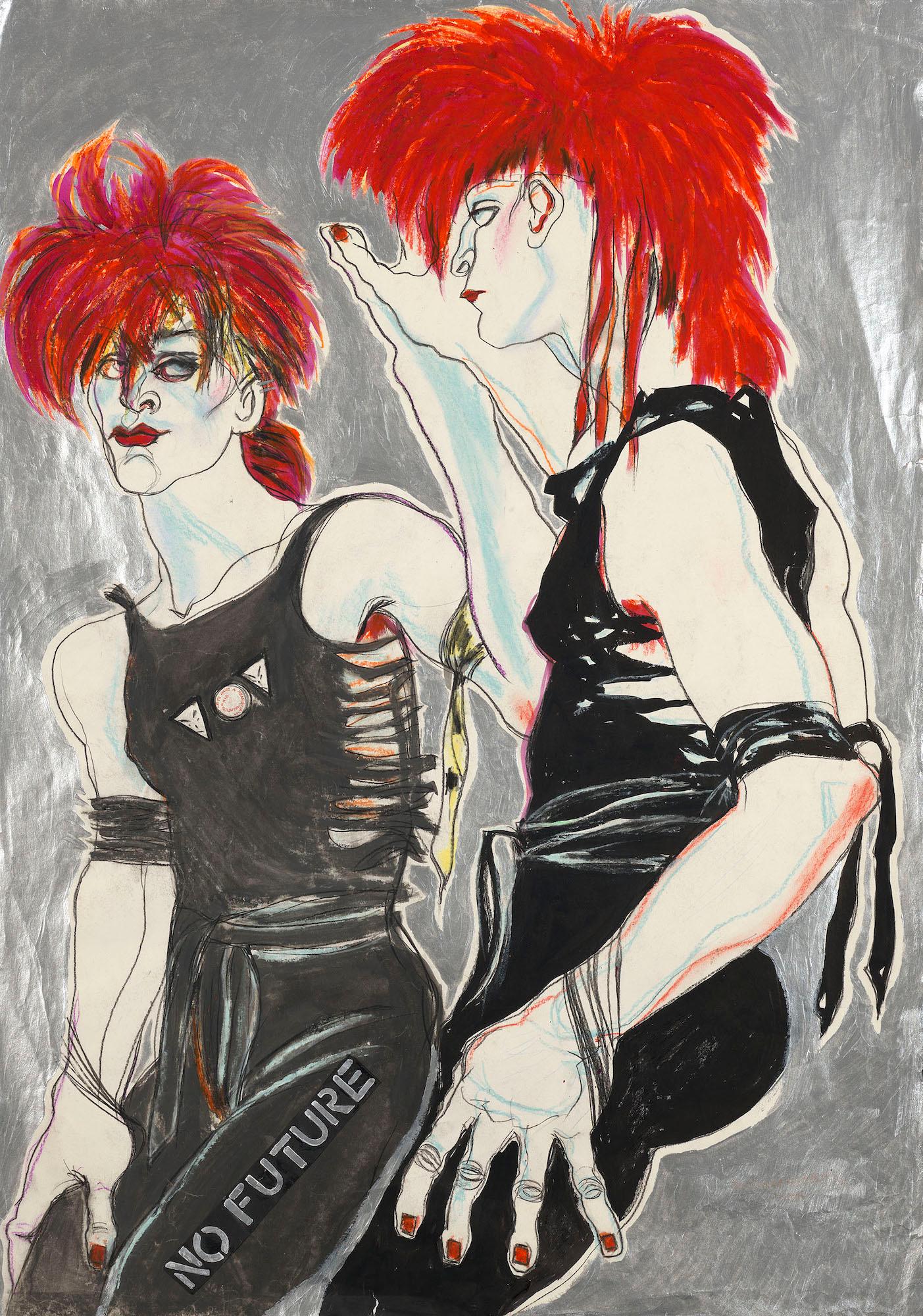
Jo Brocklehurst, Untitled (portrait of Iggy), 1980s
Jo (Josephine) Brocklehurst (1935 - 2006) studied at Central Saint Martins and began her career as a fashion illustrator. She later focused on portraiture, drawing directly from models at her studio in West Hampstead and in nightclubs and theatres in Berlin, London and New York. Her work documents the alternative subcultures of the 1970s, 80s and 90s that went on to shape mainstream fashion and performance scenes. In the 1980s, Brocklehurst drew a series portraits of members of the Kill Your Pet Puppy collective who were living in a squat close to her studio. Attracted to their anarcho-punk dress and ethos, she said “I felt that they understood very well what was going on in the world, what was in it for them”.
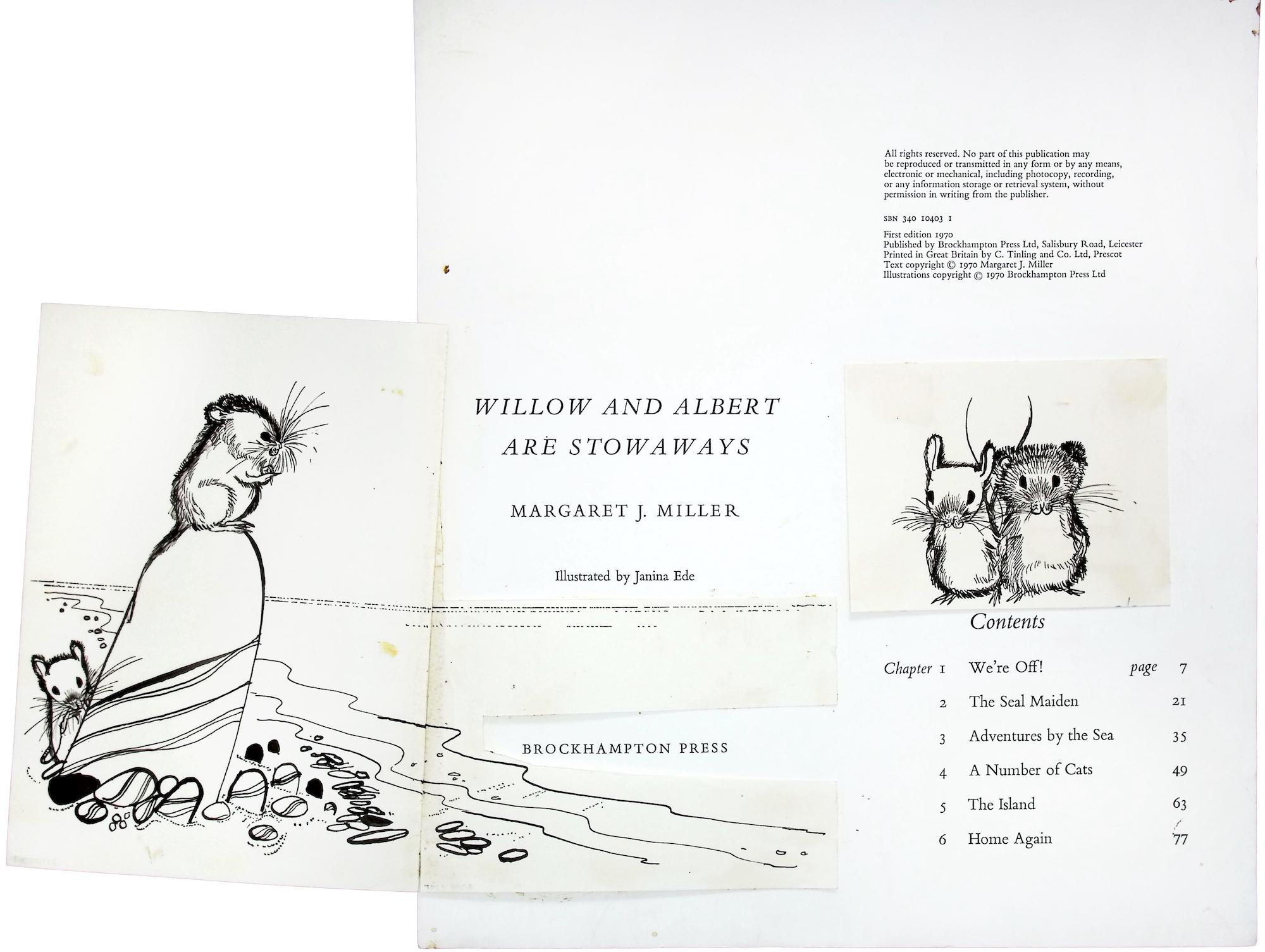
Layout proof for Willow and Albert are Stowaways, c. 1970
British illustrator Janina Ede (1937-2018) created covers and illustrations for over 100 books from the 1950s to the 1980s. Many of her illustrations feature animals, which she drew from life.
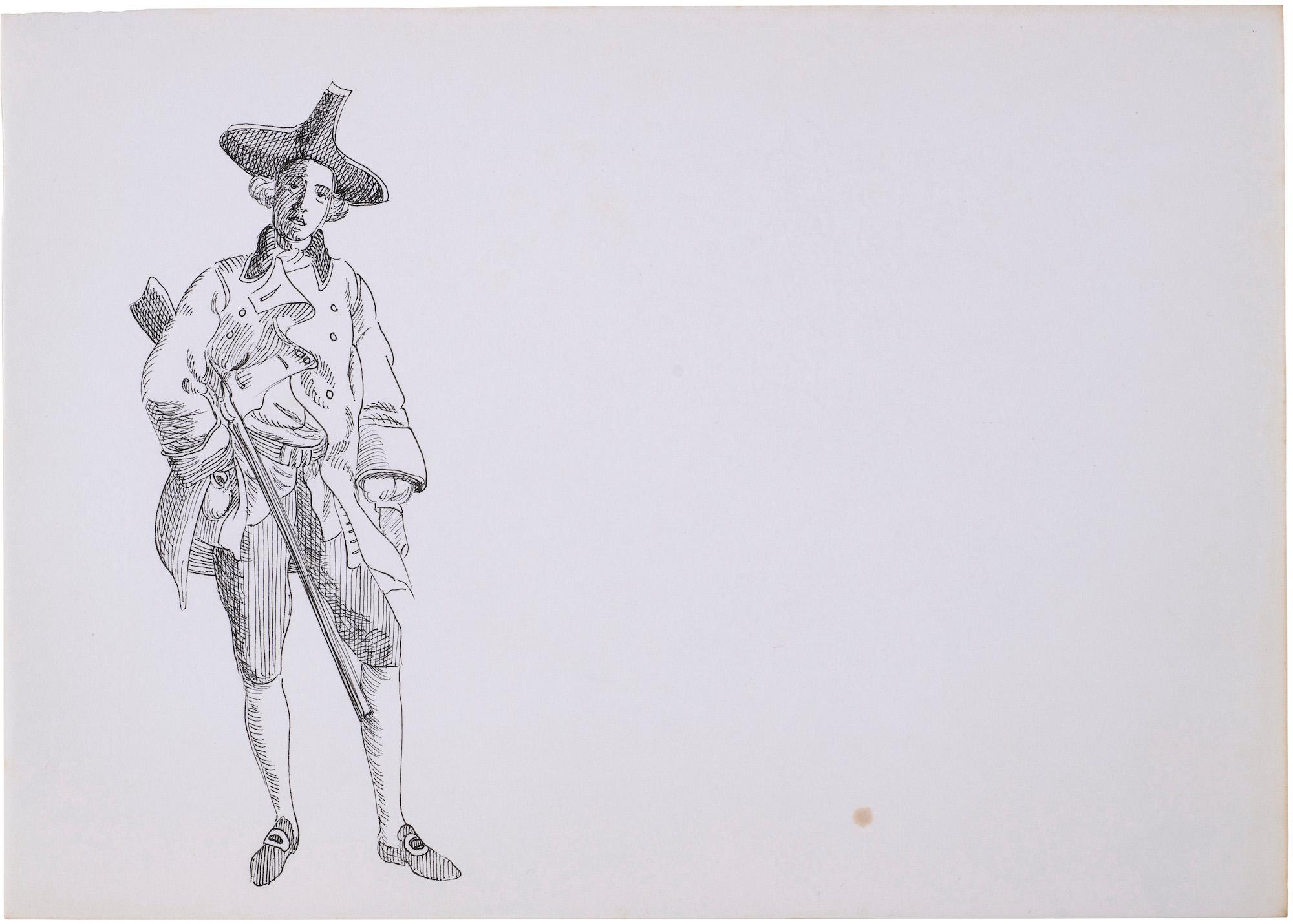
Jacqueline Ayer, Untitled, Date unknown
Jacqueline Ayer (1930–2012) had a career that spanned many creative fields. She began as a fashion illustrator, and later turned her hand to children’s books, textiles and garments, as she worked in New York, Paris, London, Bangkok, Hong Kong and across India. Ayer often used a sketchbook to record her observations and ideas for book narratives and fashion designs. The context for this drawing is unknown.
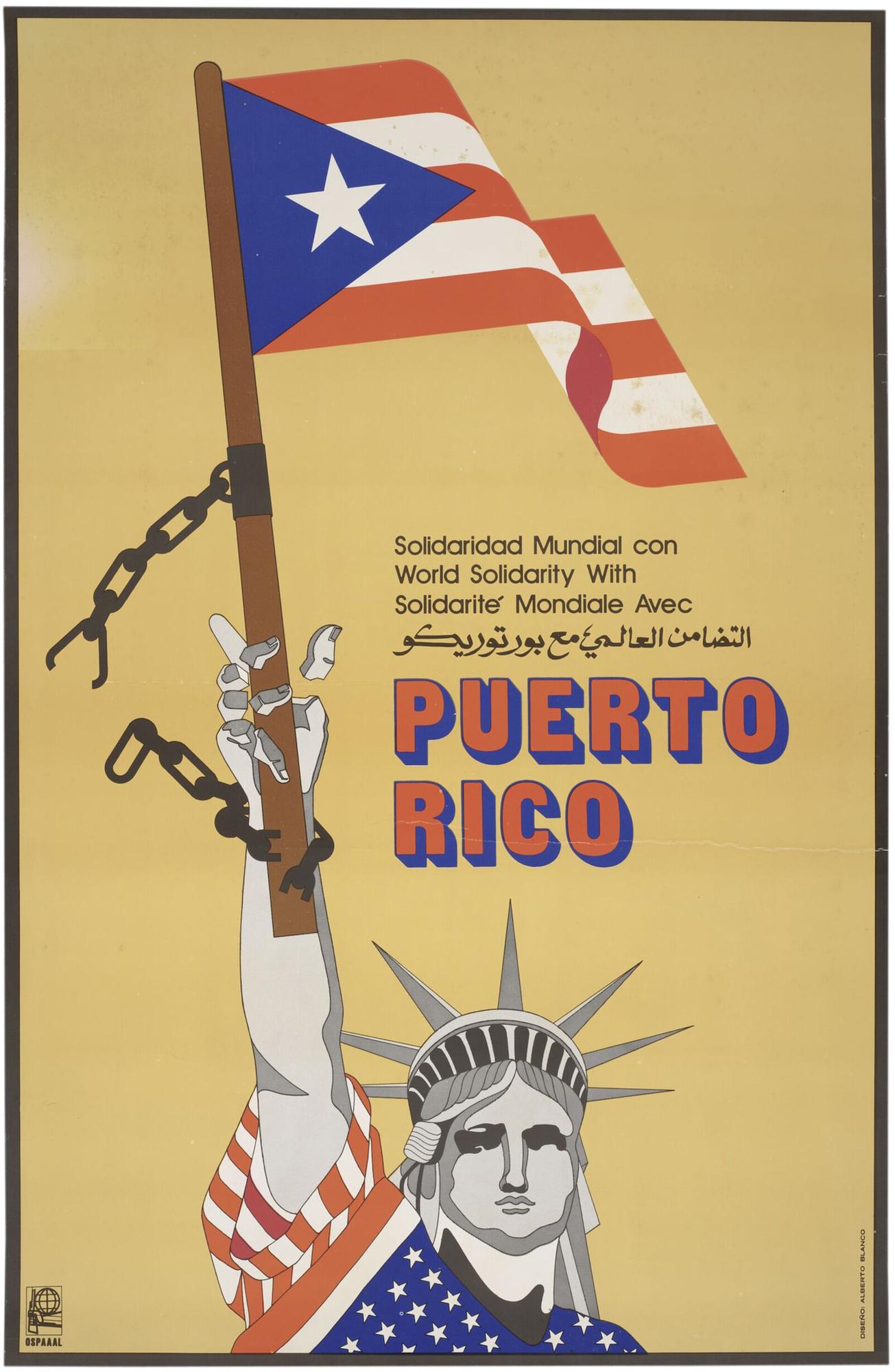
World Solidarity With PUERTO RICO, 1981
Between the 1960s and 1990s, more than fifty designers worked at OSPAAAL (the Organisation of Solidarity with the People of Africa, Asia and Latin America). Based in Cuba, they made magazines and posters that were sent around the world. Their aim was to promote radical political ideas. Many of their posters celebrate socialist revolutions and liberation movements from the Global South. They also criticised the foreign policy of the U.S.A., often using US icons as part of visual metaphors. This poster advocates for Puerto Rican independence from the U.S.A. The Statue of Liberty represents the U.S.A. Its crumbling hand releases the Puerto Rican flag.
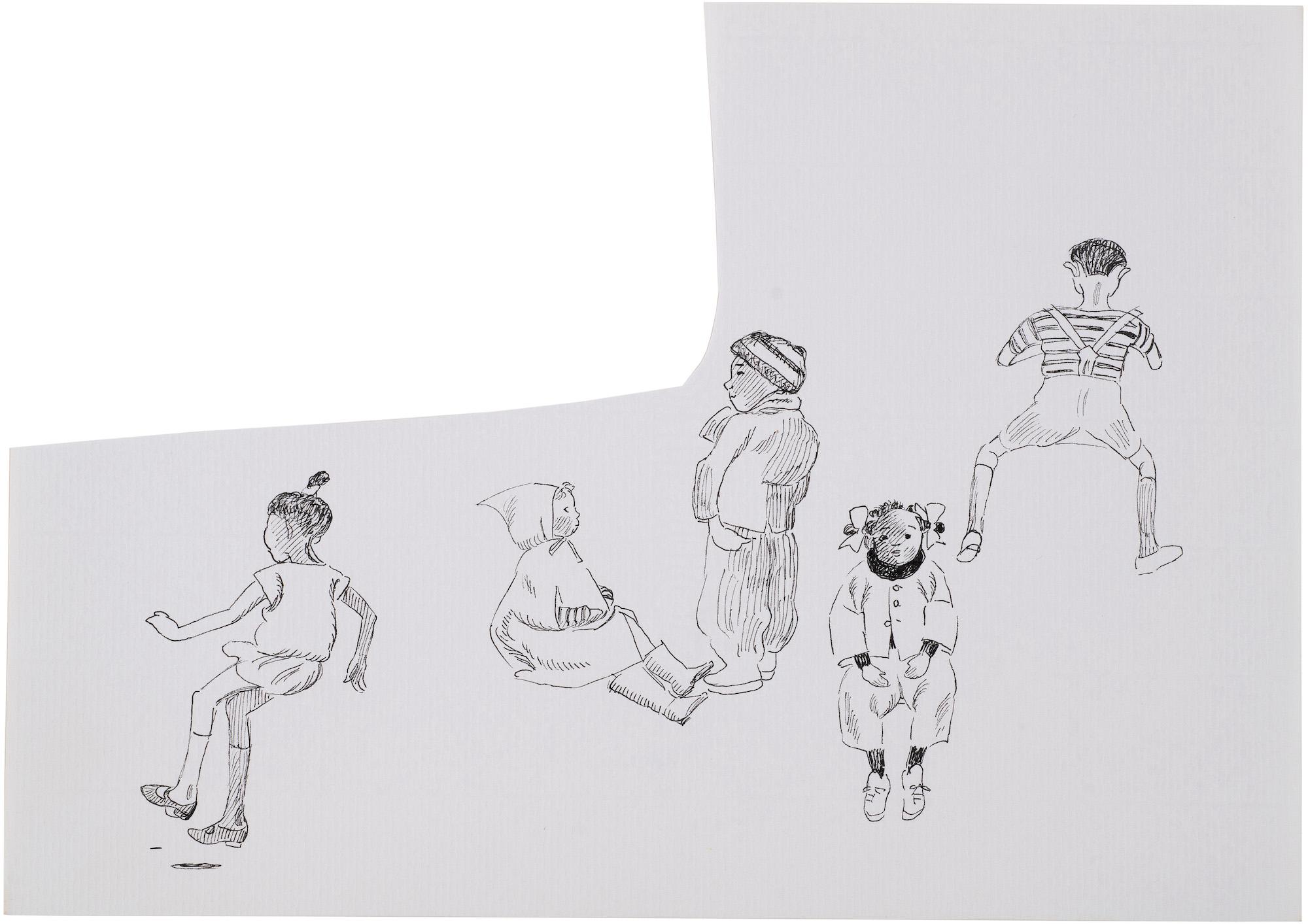
Jacqueline Ayer, Untitled, Date unknown
Jacqueline Ayer (1930–2012) had a career that spanned many creative fields. She began as a fashion illustrator, and later turned her hand to children’s books, textiles and garments, as she worked in New York, Paris, London, Bangkok, Hong Kong and across India. Ayer often used a sketchbook to record her observations and ideas for book narratives and fashion designs. The context for this drawing is unknown.
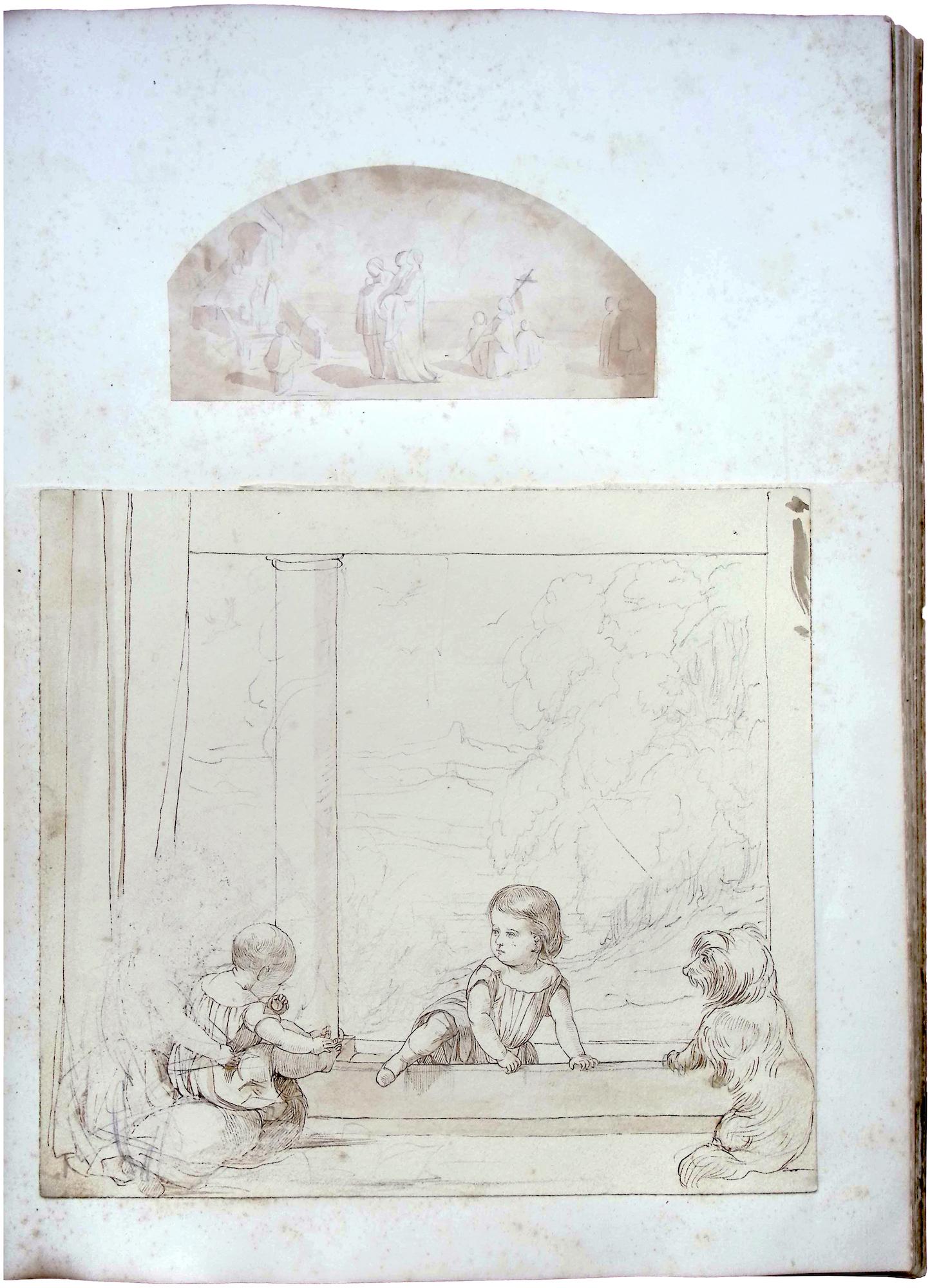
Untitled, Date unknown
Eleanor Vere Boyle (1825 – 1916) illustrated poetry and prose by some of the most popular authors of her time. She regularly drew and painted using ink and watercolour, sketching landscapes, animals and her children from life. She also made drawings from her imagination, often reflecting spiritual themes.
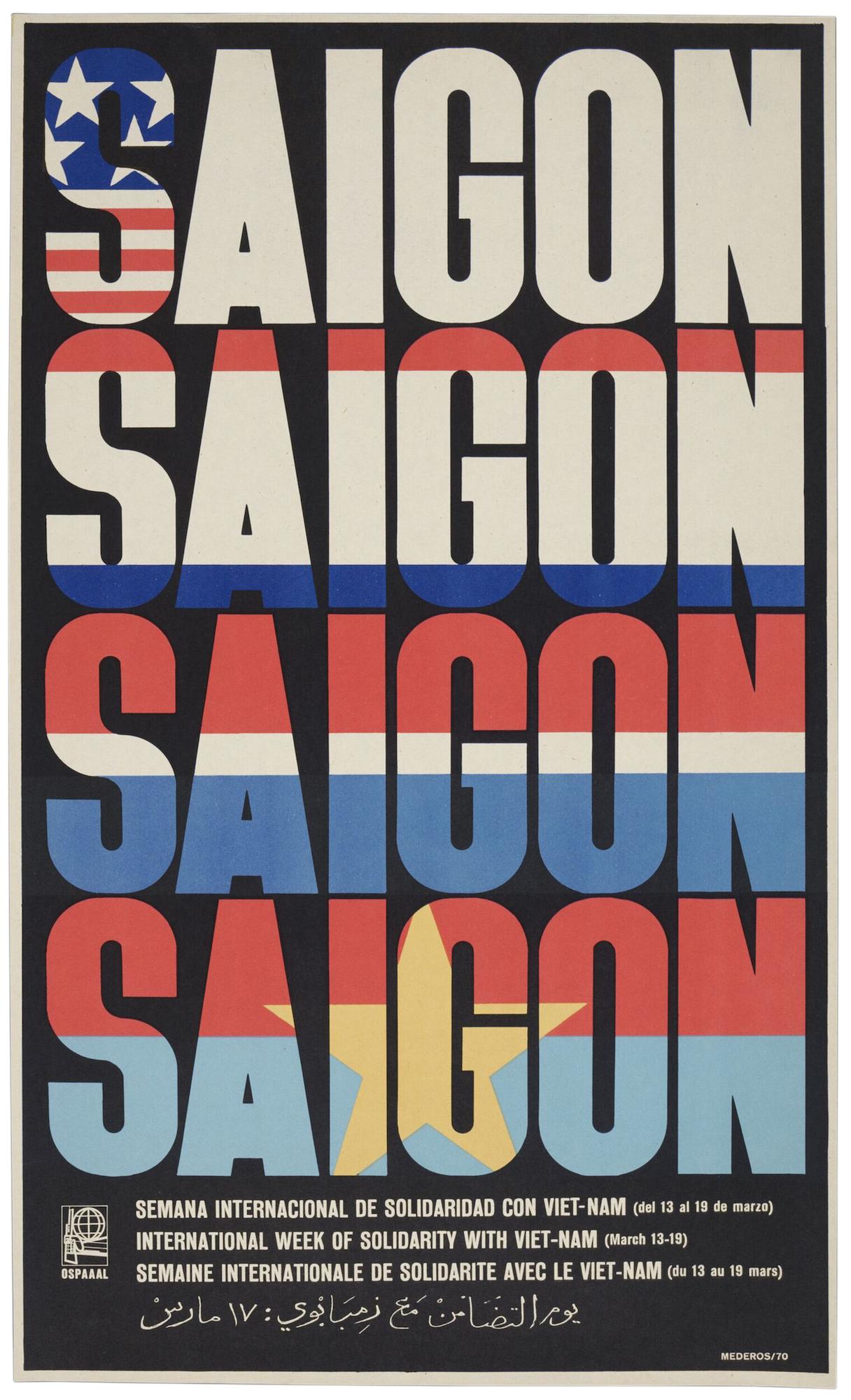
SAIGON - INTERNATIONAL WEEK OF SOLIDARITY WITH VIET-NAM (March 13-19), 1970
Between the 1960s and 1990s, more than fifty designers worked at OSPAAAL. Based in Cuba, they made magazines and posters that were sent around the world. Their aim was to promote radical political ideas. Many of their posters celebrate socialist revolutions and liberation movements from the Global South. This poster was made during the war between North Vietnam and South Vietnam, allied with the U.S.A. (known as the ‘Vietnam War’ and ‘War Against the Americans to Save the Nation’). René Mederos’ design repeats the word ‘Saigon’ (now Ho Chi Minh City). Behind the letters, the flag of the U.S.A. transitions into the flag of the group known as the ‘Việt Cộng’.
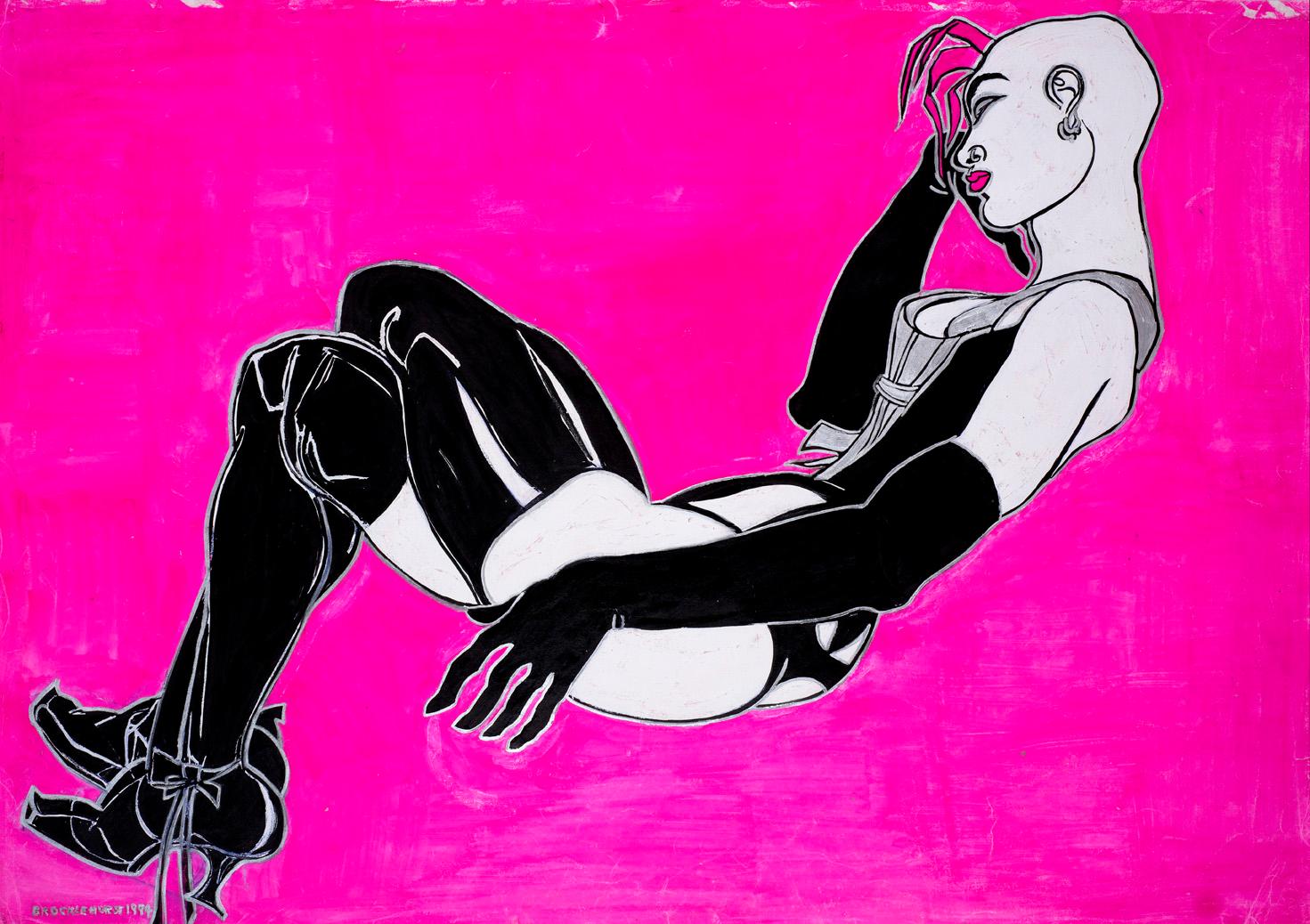
Jo Brocklehurst, Untitled (portrait of Betty Blue), 1994
Jo (Josephine) Brocklehurst (1935 - 2006) studied at Central Saint Martins and began her career as a fashion illustrator. She later focused on portraiture, drawing directly from models at her studio in West Hampstead and in nightclubs and theatres in Berlin, London and New York. Her work documents the alternative subcultures of the 1970s, 80s and 90s that went on to shape mainstream fashion and performance scenes. In the 1990s, Brocklehurst began drawing the fashion designers and performers finding space for experimentation in the fetish clubs of Soho and King’s Cross.
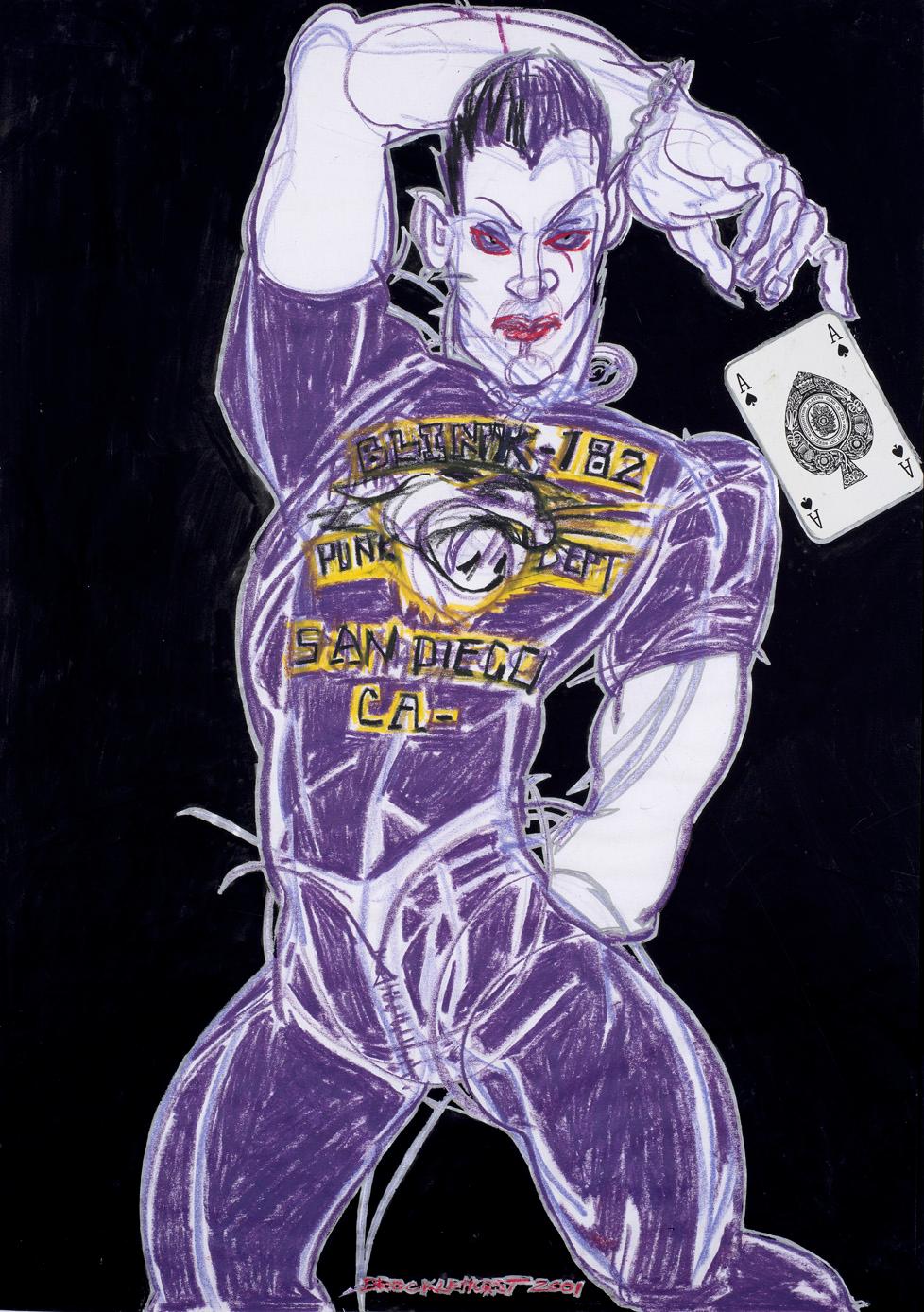
Jo Brocklehurst, Untitled (from Brocklehurst Through the Looking-Glass), 2001
Jo (Josephine) Brocklehurst (1935 - 2006) studied at Central Saint Martins and began her career as a fashion illustrator. She later focused on portraiture, drawing directly from models at her studio in West Hampstead and in nightclubs and theatres in Berlin, London and New York. Her work documents the alternative subcultures of the 1970s, 80s and 90s that went on to shape mainstream fashion and performance scenes. This work is from Brocklehurst Through the Looking-Glass, Brocklehurst’s final series. With an image of herself as a child as the centrepiece, Brocklehurst made hundreds of drawings that re-imagined characters from Lewis Carroll’s Alice novels. Her models were friends and dedicated club-goers who designed and made their own clothes. Works from the series were framed with bright plastic gemstones and hung on every available space at Brocklehurst’s home studio. She used metallic and neon inks that transformed under ultraviolet lights that she switched on for her guests in the evenings.
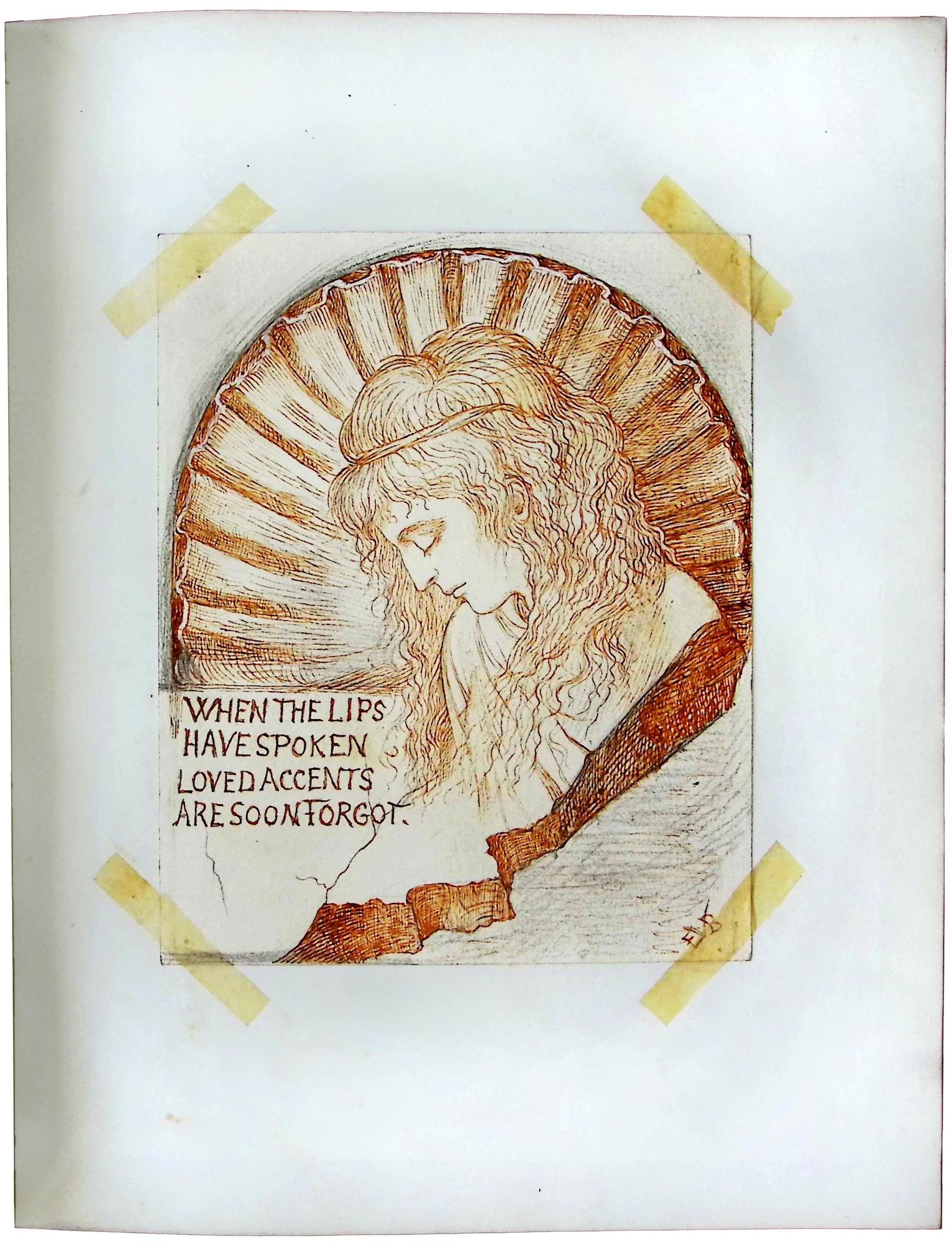
Untitled (illustration for A Book of Heavenly Birthdays), c. 1893
Eleanor Vere Boyle (1825 – 1916) illustrated poetry and prose by some of the most popular authors of her time. She regularly drew and painted using ink and watercolour, sketching landscapes, animals and her children from life. She also made drawings from her imagination, often reflecting spiritual themes. This drawing was used as some of the final illustrations printed in the artists' publication A Book of Heavenly Birthdays (1893, London Elliot Stock)
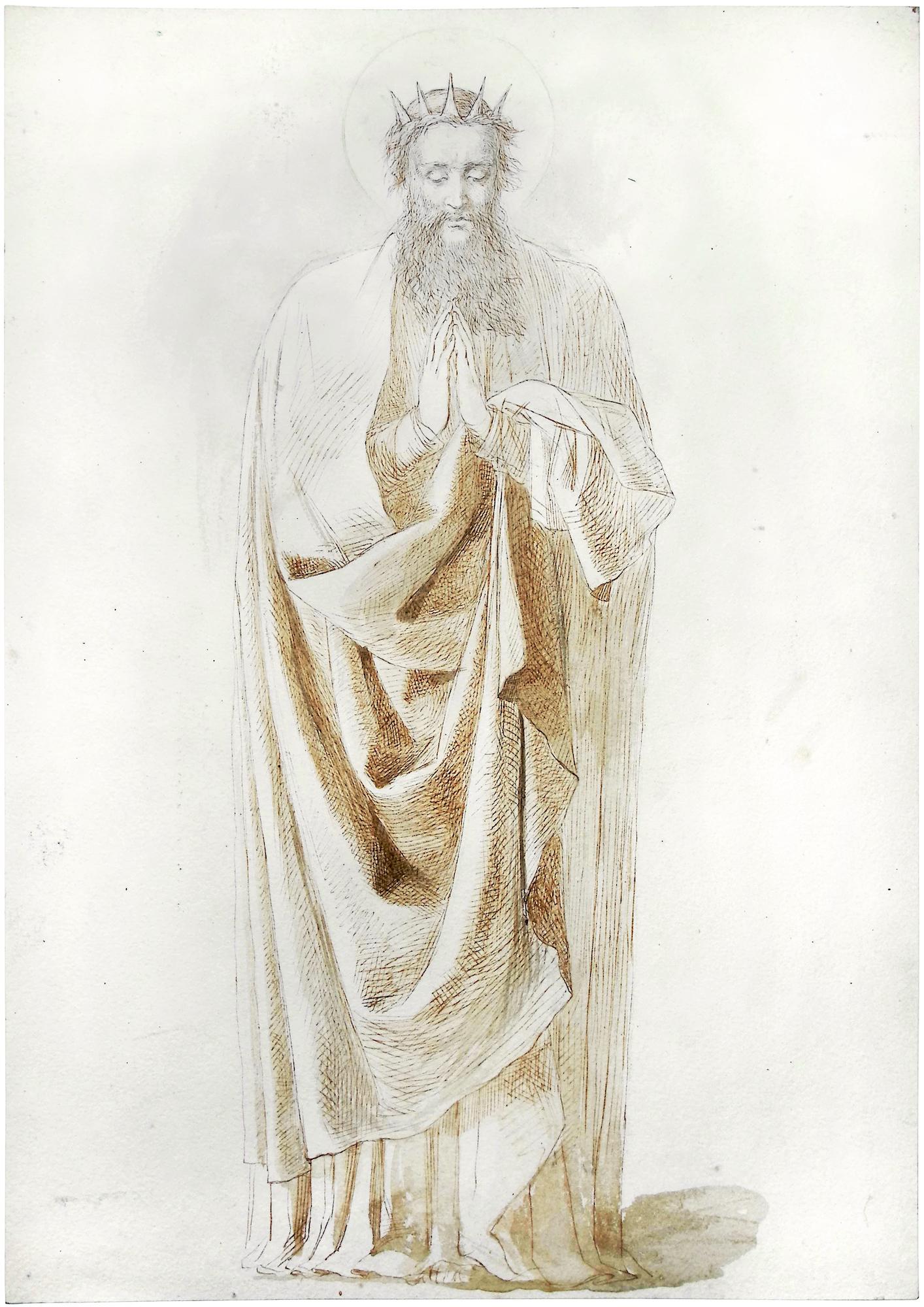
Untitled, Date unknown
Eleanor Vere Boyle (1825 – 1916) illustrated poetry and prose by some of the most popular authors of her time. She regularly drew and painted using ink and watercolour, sketching landscapes, animals and her children from life. She also made drawings from her imagination, often reflecting spiritual themes.
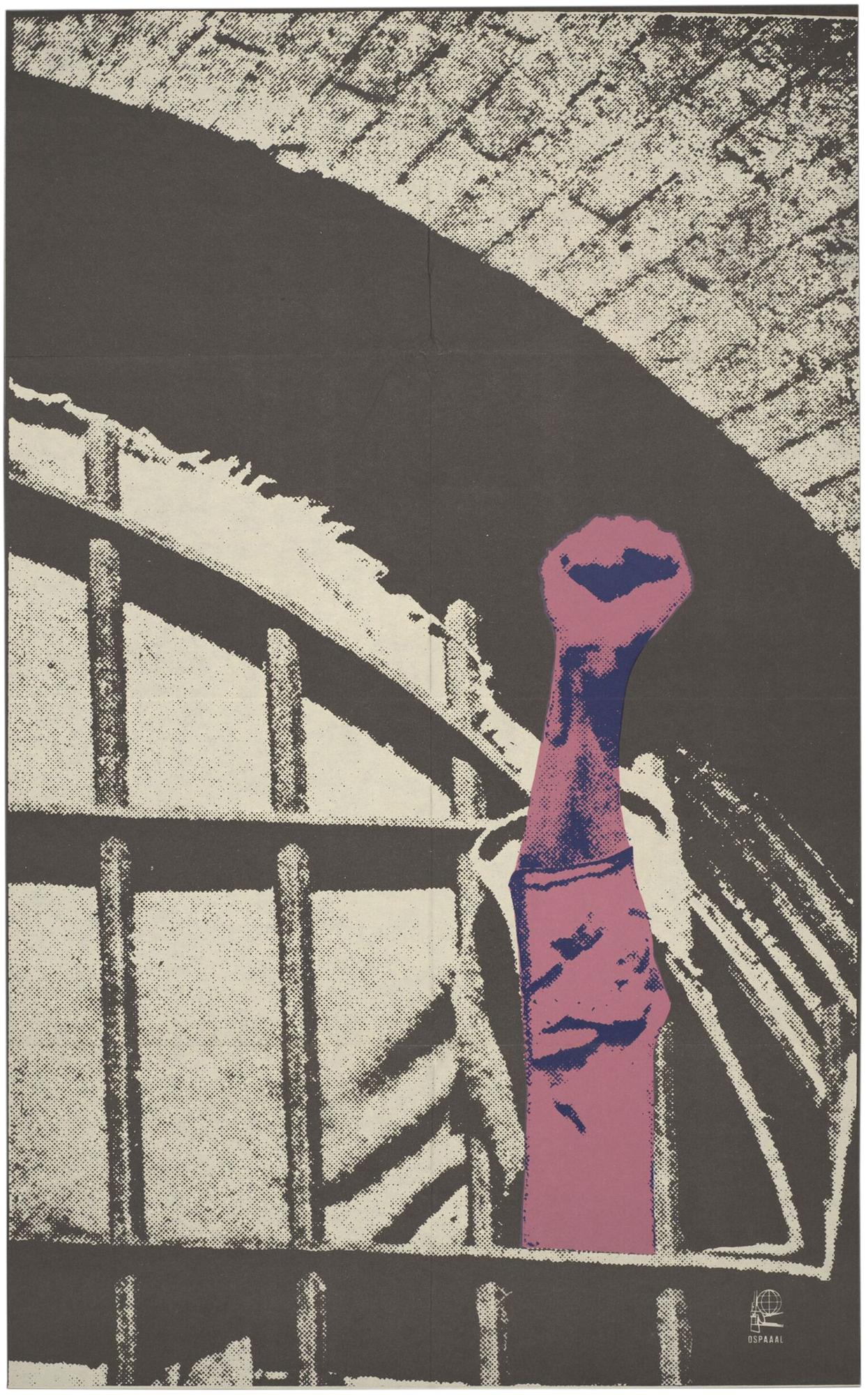
Untitled, 1974
Between the 1960s and 1990s, more than fifty designers worked at OSPAAAL (the Organisation of Solidarity with the People of Africa, Asia and Latin America). Based in Cuba, they made magazines and posters that were sent around the world. Their aim was to promote radical political ideas. Many of their posters celebrate socialist revolutions and liberation movements from the Global South.
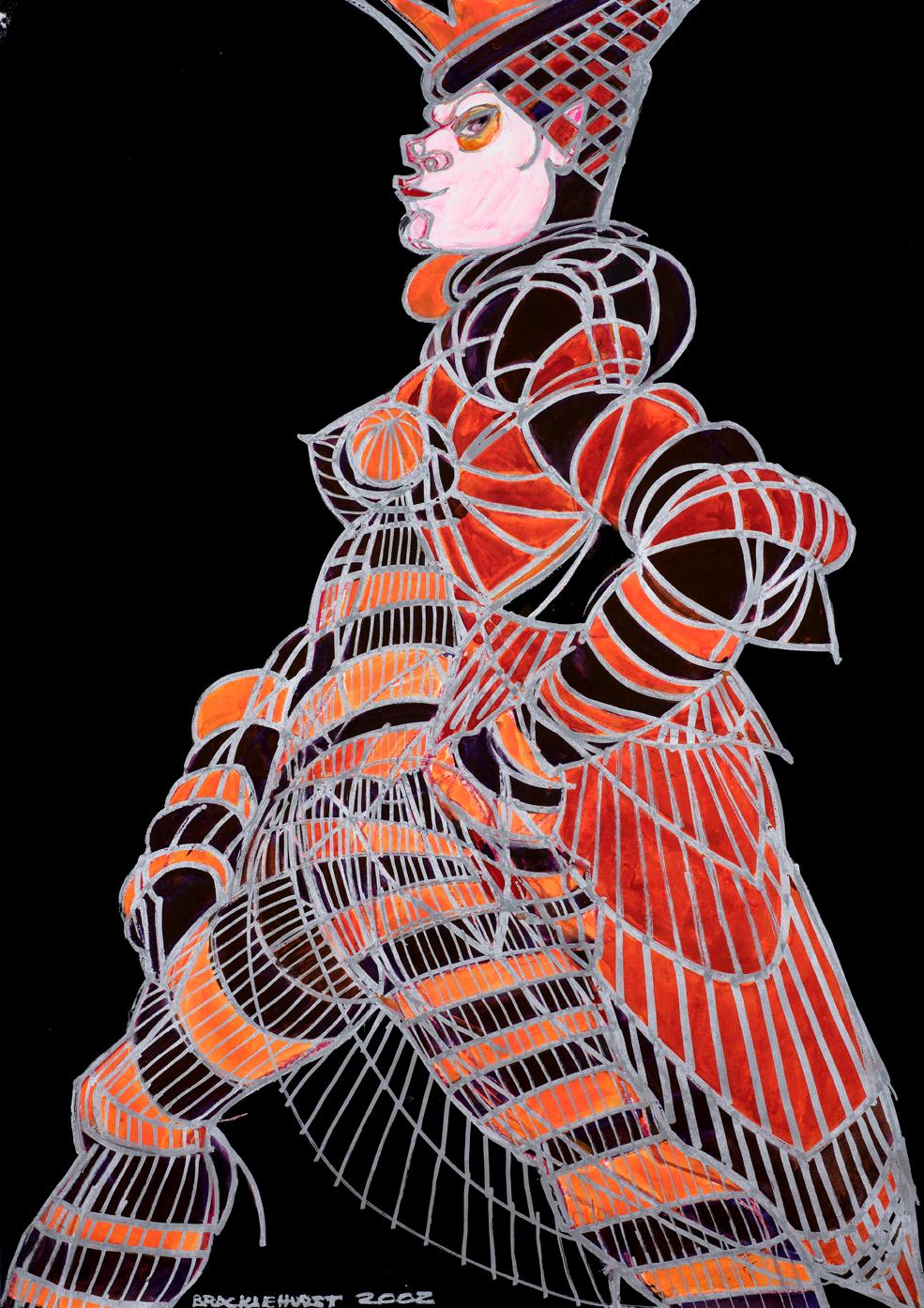
Jo Brocklehurst, Untitled (Red Queen from Brocklehurst Through the Looking-Glass) , 2002
Jo (Josephine) Brocklehurst (1935 - 2006) studied at Central Saint Martins and began her career as a fashion illustrator. She later focused on portraiture, drawing directly from models at her studio in West Hampstead and in nightclubs and theatres in Berlin, London and New York. Her work documents the alternative subcultures of the 1970s, 80s and 90s that went on to shape mainstream fashion and performance scenes. This work is from Brocklehurst Through the Looking-Glass, Brocklehurst’s final series. With an image of herself as a child as the centrepiece, Brocklehurst made hundreds of drawings that re-imagined characters from Lewis Carroll’s Alice novels. Her models were friends and dedicated club-goers who designed and made their own clothes. Brocklehurst’s regular collaborator Isabelle Bricknall was the model for this work. Works from the series were framed with bright plastic gemstones and hung on every available space at Brocklehurst’s home studio. She used metallic and neon inks that transformed under ultraviolet lights that she switched on for her guests in the evenings.
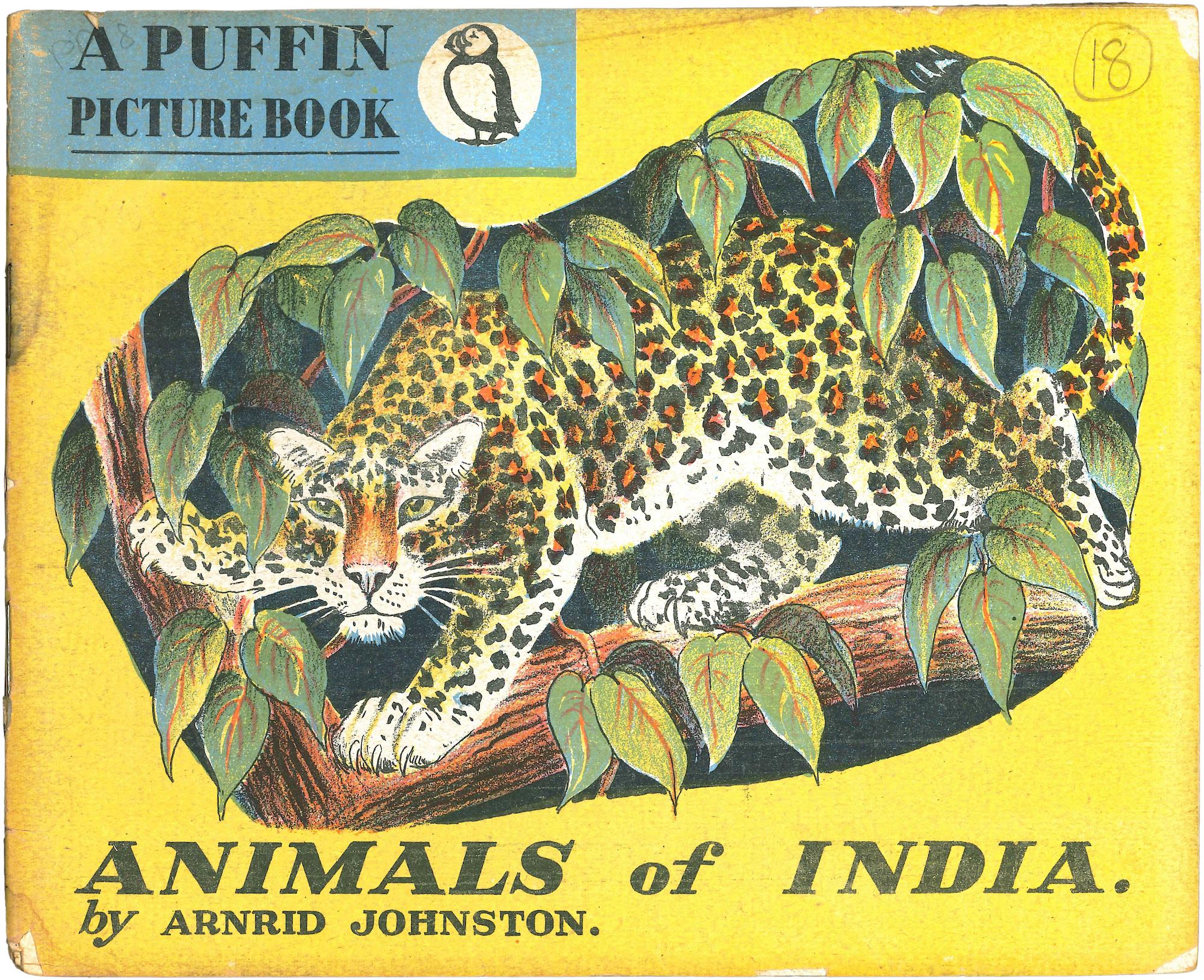
Animals of India, 1942
The Puffin Picture Books series was established by designer and editor Noel Carrington (1895-1989). In 1933, artist Pearl Binder (1904-1990) sent Carrington a package of Soviet children’s books. “They were produced by the million on very cheap paper, but the drawings were vigorous and the colour delightful” he later remembered. These books inspired Carrington to edit a series of affordable books that would encourage “the child’s awakening interest in its surroundings... I felt that colour was essential, and that artists could... be more successful in books of this nature than the camera”. Many artists and illustrators worked on the series, adapting their ways of working to lithographic printing and the Puffin Picture Book format. Most of the 120 books in the series were printed on one large sheet of paper: one side in colour and one in black-and-white. Each sheet was cut, folded and stapled to create a softcover book.
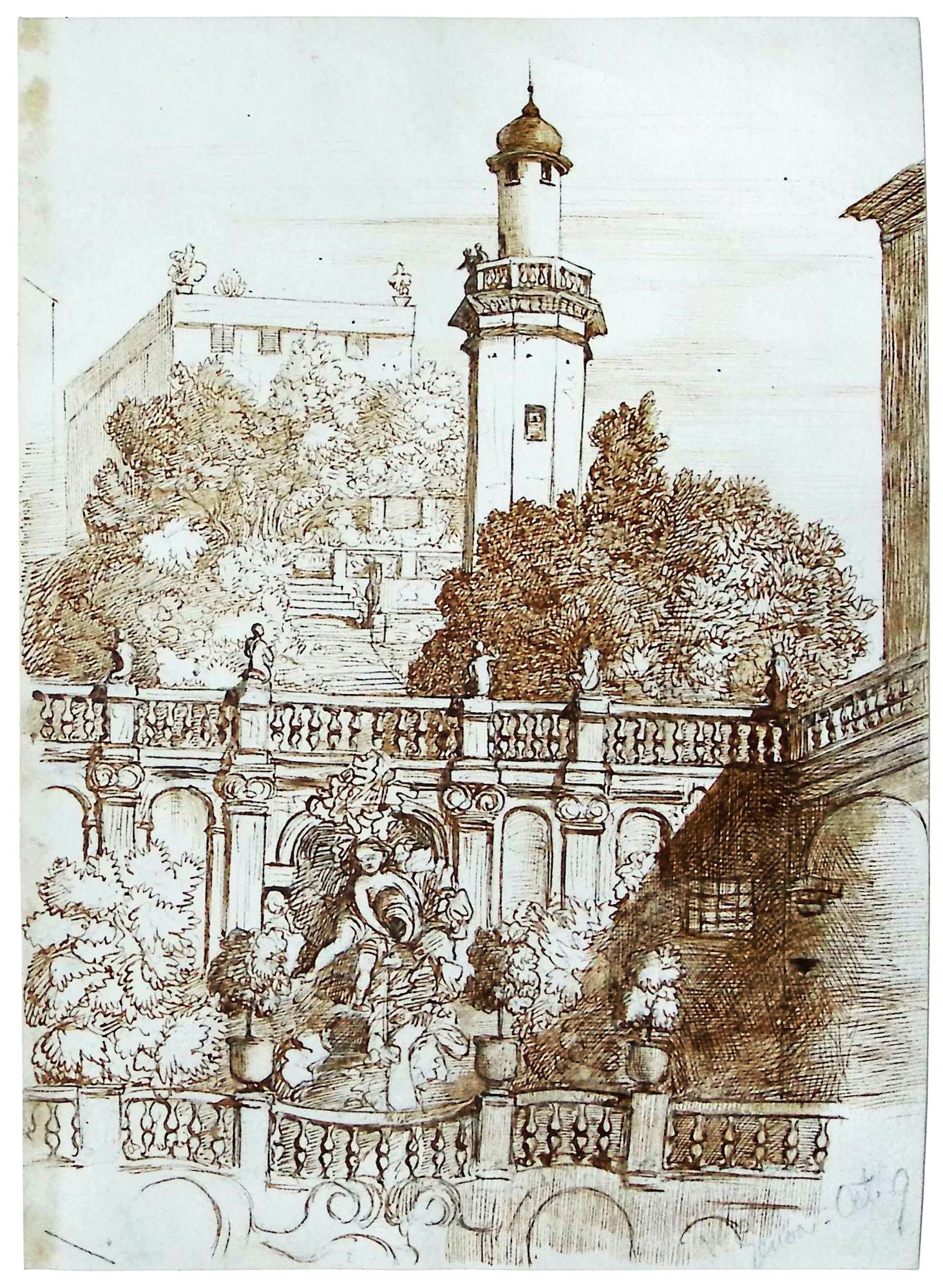
Untitled, Date unknown
Eleanor Vere Boyle (1825 – 1916) illustrated poetry and prose by some of the most popular authors of her time. She regularly drew and painted using ink and watercolour, sketching landscapes, animals and her children from life. She also made drawings from her imagination, often reflecting spiritual themes.
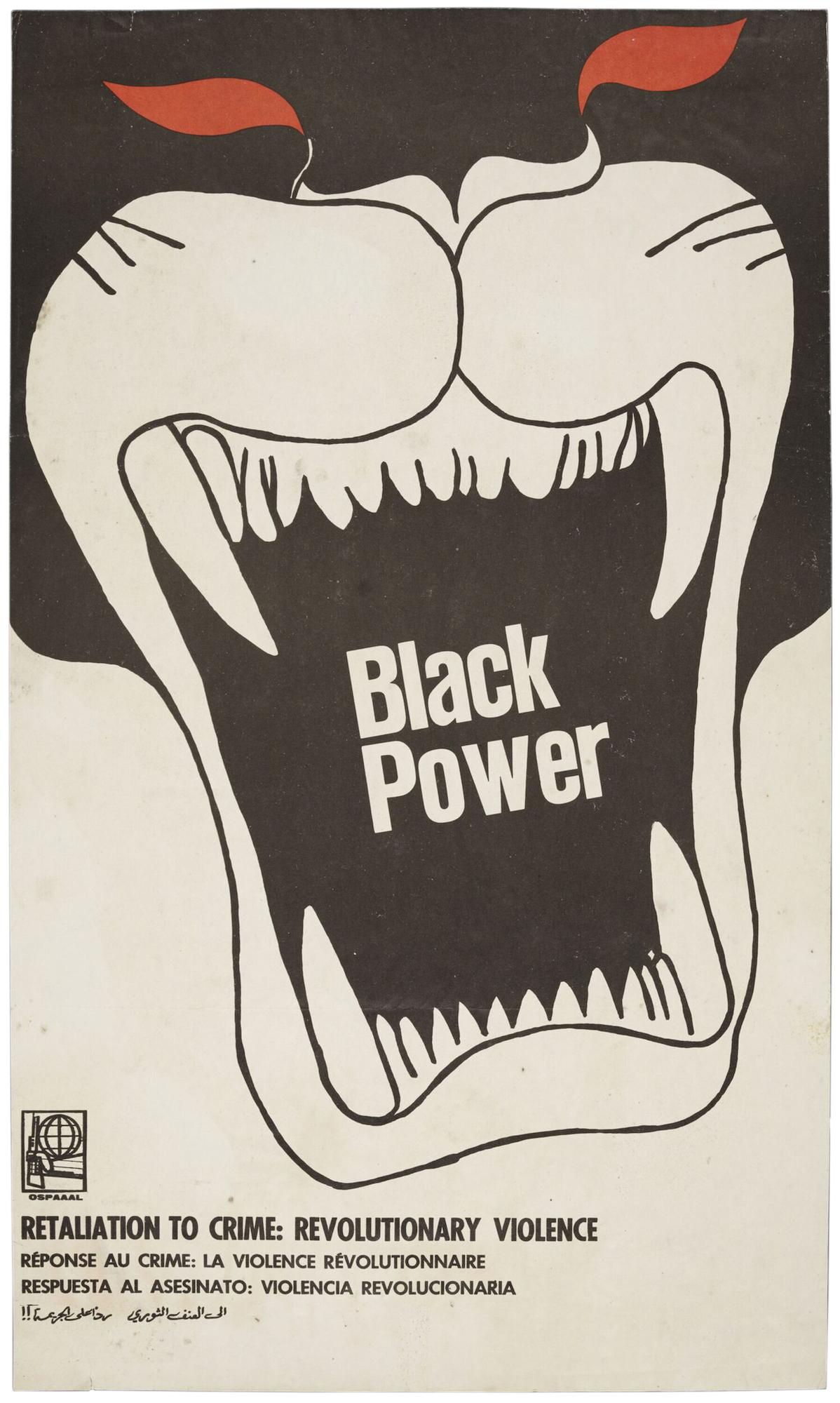
Black Power - RETALIATION TO CRIME: REVOLUTIONARY VIOLENCE, 1968
Between the 1960s and 1990s, more than fifty designers worked at OSPAAAL (the Organisation of Solidarity with the People of Africa, Asia and Latin America). Based in Cuba, they made magazines and posters that were sent around the world. Their aim was to promote radical political ideas. Many of their posters celebrate socialist revolutions and liberation movements from the Global South. They also criticised the foreign policy of the U.S.A. and supported the Black Power movement. Alfredo Rostgaard’s poster was inspired by the Black Panther Party logo. Some copies had a message printed on the back: “On the occasion of Dr. Martin Luther King’s assassination, we have published a poster that is now being circulated all over the world. We are sending you herewith a certain amount of these posters, which may be used in your country for the activities to be carried out in this regard.”
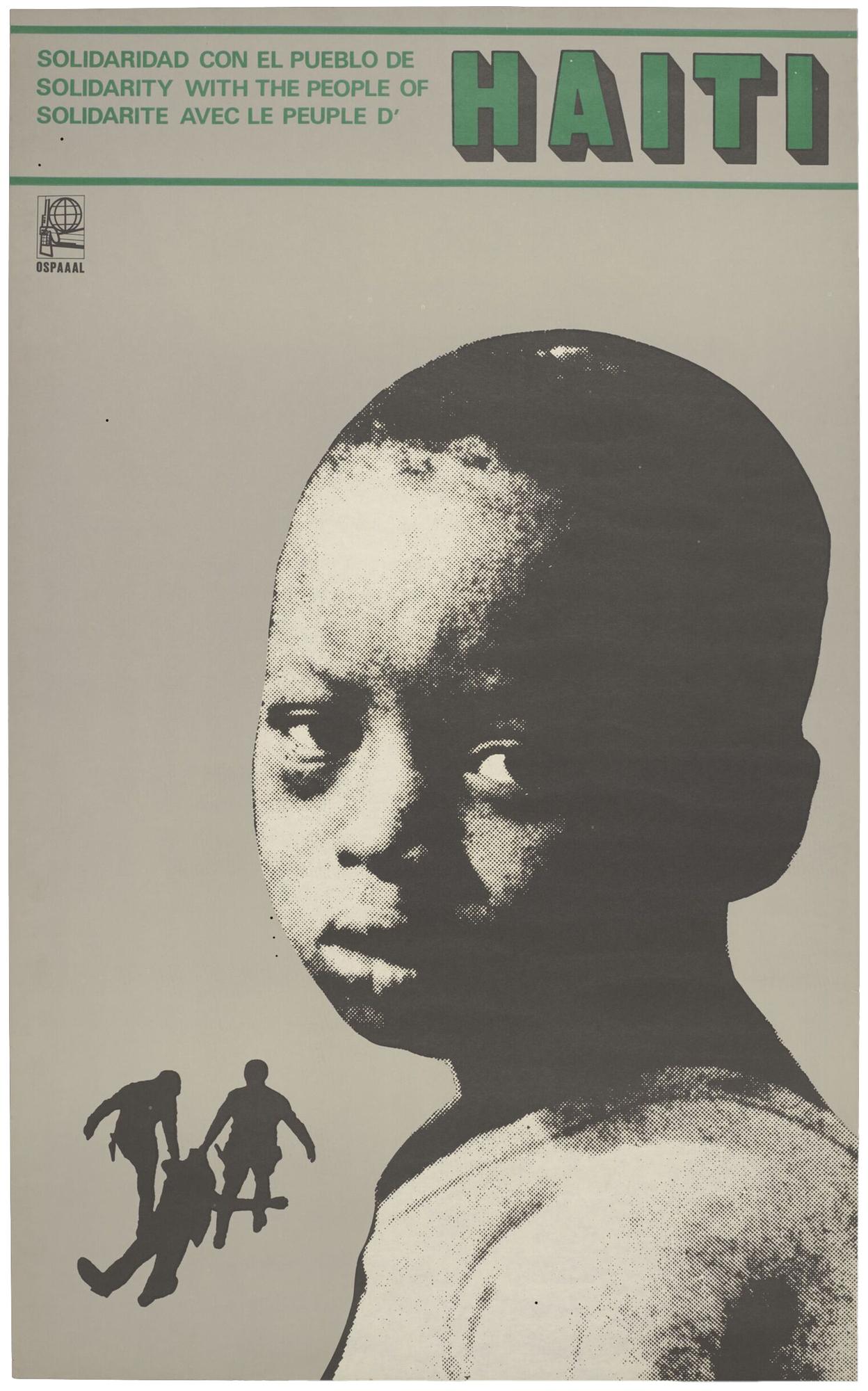
SOLIDARITY WITH THE PEOPLE OF HAITI, 1980
Between the 1960s and 1990s, more than fifty designers worked at OSPAAAL. Based in Cuba, they made magazines and posters that were sent around the world. Their aim was to promote radical political ideas. Many of their posters celebrate socialist revolutions and liberation movements from the Global South. To show support for people in Haiti experiencing state-sponsored violence, Rafael Enríquez Vega contrasted a silhouette of a limp body being dragged away with a photograph of a child by fellow designer Víctor Manuel Navarrete. The identity of the child is not recorded as part of the design.
Content warning: violence
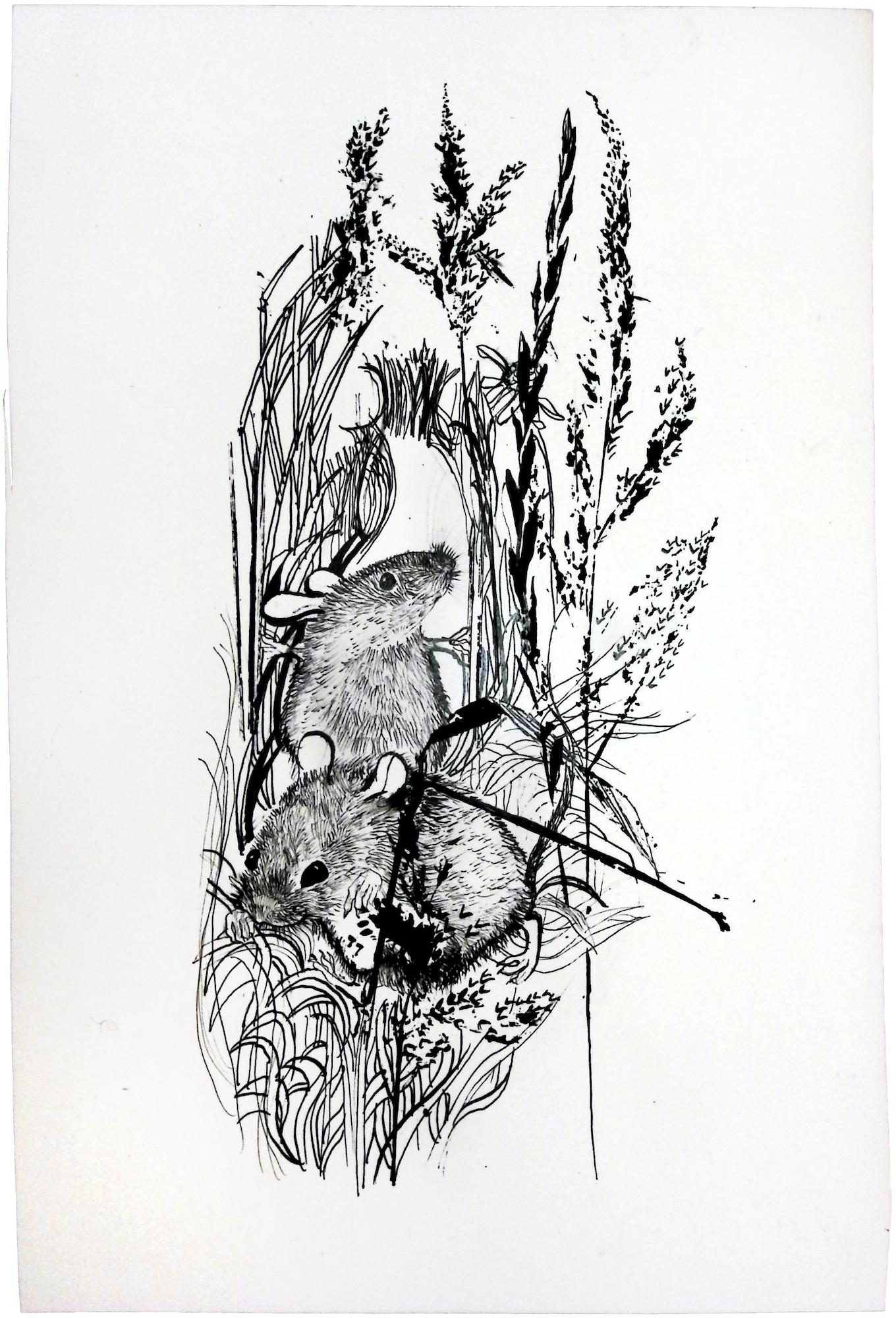
Illustration for A Pocket Full of Mice, c. 1984
British illustrator Janina Ede (1937-2018) created covers and illustrations for over 100 books from the 1950s to the 1980s. Many of her illustrations feature animals, which she drew from life.
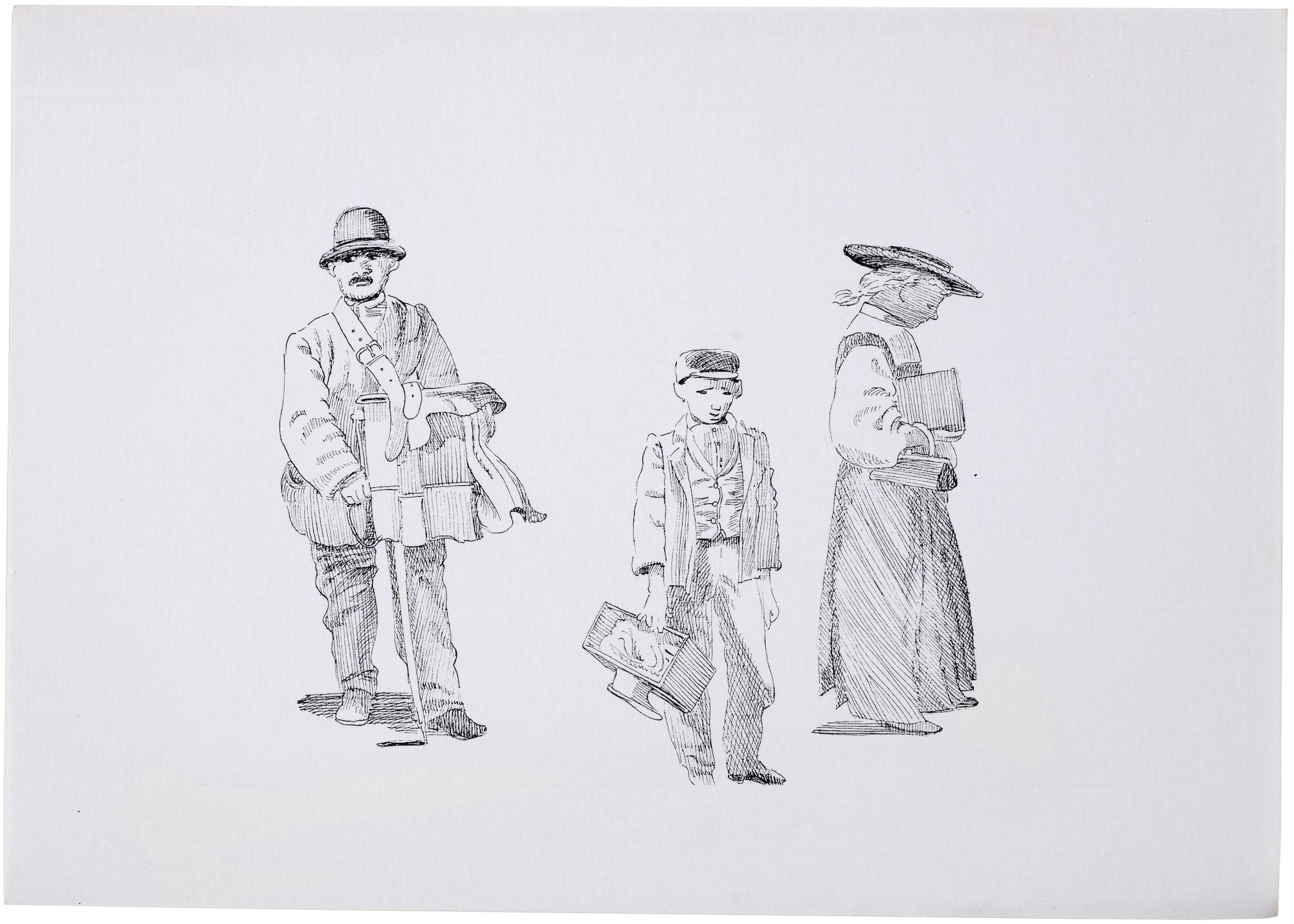
Jacqueline Ayer, Untitled, Date unknown
Jacqueline Ayer (1930–2012) had a career that spanned many creative fields. She began as a fashion illustrator, and later turned her hand to children’s books, textiles and garments, as she worked in New York, Paris, London, Bangkok, Hong Kong and across India. Ayer often used a sketchbook to record her observations and ideas for book narratives and fashion designs. The context for this drawing is unknown.
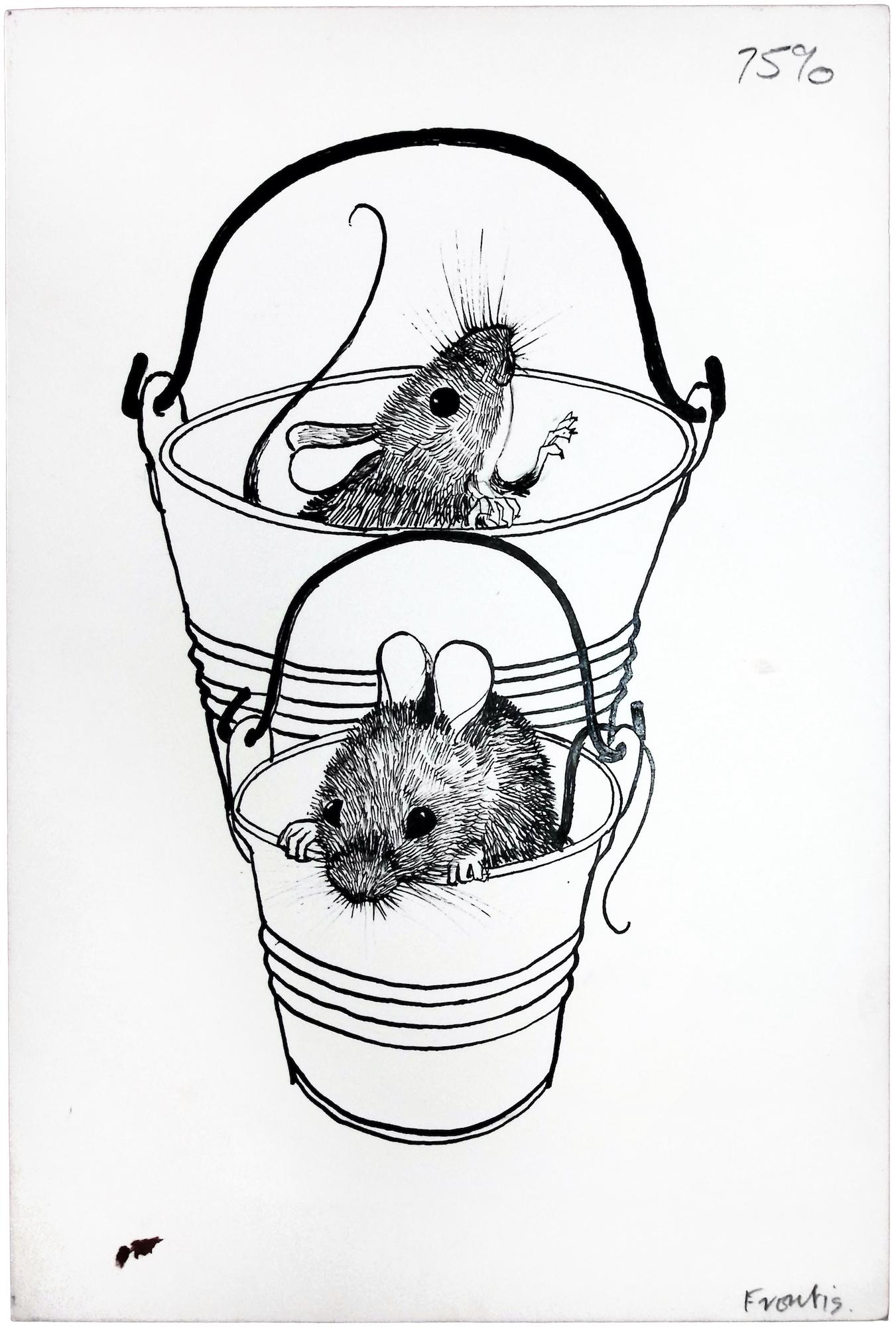
Untitled, c. 1986
British illustrator Janina Ede (1937-2018) created covers and illustrations for over 100 books from the 1950s to the 1980s. Many of her illustrations feature animals, which she drew from life.
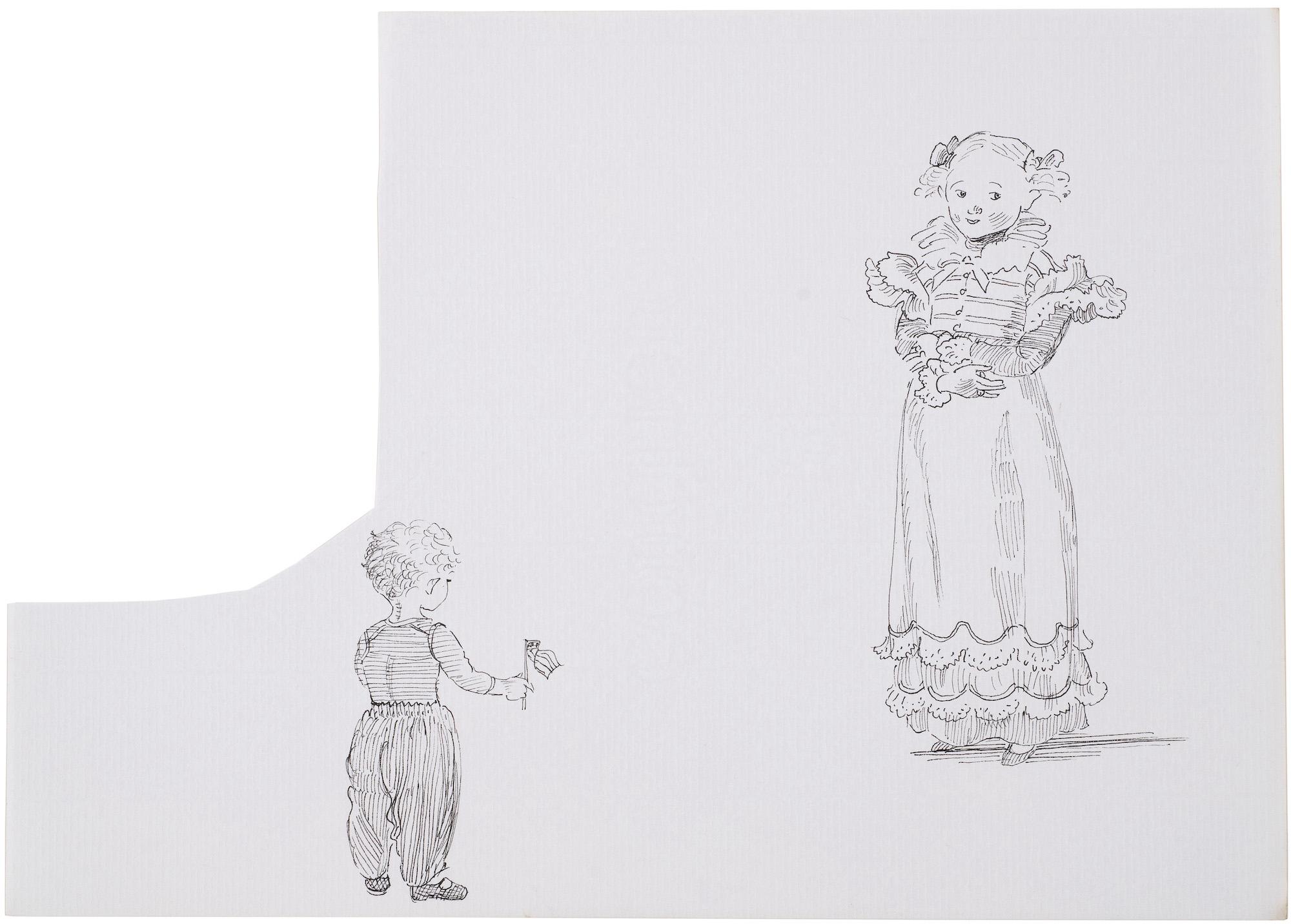
Jacqueline Ayer, Untitled, Date unknown
Jacqueline Ayer (1930–2012) had a career that spanned many creative fields. She began as a fashion illustrator, and later turned her hand to children’s books, textiles and garments, as she worked in New York, Paris, London, Bangkok, Hong Kong and across India. Ayer often used a sketchbook to record her observations and ideas for book narratives and fashion designs. The context for this drawing is unknown.
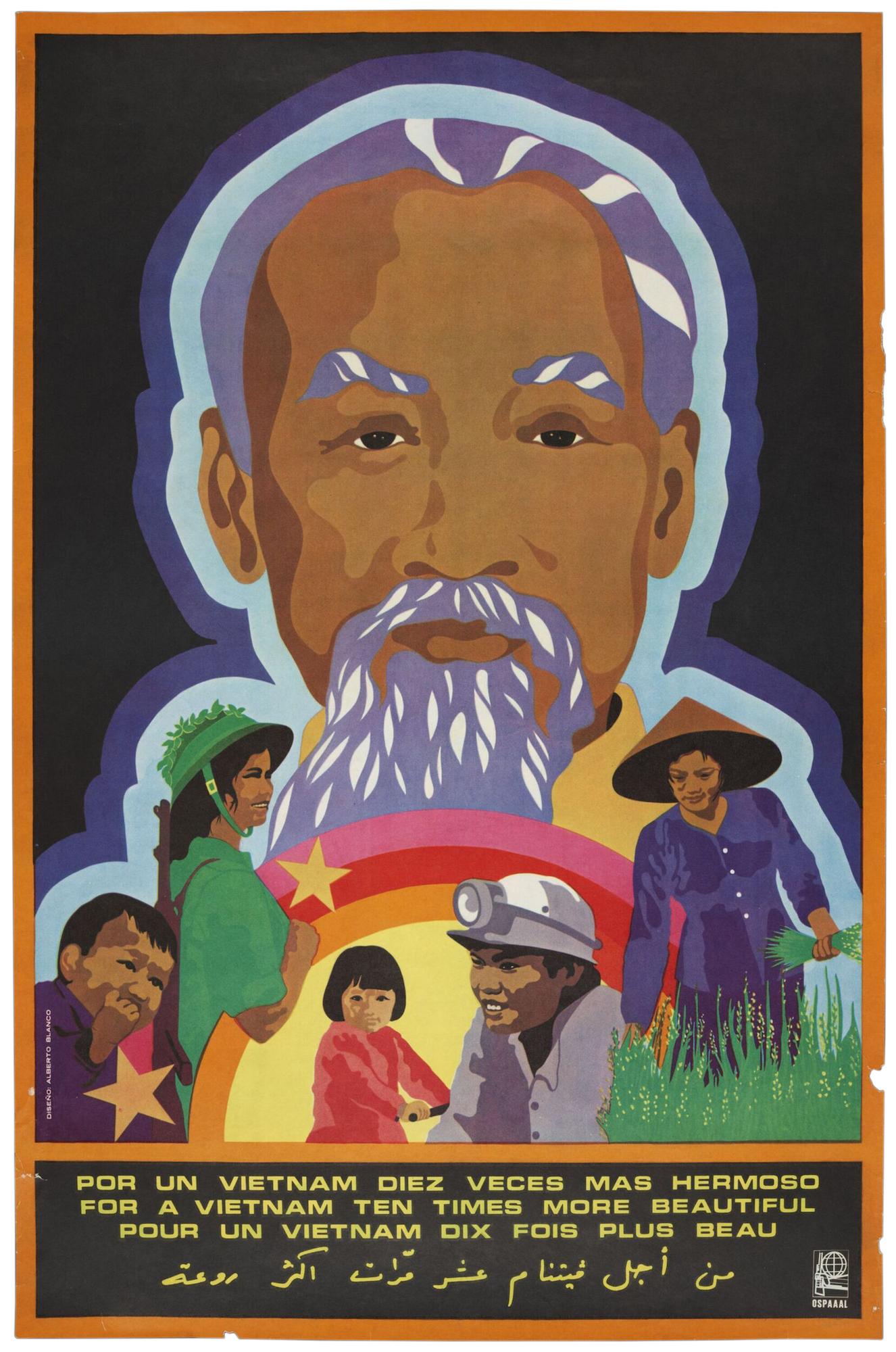
FOR A VIETNAM TEN TIMES MORE BEAUTIFUL, 1980
Between the 1960s and 1990s, more than fifty designers worked at OSPAAAL (the Organisation of Solidarity with the People of Africa, Asia and Latin America). Based in Cuba, they made magazines and posters that were sent around the world. Their aim was to promote radical political ideas. Many of their posters celebrate socialist revolutions and liberation movements from the Global South. President Hồ Chí Minh promised that a country “ten times more beautiful” would be rebuilt after the destruction caused by the war between North Vietnam and South Vietnam, allied with the U.S.A. (known as the ‘Vietnam War’ and ‘War Against the Americans to Save the Nation’).. This posthumous portrait of the leader pictures Vietnamese citizens in the socialist realist style used in propaganda posters from the Soviet Union and People’s Republic of China.
Content warning: weaponry
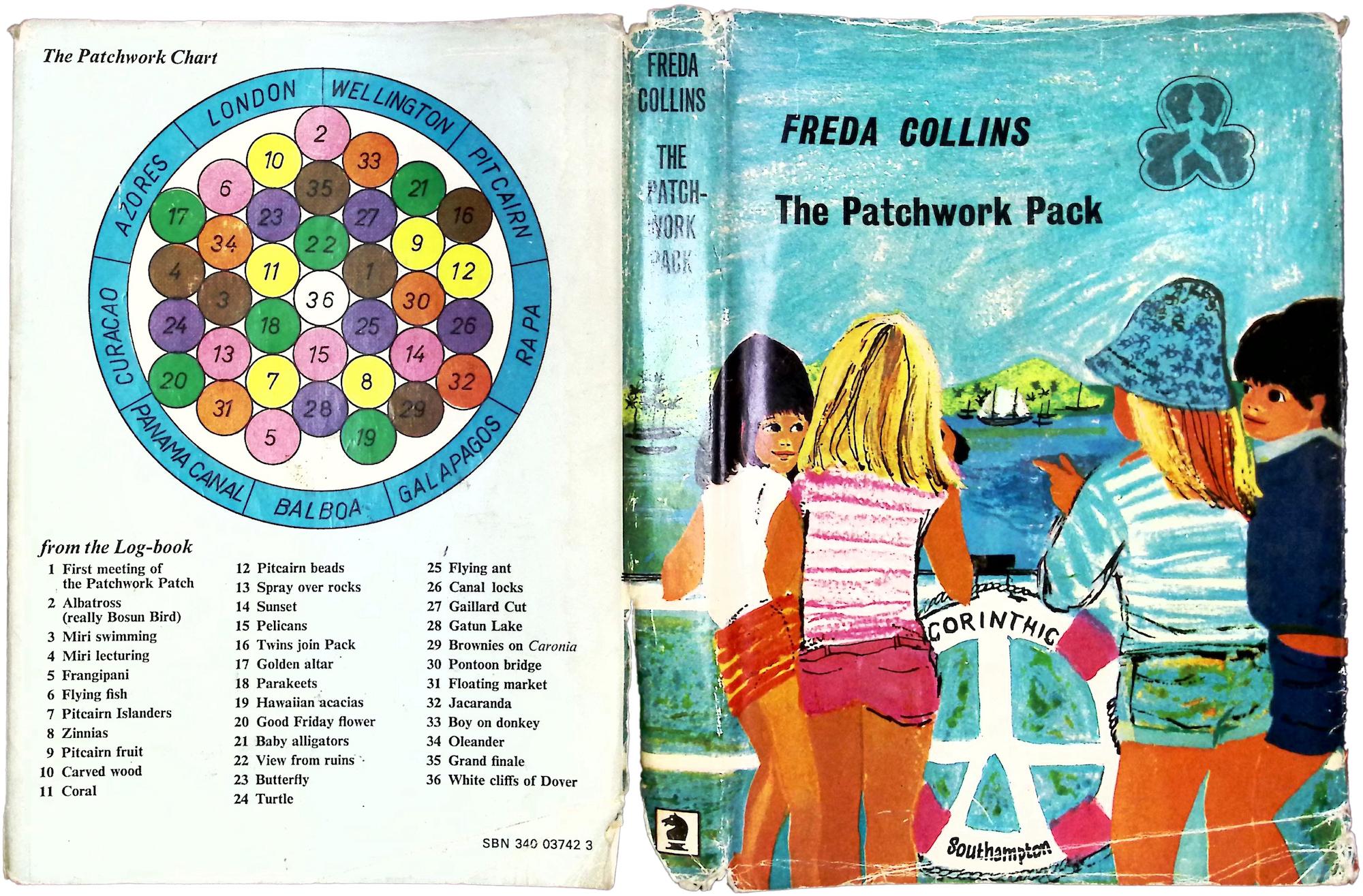
Cover jacket for "The Patchwork Pack", 1968
British illustrator Janina Ede (1937-2018) created covers and illustrations for over 100 books from the 1950s to the 1980s. In the 1960s, Ede began working on children’s books. The Patchwork Pack (1968) by Freda Collins is about a group of ‘Brownies’ – the name given to members of the worldwide girl-guiding movement.
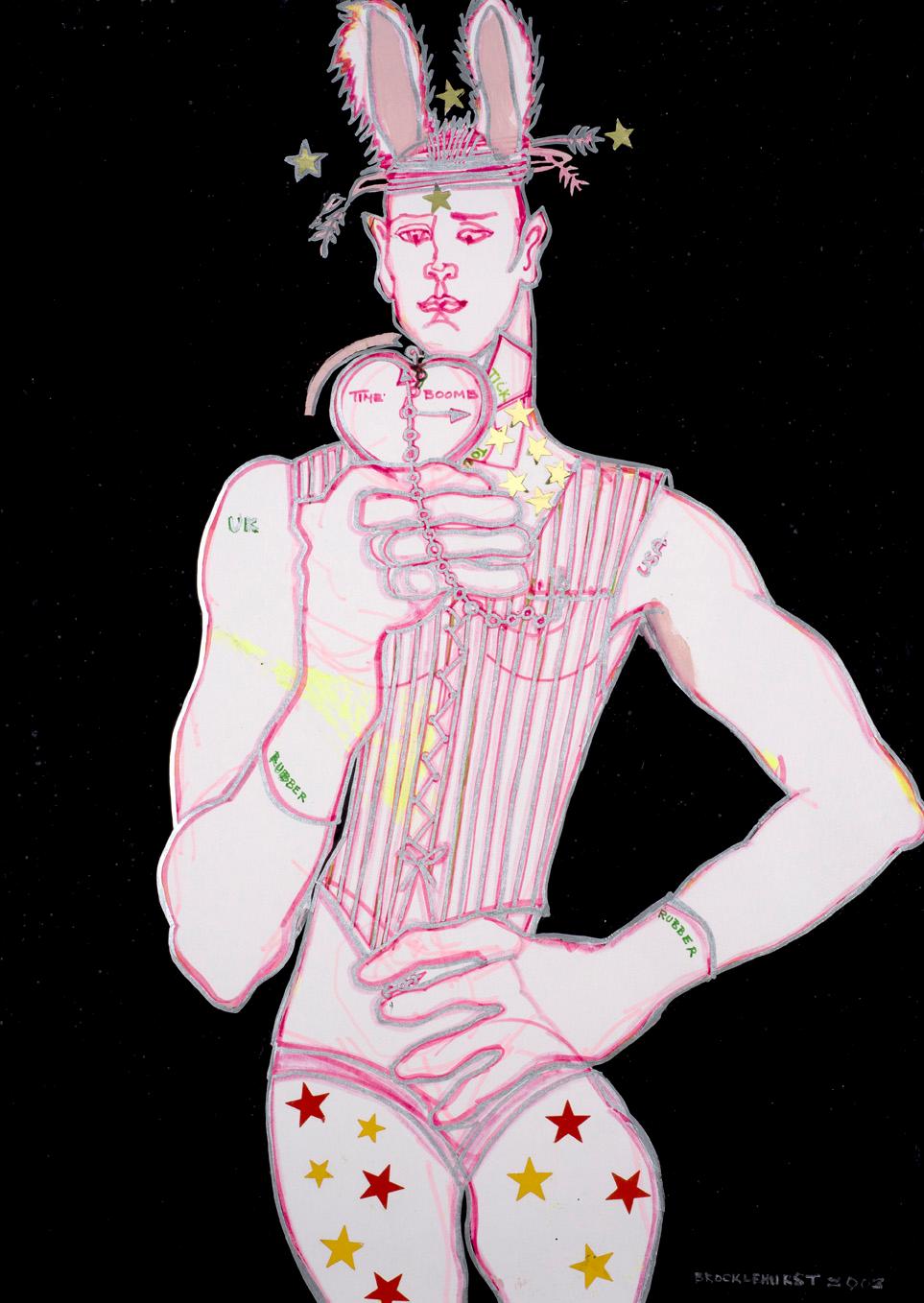
Jo Brocklehurst, Untitled (White Rabbit from Brocklehurst Through the Looking-Glass), 2003
Jo (Josephine) Brocklehurst (1935 - 2006) studied at Central Saint Martins and began her career as a fashion illustrator. She later focused on portraiture, drawing directly from models at her studio in West Hampstead and in nightclubs and theatres in Berlin, London and New York. Her work documents the alternative subcultures of the 1970s, 80s and 90s that went on to shape mainstream fashion and performance scenes. This work is from Brocklehurst Through the Looking-Glass, Brocklehurst’s final series. With an image of herself as a child as the centrepiece, Brocklehurst made hundreds of drawings that re-imagined characters from Lewis Carroll’s Alice novels. Her models were friends and dedicated club-goers who designed and made their own clothes. Works from the series were framed with bright plastic gemstones and hung on every available space at Brocklehurst’s home studio. She used metallic and neon inks that transformed under ultraviolet lights that she switched on for her guests in the evenings.

Illustration for 'A Dream Book', 1864-7
Eleanor Vere Boyle (1825 – 1916) illustrated poetry and prose by some of the most popular authors of her time. She regularly drew and painted using ink and watercolour, sketching landscapes, animals and her children from life. She also made drawings from her imagination, often reflecting spiritual themes.
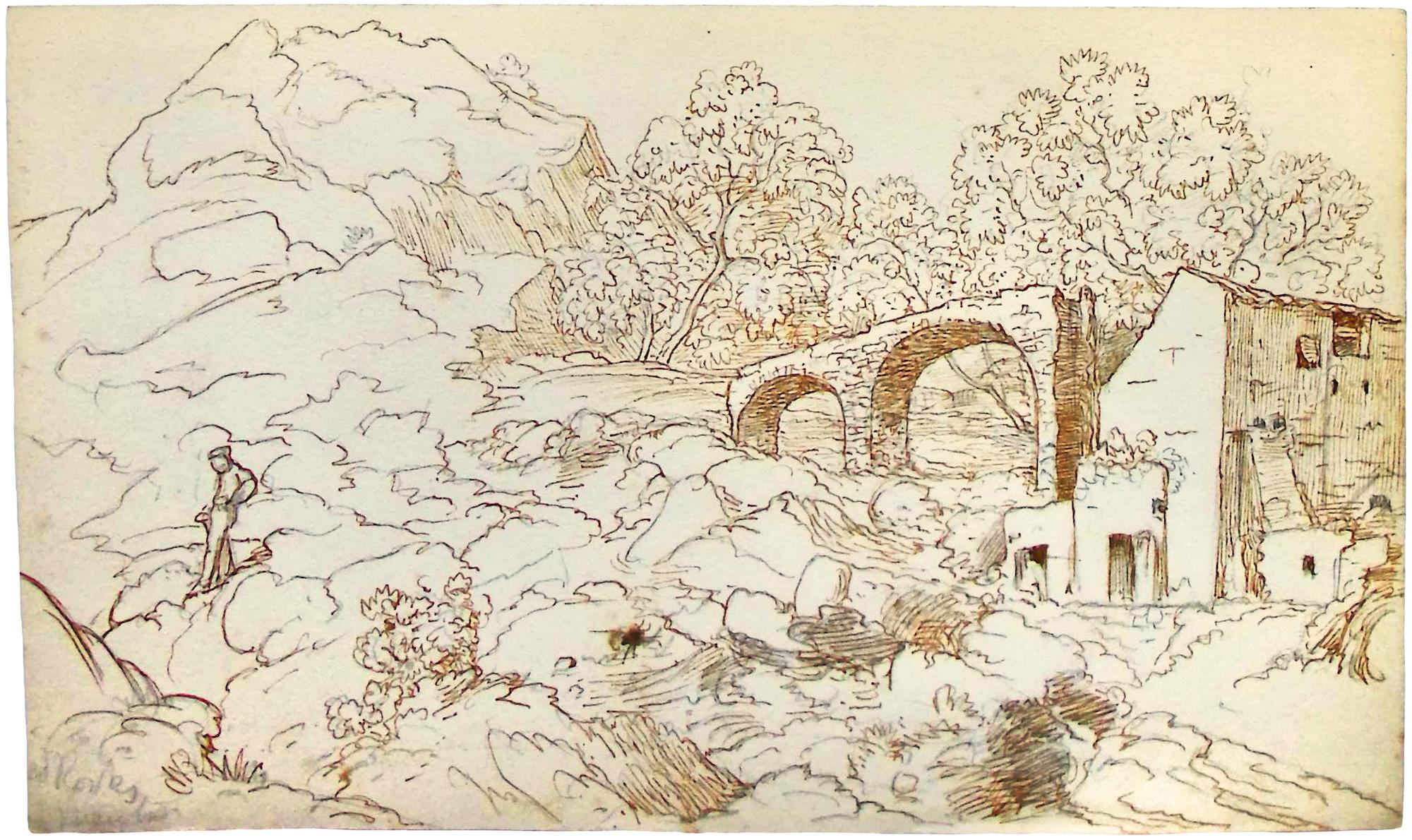
Untitled, Date unknown
Eleanor Vere Boyle (1825 – 1916) illustrated poetry and prose by some of the most popular authors of her time. She regularly drew and painted using ink and watercolour, sketching landscapes, animals and her children from life. She also made drawings from her imagination, often reflecting spiritual themes.
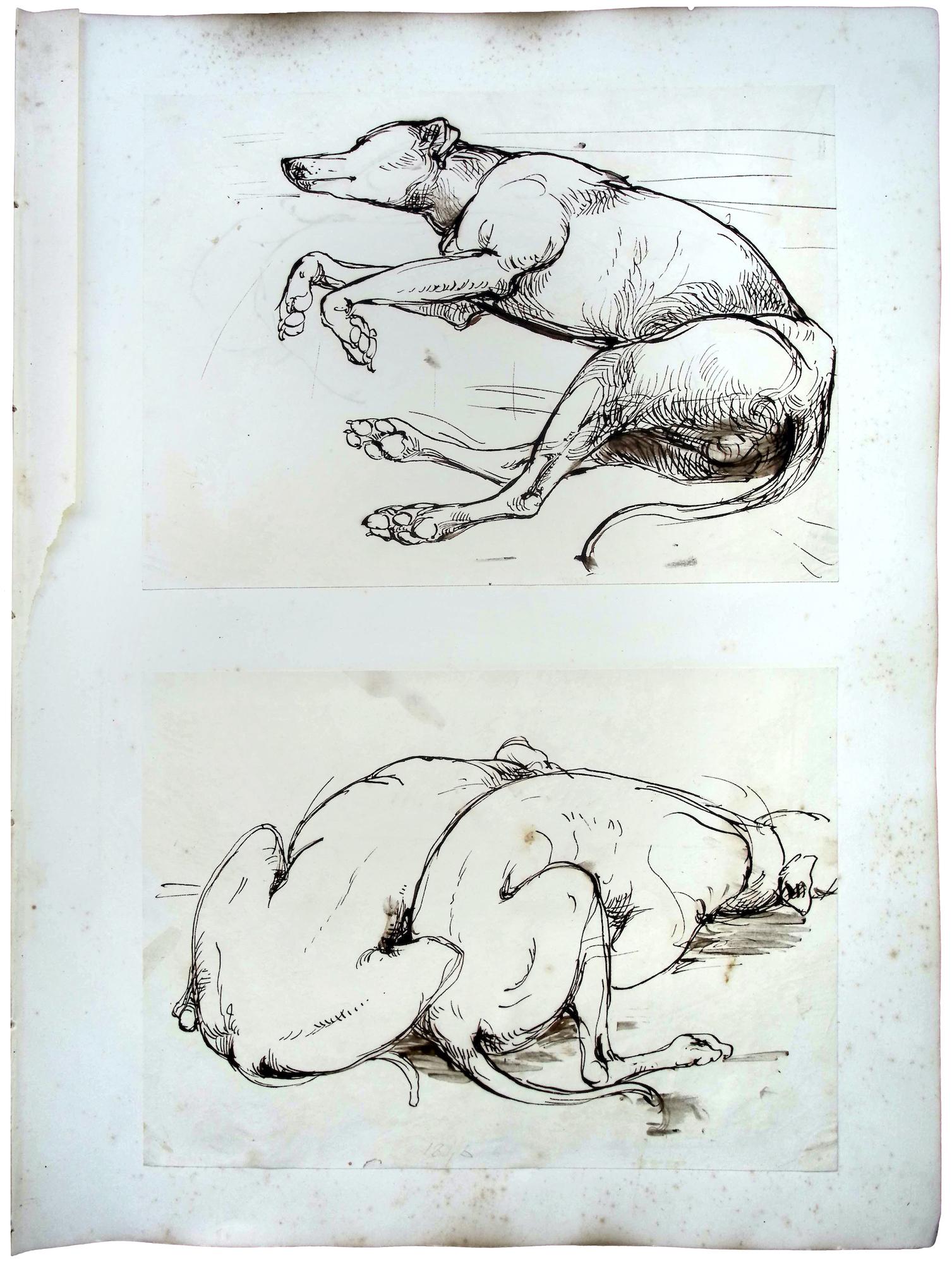
Untitled, 1846
Eleanor Vere Boyle (1825 – 1916) illustrated poetry and prose by some of the most popular authors of her time. She regularly drew and painted using ink and watercolour, sketching landscapes, animals and her children from life. She also made drawings from her imagination, often reflecting spiritual themes.
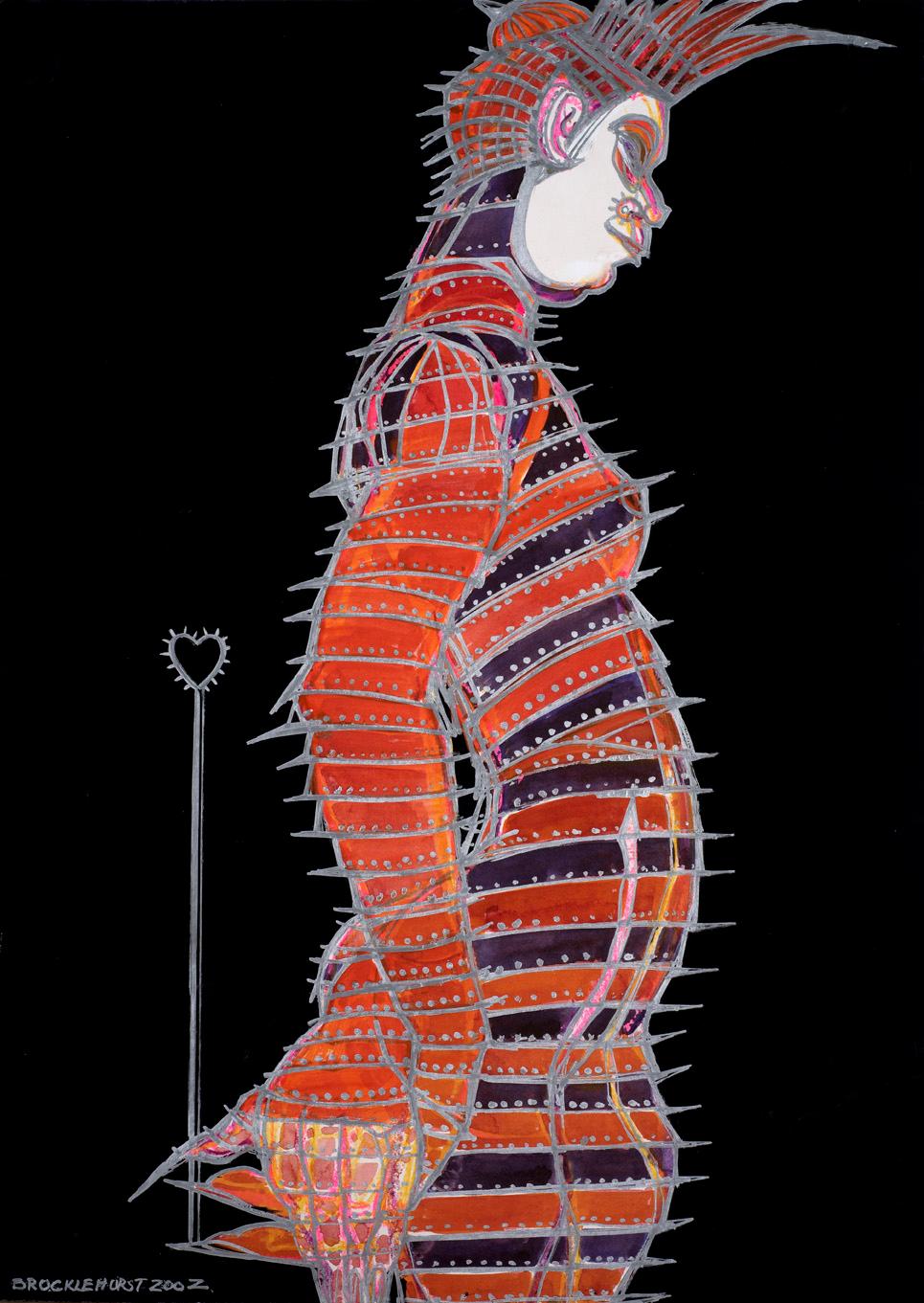
Jo Brocklehurst, Untitled (Red Queen from Brocklehurst Through the Looking-Glass), 2002
Jo (Josephine) Brocklehurst (1935 - 2006) studied at Central Saint Martins and began her career as a fashion illustrator. She later focused on portraiture, drawing directly from models at her studio in West Hampstead and in nightclubs and theatres in Berlin, London and New York. Her work documents the alternative subcultures of the 1970s, 80s and 90s that went on to shape mainstream fashion and performance scenes. This work is from Brocklehurst Through the Looking-Glass, Brocklehurst’s final series. With an image of herself as a child as the centrepiece, Brocklehurst made hundreds of drawings that re-imagined characters from Lewis Carroll’s Alice novels. Her models were friends and dedicated club-goers who designed and made their own clothes. Brocklehurst’s regular collaborator Isabelle Bricknall was the model for this work. Works from the series were framed with bright plastic gemstones and hung on every available space at Brocklehurst’s home studio. She used metallic and neon inks that transformed under ultraviolet lights that she switched on for her guests in the evenings.
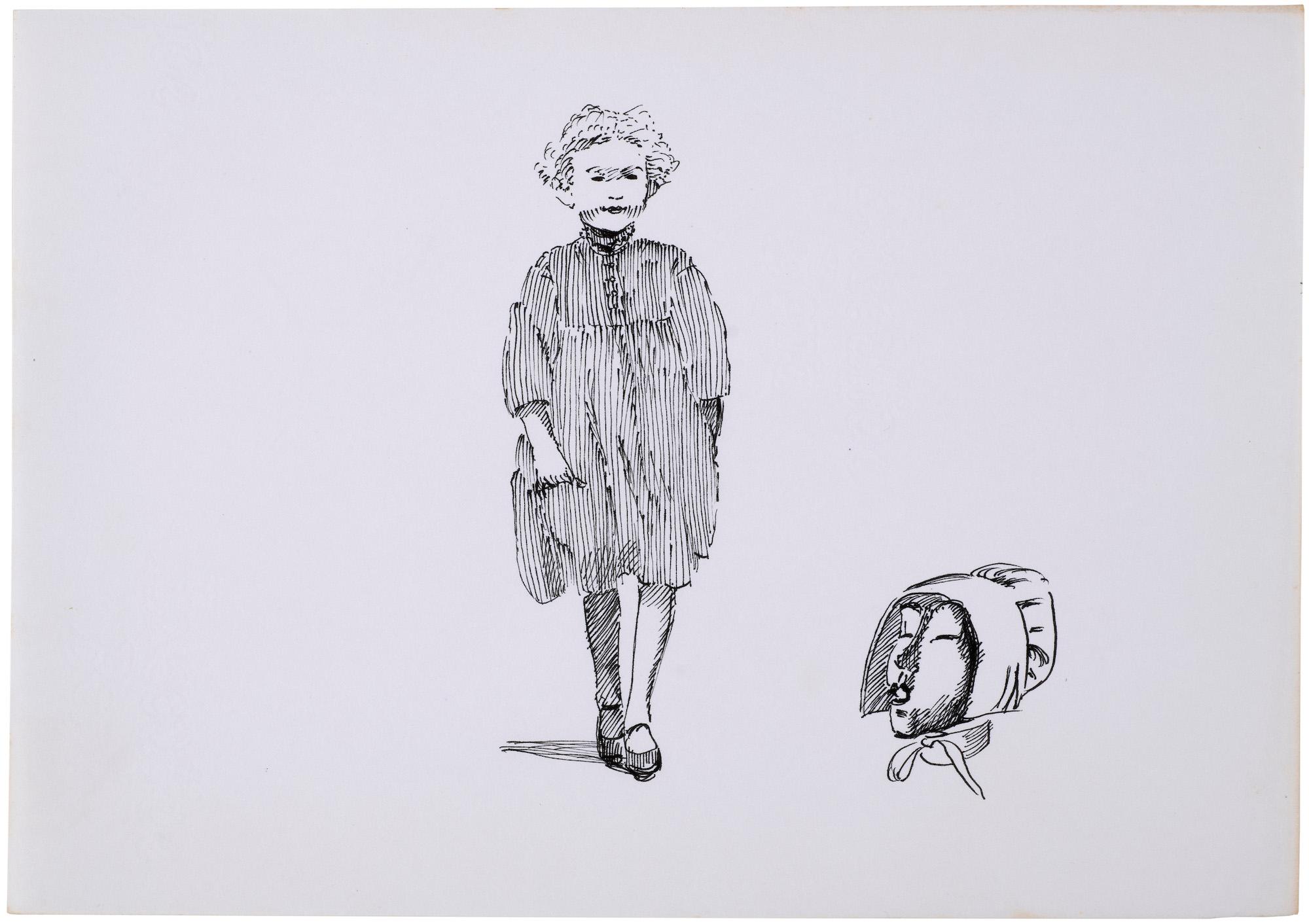
Jacqueline Ayer, Untitled, Date unknown
Jacqueline Ayer (1930–2012) had a career that spanned many creative fields. She began as a fashion illustrator, and later turned her hand to children’s books, textiles and garments, as she worked in New York, Paris, London, Bangkok, Hong Kong and across India. Ayer often used a sketchbook to record her observations and ideas for book narratives and fashion designs. The context for this drawing is unknown.
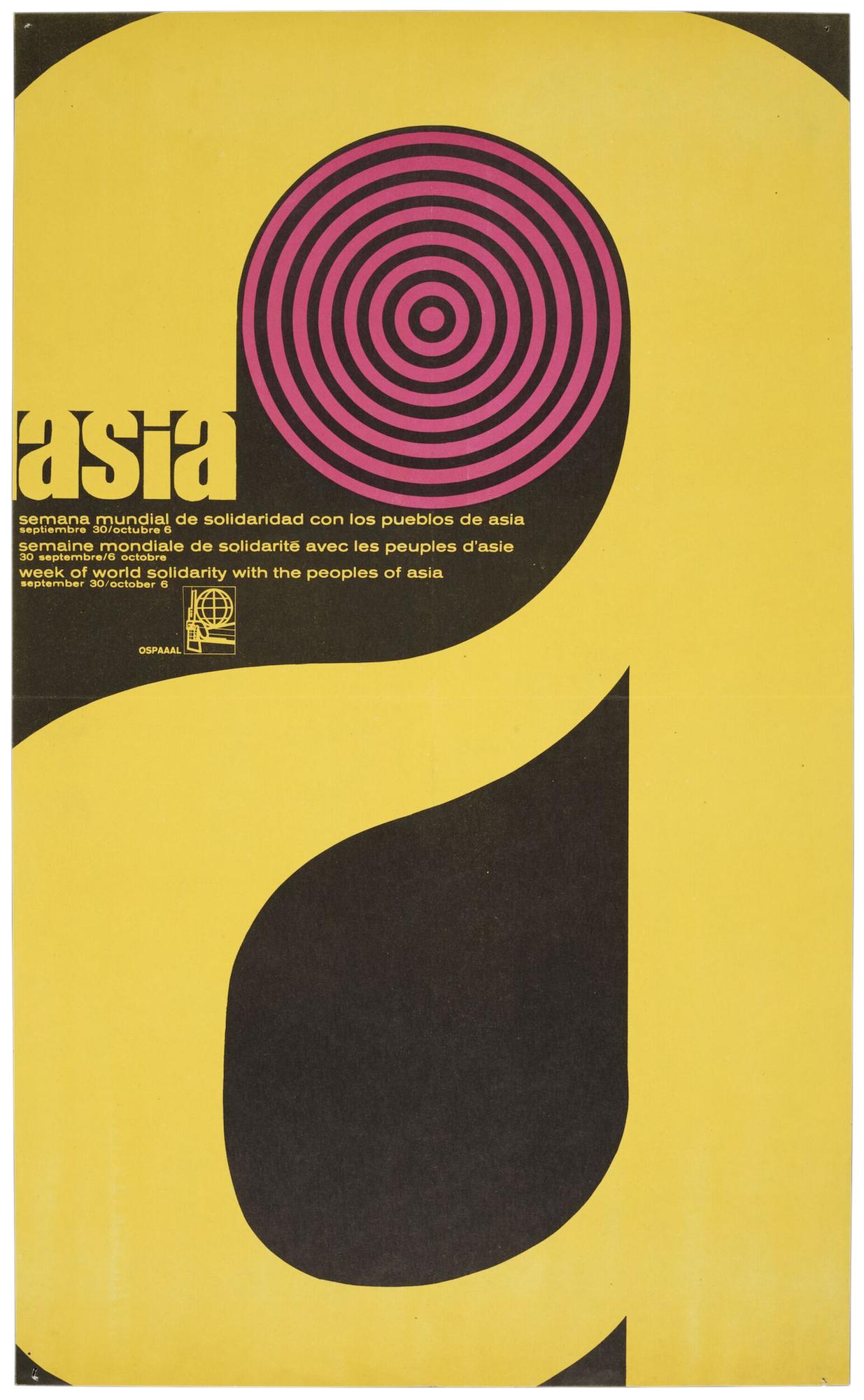
week of world solidarity with the peoples of asia - september 30/october 6, 1967
Between the 1960s and 1990s, more than fifty designers worked at OSPAAAL (the Organisation of Solidarity with the People of Africa, Asia and Latin America). Based in Cuba, they made magazines and posters that were sent around the world. Their aim was to promote radical political ideas. Many of their posters celebrate socialist revolutions and liberation movements from the Global South.
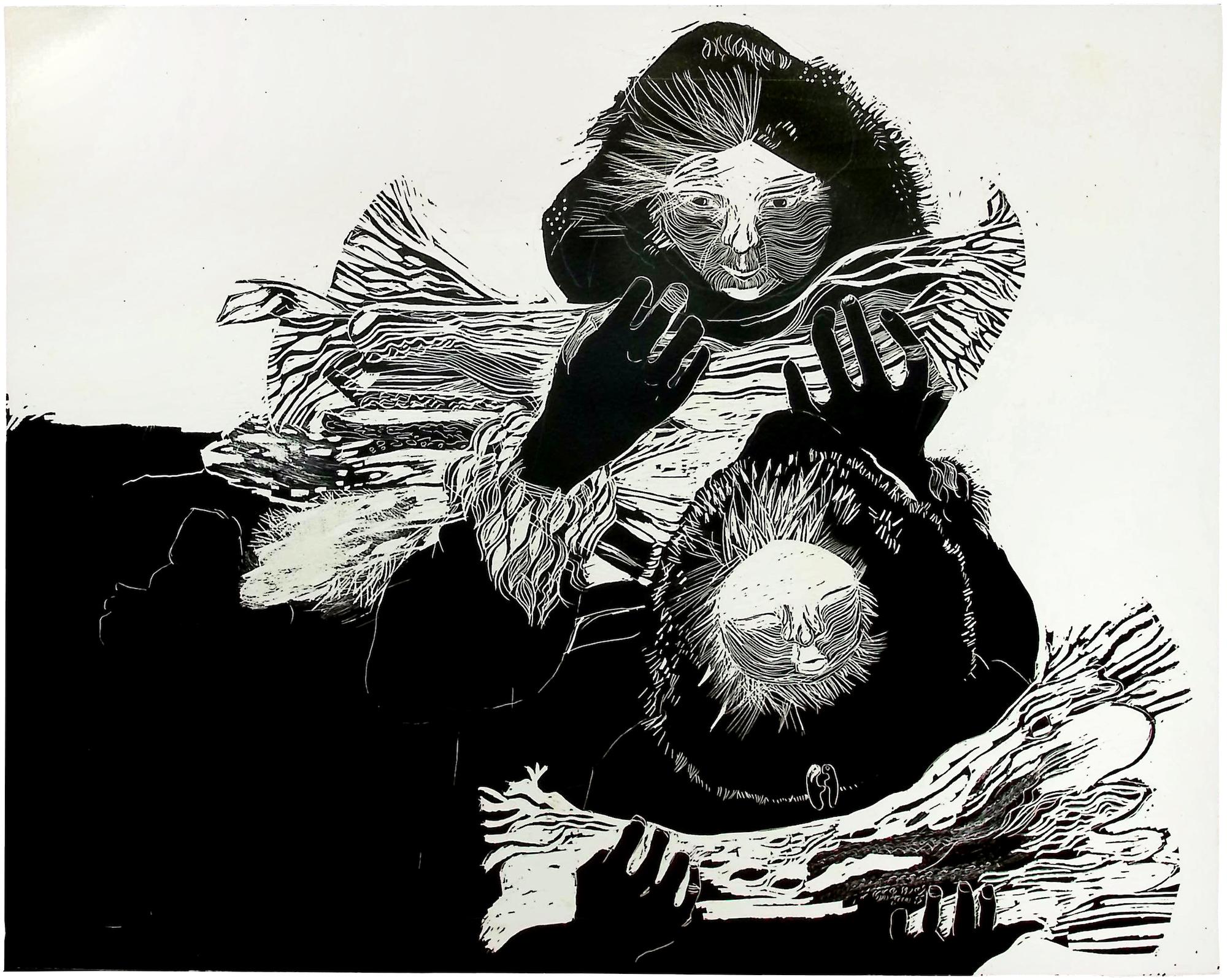
Untitled, c. 1977
British illustrator Janina Ede (1937-2018) created covers and illustrations for over 100 books from the 1950s to the 1980s. Her illustrations for Einar and the Seal (1977) used scraperboard, a material used to create a form of engraving. A board coated with a layer of dark ink is scraped to reveal a white or coloured area underneath.
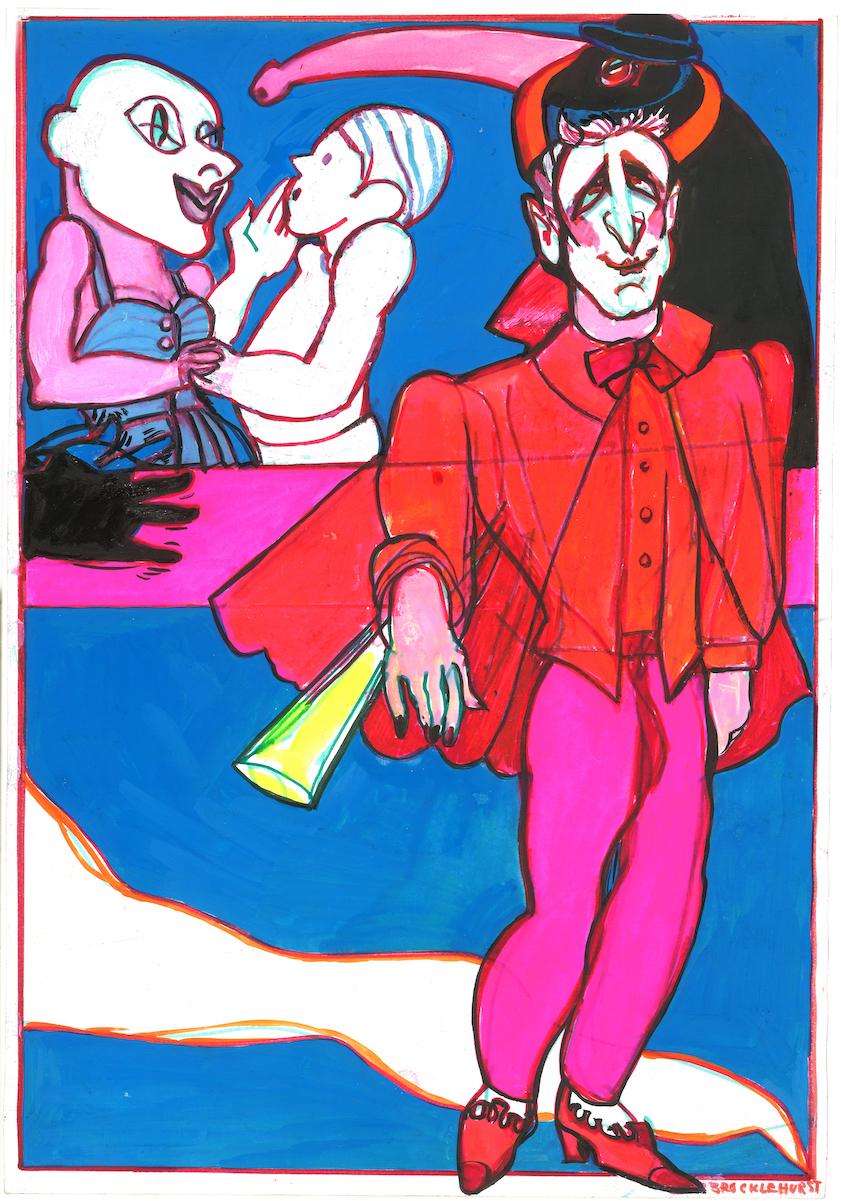
Jo Brocklehurst, Untitled (drawing of Die Eingeborene), 1999
Jo (Josephine) Brocklehurst (1935 - 2006) studied at Central Saint Martins and began her career as a fashion illustrator. She later focused on portraiture, drawing directly from models at her studio in West Hampstead and in nightclubs and theatres in Berlin, London and New York. Her work documents the alternative subcultures of the 1970s, 80s and 90s that went on to shape mainstream fashion and performance scenes. In 1999, Brocklehurst was artist in residence at newspaper Berliner Zeitung during Berliner Theatertreffen, a festival of new German theatre. The paper wanted to revive the Weimar tradition of theatre reviews being accompanied by illustrations, rather than using photographs. Brocklehurst drew behind the scenes and from her seat during performances. This drawing is from a performance of Die Eingeborene.
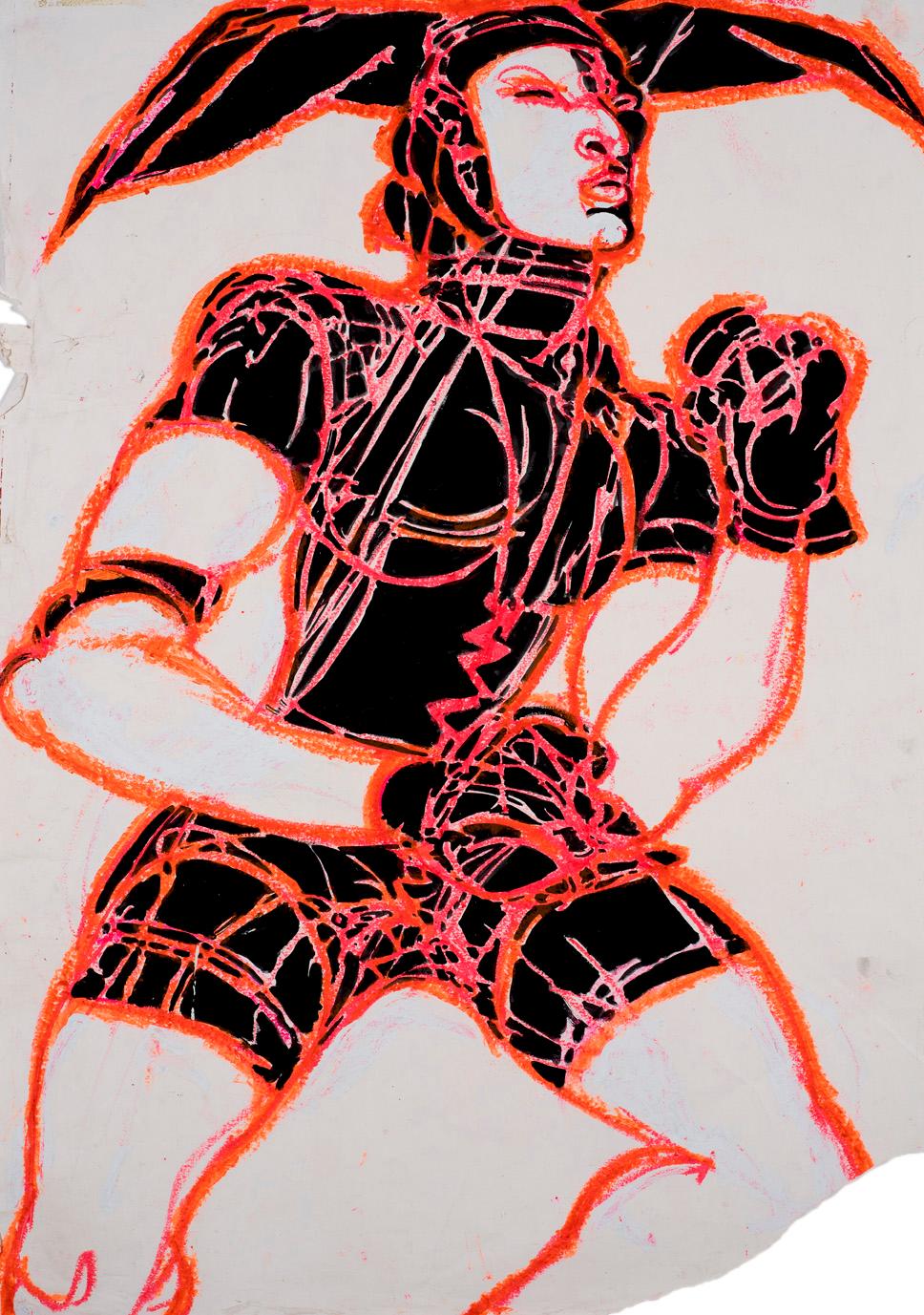
Jo Brocklehurst, Untitled (portrait of Josephine Leask), 2000
Jo (Josephine) Brocklehurst (1935 - 2006) studied at Central Saint Martins and began her career as a fashion illustrator. She later focused on portraiture, drawing directly from models at her studio in West Hampstead and in nightclubs and theatres in Berlin, London and New York. Her work documents the alternative subcultures of the 1970s, 80s and 90s that went on to shape mainstream fashion and performance scenes. In 2000, Brocklehurst created a series of drawings in sessions with dancer Josephine Leask. Leask’s 1999 article Welcome to the Club, published in ballettanz magazine, described the ways that nightclubs were acting as alternative theatres for cutting-edge contemporary dance. These drawings were shown as part of Leask’s lecture-performance on the same theme at the 2000 Salzburg Festival.
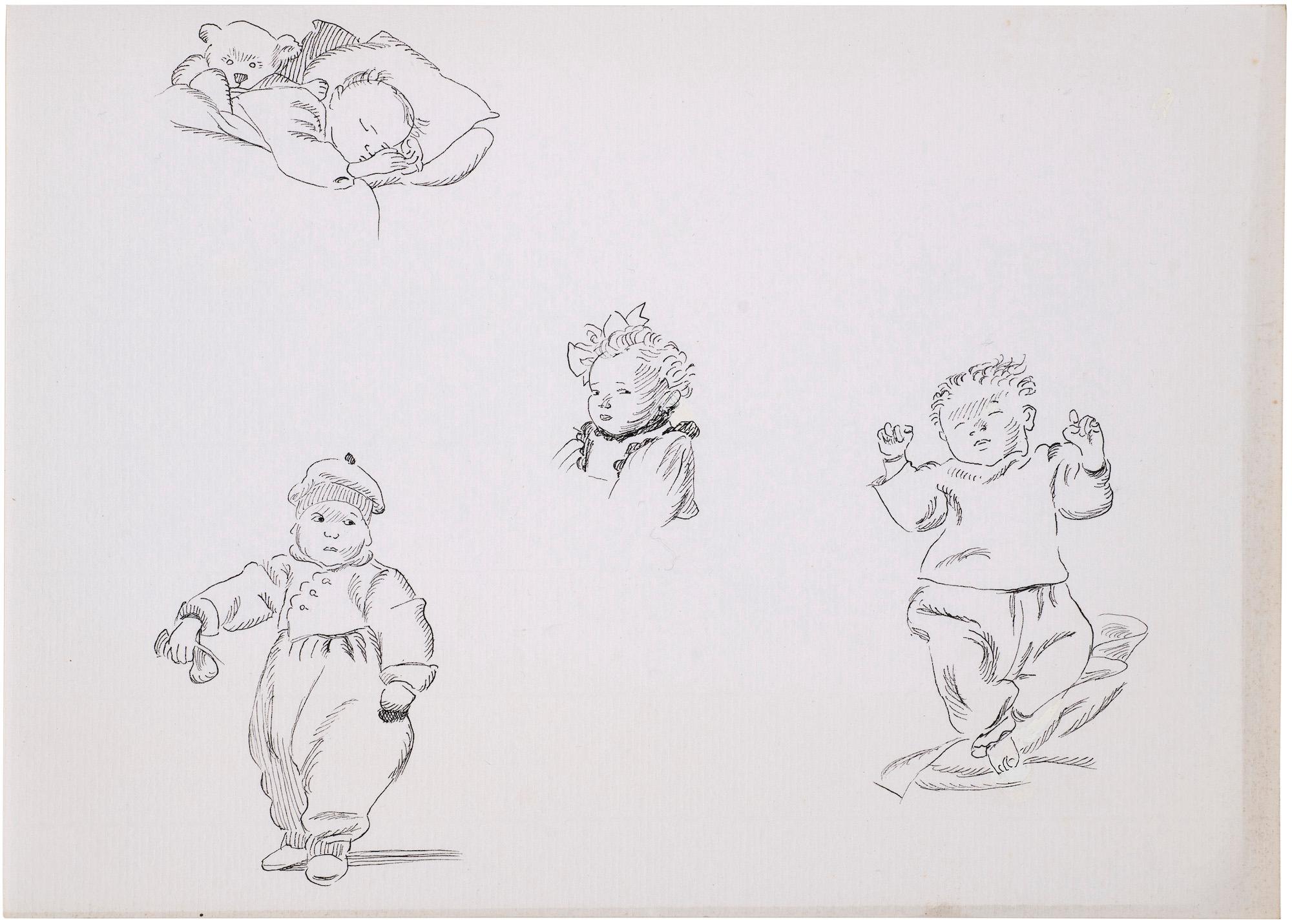
Jacqueline Ayer, Untitled, Date unknown
Jacqueline Ayer (1930–2012) had a career that spanned many creative fields. She began as a fashion illustrator, and later turned her hand to children’s books, textiles and garments, as she worked in New York, Paris, London, Bangkok, Hong Kong and across India. Ayer often used a sketchbook to record her observations and ideas for book narratives and fashion designs. The context for this drawing is unknown.
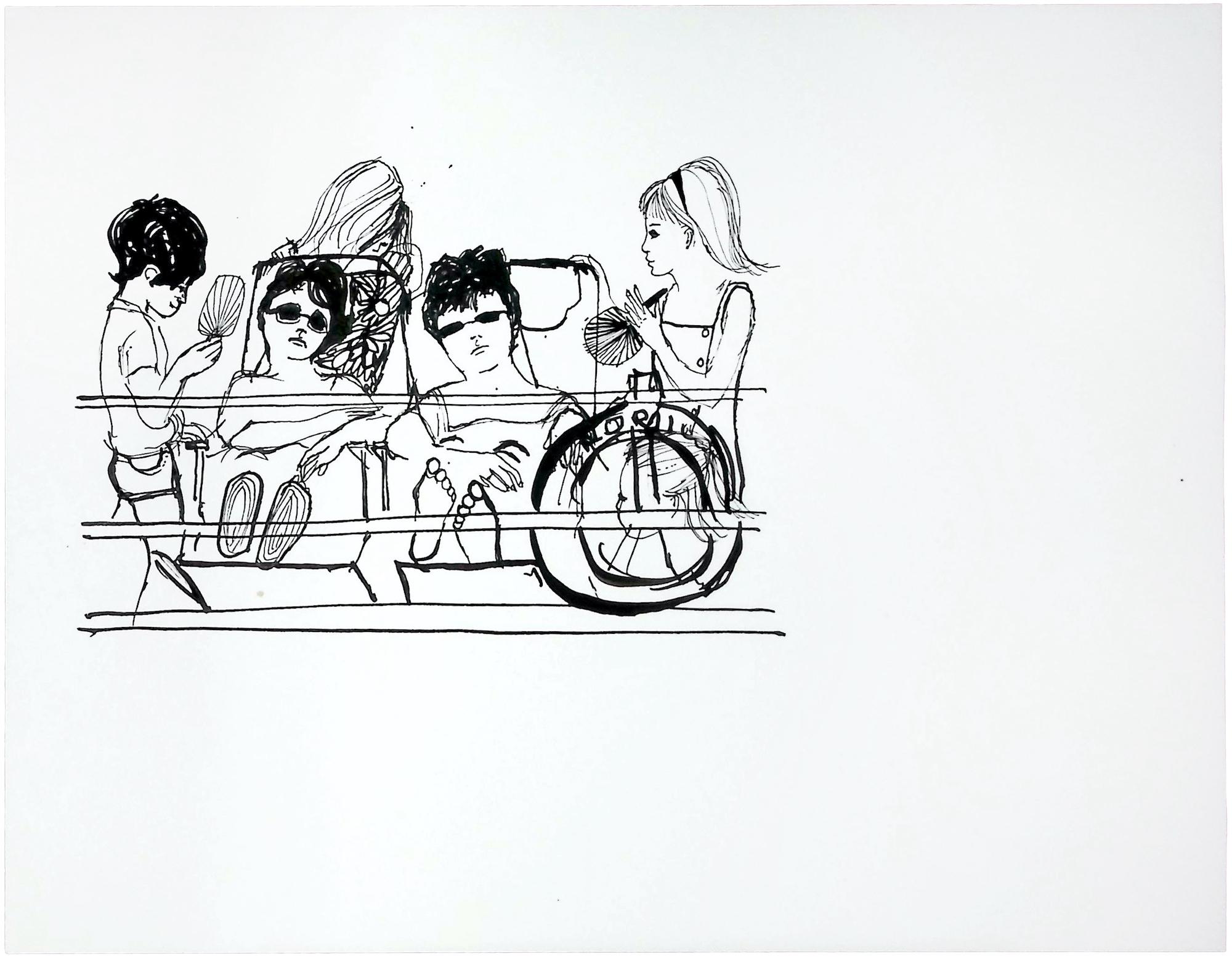
Untitled, c. 1968
British illustrator Janina Ede (1937-2018) created covers and illustrations for over 100 books from the 1950s to the 1980s. In the 1960s, Ede began working on children’s books. The Patchwork Pack (1968) by Freda Collins is about a group of ‘Brownies’ – the name given to members of the worldwide girl-guiding movement.
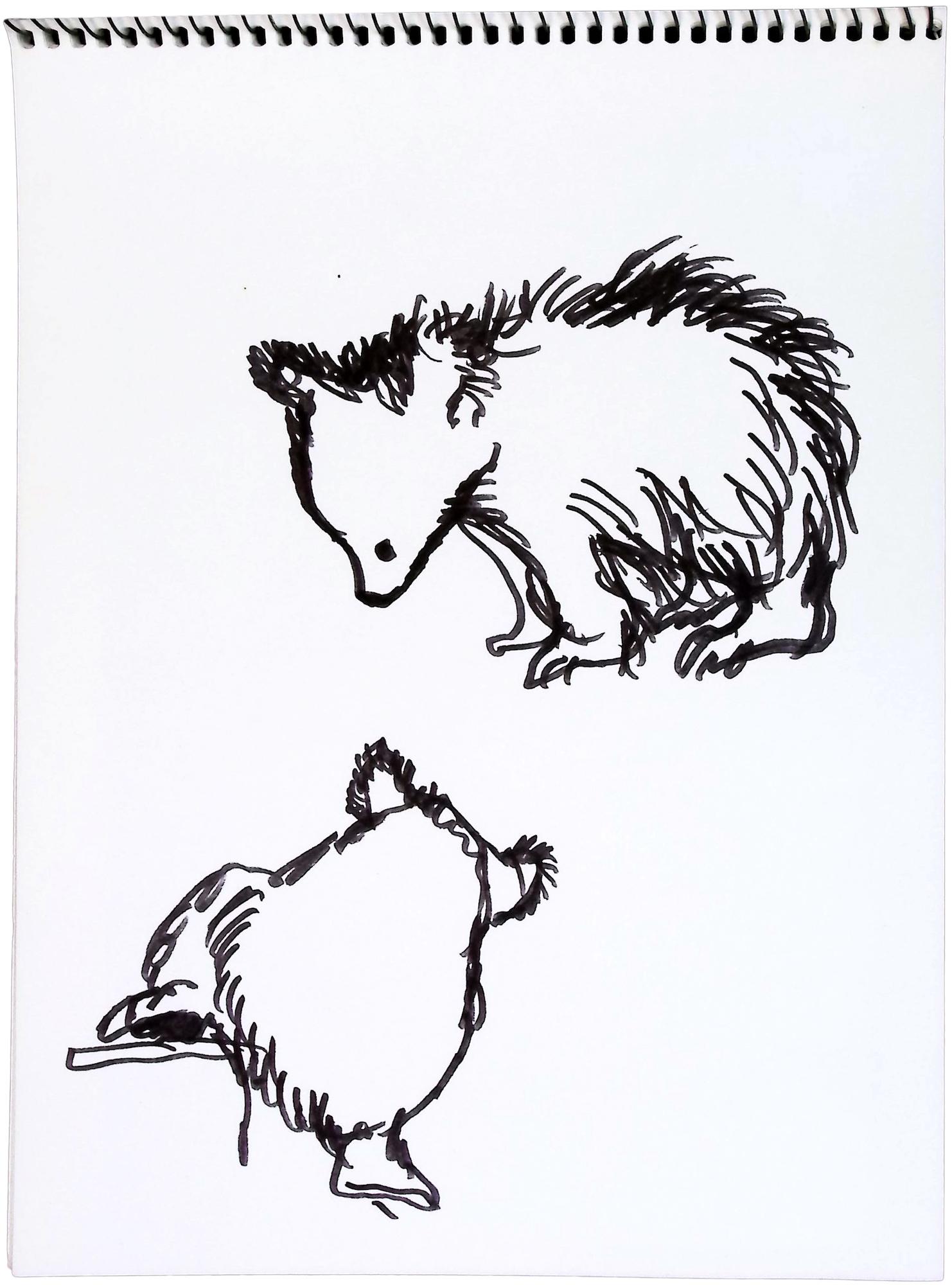
Untitled, Date unknown
British illustrator Janina Ede (1937-2018) created covers and illustrations for over 100 books from the 1950s to the 1980s. Many of her illustrations feature animals, which she drew from life.
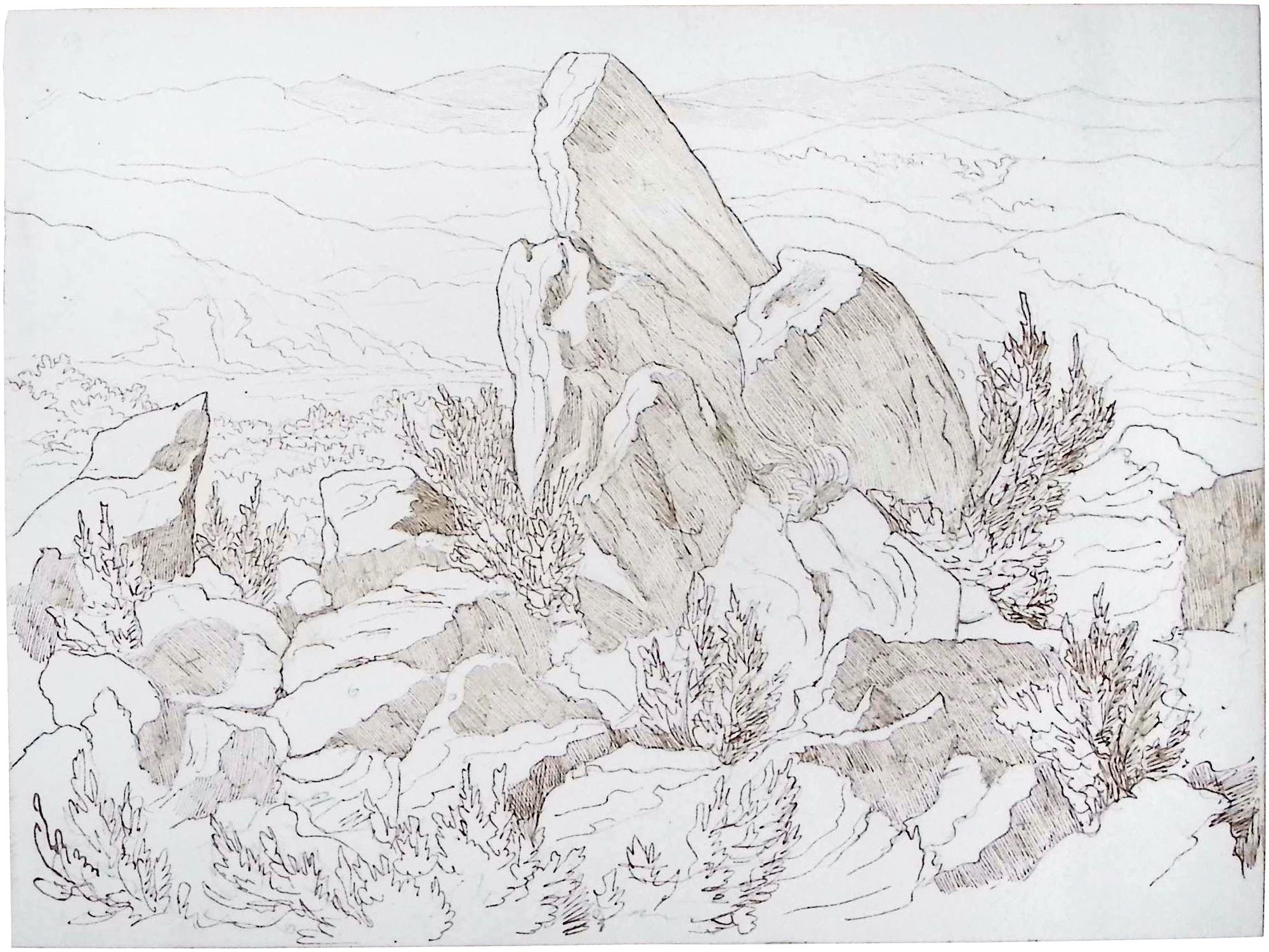
Untitled, Date unknown
Eleanor Vere Boyle (1825 – 1916) illustrated poetry and prose by some of the most popular authors of her time. She regularly drew and painted using ink and watercolour, sketching landscapes, animals and her children from life. She also made drawings from her imagination, often reflecting spiritual themes.
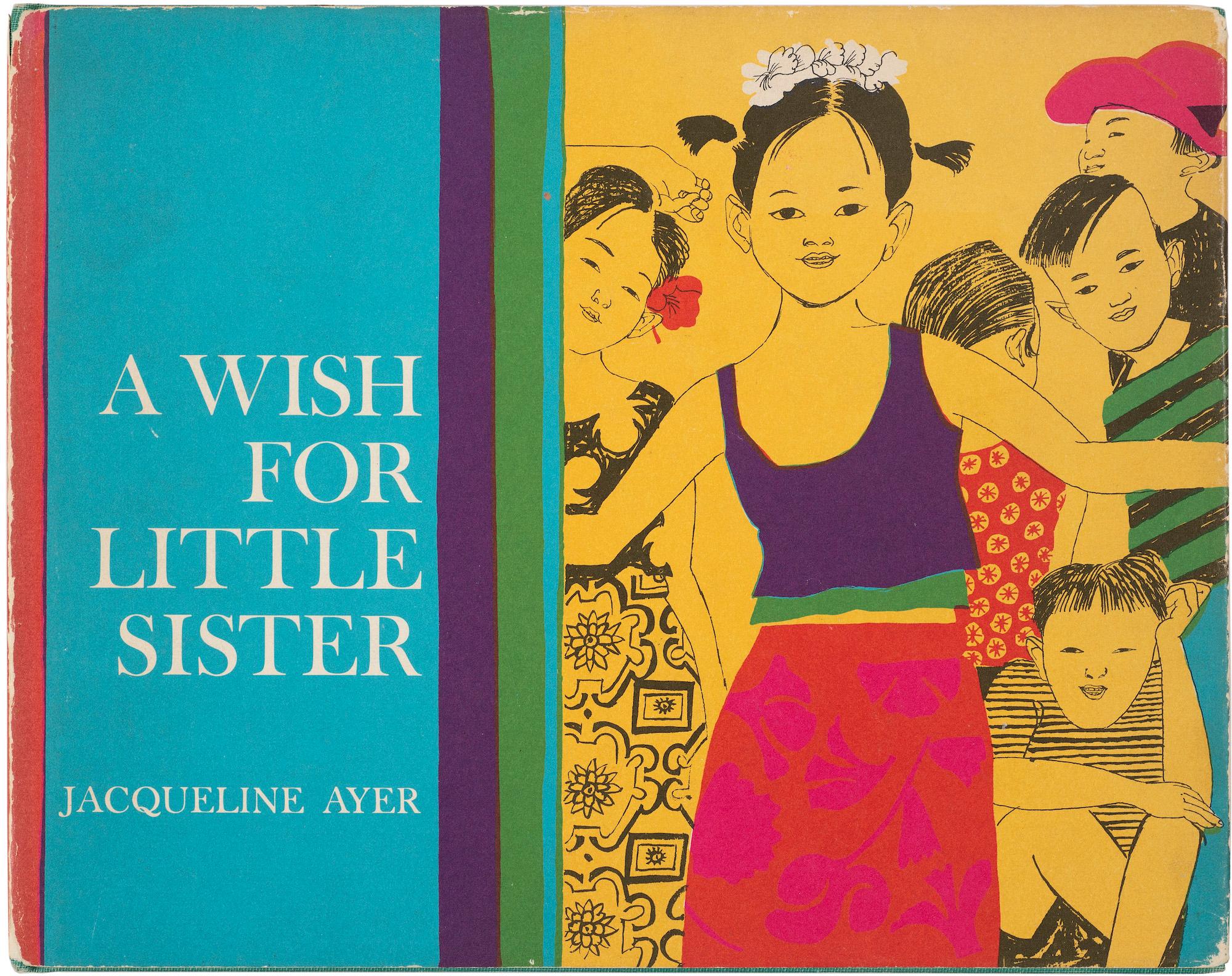
Jacqueline Ayer, A Wish for Little Sister, 1960
Jacqueline Ayer (1930–2012) had a career that spanned many creative fields. She began as a fashion illustrator, and later turned her hand to children’s books, textiles and garments, as she worked in New York, Paris, London, Bangkok, Hong Kong and across India. In 1957, Ayer began working for designer Jim Thompson at his company Thai Silk. This experience fed into her book, A Wish for Little Sister, a story about a little girl from a weaving family who receives a birthday wish from a mynah bird. ‘Jim invited me to sketch from the back steps of his new house… A busy canal oozed by at the foot of the steps, and about fifteen feet across the water traffic, was a weaving village. It was noisily busy with the varied occupations of spinning, dyeing and weaving, laid out, it seemed, for me.’ - Bet Ayer

Book cover proof for Colette's "The Other One", 1960
British illustrator Janina Ede (1937-2018) created covers and illustrations for over 100 books from the 1950s to the 1980s. She designed the covers of several books by French author and pioneer of autofiction Sidonie-Gabrielle Colette.
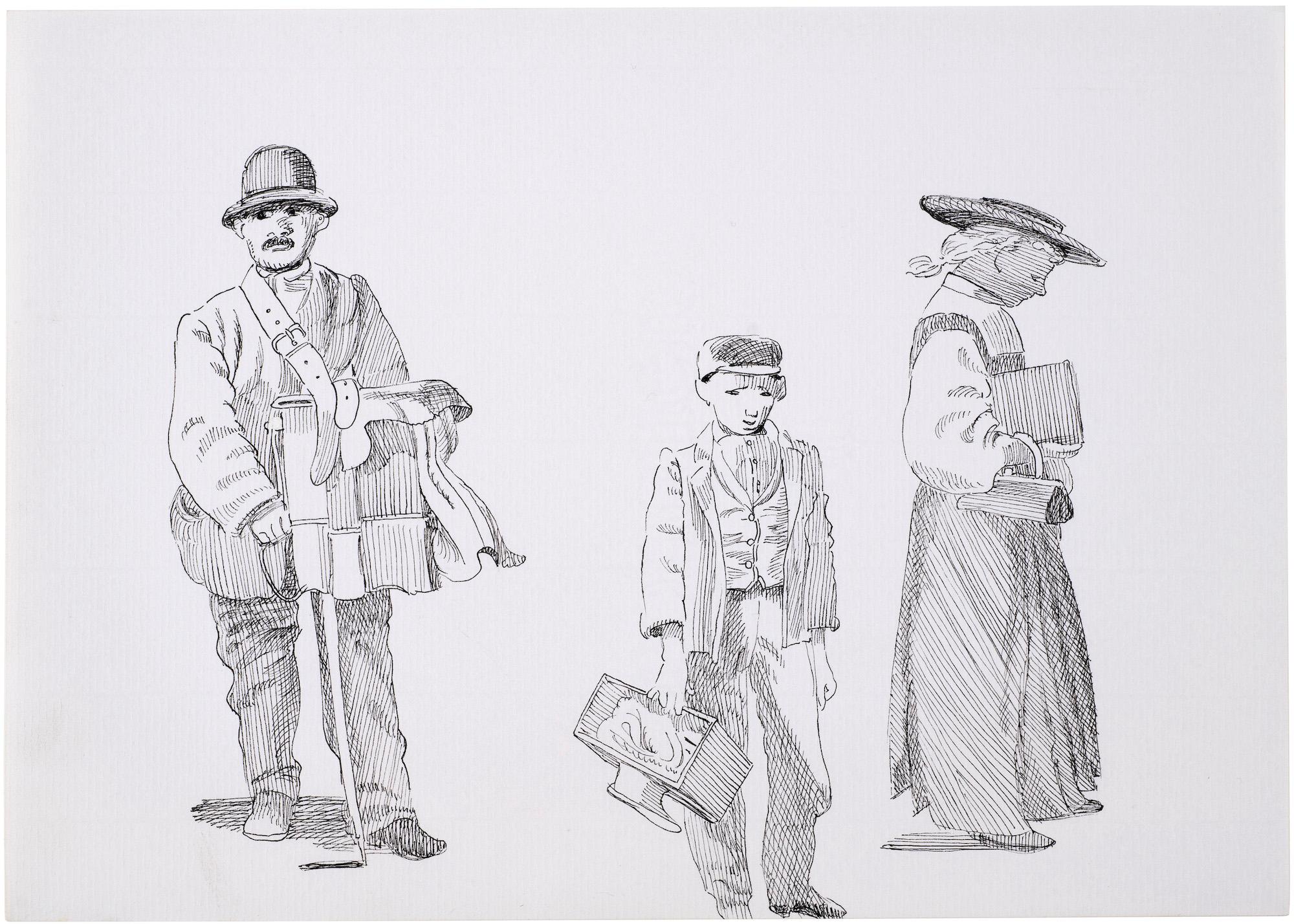
Jacqueline Ayer, Untitled, Date unknown
Jacqueline Ayer (1930–2012) had a career that spanned many creative fields. She began as a fashion illustrator, and later turned her hand to children’s books, textiles and garments, as she worked in New York, Paris, London, Bangkok, Hong Kong and across India. Ayer often used a sketchbook to record her observations and ideas for book narratives and fashion designs. The context for this drawing is unknown.
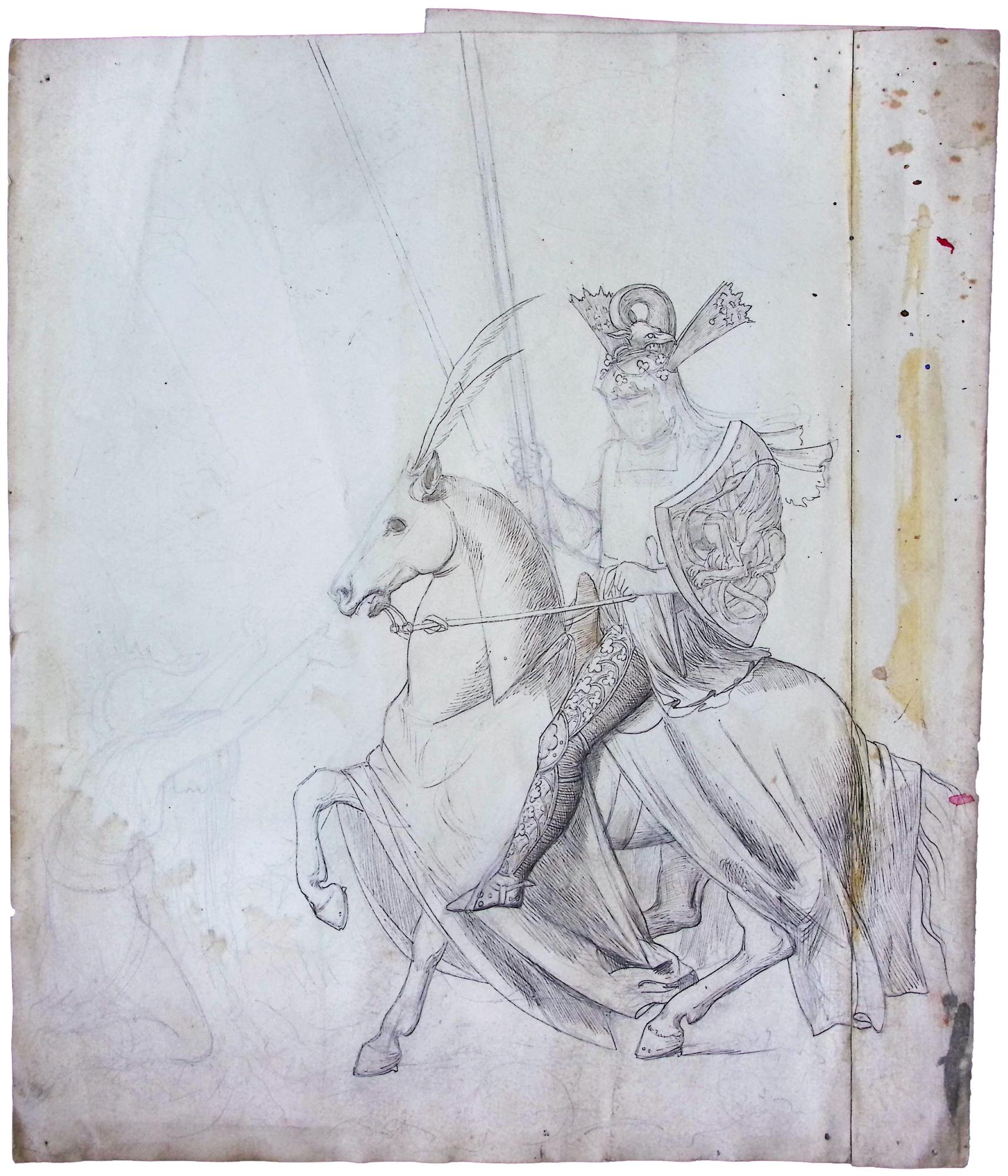
Untitled, Date unknown
Eleanor Vere Boyle (1825 – 1916) illustrated poetry and prose by some of the most popular authors of her time. She regularly drew and painted using ink and watercolour, sketching landscapes, animals and her children from life. She also made drawings from her imagination, often reflecting spiritual themes.
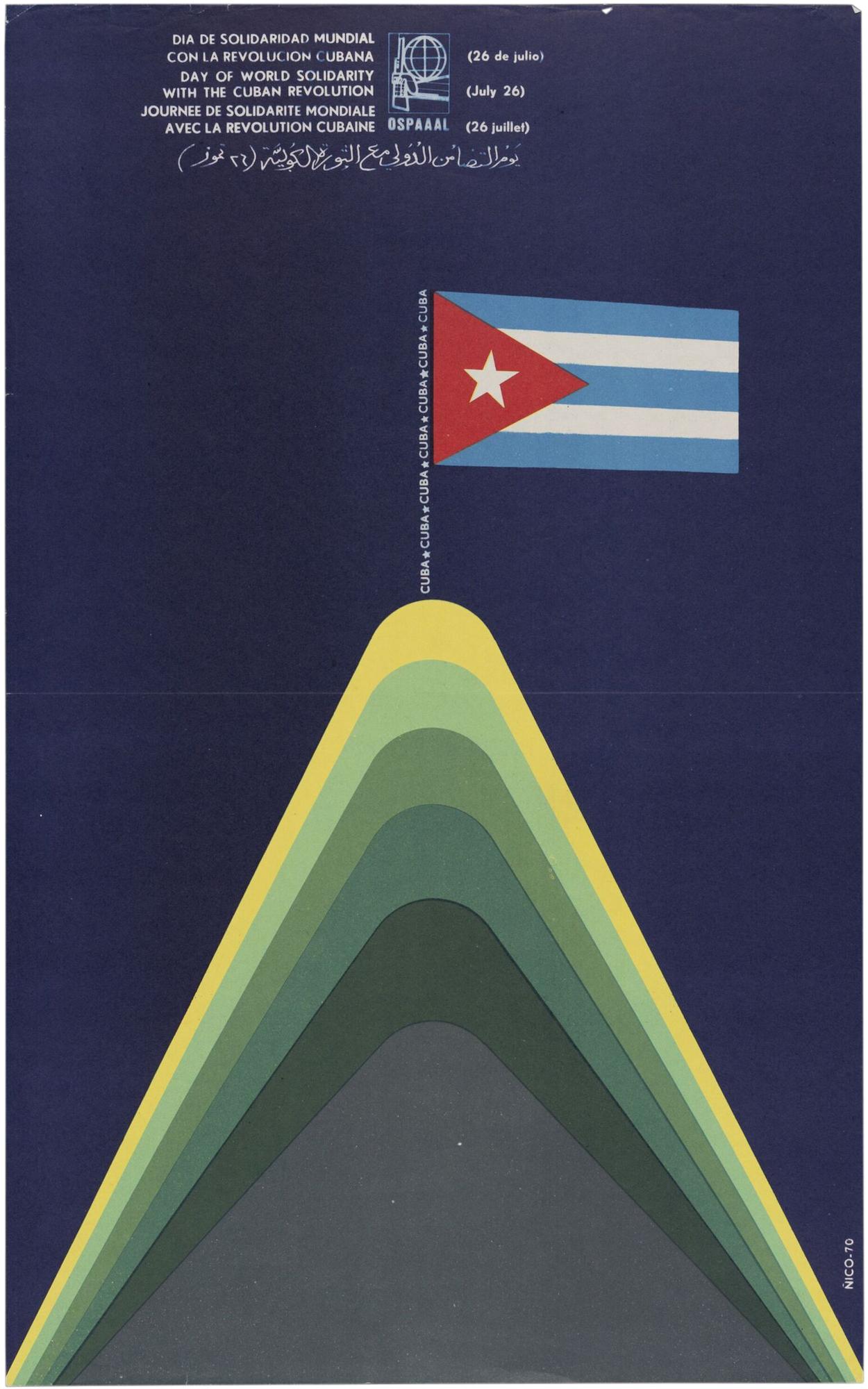
DAY OF THE WORLD SOLIDARITY WITH THE CUBAN REVOLUTION (July 26), 1970
Between the 1960s and 1990s, more than fifty designers worked at OSPAAAL. Based in Cuba, they made magazines and posters that were sent around the world. Their aim was to promote radical political ideas. Many of their posters celebrate socialist revolutions and liberation movements from the Global South. This design promotes 26 July as a day of solidarity with the Cuban Revolution. The revolutionary 26th of July Movement led by Fidel Castro took power in Cuba in 1959.
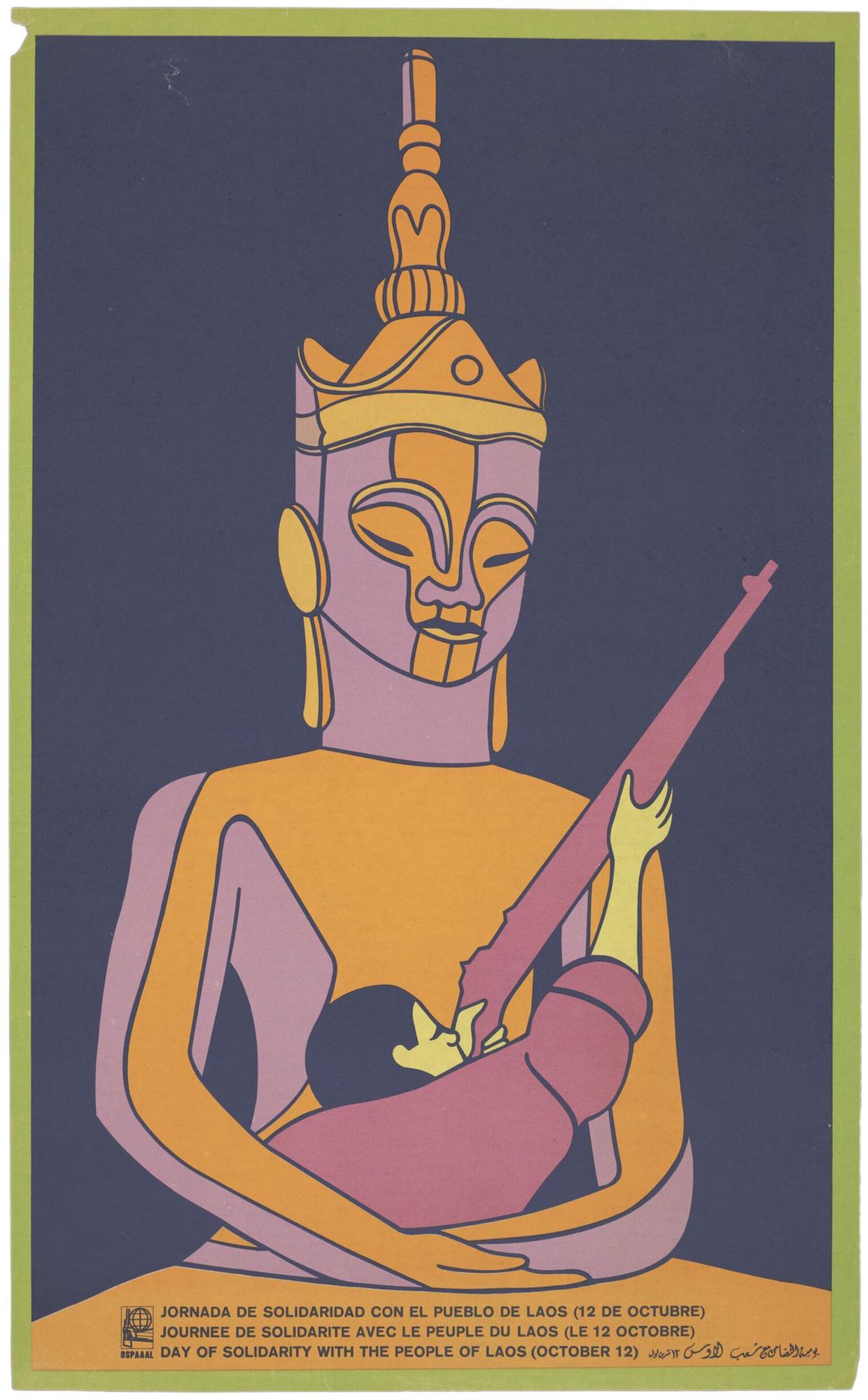
DAY OF SOLIDARITY WITH THE PEOPLE OF LAOS (OCTOBER 12), 1969
Between the 1960s and 1990s, more than fifty designers worked at OSPAAAL. Based in Cuba, they made magazines and posters that were sent around the world. Their aim was to promote radical political ideas. Many of their posters celebrate socialist revolutions and liberation movements from the Global South. This design encouraged solidarity with Laotian people on the same date as the founding of the nationalist movement Lao Issara (‘Free Laos’) on 12 October 1945.
Content warning: weaponry and religious iconography
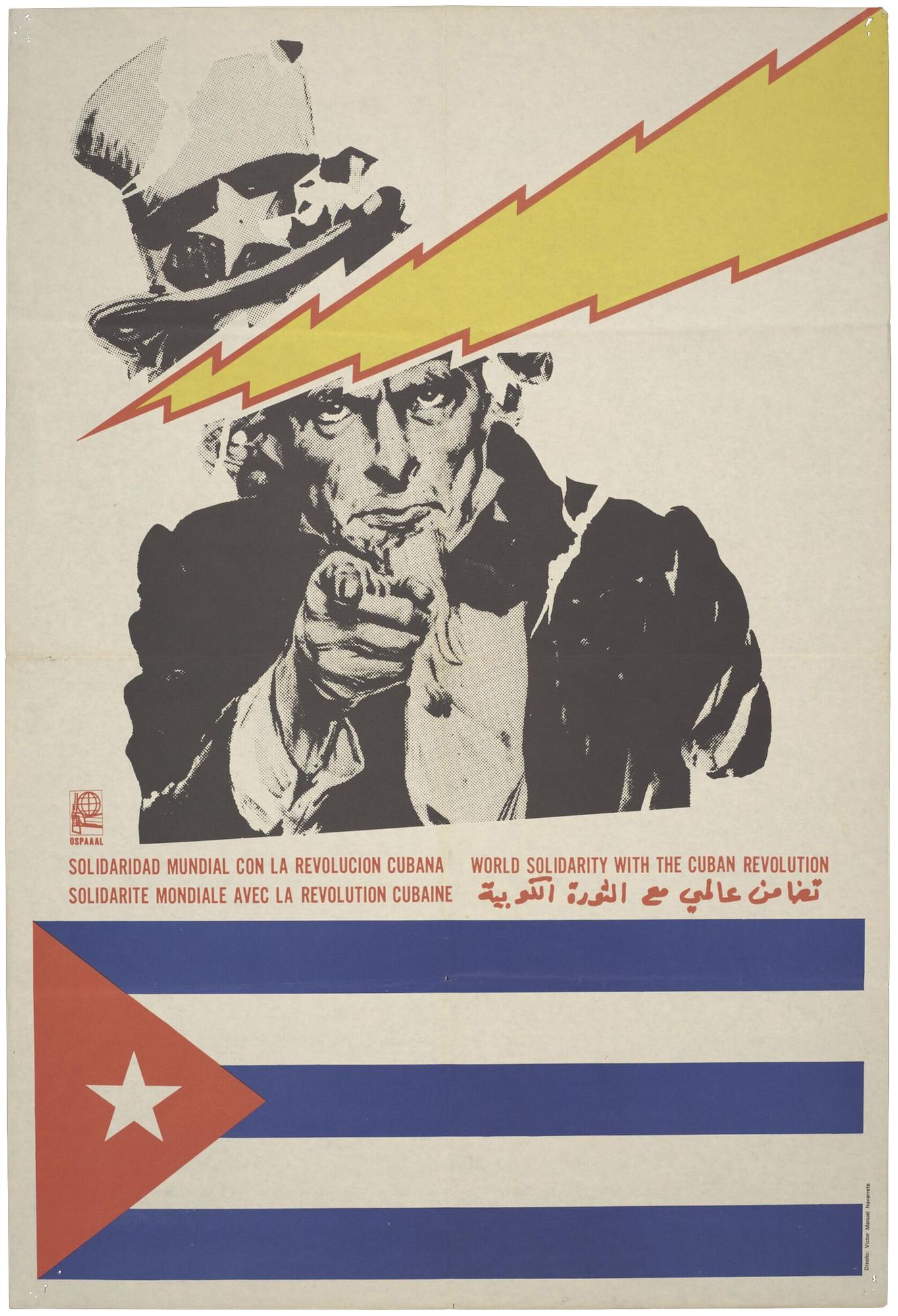
WORLD SOLIDARITY WITH THE CUBAN REVOLUTION, 1980
Between the 1960s and 1990s, more than fifty designers worked at OSPAAAL. Based in Cuba, they made magazines and posters that were sent around the world. Their aim was to promote radical political ideas. Many of their posters celebrate socialist revolutions and liberation movements from the Global South. Víctor Manuel Navarrete’s design uses an image of ‘Uncle Sam’ from a 1917 US army recruitment poster. In the U.S.A., Uncle Sam was a widely used character representing the government and national pride. OSPAAAL’s designers often distorted images of Uncle Sam to criticise or mock the U.S.A.
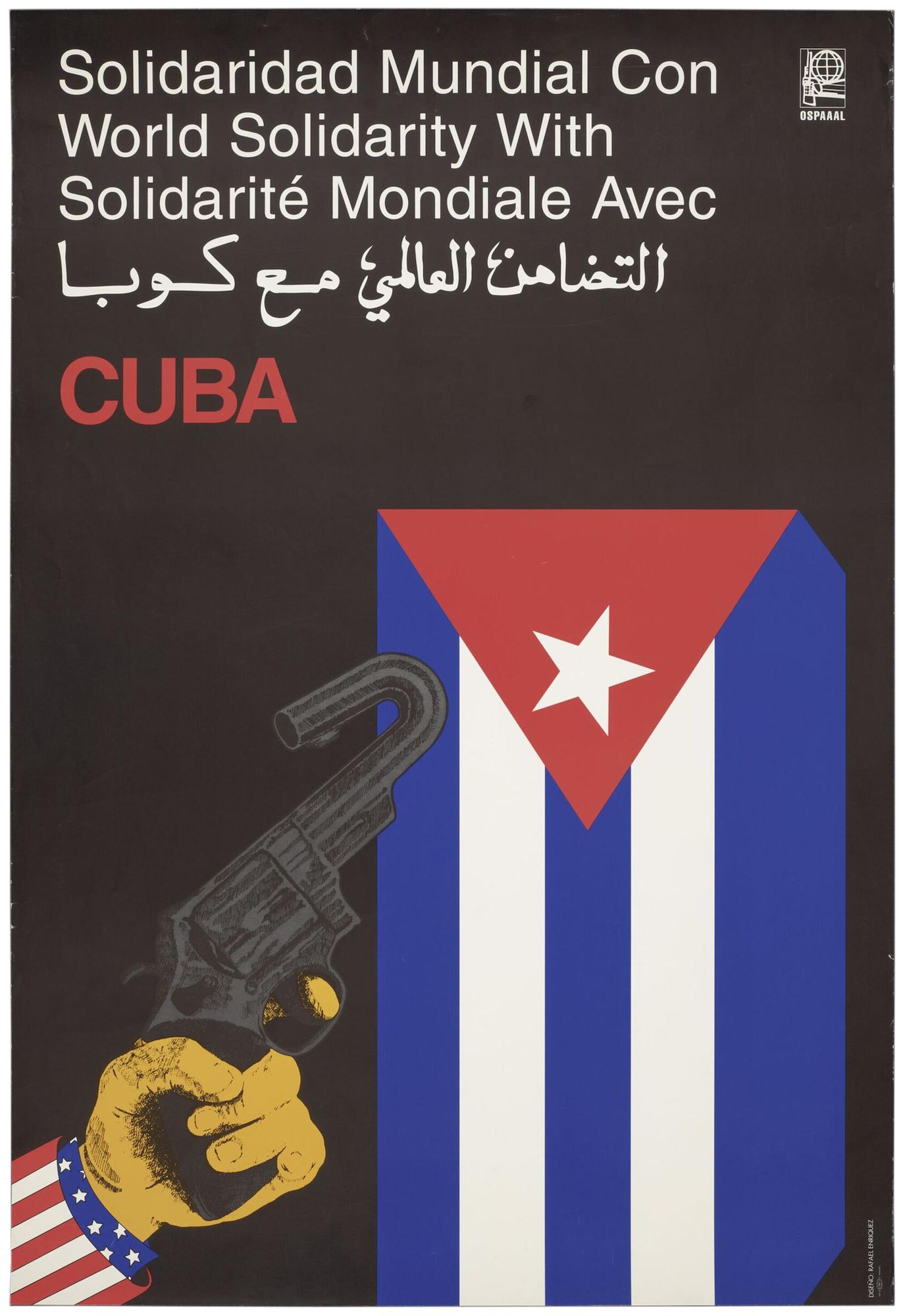
World Solidarity With CUBA, 1980
Between the 1960s and 1990s, more than fifty designers worked at OSPAAAL (the Organisation of Solidarity with the People of Africa, Asia and Latin America). Based in Cuba, they made magazines and posters that were sent around the world. Their aim was to promote radical political ideas. Many of their posters celebrate socialist revolutions and liberation movements from the Global South. They also criticised the foreign policy of the U.S.A. In this design, the Cuban flag represents the Cuban revolution repelling the U.S. military, represented by the hand of fictional character Uncle Sam.
Content warning: weaponry
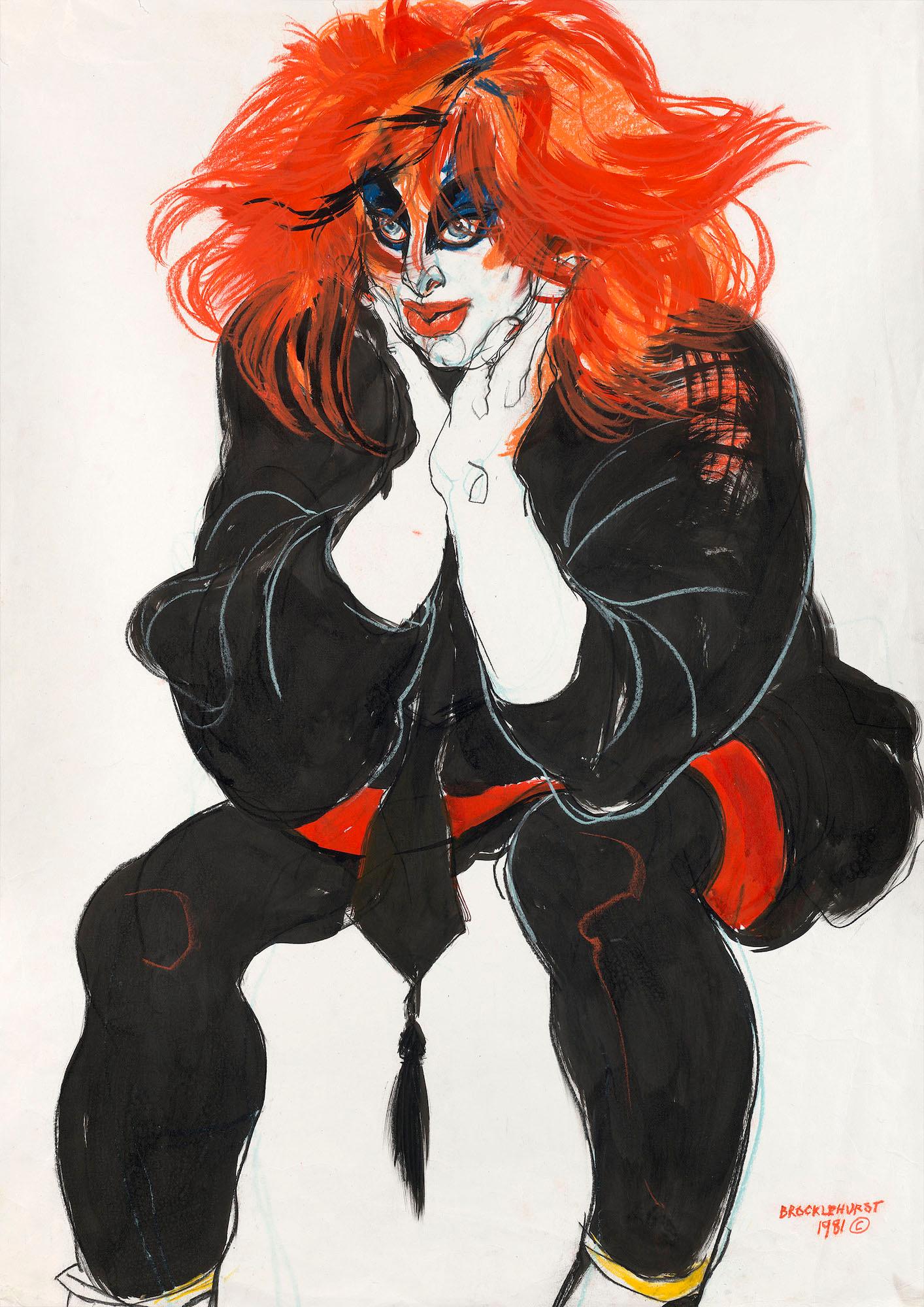
Jo Brocklehurst, Untitled, 1981
Jo (Josephine) Brocklehurst (1935 - 2006) studied at Central Saint Martins and began her career as a fashion illustrator. She later focused on portraiture, drawing directly from models at her studio in West Hampstead and in nightclubs and theatres in Berlin, London and New York. Her work documents the alternative subcultures of the 1970s, 80s and 90s that went on to shape mainstream fashion and performance scenes.
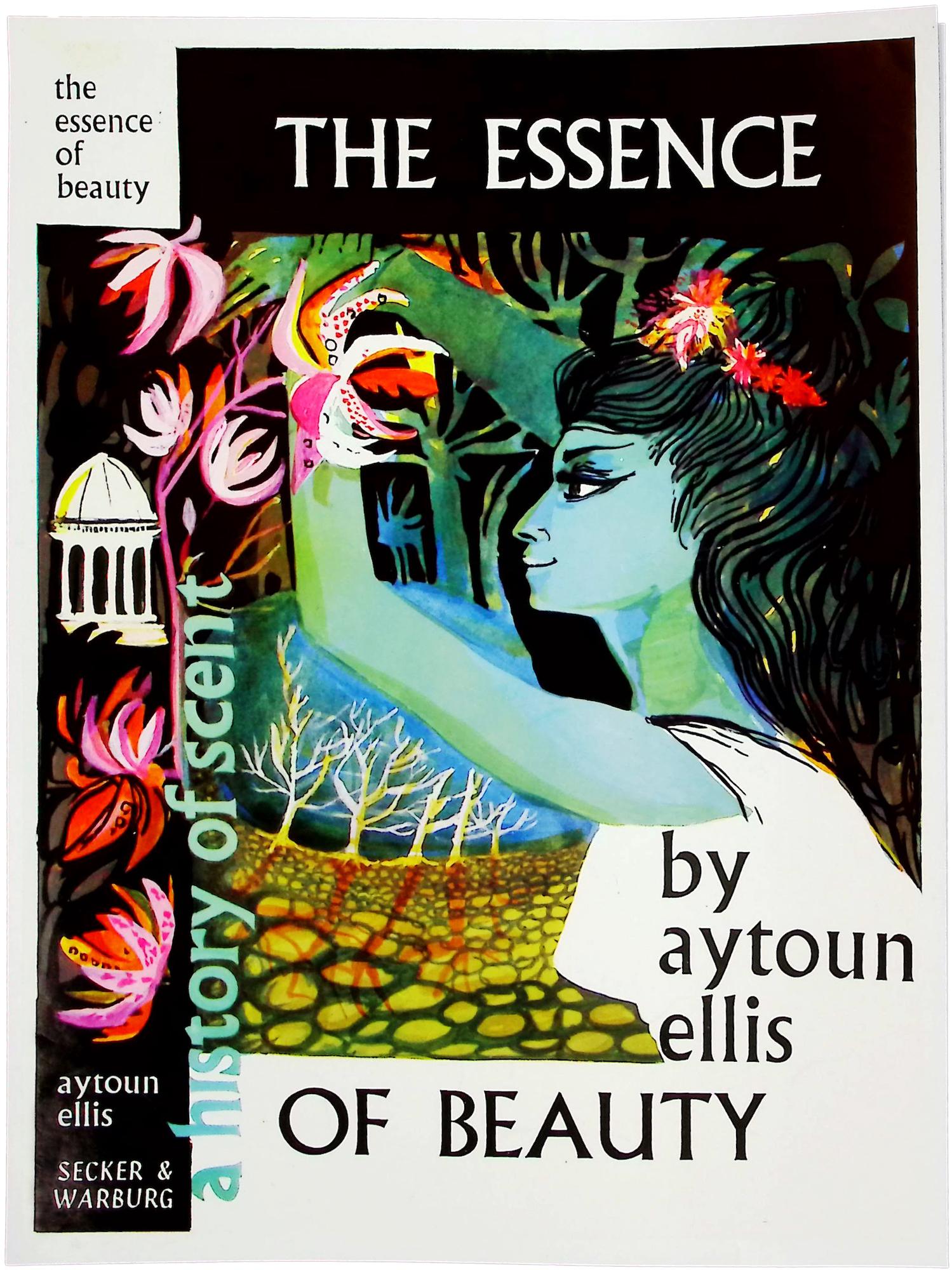
Cover jacket proof for "The Essence of Beauty", 1959
British illustrator Janina Ede (1937-2018) created covers and illustrations for over 100 books from the 1950s to the 1980s. This non-fiction book was an account of the history of perfume and cosmetics.
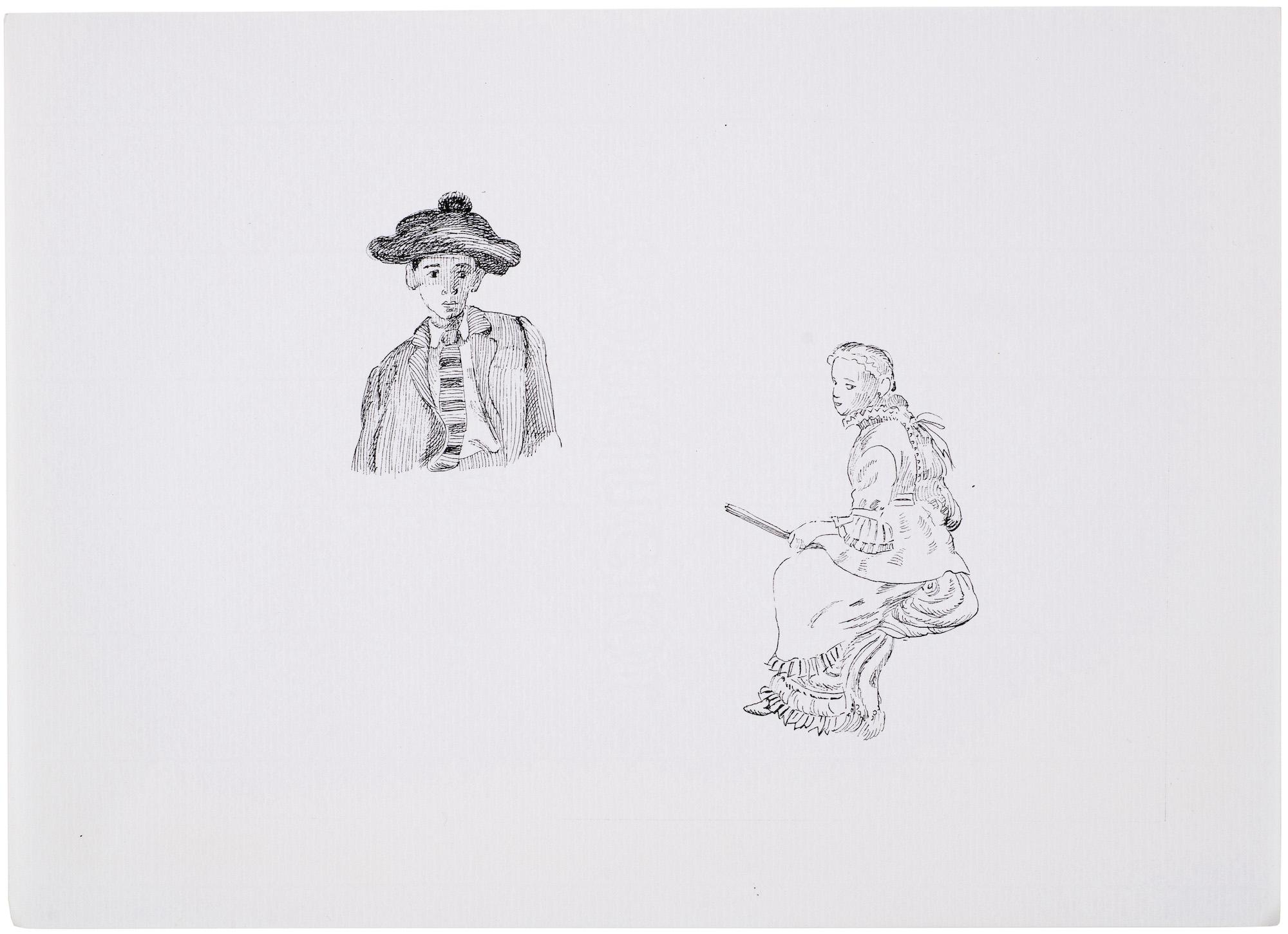
Jacqueline Ayer, Untitled, Date unknown
Jacqueline Ayer (1930–2012) had a career that spanned many creative fields. She began as a fashion illustrator, and later turned her hand to children’s books, textiles and garments, as she worked in New York, Paris, London, Bangkok, Hong Kong and across India. Ayer often used a sketchbook to record her observations and ideas for book narratives and fashion designs. The context for this drawing is unknown.
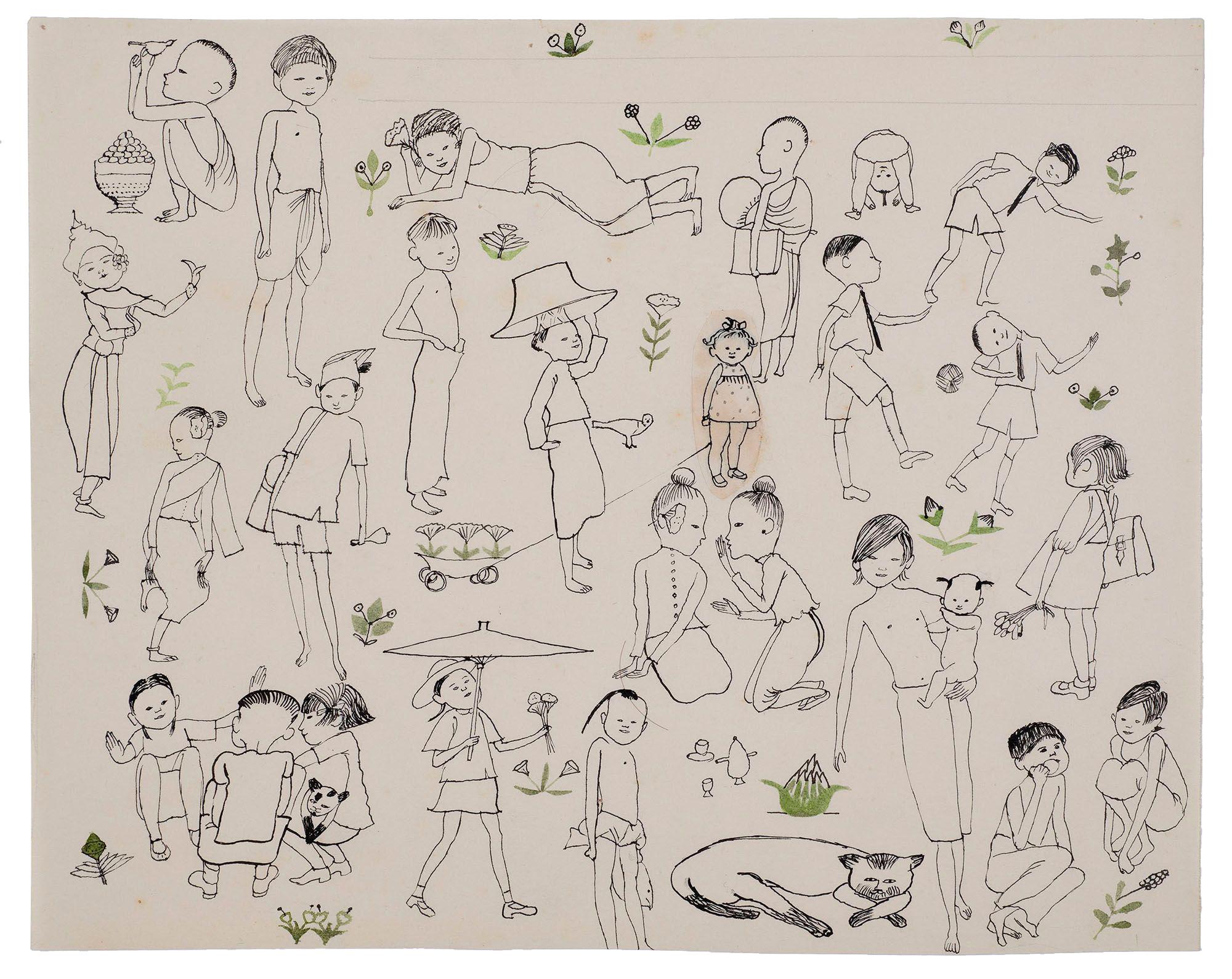
Jacqueline Ayer, Untitled, c. 1956
Jacqueline Ayer (1930–2012) had a career that spanned many creative fields. She began as a fashion illustrator, and later turned her hand to children’s books, textiles and garments, as she worked in New York, Paris, London, Bangkok, Hong Kong and across India. Ayer wrote and illustrated five of her own books, four of which gave insight into 1960s Thailand to US and UK audiences, while the fifth was set in Hong Kong. Using reportage drawing to create books about Asia for children was a unique and refreshing approach.
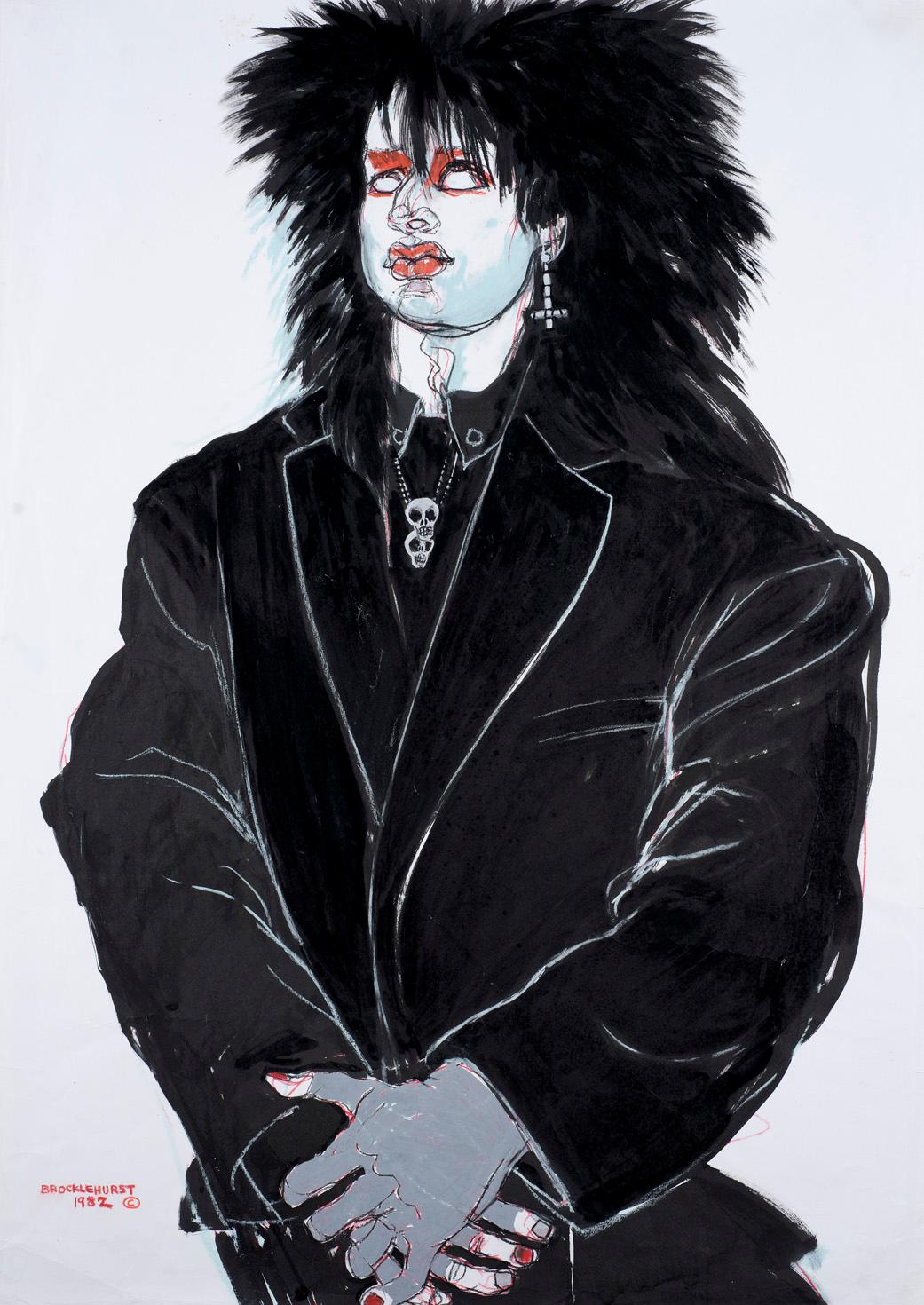
Jo Brocklehurst, Untitled (portrait of Julian), 1982
Jo (Josephine) Brocklehurst (1935 - 2006) studied at Central Saint Martins and began her career as a fashion illustrator. She later focused on portraiture, drawing directly from models at her studio in West Hampstead and in nightclubs and theatres in Berlin, London and New York. Her work documents the alternative subcultures of the 1970s, 80s and 90s that went on to shape mainstream fashion and performance scenes. In the 1980s, Brocklehurst drew a series portraits of members of the Kill Your Pet Puppy collective who were living in a squat close to her studio. Attracted to their anarcho-punk dress and ethos, she said “I felt that they understood very well what was going on in the world, what was in it for them”. This portrait is of Tony Drayton, founder of Kill Your Pet Puppy and punk fanzine Ripped And Torn.
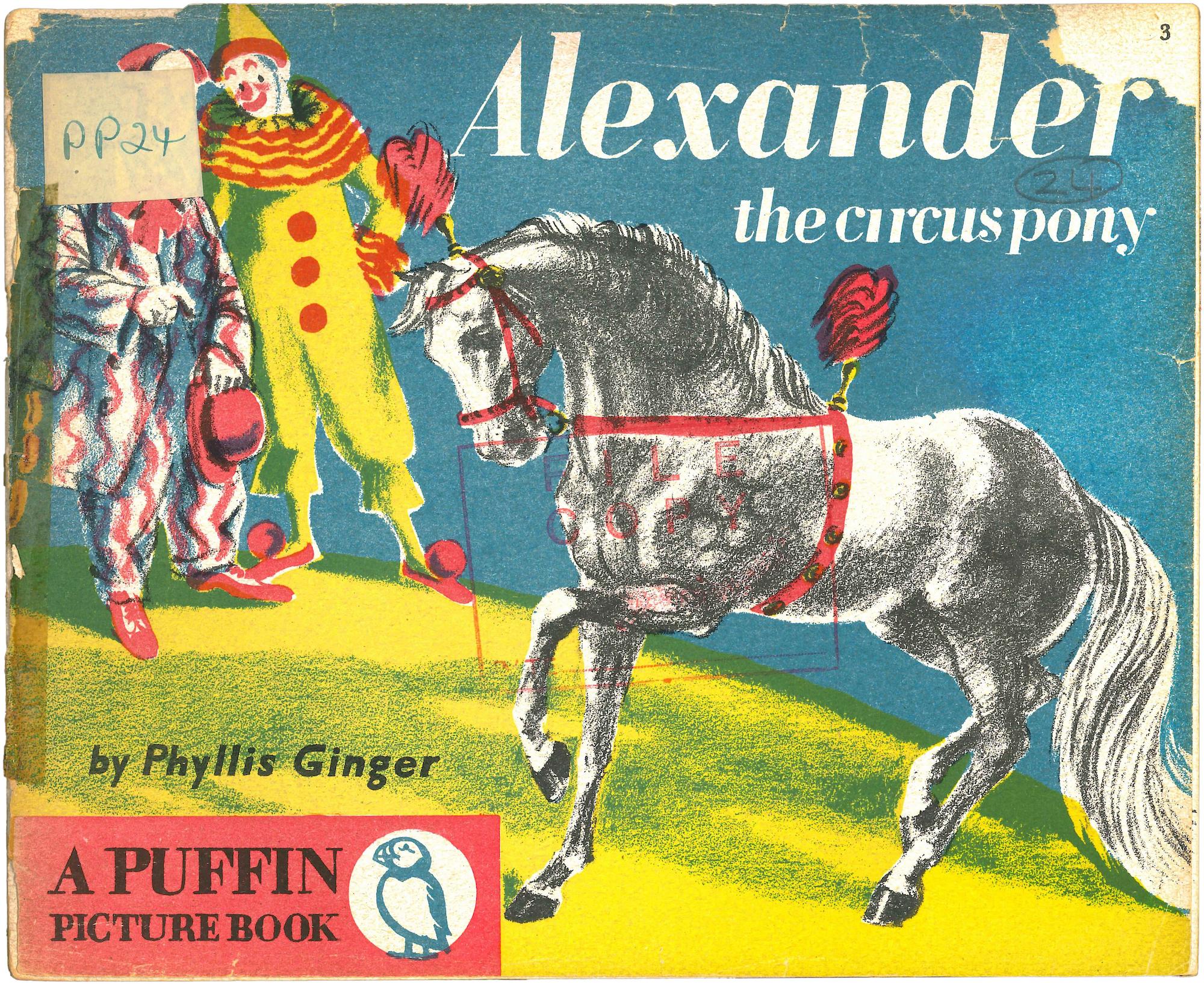
Alexander the circus pony, 1943
The Puffin Picture Books series was established by designer and editor Noel Carrington (1895-1989). In 1933, artist Pearl Binder (1904-1990) sent Carrington a package of Soviet children’s books. “They were produced by the million on very cheap paper, but the drawings were vigorous and the colour delightful” he later remembered. These books inspired Carrington to edit a series of affordable books that would encourage “the child’s awakening interest in its surroundings... I felt that colour was essential, and that artists could... be more successful in books of this nature than the camera”. Many artists and illustrators worked on the series, adapting their ways of working to lithographic printing and the Puffin Picture Book format. Most of the 120 books in the series were printed on one large sheet of paper: one side in colour and one in black-and-white. Each sheet was cut, folded and stapled to create a softcover book.
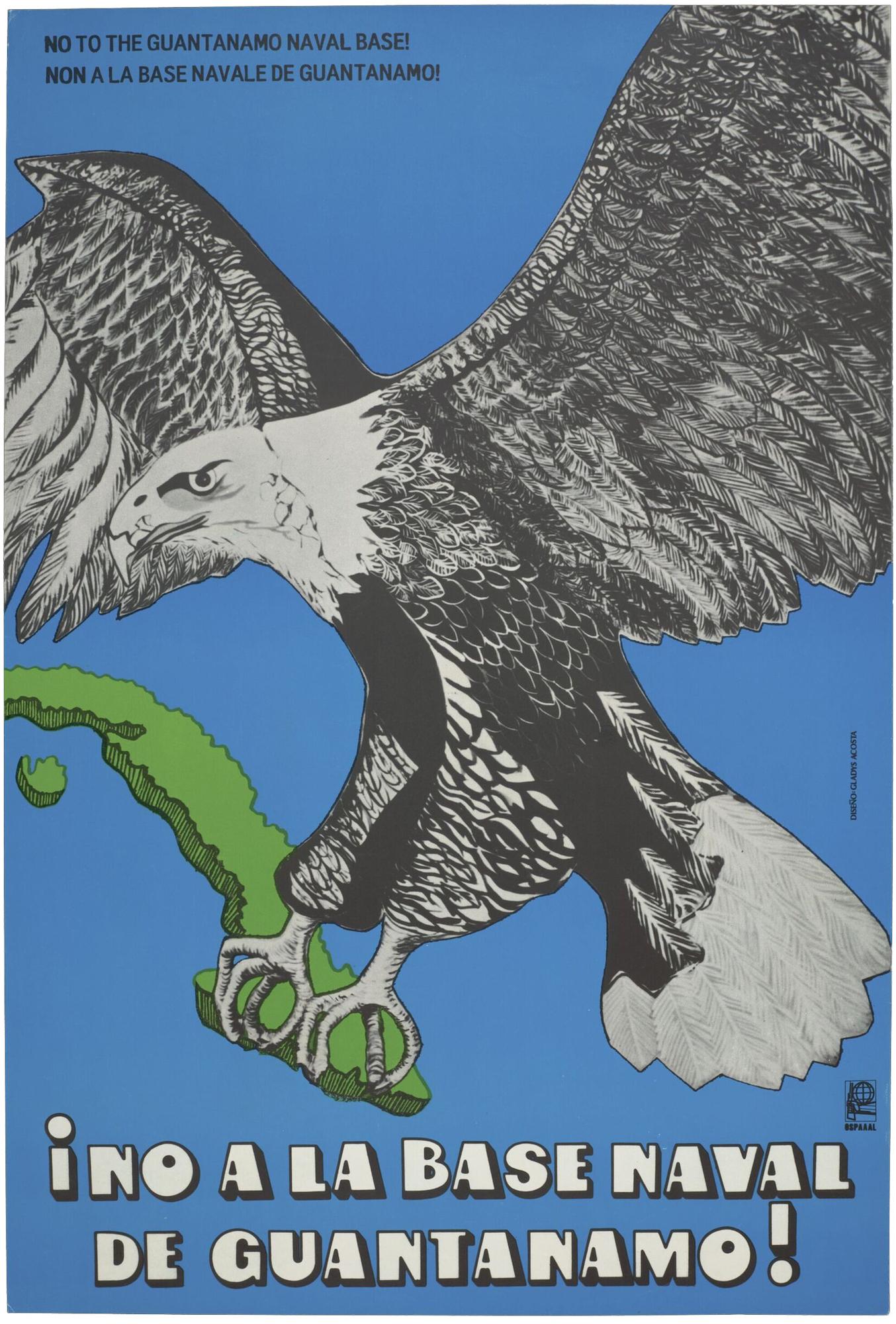
NO TO THE GUANTANAMO NAVAL BASE!, 1993
Between the 1960s and 1990s, more than fifty designers worked at OSPAAAL. Based in Cuba, they made magazines and posters that were sent around the world. Their aim was to promote radical political ideas. Many of their posters celebrate socialist revolutions and liberation movements from the Global South. In this design, Gladys Acosta Ávila uses an eagle to represent the U.S.A. Its talons are hovering over the south of Cuba where the U.S. military’s Guantanamo Bay Naval Base was established in 1903.
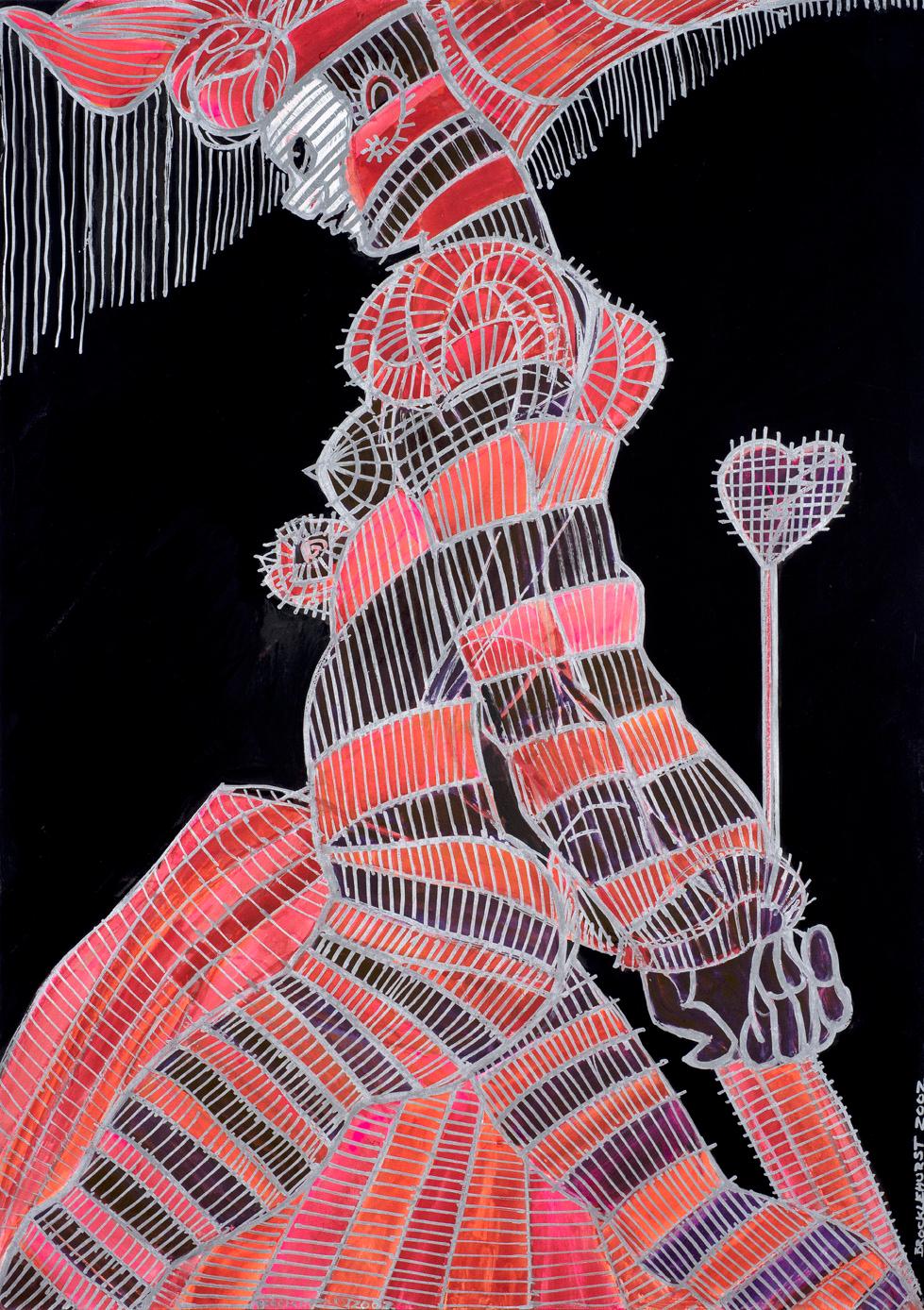
Jo Brocklehurst, Untitled (Red Queen from Brocklehurst Through the Looking-Glass), 2002
Jo (Josephine) Brocklehurst (1935 - 2006) studied at Central Saint Martins and began her career as a fashion illustrator. She later focused on portraiture, drawing directly from models at her studio in West Hampstead and in nightclubs and theatres in Berlin, London and New York. Her work documents the alternative subcultures of the 1970s, 80s and 90s that went on to shape mainstream fashion and performance scenes. This work is from Brocklehurst Through the Looking-Glass, Brocklehurst’s final series. With an image of herself as a child as the centrepiece, Brocklehurst made hundreds of drawings that re-imagined characters from Lewis Carroll’s Alice novels. Her models were friends and dedicated club-goers who designed and made their own clothes. Brocklehurst’s regular collaborator Isabelle Bricknall was the model for this work. Works from the series were framed with bright plastic gemstones and hung on every available space at Brocklehurst’s home studio. She used metallic and neon inks that transformed under ultraviolet lights that she switched on for her guests in the evenings.
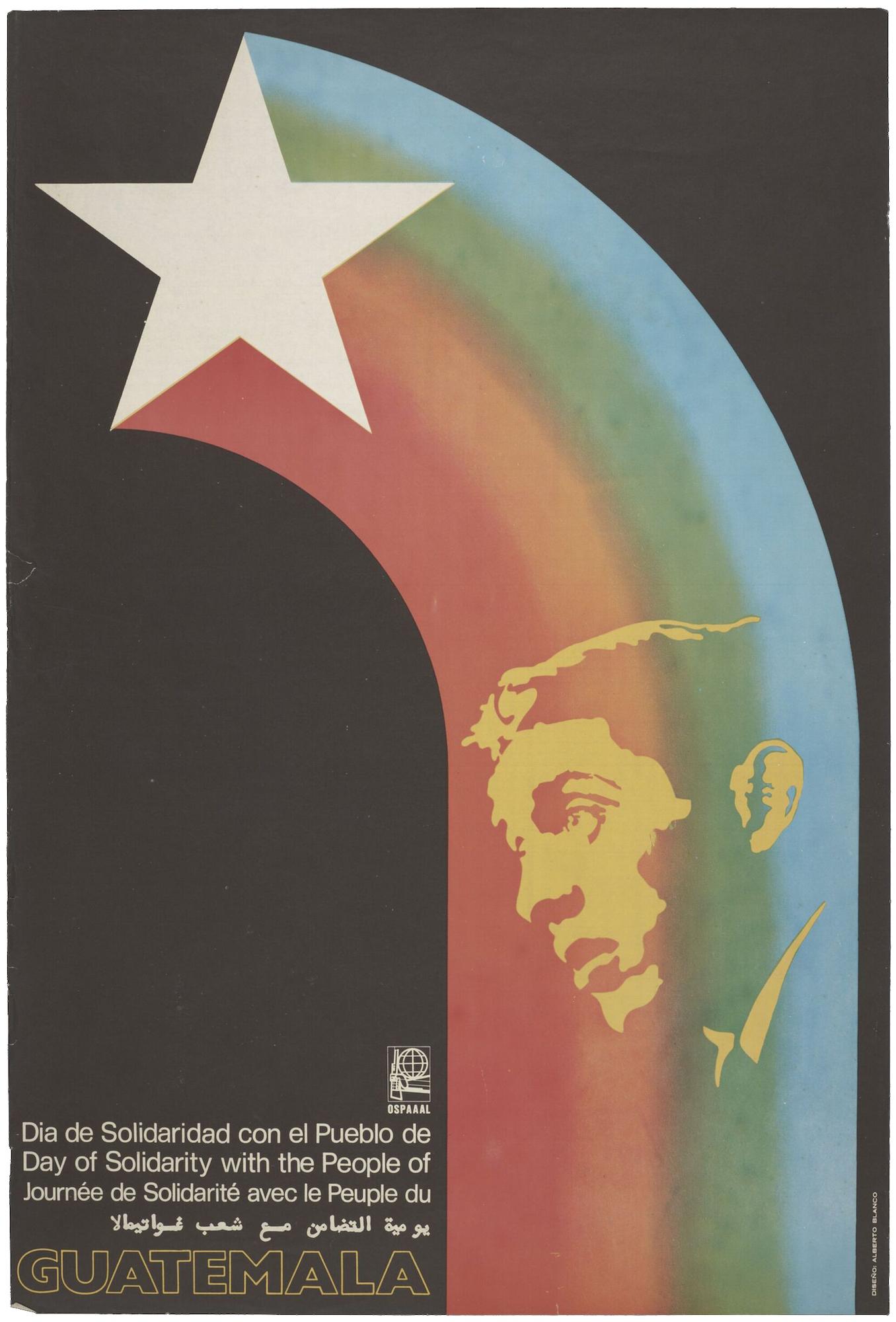
Day of Solidarity with the People of GUATEMALA, 1977
Between the 1960s and 1990s, more than fifty designers worked at OSPAAAL (the Organisation of Solidarity with the People of Africa, Asia and Latin America). Based in Cuba, they made magazines and posters that were sent around the world. Their aim was to promote radical political ideas. Many of their posters celebrate socialist revolutions and liberation movements from the Global South. For this poster, Alberto Blanco González used a photograph of Luis Augusto Turcios Lima taken at the 1966 Tricontinental conference. The 24-year-old was killed in a car accident later that year, but was remembered as a leader of the guerrilla group, the Rebel Armed Forces during the Guatemalan Civil War. Rather than creating formal portraits, many of OSPAAAL’s designers took inspiration from pop art and commercial advertising in their representations of political figures.
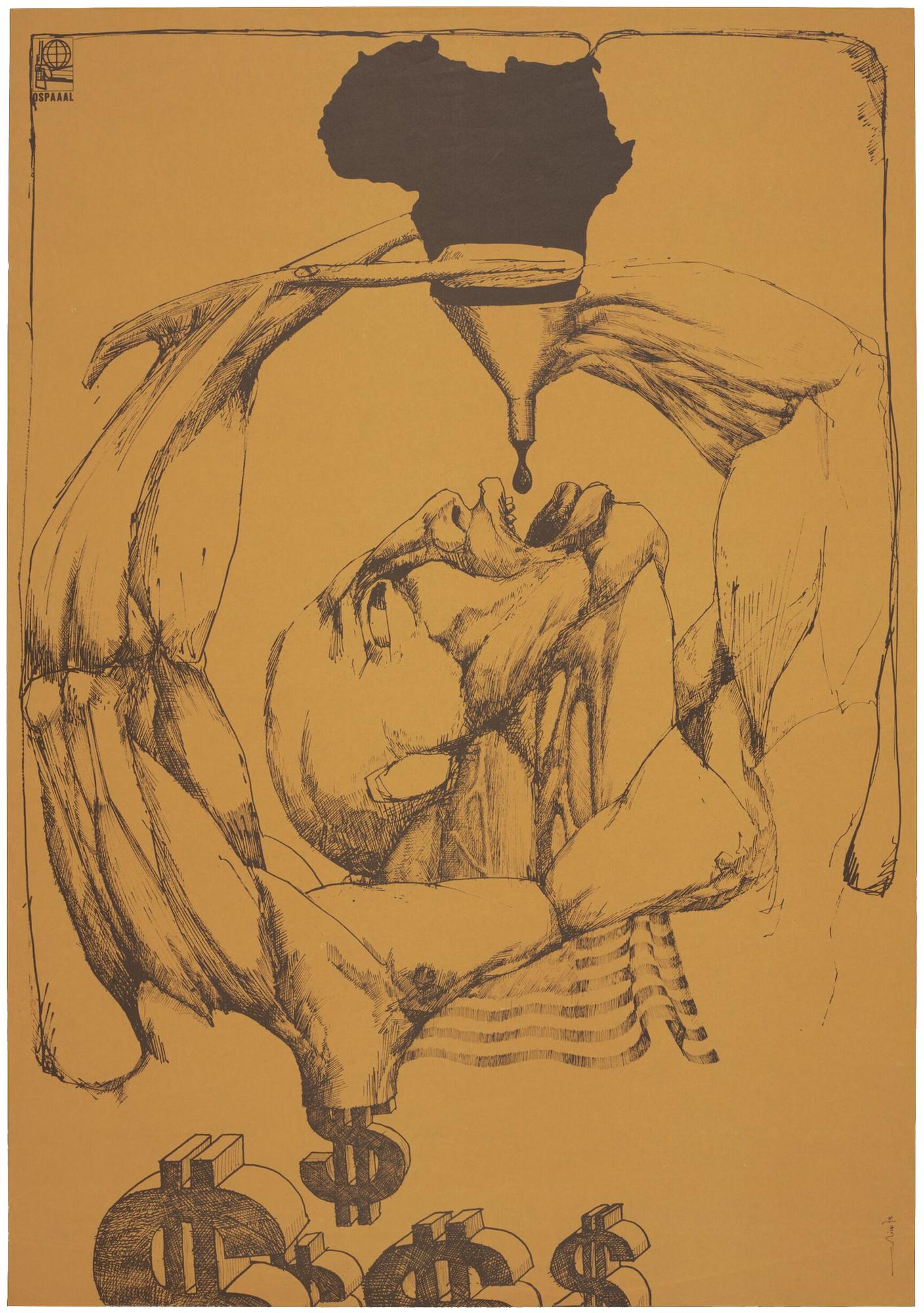
Untitled, 1971
Between the 1960s and 1990s, more than fifty designers worked at OSPAAAL (the Organisation of Solidarity with the People of Africa, Asia and Latin America). Based in Cuba, they made magazines and posters that were sent around the world. Their aim was to promote radical political ideas. Many of their posters celebrate socialist revolutions and liberation movements from the Global South. Olivio Martínez Viera’s design represents the U.S.A. as a monstrous organism extracting resources from Africa for financial gain.
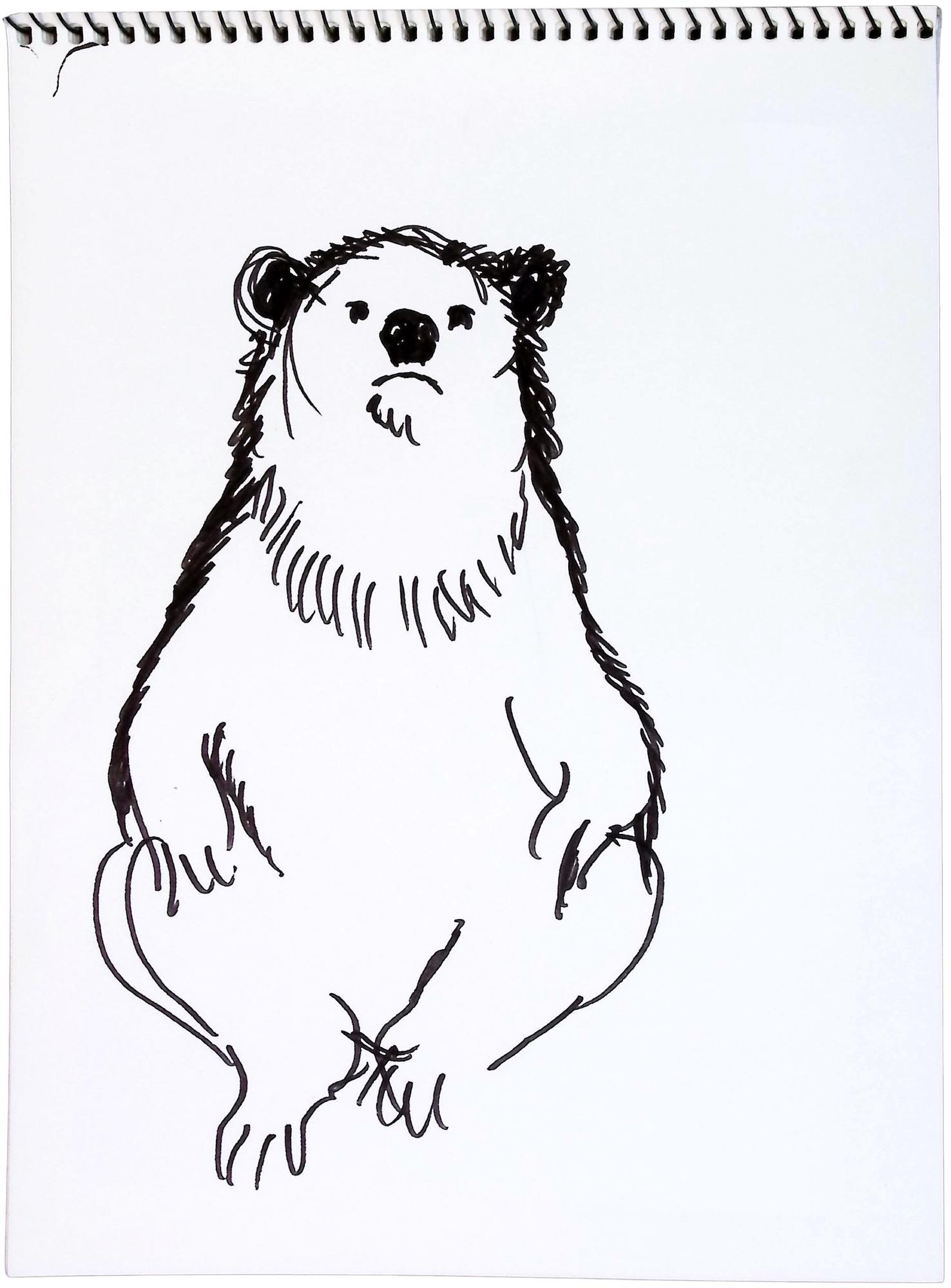
Untitled, Date unknown
British illustrator Janina Ede (1937-2018) created covers and illustrations for over 100 books from the 1950s to the 1980s. Many of her illustrations feature animals, which she drew from life.
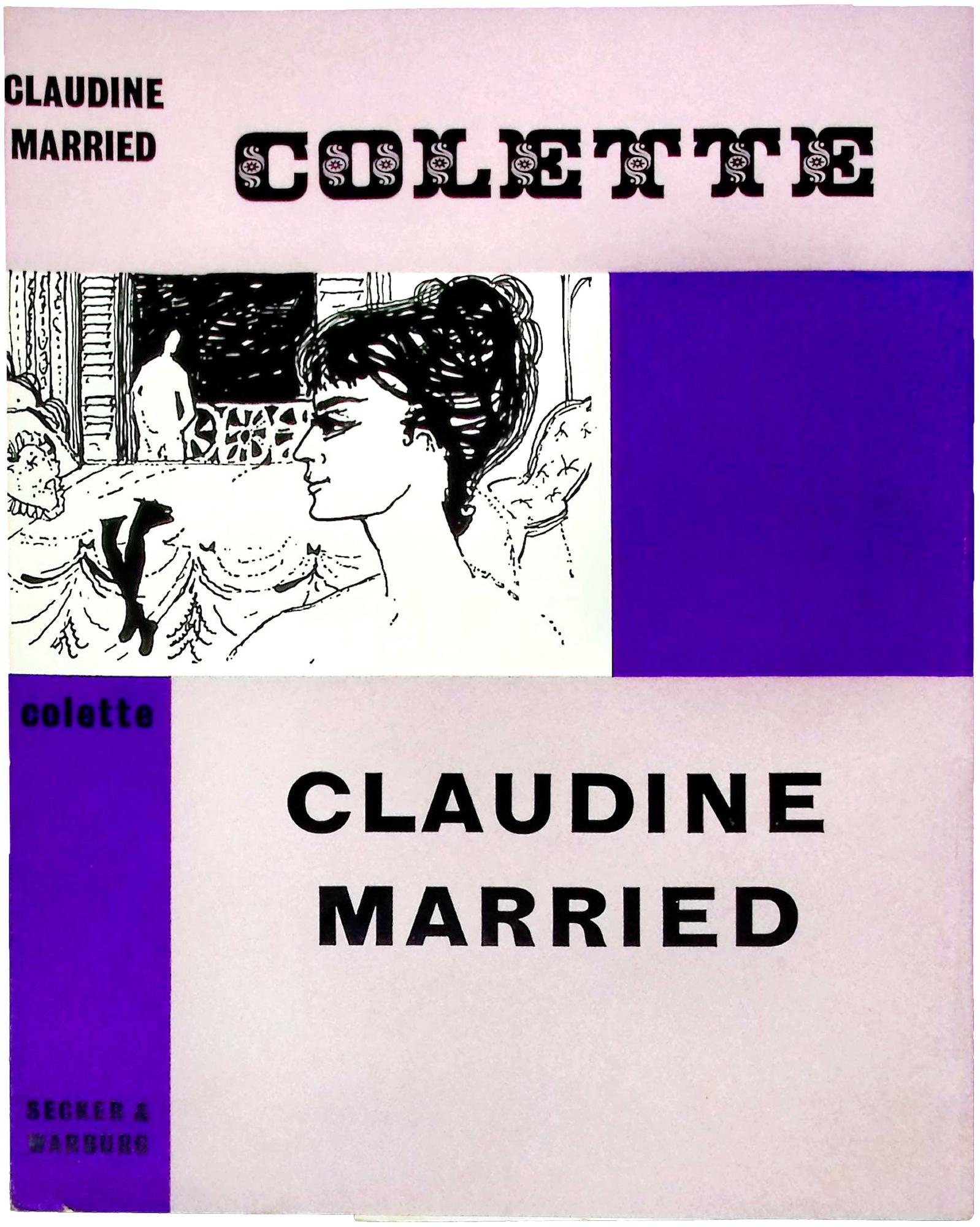
Book cover proof for Colette's "Claudine Married", 1960
British illustrator Janina Ede (1937-2018) created covers and illustrations for over 100 books from the 1950s to the 1980s. She designed the covers of several books by French author and pioneer of autofiction Sidonie-Gabrielle Colette.
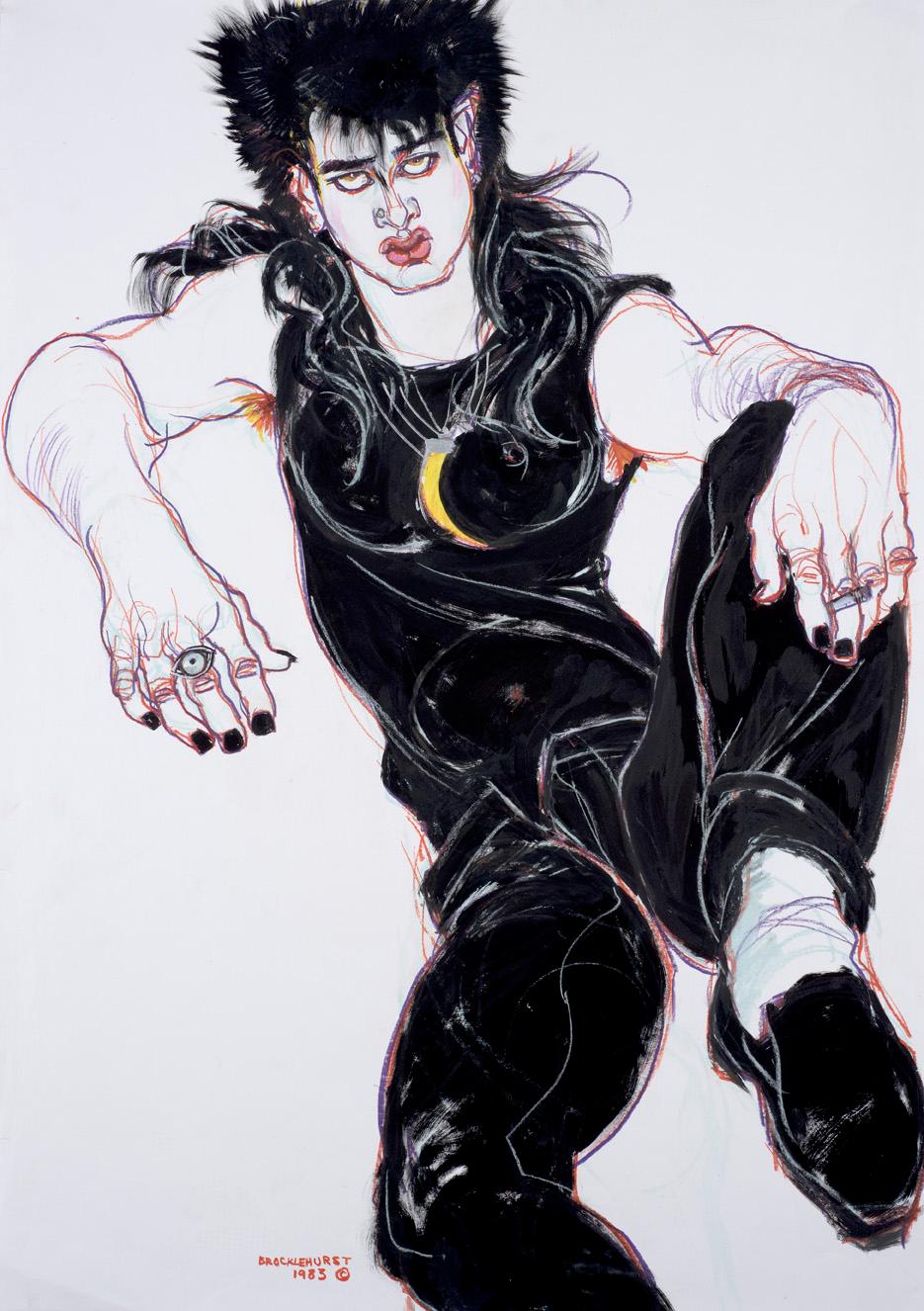
Jo Brocklehurst, Untitled, 1983
Jo (Josephine) Brocklehurst (1935 - 2006) studied at Central Saint Martins and began her career as a fashion illustrator. She later focused on portraiture, drawing directly from models at her studio in West Hampstead and in nightclubs and theatres in Berlin, London and New York. Her work documents the alternative subcultures of the 1970s, 80s and 90s that went on to shape mainstream fashion and performance scenes.
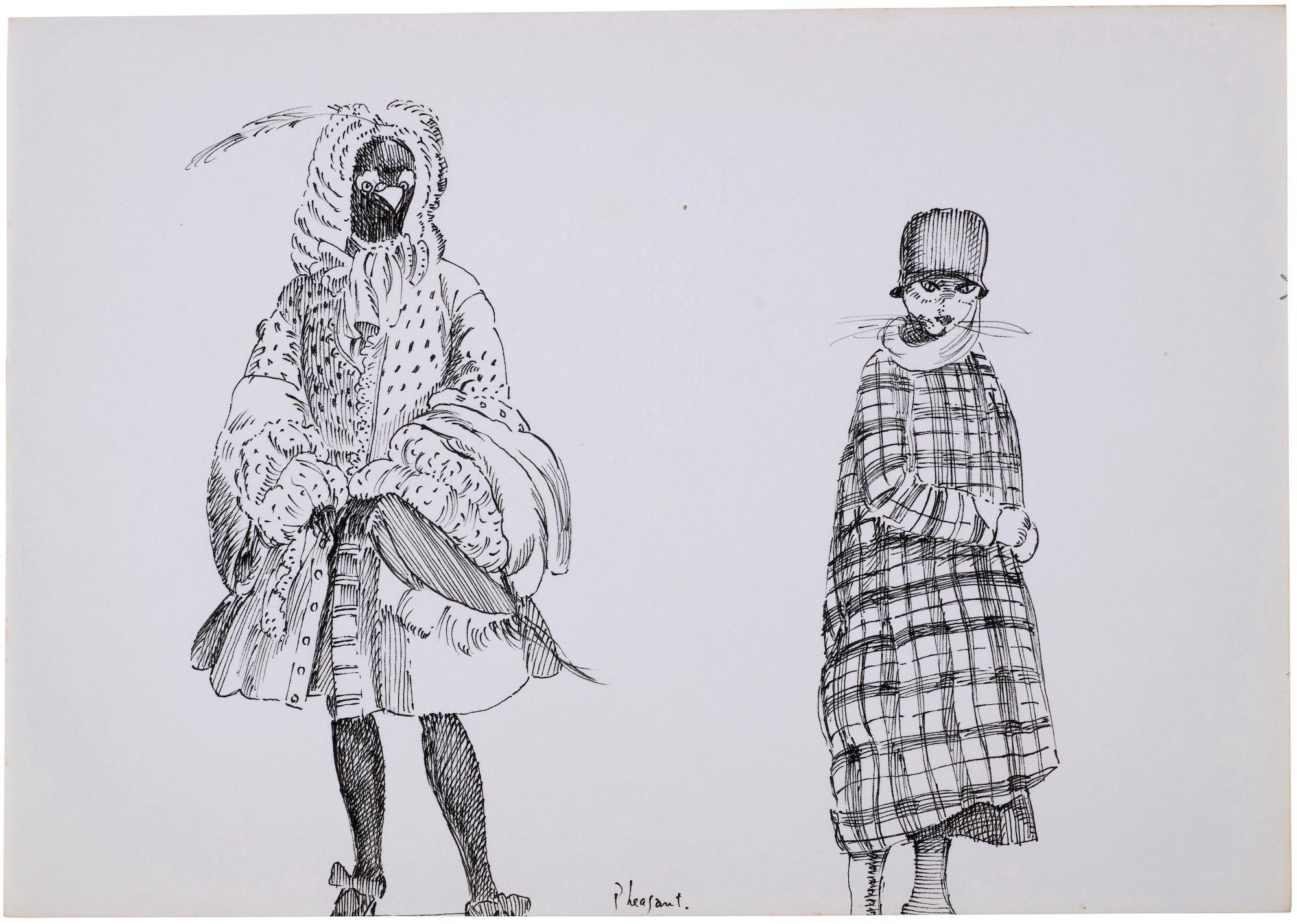
Jacqueline Ayer, Untitled, Date unknown
Jacqueline Ayer (1930–2012) had a career that spanned many creative fields. She began as a fashion illustrator, and later turned her hand to children’s books, textiles and garments, as she worked in New York, Paris, London, Bangkok, Hong Kong and across India. Ayer often used a sketchbook to record her observations and ideas for book narratives and fashion designs. The context for this drawing is unknown.
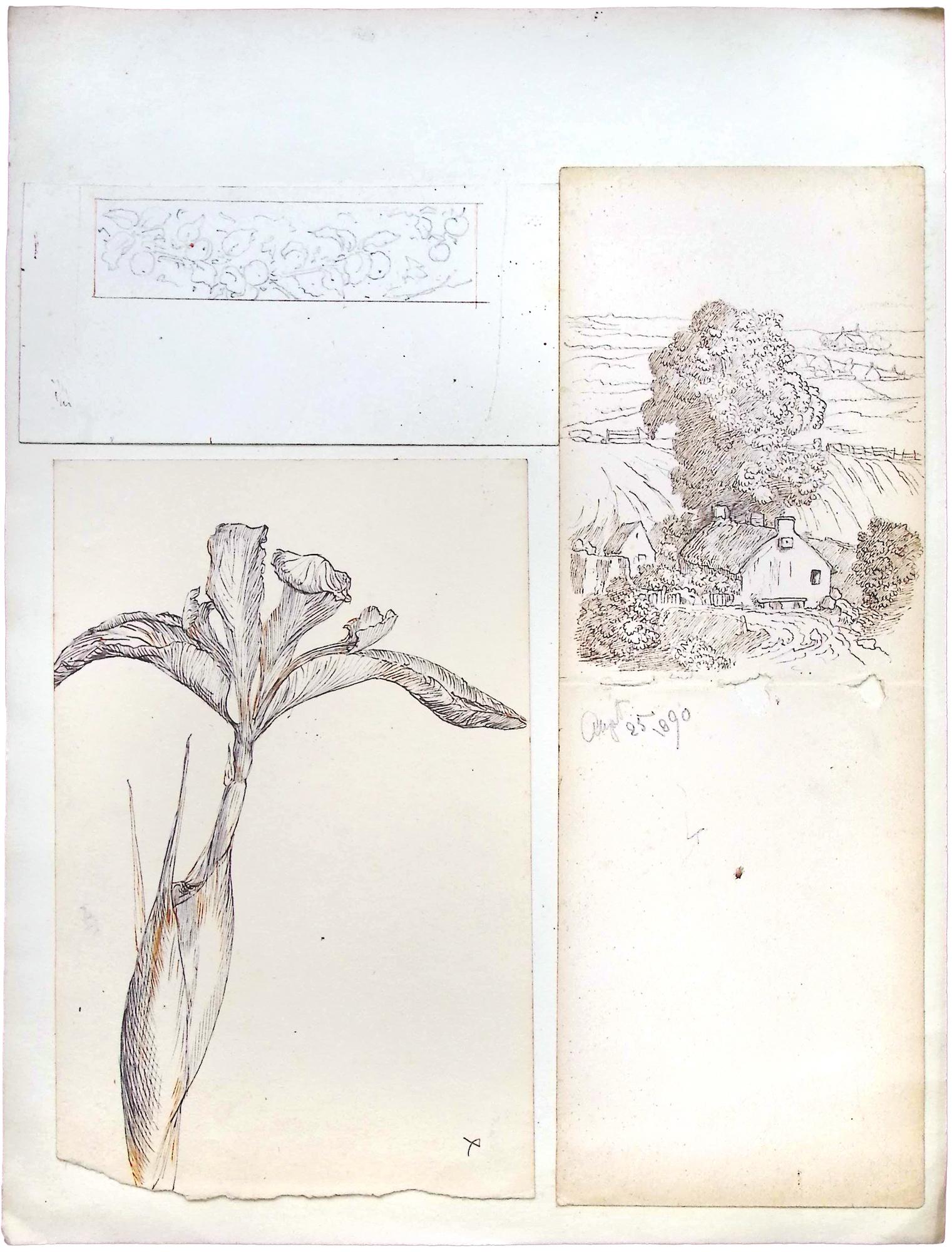
Untitled, Unknown date and 1890
Eleanor Vere Boyle (1825 – 1916) illustrated poetry and prose by some of the most popular authors of her time. She regularly drew and painted using ink and watercolour, sketching landscapes, animals and her children from life. She also made drawings from her imagination, often reflecting spiritual themes.

Illustration for 'A Dream Book', 1864
Eleanor Vere Boyle (1825 – 1916) illustrated poetry and prose by some of the most popular authors of her time. She regularly drew and painted using ink and watercolour, sketching landscapes, animals and her children from life. She also made drawings from her imagination, often reflecting spiritual themes.
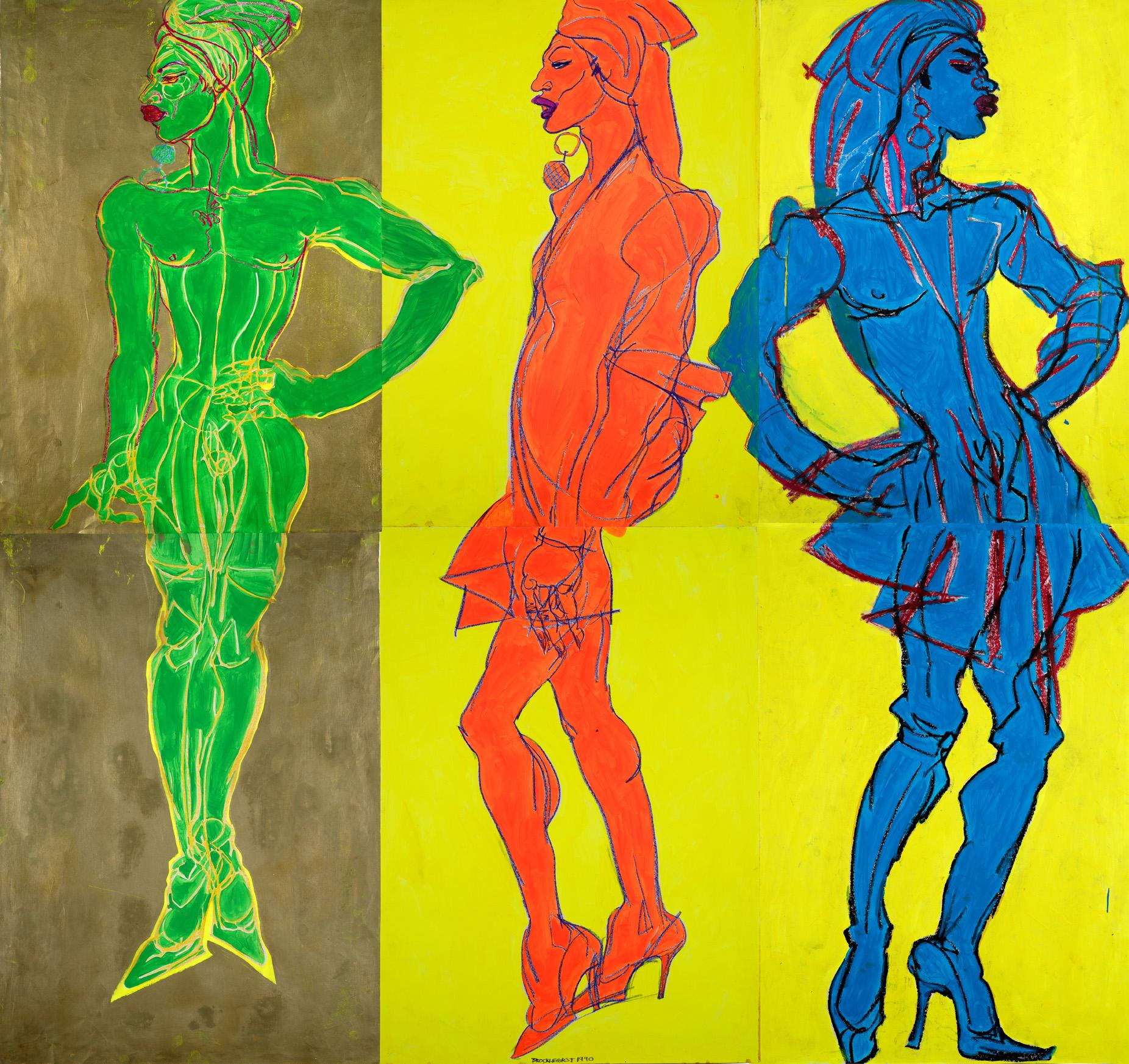
Jo Brocklehurst, Untitled (known as Three Graces), 1988
Jo (Josephine) Brocklehurst (1935 - 2006) studied at Central Saint Martins and began her career as a fashion illustrator. She later focused on portraiture, drawing directly from models at her studio in West Hampstead and in nightclubs and theatres in Berlin, London and New York. Her work documents the alternative subcultures of the 1970s, 80s and 90s that went on to shape mainstream fashion and performance scenes. In the 1990s Brocklehurst returned to Central Saint Martins as a visiting tutor. She led life drawing classes for fashion and textile students, often employing flamboyant performers as models. Brocklehurst encouraged bold use of scale and colour, as demonstrated by this portrait of a drag performer.
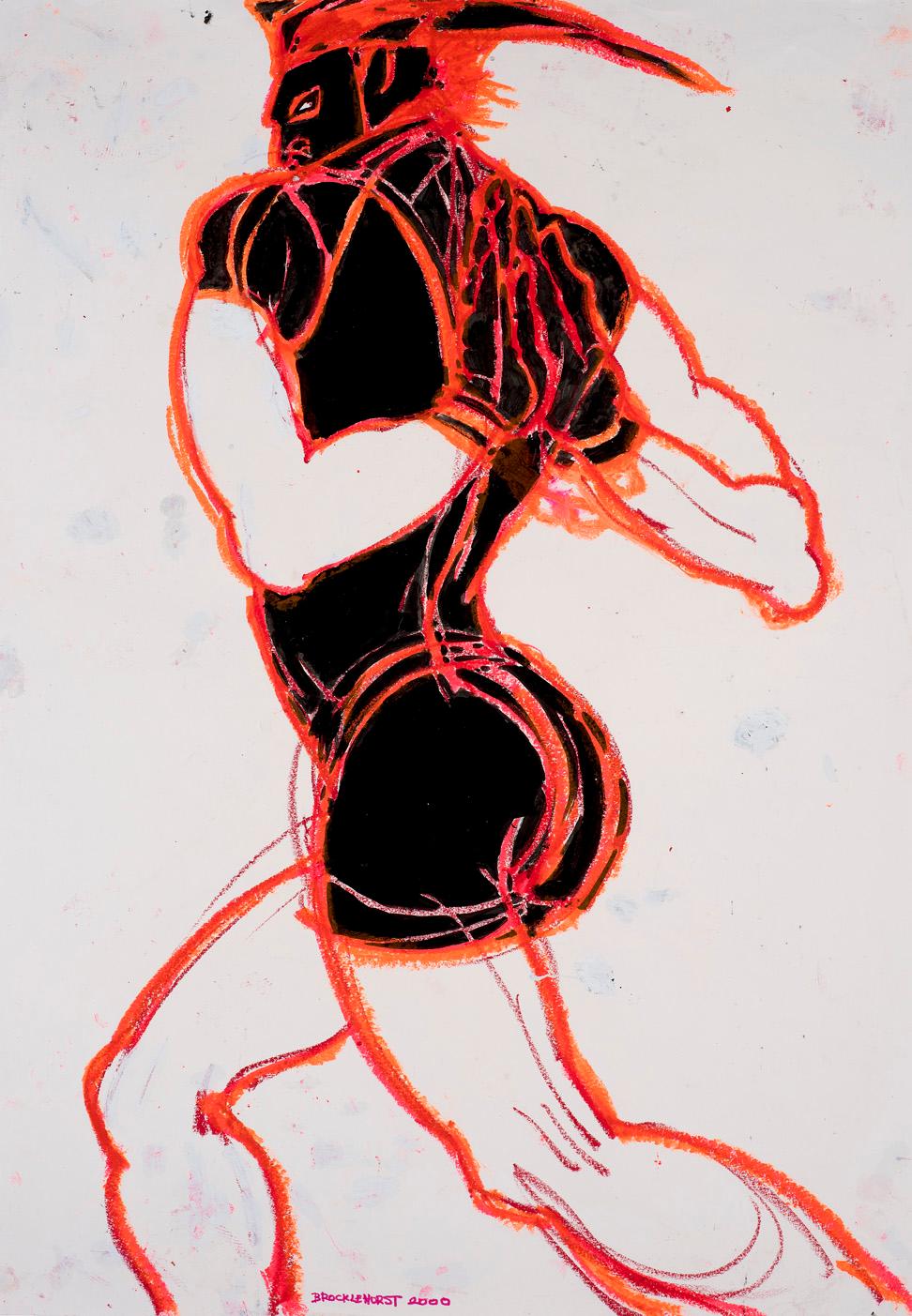
Jo Brocklehurst, Untitled (portrait of Josephine Leask), 2000
Jo (Josephine) Brocklehurst (1935 - 2006) studied at Central Saint Martins and began her career as a fashion illustrator. She later focused on portraiture, drawing directly from models at her studio in West Hampstead and in nightclubs and theatres in Berlin, London and New York. Her work documents the alternative subcultures of the 1970s, 80s and 90s that went on to shape mainstream fashion and performance scenes. In 2000, Brocklehurst created a series of drawings in sessions with dancer Josephine Leask. Leask’s 1999 article Welcome to the Club, published in ballettanz magazine, described the ways that nightclubs were acting as alternative theatres for cutting-edge contemporary dance. These drawings were shown as part of Leask’s lecture-performance on the same theme at the 2000 Salzburg Festival.
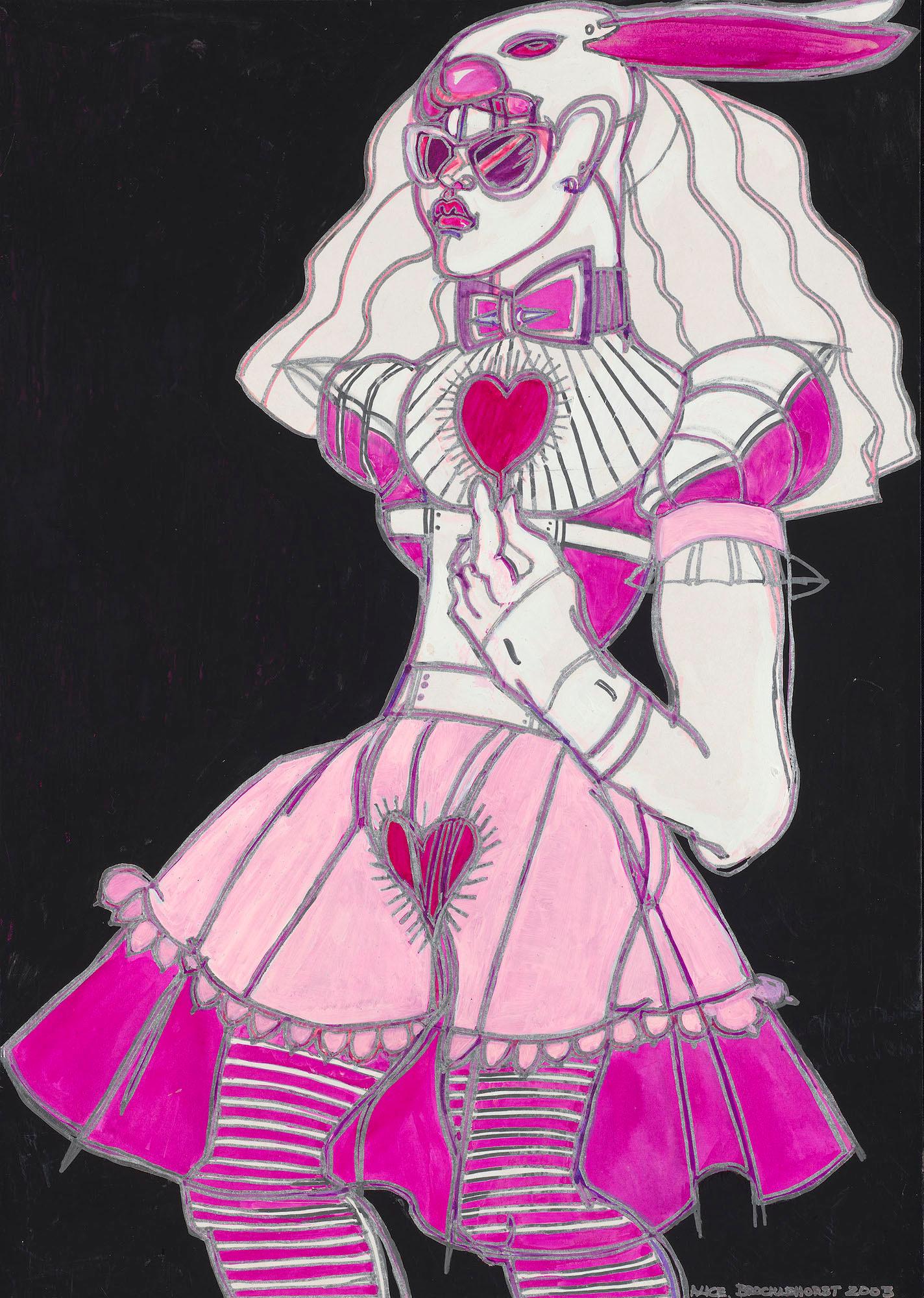
Jo Brocklehurst, Untitled (Alice from Brocklehurst Through the Looking-Glass) , 2003
Jo (Josephine) Brocklehurst (1935 - 2006) studied at Central Saint Martins and began her career as a fashion illustrator. She later focused on portraiture, drawing directly from models at her studio in West Hampstead and in nightclubs and theatres in Berlin, London and New York. Her work documents the alternative subcultures of the 1970s, 80s and 90s that went on to shape mainstream fashion and performance scenes. This work is from Brocklehurst Through the Looking-Glass, Brocklehurst’s final series. With an image of herself as a child as the centrepiece, Brocklehurst made hundreds of drawings that re-imagined characters from Lewis Carroll’s Alice novels. Her models were friends and dedicated club-goers who designed and made their own clothes. Works from the series were framed with bright plastic gemstones and hung on every available space at Brocklehurst’s home studio. She used metallic and neon inks that transformed under ultraviolet lights that she switched on for her guests in the evenings.
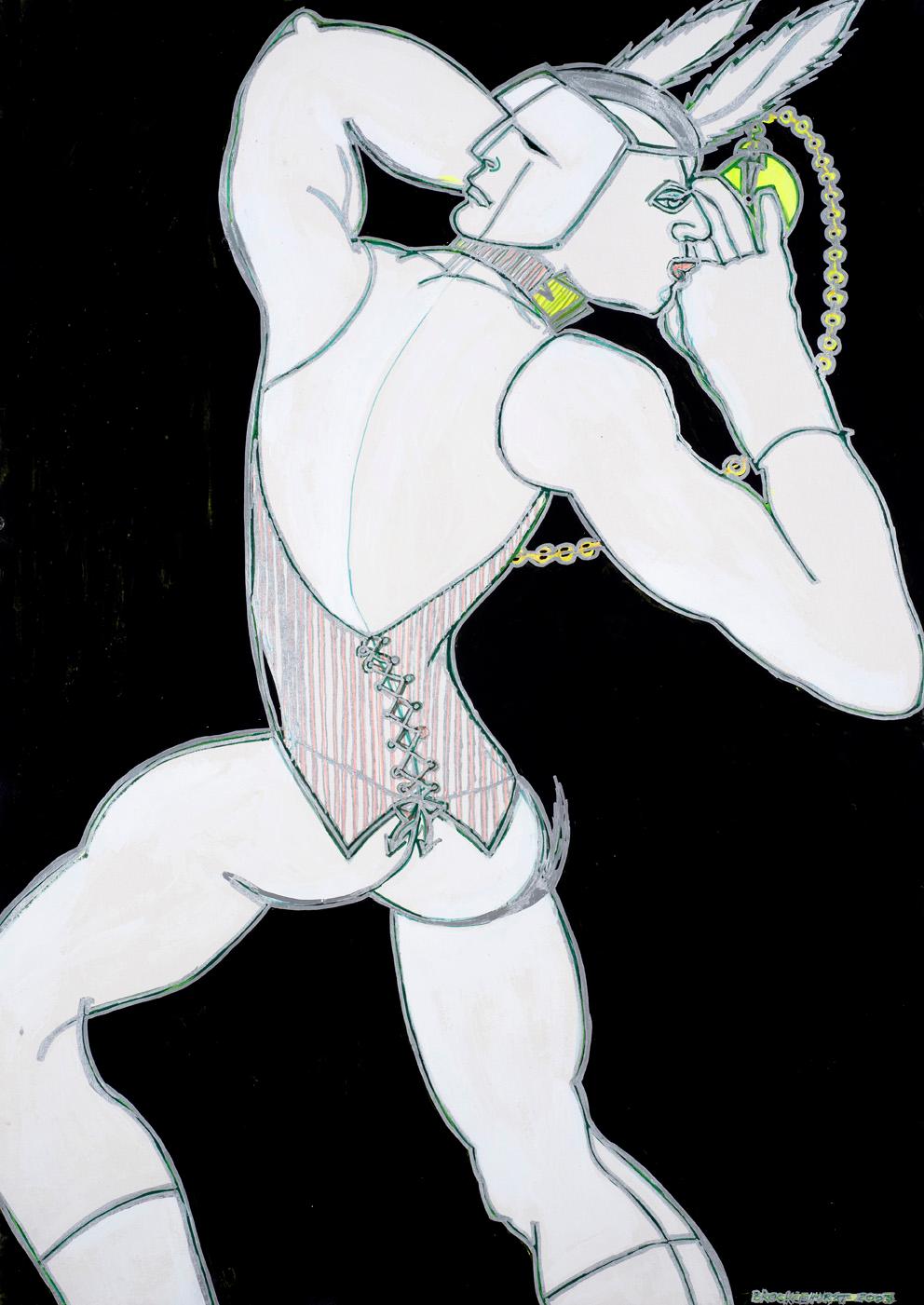
Jo Brocklehurst, Untitled (White Rabbit from Brocklehurst Through the Looking-Glass), 2003
Jo (Josephine) Brocklehurst (1935 - 2006) studied at Central Saint Martins and began her career as a fashion illustrator. She later focused on portraiture, drawing directly from models at her studio in West Hampstead and in nightclubs and theatres in Berlin, London and New York. Her work documents the alternative subcultures of the 1970s, 80s and 90s that went on to shape mainstream fashion and performance scenes. This work is from Brocklehurst Through the Looking-Glass, Brocklehurst’s final series. With an image of herself as a child as the centrepiece, Brocklehurst made hundreds of drawings that re-imagined characters from Lewis Carroll’s Alice novels. Her models were friends and dedicated club-goers who designed and made their own clothes. Works from the series were framed with bright plastic gemstones and hung on every available space at Brocklehurst’s home studio. She used metallic and neon inks that transformed under ultraviolet lights that she switched on for her guests in the evenings.
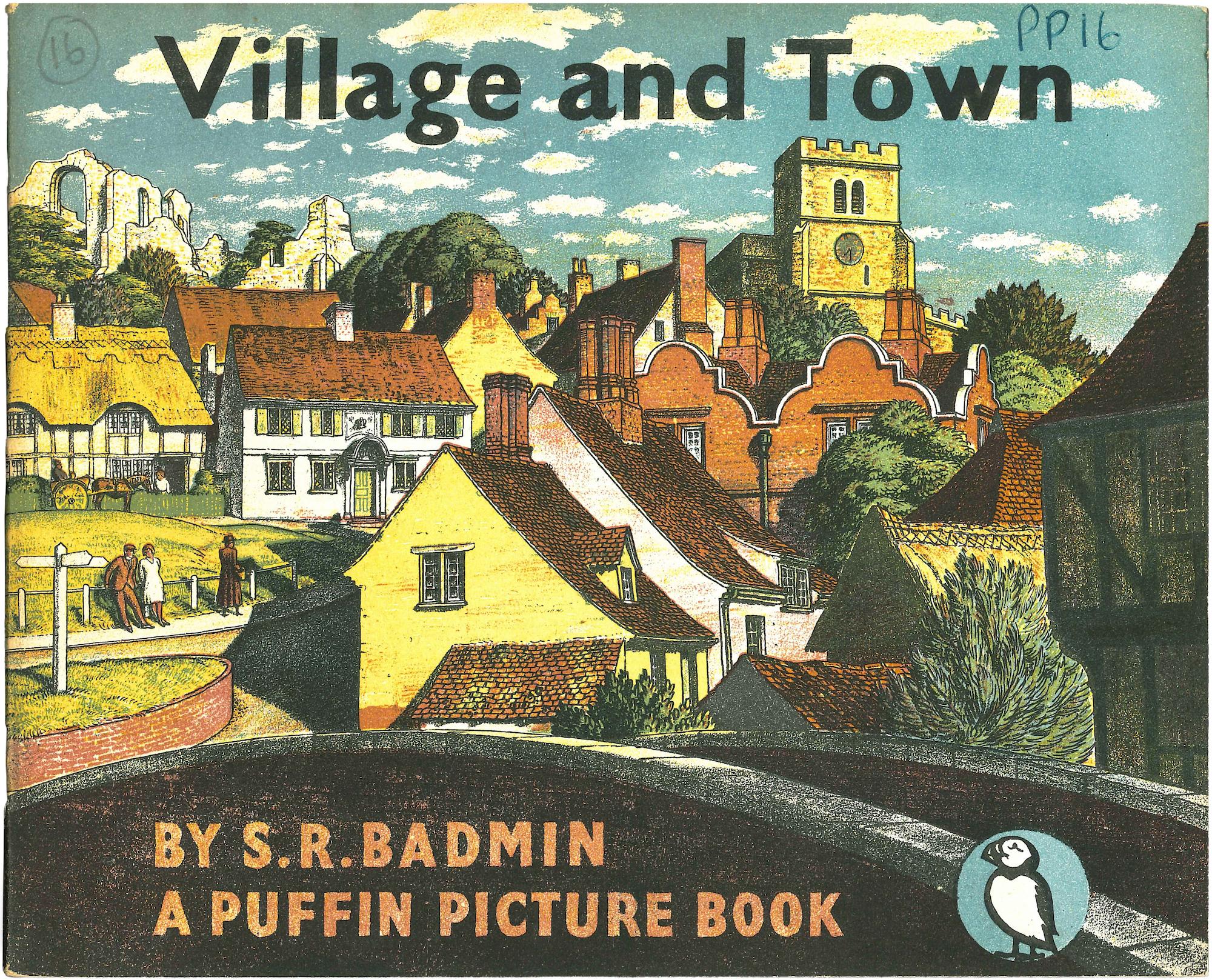
Village and Town, 1942
The Puffin Picture Books series was established by designer and editor Noel Carrington (1895-1989). In 1933, artist Pearl Binder (1904-1990) sent Carrington a package of Soviet children’s books. “They were produced by the million on very cheap paper, but the drawings were vigorous and the colour delightful” he later remembered. These books inspired Carrington to edit a series of affordable books that would encourage “the child’s awakening interest in its surroundings... I felt that colour was essential, and that artists could... be more successful in books of this nature than the camera”. Many artists and illustrators worked on the series, adapting their ways of working to lithographic printing and the Puffin Picture Book format. Most of the 120 books in the series were printed on one large sheet of paper: one side in colour and one in black-and-white. Each sheet was cut, folded and stapled to create a softcover book.
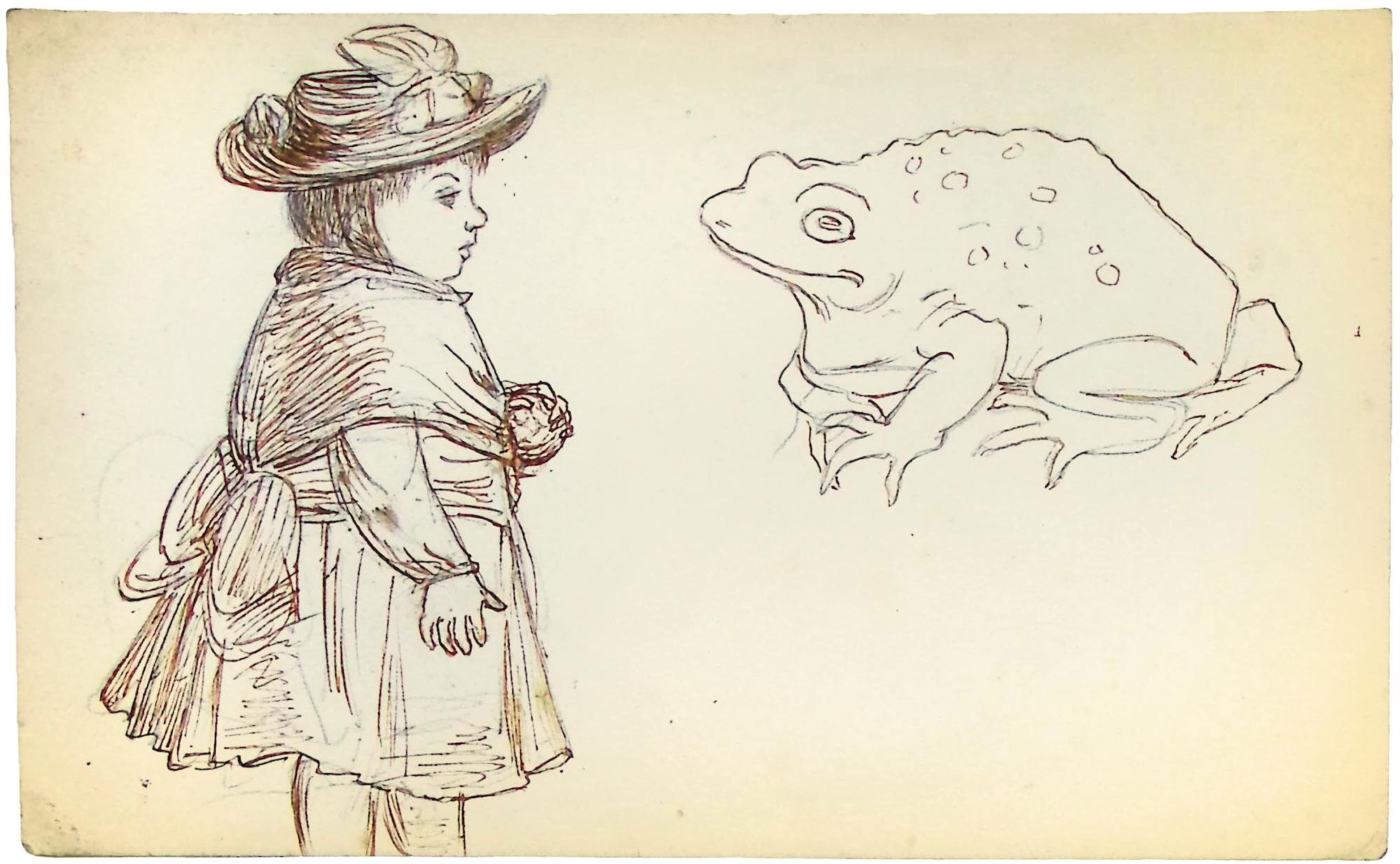
Untitled, Date unknown
Eleanor Vere Boyle (1825 – 1916) illustrated poetry and prose by some of the most popular authors of her time. She regularly drew and painted using ink and watercolour, sketching landscapes, animals and her children from life. She also made drawings from her imagination, often reflecting spiritual themes.
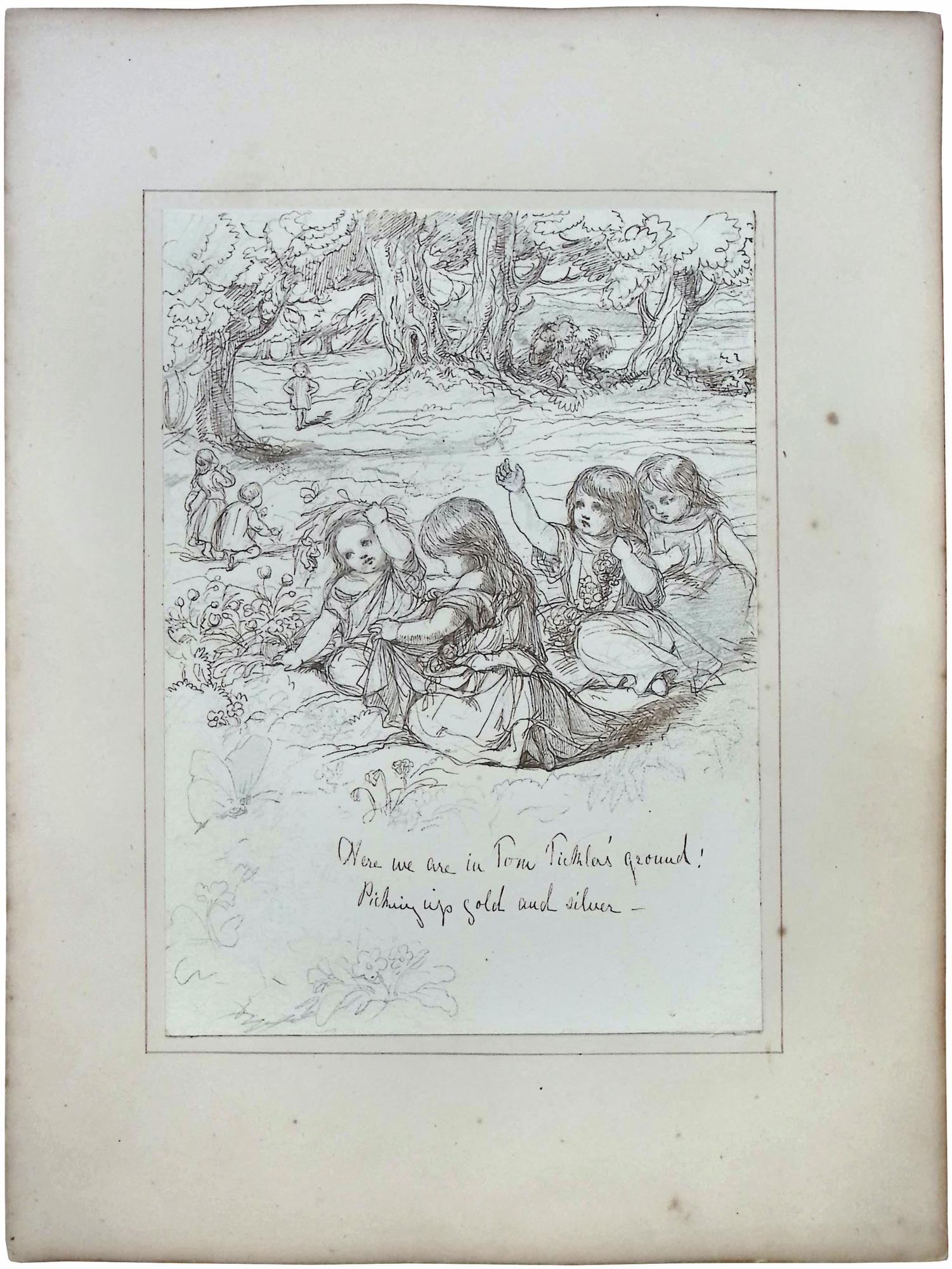
Untitled (illustration for Child's Play, 'Tom Tiddler's Ground'), c. 1851
Eleanor Vere Boyle (1825 – 1916) illustrated poetry and prose by some of the most popular authors of her time. She regularly drew and painted using ink and watercolour, sketching landscapes, animals and her children from life. She also made drawings from her imagination, often reflecting spiritual themes. This illustration is from her first book, Child’s Play (1851). Boyle provided her publishers with black and white drawings that were then converted into etchings by the printer. These were later reproduced as lithographs, in colours chosen by Boyle.
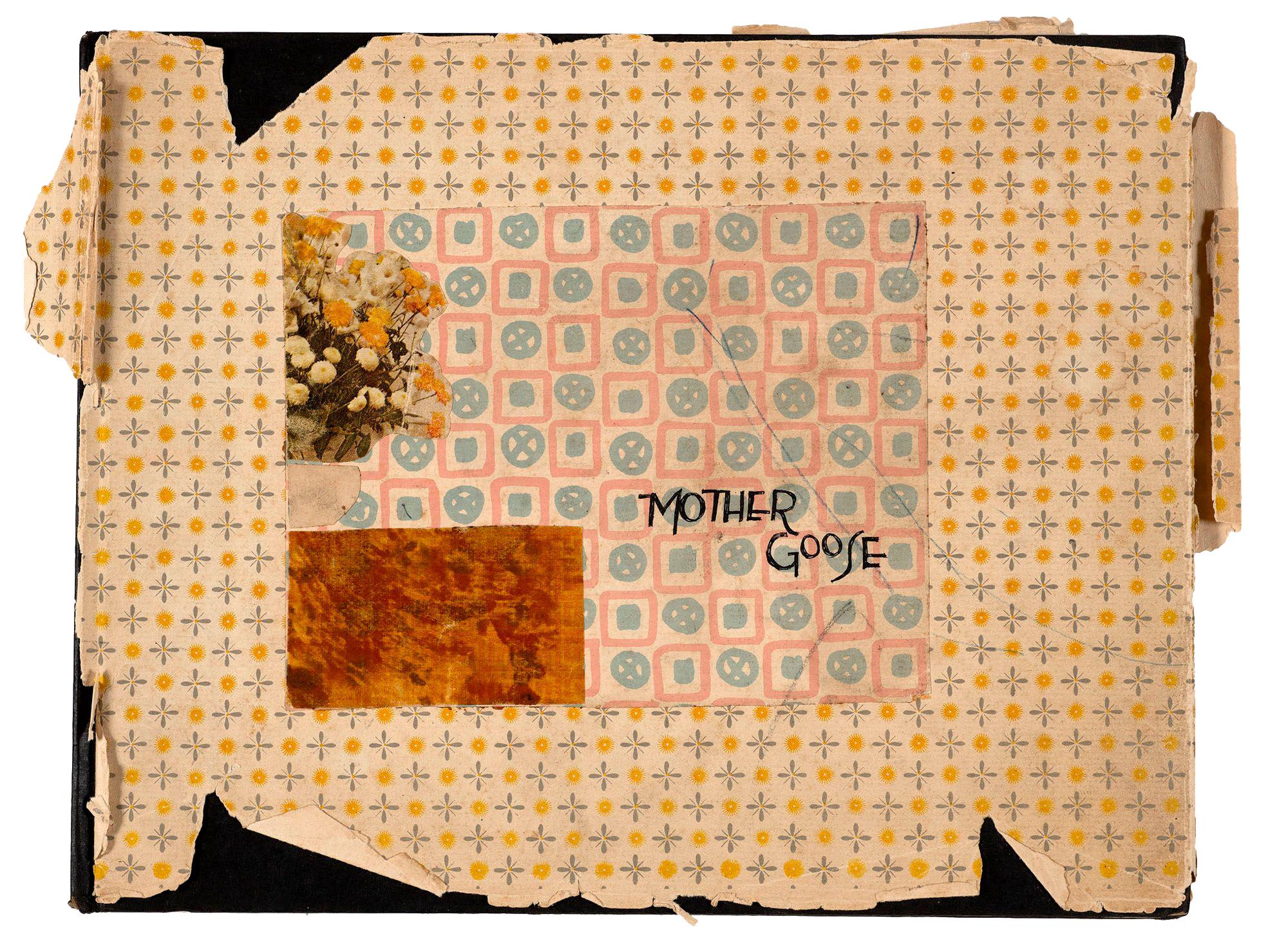
Jacqueline Ayer, Untitled (Handmade book for Margot), 1960
Jacqueline Ayer (1930–2012) had a career that spanned many creative fields. She began as a fashion illustrator, and later turned her hand to children’s books, textiles and garments, as she worked in New York, Paris, London, Bangkok, Hong Kong and across India. Jacqueline Ayer could not find children's books for her daughters when she first moved to Bangkok, Thailand, and so she made this nursery rhyme book out of magazines.
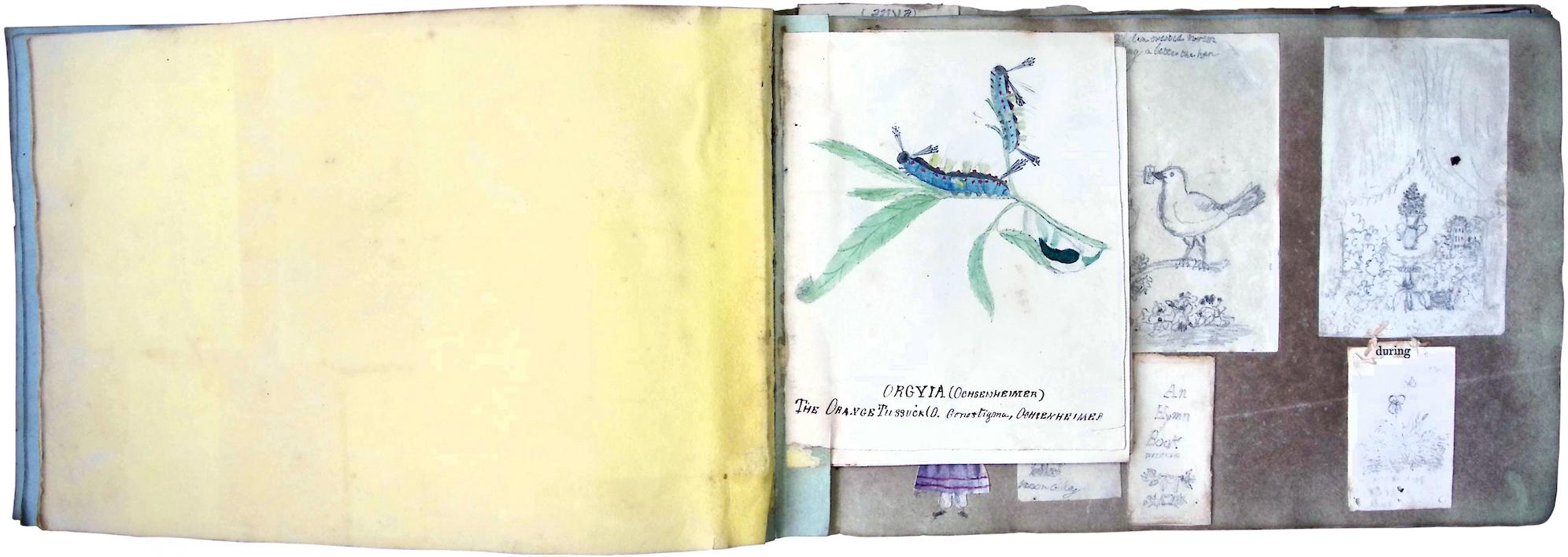
Untitled (childhood sketchbook), 1833
Eleanor Vere Boyle (1825 – 1916) illustrated poetry and prose by some of the most popular authors of her time. She regularly drew and painted using ink and watercolour, sketching landscapes, animals and her children from life. She also made drawings from her imagination, often reflecting spiritual themes. Boyle learnt how to draw and paint from her mother and older sister, Alba. She kept this sketchbook when she was eight years old. It includes miniature drawings, cut out paper shapes, and tiny books that she made as gifts for family.
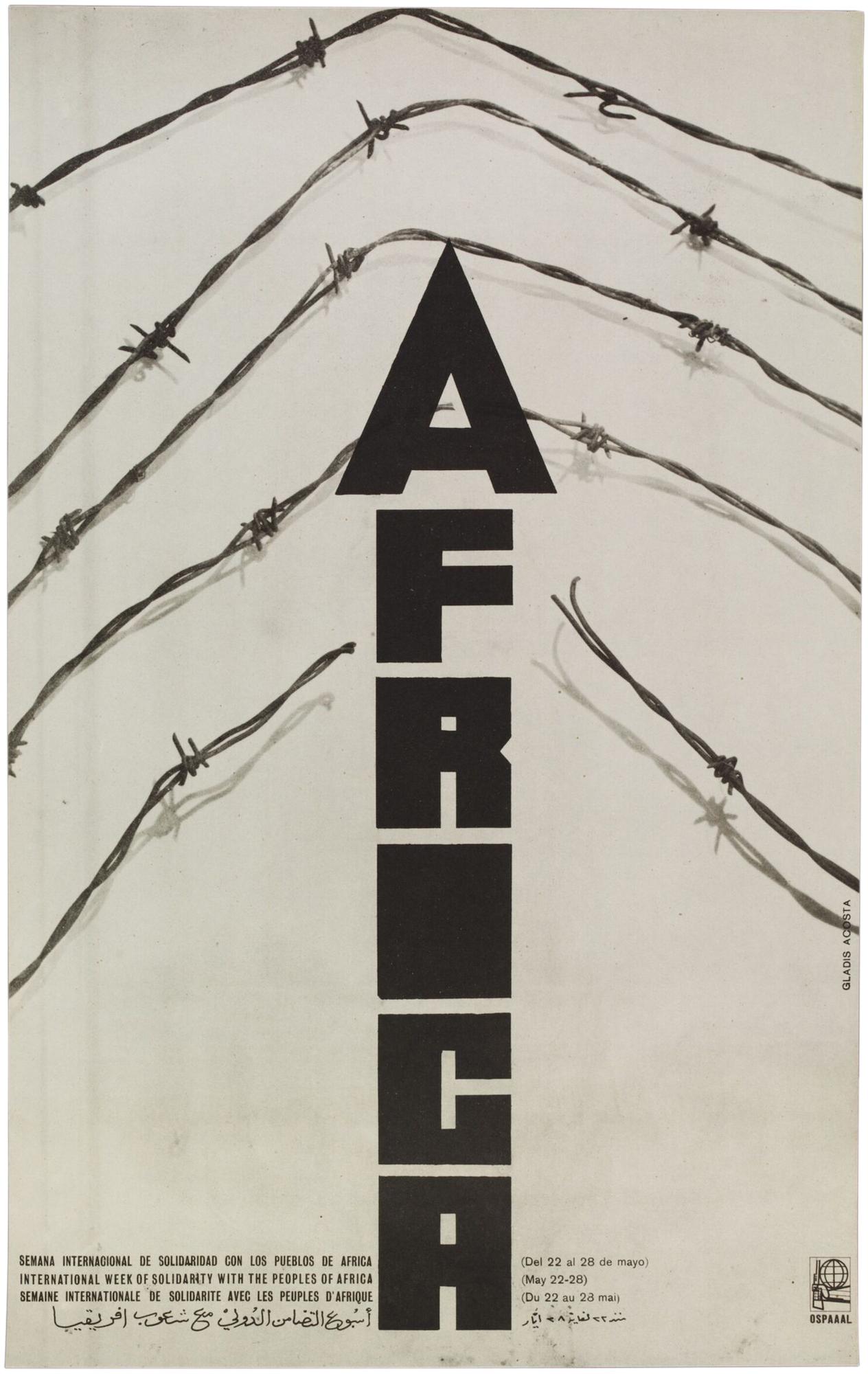
AFRICA - INTERNATIONAL WEEK OF SOLIDARITY WITH THE PEOPLES OF AFRICA (May 22-28), 1970
Between the 1960s and 1990s, more than fifty designers worked at OSPAAAL (the Organisation of Solidarity with the People of Africa, Asia and Latin America). Based in Cuba, they made magazines and posters that were sent around the world. Their aim was to promote radical political ideas. Many of their posters celebrate socialist revolutions and liberation movements from the Global South. This poster was issued in support of independent African nations and liberation movements, coinciding with Africa Liberation Day.
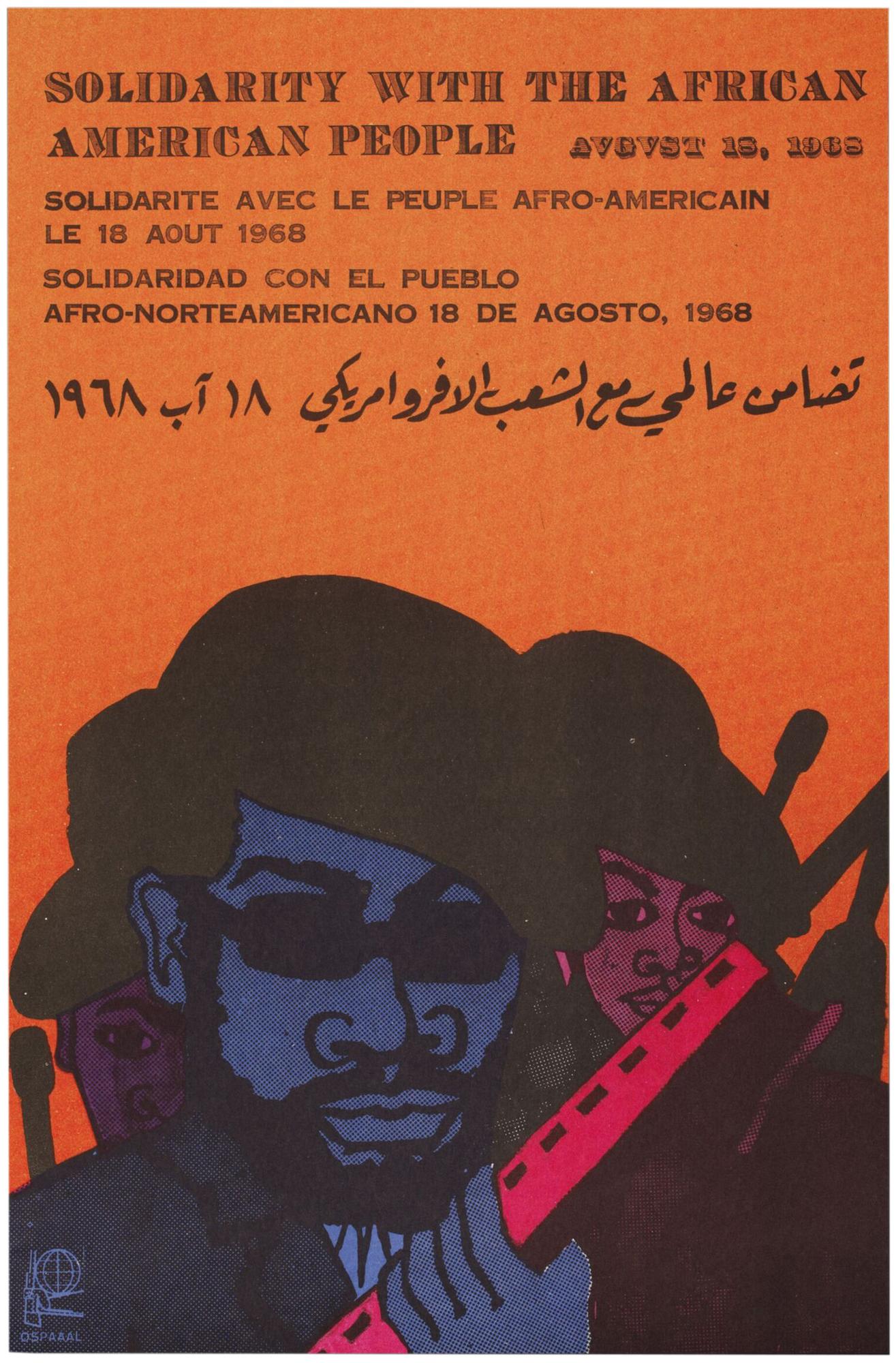
SOLIDARITY WITH THE AFRICAN AMERICAN PEOPLE - AUGUST 18, 1968, 1968
Between the 1960s and 1990s, more than fifty designers worked at OSPAAAL. Based in Cuba, they made magazines and posters that were sent around the world. Their aim was to promote radical political ideas. Many of their posters celebrate socialist revolutions and liberation movements from the Global South. They were also connected to the Black Panther Party, a political organisation based in Oakland, California. Designer Emory Douglas was “glad to see” his illustrations for the Black Panther Party’s newspaper repurposed by OSPAAAL. Douglas’ image reflects the party’s line on carrying arms: “we believe we can end police brutality... by organising black self-defence groups that are dedicated to defending our black community from racist police oppression and brutality.”
Content warning: weaponry
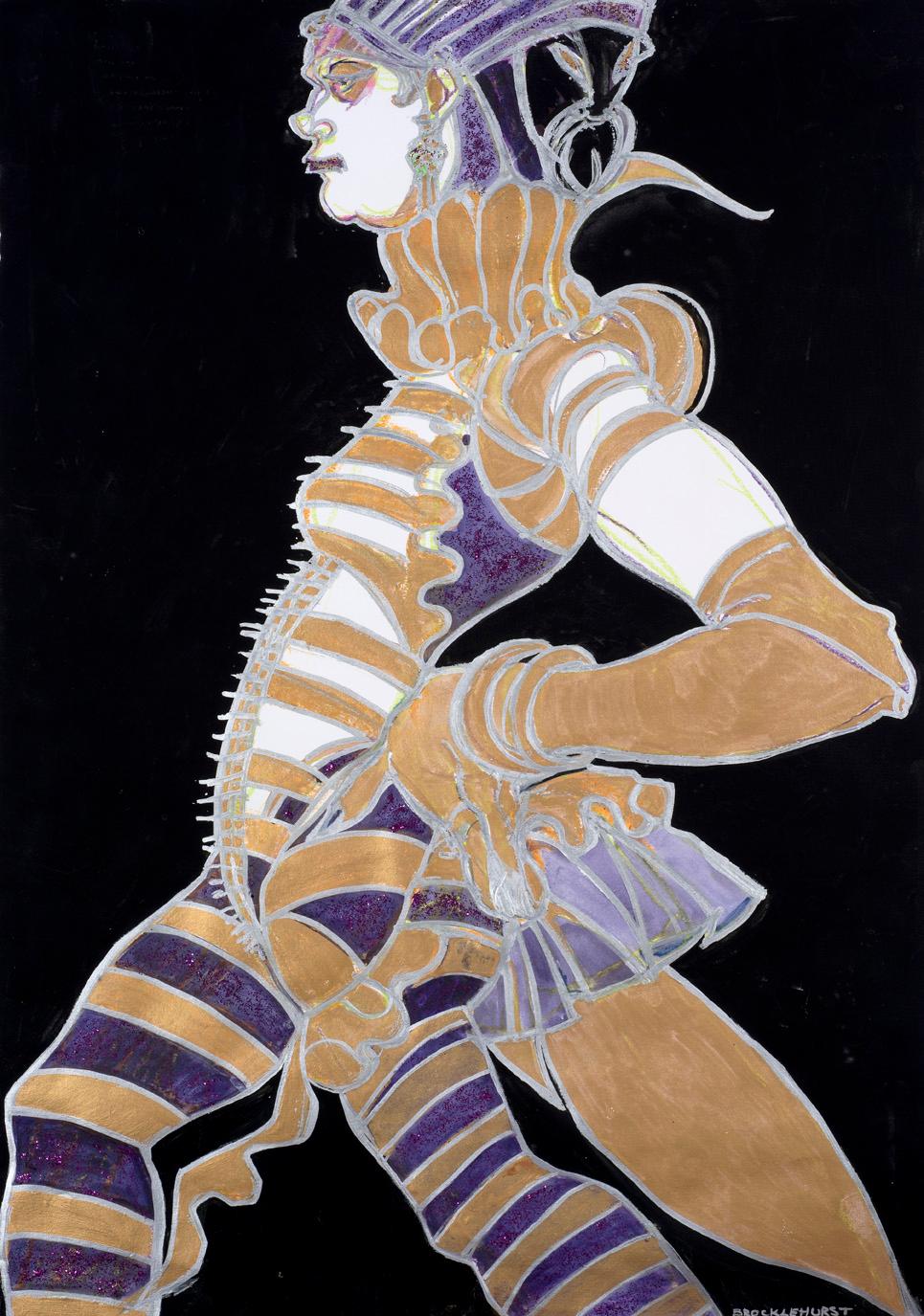
Jo Brocklehurst, Untitled (from Brocklehurst Through the Looking-Glass), 2000s
Jo (Josephine) Brocklehurst (1935 - 2006) studied at Central Saint Martins and began her career as a fashion illustrator. She later focused on portraiture, drawing directly from models at her studio in West Hampstead and in nightclubs and theatres in Berlin, London and New York. Her work documents the alternative subcultures of the 1970s, 80s and 90s that went on to shape mainstream fashion and performance scenes. This work is from Brocklehurst Through the Looking-Glass, Brocklehurst’s final series. With an image of herself as a child as the centrepiece, Brocklehurst made hundreds of drawings that re-imagined characters from Lewis Carroll’s Alice novels. Her models were friends and dedicated club-goers who designed and made their own clothes. Brocklehurst’s regular collaborator Isabelle Bricknall was the model for this work. Works from the series were framed with bright plastic gemstones and hung on every available space at Brocklehurst’s home studio. She used metallic and neon inks that transformed under ultraviolet lights that she switched on for her guests in the evenings.
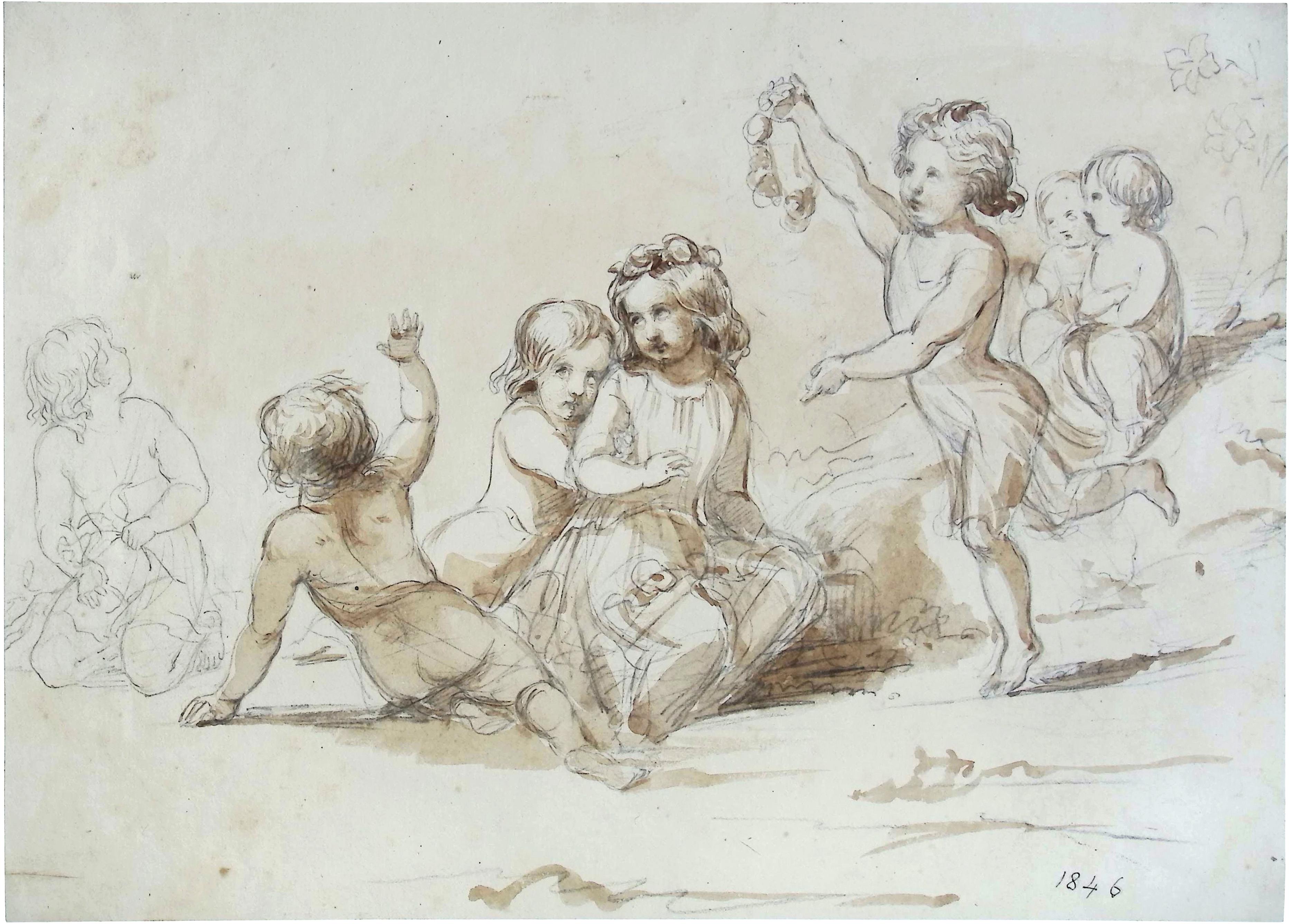
Untitled, 1846
Eleanor Vere Boyle (1825 – 1916) illustrated poetry and prose by some of the most popular authors of her time. She regularly drew and painted using ink and watercolour, sketching landscapes, animals and her children from life. She also made drawings from her imagination, often reflecting spiritual themes.
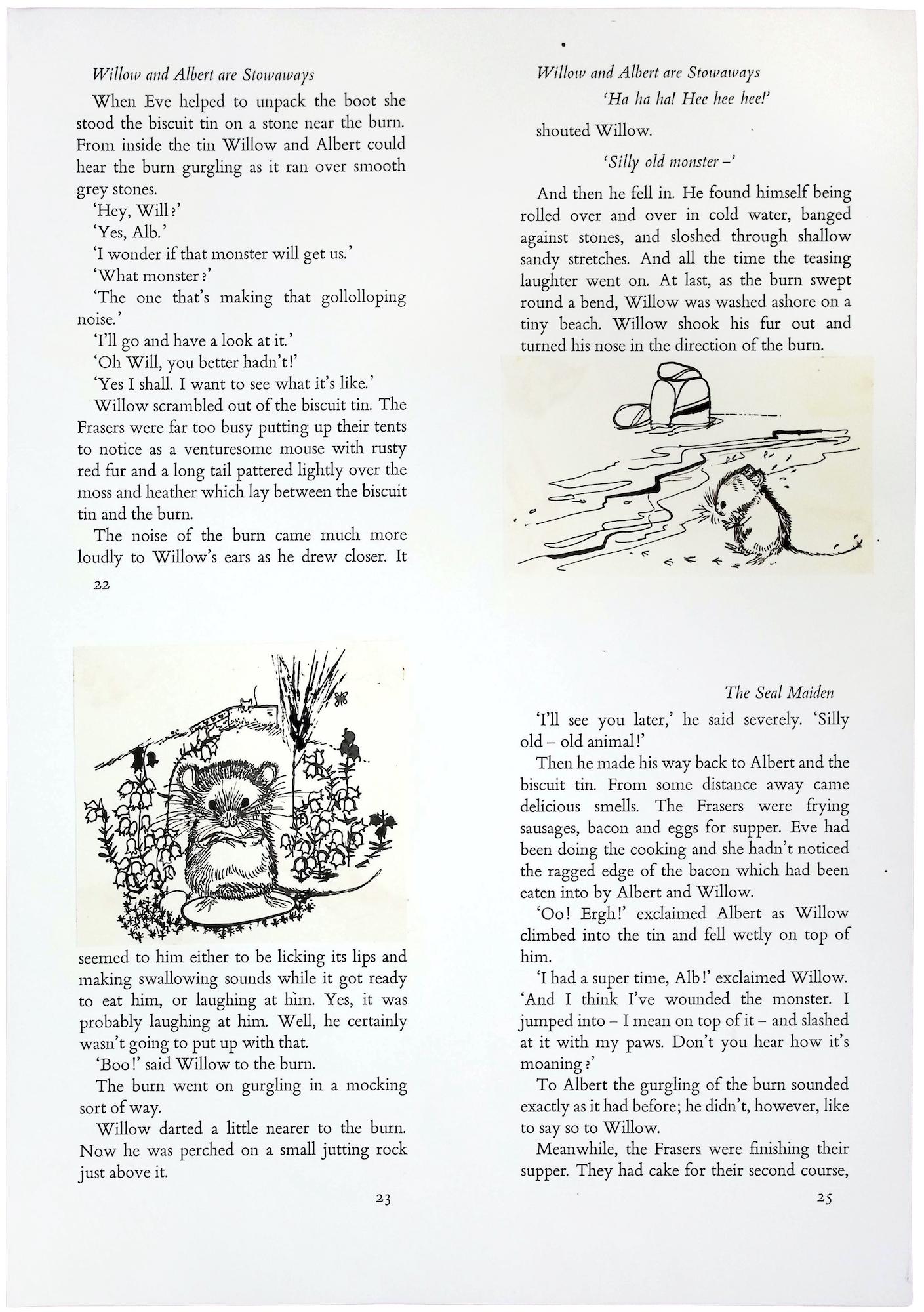
Layout proof for Willow and Albert are Stowaways, c. 1970
British illustrator Janina Ede (1937-2018) created covers and illustrations for over 100 books from the 1950s to the 1980s. Many of her illustrations feature animals, which she drew from life.
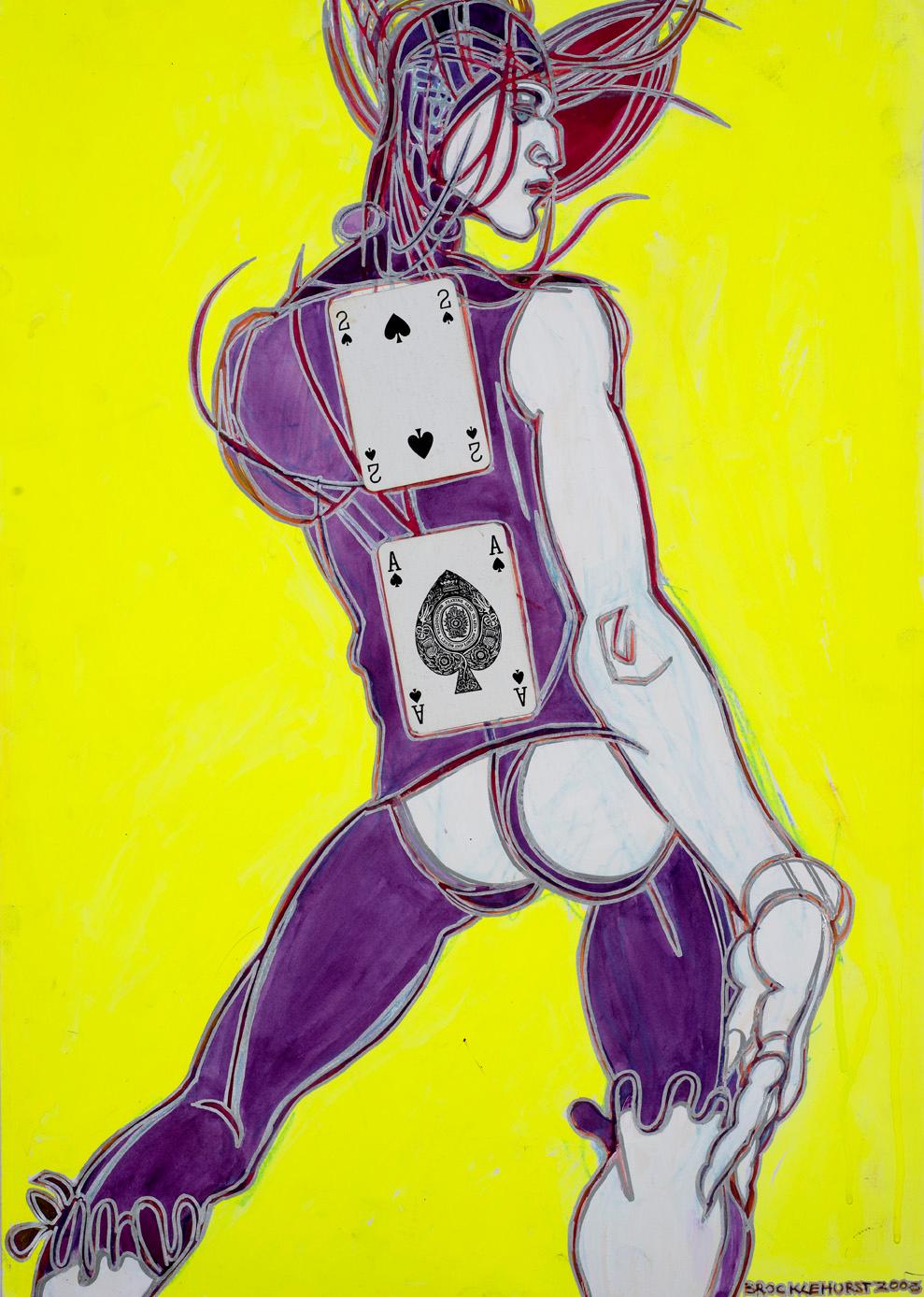
Jo Brocklehurst, Untitled (from Brocklehurst Through the Looking-Glass), 2002
Jo (Josephine) Brocklehurst (1935 - 2006) studied at Central Saint Martins and began her career as a fashion illustrator. She later focused on portraiture, drawing directly from models at her studio in West Hampstead and in nightclubs and theatres in Berlin, London and New York. Her work documents the alternative subcultures of the 1970s, 80s and 90s that went on to shape mainstream fashion and performance scenes. This work is from Brocklehurst Through the Looking-Glass, Brocklehurst’s final series. With an image of herself as a child as the centrepiece, Brocklehurst made hundreds of drawings that re-imagined characters from Lewis Carroll’s Alice novels. Her models were friends and dedicated club-goers who designed and made their own clothes. Works from the series were framed with bright plastic gemstones and hung on every available space at Brocklehurst’s home studio. She used metallic and neon inks that transformed under ultraviolet lights that she switched on for her guests in the evenings.
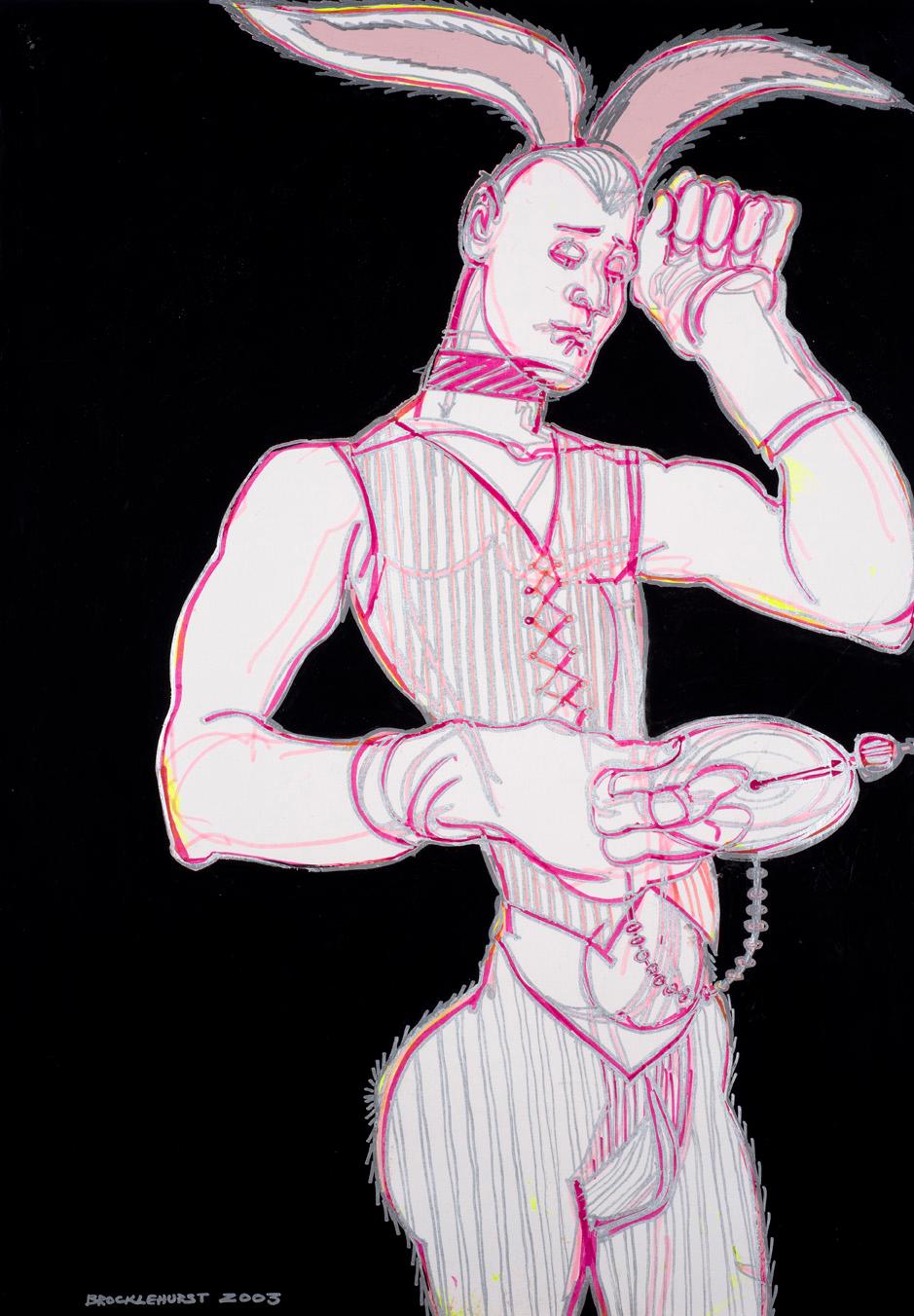
Jo Brocklehurst, Untitled (White Rabbit from Brocklehurst Through the Looking-Glass), 2000s
Jo (Josephine) Brocklehurst (1935 - 2006) studied at Central Saint Martins and began her career as a fashion illustrator. She later focused on portraiture, drawing directly from models at her studio in West Hampstead and in nightclubs and theatres in Berlin, London and New York. Her work documents the alternative subcultures of the 1970s, 80s and 90s that went on to shape mainstream fashion and performance scenes. This work is from Brocklehurst Through the Looking-Glass, Brocklehurst’s final series. With an image of herself as a child as the centrepiece, Brocklehurst made hundreds of drawings that re-imagined characters from Lewis Carroll’s Alice novels. Her models were friends and dedicated club-goers who designed and made their own clothes. Works from the series were framed with bright plastic gemstones and hung on every available space at Brocklehurst’s home studio. She used metallic and neon inks that transformed under ultraviolet lights that she switched on for her guests in the evenings.
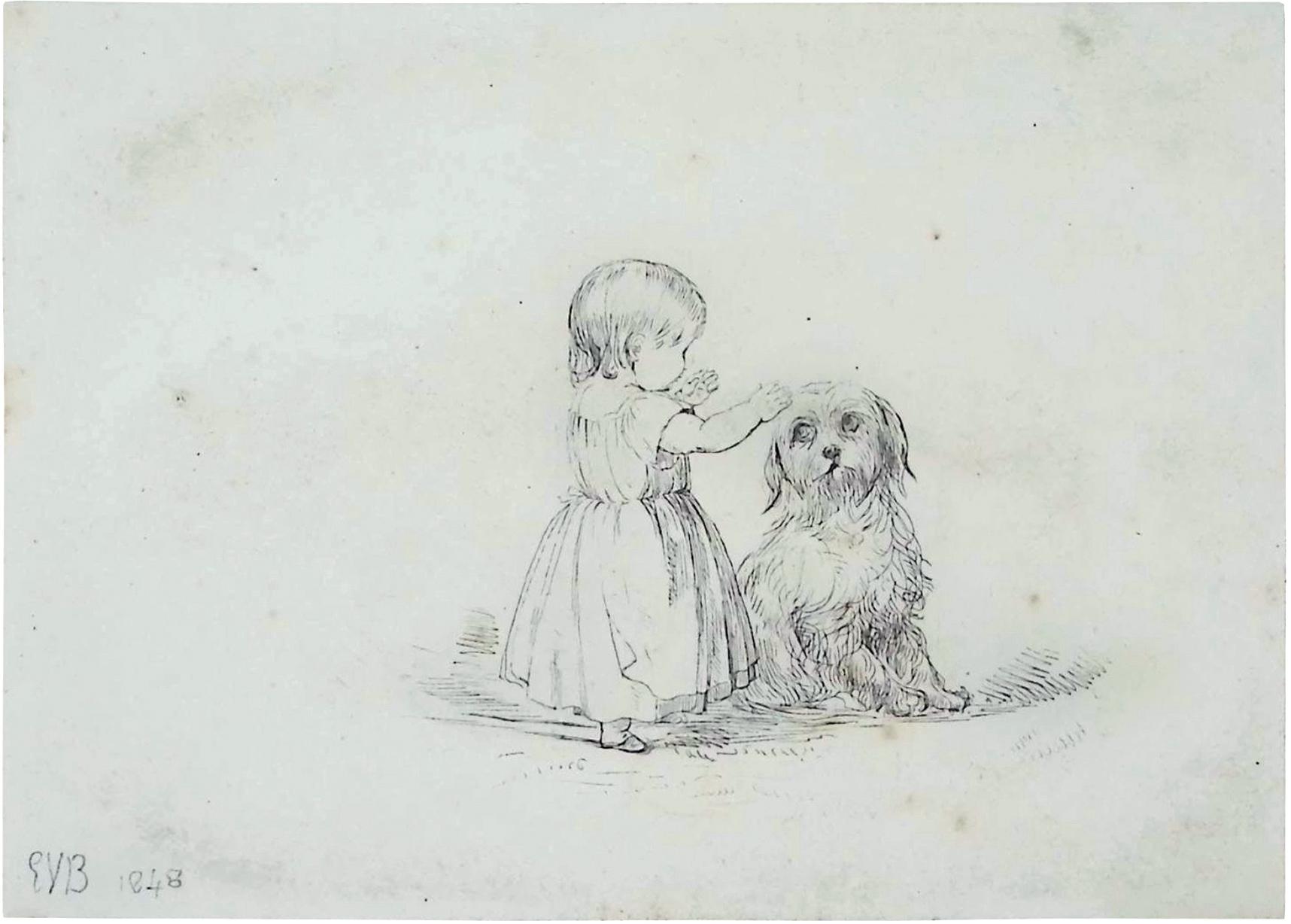
Untitled, 1848
Eleanor Vere Boyle (1825 – 1916) illustrated poetry and prose by some of the most popular authors of her time. She regularly drew and painted using ink and watercolour, sketching landscapes, animals and her children from life. She also made drawings from her imagination, often reflecting spiritual themes.
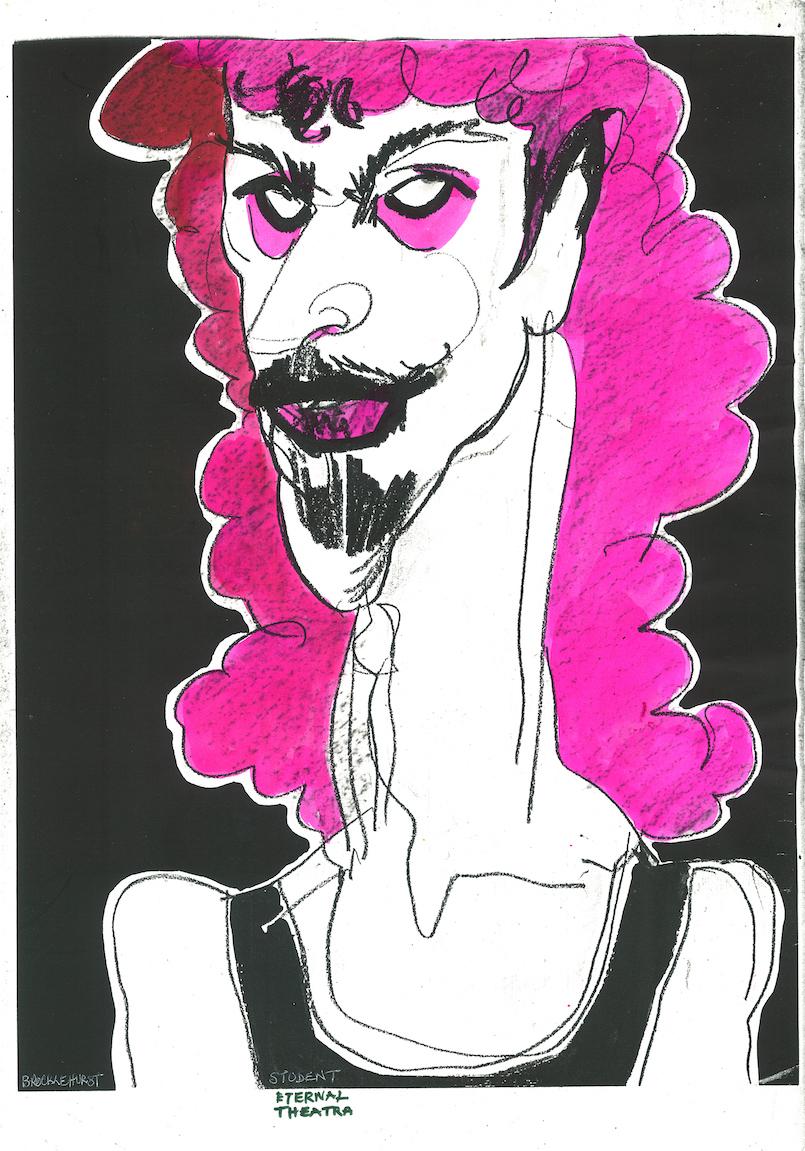
Jo Brocklehurst, Eternal Theatra, Date unknown
Jo (Josephine) Brocklehurst (1935 - 2006) studied at Central Saint Martins and began her career as a fashion illustrator. She later focused on portraiture, drawing directly from models at her studio in West Hampstead and in nightclubs and theatres in Berlin, London and New York. Her work documents the alternative subcultures of the 1970s, 80s and 90s that went on to shape mainstream fashion and performance scenes.
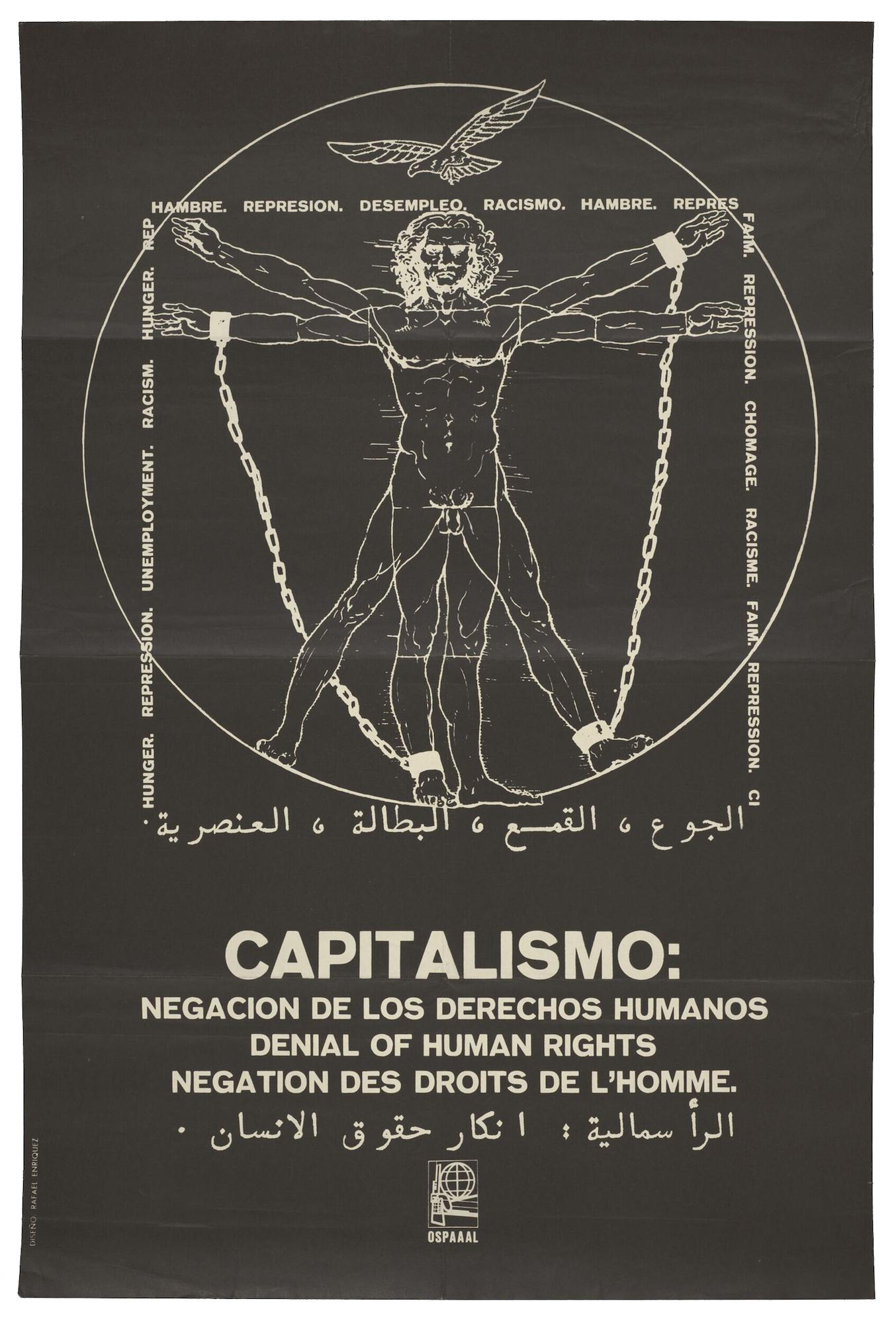
CAPITALISM: DENIAL OF HUMAN RIGHTS, 1977
Between the 1960s and 1990s, more than fifty designers worked at OSPAAAL (the Organisation of Solidarity with the People of Africa, Asia and Latin America). Based in Cuba, they made magazines and posters that were sent around the world. Their aim was to promote radical political ideas. Many of their posters celebrate socialist revolutions and liberation movements from the Global South. From 1977 onwards, Rafael Enríquez Vega was creative director at OSPAAAL and a prolific poster designer. For this design he used Leonardo da Vinci’s illustration of the Vitruvian Man, adding chains to represent the idea that capitalism enslaves people.
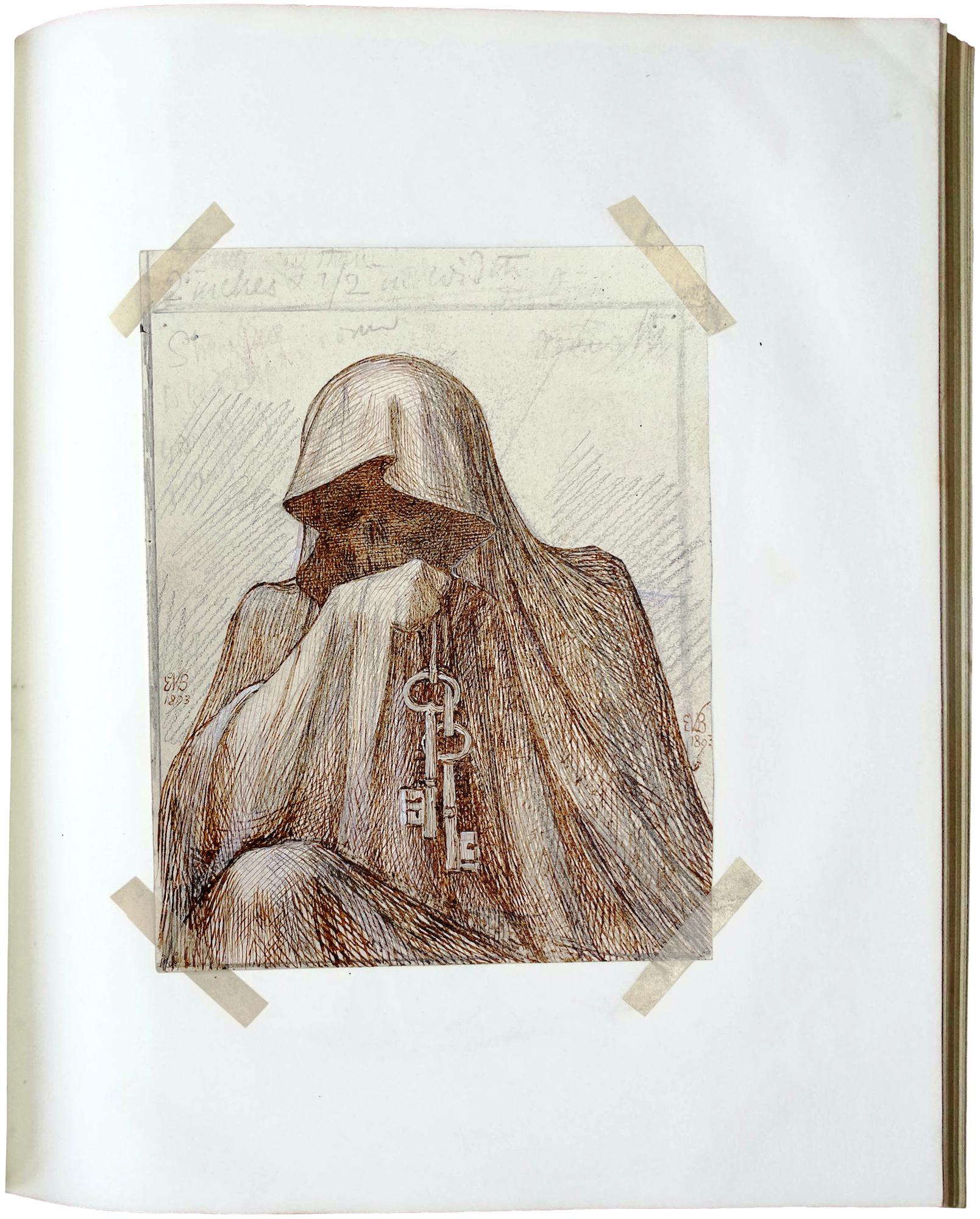
Untitled (illustration for A Book of Heavenly Birthdays, 'The Shadow Waiting with the Keys'), 1893
Eleanor Vere Boyle (1825 – 1916) illustrated poetry and prose by some of the most popular authors of her time. She regularly drew and painted using ink and watercolour, sketching landscapes, animals and her children from life. She also made drawings from her imagination, often reflecting spiritual themes. This drawing was used as one of the final illustrations printed in the artists' publication A Book of Heavenly Birthdays (1893, London Elliot Stock)
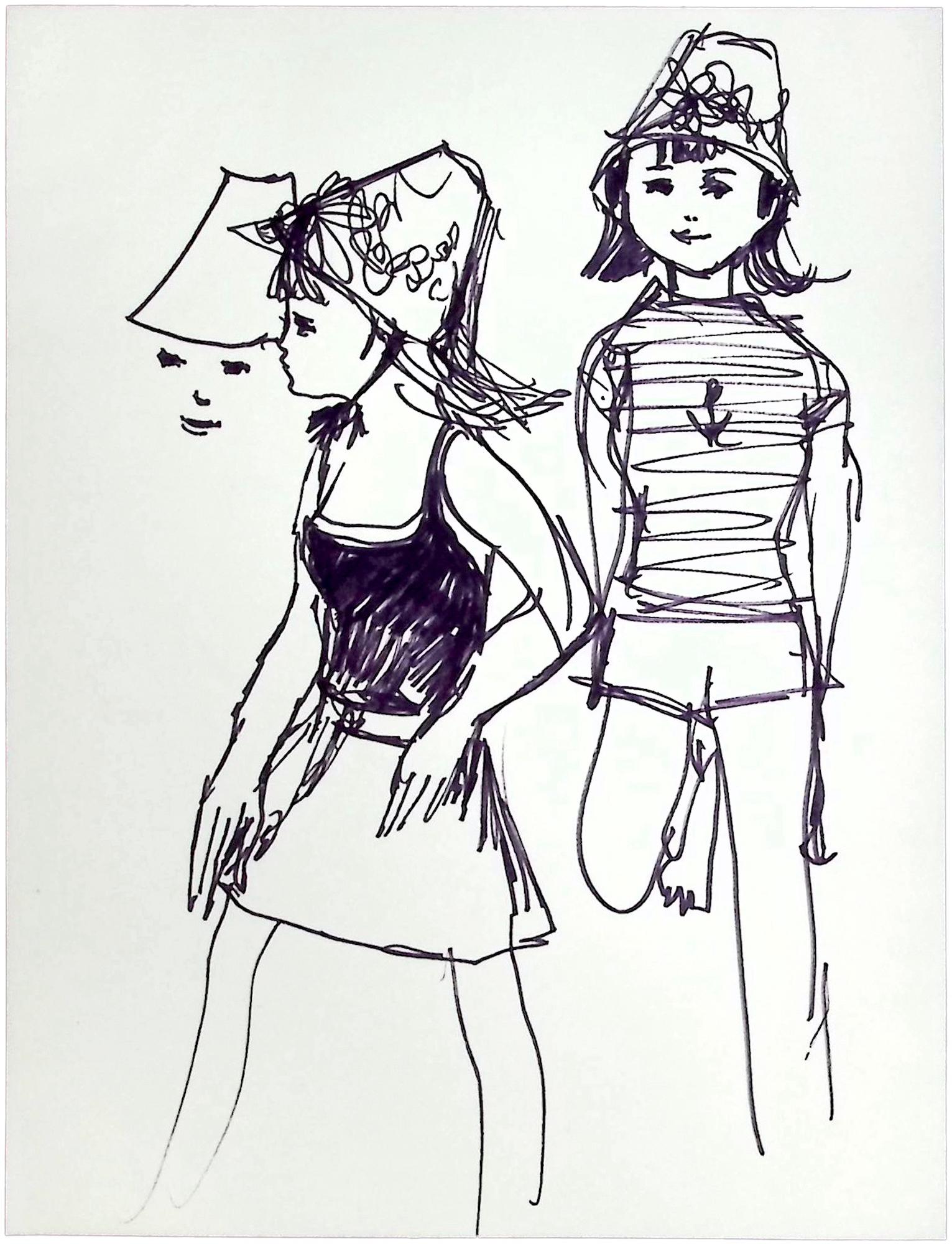
Untitled, c. 1968
British illustrator Janina Ede (1937-2018) created covers and illustrations for over 100 books from the 1950s to the 1980s. In the 1960s, Ede began working on children’s books. The Patchwork Pack (1968) by Freda Collins is about a group of ‘Brownies’ – the name given to members of the worldwide girl-guiding movement.
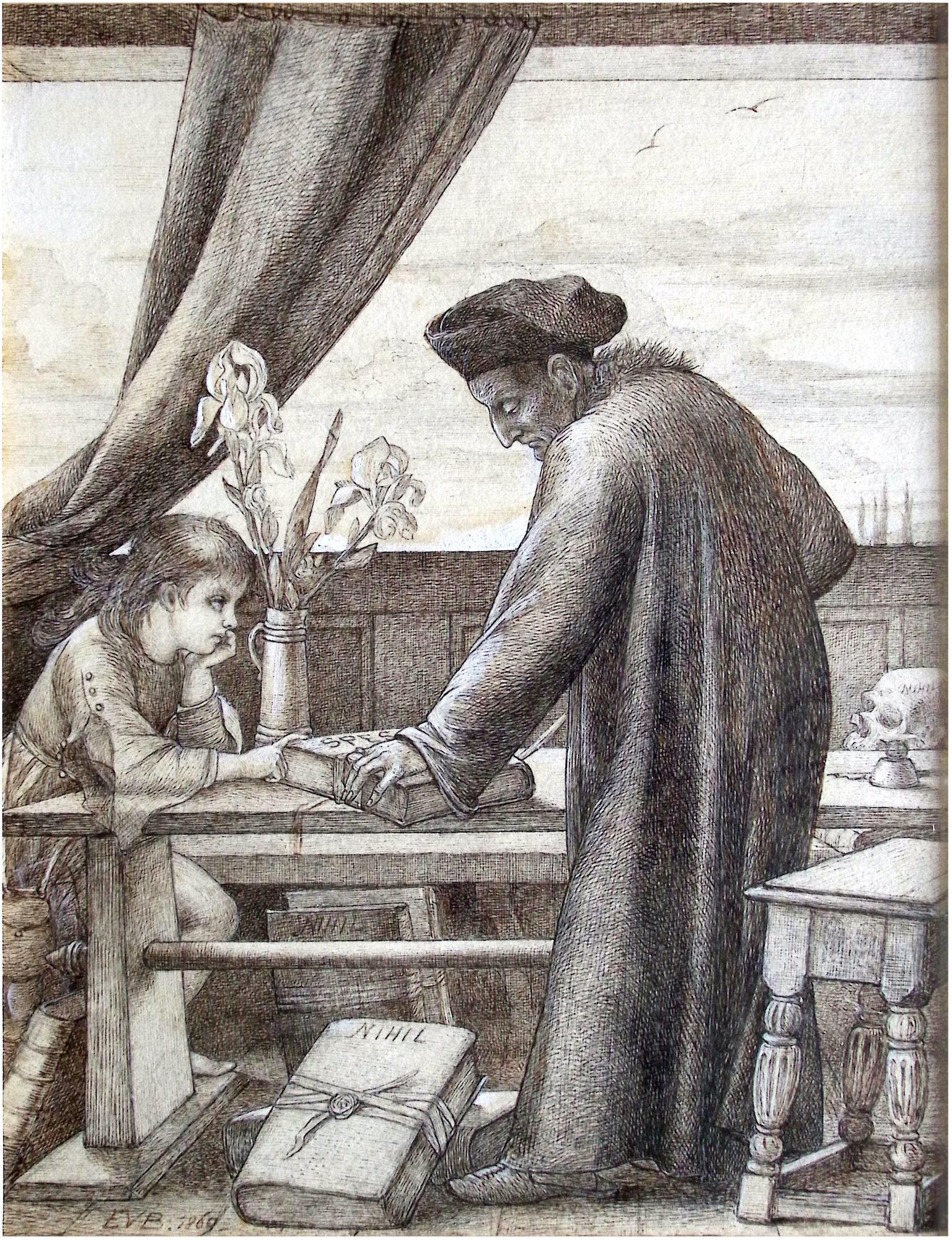
Illustration for 'A Dream Book', 1869
Eleanor Vere Boyle (1825 – 1916) illustrated poetry and prose by some of the most popular authors of her time. She regularly drew and painted using ink and watercolour, sketching landscapes, animals and her children from life. She also made drawings from her imagination, often reflecting spiritual themes.
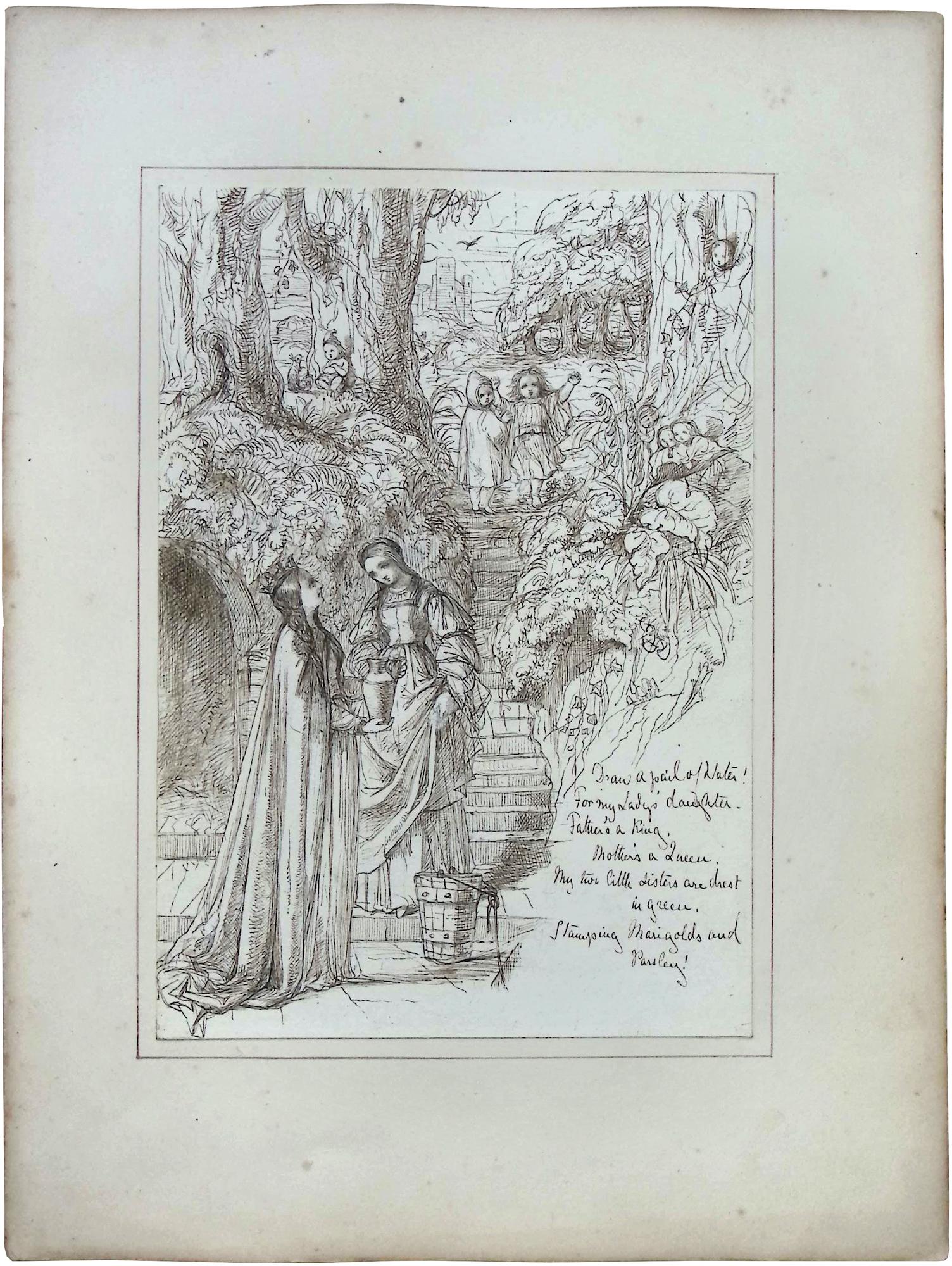
Untitled (illustration for Child's Play, 'Draw a pail of water'), c. 1851
Eleanor Vere Boyle (1825 – 1916) illustrated poetry and prose by some of the most popular authors of her time. She regularly drew and painted using ink and watercolour, sketching landscapes, animals and her children from life. She also made drawings from her imagination, often reflecting spiritual themes. This illustration is from her first book, Child’s Play (1851). Boyle provided her publishers with black and white drawings that were then converted into etchings by the printer. These were later reproduced as lithographs, in colours chosen by Boyle.
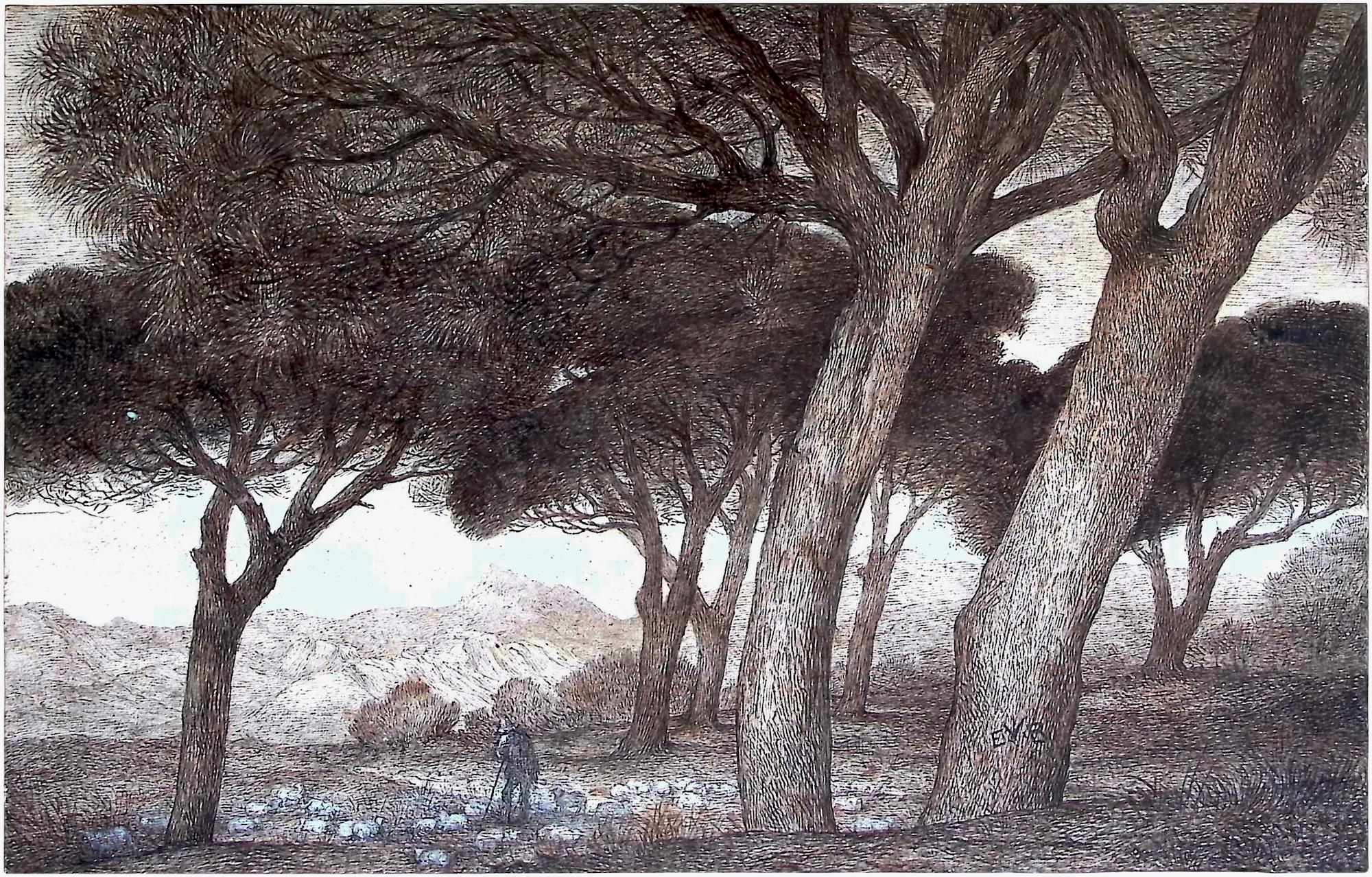
Untitled (drawing of south of France), Date unknown
Eleanor Vere Boyle (1825 – 1916) illustrated poetry and prose by some of the most popular authors of her time. She regularly drew and painted using ink and watercolour, sketching landscapes, animals and her children from life. She also made drawings from her imagination, often reflecting spiritual themes.
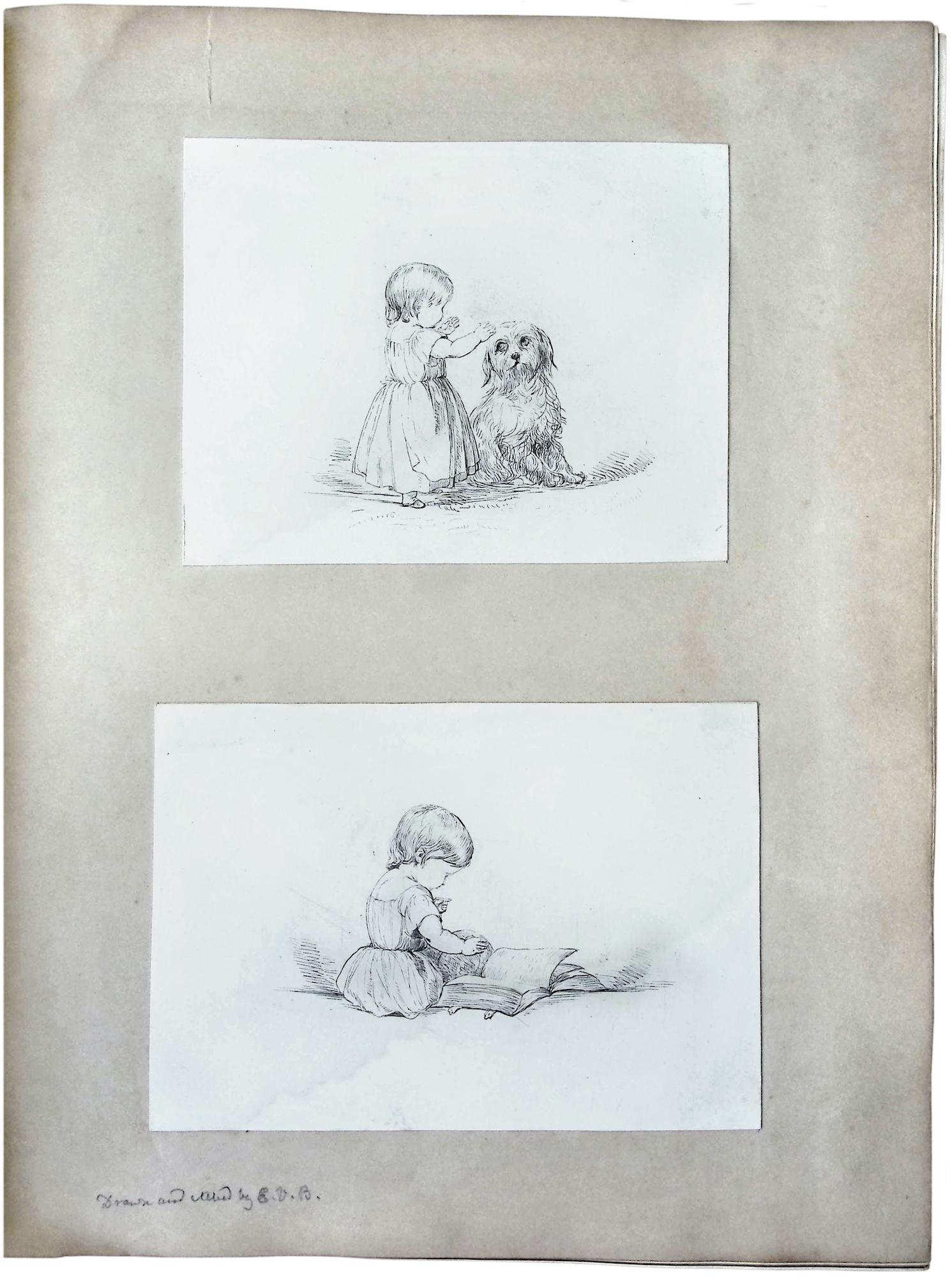
Untitled, Date unknown
Eleanor Vere Boyle (1825 – 1916) illustrated poetry and prose by some of the most popular authors of her time. She regularly drew and painted using ink and watercolour, sketching landscapes, animals and her children from life. She also made drawings from her imagination, often reflecting spiritual themes.
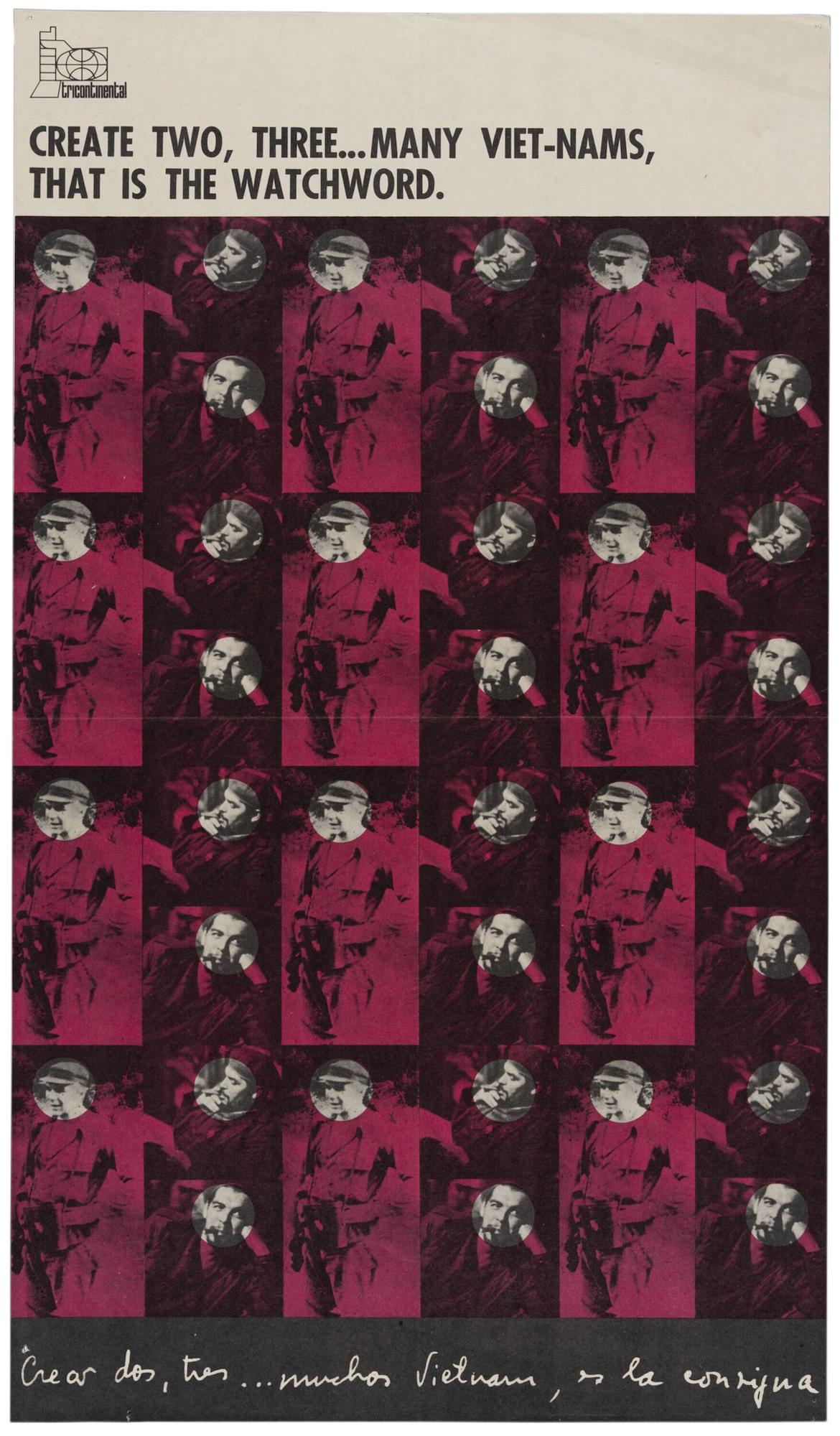
CREATE TWO, THREE...MANY VIET-NAMS, THAT IS THE WATCHWORD, 1967
Between the 1960s and 1990s, more than fifty designers worked at OSPAAAL (the Organisation of Solidarity with the People of Africa, Asia and Latin America). Based in Cuba, they made magazines and posters that were sent around the world. Their aim was to promote radical political ideas. Many of their posters celebrate socialist revolutions and liberation movements from the Global South. The first edition of OSPAAAL’s Tricontinental magazine was a special supplement dedicated to Che Guevara’s Message to the Tricontinental. His manifesto presented Vietnamese Communists opposing U.S. military forces in Vietnam as a model for patriotic resistance. It contained the only poster of the guerrilla leader made during his lifetime – Guevara was killed in Bolivia six months after its issue. OSPAAAL’s designers often used repetition of photographic as a way to create bold illustrations with limited resources. The studio’s first art director Alfredo Rostgaard said that “from the need to solve our material problems, we began to discover new forms”
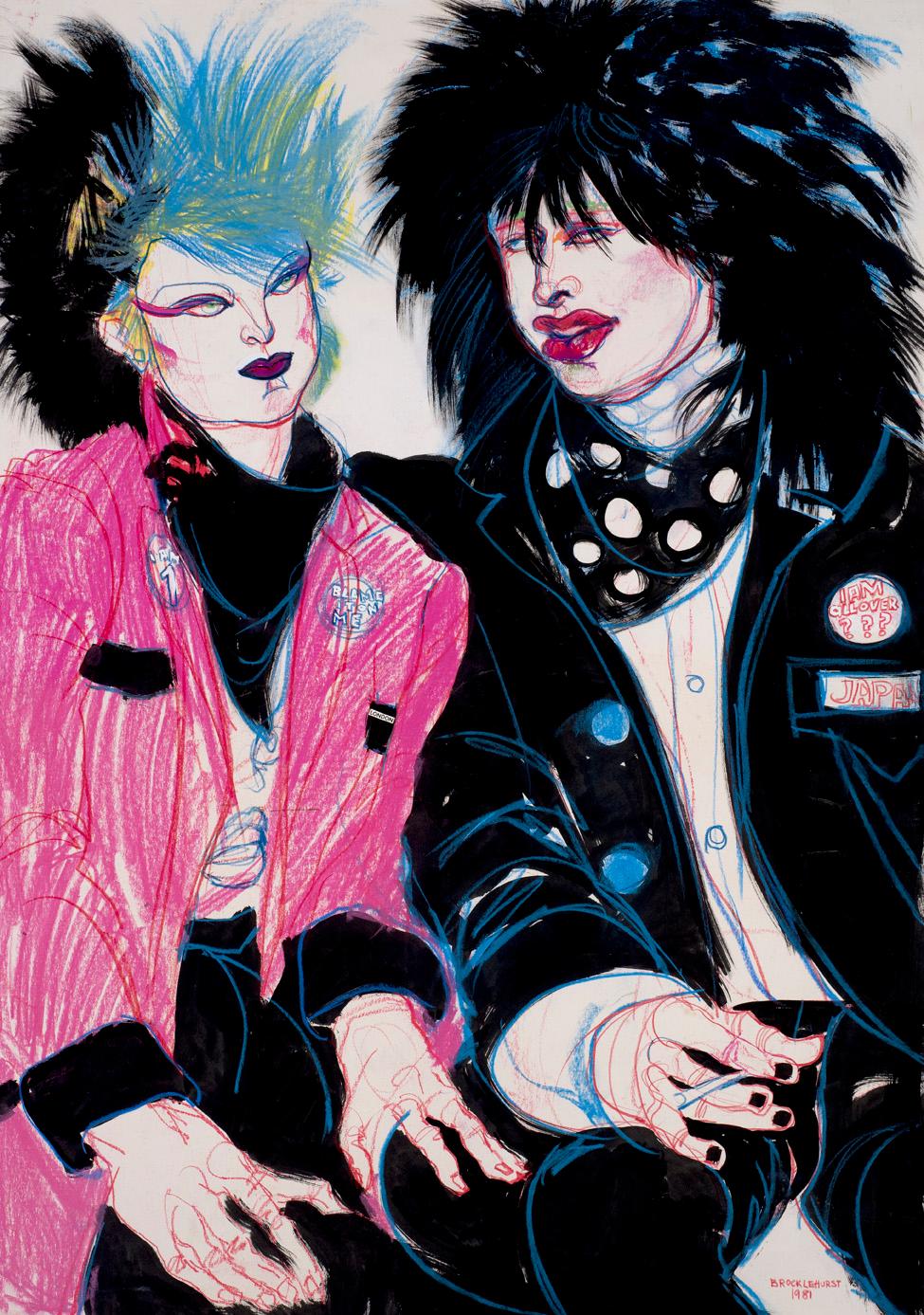
Jo Brocklehurst, Untitled (portrait of Val Drayton and Julian), 1981
Jo (Josephine) Brocklehurst (1935 - 2006) studied at Central Saint Martins and began her career as a fashion illustrator. She later focused on portraiture, drawing directly from models at her studio in West Hampstead and in nightclubs and theatres in Berlin, London and New York. Her work documents the alternative subcultures of the 1970s, 80s and 90s that went on to shape mainstream fashion and performance scenes. In the 1980s, Brocklehurst drew a series portraits of members of the Kill Your Pet Puppy collective who were living in a squat close to her studio. Attracted to their anarcho-punk dress and ethos, she said “I felt that they understood very well what was going on in the world, what was in it for them”.
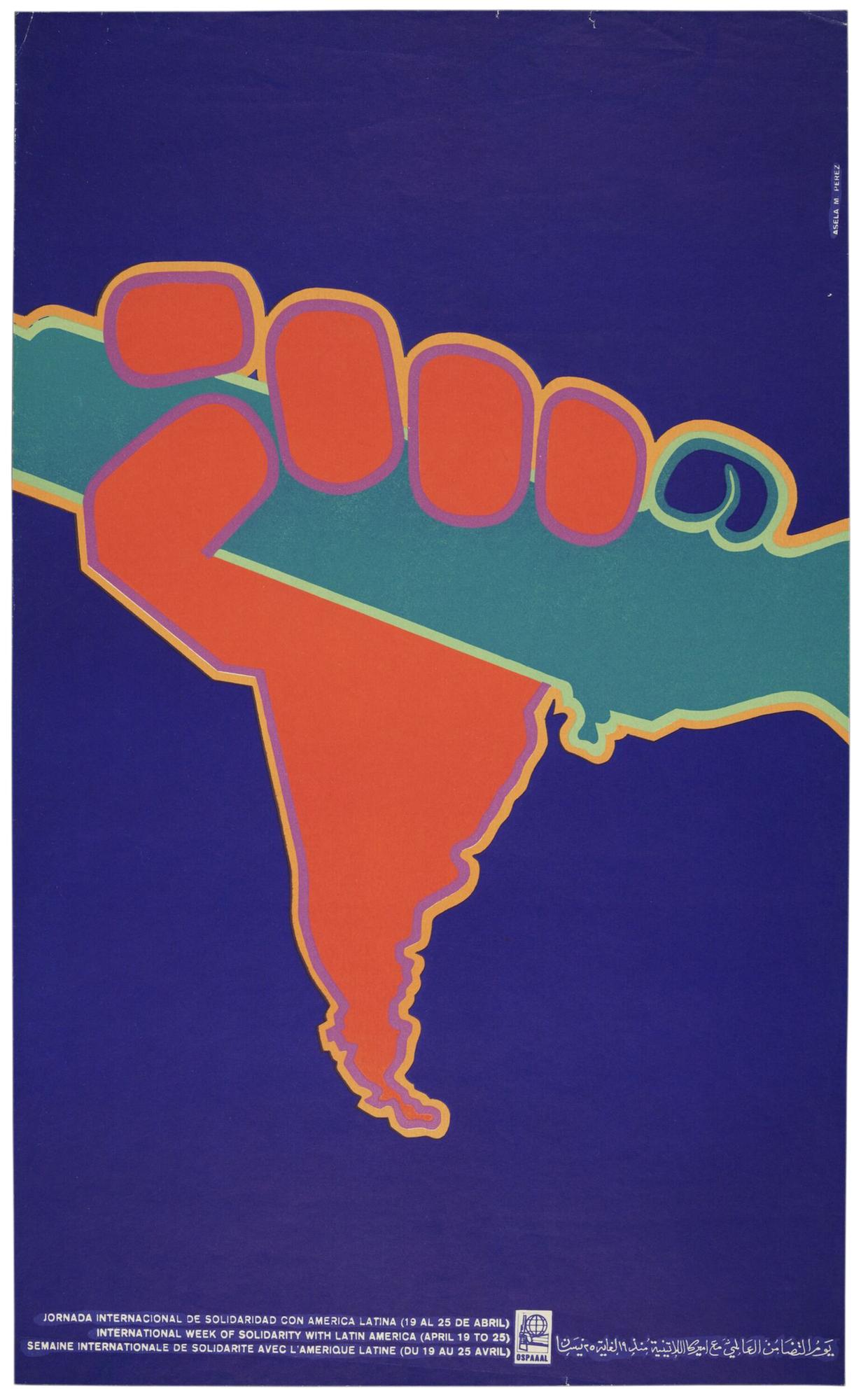
INTERNATIONAL WEEK OF SOLIDARITY WITH LATIN AMERICA (APRIL 19 TO 25), 1970
Between the 1960s and 1990s, more than fifty designers worked at OSPAAAL (the Organisation of Solidarity with the People of Africa, Asia and Latin America). Based in Cuba, they made magazines and posters that were sent around the world. Their aim was to promote radical political ideas. Many of their posters celebrate socialist revolutions and liberation movements from the Global South.
Content warning: weaponry
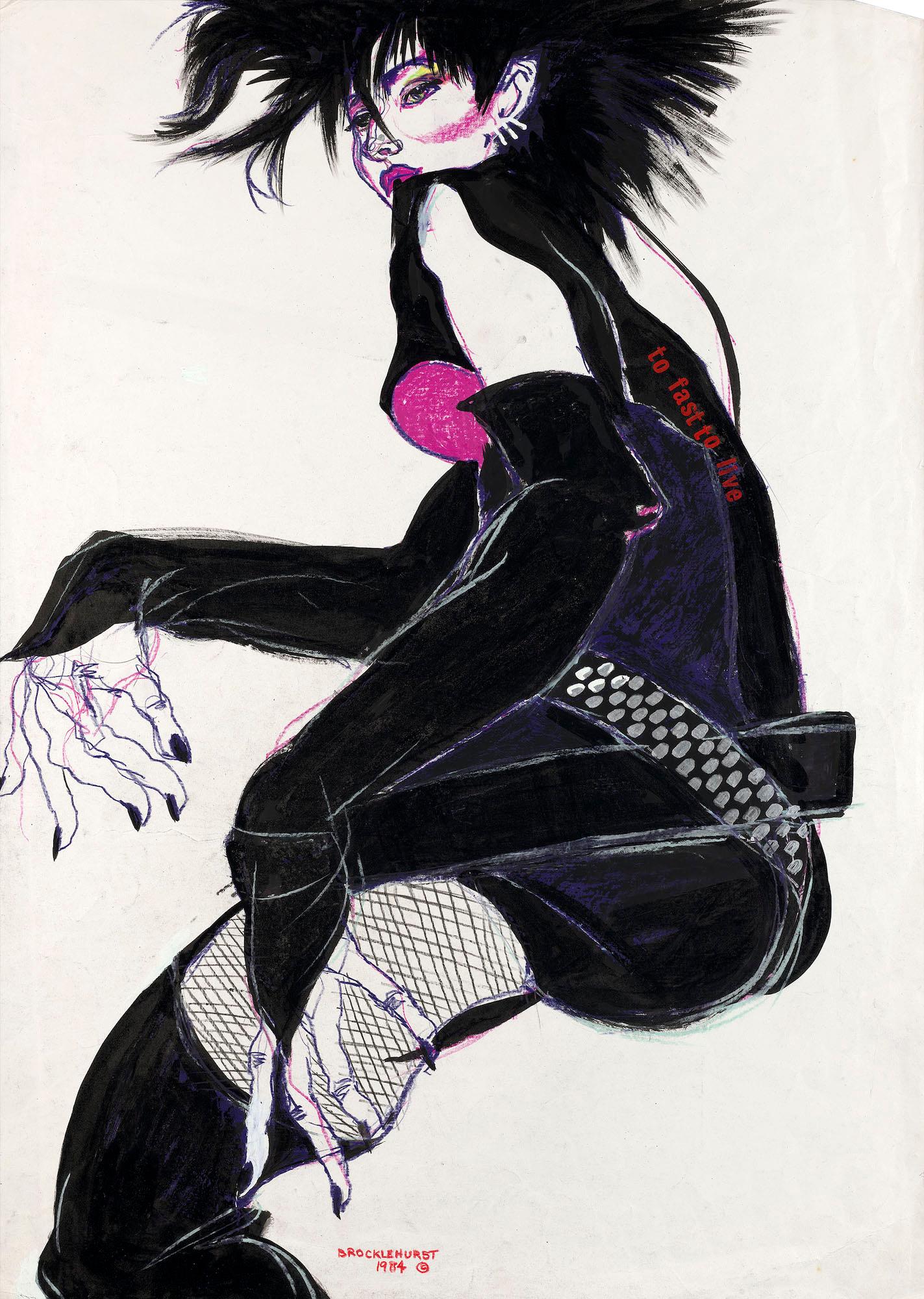
Jo Brocklehurst, Untitled (portrait of Angie), 1984
Jo (Josephine) Brocklehurst (1935 - 2006) studied at Central Saint Martins and began her career as a fashion illustrator. She later focused on portraiture, drawing directly from models at her studio in West Hampstead and in nightclubs and theatres in Berlin, London and New York. Her work documents the alternative subcultures of the 1970s, 80s and 90s that went on to shape mainstream fashion and performance scenes. In the 1980s, Brocklehurst drew a series portraits of members of the Kill Your Pet Puppy collective who were living in a squat close to her studio. Attracted to their anarcho-punk dress and ethos, she said “I felt that they understood very well what was going on in the world, what was in it for them”. This portrait is of Tony Drayton, founder of Kill Your Pet Puppy and punk fanzine Ripped And Torn.
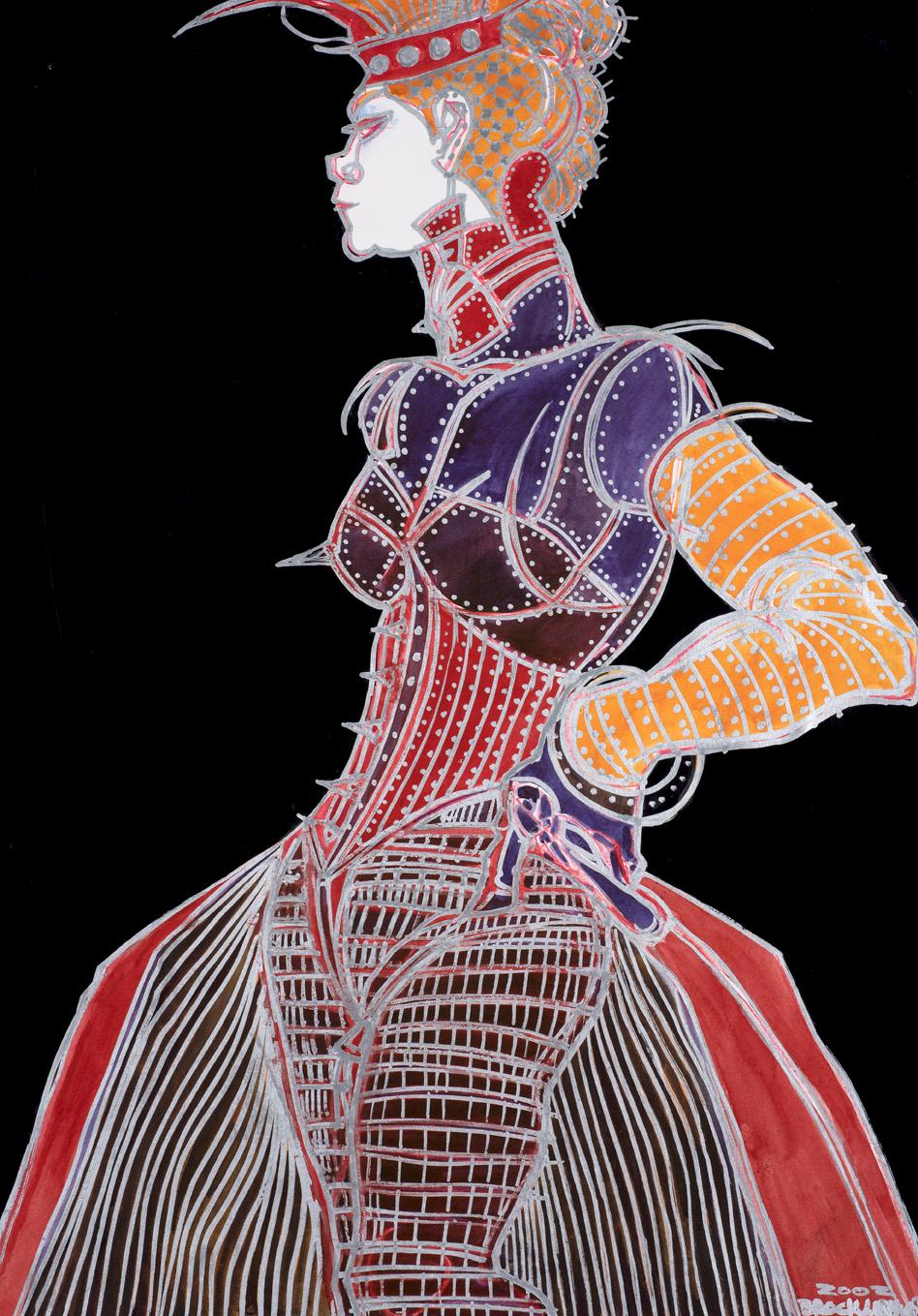
Jo Brocklehurst, Untitled (from Brocklehurst Through the Looking-Glass), 2002
Jo (Josephine) Brocklehurst (1935 - 2006) studied at Central Saint Martins and began her career as a fashion illustrator. She later focused on portraiture, drawing directly from models at her studio in West Hampstead and in nightclubs and theatres in Berlin, London and New York. Her work documents the alternative subcultures of the 1970s, 80s and 90s that went on to shape mainstream fashion and performance scenes. This work is from Brocklehurst Through the Looking-Glass, Brocklehurst’s final series. With an image of herself as a child as the centrepiece, Brocklehurst made hundreds of drawings that re-imagined characters from Lewis Carroll’s Alice novels. Her models were friends and dedicated club-goers who designed and made their own clothes. Brocklehurst’s regular collaborator Isabelle Bricknall was the model for this work. Works from the series were framed with bright plastic gemstones and hung on every available space at Brocklehurst’s home studio. She used metallic and neon inks that transformed under ultraviolet lights that she switched on for her guests in the evenings.
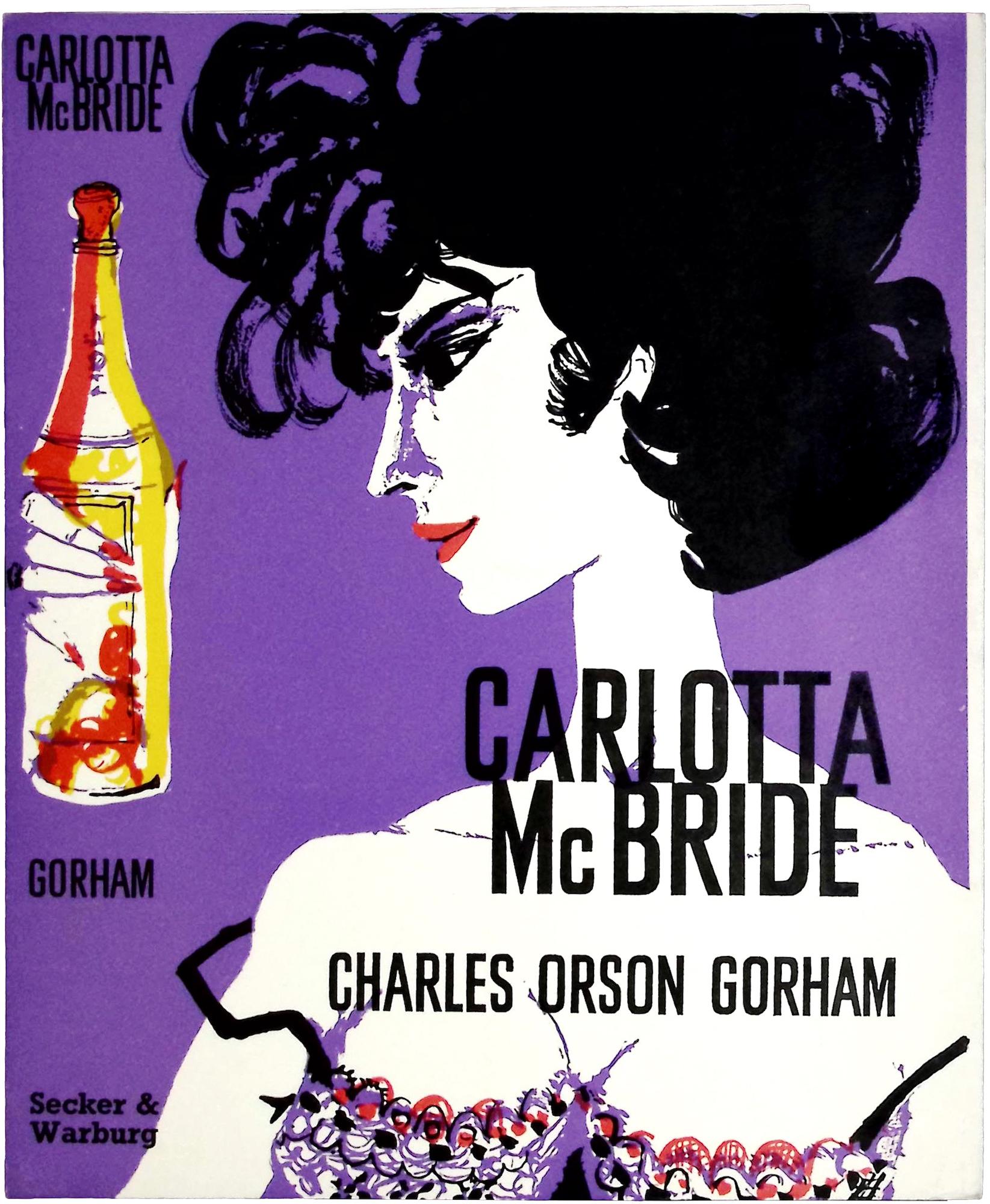
Book cover proof for "Carlotta Mc Bride", 1959
Janina Ede (1937-2018) created covers and illustrations for over 100 books from the 1950s to the 1980s. One of her earliest cover designs was for Carlotta McBride, a novel following the eponymous character in Paris, New York and Hollywood. It’s descriptions of sex and lesbian relationships led to the book being banned in Australia.

Collette's "Gigi and the Cat", 1958
British illustrator Janina Ede (1937-2018) created covers and illustrations for over 100 books from the 1950s to the 1980s.
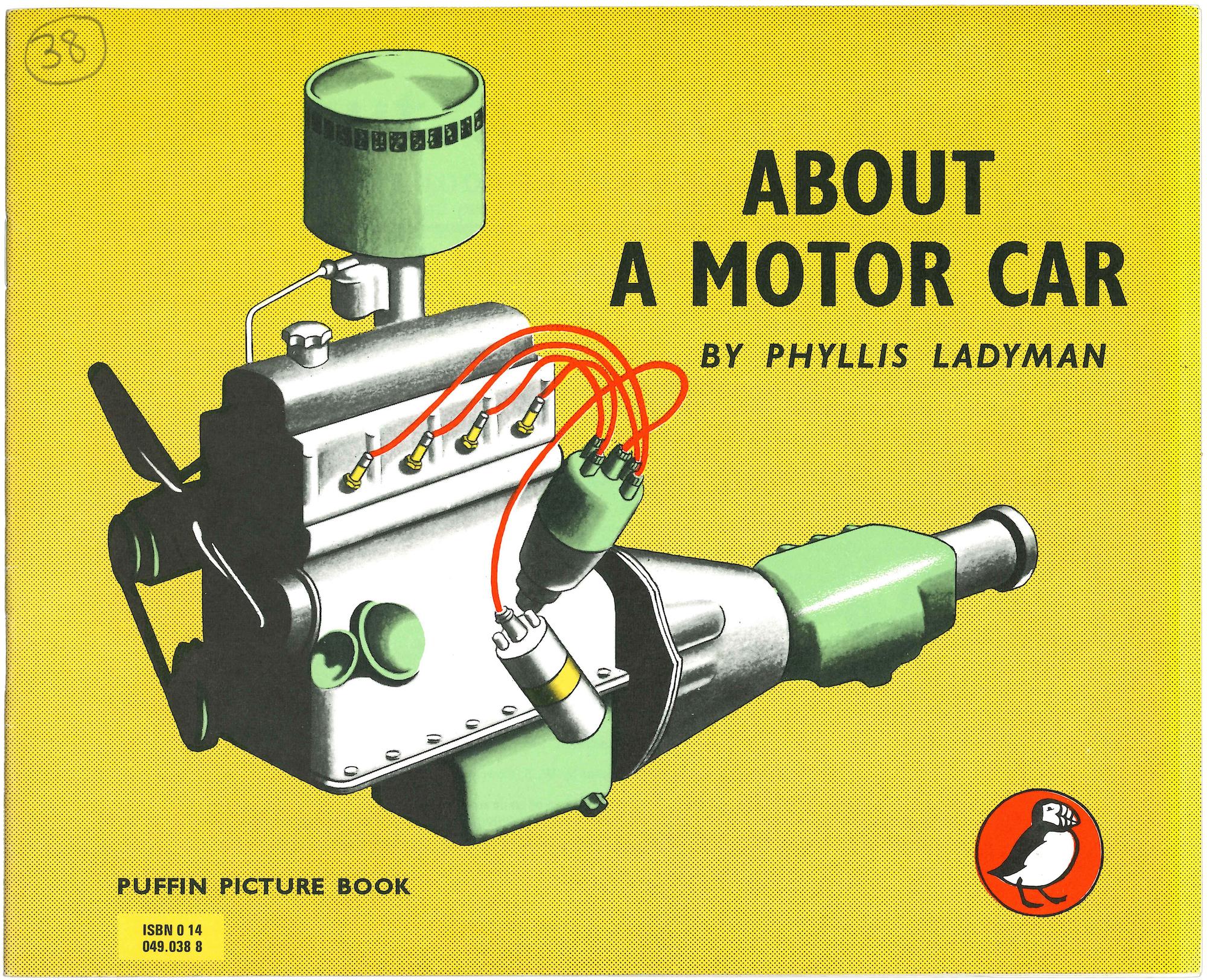
About a Motor Car, 1946
The Puffin Picture Books series was established by designer and editor Noel Carrington (1895-1989). In 1933, artist Pearl Binder (1904-1990) sent Carrington a package of Soviet children’s books. “They were produced by the million on very cheap paper, but the drawings were vigorous and the colour delightful” he later remembered. These books inspired Carrington to edit a series of affordable books that would encourage “the child’s awakening interest in its surroundings... I felt that colour was essential, and that artists could... be more successful in books of this nature than the camera”. Many artists and illustrators worked on the series, adapting their ways of working to lithographic printing and the Puffin Picture Book format. Most of the 120 books in the series were printed on one large sheet of paper: one side in colour and one in black-and-white. Each sheet was cut, folded and stapled to create a softcover book.
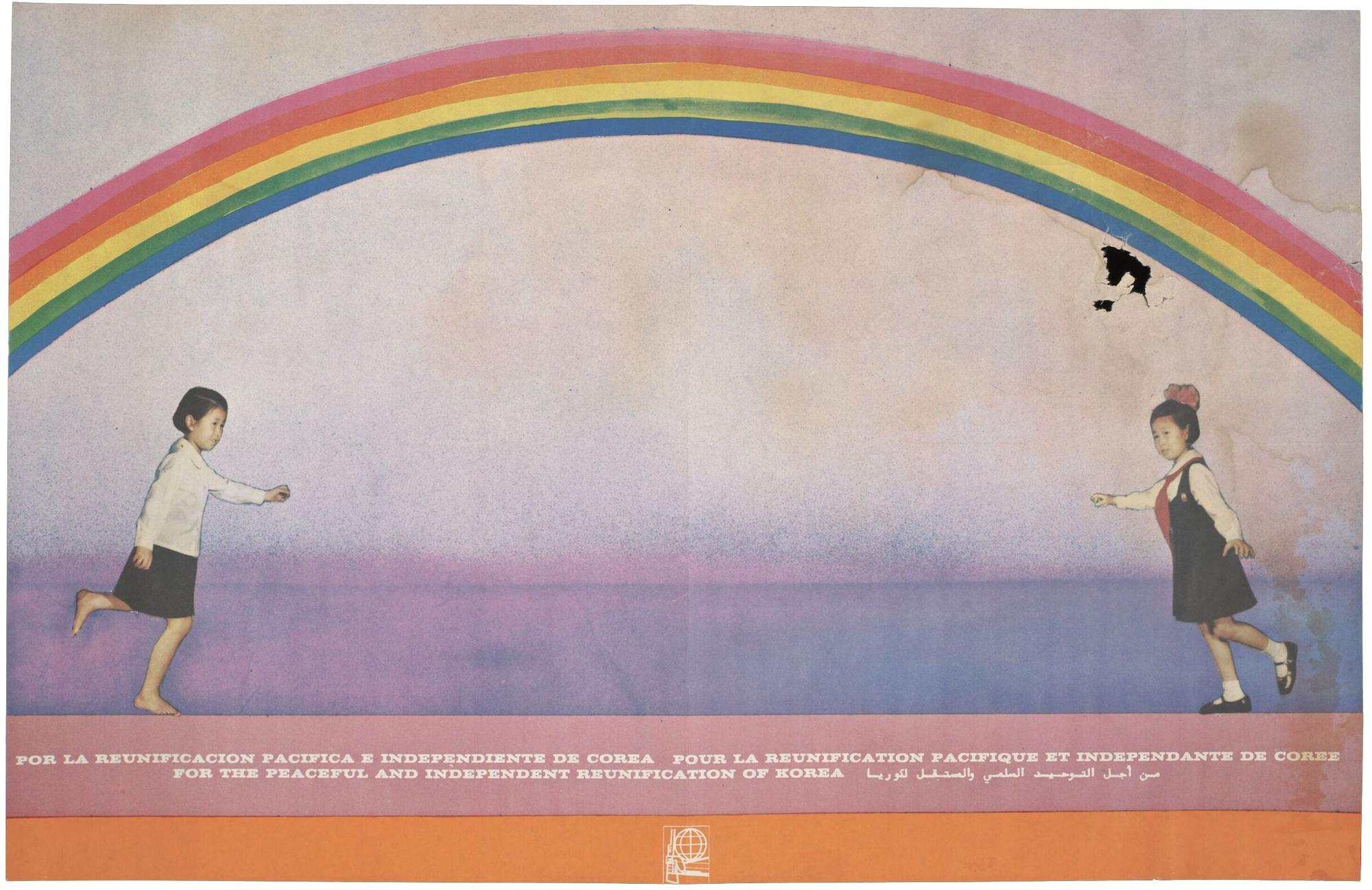
FOR THE PEACEFUL AND INDEPENDENT REUNIFICATION OF KOREA, 1969
Between the 1960s and 1990s, more than fifty designers worked at OSPAAAL (the Organisation of Solidarity with the People of Africa, Asia and Latin America). Based in Cuba, they made magazines and posters that were sent around the world. Their aim was to promote radical political ideas. Many of their posters celebrate socialist revolutions and liberation movements from the Global South. This poster advocates for the reunification of the Republic of Korea (known as South Korea), represented by the child on the left, and the Democratic People’s Republic of Korea (known as North Korea) represented by the child on the right. During the 1960s, the governments of Cuba and the Democratic People’s Republic of Korea formed close ties based on a shared opposition to the U.S.A. OSPAAAL’s designers regularly used adapted photographs from the organisation’s news desk. Photographs were sometimes used out of context, with the same photographs appearing in posters and magazine illustrations to represent different themes. The identity of the children in this photograph is not known.
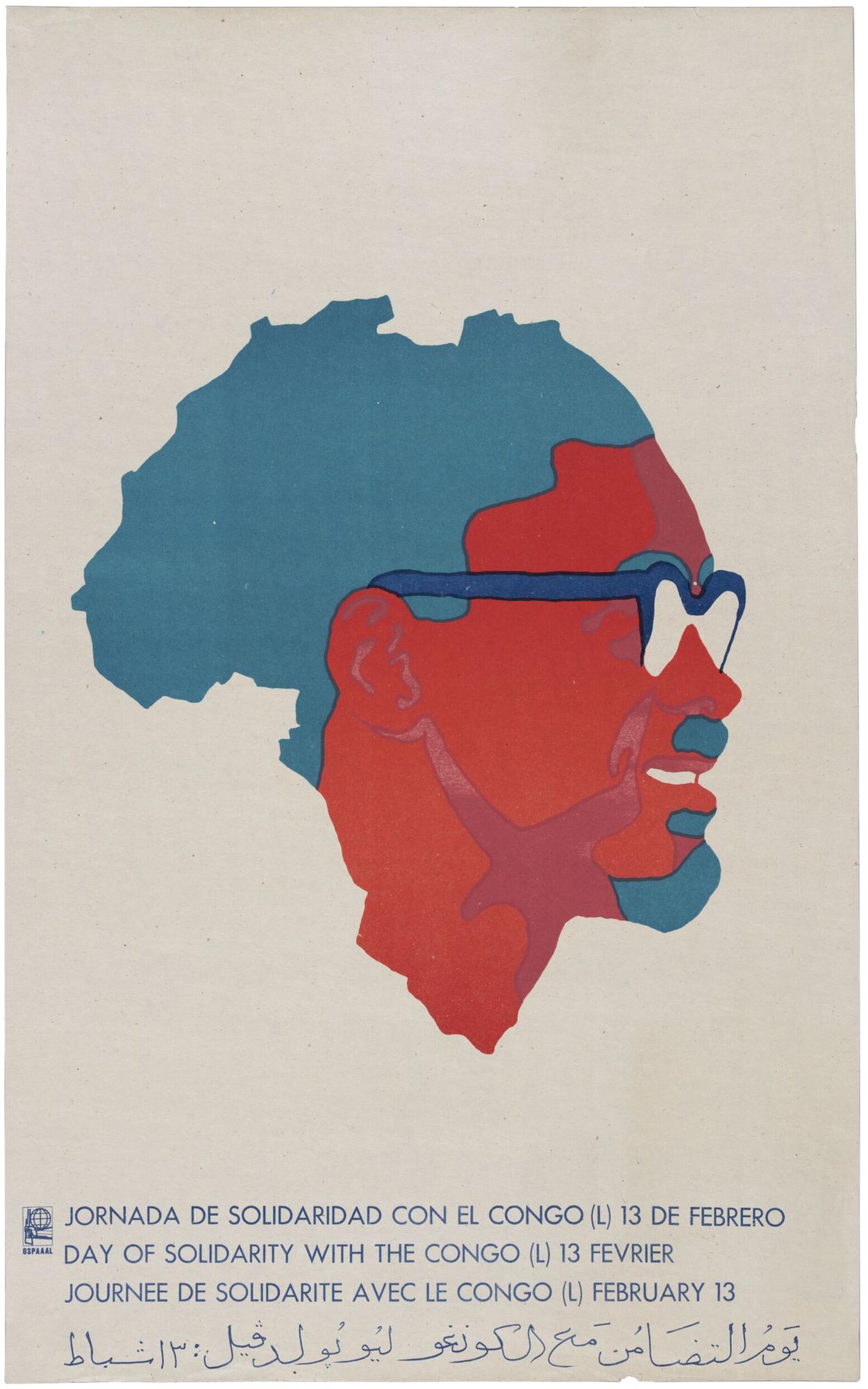
DAY OF SOLIDARITY WITH THE CONGO (L) FEBRUARY 13, 1972
Between the 1960s and 1990s, more than fifty designers worked at OSPAAAL (the Organisation of Solidarity with the People of Africa, Asia and Latin America). Based in Cuba, they made magazines and posters that were sent around the world. Their aim was to promote radical political ideas. Many of their posters celebrate socialist revolutions and liberation movements from the Global South. Patrice Lumumba was the first Prime Minister of the Democratic Republic of the Congo, following the country’s independence from Belgian colonial rule. This poster promotes a day of solidarity with the country on the date that Lumumba’s assassination was announced. It combines Lumumba’s profile with an outline of the African continent to recognise his role as a leader in the Pan-African movement.
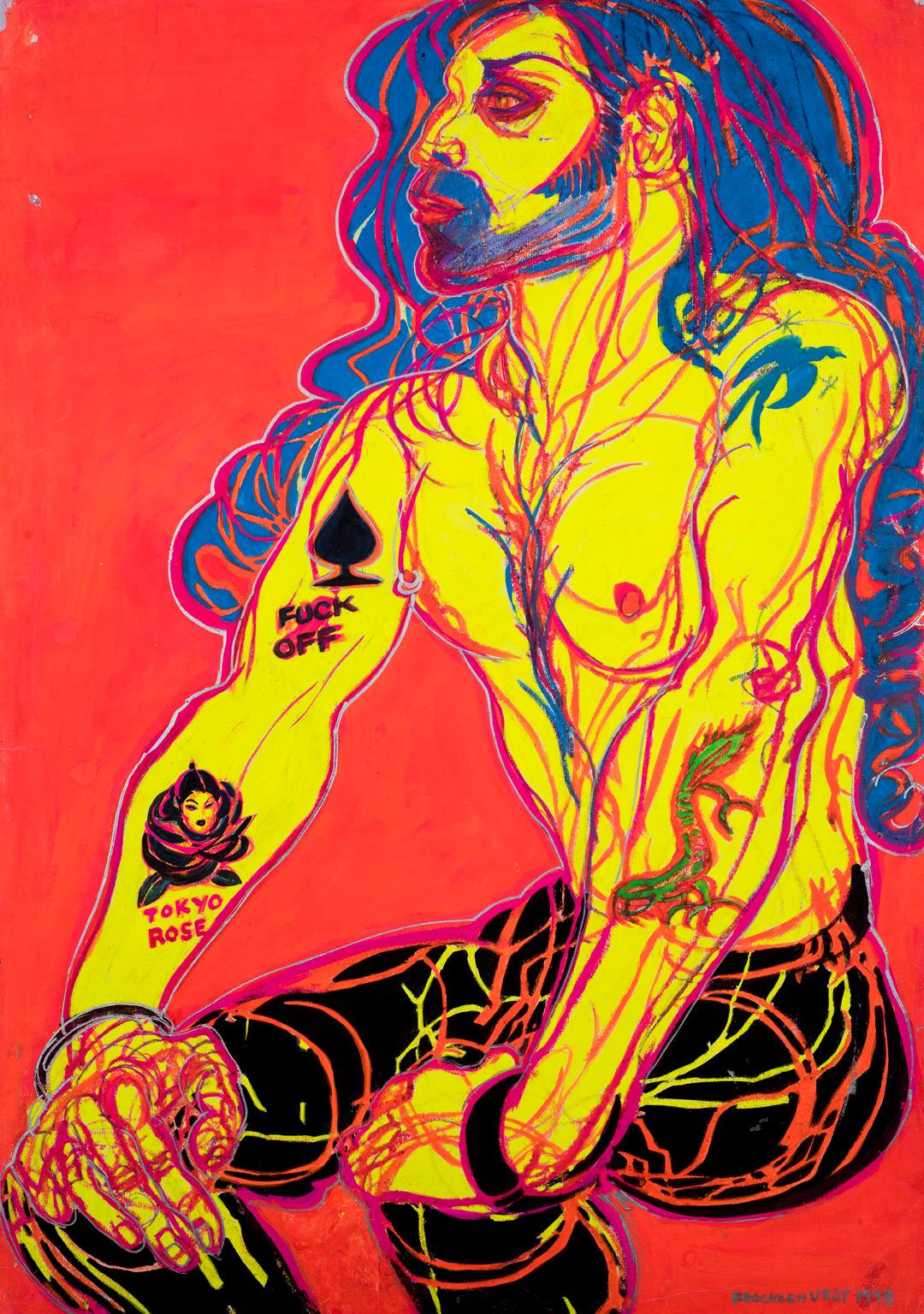
Jo Brocklehurst, Untitled (portrait of Anthony Gregory), 1995
Jo (Josephine) Brocklehurst (1935 - 2006) studied at Central Saint Martins and began her career as a fashion illustrator. She later focused on portraiture, drawing directly from models at her studio in West Hampstead and in nightclubs and theatres in Berlin, London and New York. Her work documents the alternative subcultures of the 1970s, 80s and 90s that went on to shape mainstream fashion and performance scenes. In the 1990s, Brocklehurst began drawing the fashion designers and performers finding space for experimentation in the fetish clubs of Soho and King’s Cross.
Content warning: strong language
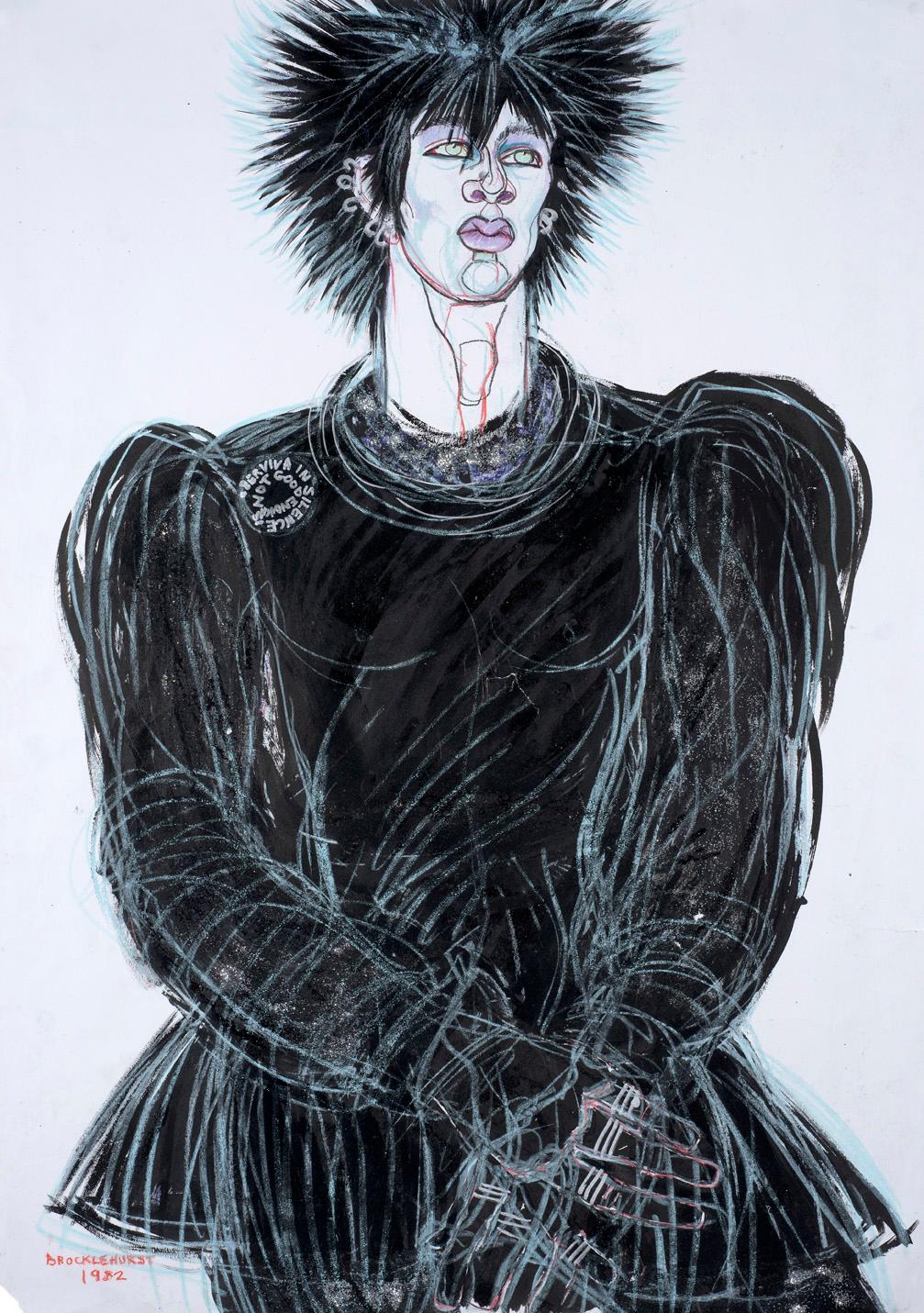
Jo Brocklehurst, Untitled, 1982
Jo (Josephine) Brocklehurst (1935 - 2006) studied at Central Saint Martins and began her career as a fashion illustrator. She later focused on portraiture, drawing directly from models at her studio in West Hampstead and in nightclubs and theatres in Berlin, London and New York. Her work documents the alternative subcultures of the 1970s, 80s and 90s that went on to shape mainstream fashion and performance scenes.
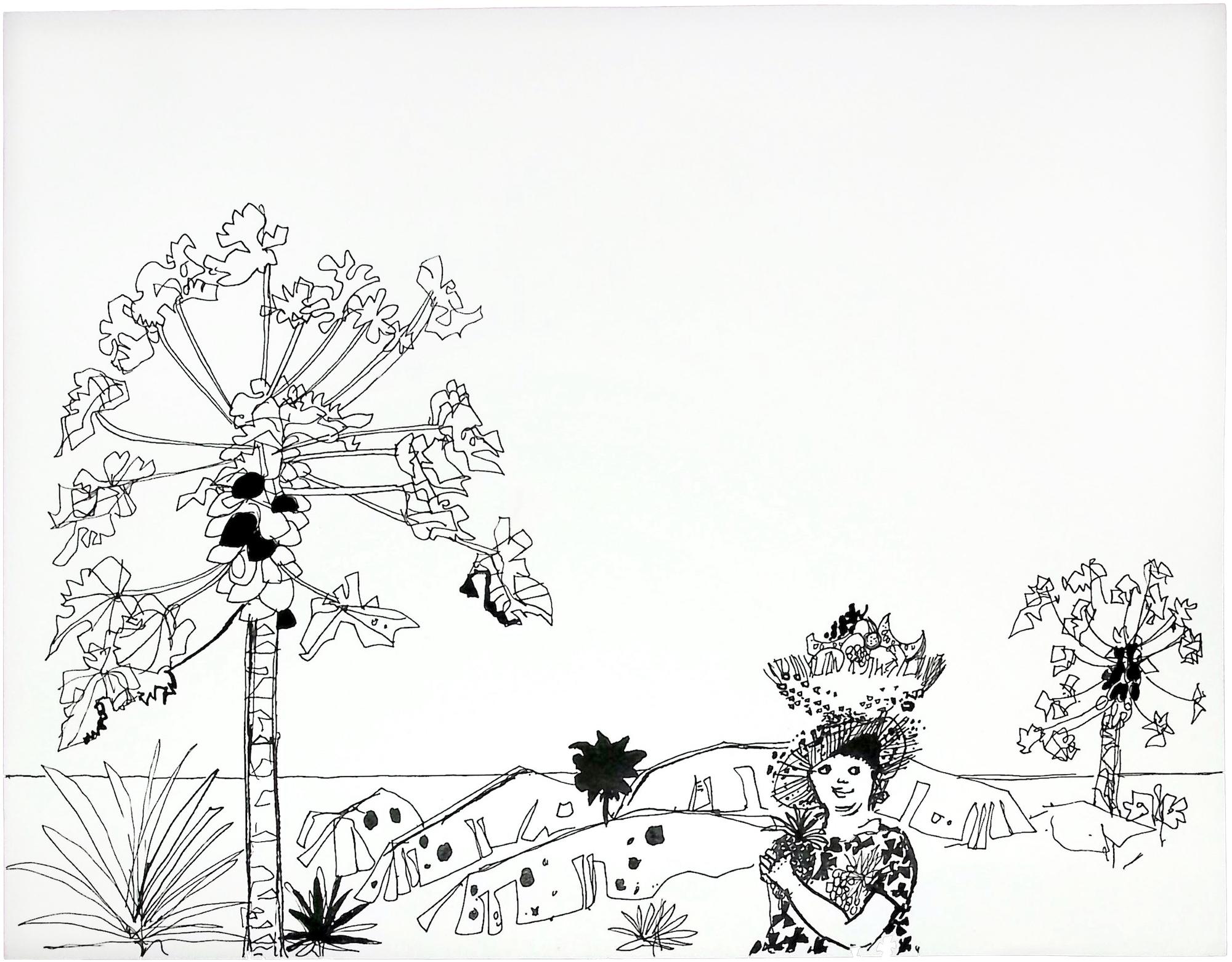
Untitled, c. 1968
British illustrator Janina Ede (1937-2018) created covers and illustrations for over 100 books from the 1950s to the 1980s.
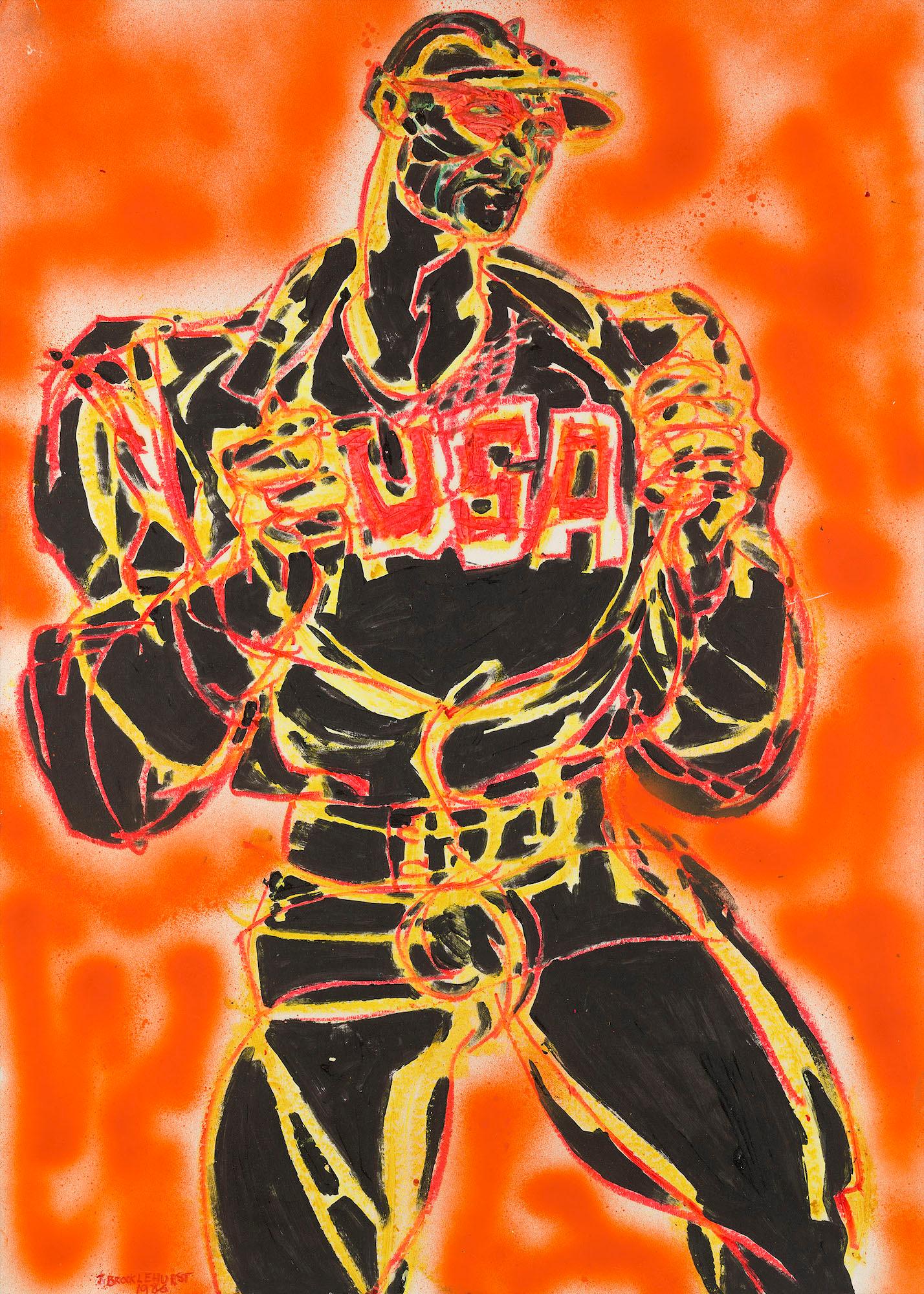
Jo Brocklehurst, Untitled, 1986
Jo (Josephine) Brocklehurst (1935 - 2006) studied at Central Saint Martins and began her career as a fashion illustrator. She later focused on portraiture, drawing directly from models at her studio in West Hampstead and in nightclubs and theatres in Berlin, London and New York. Her work documents the alternative subcultures of the 1970s, 80s and 90s that went on to shape mainstream fashion and performance scenes. Brocklehurst began working in New York following an exhibition of her work there in 1983. She took paper and materials to the gay nightclubs of the Meatpacking District, drawing clubgoers like this one. Brocklehurst used neon inks that she could see under the ultraviolet lights.
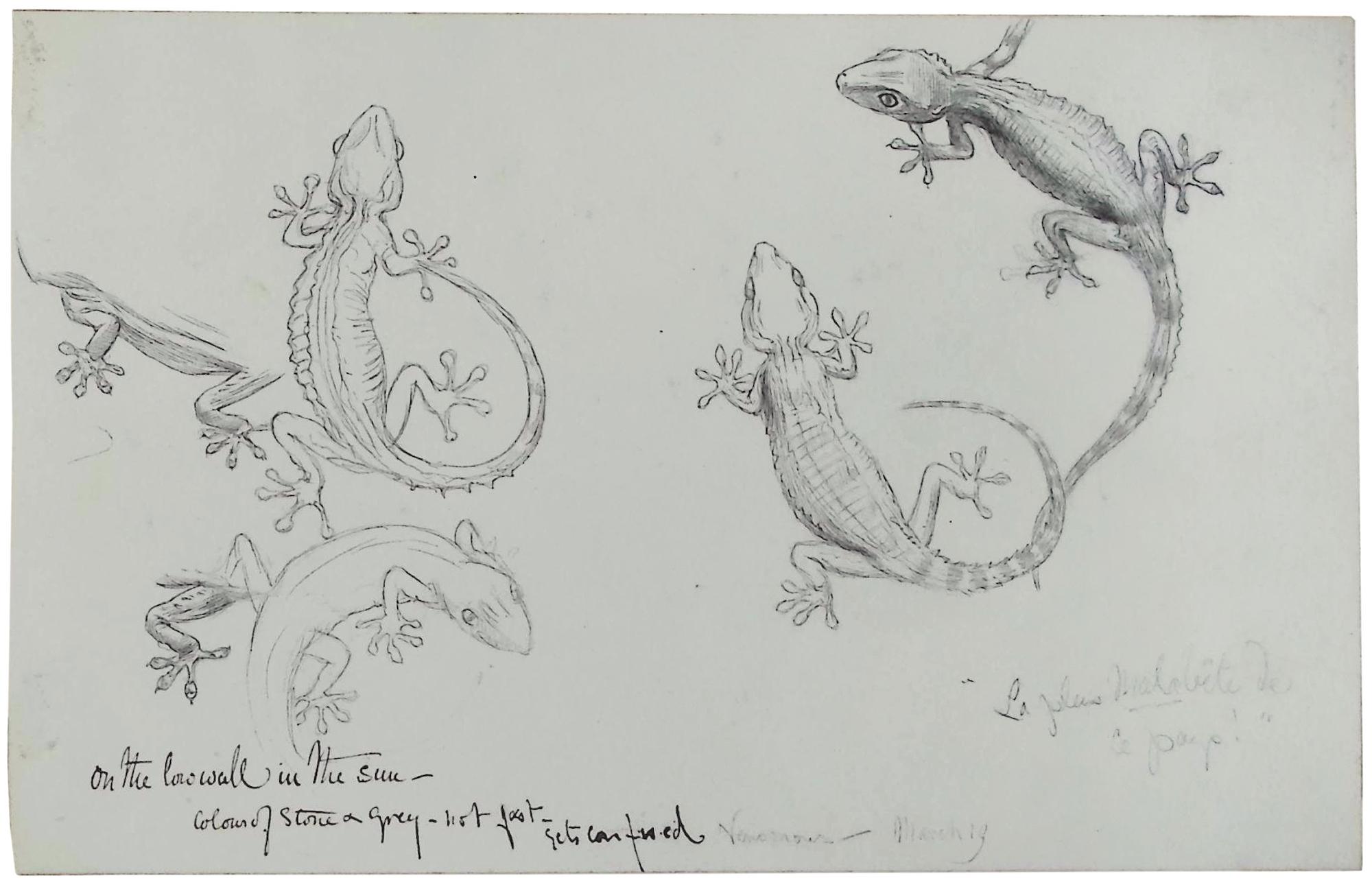
Untitled (Gecko), Date unknown
Eleanor Vere Boyle (1825 – 1916) illustrated poetry and prose by some of the most popular authors of her time. She regularly drew and painted using ink and watercolour, sketching landscapes, animals and her children from life. She also made drawings from her imagination, often reflecting spiritual themes.
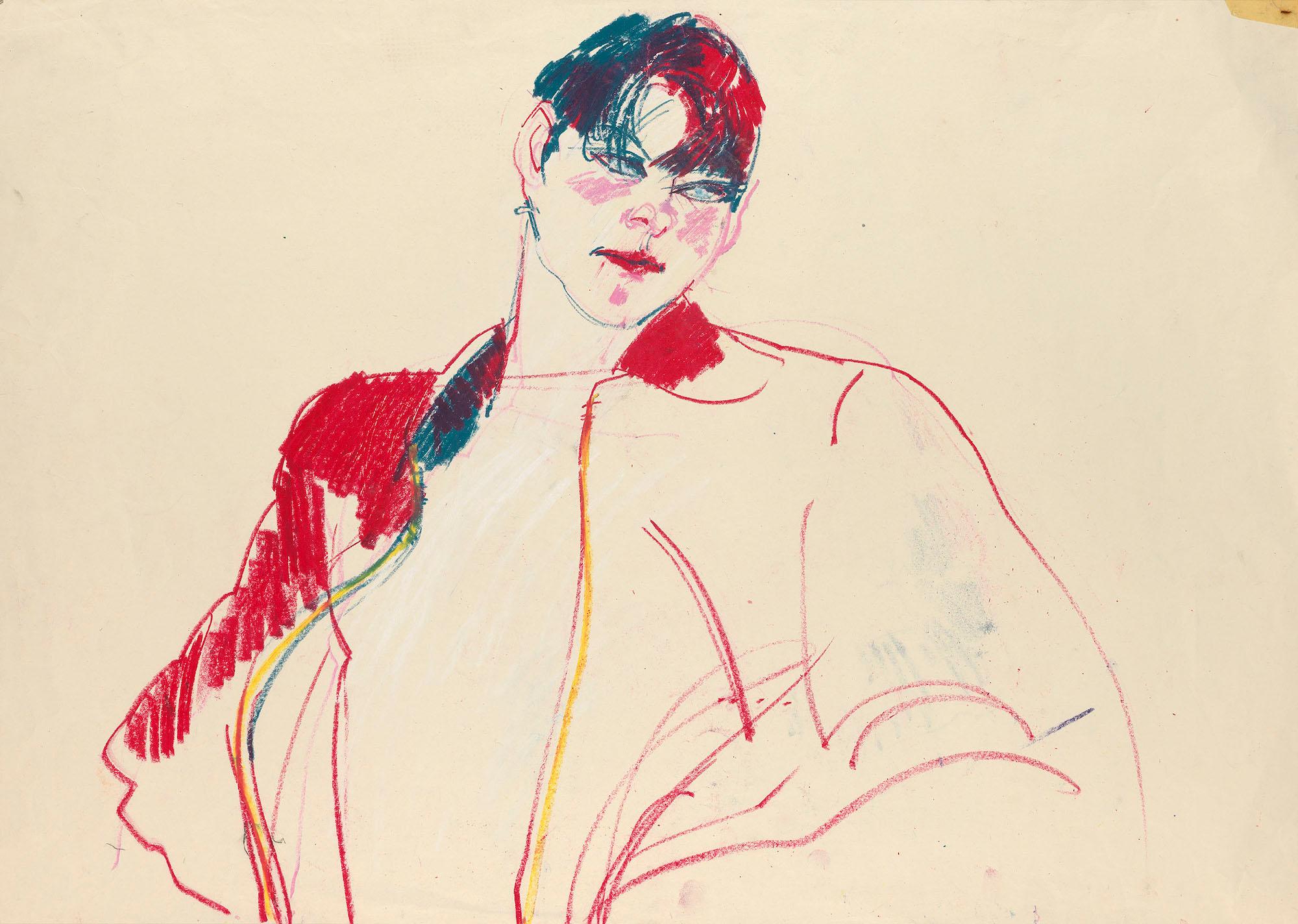
Jo Brocklehurst, Untitled, 1980s
Jo (Josephine) Brocklehurst (1935 - 2006) studied at Central Saint Martins and began her career as a fashion illustrator. She later focused on portraiture, drawing directly from models at her studio in West Hampstead and in nightclubs and theatres in Berlin, London and New York. Her work documents the alternative subcultures of the 1970s, 80s and 90s that went on to shape mainstream fashion and performance scenes.
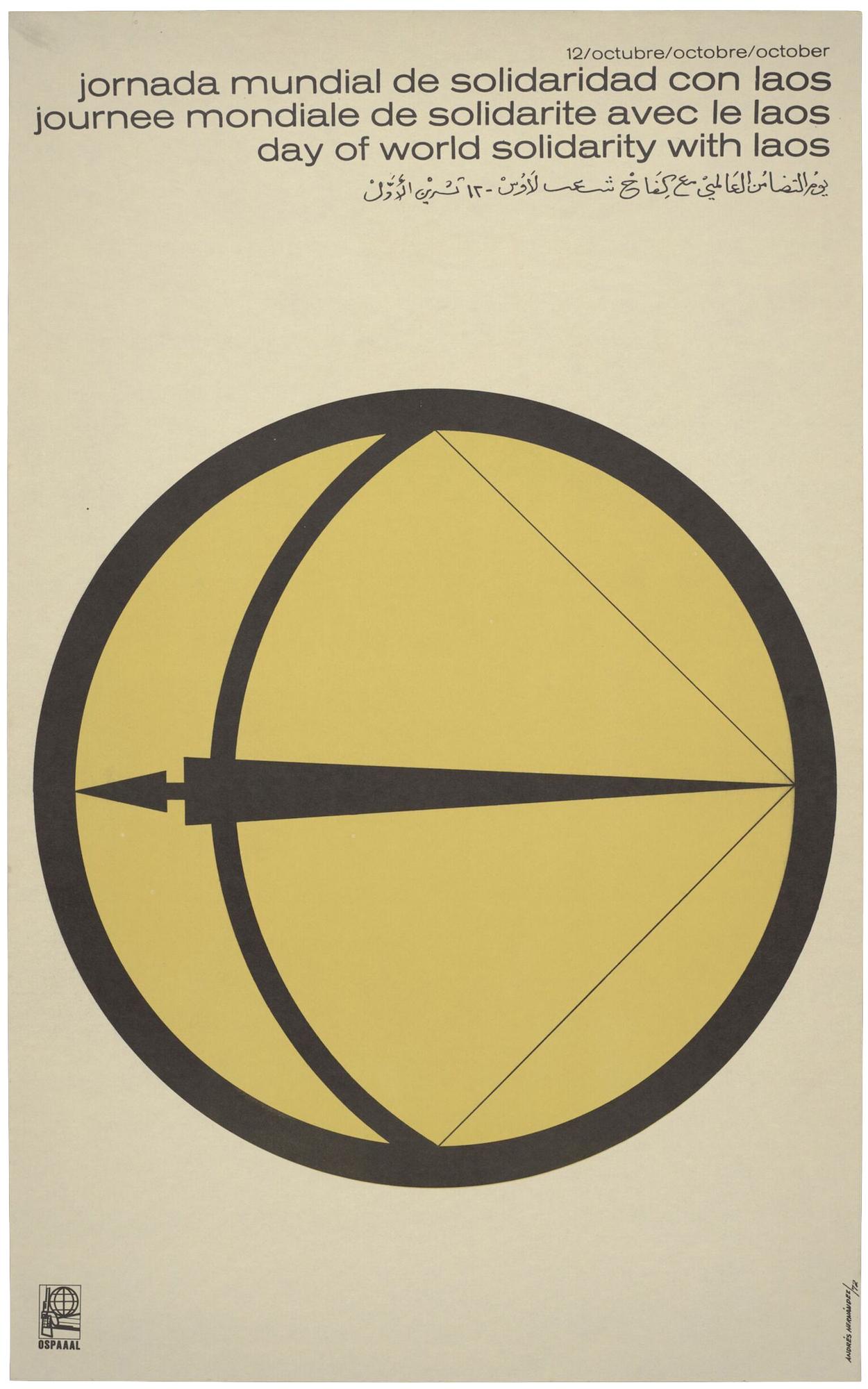
12 october - day of world solidarity with laos, 1972
Between the 1960s and 1990s, more than fifty designers worked at OSPAAAL. Based in Cuba, they made magazines and posters that were sent around the world. Their aim was to promote radical political ideas. Many of their posters celebrate socialist revolutions and liberation movements from the Global South. This design encouraged solidarity with Laotian people on the same date as the founding of the nationalist movement Lao Issara (‘Free Laos’) on 12 October 1945.
Content warning: weaponry
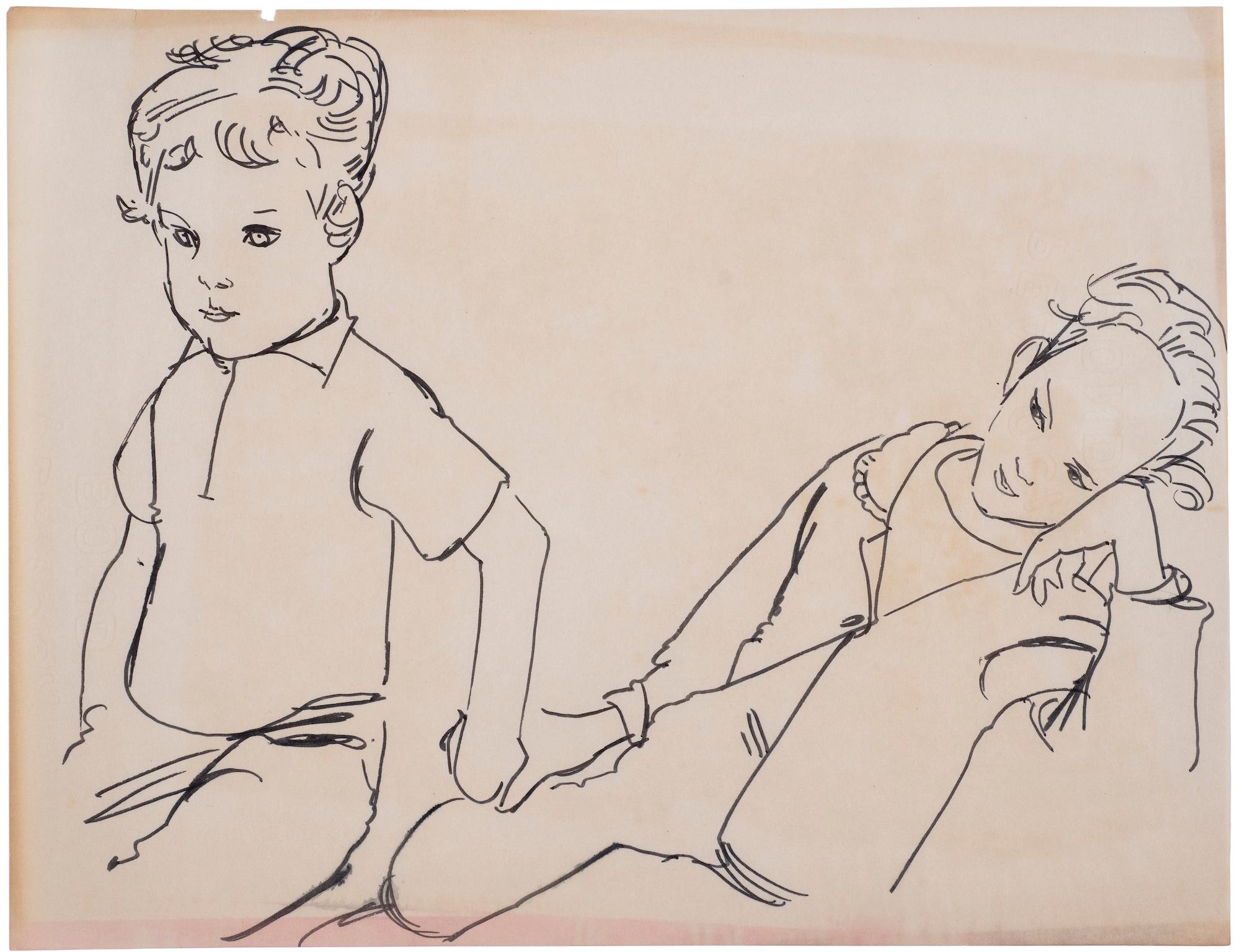
Jacqueline Ayer, Untitled, Date unknown
Jacqueline Ayer (1930–2012) had a career that spanned many creative fields. She began as a fashion illustrator, and later turned her hand to children’s books, textiles and garments, as she worked in New York, Paris, London, Bangkok, Hong Kong and across India. Ayer often used a sketchbook to record her observations and ideas for book narratives and fashion designs. The context for this drawing is unknown.
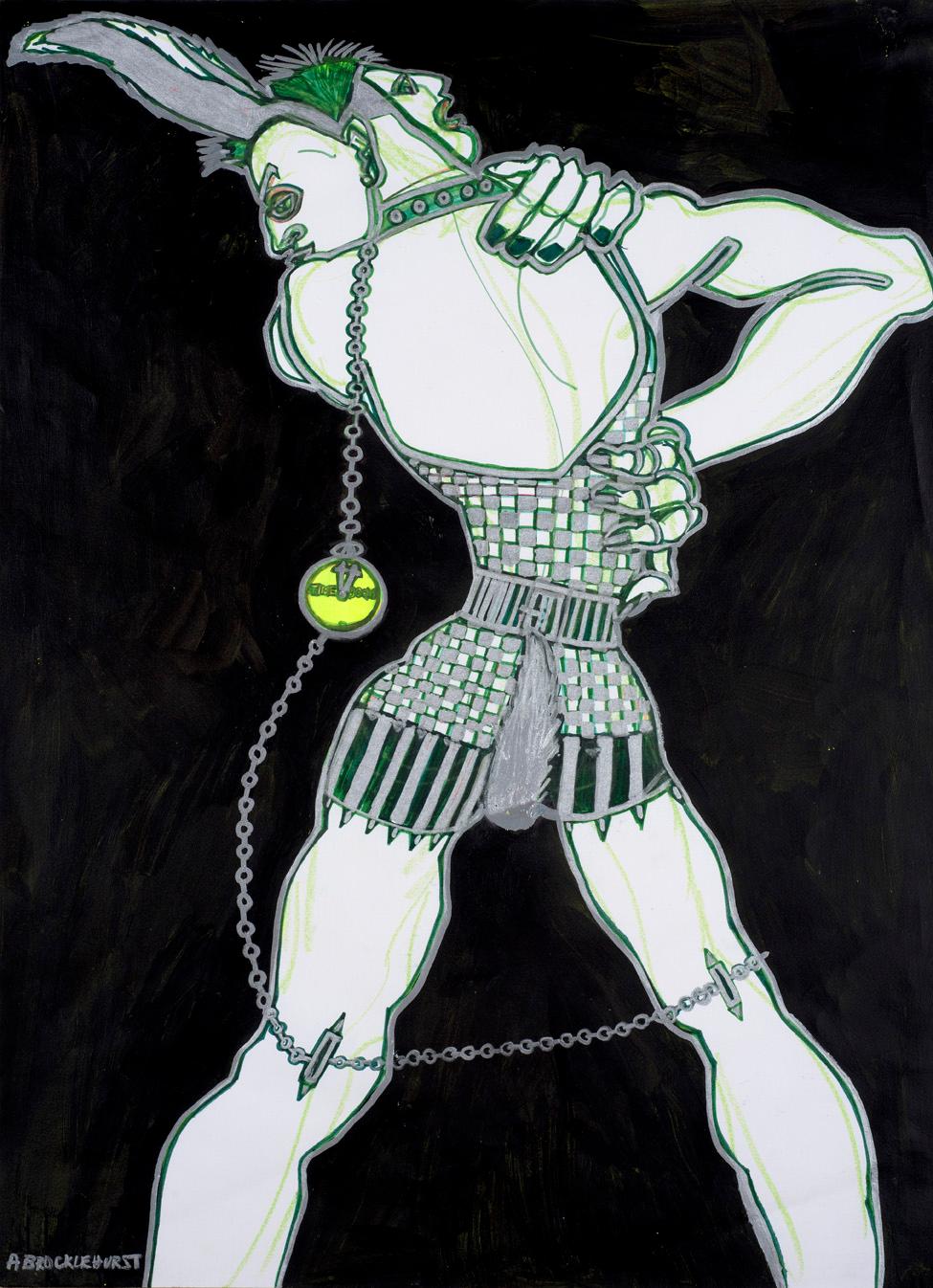
Jo Brocklehurst, Untitled (White Rabbit from Brocklehurst Through the Looking-Glass), 2000s
Jo (Josephine) Brocklehurst (1935 - 2006) studied at Central Saint Martins and began her career as a fashion illustrator. She later focused on portraiture, drawing directly from models at her studio in West Hampstead and in nightclubs and theatres in Berlin, London and New York. Her work documents the alternative subcultures of the 1970s, 80s and 90s that went on to shape mainstream fashion and performance scenes. This work is from Brocklehurst Through the Looking-Glass, Brocklehurst’s final series. With an image of herself as a child as the centrepiece, Brocklehurst made hundreds of drawings that re-imagined characters from Lewis Carroll’s Alice novels. Her models were friends and dedicated club-goers who designed and made their own clothes. Works from the series were framed with bright plastic gemstones and hung on every available space at Brocklehurst’s home studio. She used metallic and neon inks that transformed under ultraviolet lights that she switched on for her guests in the evenings.
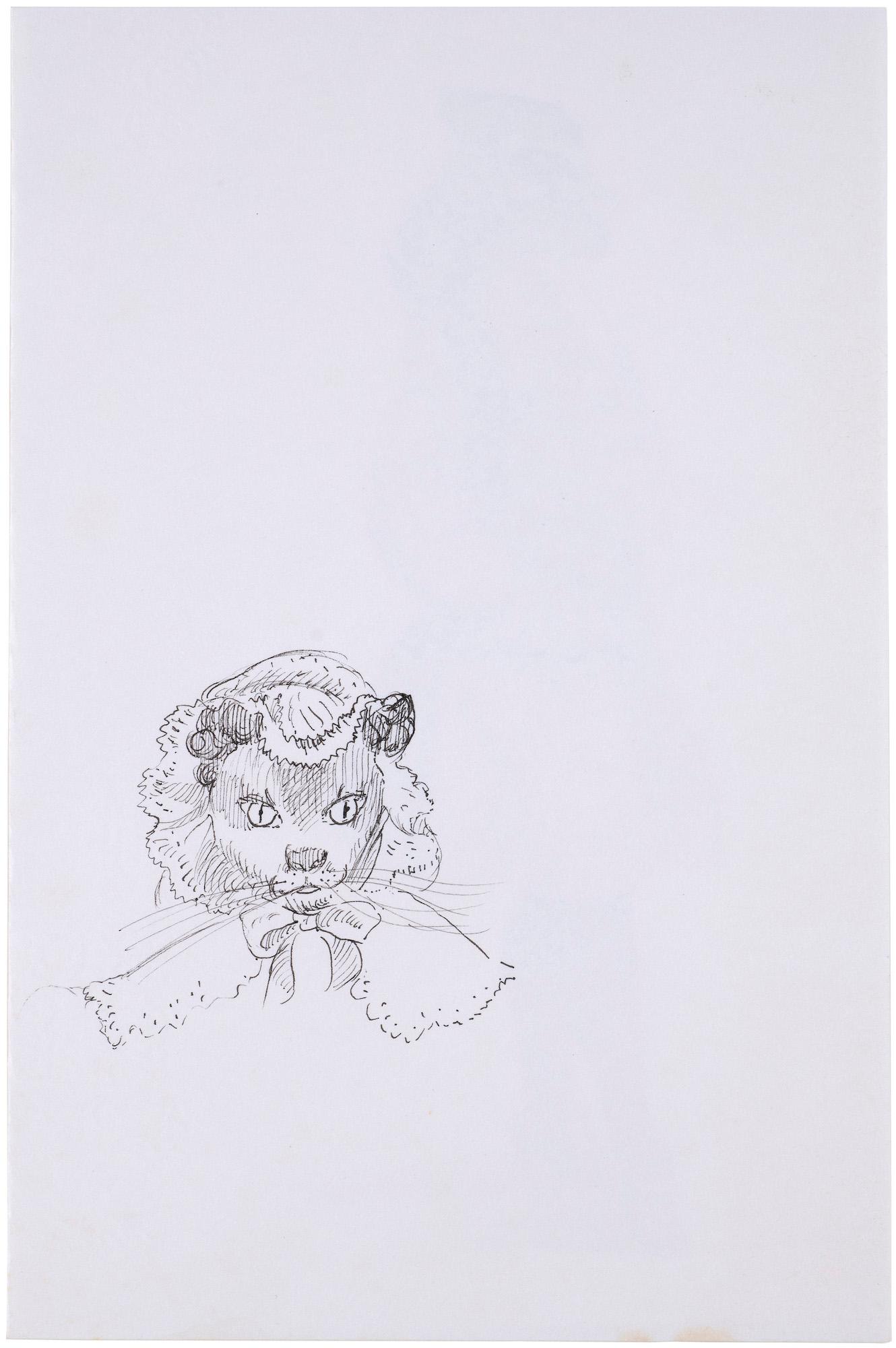
Jacqueline Ayer, Untitled, Date unknown
Jacqueline Ayer (1930–2012) had a career that spanned many creative fields. She began as a fashion illustrator, and later turned her hand to children’s books, textiles and garments, as she worked in New York, Paris, London, Bangkok, Hong Kong and across India. Ayer often used a sketchbook to record her observations and ideas for book narratives and fashion designs. The context for this drawing is unknown.
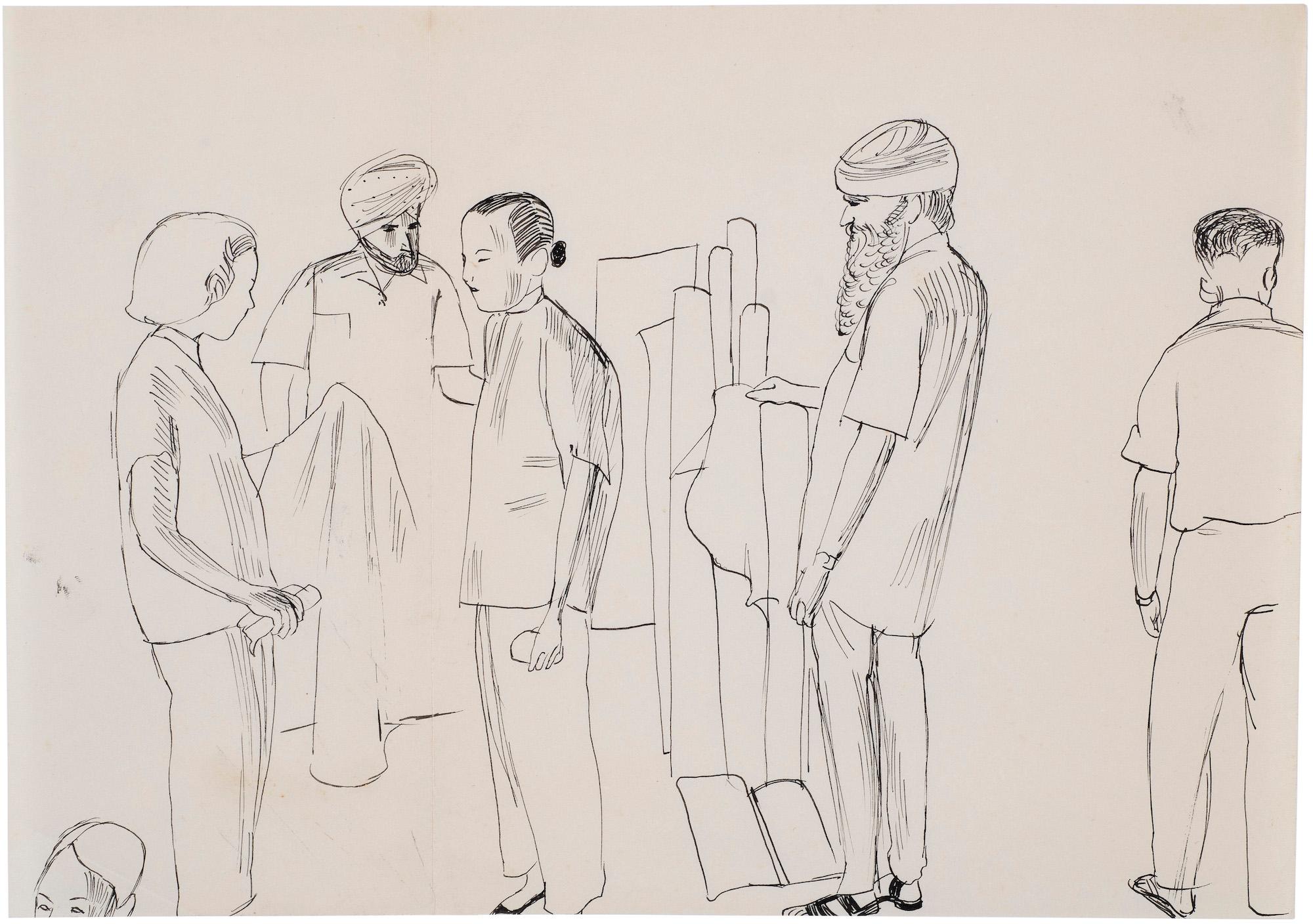
Jacqueline Ayer, Untitled, c. 1959
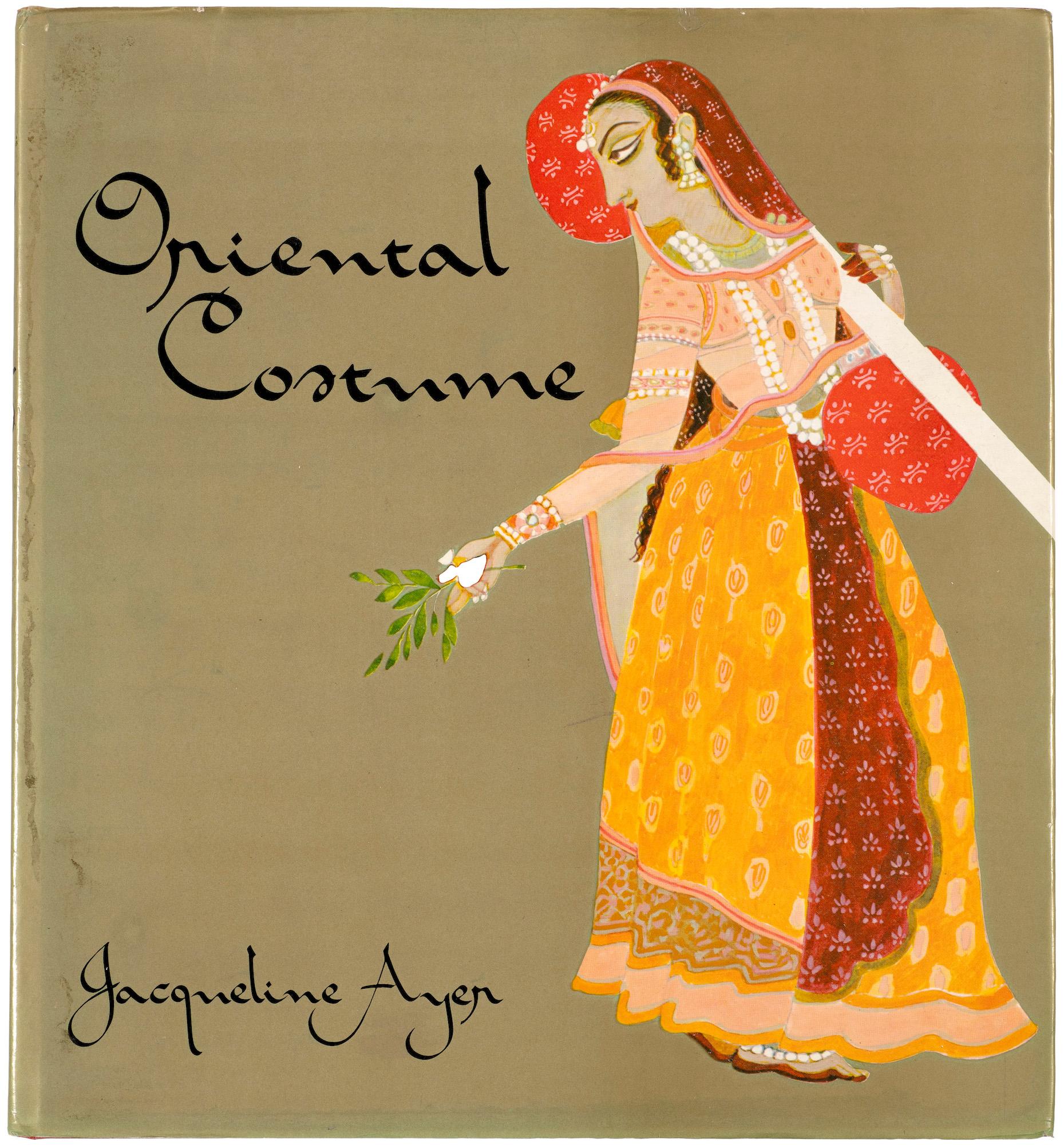
Jacqueline Ayer, Oriental Costume, 1974
Ayer originally intended to set a children’s book in India after travelling there as a design and production consultant for the Indian government. She decided instead to put together a book featuring sketches from life and historical artworks, that documented the clothing of different social and cultural groups. Ayer wrote, ‘I had seen prints done by the Victorian colonials of fierce ‘tribal leaders and village belles’. The English were very good record keepers, though not always reliable. Their basic message was often self-enhancing. Beautifully drawn though, it was inspiring to imagine what their view might have been if they were less involved in propaganda.’ Oriental* Costume (1974) aimed to show the diversity of types and uses of clothing in Cambodia, China, Japan, Mongolia, Nepal, Thailand and Tibet. Ayer hoped her book would be different from colonial representations, however the way that the book combines and categorises cultural groups carries a colonial influence. The illustration seen here is featured on the book's front cover and titled 'Noble lady, Rajasthan, 18th Century'. *The term ‘oriental’ has colonial and racist origins. It was established during a period when European powers took political control of other countries and defined non-European cultures as ‘inferior’ to their own. ‘Oriental’ was commonly used in English-speaking countries until the late 20th century to group together people, culture and places in Northern Africa, East Asia and Southeast Asia, as well as objects thought to have originated in these areas. The term has been widely rejected today as it exoticizes and ‘others’ these diverse cultures. Ayer used the term here to collectively refer to modes of dress from Cambodia, China, Japan, Mongolia, Nepal, Thailand and Tibet.
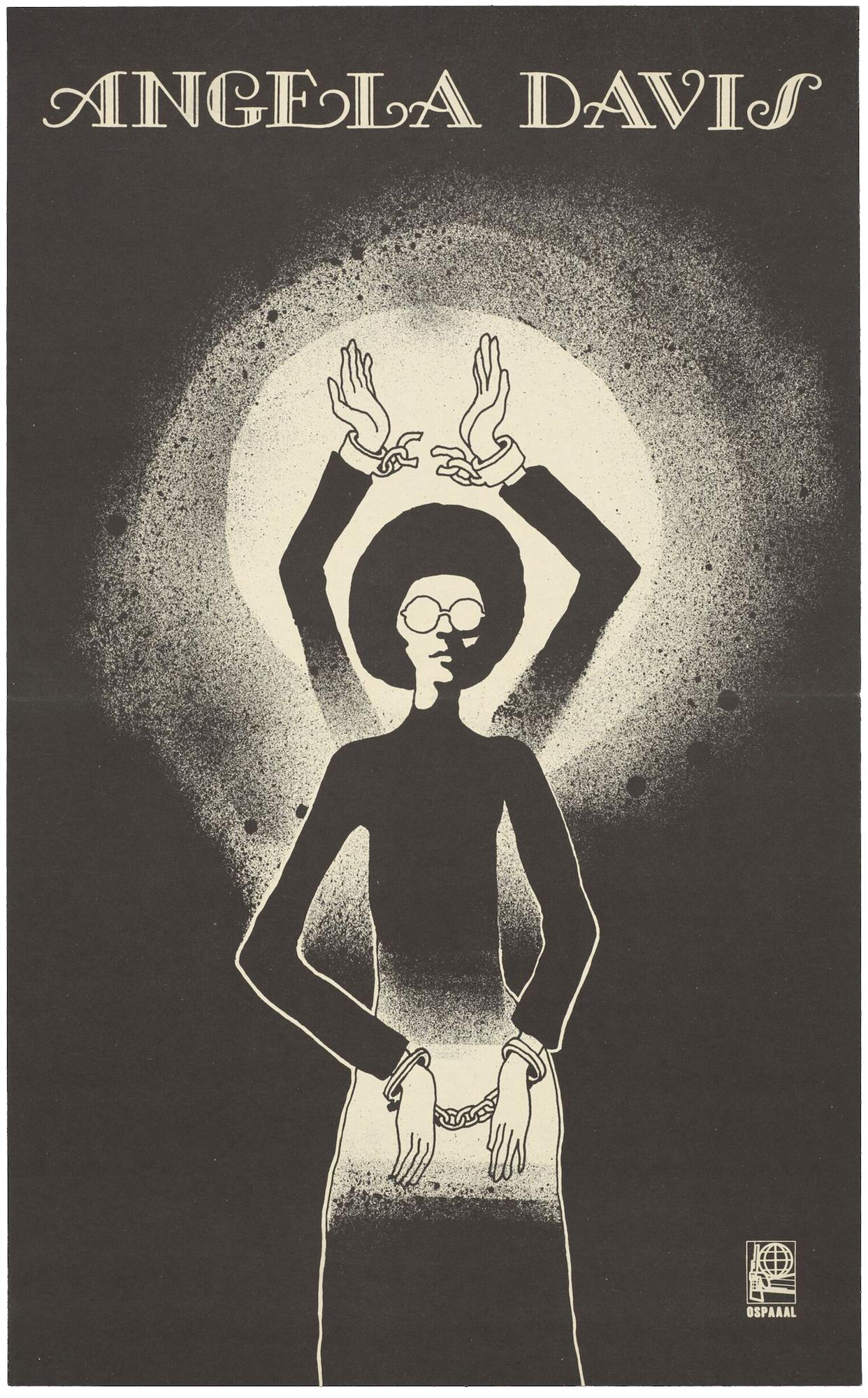
ANGELA DAVIS, 1970
Between the 1960s and 1990s, more than fifty designers worked at OSPAAAL (the Organisation of Solidarity with the People of Africa, Asia and Latin America). Based in Cuba, they made magazines and posters that were sent around the world. Their aim was to promote radical political ideas. Many of their posters celebrate socialist revolutions and liberation movements from the Global South. This poster was designed in support of North American activist and academic Angela Davis. She was arrested in New York City in 1970, accused of supplying arms that were used in a kidnap and murder. She protested her innocence and there was widespread protest at her incarceration. Davis was cleared of all charges in 1972.
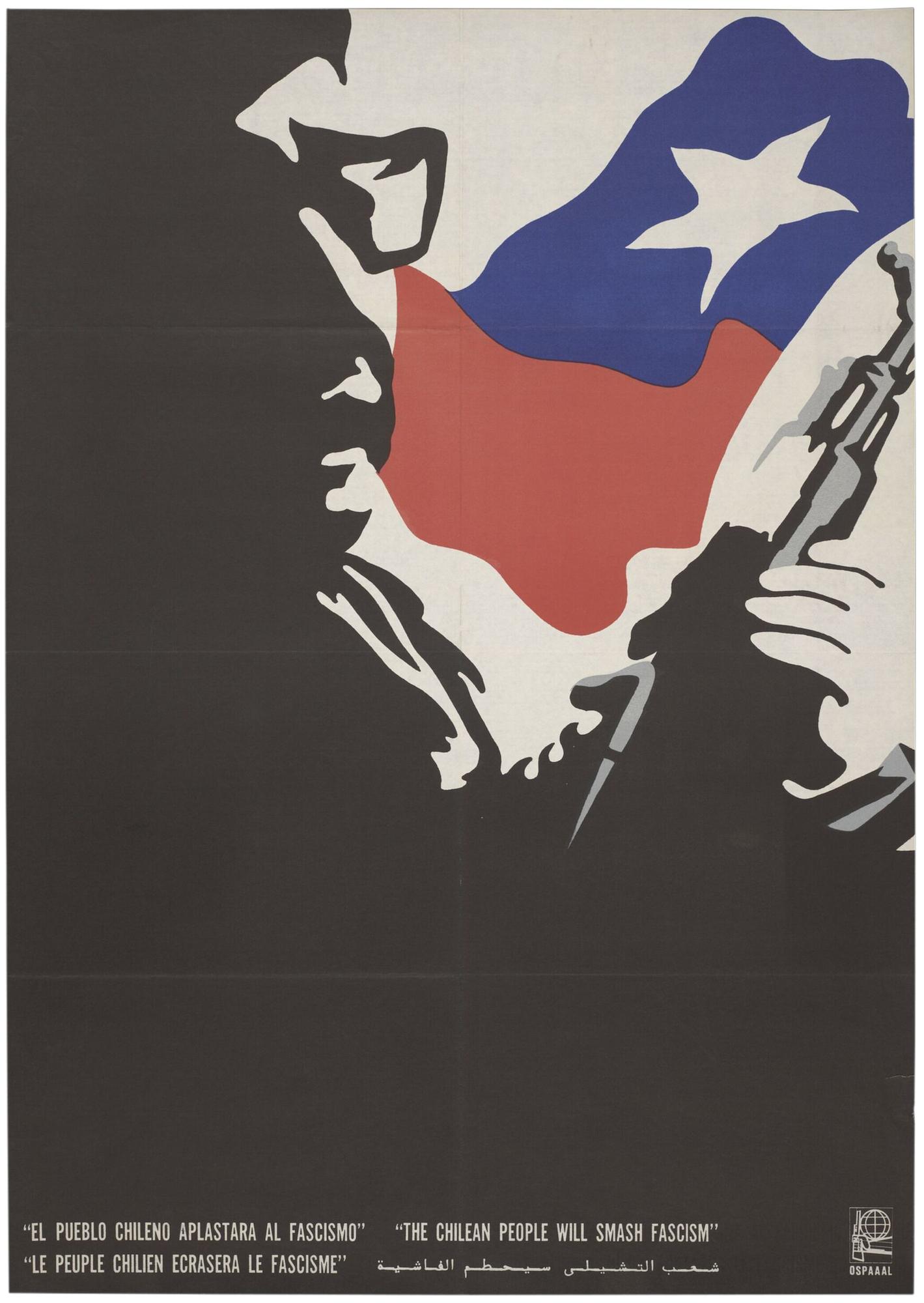
“THE CHILEAN PEOPLE WILL SMASH FASCISM”, 1976
Between the 1960s and 1990s, more than fifty designers worked at OSPAAAL. Based in Cuba, they made magazines and posters that were sent around the world. Their aim was to promote radical political ideas. Many of their posters celebrate socialist revolutions and liberation movements from the Global South. Figurative painter Ernesto García Peña’s only poster for OSPAAAL portrayed the socialist Chilean President Salvador Allende.
Content warning: weaponry
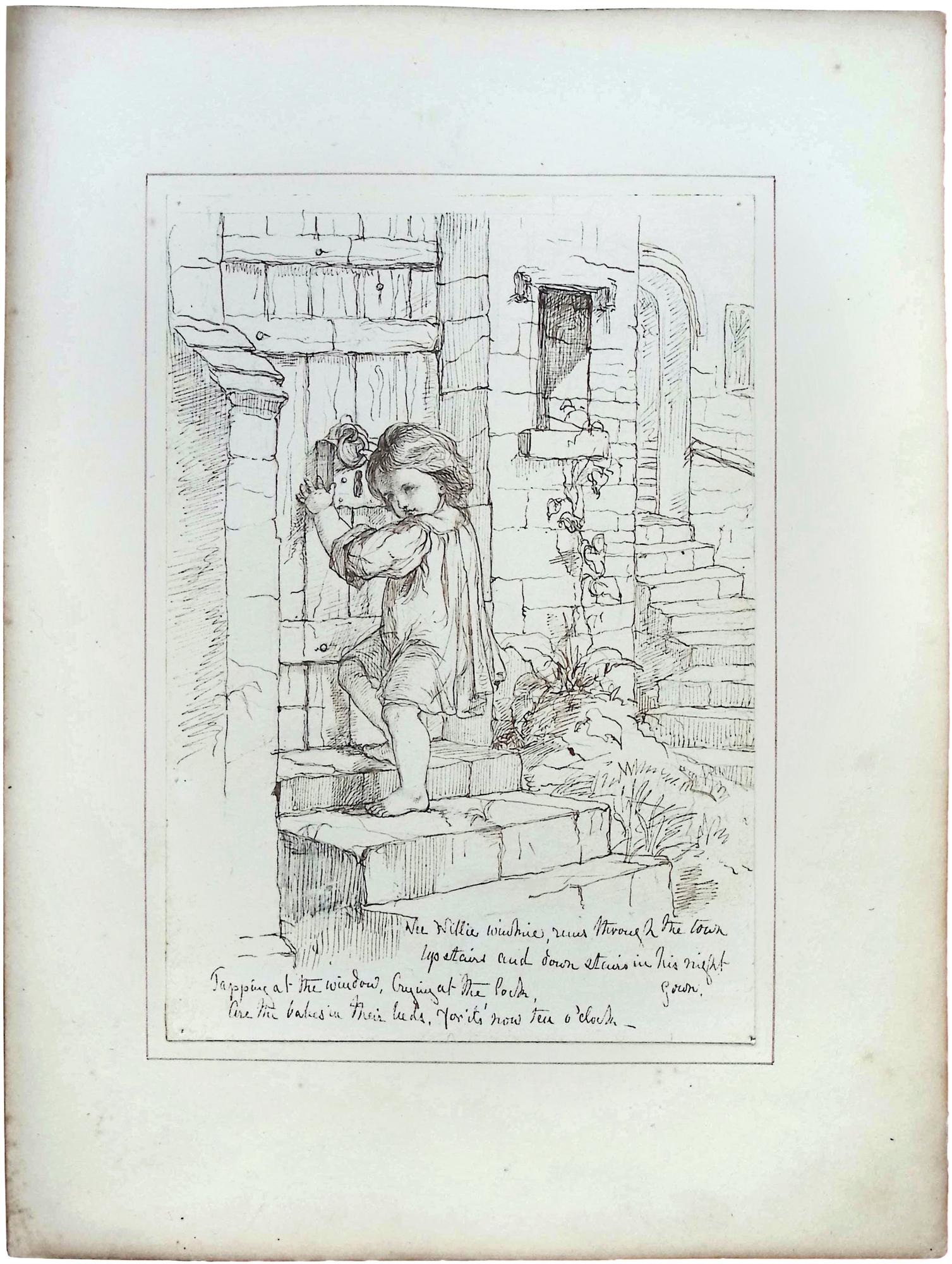
Untitled (illustration for Child's Play, 'Wee Willie Winkie'), c. 1851
Eleanor Vere Boyle (1825 – 1916) illustrated poetry and prose by some of the most popular authors of her time. She regularly drew and painted using ink and watercolour, sketching landscapes, animals and her children from life. She also made drawings from her imagination, often reflecting spiritual themes. This illustration is from her first book, Child’s Play (1851). Boyle provided her publishers with black and white drawings that were then converted into etchings by the printer. These were later reproduced as lithographs, in colours chosen by Boyle.
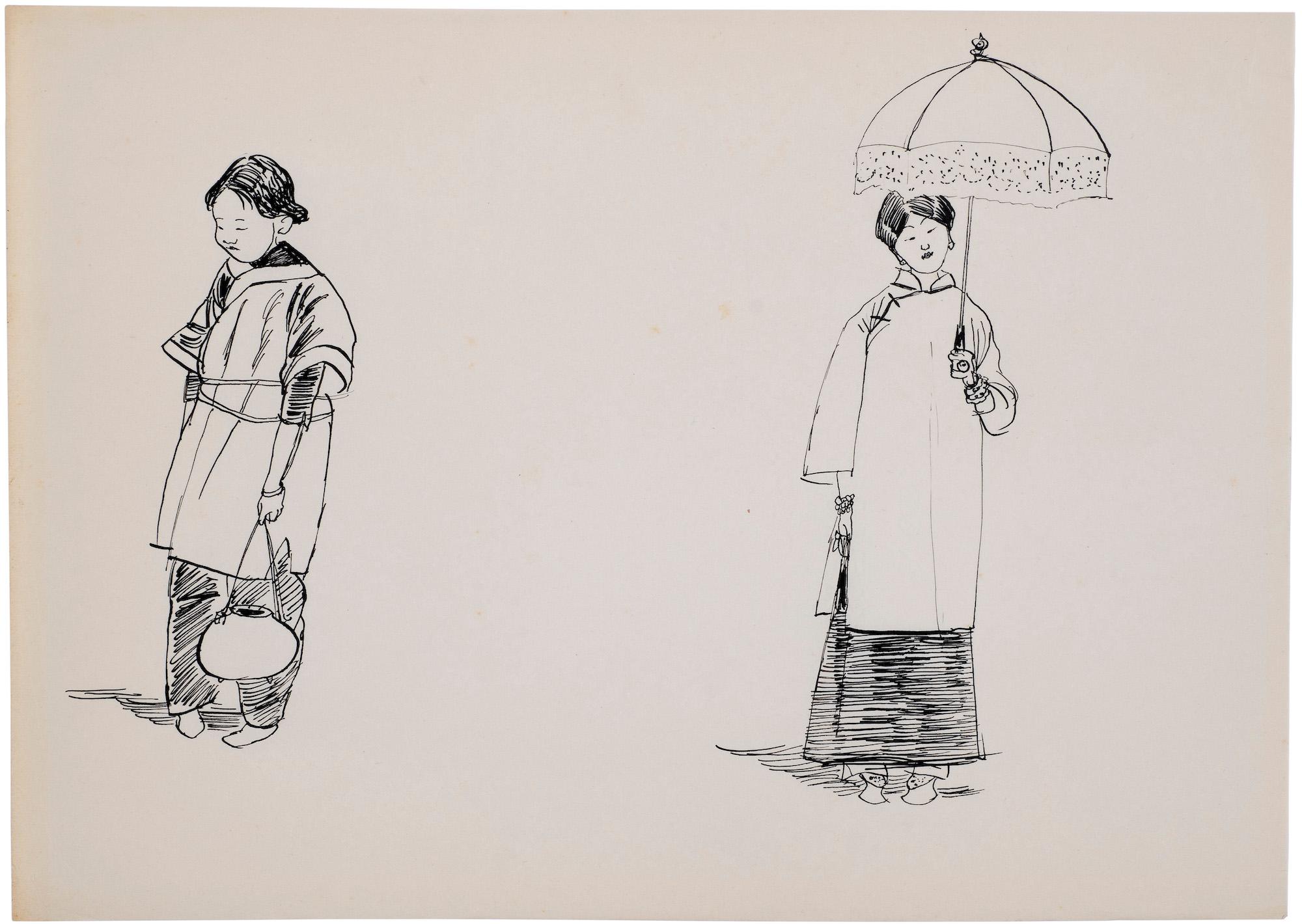
Jacqueline Ayer, Untitled, c. 1959
Jacqueline Ayer (1930–2012) had a career that spanned many creative fields. She began as a fashion illustrator, and later turned her hand to children’s books, textiles and garments, as she worked in New York, Paris, London, Bangkok, Hong Kong and across India. Since working as a fashion illustrator in Paris, Ayer had been interested in costumes, national dress and garments. She also had the ability to bring her sketches into reality through her dress-making skills that she had learned from her mother.
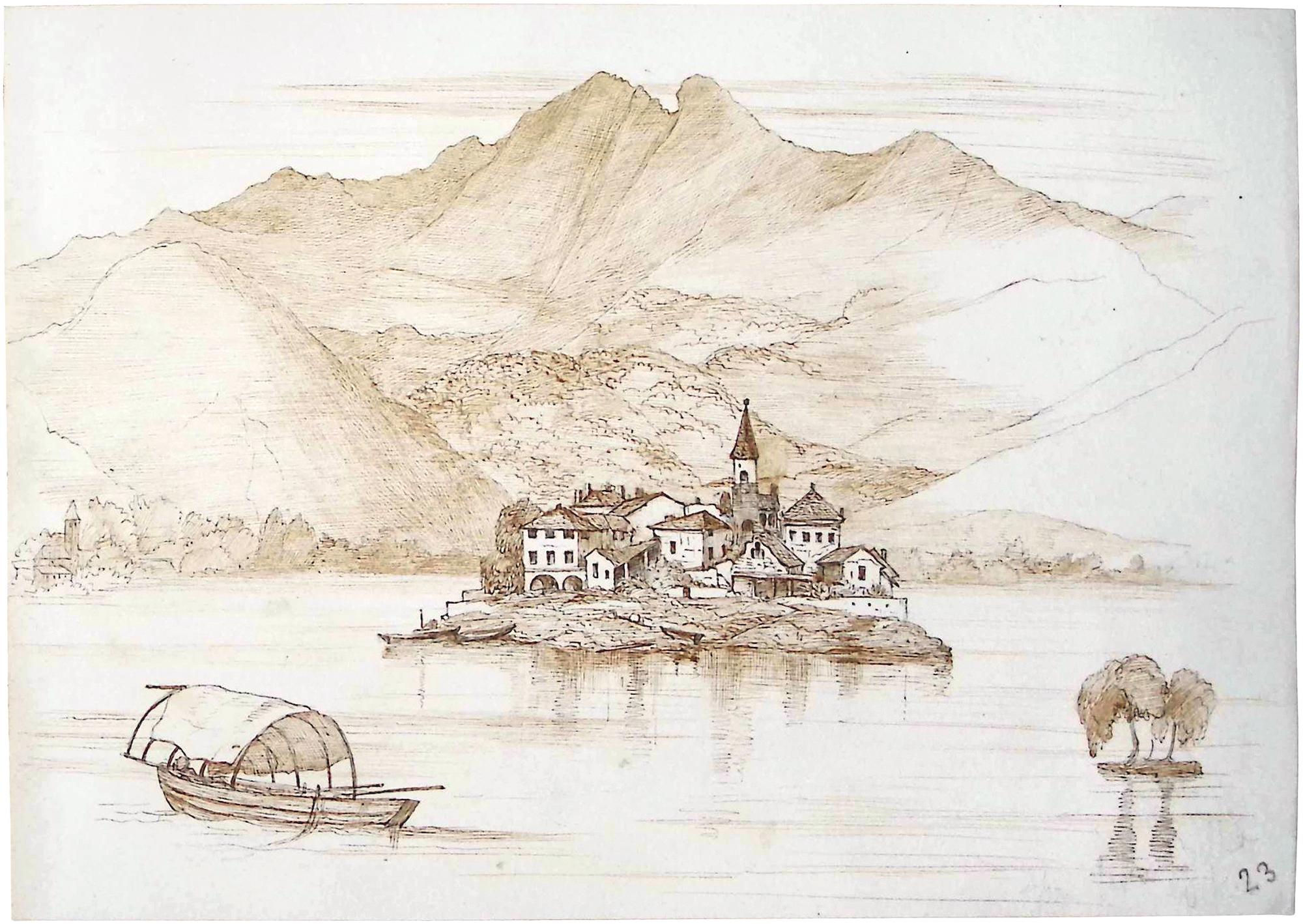
Untitled (From Isola Bella), Date unknown
Eleanor Vere Boyle (1825 – 1916) illustrated poetry and prose by some of the most popular authors of her time. She regularly drew and painted using ink and watercolour, sketching landscapes, animals and her children from life. She also made drawings from her imagination, often reflecting spiritual themes.
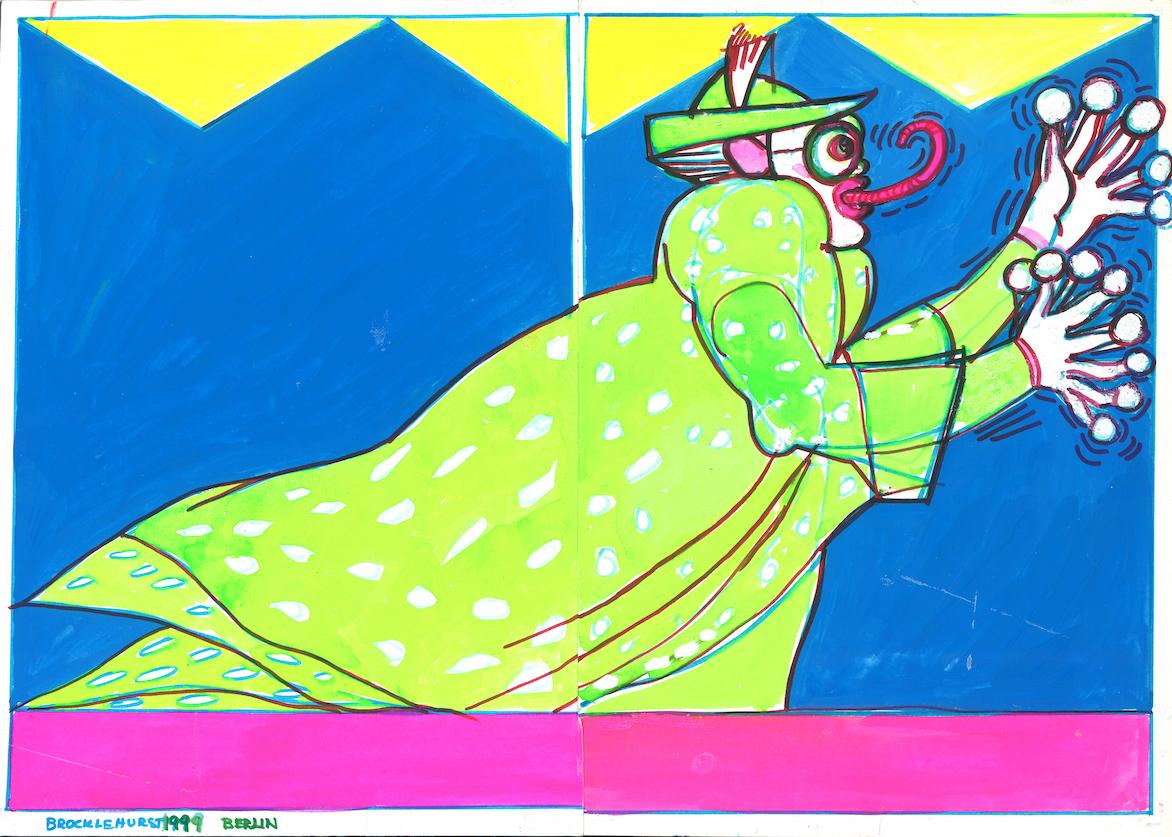
Jo Brocklehurst, Untitled (drawing of Die Eingeborene), 1999
Jo (Josephine) Brocklehurst (1935 - 2006) studied at Central Saint Martins and began her career as a fashion illustrator. She later focused on portraiture, drawing directly from models at her studio in West Hampstead and in nightclubs and theatres in Berlin, London and New York. Her work documents the alternative subcultures of the 1970s, 80s and 90s that went on to shape mainstream fashion and performance scenes. In 1999, Brocklehurst was artist in residence at newspaper Berliner Zeitung during Berliner Theatertreffen, a festival of new German theatre. The paper wanted to revive the Weimar tradition of theatre reviews being accompanied by illustrations, rather than using photographs. Brocklehurst drew behind the scenes and from her seat during performances. This drawing is from a performance of Die Eingeborene.
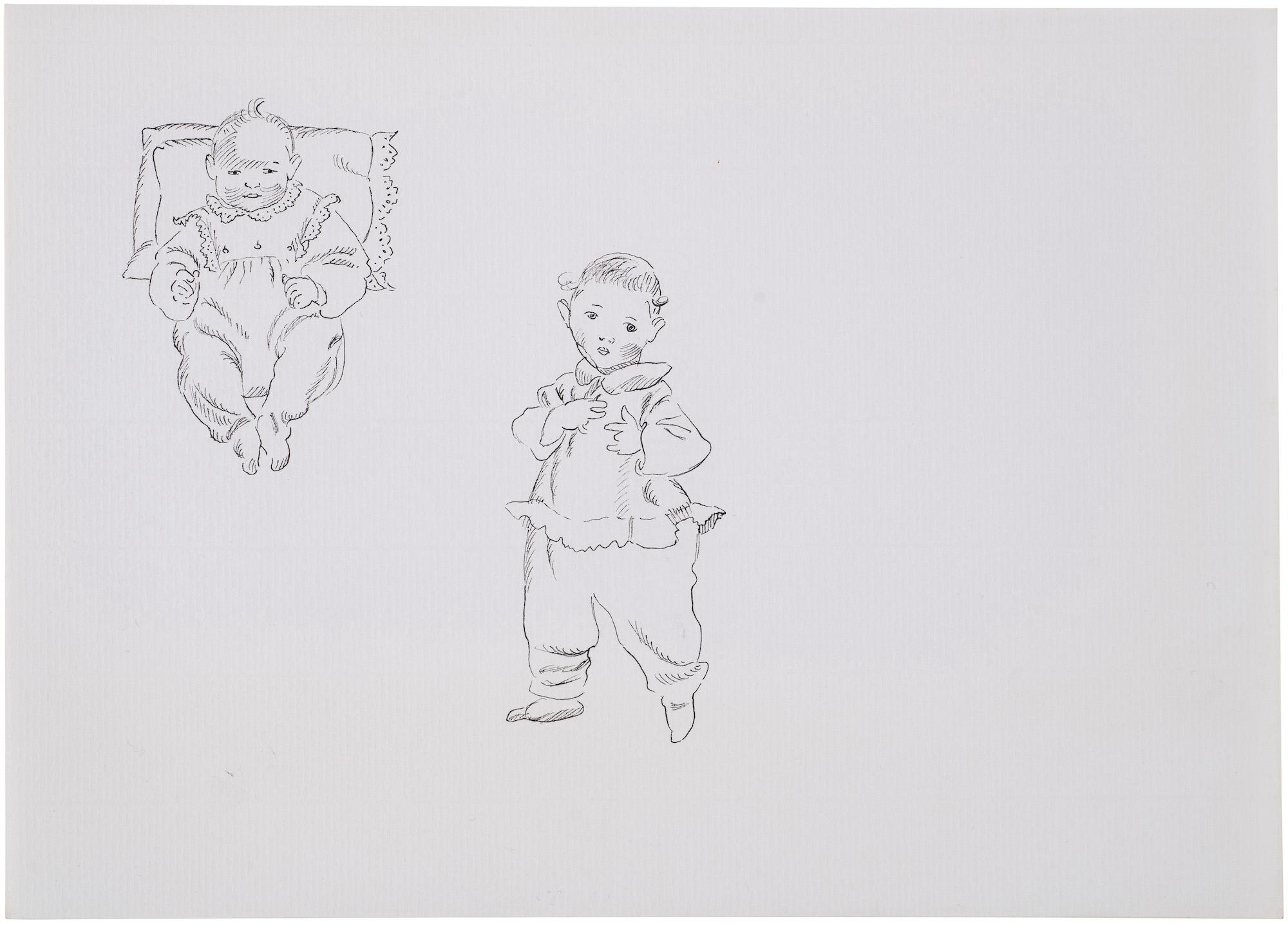
Jacqueline Ayer, Untitled, Date unknown
Jacqueline Ayer (1930–2012) had a career that spanned many creative fields. She began as a fashion illustrator, and later turned her hand to children’s books, textiles and garments, as she worked in New York, Paris, London, Bangkok, Hong Kong and across India. Ayer often used a sketchbook to record her observations and ideas for book narratives and fashion designs. The context for this drawing is unknown.
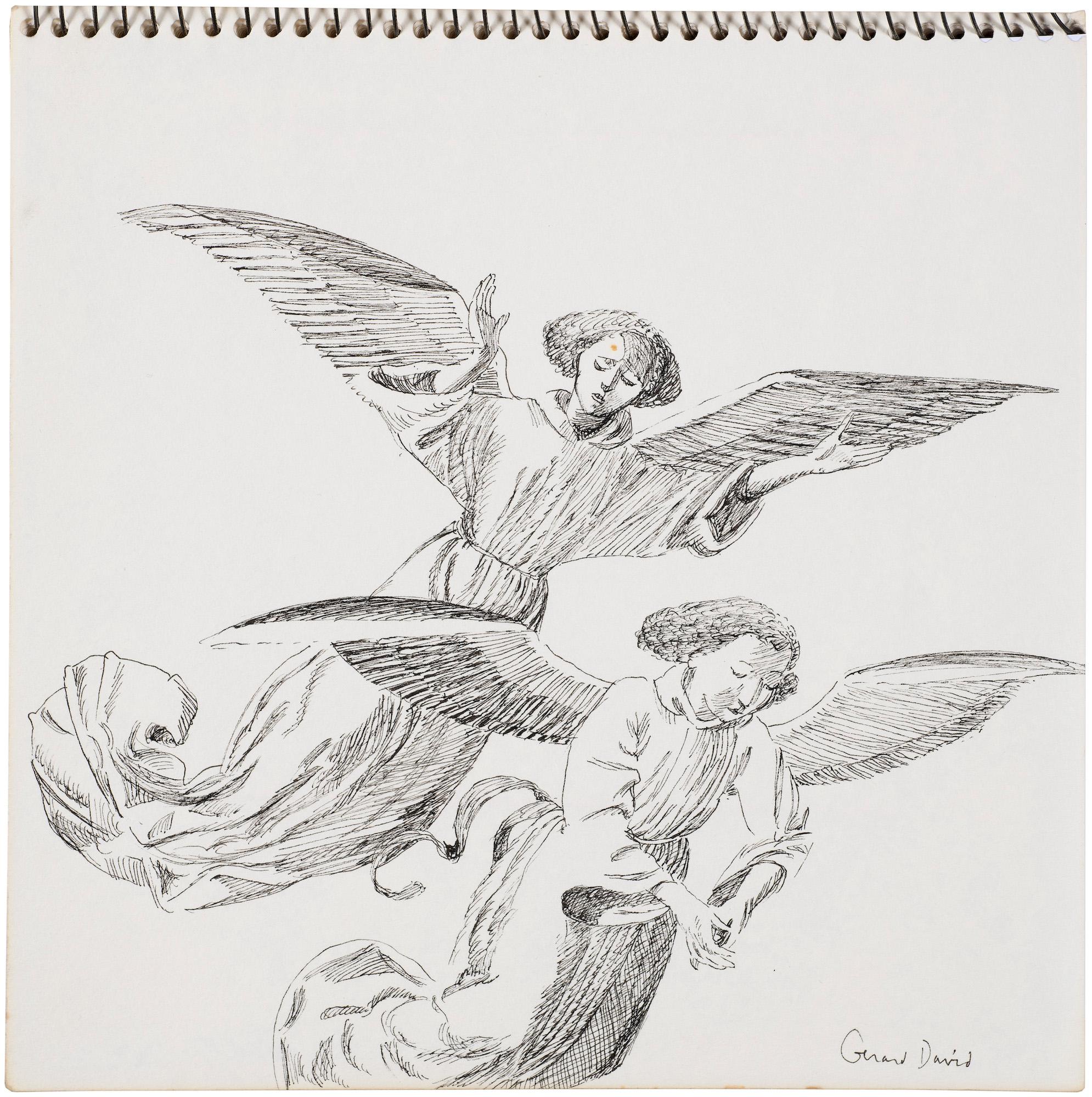
Jacqueline Ayer, Untitled, Date unknown
Jacqueline Ayer (1930–2012) had a career that spanned many creative fields. She began as a fashion illustrator, and later turned her hand to children’s books, textiles and garments, as she worked in New York, Paris, London, Bangkok, Hong Kong and across India. Ayer often used a sketchbook to record her observations and ideas for book narratives and fashion designs. The context for this drawing is unknown.
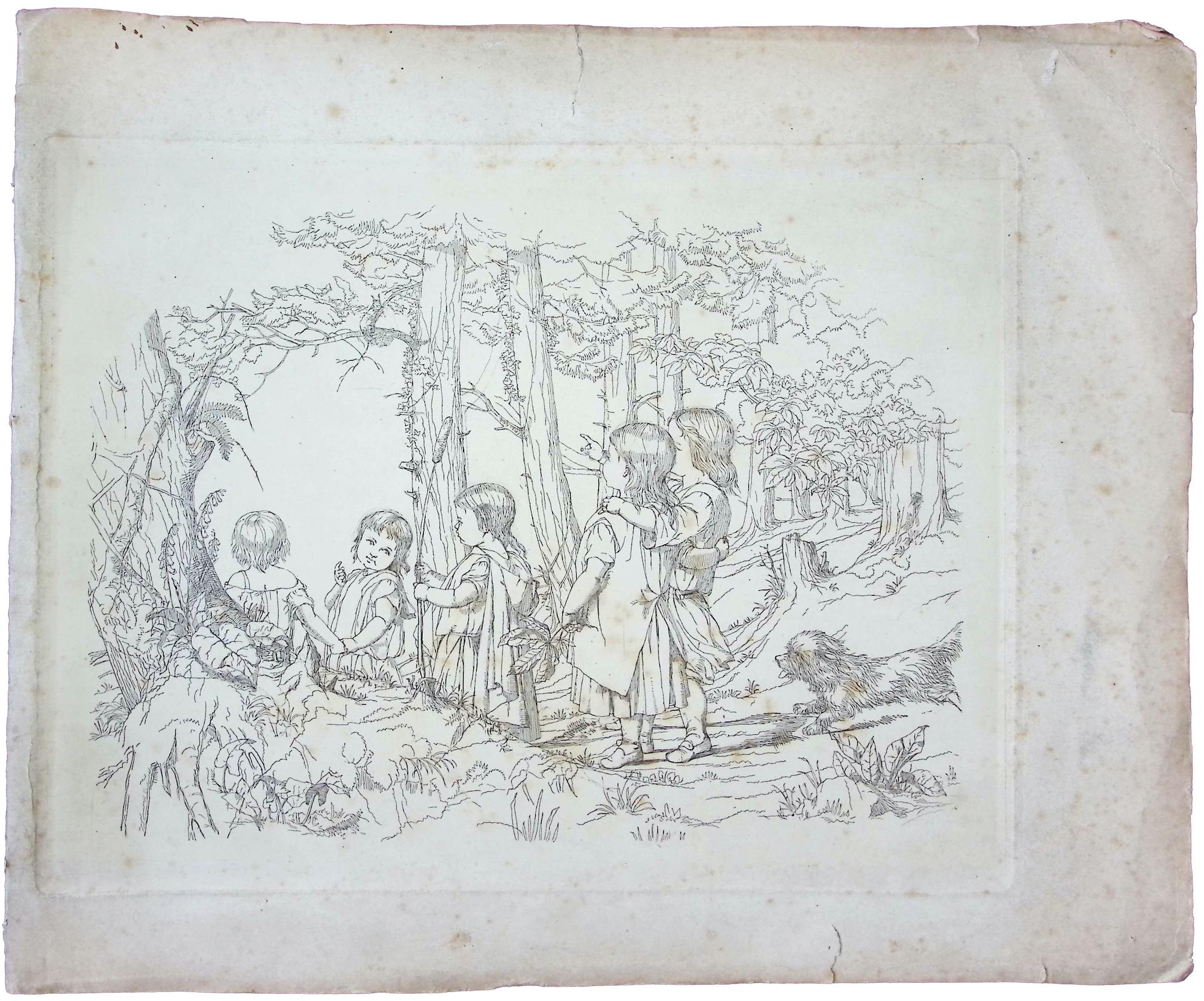
Untitled, Date unknown
Eleanor Vere Boyle (1825 – 1916) illustrated poetry and prose by some of the most popular authors of her time. She regularly drew and painted using ink and watercolour, sketching landscapes, animals and her children from life. She also made drawings from her imagination, often reflecting spiritual themes.
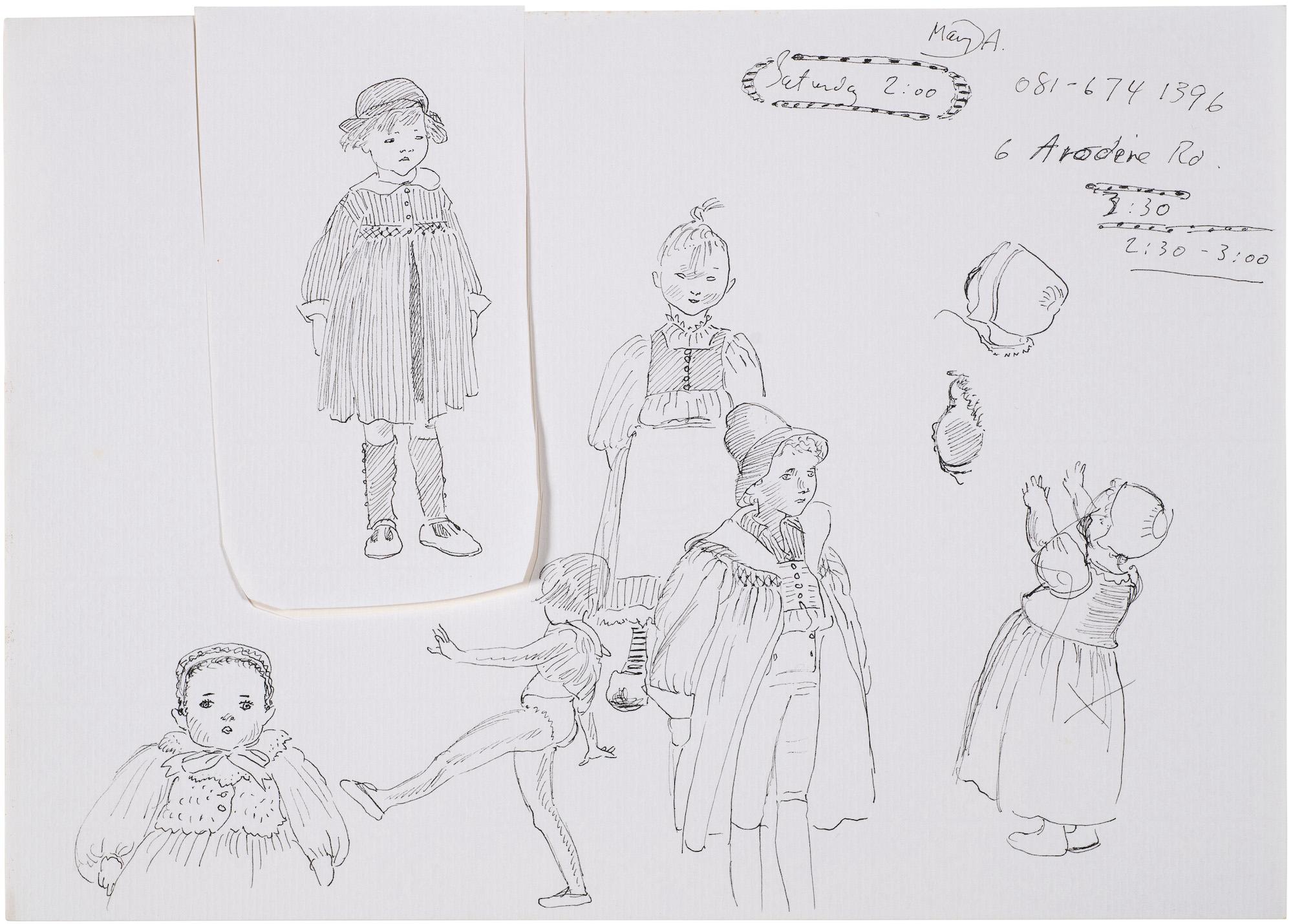
Jacqueline Ayer, Untitled, Date unknown
Jacqueline Ayer (1930–2012) had a career that spanned many creative fields. She began as a fashion illustrator, and later turned her hand to children’s books, textiles and garments, as she worked in New York, Paris, London, Bangkok, Hong Kong and across India. Ayer often used a sketchbook to record her observations and ideas for book narratives and fashion designs. The context for this drawing is unknown.
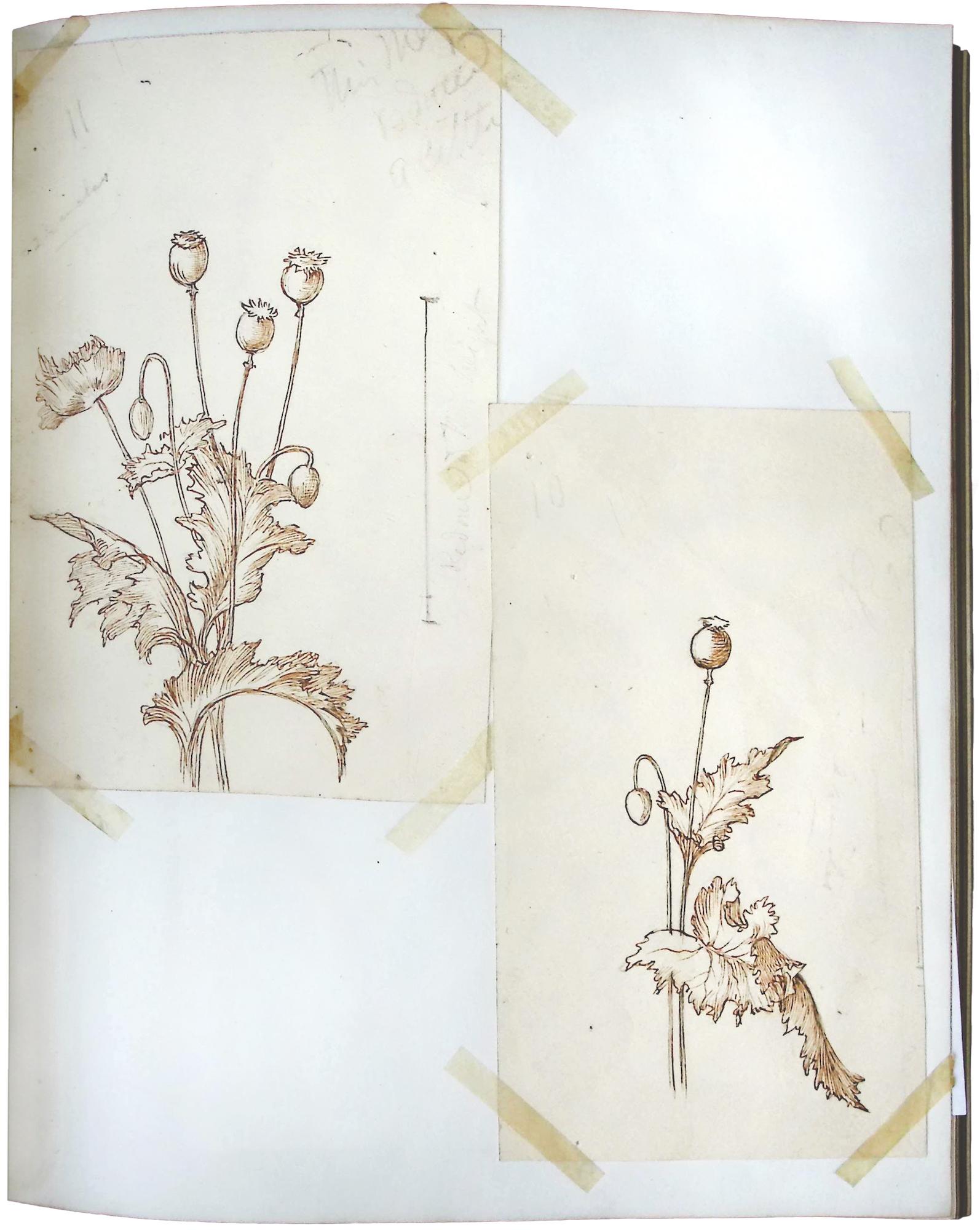
Untitled, c. 1893
Eleanor Vere Boyle (1825 – 1916) illustrated poetry and prose by some of the most popular authors of her time. She regularly drew and painted using ink and watercolour, sketching landscapes, animals and her children from life. She also made drawings from her imagination, often reflecting spiritual themes. These drawings were used as some of the final illustrations printed in the artists' publication A Book of Heavenly Birthdays (1893, London Elliot Stock)
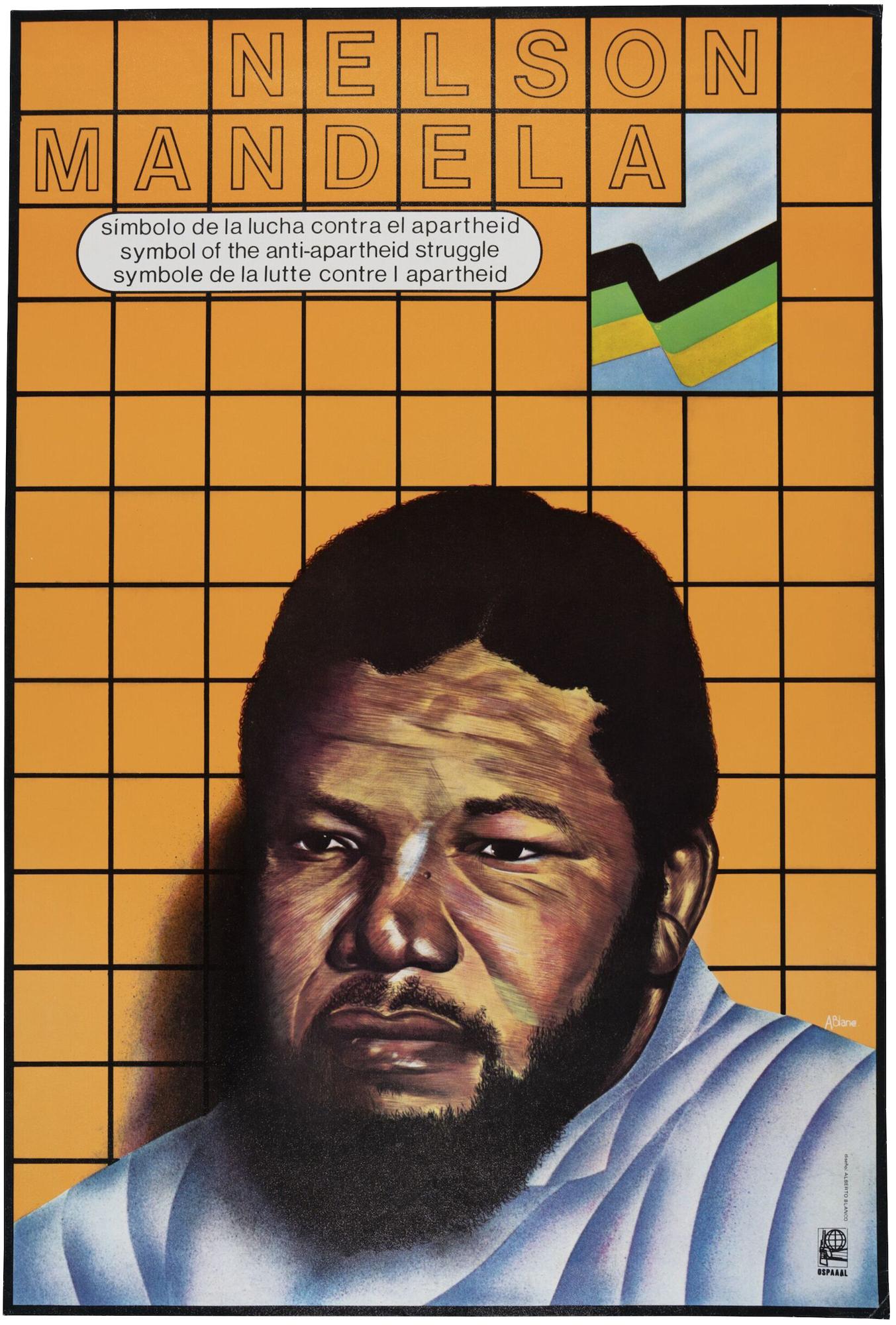
NELSON MANDELA - symbol of the anti-apartheid struggle, 1989
Between the 1960s and 1990s, more than fifty designers worked at OSPAAAL. Based in Cuba, they made magazines and posters that were sent around the world. Their aim was to promote radical political ideas. Many of their posters celebrate socialist revolutions and liberation movements from the Global South. This poster was issued to show support for anti-apartheid activist Nelson Mandela while he was imprisoned in South Africa. Through his prison window is the flag of the African National Congress; its three colours represent the people, land and resources of South Africa.
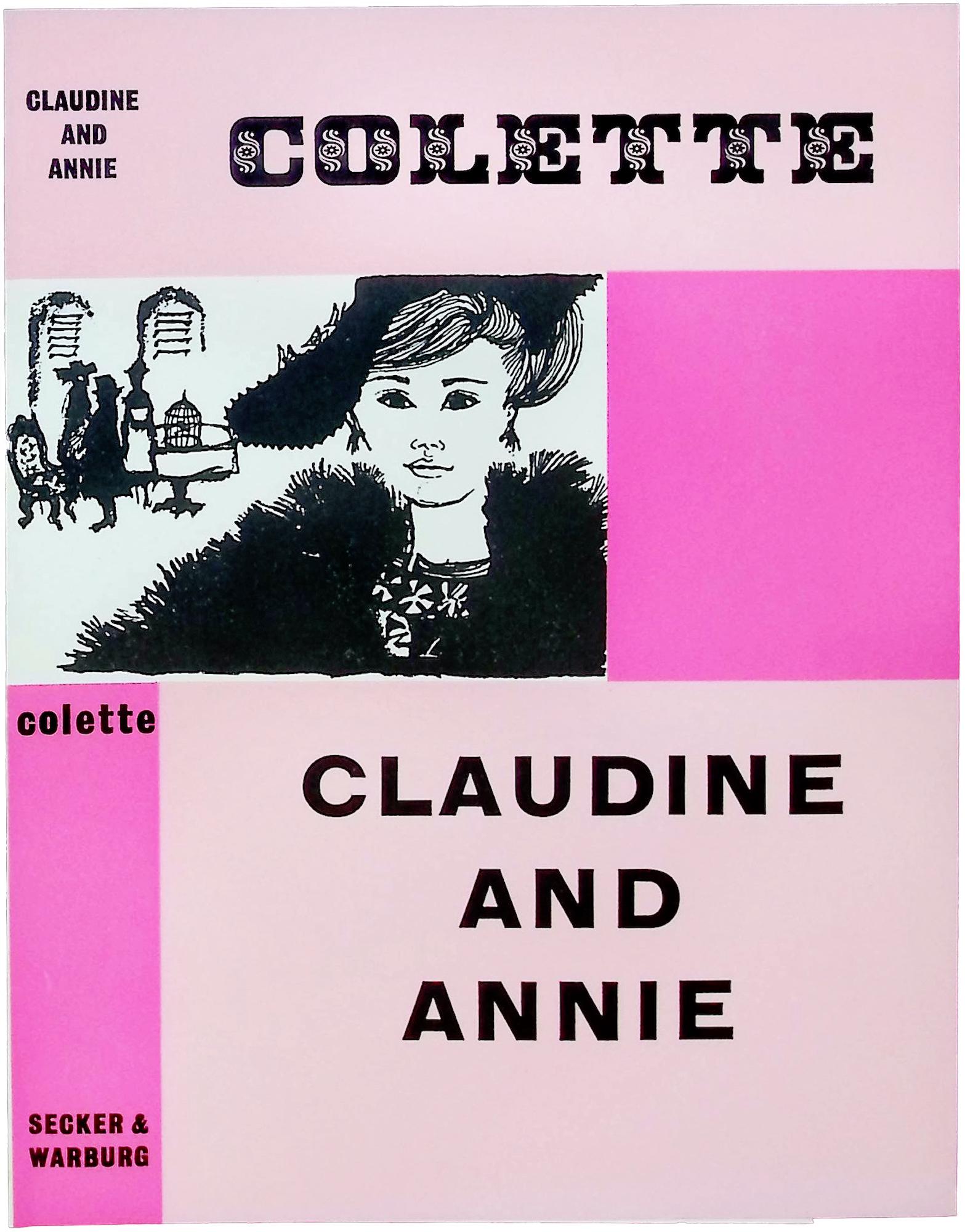
Book cover proof for Colette's "Claudine and Annie", 1962
British illustrator Janina Ede (1937-2018) created covers and illustrations for over 100 books from the 1950s to the 1980s. She designed the covers of several books by French author and pioneer of autofiction Sidonie-Gabrielle Colette.
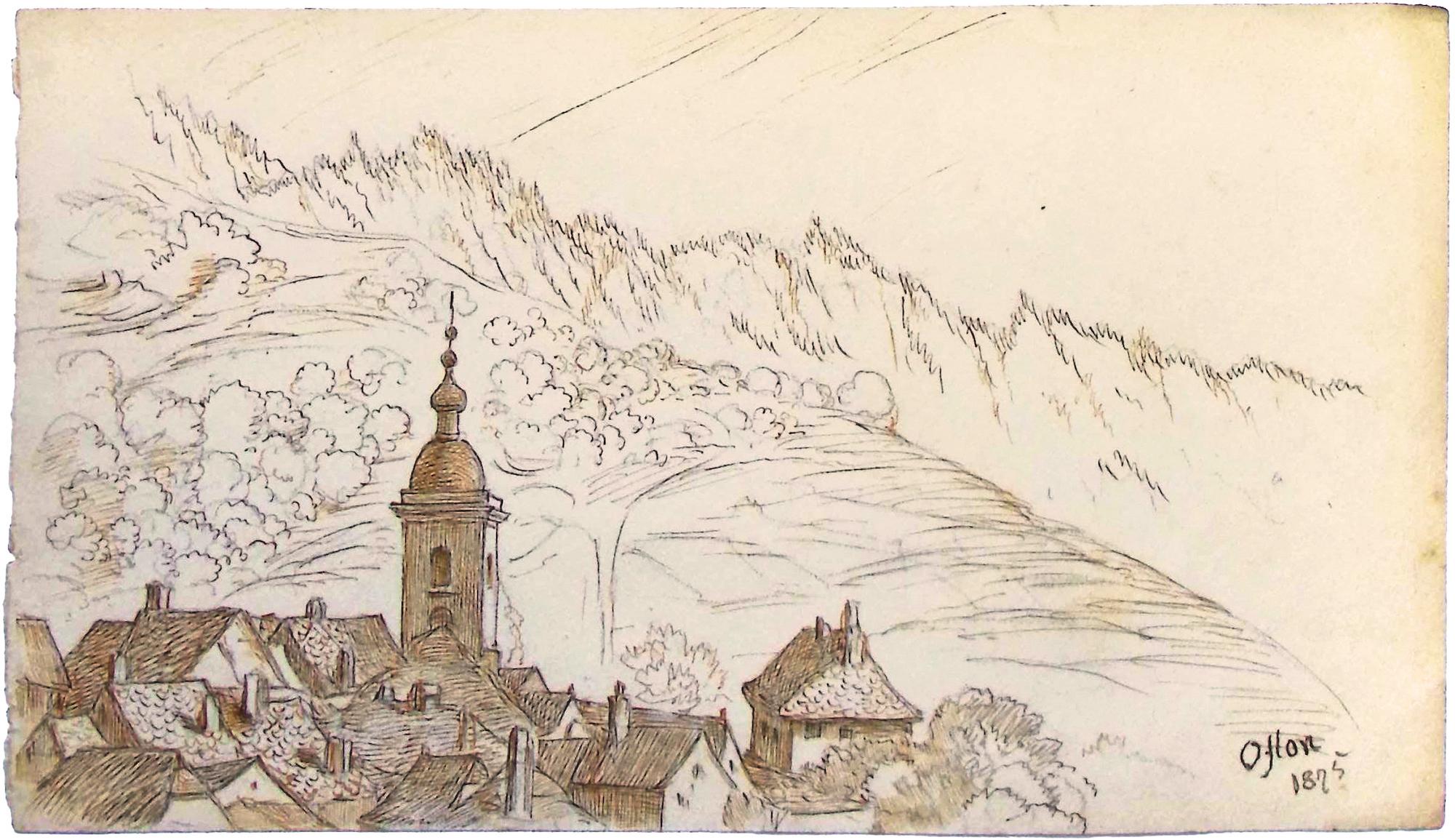
Untitled, 1875
Eleanor Vere Boyle (1825 – 1916) illustrated poetry and prose by some of the most popular authors of her time. She regularly drew and painted using ink and watercolour, sketching landscapes, animals and her children from life. She also made drawings from her imagination, often reflecting spiritual themes.
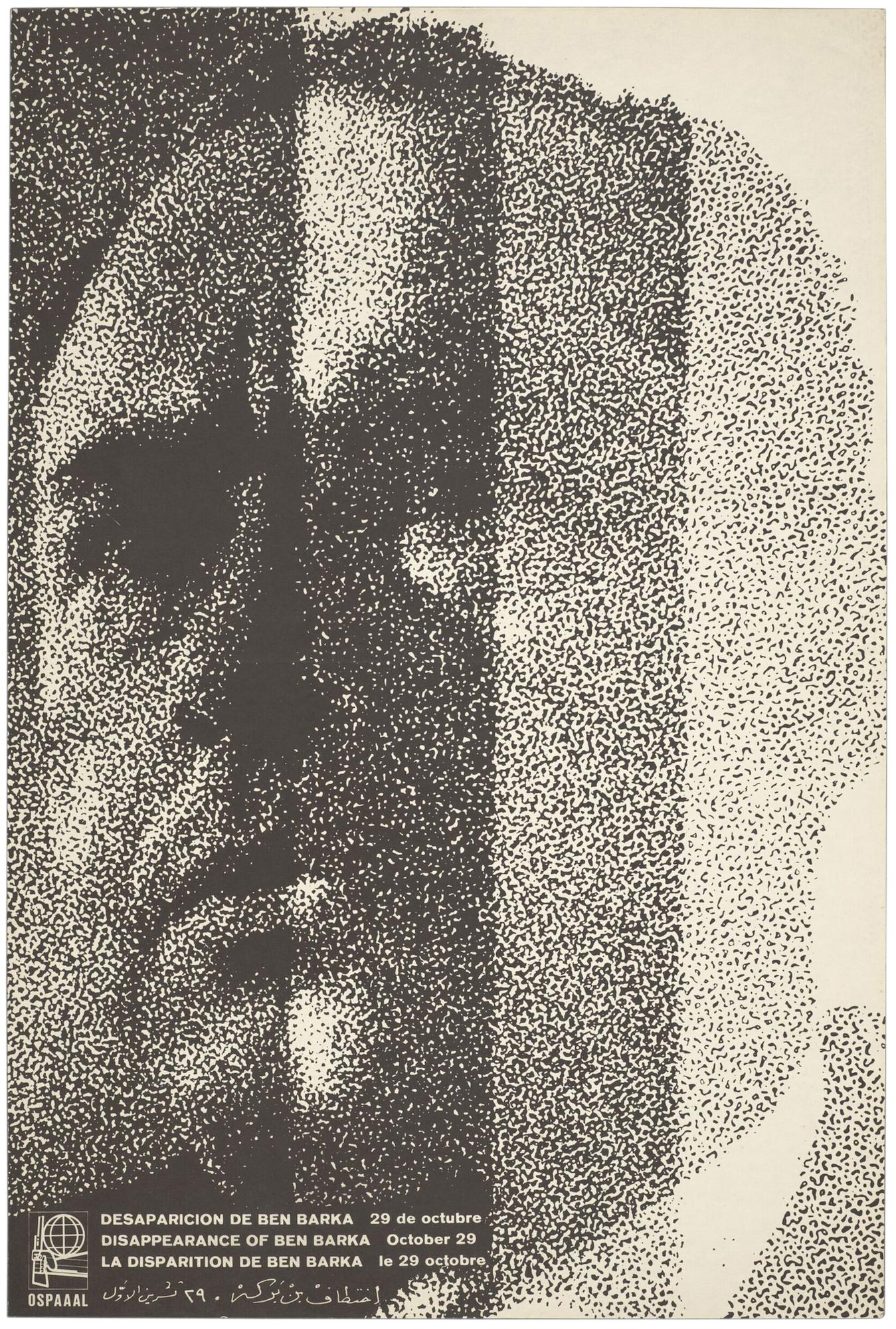
DISAPPEARANCE OF BEN BARKA - October 29, 1971
Between the 1960s and 1990s, more than fifty designers worked at OSPAAAL (the Organisation of Solidarity with the People of Africa, Asia and Latin America). Based in Cuba, they made magazines and posters that were sent around the world. Their aim was to promote radical political ideas. Many of their posters celebrate socialist revolutions and liberation movements from the Global South. Moroccan politician Mehdi Ben Barka led the preparation of the Tricontinental conference, but was assassinated before it began. Antonio Fernández Mariño represented his mysterious disappearance using photomontage to create a fading, ghostlike portrait.
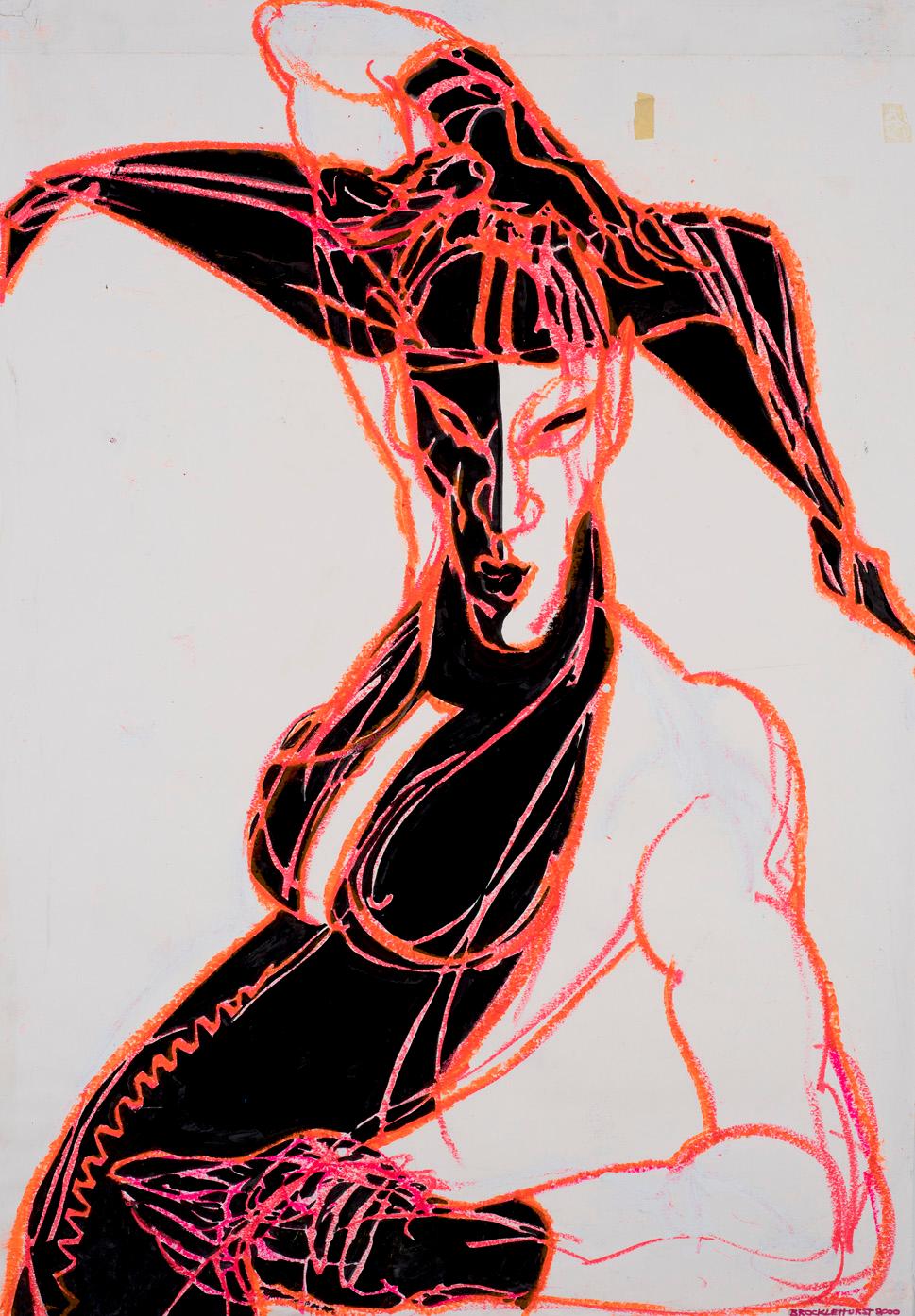
Jo Brocklehurst, Untitled (portrait of Josephine Leask), 2000
Jo (Josephine) Brocklehurst (1935 - 2006) studied at Central Saint Martins and began her career as a fashion illustrator. She later focused on portraiture, drawing directly from models at her studio in West Hampstead and in nightclubs and theatres in Berlin, London and New York. Her work documents the alternative subcultures of the 1970s, 80s and 90s that went on to shape mainstream fashion and performance scenes. In 2000, Brocklehurst created a series of drawings in sessions with dancer Josephine Leask. Leask’s 1999 article Welcome to the Club, published in ballettanz magazine, described the ways that nightclubs were acting as alternative theatres for cutting-edge contemporary dance. These drawings were shown as part of Leask’s lecture-performance on the same theme at the 2000 Salzburg Festival.
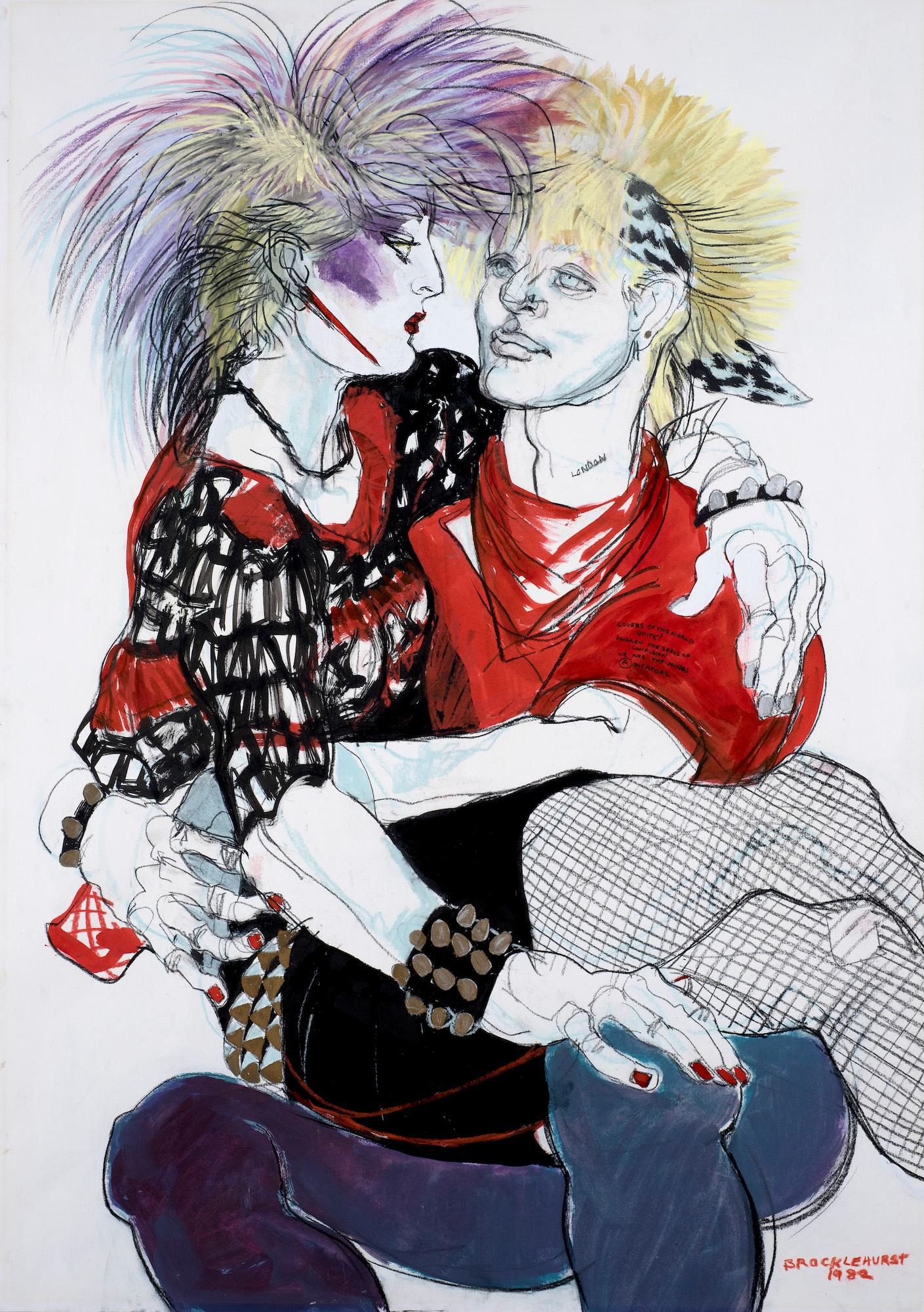
Jo Brocklehurst, Untitled (portrait with Val Drayton (left)), 1982
Jo (Josephine) Brocklehurst (1935 - 2006) studied at Central Saint Martins and began her career as a fashion illustrator. She later focused on portraiture, drawing directly from models at her studio in West Hampstead and in nightclubs and theatres in Berlin, London and New York. Her work documents the alternative subcultures of the 1970s, 80s and 90s that went on to shape mainstream fashion and performance scenes. In the 1980s, Brocklehurst drew a series portraits of members of the Kill Your Pet Puppy collective who were living in a squat close to her studio. Attracted to their anarcho-punk dress and ethos, she said “I felt that they understood very well what was going on in the world, what was in it for them”.
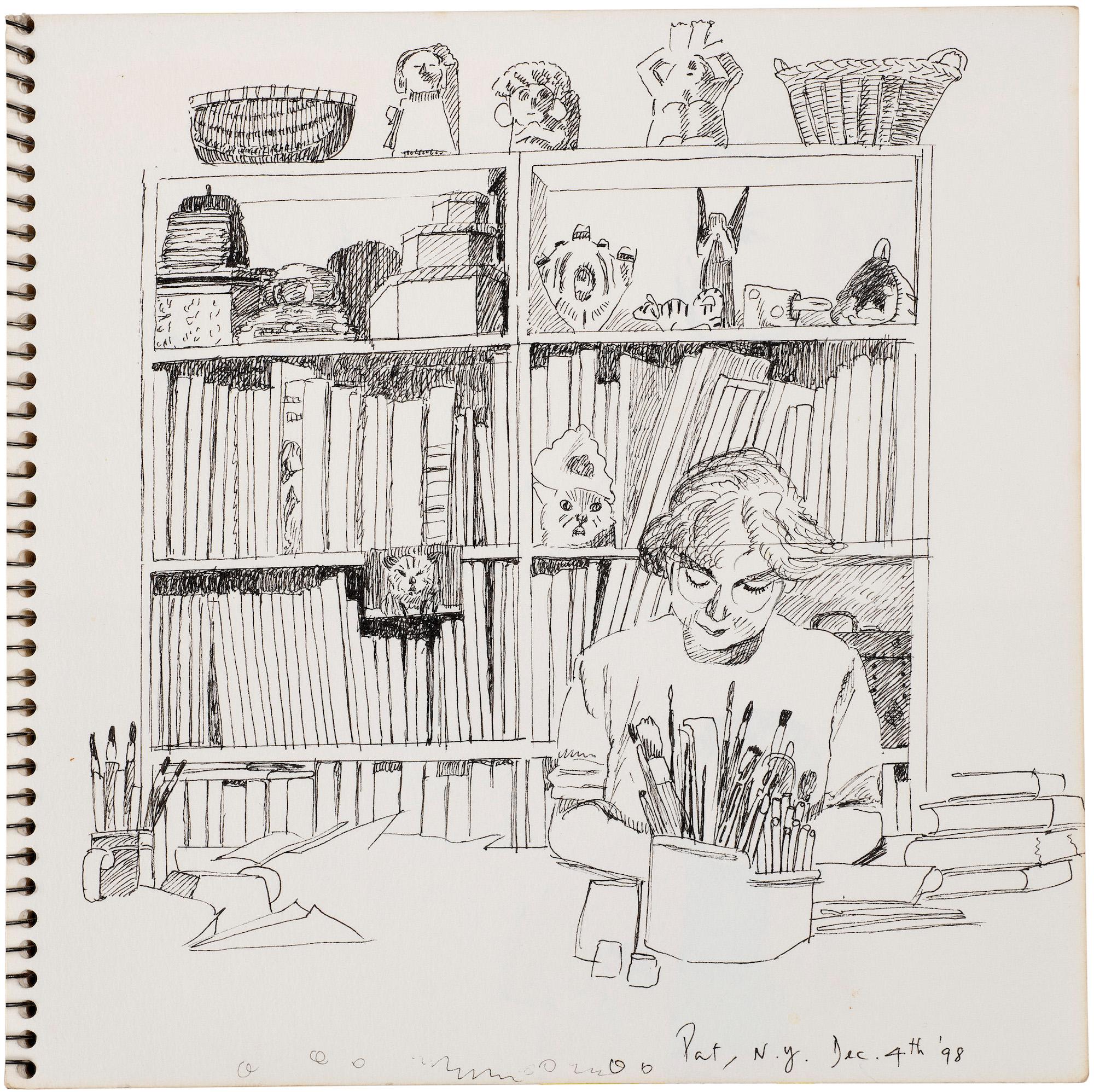
Jacqueline Ayer, Untitled, 1998
Jacqueline Ayer (1930–2012) had a career that spanned many creative fields. She began as a fashion illustrator, and later turned her hand to children’s books, textiles and garments, as she worked in New York, Paris, London, Bangkok, Hong Kong and across India. Ayer often used a sketchbook to record her observations and ideas for book narratives and fashion designs. The context for this drawing is unknown.
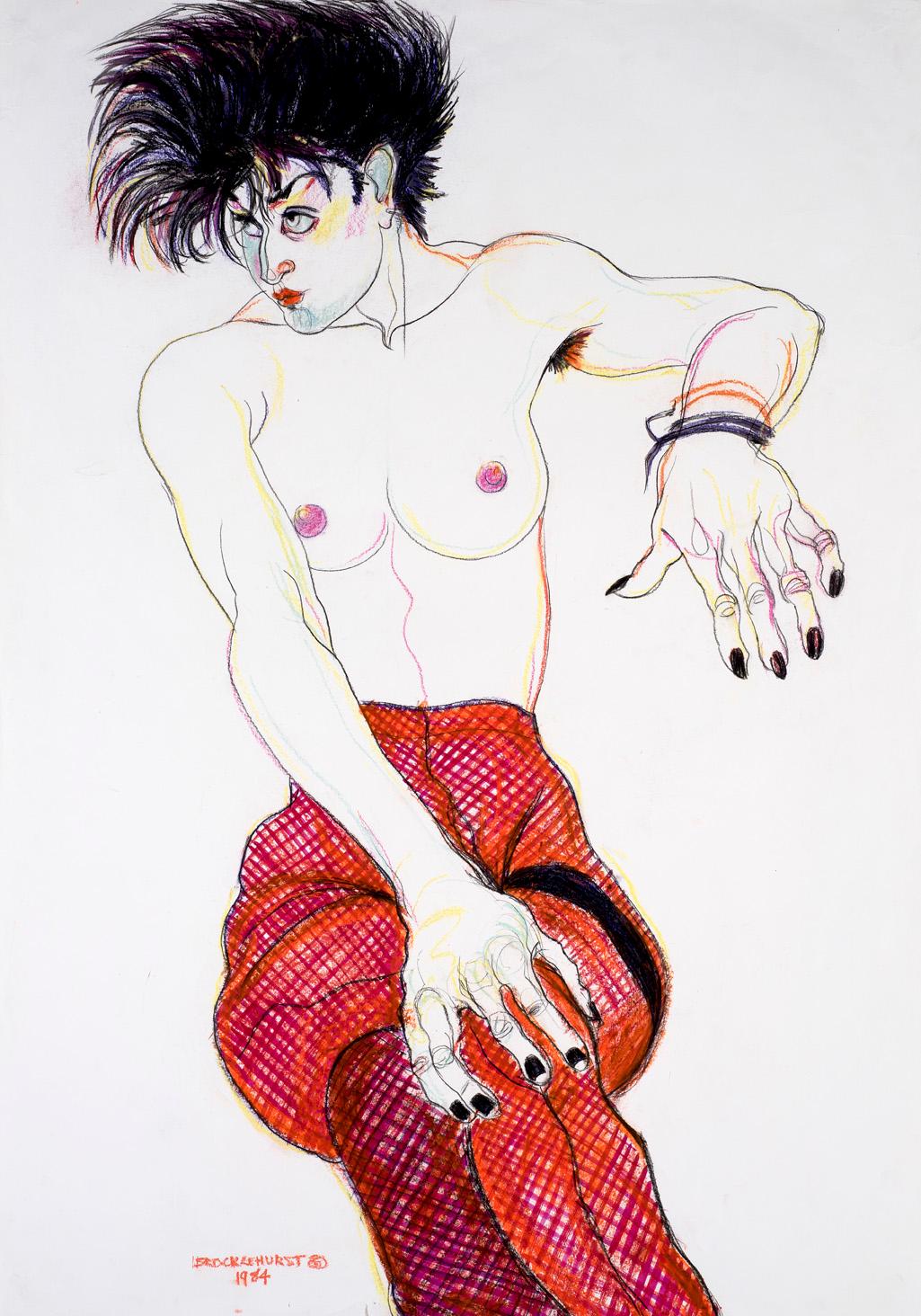
Jo Brocklehurst, Untitled, 1984
Jo (Josephine) Brocklehurst (1935 - 2006) studied at Central Saint Martins and began her career as a fashion illustrator. She later focused on portraiture, drawing directly from models at her studio in West Hampstead and in nightclubs and theatres in Berlin, London and New York. Her work documents the alternative subcultures of the 1970s, 80s and 90s that went on to shape mainstream fashion and performance scenes.
Content warning: nudity
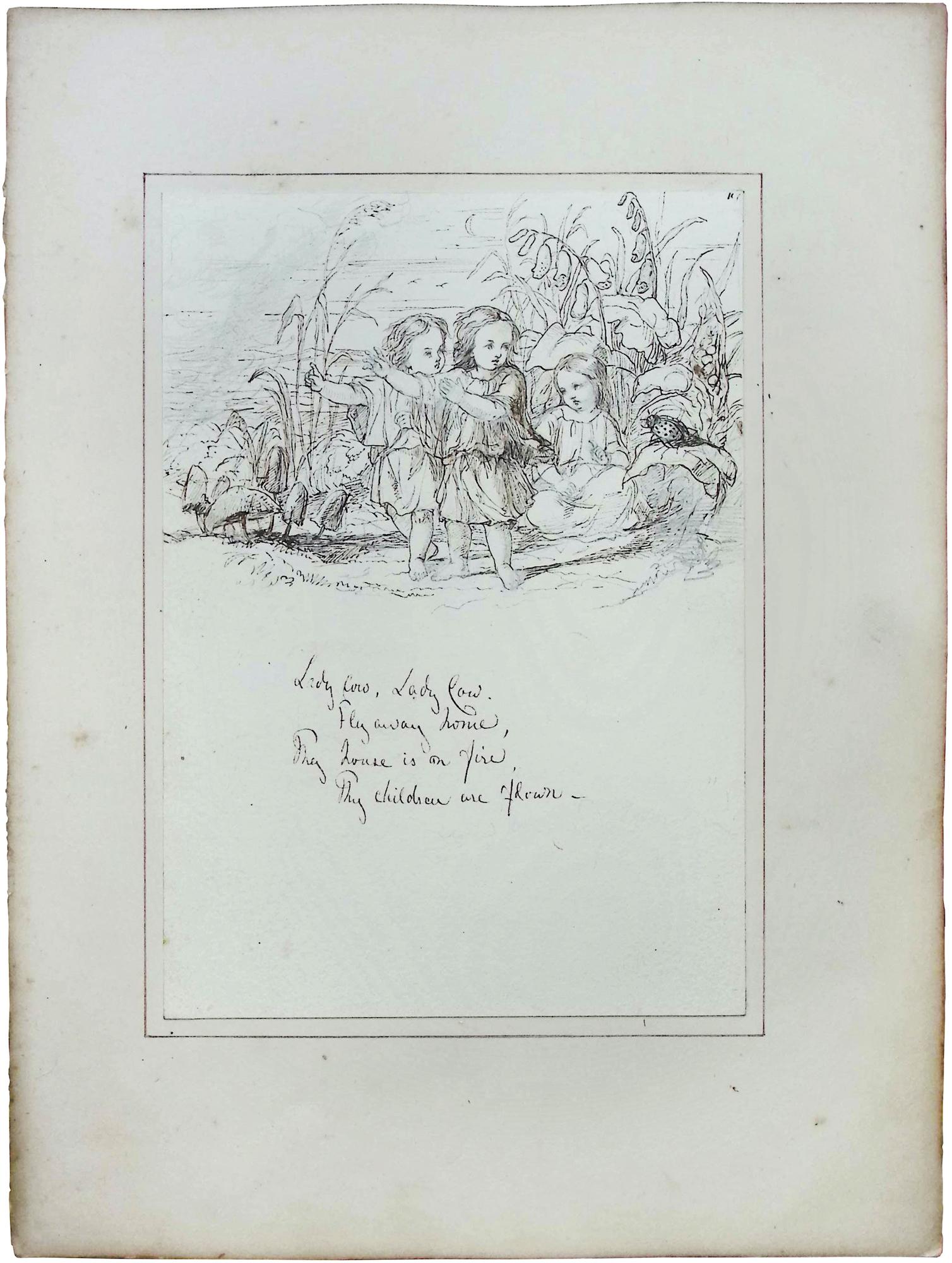
Untitled (illustration for Child's Play, 'Ladybird, Ladybird'), c. 1851
Eleanor Vere Boyle (1825 – 1916) illustrated poetry and prose by some of the most popular authors of her time. She regularly drew and painted using ink and watercolour, sketching landscapes, animals and her children from life. She also made drawings from her imagination, often reflecting spiritual themes. This illustration is from her first book, Child’s Play (1851). Boyle provided her publishers with black and white drawings that were then converted into etchings by the printer. These were later reproduced as lithographs, in colours chosen by Boyle.
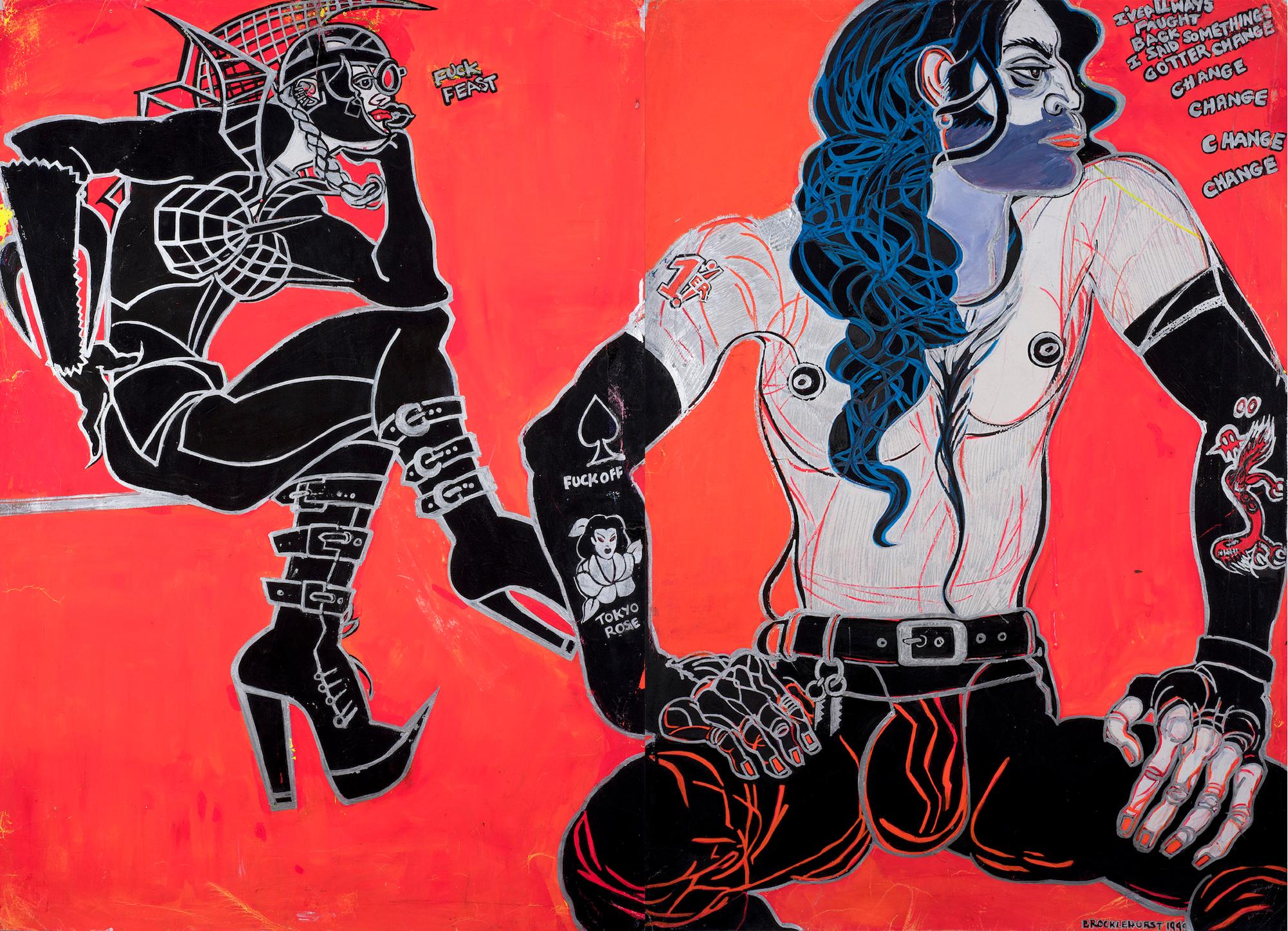
Jo Brocklehurst, Untitled (portrait of Isabelle Bricknall and Anthony Gregory), 1995
Jo (Josephine) Brocklehurst (1935 - 2006) studied at Central Saint Martins and began her career as a fashion illustrator. She later focused on portraiture, drawing directly from models at her studio in West Hampstead and in nightclubs and theatres in Berlin, London and New York. Her work documents the alternative subcultures of the 1970s, 80s and 90s that went on to shape mainstream fashion and performance scenes. In the 1990s, Brocklehurst began drawing the fashion designers and performers finding space for experimentation in the fetish clubs of Soho and King’s Cross. This portrait is of Brocklehurst’s regular collaborator Isabelle Bricknall, whose collection of steel ‘body armour’ (constructed by Anthony Gregory) was designed as ‘protection’ for nights on the fetish scene.
Content warning: strong language
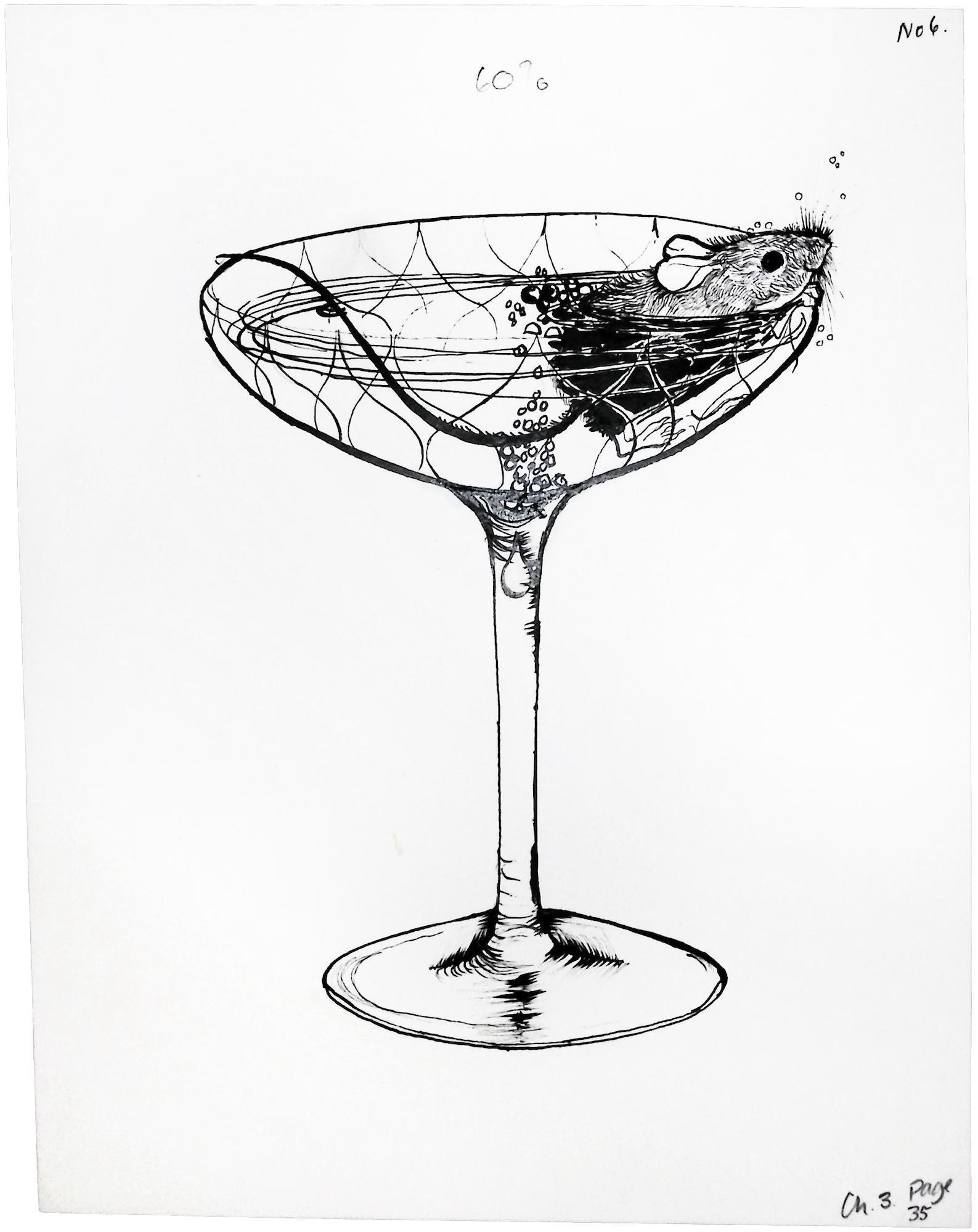
Untitled, c. 1984
British illustrator Janina Ede (1937-2018) created covers and illustrations for over 100 books from the 1950s to the 1980s. Many of her illustrations feature animals, which she drew from life.
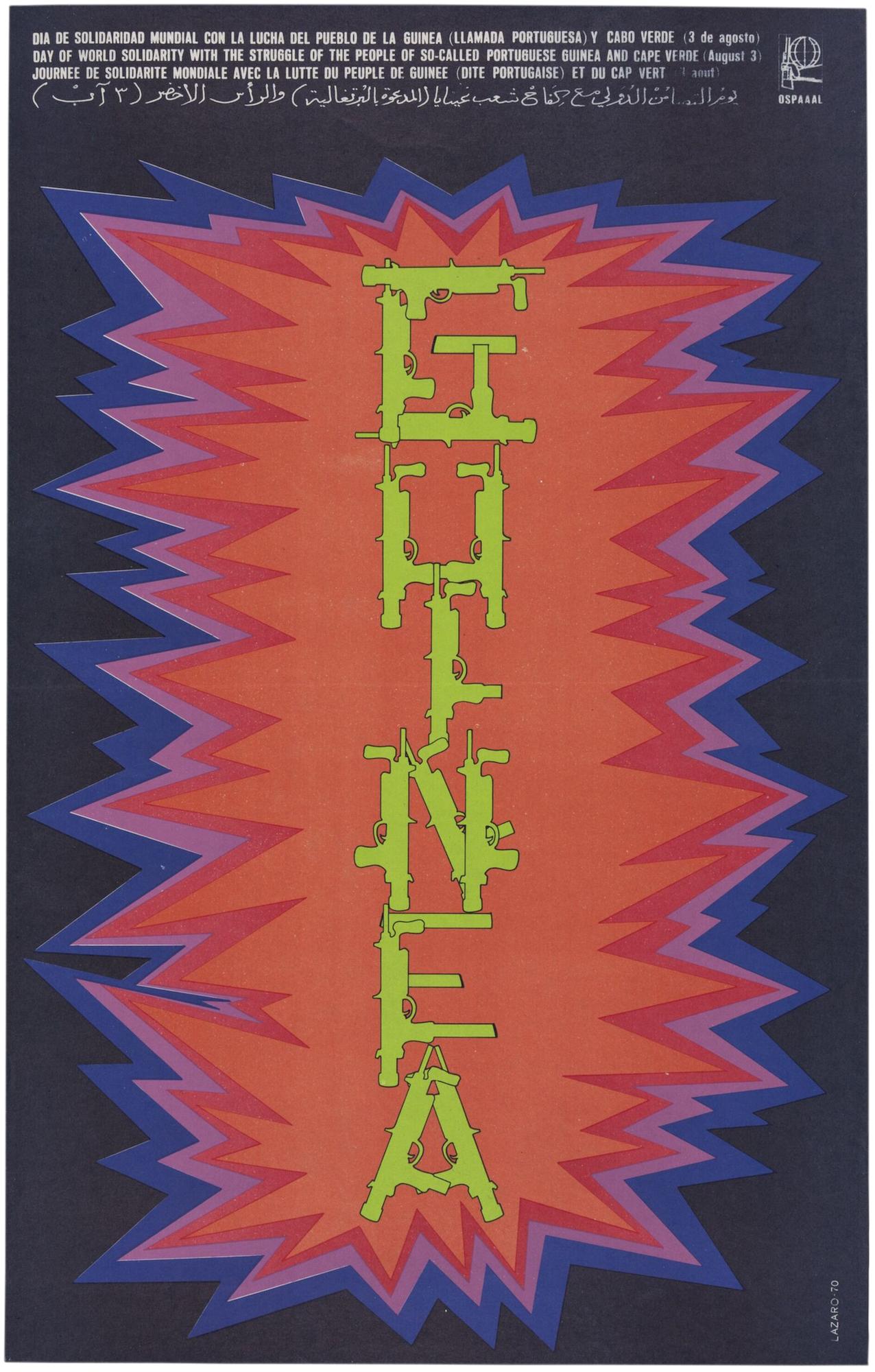
GUINEA - Day of World Solidarity with the Struggle of the People of so-called Portuguese Guinea and Cape Verde (August 3), 1970
Between the 1960s and 1990s, more than fifty designers worked at OSPAAAL (the Organisation of Solidarity with the People of Africa, Asia and Latin America). Based in Cuba, they made magazines and posters that were sent around the world. Their aim was to promote radical political ideas. Many of their posters celebrate socialist revolutions and liberation movements from the Global South. This poster was designed to mark a day of solidarity with liberation movements in Cape Verde and Guinea-Bissau seeking independence from Portuguese colonial rule, on the date of the Pidjiguiti massacre.
Content warning: weaponry
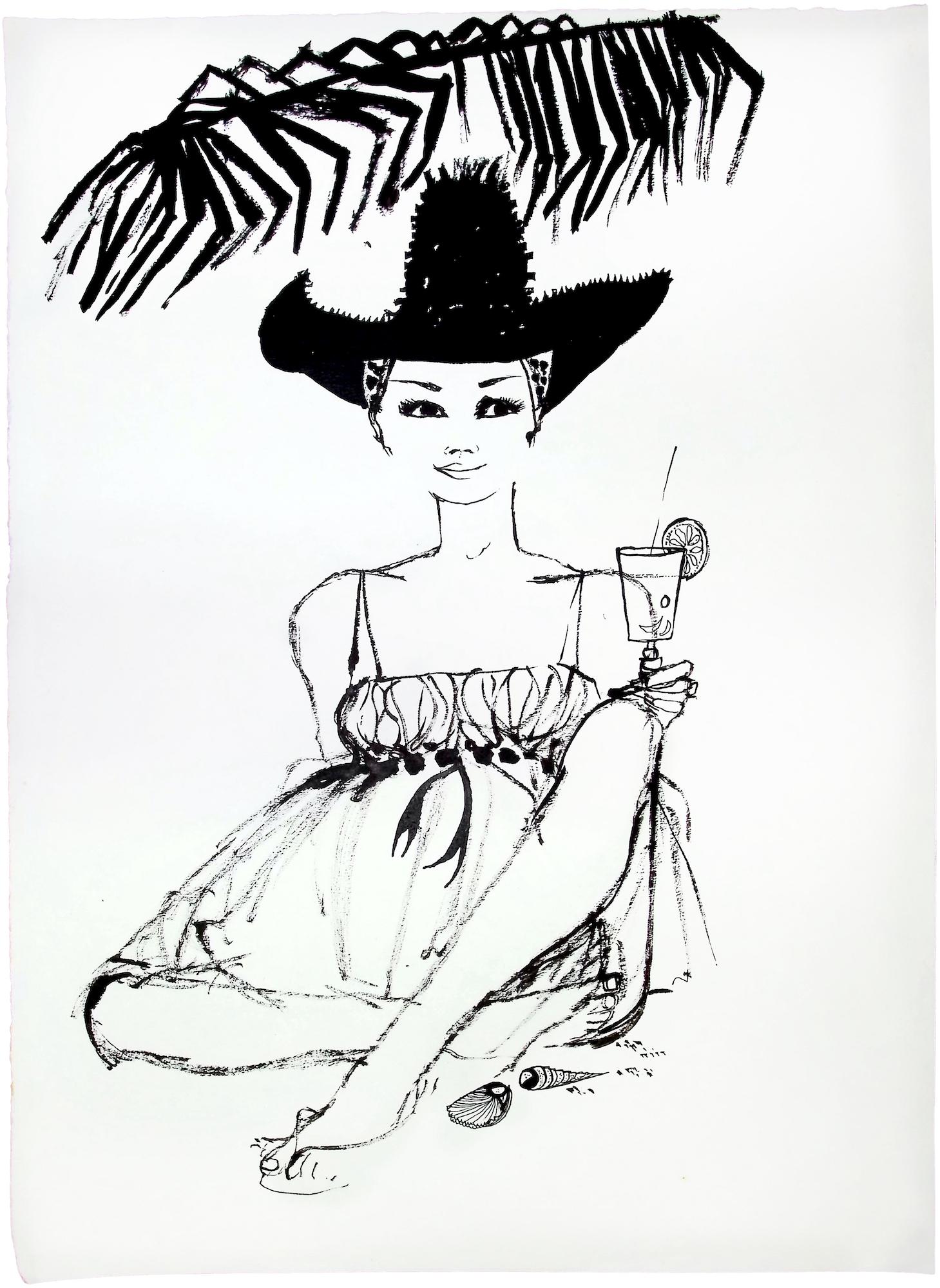
Untitled, Date unknown
British illustrator Janina Ede (1937-2018) created covers and illustrations for over 100 books from the 1950s to the 1980s. Ede often worked using just black ink, combining pen and brushwork to create bold illustrations with fine details.
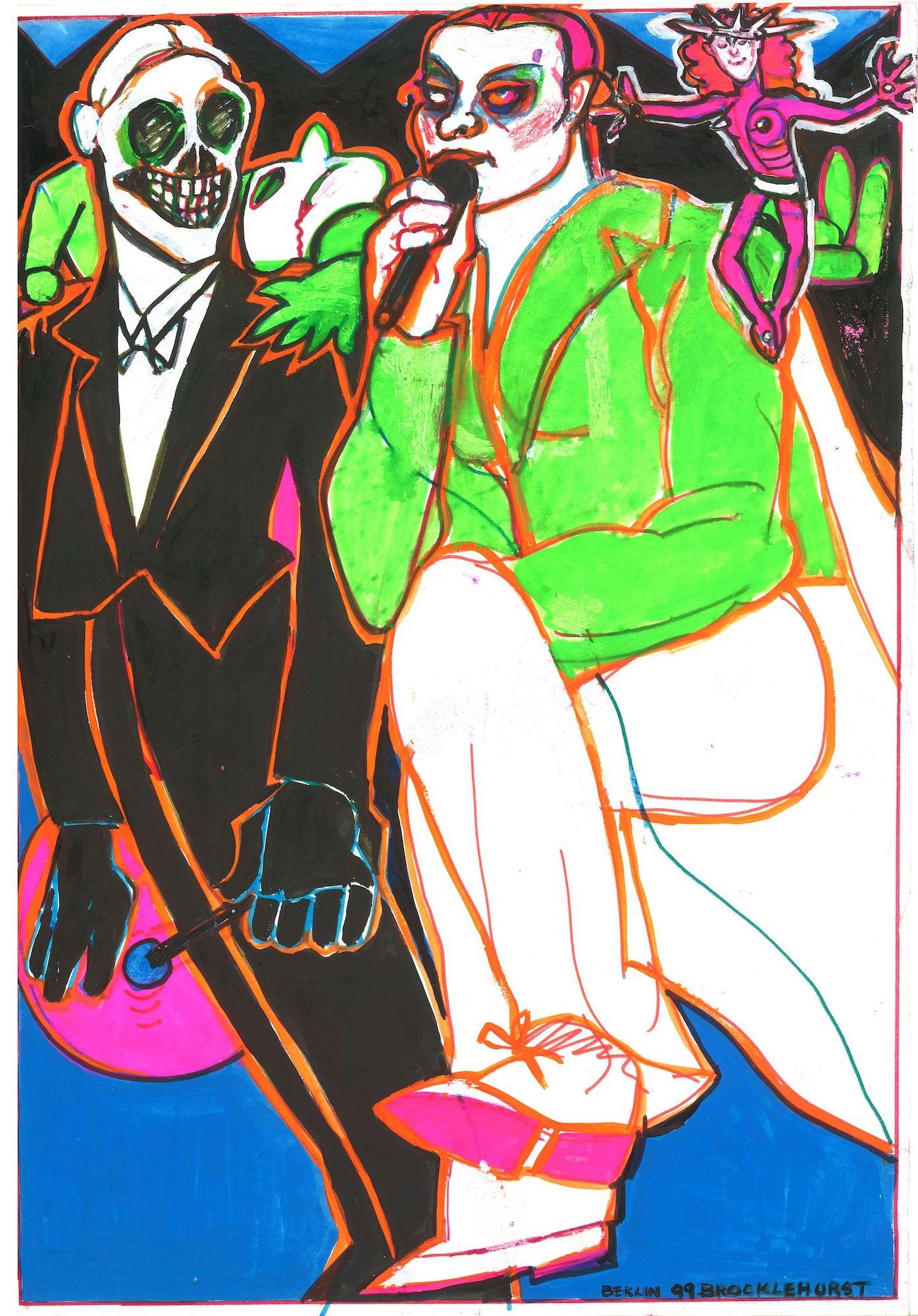
Jo Brocklehurst, Untitled (drawing of Die Eingeborene), 1999
Jo (Josephine) Brocklehurst (1935 - 2006) studied at Central Saint Martins and began her career as a fashion illustrator. She later focused on portraiture, drawing directly from models at her studio in West Hampstead and in nightclubs and theatres in Berlin, London and New York. Her work documents the alternative subcultures of the 1970s, 80s and 90s that went on to shape mainstream fashion and performance scenes. In 1999, Brocklehurst was artist in residence at newspaper Berliner Zeitung during Berliner Theatertreffen, a festival of new German theatre. The paper wanted to revive the Weimar tradition of theatre reviews being accompanied by illustrations, rather than using photographs. Brocklehurst drew behind the scenes and from her seat during performances. This drawing is from a performance of Die Eingeborene.
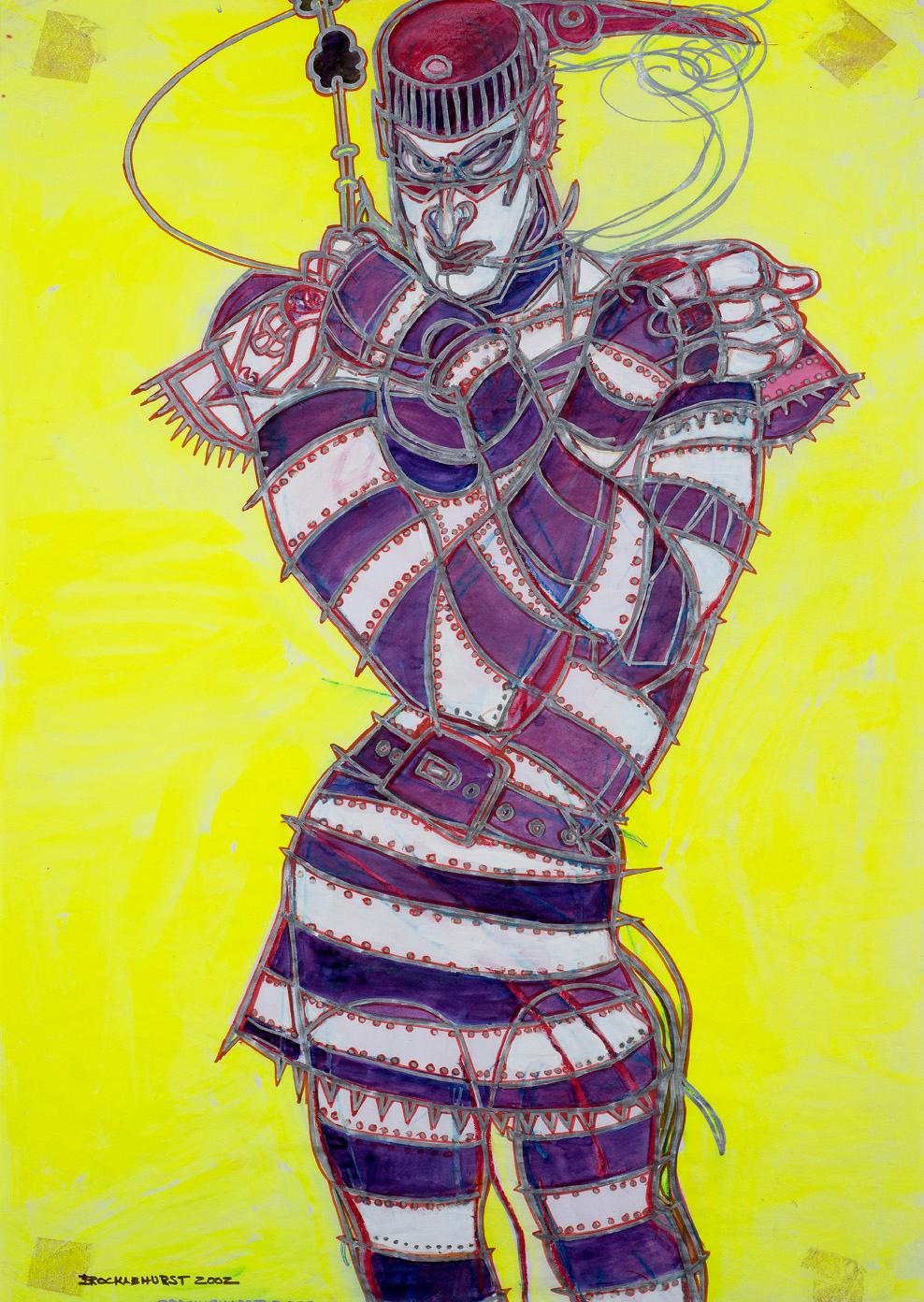
Jo Brocklehurst, Untitled (Caterpillar from Brocklehurst Through the Looking-Glass), 2002
Jo (Josephine) Brocklehurst (1935 - 2006) studied at Central Saint Martins and began her career as a fashion illustrator. She later focused on portraiture, drawing directly from models at her studio in West Hampstead and in nightclubs and theatres in Berlin, London and New York. Her work documents the alternative subcultures of the 1970s, 80s and 90s that went on to shape mainstream fashion and performance scenes. This work is from Brocklehurst Through the Looking-Glass, Brocklehurst’s final series. With an image of herself as a child as the centrepiece, Brocklehurst made hundreds of drawings that re-imagined characters from Lewis Carroll’s Alice novels. Her models were friends and dedicated club-goers who designed and made their own clothes. Works from the series were framed with bright plastic gemstones and hung on every available space at Brocklehurst’s home studio. She used metallic and neon inks that transformed under ultraviolet lights that she switched on for her guests in the evenings.
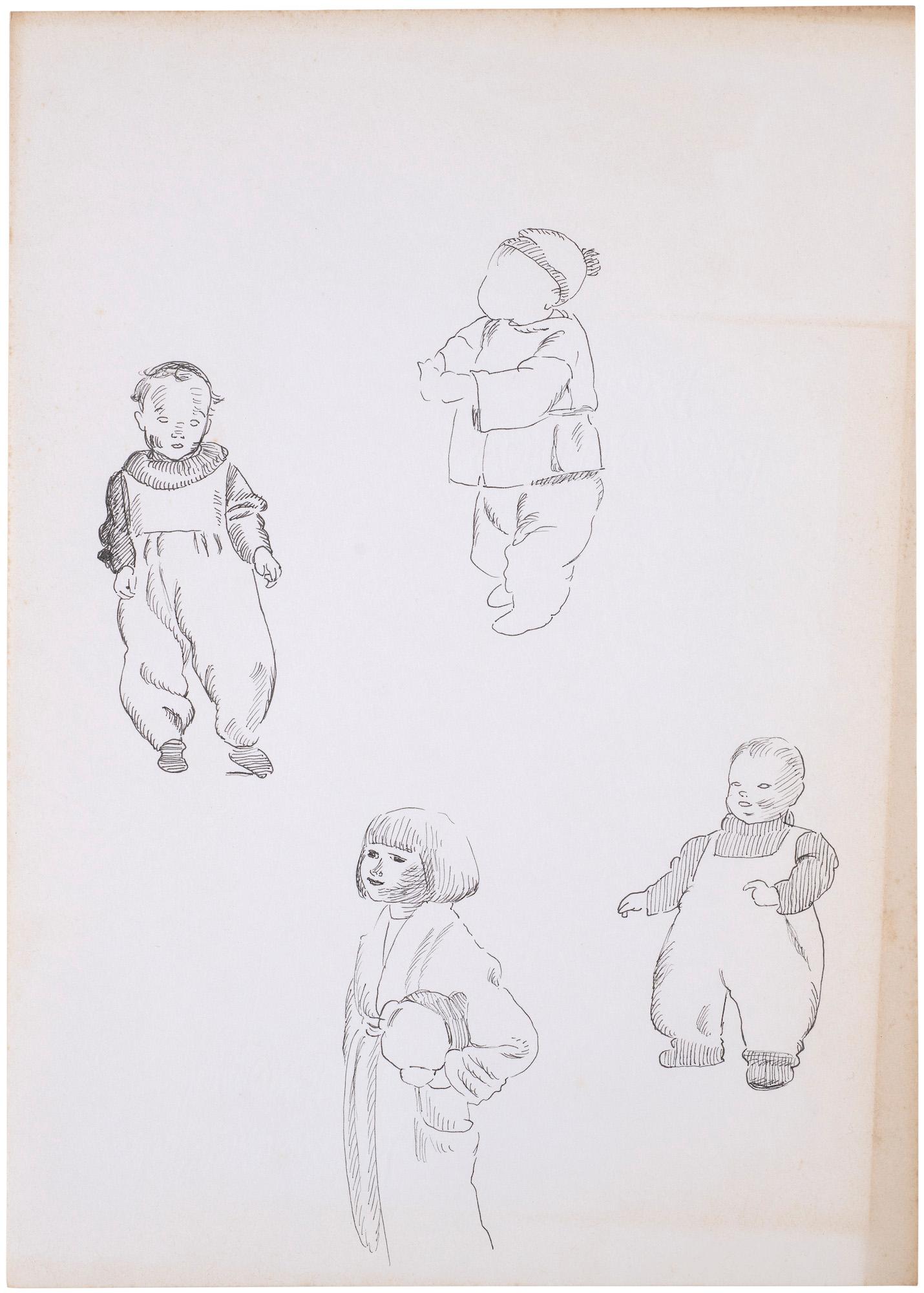
Jacqueline Ayer, Untitled, Date unknown
Jacqueline Ayer (1930–2012) had a career that spanned many creative fields. She began as a fashion illustrator, and later turned her hand to children’s books, textiles and garments, as she worked in New York, Paris, London, Bangkok, Hong Kong and across India. Ayer often used a sketchbook to record her observations and ideas for book narratives and fashion designs. The context for this drawing is unknown.
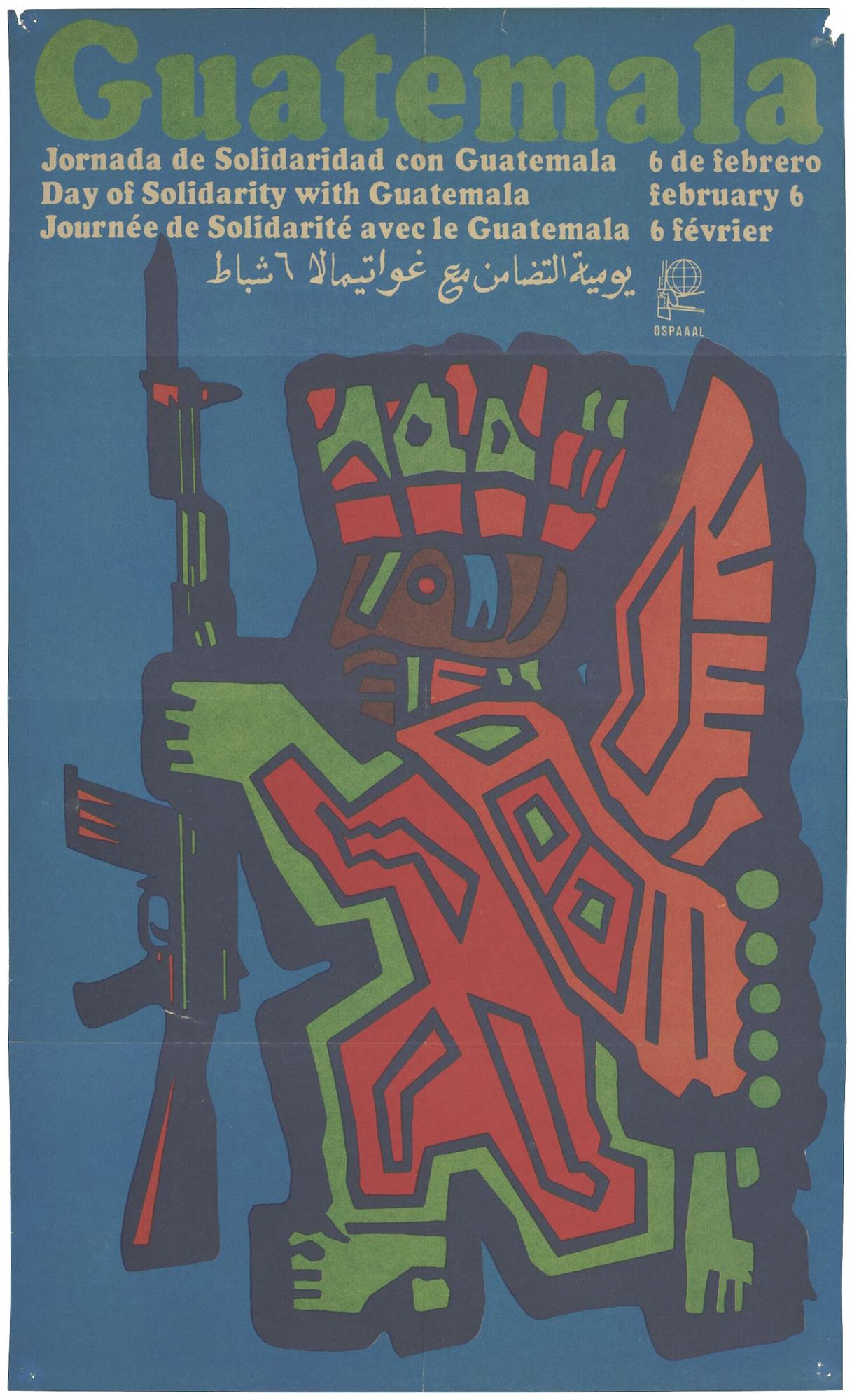
Day of Solidarity with Guatemala - february 6, 1968
Between the 1960s and 1990s, more than fifty designers worked at OSPAAAL. Based in Cuba, they made magazines and posters that were sent around the world. Their aim was to promote radical political ideas. Many of their posters celebrate socialist revolutions and liberation movements from the Global South. This poster was issued in support of leftist rebels fighting against the Guatemalan government during the Guatemalan Civil War. It shows a Mayan god holding an assault rifle. Many OSPAAAL designers combined images of Indigenous art and craft with weaponry. Their aim was to argue for the right to self-determination and support liberation movements opposing oppressive powers. However, the designers did not always know the meaning or origin of the iconography they used.
Content warning: weaponry
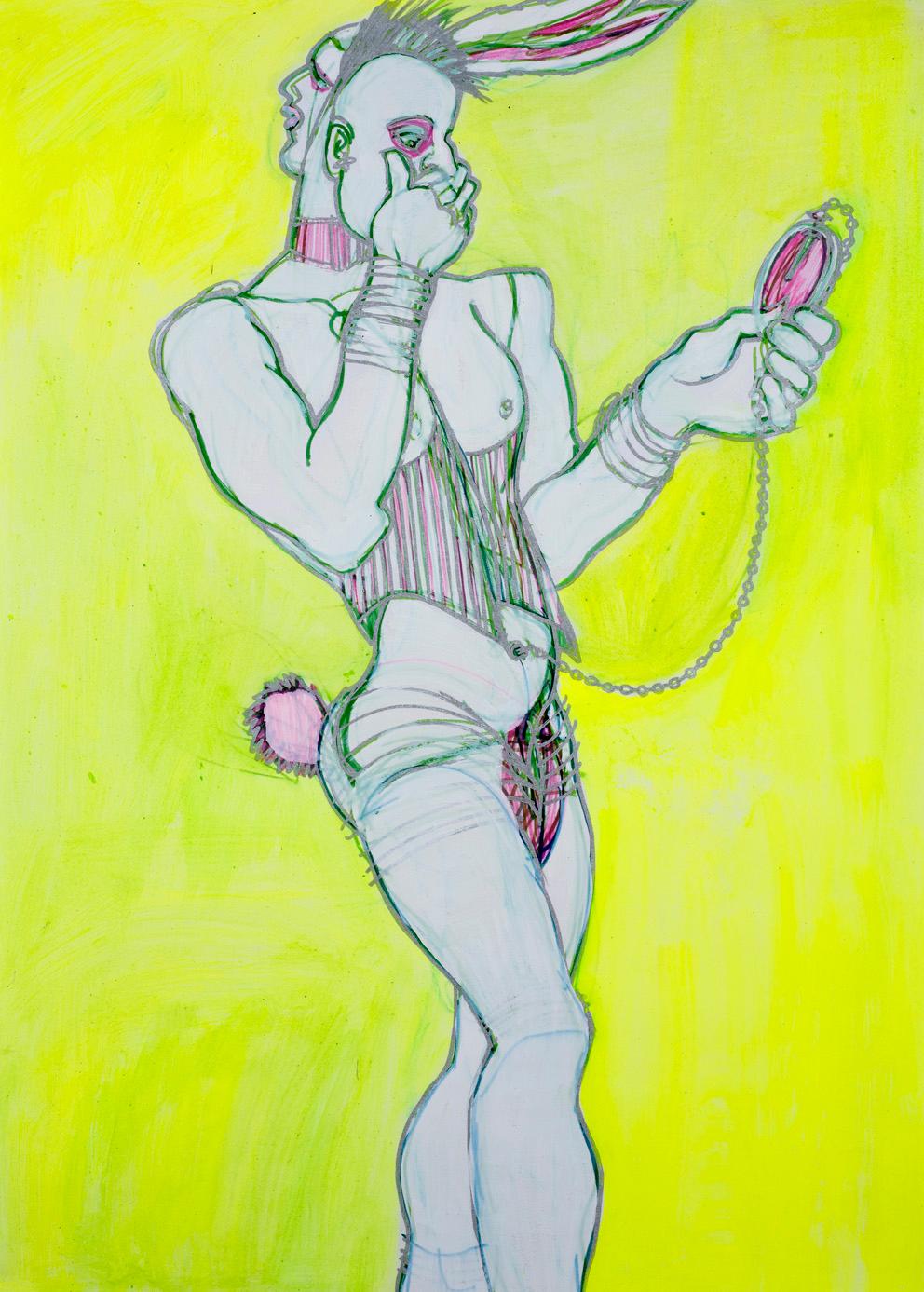
Jo Brocklehurst, Untitled (White Rabbit from Brocklehurst Through the Looking-Glass), 2000s
Jo (Josephine) Brocklehurst (1935 - 2006) studied at Central Saint Martins and began her career as a fashion illustrator. She later focused on portraiture, drawing directly from models at her studio in West Hampstead and in nightclubs and theatres in Berlin, London and New York. Her work documents the alternative subcultures of the 1970s, 80s and 90s that went on to shape mainstream fashion and performance scenes. This work is from Brocklehurst Through the Looking-Glass, Brocklehurst’s final series. With an image of herself as a child as the centrepiece, Brocklehurst made hundreds of drawings that re-imagined characters from Lewis Carroll’s Alice novels. Her models were friends and dedicated club-goers who designed and made their own clothes. Works from the series were framed with bright plastic gemstones and hung on every available space at Brocklehurst’s home studio. She used metallic and neon inks that transformed under ultraviolet lights that she switched on for her guests in the evenings.
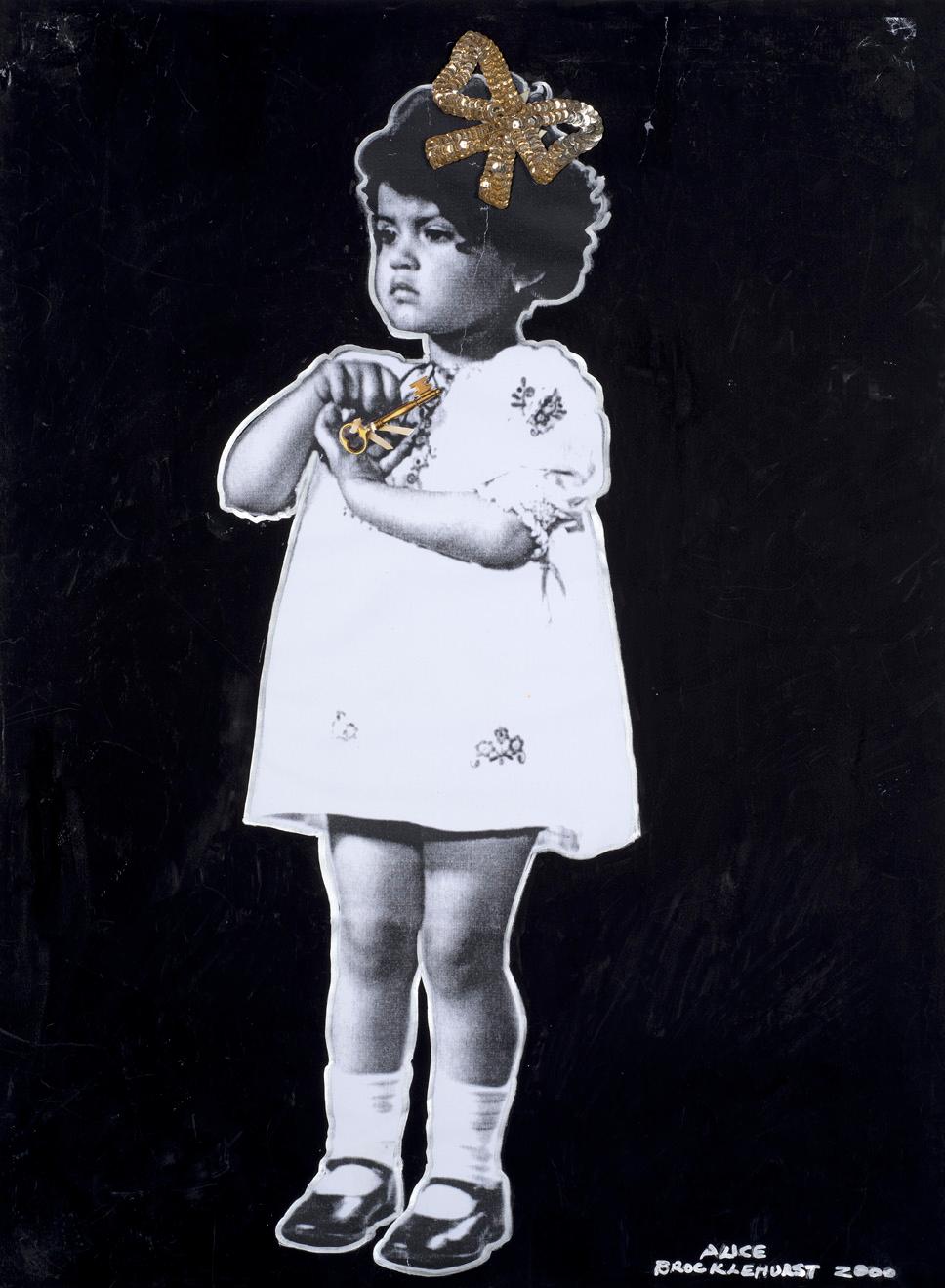
Jo Brocklehurst, Alice (from Brocklehurst Through the Looking-Glass), 2000
Jo (Josephine) Brocklehurst (1935 - 2006) studied at Central Saint Martins and began her career as a fashion illustrator. She later focused on portraiture, drawing directly from models at her studio in West Hampstead and in nightclubs and theatres in Berlin, London and New York. Her work documents the alternative subcultures of the 1970s, 80s and 90s that went on to shape mainstream fashion and performance scenes. This work is from Brocklehurst Through the Looking-Glass, Brocklehurst’s final series. With this image of herself as a child as the centrepiece, Brocklehurst made hundreds of drawings that re-imagined characters from Lewis Carroll’s Alice novels. Her models were friends and dedicated club-goers who designed and made their own clothes. Works from the series were framed with bright plastic gemstones and hung on every available space at Brocklehurst’s home studio. She used metallic and neon inks that transformed under ultraviolet lights that she switched on for her guests in the evenings.
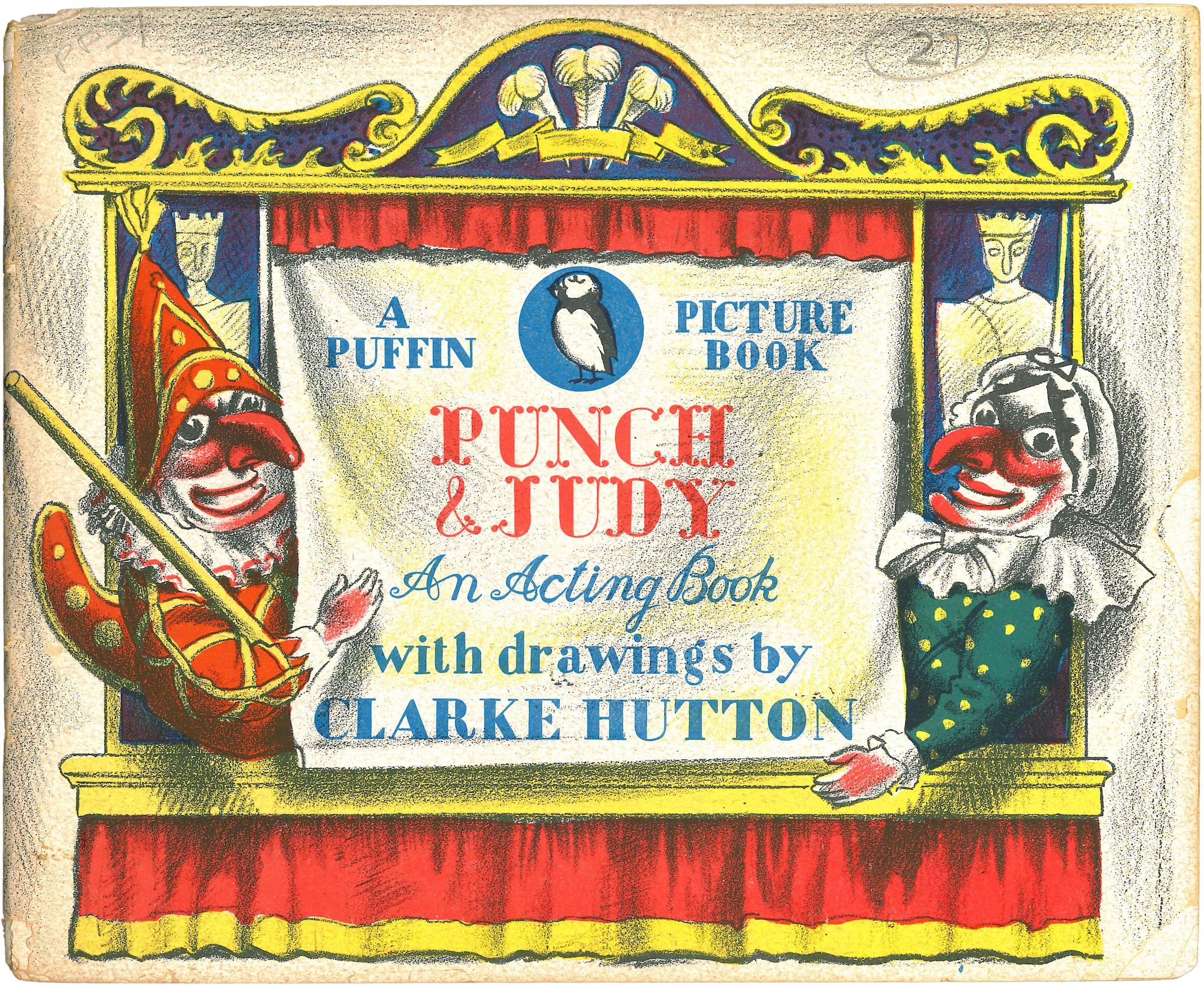
Punch & Judy, 1942
The Puffin Picture Books series was established by designer and editor Noel Carrington (1895-1989). In 1933, artist Pearl Binder (1904-1990) sent Carrington a package of Soviet children’s books. “They were produced by the million on very cheap paper, but the drawings were vigorous and the colour delightful” he later remembered. These books inspired Carrington to edit a series of affordable books that would encourage “the child’s awakening interest in its surroundings... I felt that colour was essential, and that artists could... be more successful in books of this nature than the camera”. Many artists and illustrators worked on the series, adapting their ways of working to lithographic printing and the Puffin Picture Book format. Most of the 120 books in the series were printed on one large sheet of paper: one side in colour and one in black-and-white. Each sheet was cut, folded and stapled to create a softcover book.
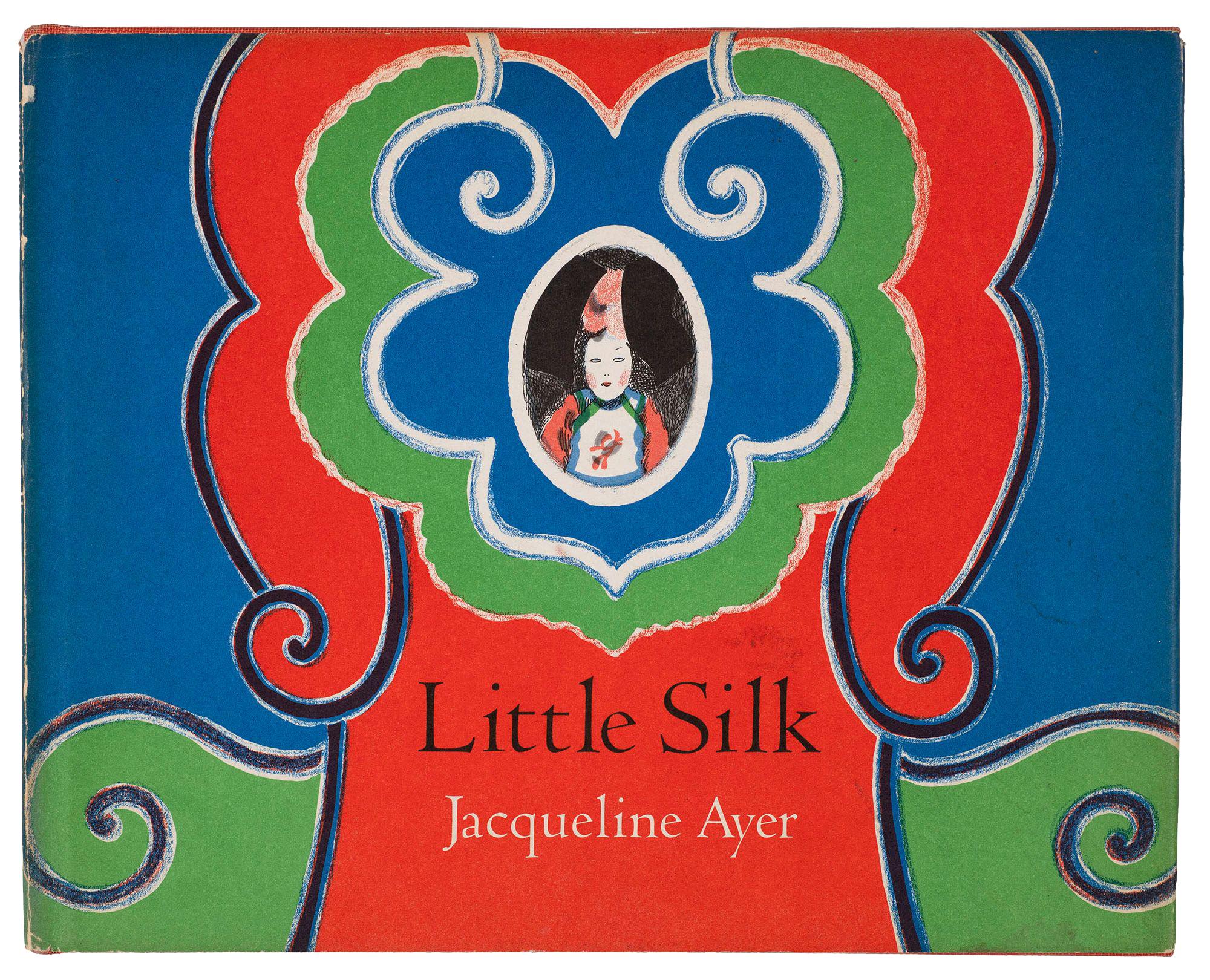
Jacqueline Ayer, Little Silk, 1970
Jacqueline Ayer (1930–2012) had a career that spanned many creative fields. She began as a fashion illustrator, and later turned her hand to children’s books, textiles and garments, as she worked in New York, Paris, London, Bangkok, Hong Kong and across India. Ayer’s fifth book, Little Silk, is about a lost doll who eventually finds her way to a loving home. It takes place in Hong Kong, where Ayer lived with her daughters from 1963 to 1965.
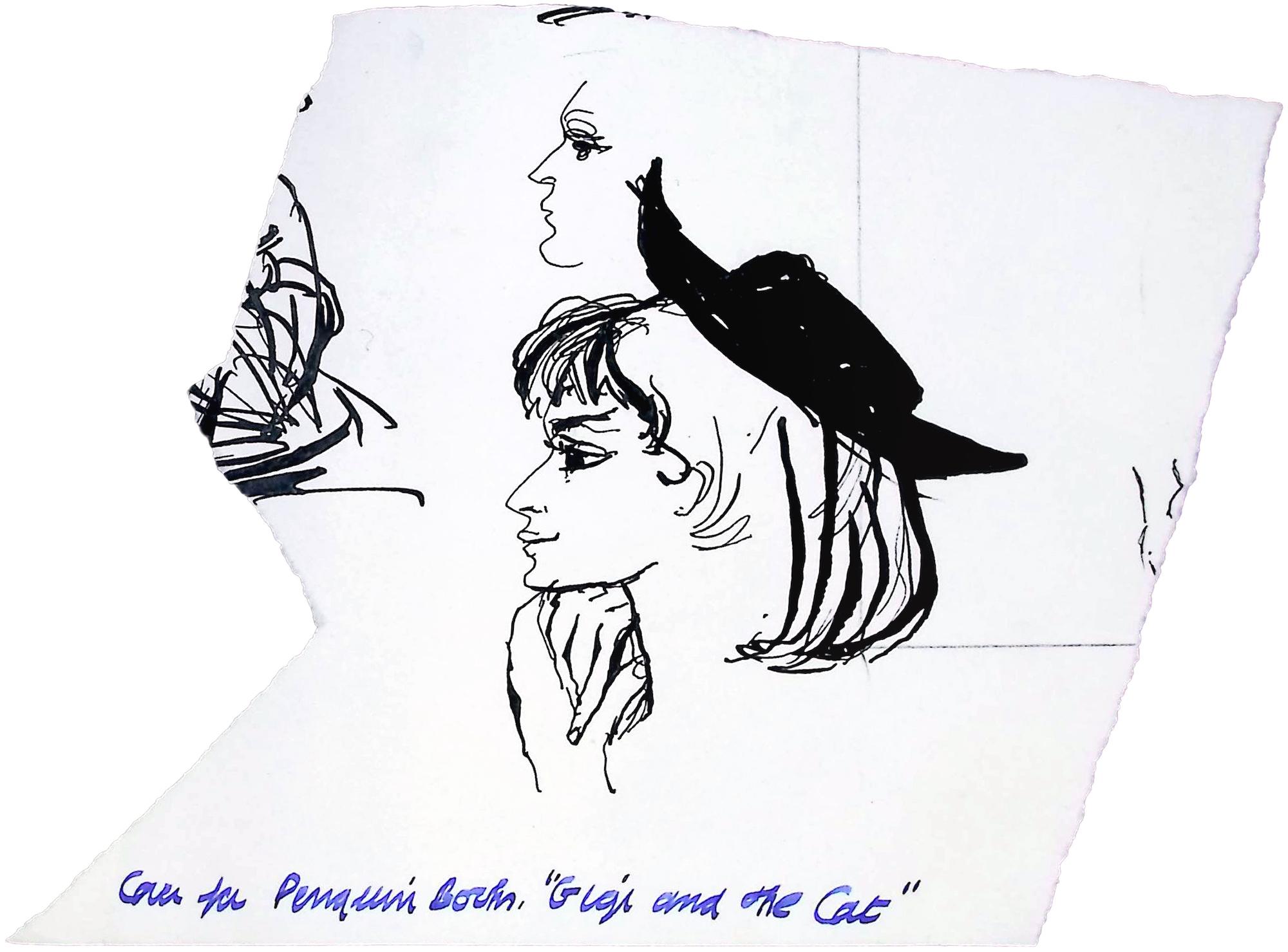
Draft cover illustration for Collette's "Gigi and the Cat", c. 1958
British illustrator Janina Ede (1937-2018) created covers and illustrations for over 100 books from the 1950s to the 1980s.
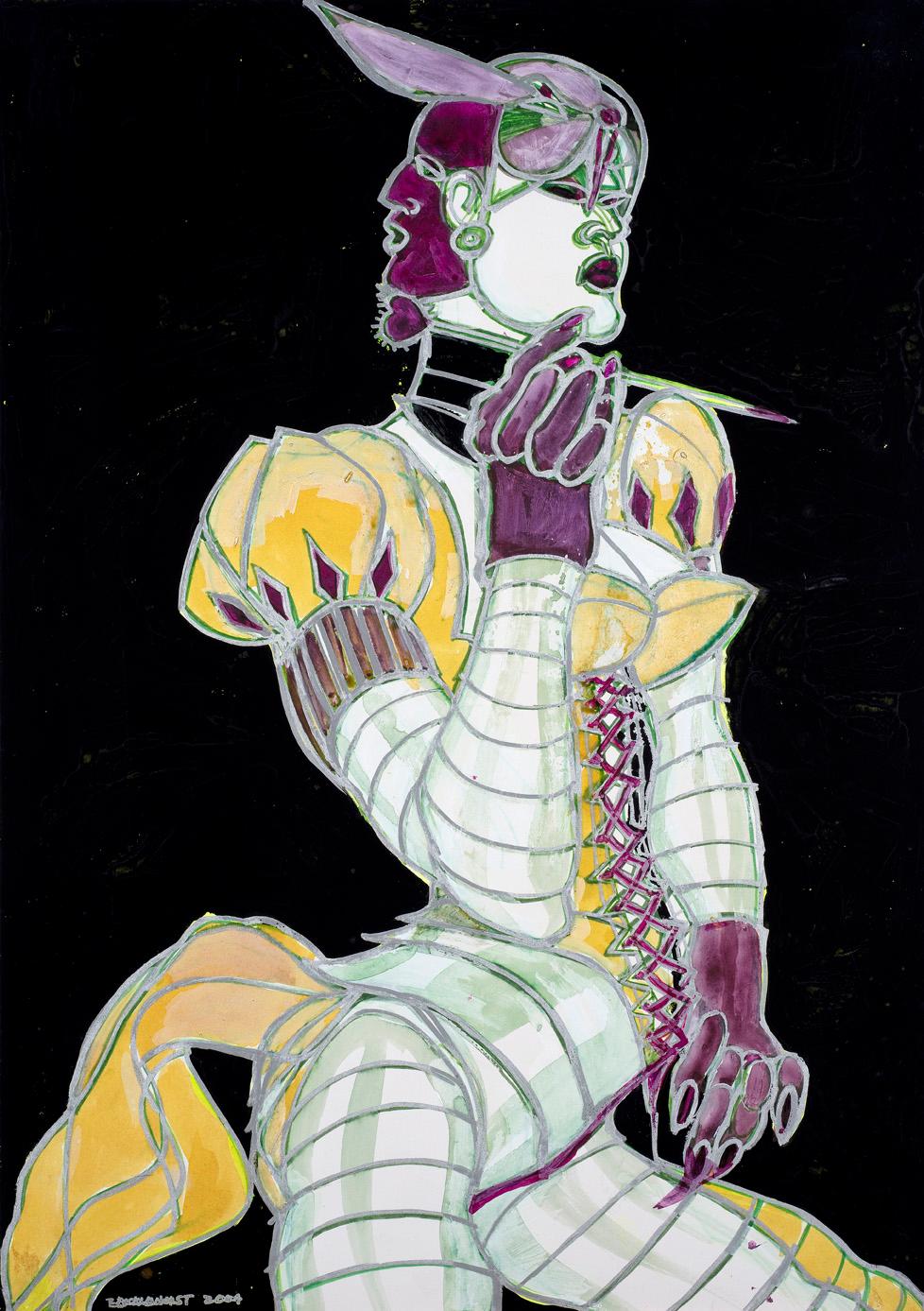
Jo Brocklehurst, Untitled (from Brocklehurst Through the Looking-Glass), 2004
Jo (Josephine) Brocklehurst (1935 - 2006) studied at Central Saint Martins and began her career as a fashion illustrator. She later focused on portraiture, drawing directly from models at her studio in West Hampstead and in nightclubs and theatres in Berlin, London and New York. Her work documents the alternative subcultures of the 1970s, 80s and 90s that went on to shape mainstream fashion and performance scenes. This work is from Brocklehurst Through the Looking-Glass, Brocklehurst’s final series. With an image of herself as a child as the centrepiece, Brocklehurst made hundreds of drawings that re-imagined characters from Lewis Carroll’s Alice novels. Her models were friends and dedicated club-goers who designed and made their own clothes. Works from the series were framed with bright plastic gemstones and hung on every available space at Brocklehurst’s home studio. She used metallic and neon inks that transformed under ultraviolet lights that she switched on for her guests in the evenings.
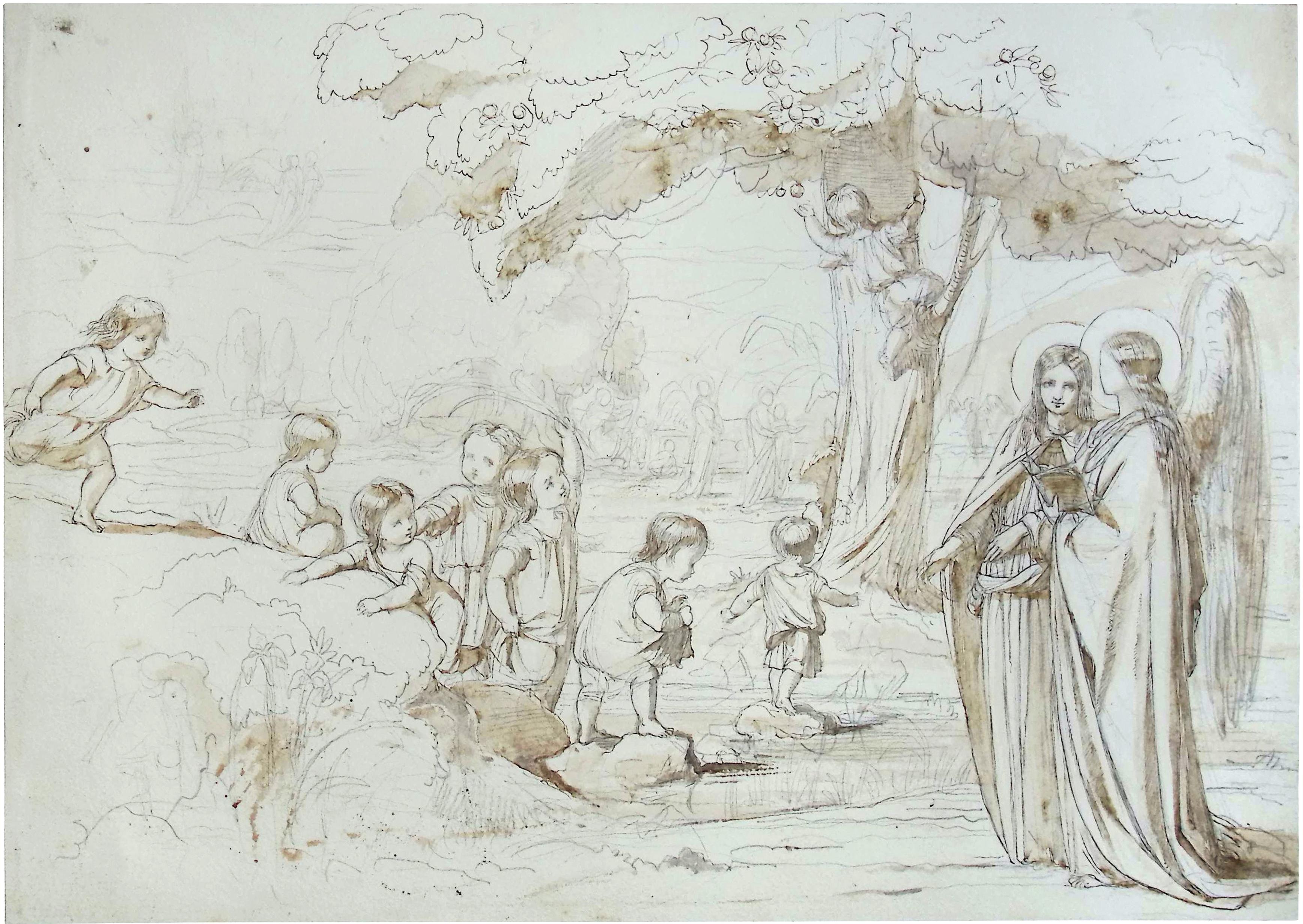
Untitled, Date unknown
Eleanor Vere Boyle (1825 – 1916) illustrated poetry and prose by some of the most popular authors of her time. She regularly drew and painted using ink and watercolour, sketching landscapes, animals and her children from life. She also made drawings from her imagination, often reflecting spiritual themes.
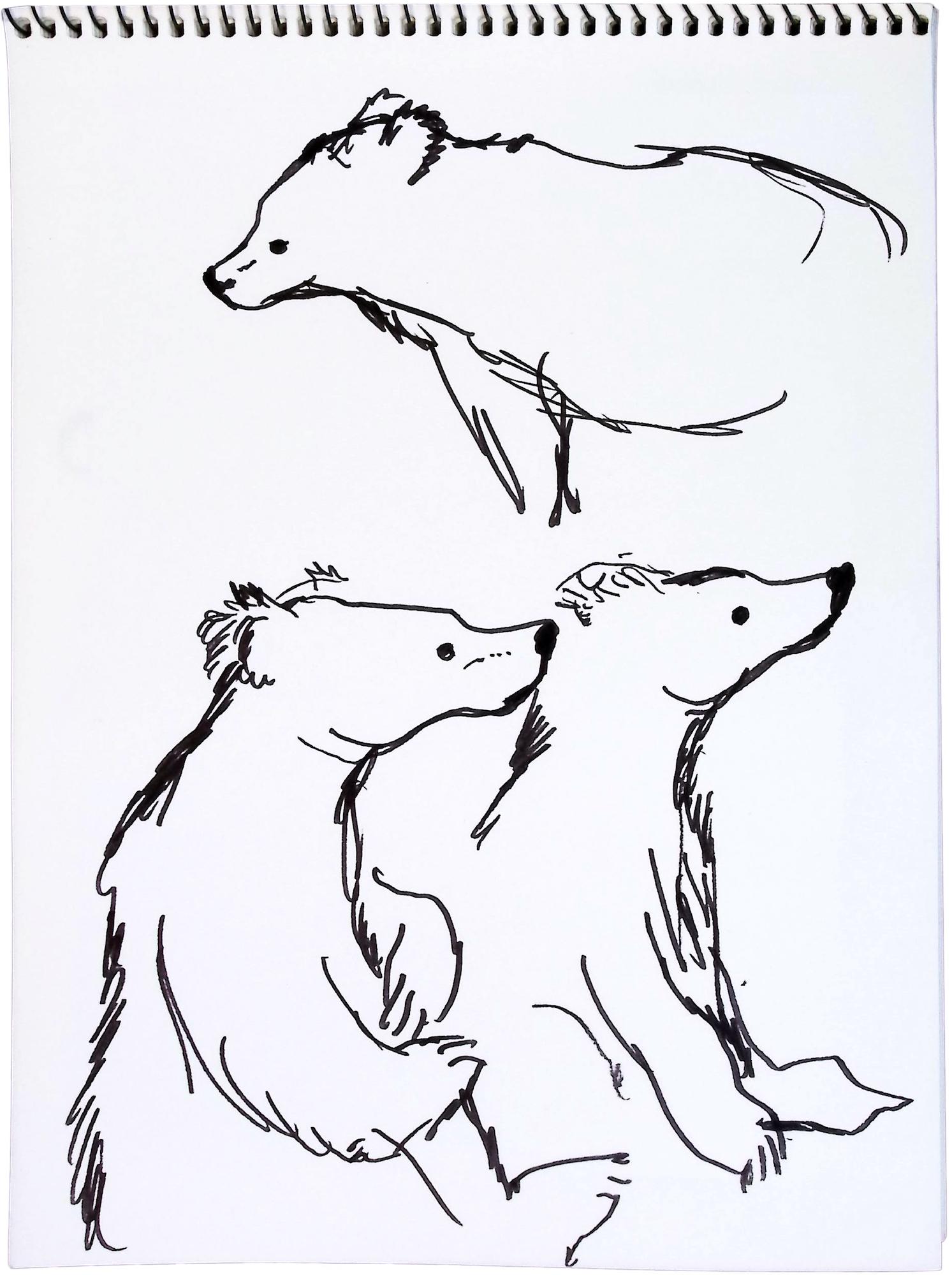
Untitled, Date unknown
British illustrator Janina Ede (1937-2018) created covers and illustrations for over 100 books from the 1950s to the 1980s. Many of her illustrations feature animals, which she drew from life.
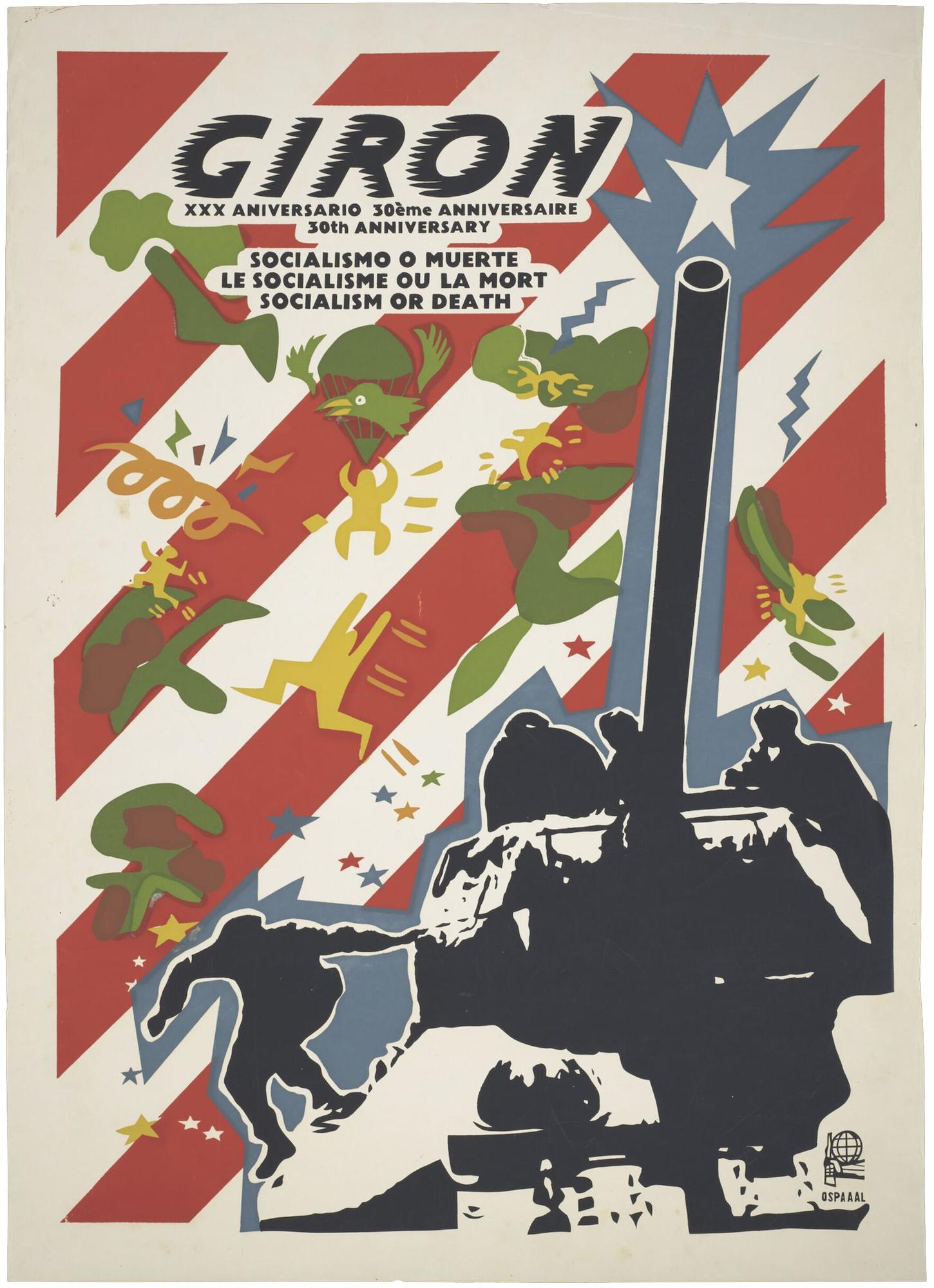
GIRON - 30th ANNIVERSARY - SOCIALISM OR DEATH, 1969
Between the 1960s and 1990s, more than fifty designers worked at OSPAAAL. Based in Cuba, they made magazines and posters that were sent around the world. Their aim was to promote radical political ideas. Many of their posters celebrate socialist revolutions and liberation movements from the Global South. In 1961, a military group sponsored by the U.S. Central Intelligence Agency invaded Cuba in an attempt to overthrow Fidel Castro. Eladio Rivadulla Pérez used a press photograph of Castro jumping from a tank for his commemorative poster design.
Content warning: weaponry
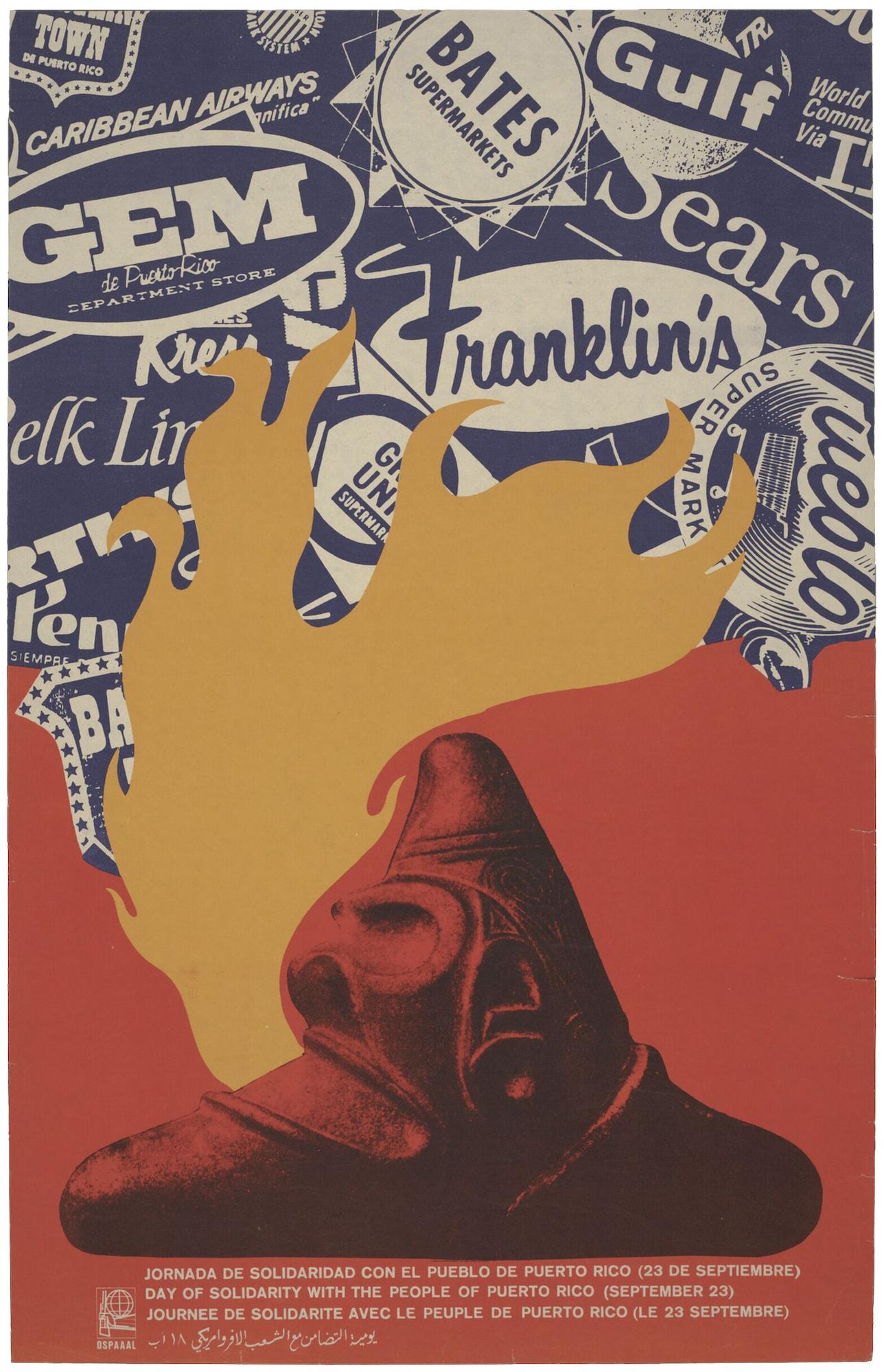
DAY OF SOLIDARITY WITH THE PEOPLE OF PUERTO RICO (SEPTEMBER 23), 1969
Between the 1960s and 1990s, more than fifty designers worked at OSPAAAL (the Organisation of Solidarity with the People of Africa, Asia and Latin America). Based in Cuba, they made magazines and posters that were sent around the world. Their aim was to promote radical political ideas. Many of their posters celebrate socialist revolutions and liberation movements from the Global South. In this design, a three-point cemí figure breathes fire in defiance of the U.S. corporations operating in Puerto Rico. For the Indigenous Taíno people of the Caribbean, a cemí is a representation of a deity, and at the same time a living being with its own vital force. Many OSPAAAL designers used Indigenous imagery to argue for the right to self-determination and support liberation movements opposing oppressive powers. However, the designers did not always know the full meaning or origin of the iconography they used.
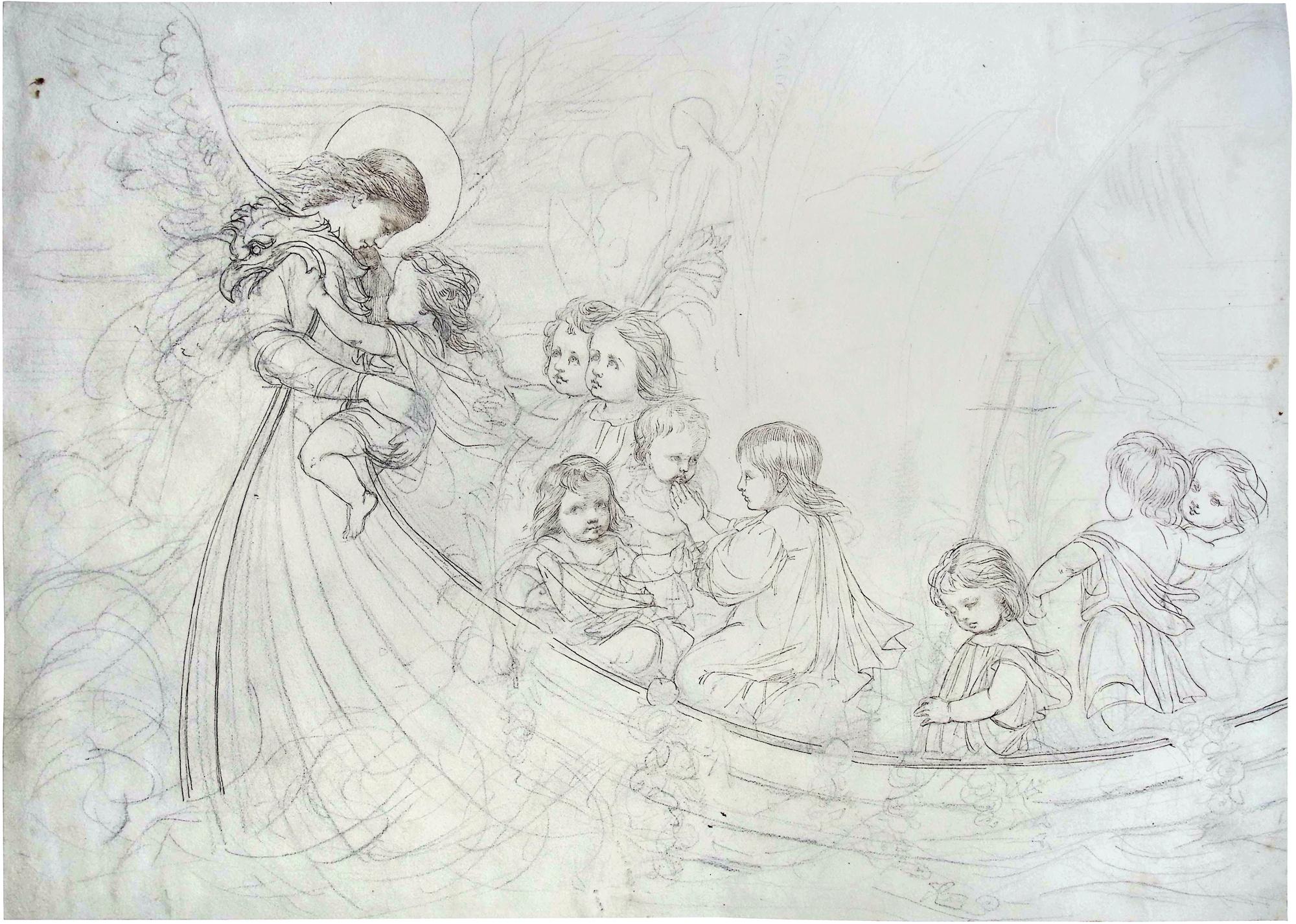
Untitled, Date unknown
Eleanor Vere Boyle (1825 – 1916) illustrated poetry and prose by some of the most popular authors of her time. She regularly drew and painted using ink and watercolour, sketching landscapes, animals and her children from life. She also made drawings from her imagination, often reflecting spiritual themes.
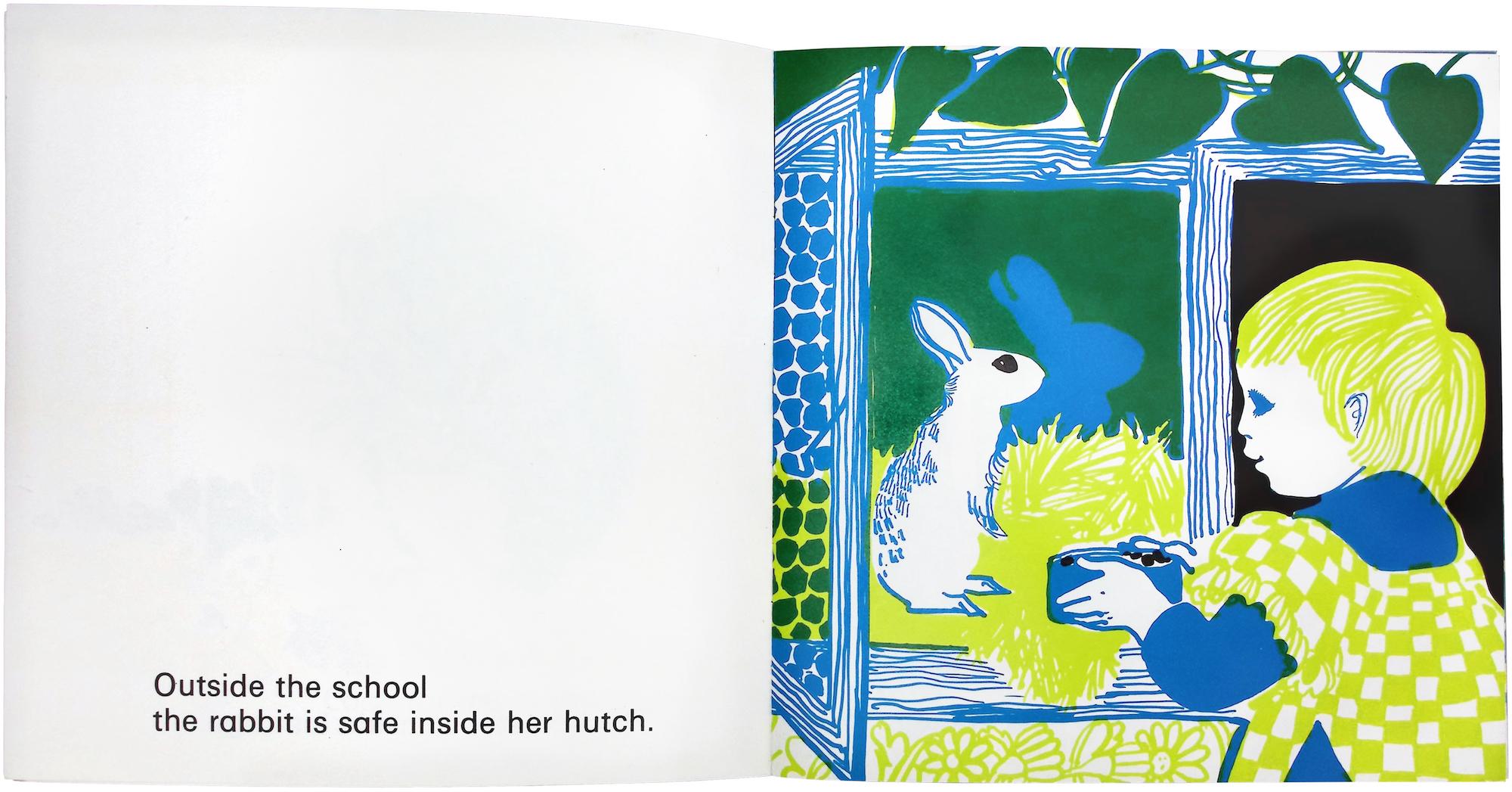
It's Sunny Outside, 1974
British illustrator Janina Ede (1937-2018) created covers and illustrations for over 100 books from the 1950s to the 1980s. Many of her illustrations feature animals, which she drew from life.
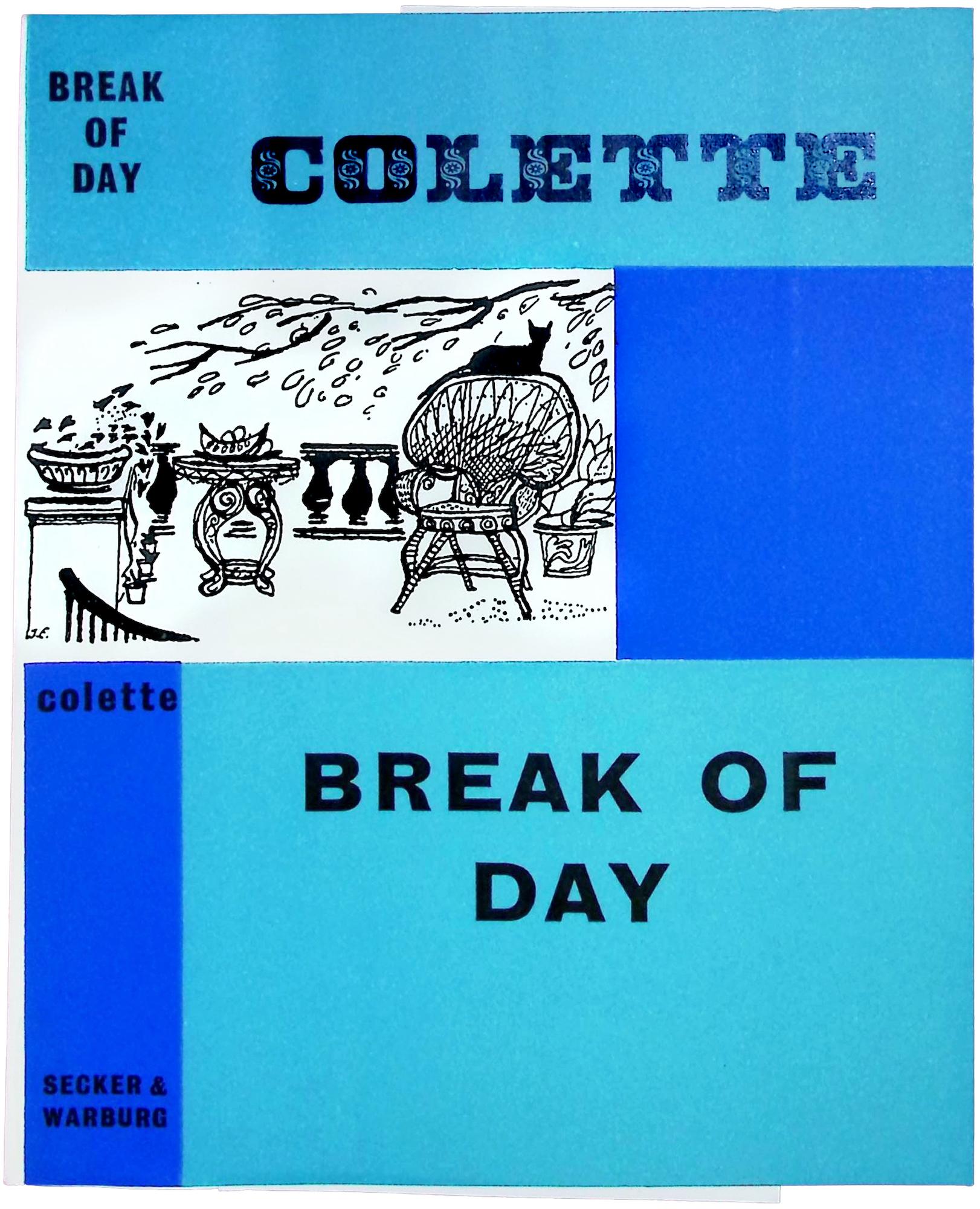
Book cover proof for Colette's "Break of Day", 1961
British illustrator Janina Ede (1937-2018) created covers and illustrations for over 100 books from the 1950s to the 1980s. She designed the covers of several books by French author and pioneer of autofiction Sidonie-Gabrielle Colette.
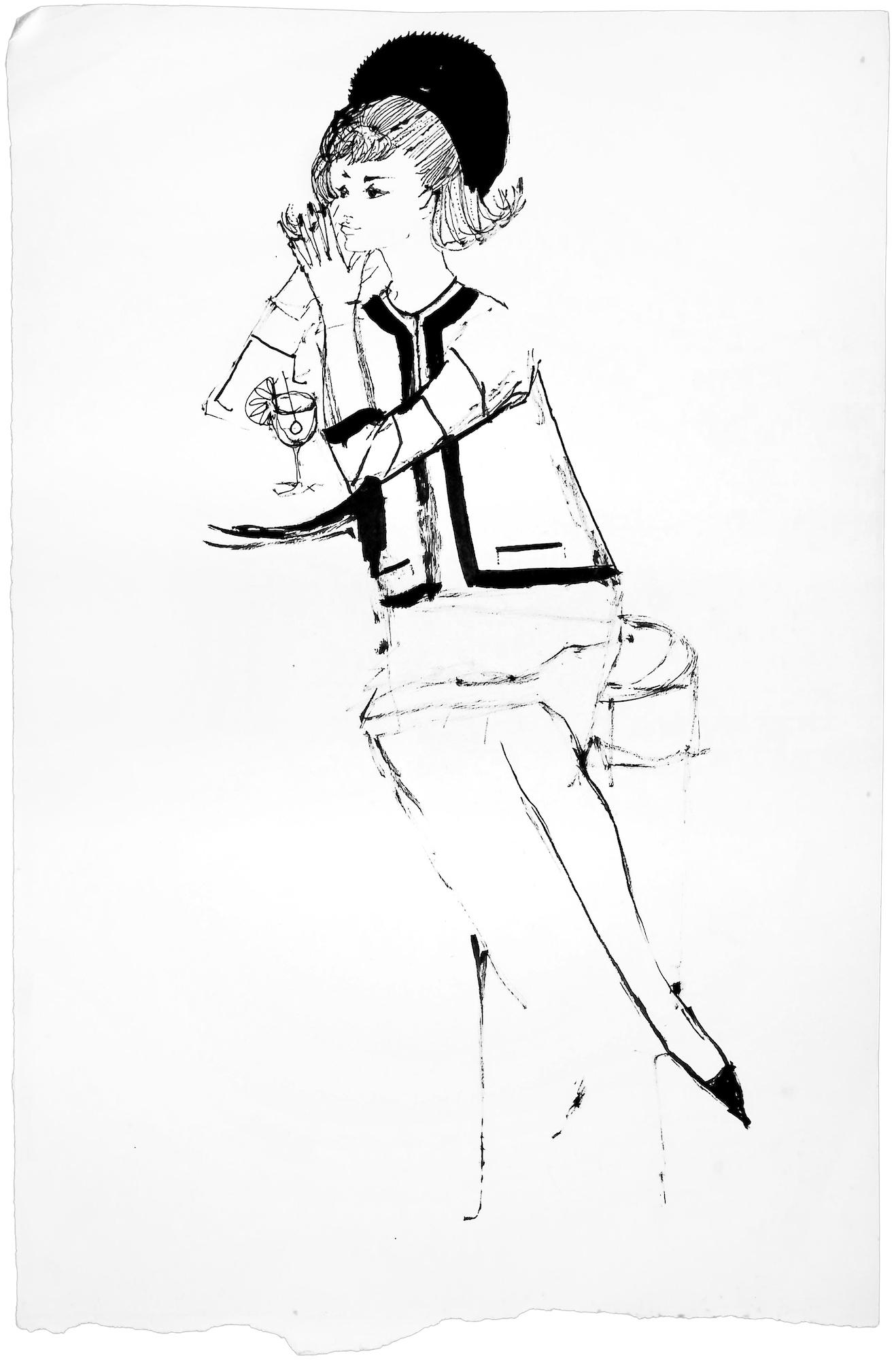
Untitled, Date unknown
British illustrator Janina Ede (1937-2018) created covers and illustrations for over 100 books from the 1950s to the 1980s. Ede often worked using just black ink, combining pen and brushwork to create bold illustrations with fine details.
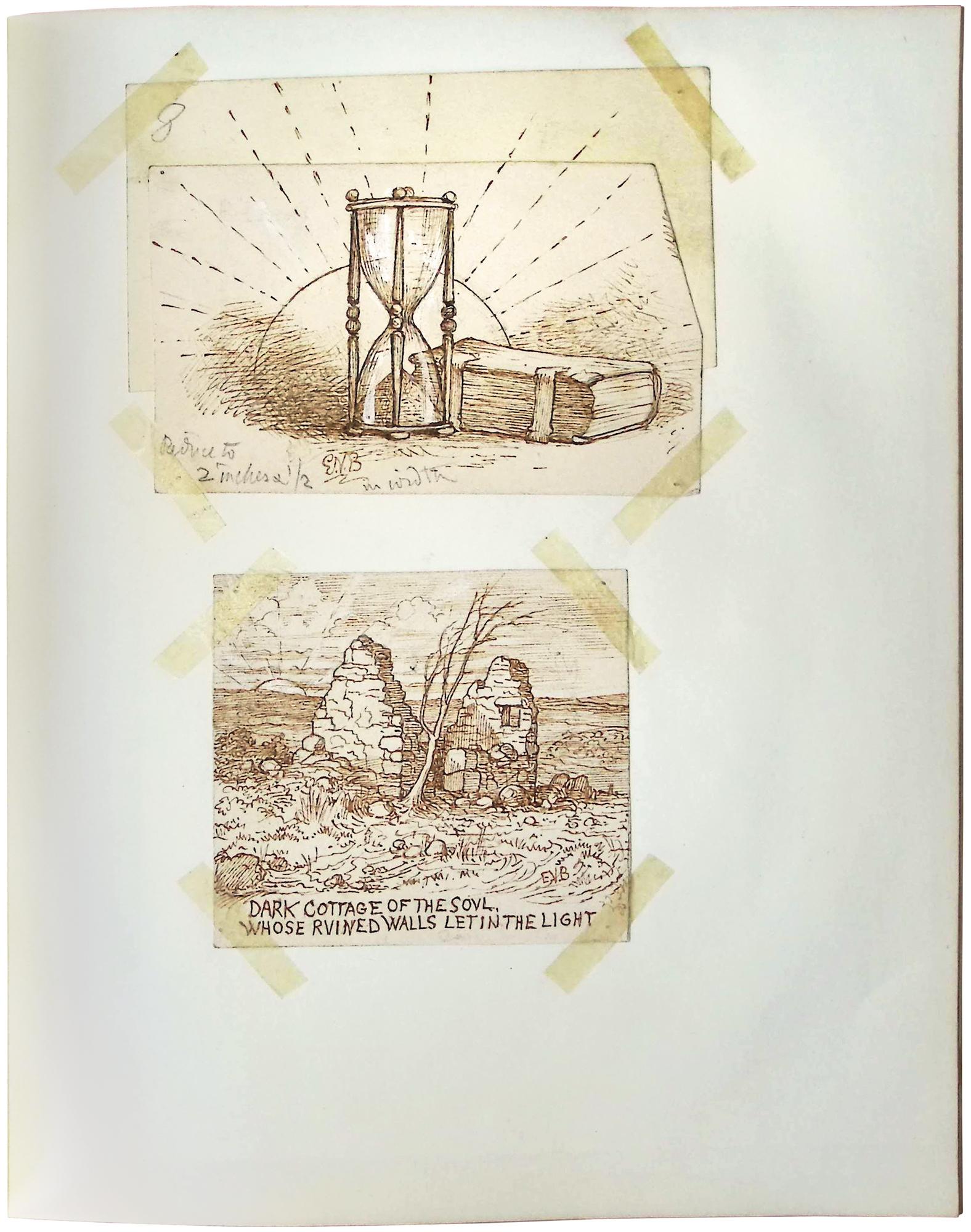
Untitled (illustrations for A Book of Heavenly Birthdays), c. 1893
Eleanor Vere Boyle (1825 – 1916) illustrated poetry and prose by some of the most popular authors of her time. She regularly drew and painted using ink and watercolour, sketching landscapes, animals and her children from life. She also made drawings from her imagination, often reflecting spiritual themes. These drawings were used as some of the final illustrations printed in the artists' publication A Book of Heavenly Birthdays (1893, London Elliot Stock)
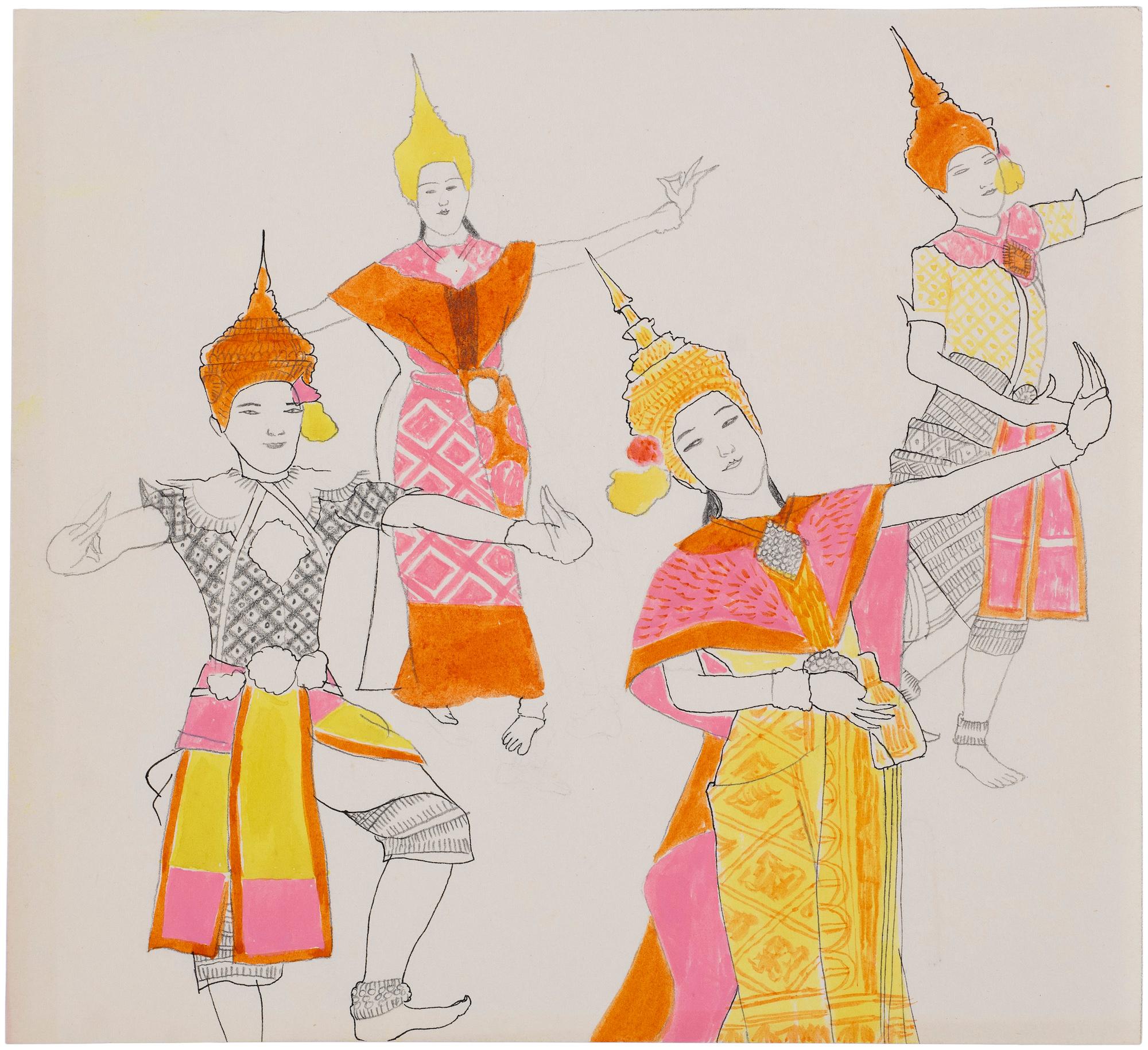
Jacqueline Ayer, Untitled, c. 1959
Jacqueline Ayer (1930–2012) had a career that spanned many creative fields. She began as a fashion illustrator, and later turned her hand to children’s books, textiles and garments, as she worked in New York, Paris, London, Bangkok, Hong Kong and across India.
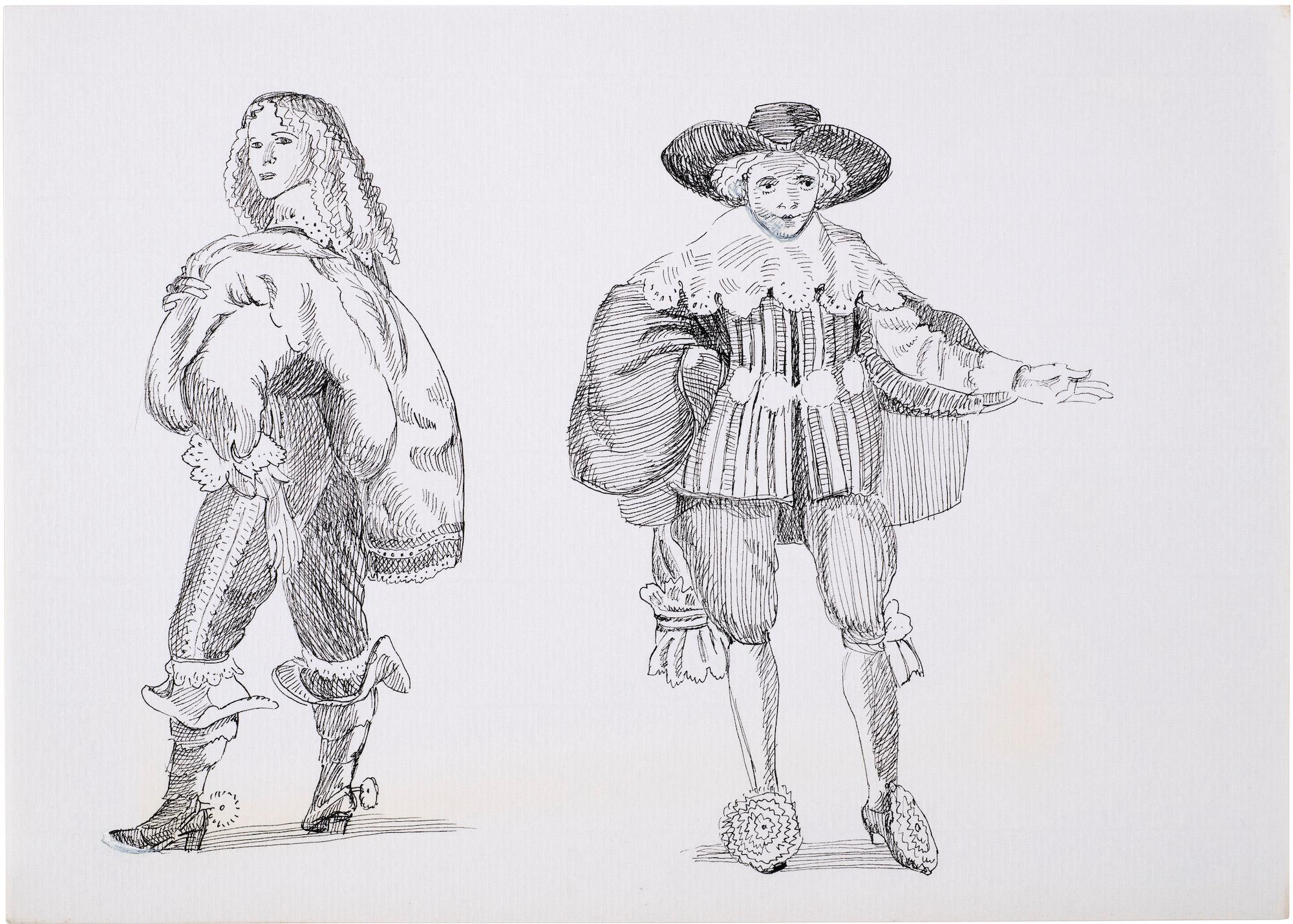
Jacqueline Ayer, Untitled, Date unknown
Jacqueline Ayer (1930–2012) had a career that spanned many creative fields. She began as a fashion illustrator, and later turned her hand to children’s books, textiles and garments, as she worked in New York, Paris, London, Bangkok, Hong Kong and across India. Ayer often used a sketchbook to record her observations and ideas for book narratives and fashion designs. The context for this drawing is unknown.
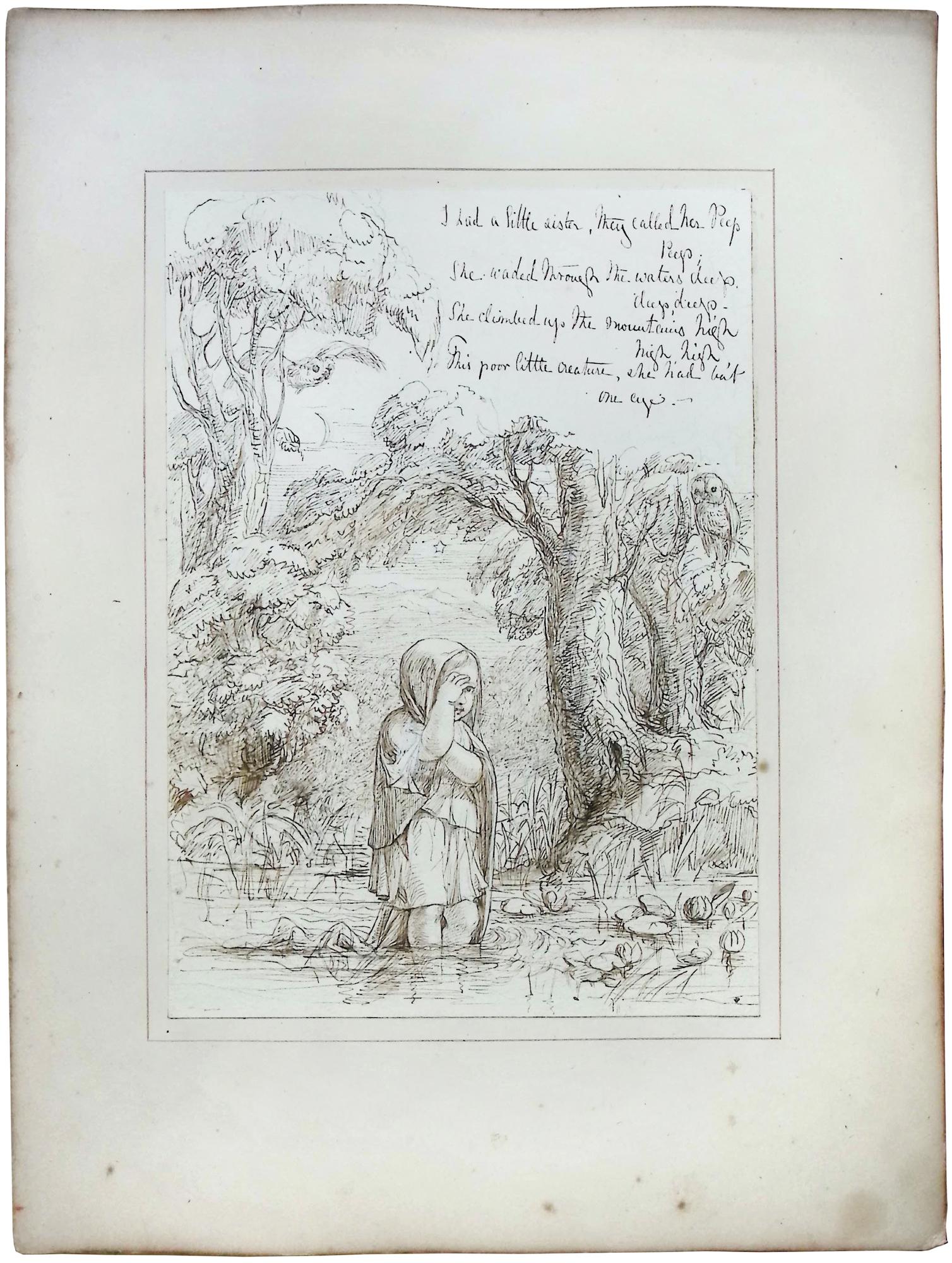
Untitled (illustration for Child's Play, 'I have a little sister'), c. 1851
Eleanor Vere Boyle (1825 – 1916) illustrated poetry and prose by some of the most popular authors of her time. She regularly drew and painted using ink and watercolour, sketching landscapes, animals and her children from life. She also made drawings from her imagination, often reflecting spiritual themes. This illustration is from her first book, Child’s Play (1851). Boyle provided her publishers with black and white drawings that were then converted into etchings by the printer. These were later reproduced as lithographs, in colours chosen by Boyle.
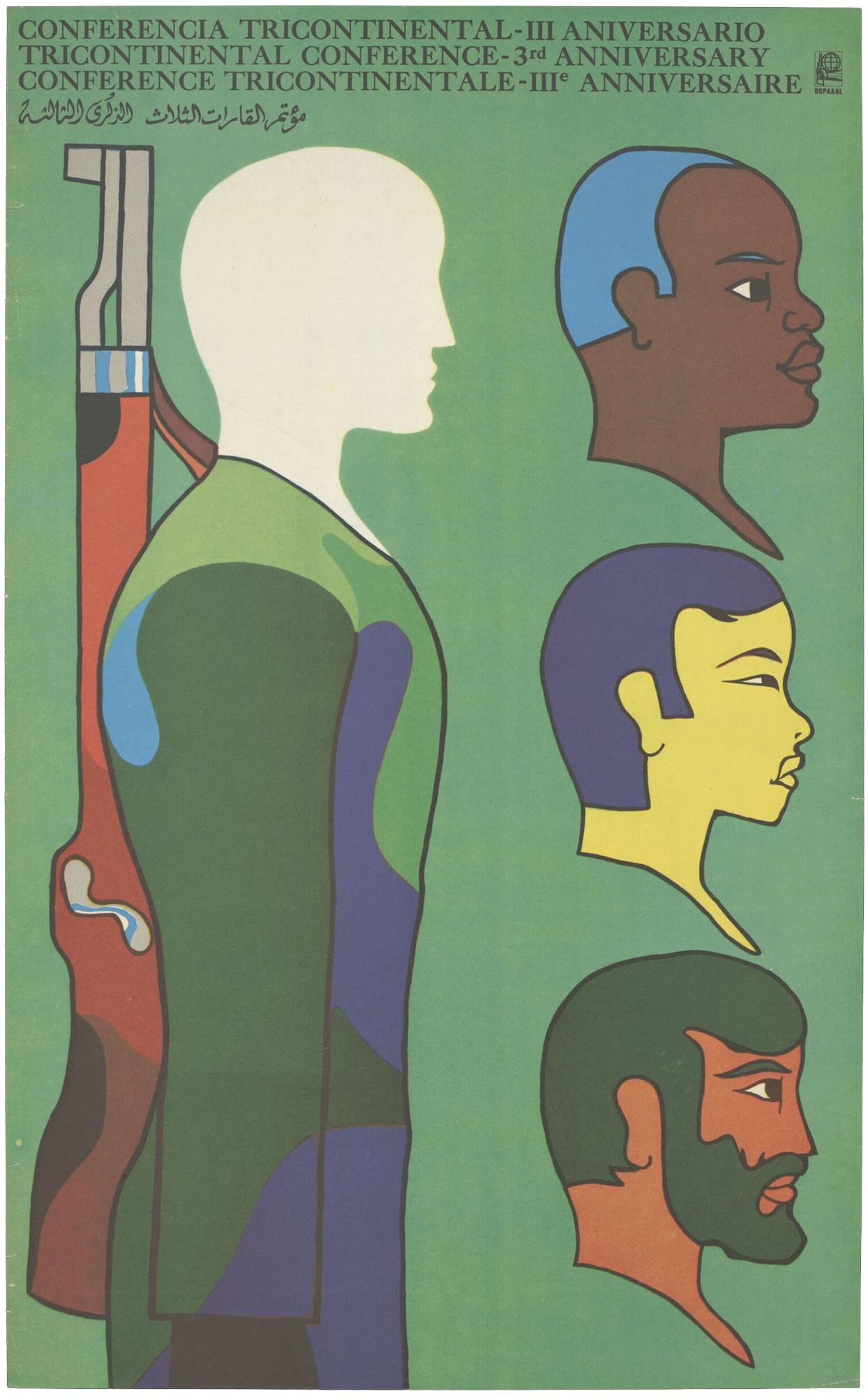
TRICONTINENTAL CONFERENCE - 3rd ANNIVERSARY, 1969
Between the 1960s and 1990s, more than fifty designers worked at OSPAAAL (the Organisation of Solidarity with the People of Africa, Asia and Latin America). Based in Cuba, they made magazines and posters that were sent around the world. Their aim was to promote radical political ideas. Many of their posters celebrate socialist revolutions and liberation movements from the Global South. OSPAAAL was established after the Tricontinental conference held in Havana in 1966. Representatives from 82 governments and national liberation movements discussed their positions on politics, economics, development and culture. Fidel Castro summarised their unifying aim as “the struggle against colonialism, racism and imperialism.” This commemorative poster uses three characters to represent Africa, Asia and Latin America as united by a common purpose.
Content warning: weaponry
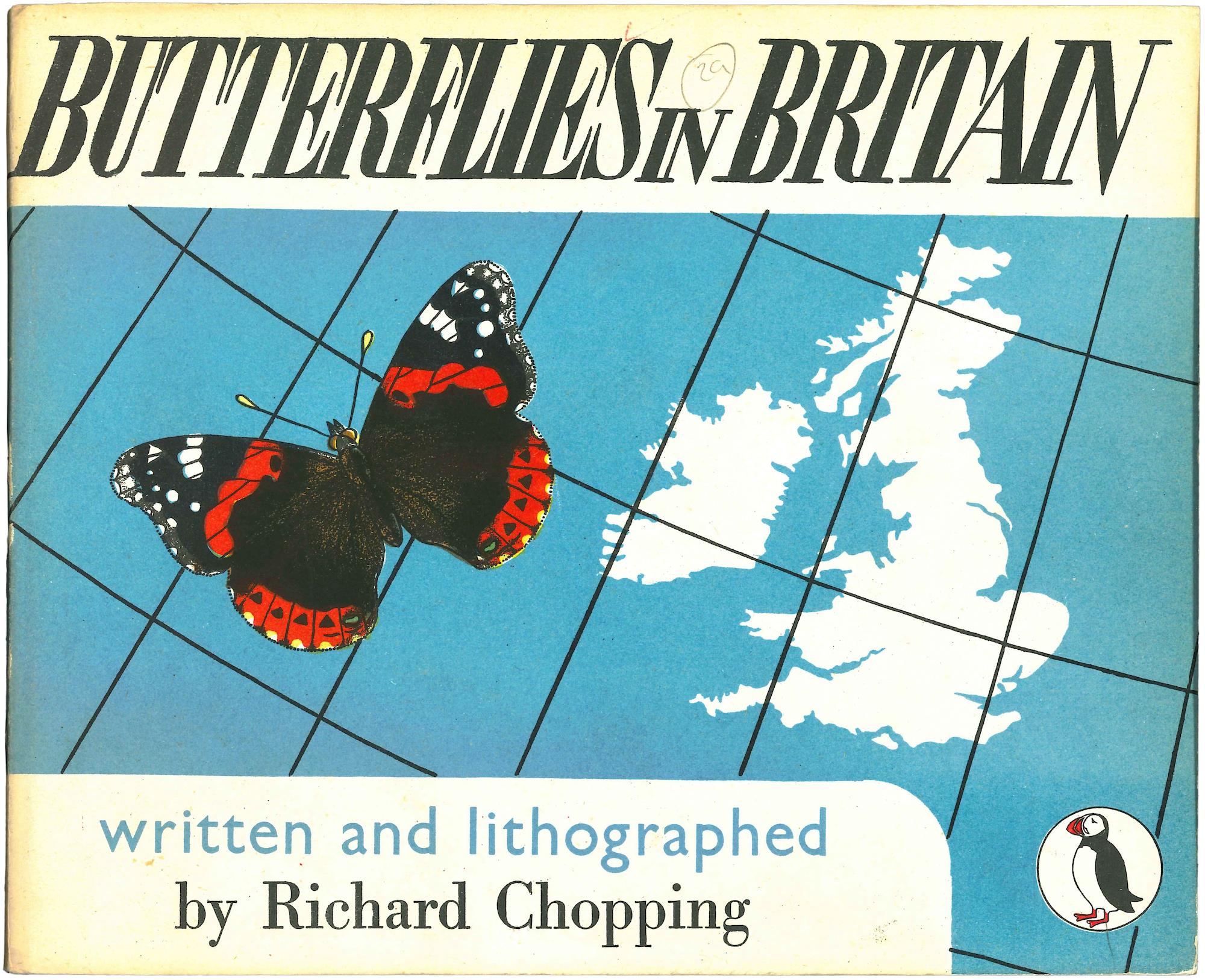
Butterflies in Britain, 1943
The Puffin Picture Books series was established by designer and editor Noel Carrington (1895-1989). In 1933, artist Pearl Binder (1904-1990) sent Carrington a package of Soviet children’s books. “They were produced by the million on very cheap paper, but the drawings were vigorous and the colour delightful” he later remembered. These books inspired Carrington to edit a series of affordable books that would encourage “the child’s awakening interest in its surroundings... I felt that colour was essential, and that artists could... be more successful in books of this nature than the camera”. Many artists and illustrators worked on the series, adapting their ways of working to lithographic printing and the Puffin Picture Book format. Most of the 120 books in the series were printed on one large sheet of paper: one side in colour and one in black-and-white. Each sheet was cut, folded and stapled to create a softcover book.
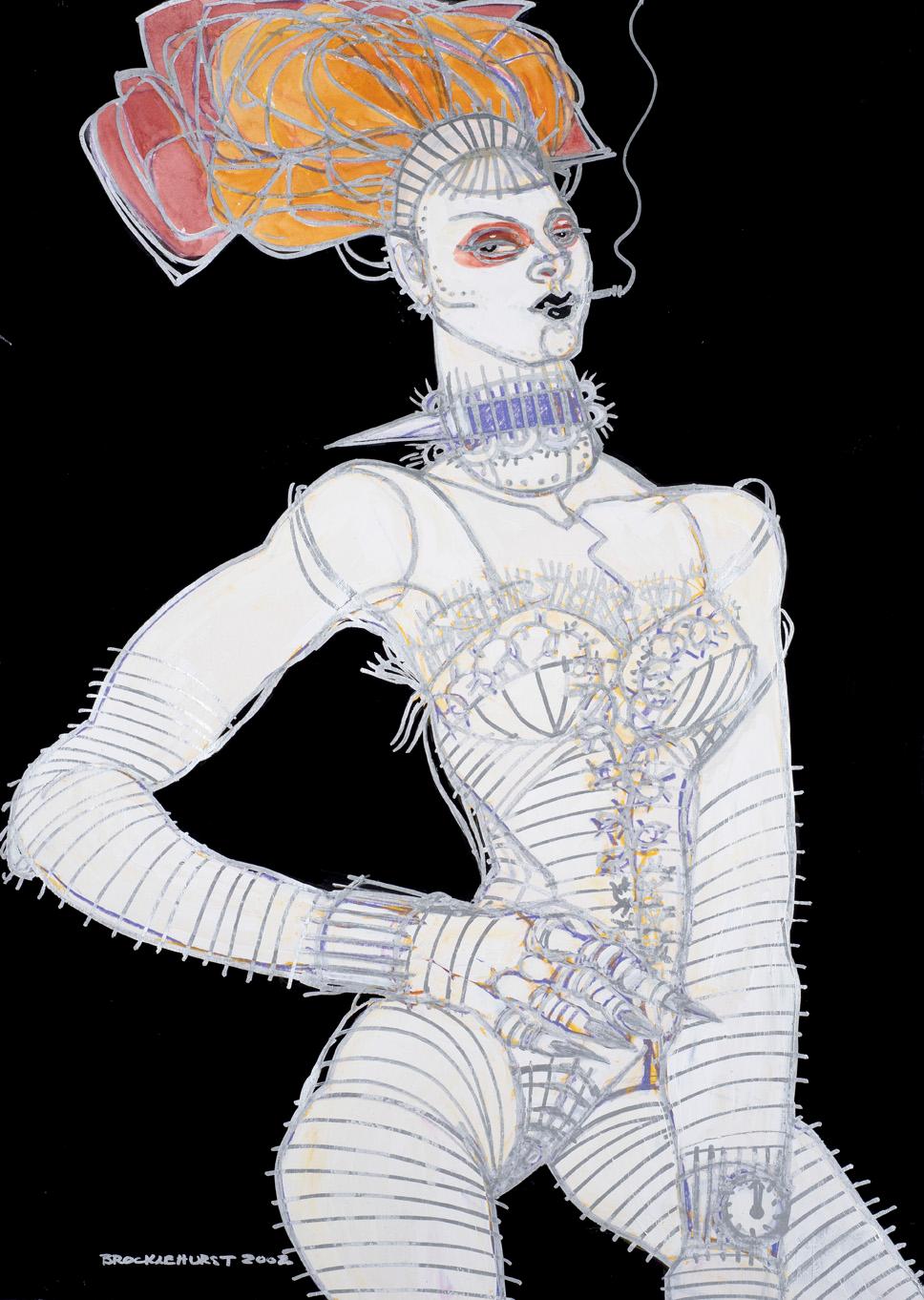
Jo Brocklehurst, Untitled (Duchess from Brocklehurst Through the Looking-Glass), 2002
Jo (Josephine) Brocklehurst (1935 - 2006) studied at Central Saint Martins and began her career as a fashion illustrator. She later focused on portraiture, drawing directly from models at her studio in West Hampstead and in nightclubs and theatres in Berlin, London and New York. Her work documents the alternative subcultures of the 1970s, 80s and 90s that went on to shape mainstream fashion and performance scenes. This work is from Brocklehurst Through the Looking-Glass, Brocklehurst’s final series. With an image of herself as a child as the centrepiece, Brocklehurst made hundreds of drawings that re-imagined characters from Lewis Carroll’s Alice novels. Her models were friends and dedicated club-goers who designed and made their own clothes. Works from the series were framed with bright plastic gemstones and hung on every available space at Brocklehurst’s home studio. She used metallic and neon inks that transformed under ultraviolet lights that she switched on for her guests in the evenings.
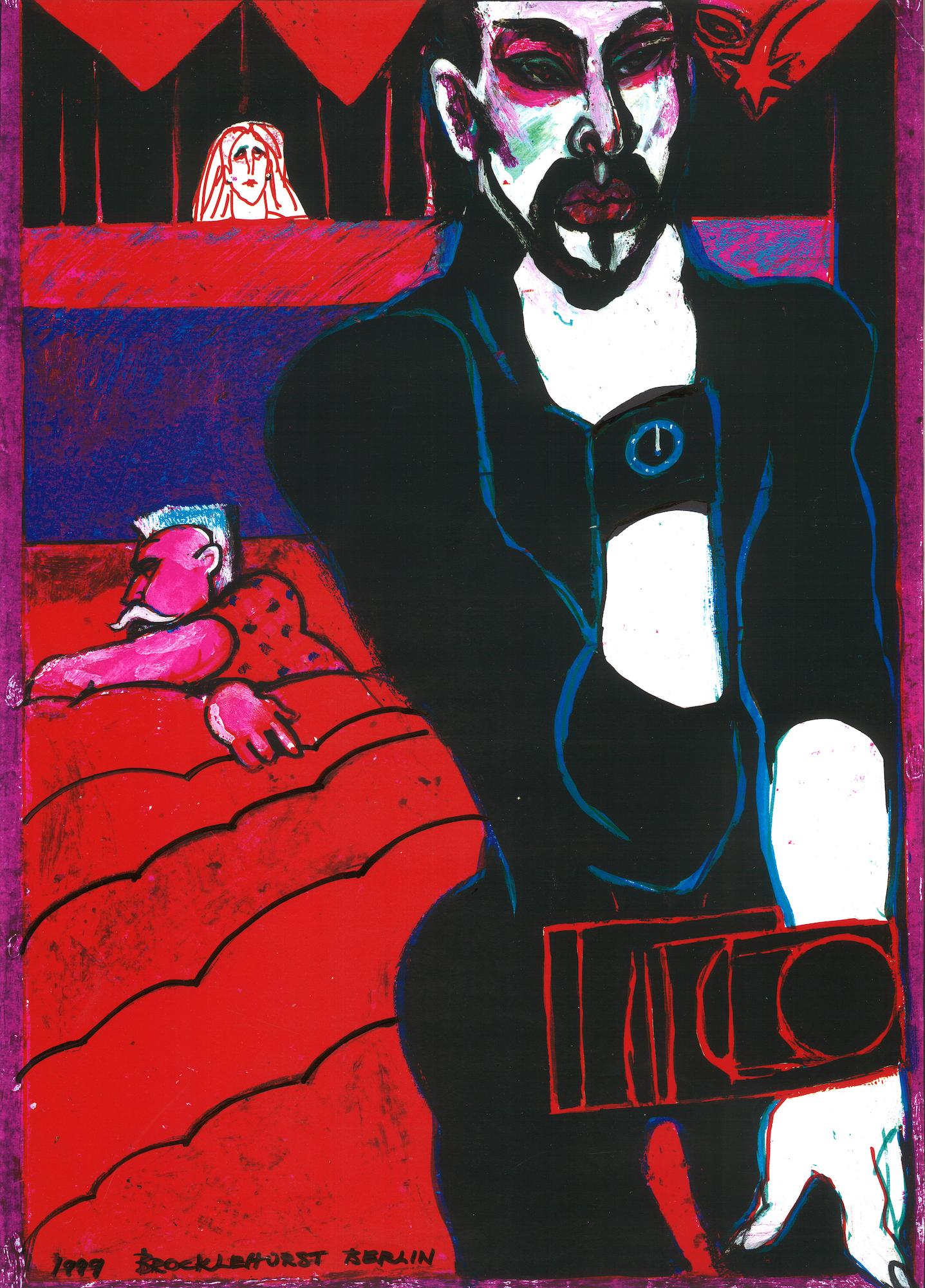
Jo Brocklehurst, Untitled, 1999
Jo (Josephine) Brocklehurst (1935 - 2006) studied at Central Saint Martins and began her career as a fashion illustrator. She later focused on portraiture, drawing directly from models at her studio in West Hampstead and in nightclubs and theatres in Berlin, London and New York. Her work documents the alternative subcultures of the 1970s, 80s and 90s that went on to shape mainstream fashion and performance scenes. In 1999, Brocklehurst was artist in residence at newspaper Berliner Zeitung during Berliner Theatertreffen, a festival of new German theatre. The paper wanted to revive the Weimar tradition of theatre reviews being accompanied by illustrations, rather than using photographs. Brocklehurst drew behind the scenes and from her seat during performances.
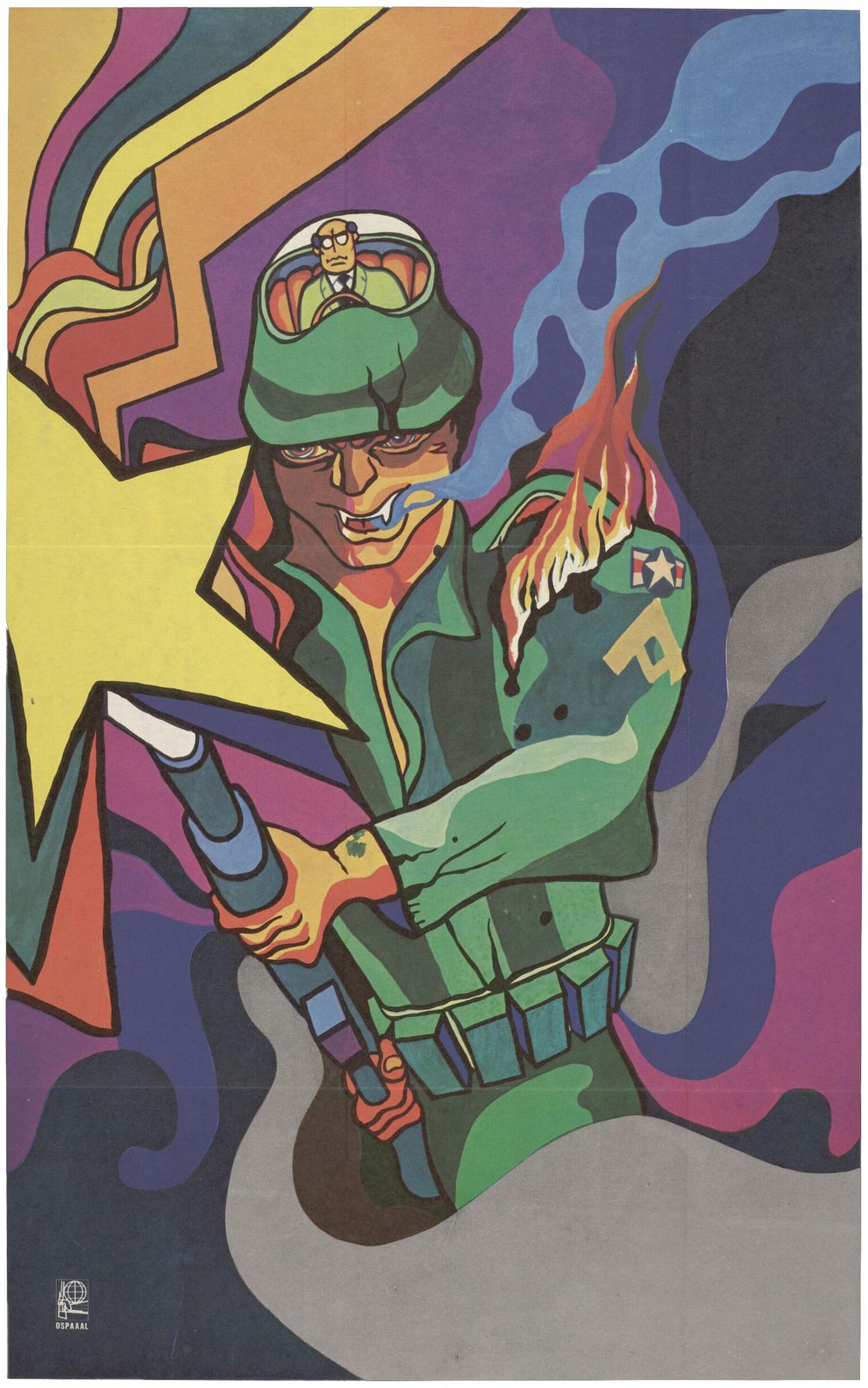
Untitled, 1969
Between the 1960s and 1990s, more than fifty designers worked at OSPAAAL. Based in Cuba, they made magazines and posters that were sent around the world. Their aim was to promote radical political ideas. Many of their posters celebrate socialist revolutions and liberation movements from the Global South. Alfredo Rostgaard was OSPAAAL’s creative director from 1966 to 1976. His began his career as a caricaturist for socialist children’s comic Mella. Rostgaard’s vampire-like US Air Force soldier is being driven like a machine. His design was used by OSPAAAL to criticise US military action.
Content warning: weaponry
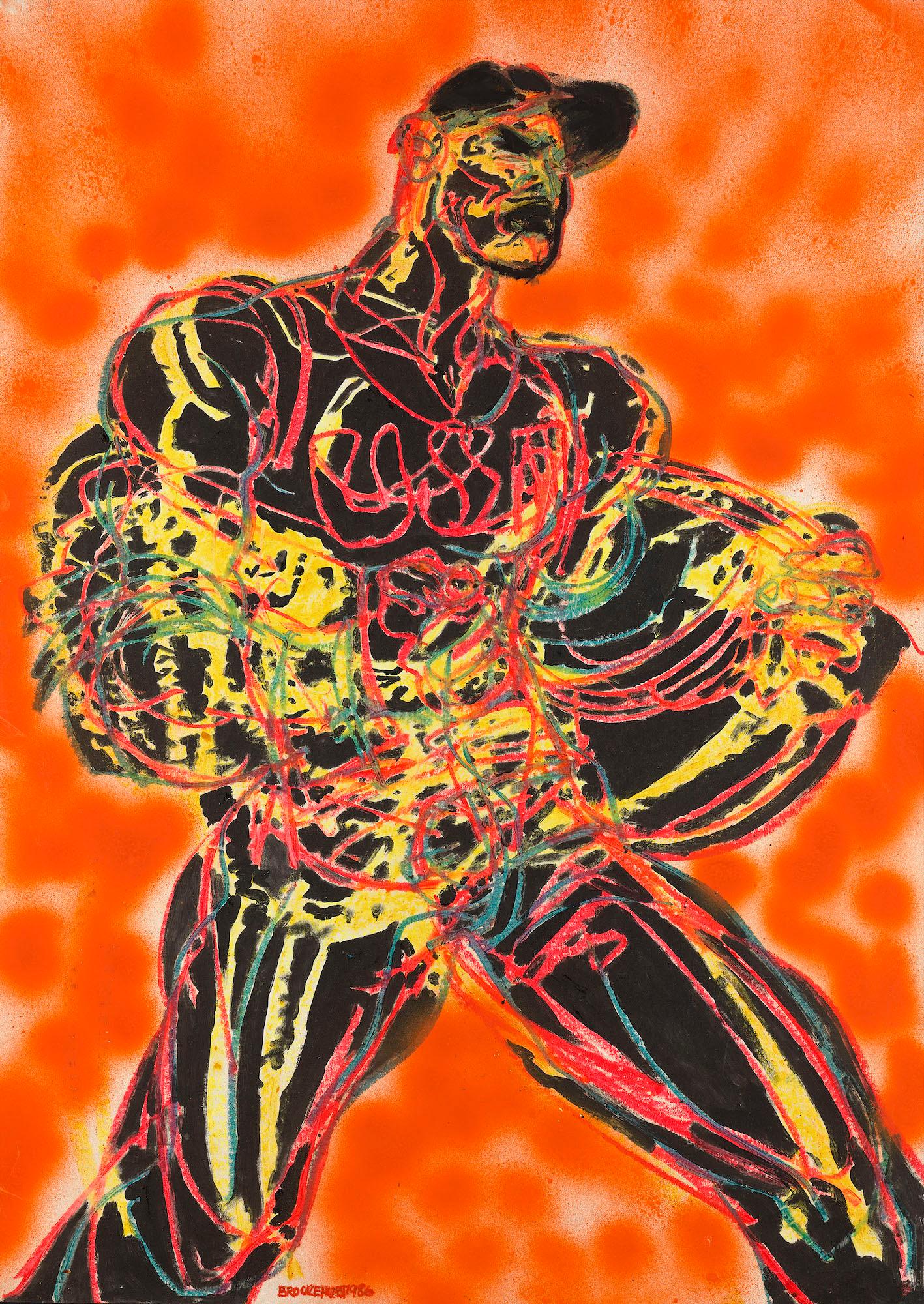
Jo Brocklehurst, Untitled, 1986
Jo (Josephine) Brocklehurst (1935 - 2006) studied at Central Saint Martins and began her career as a fashion illustrator. She later focused on portraiture, drawing directly from models at her studio in West Hampstead and in nightclubs and theatres in Berlin, London and New York. Her work documents the alternative subcultures of the 1970s, 80s and 90s that went on to shape mainstream fashion and performance scenes. Brocklehurst began working in New York following an exhibition of her work there in 1983. She took paper and materials to the gay nightclubs of the Meatpacking District, drawing clubgoers like this one. Brocklehurst used neon inks that she could see under the ultraviolet lights.
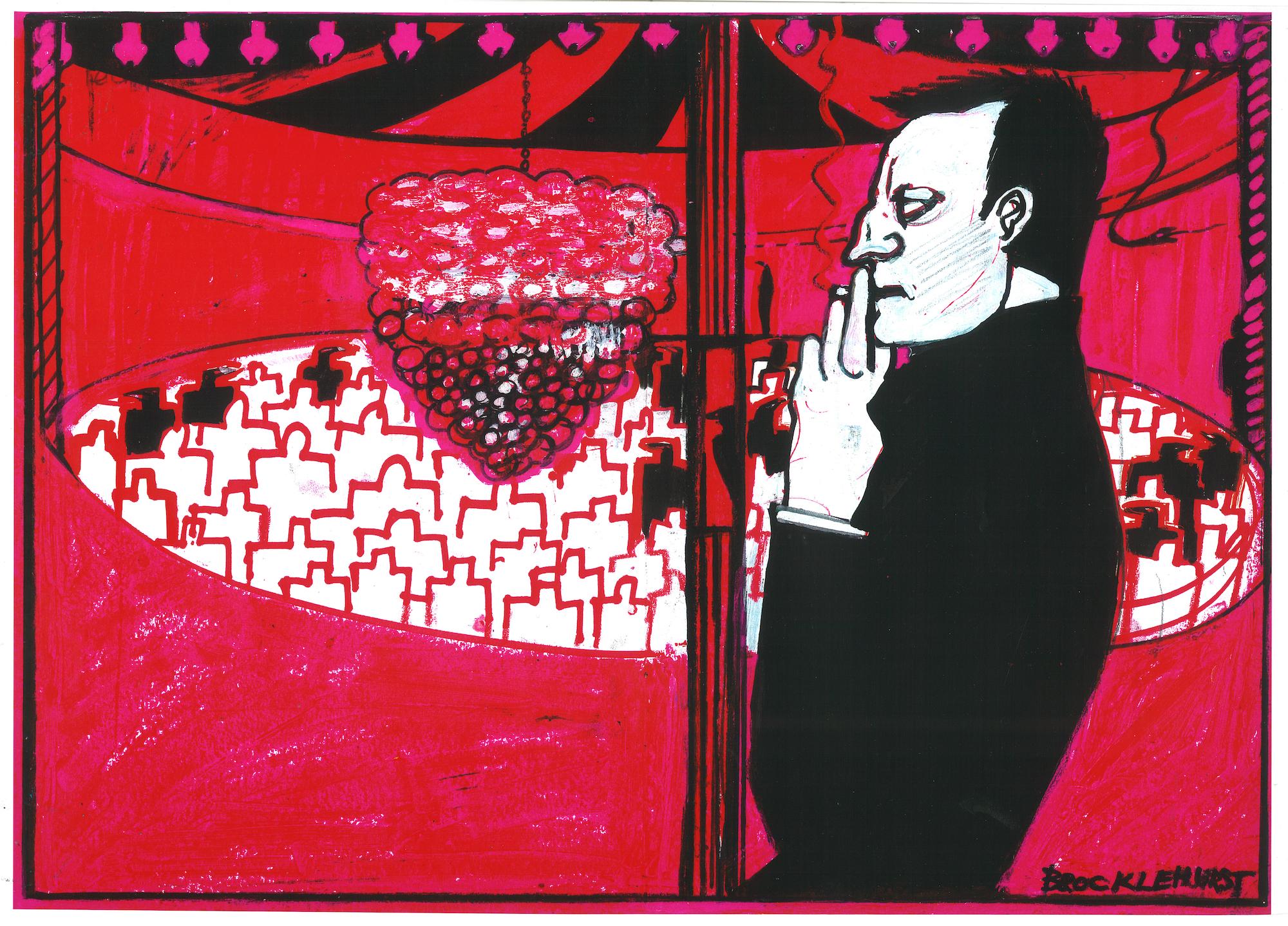
Jo Brocklehurst, Untitled (drawing of the Spiegelzelt), 1999
Jo (Josephine) Brocklehurst (1935 - 2006) studied at Central Saint Martins and began her career as a fashion illustrator. She later focused on portraiture, drawing directly from models at her studio in West Hampstead and in nightclubs and theatres in Berlin, London and New York. Her work documents the alternative subcultures of the 1970s, 80s and 90s that went on to shape mainstream fashion and performance scenes. In 1999, Brocklehurst was artist in residence at newspaper Berliner Zeitung during Berliner Theatertreffen, a festival of new German theatre. The paper wanted to revive the Weimar tradition of theatre reviews being accompanied by illustrations, rather than using photographs. Brocklehurst drew behind the scenes and from her seat during performances. This illustration accompanied a review of play Onkel Wanja, published in Berliner Zeitung on 5 May 1999, but is a drawing of the Spiegelzelt, a tent used for talks and evening events.
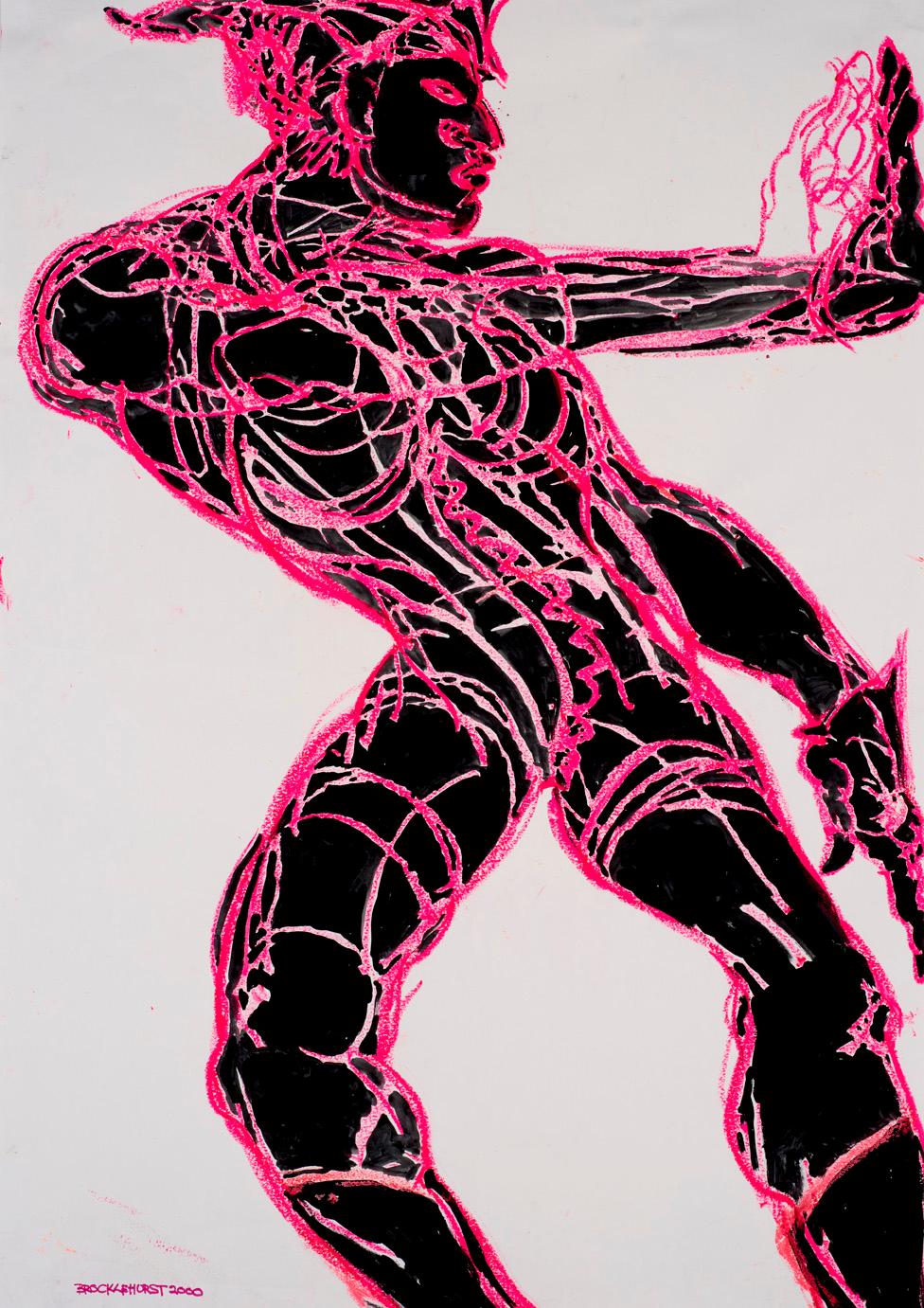
Jo Brocklehurst, Untitled (portrait of Josephine Leask), 2000
Jo (Josephine) Brocklehurst (1935 - 2006) studied at Central Saint Martins and began her career as a fashion illustrator. She later focused on portraiture, drawing directly from models at her studio in West Hampstead and in nightclubs and theatres in Berlin, London and New York. Her work documents the alternative subcultures of the 1970s, 80s and 90s that went on to shape mainstream fashion and performance scenes. In 2000, Brocklehurst created a series of drawings in sessions with dancer Josephine Leask. Leask’s 1999 article Welcome to the Club, published in ballettanz magazine, described the ways that nightclubs were acting as alternative theatres for cutting-edge contemporary dance. These drawings were shown as part of Leask’s lecture-performance on the same theme at the 2000 Salzburg Festival.
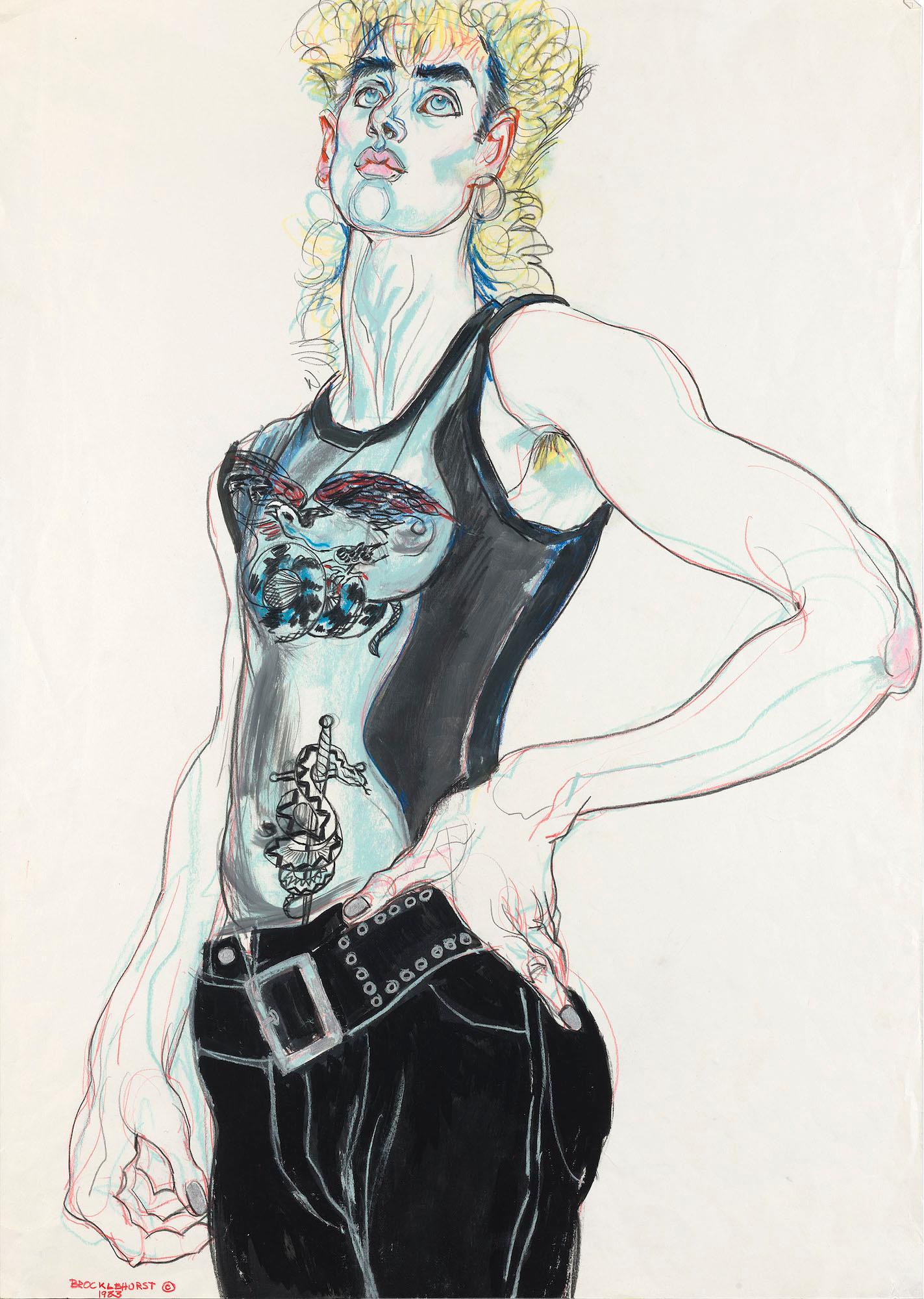
Jo Brocklehurst, Untitled (portrait of Brett), 1983
Jo (Josephine) Brocklehurst (1935 - 2006) studied at Central Saint Martins and began her career as a fashion illustrator. She later focused on portraiture, drawing directly from models at her studio in West Hampstead and in nightclubs and theatres in Berlin, London and New York. Her work documents the alternative subcultures of the 1970s, 80s and 90s that went on to shape mainstream fashion and performance scenes. In the 1980s, Brocklehurst drew a series portraits of members of the Kill Your Pet Puppy collective who were living in a squat close to her studio. Attracted to their anarcho-punk dress and ethos, she said “I felt that they understood very well what was going on in the world, what was in it for them”.
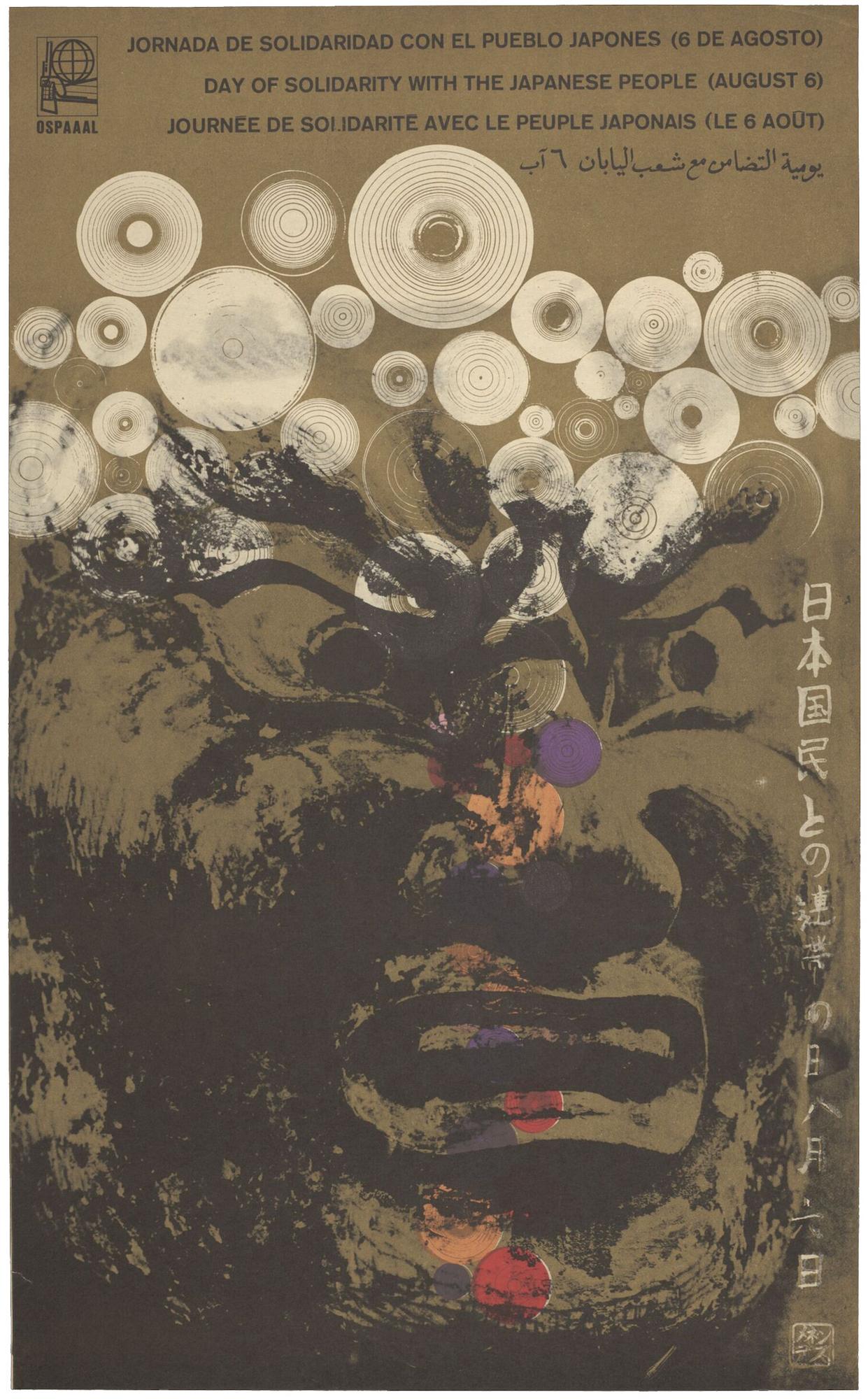
DAY OF SOLIDARITY WITH THE JAPANESE PEOPLE (AUGUST 6), 1968
Between the 1960s and 1990s, more than fifty designers worked at OSPAAAL (the Organisation of Solidarity with the People of Africa, Asia and Latin America). Based in Cuba, they made magazines and posters that were sent around the world. Their aim was to promote radical political ideas. Many of their posters celebrate socialist revolutions and liberation movements from the Global South. OSPAAAL marked the date of the atomic bombing of the city of Hiroshima by the U.S.A. as a day of solidarity with Japanese citizens. The design appears to incorporate a photograph of Raijin, a Japanese god of thunder, lightning and storms.
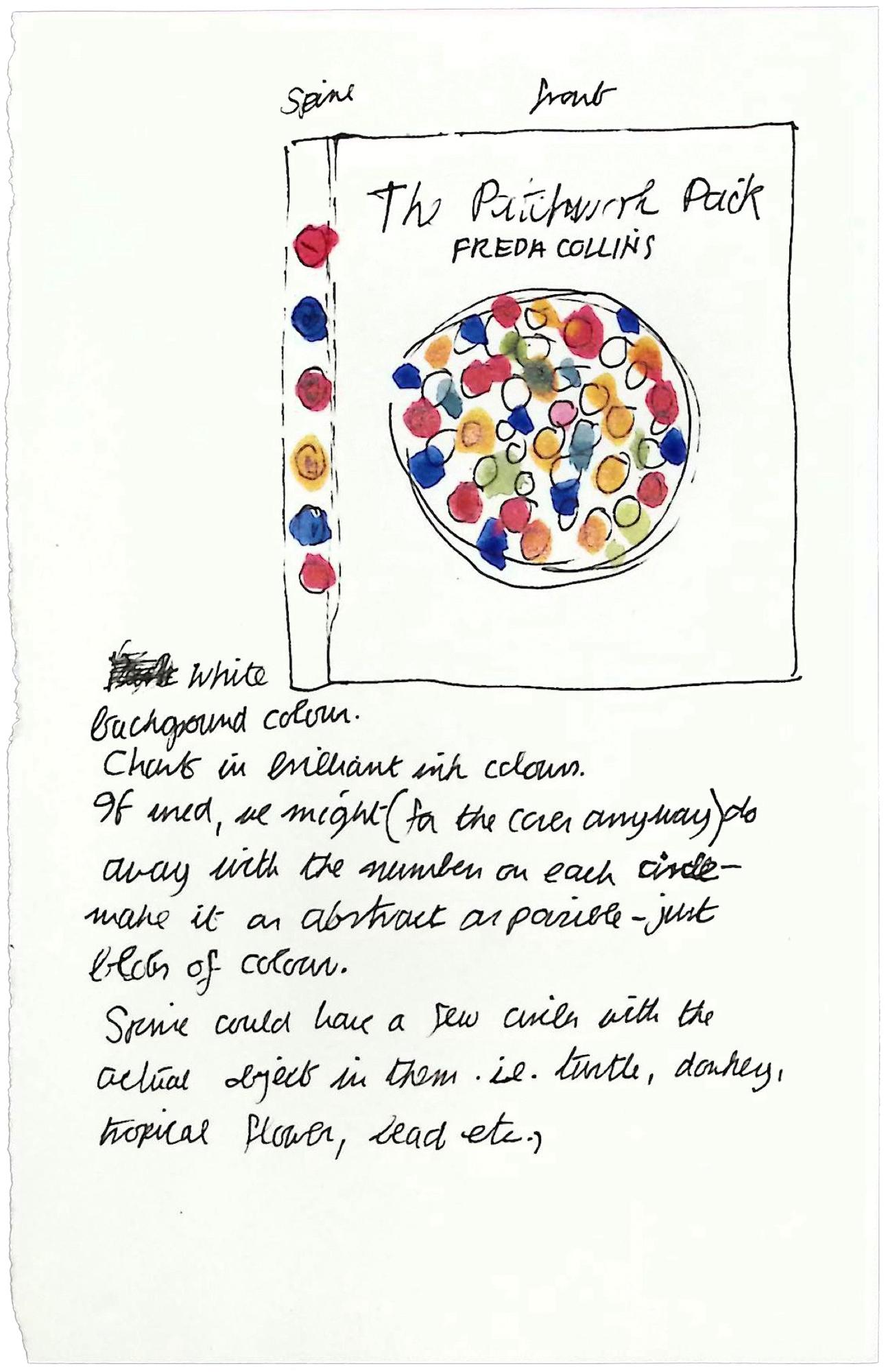
Untitled, c. 1968
British illustrator Janina Ede (1937-2018) created covers and illustrations for over 100 books from the 1950s to the 1980s. In the 1960s, Ede began working on children’s books. The Patchwork Pack (1968) by Freda Collins is about a group of ‘Brownies’ – the name given to members of the worldwide girl-guiding movement.
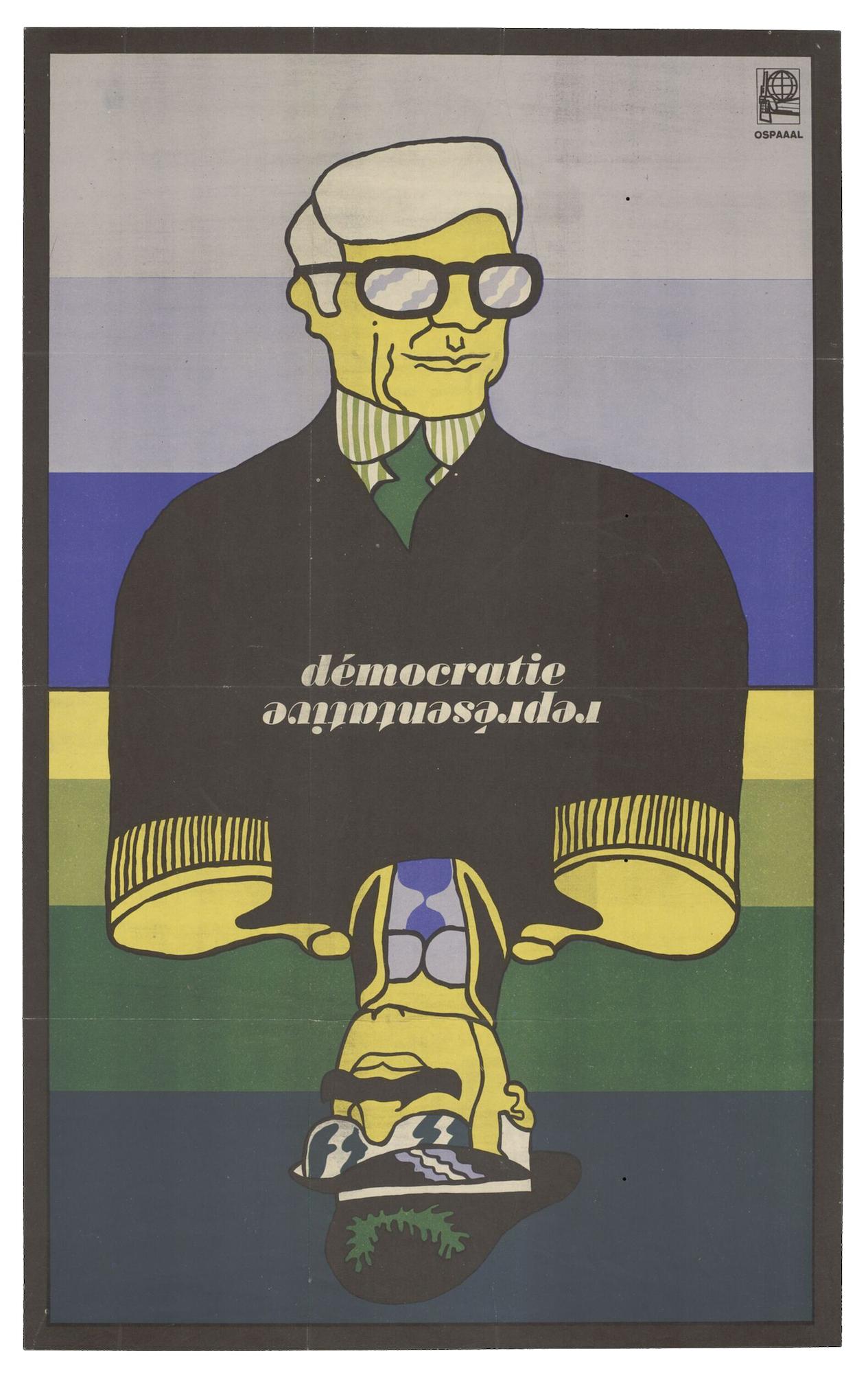
democracy representative, 1968
Between the 1960s and 1990s, more than fifty designers worked at OSPAAAL (the Organisation of Solidarity with the People of Africa, Asia and Latin America). Based in Cuba, they made magazines and posters that were sent around the world. Their aim was to promote radical political ideas. Many of their posters celebrate socialist revolutions and liberation movements from the Global South. Alfredo Rostgaard was OSPAAAL’s creative director from 1966 to 1976. His began his career as a caricaturist for socialist children’s comic Mella. For this poster, he created two linked characters representing a democratic politician and a military dictator.
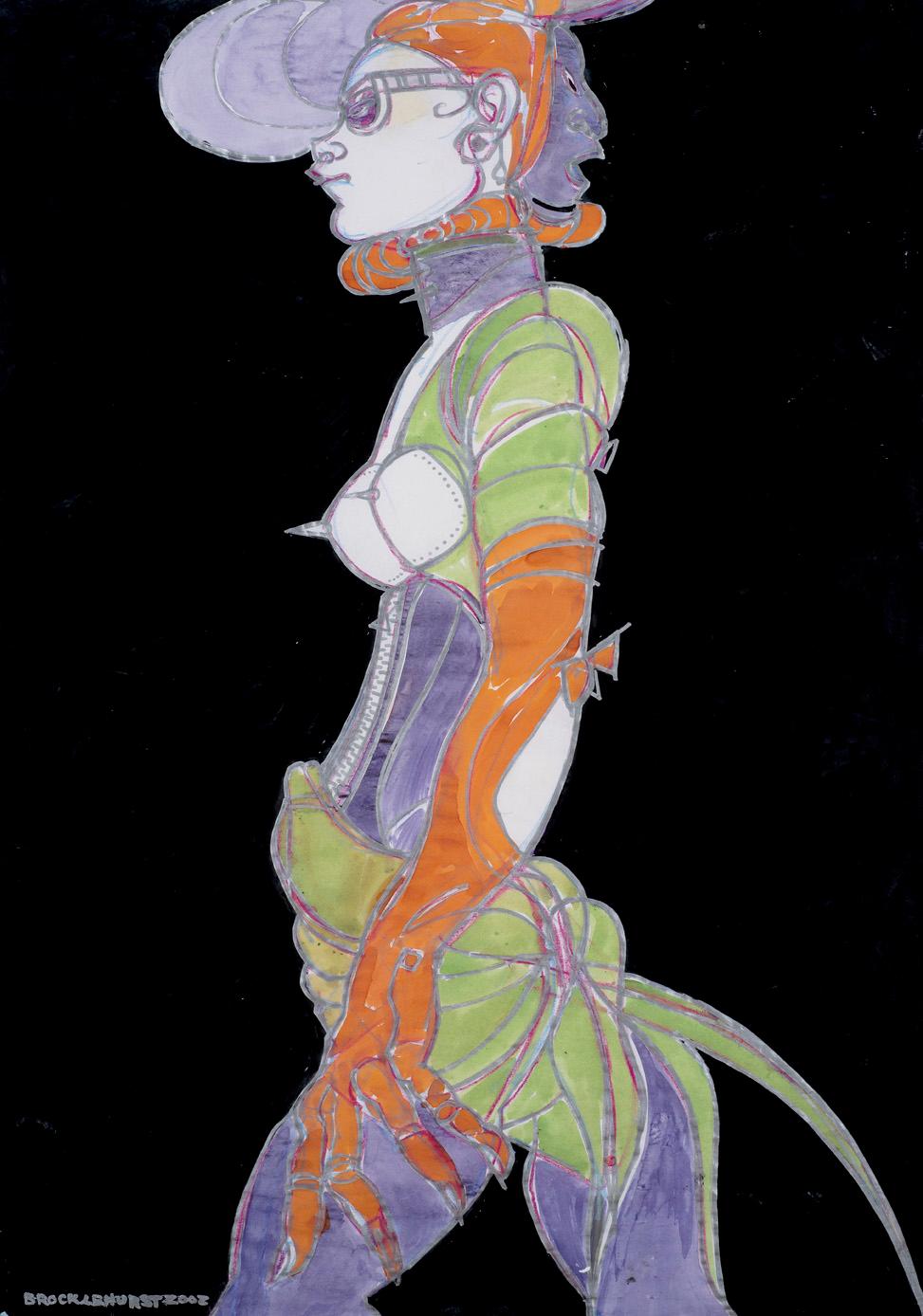
Jo Brocklehurst, Untitled (from Brocklehurst Through the Looking-Glass), 2002
Jo (Josephine) Brocklehurst (1935 - 2006) studied at Central Saint Martins and began her career as a fashion illustrator. She later focused on portraiture, drawing directly from models at her studio in West Hampstead and in nightclubs and theatres in Berlin, London and New York. Her work documents the alternative subcultures of the 1970s, 80s and 90s that went on to shape mainstream fashion and performance scenes. This work is from Brocklehurst Through the Looking-Glass, Brocklehurst’s final series. With an image of herself as a child as the centrepiece, Brocklehurst made hundreds of drawings that re-imagined characters from Lewis Carroll’s Alice novels. Her models were friends and dedicated club-goers who designed and made their own clothes. Brocklehurst’s regular collaborator Isabelle Bricknall was the model for this work. Works from the series were framed with bright plastic gemstones and hung on every available space at Brocklehurst’s home studio. She used metallic and neon inks that transformed under ultraviolet lights that she switched on for her guests in the evenings.
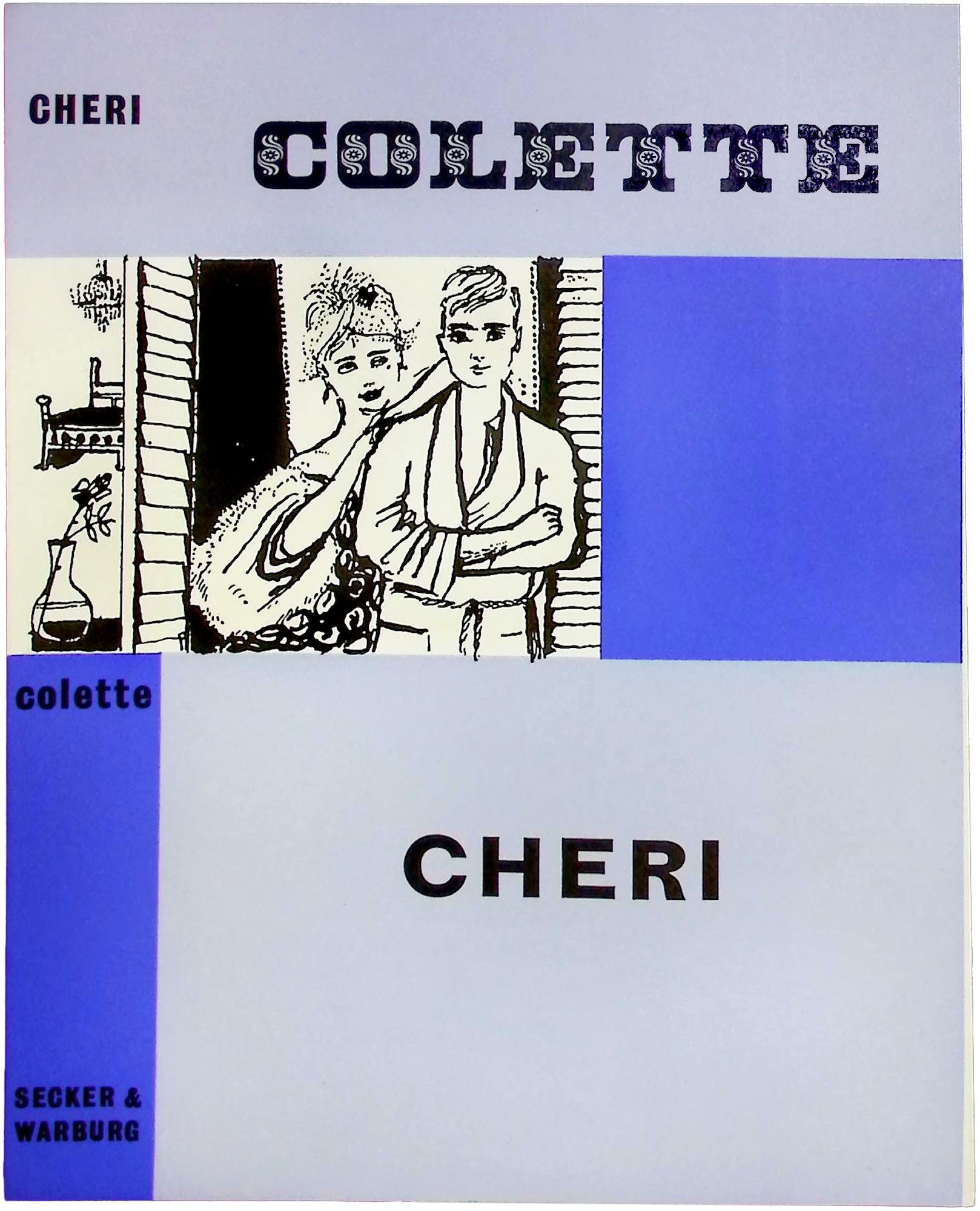
Book cover proof for Colette's "Cheri", 1960
British illustrator Janina Ede (1937-2018) created covers and illustrations for over 100 books from the 1950s to the 1980s. She designed the covers of several books by French author and pioneer of autofiction Sidonie-Gabrielle Colette.
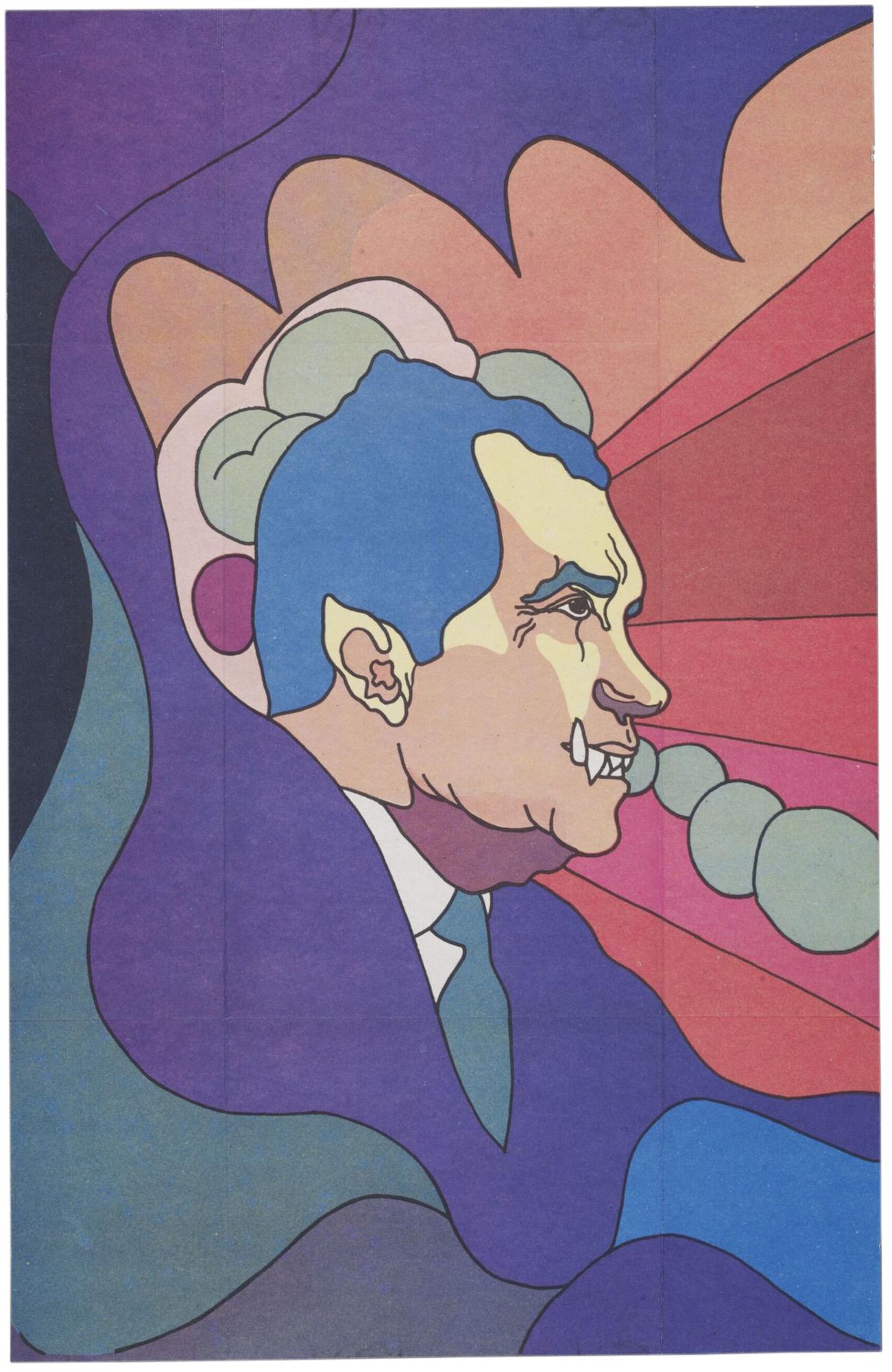
Untitled, 1969
Between the 1960s and 1990s, more than fifty designers worked at OSPAAAL. Based in Cuba, they made magazines and posters that were sent around the world. Their aim was to promote radical political ideas. Many of their posters celebrate socialist revolutions and liberation movements from the Global South. They also criticised the foreign policy of the U.S.A. Alfredo Rostgaard was OSPAAAL’s creative director from 1966 to 1976. His folded poster of US president Richard Nixon unfolds to gradually transform him into a demonic figure.
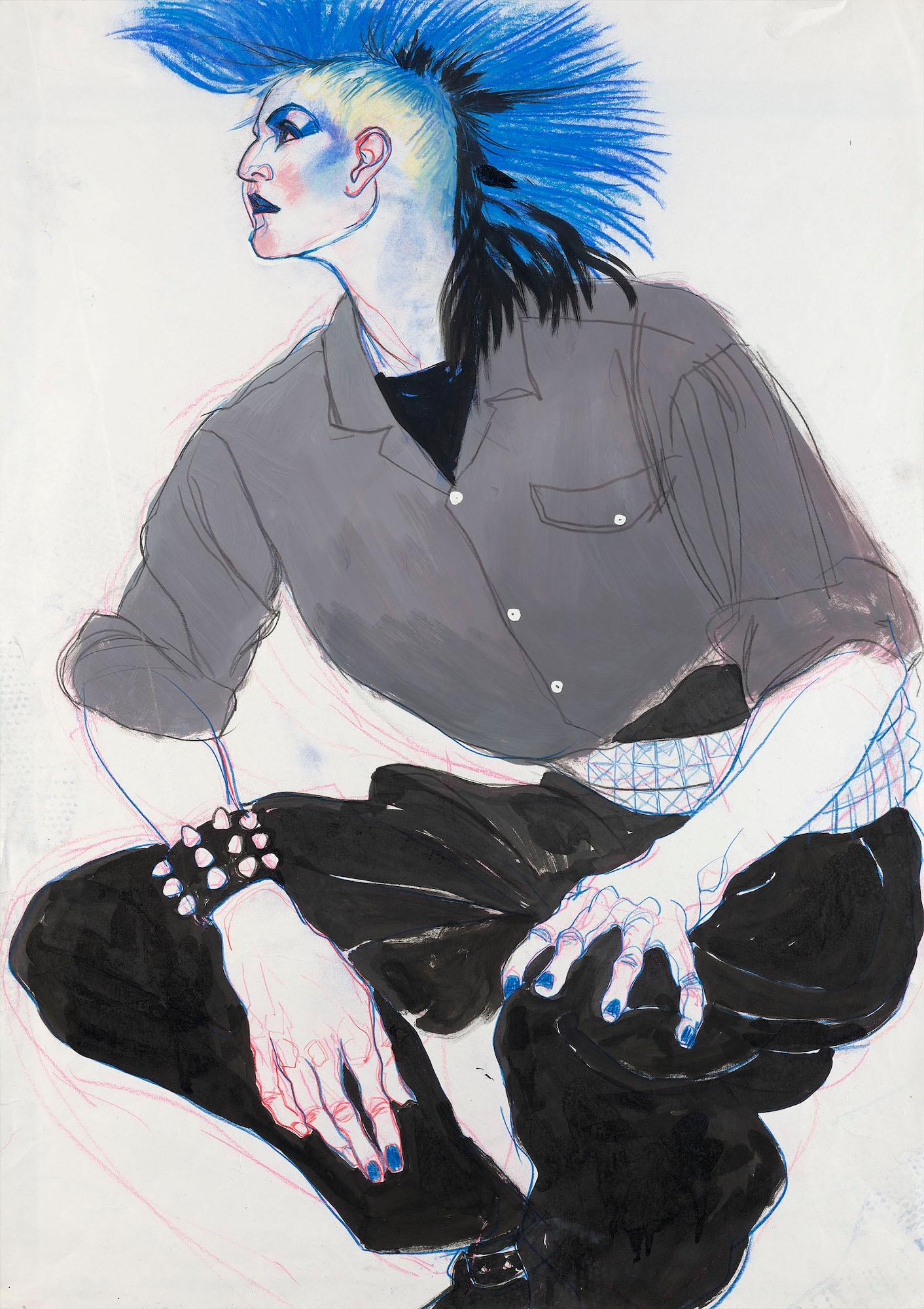
Jo Brocklehurst, Untitled, 1980s
Jo (Josephine) Brocklehurst (1935 - 2006) studied at Central Saint Martins and began her career as a fashion illustrator. She later focused on portraiture, drawing directly from models at her studio in West Hampstead and in nightclubs and theatres in Berlin, London and New York. Her work documents the alternative subcultures of the 1970s, 80s and 90s that went on to shape mainstream fashion and performance scenes.
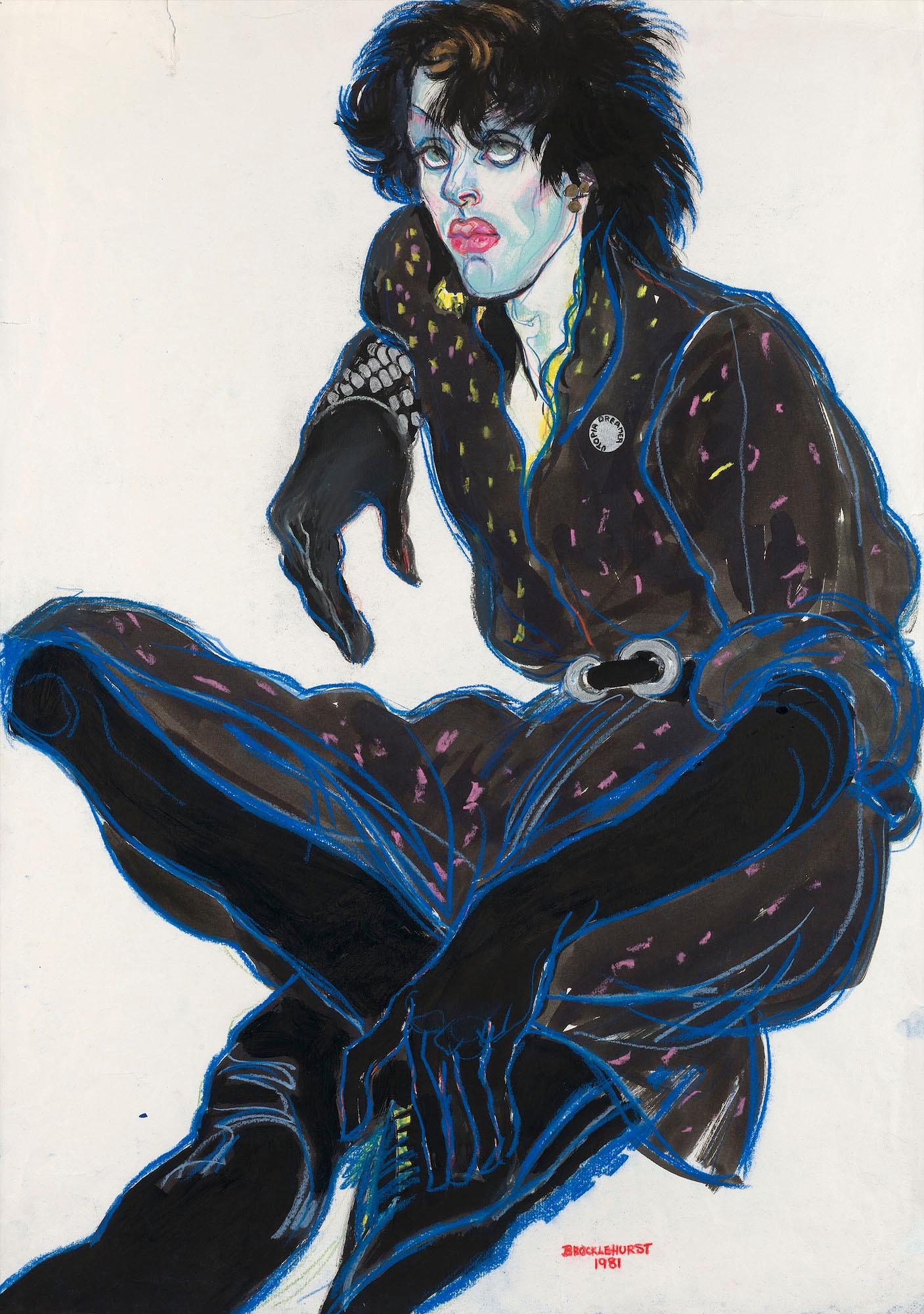
Jo Brocklehurst, Untitled, 1981
Jo (Josephine) Brocklehurst (1935 - 2006) studied at Central Saint Martins and began her career as a fashion illustrator. She later focused on portraiture, drawing directly from models at her studio in West Hampstead and in nightclubs and theatres in Berlin, London and New York. Her work documents the alternative subcultures of the 1970s, 80s and 90s that went on to shape mainstream fashion and performance scenes.
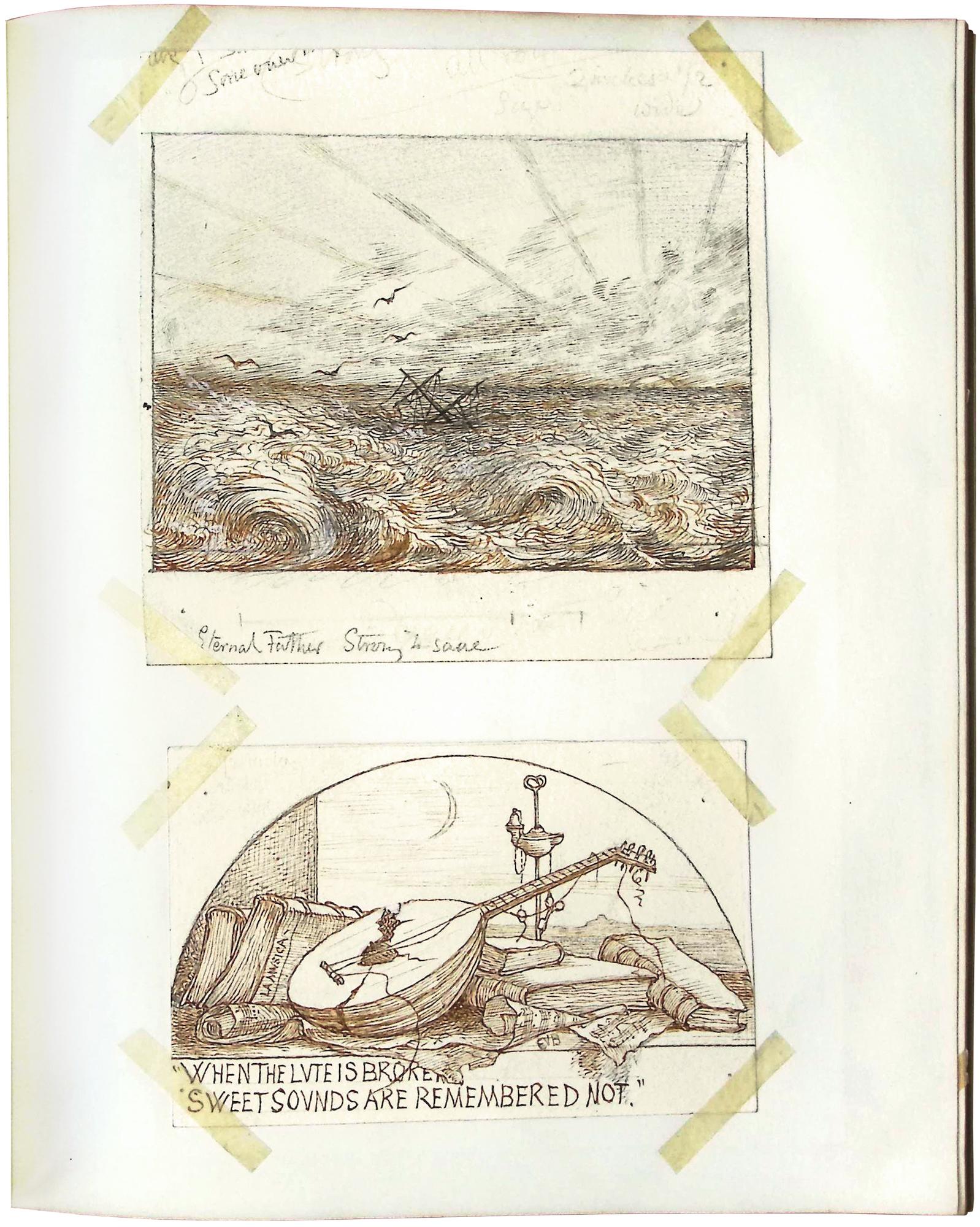
Untitled (illustrations for A Book of Heavenly Birthdays), c. 1893
Eleanor Vere Boyle (1825 – 1916) illustrated poetry and prose by some of the most popular authors of her time. She regularly drew and painted using ink and watercolour, sketching landscapes, animals and her children from life. She also made drawings from her imagination, often reflecting spiritual themes. These drawings were used as some of the final illustrations printed in the artists' publication A Book of Heavenly Birthdays (1893, London Elliot Stock)
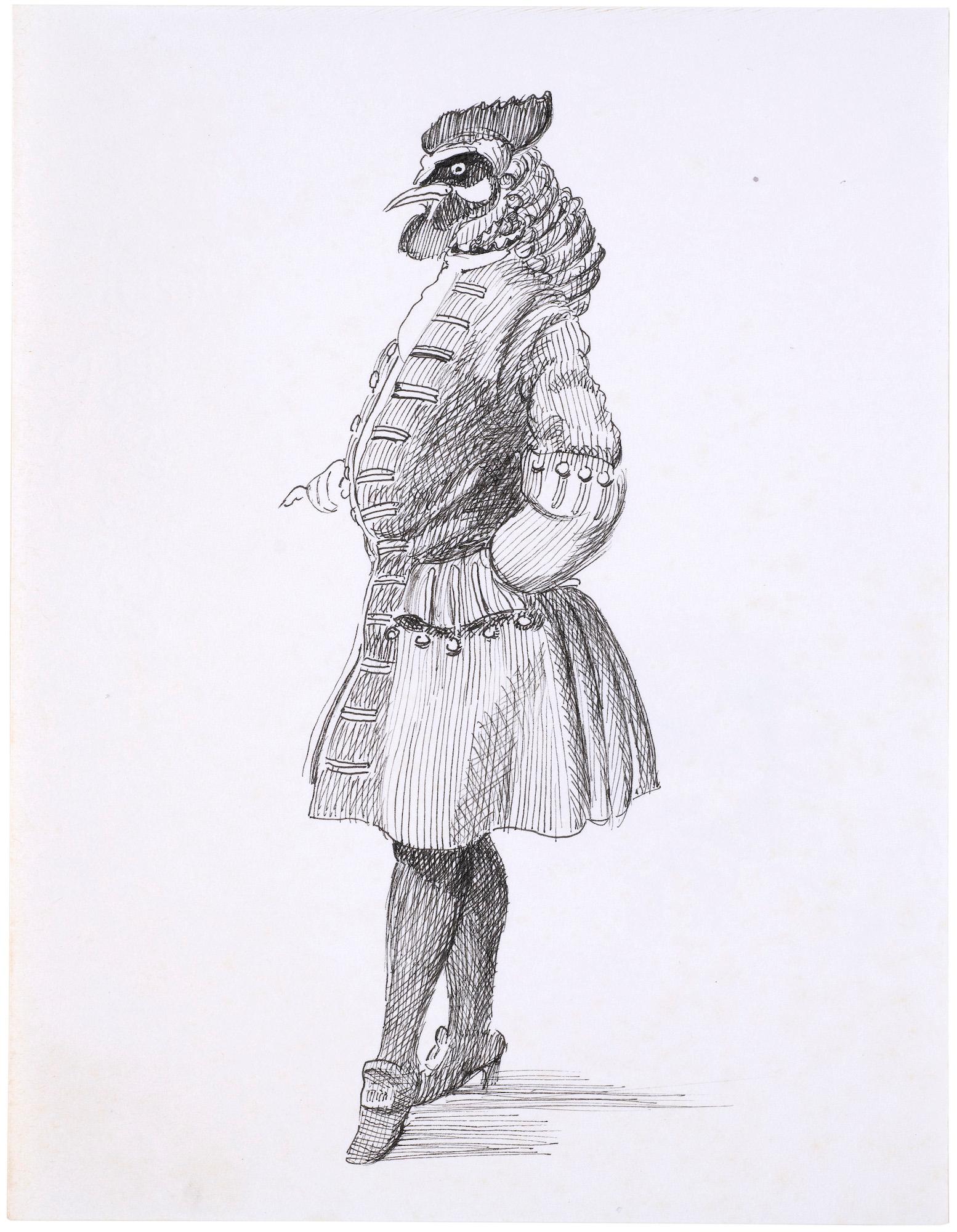
Jacqueline Ayer, Untitled, Date unknown
Jacqueline Ayer (1930–2012) had a career that spanned many creative fields. She began as a fashion illustrator, and later turned her hand to children’s books, textiles and garments, as she worked in New York, Paris, London, Bangkok, Hong Kong and across India. Ayer often used a sketchbook to record her observations and ideas for book narratives and fashion designs. The context for this drawing is unknown.
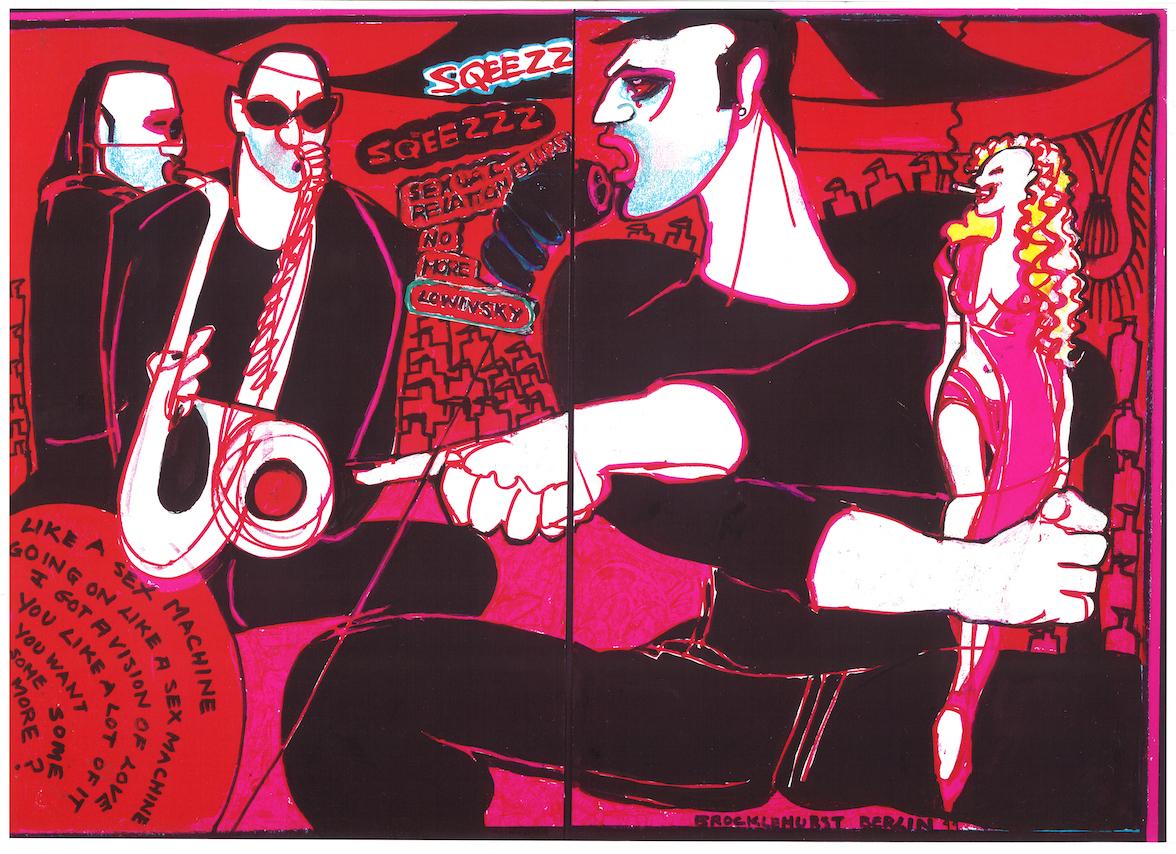
Jo Brocklehurst, Untitled (drawing of “Ich bin ja so allein”: Reflexionen mit und ohne Klavier), 1999
Jo (Josephine) Brocklehurst (1935 - 2006) studied at Central Saint Martins and began her career as a fashion illustrator. She later focused on portraiture, drawing directly from models at her studio in West Hampstead and in nightclubs and theatres in Berlin, London and New York. Her work documents the alternative subcultures of the 1970s, 80s and 90s that went on to shape mainstream fashion and performance scenes. In 1999, Brocklehurst was artist in residence at newspaper Berliner Zeitung during Berliner Theatertreffen, a festival of new German theatre. The paper wanted to revive the Weimar tradition of theatre reviews being accompanied by illustrations, rather than using photographs. Brocklehurst drew behind the scenes and from her seat during performances. This drawing is of a festival event, “Ich bin ja so allein”: Reflexionen mit und ohne Klavier.
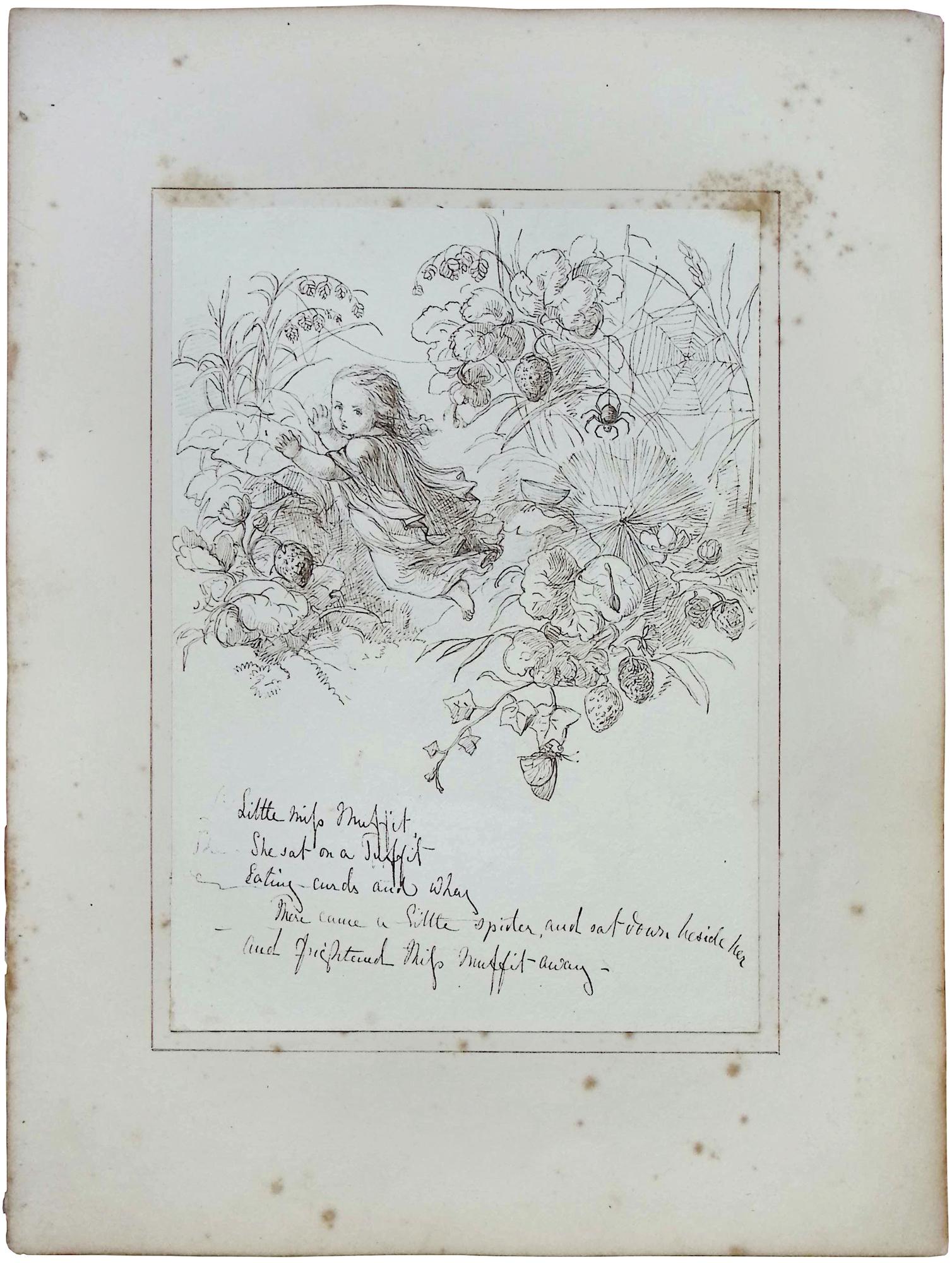
Untitled (illustration for Child's Play, 'Little Miss Muffit'), c. 1851
Eleanor Vere Boyle (1825 – 1916) illustrated poetry and prose by some of the most popular authors of her time. She regularly drew and painted using ink and watercolour, sketching landscapes, animals and her children from life. She also made drawings from her imagination, often reflecting spiritual themes. This illustration is from her first book, Child’s Play (1851). Boyle provided her publishers with black and white drawings that were then converted into etchings by the printer. These were later reproduced as lithographs, in colours chosen by Boyle.
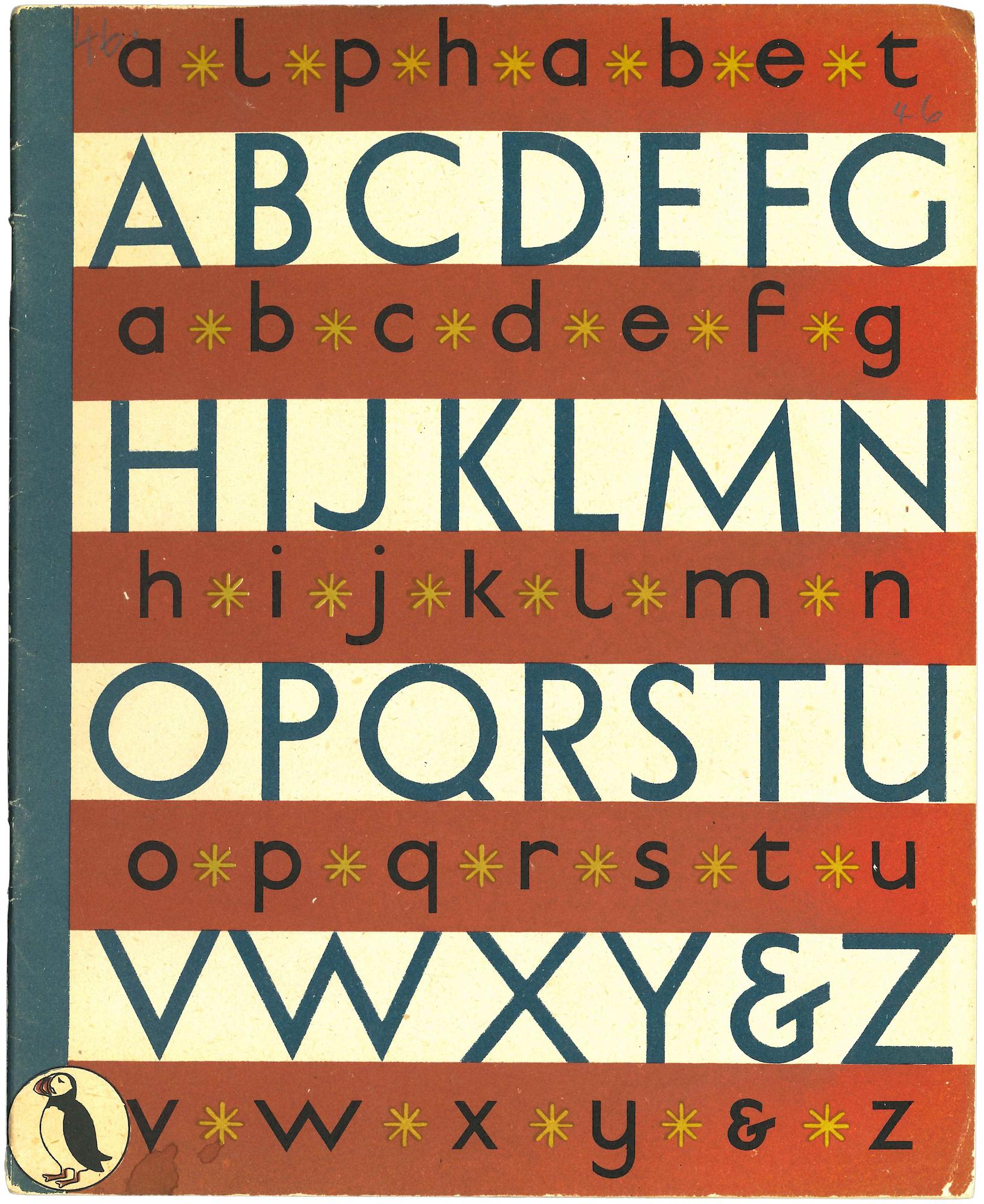
A Child’s Alphabet, 1945
The Puffin Picture Books series was established by designer and editor Noel Carrington (1895-1989). In 1933, artist Pearl Binder (1904-1990) sent Carrington a package of Soviet children’s books. “They were produced by the million on very cheap paper, but the drawings were vigorous and the colour delightful” he later remembered. These books inspired Carrington to edit a series of affordable books that would encourage “the child’s awakening interest in its surroundings... I felt that colour was essential, and that artists could... be more successful in books of this nature than the camera”. Many artists and illustrators worked on the series, adapting their ways of working to lithographic printing and the Puffin Picture Book format. Most of the 120 books in the series were printed on one large sheet of paper: one side in colour and one in black-and-white. Each sheet was cut, folded and stapled to create a softcover book.
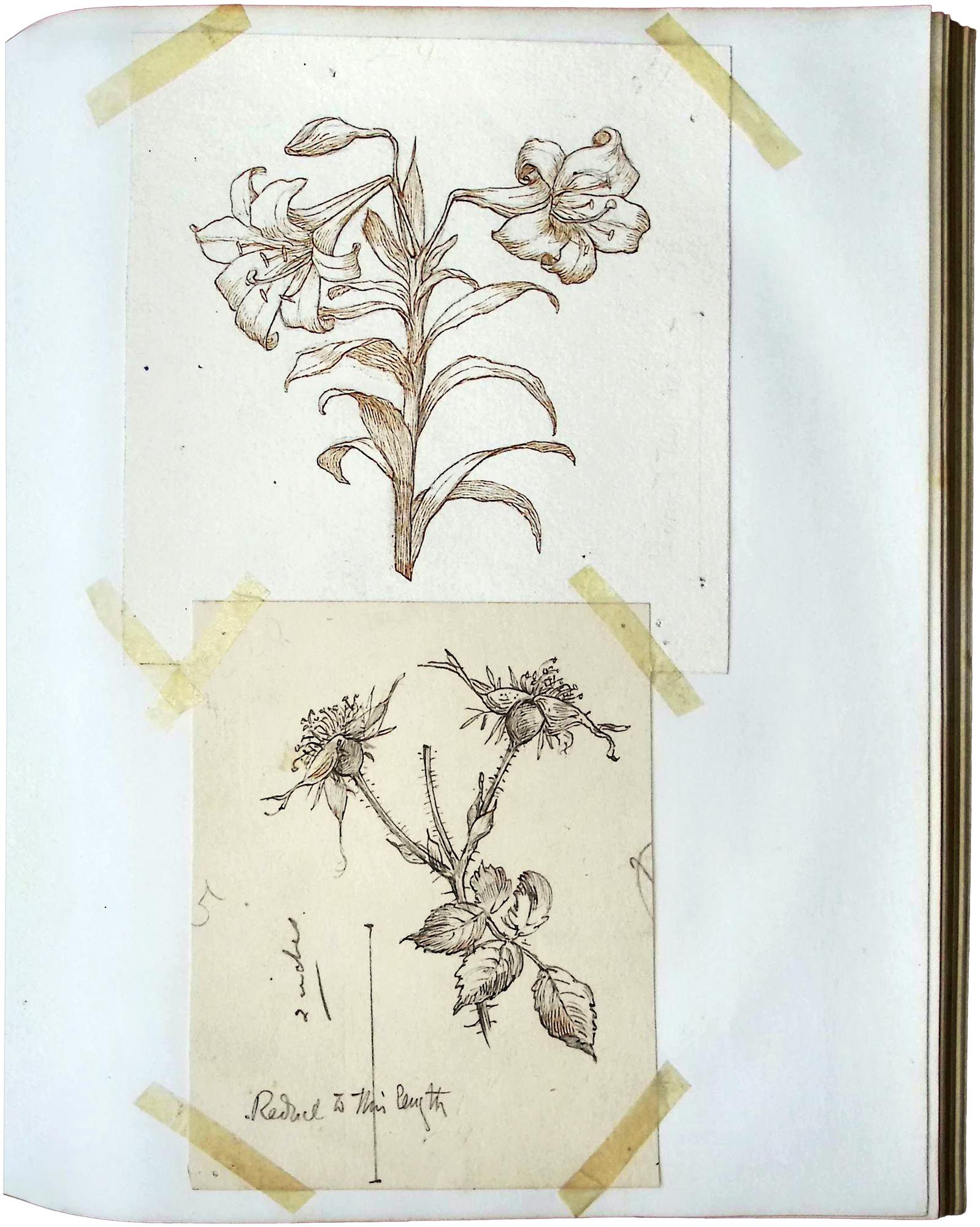
Untitled, c. 1893
Eleanor Vere Boyle (1825 – 1916) illustrated poetry and prose by some of the most popular authors of her time. She regularly drew and painted using ink and watercolour, sketching landscapes, animals and her children from life. She also made drawings from her imagination, often reflecting spiritual themes. These drawings were used as some of the final illustrations printed in the artists' publication A Book of Heavenly Birthdays (1893, London Elliot Stock)
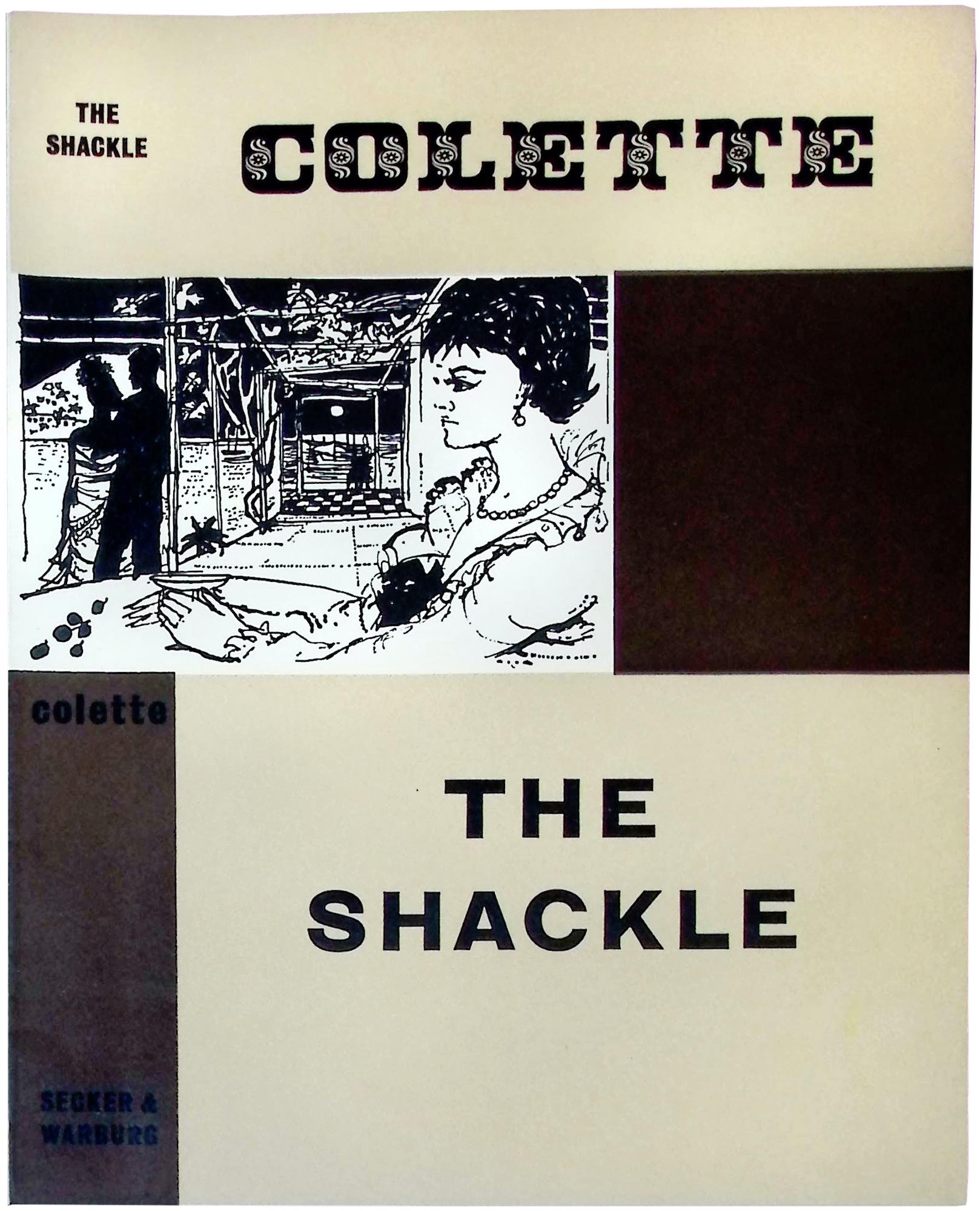
Book cover proof for Colette's "The Shackle", 1964
British illustrator Janina Ede (1937-2018) created covers and illustrations for over 100 books from the 1950s to the 1980s. She designed the covers of several books by French author and pioneer of autofiction Sidonie-Gabrielle Colette.
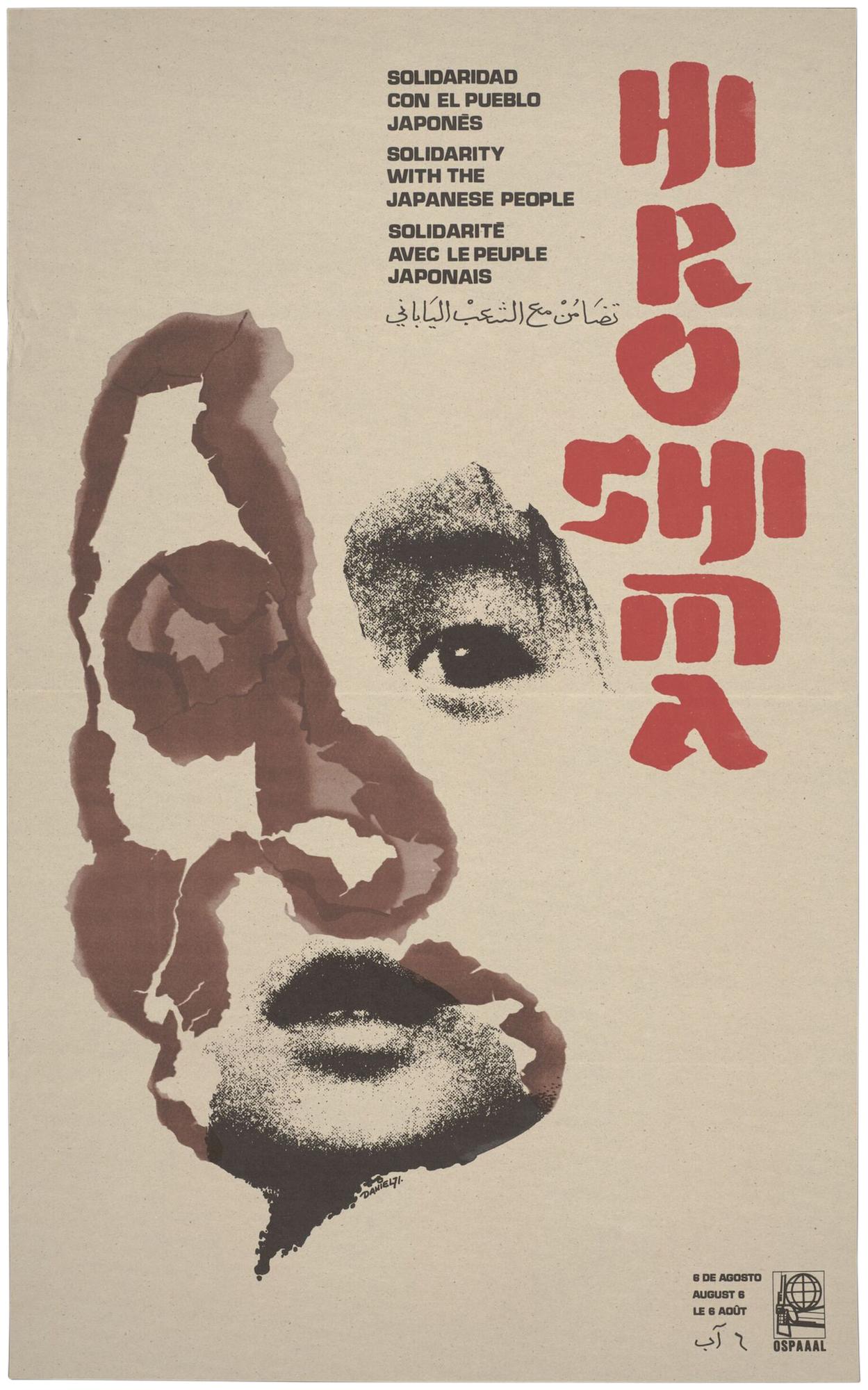
HIROSHIMA - SOLIDARITY WITH THE JAPANESE PEOPLE, 1972
Between the 1960s and 1990s, more than fifty designers worked at OSPAAAL (the Organisation of Solidarity with the People of Africa, Asia and Latin America). Based in Cuba, they made magazines and posters that were sent around the world. Their aim was to promote radical political ideas. Many of their posters celebrate socialist revolutions and liberation movements from the Global South. OSPAAAL marked the date of the atomic bombing of the city of Hiroshima by the U.S.A. as a day of solidarity with Japanese citizens. By collaging fragments of a photograph and burned paper, Daniel García stressed the horrific consequences of deploying nuclear weapons. OSPAAAL’s designers regularly used adapted photographs from the organisation’s news desk. Photographs were sometimes used out of context, with the same photographs appearing in posters and magazine illustrations to represent different themes. The identity of the person in this photograph is not recorded.
Content warning: Injury, burns
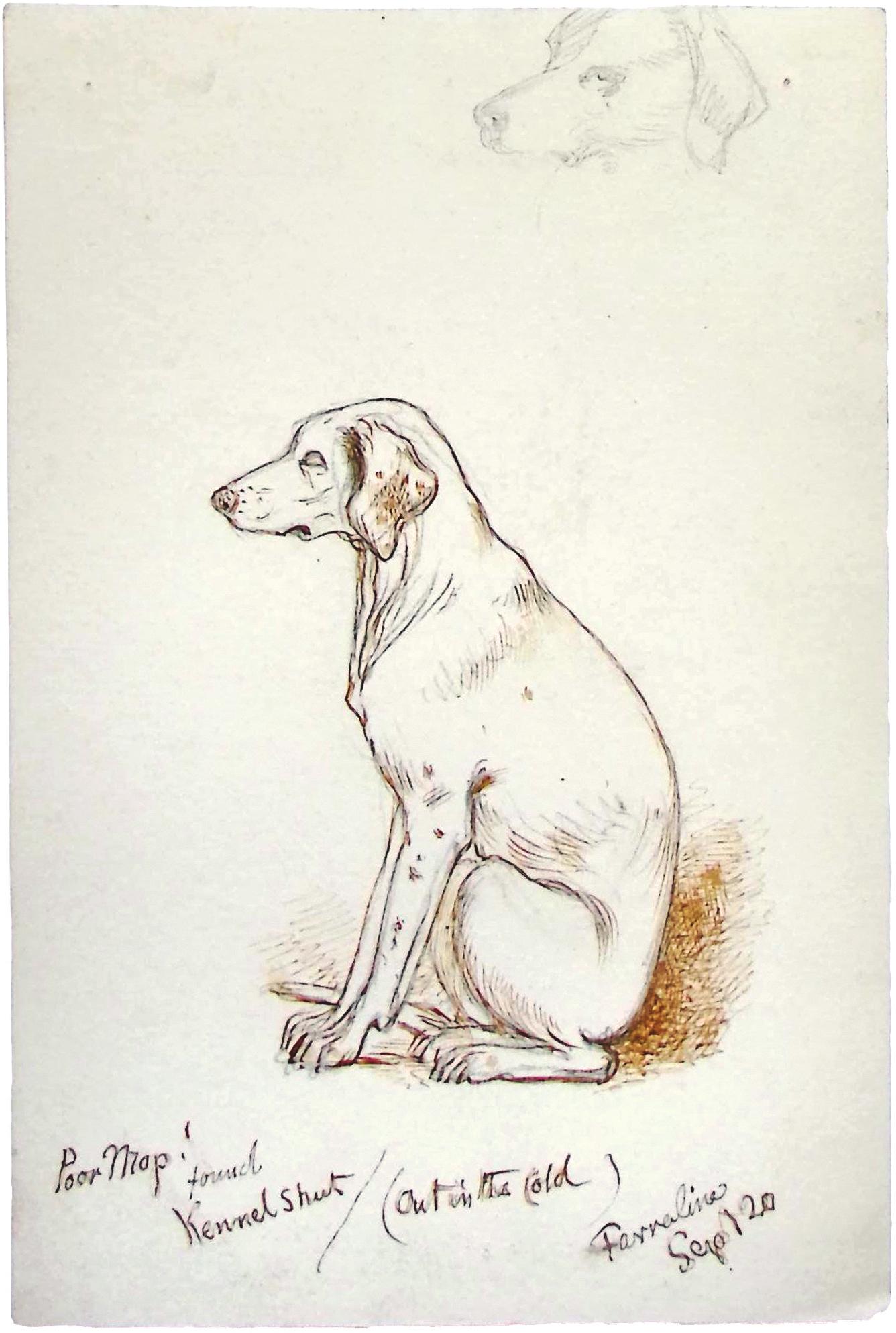
Untitled (Poor Mop!), Date unknown
Eleanor Vere Boyle (1825 – 1916) illustrated poetry and prose by some of the most popular authors of her time. She regularly drew and painted using ink and watercolour, sketching landscapes, animals and her children from life. She also made drawings from her imagination, often reflecting spiritual themes.
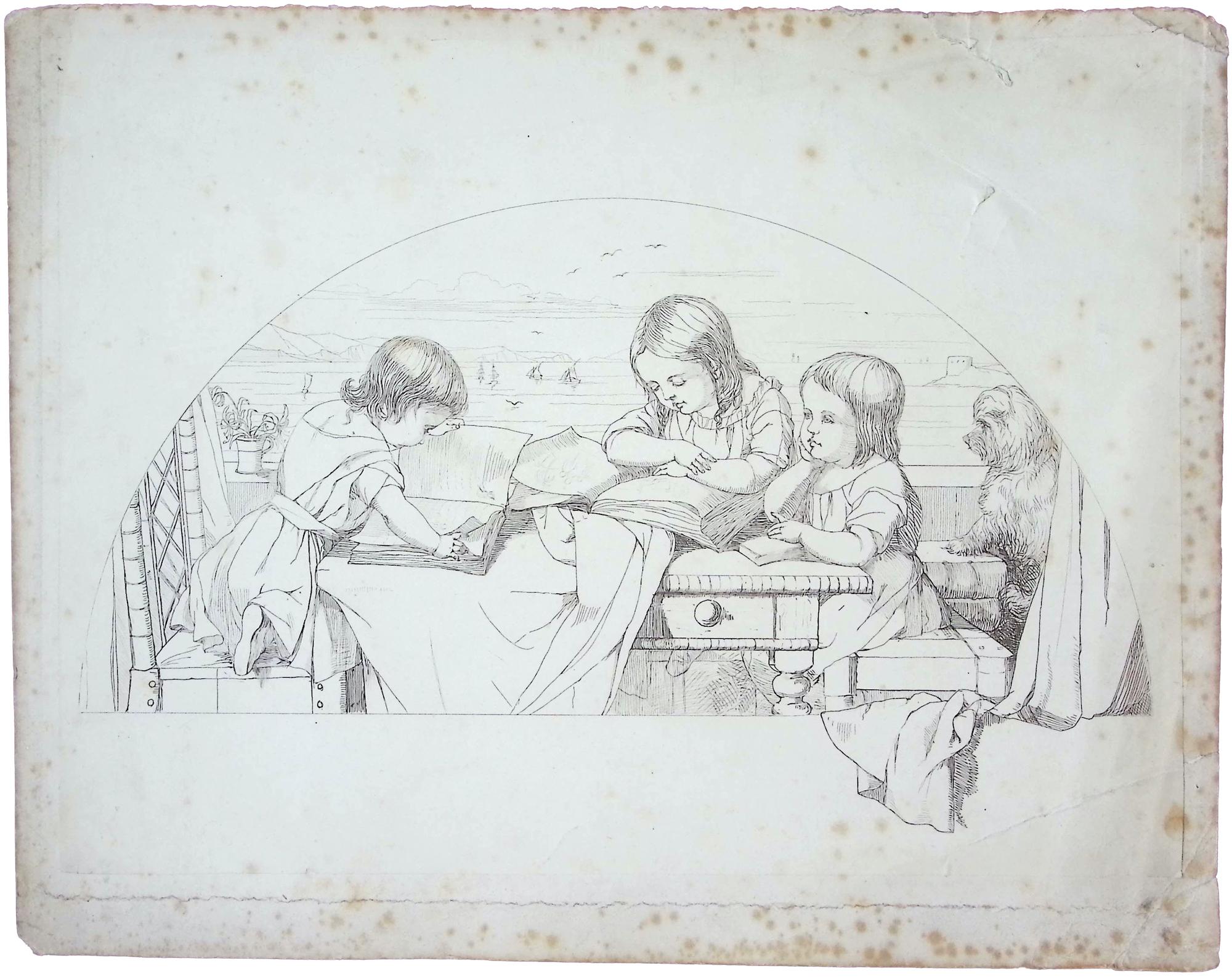
Untitled, Date unknown
Eleanor Vere Boyle (1825 – 1916) illustrated poetry and prose by some of the most popular authors of her time. She regularly drew and painted using ink and watercolour, sketching landscapes, animals and her children from life. She also made drawings from her imagination, often reflecting spiritual themes.
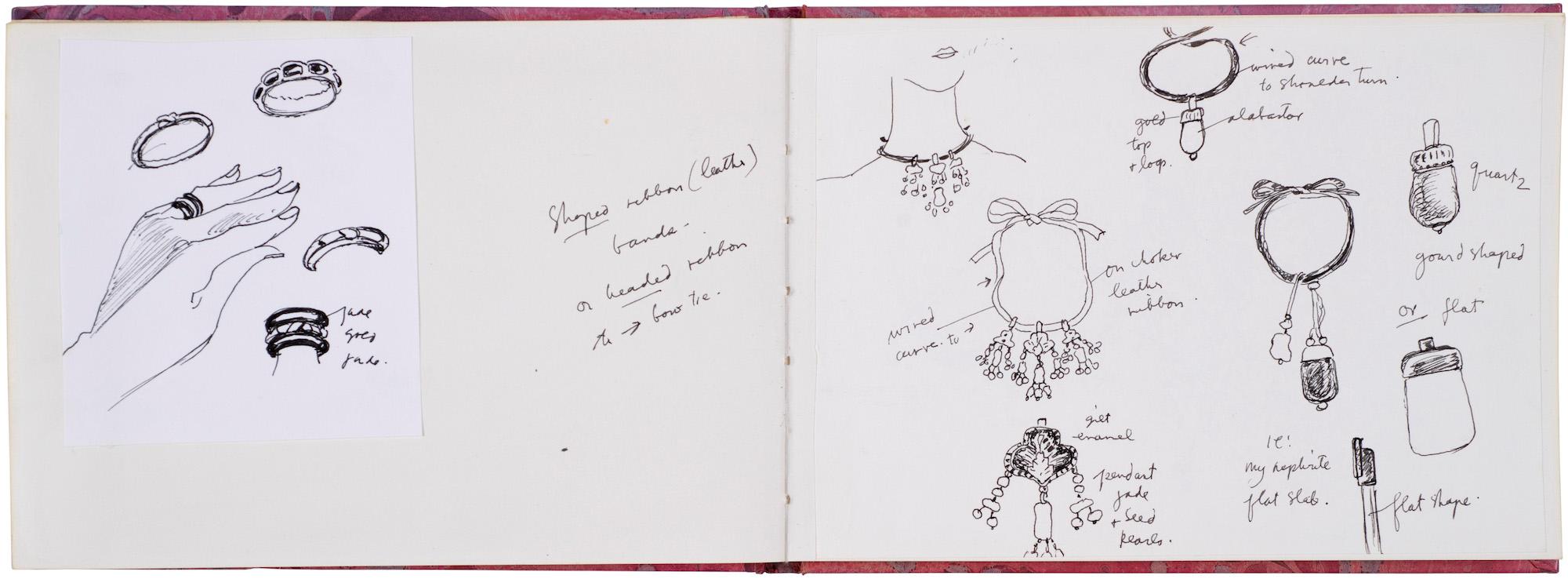
Jacqueline Ayer, Untitled, Date unknown
Jacqueline Ayer (1930–2012) had a career that spanned many creative fields. She began as a fashion illustrator, and later turned her hand to children’s books, textiles and garments, as she worked in New York, Paris, London, Bangkok, Hong Kong and across India. Ayer often used a sketchbook to record her observations and ideas for book narratives and fashion designs. The context for this drawing is unknown.
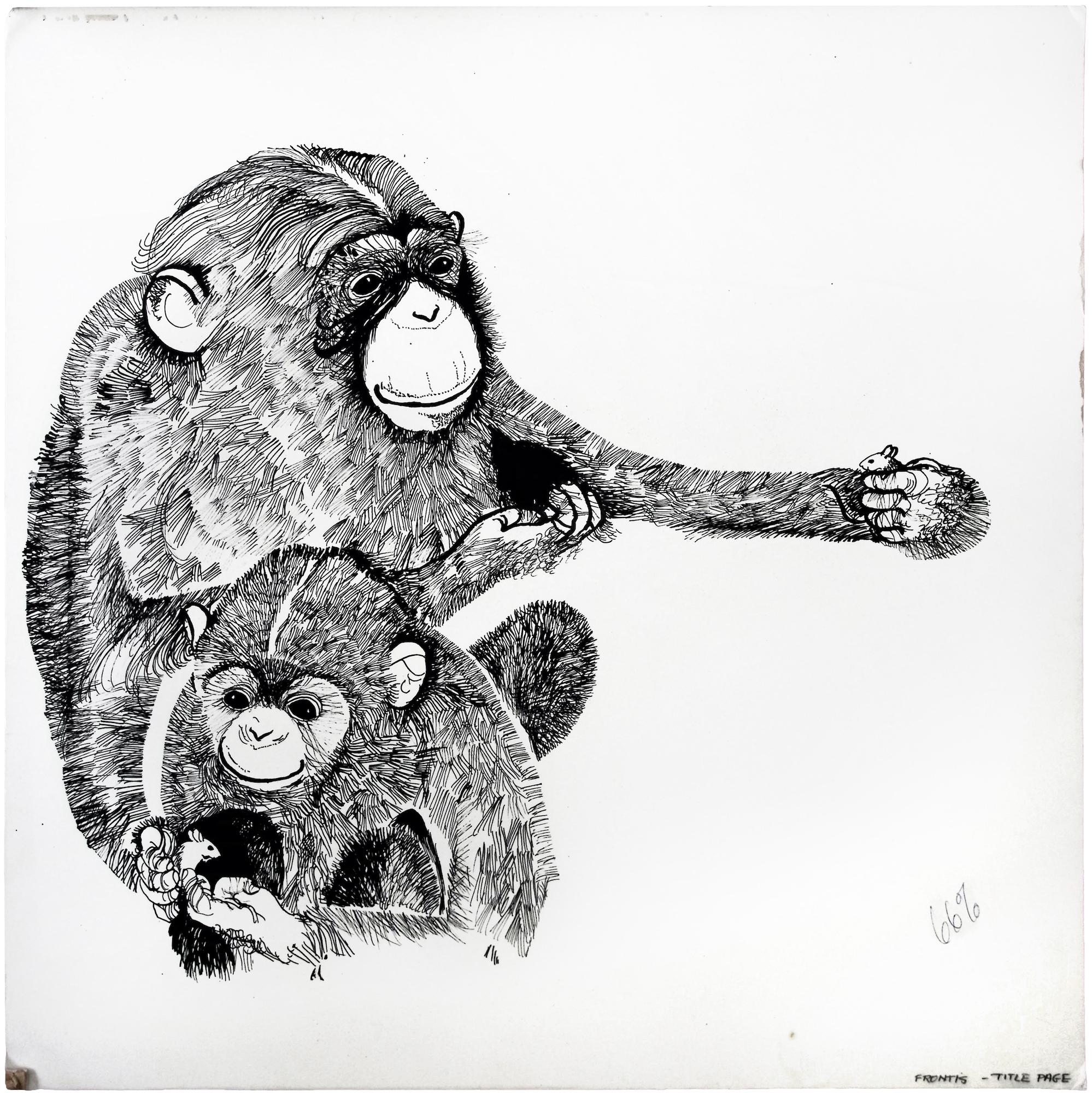
Untitled, c. 1987
British illustrator Janina Ede (1937-2018) created covers and illustrations for over 100 books from the 1950s to the 1980s. Many of her illustrations feature animals, which she drew from life.
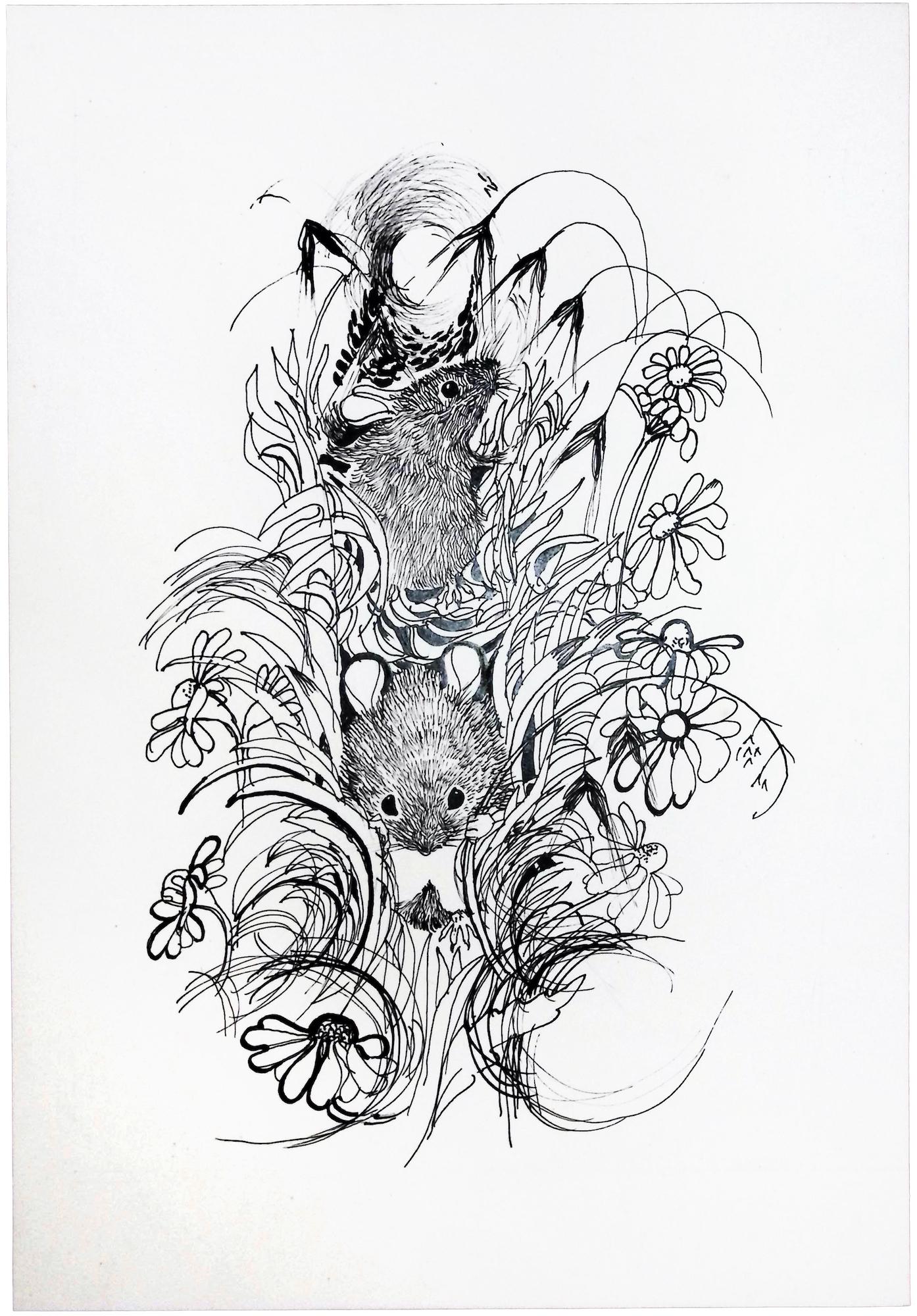
Illustration for A Pocket Full of Mice, c. 1984
British illustrator Janina Ede (1937-2018) created covers and illustrations for over 100 books from the 1950s to the 1980s. Many of her illustrations feature animals, which she drew from life.
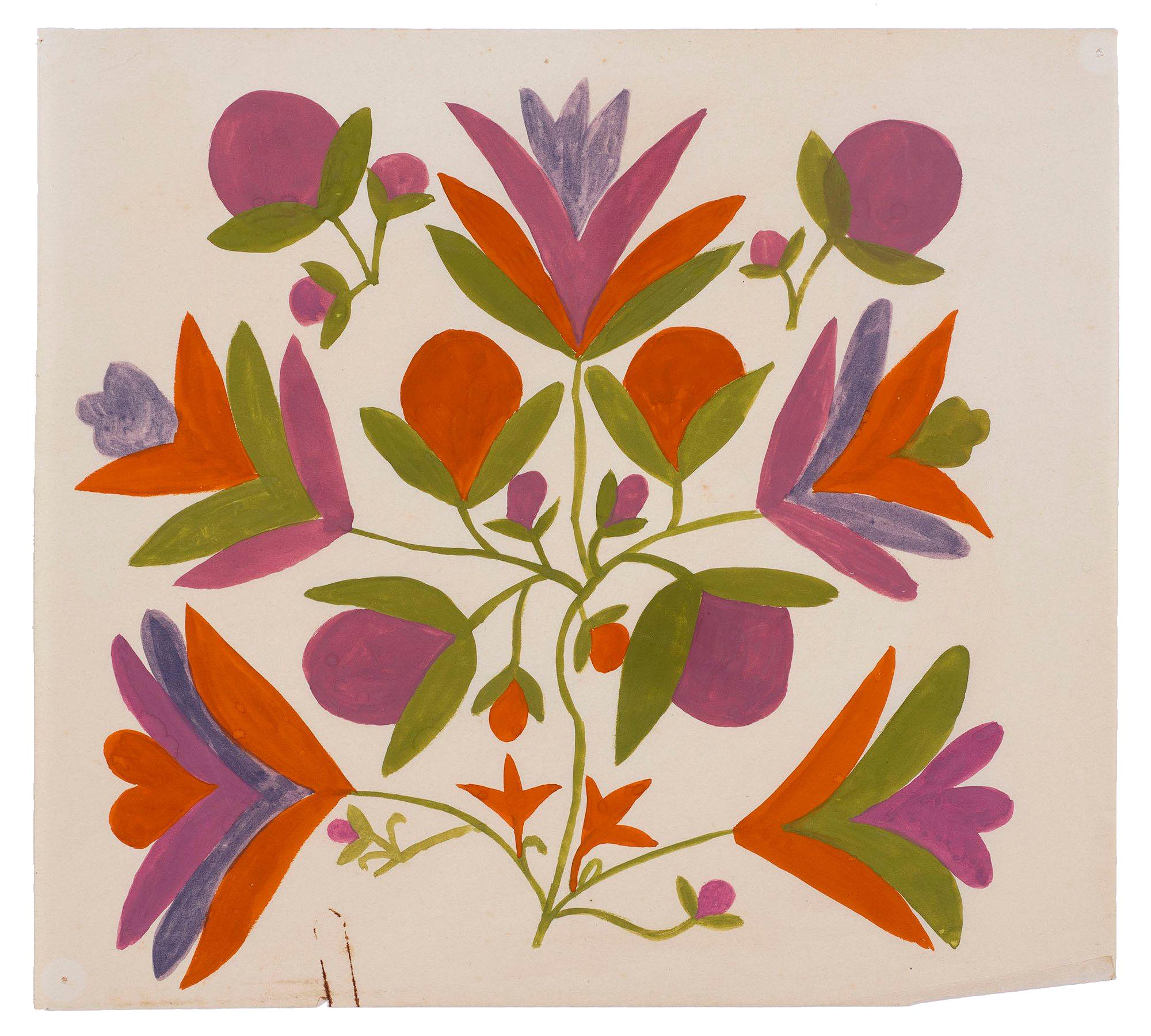
Jacqueline Ayer, Untitled, c. 1965
In the early 1960s, Jacqueline Ayer founded textile and garment company Design Thai, funded by IBEC (International Basic Economy Corporation) under Norman Rockefeller. The first printed fabrics were inspired by ancient Thai designs from carvings, temples, porcelains, and printed cloths in the vaults of the National Museum Bangkok. Design Thai opened a shop in Bangkok in 1962, and expanded to offer a line of ready-to-wear clothing. Design Thai's collection of garments showcased Ayer's own pattern designs within the textiles used. This drawing demonstrates her approach to forming a motif towards print production.
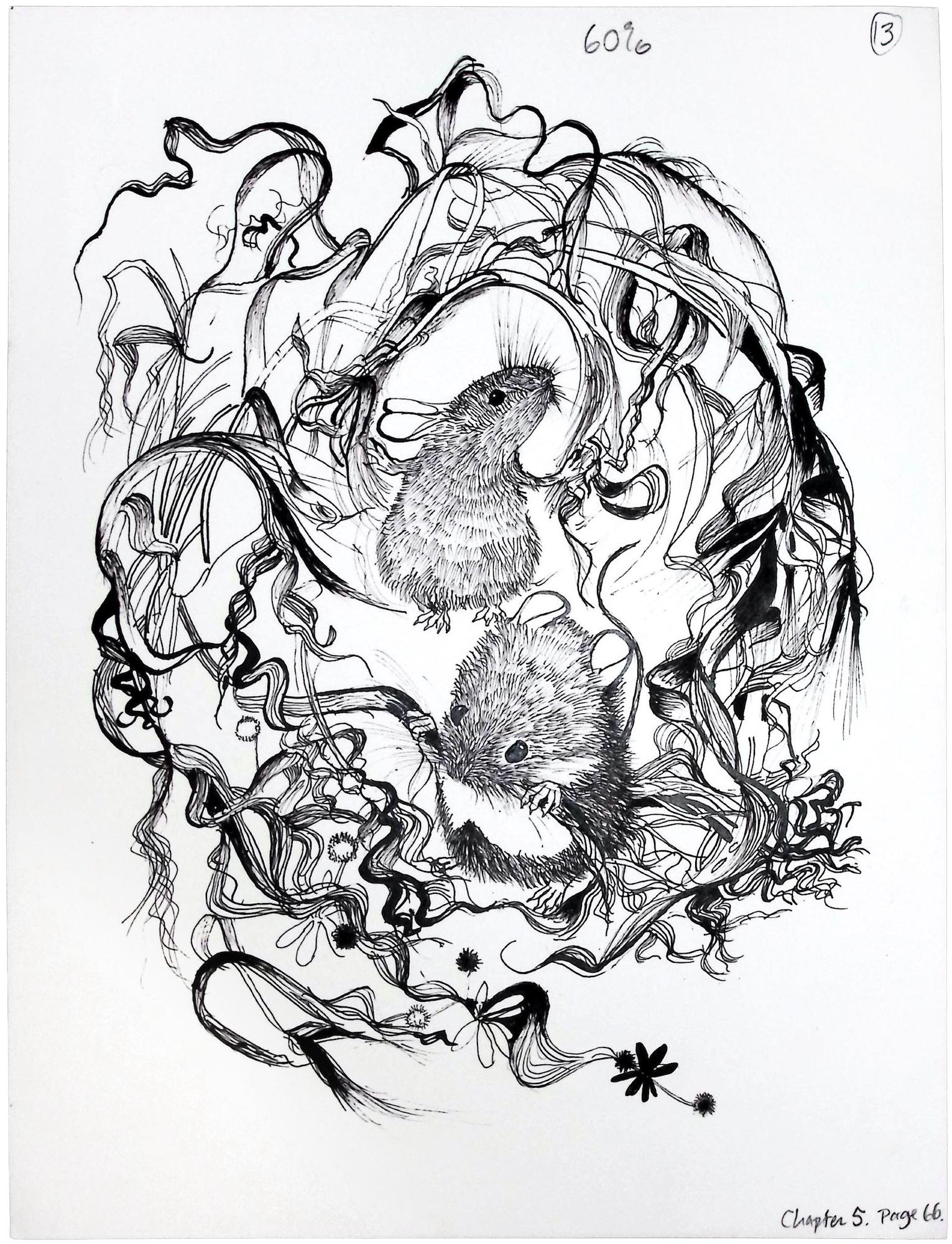
Illustration for A Pocket Full of Mice, c. 1984
British illustrator Janina Ede (1937-2018) created covers and illustrations for over 100 books from the 1950s to the 1980s. Many of her illustrations feature animals, which she drew from life.
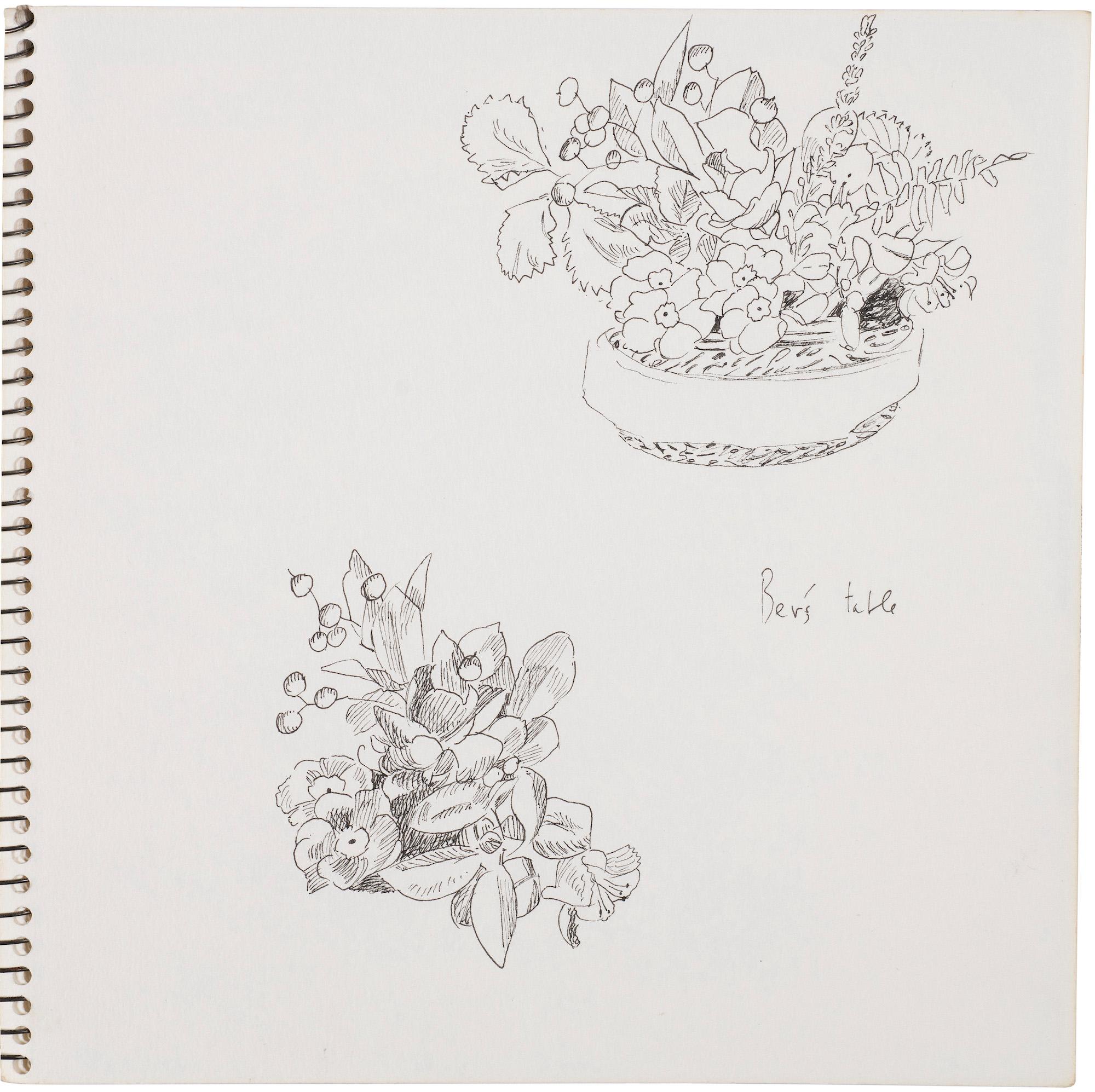
Jacqueline Ayer, Untitled, Date unknown
Jacqueline Ayer (1930–2012) had a career that spanned many creative fields. She began as a fashion illustrator, and later turned her hand to children’s books, textiles and garments, as she worked in New York, Paris, London, Bangkok, Hong Kong and across India. Ayer often used a sketchbook to record her observations and ideas for book narratives and fashion designs. The context for this drawing is unknown.
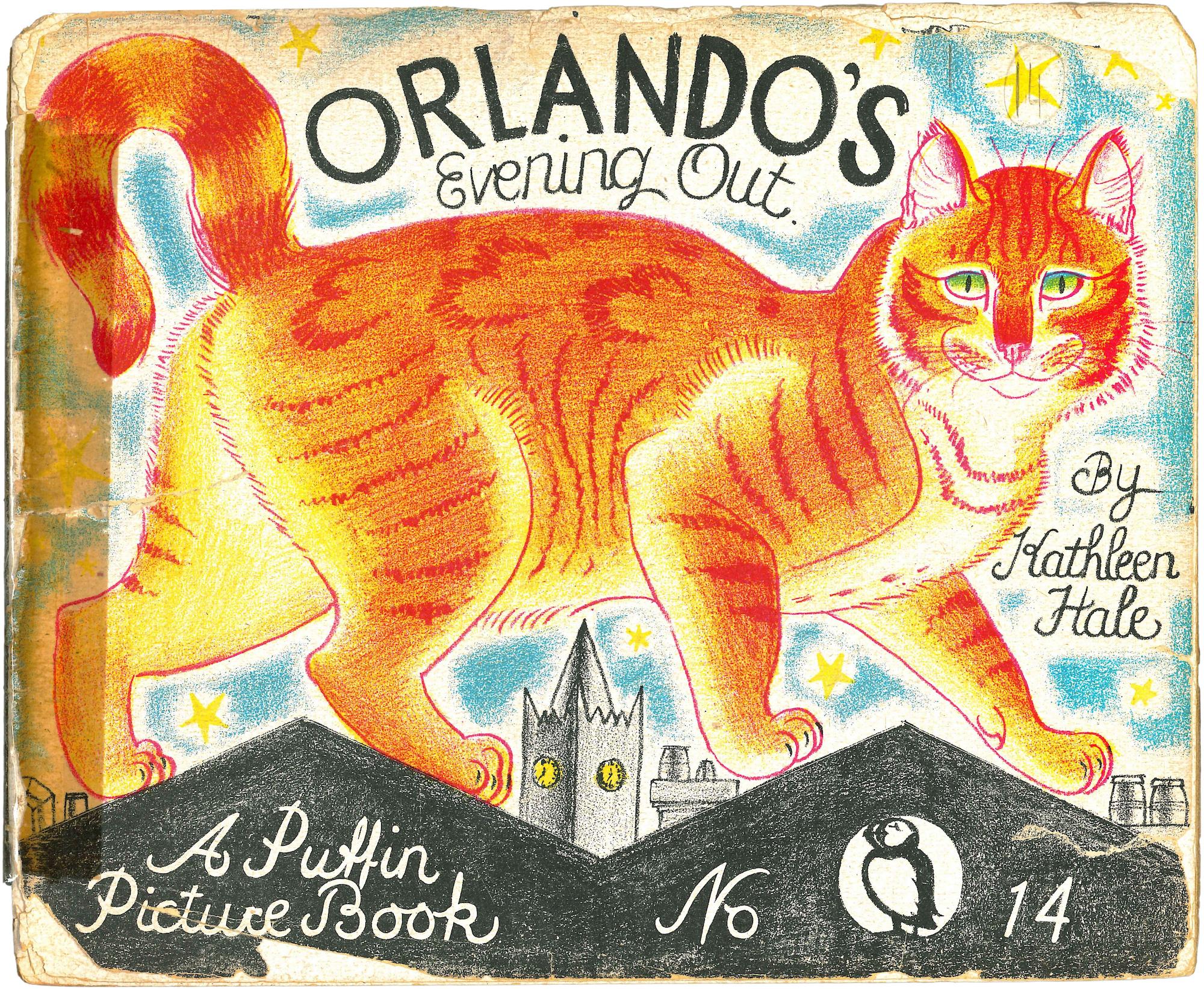
Orlando’s Evening Out, 1944
The Puffin Picture Books series was established by designer and editor Noel Carrington (1895-1989). In 1933, artist Pearl Binder (1904-1990) sent Carrington a package of Soviet children’s books. “They were produced by the million on very cheap paper, but the drawings were vigorous and the colour delightful” he later remembered. These books inspired Carrington to edit a series of affordable books that would encourage “the child’s awakening interest in its surroundings... I felt that colour was essential, and that artists could... be more successful in books of this nature than the camera”. Many artists and illustrators worked on the series, adapting their ways of working to lithographic printing and the Puffin Picture Book format. Most of the 120 books in the series were printed on one large sheet of paper: one side in colour and one in black-and-white. Each sheet was cut, folded and stapled to create a softcover book.
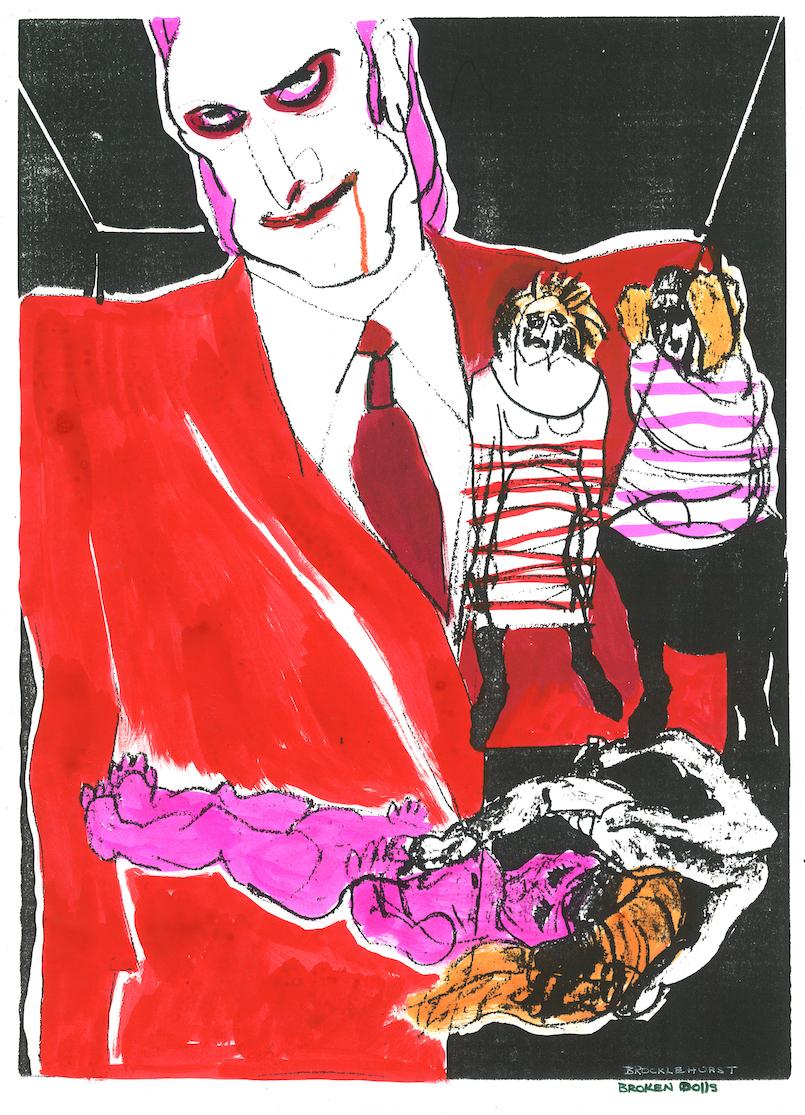
Jo Brocklehurst, Broken Dolls, Date unknown
Jo (Josephine) Brocklehurst (1935 - 2006) studied at Central Saint Martins and began her career as a fashion illustrator. She later focused on portraiture, drawing directly from models at her studio in West Hampstead and in nightclubs and theatres in Berlin, London and New York. Her work documents the alternative subcultures of the 1970s, 80s and 90s that went on to shape mainstream fashion and performance scenes.
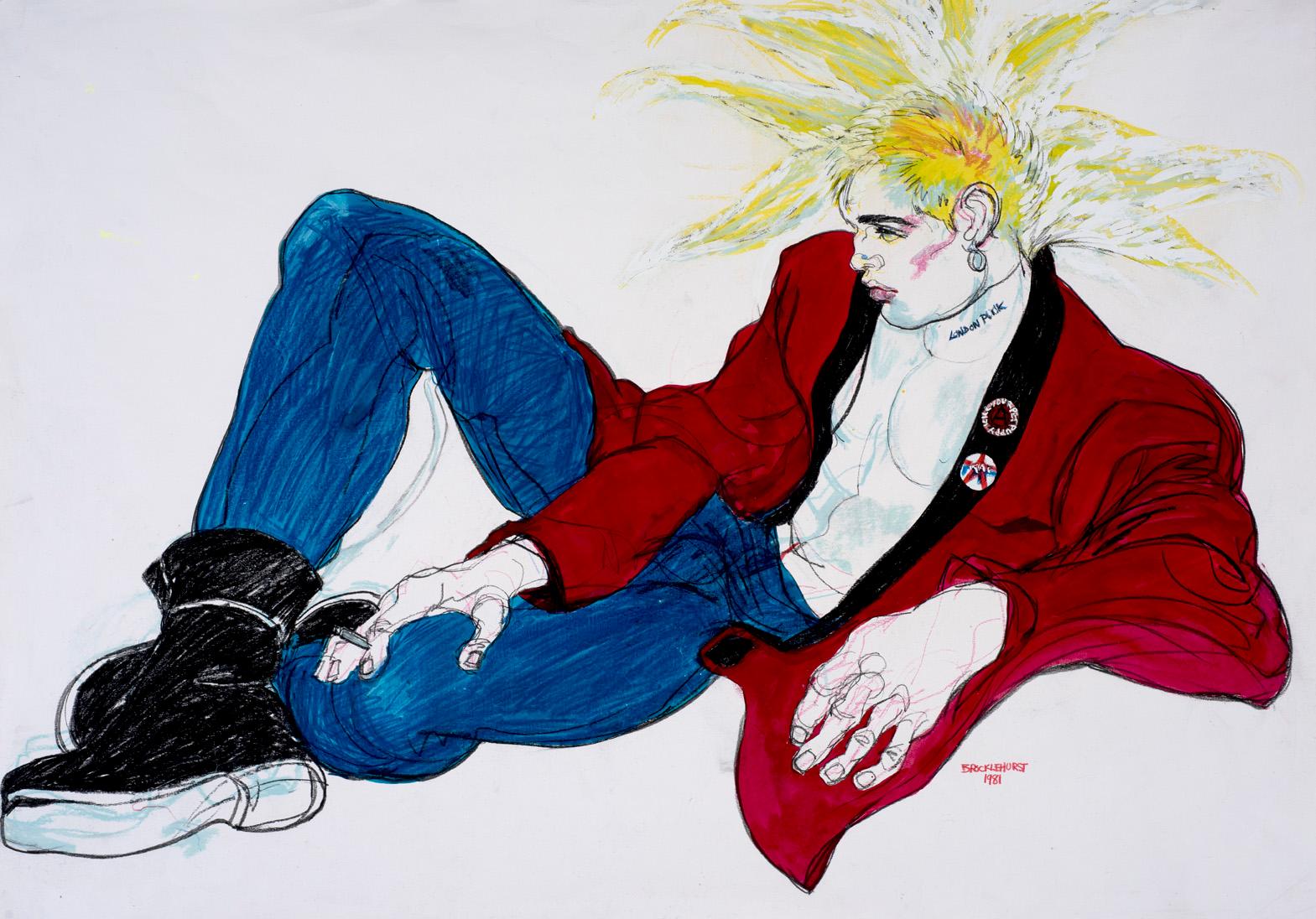
Jo Brocklehurst, Untitled, 1981
Jo (Josephine) Brocklehurst (1935 - 2006) studied at Central Saint Martins and began her career as a fashion illustrator. She later focused on portraiture, drawing directly from models at her studio in West Hampstead and in nightclubs and theatres in Berlin, London and New York. Her work documents the alternative subcultures of the 1970s, 80s and 90s that went on to shape mainstream fashion and performance scenes. In the 1980s, Brocklehurst drew a series portraits of members of the Kill Your Pet Puppy collective who were living in a squat close to her studio. Attracted to their anarcho-punk dress and ethos, she said “I felt that they understood very well what was going on in the world, what was in it for them”.
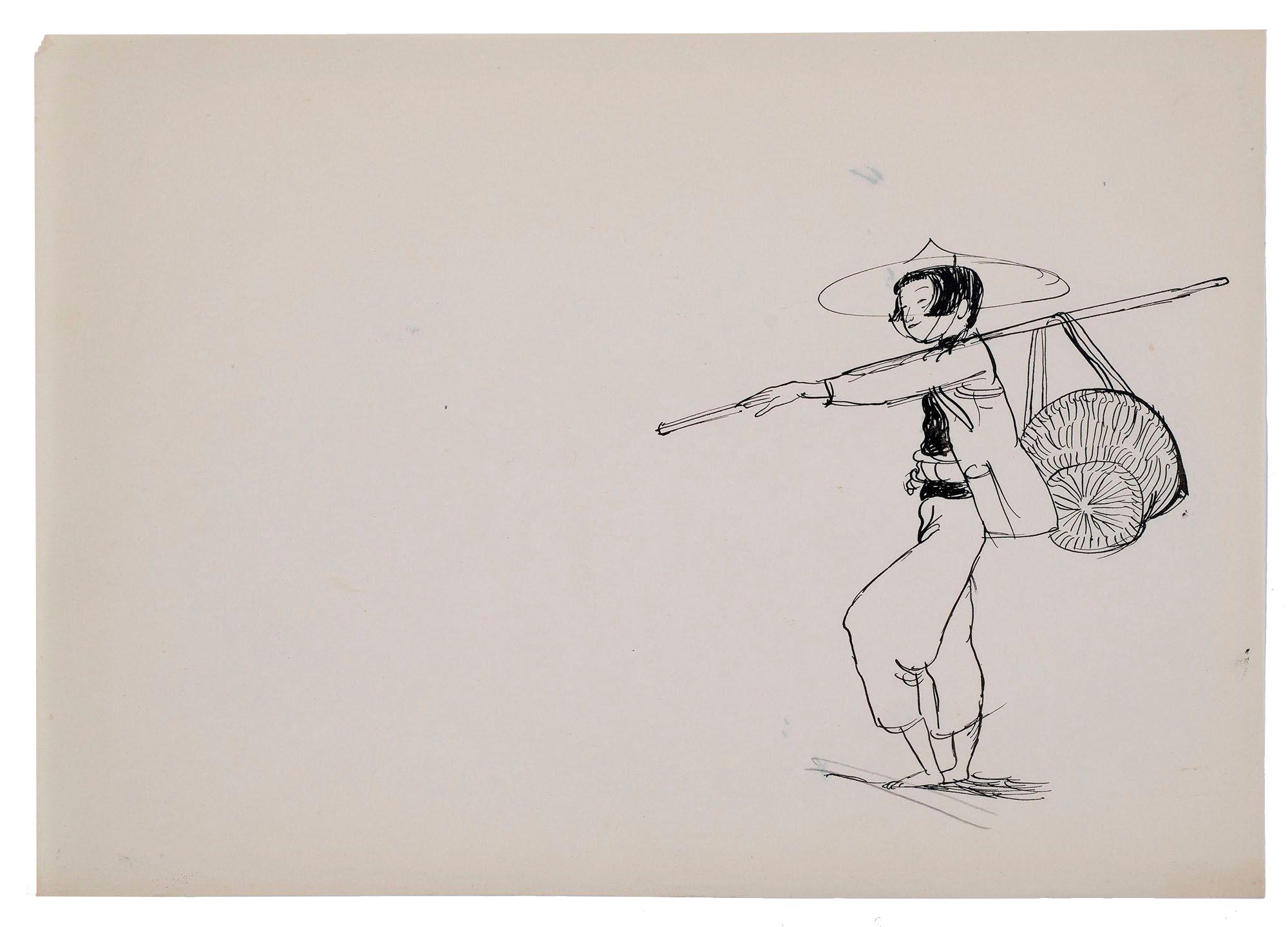
Jacqueline Ayer, Untitled, c. 1956
Jacqueline Ayer (1930–2012) had a career that spanned many creative fields. She began as a fashion illustrator, and later turned her hand to children’s books, textiles and garments, as she worked in New York, Paris, London, Bangkok, Hong Kong and across India. Ayer wrote and illustrated five of her own books, four of which gave insight into 1960s Thailand to US and UK audiences, while the fifth was set in Hong Kong. Using reportage drawing to create books about Asia for children was a unique and refreshing approach.
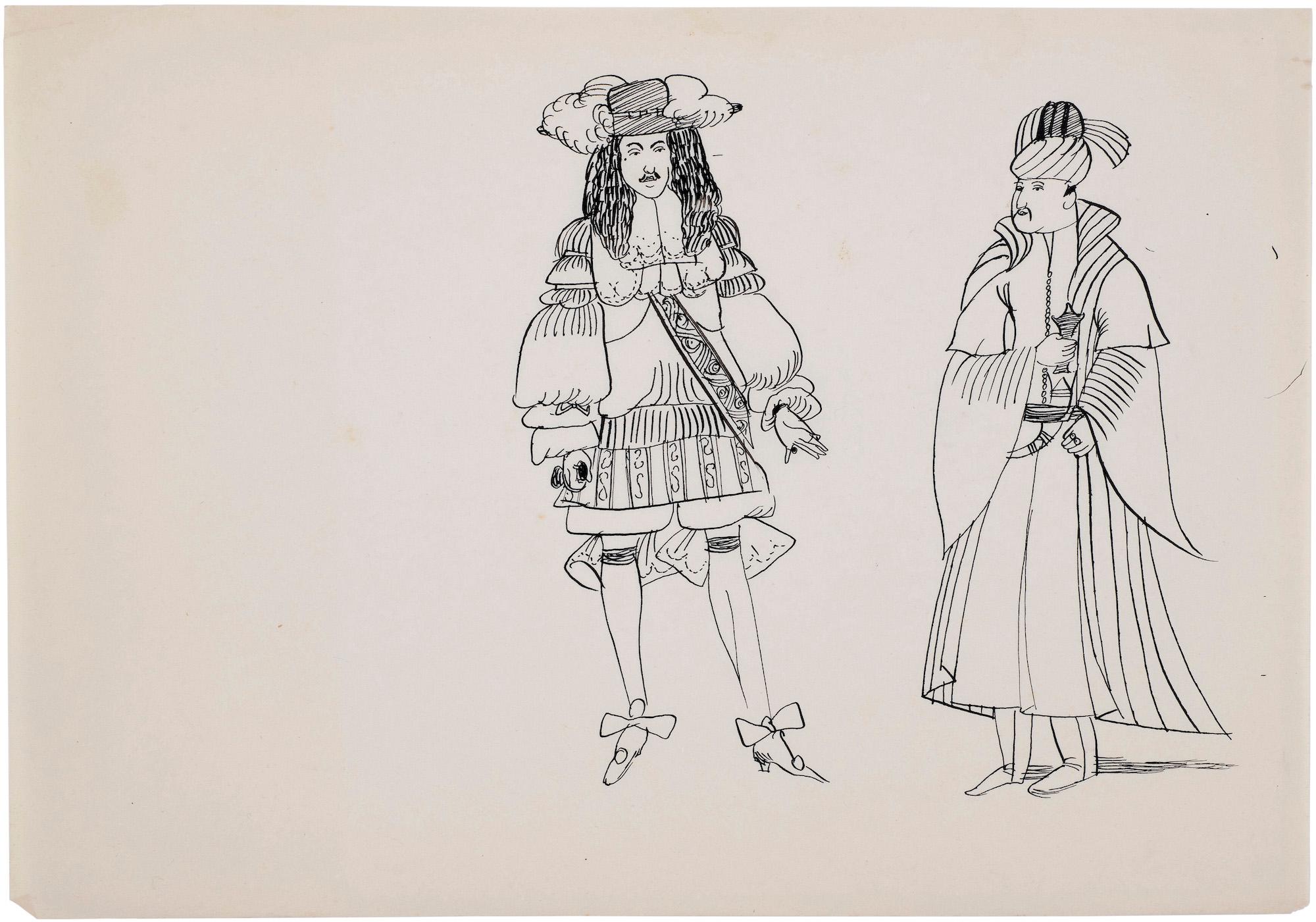
Jacqueline Ayer, Untitled, c. 1959
Jacqueline Ayer (1930–2012) had a career that spanned many creative fields. She began as a fashion illustrator, and later turned her hand to children’s books, textiles and garments, as she worked in New York, Paris, London, Bangkok, Hong Kong and across India. Since working as a fashion illustrator in Paris, Ayer had been interested in costumes, national dress and garments. She also had the ability to bring her sketches into reality through her dress-making skills that she had learned from her mother.
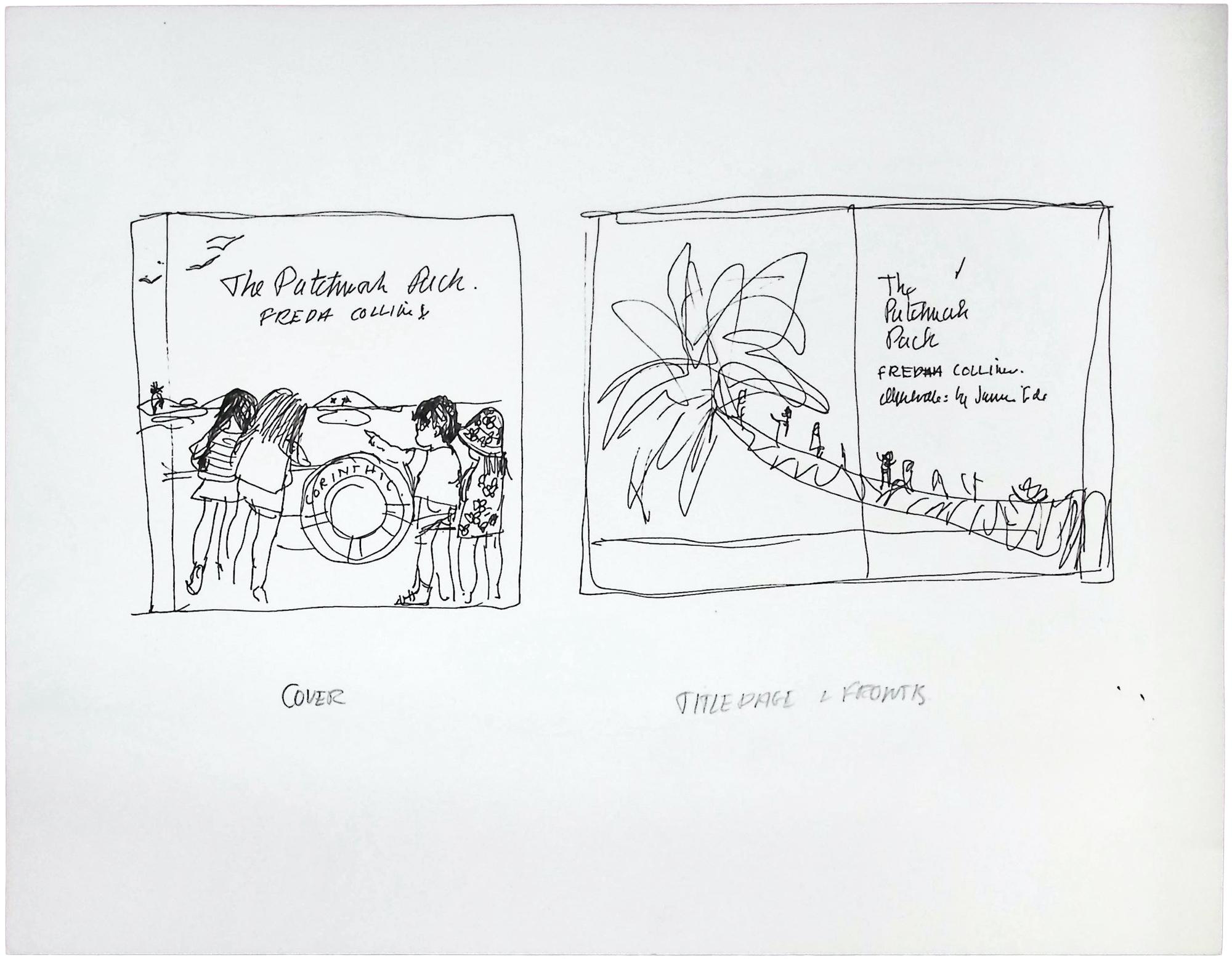
Untitled, c. 1968
British illustrator Janina Ede (1937-2018) created covers and illustrations for over 100 books from the 1950s to the 1980s. In the 1960s, Ede began working on children’s books. The Patchwork Pack (1968) by Freda Collins is about a group of ‘Brownies’ – the name given to members of the worldwide girl-guiding movement.
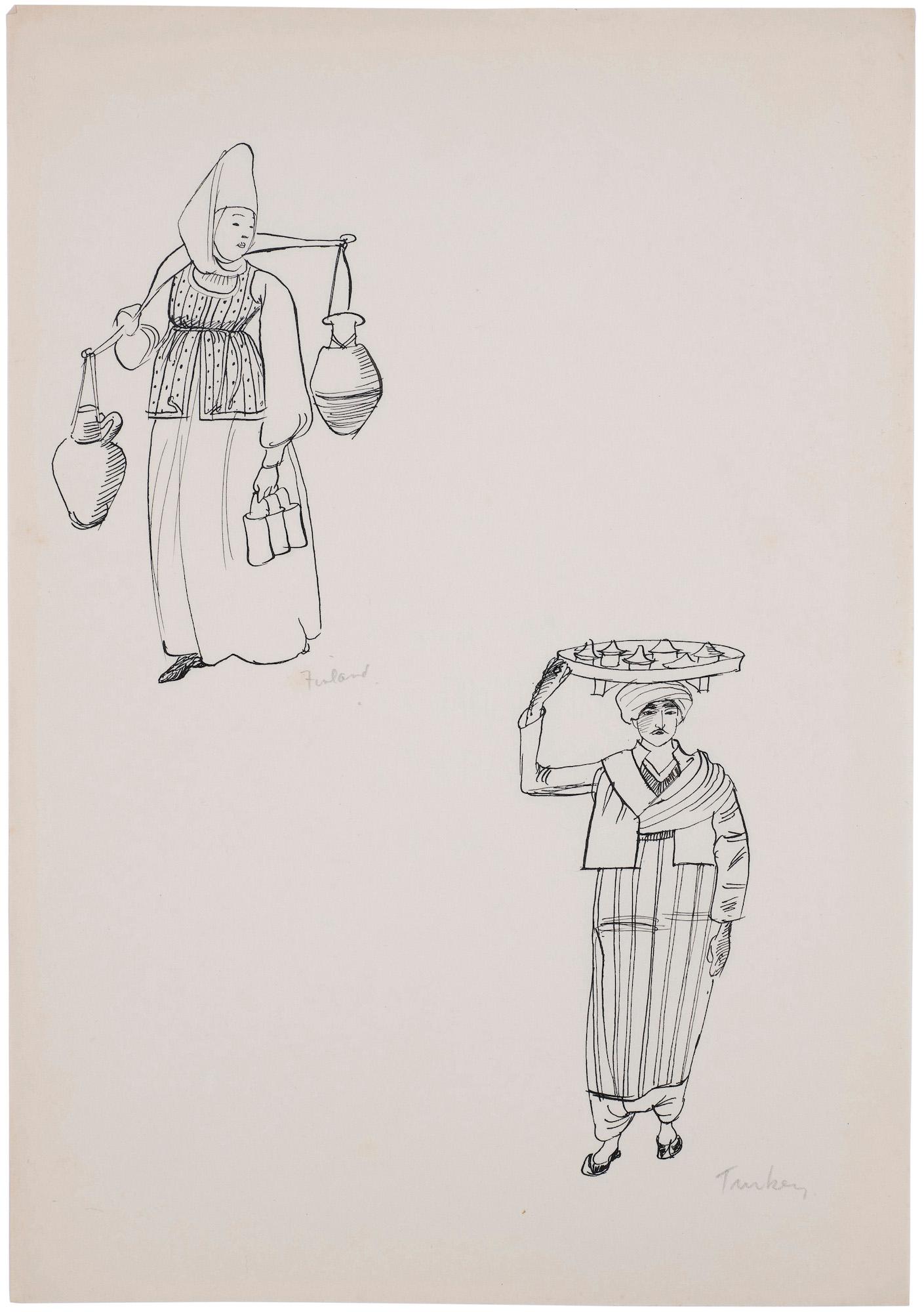
Jacqueline Ayer, Untitled, c.1975
Jacqueline Ayer (1930–2012) had a career that spanned many creative fields. She began as a fashion illustrator, and later turned her hand to children’s books, textiles and garments, as she worked in New York, Paris, London, Bangkok, Hong Kong and across India.
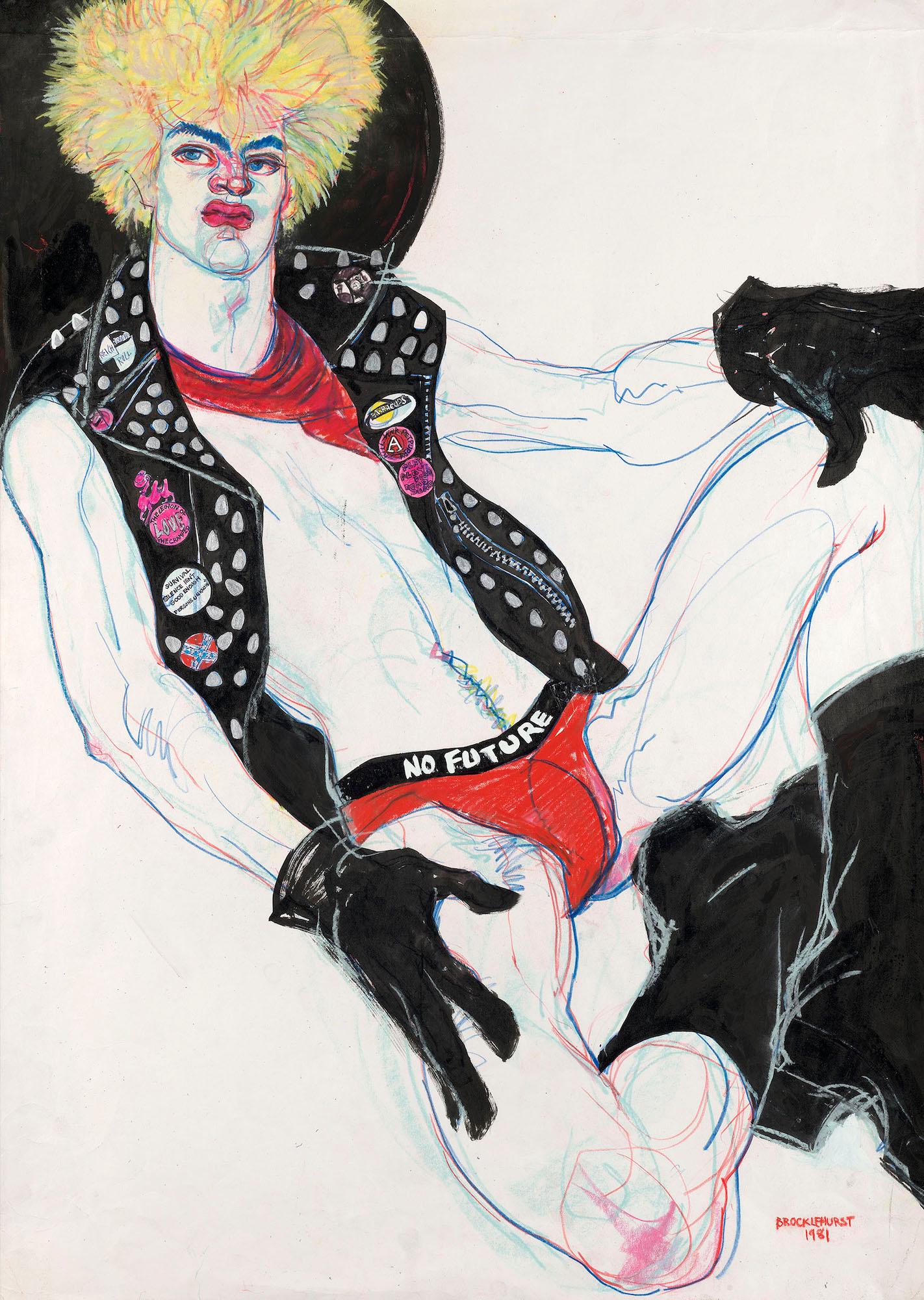
Jo Brocklehurst, Untitled (portrait of Tony Drayton), 1981
Jo (Josephine) Brocklehurst (1935 - 2006) studied at Central Saint Martins and began her career as a fashion illustrator. She later focused on portraiture, drawing directly from models at her studio in West Hampstead and in nightclubs and theatres in Berlin, London and New York. Her work documents the alternative subcultures of the 1970s, 80s and 90s that went on to shape mainstream fashion and performance scenes. In the 1980s, Brocklehurst drew a series portraits of members of the Kill Your Pet Puppy collective who were living in a squat close to her studio. Attracted to their anarcho-punk dress and ethos, she said “I felt that they understood very well what was going on in the world, what was in it for them”. This portrait is of Tony Drayton, founder of Kill Your Pet Puppy and punk fanzine Ripped And Torn.
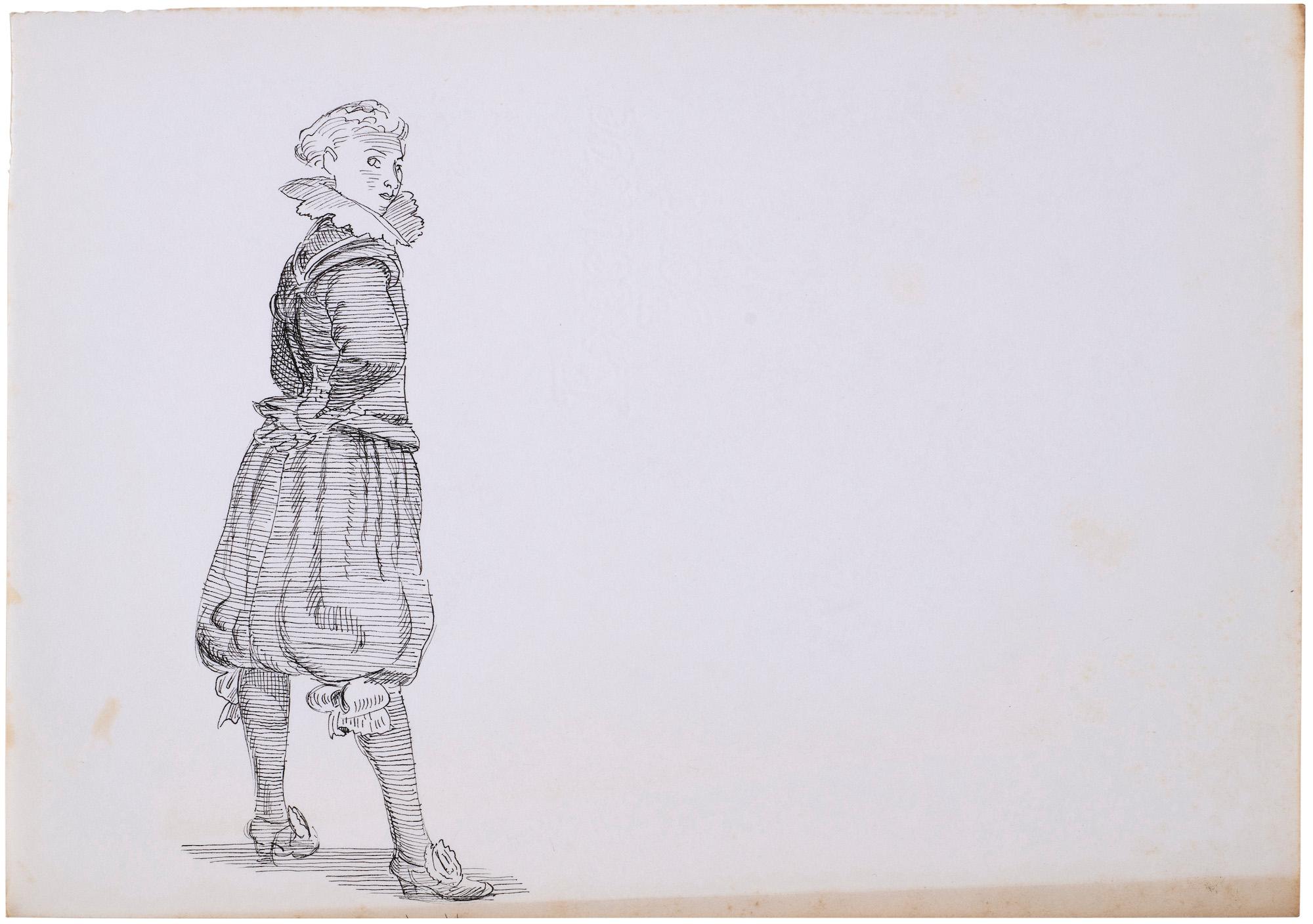
Jacqueline Ayer, Untitled, Date unknown
Jacqueline Ayer (1930–2012) had a career that spanned many creative fields. She began as a fashion illustrator, and later turned her hand to children’s books, textiles and garments, as she worked in New York, Paris, London, Bangkok, Hong Kong and across India. Ayer often used a sketchbook to record her observations and ideas for book narratives and fashion designs. The context for this drawing is unknown.
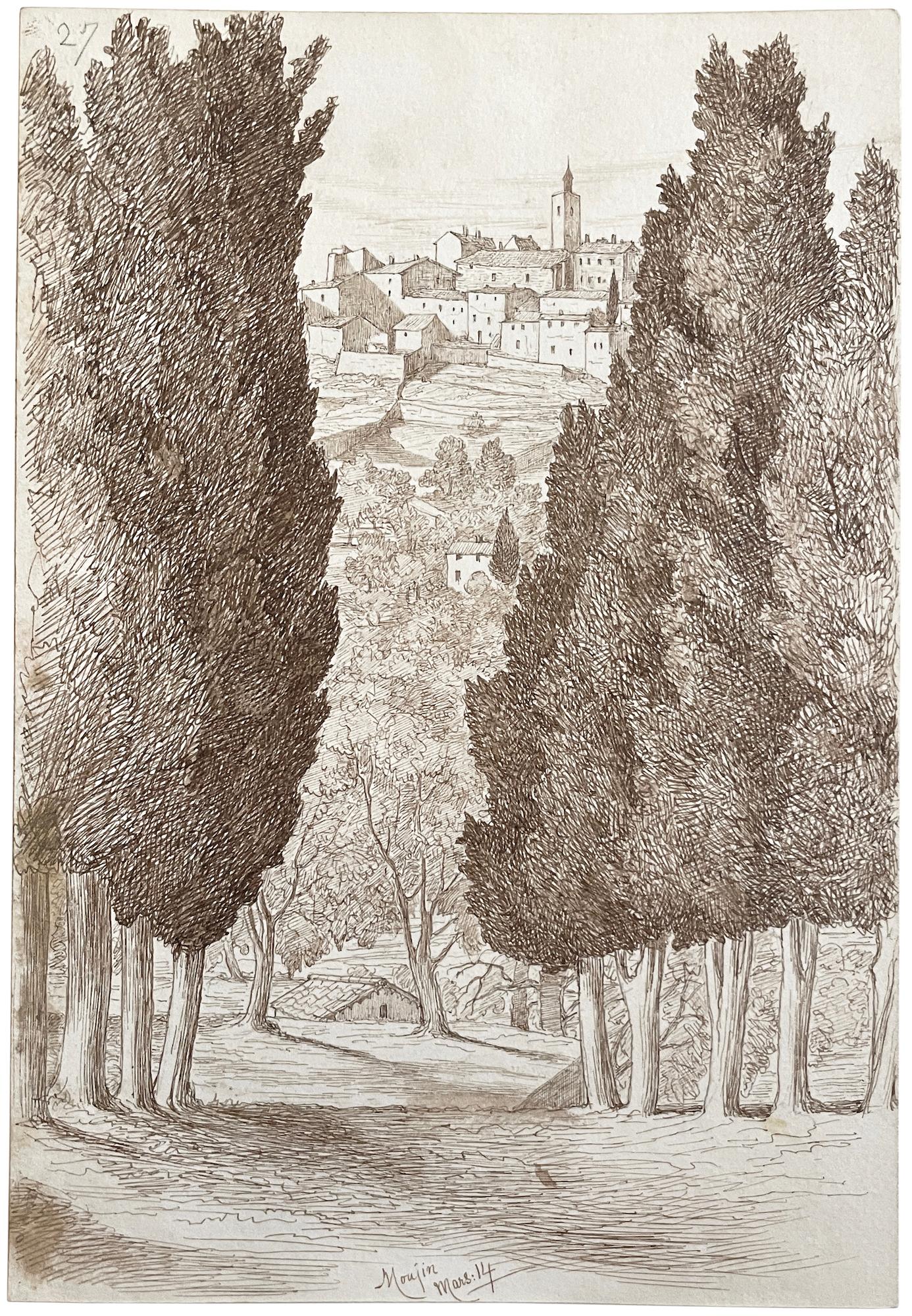
Untitled (Moujin)
Eleanor Vere Boyle (1825 – 1916) illustrated poetry and prose by some of the most popular authors of her time. She regularly drew and painted using ink and watercolour, sketching landscapes, animals and her children from life. She also made drawings from her imagination, often reflecting spiritual themes.
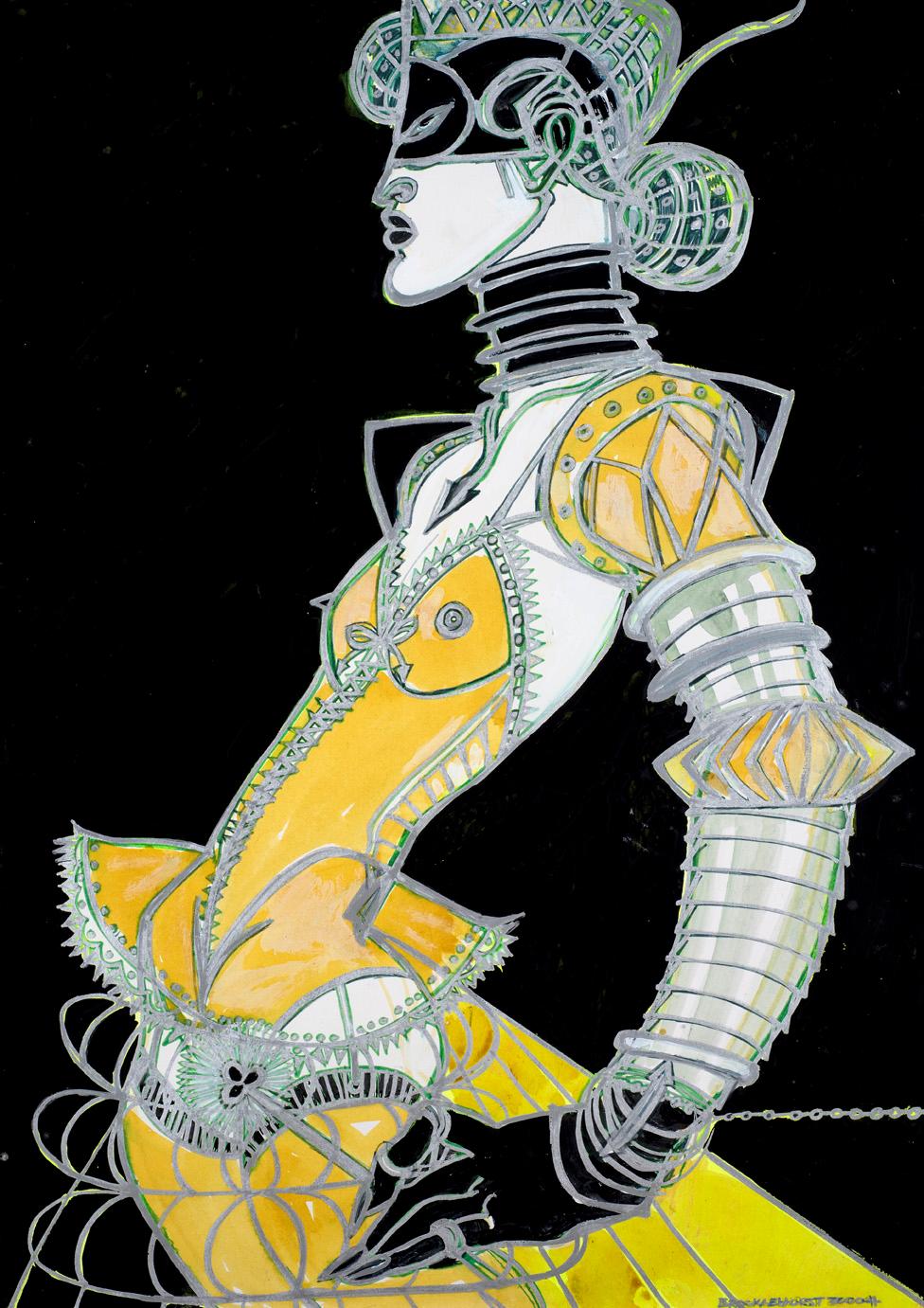
Jo Brocklehurst, Untitled (from Brocklehurst Through the Looking-Glass), 2004
Jo (Josephine) Brocklehurst (1935 - 2006) studied at Central Saint Martins and began her career as a fashion illustrator. She later focused on portraiture, drawing directly from models at her studio in West Hampstead and in nightclubs and theatres in Berlin, London and New York. Her work documents the alternative subcultures of the 1970s, 80s and 90s that went on to shape mainstream fashion and performance scenes. This work is from Brocklehurst Through the Looking-Glass, Brocklehurst’s final series. With an image of herself as a child as the centrepiece, Brocklehurst made hundreds of drawings that re-imagined characters from Lewis Carroll’s Alice novels. Her models were friends and dedicated club-goers who designed and made their own clothes. Works from the series were framed with bright plastic gemstones and hung on every available space at Brocklehurst’s home studio. She used metallic and neon inks that transformed under ultraviolet lights that she switched on for her guests in the evenings.
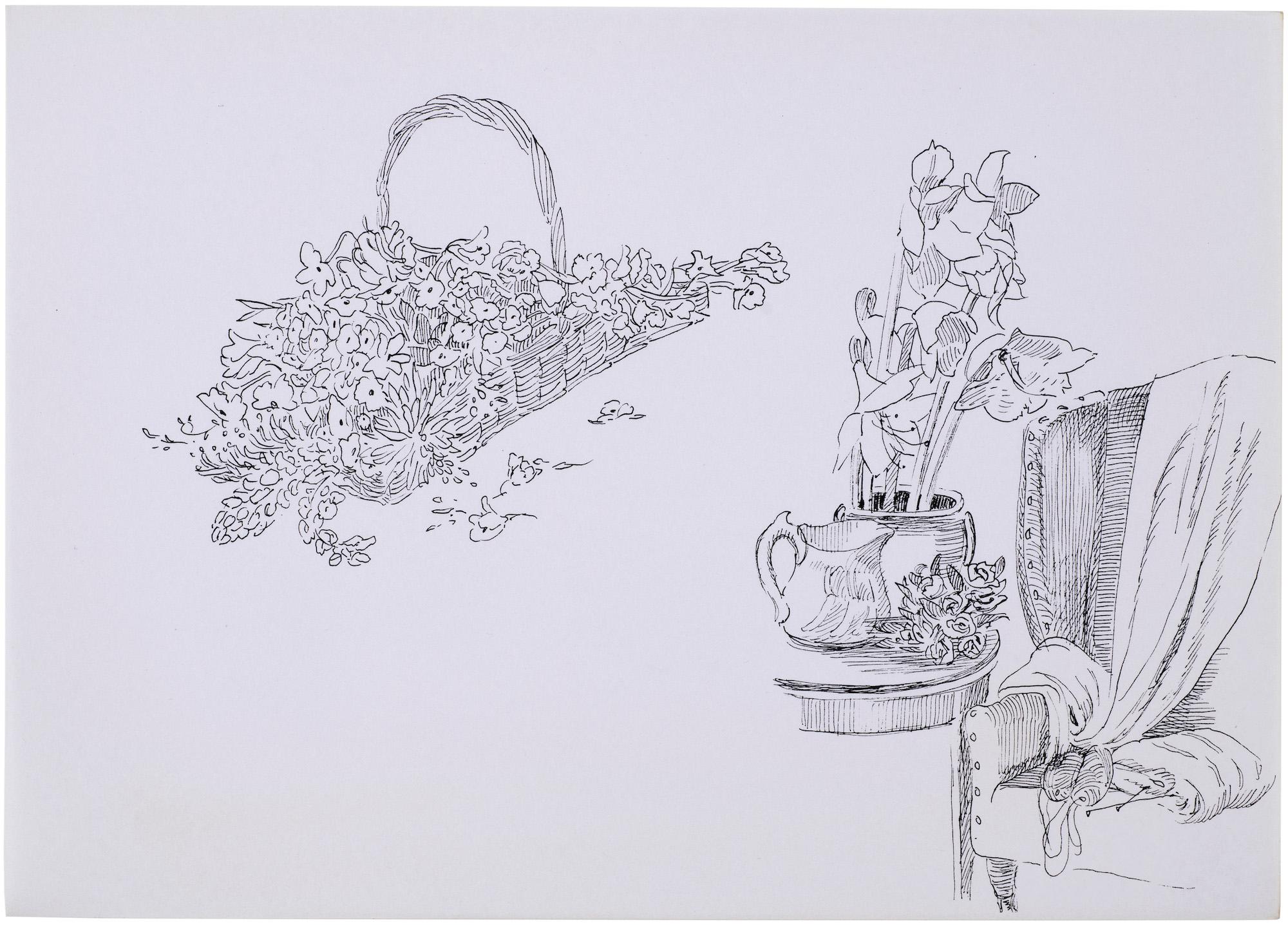
Jacqueline Ayer, Untitled, Date unknown
Jacqueline Ayer (1930–2012) had a career that spanned many creative fields. She began as a fashion illustrator, and later turned her hand to children’s books, textiles and garments, as she worked in New York, Paris, London, Bangkok, Hong Kong and across India. Ayer often used a sketchbook to record her observations and ideas for book narratives and fashion designs. The context for this drawing is unknown.
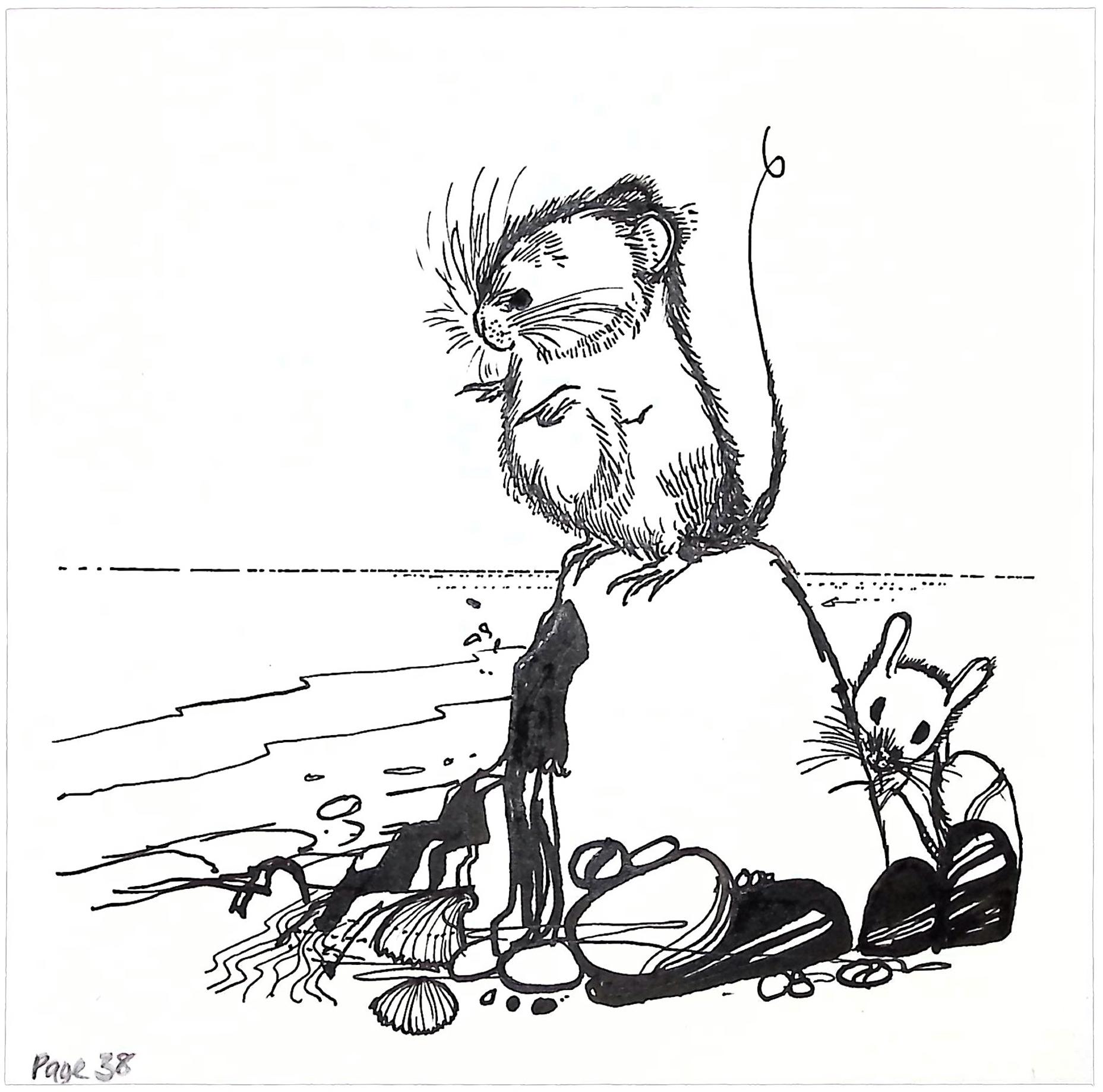
Illustration for Willow and Albert are Stowaways, c. 1970
British illustrator Janina Ede (1937-2018) created covers and illustrations for over 100 books from the 1950s to the 1980s. Many of her illustrations feature animals, which she drew from life.
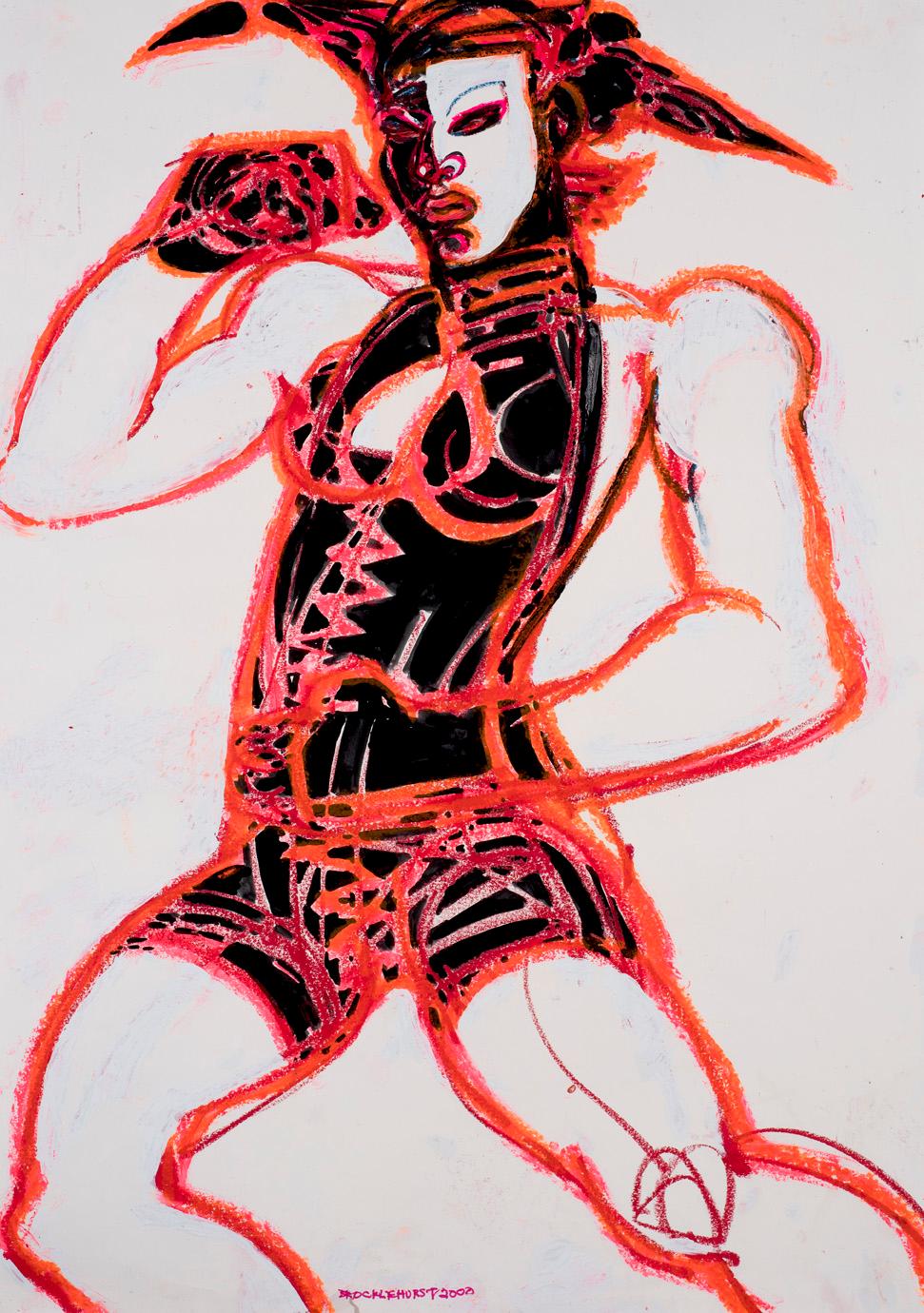
Jo Brocklehurst, Untitled (portrait of Josephine Leask), 2000
Jo (Josephine) Brocklehurst (1935 - 2006) studied at Central Saint Martins and began her career as a fashion illustrator. She later focused on portraiture, drawing directly from models at her studio in West Hampstead and in nightclubs and theatres in Berlin, London and New York. Her work documents the alternative subcultures of the 1970s, 80s and 90s that went on to shape mainstream fashion and performance scenes. In 2000, Brocklehurst created a series of drawings in sessions with dancer Josephine Leask. Leask’s 1999 article Welcome to the Club, published in ballettanz magazine, described the ways that nightclubs were acting as alternative theatres for cutting-edge contemporary dance. These drawings were shown as part of Leask’s lecture-performance on the same theme at the 2000 Salzburg Festival.
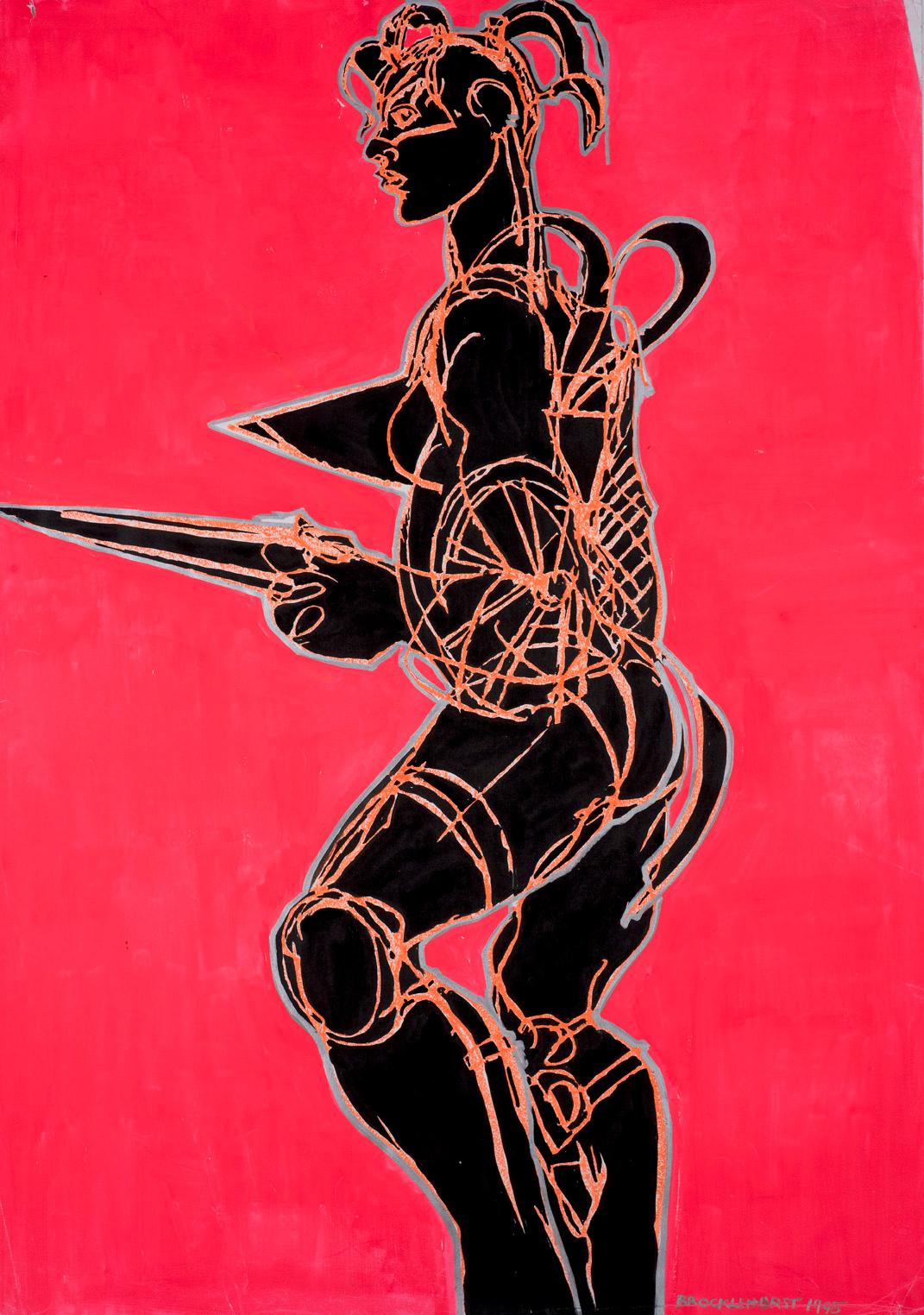
Jo Brocklehurst, Untitled (portrait of Fia Bergsren), 1995
Jo (Josephine) Brocklehurst (1935 - 2006) studied at Central Saint Martins and began her career as a fashion illustrator. She later focused on portraiture, drawing directly from models at her studio in West Hampstead and in nightclubs and theatres in Berlin, London and New York. Her work documents the alternative subcultures of the 1970s, 80s and 90s that went on to shape mainstream fashion and performance scenes. In the 1990s, Brocklehurst began drawing the fashion designers and performers finding space for experimentation in the fetish clubs of Soho and King’s Cross.
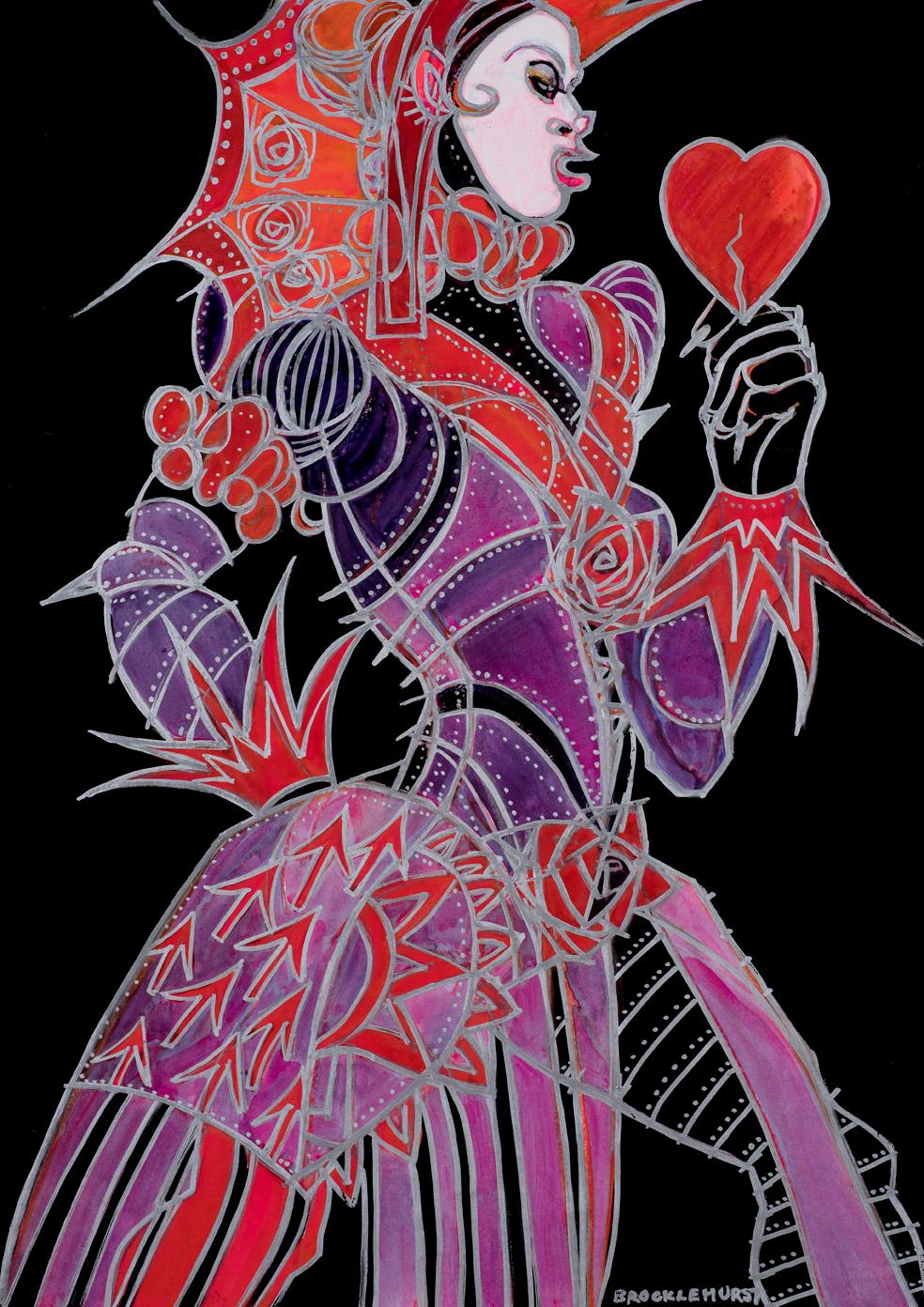
Jo Brocklehurst, Untitled (Red Queen from Brocklehurst Through the Looking-Glass) , 2000s
Jo (Josephine) Brocklehurst (1935 - 2006) studied at Central Saint Martins and began her career as a fashion illustrator. She later focused on portraiture, drawing directly from models at her studio in West Hampstead and in nightclubs and theatres in Berlin, London and New York. Her work documents the alternative subcultures of the 1970s, 80s and 90s that went on to shape mainstream fashion and performance scenes. This work is from Brocklehurst Through the Looking-Glass, Brocklehurst’s final series. With an image of herself as a child as the centrepiece, Brocklehurst made hundreds of drawings that re-imagined characters from Lewis Carroll’s Alice novels. Her models were friends and dedicated club-goers who designed and made their own clothes. Brocklehurst’s regular collaborator Isabelle Bricknall was the model for this work. Works from the series were framed with bright plastic gemstones and hung on every available space at Brocklehurst’s home studio. She used metallic and neon inks that transformed under ultraviolet lights that she switched on for her guests in the evenings.
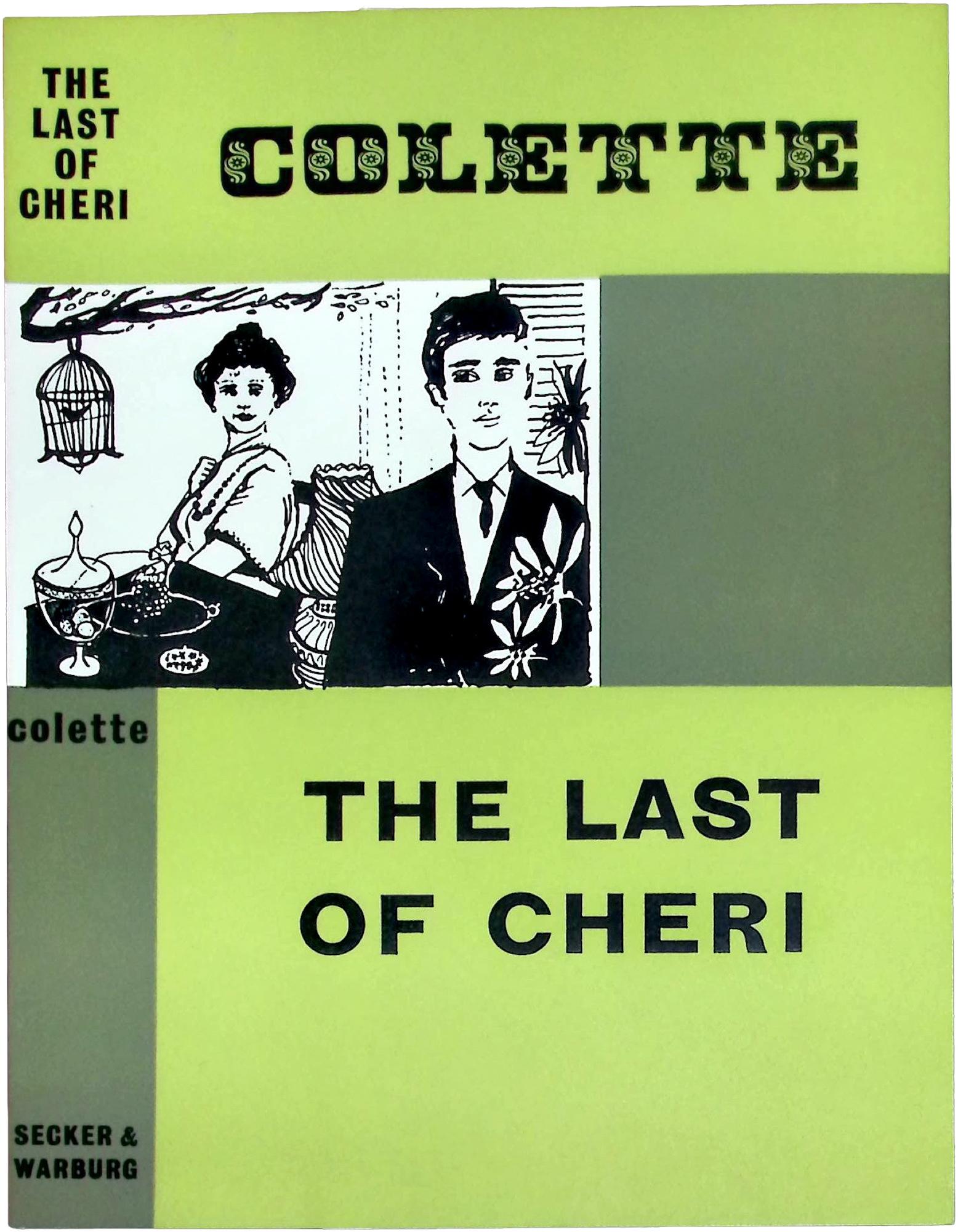
Book cover proof for Colette's "The Last of Cheri", 1961
British illustrator Janina Ede (1937-2018) created covers and illustrations for over 100 books from the 1950s to the 1980s. She designed the covers of several books by French author and pioneer of autofiction Sidonie-Gabrielle Colette.
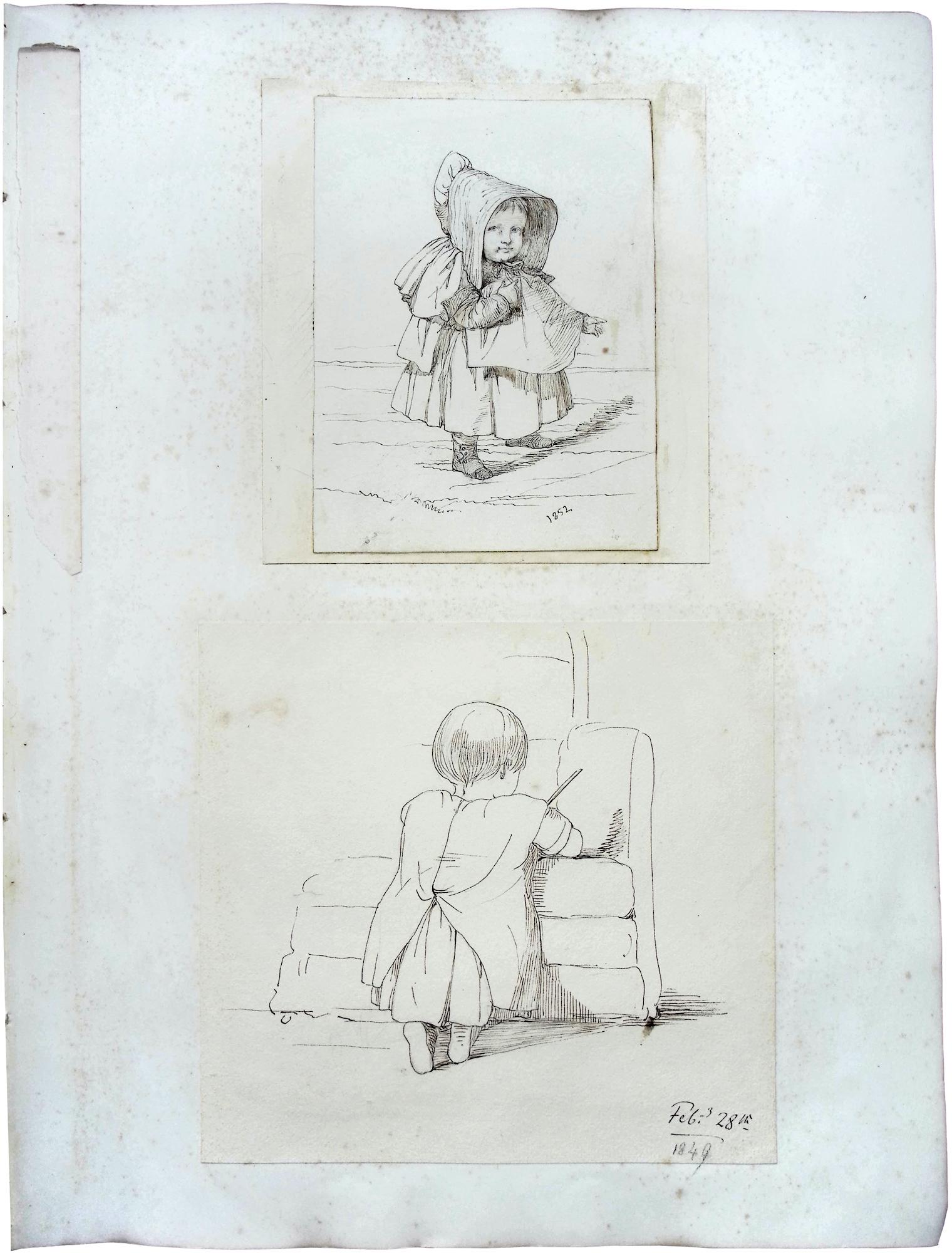
Untitled, 1852 and 1849
Eleanor Vere Boyle (1825 – 1916) illustrated poetry and prose by some of the most popular authors of her time. She regularly drew and painted using ink and watercolour, sketching landscapes, animals and her children from life. She also made drawings from her imagination, often reflecting spiritual themes.
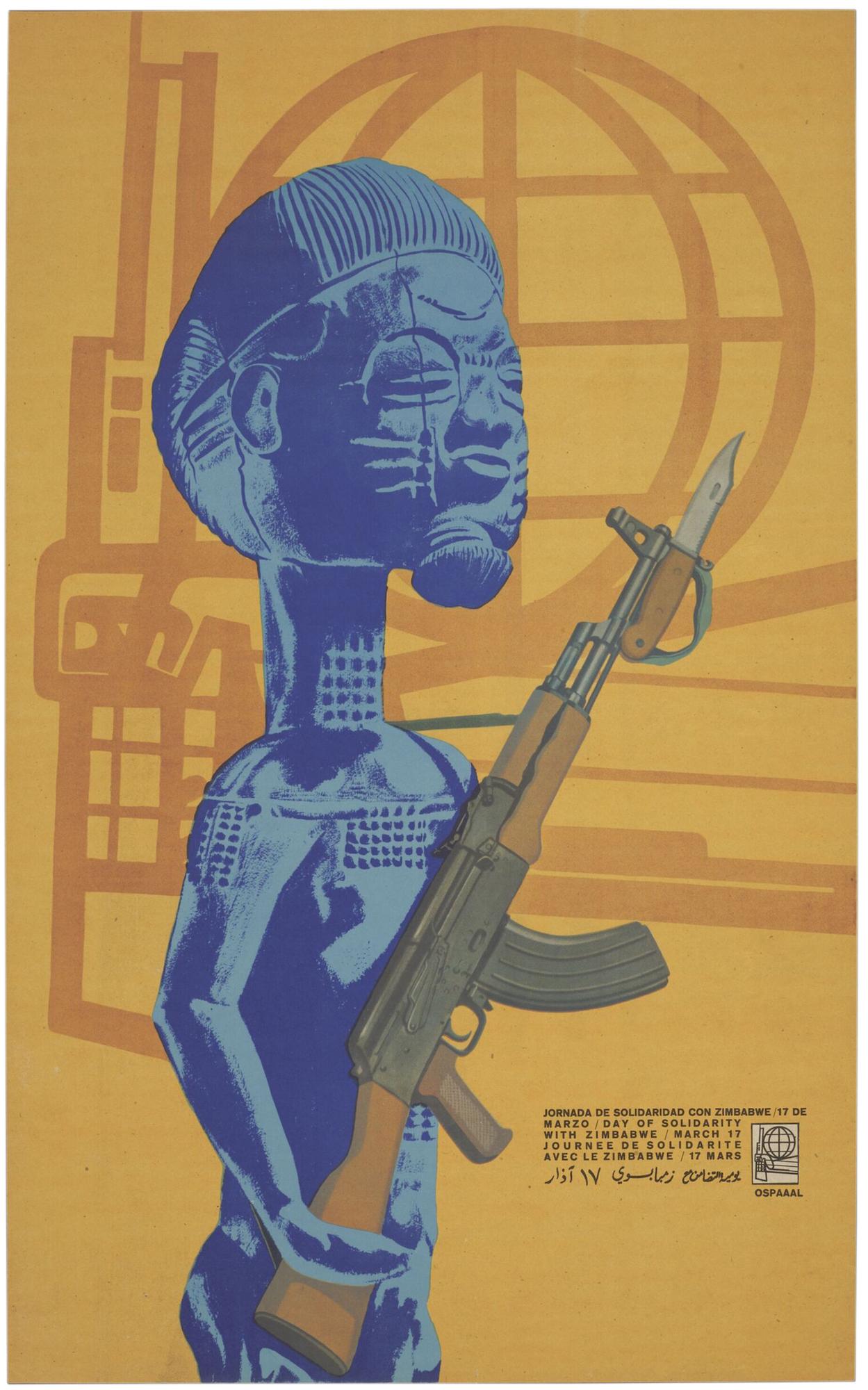
DAY OF SOLIDARITY WITH ZIMBABWE - MARCH 17, 1969
Between the 1960s and 1990s, more than fifty designers worked at OSPAAAL. Based in Cuba, they made magazines and posters that were sent around the world. Their aim was to promote radical political ideas. Many of their posters celebrate socialist revolutions and liberation movements from the Global South. Many OSPAAAL designers combined images of Indigenous art and craft with weaponry. Their aim was to argue for the right to self-determination and support liberation movements opposing colonial and imperial powers. However, the designers did not always know the meaning or origin of the iconography they used.
Content warning: weaponry
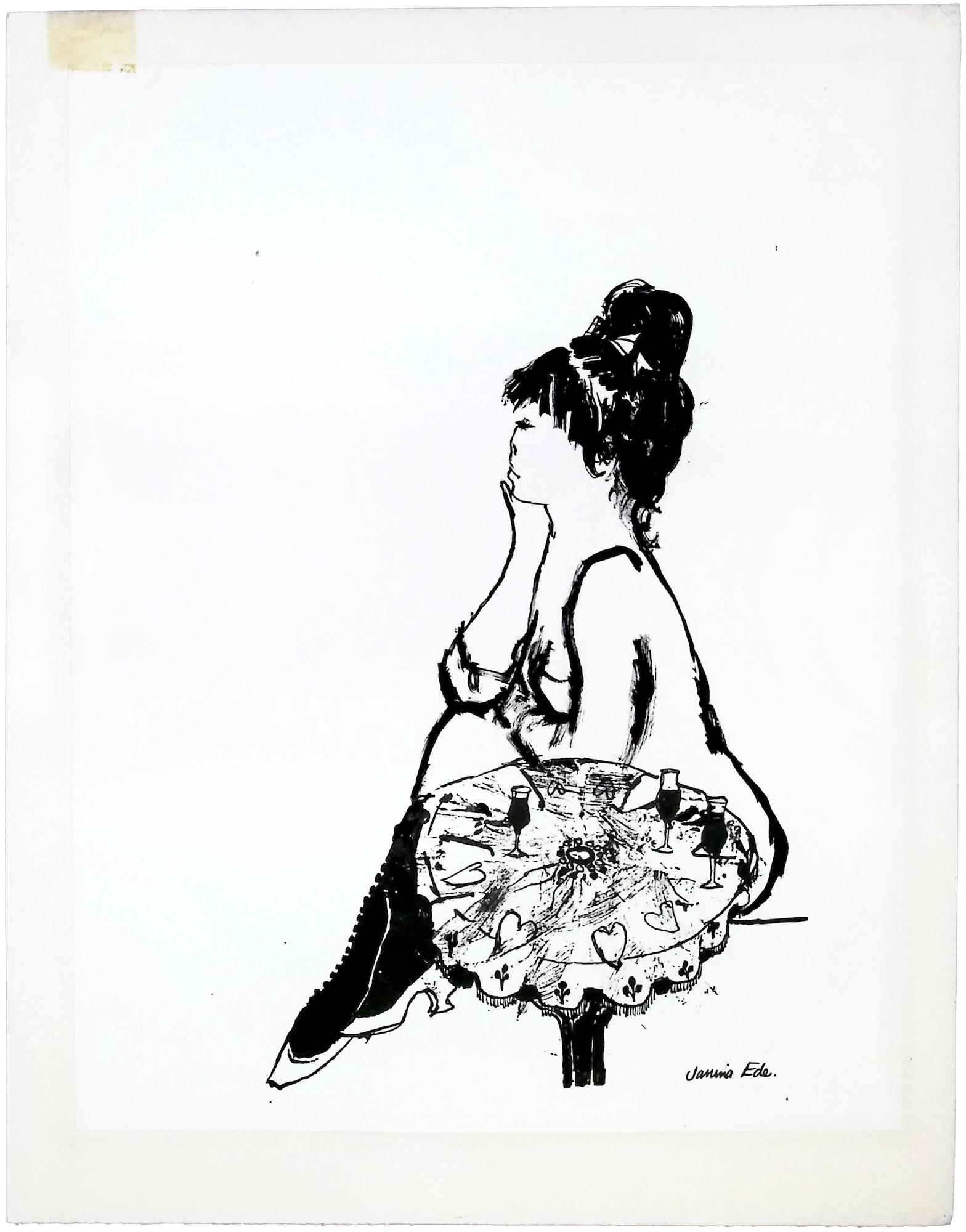
My Apprenticeships Ch.12 Noseless Prostitute, c. 1968
Janina Ede (1937-2018) created covers and illustrations for over 100 books from the 1950s to the 1980s. Ede often worked using just black ink, combining pen and brushwork to create bold illustrations with fine details.
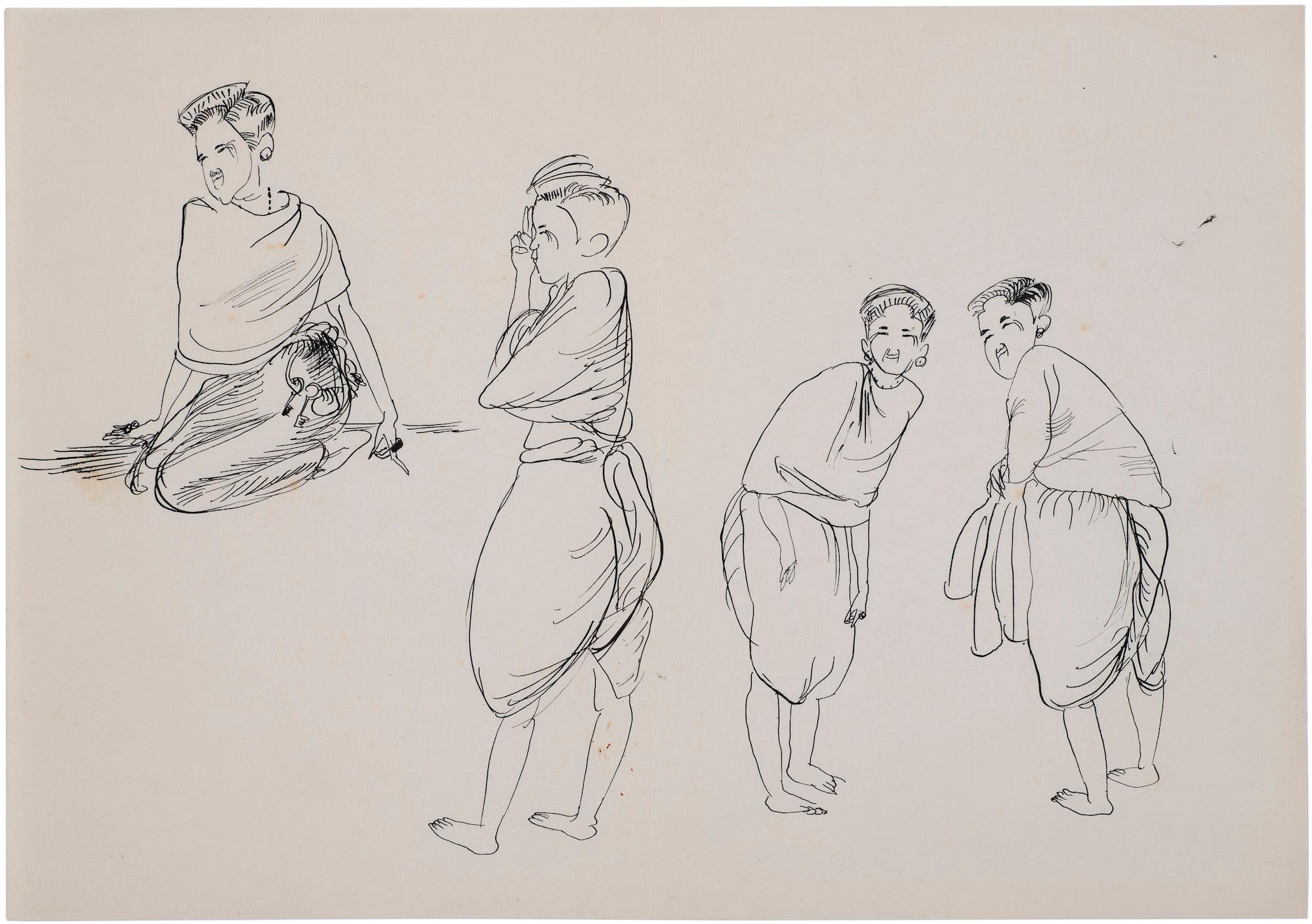
Jacqueline Ayer, Untitled, c. 1959
Jacqueline Ayer (1930–2012) had a career that spanned many creative fields. She began as a fashion illustrator, and later turned her hand to children’s books, textiles and garments, as she worked in New York, Paris, London, Bangkok, Hong Kong and across India. Since working as a fashion illustrator in Paris, Ayer had been interested in costumes, national dress and garments. She also had the ability to bring her sketches into reality through her dress-making skills that she had learned from her mother.
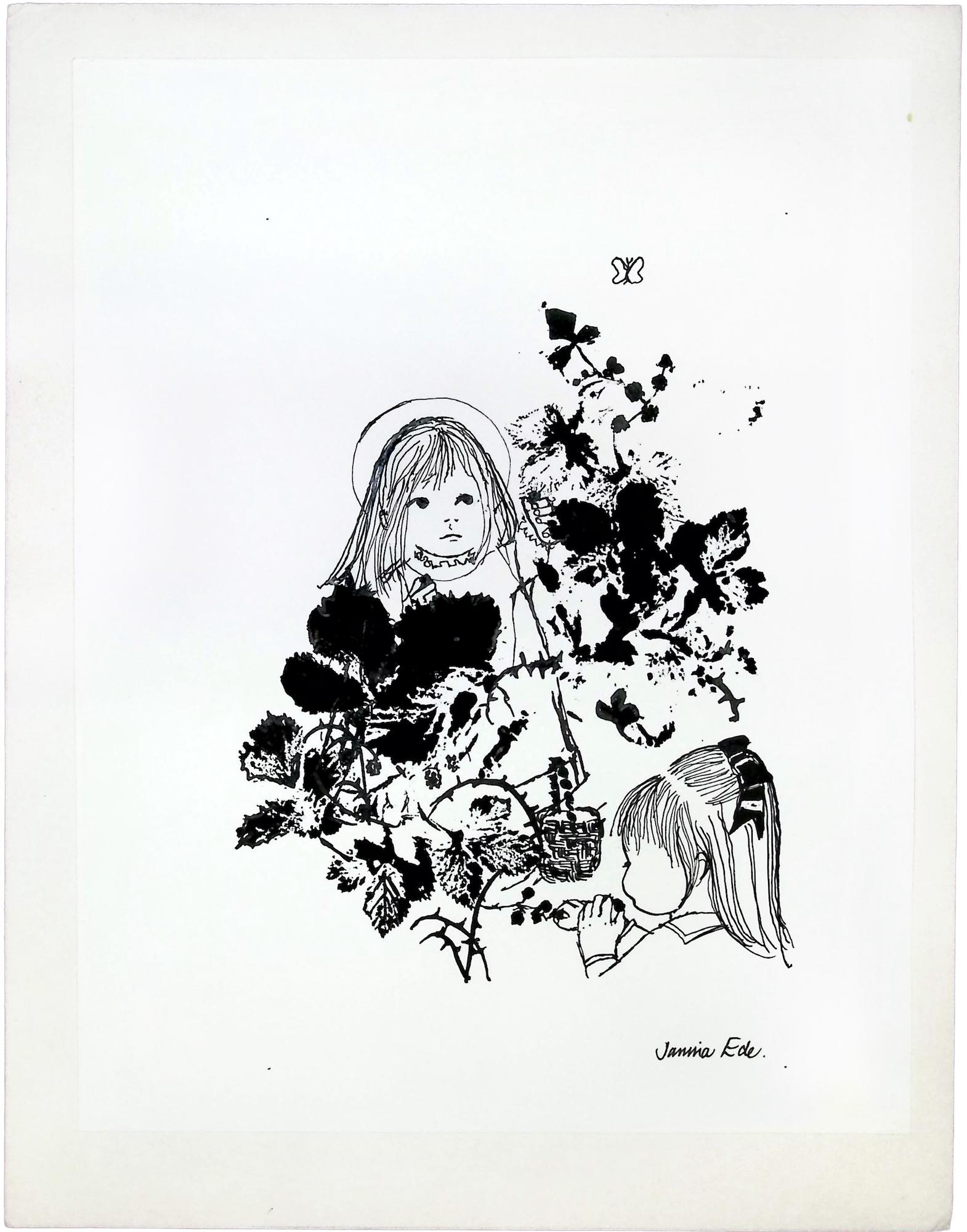
My Apprenticeships - Chapter 5 - Untitled, c. 1968
Janina Ede (1937-2018) created covers and illustrations for over 100 books from the 1950s to the 1980s. She often worked using just black ink, combining pen and brushwork to create bold illustrations with fine details. To represent plant life, Ede sometimes dipped leaves and grasses into ink and pressed them onto paper.
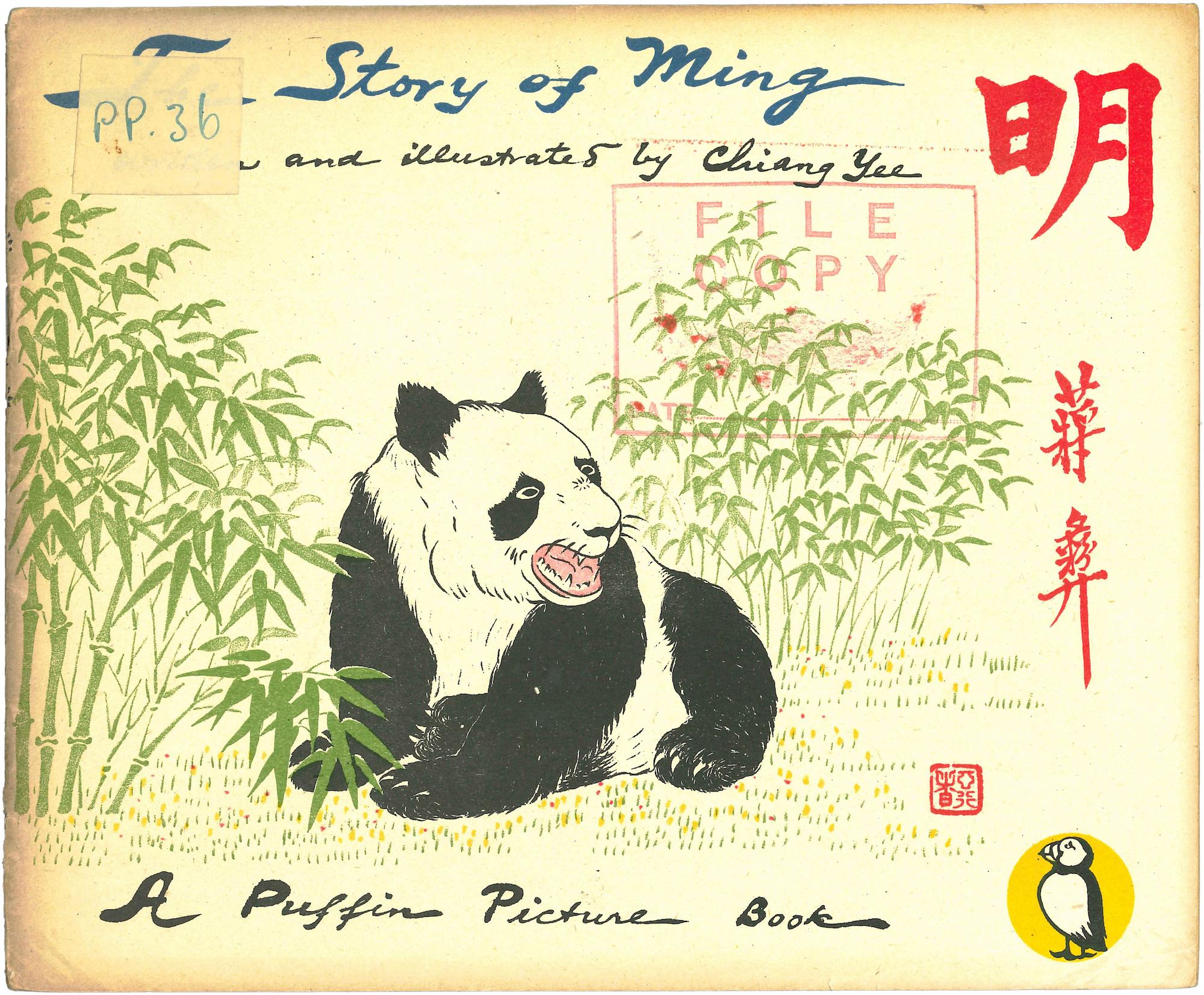
The Story of Ming, 1944
The Puffin Picture Books series was established by designer and editor Noel Carrington (1895-1989). In 1933, artist Pearl Binder (1904-1990) sent Carrington a package of Soviet children’s books. “They were produced by the million on very cheap paper, but the drawings were vigorous and the colour delightful” he later remembered. These books inspired Carrington to edit a series of affordable books that would encourage “the child’s awakening interest in its surroundings... I felt that colour was essential, and that artists could... be more successful in books of this nature than the camera”. Many artists and illustrators worked on the series, adapting their ways of working to lithographic printing and the Puffin Picture Book format. Most of the 120 books in the series were printed on one large sheet of paper: one side in colour and one in black-and-white. Each sheet was cut, folded and stapled to create a softcover book.
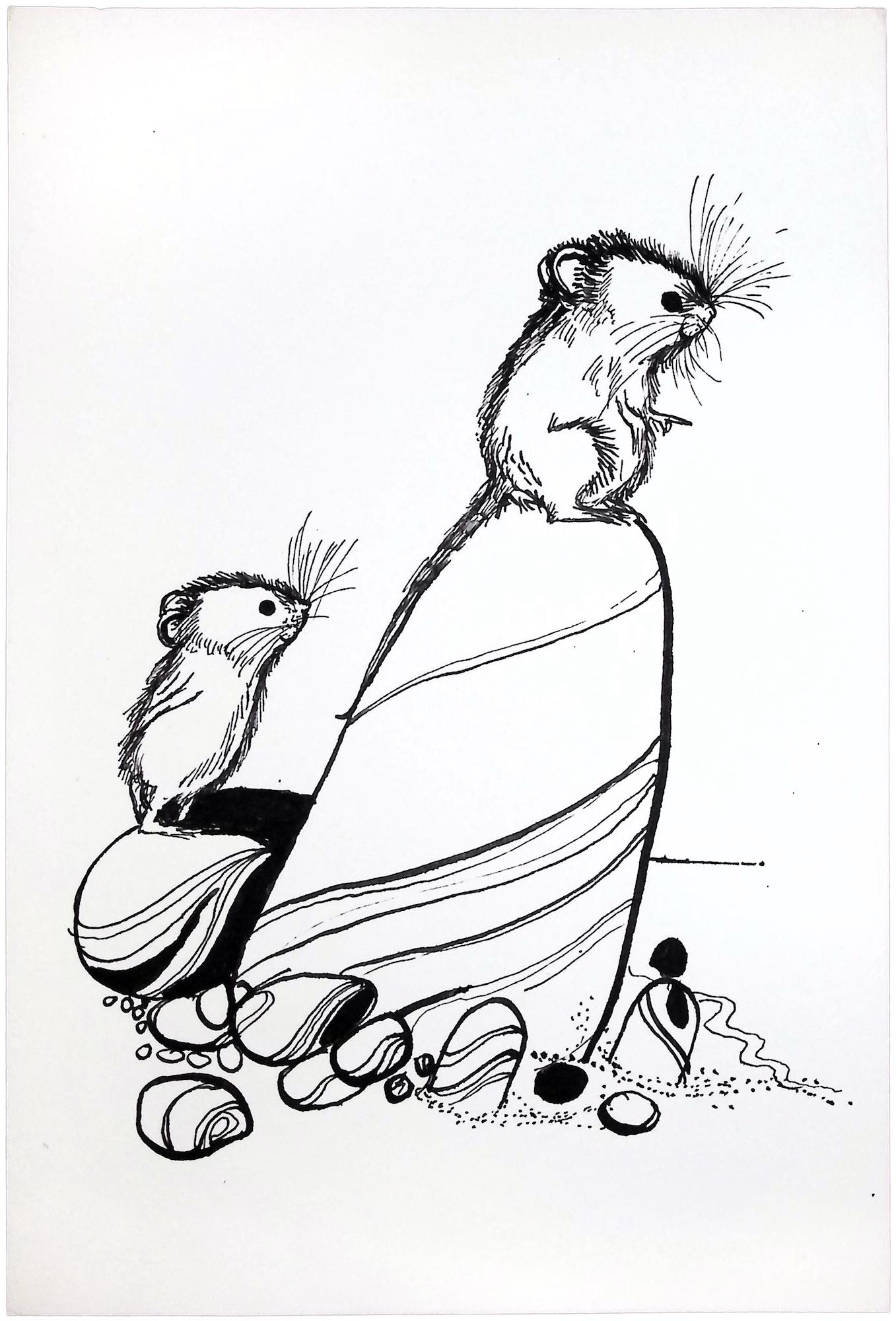
Illustration for Willow and Albert are Stowaways, c. 1970
British illustrator Janina Ede (1937-2018) created covers and illustrations for over 100 books from the 1950s to the 1980s. Many of her illustrations feature animals, which she drew from life.

A Book of Swimming, 1945
The Puffin Picture Books series was established by designer and editor Noel Carrington (1895-1989). In 1933, artist Pearl Binder (1904-1990) sent Carrington a package of Soviet children’s books. “They were produced by the million on very cheap paper, but the drawings were vigorous and the colour delightful” he later remembered. These books inspired Carrington to edit a series of affordable books that would encourage “the child’s awakening interest in its surroundings... I felt that colour was essential, and that artists could... be more successful in books of this nature than the camera”. Many artists and illustrators worked on the series, adapting their ways of working to lithographic printing and the Puffin Picture Book format. Most of the 120 books in the series were printed on one large sheet of paper: one side in colour and one in black-and-white. Each sheet was cut, folded and stapled to create a softcover book.
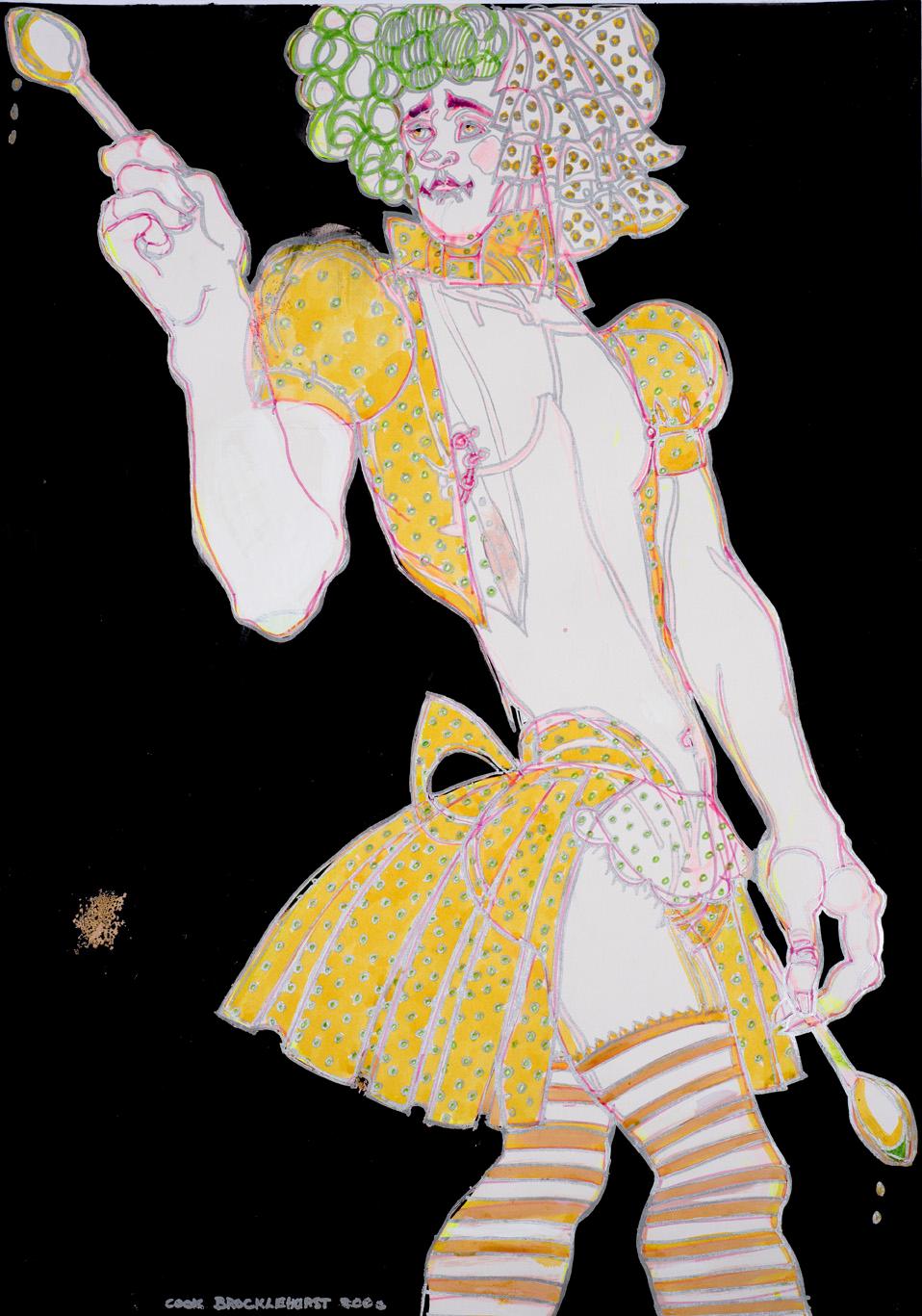
Jo Brocklehurst, Cook (from Brocklehurst Through the Looking-Glass), 2003
Jo (Josephine) Brocklehurst (1935 - 2006) studied at Central Saint Martins and began her career as a fashion illustrator. She later focused on portraiture, drawing directly from models at her studio in West Hampstead and in nightclubs and theatres in Berlin, London and New York. Her work documents the alternative subcultures of the 1970s, 80s and 90s that went on to shape mainstream fashion and performance scenes. This work is from Brocklehurst Through the Looking-Glass, Brocklehurst’s final series. With an image of herself as a child as the centrepiece, Brocklehurst made hundreds of drawings that re-imagined characters from Lewis Carroll’s Alice novels. Her models were friends and dedicated club-goers who designed and made their own clothes. Works from the series were framed with bright plastic gemstones and hung on every available space at Brocklehurst’s home studio. She used metallic and neon inks that transformed under ultraviolet lights that she switched on for her guests in the evenings.
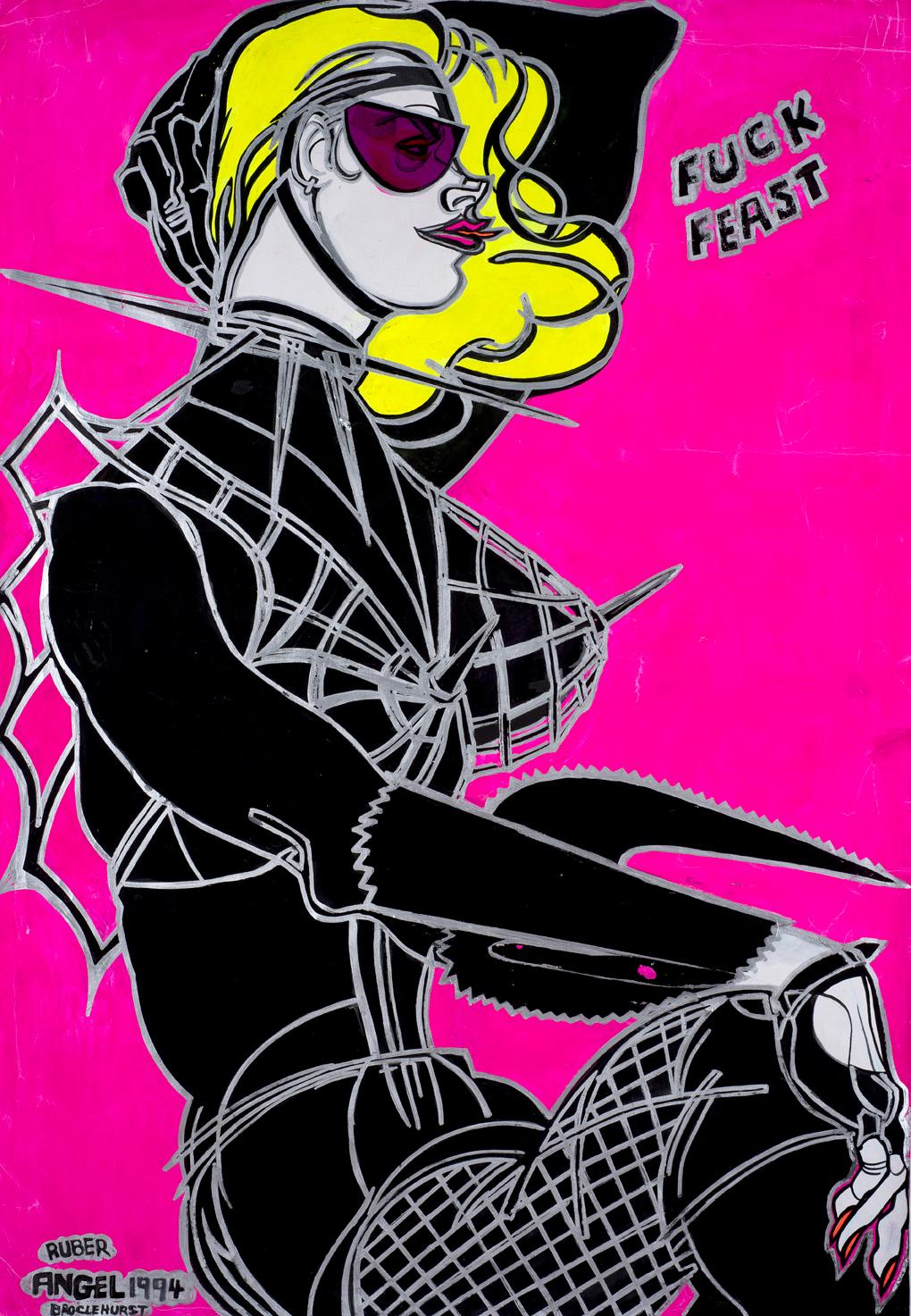
Jo Brocklehurst, Ruber Angel (portrait of Isabelle Bricknall), 1994
Jo (Josephine) Brocklehurst (1935 - 2006) studied at Central Saint Martins and began her career as a fashion illustrator. She later focused on portraiture, drawing directly from models at her studio in West Hampstead and in nightclubs and theatres in Berlin, London and New York. Her work documents the alternative subcultures of the 1970s, 80s and 90s that went on to shape mainstream fashion and performance scenes. In the 1990s, Brocklehurst began drawing the fashion designers and performers finding space for experimentation in the fetish clubs of Soho and King’s Cross. This portrait is of Brocklehurst’s regular collaborator Isabelle Bricknall, whose collection of steel ‘body armour’ (constructed by Anthony Gregory) was designed as ‘protection’ for nights on the fetish scene.
Content warning: strong language
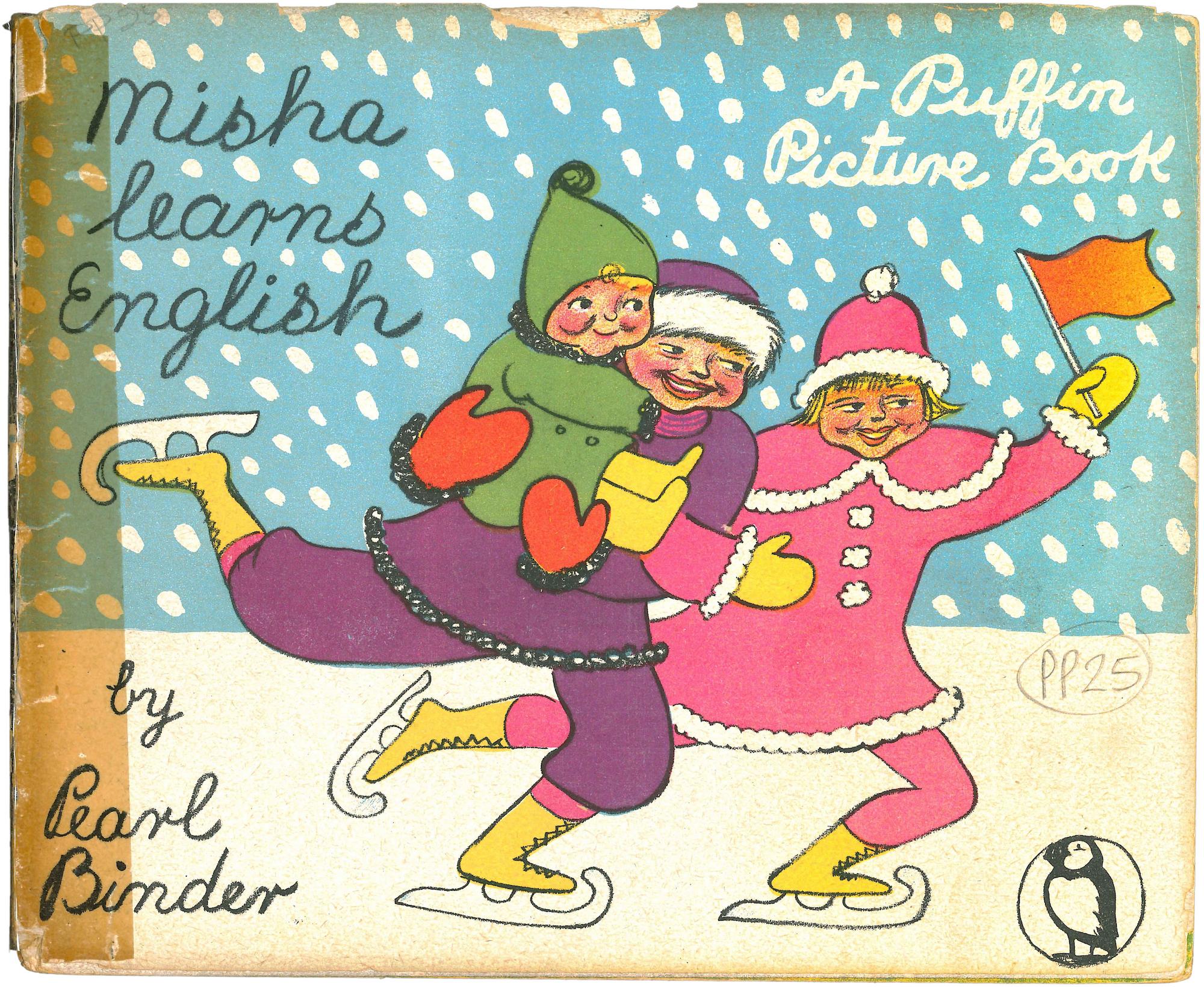
Misha learns English, 1942
The Puffin Picture Books series was established by designer and editor Noel Carrington (1895-1989). In 1933, artist Pearl Binder (1904-1990) sent Carrington a package of Soviet children’s books. “They were produced by the million on very cheap paper, but the drawings were vigorous and the colour delightful” he later remembered. These books inspired Carrington to edit a series of affordable books that would encourage “the child’s awakening interest in its surroundings... I felt that colour was essential, and that artists could... be more successful in books of this nature than the camera”. Many artists and illustrators worked on the series, adapting their ways of working to lithographic printing and the Puffin Picture Book format. Most of the 120 books in the series were printed on one large sheet of paper: one side in colour and one in black-and-white. Each sheet was cut, folded and stapled to create a softcover book.