Book illustration
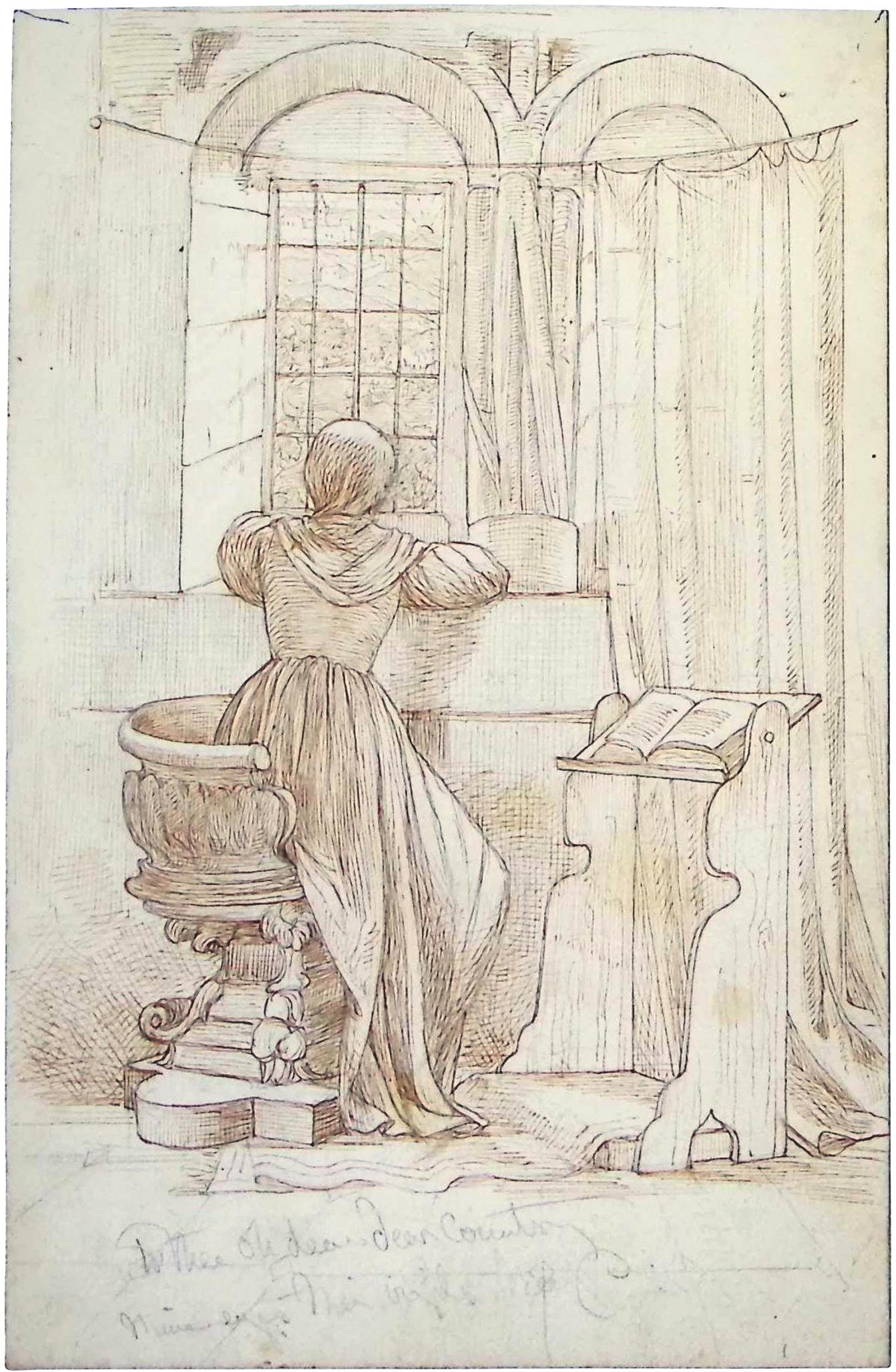
Untitled (For thee, oh dear, dear country), Date unknown
Eleanor Vere Boyle (1825 – 1916) illustrated poetry and prose by some of the most popular authors of her time. She regularly drew and painted using ink and watercolour, sketching landscapes, animals and her children from life. She also made drawings from her imagination, often reflecting spiritual themes.
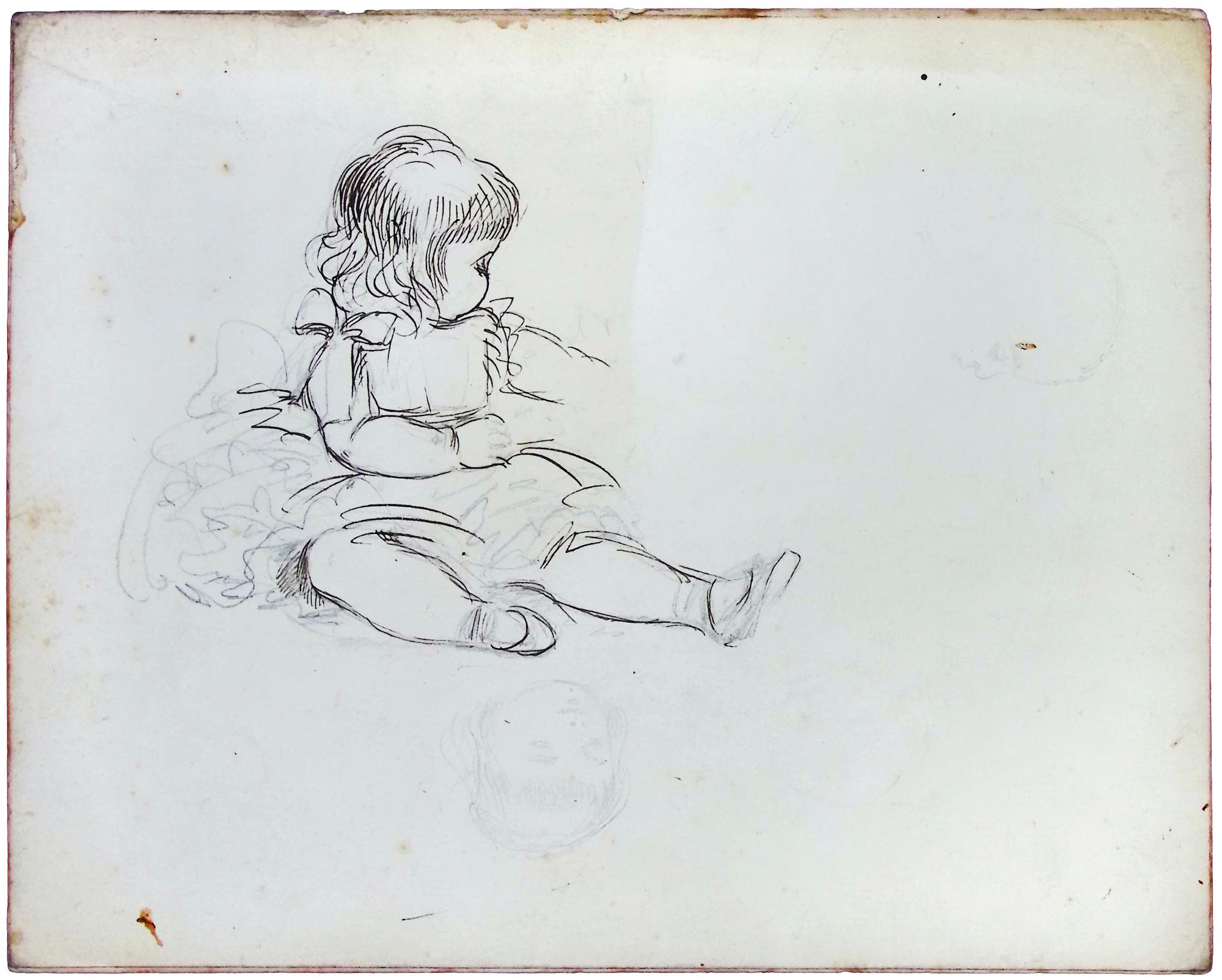
Untitled, Date unknown
Eleanor Vere Boyle (1825 – 1916) illustrated poetry and prose by some of the most popular authors of her time. She regularly drew and painted using ink and watercolour, sketching landscapes, animals and her children from life. She also made drawings from her imagination, often reflecting spiritual themes.
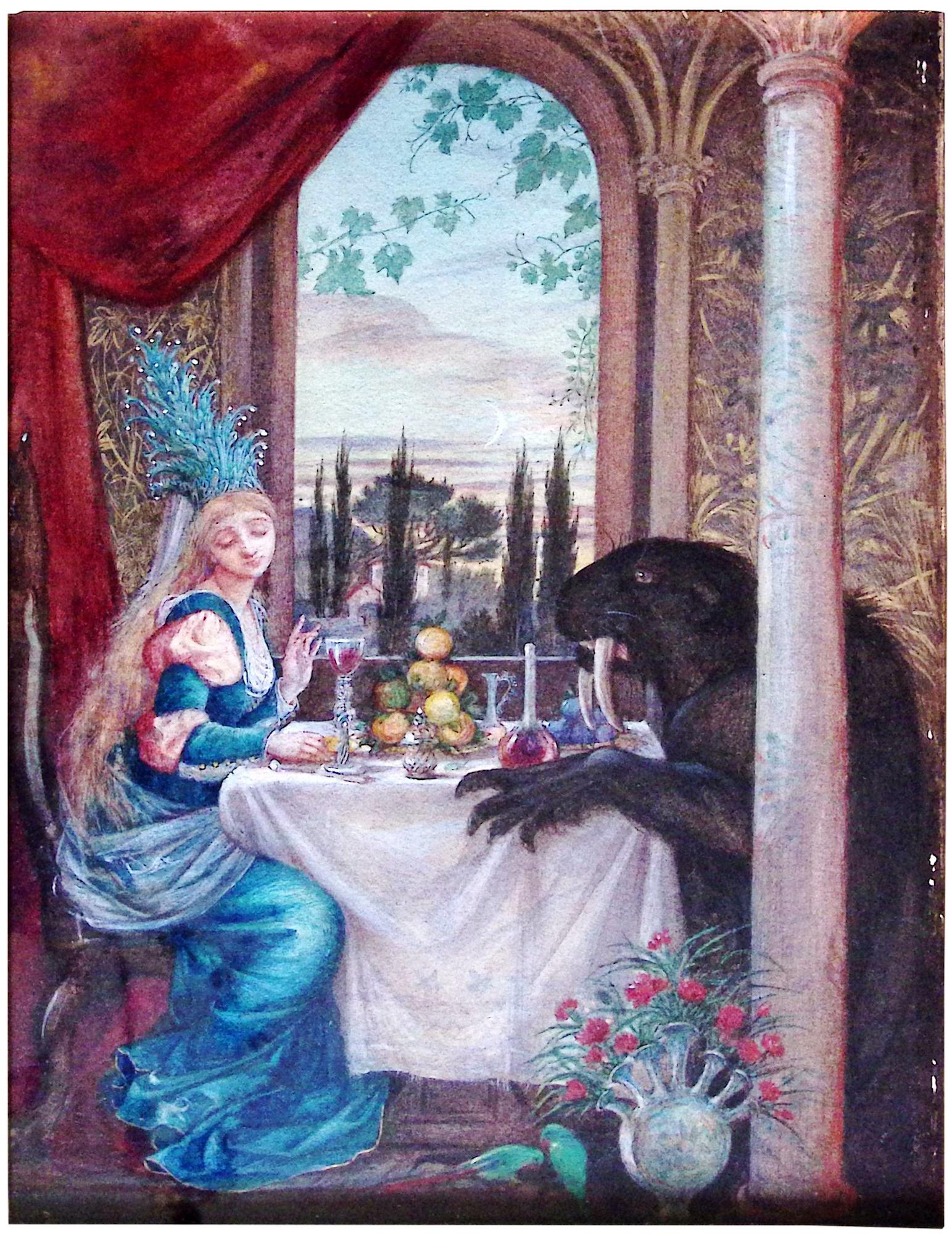
Beauty and the Beast at supper (illustration for Beauty and the Beast), c. 1875
Eleanor Vere Boyle (1825 – 1916) illustrated poetry and prose by some of the most popular authors of her time. She regularly drew and painted using ink and watercolour, sketching landscapes, animals and her children from life. She also made drawings from her imagination, often reflecting spiritual themes. This illustration is from Boyle’s 1875 retelling of Beauty and the Beast, a fairy tale where a woman is imprisoned by a monster and falls in love with him. Unlike other illustrated versions before or since, Boyle gave her beast walrus-like tusks and flippers. In several of her illustrations, Boyle used shell gold – a mixture of finely ground gold powder and gum arabic (tree sap) that would have been stored in a shallow seashell. In the final publication, the caption for this illustration reads, "After supper, every night, the Beast asked Beauty to be his wife: every night she said him nay."
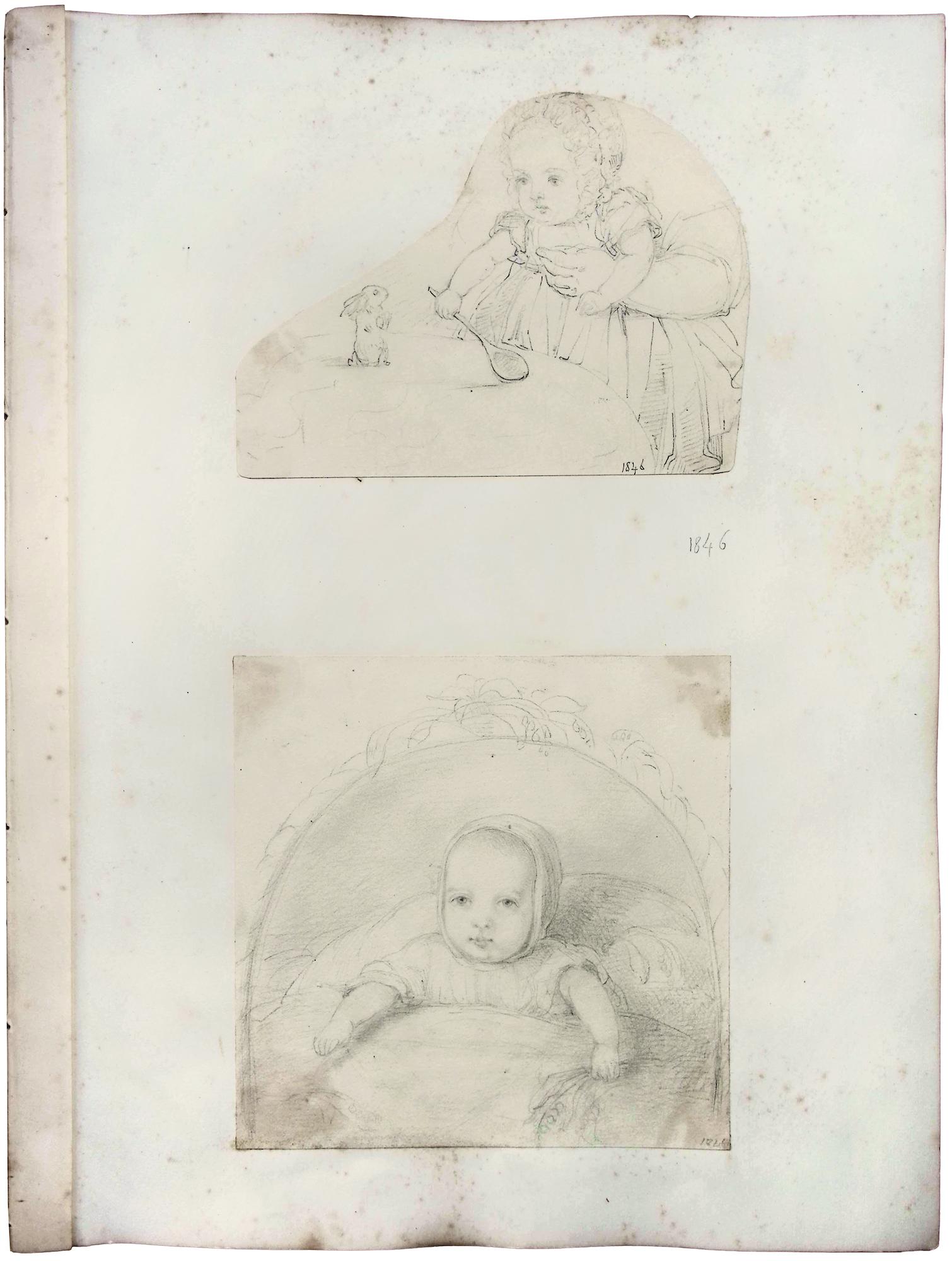
Untitled, 1846
Eleanor Vere Boyle (1825 – 1916) illustrated poetry and prose by some of the most popular authors of her time. She regularly drew and painted using ink and watercolour, sketching landscapes, animals and her children from life. She also made drawings from her imagination, often reflecting spiritual themes.
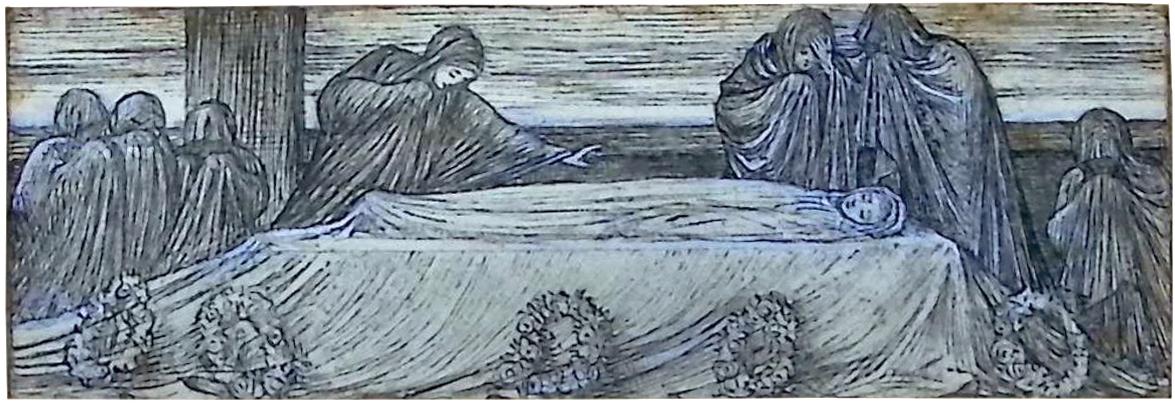
Untitled (illustration for Ros Roserum ex horto Poetarum, 'THE FUNERAL OF THE ROSE'), c. 1885
Eleanor Vere Boyle (1825 – 1916) illustrated poetry and prose by some of the most popular authors of her time. She regularly drew and painted using ink and watercolour, sketching landscapes, animals and her children from life. She also made drawings from her imagination, often reflecting spiritual themes. This illustration is from her book, Ros Roserum ex horto Poetarum (1885). Boyle provided her publishers with black and white drawings that were then converted into etchings by the printer.
Content warning: child loss
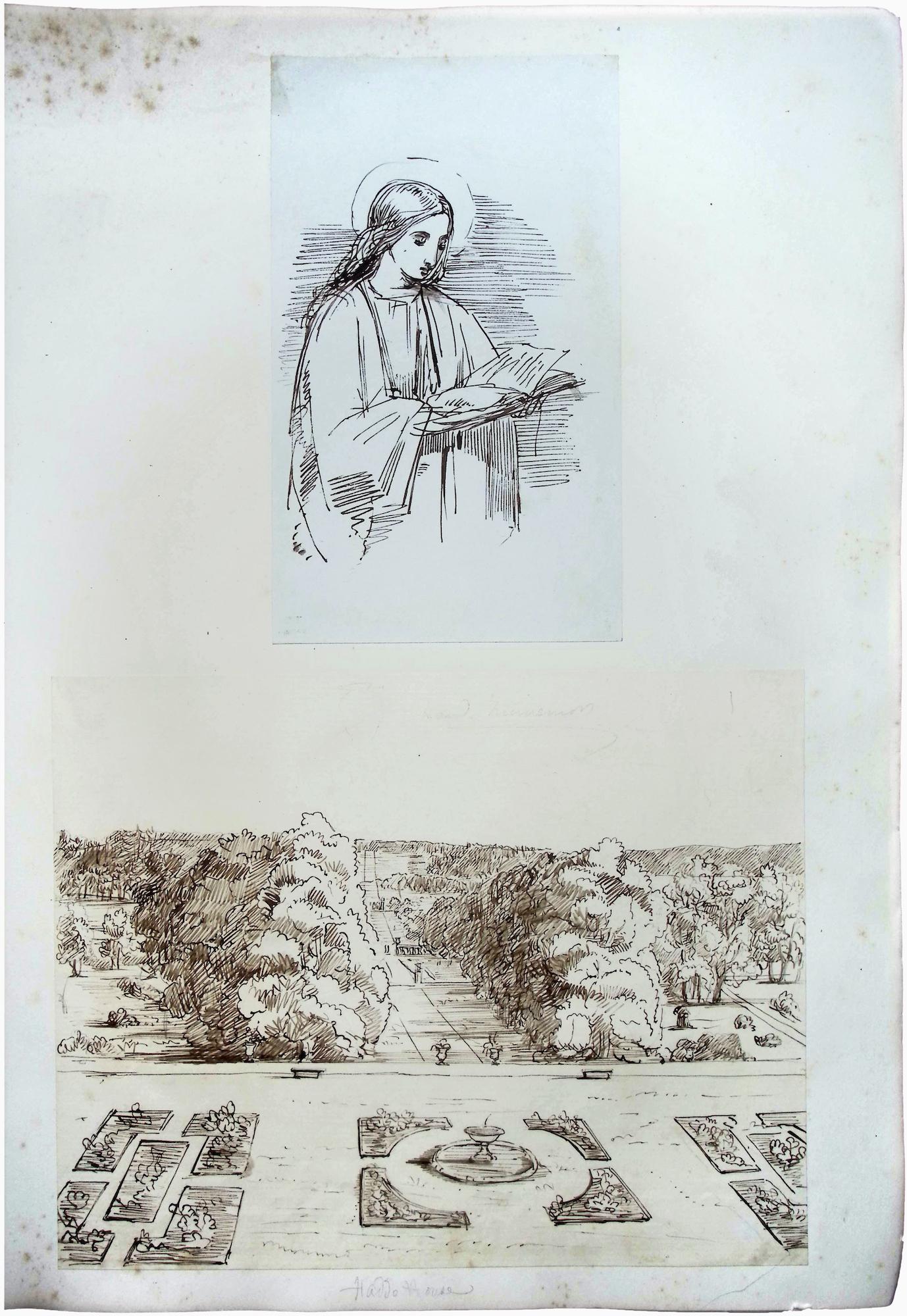
Untitled (Haddo House), Date unknown
Eleanor Vere Boyle (1825 – 1916) illustrated poetry and prose by some of the most popular authors of her time. She regularly drew and painted using ink and watercolour, sketching landscapes, animals and her children from life. She also made drawings from her imagination, often reflecting spiritual themes.
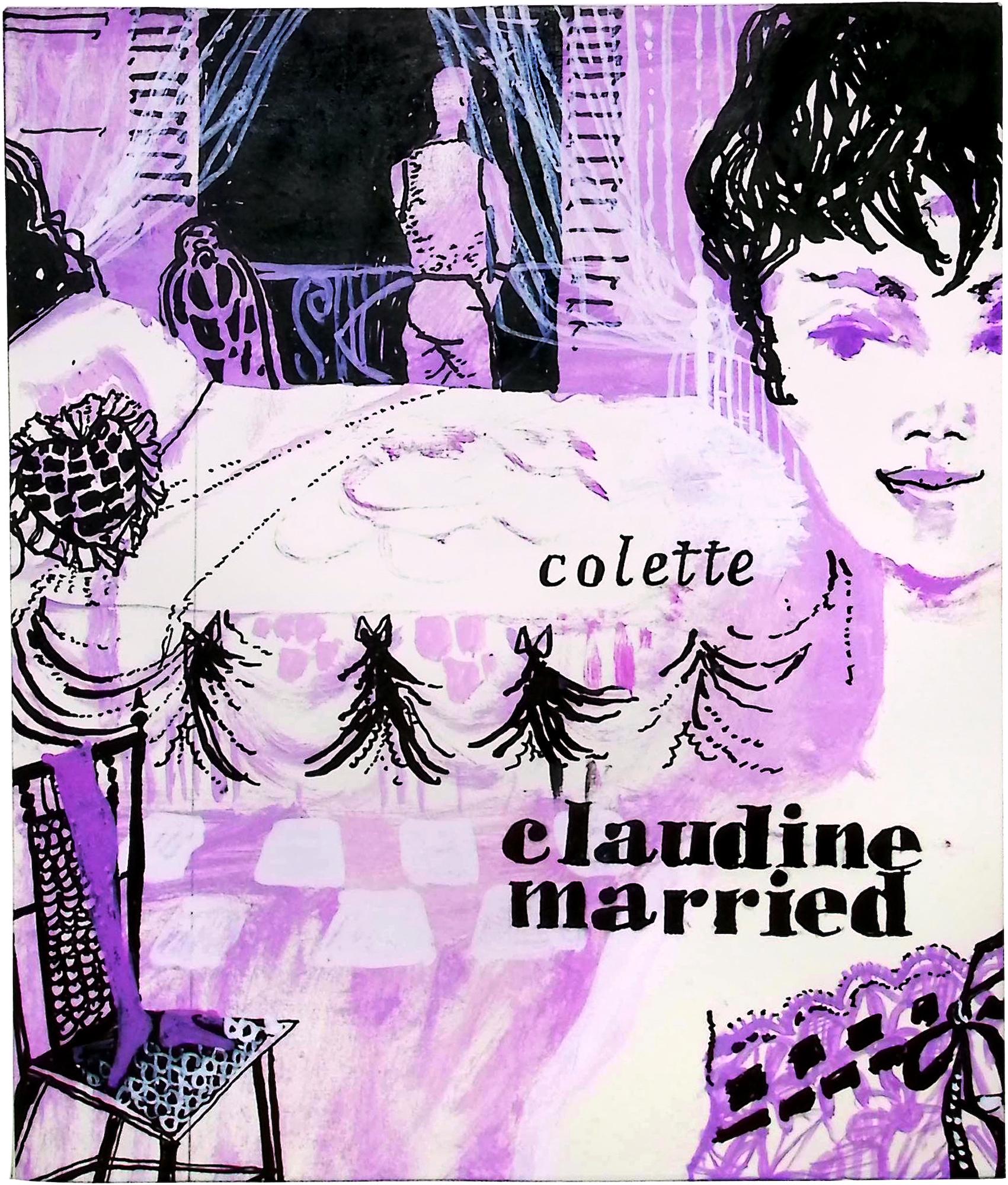
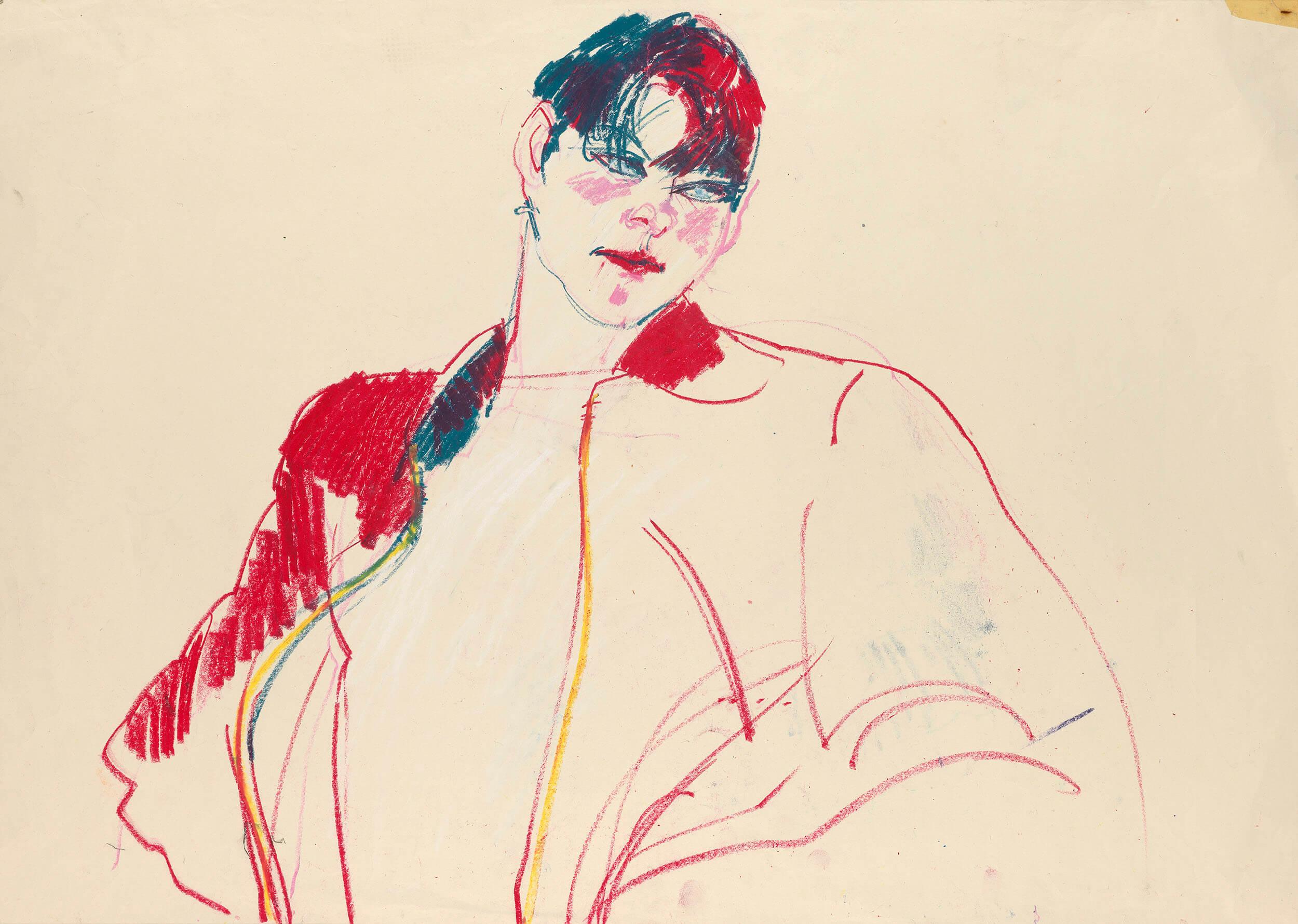
Rough cover illustration for Colette's "Claudine Married", 1960
British illustrator Janina Ede (1937-2018) created covers and illustrations for over 100 books from the 1950s to the 1980s. She designed the covers of several books by French author and pioneer of autofiction Sidonie-Gabrielle Colette.
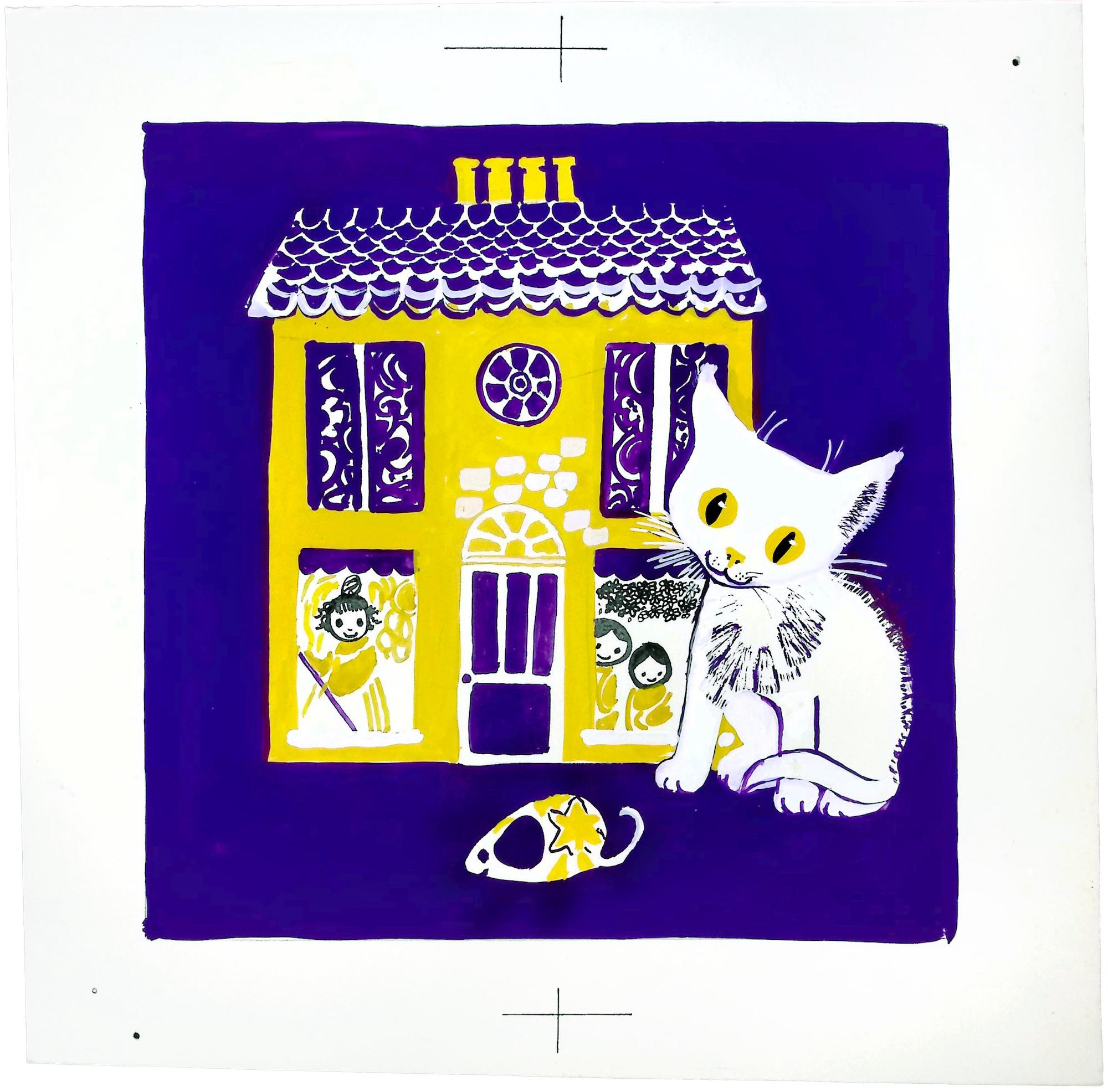
Illustration for "It's Sunny Outside", c. 1974
British illustrator Janina Ede (1937-2018) created covers and illustrations for over 100 books from the 1950s to the 1980s.
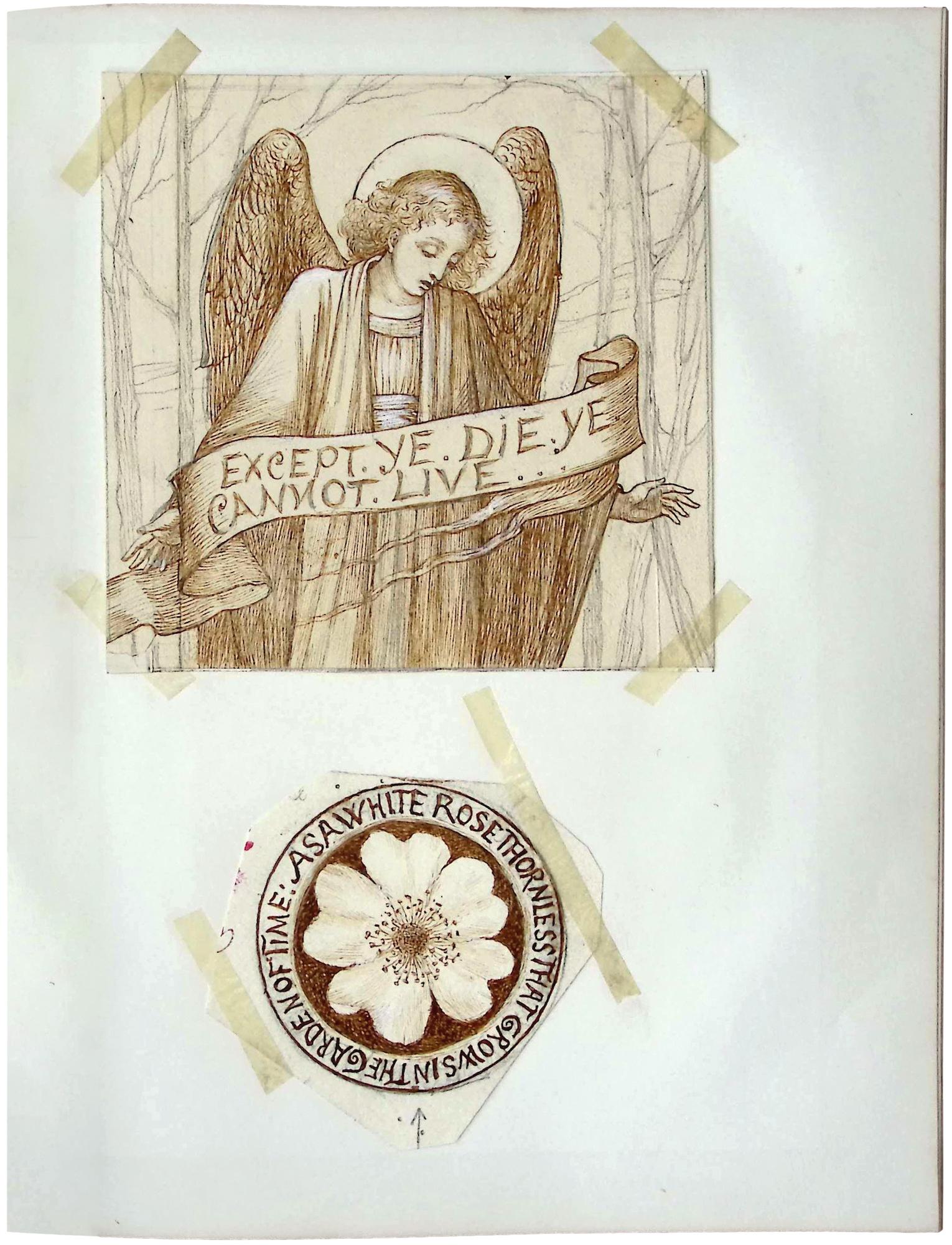
Untitled (illustrations for A Book of Heavenly Birthdays), c. 1893
Eleanor Vere Boyle (1825 – 1916) illustrated poetry and prose by some of the most popular authors of her time. She regularly drew and painted using ink and watercolour, sketching landscapes, animals and her children from life. She also made drawings from her imagination, often reflecting spiritual themes. These drawings were used as some of the final illustrations printed in the artists' publication A Book of Heavenly Birthdays (1893, London Elliot Stock)
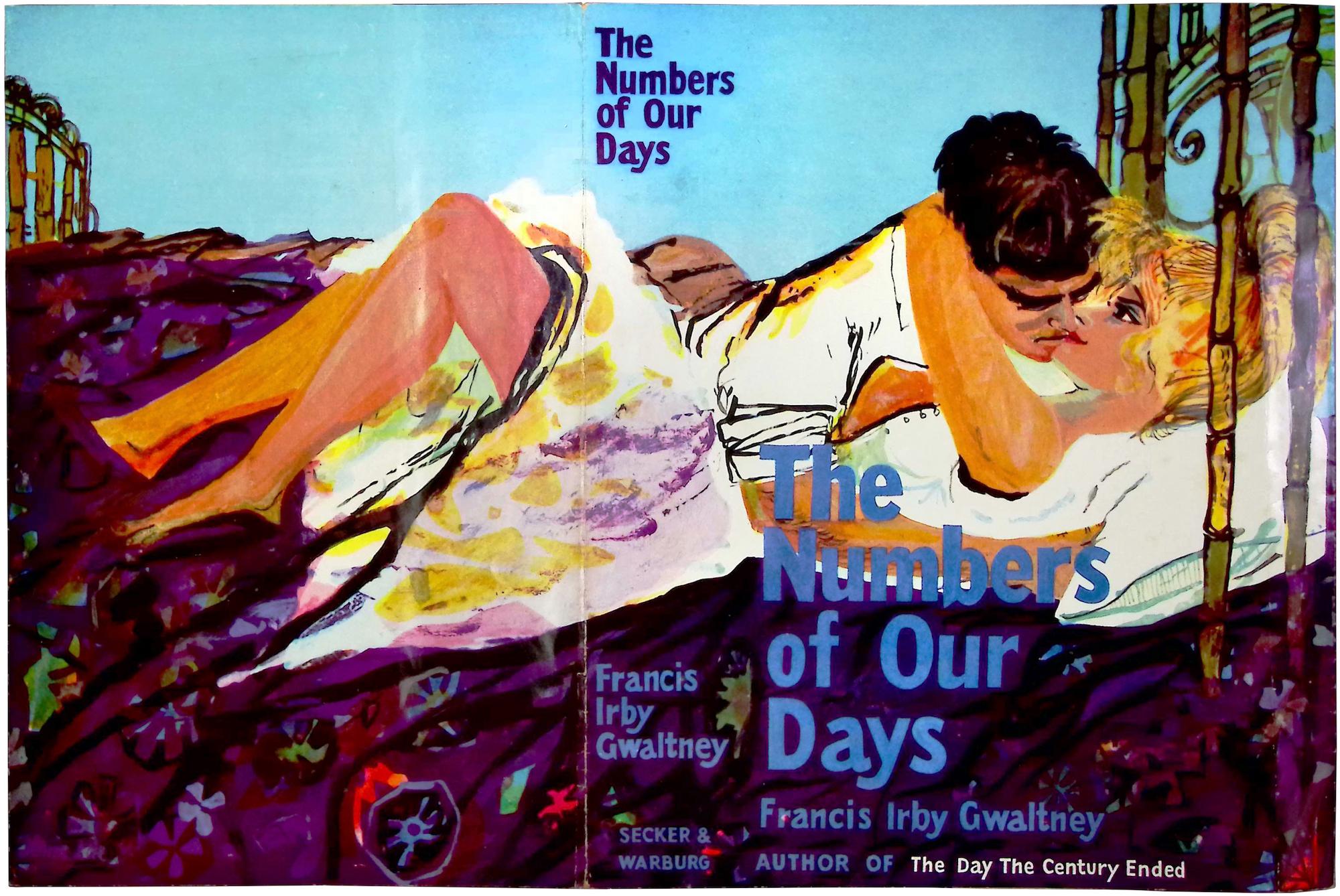
Cover jacket for "The Numbers of Our Days", 1959
British illustrator Janina Ede (1937-2018) created covers and illustrations for over 100 books from the 1950s to the 1980s.
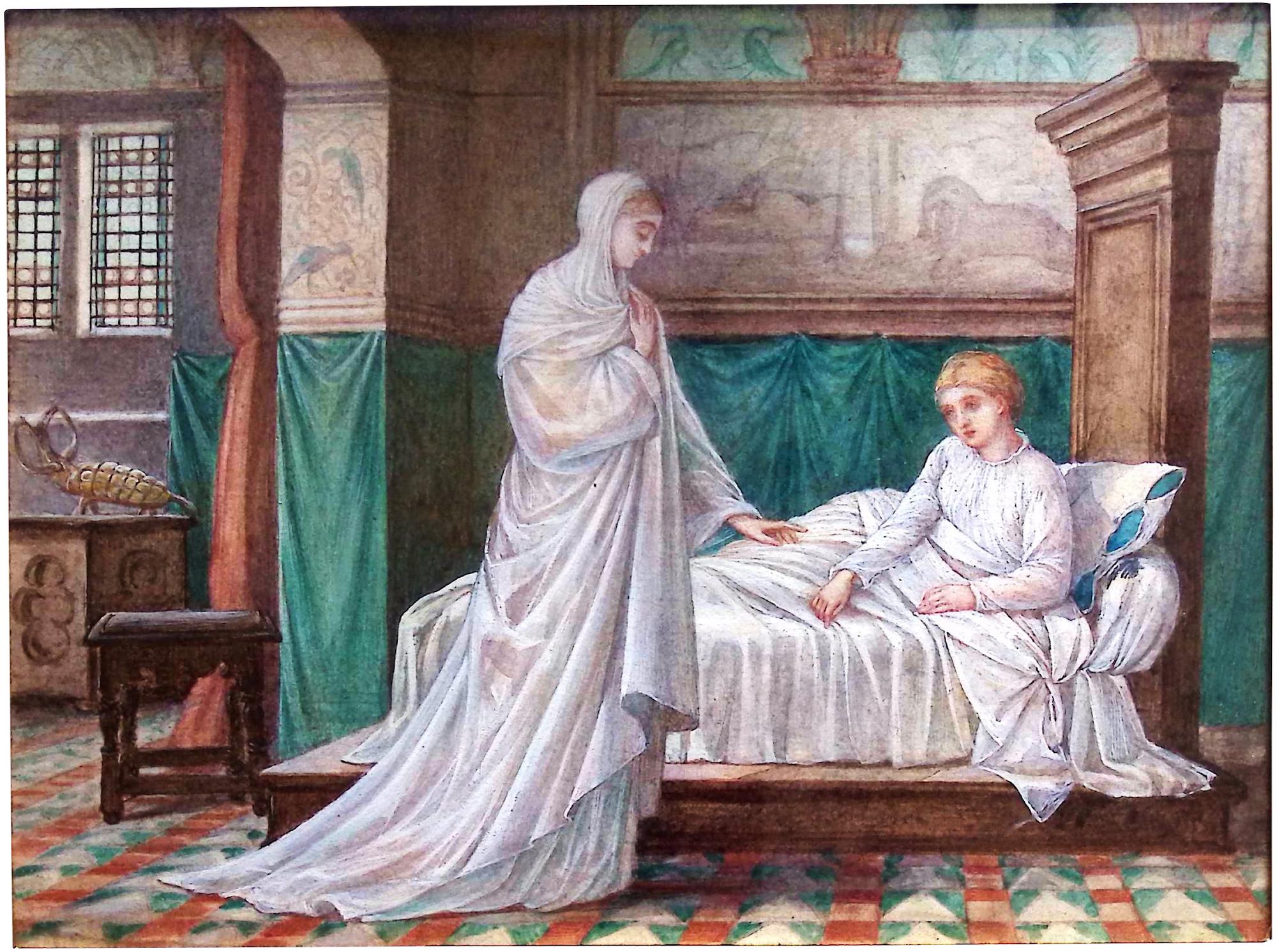
Illustration for Beauty and the Beast (a lady comforting Beauty), c. 1875
Eleanor Vere Boyle (1825 – 1916) illustrated poetry and prose by some of the most popular authors of her time. She regularly drew and painted using ink and watercolour, sketching landscapes, animals and her children from life. She also made drawings from her imagination, often reflecting spiritual themes. This illustration is from Boyle’s 1875 retelling of Beauty and the Beast, a fairy tale where a woman is imprisoned by a monster and falls in love with him. Unlike other illustrated versions before or since, Boyle gave her beast walrus-like tusks and flippers. In several of her illustrations, Boyle used shell gold – a mixture of finely ground gold powder and gum arabic (tree sap) that would have been stored in a shallow seashell. In the final publication, the caption for this illustration reads, "The room where Beauty slept. At dawn, a lady came to comfort her"
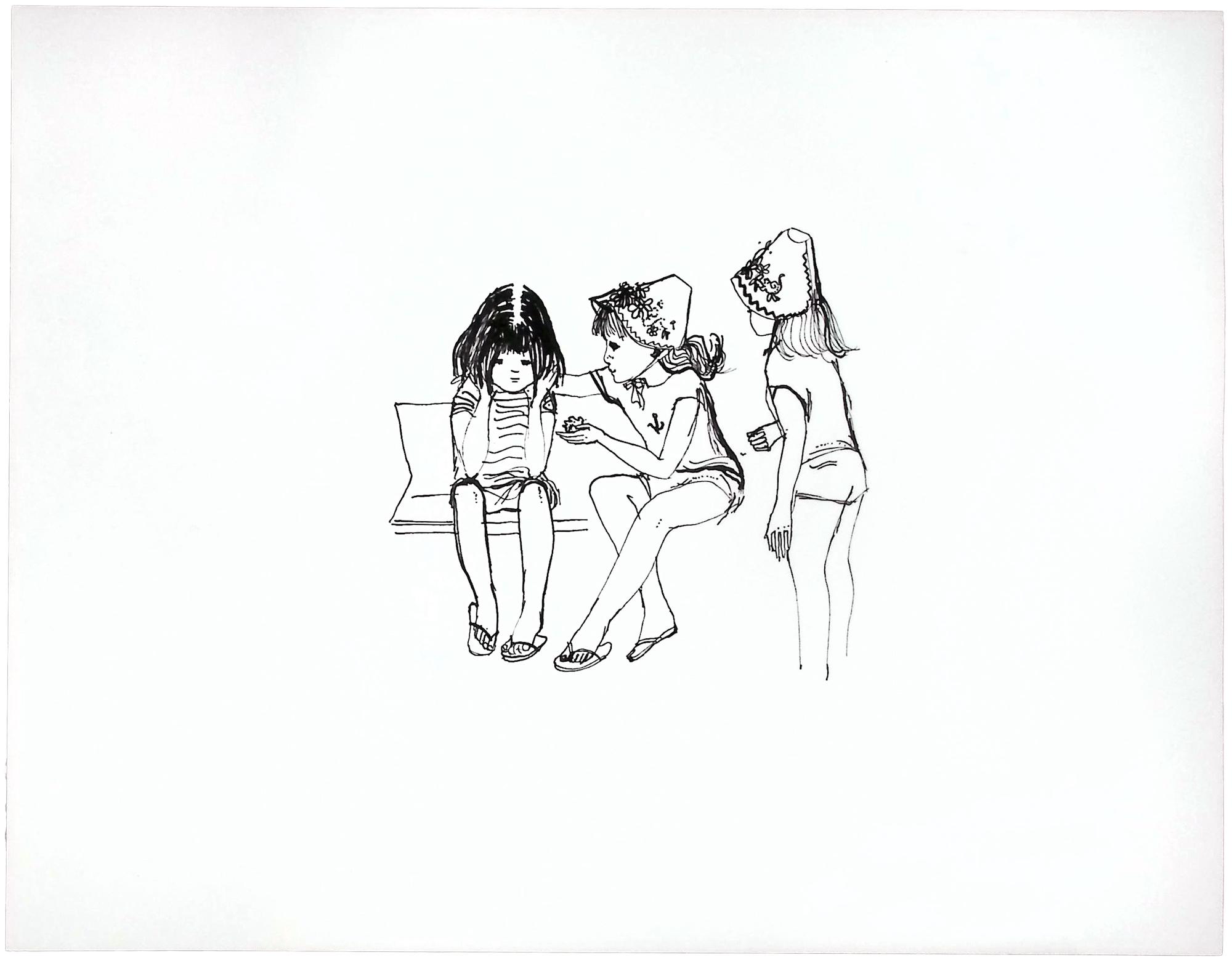
Untitled, c. 1968
British illustrator Janina Ede (1937-2018) created covers and illustrations for over 100 books from the 1950s to the 1980s. In the 1960s, Ede began working on children’s books. The Patchwork Pack (1968) by Freda Collins is about a group of ‘Brownies’ – the name given to members of the worldwide girl-guiding movement.
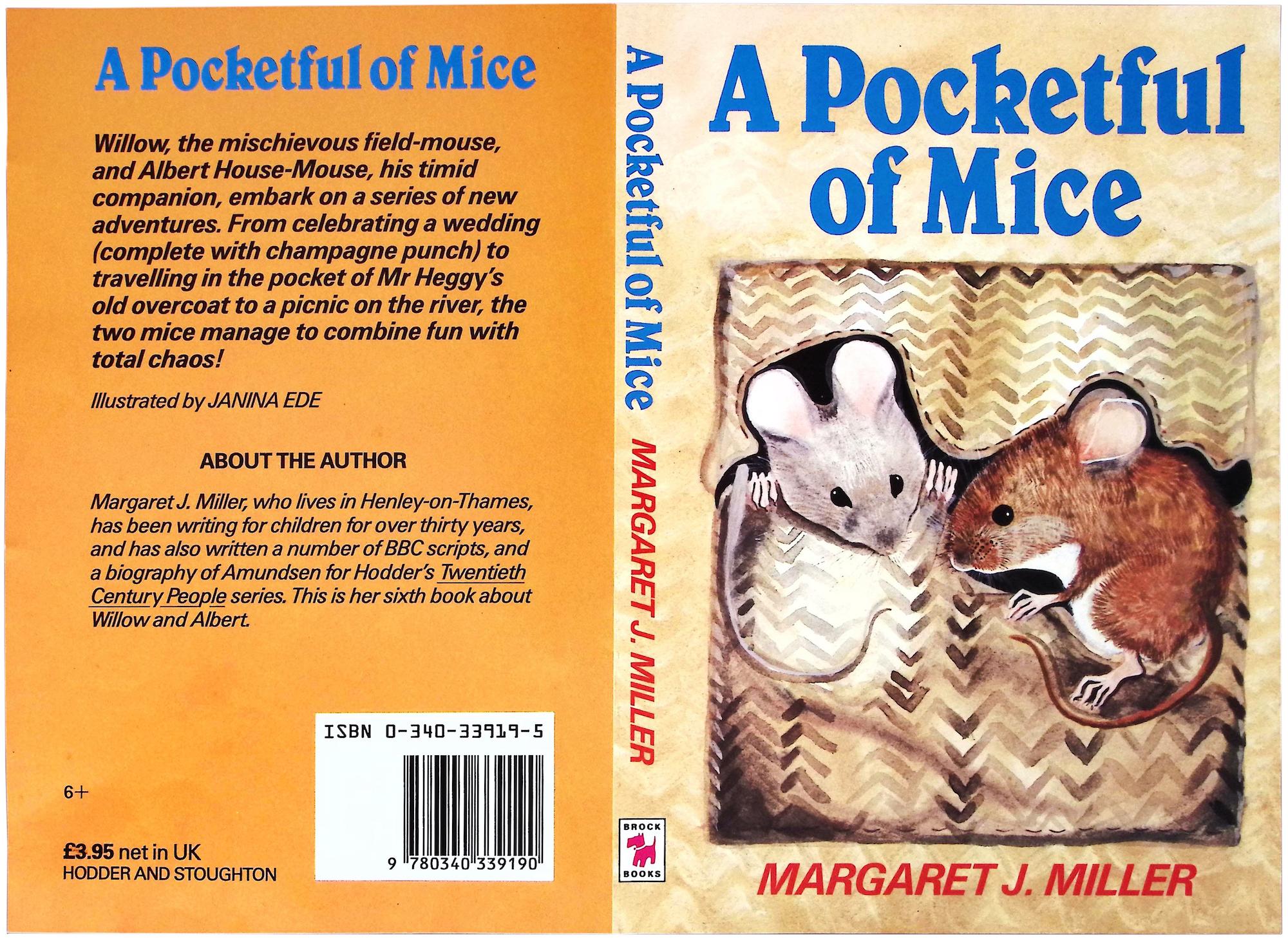
Printed book cover proof for A Pocket Full of Mice , c. 1984
British illustrator Janina Ede (1937-2018) created covers and illustrations for over 100 books from the 1950s to the 1980s. Many of her illustrations feature animals, which she drew from life.
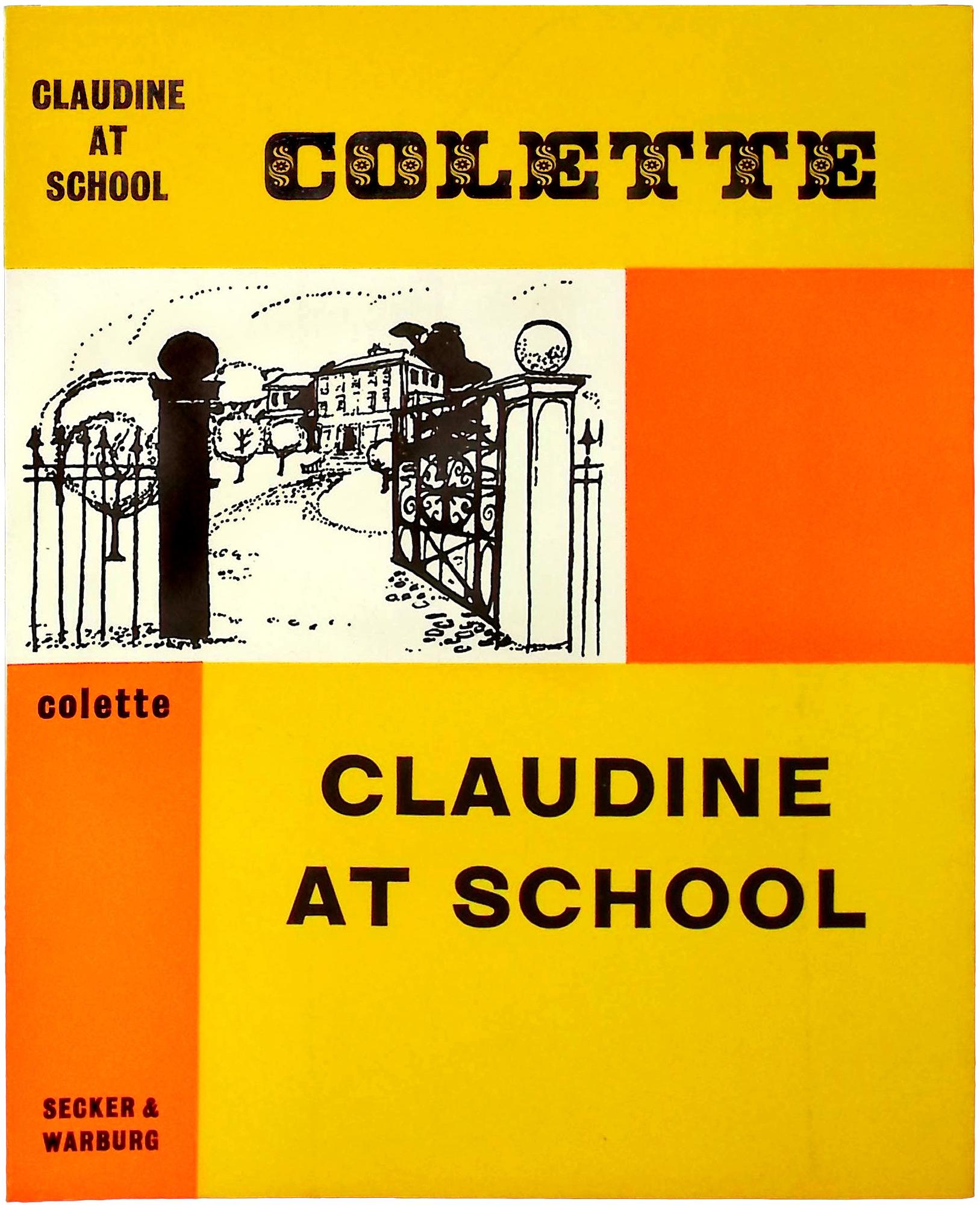
Book cover proof for Colette's "Claudine at School", 1960
British illustrator Janina Ede (1937-2018) created covers and illustrations for over 100 books from the 1950s to the 1980s. She designed the covers of several books by French author and pioneer of autofiction Sidonie-Gabrielle Colette. Claudine at School was Colette’s first novel, written in 1900. It follows the story of the eponymous Claudine, navigating school and lesbian relationships.
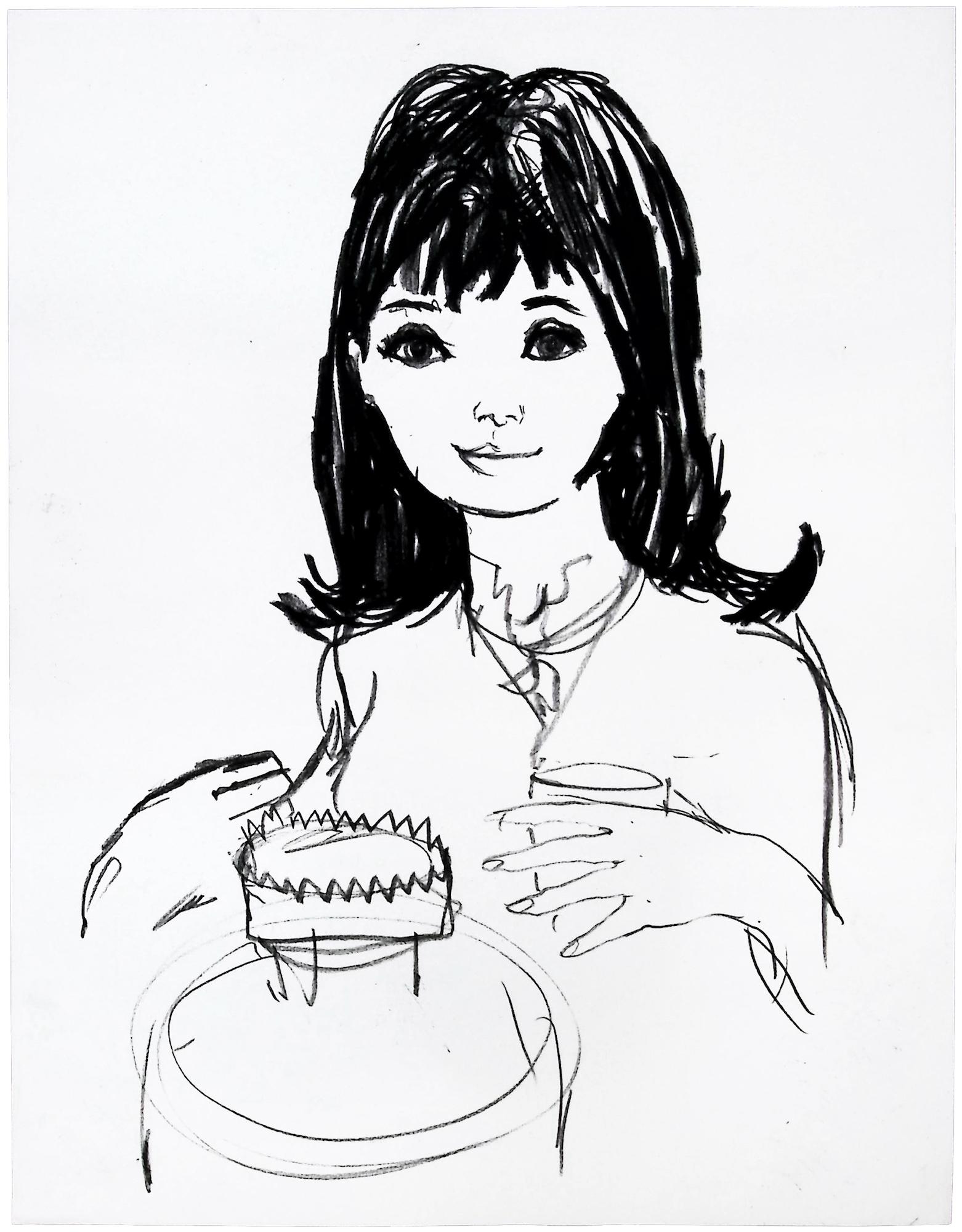
Untitled, Date unknown
British illustrator Janina Ede (1937-2018) created covers and illustrations for over 100 books from the 1950s to the 1980s. Ede often worked using just black ink, combining pen and brushwork to create bold illustrations with fine details.
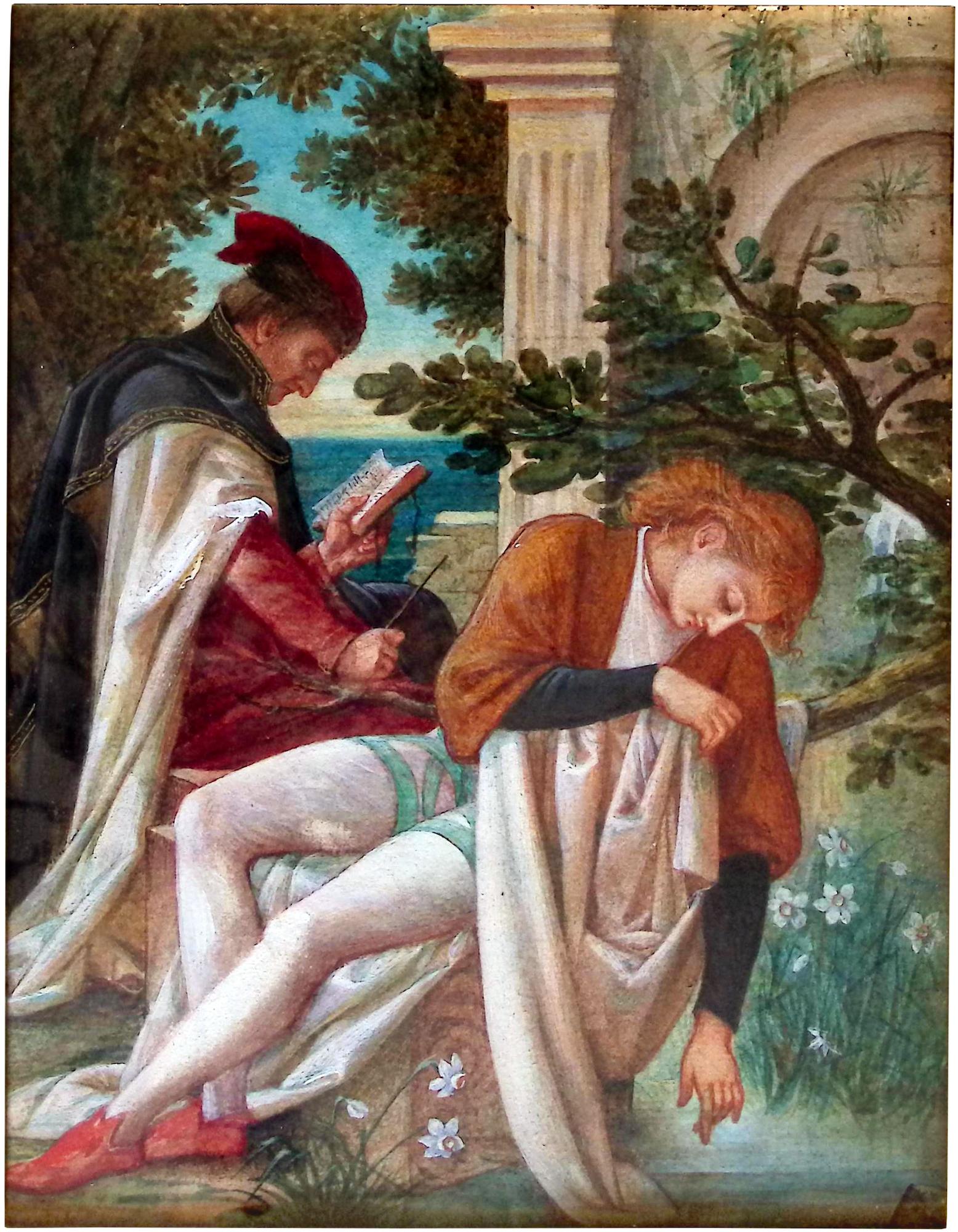
Illustration for Beauty and the Beast (the sisters' husbands), c. 1875
Eleanor Vere Boyle (1825 – 1916) illustrated poetry and prose by some of the most popular authors of her time. She regularly drew and painted using ink and watercolour, sketching landscapes, animals and her children from life. She also made drawings from her imagination, often reflecting spiritual themes. This illustration is from Boyle’s 1875 retelling of Beauty and the Beast, a fairy tale where a woman is imprisoned by a monster and falls in love with him. Unlike other illustrated versions before or since, Boyle gave her beast walrus-like tusks and flippers. In several of her illustrations, Boyle used shell gold – a mixture of finely ground gold powder and gum arabic (tree sap) that would have been stored in a shallow seashell. In the final publication, the caption for this illustration reads, "One sister's husband, like Narcissus of old, worshipped his own beauty. But the other was full of learning."

Untitled, Date unknown
Eleanor Vere Boyle (1825 – 1916) illustrated poetry and prose by some of the most popular authors of her time. She regularly drew and painted using ink and watercolour, sketching landscapes, animals and her children from life. She also made drawings from her imagination, often reflecting spiritual themes.
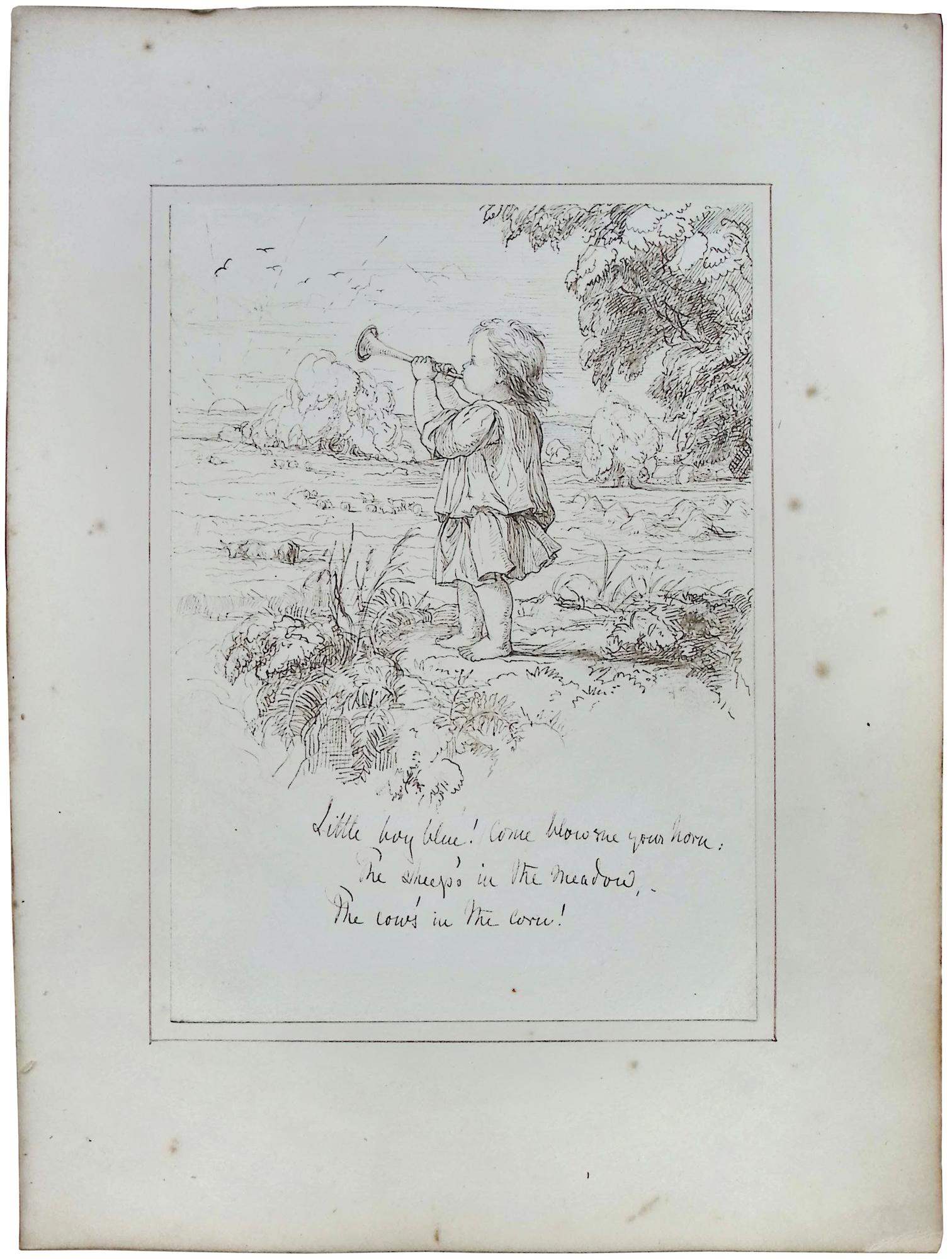
Untitled (illustration for Child's Play, 'Little boy blue'), c. 1851
Eleanor Vere Boyle (1825 – 1916) illustrated poetry and prose by some of the most popular authors of her time. She regularly drew and painted using ink and watercolour, sketching landscapes, animals and her children from life. She also made drawings from her imagination, often reflecting spiritual themes. This illustration is from her first book, Child’s Play (1851). Boyle provided her publishers with black and white drawings that were then converted into etchings by the printer. These were later reproduced as lithographs, in colours chosen by Boyle.
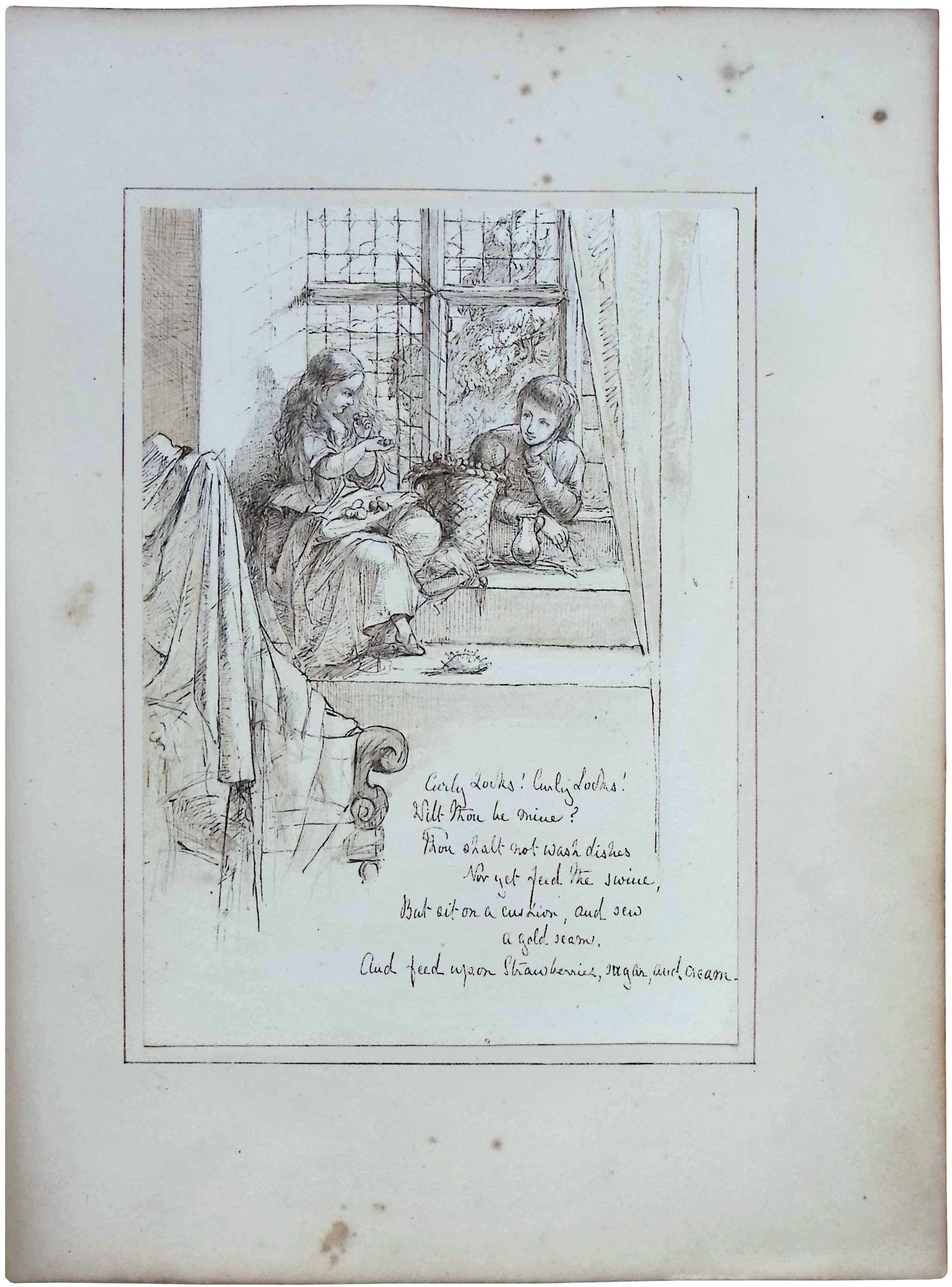
Untitled (illustration for Child's Play, 'Curly Locks'), c. 1851
Eleanor Vere Boyle (1825 – 1916) illustrated poetry and prose by some of the most popular authors of her time. She regularly drew and painted using ink and watercolour, sketching landscapes, animals and her children from life. She also made drawings from her imagination, often reflecting spiritual themes. This illustration is from her first book, Child’s Play (1851). Boyle provided her publishers with black and white drawings that were then converted into etchings by the printer. These were later reproduced as lithographs, in colours chosen by Boyle.
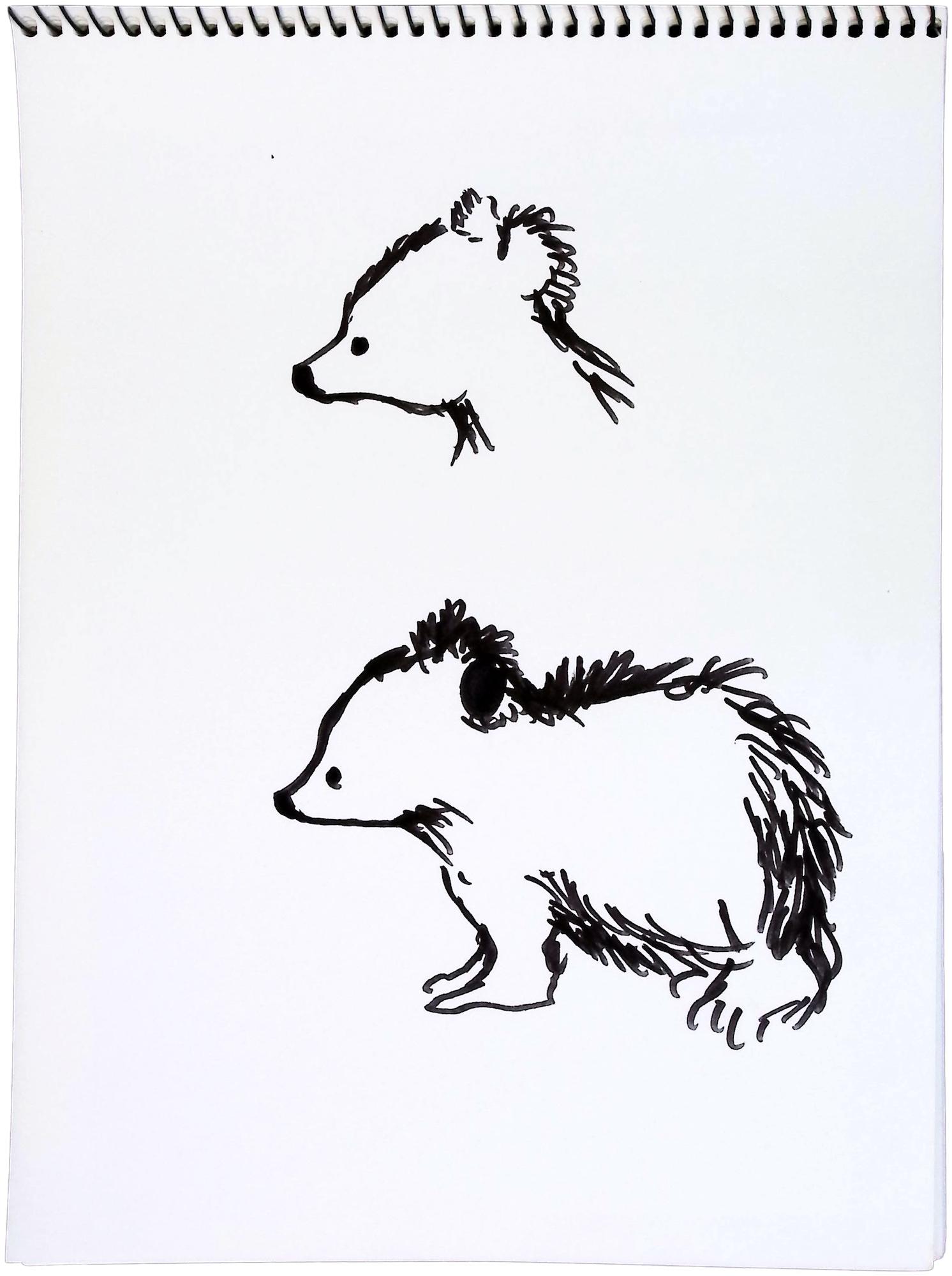
Untitled, Date unknown
British illustrator Janina Ede (1937-2018) created covers and illustrations for over 100 books from the 1950s to the 1980s. Many of her illustrations feature animals, which she drew from life.
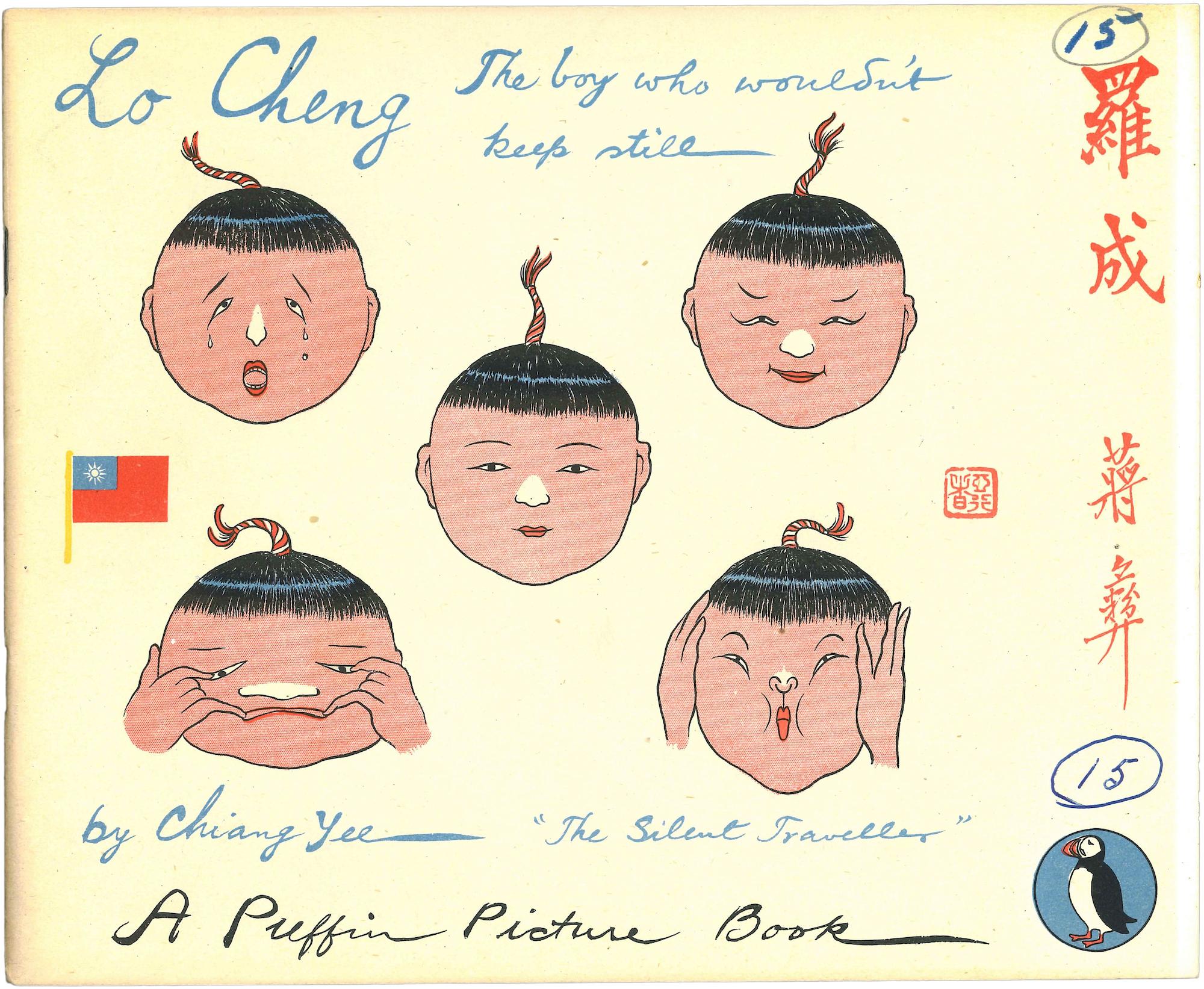
Lo Cheng, The boy who wouldn’t keep still, 1942
The Puffin Picture Books series was established by designer and editor Noel Carrington (1895-1989). In 1933, artist Pearl Binder (1904-1990) sent Carrington a package of Soviet children’s books. “They were produced by the million on very cheap paper, but the drawings were vigorous and the colour delightful” he later remembered. These books inspired Carrington to edit a series of affordable books that would encourage “the child’s awakening interest in its surroundings... I felt that colour was essential, and that artists could... be more successful in books of this nature than the camera”. Many artists and illustrators worked on the series, adapting their ways of working to lithographic printing and the Puffin Picture Book format. Most of the 120 books in the series were printed on one large sheet of paper: one side in colour and one in black-and-white. Each sheet was cut, folded and stapled to create a softcover book.
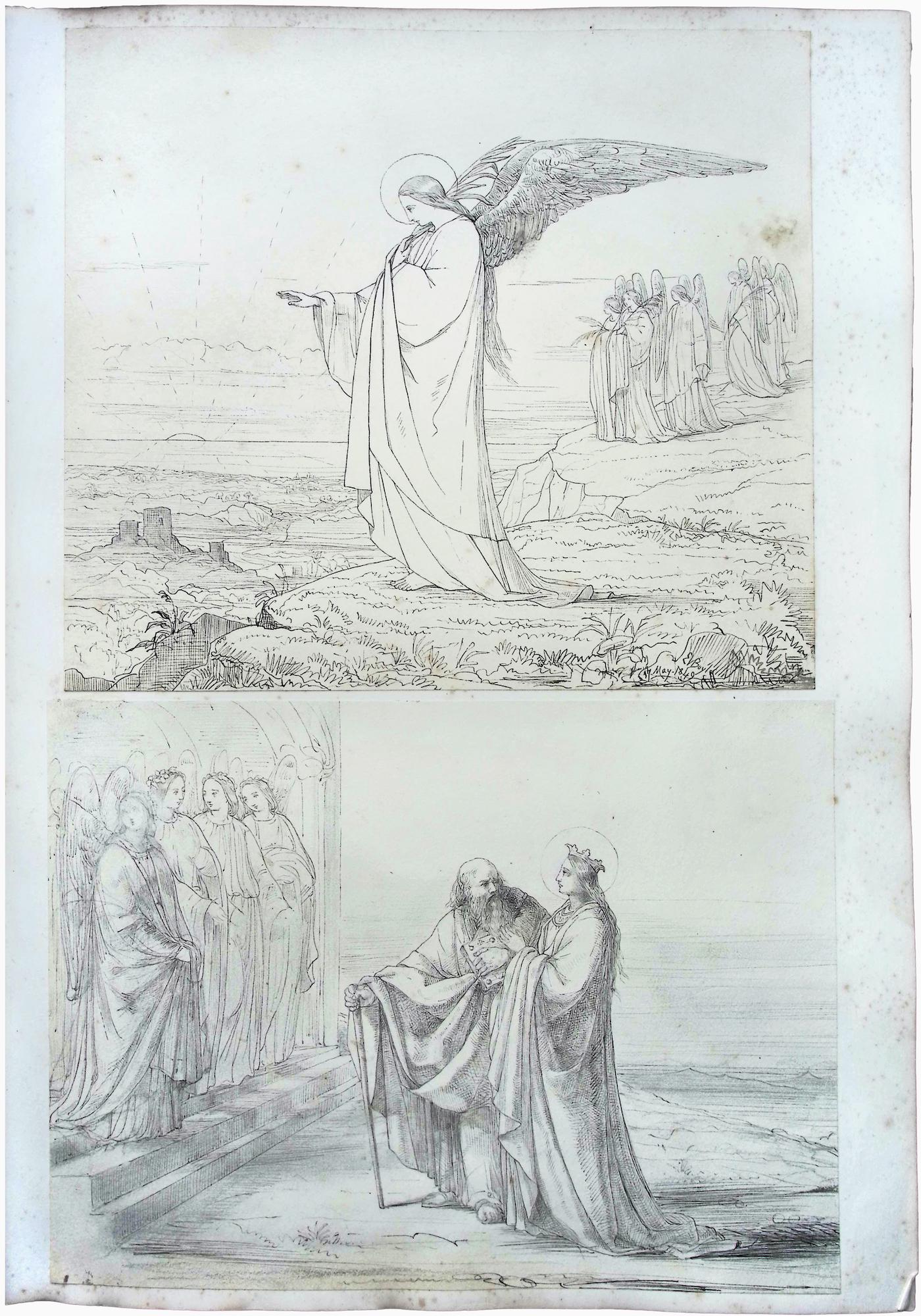
Untitled, Date unknown
Eleanor Vere Boyle (1825 – 1916) illustrated poetry and prose by some of the most popular authors of her time. She regularly drew and painted using ink and watercolour, sketching landscapes, animals and her children from life. She also made drawings from her imagination, often reflecting spiritual themes.
![Teremok [The cabin]](https://cdn.sanity.io/images/n83t80i6/production/f9ec00295d1de824a94cc9766b91be8edf5b57ff-1624x2000.jpg?auto=format&fit=max&q=75&w=1624)
Evgenii Charushin , Teremok [The cabin], 1931
Evgenii Charushin (1901-1965) was an illustrator and author, known for his children’s books on nature and animals. He said, “More than anything else, I love to depict young animals, touching in their helplessness and interesting, because within them one can already see signs of the full-grown beast.” This book is a cumulative story about a hole in an oak tree that is inhabited by a series of different animals as it gets bigger. It was published in Leningrad (Saint Petersburg), Russia at a time when children’s books became a mass media phenomenon. Over a ten-year period, almost 10,000 titles were published in several editions of up to 200,000. Many of these books took experimental approaches to storytelling, design and layout.
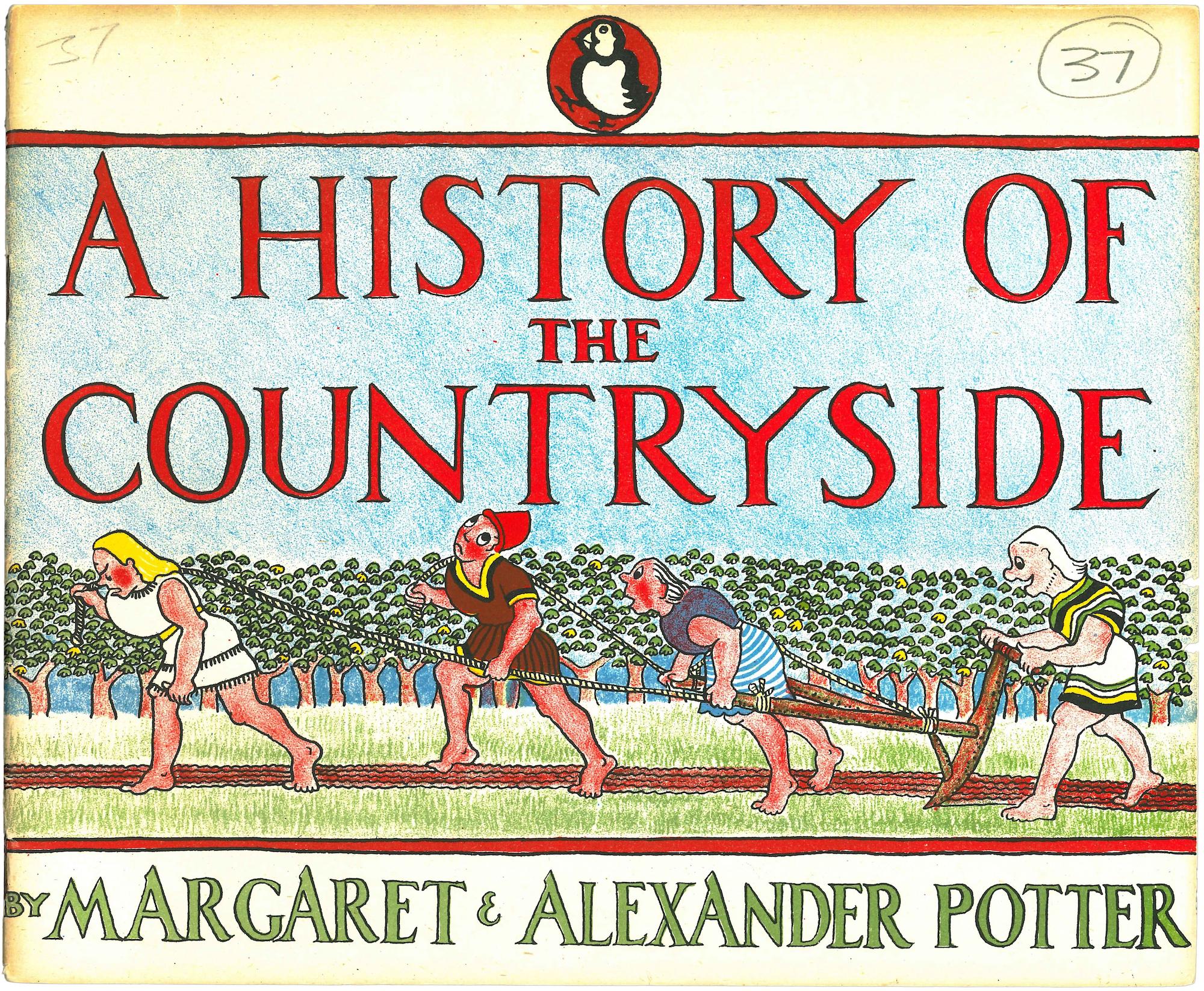
A History of the Countryside, 1944
The Puffin Picture Books series was established by designer and editor Noel Carrington (1895-1989). In 1933, artist Pearl Binder (1904-1990) sent Carrington a package of Soviet children’s books. “They were produced by the million on very cheap paper, but the drawings were vigorous and the colour delightful” he later remembered. These books inspired Carrington to edit a series of affordable books that would encourage “the child’s awakening interest in its surroundings... I felt that colour was essential, and that artists could... be more successful in books of this nature than the camera”. Many artists and illustrators worked on the series, adapting their ways of working to lithographic printing and the Puffin Picture Book format. Most of the 120 books in the series were printed on one large sheet of paper: one side in colour and one in black-and-white. Each sheet was cut, folded and stapled to create a softcover book.
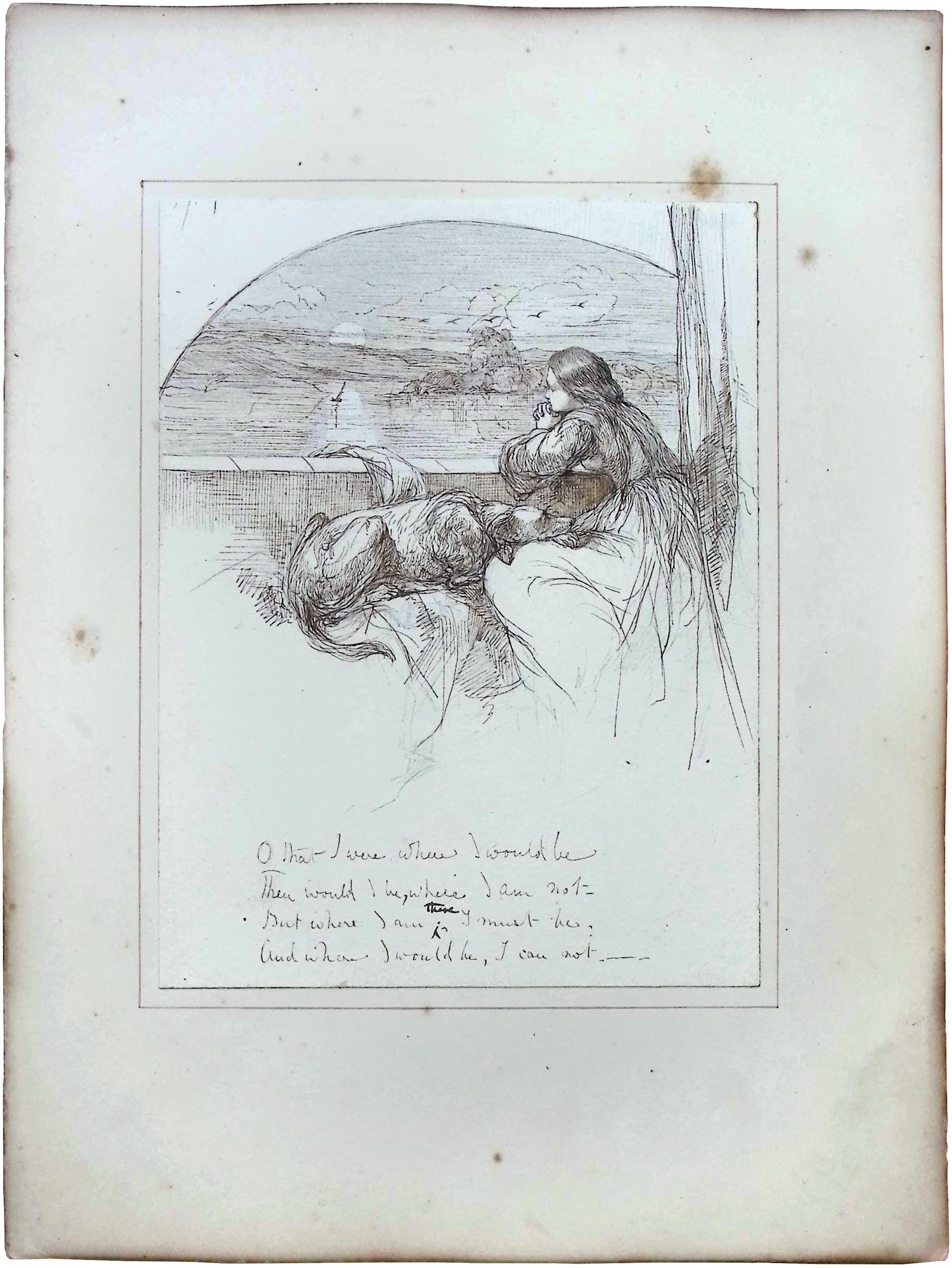
Untitled (illustration for Child's Play, 'O That I Were Where I Would Be'), c. 1851
Eleanor Vere Boyle (1825 – 1916) illustrated poetry and prose by some of the most popular authors of her time. She regularly drew and painted using ink and watercolour, sketching landscapes, animals and her children from life. She also made drawings from her imagination, often reflecting spiritual themes. This illustration is from her first book, Child’s Play (1851). Boyle provided her publishers with black and white drawings that were then converted into etchings by the printer. These were later reproduced as lithographs, in colours chosen by Boyle.
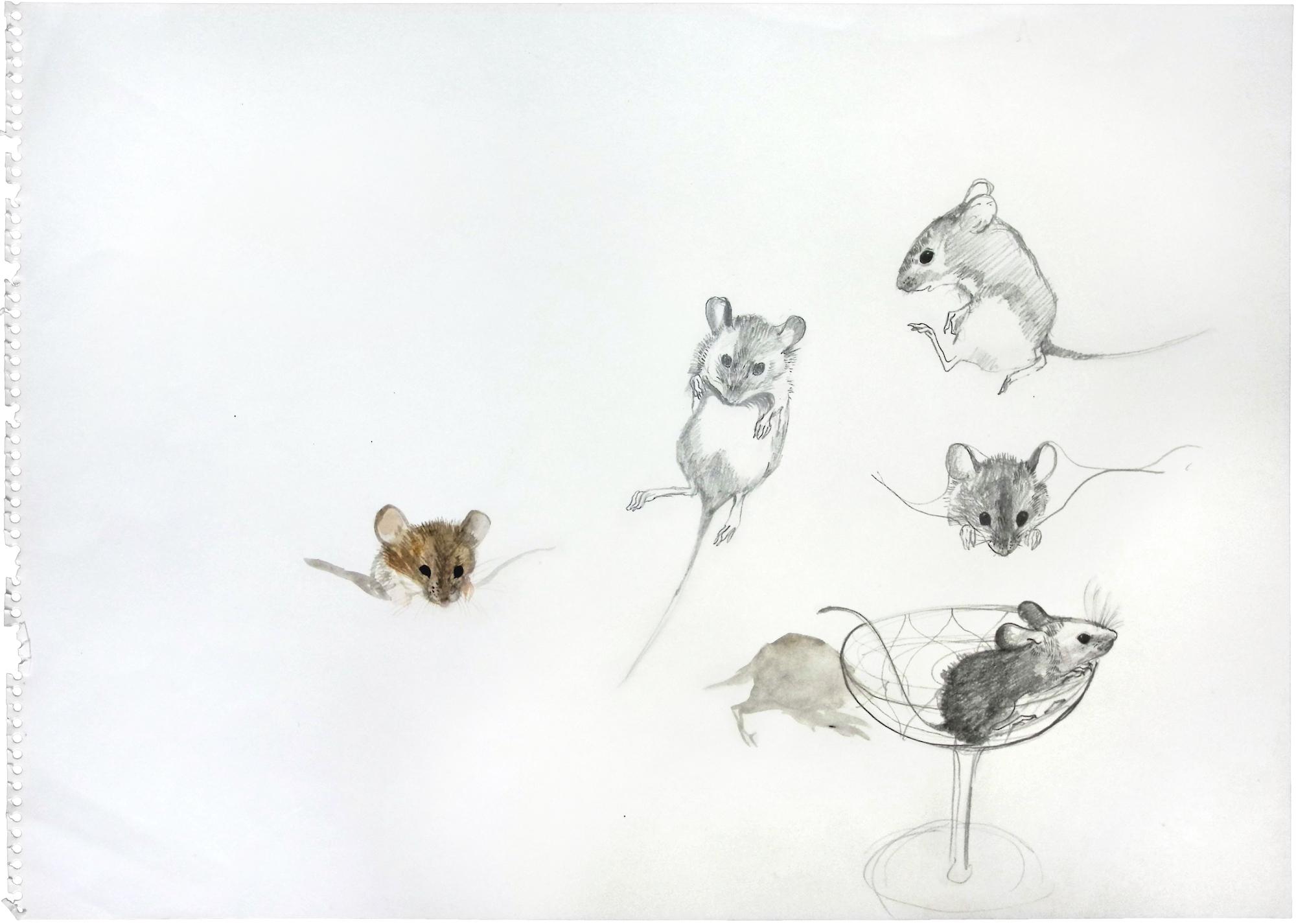
Untitled, Date unknown
British illustrator Janina Ede (1937-2018) created covers and illustrations for over 100 books from the 1950s to the 1980s. Many of her illustrations feature animals, which she drew from life.
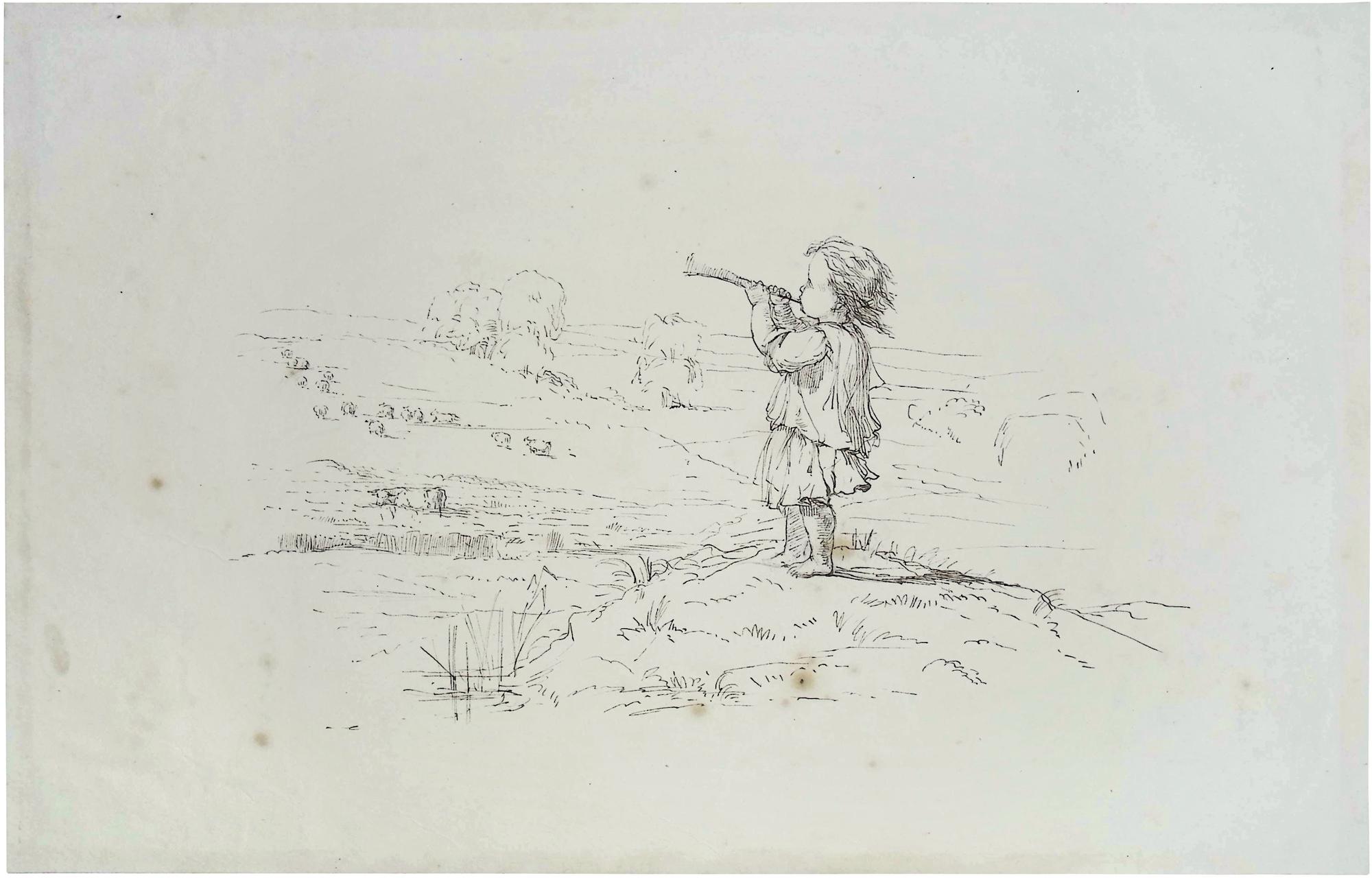
Untitled (draft illustration for Child's Play, 'Little boy blue'), Date unknown
Eleanor Vere Boyle (1825 – 1916) illustrated poetry and prose by some of the most popular authors of her time. She regularly drew and painted using ink and watercolour, sketching landscapes, animals and her children from life. She also made drawings from her imagination, often reflecting spiritual themes. This draft illustration was finalised and featured in her first book, Child’s Play (1851).
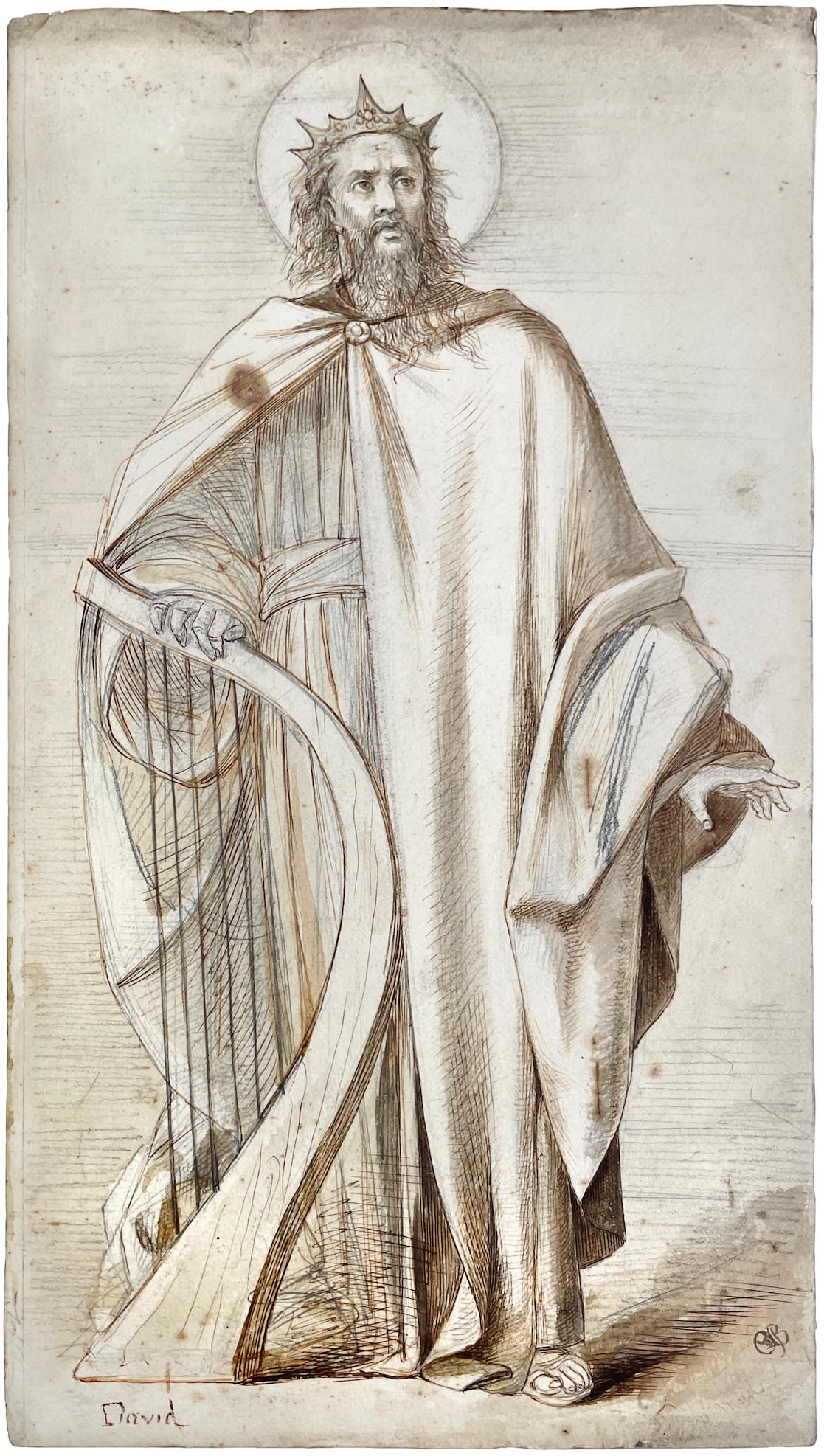
Untitled (David), Date unknown
Eleanor Vere Boyle (1825 – 1916) illustrated poetry and prose by some of the most popular authors of her time. She regularly drew and painted using ink and watercolour, sketching landscapes, animals and her children from life. She also made drawings from her imagination, often reflecting spiritual themes.
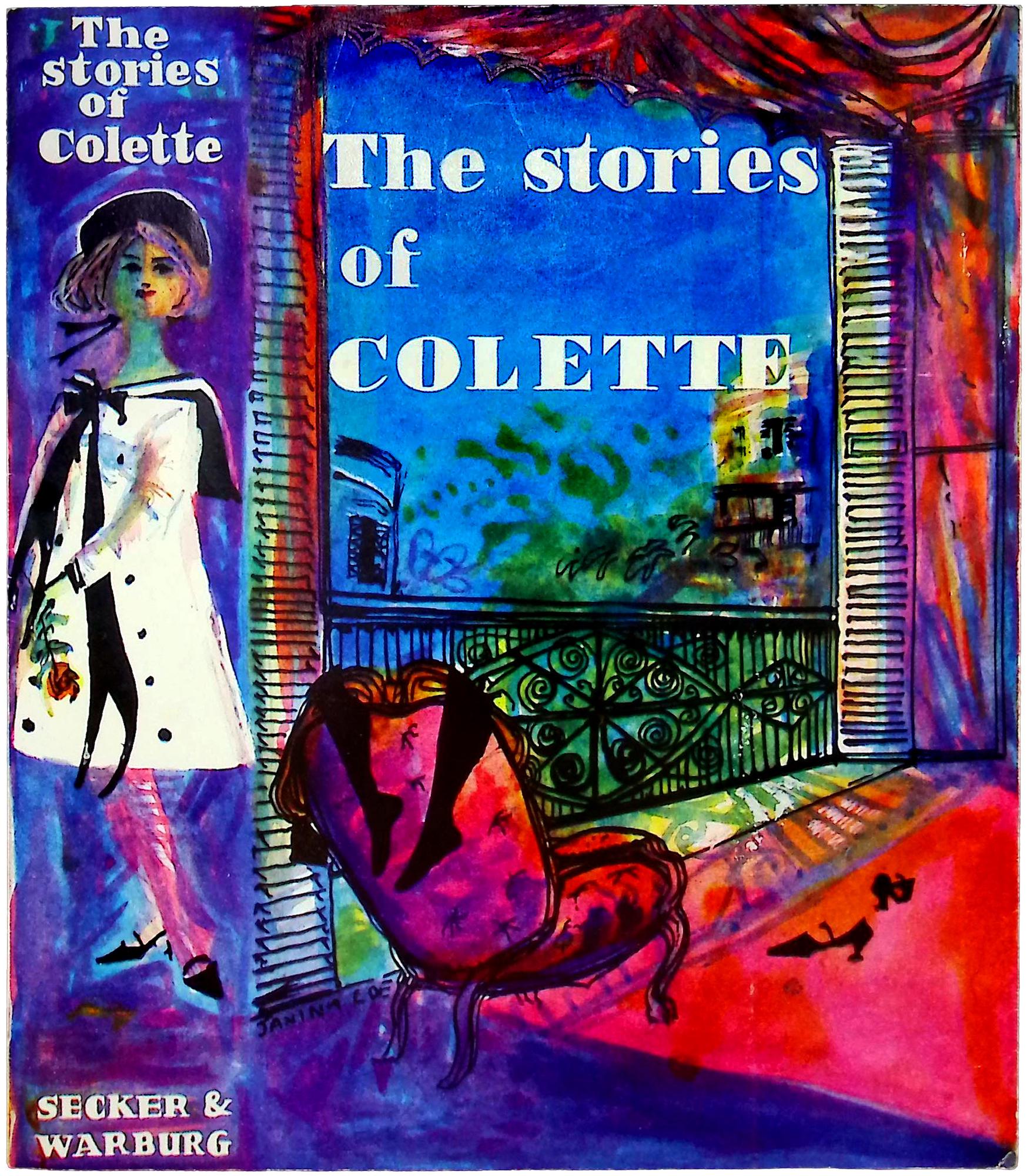
Book cover proof for "The Stories of Colette", 1958
British illustrator Janina Ede (1937-2018) created covers and illustrations for over 100 books from the 1950s to the 1980s. She designed the covers of several books by French author and pioneer of autofiction Sidonie-Gabrielle Colette.
![Raznye Zveri [Different Beasts]](https://cdn.sanity.io/images/n83t80i6/production/4842f601d9ba1427cd6013f75b3d855946b271f9-1795x2381.jpg?auto=format&fit=max&q=75&w=1795)
Evgenii Charushin , Raznye Zveri [Different Beasts], 1931
Evgenii Charushin (1901-1965) was an illustrator and author, known for his children’s books on nature and animals. He said, “More than anything else, I love to depict young animals, touching in their helplessness and interesting, because within them one can already see signs of the full-grown beast.” This book shows a series of animals found in Russia. It was published in Leningrad (Saint Petersburg) at a time when children’s books became a mass media phenomenon. Over a ten-year period, almost 10,000 titles were published in several editions of up to 200,000. Many of these books took experimental approaches to storytelling, design and layout.
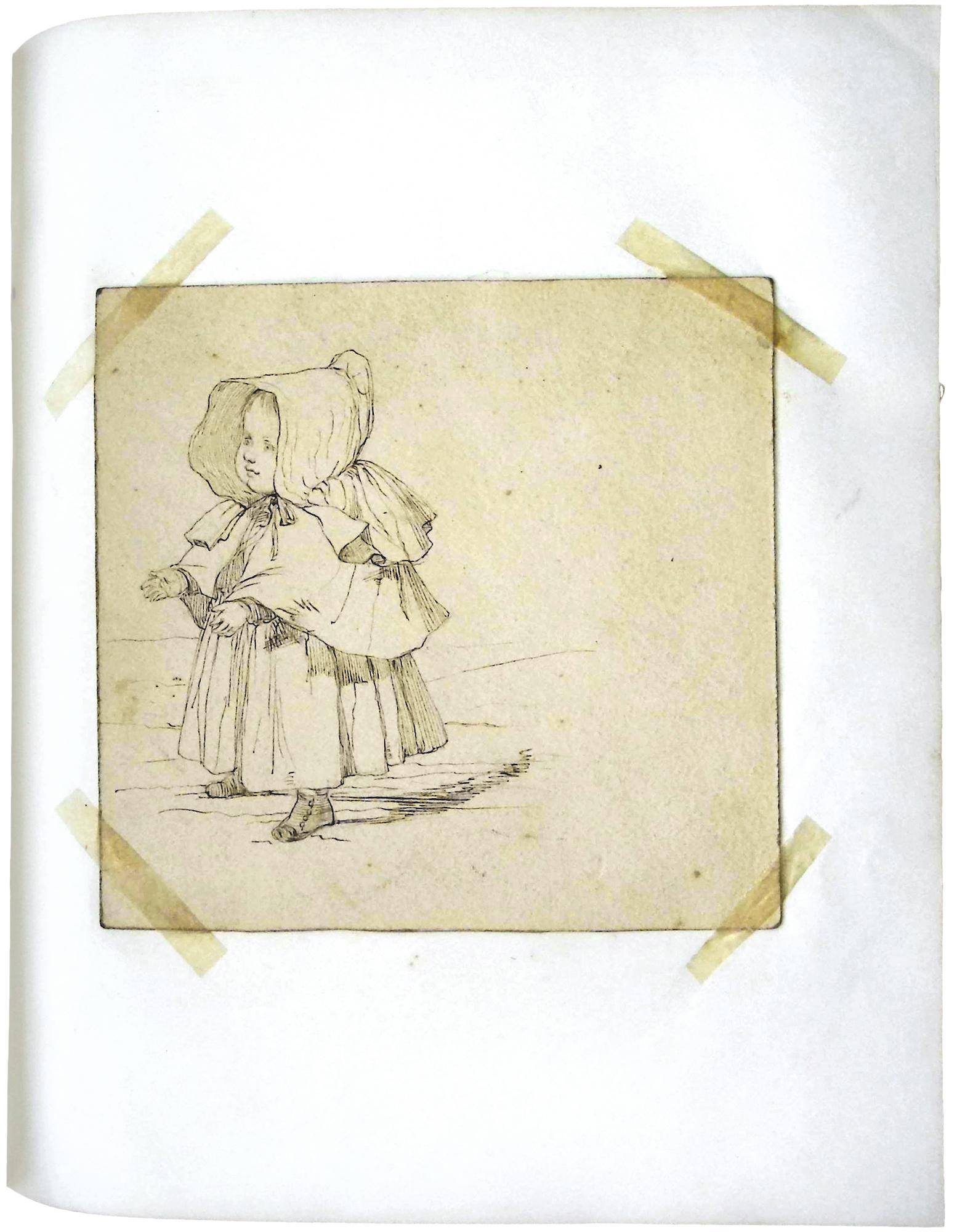
Untitled, Date unknown
Eleanor Vere Boyle (1825 – 1916) illustrated poetry and prose by some of the most popular authors of her time. She regularly drew and painted using ink and watercolour, sketching landscapes, animals and her children from life. She also made drawings from her imagination, often reflecting spiritual themes.
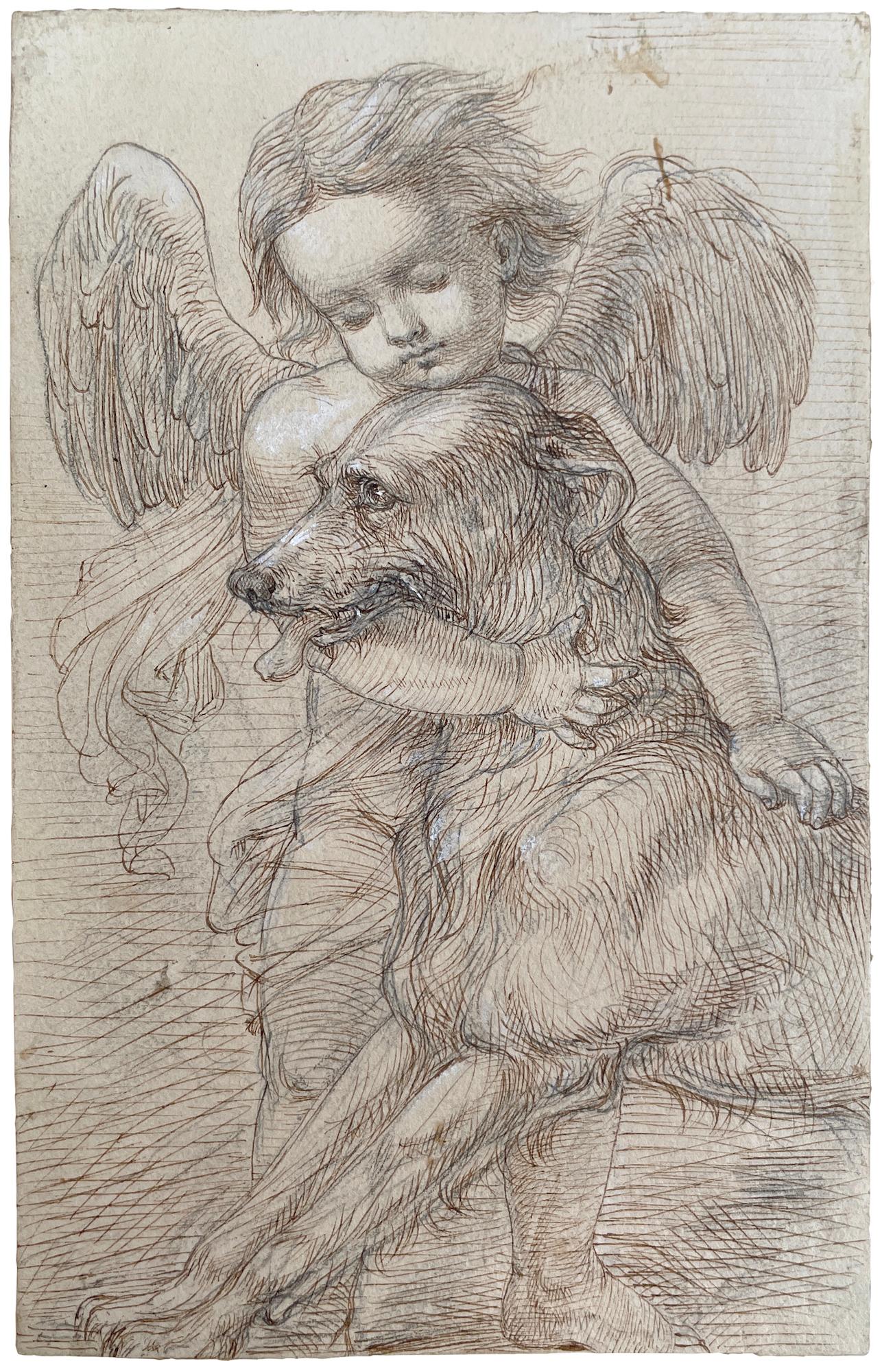
Untitled, 1855
Eleanor Vere Boyle (1825 – 1916) illustrated poetry and prose by some of the most popular authors of her time. She regularly drew and painted using ink and watercolour, sketching landscapes, animals and her children from life. She also made drawings from her imagination, often reflecting spiritual themes.
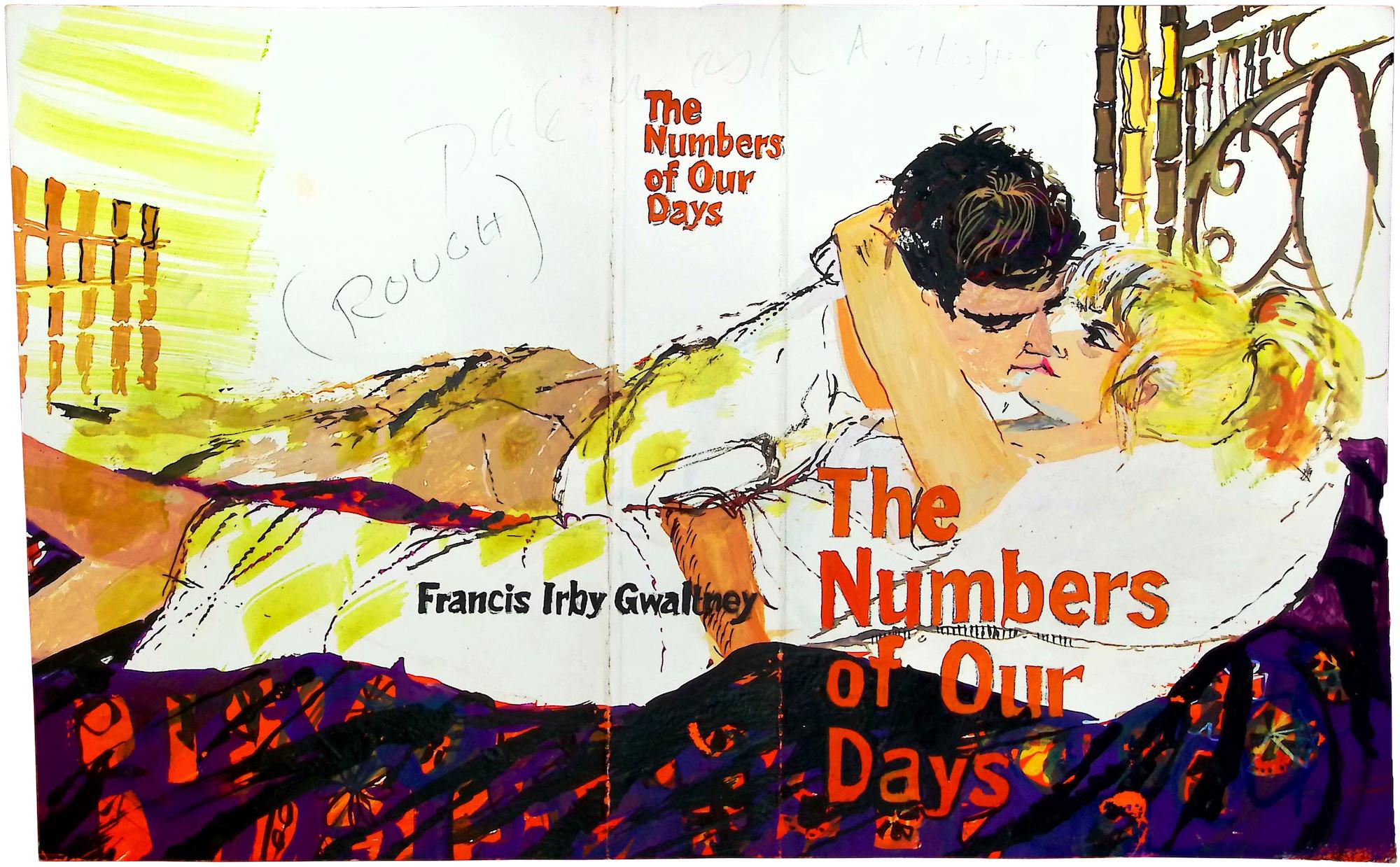
Untitled (rough cover illustration for "The Numbers of Our Days"), c. 1959
British illustrator Janina Ede (1937-2018) created covers and illustrations for over 100 books from the 1950s to the 1980s.
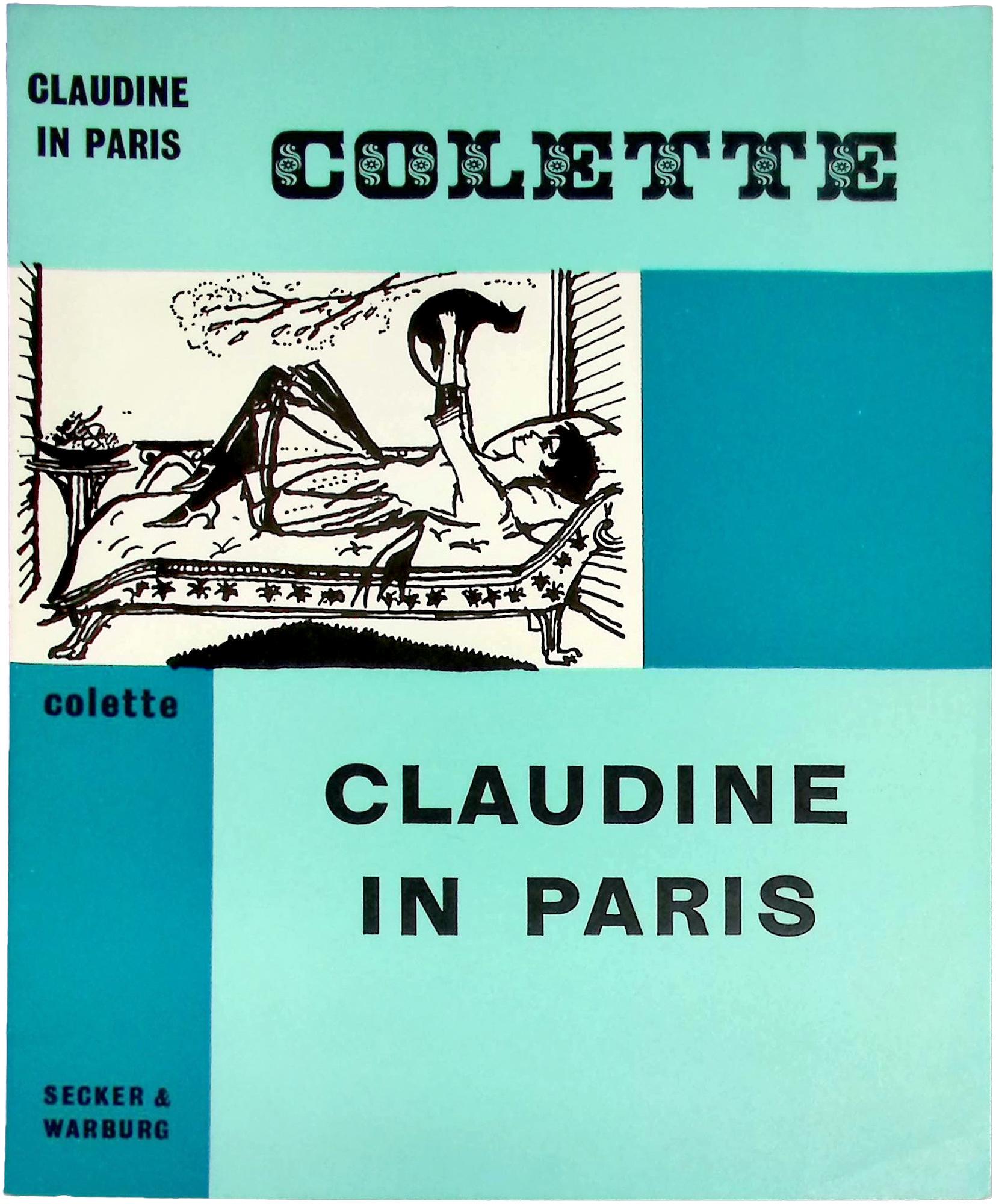
Book cover proof for Colette's "Claudine in Paris", 1960
British illustrator Janina Ede (1937-2018) created covers and illustrations for over 100 books from the 1950s to the 1980s. She designed the covers of several books by French author and pioneer of autofiction Sidonie-Gabrielle Colette.
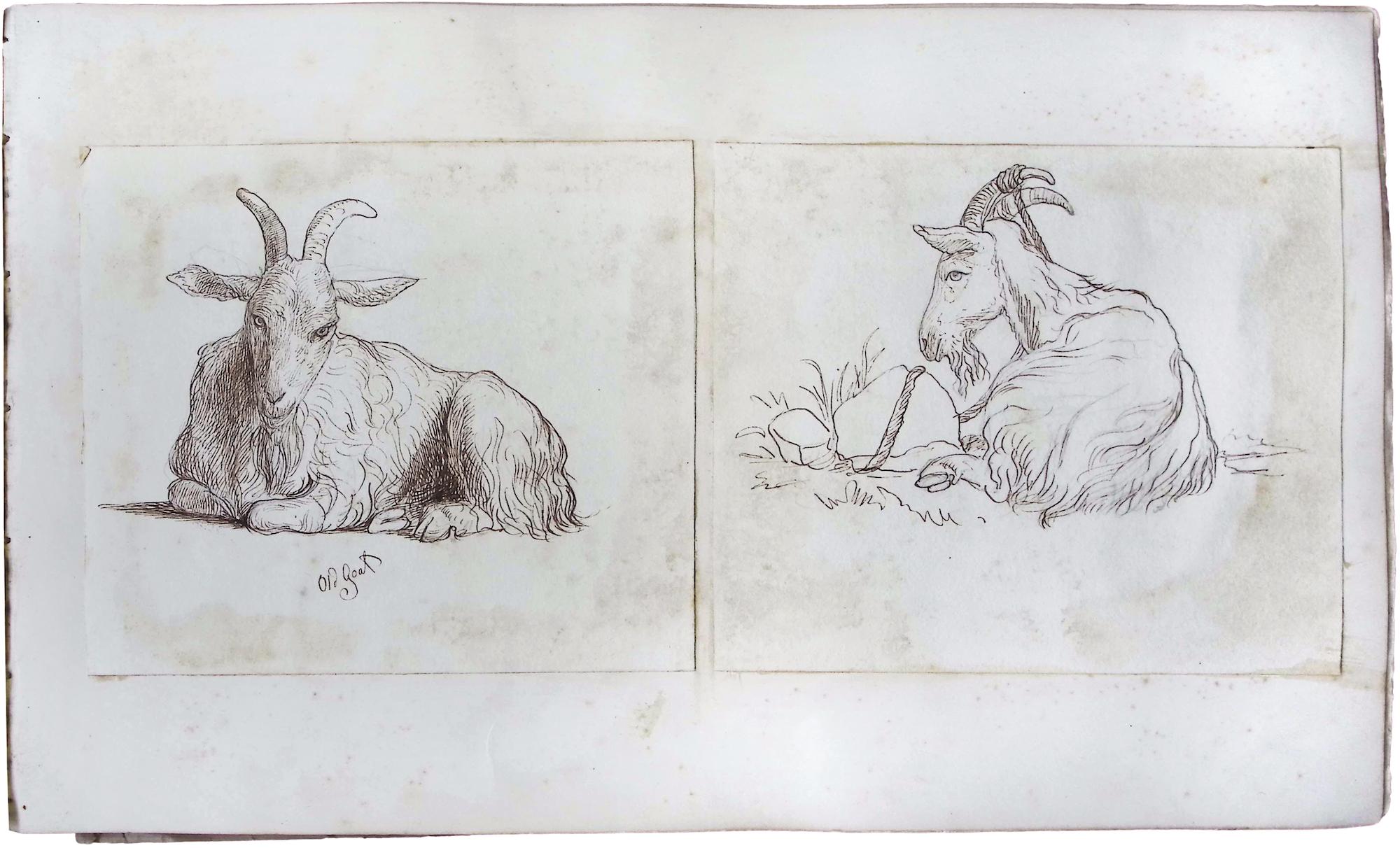
Untitled
Eleanor Vere Boyle (1825 – 1916) illustrated poetry and prose by some of the most popular authors of her time. She regularly drew and painted using ink and watercolour, sketching landscapes, animals and her children from life. She also made drawings from her imagination, often reflecting spiritual themes.
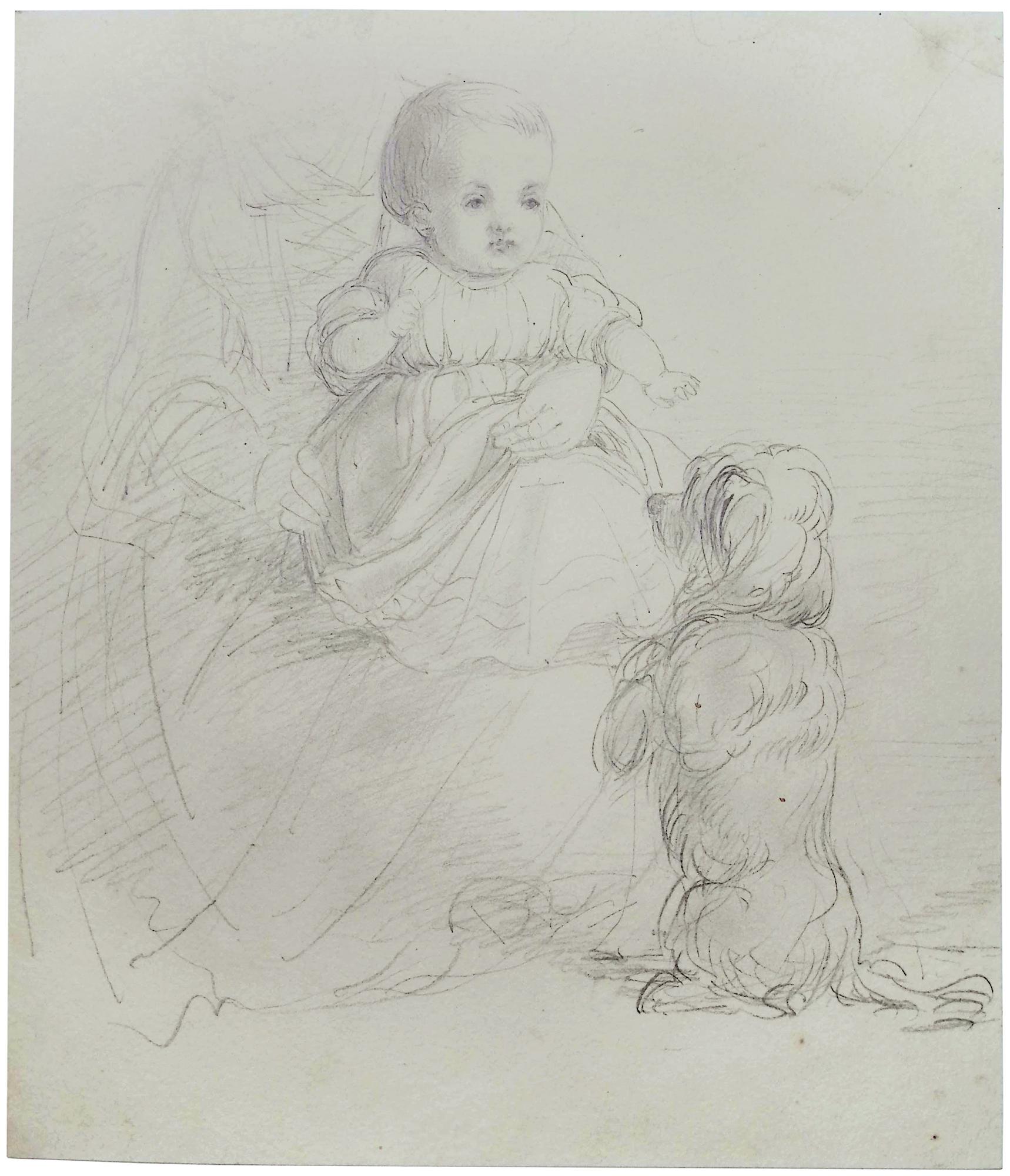
Untitled, Date unknown
Eleanor Vere Boyle (1825 – 1916) illustrated poetry and prose by some of the most popular authors of her time. She regularly drew and painted using ink and watercolour, sketching landscapes, animals and her children from life. She also made drawings from her imagination, often reflecting spiritual themes.
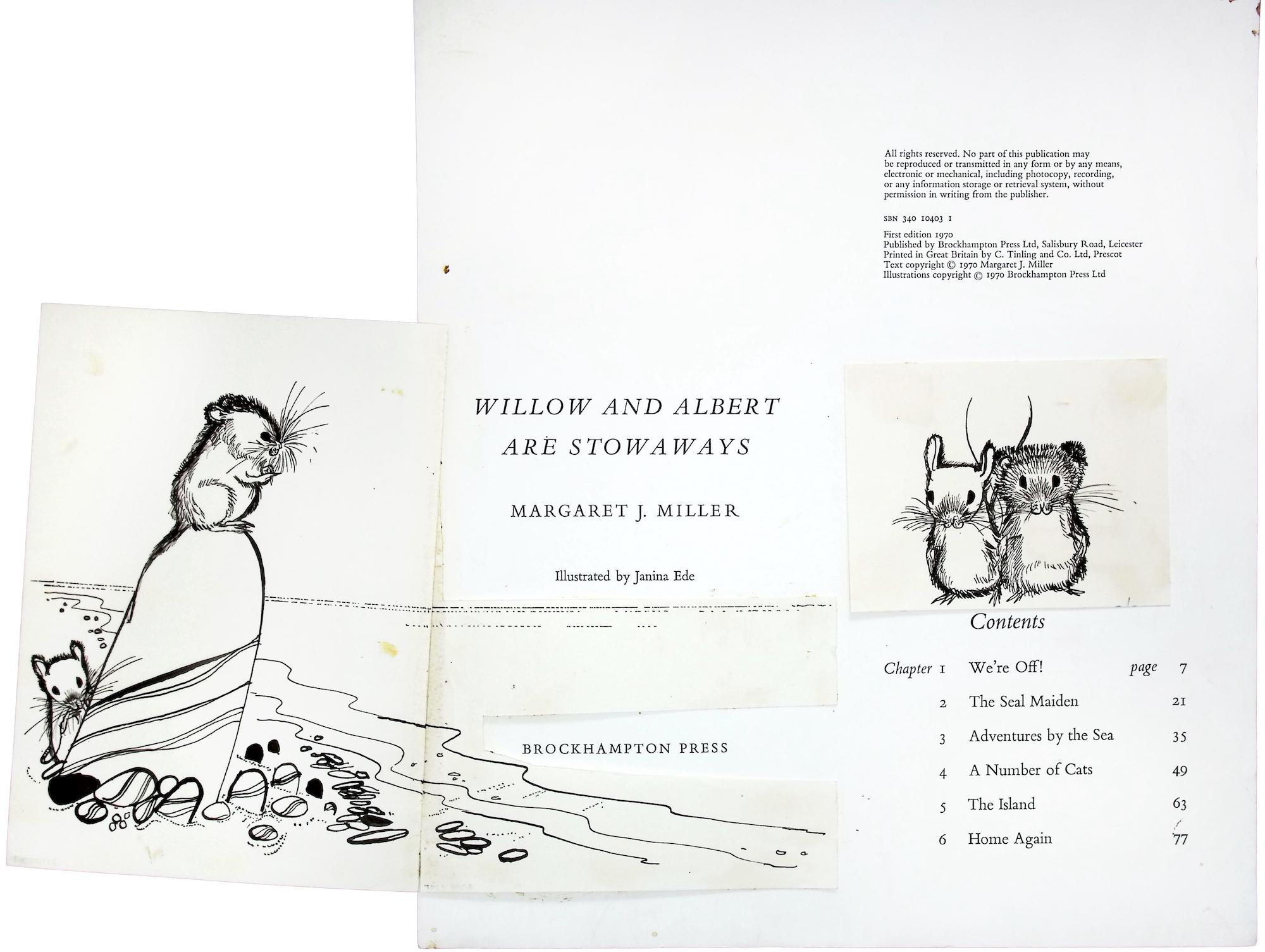
Layout proof for Willow and Albert are Stowaways, c. 1970
British illustrator Janina Ede (1937-2018) created covers and illustrations for over 100 books from the 1950s to the 1980s. Many of her illustrations feature animals, which she drew from life.
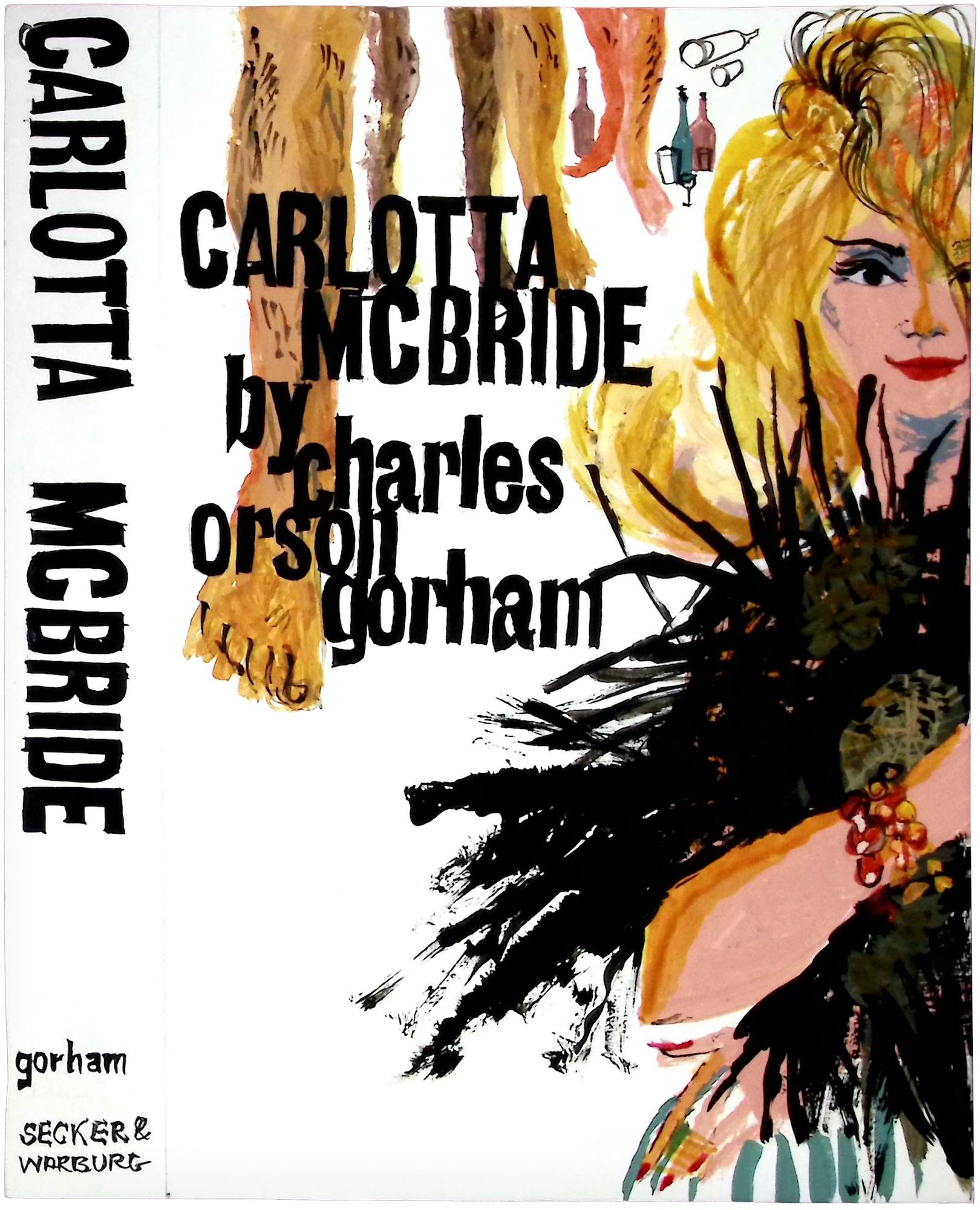
Rough cover illustration for "Carlotta Mc Bride", c. 1959
Janina Ede (1937-2018) created covers and illustrations for over 100 books from the 1950s to the 1980s. One of her earliest cover designs was for Carlotta McBride, a novel following the eponymous character in Paris, New York and Hollywood. It’s descriptions of sex and lesbian relationships led to the book being banned in Australia.
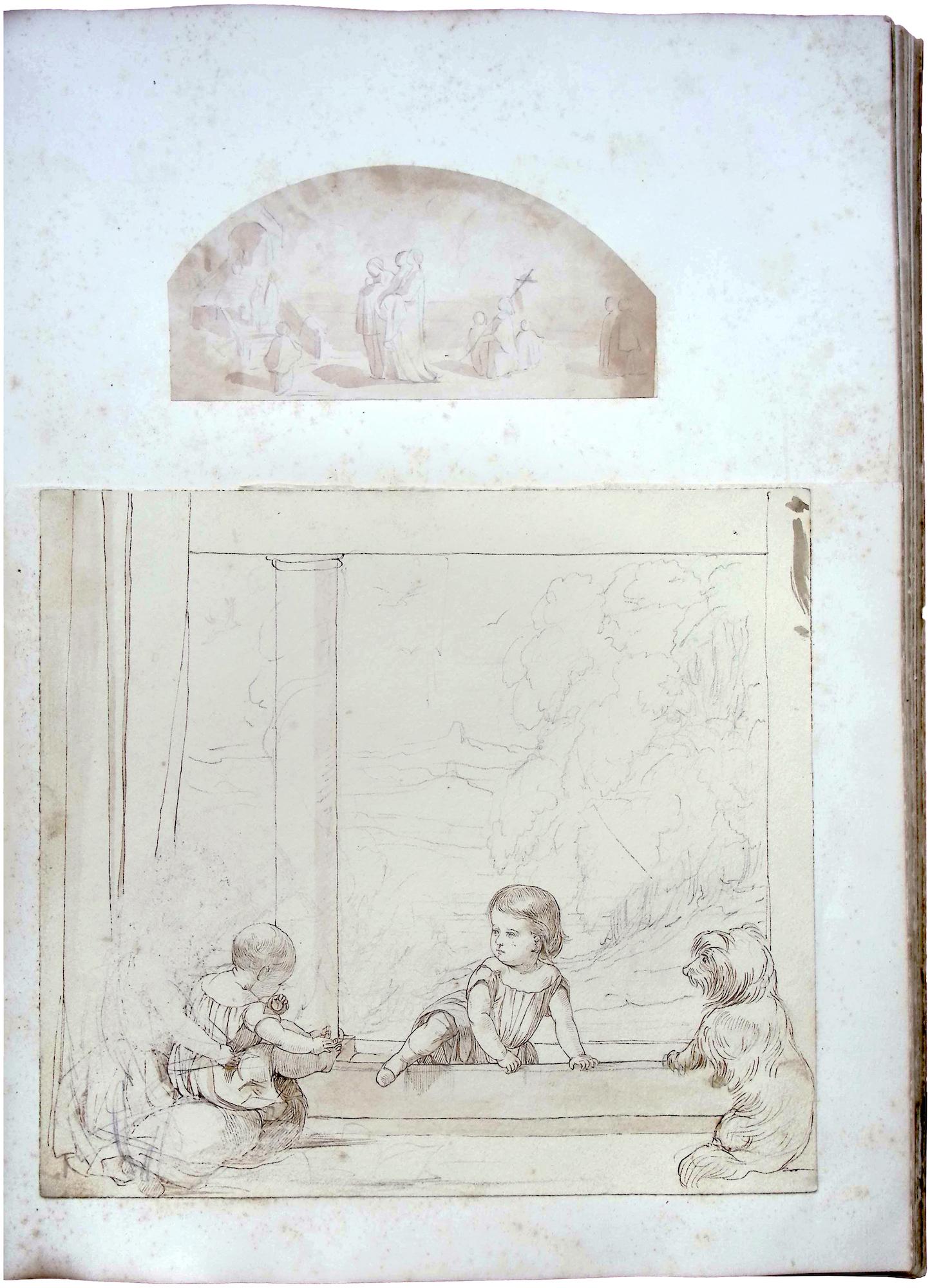
Untitled, Date unknown
Eleanor Vere Boyle (1825 – 1916) illustrated poetry and prose by some of the most popular authors of her time. She regularly drew and painted using ink and watercolour, sketching landscapes, animals and her children from life. She also made drawings from her imagination, often reflecting spiritual themes.
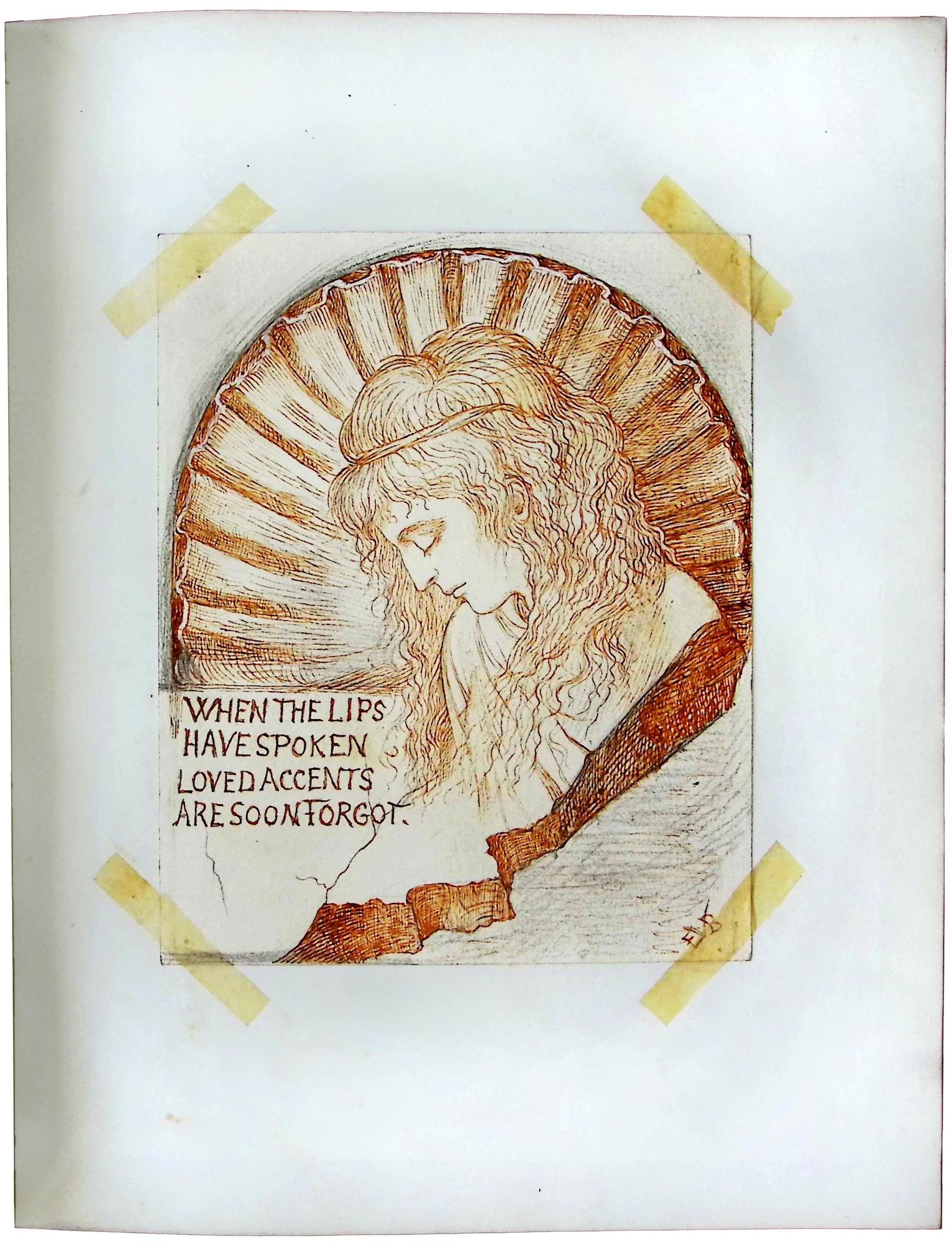
Untitled (illustration for A Book of Heavenly Birthdays), c. 1893
Eleanor Vere Boyle (1825 – 1916) illustrated poetry and prose by some of the most popular authors of her time. She regularly drew and painted using ink and watercolour, sketching landscapes, animals and her children from life. She also made drawings from her imagination, often reflecting spiritual themes. This drawing was used as some of the final illustrations printed in the artists' publication A Book of Heavenly Birthdays (1893, London Elliot Stock)
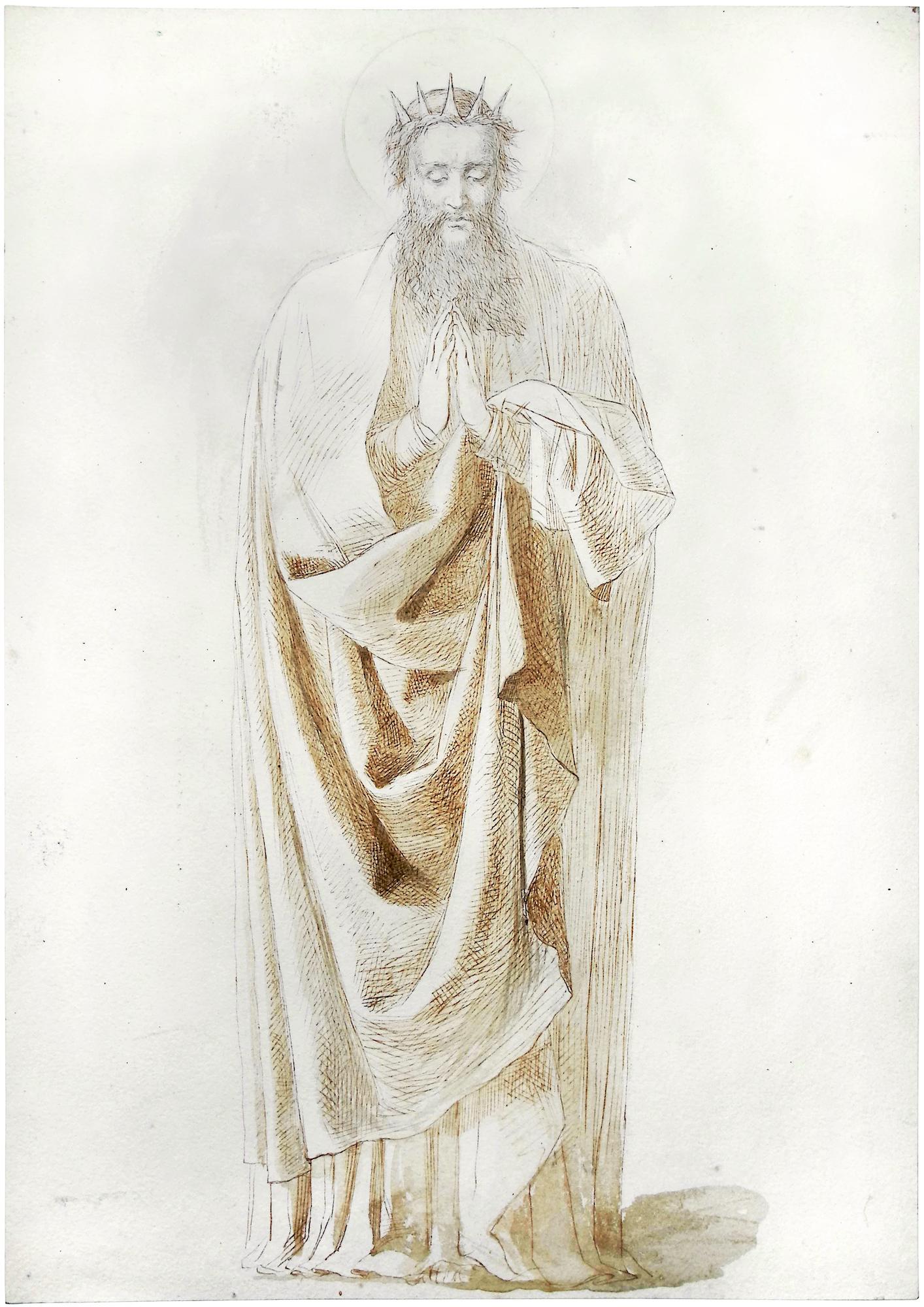
Untitled, Date unknown
Eleanor Vere Boyle (1825 – 1916) illustrated poetry and prose by some of the most popular authors of her time. She regularly drew and painted using ink and watercolour, sketching landscapes, animals and her children from life. She also made drawings from her imagination, often reflecting spiritual themes.
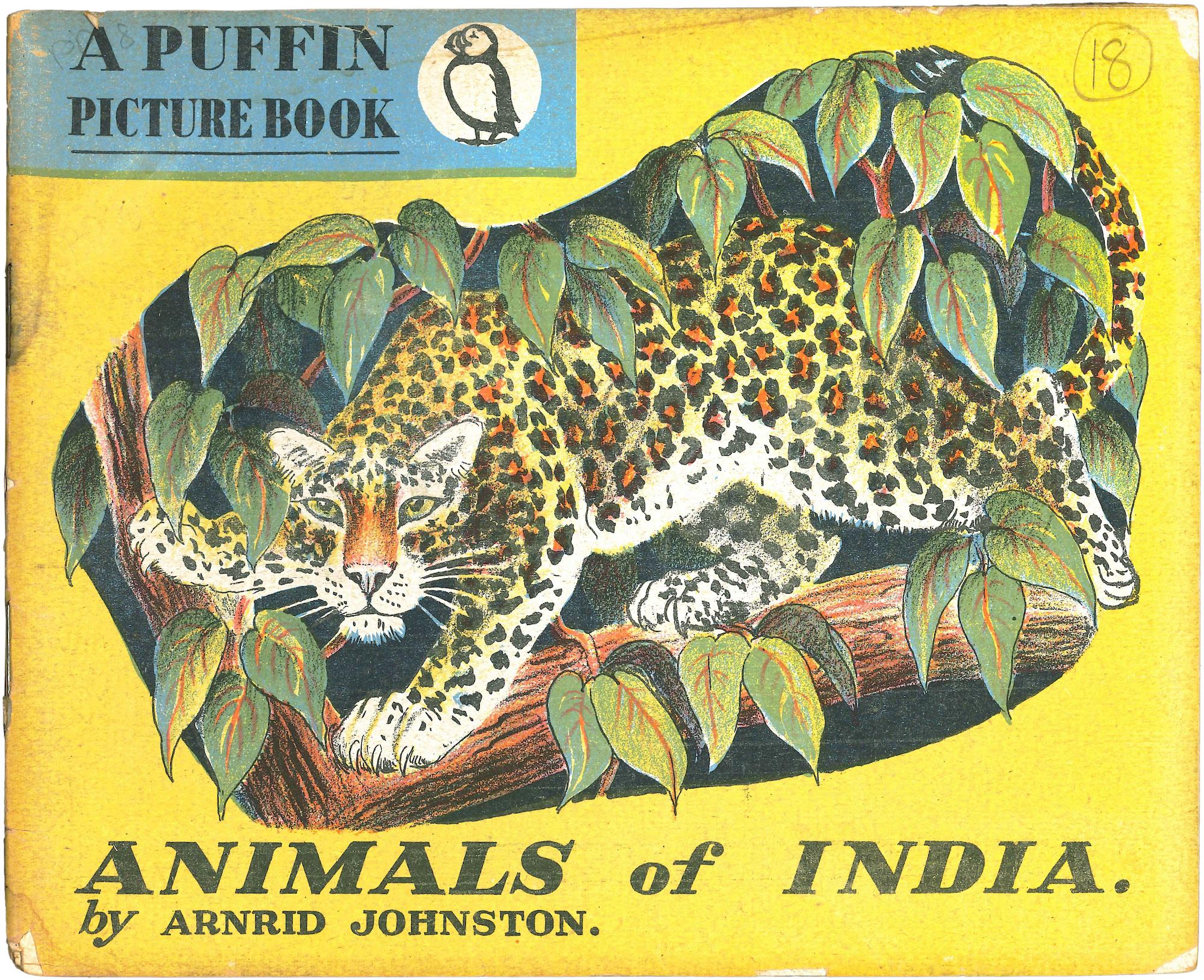
Animals of India, 1942
The Puffin Picture Books series was established by designer and editor Noel Carrington (1895-1989). In 1933, artist Pearl Binder (1904-1990) sent Carrington a package of Soviet children’s books. “They were produced by the million on very cheap paper, but the drawings were vigorous and the colour delightful” he later remembered. These books inspired Carrington to edit a series of affordable books that would encourage “the child’s awakening interest in its surroundings... I felt that colour was essential, and that artists could... be more successful in books of this nature than the camera”. Many artists and illustrators worked on the series, adapting their ways of working to lithographic printing and the Puffin Picture Book format. Most of the 120 books in the series were printed on one large sheet of paper: one side in colour and one in black-and-white. Each sheet was cut, folded and stapled to create a softcover book.
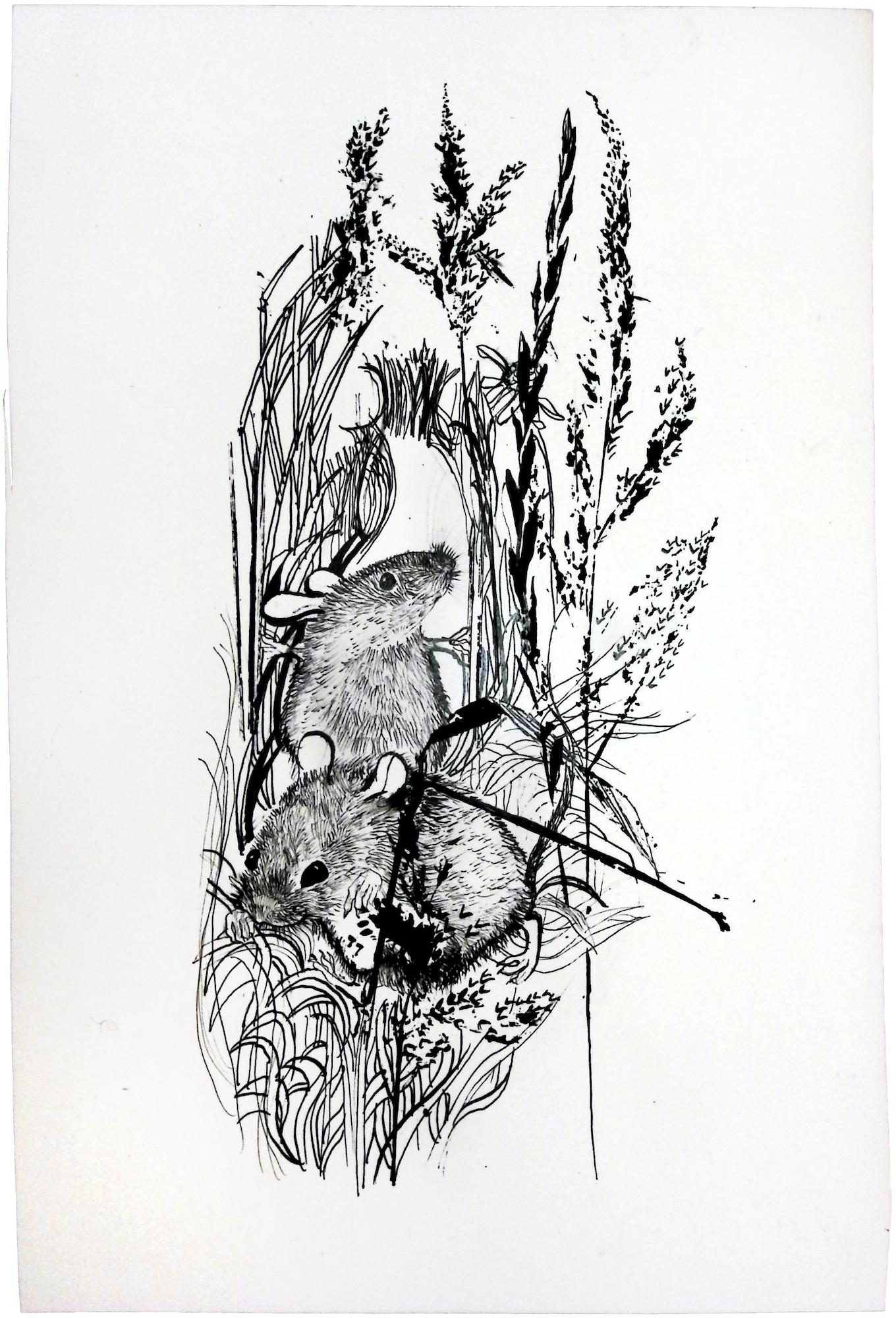
Illustration for A Pocket Full of Mice, c. 1984
British illustrator Janina Ede (1937-2018) created covers and illustrations for over 100 books from the 1950s to the 1980s. Many of her illustrations feature animals, which she drew from life.
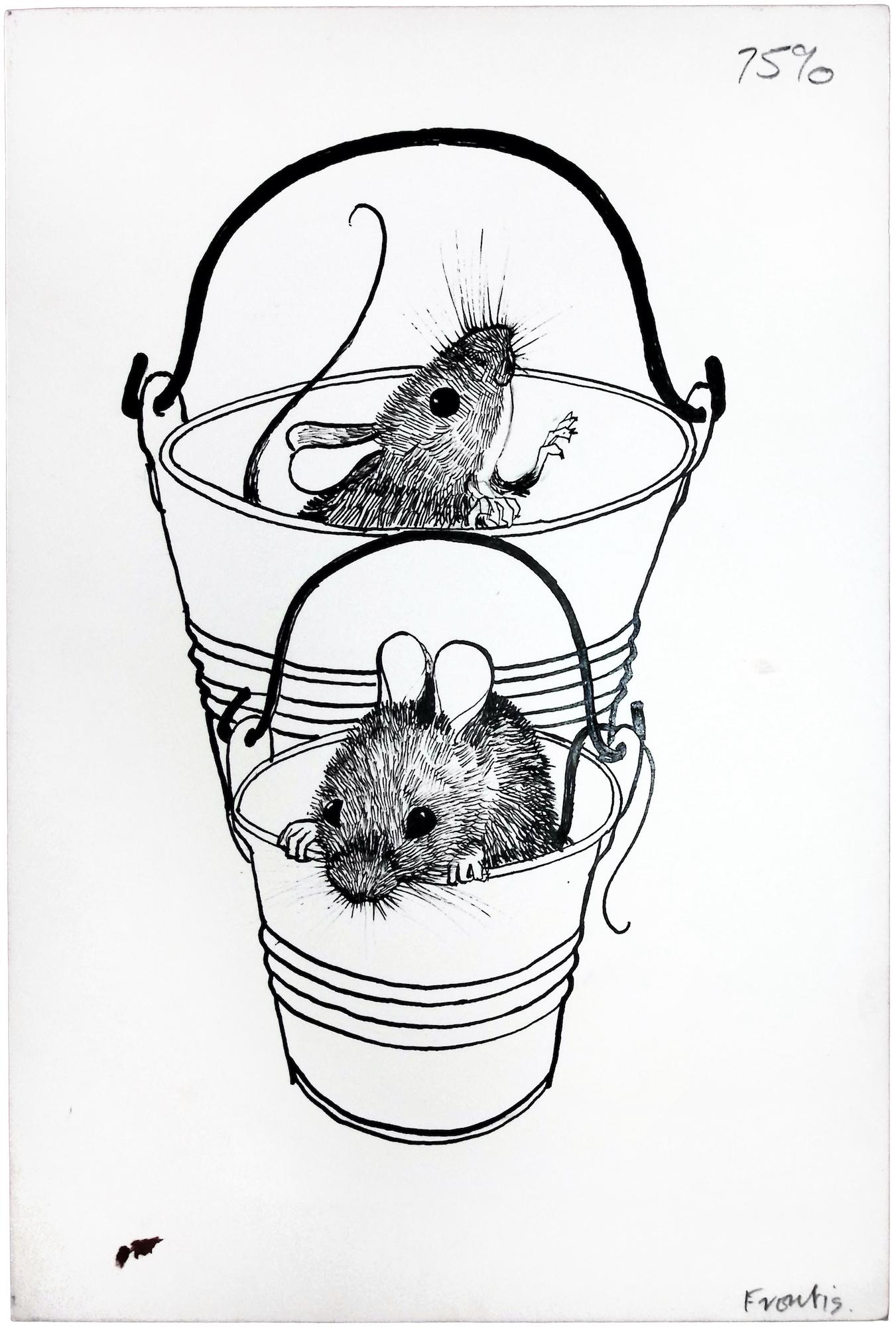
Untitled, c. 1986
British illustrator Janina Ede (1937-2018) created covers and illustrations for over 100 books from the 1950s to the 1980s. Many of her illustrations feature animals, which she drew from life.
![Snezhnaia kniga [The Snow Book]](https://cdn.sanity.io/images/n83t80i6/production/ac7aa5362234ac30d32360d4ee86c8ab5be0d685-2000x2732.jpg?auto=format&fit=max&q=75&w=2000)
Nikolai Tyrsa, Snezhnaia kniga [The Snow Book], 1926
Nikolai Tyrsa (1887-1942) was an illustrator and designer. This book follows a hare evading a fox, only to be caught by an owl. It was published in Leningrad (Saint Petersburg), Russia at a time when children’s books became a mass media phenomenon. Over a ten-year period, almost 10,000 titles were published in several editions of up to 200,000. Many of these books took experimental approaches to storytelling, design and layout.
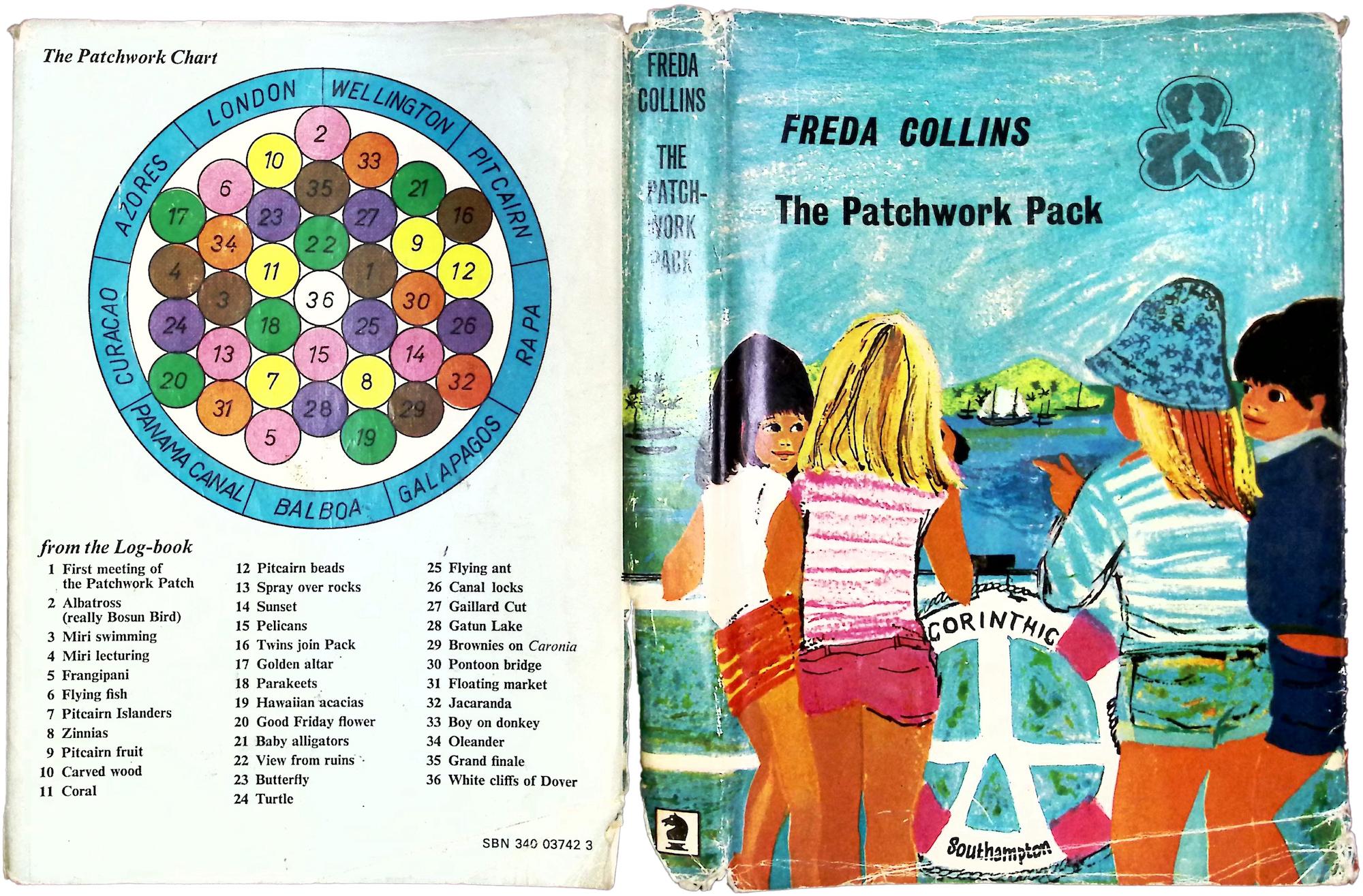
Cover jacket for "The Patchwork Pack", 1968
British illustrator Janina Ede (1937-2018) created covers and illustrations for over 100 books from the 1950s to the 1980s. In the 1960s, Ede began working on children’s books. The Patchwork Pack (1968) by Freda Collins is about a group of ‘Brownies’ – the name given to members of the worldwide girl-guiding movement.
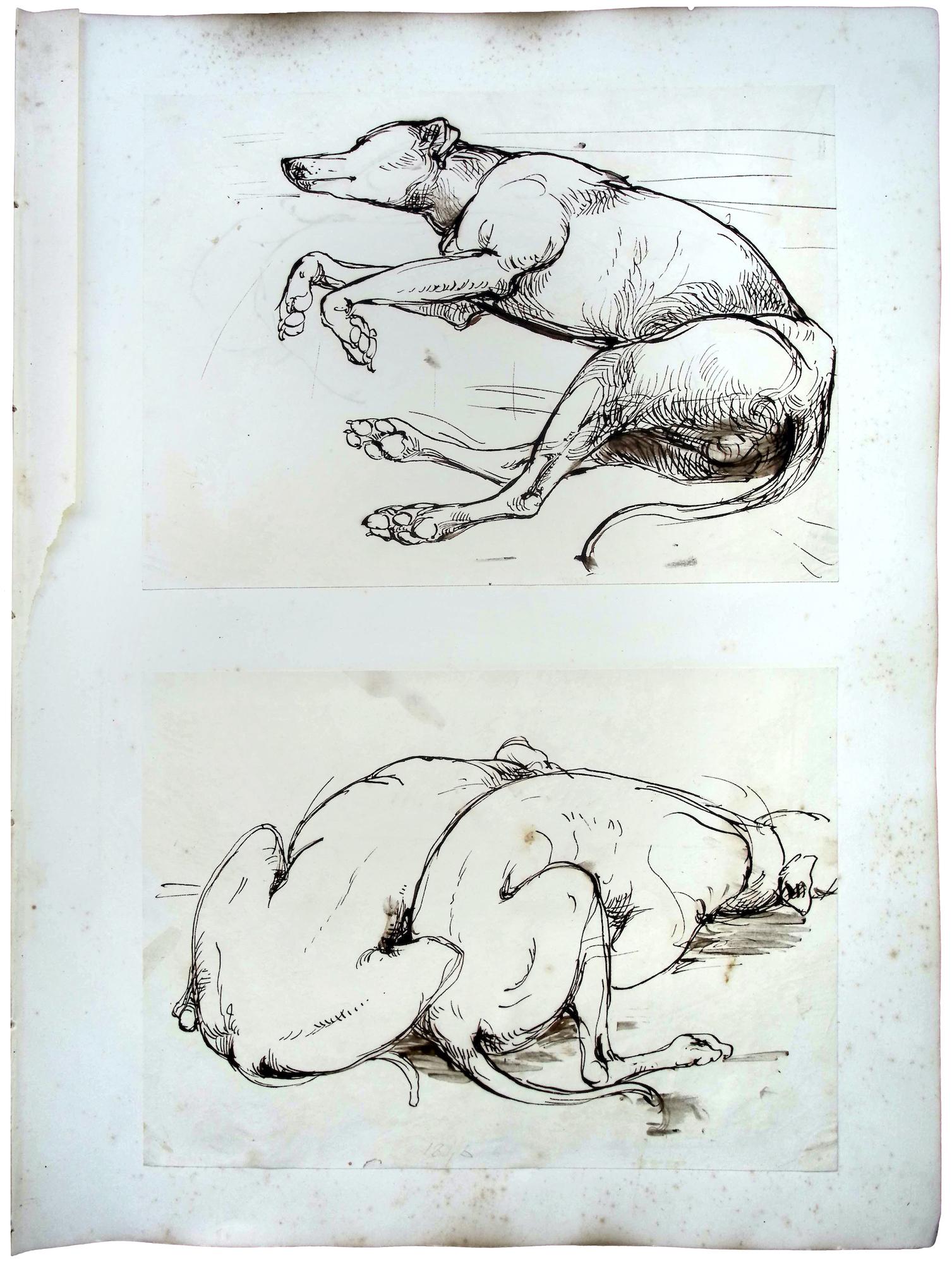
Untitled, 1846
Eleanor Vere Boyle (1825 – 1916) illustrated poetry and prose by some of the most popular authors of her time. She regularly drew and painted using ink and watercolour, sketching landscapes, animals and her children from life. She also made drawings from her imagination, often reflecting spiritual themes.
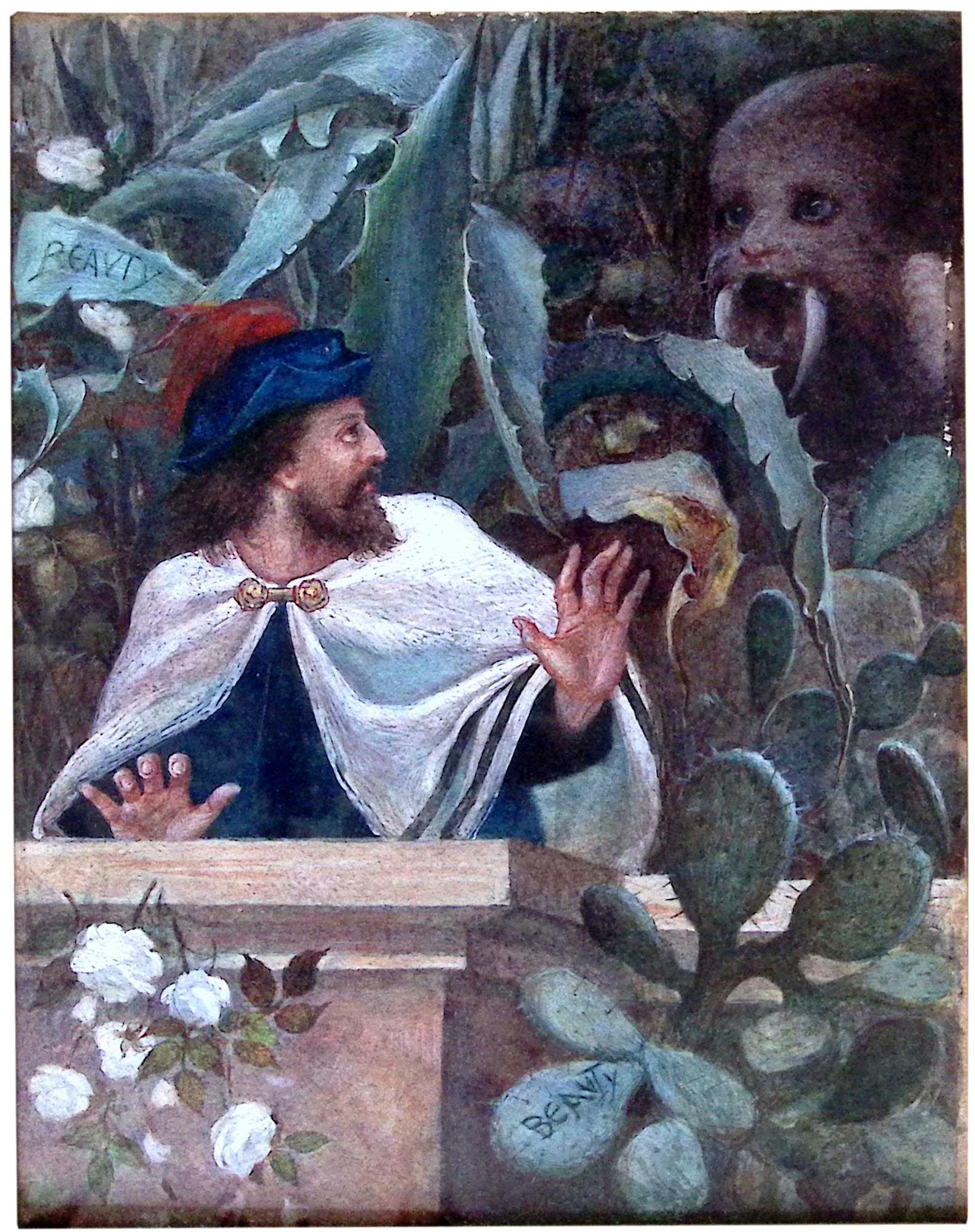
Illustration for Beauty and the Beast (the Merchant and the Beast), c. 1875
Eleanor Vere Boyle (1825 – 1916) illustrated poetry and prose by some of the most popular authors of her time. She regularly drew and painted using ink and watercolour, sketching landscapes, animals and her children from life. She also made drawings from her imagination, often reflecting spiritual themes. This illustration is from Boyle’s 1875 retelling of Beauty and the Beast, a fairy tale where a woman is imprisoned by a monster and falls in love with him. Unlike other illustrated versions before or since, Boyle gave her beast walrus-like tusks and flippers. In several of her illustrations, Boyle used shell gold – a mixture of finely ground gold powder and gum arabic (tree sap) that would have been stored in a shallow seashell. In the final publication, the caption for this illustration reads, "Upon the strange prickly leaves, some one had curiously carved Beauty's name ......... The Beast came near, and the roses fell from his grasp."
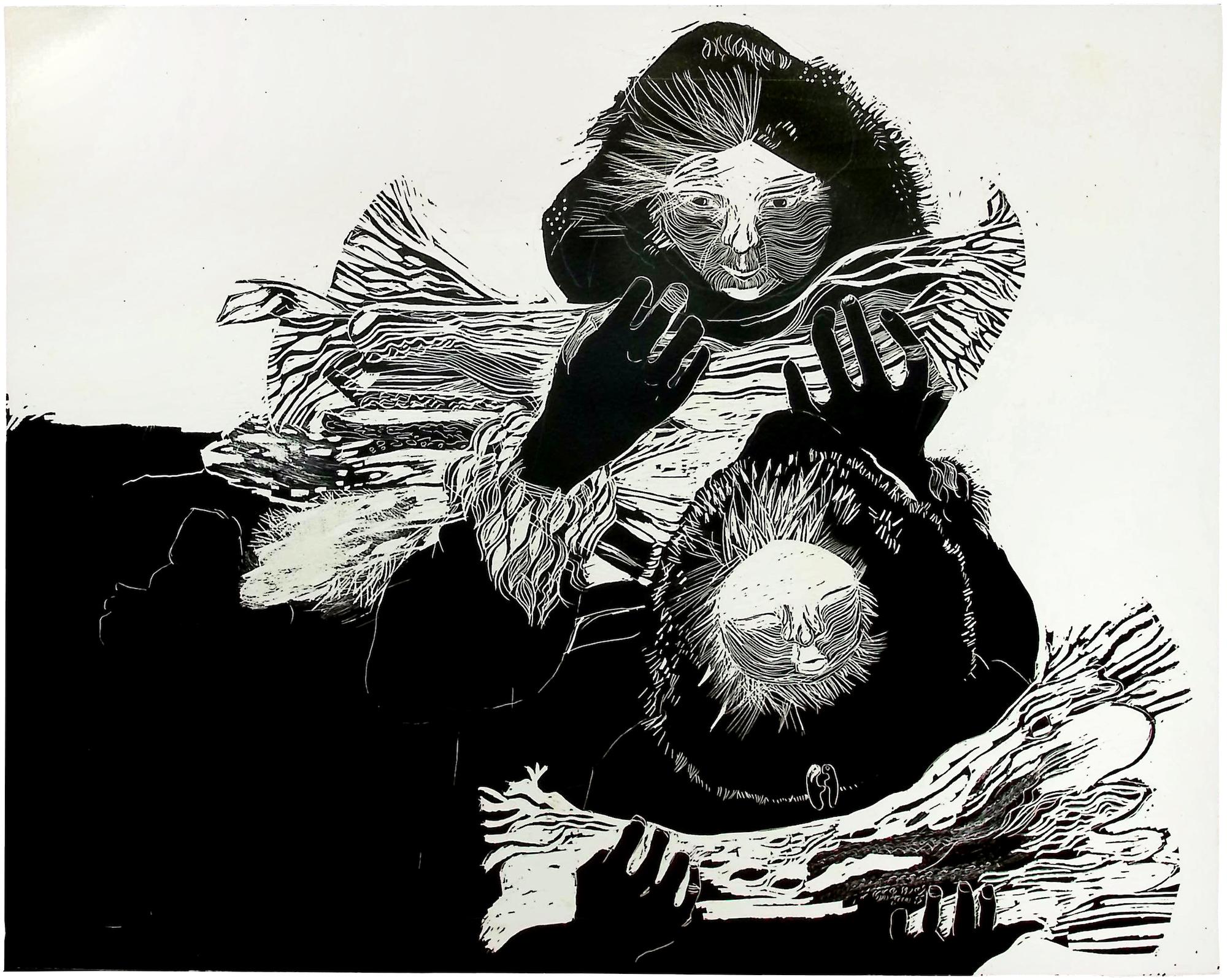
Untitled, c. 1977
British illustrator Janina Ede (1937-2018) created covers and illustrations for over 100 books from the 1950s to the 1980s. Her illustrations for Einar and the Seal (1977) used scraperboard, a material used to create a form of engraving. A board coated with a layer of dark ink is scraped to reveal a white or coloured area underneath.
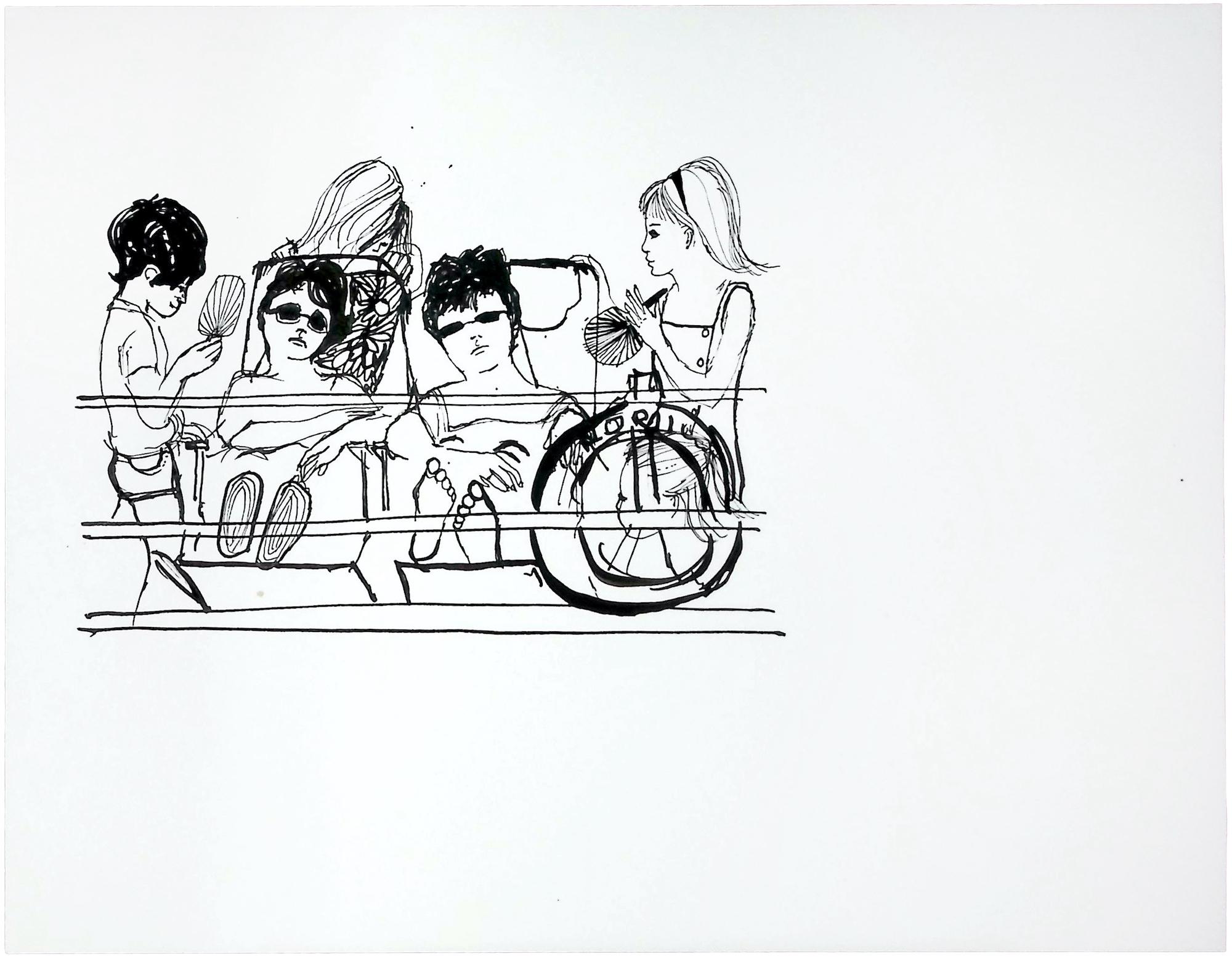
Untitled, c. 1968
British illustrator Janina Ede (1937-2018) created covers and illustrations for over 100 books from the 1950s to the 1980s. In the 1960s, Ede began working on children’s books. The Patchwork Pack (1968) by Freda Collins is about a group of ‘Brownies’ – the name given to members of the worldwide girl-guiding movement.
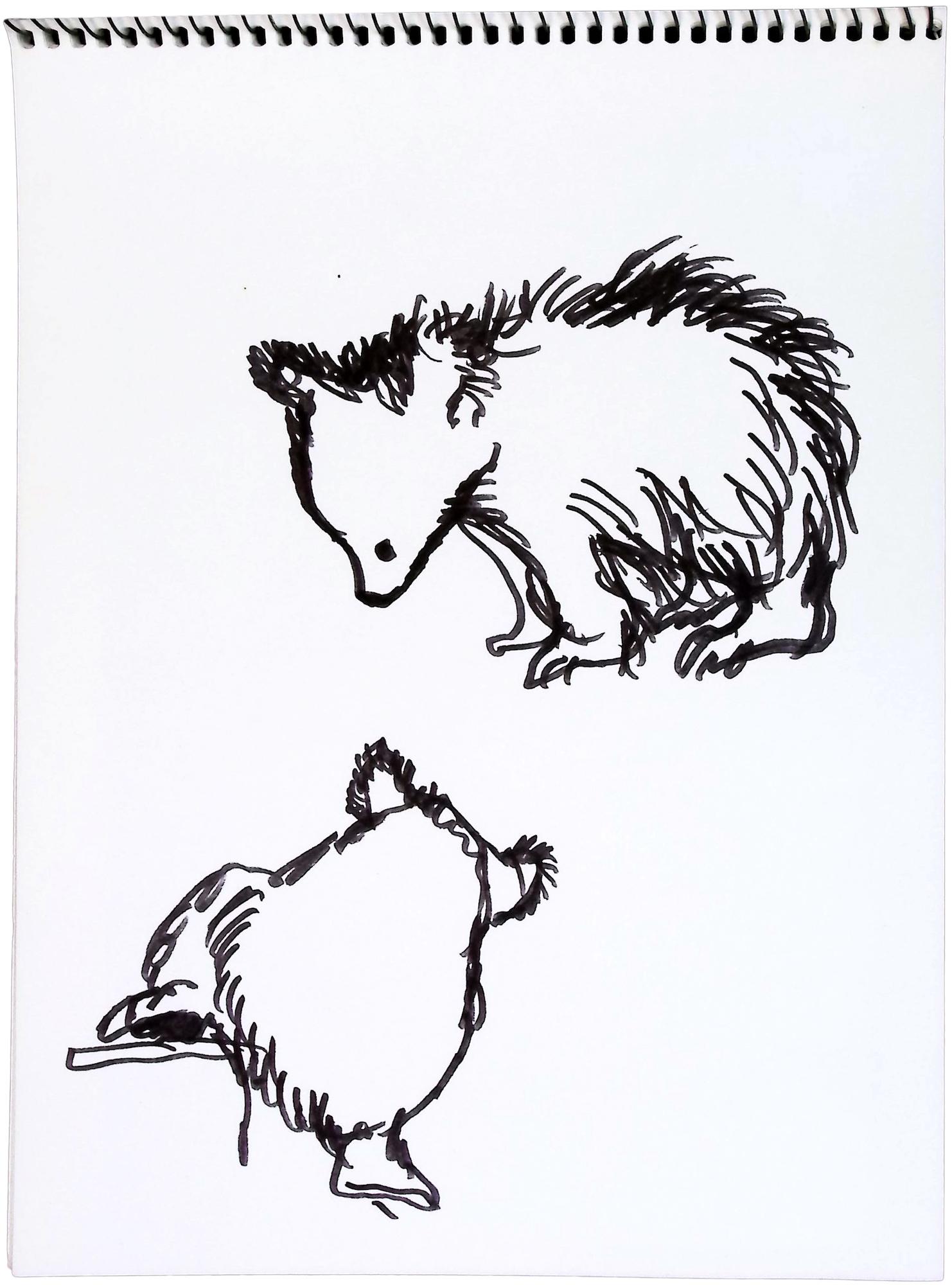
Untitled, Date unknown
British illustrator Janina Ede (1937-2018) created covers and illustrations for over 100 books from the 1950s to the 1980s. Many of her illustrations feature animals, which she drew from life.
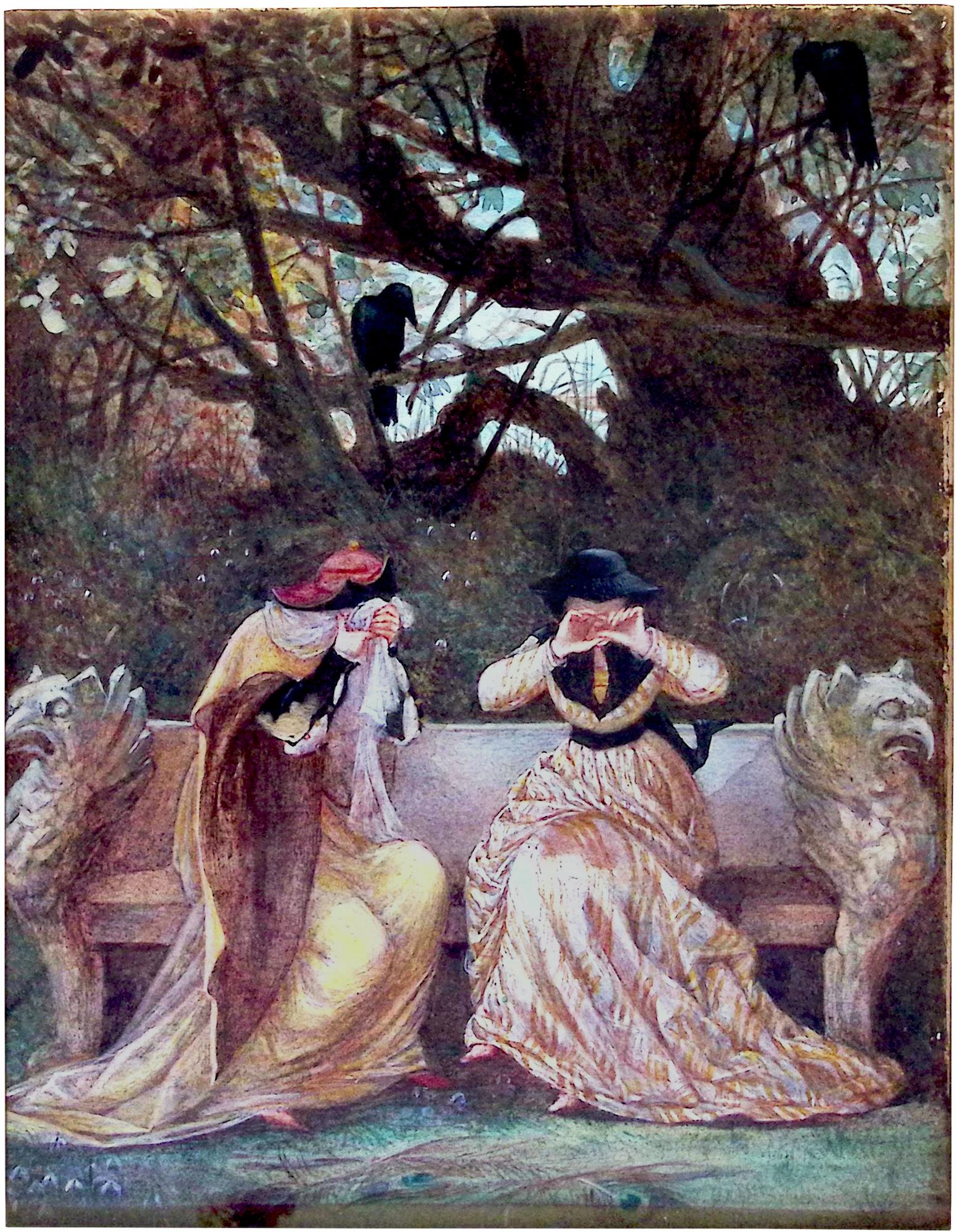
Illustration for Beauty and the Beast (two sisters weeping), c. 1875
Eleanor Vere Boyle (1825 – 1916) illustrated poetry and prose by some of the most popular authors of her time. She regularly drew and painted using ink and watercolour, sketching landscapes, animals and her children from life. She also made drawings from her imagination, often reflecting spiritual themes. This illustration is from Boyle’s 1875 retelling of Beauty and the Beast, a fairy tale where a woman is imprisoned by a monster and falls in love with him. Unlike other illustrated versions before or since, Boyle gave her beast walrus-like tusks and flippers. In several of her illustrations, Boyle used shell gold – a mixture of finely ground gold powder and gum arabic (tree sap) that would have been stored in a shallow seashell. In the final publication, the caption for this illustration reads, "Only the Raven in the brake, saw the sisters weep for rage, and heard them plot her death."
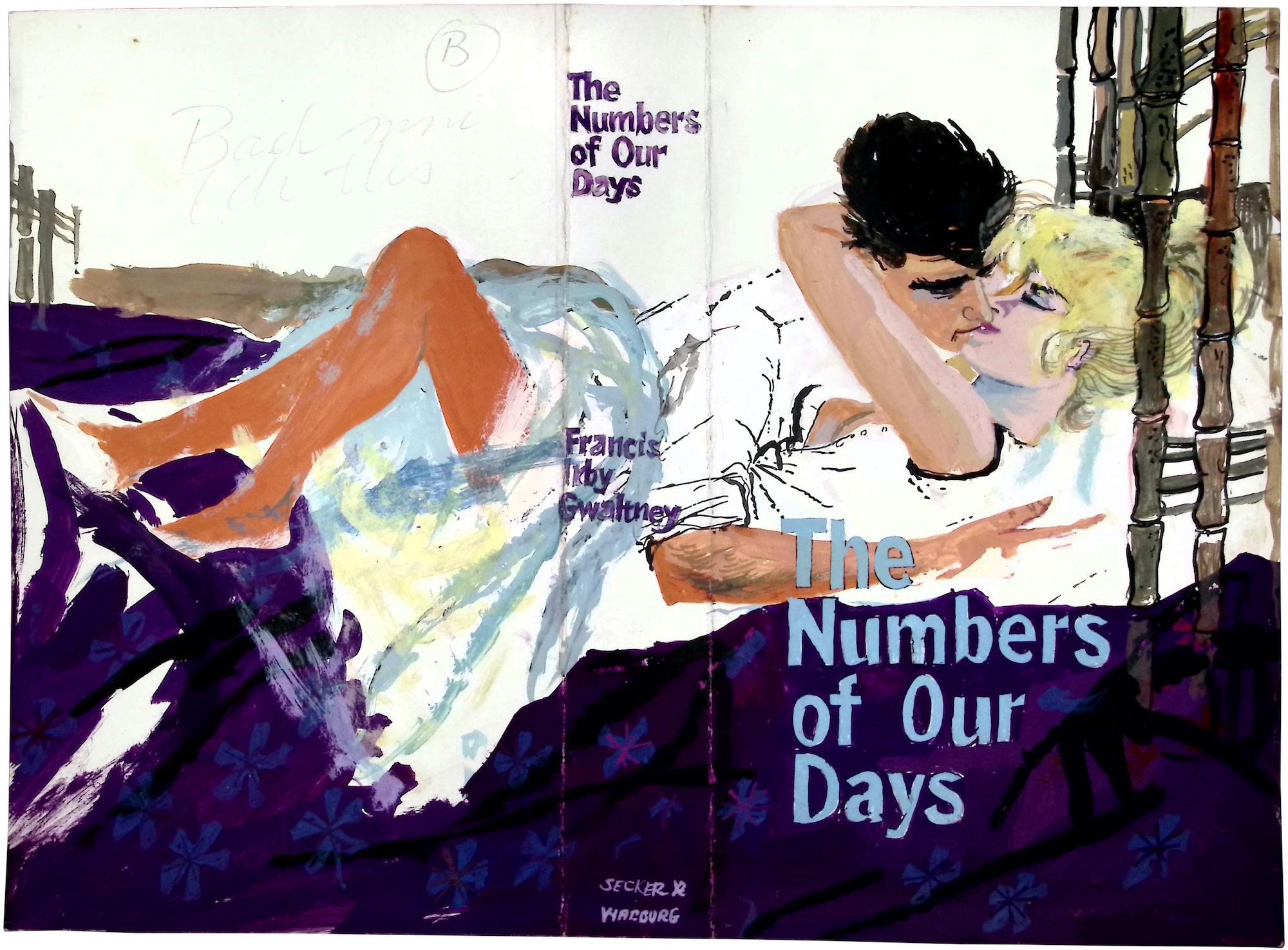
Untitled (rough cover illustration for "The Numbers of Our Days"), c. 1959
British illustrator Janina Ede (1937-2018) created covers and illustrations for over 100 books from the 1950s to the 1980s.
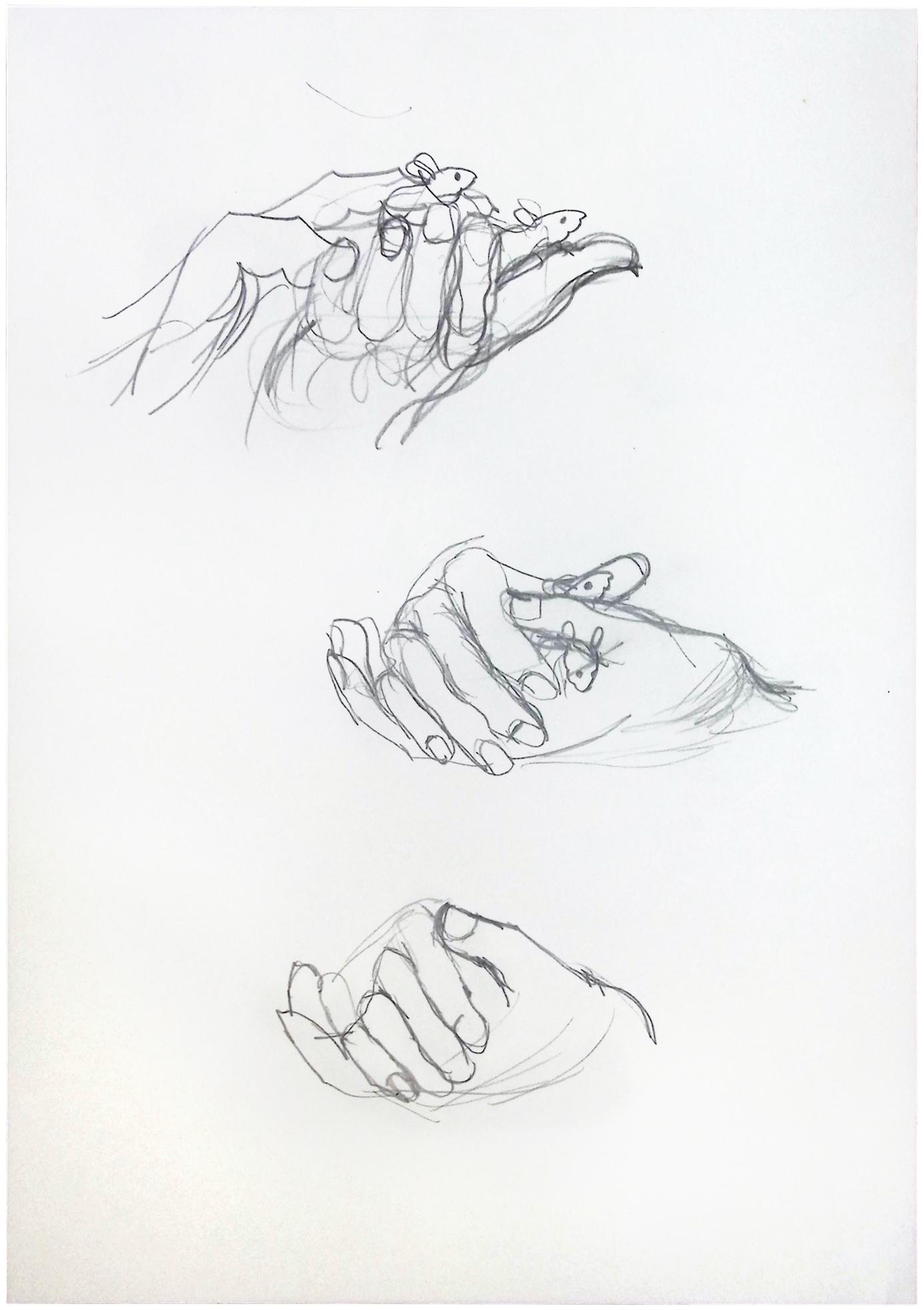
Untitled, Date unknown
British illustrator Janina Ede (1937-2018) created covers and illustrations for over 100 books from the 1950s to the 1980s. Many of her illustrations feature animals, which she drew from life.

Book cover proof for Colette's "The Other One", 1960
British illustrator Janina Ede (1937-2018) created covers and illustrations for over 100 books from the 1950s to the 1980s. She designed the covers of several books by French author and pioneer of autofiction Sidonie-Gabrielle Colette.
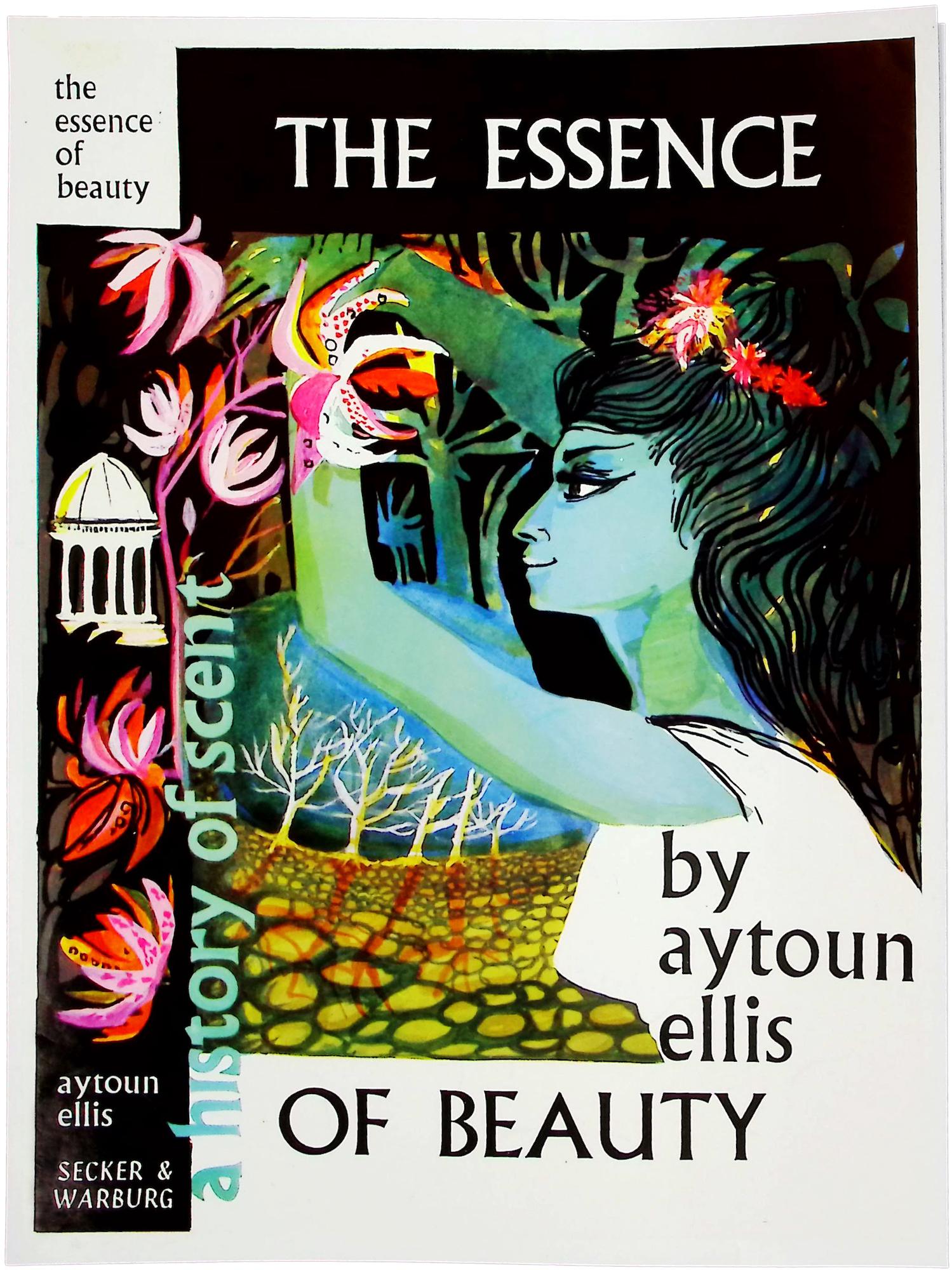
Cover jacket proof for "The Essence of Beauty", 1959
British illustrator Janina Ede (1937-2018) created covers and illustrations for over 100 books from the 1950s to the 1980s. This non-fiction book was an account of the history of perfume and cosmetics.
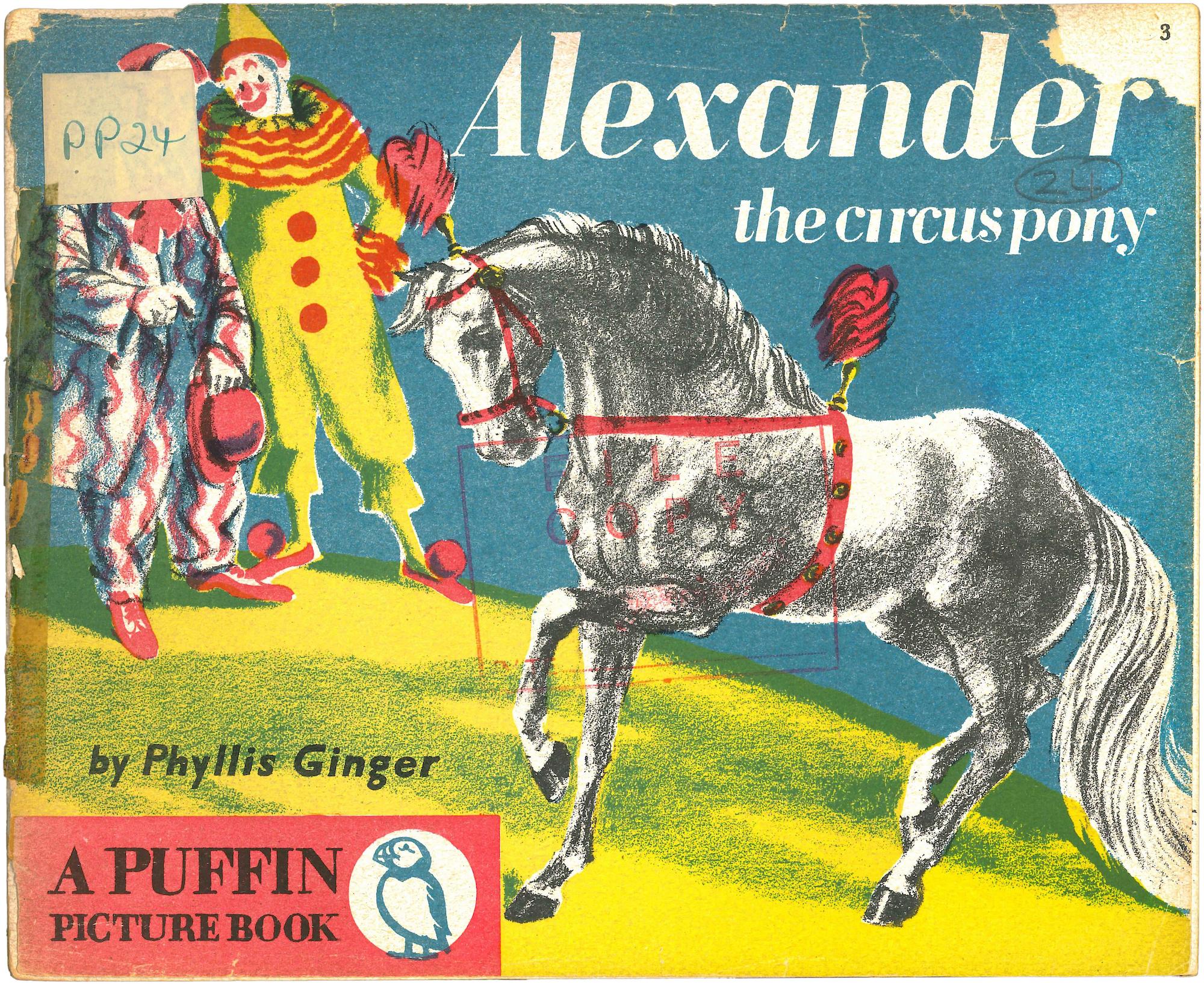
Alexander the circus pony, 1943
The Puffin Picture Books series was established by designer and editor Noel Carrington (1895-1989). In 1933, artist Pearl Binder (1904-1990) sent Carrington a package of Soviet children’s books. “They were produced by the million on very cheap paper, but the drawings were vigorous and the colour delightful” he later remembered. These books inspired Carrington to edit a series of affordable books that would encourage “the child’s awakening interest in its surroundings... I felt that colour was essential, and that artists could... be more successful in books of this nature than the camera”. Many artists and illustrators worked on the series, adapting their ways of working to lithographic printing and the Puffin Picture Book format. Most of the 120 books in the series were printed on one large sheet of paper: one side in colour and one in black-and-white. Each sheet was cut, folded and stapled to create a softcover book.
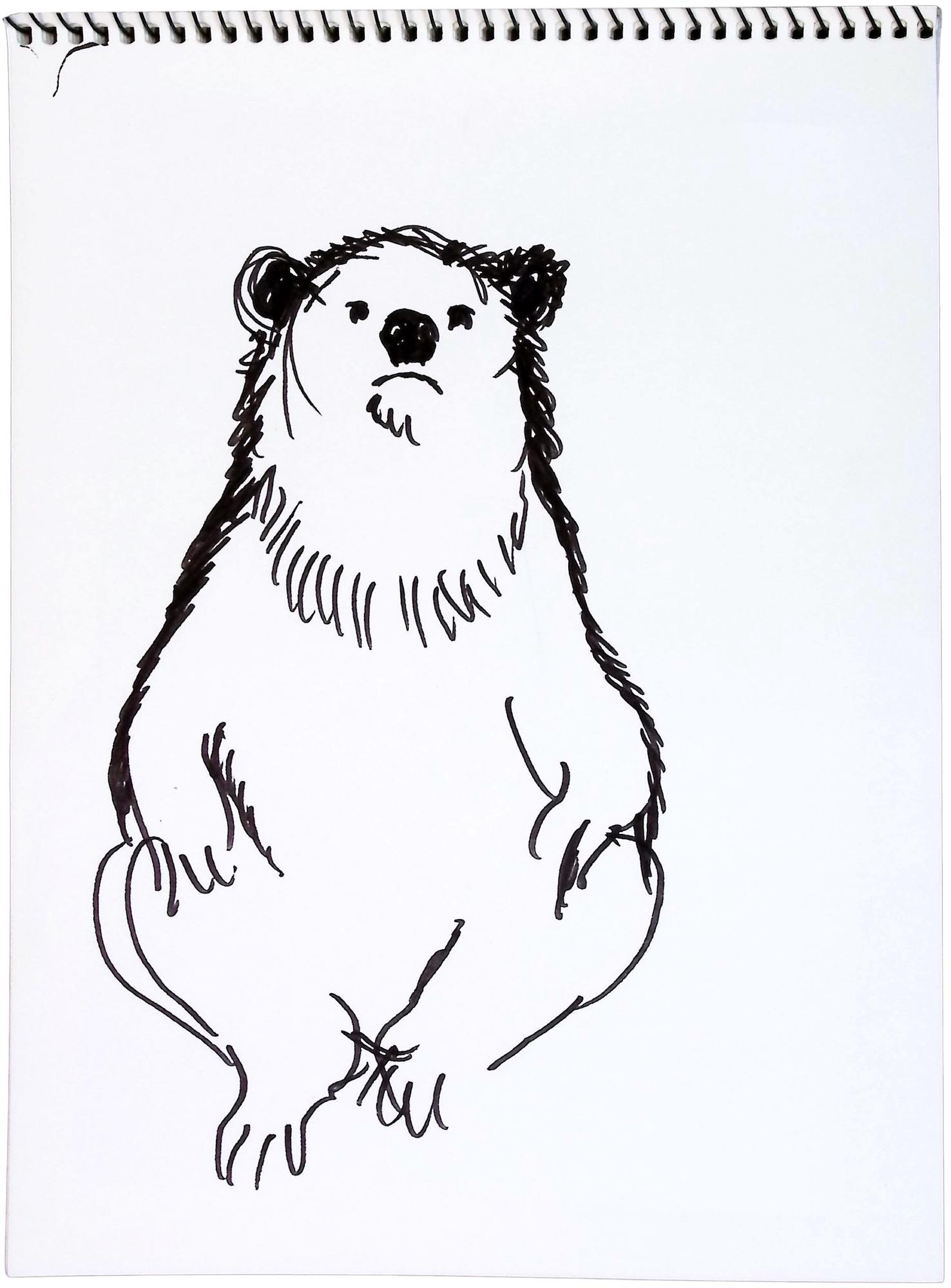
Untitled, Date unknown
British illustrator Janina Ede (1937-2018) created covers and illustrations for over 100 books from the 1950s to the 1980s. Many of her illustrations feature animals, which she drew from life.
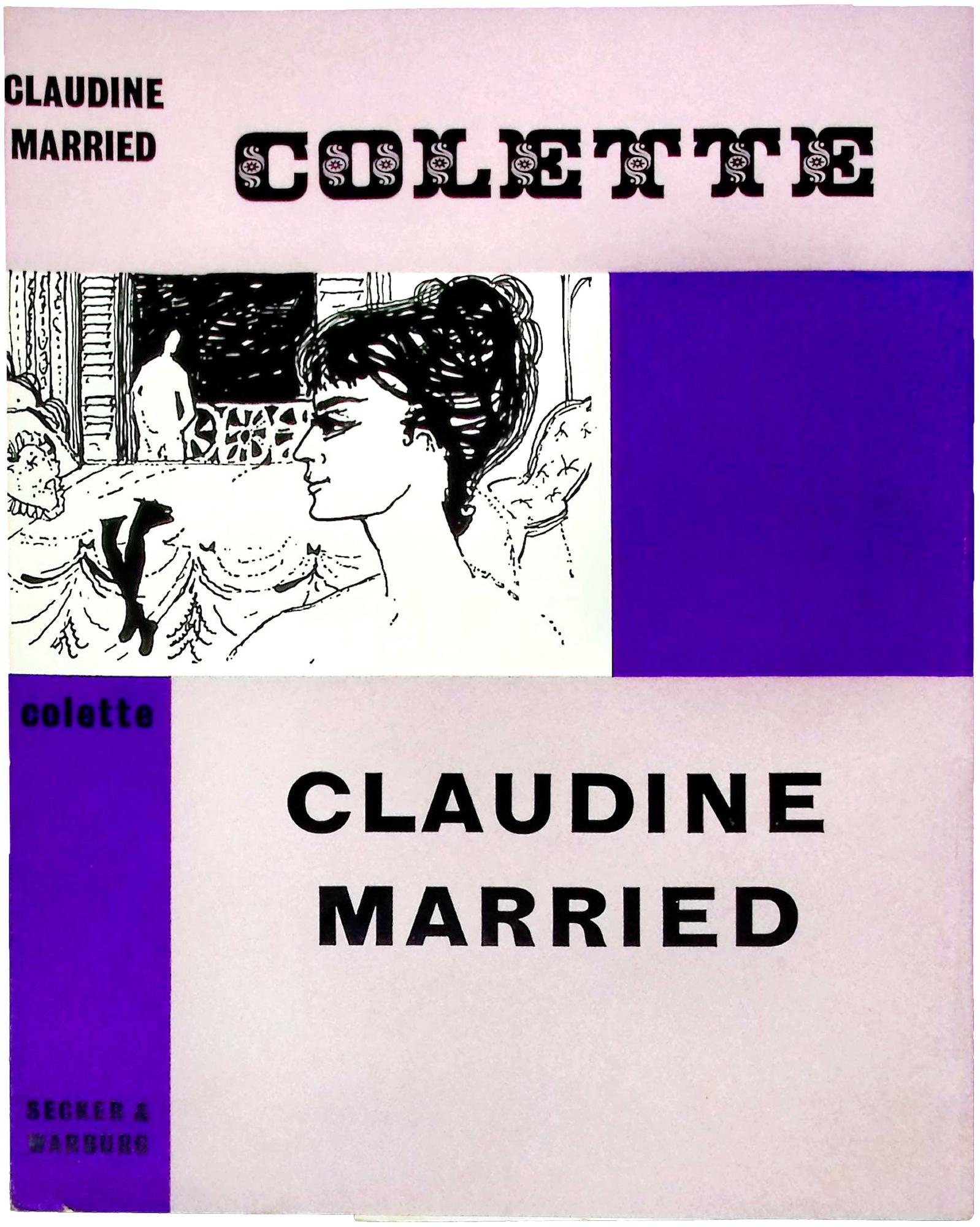
Book cover proof for Colette's "Claudine Married", 1960
British illustrator Janina Ede (1937-2018) created covers and illustrations for over 100 books from the 1950s to the 1980s. She designed the covers of several books by French author and pioneer of autofiction Sidonie-Gabrielle Colette.
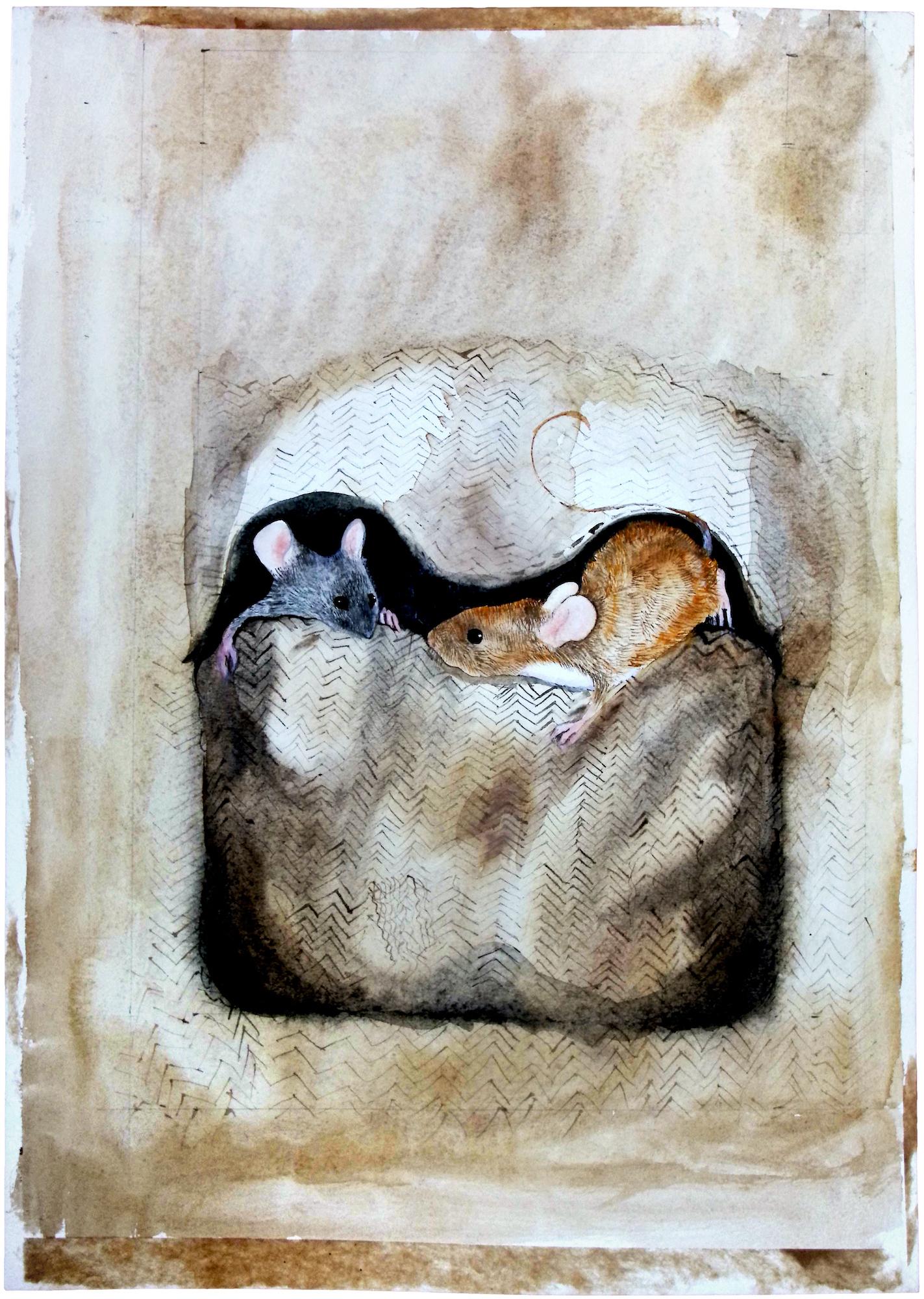
Draft cover illustration for A Pocket Full of Mice , c. 1984
British illustrator Janina Ede (1937-2018) created covers and illustrations for over 100 books from the 1950s to the 1980s. Many of her illustrations feature animals, which she drew from life.
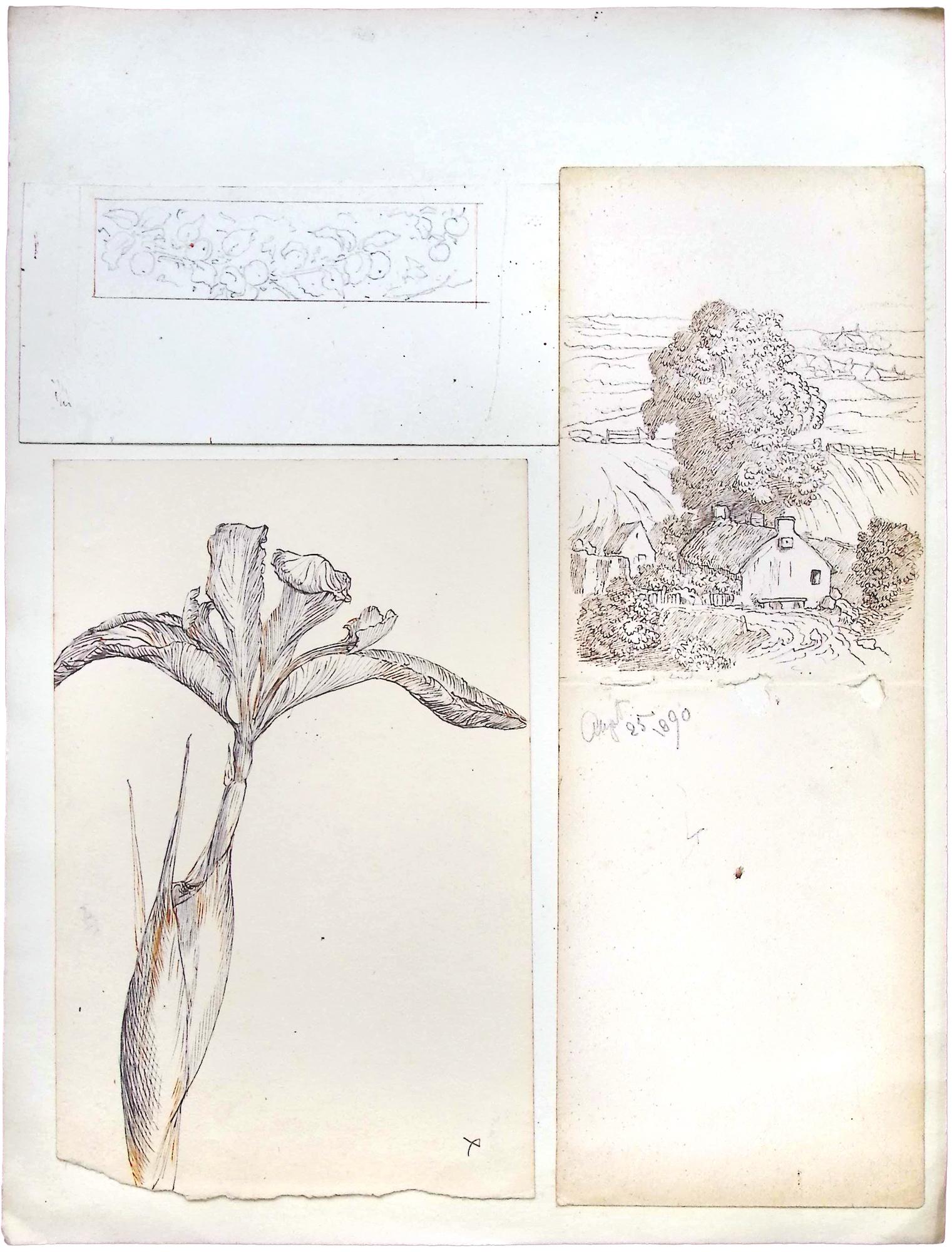
Untitled, Unknown date and 1890
Eleanor Vere Boyle (1825 – 1916) illustrated poetry and prose by some of the most popular authors of her time. She regularly drew and painted using ink and watercolour, sketching landscapes, animals and her children from life. She also made drawings from her imagination, often reflecting spiritual themes.
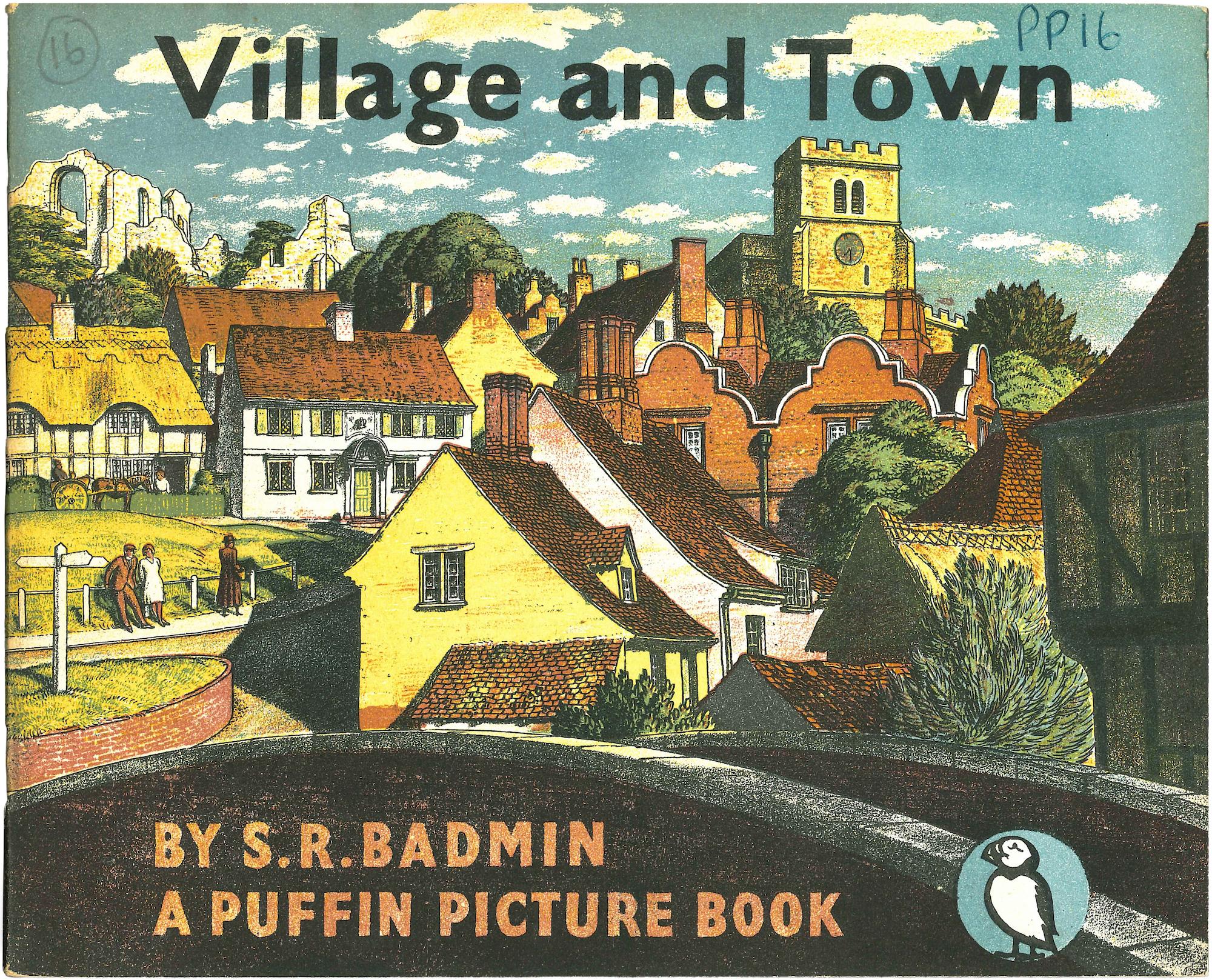
Village and Town, 1942
The Puffin Picture Books series was established by designer and editor Noel Carrington (1895-1989). In 1933, artist Pearl Binder (1904-1990) sent Carrington a package of Soviet children’s books. “They were produced by the million on very cheap paper, but the drawings were vigorous and the colour delightful” he later remembered. These books inspired Carrington to edit a series of affordable books that would encourage “the child’s awakening interest in its surroundings... I felt that colour was essential, and that artists could... be more successful in books of this nature than the camera”. Many artists and illustrators worked on the series, adapting their ways of working to lithographic printing and the Puffin Picture Book format. Most of the 120 books in the series were printed on one large sheet of paper: one side in colour and one in black-and-white. Each sheet was cut, folded and stapled to create a softcover book.
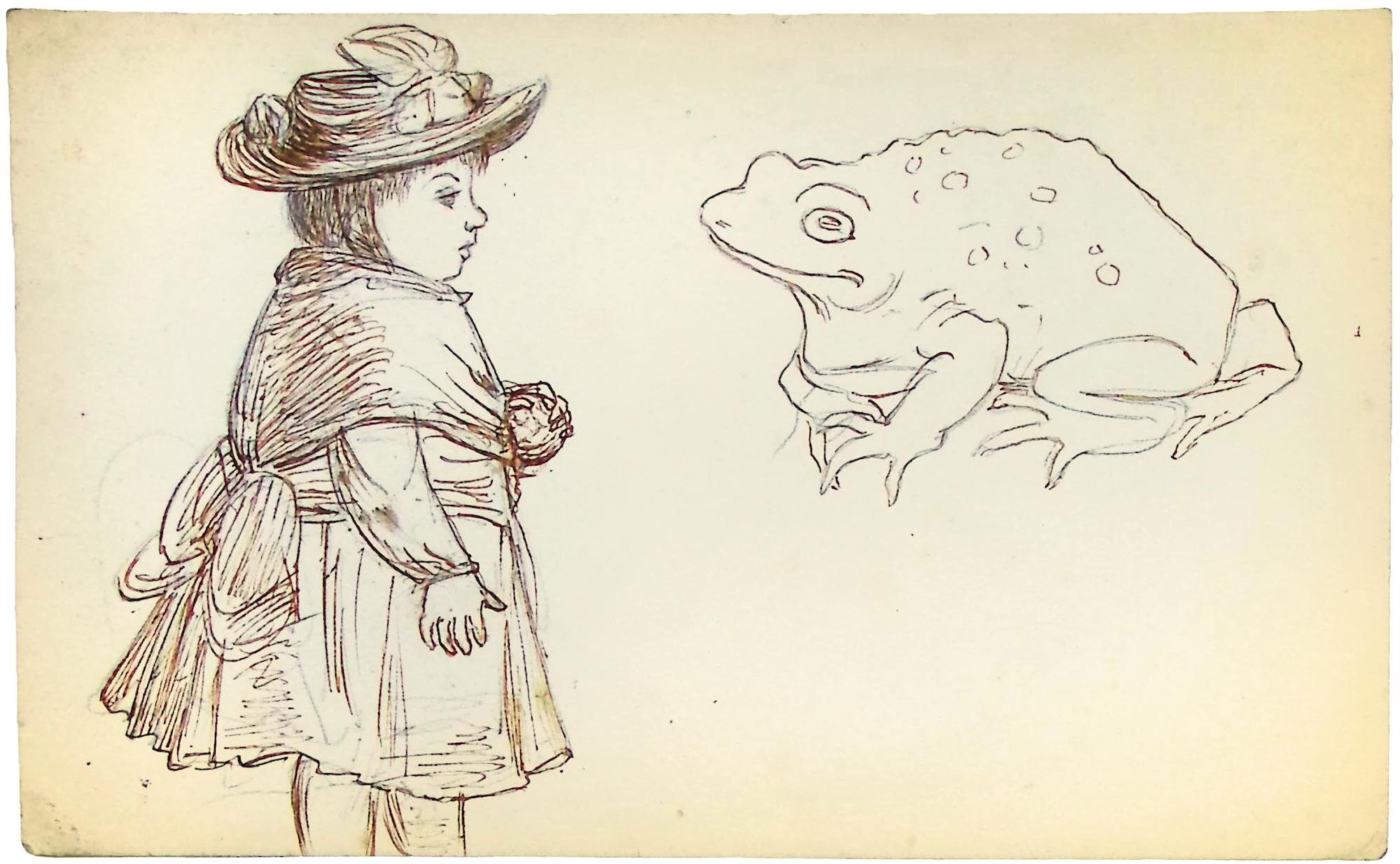
Untitled, Date unknown
Eleanor Vere Boyle (1825 – 1916) illustrated poetry and prose by some of the most popular authors of her time. She regularly drew and painted using ink and watercolour, sketching landscapes, animals and her children from life. She also made drawings from her imagination, often reflecting spiritual themes.
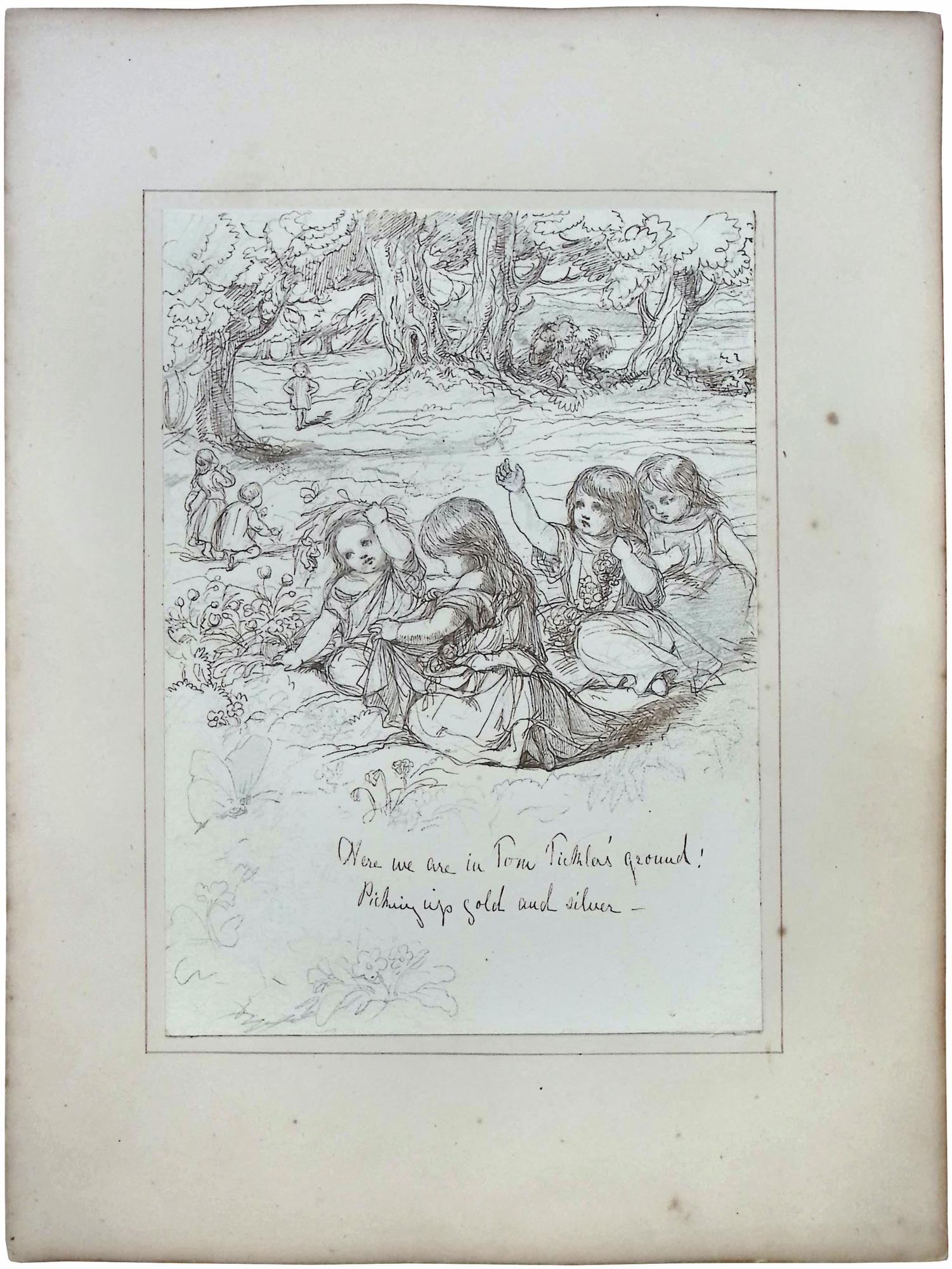
Untitled (illustration for Child's Play, 'Tom Tiddler's Ground'), c. 1851
Eleanor Vere Boyle (1825 – 1916) illustrated poetry and prose by some of the most popular authors of her time. She regularly drew and painted using ink and watercolour, sketching landscapes, animals and her children from life. She also made drawings from her imagination, often reflecting spiritual themes. This illustration is from her first book, Child’s Play (1851). Boyle provided her publishers with black and white drawings that were then converted into etchings by the printer. These were later reproduced as lithographs, in colours chosen by Boyle.
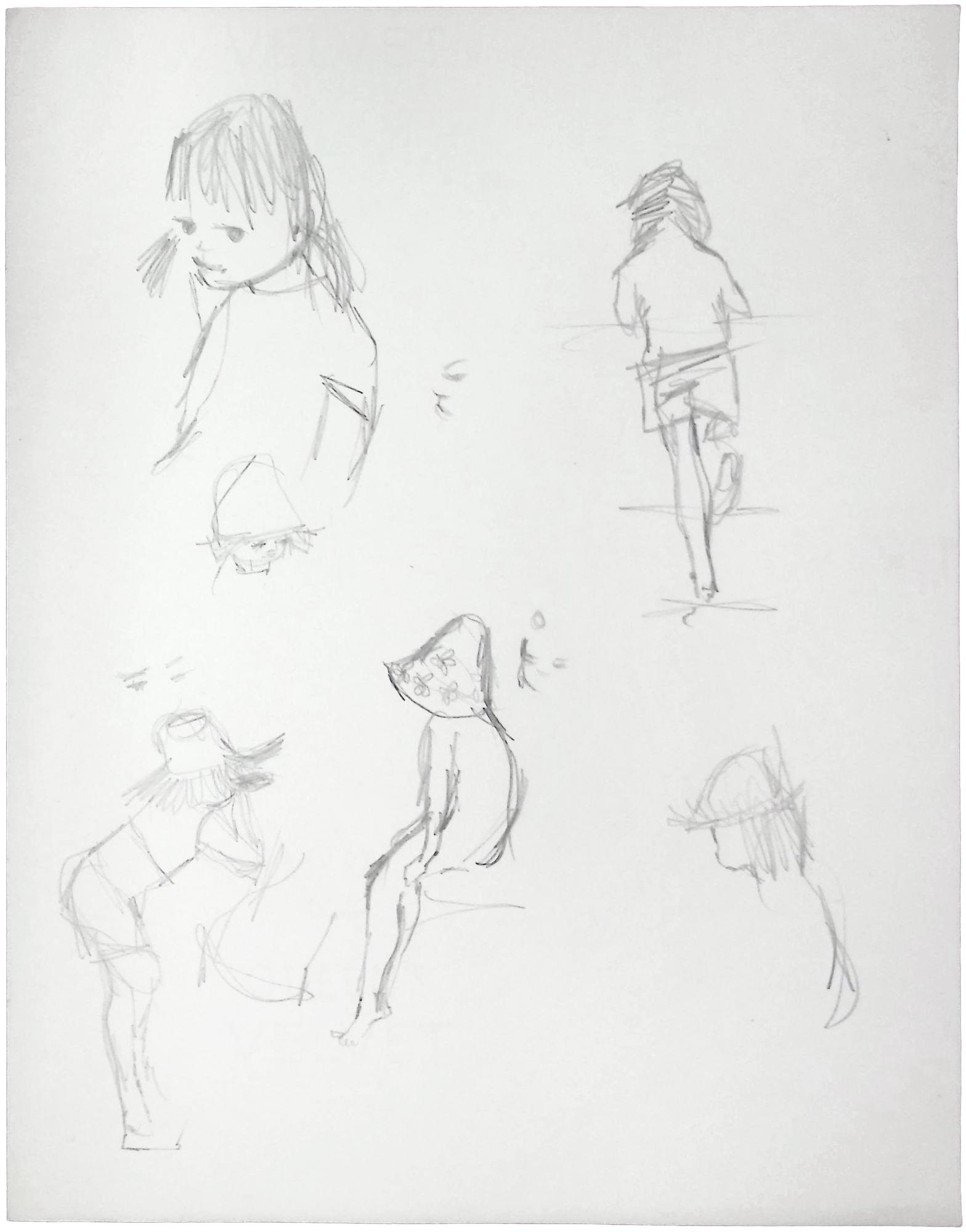
Untitled, c. 1968
British illustrator Janina Ede (1937-2018) created covers and illustrations for over 100 books from the 1950s to the 1980s. In the 1960s, Ede began working on children’s books. The Patchwork Pack (1968) by Freda Collins is about a group of ‘Brownies’ – the name given to members of the worldwide girl-guiding movement.
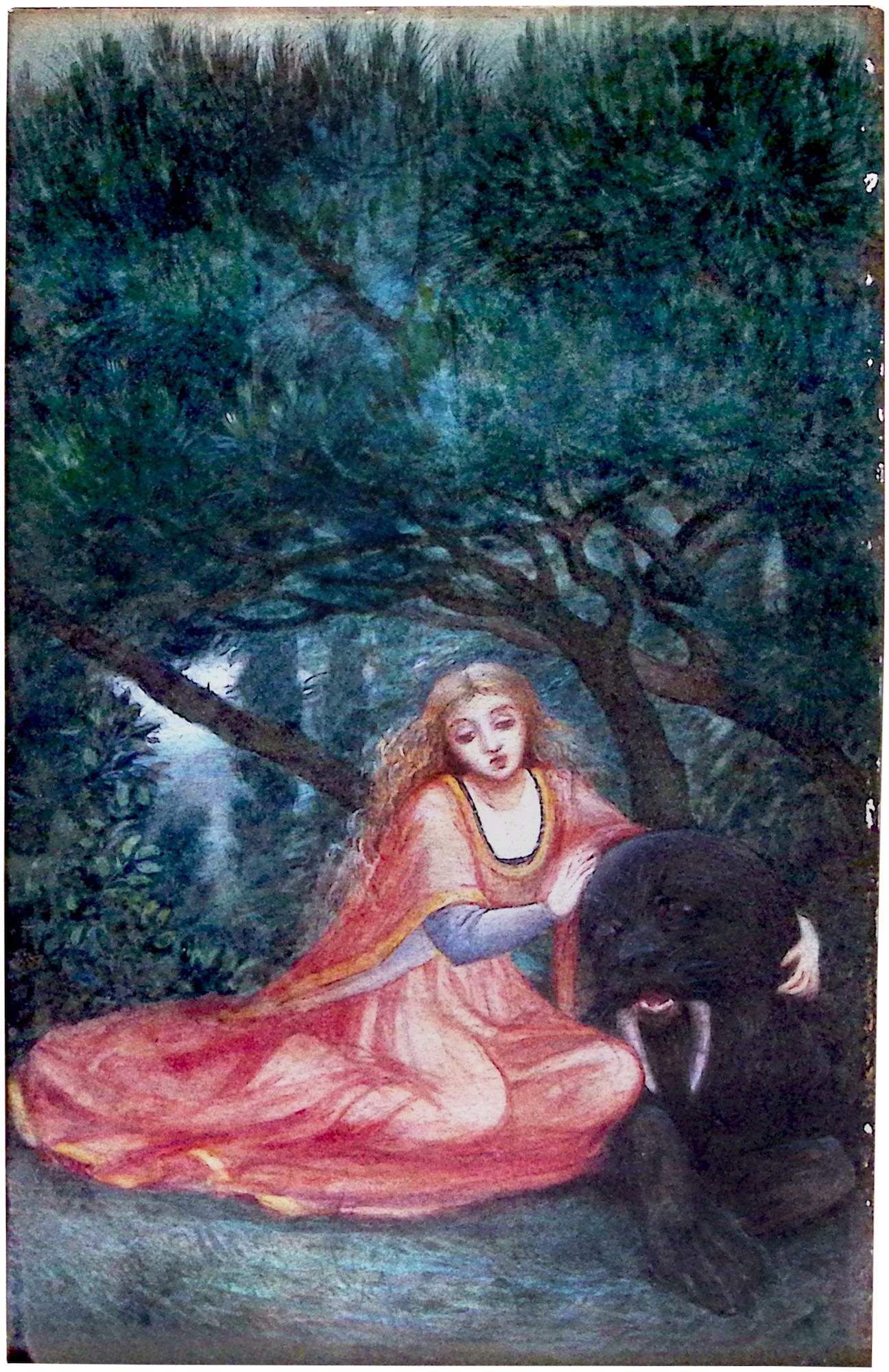
Illustration for Beauty and the Beast (Beauty embracing the dying Beast), c. 1875
Eleanor Vere Boyle (1825 – 1916) illustrated poetry and prose by some of the most popular authors of her time. She regularly drew and painted using ink and watercolour, sketching landscapes, animals and her children from life. She also made drawings from her imagination, often reflecting spiritual themes. This illustration is from Boyle’s 1875 retelling of Beauty and the Beast, a fairy tale where a woman is imprisoned by a monster and falls in love with him. Unlike other illustrated versions before or since, Boyle gave her beast walrus-like tusks and flippers. In several of her illustrations, Boyle used shell gold – a mixture of finely ground gold powder and gum arabic (tree sap) that would have been stored in a shallow seashell. In the final publication, the caption for this illustration reads, "Ah dear Beast, she said: Alas that my unkindness should thus slay thee."
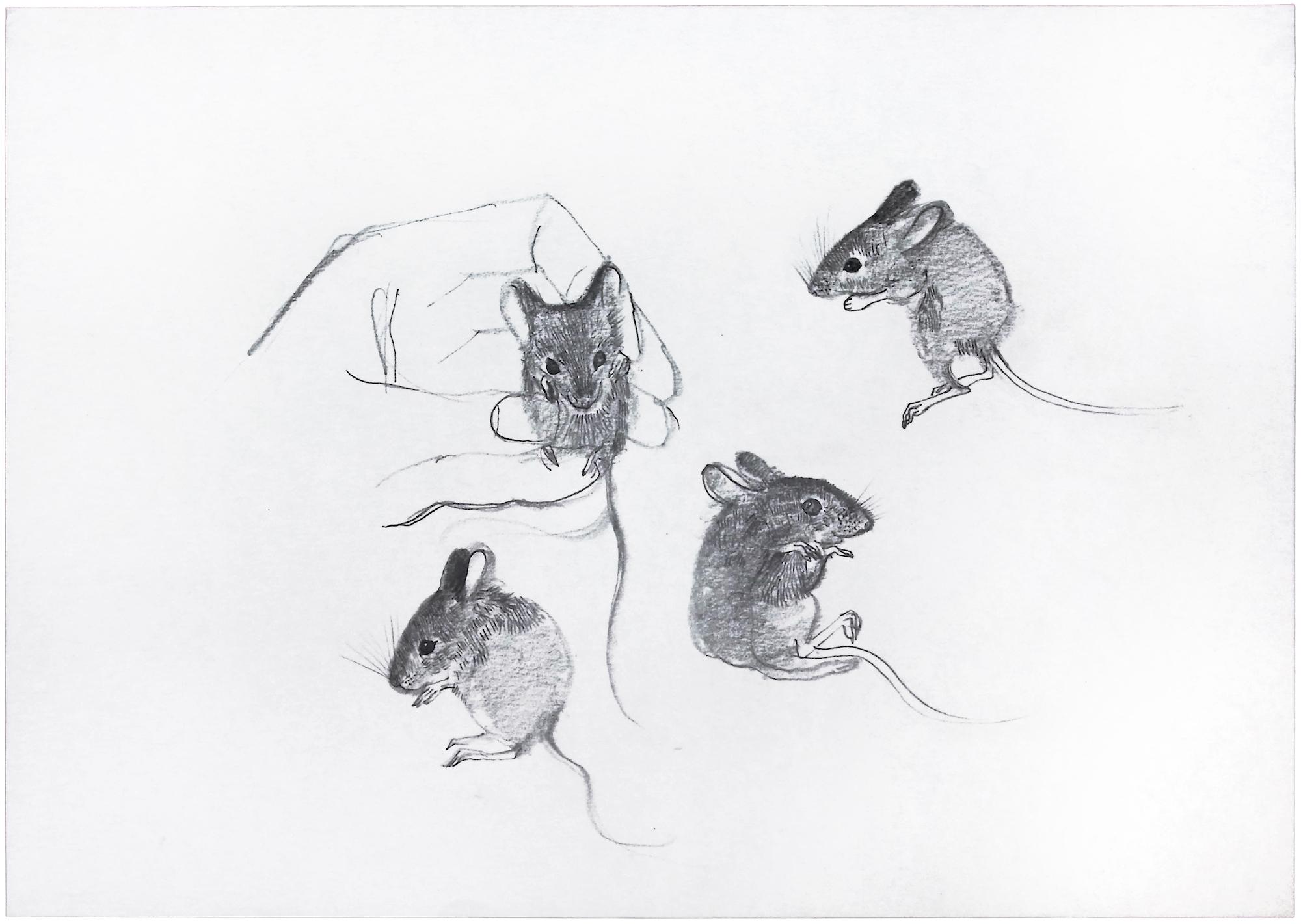
Untitled, Date unknown
British illustrator Janina Ede (1937-2018) created covers and illustrations for over 100 books from the 1950s to the 1980s. Many of her illustrations feature animals, which she drew from life.
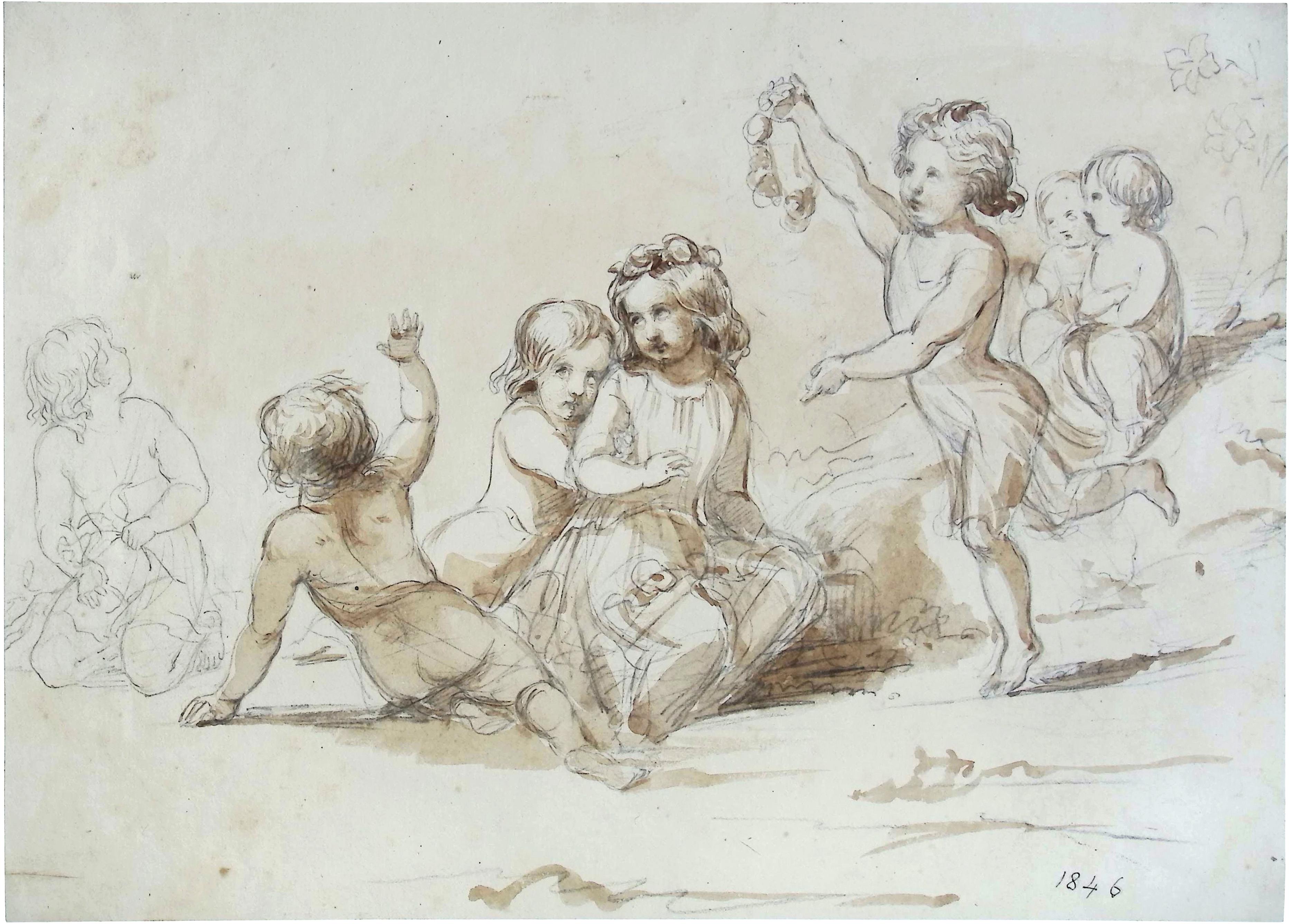
Untitled, 1846
Eleanor Vere Boyle (1825 – 1916) illustrated poetry and prose by some of the most popular authors of her time. She regularly drew and painted using ink and watercolour, sketching landscapes, animals and her children from life. She also made drawings from her imagination, often reflecting spiritual themes.
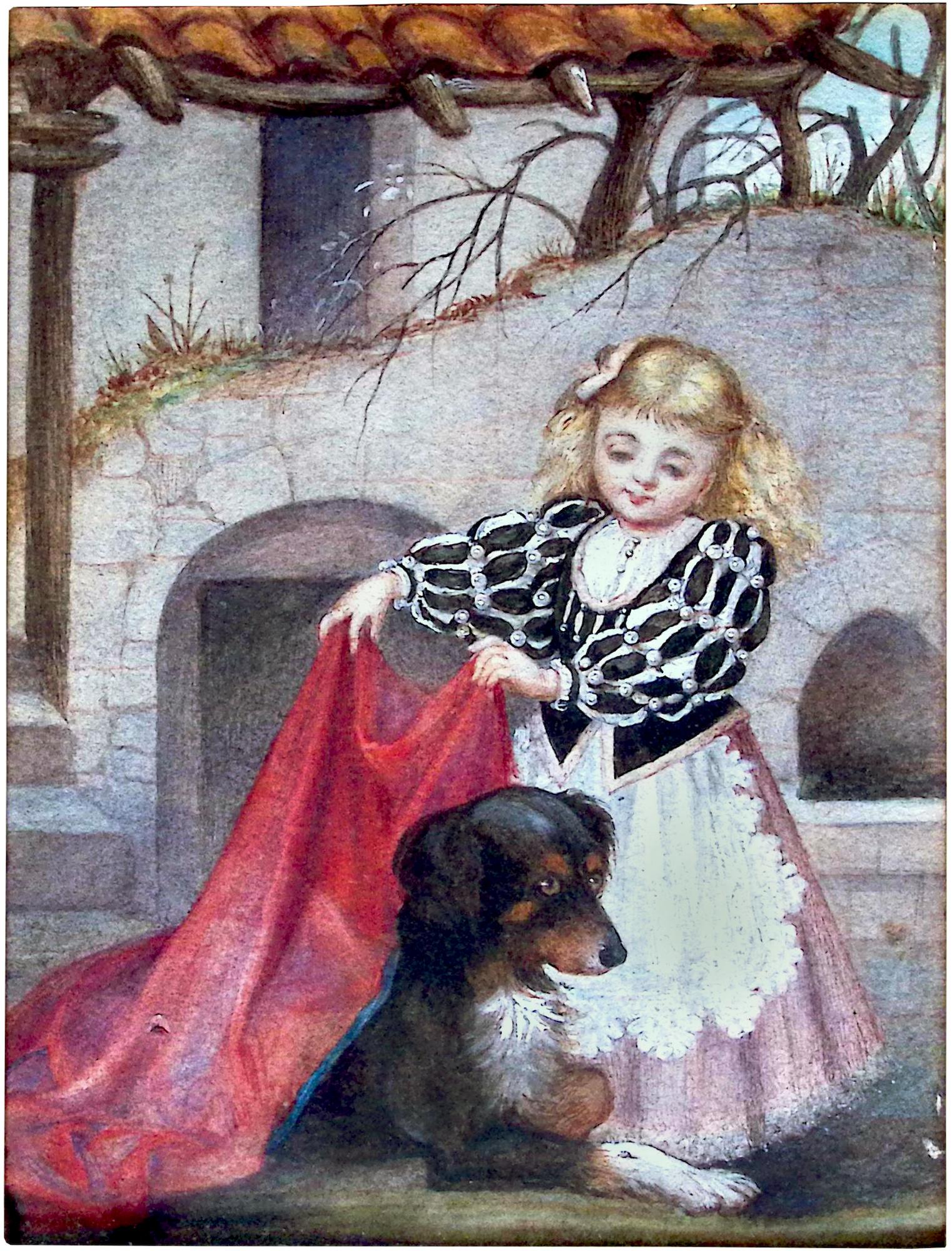
Illustration for Beauty and the Beast (Beauty with the watch dog), c. 1875
Eleanor Vere Boyle (1825 – 1916) illustrated poetry and prose by some of the most popular authors of her time. She regularly drew and painted using ink and watercolour, sketching landscapes, animals and her children from life. She also made drawings from her imagination, often reflecting spiritual themes. This illustration is from Boyle’s 1875 retelling of Beauty and the Beast, a fairy tale where a woman is imprisoned by a monster and falls in love with him. Unlike other illustrated versions before or since, Boyle gave her beast walrus-like tusks and flippers. In several of her illustrations, Boyle used shell gold – a mixture of finely ground gold powder and gum arabic (tree sap) that would have been stored in a shallow seashell. In the final publication, the caption for this illustration reads, "One cold March day, the little maid ran down to the outer court, with her new scarlet cloak, to wrap her friend the old watch dog in!"
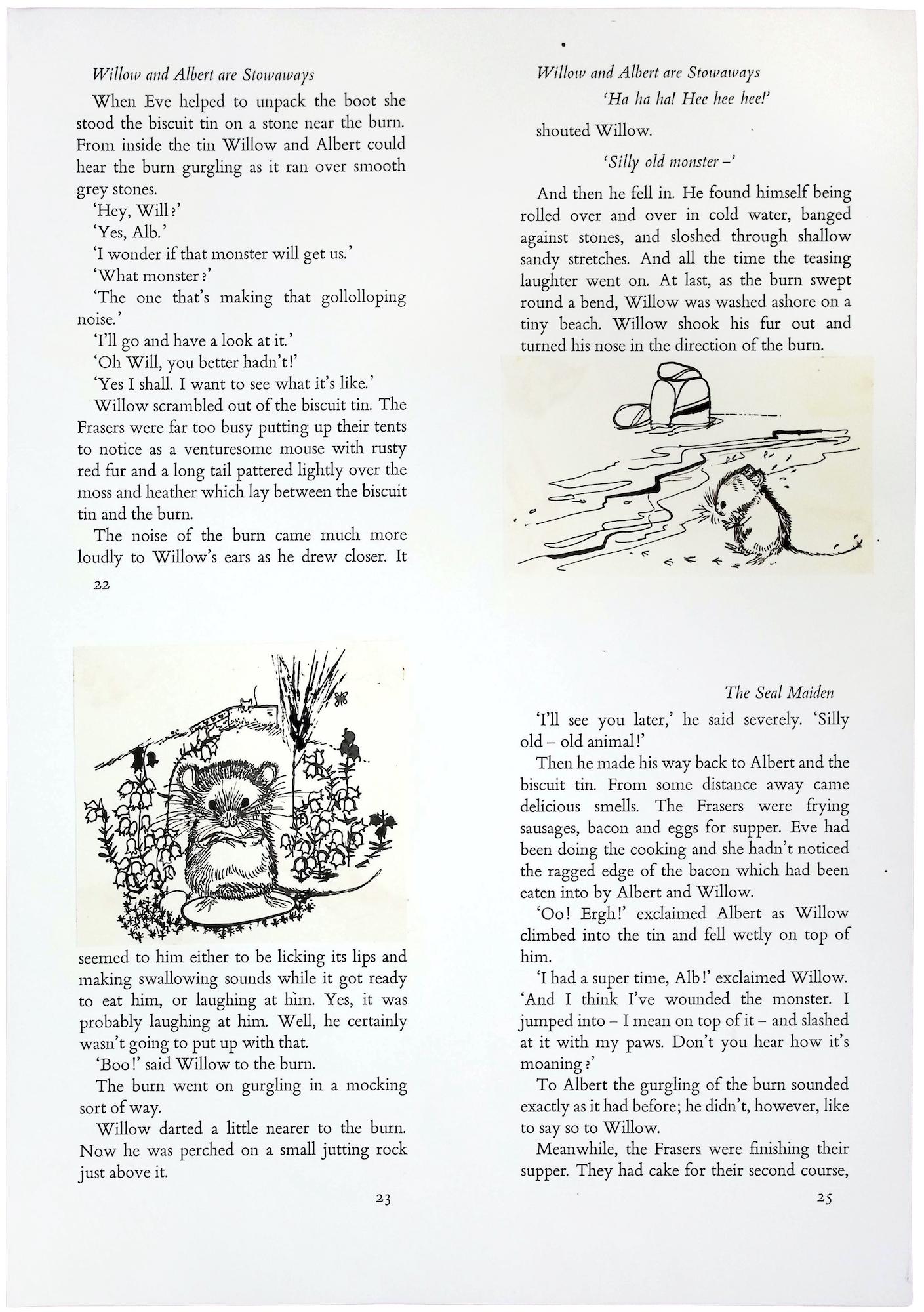
Layout proof for Willow and Albert are Stowaways, c. 1970
British illustrator Janina Ede (1937-2018) created covers and illustrations for over 100 books from the 1950s to the 1980s. Many of her illustrations feature animals, which she drew from life.
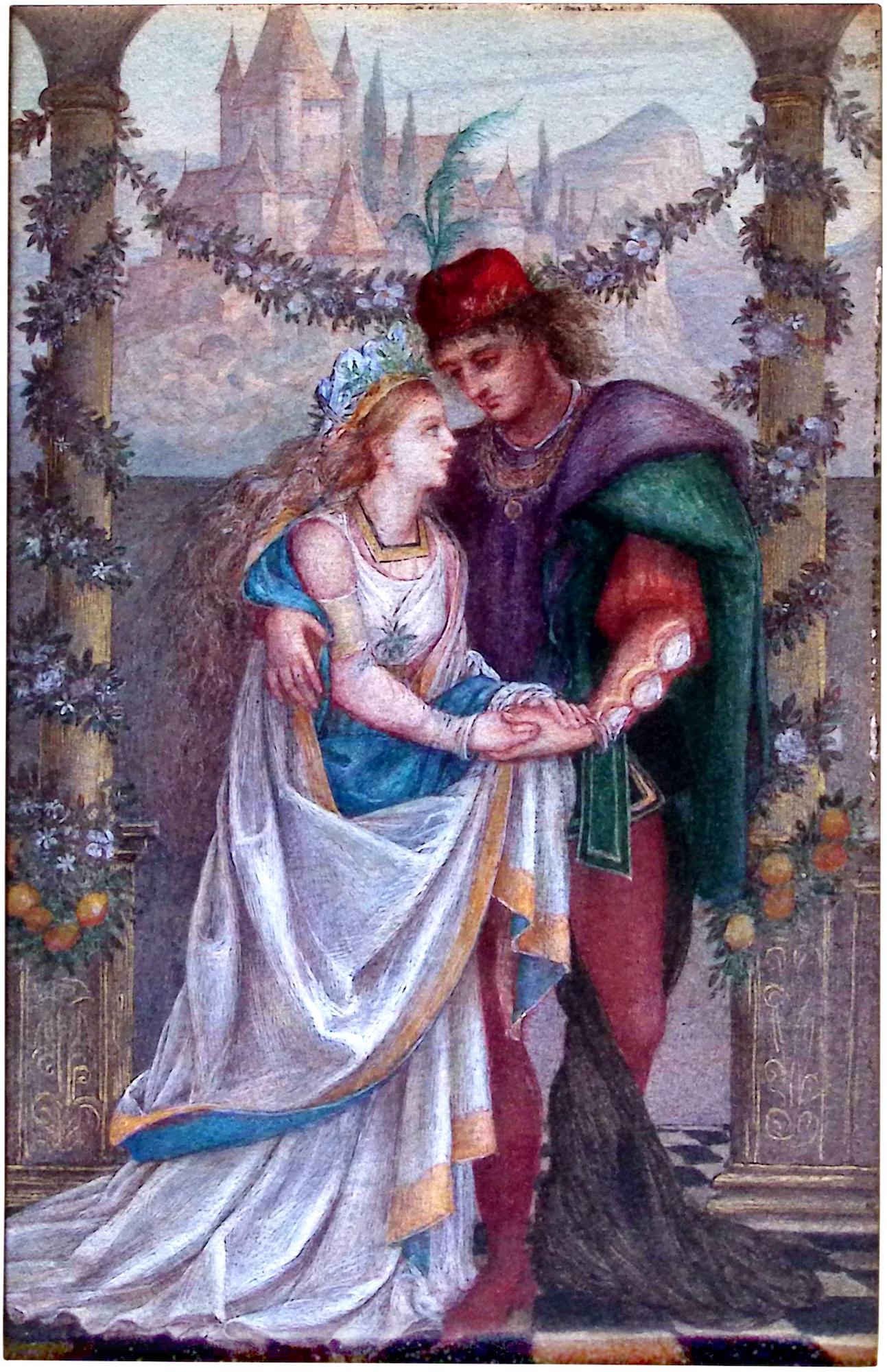
Illustration for Beauty and the Beast (the wedding), c. 1875
Eleanor Vere Boyle (1825 – 1916) illustrated poetry and prose by some of the most popular authors of her time. She regularly drew and painted using ink and watercolour, sketching landscapes, animals and her children from life. She also made drawings from her imagination, often reflecting spiritual themes. This illustration is from Boyle’s 1875 retelling of Beauty and the Beast, a fairy tale where a woman is imprisoned by a monster and falls in love with him. Unlike other illustrated versions before or since, Boyle gave her beast walrus-like tusks and flippers. In several of her illustrations, Boyle used shell gold – a mixture of finely ground gold powder and gum arabic (tree sap) that would have been stored in a shallow seashell. In the final publication, the caption for this illustration reads, "Love is the magic, that makes all things fair."
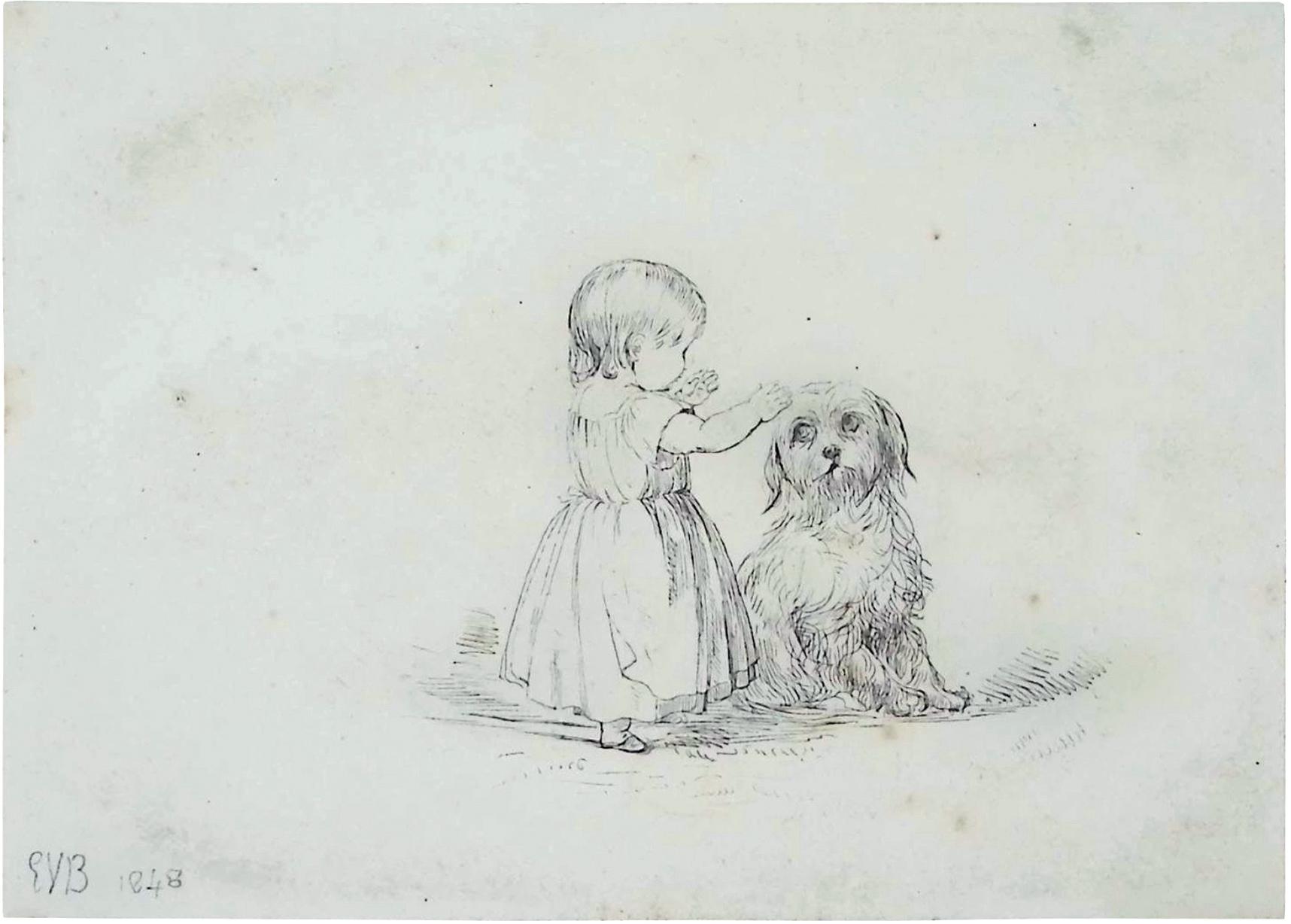
Untitled, 1848
Eleanor Vere Boyle (1825 – 1916) illustrated poetry and prose by some of the most popular authors of her time. She regularly drew and painted using ink and watercolour, sketching landscapes, animals and her children from life. She also made drawings from her imagination, often reflecting spiritual themes.
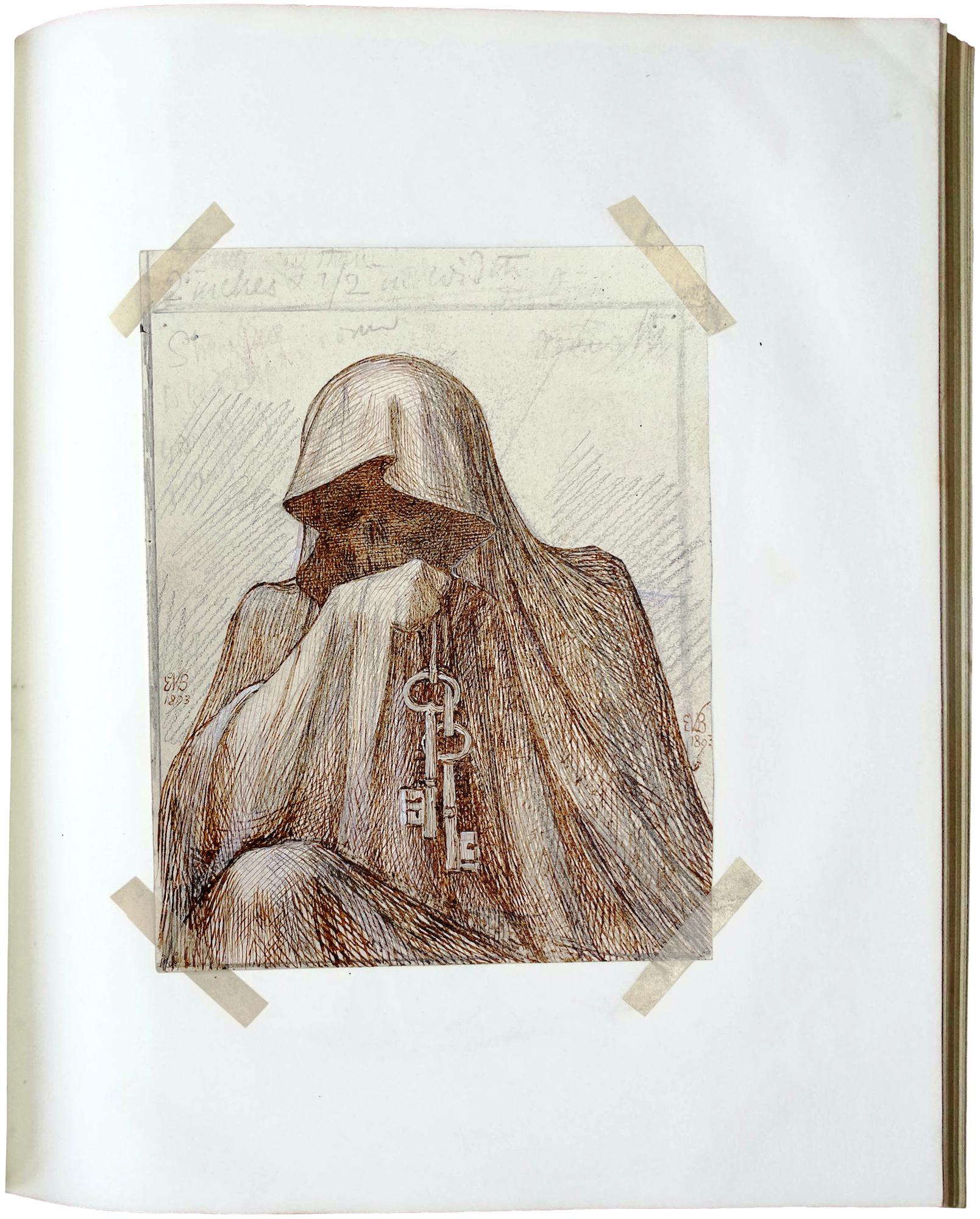
Untitled (illustration for A Book of Heavenly Birthdays, 'The Shadow Waiting with the Keys'), 1893
Eleanor Vere Boyle (1825 – 1916) illustrated poetry and prose by some of the most popular authors of her time. She regularly drew and painted using ink and watercolour, sketching landscapes, animals and her children from life. She also made drawings from her imagination, often reflecting spiritual themes. This drawing was used as one of the final illustrations printed in the artists' publication A Book of Heavenly Birthdays (1893, London Elliot Stock)
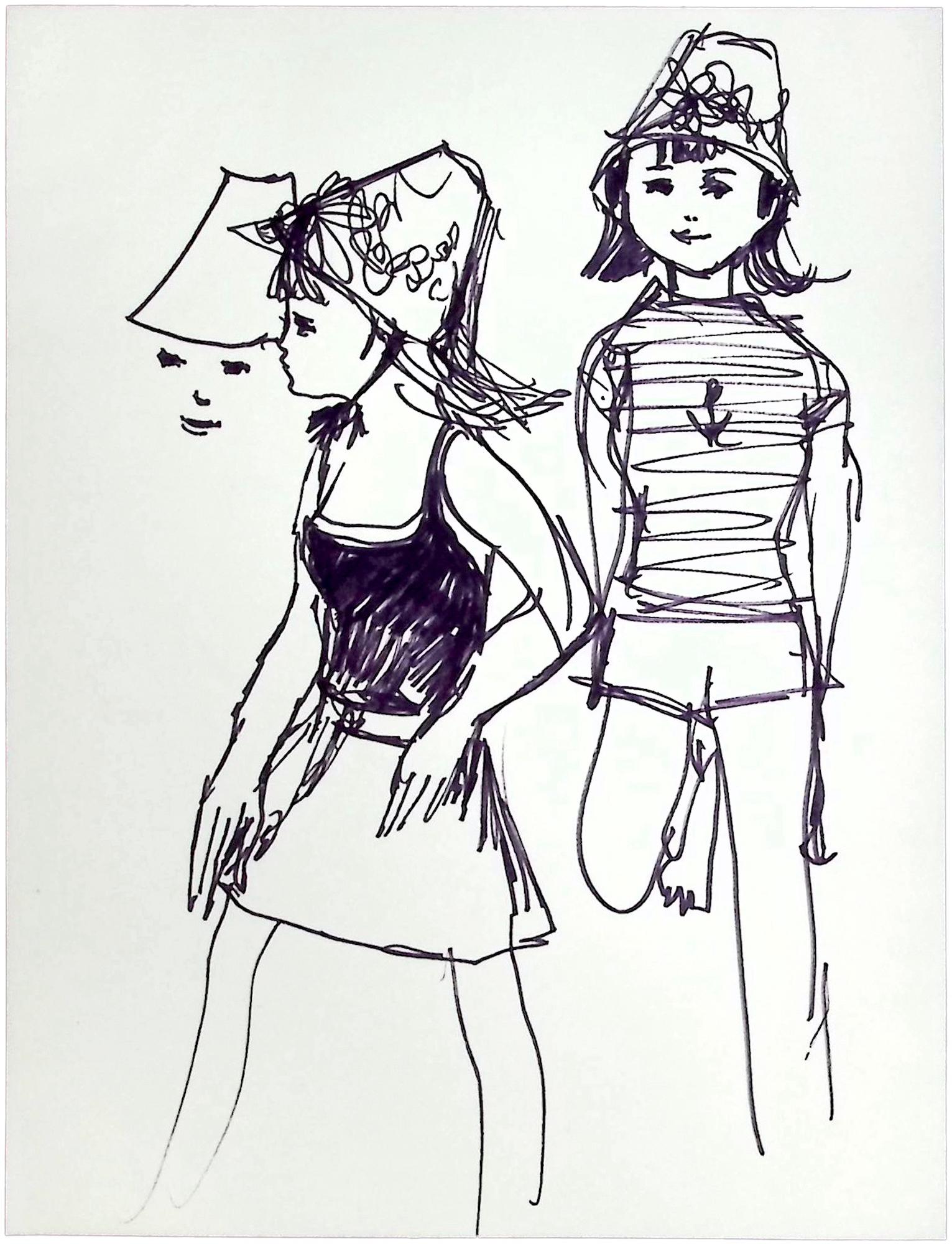
Untitled, c. 1968
British illustrator Janina Ede (1937-2018) created covers and illustrations for over 100 books from the 1950s to the 1980s. In the 1960s, Ede began working on children’s books. The Patchwork Pack (1968) by Freda Collins is about a group of ‘Brownies’ – the name given to members of the worldwide girl-guiding movement.
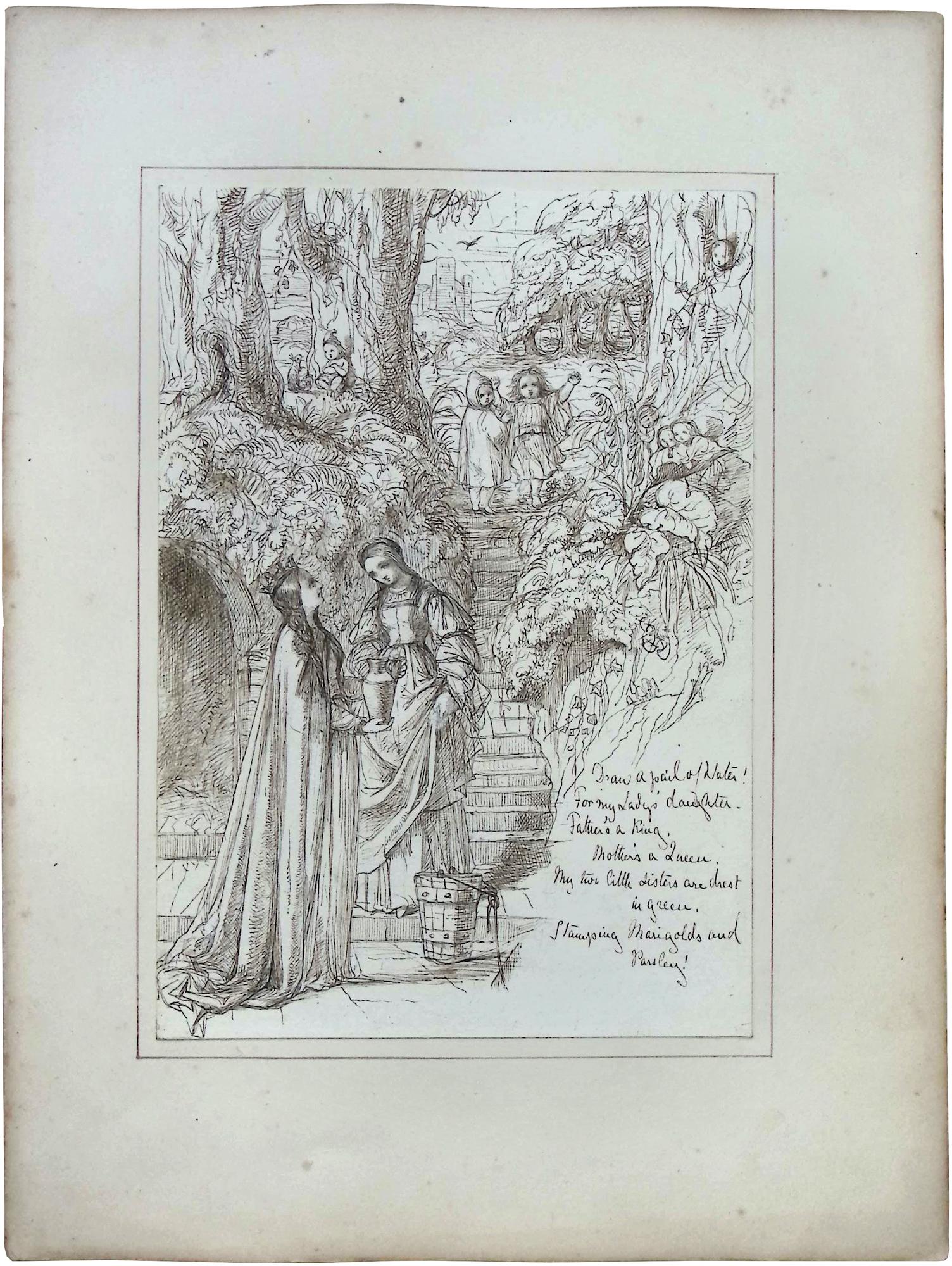
Untitled (illustration for Child's Play, 'Draw a pail of water'), c. 1851
Eleanor Vere Boyle (1825 – 1916) illustrated poetry and prose by some of the most popular authors of her time. She regularly drew and painted using ink and watercolour, sketching landscapes, animals and her children from life. She also made drawings from her imagination, often reflecting spiritual themes. This illustration is from her first book, Child’s Play (1851). Boyle provided her publishers with black and white drawings that were then converted into etchings by the printer. These were later reproduced as lithographs, in colours chosen by Boyle.
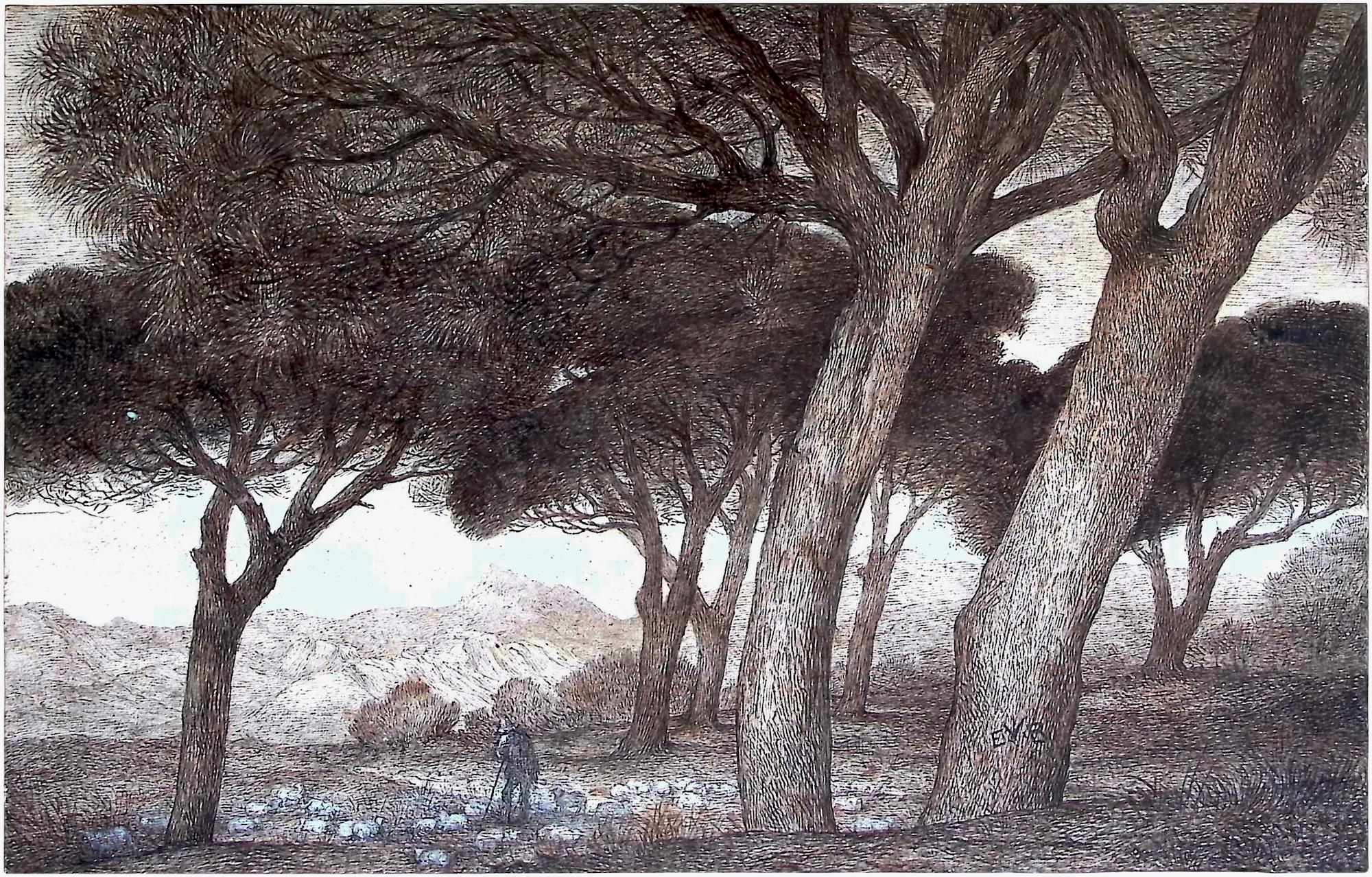
Untitled (drawing of south of France), Date unknown
Eleanor Vere Boyle (1825 – 1916) illustrated poetry and prose by some of the most popular authors of her time. She regularly drew and painted using ink and watercolour, sketching landscapes, animals and her children from life. She also made drawings from her imagination, often reflecting spiritual themes.
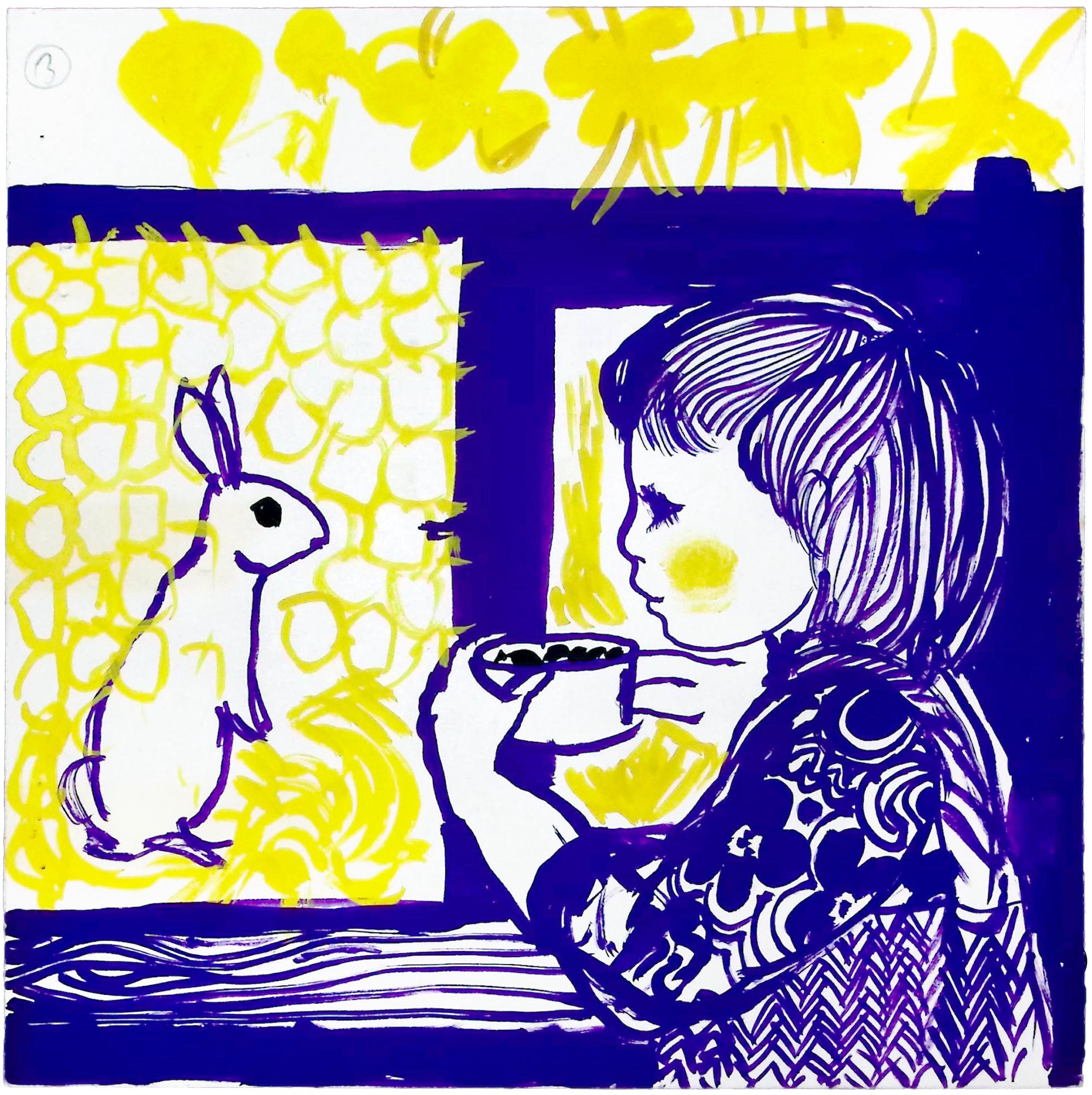
Illustration for "It's Sunny Outside", c. 1974
British illustrator Janina Ede (1937-2018) created covers and illustrations for over 100 books from the 1950s to the 1980s. Many of her illustrations feature animals, which she drew from life.
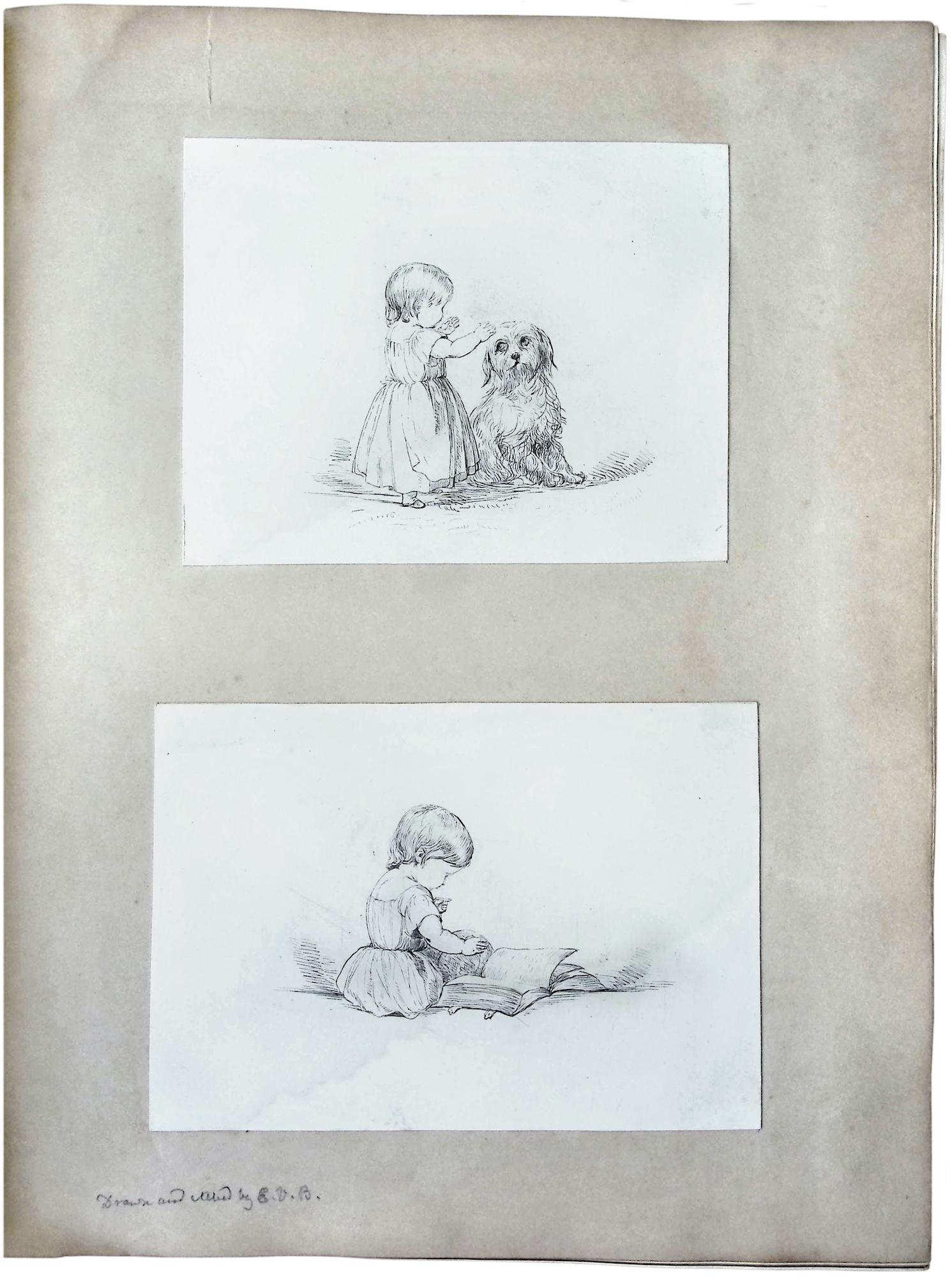
Untitled, Date unknown
Eleanor Vere Boyle (1825 – 1916) illustrated poetry and prose by some of the most popular authors of her time. She regularly drew and painted using ink and watercolour, sketching landscapes, animals and her children from life. She also made drawings from her imagination, often reflecting spiritual themes.
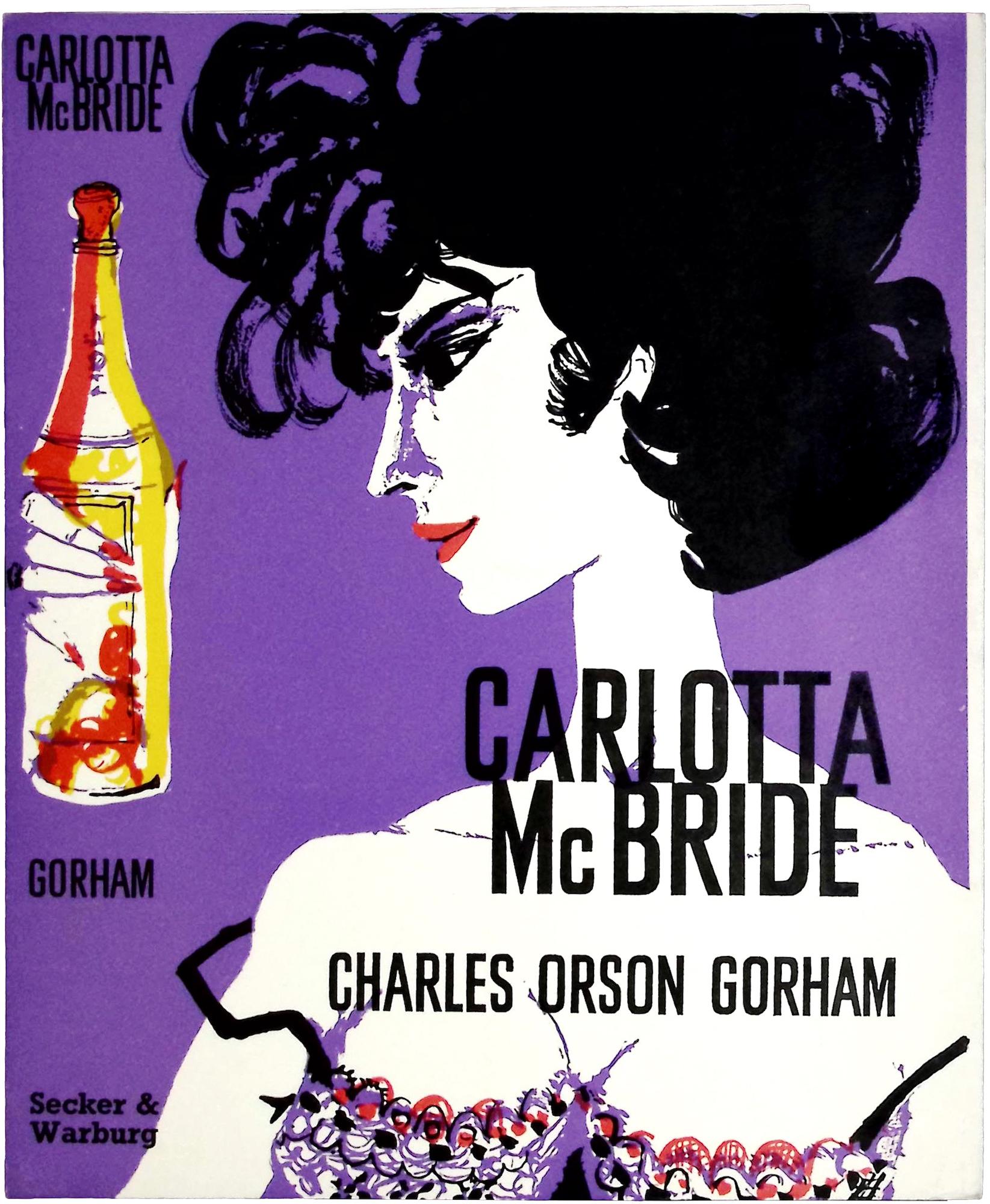
Book cover proof for "Carlotta Mc Bride", 1959
Janina Ede (1937-2018) created covers and illustrations for over 100 books from the 1950s to the 1980s. One of her earliest cover designs was for Carlotta McBride, a novel following the eponymous character in Paris, New York and Hollywood. It’s descriptions of sex and lesbian relationships led to the book being banned in Australia.

Collette's "Gigi and the Cat", 1958
British illustrator Janina Ede (1937-2018) created covers and illustrations for over 100 books from the 1950s to the 1980s.
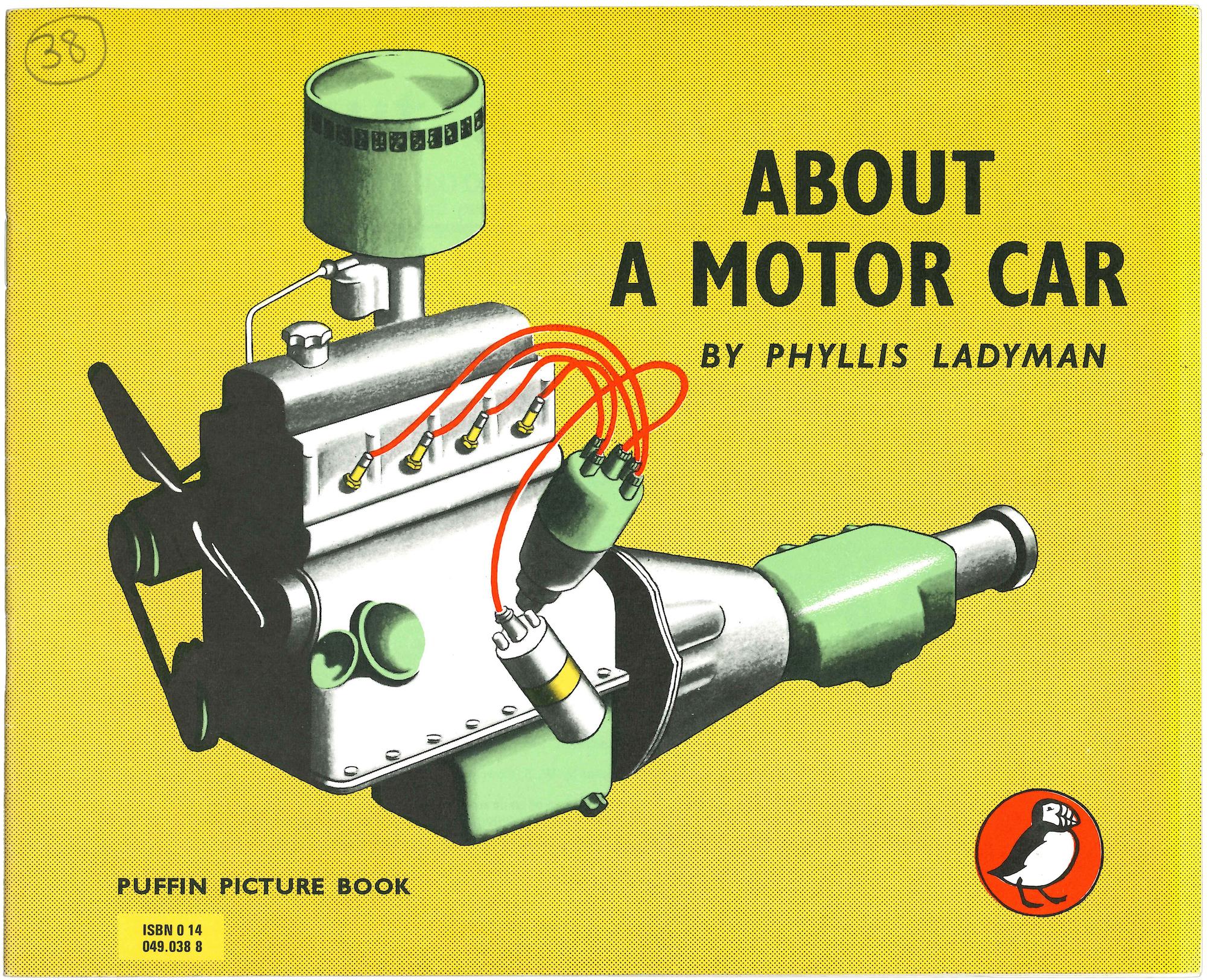
About a Motor Car, 1946
The Puffin Picture Books series was established by designer and editor Noel Carrington (1895-1989). In 1933, artist Pearl Binder (1904-1990) sent Carrington a package of Soviet children’s books. “They were produced by the million on very cheap paper, but the drawings were vigorous and the colour delightful” he later remembered. These books inspired Carrington to edit a series of affordable books that would encourage “the child’s awakening interest in its surroundings... I felt that colour was essential, and that artists could... be more successful in books of this nature than the camera”. Many artists and illustrators worked on the series, adapting their ways of working to lithographic printing and the Puffin Picture Book format. Most of the 120 books in the series were printed on one large sheet of paper: one side in colour and one in black-and-white. Each sheet was cut, folded and stapled to create a softcover book.
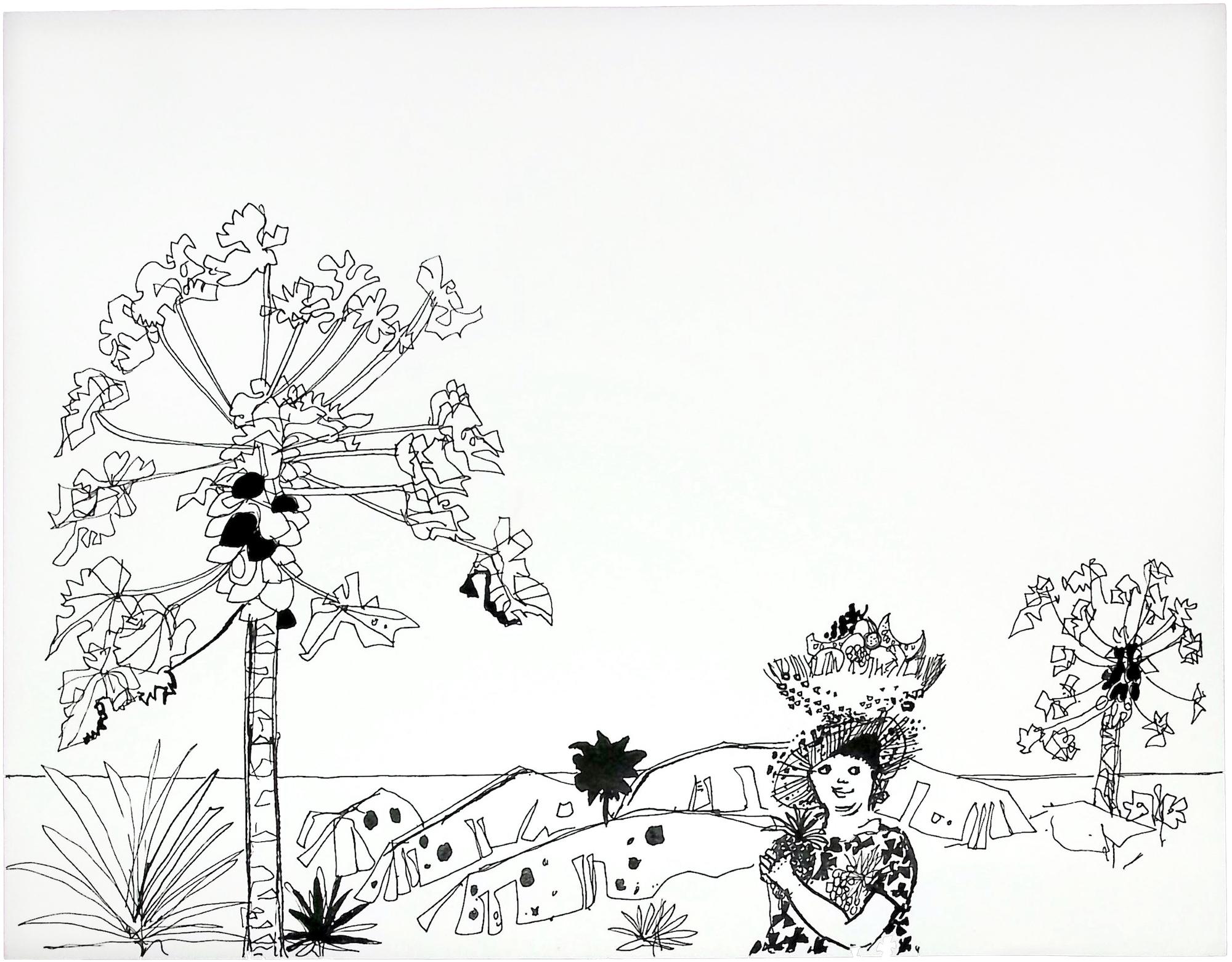
Untitled, c. 1968
British illustrator Janina Ede (1937-2018) created covers and illustrations for over 100 books from the 1950s to the 1980s.
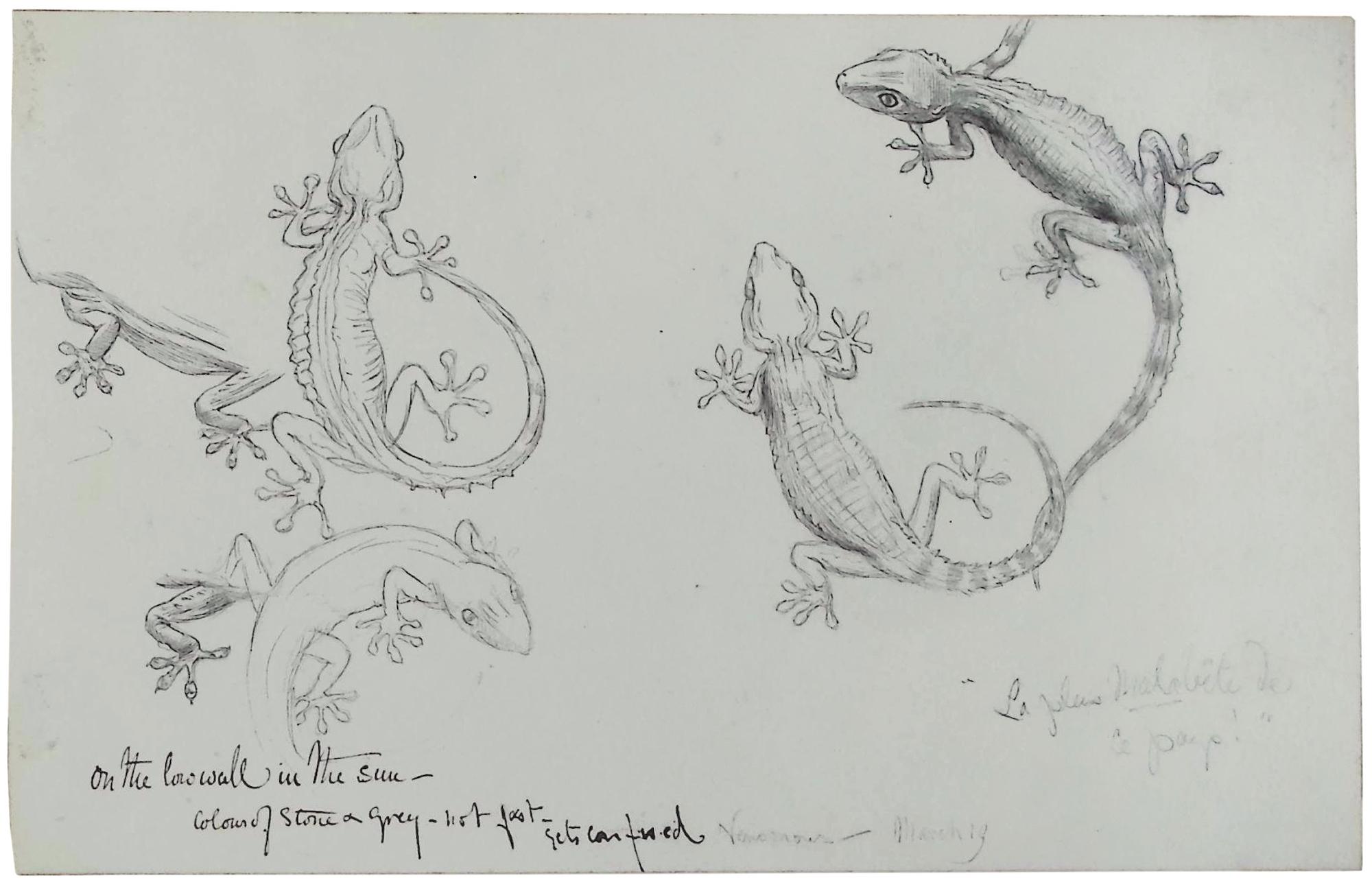
Untitled (Gecko), Date unknown
Eleanor Vere Boyle (1825 – 1916) illustrated poetry and prose by some of the most popular authors of her time. She regularly drew and painted using ink and watercolour, sketching landscapes, animals and her children from life. She also made drawings from her imagination, often reflecting spiritual themes.
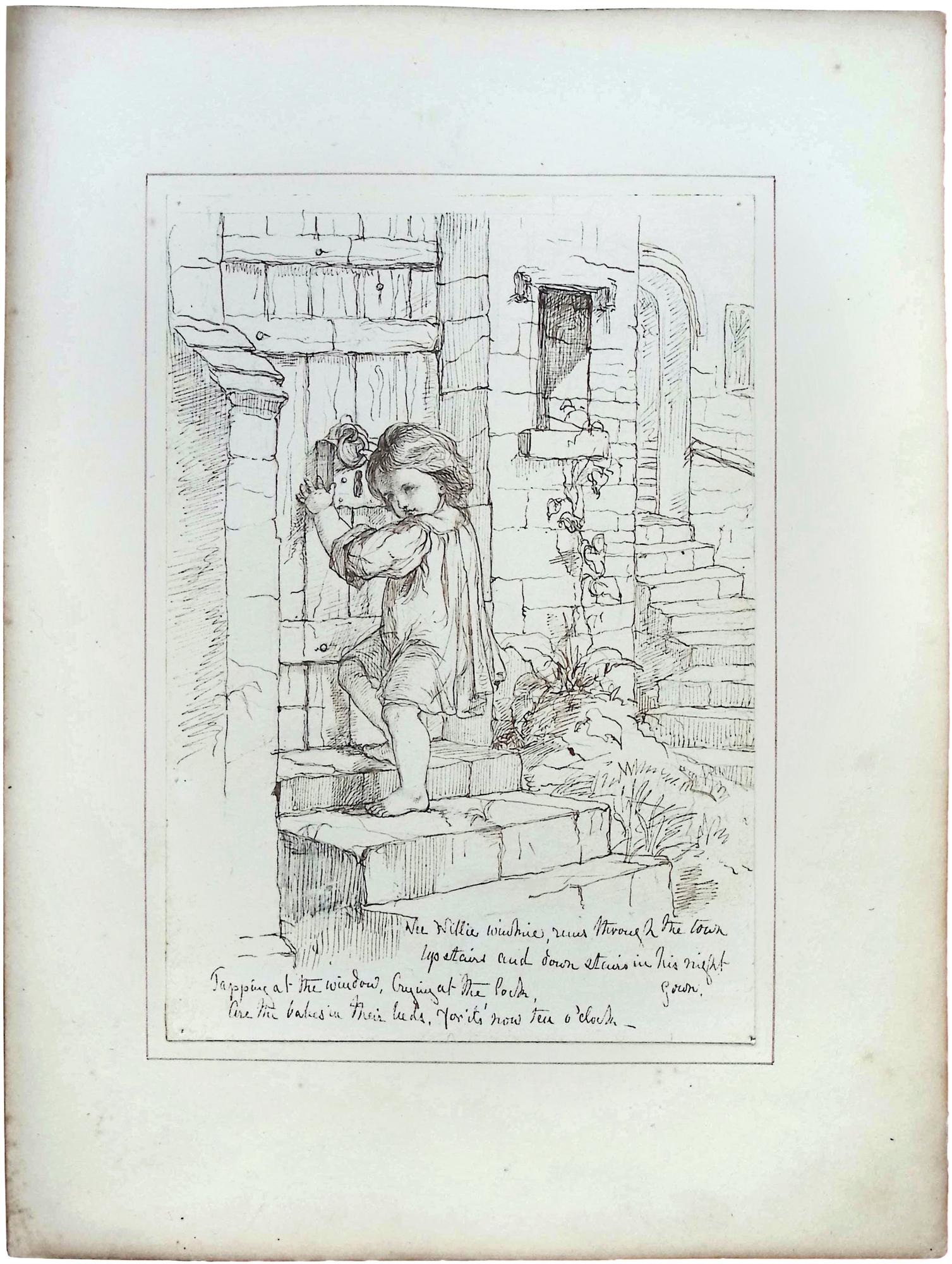
Untitled (illustration for Child's Play, 'Wee Willie Winkie'), c. 1851
Eleanor Vere Boyle (1825 – 1916) illustrated poetry and prose by some of the most popular authors of her time. She regularly drew and painted using ink and watercolour, sketching landscapes, animals and her children from life. She also made drawings from her imagination, often reflecting spiritual themes. This illustration is from her first book, Child’s Play (1851). Boyle provided her publishers with black and white drawings that were then converted into etchings by the printer. These were later reproduced as lithographs, in colours chosen by Boyle.
![Dve sobaki [Two Dogs]](https://cdn.sanity.io/images/n83t80i6/production/4360e5391cd88c1f1dd88bc65b8c1072128540f4-1474x2000.jpg?auto=format&fit=max&q=75&w=1474)
Vera Ermolaeva, Dve sobaki [Two Dogs], 1930
Vera Ermolaeva (1893-1937) was an illustrator and painter. In 1918 she founded Segodnia [Today] collective in Petrograd; the first Soviet children’s book publisher. She illustrated children’s books throughout the 1920s and 30s for Detgiz, The State Children’s Publishing House in Russia. This book is one of a series of 12 fables by Ivan Krylov illustrated by Ermolaeva. Two dogs with the same owner discuss their different lives living indoors and out in the yard. It was published in Leningrad (Saint Petersburg), Russia at a time when children’s books became a mass media phenomenon. Over a ten-year period, almost 10,000 titles were published in several editions of up to 200,000. Many of these books took experimental approaches to storytelling, design and layout.
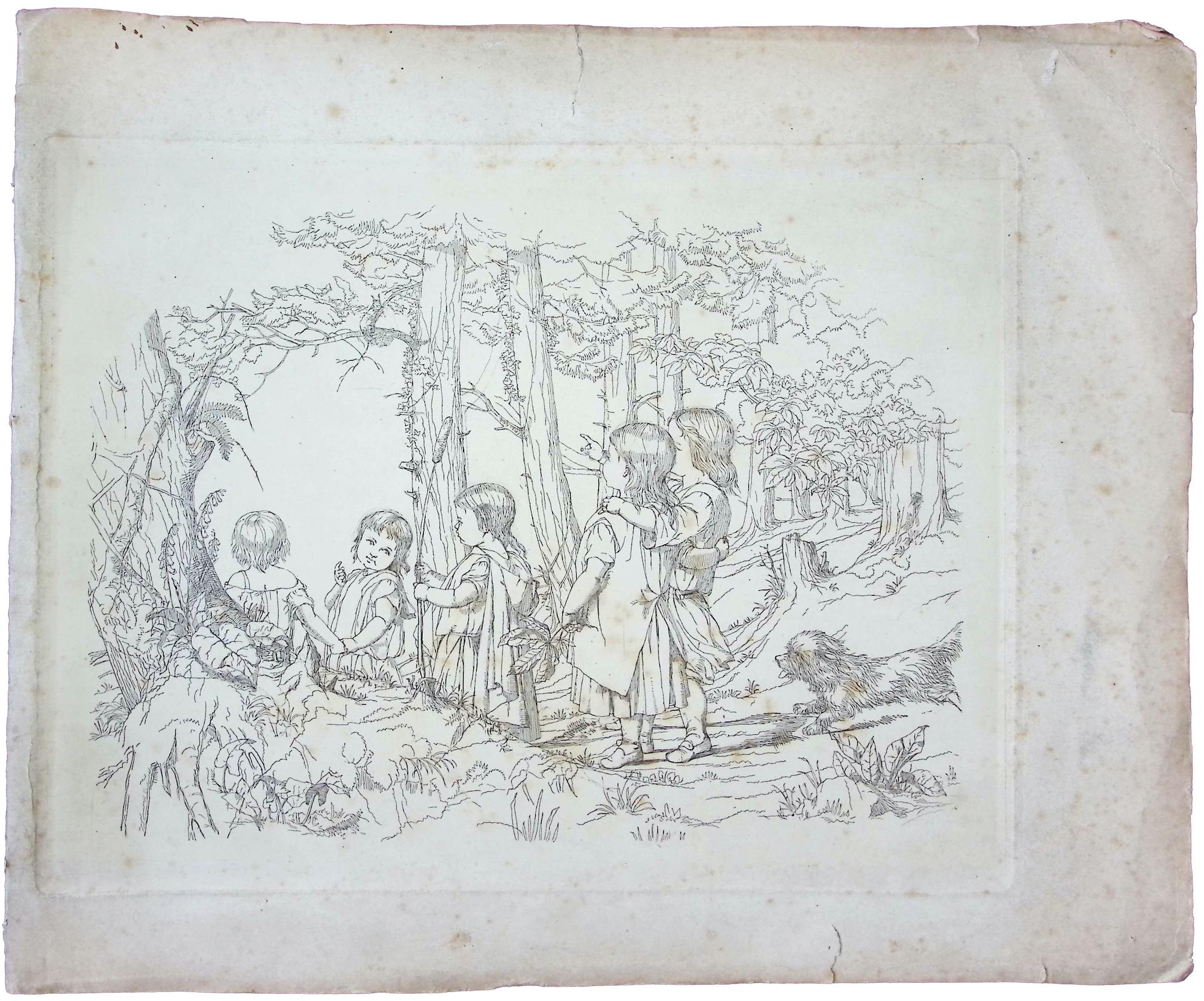
Untitled, Date unknown
Eleanor Vere Boyle (1825 – 1916) illustrated poetry and prose by some of the most popular authors of her time. She regularly drew and painted using ink and watercolour, sketching landscapes, animals and her children from life. She also made drawings from her imagination, often reflecting spiritual themes.
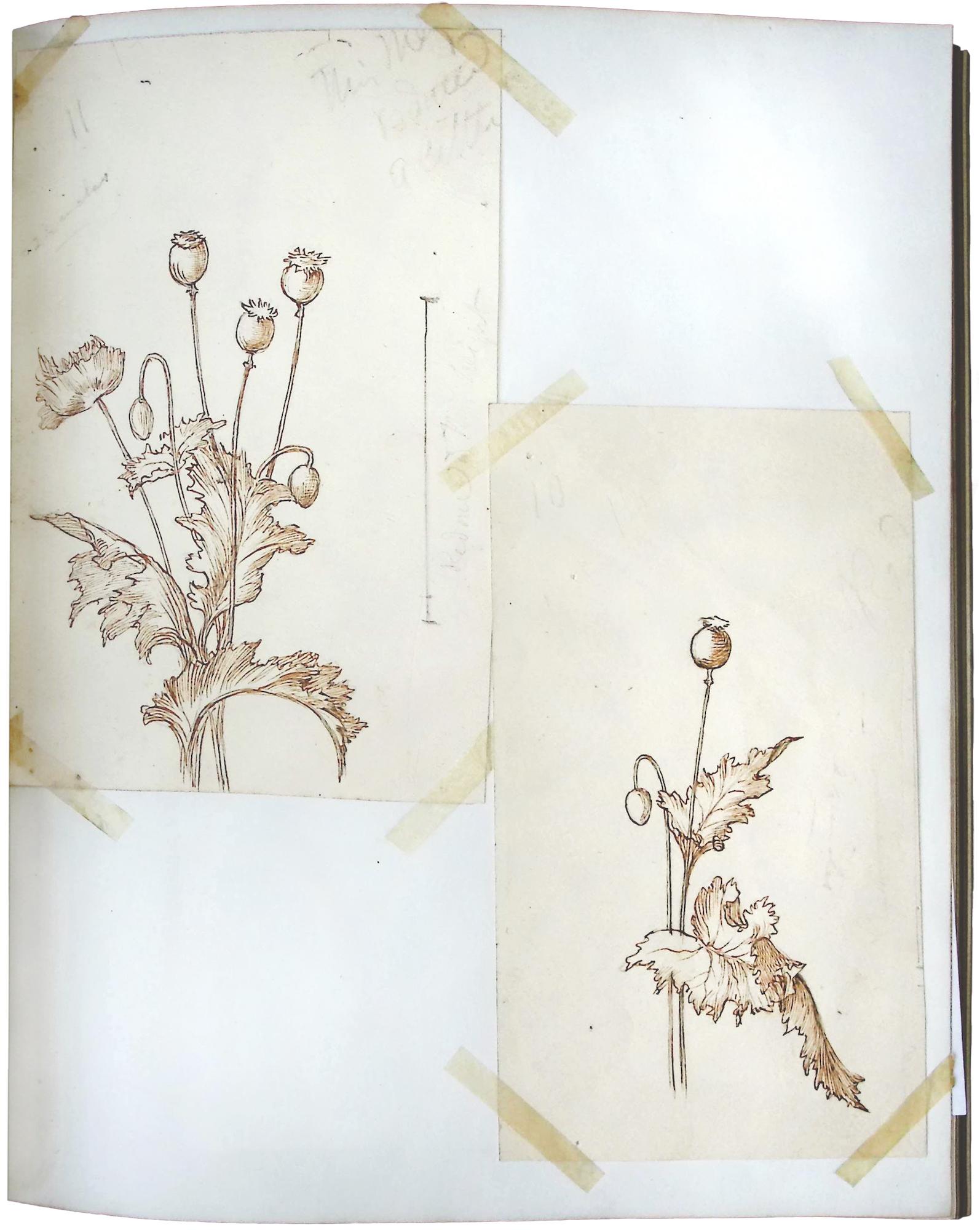
Untitled, c. 1893
Eleanor Vere Boyle (1825 – 1916) illustrated poetry and prose by some of the most popular authors of her time. She regularly drew and painted using ink and watercolour, sketching landscapes, animals and her children from life. She also made drawings from her imagination, often reflecting spiritual themes. These drawings were used as some of the final illustrations printed in the artists' publication A Book of Heavenly Birthdays (1893, London Elliot Stock)
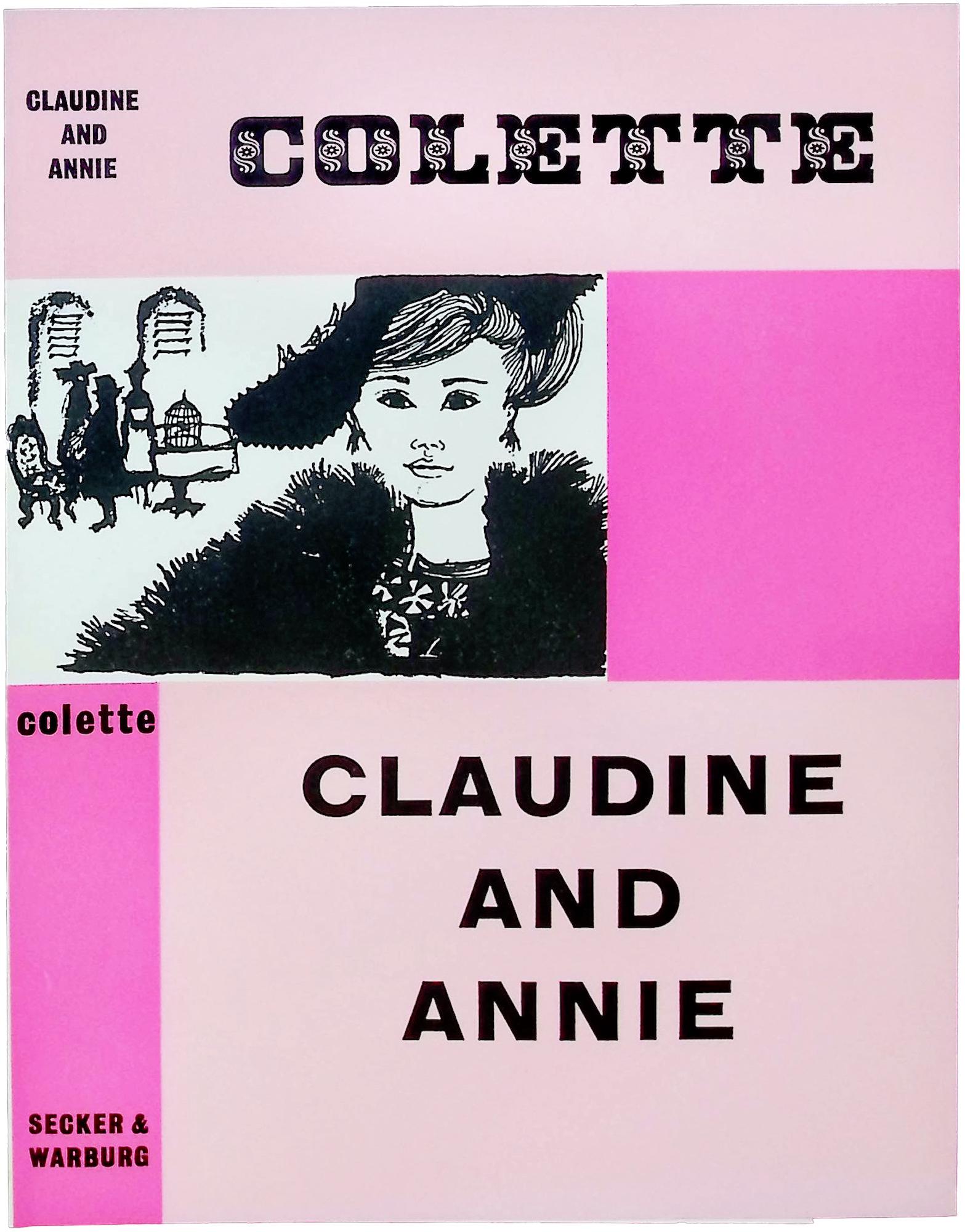
Book cover proof for Colette's "Claudine and Annie", 1962
British illustrator Janina Ede (1937-2018) created covers and illustrations for over 100 books from the 1950s to the 1980s. She designed the covers of several books by French author and pioneer of autofiction Sidonie-Gabrielle Colette.
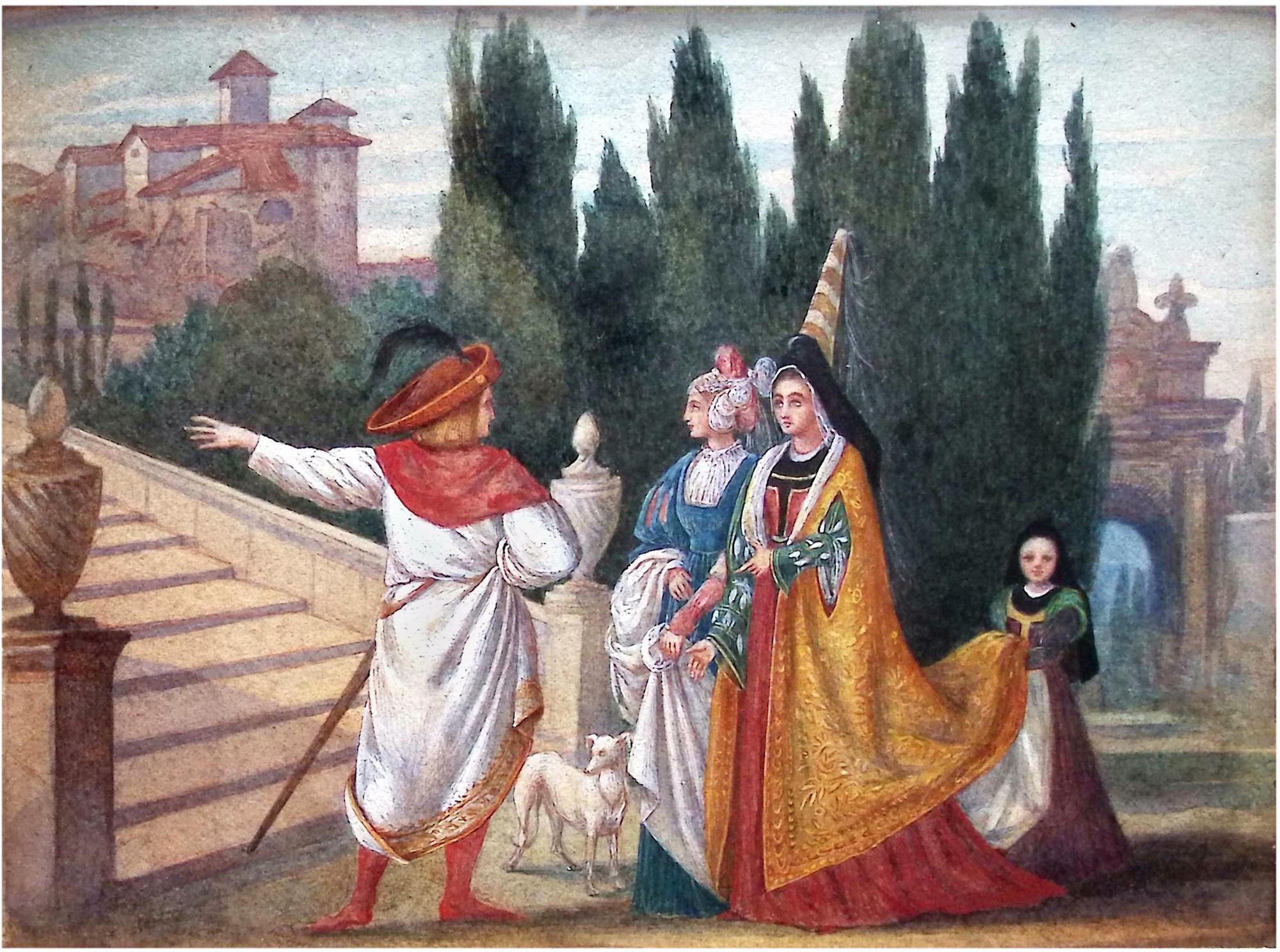
Illustration for Beauty and the Beast (Beauty and her two sisters), c. 1875
Eleanor Vere Boyle (1825 – 1916) illustrated poetry and prose by some of the most popular authors of her time. She regularly drew and painted using ink and watercolour, sketching landscapes, animals and her children from life. She also made drawings from her imagination, often reflecting spiritual themes. This illustration is from Boyle’s 1875 retelling of Beauty and the Beast, a fairy tale where a woman is imprisoned by a monster and falls in love with him. Unlike other illustrated versions before or since, Boyle gave her beast walrus-like tusks and flippers. In several of her illustrations, Boyle used shell gold – a mixture of finely ground gold powder and gum arabic (tree sap) that would have been stored in a shallow seashell. In the final publication, the caption for this illustration reads, "In the King's Garden the feast is ready, and the minstrels wait."
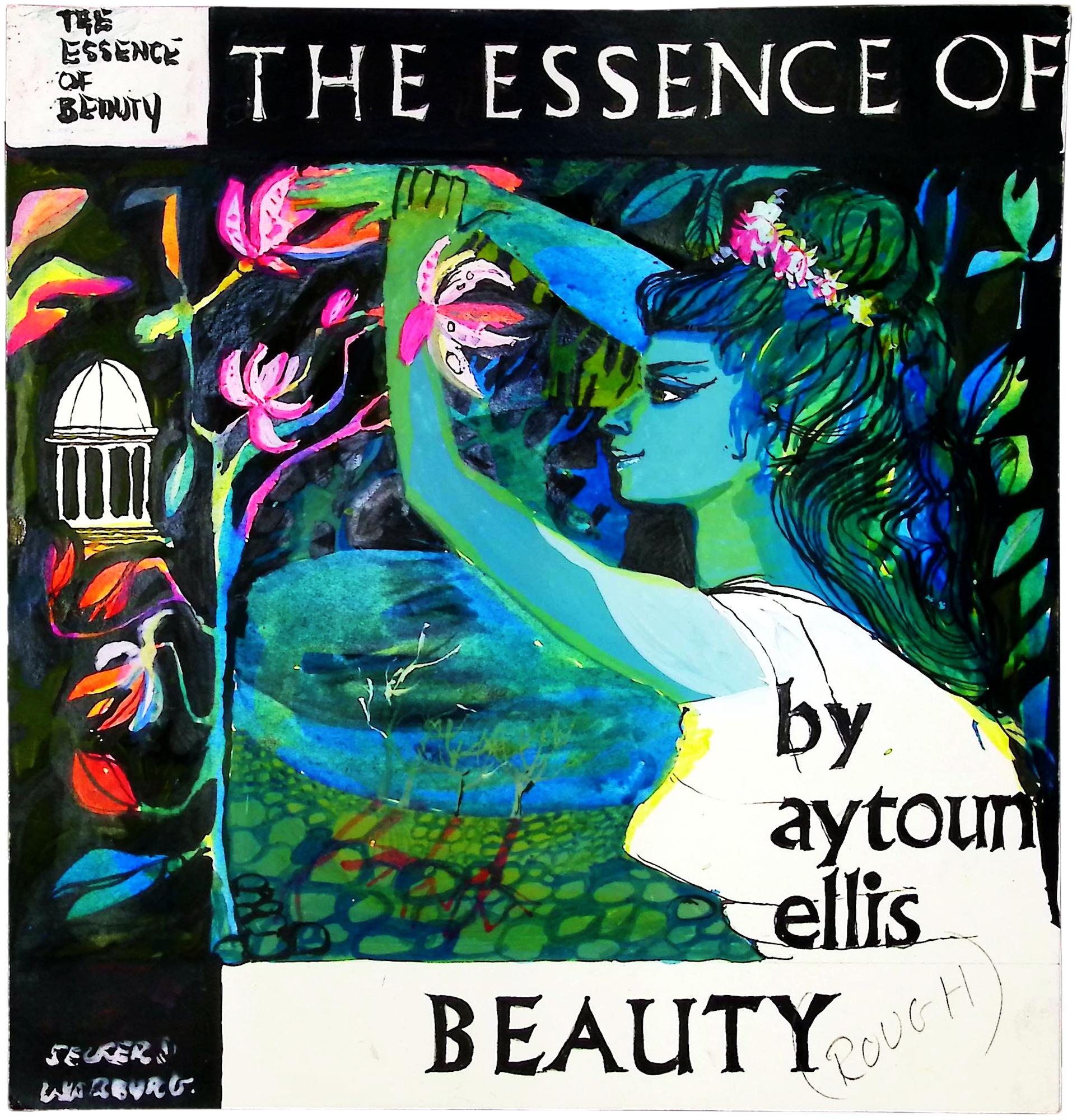
Rough cover illustration for "The Essence of Beauty", 1959
British illustrator Janina Ede (1937-2018) created covers and illustrations for over 100 books from the 1950s to the 1980s. This non-fiction book was an account of the history of perfume and cosmetics.
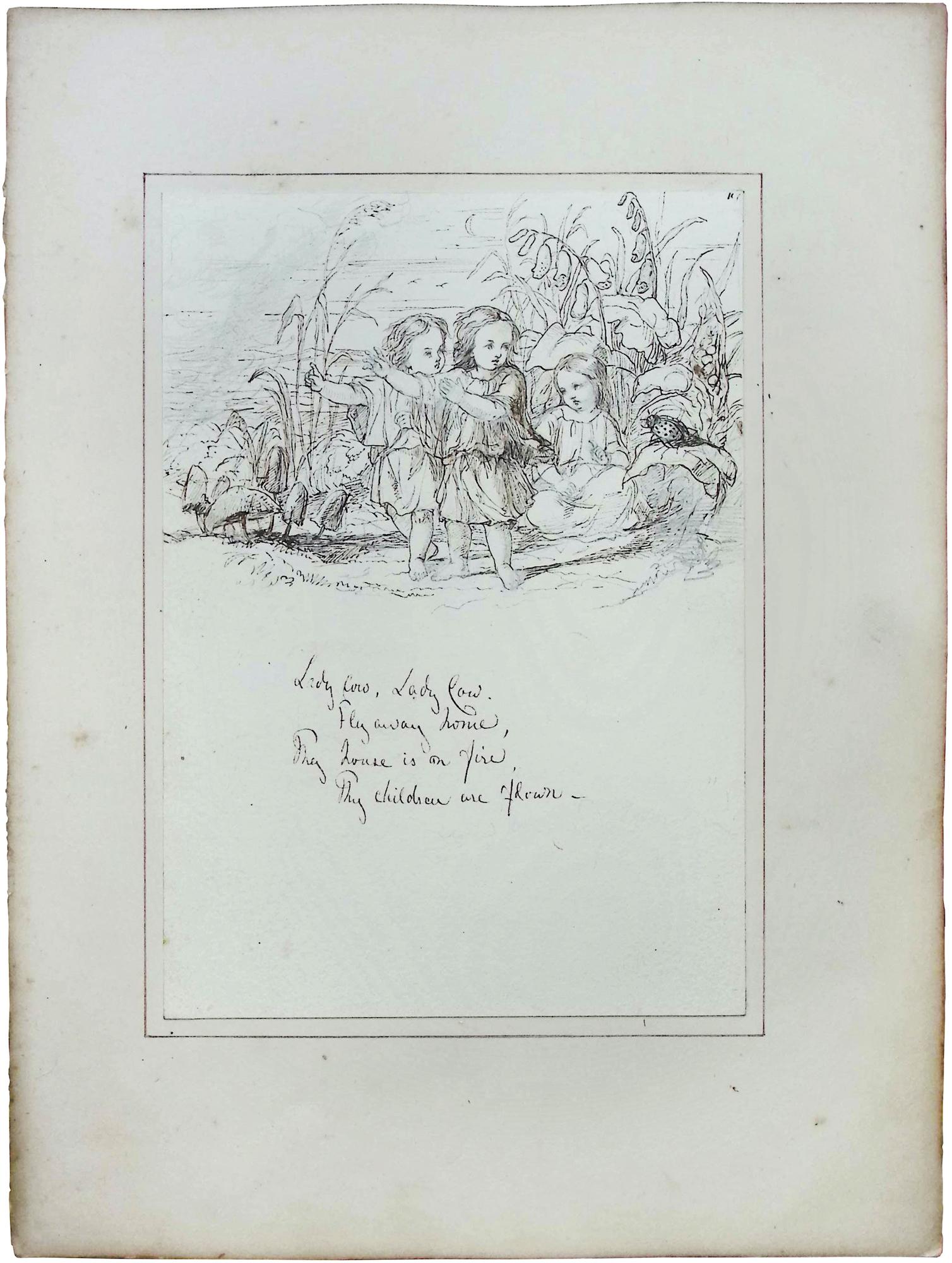
Untitled (illustration for Child's Play, 'Ladybird, Ladybird'), c. 1851
Eleanor Vere Boyle (1825 – 1916) illustrated poetry and prose by some of the most popular authors of her time. She regularly drew and painted using ink and watercolour, sketching landscapes, animals and her children from life. She also made drawings from her imagination, often reflecting spiritual themes. This illustration is from her first book, Child’s Play (1851). Boyle provided her publishers with black and white drawings that were then converted into etchings by the printer. These were later reproduced as lithographs, in colours chosen by Boyle.
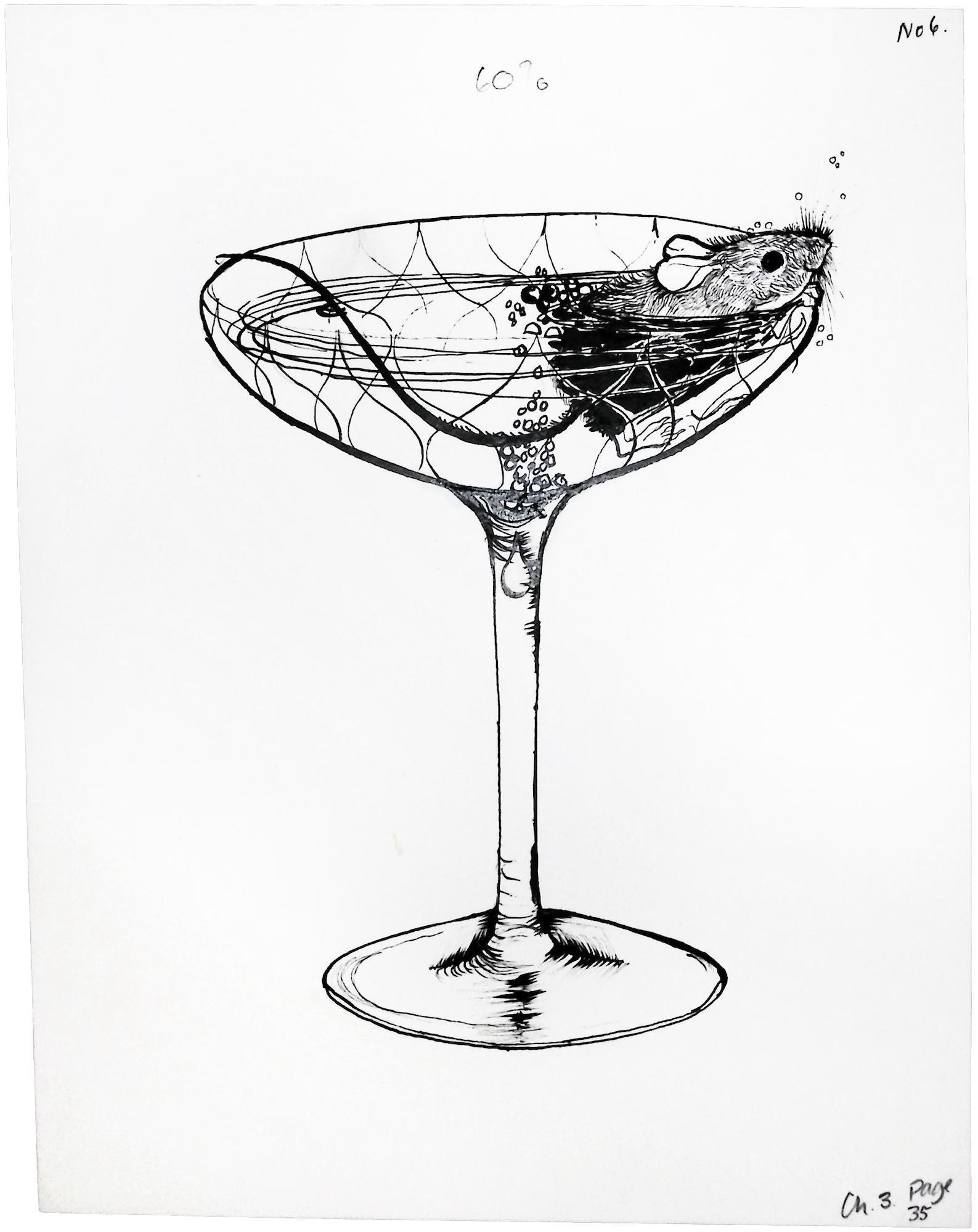
Untitled, c. 1984
British illustrator Janina Ede (1937-2018) created covers and illustrations for over 100 books from the 1950s to the 1980s. Many of her illustrations feature animals, which she drew from life.
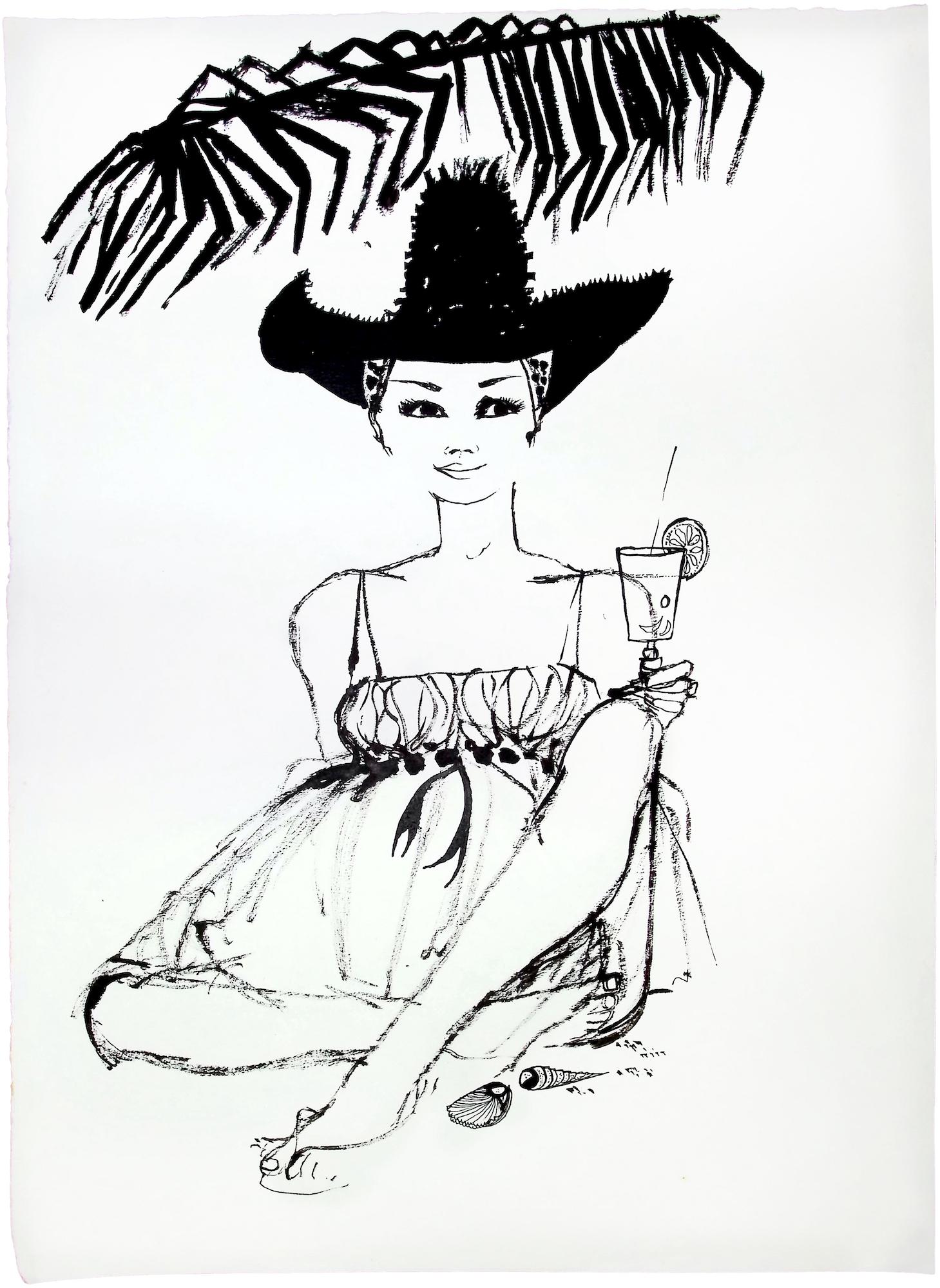
Untitled, Date unknown
British illustrator Janina Ede (1937-2018) created covers and illustrations for over 100 books from the 1950s to the 1980s. Ede often worked using just black ink, combining pen and brushwork to create bold illustrations with fine details.
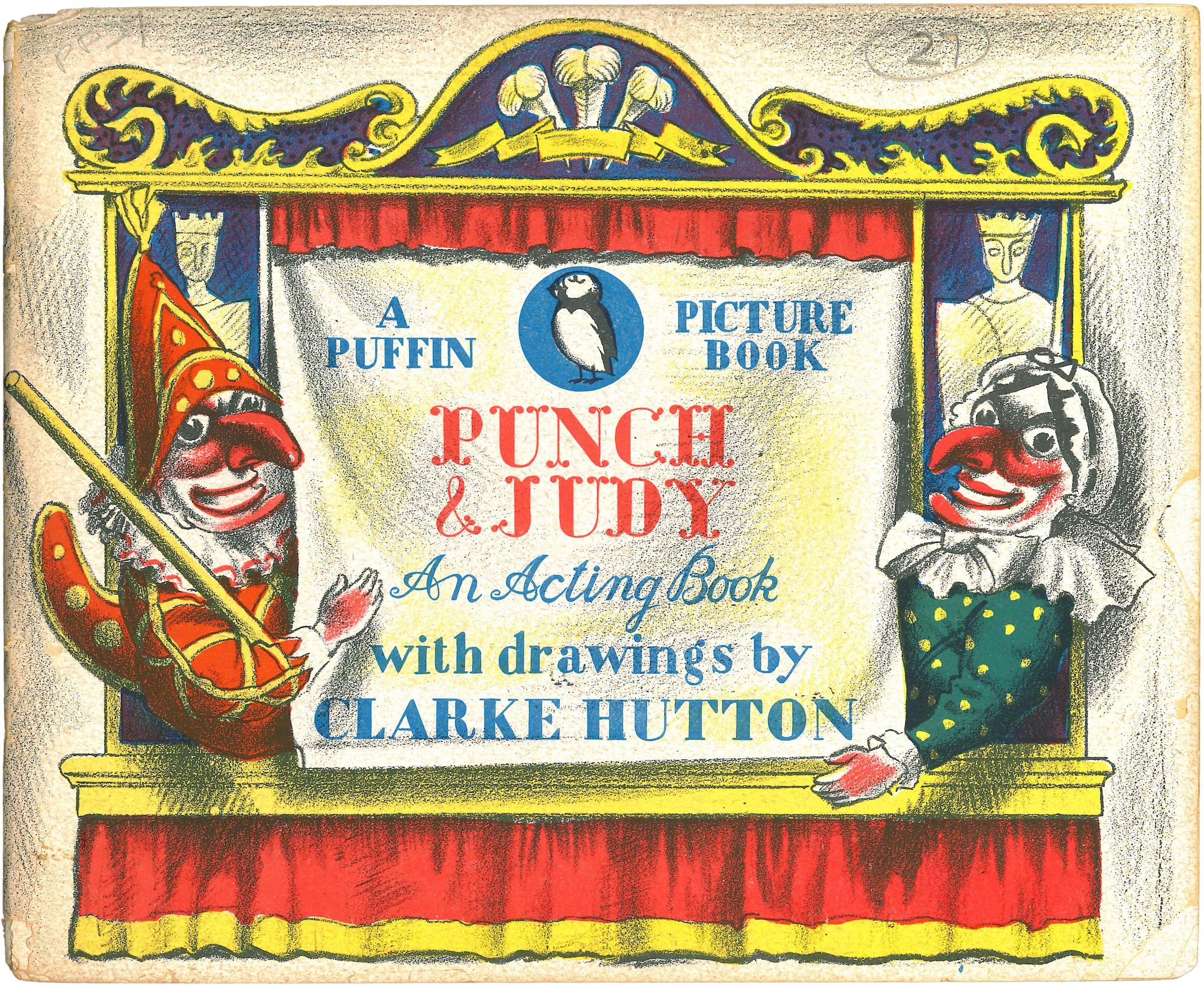
Punch & Judy, 1942
The Puffin Picture Books series was established by designer and editor Noel Carrington (1895-1989). In 1933, artist Pearl Binder (1904-1990) sent Carrington a package of Soviet children’s books. “They were produced by the million on very cheap paper, but the drawings were vigorous and the colour delightful” he later remembered. These books inspired Carrington to edit a series of affordable books that would encourage “the child’s awakening interest in its surroundings... I felt that colour was essential, and that artists could... be more successful in books of this nature than the camera”. Many artists and illustrators worked on the series, adapting their ways of working to lithographic printing and the Puffin Picture Book format. Most of the 120 books in the series were printed on one large sheet of paper: one side in colour and one in black-and-white. Each sheet was cut, folded and stapled to create a softcover book.
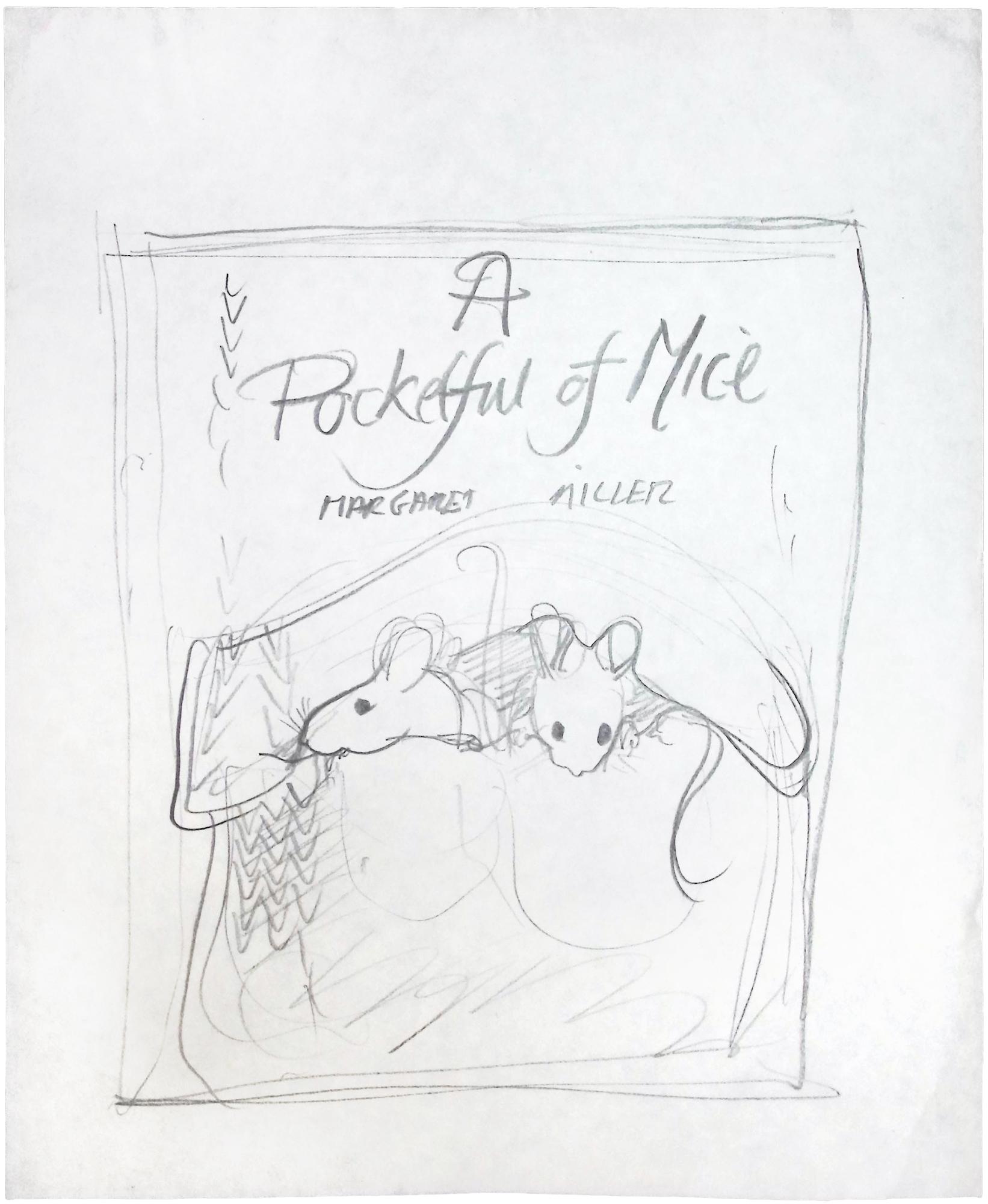
Draft cover sketch for A Pocket Full of Mice, c. 1984
British illustrator Janina Ede (1937-2018) created covers and illustrations for over 100 books from the 1950s to the 1980s. Many of her illustrations feature animals, which she drew from life.
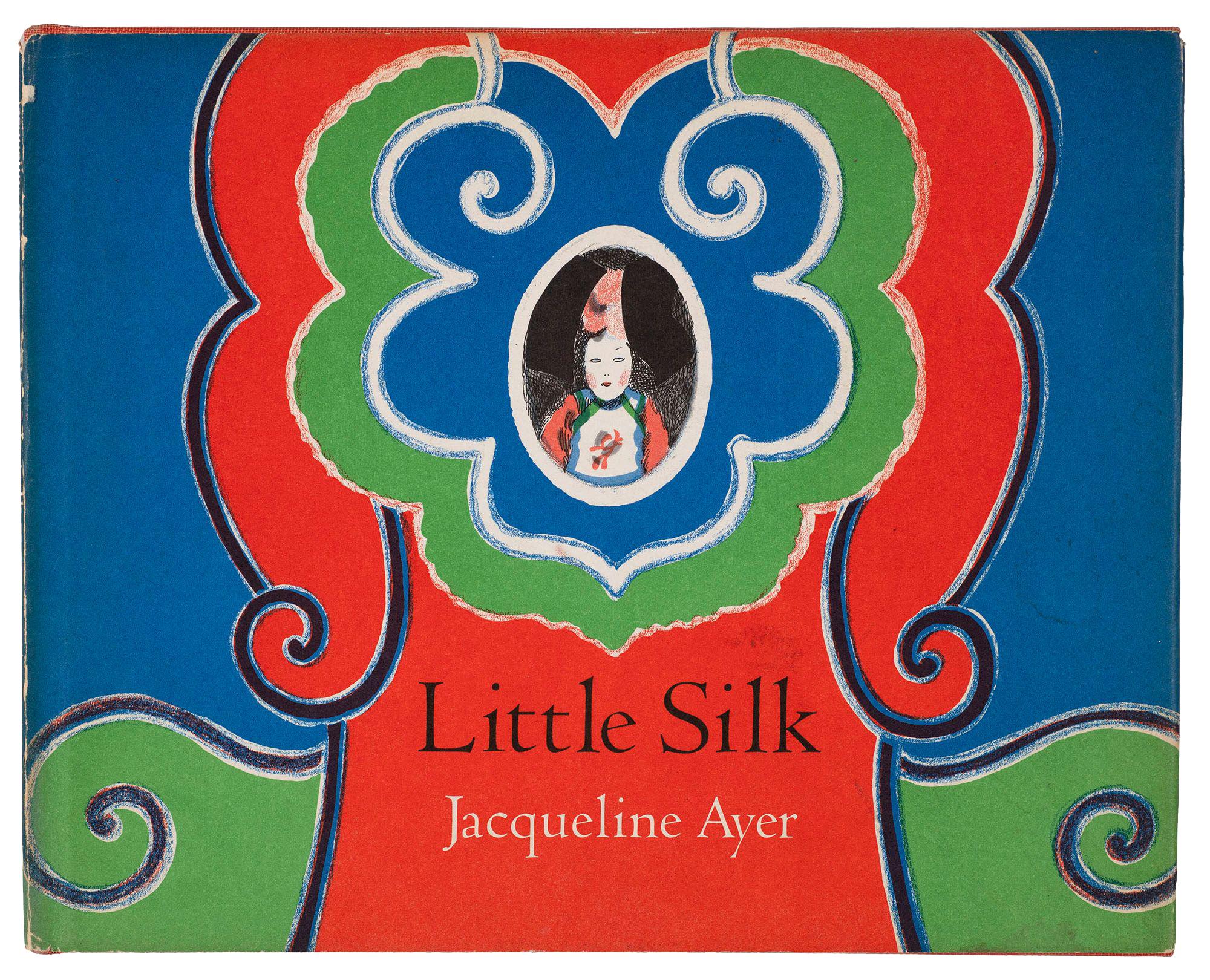
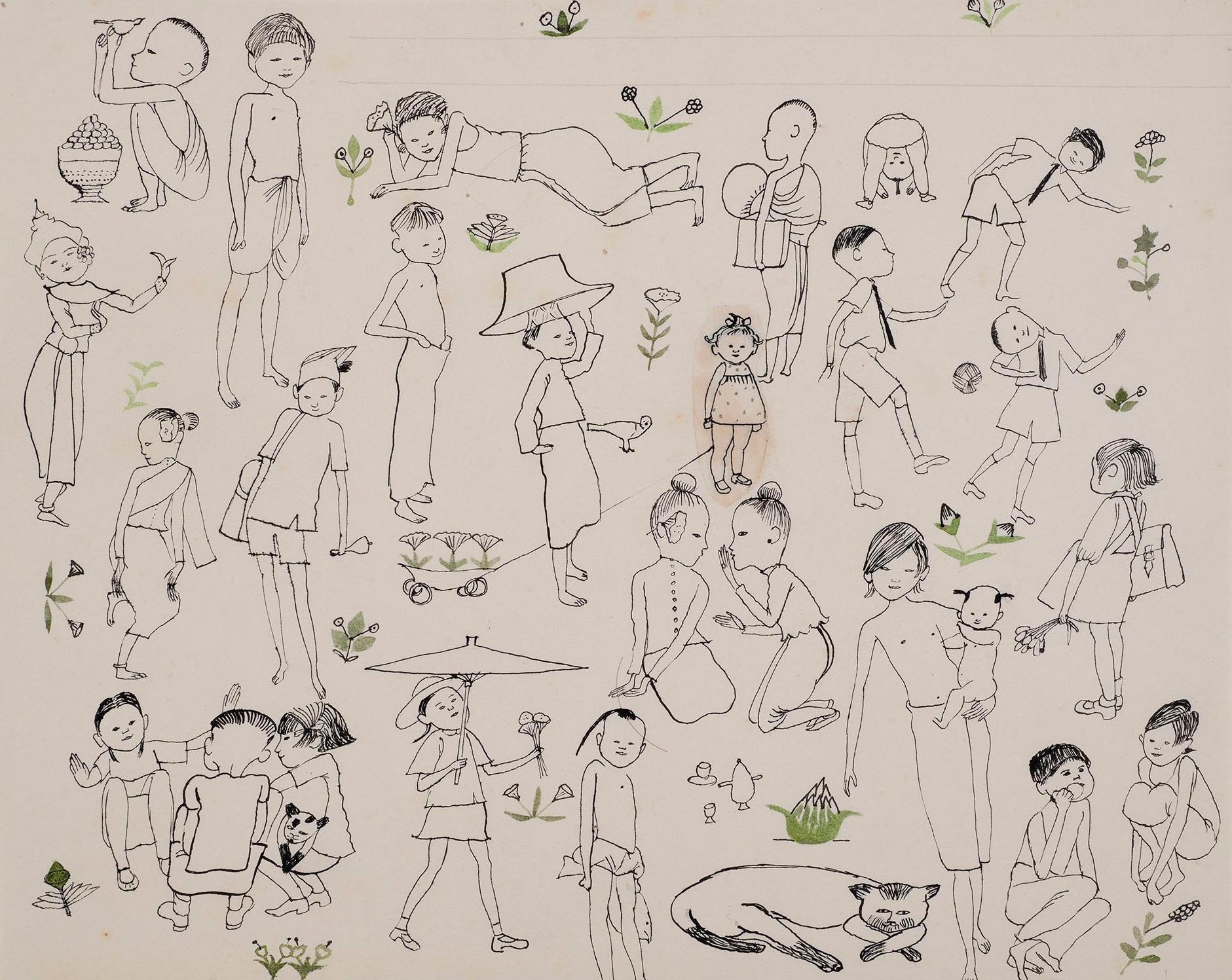
Jacqueline Ayer, Little Silk, 1970
Jacqueline Ayer (1930–2012) had a career that spanned many creative fields. She began as a fashion illustrator, and later turned her hand to children’s books, textiles and garments, as she worked in New York, Paris, London, Bangkok, Hong Kong and across India. Ayer’s fifth book, Little Silk, is about a lost doll who eventually finds her way to a loving home. It takes place in Hong Kong, where Ayer lived with her daughters from 1963 to 1965.
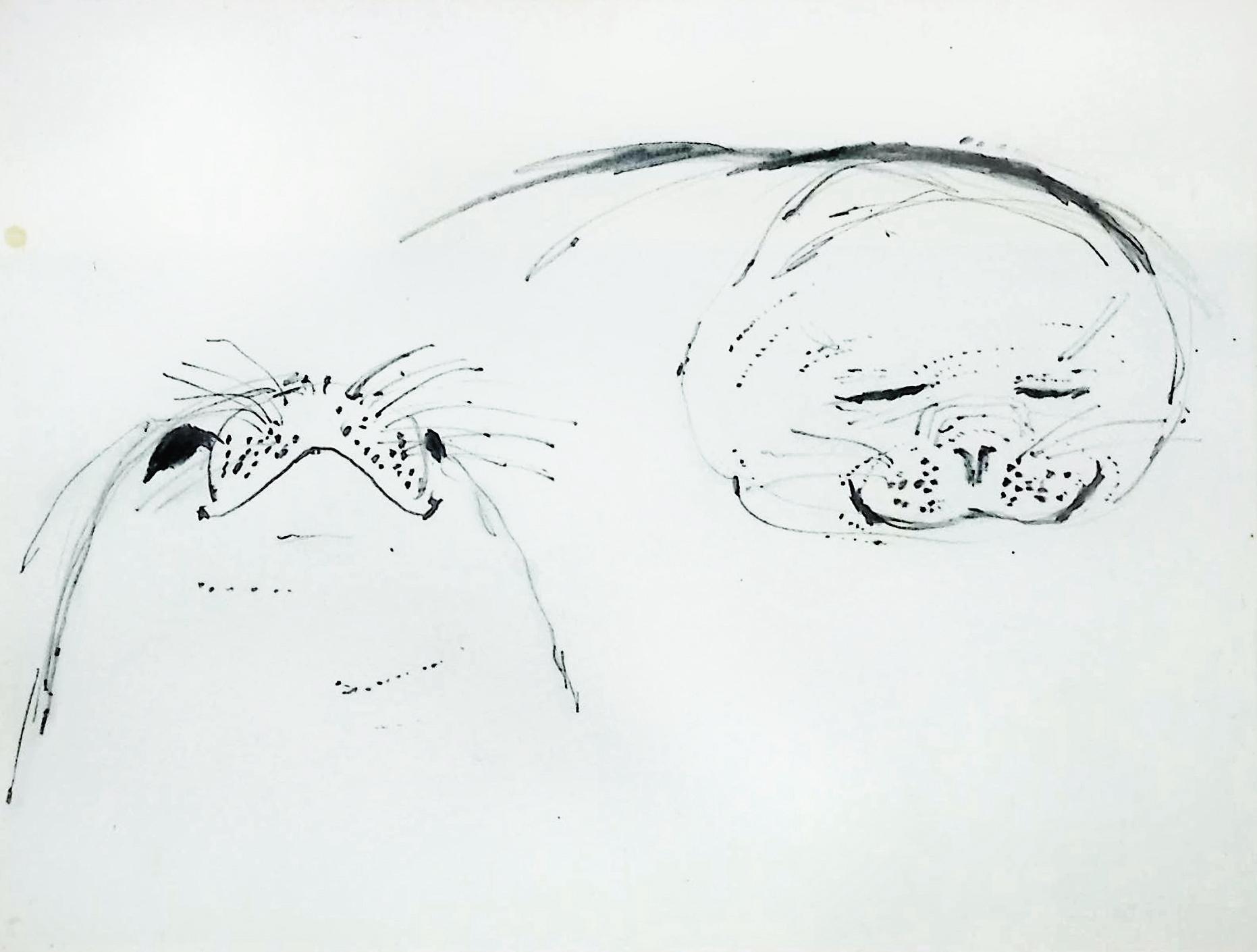
Untitled (illustration for "Einar and the Seal"), c. 1977
Janina Ede (1937-2018) created covers and illustrations for over 100 books from the 1950s to the 1980s. Many of her illustrations feature animals, which she drew from life.
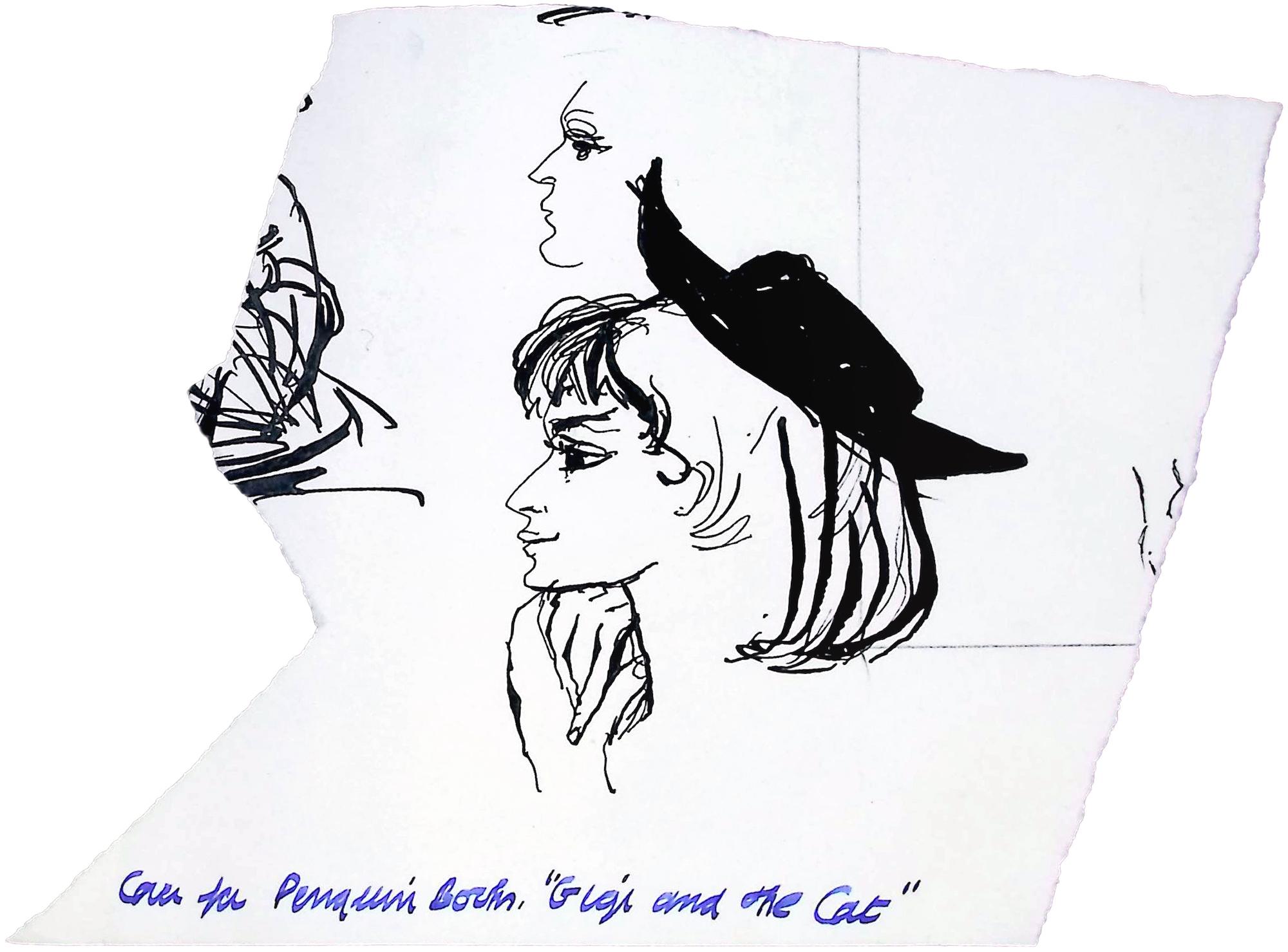
Draft cover illustration for Collette's "Gigi and the Cat", c. 1958
British illustrator Janina Ede (1937-2018) created covers and illustrations for over 100 books from the 1950s to the 1980s.
![Zagadki [Riddles]](https://cdn.sanity.io/images/n83t80i6/production/32f82c0fdcc37913f780c6ed76a28e7382036e3f-1328x1670.jpg?auto=format&fit=max&q=75&w=1328)
Lev Mordvinov, Zagadki [Riddles], 1929
In this book, a series of riddles about household objects are paired with illustrations of them. It was published in Leningrad (Saint Petersburg), Russia at a time when children’s books became a mass media phenomenon. Over a ten-year period, almost 10,000 titles were published in several editions of up to 200,000. Many of these books took experimental approaches to storytelling, design and layout.
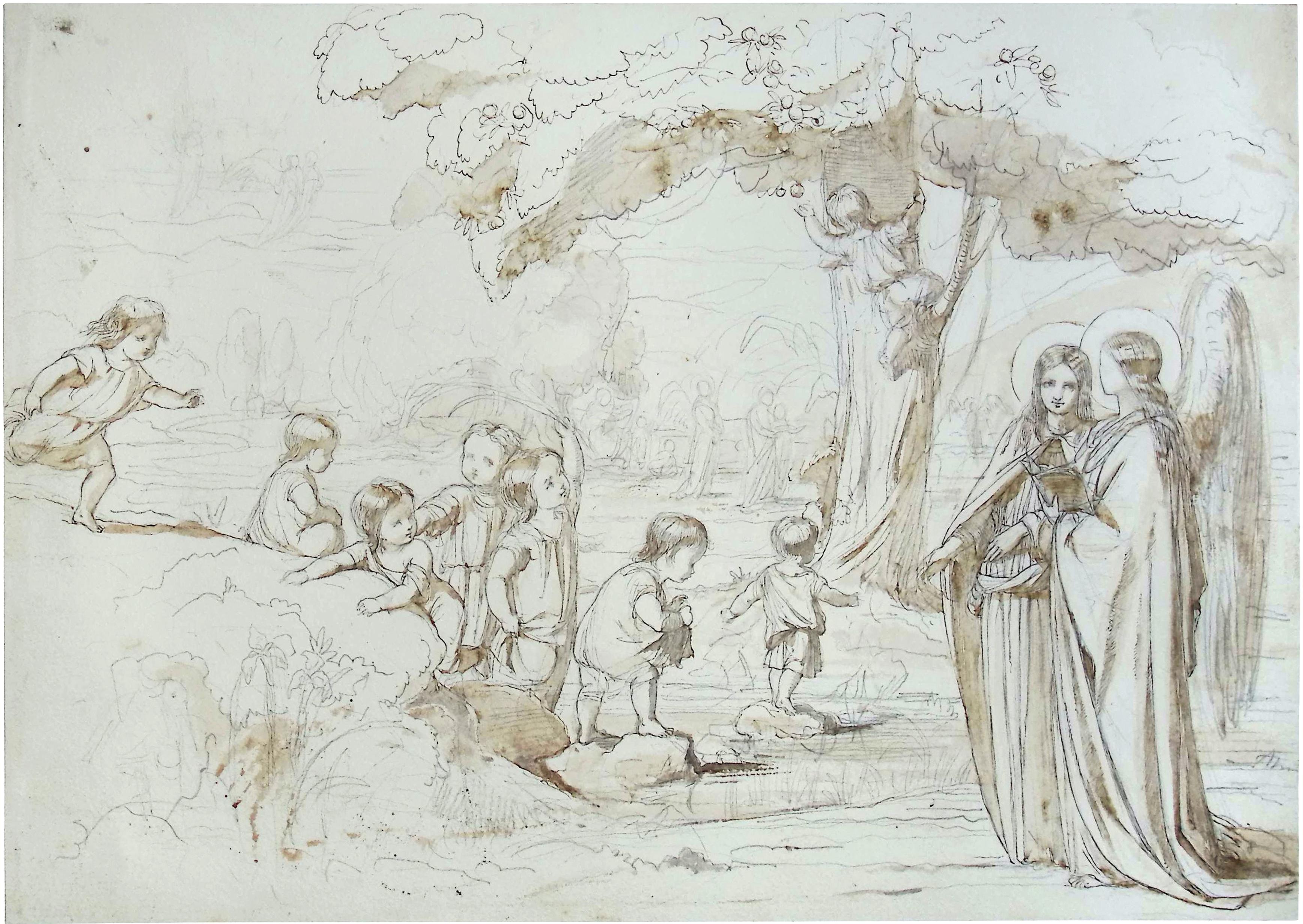
Untitled, Date unknown
Eleanor Vere Boyle (1825 – 1916) illustrated poetry and prose by some of the most popular authors of her time. She regularly drew and painted using ink and watercolour, sketching landscapes, animals and her children from life. She also made drawings from her imagination, often reflecting spiritual themes.
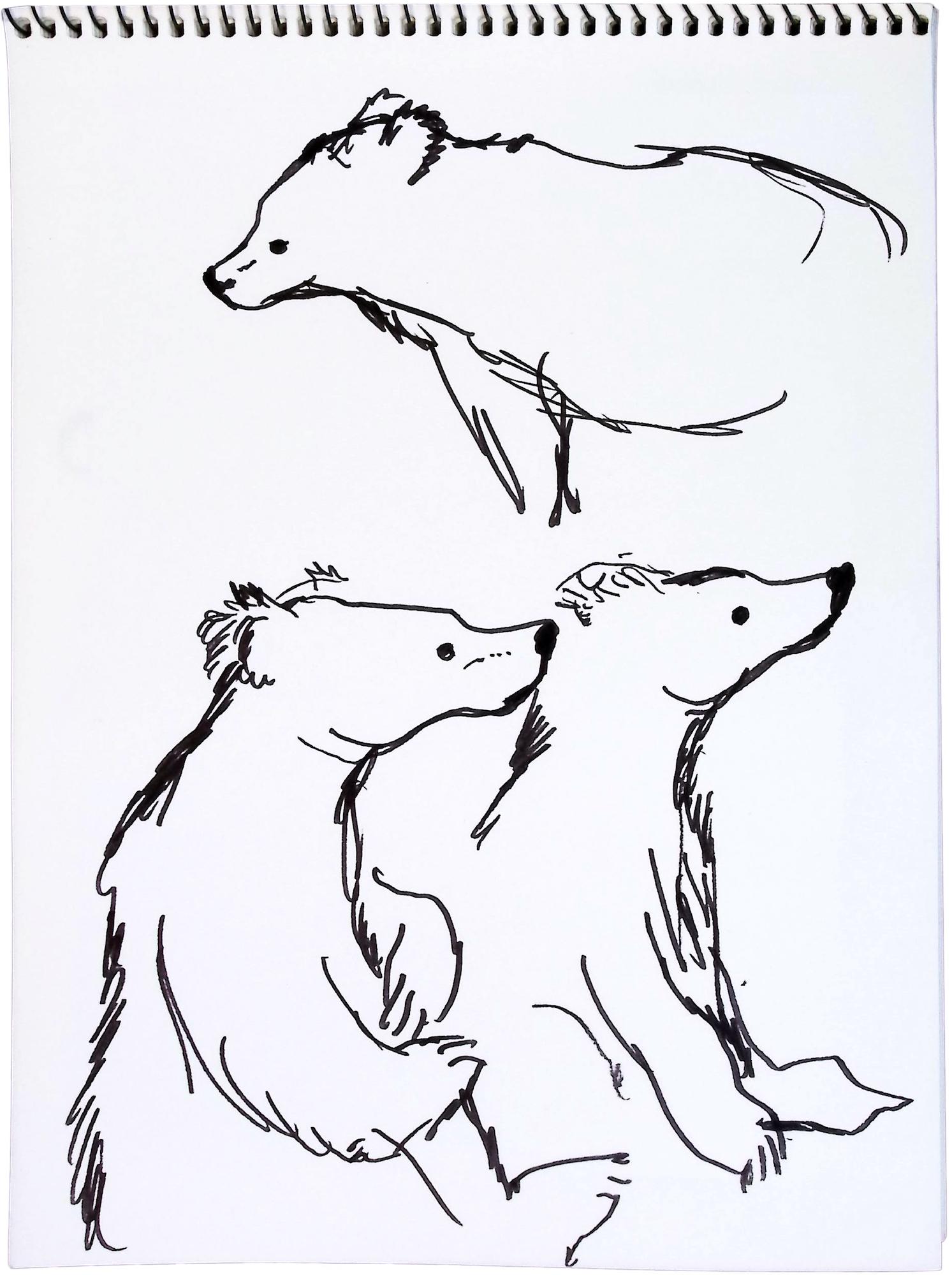
Untitled, Date unknown
British illustrator Janina Ede (1937-2018) created covers and illustrations for over 100 books from the 1950s to the 1980s. Many of her illustrations feature animals, which she drew from life.
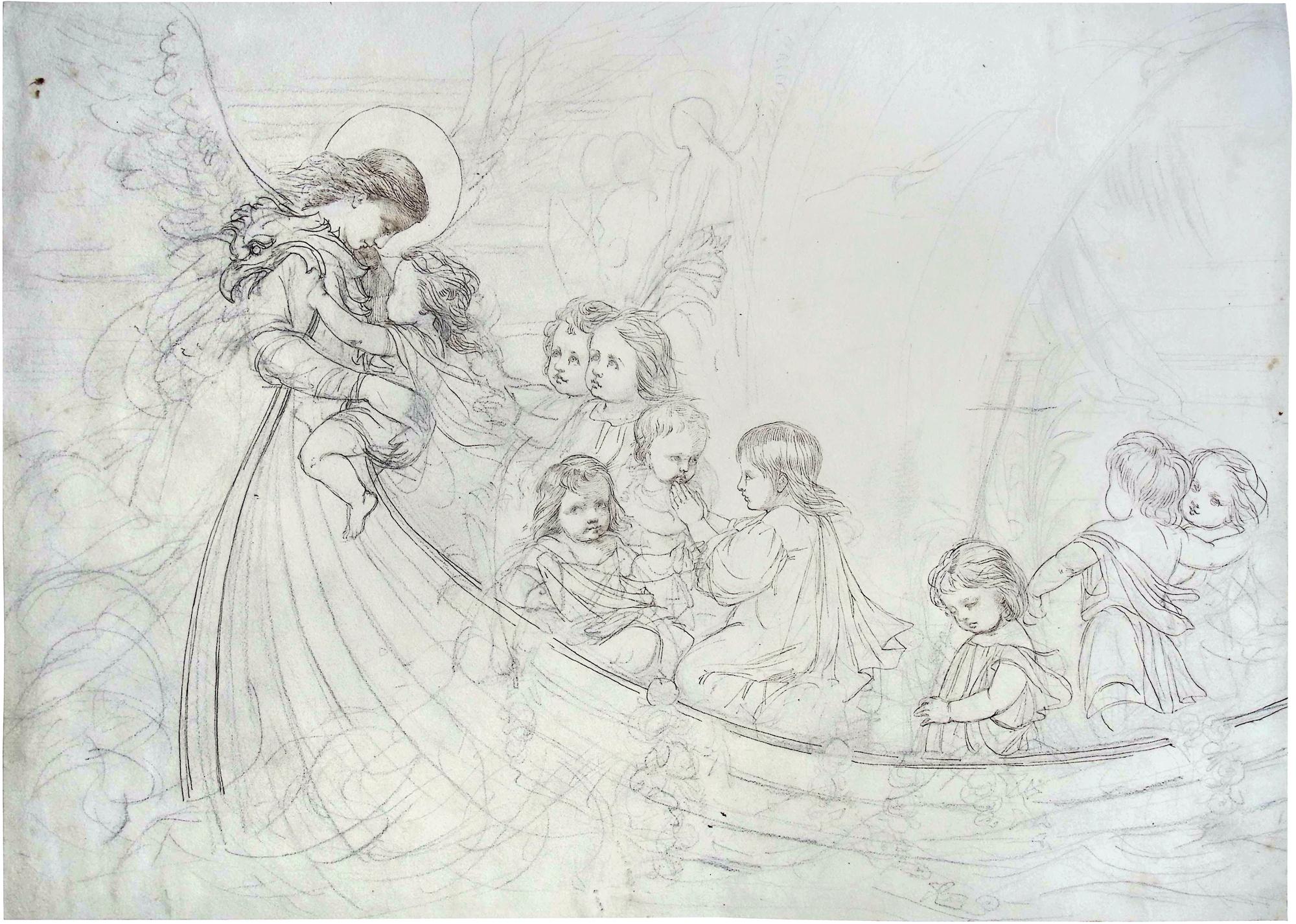
Untitled, Date unknown
Eleanor Vere Boyle (1825 – 1916) illustrated poetry and prose by some of the most popular authors of her time. She regularly drew and painted using ink and watercolour, sketching landscapes, animals and her children from life. She also made drawings from her imagination, often reflecting spiritual themes.
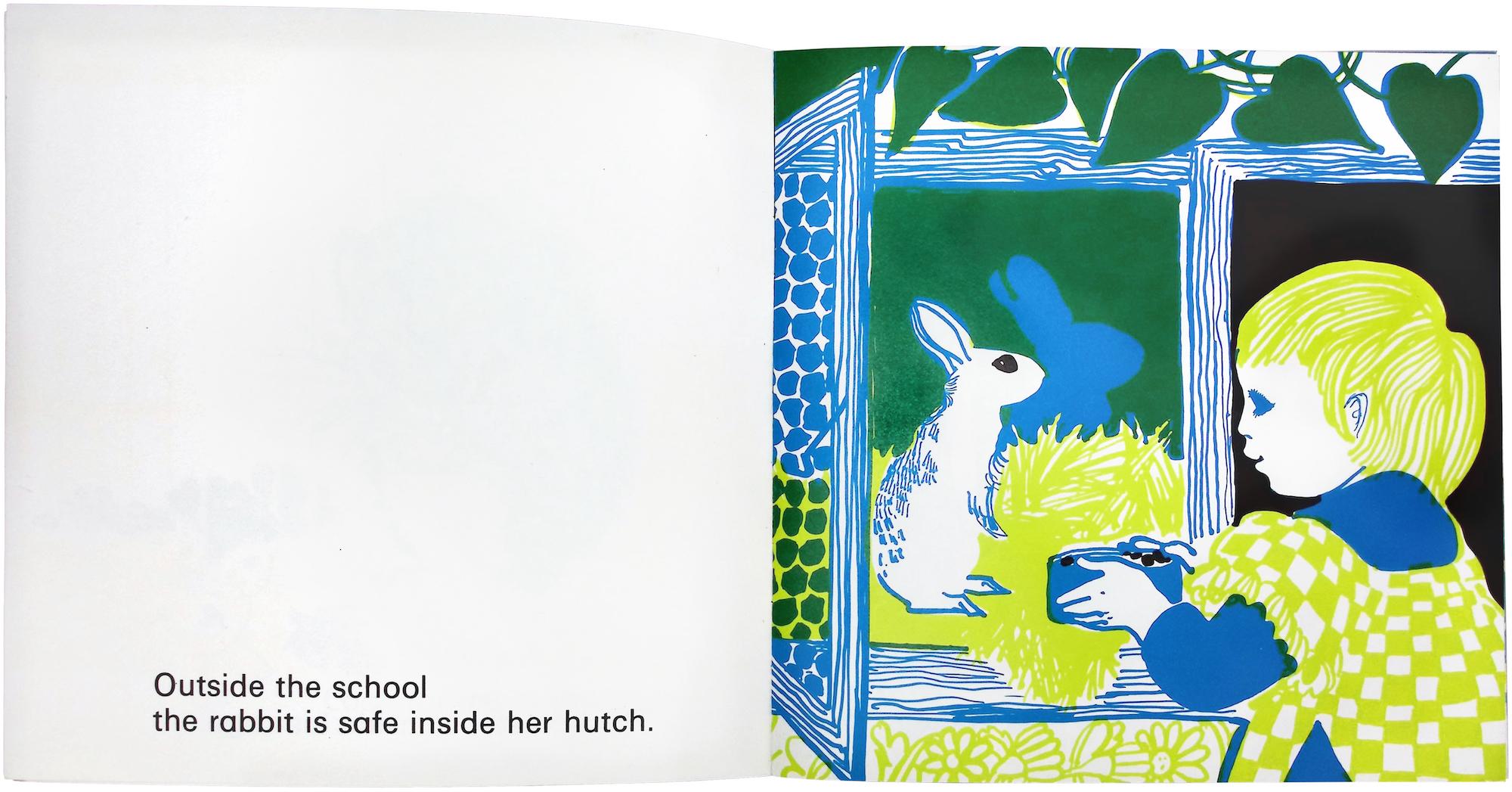
It's Sunny Outside, 1974
British illustrator Janina Ede (1937-2018) created covers and illustrations for over 100 books from the 1950s to the 1980s. Many of her illustrations feature animals, which she drew from life.
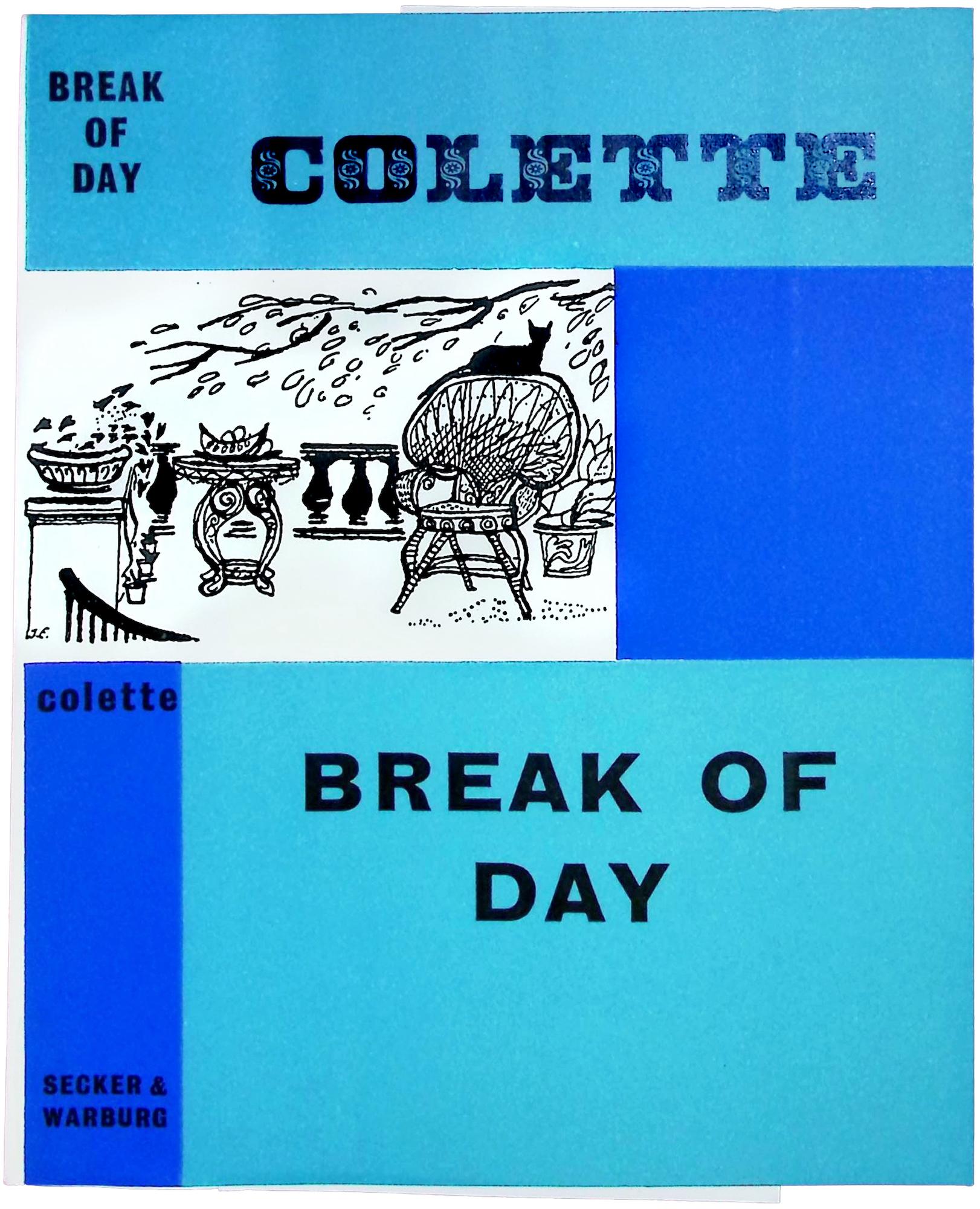
Book cover proof for Colette's "Break of Day", 1961
British illustrator Janina Ede (1937-2018) created covers and illustrations for over 100 books from the 1950s to the 1980s. She designed the covers of several books by French author and pioneer of autofiction Sidonie-Gabrielle Colette.
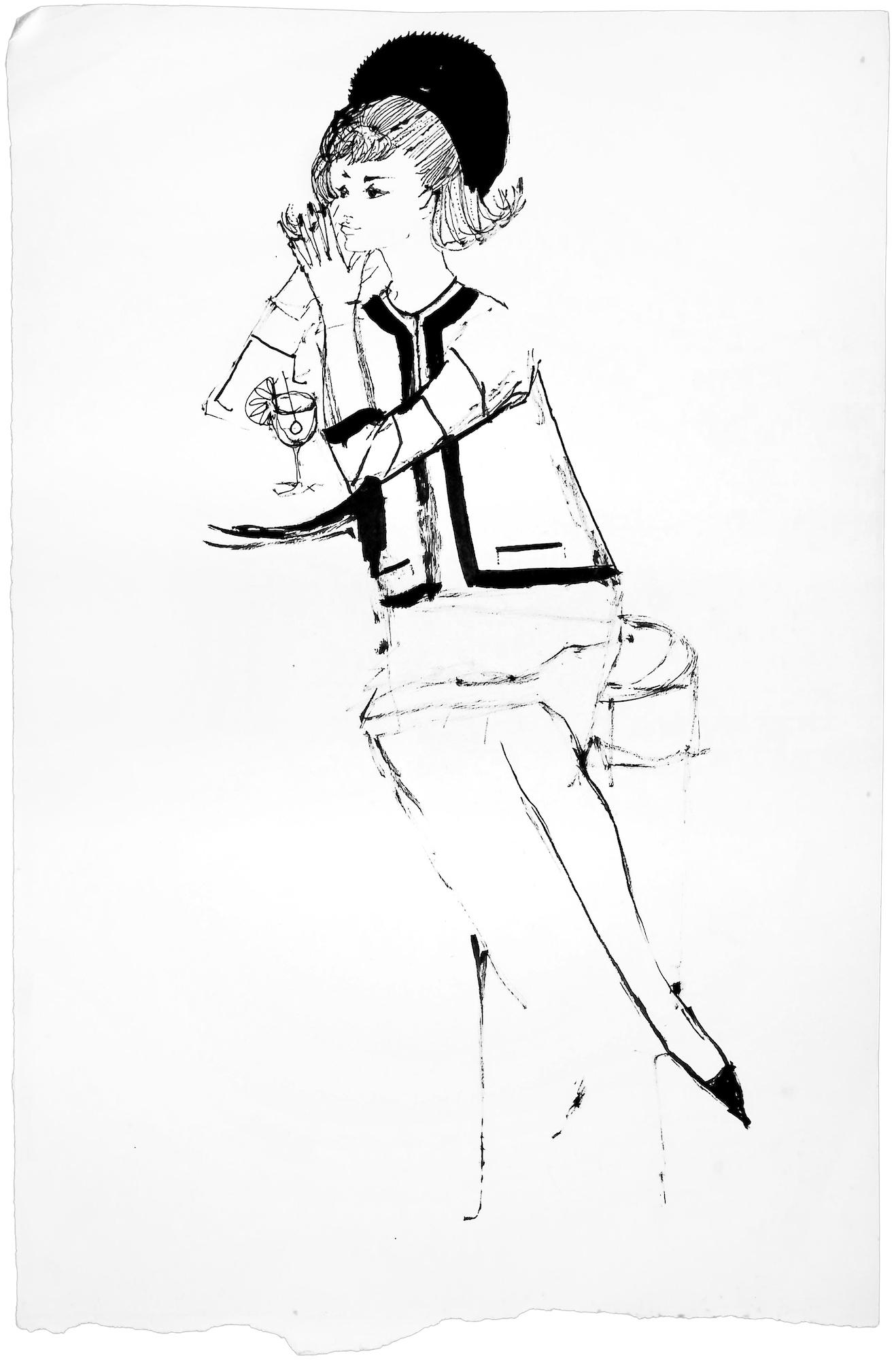
Untitled, Date unknown
British illustrator Janina Ede (1937-2018) created covers and illustrations for over 100 books from the 1950s to the 1980s. Ede often worked using just black ink, combining pen and brushwork to create bold illustrations with fine details.
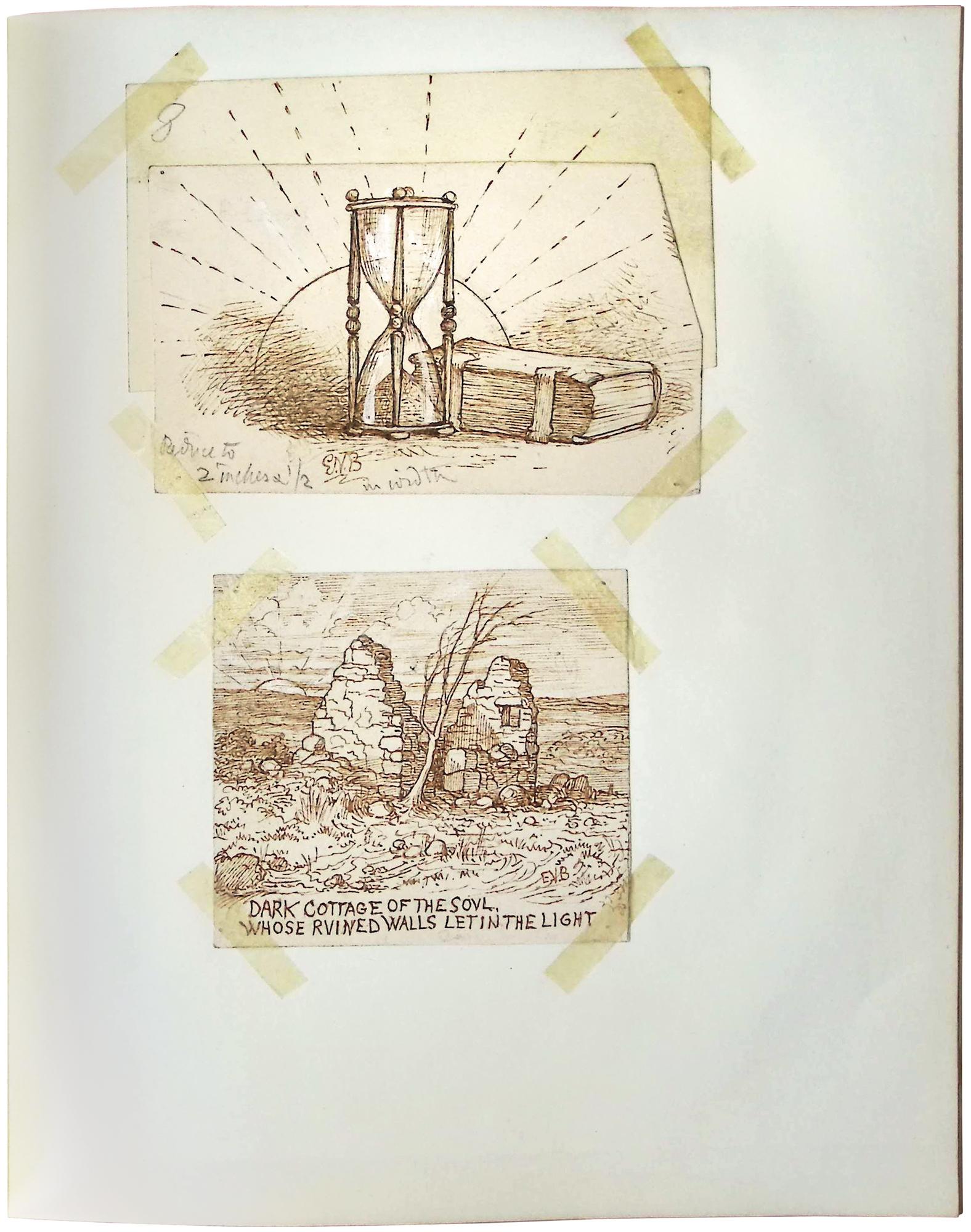
Untitled (illustrations for A Book of Heavenly Birthdays), c. 1893
Eleanor Vere Boyle (1825 – 1916) illustrated poetry and prose by some of the most popular authors of her time. She regularly drew and painted using ink and watercolour, sketching landscapes, animals and her children from life. She also made drawings from her imagination, often reflecting spiritual themes. These drawings were used as some of the final illustrations printed in the artists' publication A Book of Heavenly Birthdays (1893, London Elliot Stock)
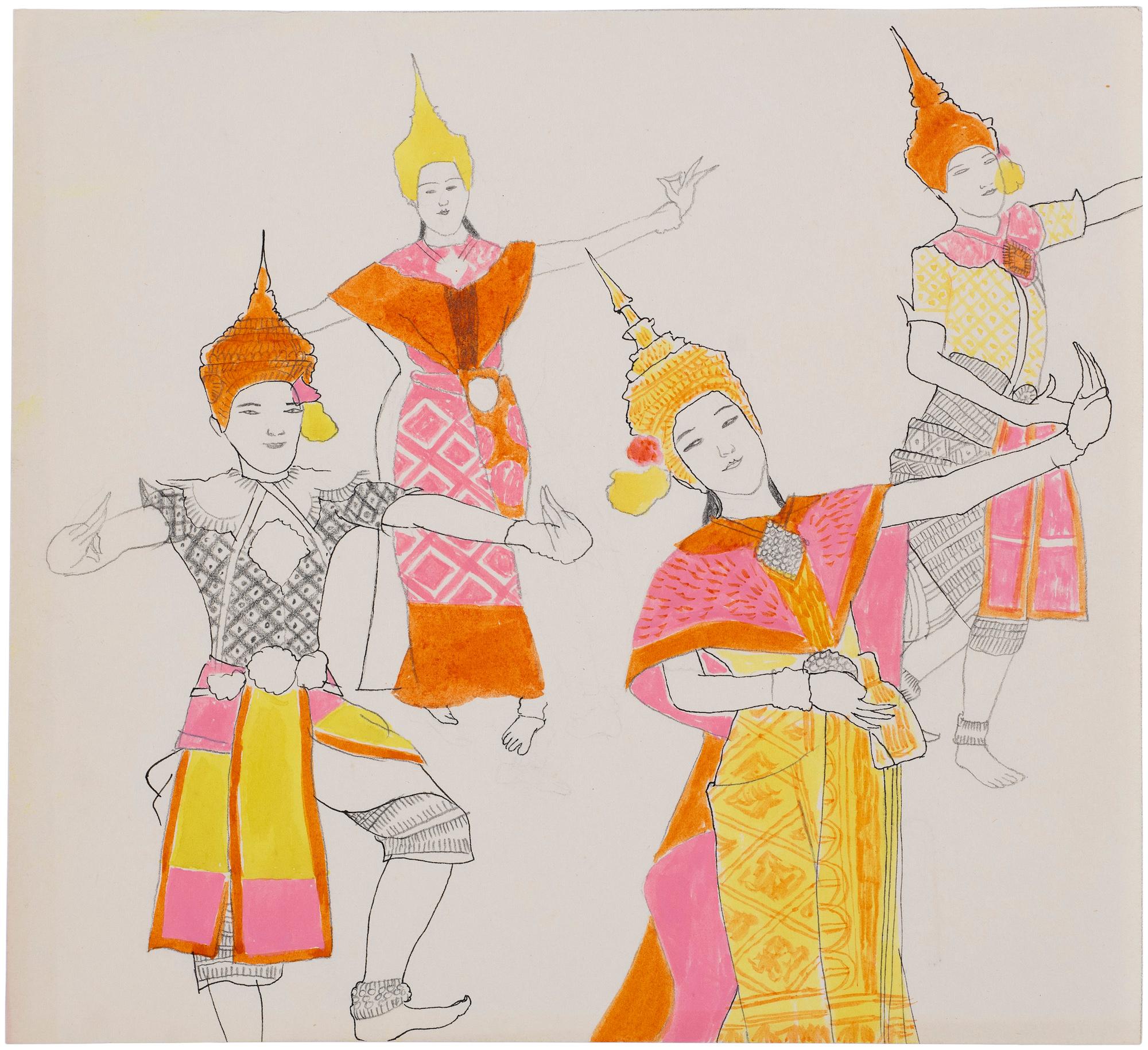
Jacqueline Ayer, Untitled, c. 1959
Jacqueline Ayer (1930–2012) had a career that spanned many creative fields. She began as a fashion illustrator, and later turned her hand to children’s books, textiles and garments, as she worked in New York, Paris, London, Bangkok, Hong Kong and across India.
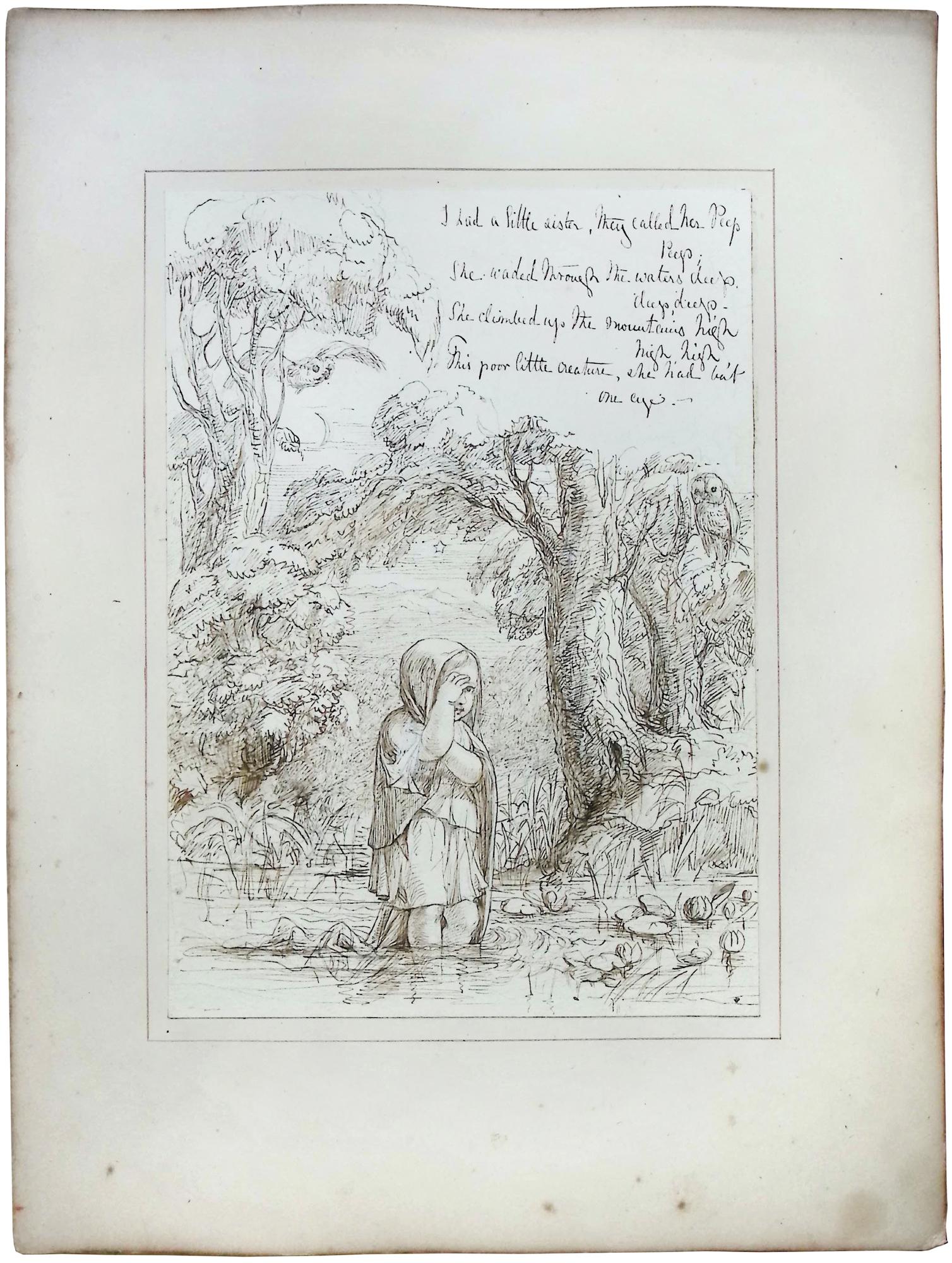
Untitled (illustration for Child's Play, 'I have a little sister'), c. 1851
Eleanor Vere Boyle (1825 – 1916) illustrated poetry and prose by some of the most popular authors of her time. She regularly drew and painted using ink and watercolour, sketching landscapes, animals and her children from life. She also made drawings from her imagination, often reflecting spiritual themes. This illustration is from her first book, Child’s Play (1851). Boyle provided her publishers with black and white drawings that were then converted into etchings by the printer. These were later reproduced as lithographs, in colours chosen by Boyle.
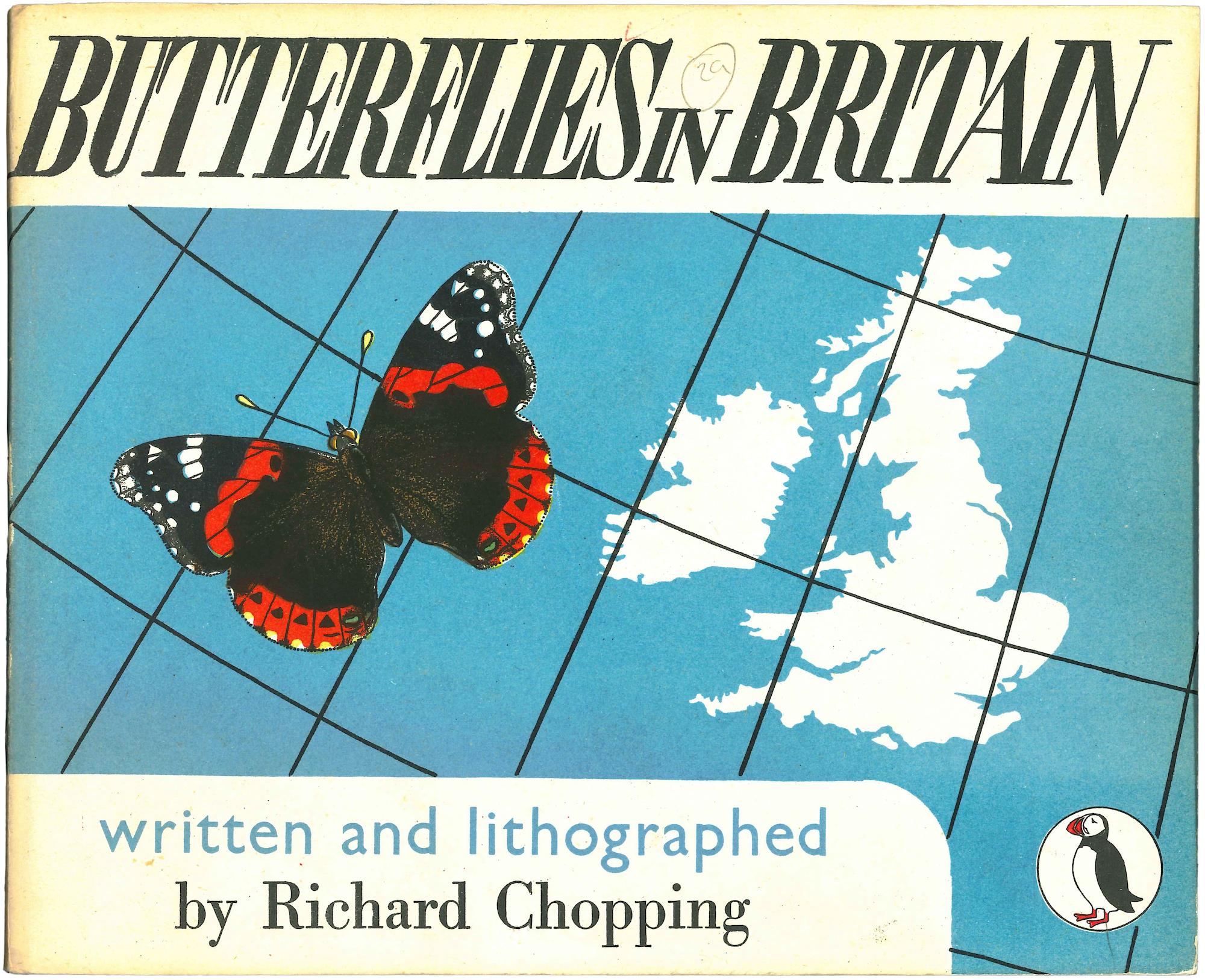
Butterflies in Britain, 1943
The Puffin Picture Books series was established by designer and editor Noel Carrington (1895-1989). In 1933, artist Pearl Binder (1904-1990) sent Carrington a package of Soviet children’s books. “They were produced by the million on very cheap paper, but the drawings were vigorous and the colour delightful” he later remembered. These books inspired Carrington to edit a series of affordable books that would encourage “the child’s awakening interest in its surroundings... I felt that colour was essential, and that artists could... be more successful in books of this nature than the camera”. Many artists and illustrators worked on the series, adapting their ways of working to lithographic printing and the Puffin Picture Book format. Most of the 120 books in the series were printed on one large sheet of paper: one side in colour and one in black-and-white. Each sheet was cut, folded and stapled to create a softcover book.
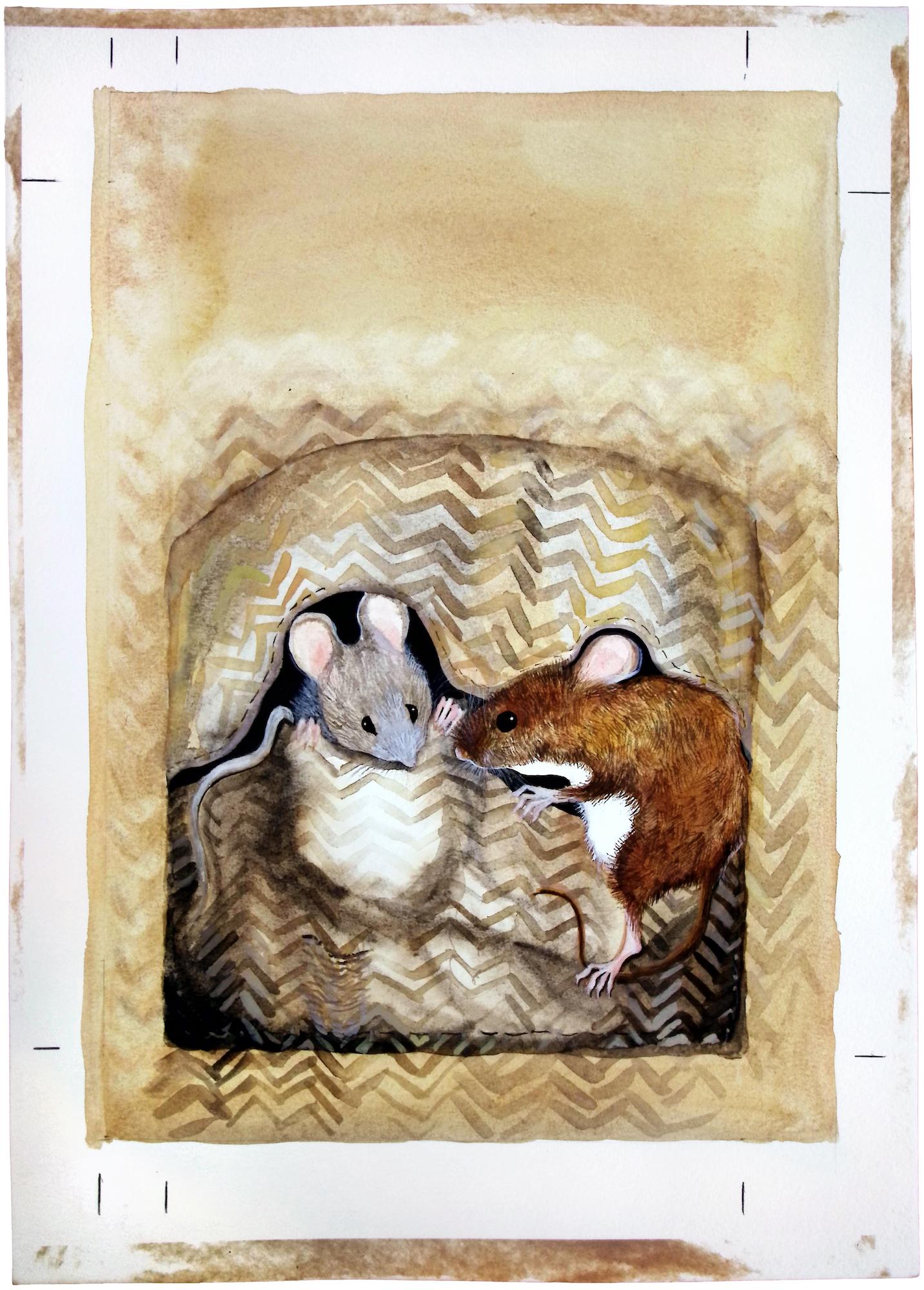
Draft cover illustration for A Pocket Full of Mice , c. 1984
British illustrator Janina Ede (1937-2018) created covers and illustrations for over 100 books from the 1950s to the 1980s. Many of her illustrations feature animals, which she drew from life.
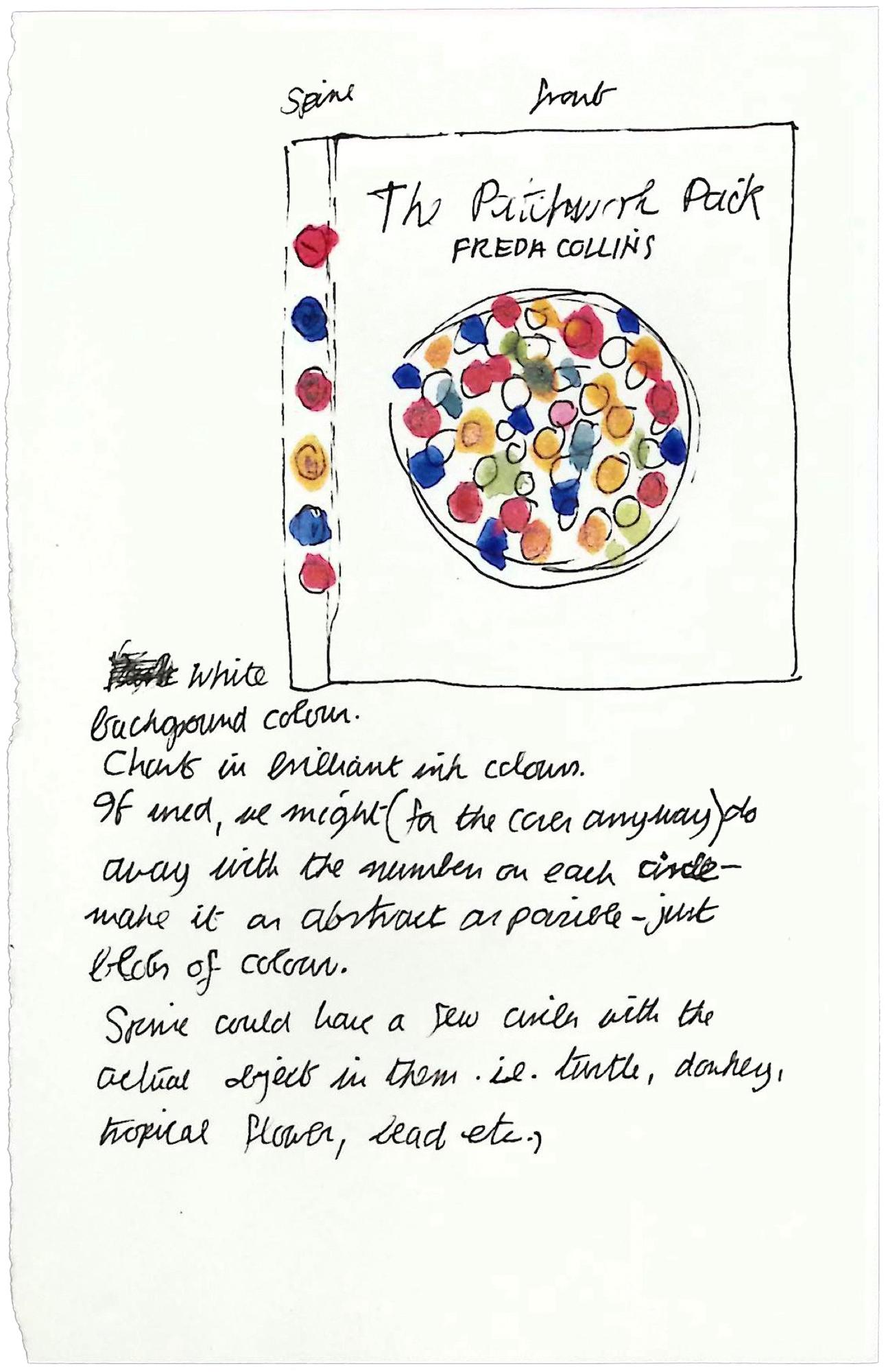
Untitled, c. 1968
British illustrator Janina Ede (1937-2018) created covers and illustrations for over 100 books from the 1950s to the 1980s. In the 1960s, Ede began working on children’s books. The Patchwork Pack (1968) by Freda Collins is about a group of ‘Brownies’ – the name given to members of the worldwide girl-guiding movement.
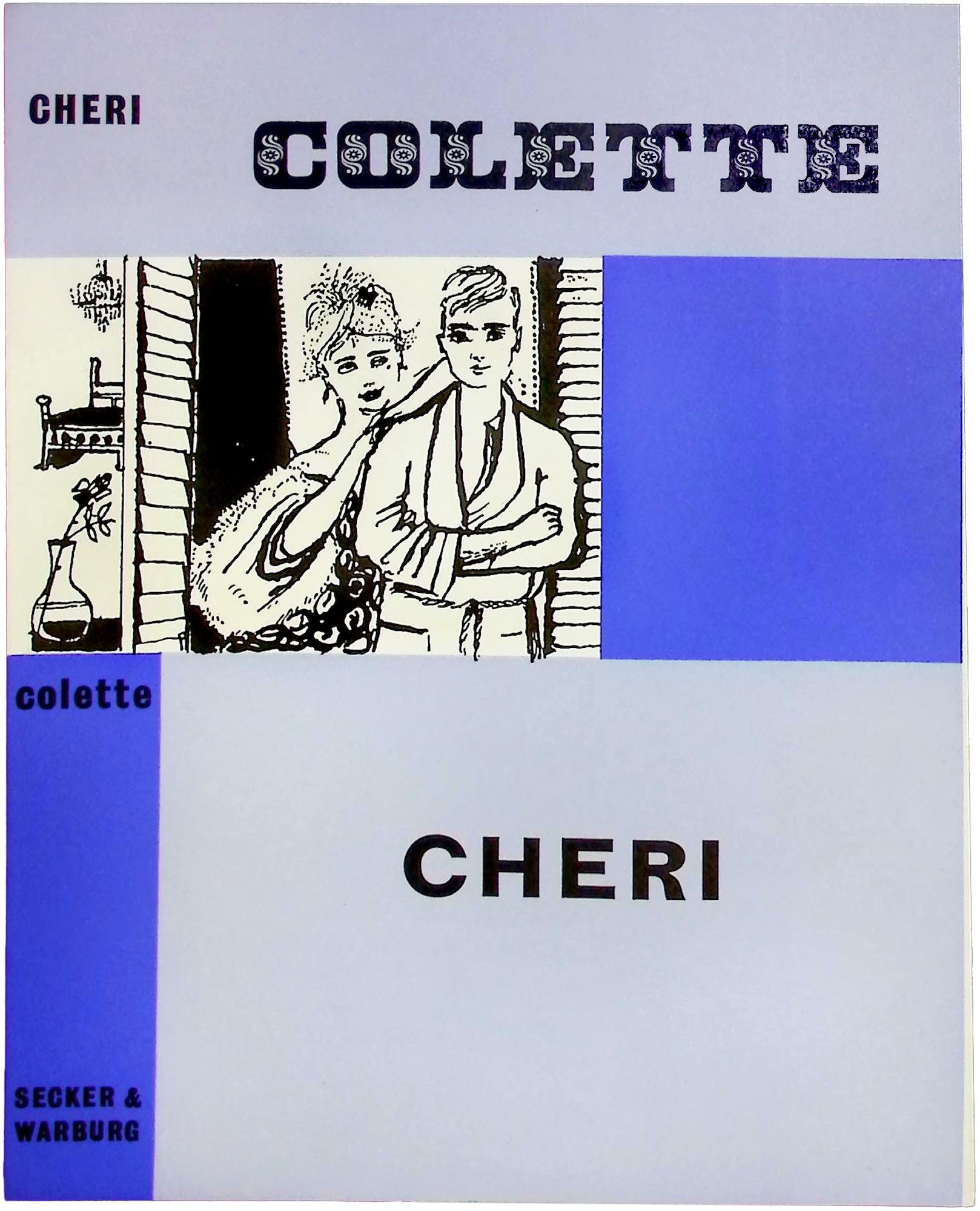
Book cover proof for Colette's "Cheri", 1960
British illustrator Janina Ede (1937-2018) created covers and illustrations for over 100 books from the 1950s to the 1980s. She designed the covers of several books by French author and pioneer of autofiction Sidonie-Gabrielle Colette.
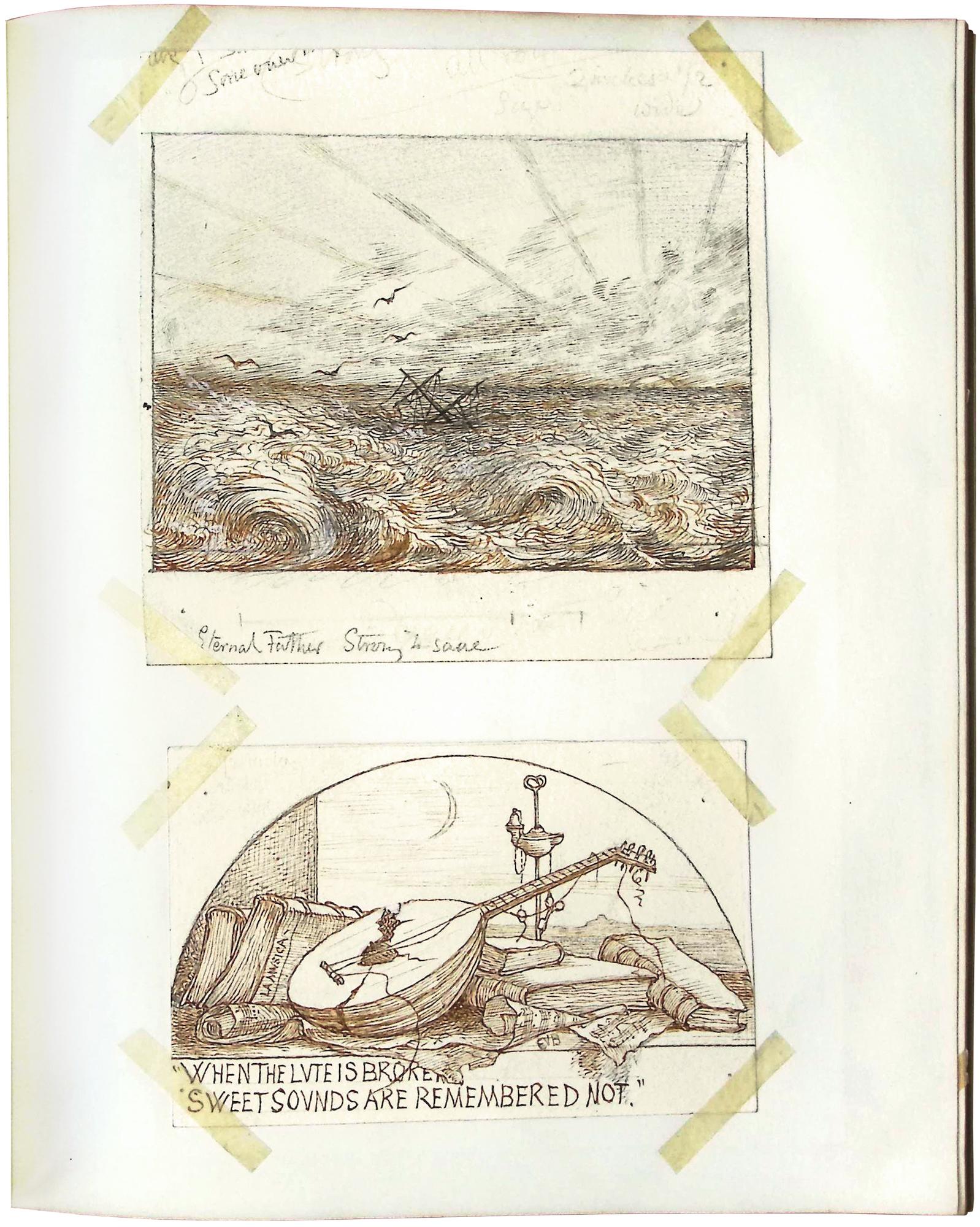
Untitled (illustrations for A Book of Heavenly Birthdays), c. 1893
Eleanor Vere Boyle (1825 – 1916) illustrated poetry and prose by some of the most popular authors of her time. She regularly drew and painted using ink and watercolour, sketching landscapes, animals and her children from life. She also made drawings from her imagination, often reflecting spiritual themes. These drawings were used as some of the final illustrations printed in the artists' publication A Book of Heavenly Birthdays (1893, London Elliot Stock)
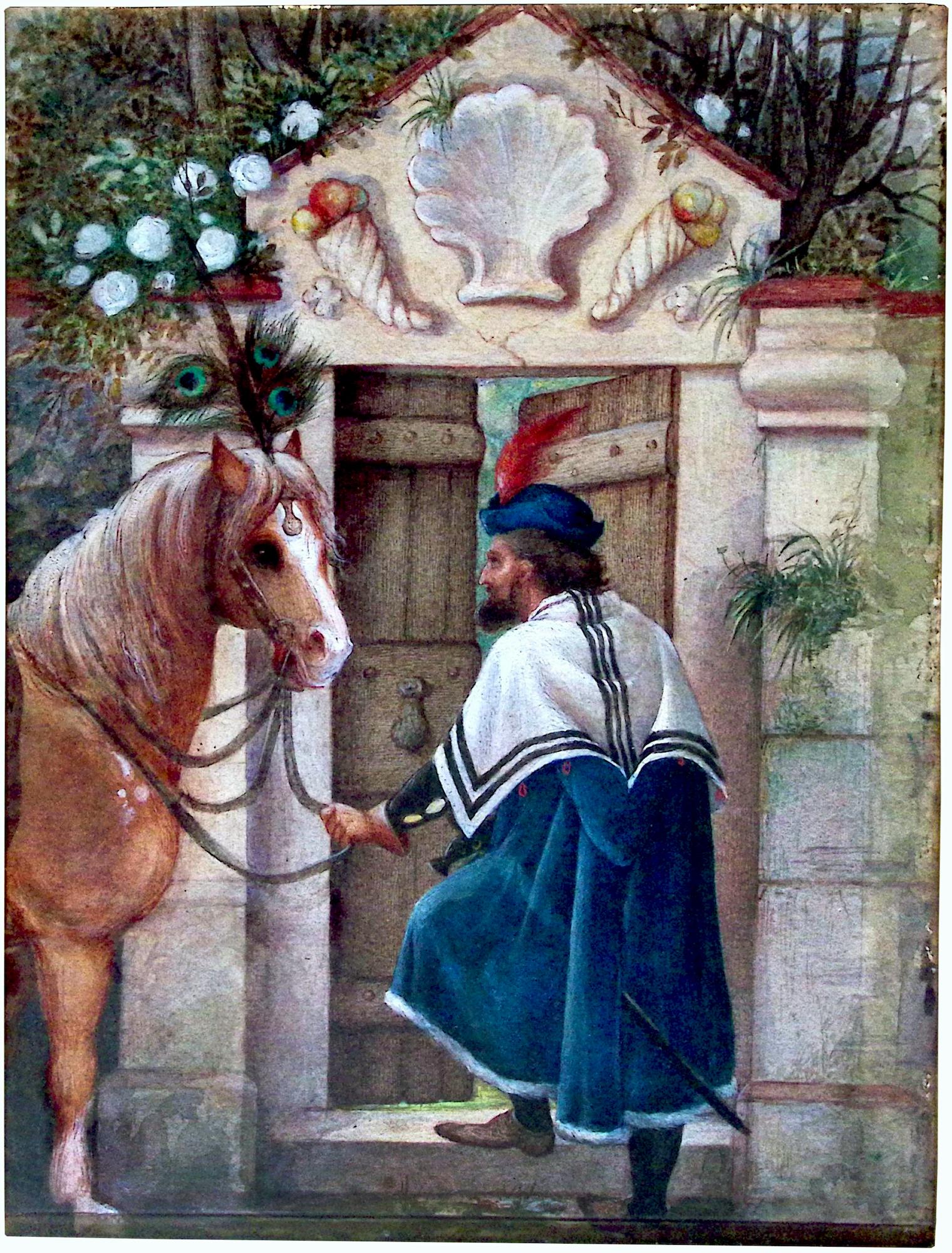
Illustration for Beauty and the Beast (the Merchant entering the Beast's Garden), c. 1875
Eleanor Vere Boyle (1825 – 1916) illustrated poetry and prose by some of the most popular authors of her time. She regularly drew and painted using ink and watercolour, sketching landscapes, animals and her children from life. She also made drawings from her imagination, often reflecting spiritual themes. This illustration is from Boyle’s 1875 retelling of Beauty and the Beast, a fairy tale where a woman is imprisoned by a monster and falls in love with him. Unlike other illustrated versions before or since, Boyle gave her beast walrus-like tusks and flippers. In several of her illustrations, Boyle used shell gold – a mixture of finely ground gold powder and gum arabic (tree sap) that would have been stored in a shallow seashell. In the final publication, the caption for this illustration reads, "The Merchant found a little door in the wall, and he opened it, and went into the Beast's Garden."
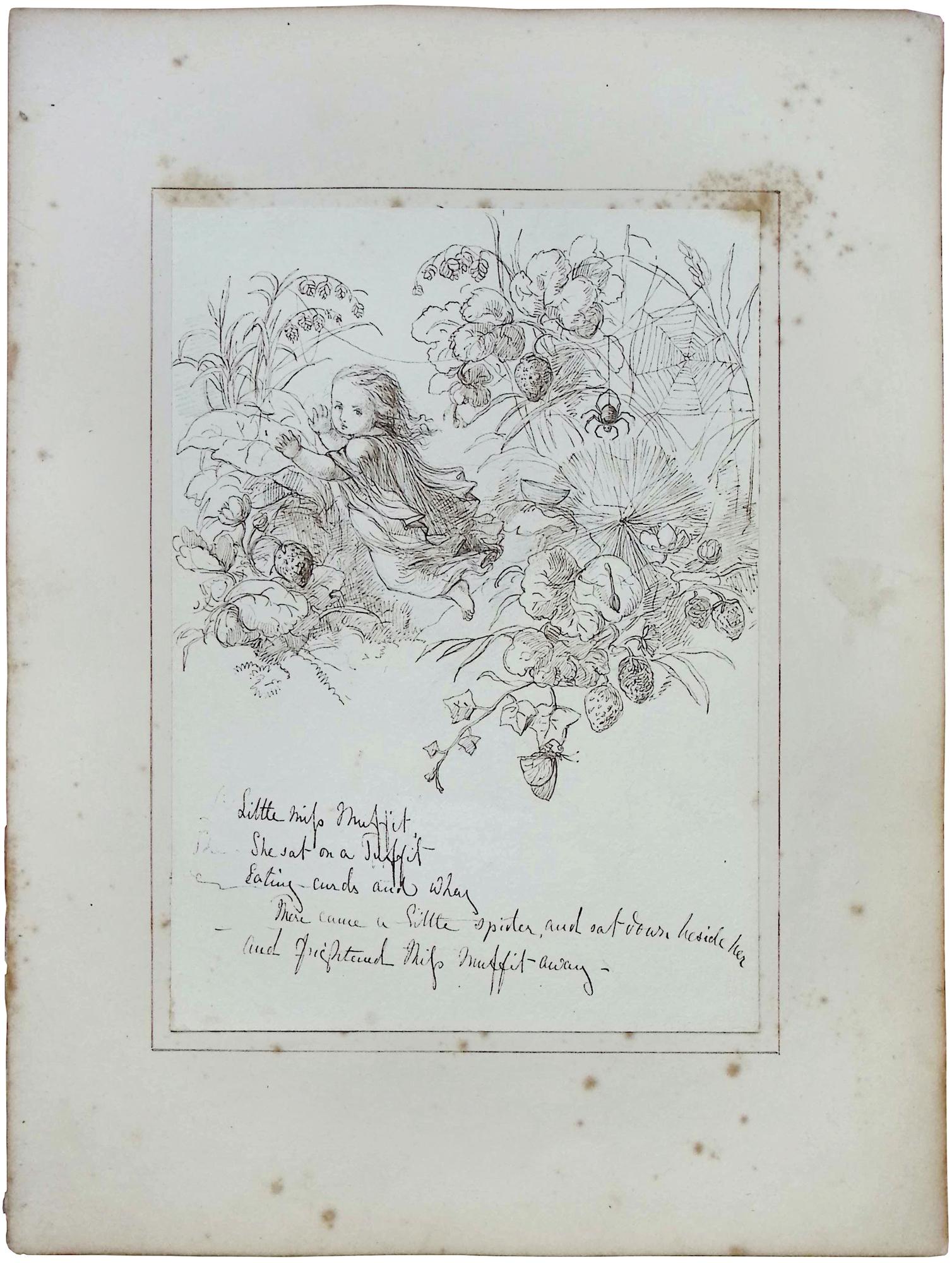
Untitled (illustration for Child's Play, 'Little Miss Muffit'), c. 1851
Eleanor Vere Boyle (1825 – 1916) illustrated poetry and prose by some of the most popular authors of her time. She regularly drew and painted using ink and watercolour, sketching landscapes, animals and her children from life. She also made drawings from her imagination, often reflecting spiritual themes. This illustration is from her first book, Child’s Play (1851). Boyle provided her publishers with black and white drawings that were then converted into etchings by the printer. These were later reproduced as lithographs, in colours chosen by Boyle.
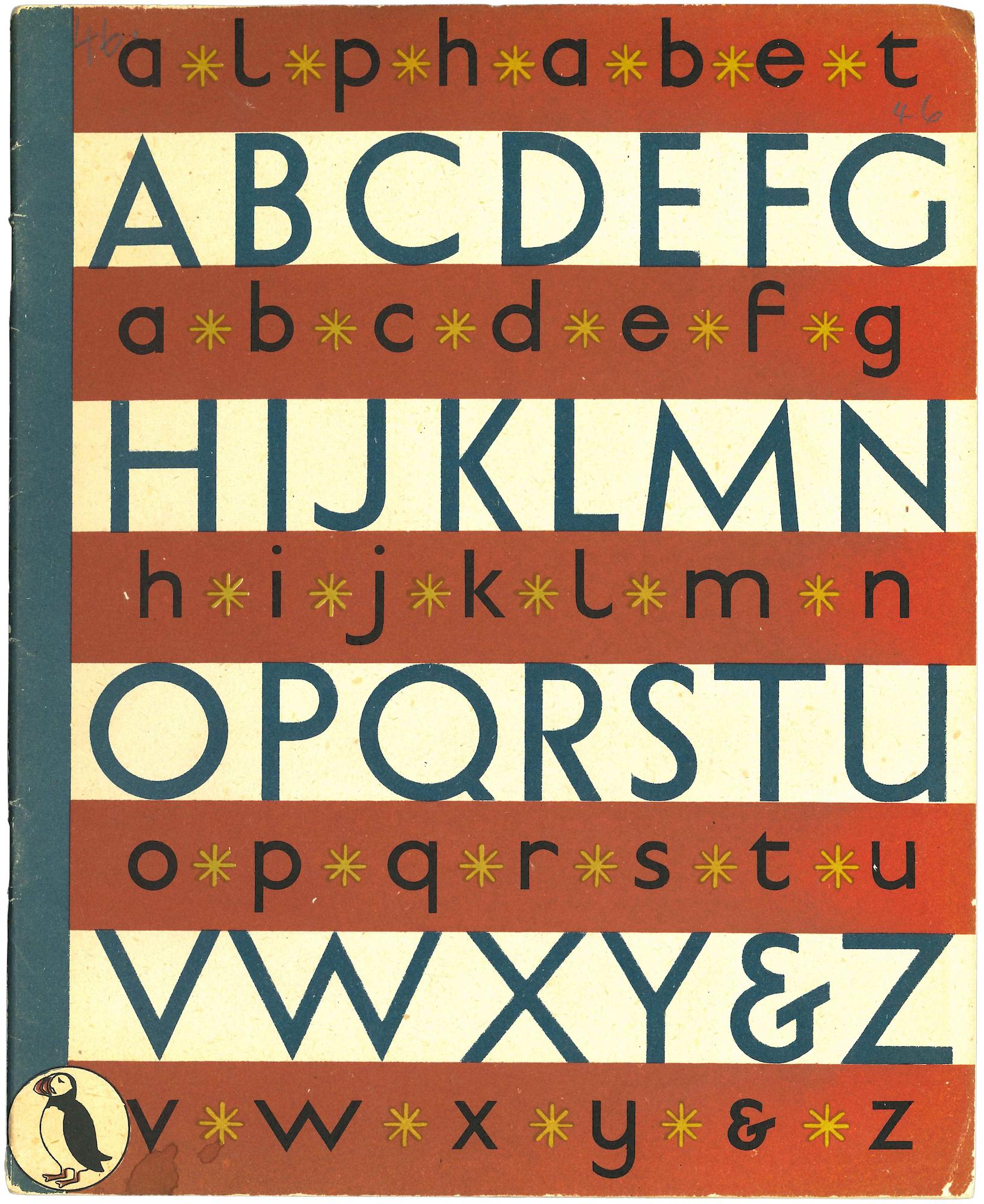
A Child’s Alphabet, 1945
The Puffin Picture Books series was established by designer and editor Noel Carrington (1895-1989). In 1933, artist Pearl Binder (1904-1990) sent Carrington a package of Soviet children’s books. “They were produced by the million on very cheap paper, but the drawings were vigorous and the colour delightful” he later remembered. These books inspired Carrington to edit a series of affordable books that would encourage “the child’s awakening interest in its surroundings... I felt that colour was essential, and that artists could... be more successful in books of this nature than the camera”. Many artists and illustrators worked on the series, adapting their ways of working to lithographic printing and the Puffin Picture Book format. Most of the 120 books in the series were printed on one large sheet of paper: one side in colour and one in black-and-white. Each sheet was cut, folded and stapled to create a softcover book.
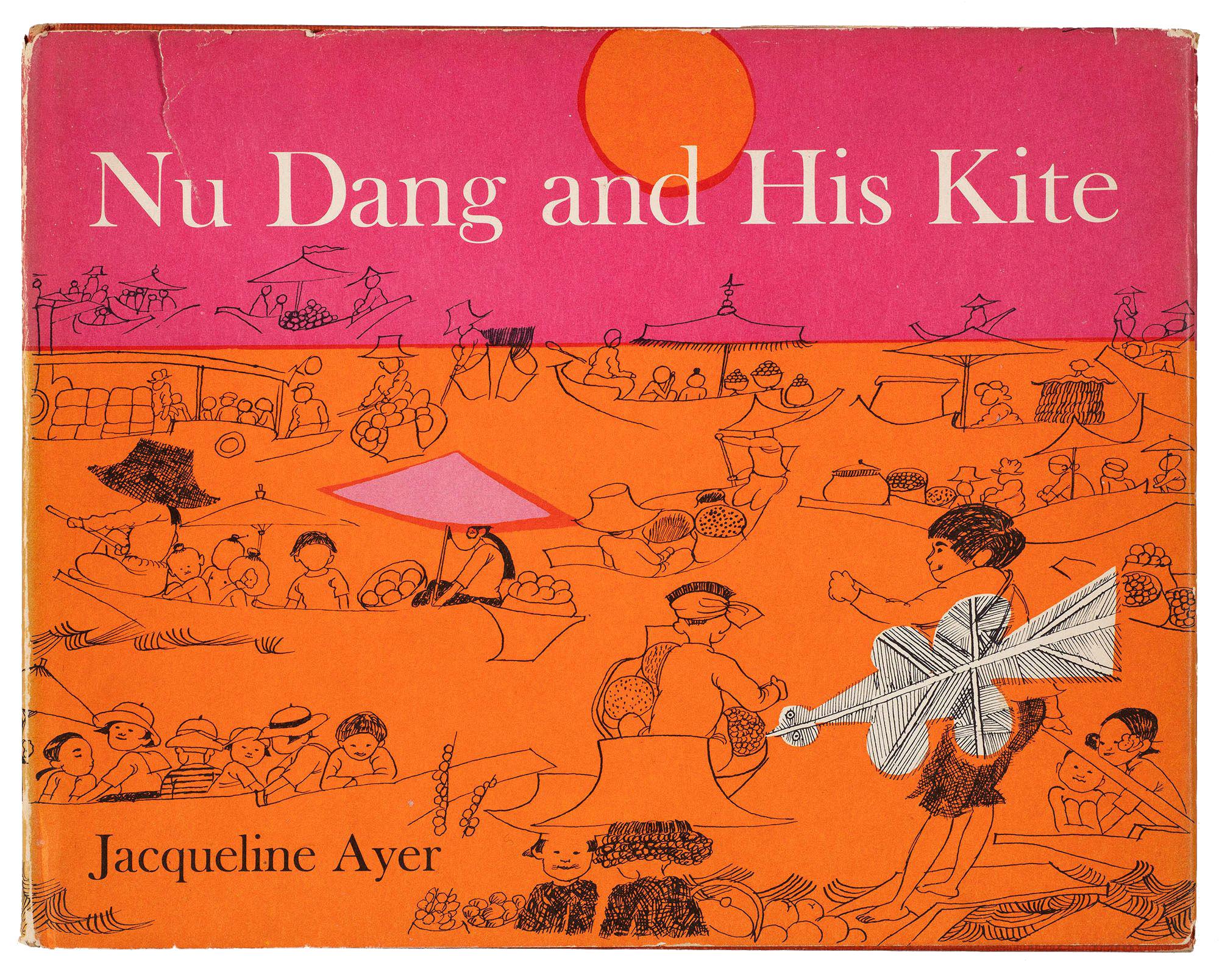
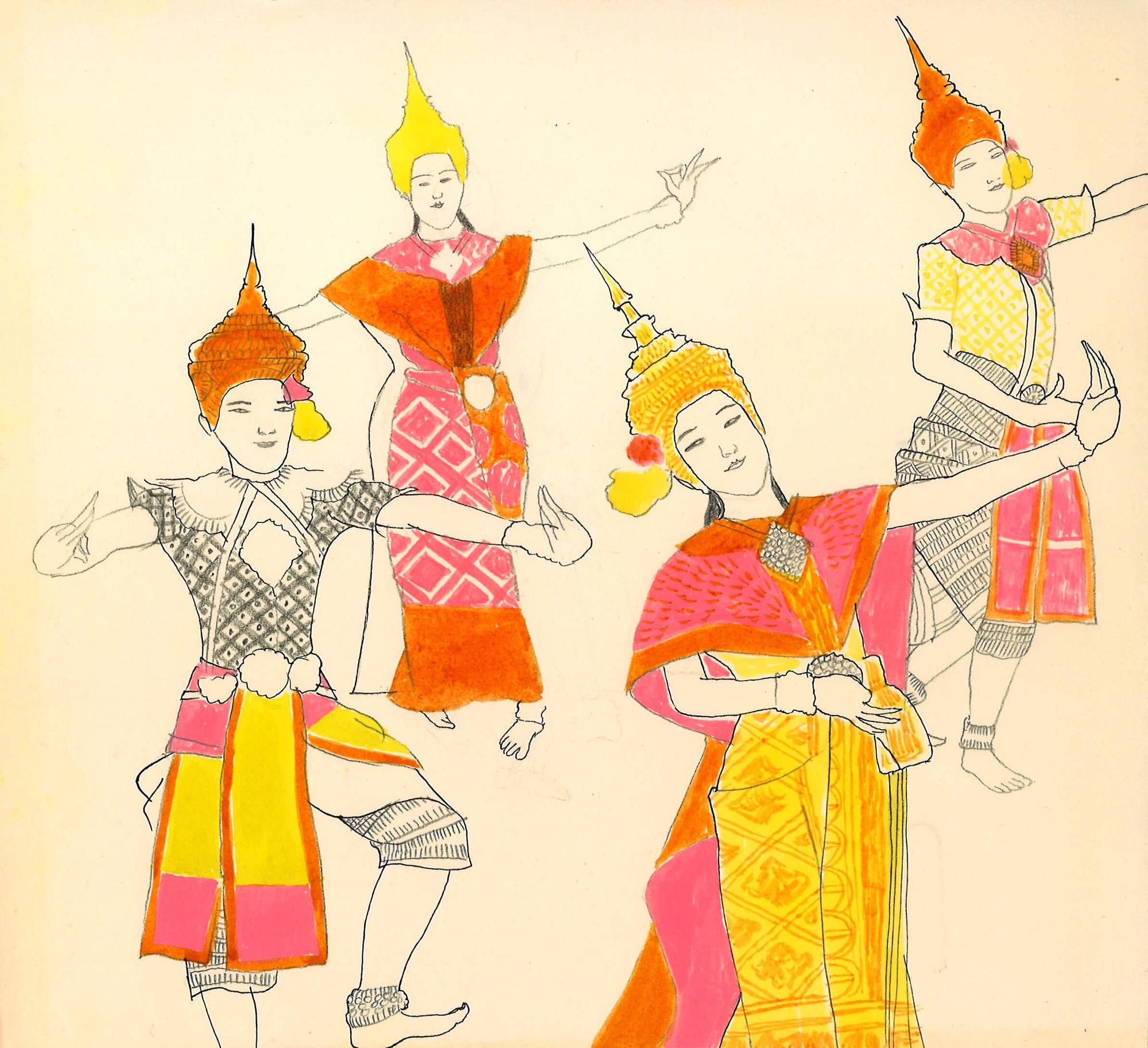
Jacqueline Ayer, Nu Dang and His Kite, 1959
After moving to Bangkok in 1956, Jacqueline learnt Thai as she was punted around the canals (‘klongs’) of the city by her gardener in a canoe. She would take piles of typewriter paper with her to sketch local people at work. Whilst visiting New York she showed these to Margaret McElderry, a children’s book editor at Harcourt Brace, and the response was positive. She was advised to write a story from what she saw around her in Thailand, and the result was her first children’s book, Nu Dang and His Kite. Ayer wrote and illustrated five of her own books, four of which gave insight into 1960s Thailand to US and UK audiences, while the fifth was set in Hong Kong.
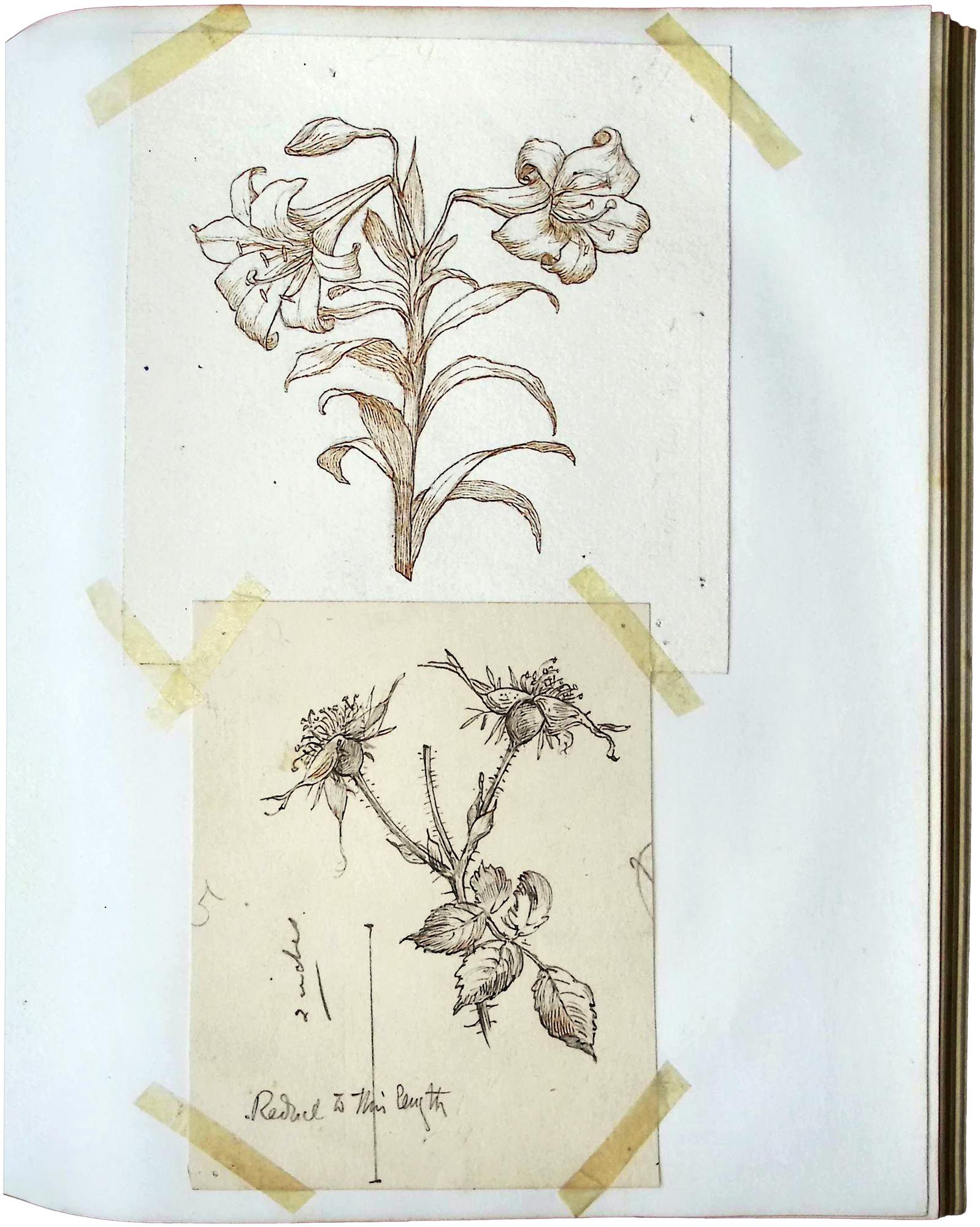
Untitled, c. 1893
Eleanor Vere Boyle (1825 – 1916) illustrated poetry and prose by some of the most popular authors of her time. She regularly drew and painted using ink and watercolour, sketching landscapes, animals and her children from life. She also made drawings from her imagination, often reflecting spiritual themes. These drawings were used as some of the final illustrations printed in the artists' publication A Book of Heavenly Birthdays (1893, London Elliot Stock)
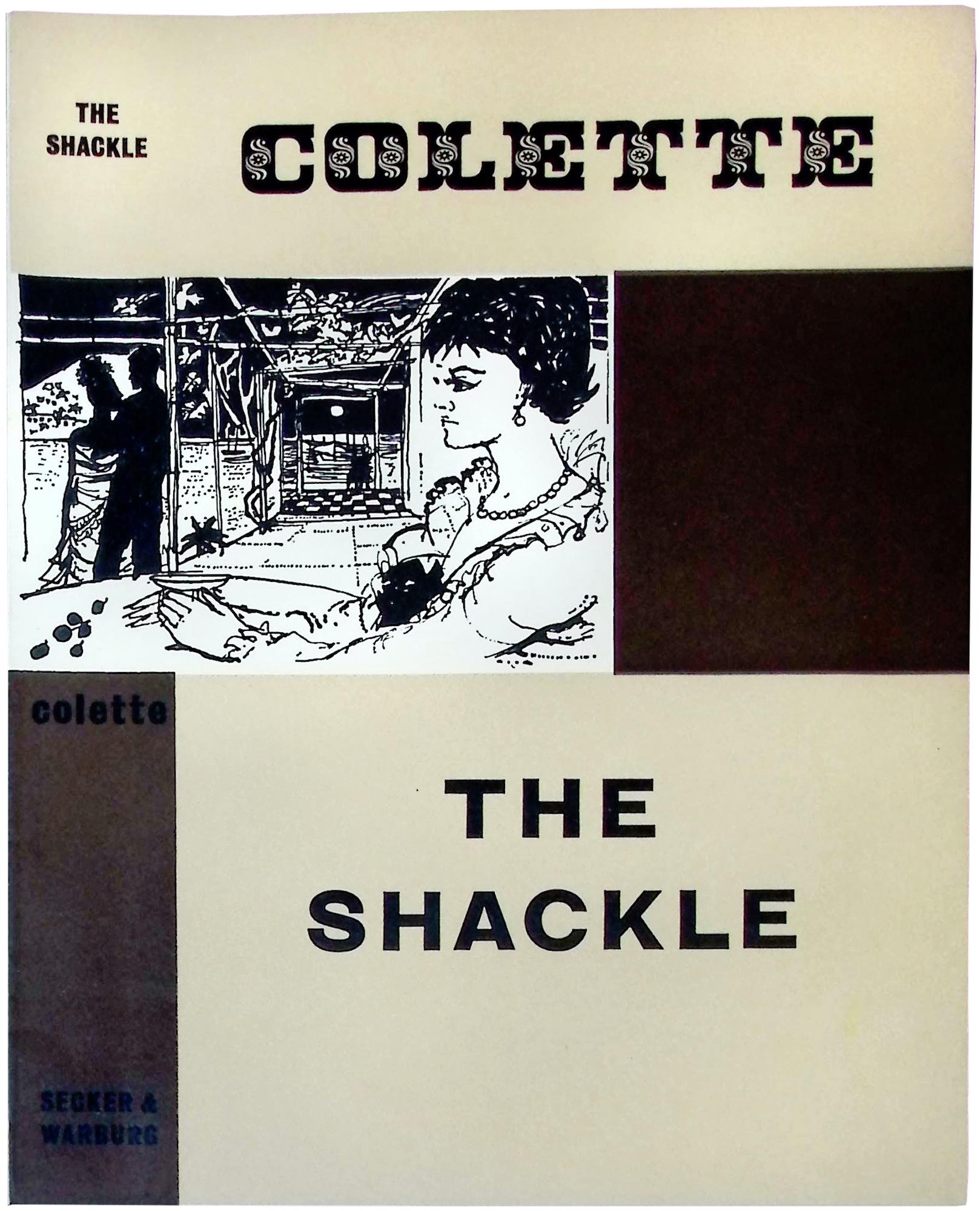
Book cover proof for Colette's "The Shackle", 1964
British illustrator Janina Ede (1937-2018) created covers and illustrations for over 100 books from the 1950s to the 1980s. She designed the covers of several books by French author and pioneer of autofiction Sidonie-Gabrielle Colette.
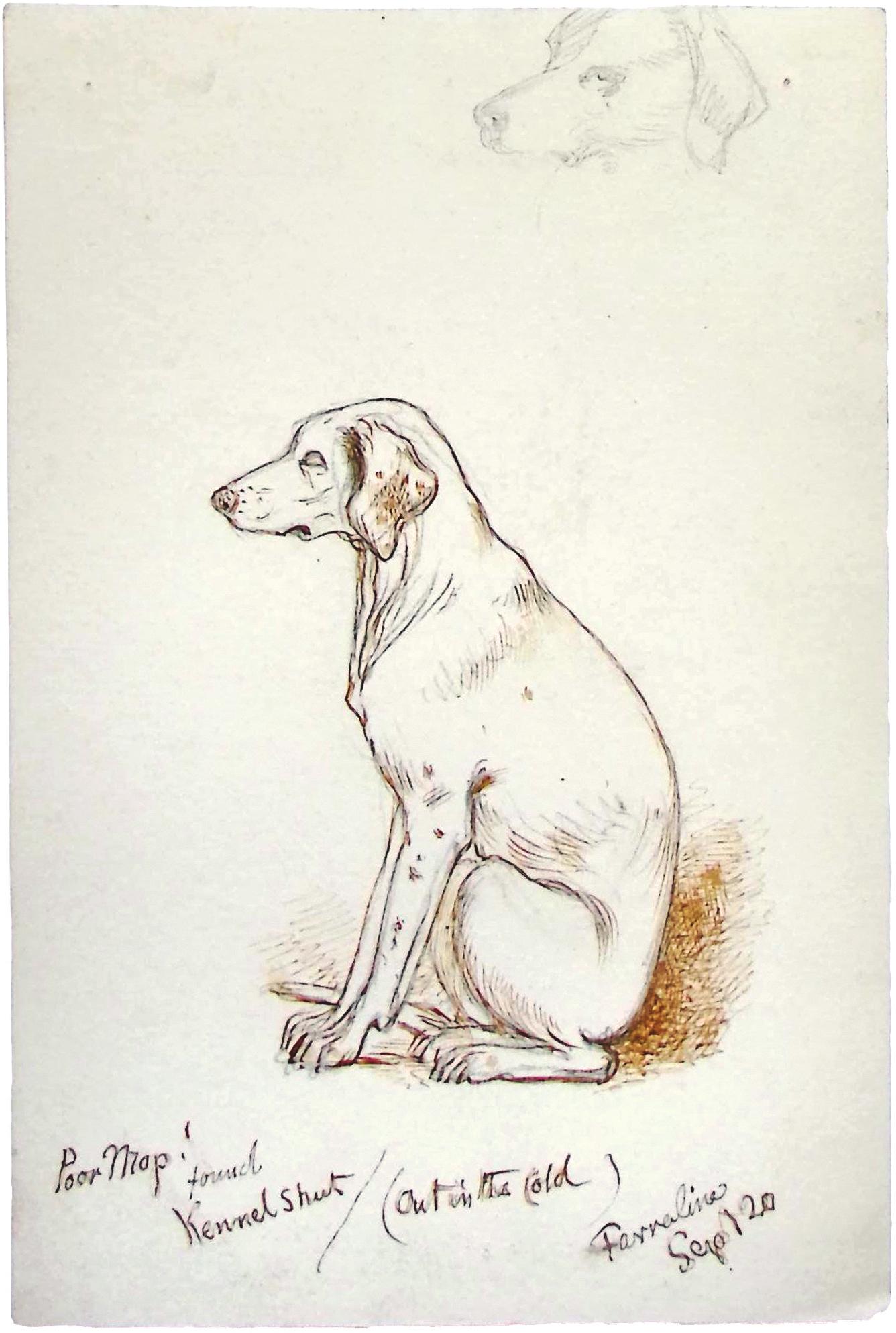
Untitled (Poor Mop!), Date unknown
Eleanor Vere Boyle (1825 – 1916) illustrated poetry and prose by some of the most popular authors of her time. She regularly drew and painted using ink and watercolour, sketching landscapes, animals and her children from life. She also made drawings from her imagination, often reflecting spiritual themes.
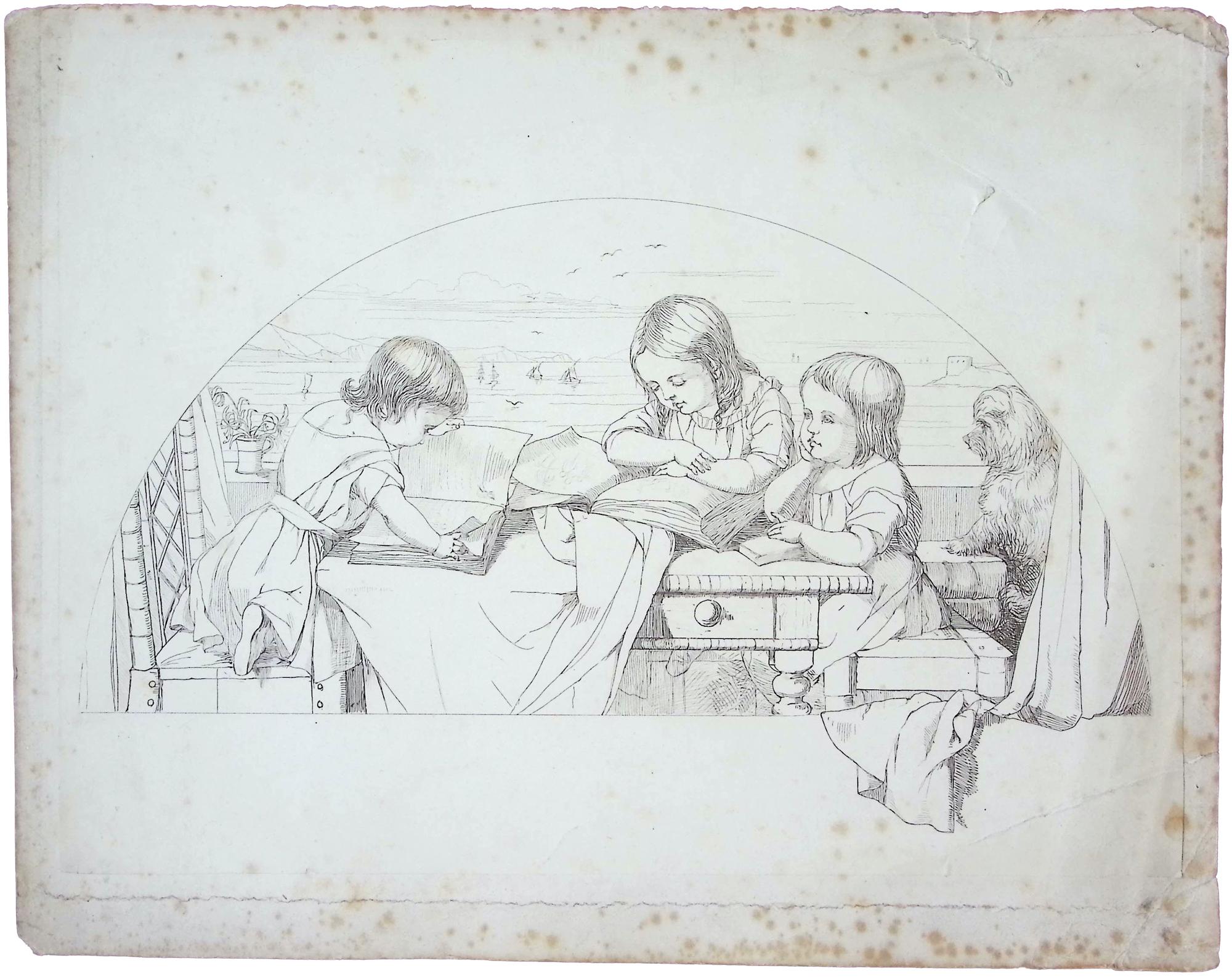
Untitled, Date unknown
Eleanor Vere Boyle (1825 – 1916) illustrated poetry and prose by some of the most popular authors of her time. She regularly drew and painted using ink and watercolour, sketching landscapes, animals and her children from life. She also made drawings from her imagination, often reflecting spiritual themes.
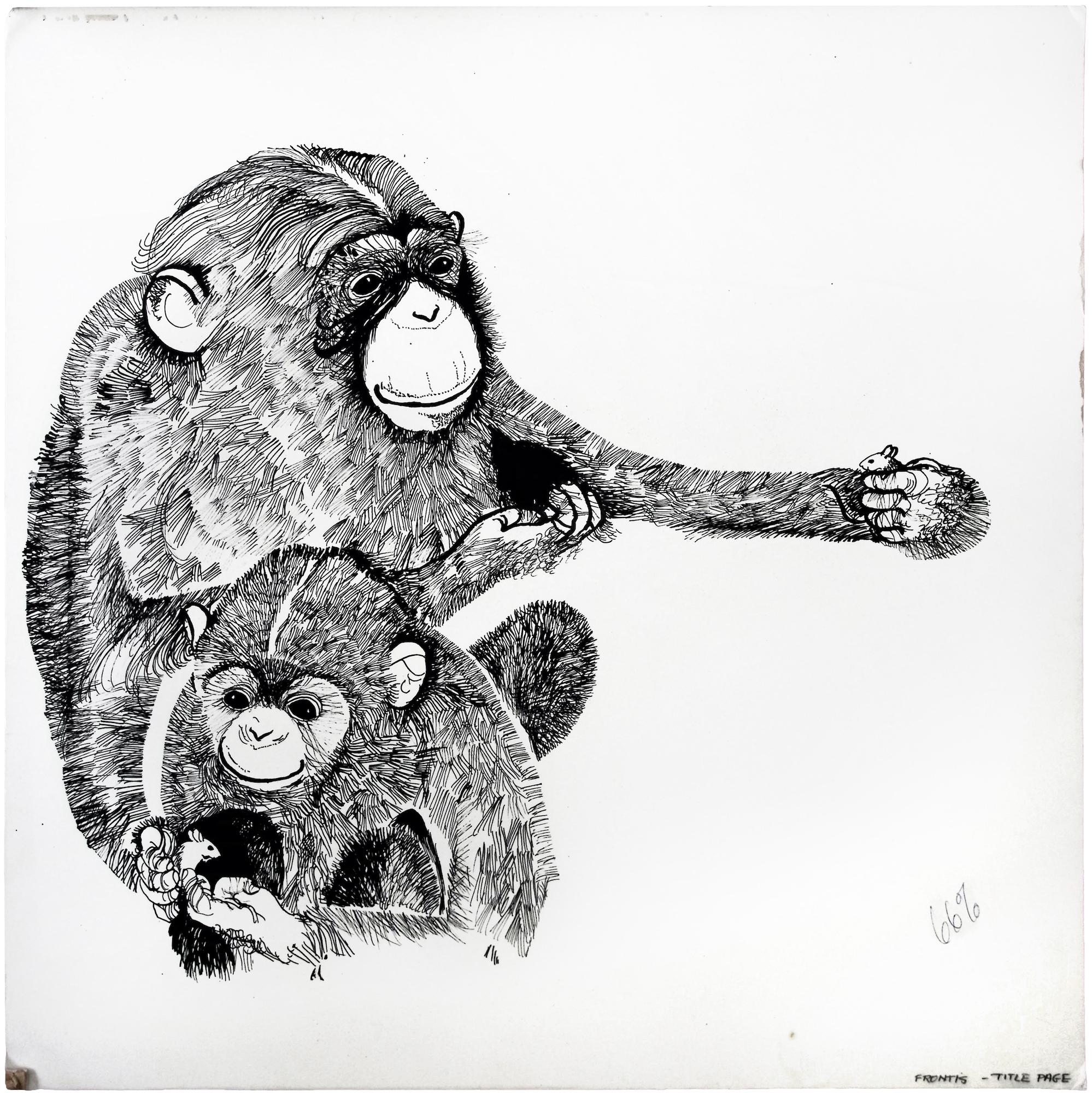
Untitled, c. 1987
British illustrator Janina Ede (1937-2018) created covers and illustrations for over 100 books from the 1950s to the 1980s. Many of her illustrations feature animals, which she drew from life.
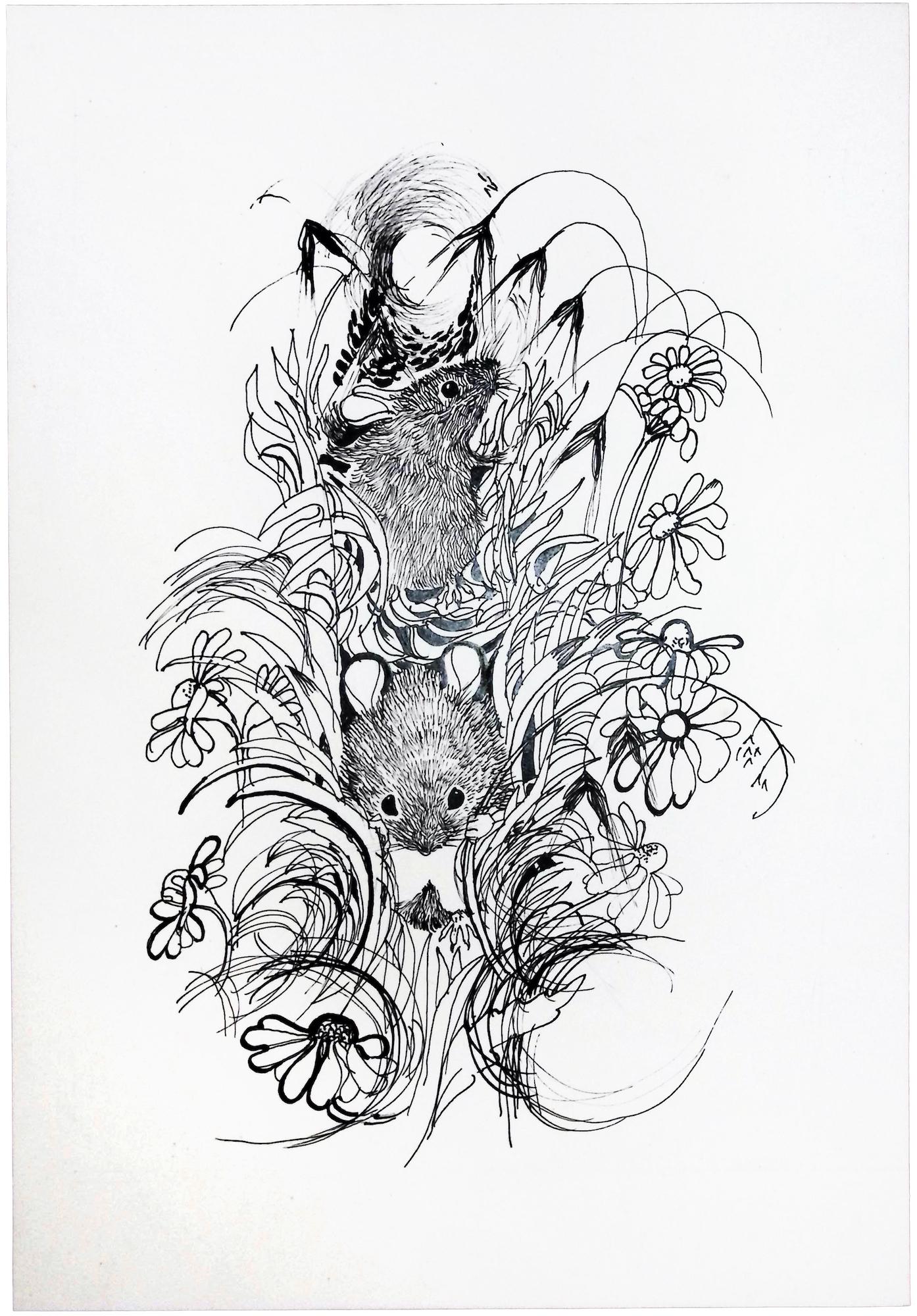
Illustration for A Pocket Full of Mice, c. 1984
British illustrator Janina Ede (1937-2018) created covers and illustrations for over 100 books from the 1950s to the 1980s. Many of her illustrations feature animals, which she drew from life.
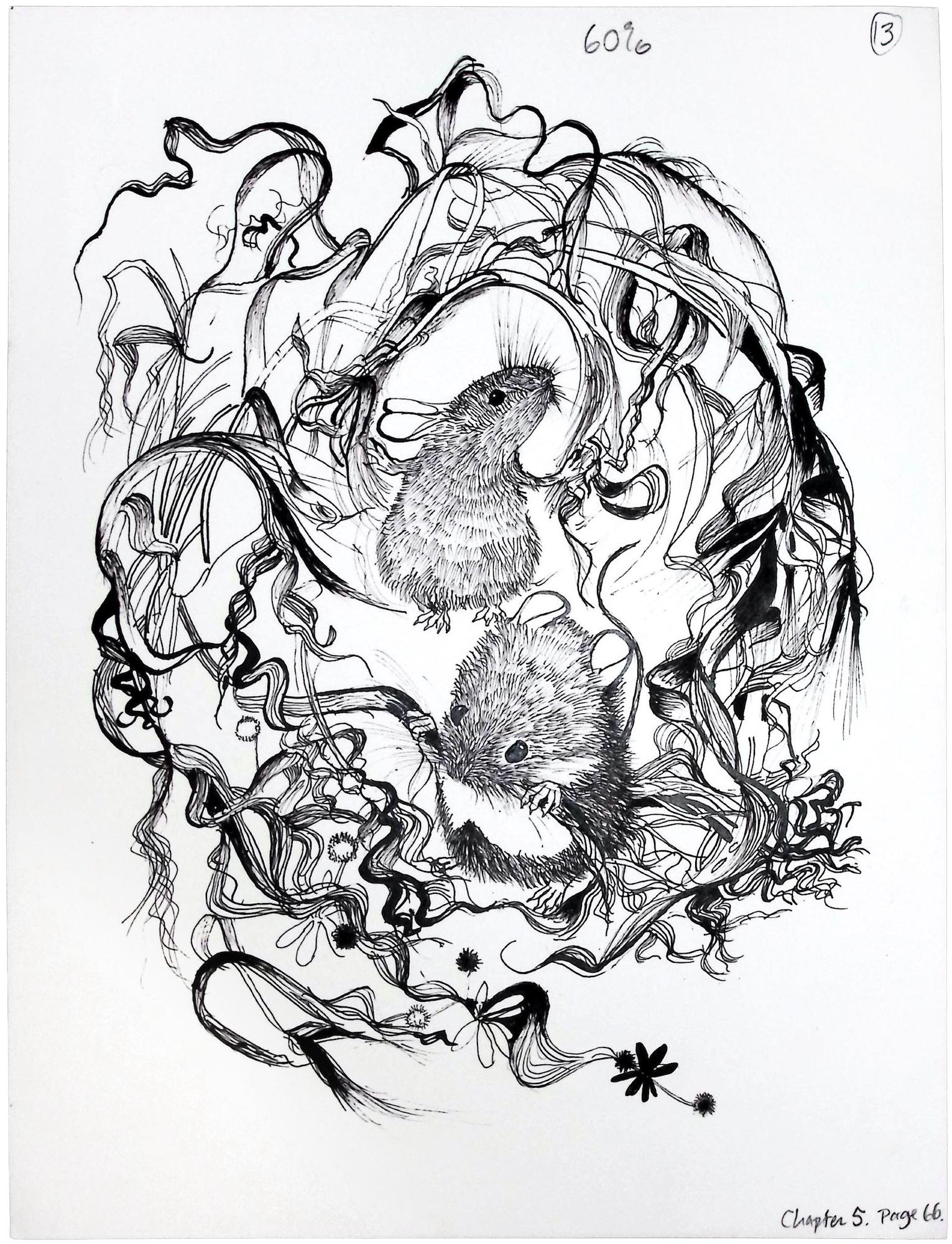
Illustration for A Pocket Full of Mice, c. 1984
British illustrator Janina Ede (1937-2018) created covers and illustrations for over 100 books from the 1950s to the 1980s. Many of her illustrations feature animals, which she drew from life.
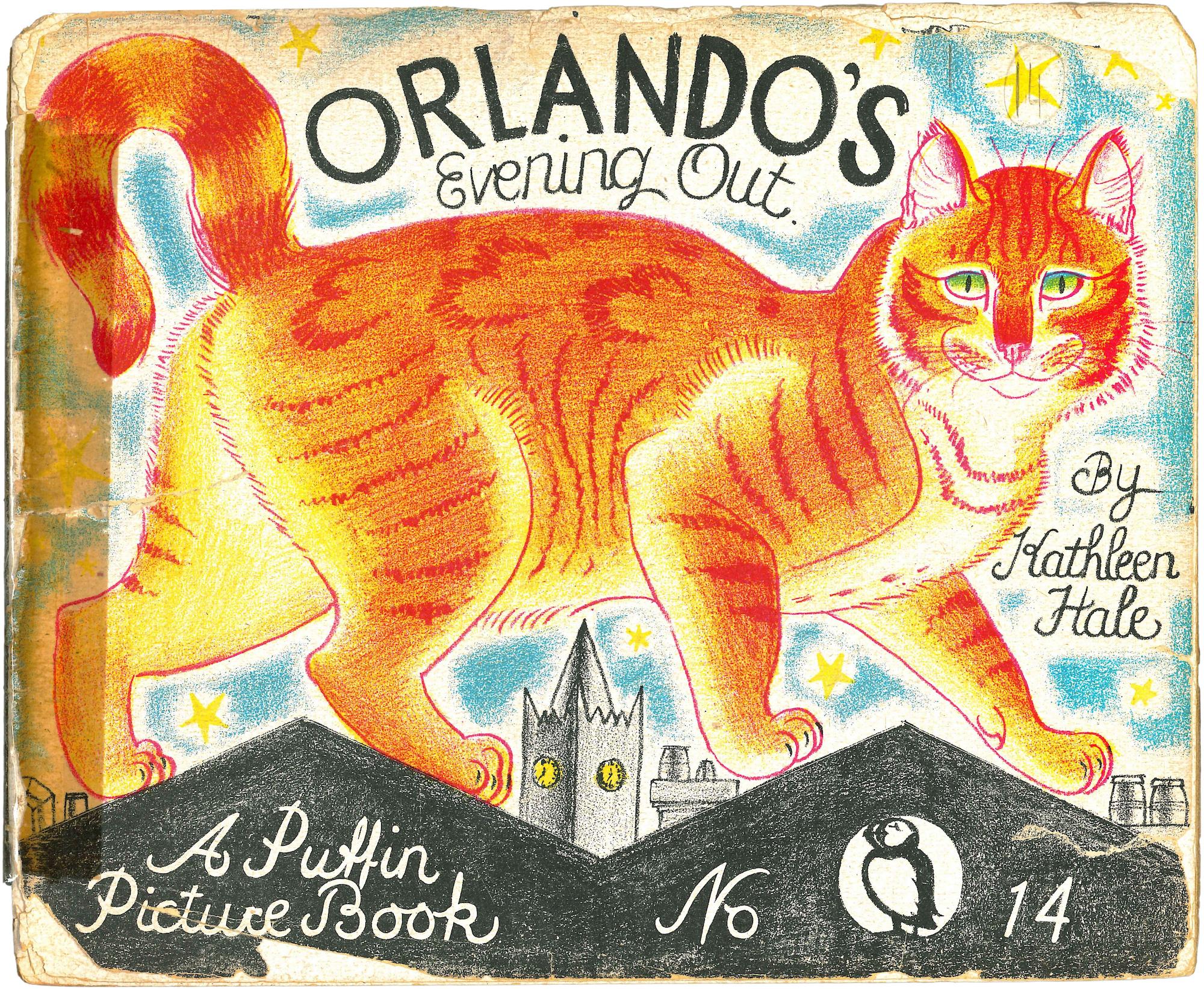
Orlando’s Evening Out, 1944
The Puffin Picture Books series was established by designer and editor Noel Carrington (1895-1989). In 1933, artist Pearl Binder (1904-1990) sent Carrington a package of Soviet children’s books. “They were produced by the million on very cheap paper, but the drawings were vigorous and the colour delightful” he later remembered. These books inspired Carrington to edit a series of affordable books that would encourage “the child’s awakening interest in its surroundings... I felt that colour was essential, and that artists could... be more successful in books of this nature than the camera”. Many artists and illustrators worked on the series, adapting their ways of working to lithographic printing and the Puffin Picture Book format. Most of the 120 books in the series were printed on one large sheet of paper: one side in colour and one in black-and-white. Each sheet was cut, folded and stapled to create a softcover book.
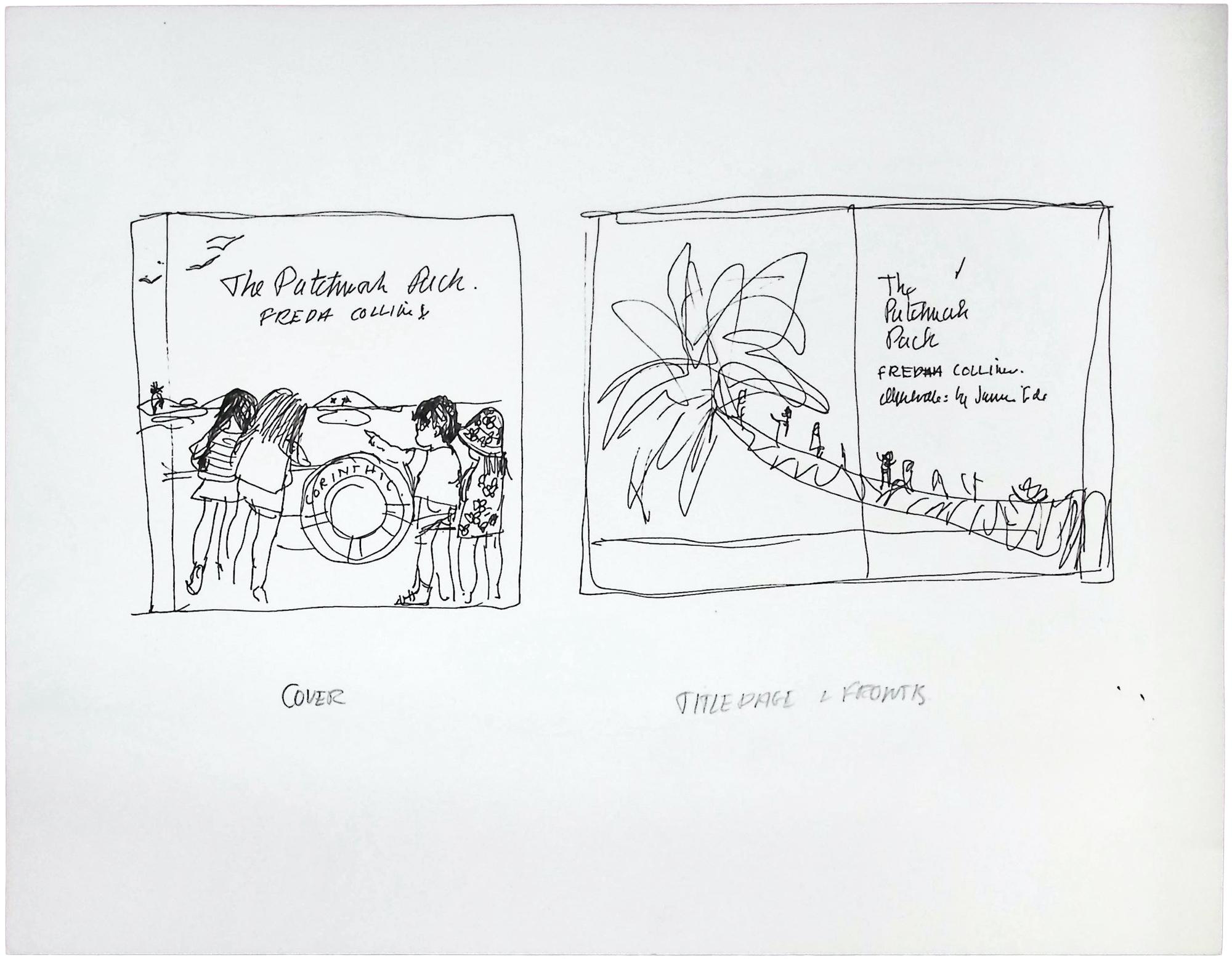
Untitled, c. 1968
British illustrator Janina Ede (1937-2018) created covers and illustrations for over 100 books from the 1950s to the 1980s. In the 1960s, Ede began working on children’s books. The Patchwork Pack (1968) by Freda Collins is about a group of ‘Brownies’ – the name given to members of the worldwide girl-guiding movement.
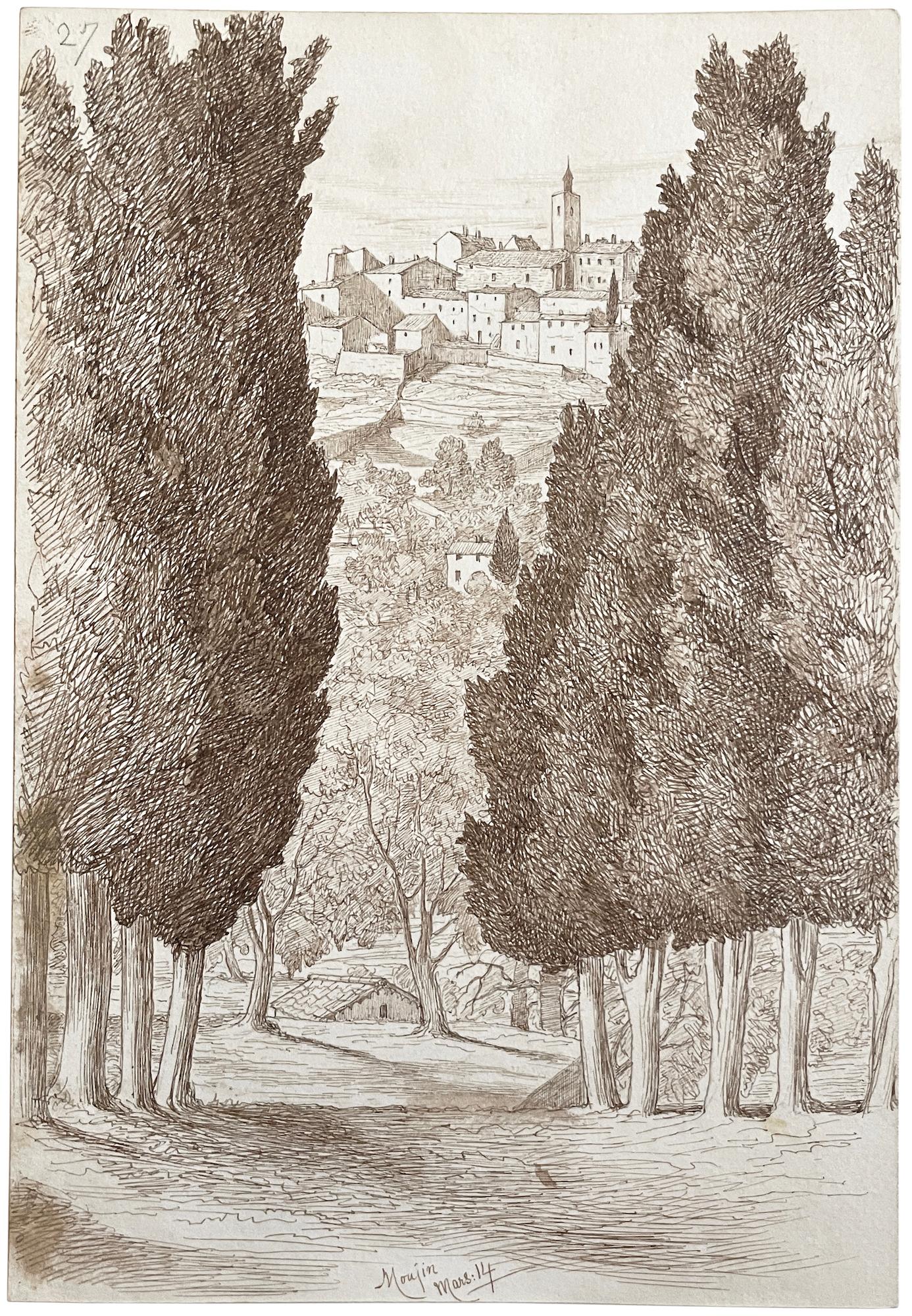
Untitled (Moujin)
Eleanor Vere Boyle (1825 – 1916) illustrated poetry and prose by some of the most popular authors of her time. She regularly drew and painted using ink and watercolour, sketching landscapes, animals and her children from life. She also made drawings from her imagination, often reflecting spiritual themes.
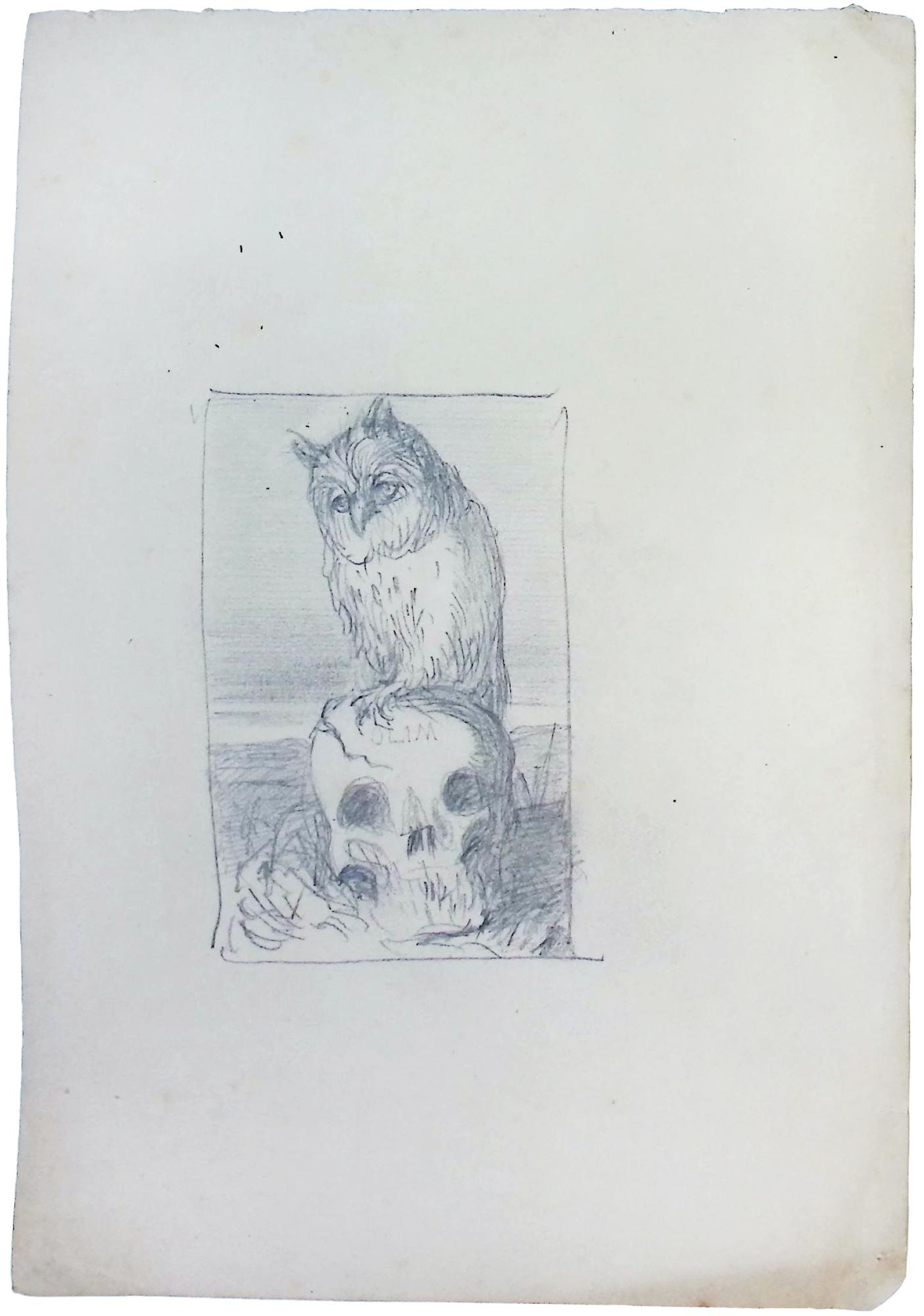
Untitled, Date unknown
Eleanor Vere Boyle (1825 – 1916) illustrated poetry and prose by some of the most popular authors of her time. She regularly drew and painted using ink and watercolour, sketching landscapes, animals and her children from life. She also made drawings from her imagination, often reflecting spiritual themes.

Draft cover illustration for A Pocket Full of Mice , c. 1984
British illustrator Janina Ede (1937-2018) created covers and illustrations for over 100 books from the 1950s to the 1980s. Many of her illustrations feature animals, which she drew from life.
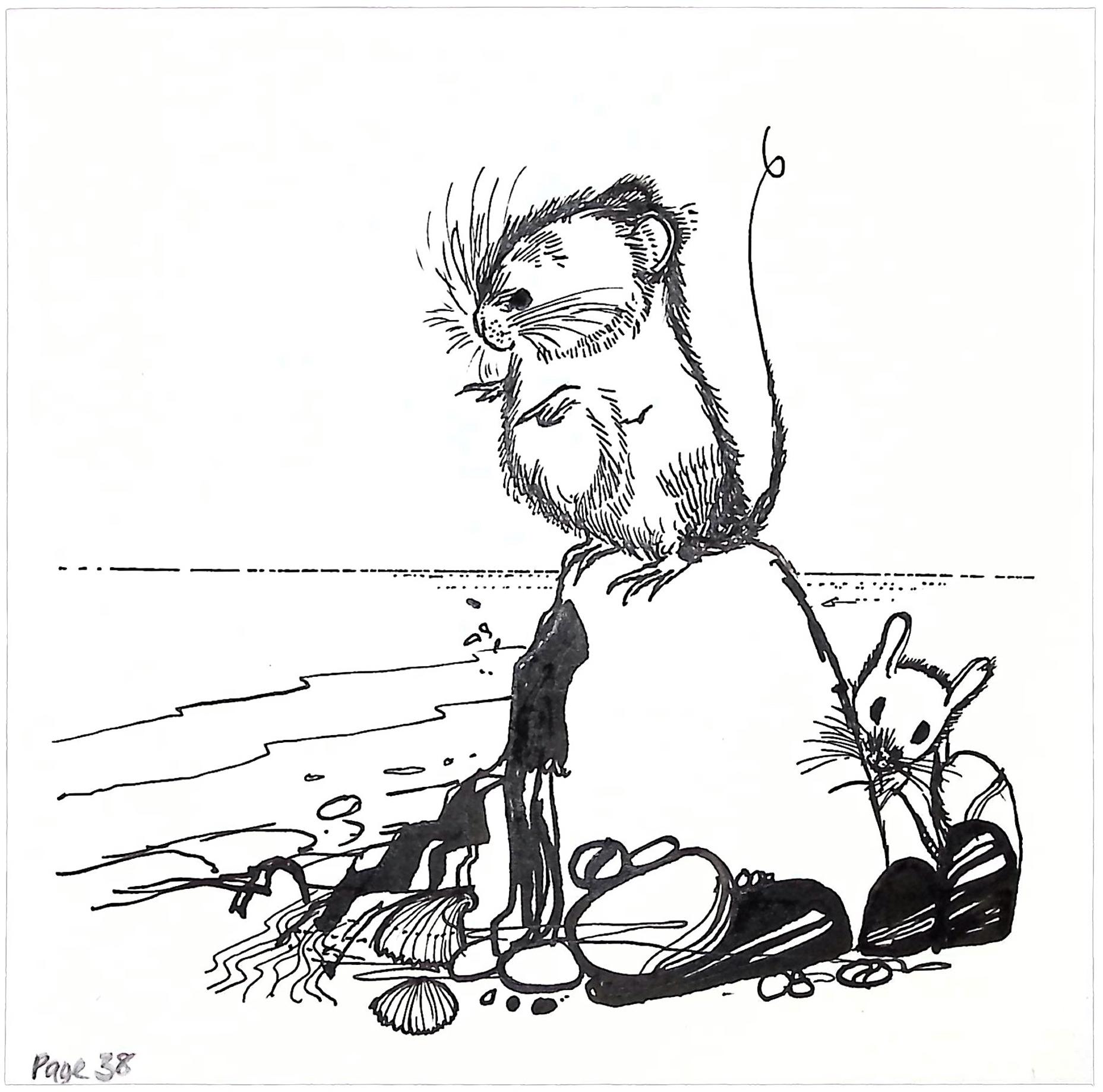
Illustration for Willow and Albert are Stowaways, c. 1970
British illustrator Janina Ede (1937-2018) created covers and illustrations for over 100 books from the 1950s to the 1980s. Many of her illustrations feature animals, which she drew from life.
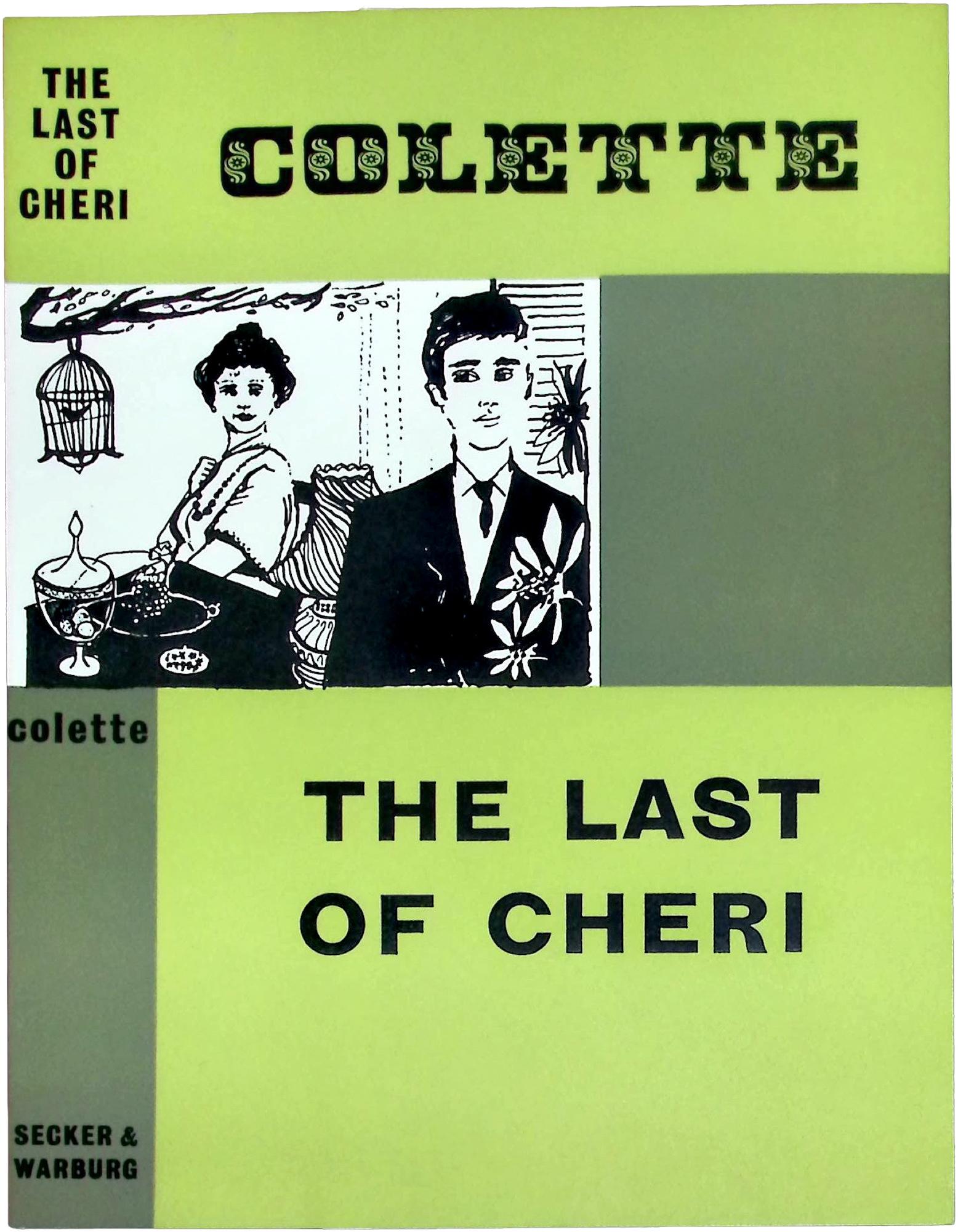
Book cover proof for Colette's "The Last of Cheri", 1961
British illustrator Janina Ede (1937-2018) created covers and illustrations for over 100 books from the 1950s to the 1980s. She designed the covers of several books by French author and pioneer of autofiction Sidonie-Gabrielle Colette.
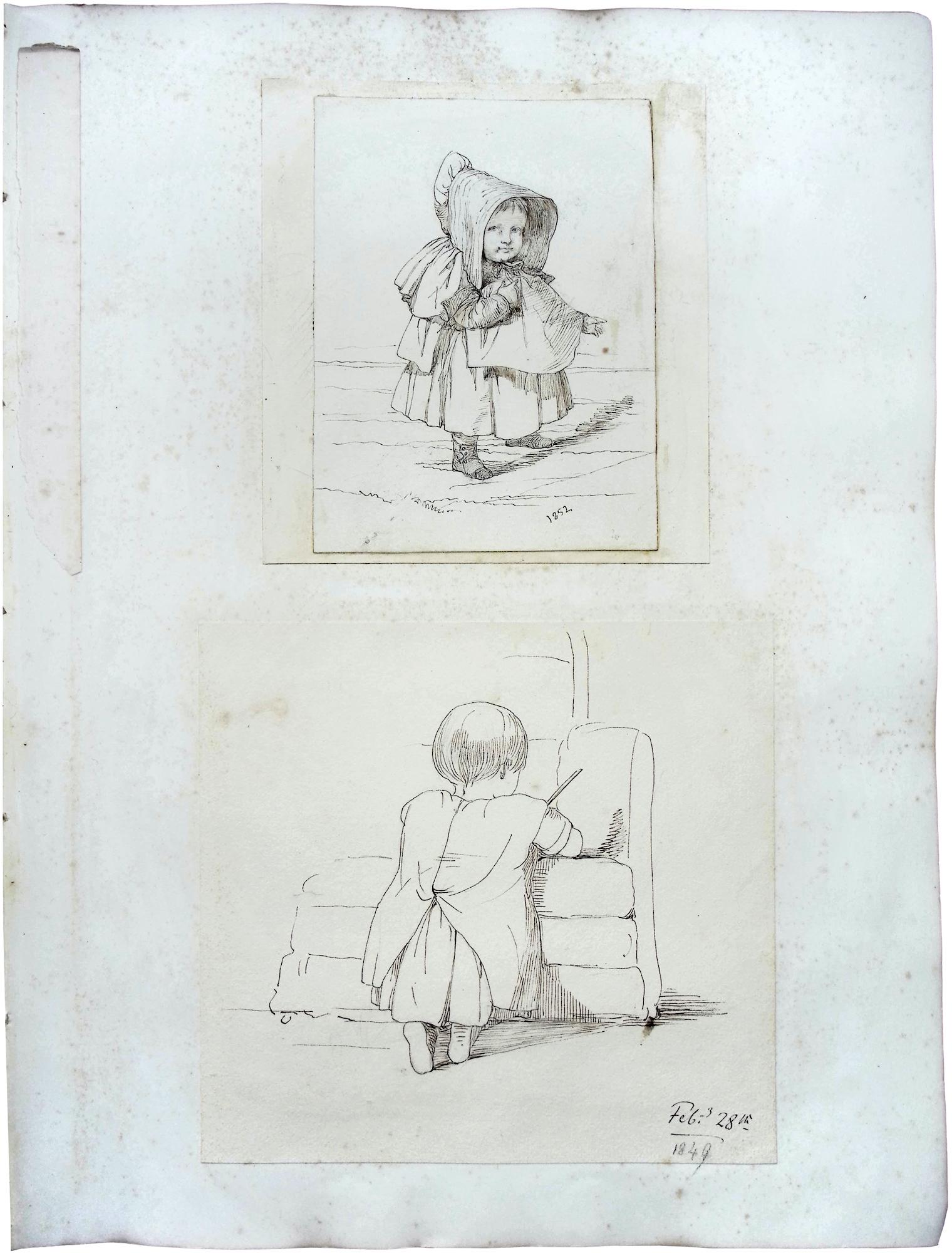
Untitled, 1852 and 1849
Eleanor Vere Boyle (1825 – 1916) illustrated poetry and prose by some of the most popular authors of her time. She regularly drew and painted using ink and watercolour, sketching landscapes, animals and her children from life. She also made drawings from her imagination, often reflecting spiritual themes.
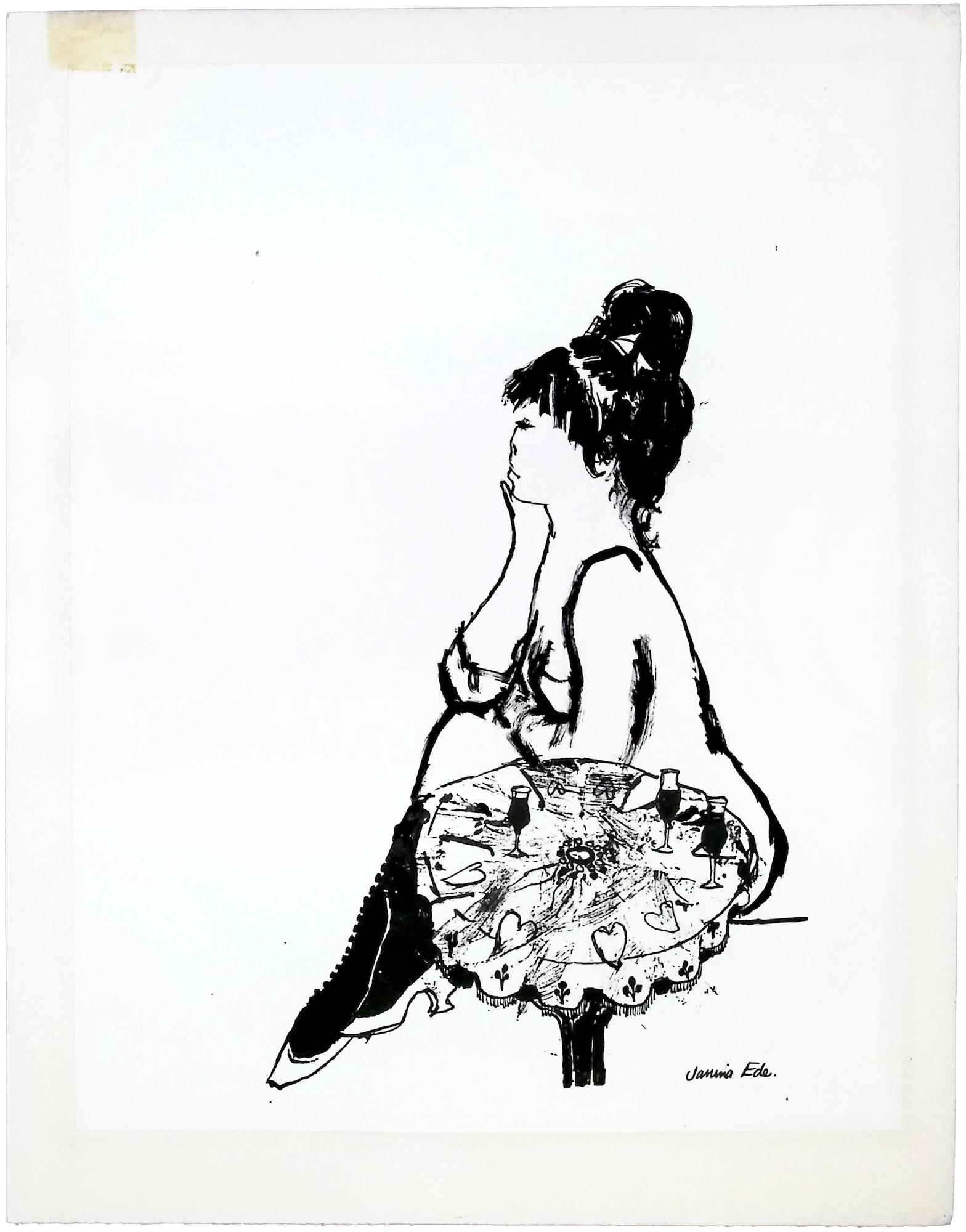
My Apprenticeships Ch.12 Noseless Prostitute, c. 1968
Janina Ede (1937-2018) created covers and illustrations for over 100 books from the 1950s to the 1980s. Ede often worked using just black ink, combining pen and brushwork to create bold illustrations with fine details.
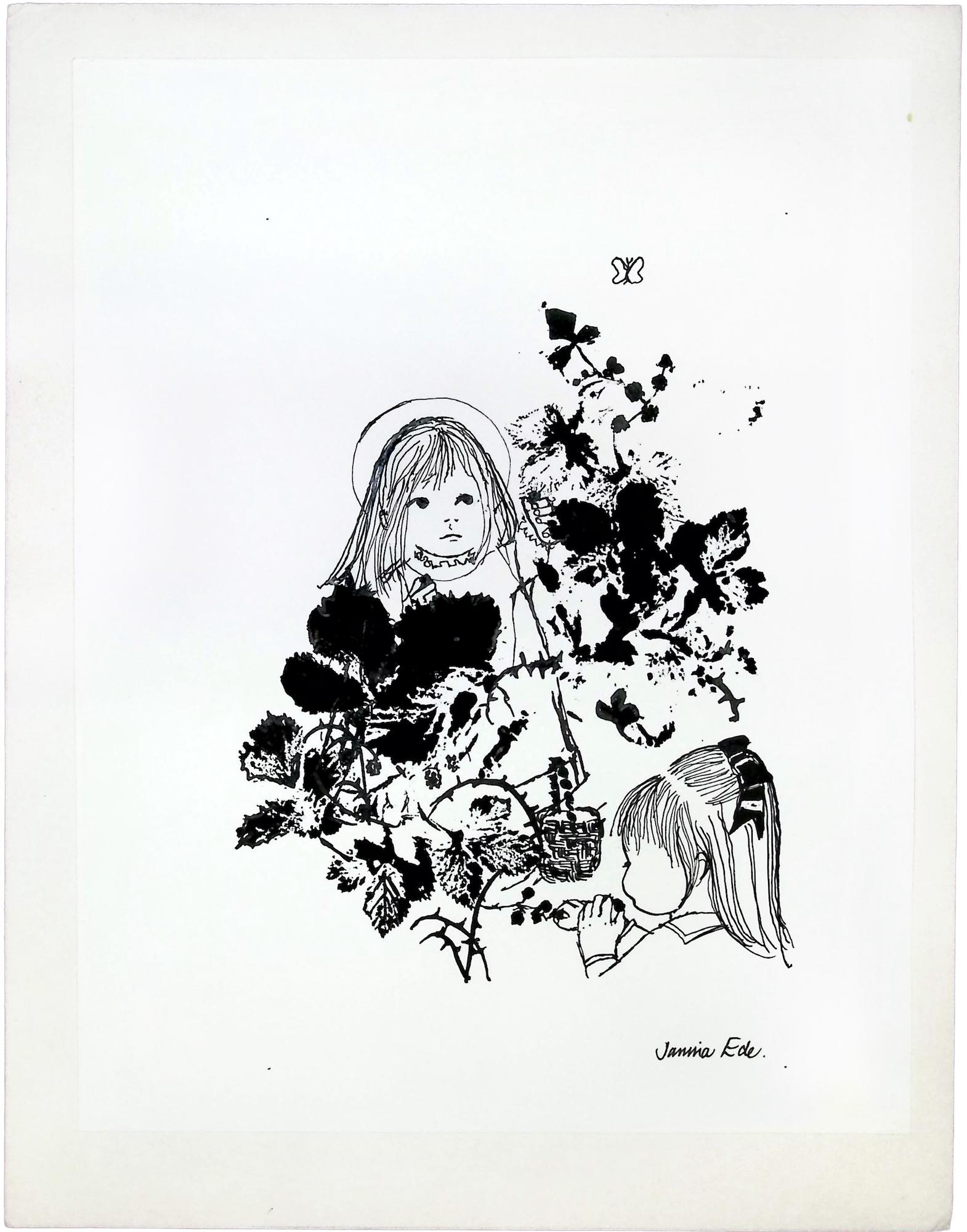
My Apprenticeships - Chapter 5 - Untitled, c. 1968
Janina Ede (1937-2018) created covers and illustrations for over 100 books from the 1950s to the 1980s. She often worked using just black ink, combining pen and brushwork to create bold illustrations with fine details. To represent plant life, Ede sometimes dipped leaves and grasses into ink and pressed them onto paper.
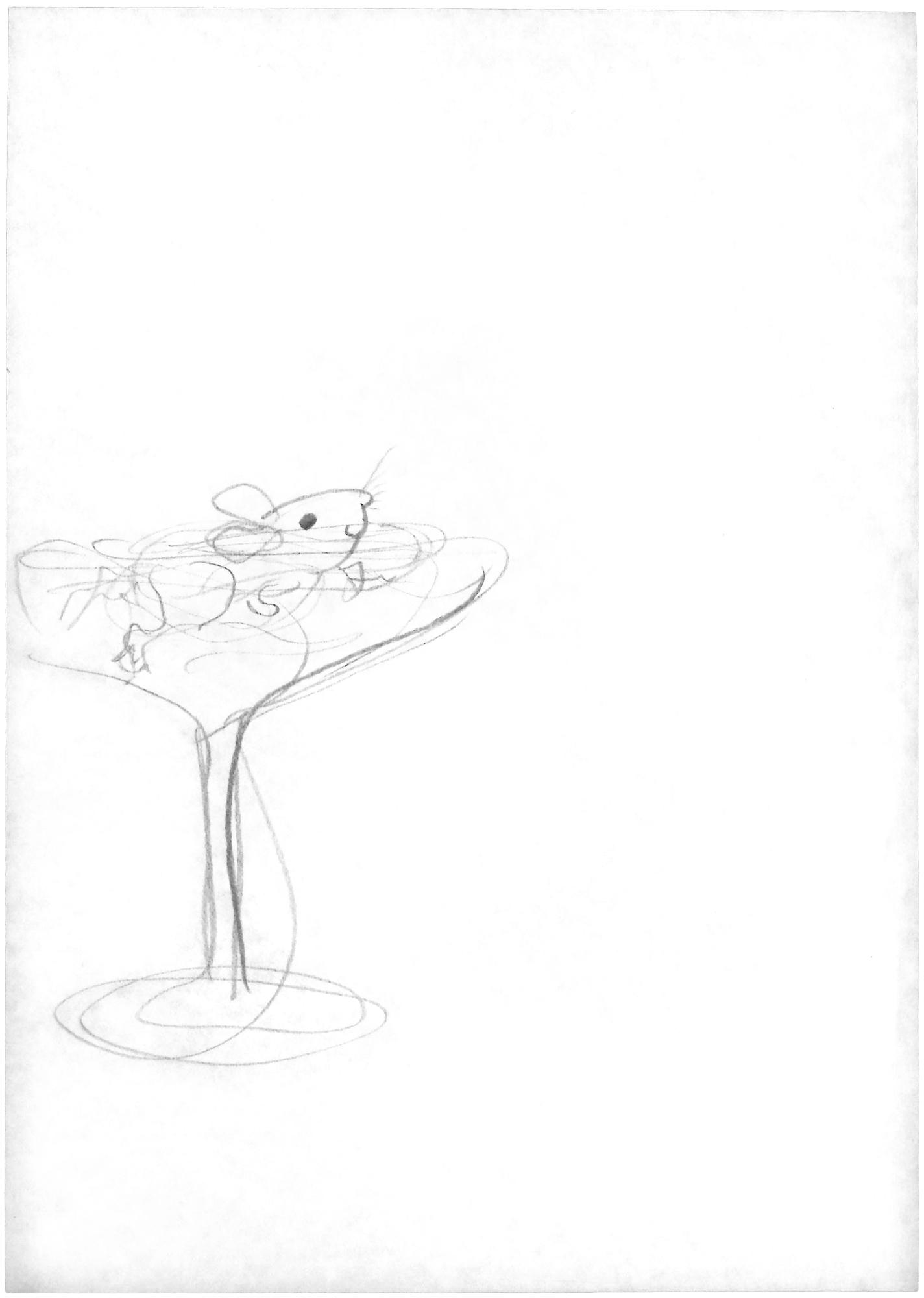
Untitled, c. 1984
British illustrator Janina Ede (1937-2018) created covers and illustrations for over 100 books from the 1950s to the 1980s. Many of her illustrations feature animals, which she drew from life.
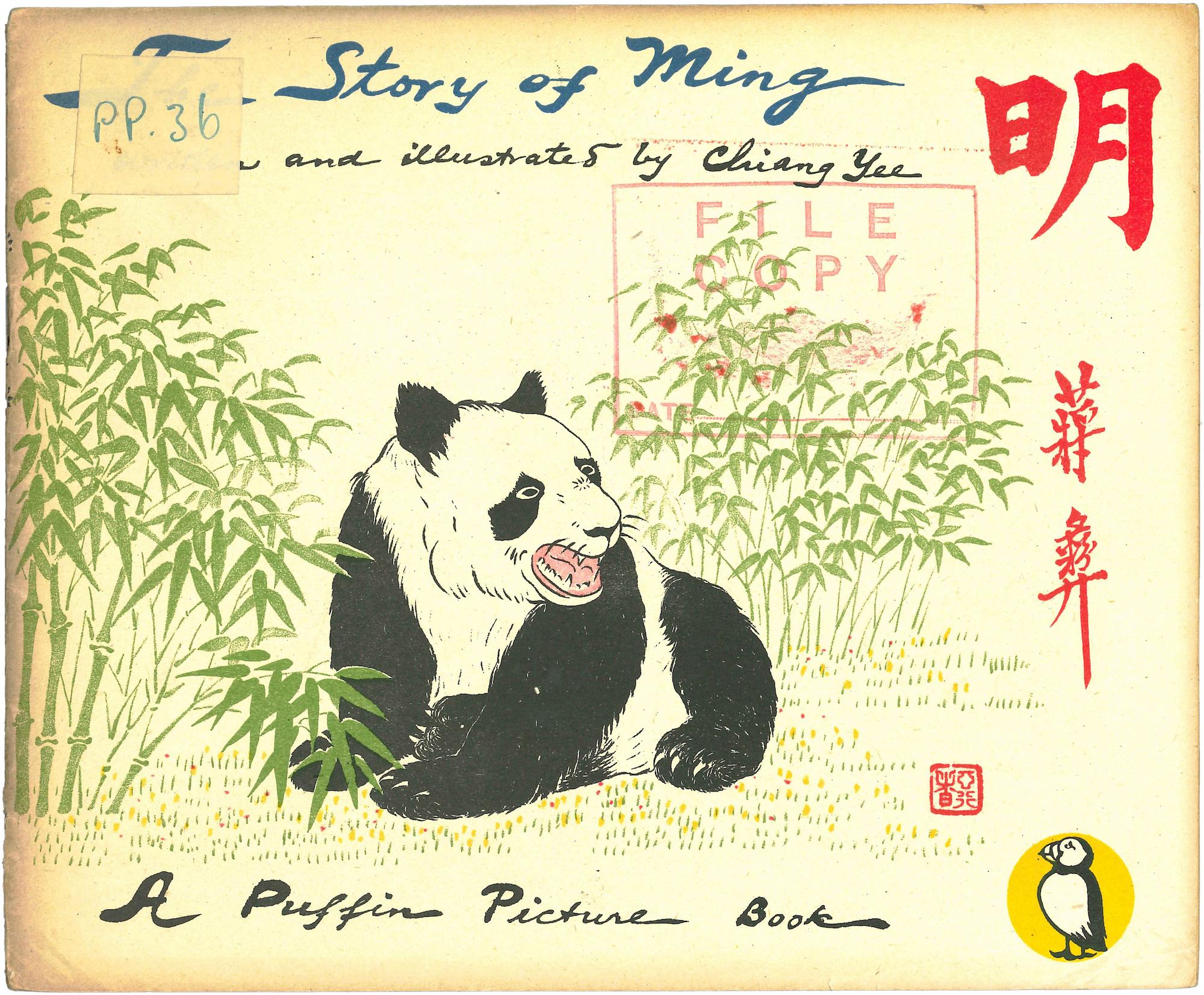
The Story of Ming, 1944
The Puffin Picture Books series was established by designer and editor Noel Carrington (1895-1989). In 1933, artist Pearl Binder (1904-1990) sent Carrington a package of Soviet children’s books. “They were produced by the million on very cheap paper, but the drawings were vigorous and the colour delightful” he later remembered. These books inspired Carrington to edit a series of affordable books that would encourage “the child’s awakening interest in its surroundings... I felt that colour was essential, and that artists could... be more successful in books of this nature than the camera”. Many artists and illustrators worked on the series, adapting their ways of working to lithographic printing and the Puffin Picture Book format. Most of the 120 books in the series were printed on one large sheet of paper: one side in colour and one in black-and-white. Each sheet was cut, folded and stapled to create a softcover book.
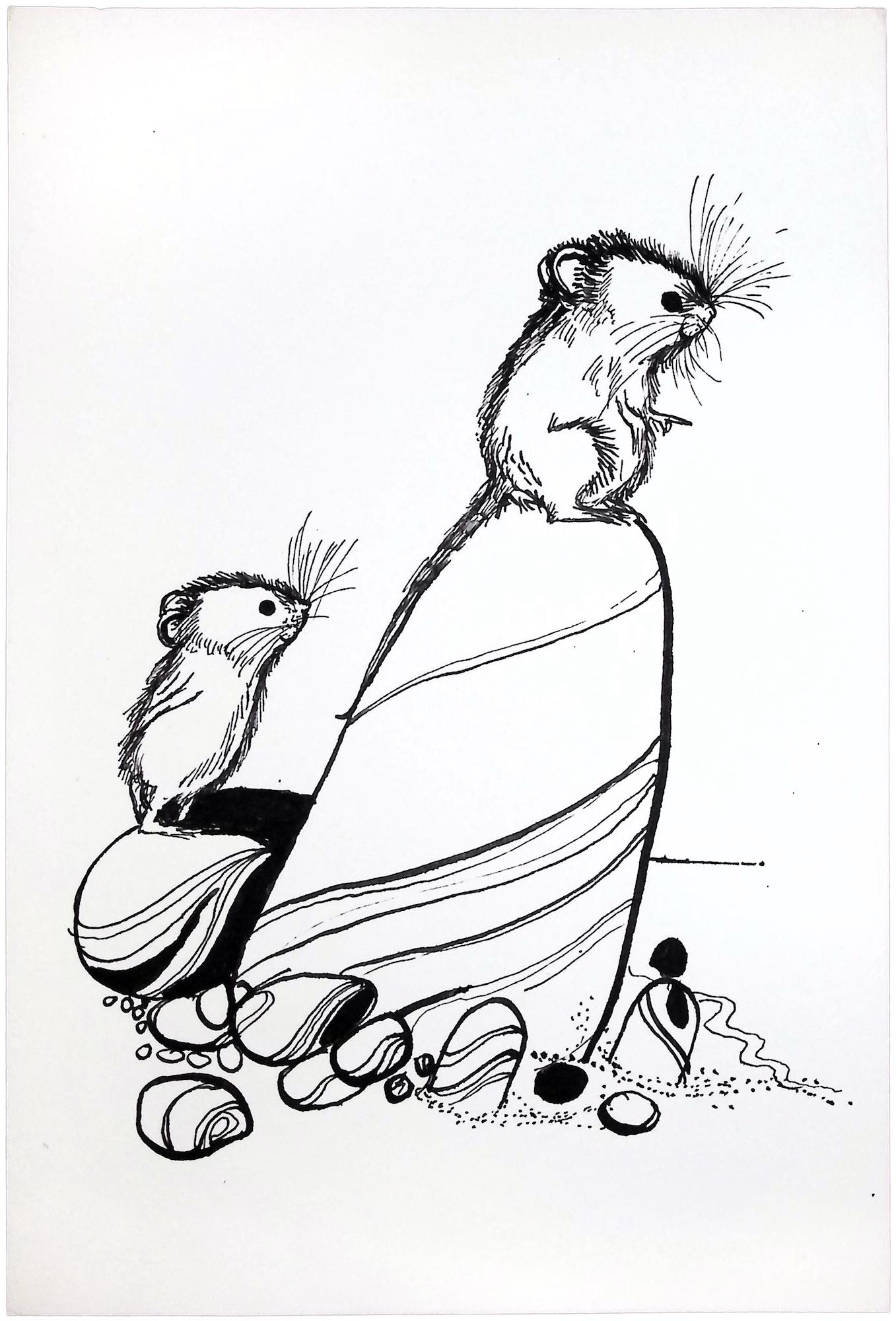
Illustration for Willow and Albert are Stowaways, c. 1970
British illustrator Janina Ede (1937-2018) created covers and illustrations for over 100 books from the 1950s to the 1980s. Many of her illustrations feature animals, which she drew from life.

A Book of Swimming, 1945
The Puffin Picture Books series was established by designer and editor Noel Carrington (1895-1989). In 1933, artist Pearl Binder (1904-1990) sent Carrington a package of Soviet children’s books. “They were produced by the million on very cheap paper, but the drawings were vigorous and the colour delightful” he later remembered. These books inspired Carrington to edit a series of affordable books that would encourage “the child’s awakening interest in its surroundings... I felt that colour was essential, and that artists could... be more successful in books of this nature than the camera”. Many artists and illustrators worked on the series, adapting their ways of working to lithographic printing and the Puffin Picture Book format. Most of the 120 books in the series were printed on one large sheet of paper: one side in colour and one in black-and-white. Each sheet was cut, folded and stapled to create a softcover book.
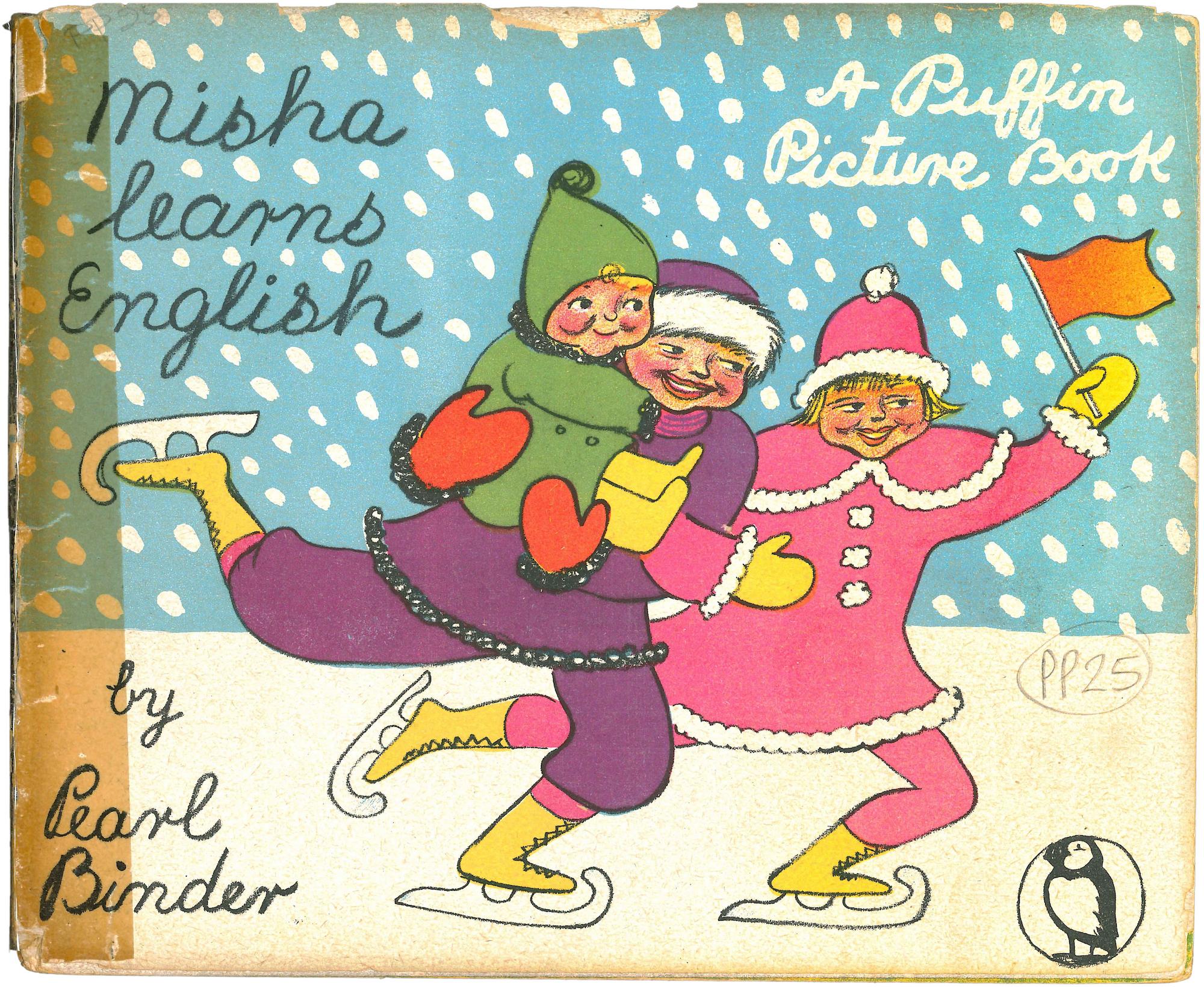
Misha learns English, 1942
The Puffin Picture Books series was established by designer and editor Noel Carrington (1895-1989). In 1933, artist Pearl Binder (1904-1990) sent Carrington a package of Soviet children’s books. “They were produced by the million on very cheap paper, but the drawings were vigorous and the colour delightful” he later remembered. These books inspired Carrington to edit a series of affordable books that would encourage “the child’s awakening interest in its surroundings... I felt that colour was essential, and that artists could... be more successful in books of this nature than the camera”. Many artists and illustrators worked on the series, adapting their ways of working to lithographic printing and the Puffin Picture Book format. Most of the 120 books in the series were printed on one large sheet of paper: one side in colour and one in black-and-white. Each sheet was cut, folded and stapled to create a softcover book.