Fromm Physical to Digital: A Q&A with Fromm Studio
We sat down with Fromm Studio to learn about their process, how they created the works on display in Faerdom: Now, as Ever and what to expect from their upcoming workshop Fromm Physical to Digital on Saturday 21 November.
Come step into the shining world of Faerdom:
Book exhibition tickets(opens in new window)
Inspired to get creating? Book your spot on their workshop:
Fromm Physical to Digital. (opens in new window)
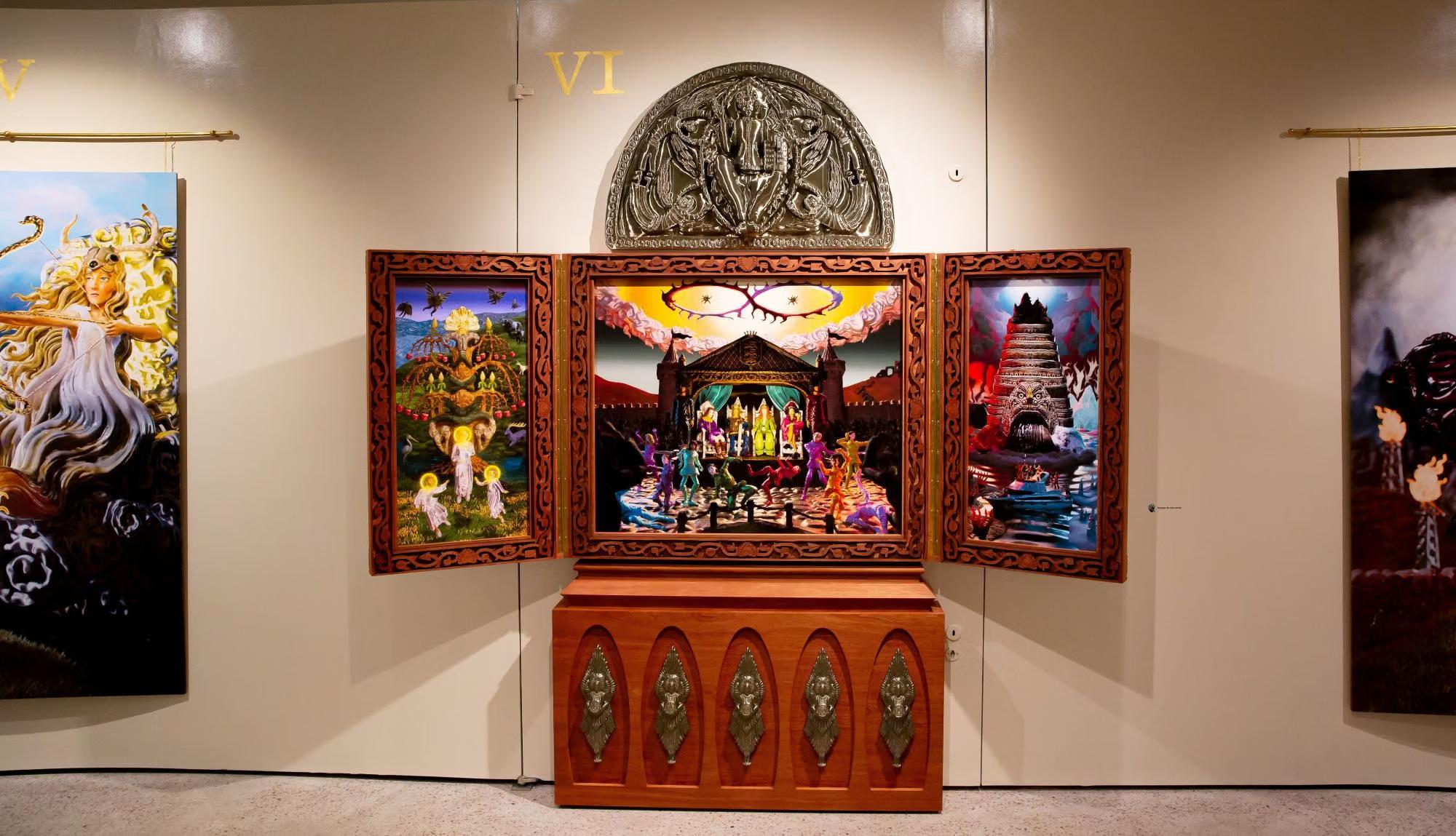
Hi Vince & Jess. Could you introduce yourselves and your work?
We’re Vince and Jess, and together we run Fromm Studio, and we work across 3D, digital and physical art. We first met at art school in London, where Jess studied Graphic Design and Vince studied Fine Art and we started working together after graduating uni in 2022.
Our work draws inspiration from old English aesthetics and mythic narratives and we love to give them a new life through new techniques, which we like to think of as a kind of ‘New Traditional’.
We work with a mix of tools, from 3D scanning and motion capture to more traditional processes, creating work for brand campaigns, illustration and our ongoing project, Faerdom. We’d describe our style as colourful, irreverent and a lil’ romantic.
– Fromm StudioIn a way, we did all the things you're probably not supposed to do when learning 3D. We took shortcuts, mixed techniques that weren't necessarily meant to work together and figured things out as we went.
You have a unique way of working that you have described in the past as a ‘Frankenstein’ approach. What do you mean by that?
We call it our ‘Frankenstein’ approach because we're constantly pulling together different processes and references, often from completely different places, and stitching them together to hopefully create something new.
When we started, we were trying to find the quickest ways to make 3D work without having to spend ages technically modelling or animating everything. We wanted to get straight to the bits we found most exciting: directing, building scenes and creating worlds.
In a way, we did all the things you're probably not supposed to do when learning 3D. We took shortcuts, mixed techniques that weren't necessarily meant to work together and figured things out as we went. But that experimentation gradually became our own style and way of working.
Would you be able to take us through your typical process from start to finish. Are there particular works from the exhibition that are a good example of this?
When we first started learning 3D, there was a real wave of digital work emerging, and around that time we discovered an app that made 3D scanning really accessible.
During the Covid lockdown, we spent an entire summer experimenting with this, finding ways to scan and create 3D characters of ourselves and anything we could find at home. We'd then bring the models into Blender, where we could clean them up, sculpt, add details and colour them in.
– Fromm StudioFind something you want to make, start experimenting and work out how to get there. You learn a lot more by trying to make something than by worrying about knowing all the tools first.
We often think of this process as working with digital clay. We like building up textures and little details rather than making everything perfectly polished.
The giant corgis and Porcelain Wall in the exhibition are great examples. We started with physical objects, scanned them into 3D, resculpted them into our own designs and then brought them back into the physical world through 3D printing. So the process comes full circle, moving between physical and digital.
What first appealed to you about using digital programs such as Blender and AI Motion Capture? And what advice would you give to someone looking to start using these programs?
We loved Blender mainly because it was free and also there were so many tutorials and resources available online, so it made it really easy to just jump in and start experimenting.
We started playing around with AI motion capture as a way to learn the basics of animation. You upload a character and a video of the movement you want to recreate, and the software transfers it onto your 3D model. It’s usually pretty messy, so there’s a bit of work involved in cleaning it up. But through that process, we started getting to grips with how movement works in 3D
We've never really followed tutorials from start to finish or learnt things in a particularly structured way. We've tended to start with an idea of what we want to make, then figure out the technical side as we go. Even now, we're still going back and picking up the basics.
For anyone starting out, we'd say don't feel like you need to know everything before you begin. Find something you want to make, start experimenting and work out how to get there. You learn a lot more by trying to make something than by worrying about knowing all the tools first.
Your work has a strong sense of fun and doesn’t take itself too seriously even though it often explores quite big themes. Do you feel your process lends itself to bringing a sense of playfulness?
I think so. When we first started making digital work, the tech and art space felt quite serious. There was a lot of really polished 3D work, often with sci-fi aesthetics, and quite a doom-and-gloom feeling around technology. We wanted to do something a bit different, bringing more humour and playfulness
Since then we've really leaned into that irreverent tone, keeping things light and fun, which we feel makes our ideas more approachable.
We’re inspired a lot by British antiques, particularly Staffordshire pottery. We love how colourful and playful they and we actually own quite a collection of them, which we scan and bring into our digital scenes, outfits and props
They really reflect the way we like to work. Nothing feels too polished or perfect. We love leaving a handmade quality to our models, whether through painting or sculpting in Blender. It's often those little imperfections and happy accidents that give things their character.
– Fromm StudioWe love leaving a handmade quality to our models, whether through painting or sculpting in Blender. It's often those little imperfections and happy accidents that give things their character.
Your workshop Fromm Physical to Digital will explore moving between physical and digital ways of working. Can you tell us what participants can expect from the workshop?
It's a hands-on introduction to 3D scanning and Blender, exploring how you can take something from the physical world and bring it into a digital space.
We'll start by looking at how to choose suitable objects and capture the photographs needed to turn them into 3D models. We'll then bring these into Blender to clean up, edit and experiment with, before creating a short looping animation inspired by the kind of work we often produce for editorial projects.
A lot of our own work starts with 3D scanning, as it gives us something physical to build from rather than a completely blank canvas. Hopefully, participants will leave with a taste of our process and some ideas for bringing their own physical references into their digital work.