Dress
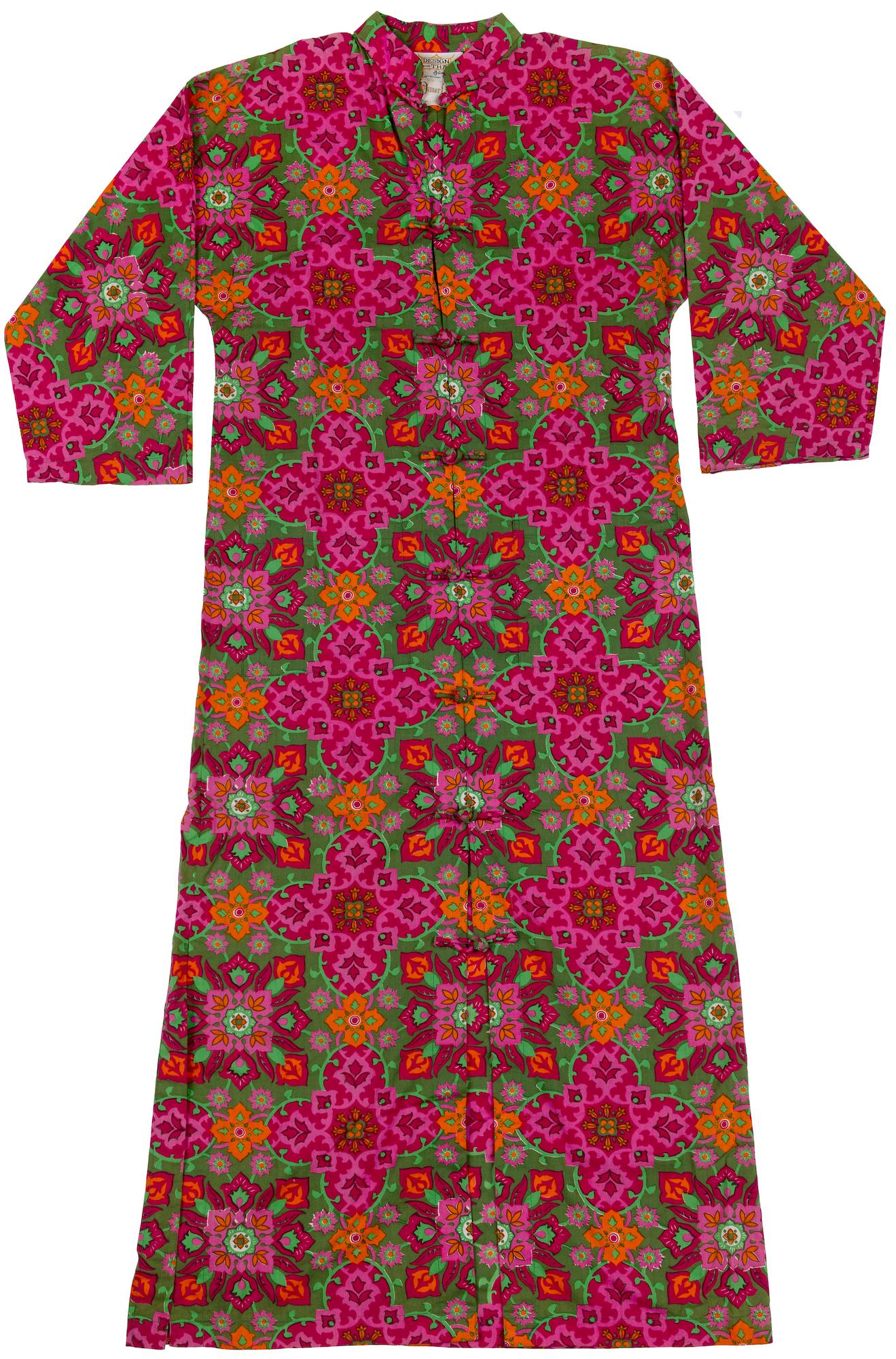
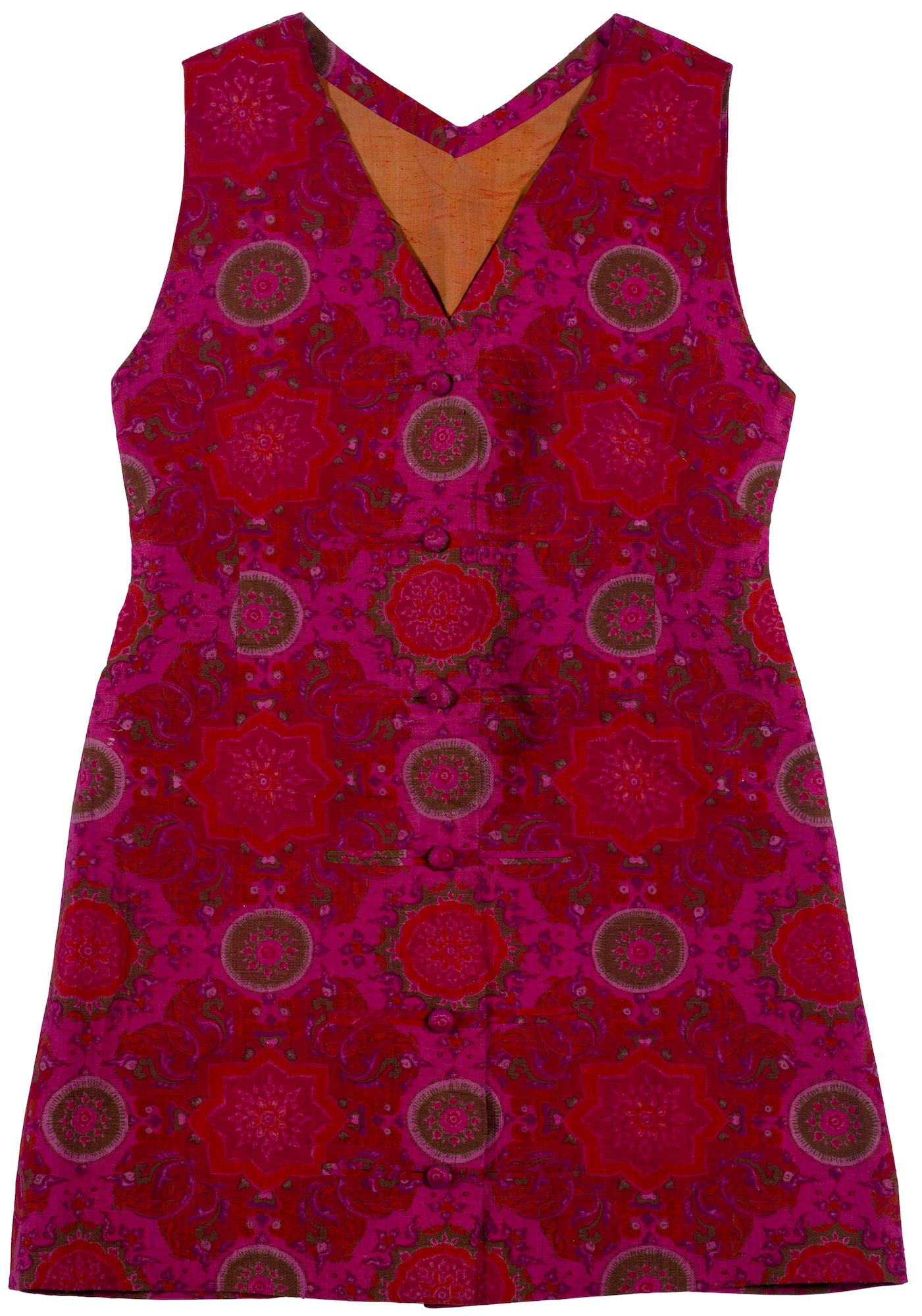
Jacqueline Ayer, Design Thai tunic, c. 1965
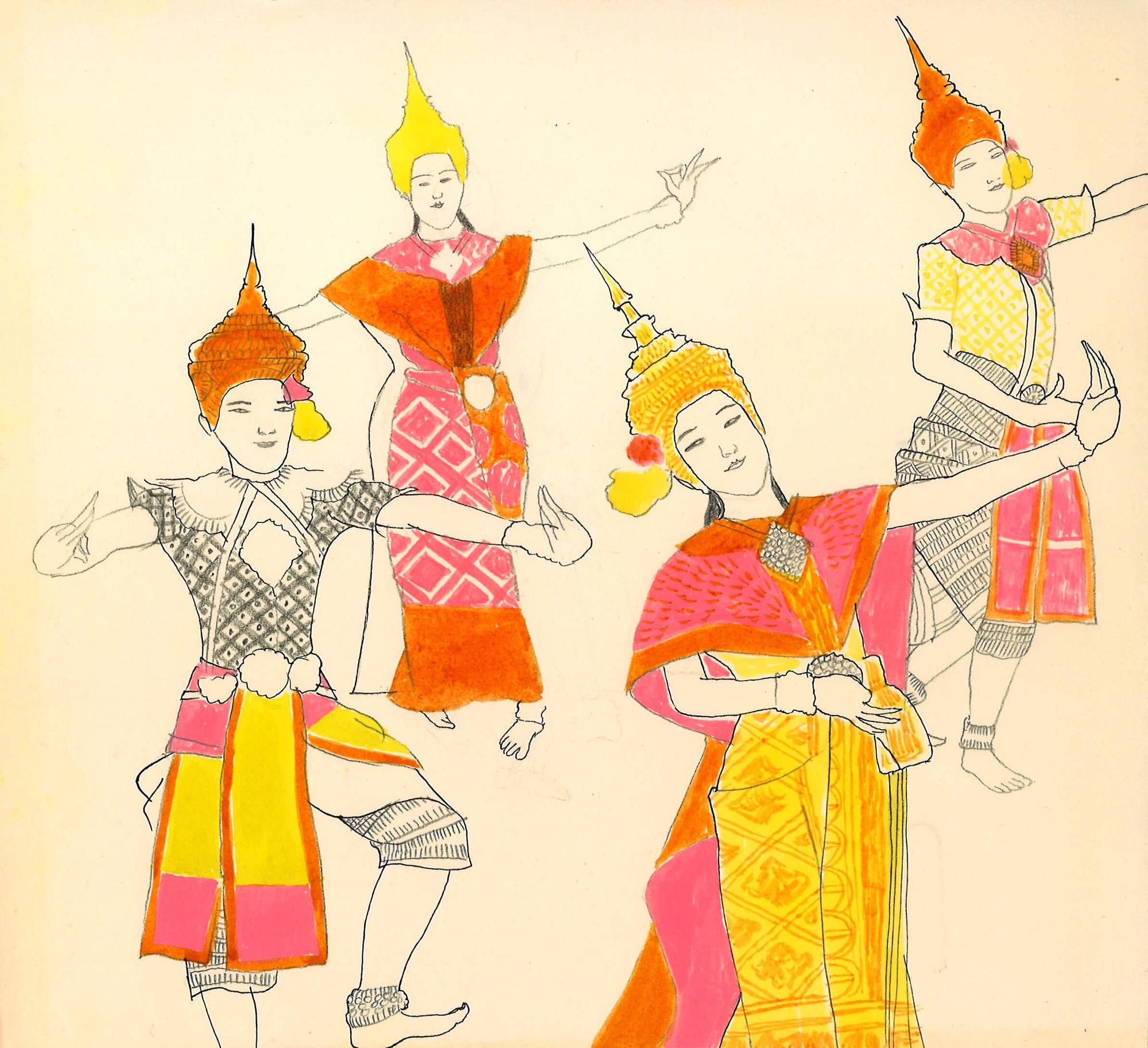
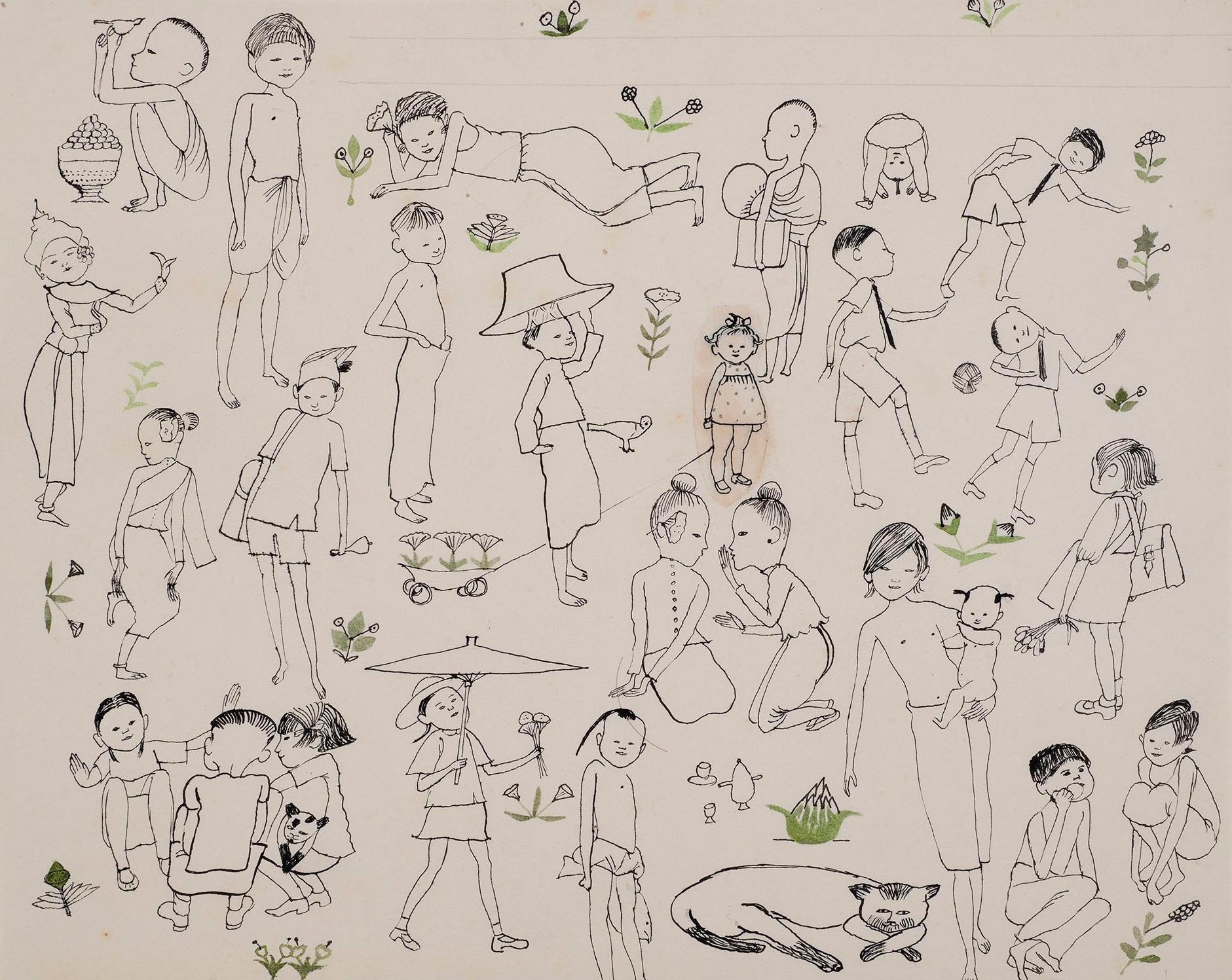
In the early 1960s, Jacqueline Ayer founded textile and garment company Design Thai, funded by IBEC (International Basic Economy Corporation) under Norman Rockefeller. The first printed fabrics were inspired by ancient Thai designs from carvings, temples, porcelains, and printed cloths in the vaults of the National Museum Bangkok. Design Thai opened a shop in Bangkok in 1962, and expanded to offer a line of ready-to-wear clothing. In the years that followed, Design Thai went from strength to strength, opening branches in New York and Hong Kong.
Jacqueline Ayer, Design Thai dress, c. 1965
In the early 1960s, Jacqueline Ayer founded textile and garment company Design Thai, funded by IBEC (International Basic Economy Corporation) under Norman Rockefeller. The first printed fabrics were inspired by ancient Thai designs from carvings, temples, porcelains, and printed cloths in the vaults of the National Museum Bangkok. Design Thai opened a shop in Bangkok in 1962, and expanded to offer a line of ready-to-wear clothing. In the years that followed, Design Thai went from strength to strength, opening branches in New York and Hong Kong.
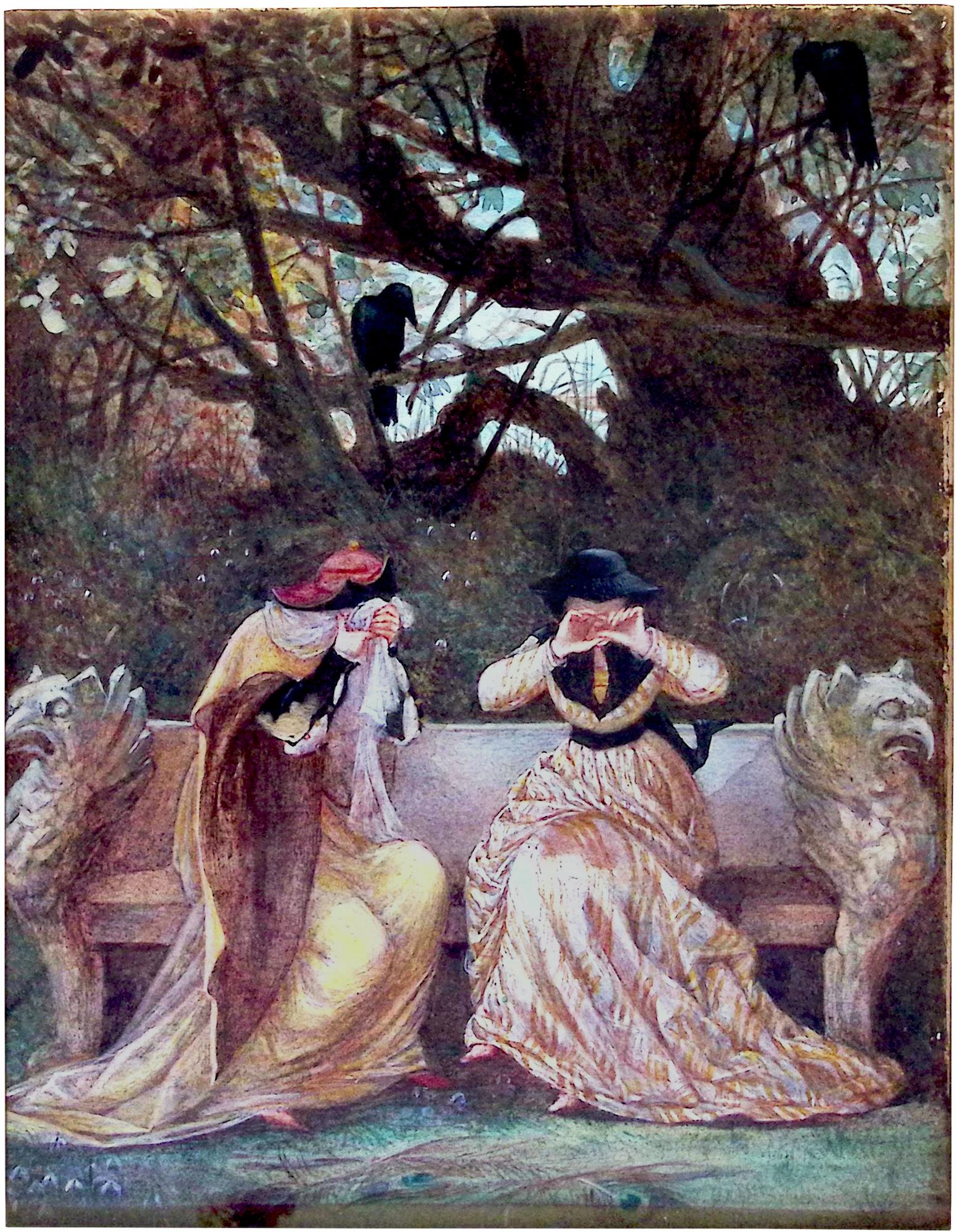
Illustration for Beauty and the Beast (two sisters weeping), c. 1875
Eleanor Vere Boyle (1825 – 1916) illustrated poetry and prose by some of the most popular authors of her time. She regularly drew and painted using ink and watercolour, sketching landscapes, animals and her children from life. She also made drawings from her imagination, often reflecting spiritual themes. This illustration is from Boyle’s 1875 retelling of Beauty and the Beast, a fairy tale where a woman is imprisoned by a monster and falls in love with him. Unlike other illustrated versions before or since, Boyle gave her beast walrus-like tusks and flippers. In several of her illustrations, Boyle used shell gold – a mixture of finely ground gold powder and gum arabic (tree sap) that would have been stored in a shallow seashell. In the final publication, the caption for this illustration reads, "Only the Raven in the brake, saw the sisters weep for rage, and heard them plot her death."
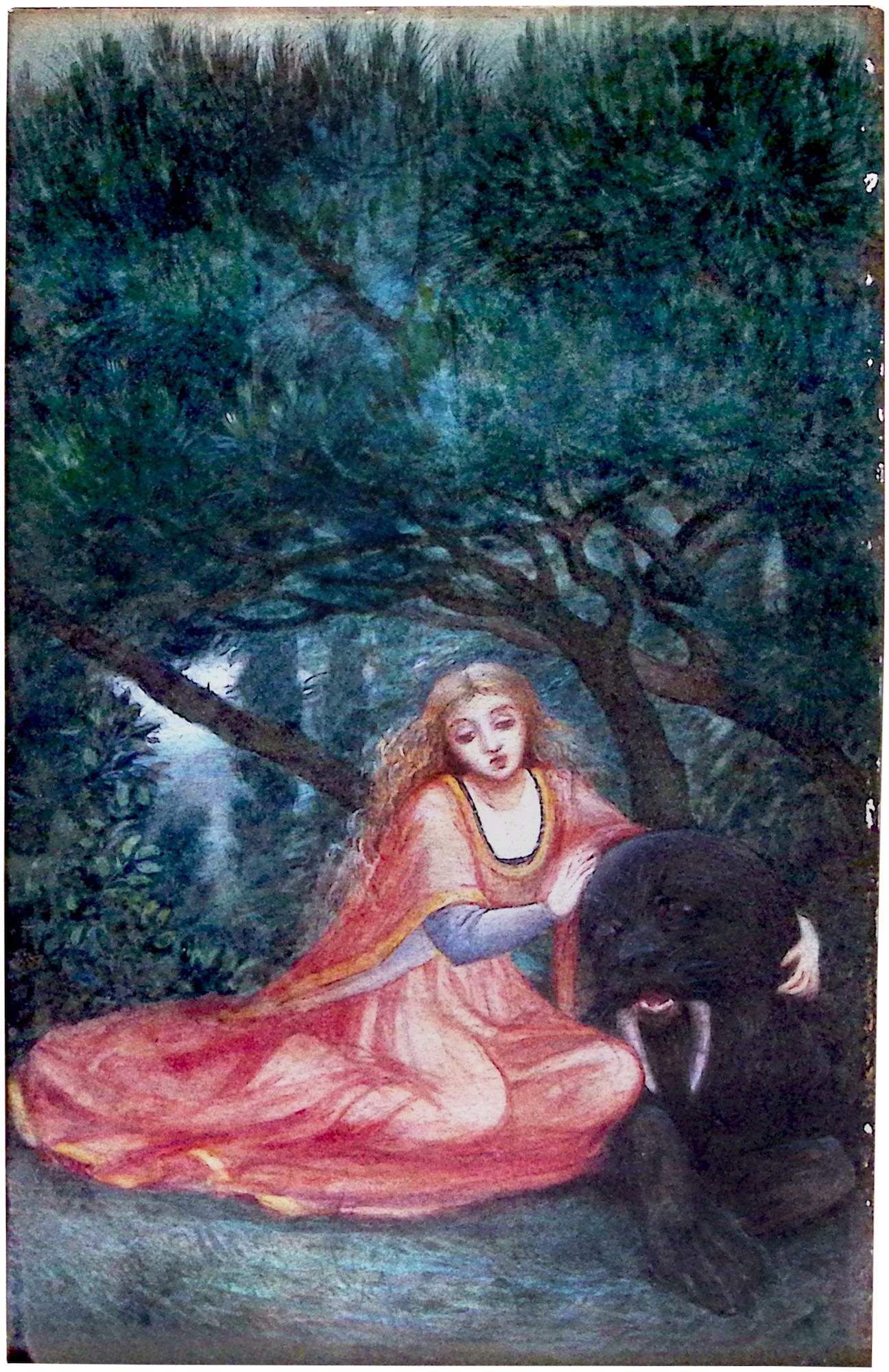
Illustration for Beauty and the Beast (Beauty embracing the dying Beast), c. 1875
Eleanor Vere Boyle (1825 – 1916) illustrated poetry and prose by some of the most popular authors of her time. She regularly drew and painted using ink and watercolour, sketching landscapes, animals and her children from life. She also made drawings from her imagination, often reflecting spiritual themes. This illustration is from Boyle’s 1875 retelling of Beauty and the Beast, a fairy tale where a woman is imprisoned by a monster and falls in love with him. Unlike other illustrated versions before or since, Boyle gave her beast walrus-like tusks and flippers. In several of her illustrations, Boyle used shell gold – a mixture of finely ground gold powder and gum arabic (tree sap) that would have been stored in a shallow seashell. In the final publication, the caption for this illustration reads, "Ah dear Beast, she said: Alas that my unkindness should thus slay thee."
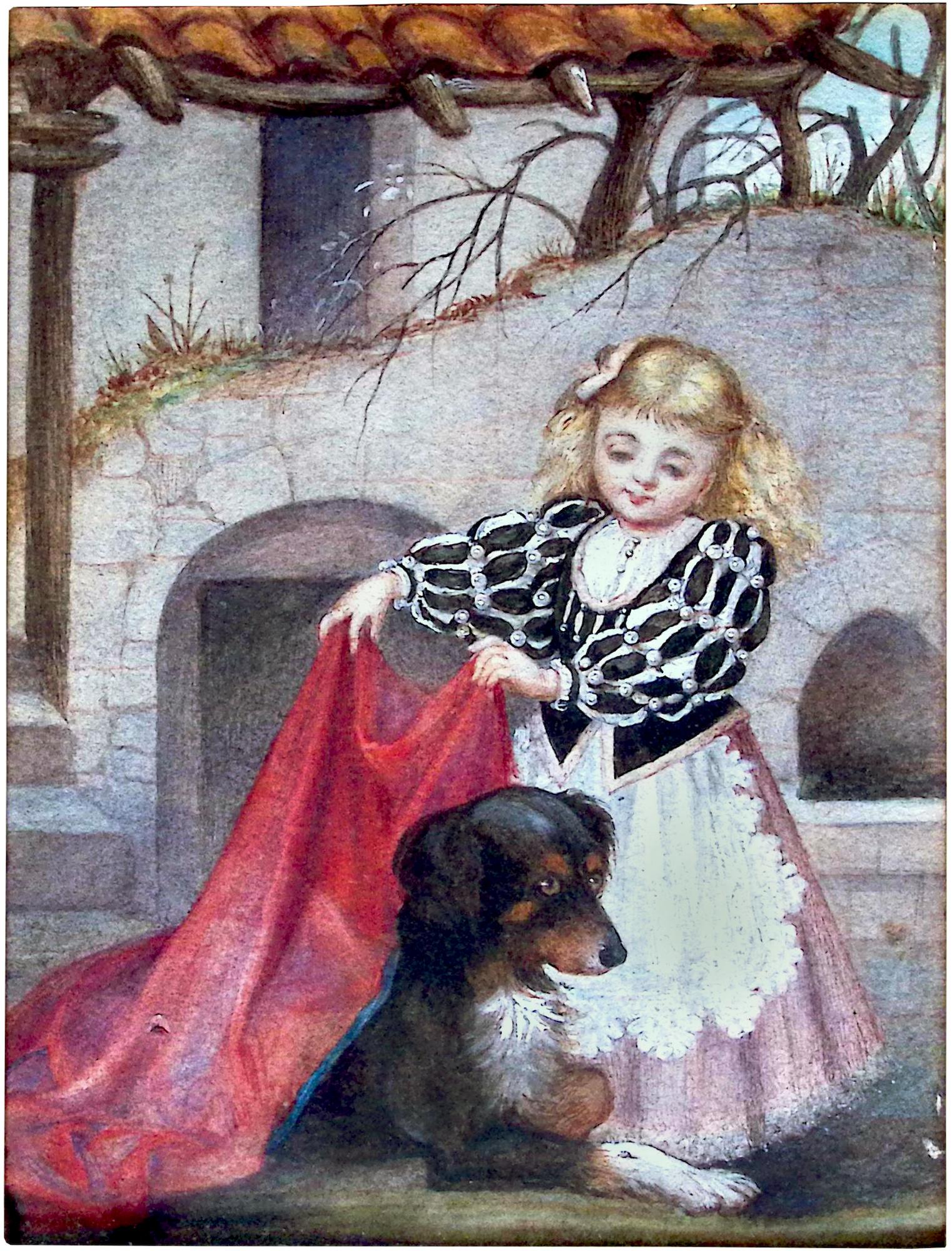
Illustration for Beauty and the Beast (Beauty with the watch dog), c. 1875
Eleanor Vere Boyle (1825 – 1916) illustrated poetry and prose by some of the most popular authors of her time. She regularly drew and painted using ink and watercolour, sketching landscapes, animals and her children from life. She also made drawings from her imagination, often reflecting spiritual themes. This illustration is from Boyle’s 1875 retelling of Beauty and the Beast, a fairy tale where a woman is imprisoned by a monster and falls in love with him. Unlike other illustrated versions before or since, Boyle gave her beast walrus-like tusks and flippers. In several of her illustrations, Boyle used shell gold – a mixture of finely ground gold powder and gum arabic (tree sap) that would have been stored in a shallow seashell. In the final publication, the caption for this illustration reads, "One cold March day, the little maid ran down to the outer court, with her new scarlet cloak, to wrap her friend the old watch dog in!"
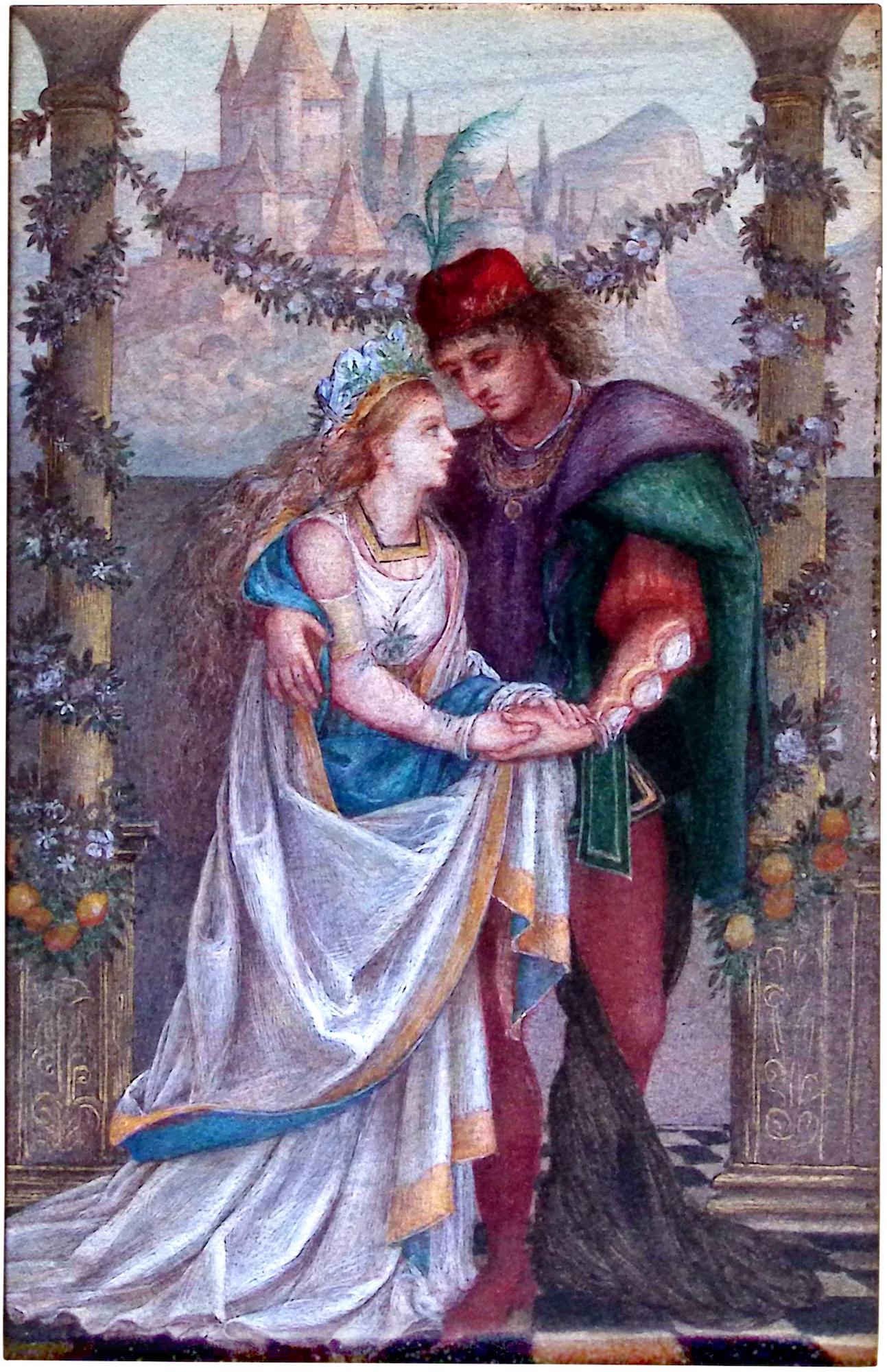
Illustration for Beauty and the Beast (the wedding), c. 1875
Eleanor Vere Boyle (1825 – 1916) illustrated poetry and prose by some of the most popular authors of her time. She regularly drew and painted using ink and watercolour, sketching landscapes, animals and her children from life. She also made drawings from her imagination, often reflecting spiritual themes. This illustration is from Boyle’s 1875 retelling of Beauty and the Beast, a fairy tale where a woman is imprisoned by a monster and falls in love with him. Unlike other illustrated versions before or since, Boyle gave her beast walrus-like tusks and flippers. In several of her illustrations, Boyle used shell gold – a mixture of finely ground gold powder and gum arabic (tree sap) that would have been stored in a shallow seashell. In the final publication, the caption for this illustration reads, "Love is the magic, that makes all things fair."
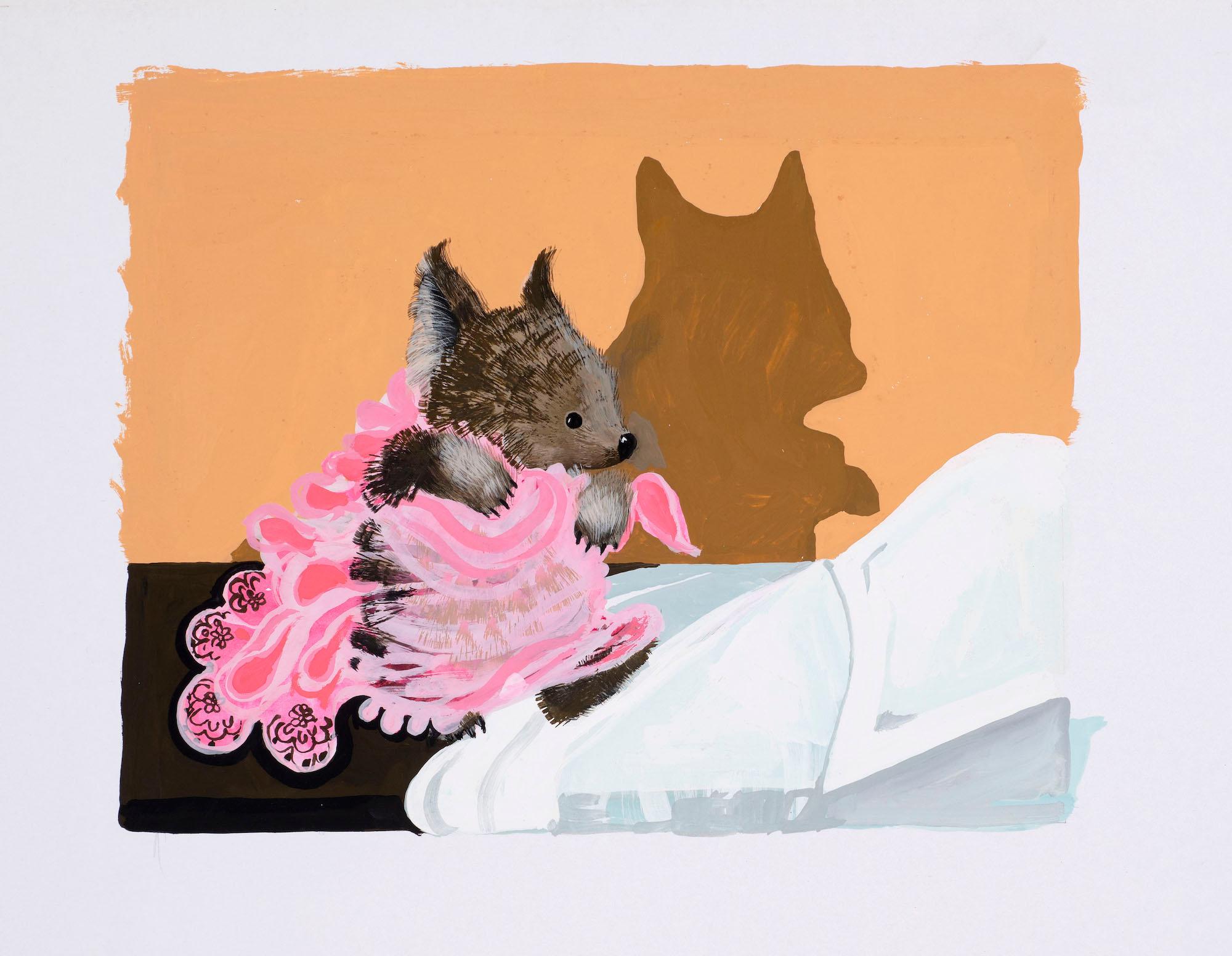
Untitled illustration for Jackanory (Mary Plain Goes to America) , 1972
British illustrator Janina Ede (1937-2018) created covers and illustrations for over 100 books from the 1950s to the 1980s. In the 1970s, she made illustrations for Jackanory, a BBC television programme. During each episode, an actor read a story, while specially-commissioned illustrations were shown on screen. For the televised version of Mary Plain Goes to America, Ede created paintings on large boards. These allowed the camera to pan across her image, showing a little at a time. BBC1 had only been in colour for three years, and so Ede used bold colours painted in gouache and reflective collaged foil to make the most of the new technology. This storyboard illustration was produced by Janina Ede for Jackanory episode #1426, 'Mary Plain Goes to America: Part 1 - An invitation'. It aired on 13 November 1972.
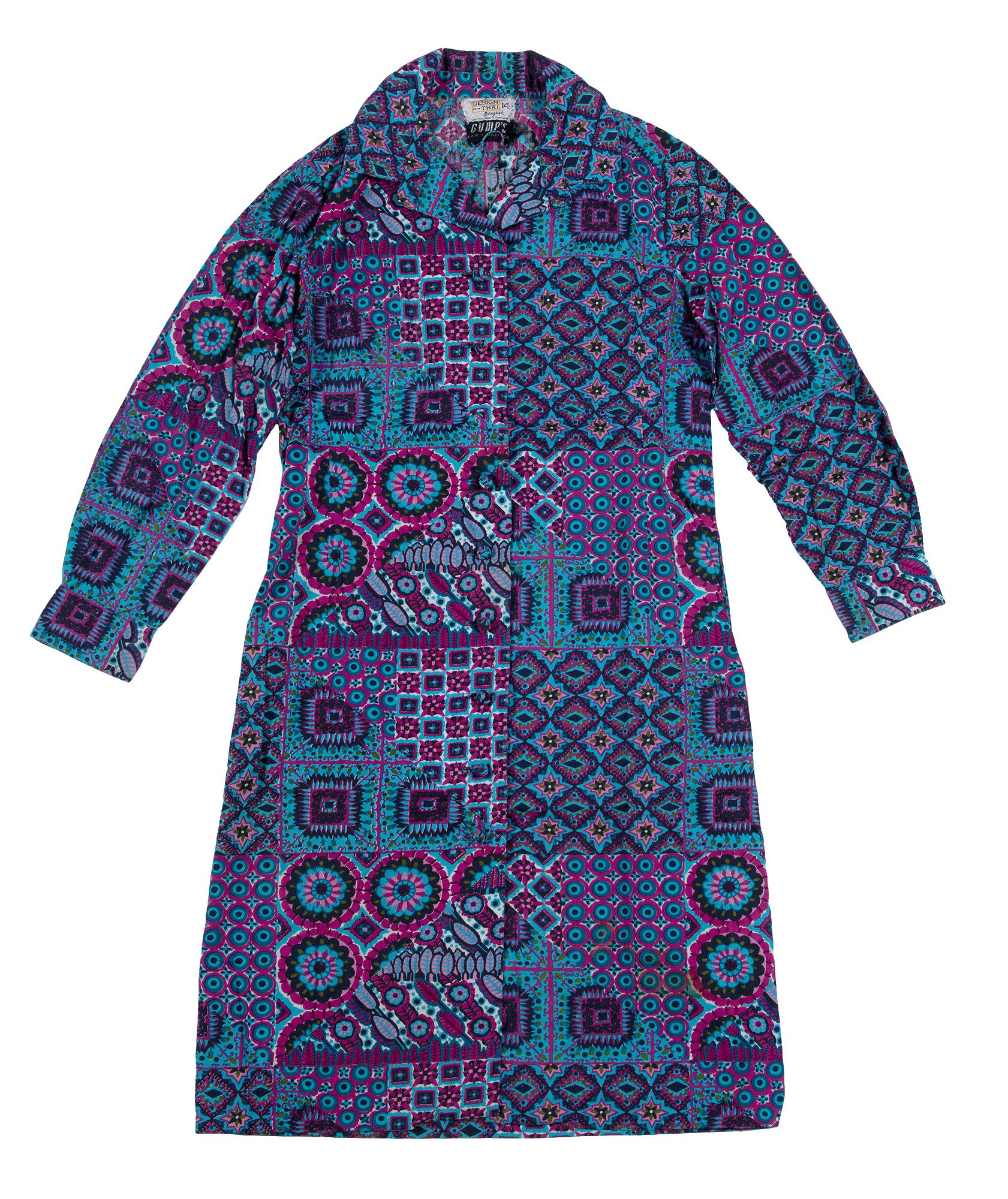
Jacqueline Ayer, Design Thai dress, c. 1965
In the early 1960s, Jacqueline Ayer founded textile and garment company Design Thai, funded by IBEC (International Basic Economy Corporation) under Norman Rockefeller. The first printed fabrics were inspired by ancient Thai designs from carvings, temples, porcelains, and printed cloths in the vaults of the National Museum Bangkok. Design Thai opened a shop in Bangkok in 1962, and expanded to offer a line of ready-to-wear clothing. In the years that followed, Design Thai went from strength to strength, opening branches in New York and Hong Kong.
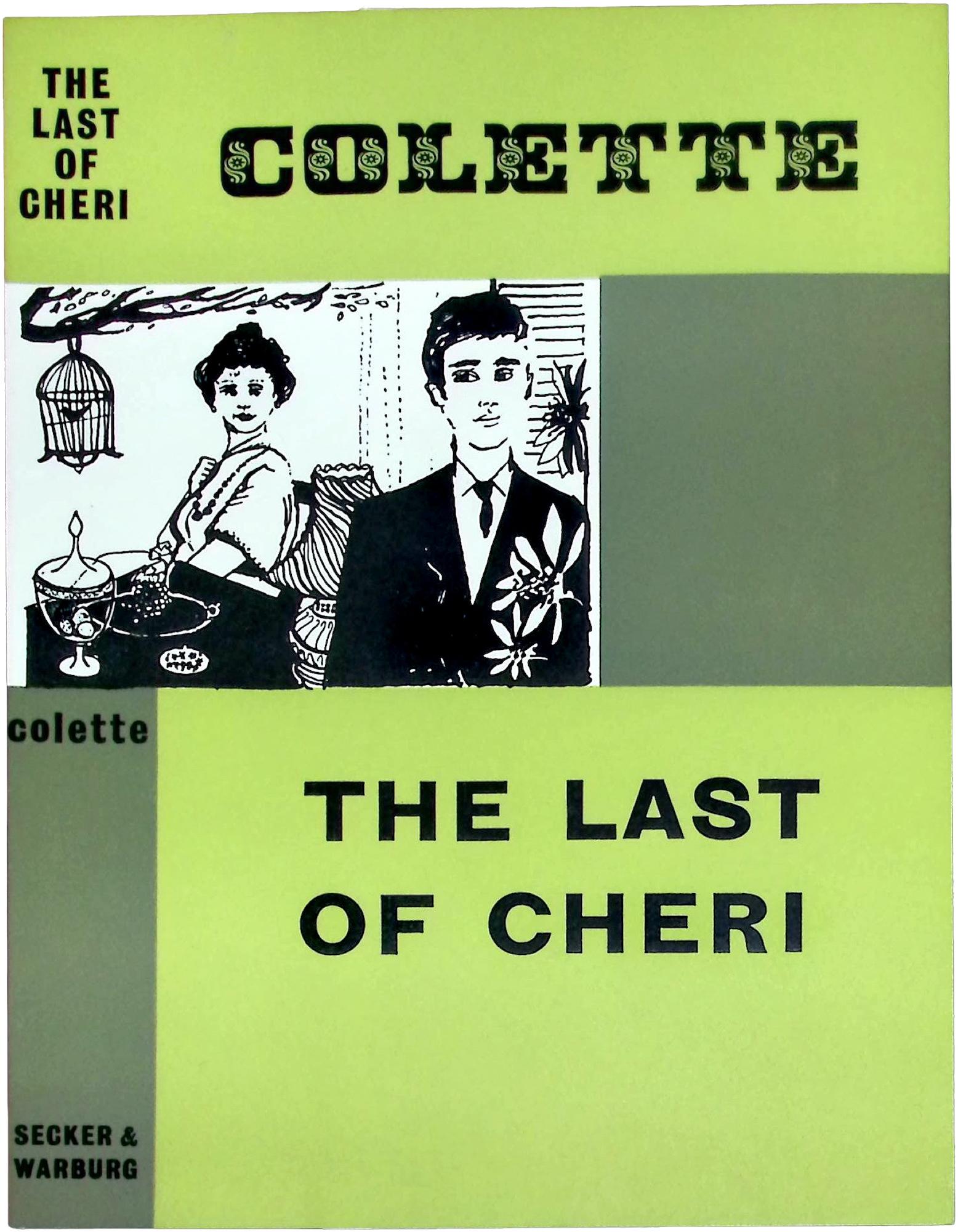
Book cover proof for Colette's "The Last of Cheri", 1961
British illustrator Janina Ede (1937-2018) created covers and illustrations for over 100 books from the 1950s to the 1980s. She designed the covers of several books by French author and pioneer of autofiction Sidonie-Gabrielle Colette.