1970s
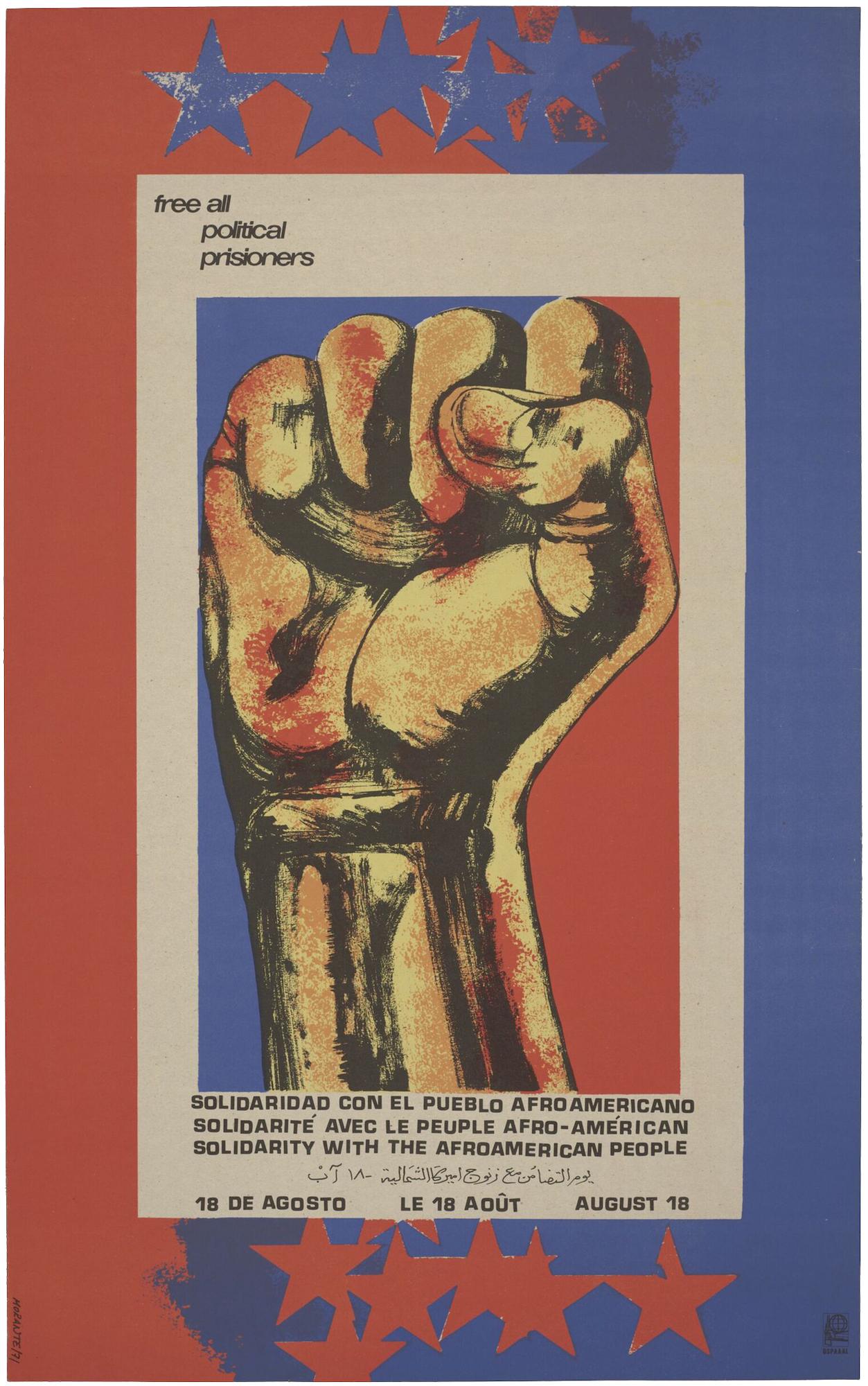
free all political prisoners - SOLIDARITY WITH THE AFROAMERICAN PEOPLE - AUGUST 18, 1971
Between the 1960s and 1990s, more than fifty designers worked at OSPAAAL. Based in Cuba, they made magazines and posters that were sent around the world. Their aim was to promote radical political ideas. Many of their posters celebrate socialist revolutions and liberation movements from the Global South. They also criticised the foreign policy of the U.S.A. and supported the Black Power movement.
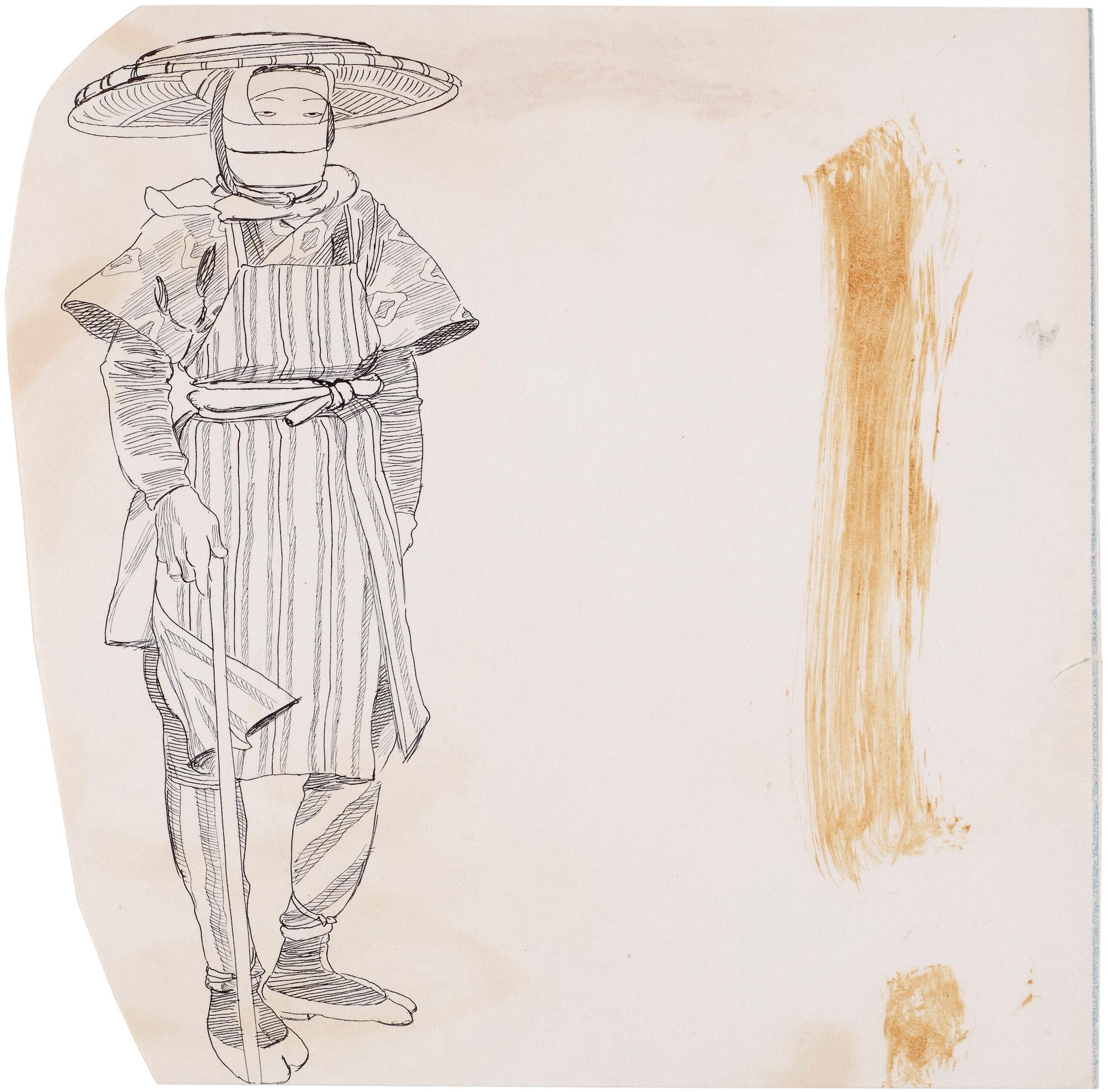
Jacqueline Ayer, Untitled (Female field worker, Yamagata prefecture), c. 1973
Jacqueline Ayer (1930–2012) had a career that spanned many creative fields. She began as a fashion illustrator, and later turned her hand to children’s books, textiles and garments, as she worked in New York, Paris, London, Bangkok, Hong Kong and across India. This drawing was used as one of the final illustrations printed in Ayer's publication Oriental* Costume (1974). *The term ‘oriental’ has colonial and racist origins. It was established during a period when European powers took political control of other countries and defined non-European cultures as ‘inferior’ to their own. ‘Oriental’ was commonly used in English-speaking countries until the late 20th century to group together people, culture and places in Northern Africa, East Asia and Southeast Asia, as well as objects thought to have originated in these areas. The term has been widely rejected today as it exoticizes and ‘others’ these diverse cultures. Ayer used the term here to collectively refer to modes of dress from Cambodia, China, Japan, Mongolia, Nepal, Thailand and Tibet.
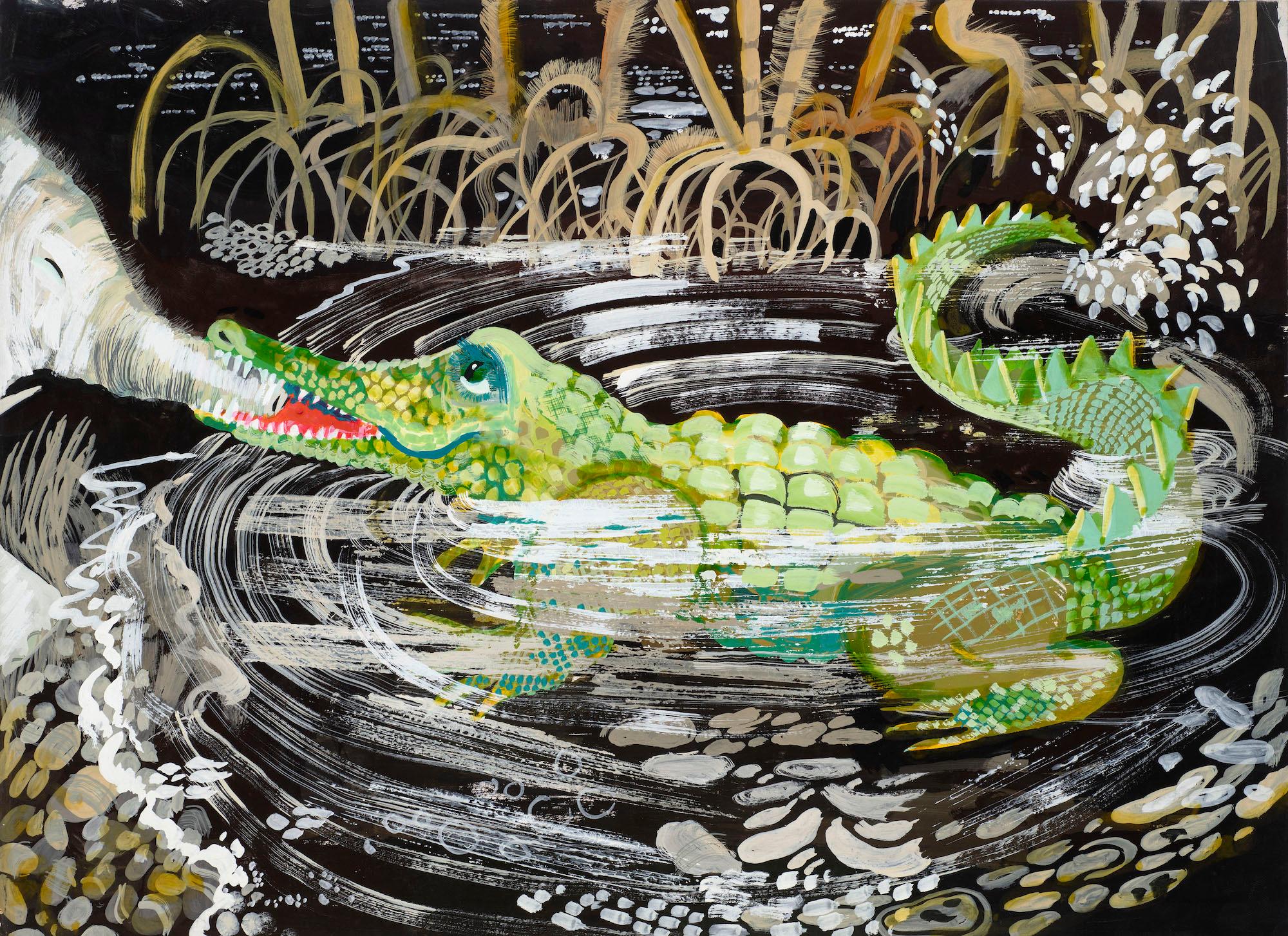
Untitled illustration for Jackanory (Just So Stories: The Elephant's Child), 1973
Janina Ede (1937-2018) created covers and illustrations for over 100 books in the 1960s, 70s and 80s. Many of her illustrations feature animals, which she drew from life. In the 1970s, Ede was commissioned to create large colourful illustrations for the BBC children’s television series, Jackanory. Each episode was dedicated to a story read by an actor, while specially commissioned illustrations were shown on screen during each programme. Some of these illustrations were for programmes featuring stories by author Rudyard Kipling. His ‘Just So’ stories were short tales that imagined how various animals attained their distinguishing features. Kipling set the stories in parts of India, West Asia and Africa. His descriptions of places and people included racist and exoticised stereotypes. Ede’s illustrations draw extensively on Kipling’s descriptions, and therefore reflect the racism in his work, as well as the prevailing stereotypical views that existed in 1970s Britain. Her own personal views are not documented. This storyboard illustration was produced by Janina Ede for Jackanory episode #1450, 'Just So Stories - The Elephant's Child'. It aired on 1 January 1973.
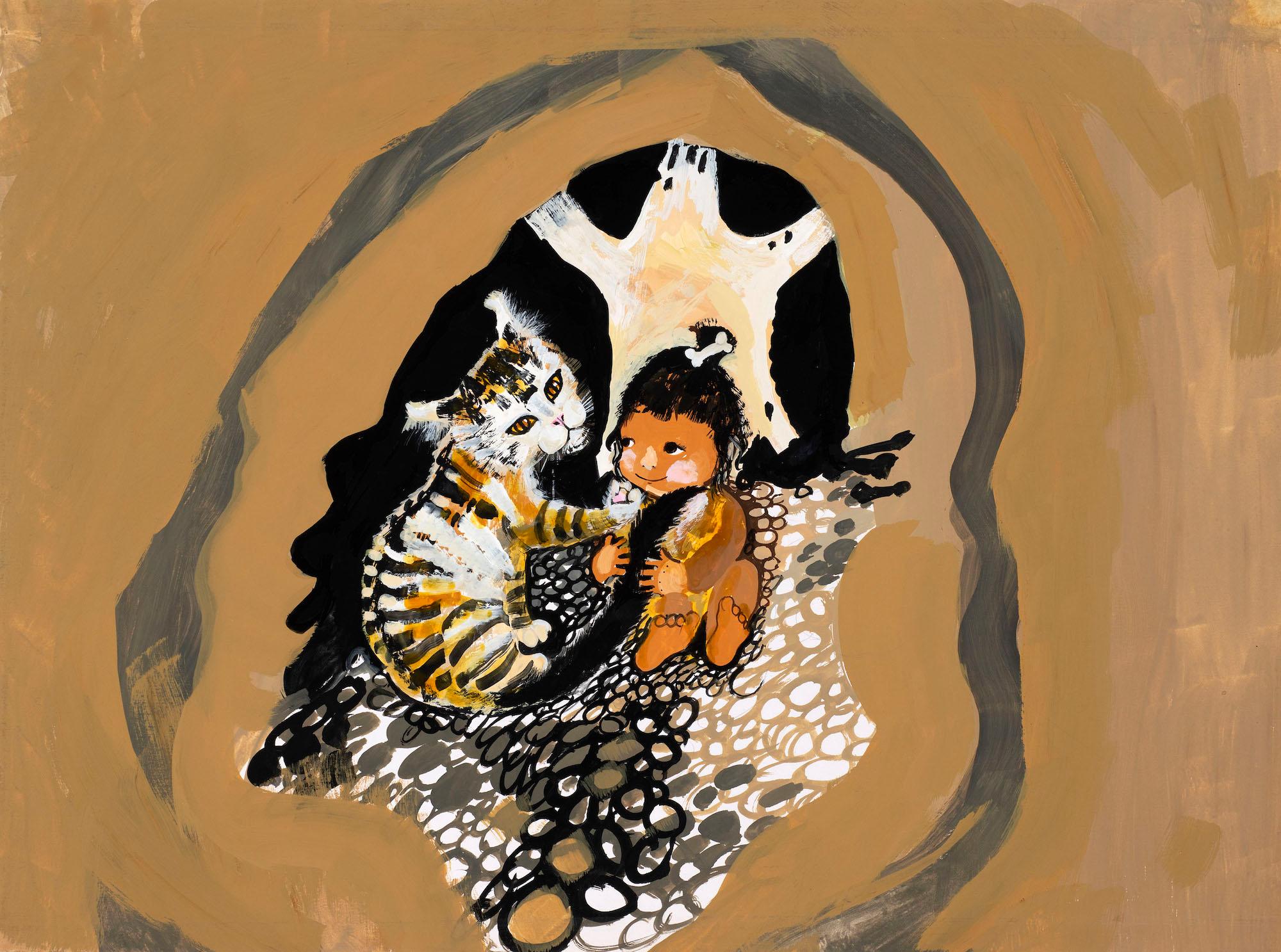
Untitled illustration for Jackanory (Just So Stories: The Cat who Walked by Himself), 1973
Janina Ede (1937-2018) created covers and illustrations for over 100 books in the 1960s, 70s and 80s. Many of her illustrations feature animals, which she drew from life. In the 1970s, Ede was commissioned to create large colourful illustrations for the BBC children’s television series, Jackanory. Each episode was dedicated to a story read by an actor, while specially commissioned illustrations were shown on screen during each programme. Some of these illustrations were for programmes featuring stories by author Rudyard Kipling. His ‘Just So’ stories were short tales that imagined how various animals attained their distinguishing features. Kipling set the stories in parts of India, West Asia and Africa. His descriptions of places and people included racist and exoticised stereotypes. Ede’s illustrations draw extensively on Kipling’s descriptions, and therefore reflect the racism in his work, as well as the prevailing stereotypical views that existed in 1970s Britain. Her own personal views are not documented. This storyboard illustration was produced by Janina Ede for Jackanory episode #1452, 'Just So Stories - The Cat that Walked by Himself'. It aired on 3 January 1973.
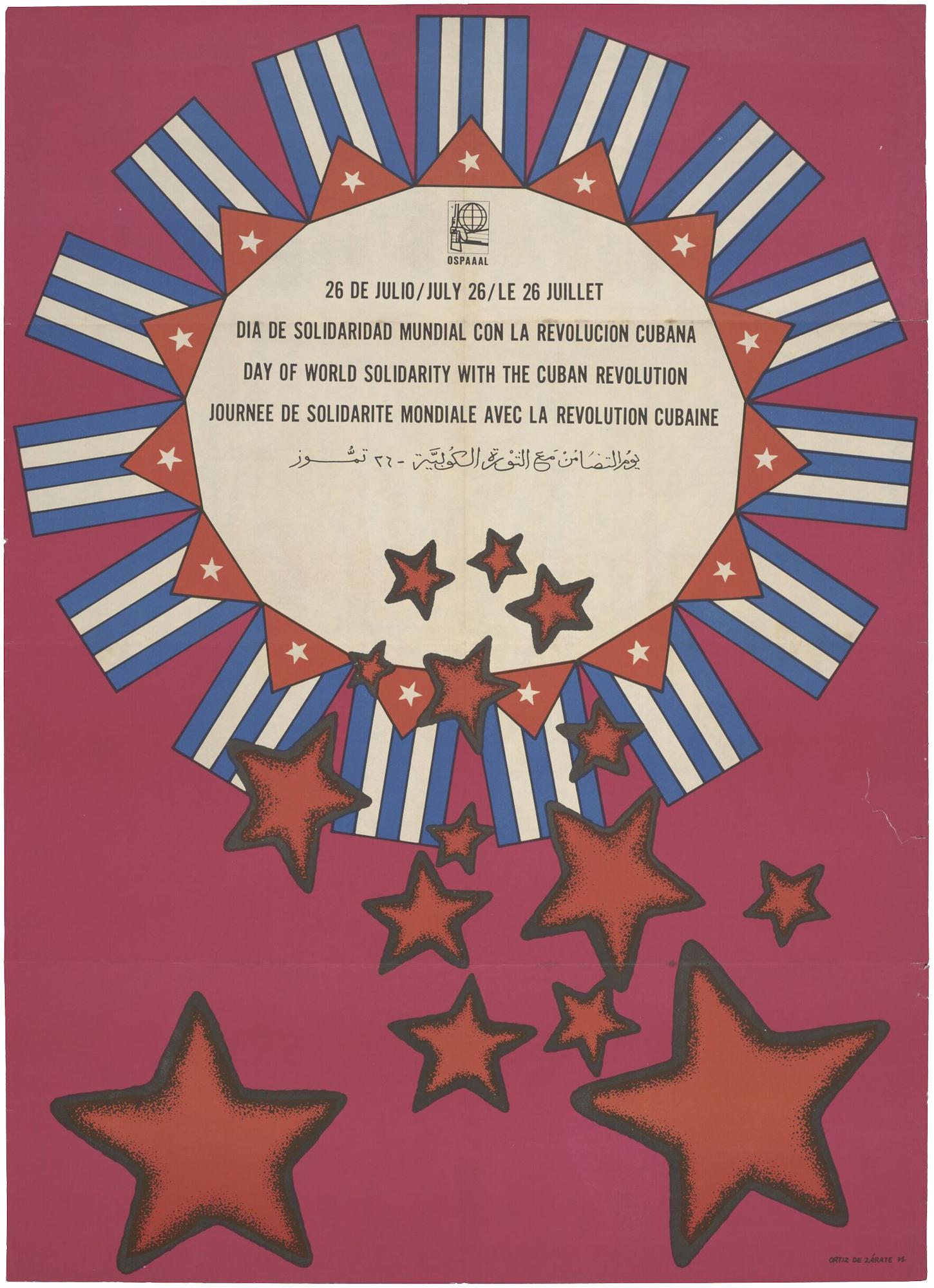
JULY 26 - DAY OF WORLD SOLIDARITY WITH THE CUBAN REVOLUTION, 1975
Between the 1960s and 1990s, more than fifty designers worked at OSPAAAL. Based in Cuba, they made magazines and posters that were sent around the world. Their aim was to promote radical political ideas. Many of their posters celebrate socialist revolutions and liberation movements from the Global South. This design promotes 26 July as a day of solidarity with the Cuban Revolution. The revolutionary 26th of July Movement led by Fidel Castro took power in Cuba in 1959.
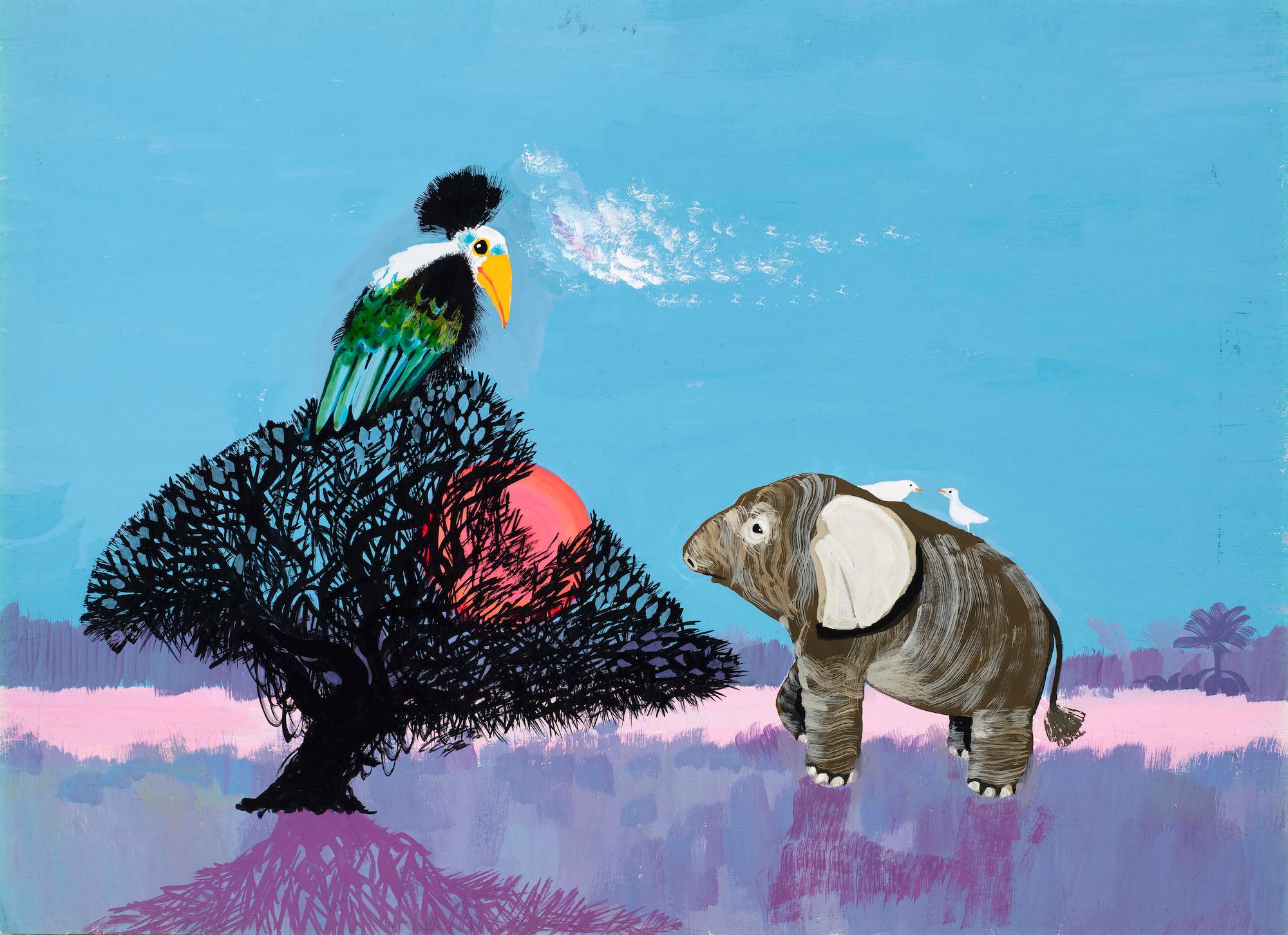
Untitled illustration for Jackanory (Just So Stories: The Elephant's Child), 1973
Janina Ede (1937-2018) created covers and illustrations for over 100 books in the 1960s, 70s and 80s. Many of her illustrations feature animals, which she drew from life. In the 1970s, Ede was commissioned to create large colourful illustrations for the BBC children’s television series, Jackanory. Each episode was dedicated to a story read by an actor, while specially commissioned illustrations were shown on screen during each programme. Some of these illustrations were for programmes featuring stories by author Rudyard Kipling. His ‘Just So’ stories were short tales that imagined how various animals attained their distinguishing features. Kipling set the stories in parts of India, West Asia and Africa. His descriptions of places and people included racist and exoticised stereotypes. Ede’s illustrations draw extensively on Kipling’s descriptions, and therefore reflect the racism in his work, as well as the prevailing stereotypical views that existed in 1970s Britain. Her own personal views are not documented. This storyboard illustration was produced by Janina Ede for Jackanory episode #1450, 'Just So Stories - The Elephant's Child'. It aired on 1 January 1973.
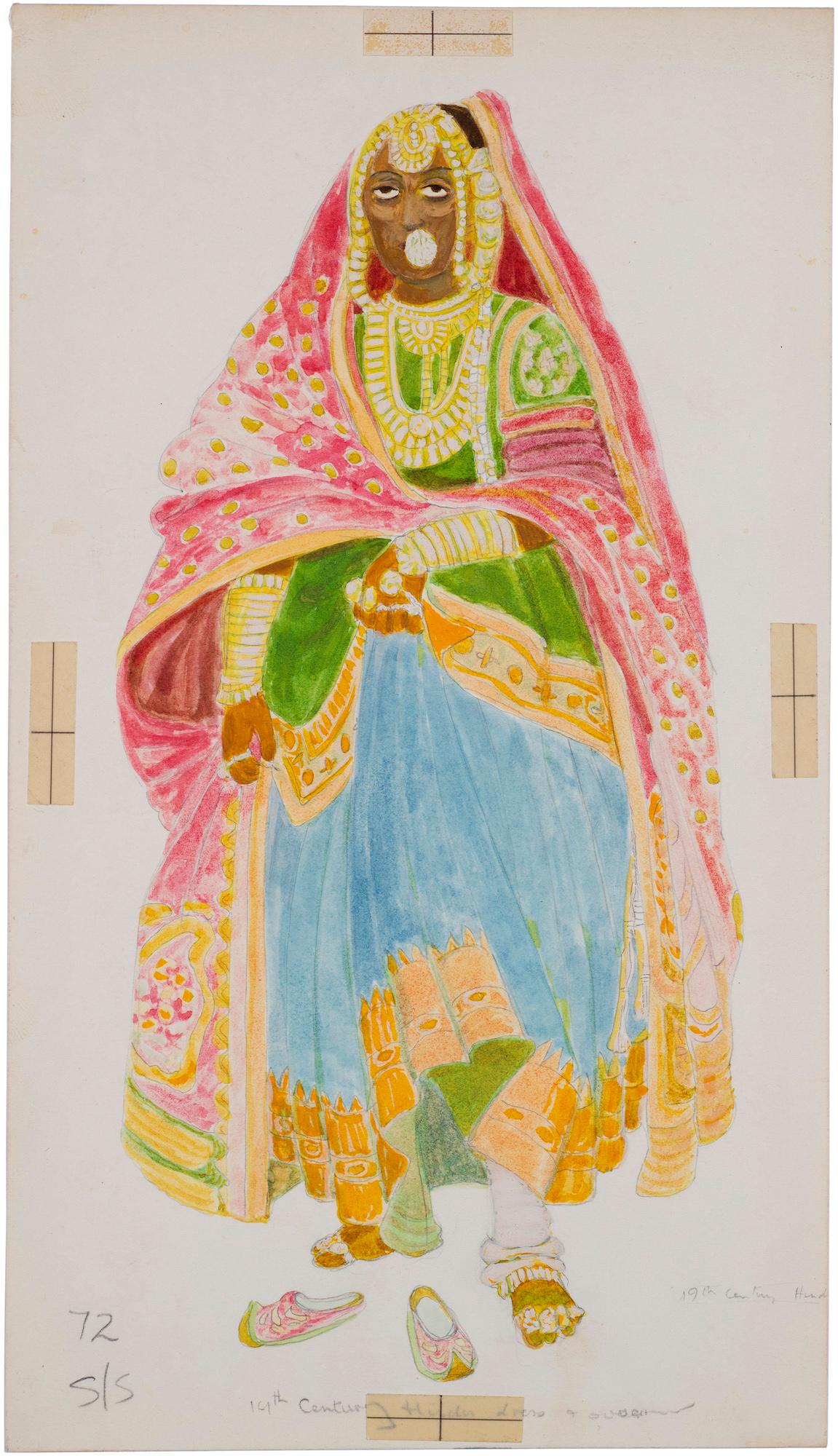
Jacqueline Ayer, Untitled (Hindu dress and ornaments, 19th century), 1974
Jacqueline Ayer (1930–2012) had a career that spanned many creative fields. She began as a fashion illustrator, and later turned her hand to children’s books, textiles and garments, as she worked in New York, Paris, London, Bangkok, Hong Kong and across India. This drawing was used as one of the final illustrations printed in Ayer's publication Oriental* Costume (1974). *The term ‘oriental’ has colonial and racist origins. It was established during a period when European powers took political control of other countries and defined non-European cultures as ‘inferior’ to their own. ‘Oriental’ was commonly used in English-speaking countries until the late 20th century to group together people, culture and places in Northern Africa, East Asia and Southeast Asia, as well as objects thought to have originated in these areas. The term has been widely rejected today as it exoticizes and ‘others’ these diverse cultures. Ayer used the term here to collectively refer to modes of dress from Cambodia, China, Japan, Mongolia, Nepal, Thailand and Tibet.
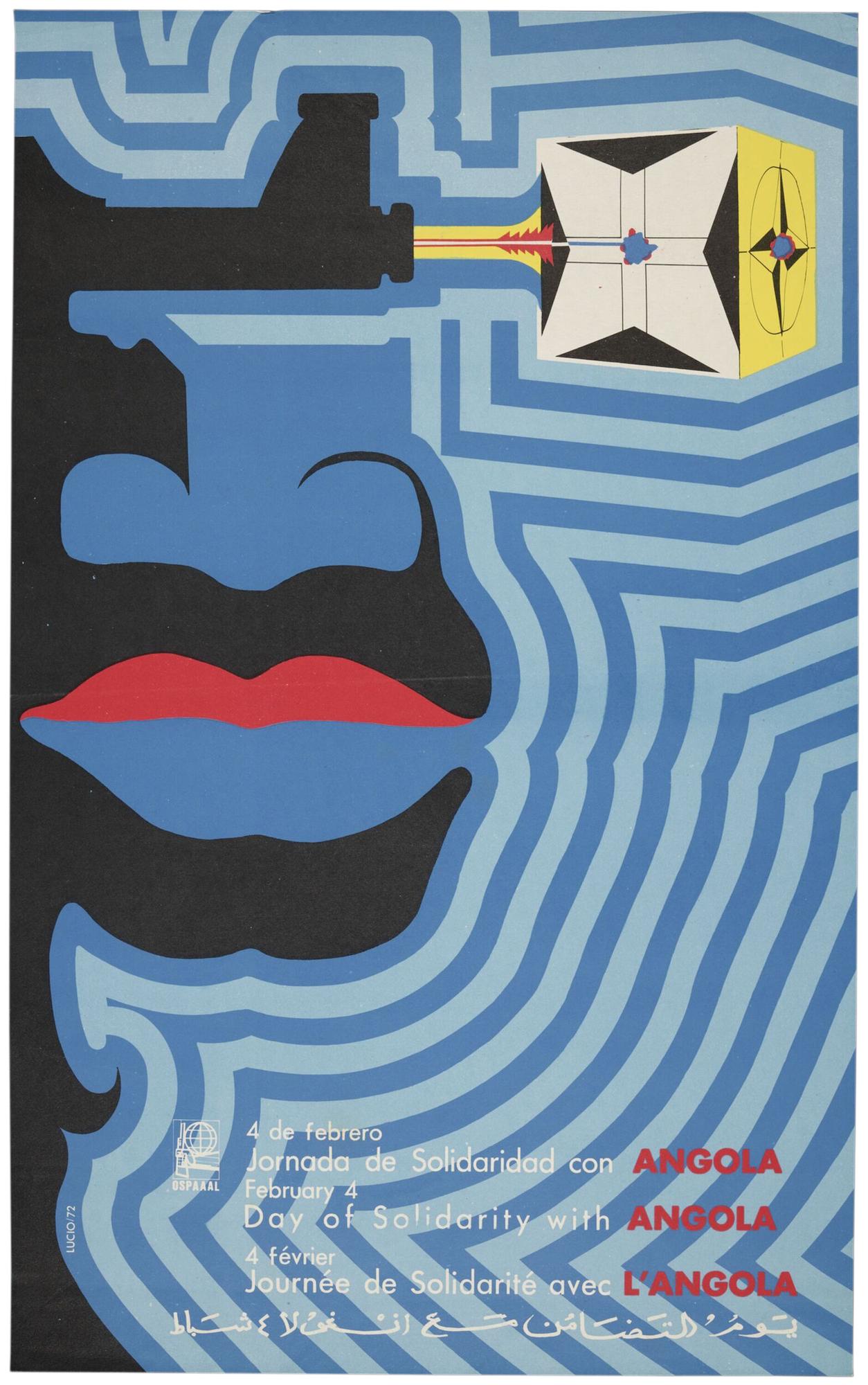
February 4 - Day of Solidarity with ANGOLA, 1972
Between the 1960s and 1990s, more than fifty designers worked at OSPAAAL. Based in Cuba, they made magazines and posters that were sent around the world. Their aim was to promote radical political ideas. Many of their posters celebrated socialist revolutions and liberation movements from the Global South. This poster commemorates the beginning of the Angolan War of Independence on 4 February 1961.
Content warning: weaponry
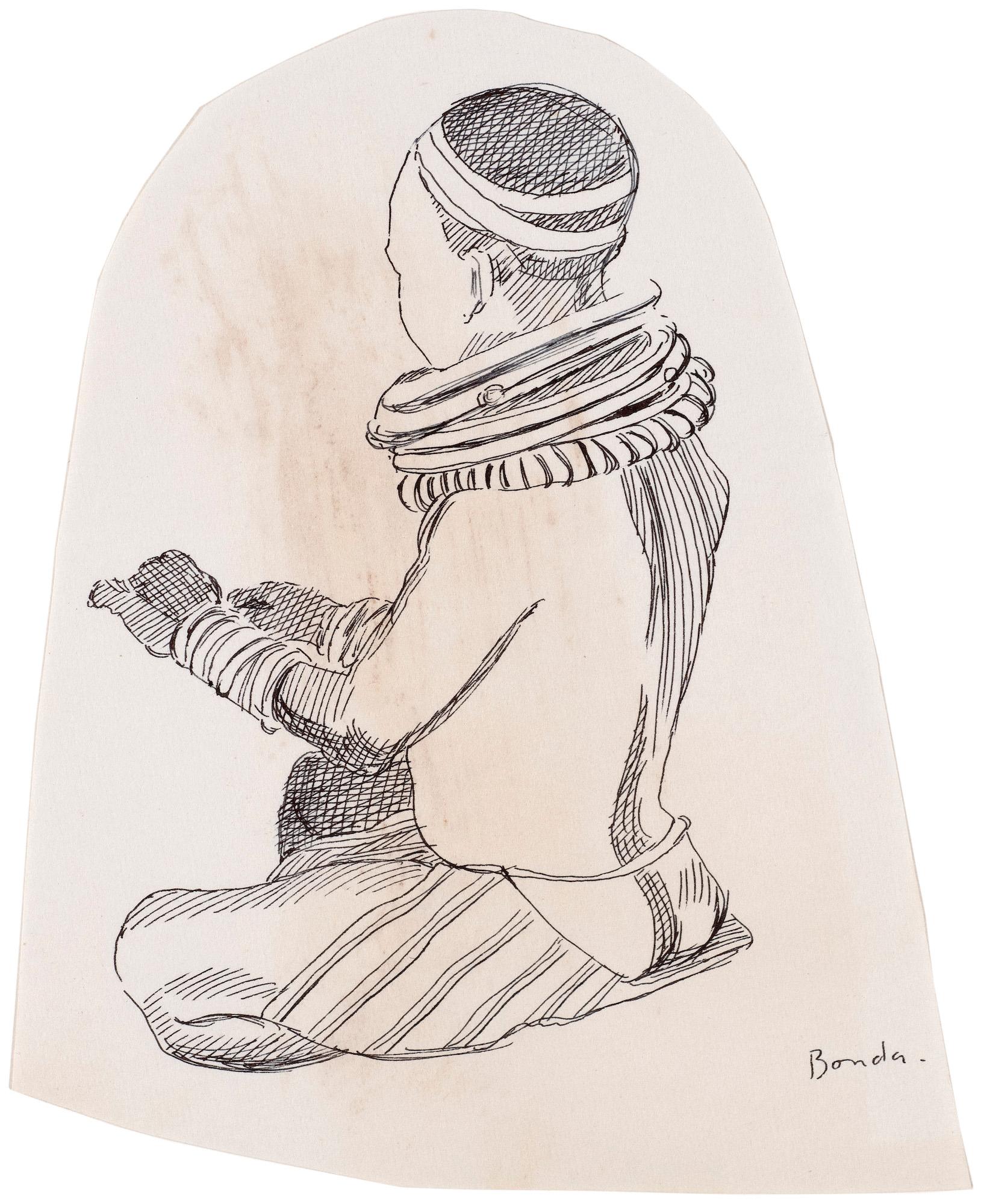
Jacqueline Ayer, Untitled (Bonda woman), c. 1973
Jacqueline Ayer (1930–2012) had a career that spanned many creative fields. She began as a fashion illustrator, and later turned her hand to children’s books, textiles and garments, as she worked in New York, Paris, London, Bangkok, Hong Kong and across India. This drawing was used as one of the final illustrations printed in Ayer's publication Oriental* Costume (1974). *The term ‘oriental’ has colonial and racist origins. It was established during a period when European powers took political control of other countries and defined non-European cultures as ‘inferior’ to their own. ‘Oriental’ was commonly used in English-speaking countries until the late 20th century to group together people, culture and places in Northern Africa, East Asia and Southeast Asia, as well as objects thought to have originated in these areas. The term has been widely rejected today as it exoticizes and ‘others’ these diverse cultures. Ayer used the term here to collectively refer to modes of dress from Cambodia, China, Japan, Mongolia, Nepal, Thailand and Tibet.
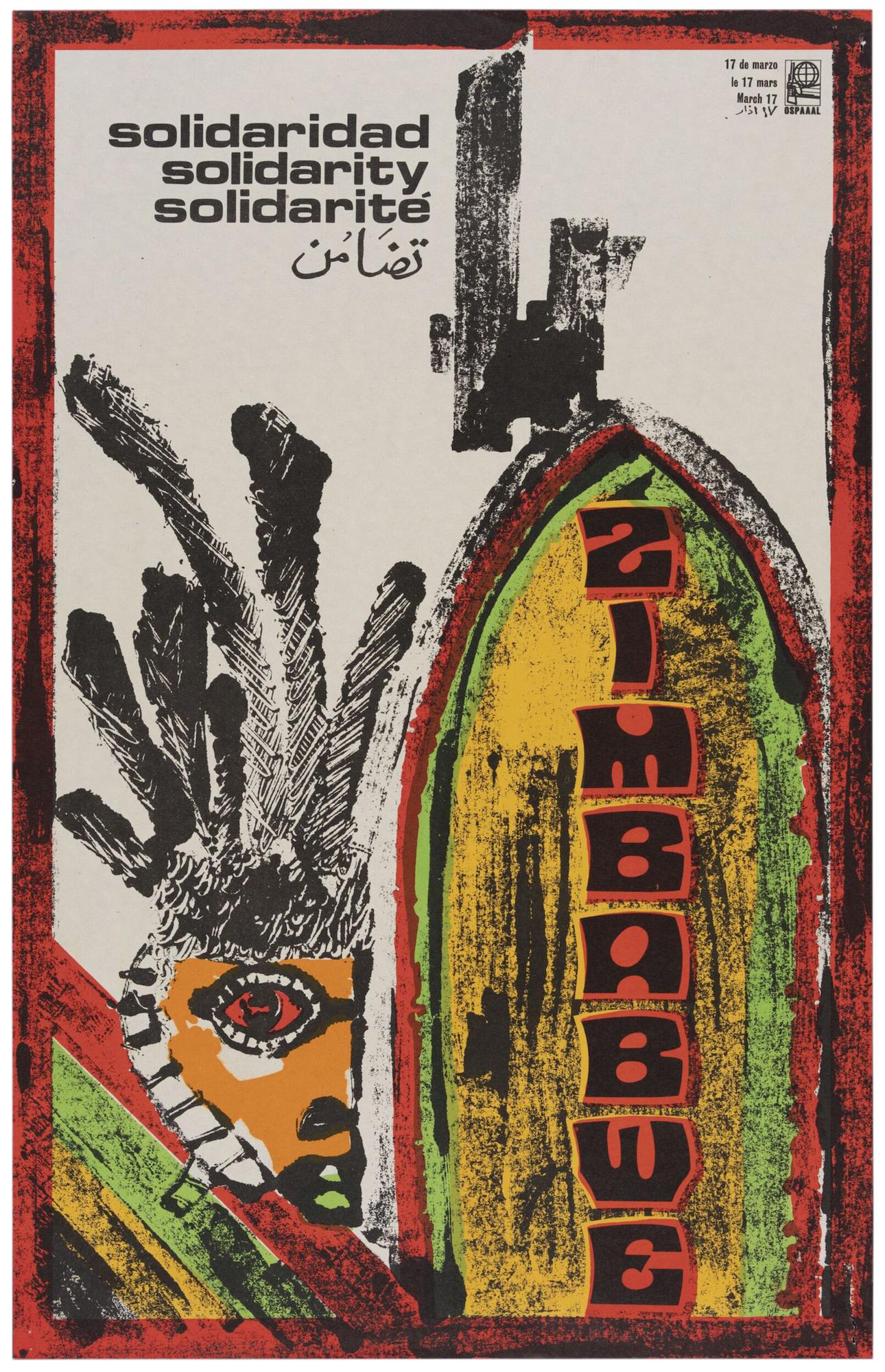
solidarity ZIMBABWE - March 17, c. 1970
Between the 1960s and 1990s, more than fifty designers worked at OSPAAAL. Based in Cuba, they made magazines and posters that were sent around the world. Their aim was to promote radical political ideas. Many of their posters celebrate socialist revolutions and liberation movements from the Global South.
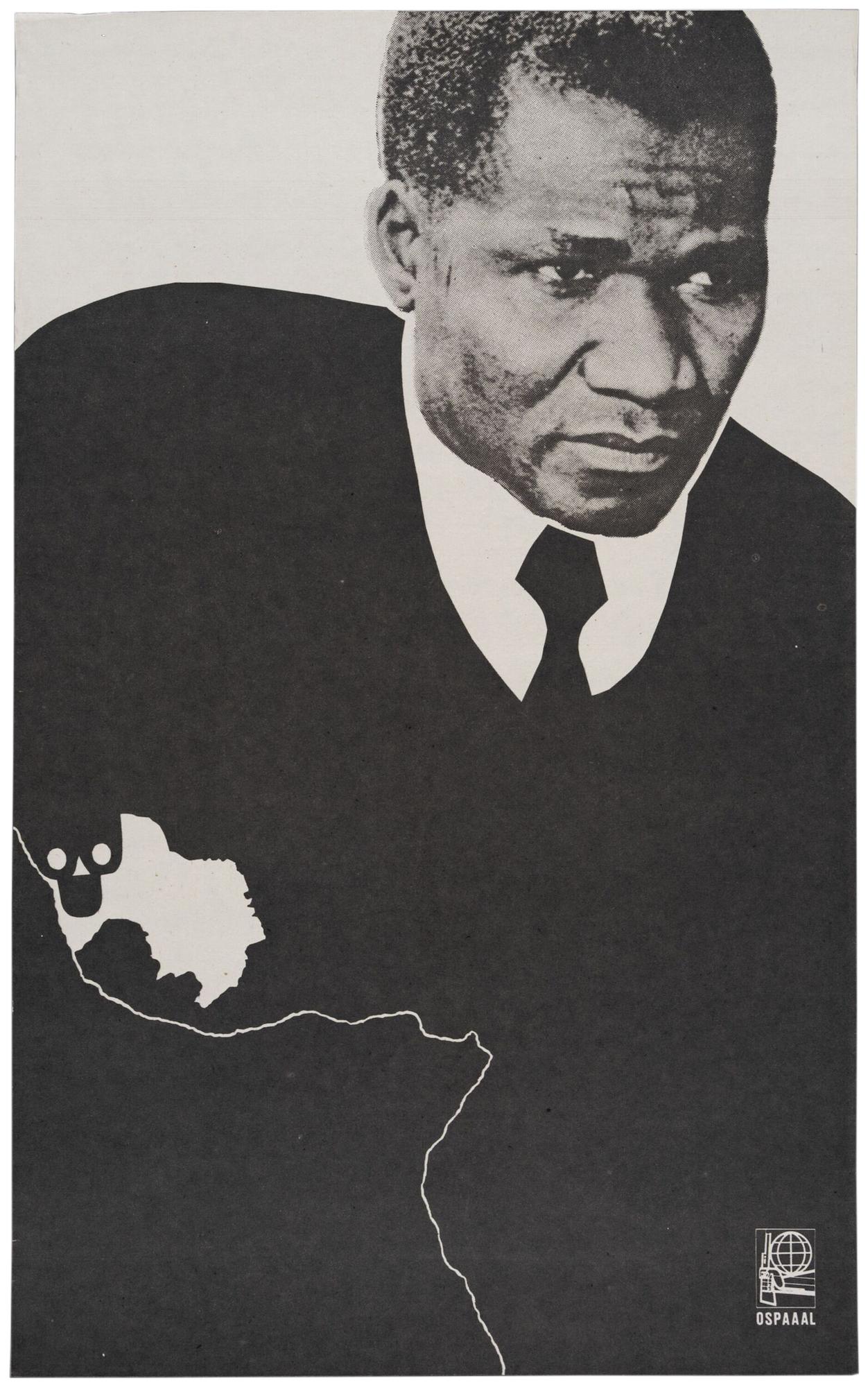
Untitled (Sékou Touré), 1971
Between the 1960s and 1990s, more than fifty designers worked at OSPAAAL (the Organisation of Solidarity with the People of Africa, Asia and Latin America). Based in Cuba, they made magazines and posters that were sent around the world. Their aim was to promote radical political ideas. Many of their posters celebrate socialist revolutions and liberation movements from the Global South. This design is a portrait of Ahmed Sékou Touré, the first President of Guinea after the country gained independence from French colonial rule. On his chest is an outline of the African continent, with Guinea highlighted and a skull over the Guinea-Bissau, which was under Portuguese colonial rule at the time of the poster’s issue.
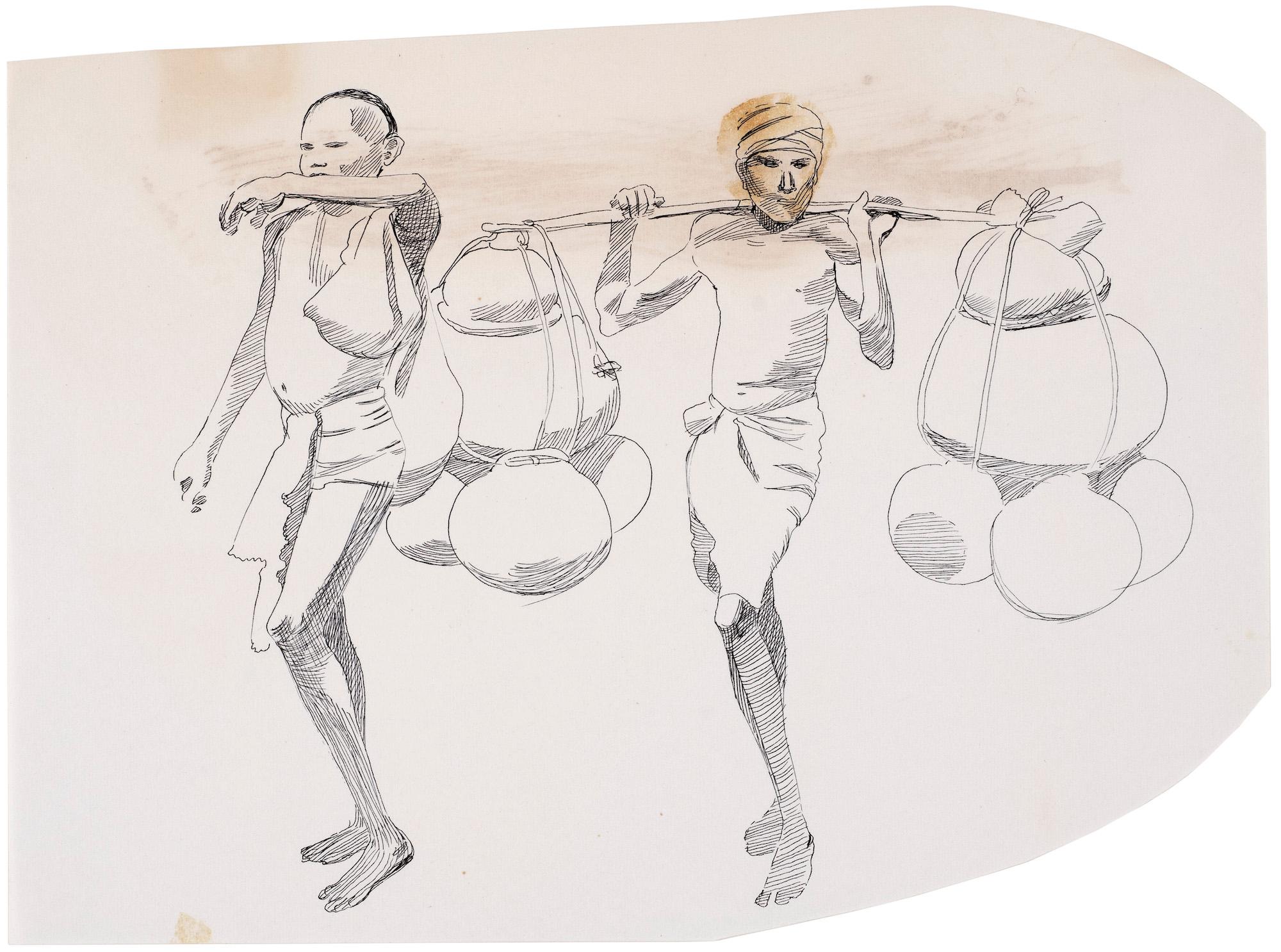
Jacqueline Ayer, Untitled (Marias on their way to market), c. 1973
Jacqueline Ayer (1930–2012) had a career that spanned many creative fields. She began as a fashion illustrator, and later turned her hand to children’s books, textiles and garments, as she worked in New York, Paris, London, Bangkok, Hong Kong and across India. This drawing was used as one of the final illustrations printed in Ayer's publication Oriental* Costume (1974). *The term ‘oriental’ has colonial and racist origins. It was established during a period when European powers took political control of other countries and defined non-European cultures as ‘inferior’ to their own. ‘Oriental’ was commonly used in English-speaking countries until the late 20th century to group together people, culture and places in Northern Africa, East Asia and Southeast Asia, as well as objects thought to have originated in these areas. The term has been widely rejected today as it exoticizes and ‘others’ these diverse cultures. Ayer used the term here to collectively refer to modes of dress from Cambodia, China, Japan, Mongolia, Nepal, Thailand and Tibet.
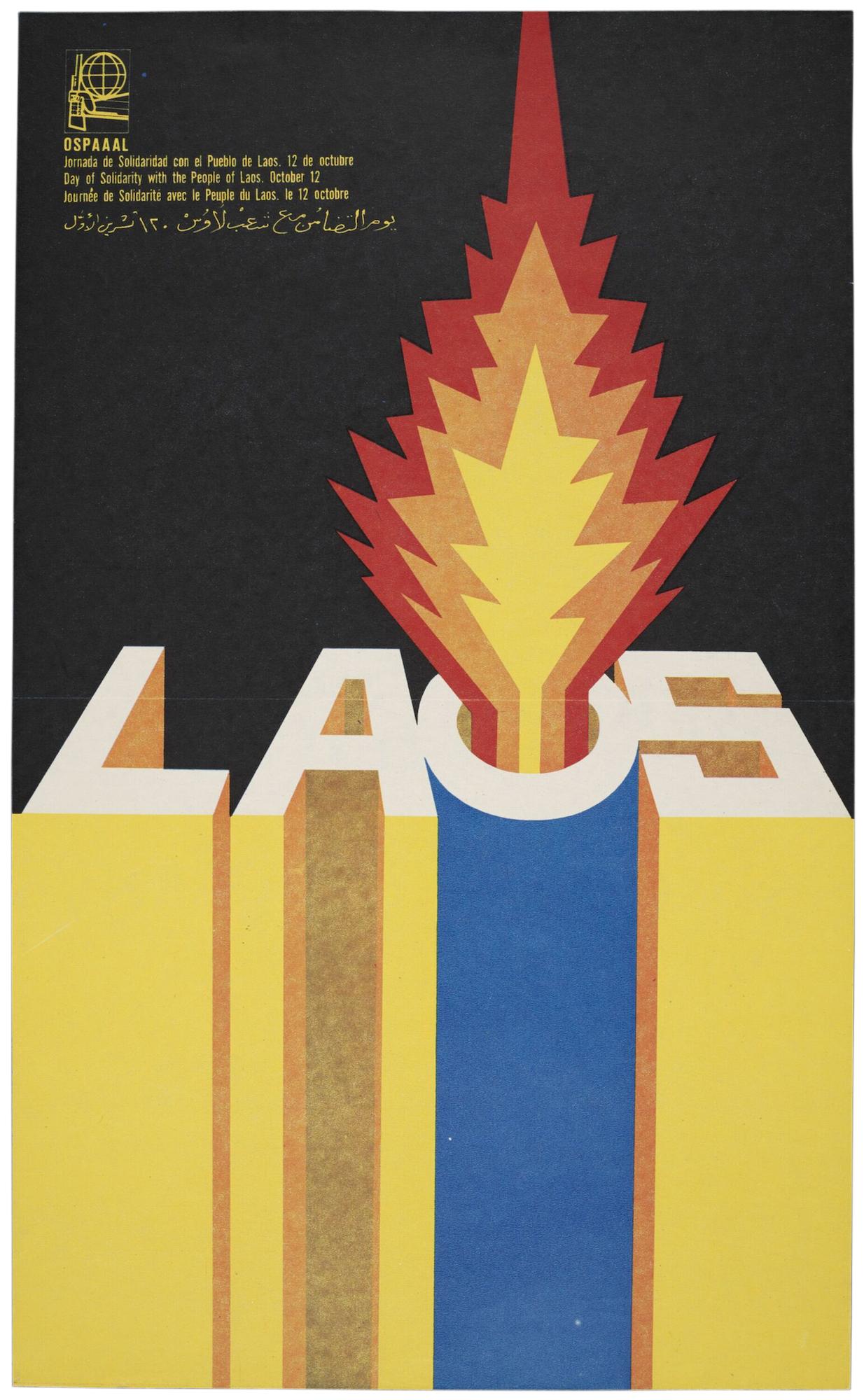
Day of Soldarity With The People Of Laos - October 12, 1970
Between the 1960s and 1990s, more than fifty designers worked at OSPAAAL. Based in Cuba, they made magazines and posters that were sent around the world. Their aim was to promote radical political ideas. Many of their posters celebrate socialist revolutions and liberation movements from the Global South. This design encouraged solidarity with Laotian people on the same date as the founding of the nationalist movement Lao Issara (‘Free Laos’) on 12 October 1945.
Content warning: weaponry
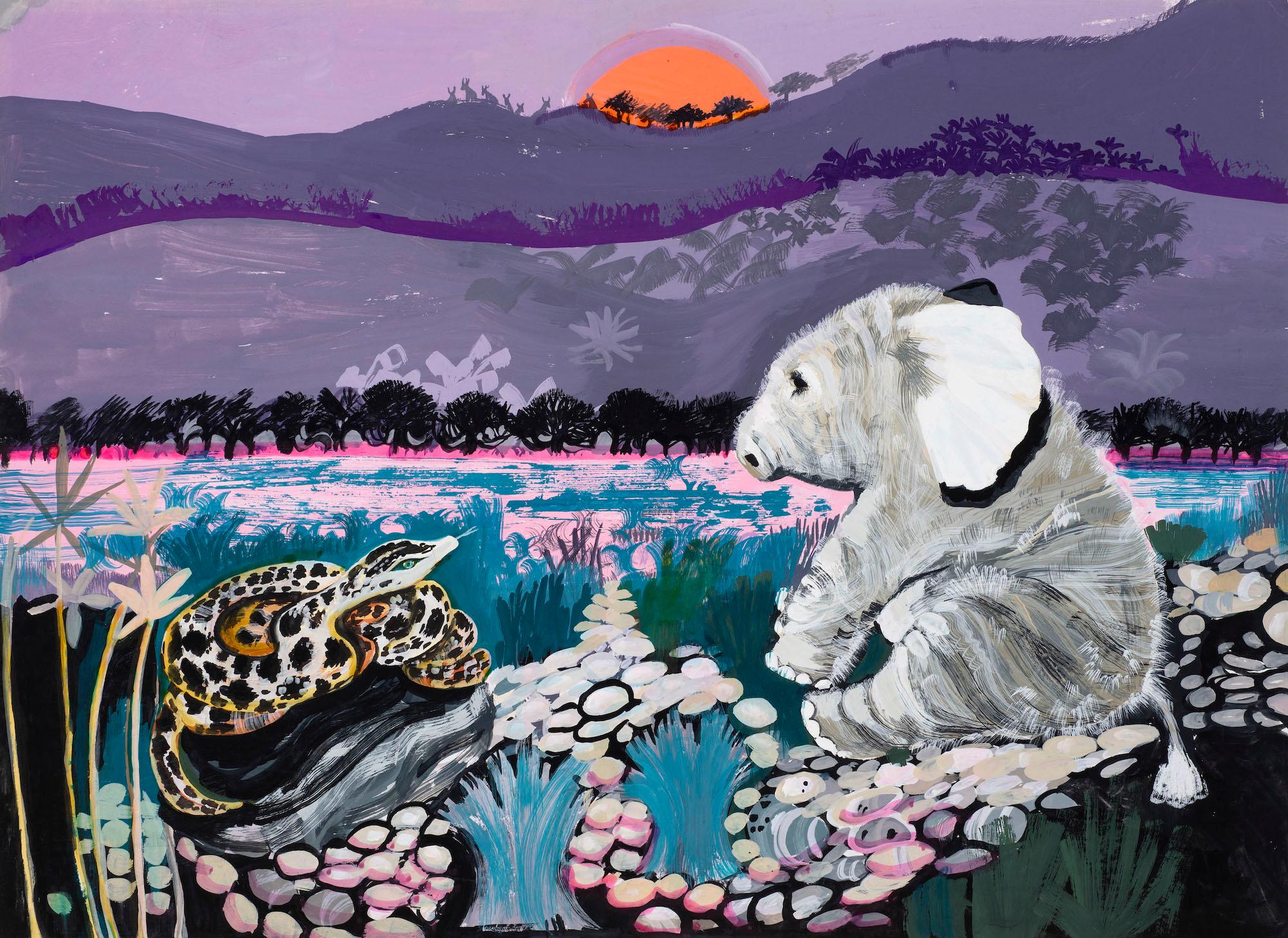
Untitled illustration for Jackanory (Just So Stories: The Elephant's Child), 1973
Janina Ede (1937-2018) created covers and illustrations for over 100 books in the 1960s, 70s and 80s. Many of her illustrations feature animals, which she drew from life. In the 1970s, Ede was commissioned to create large colourful illustrations for the BBC children’s television series, Jackanory. Each episode was dedicated to a story read by an actor, while specially commissioned illustrations were shown on screen during each programme. Some of these illustrations were for programmes featuring stories by author Rudyard Kipling. His ‘Just So’ stories were short tales that imagined how various animals attained their distinguishing features. Kipling set the stories in parts of India, West Asia and Africa. His descriptions of places and people included racist and exoticised stereotypes. Ede’s illustrations draw extensively on Kipling’s descriptions, and therefore reflect the racism in his work, as well as the prevailing stereotypical views that existed in 1970s Britain. Her own personal views are not documented. This storyboard illustration was produced by Janina Ede for Jackanory episode #1450, 'Just So Stories - The Elephant's Child'. It aired on 1 January 1973.
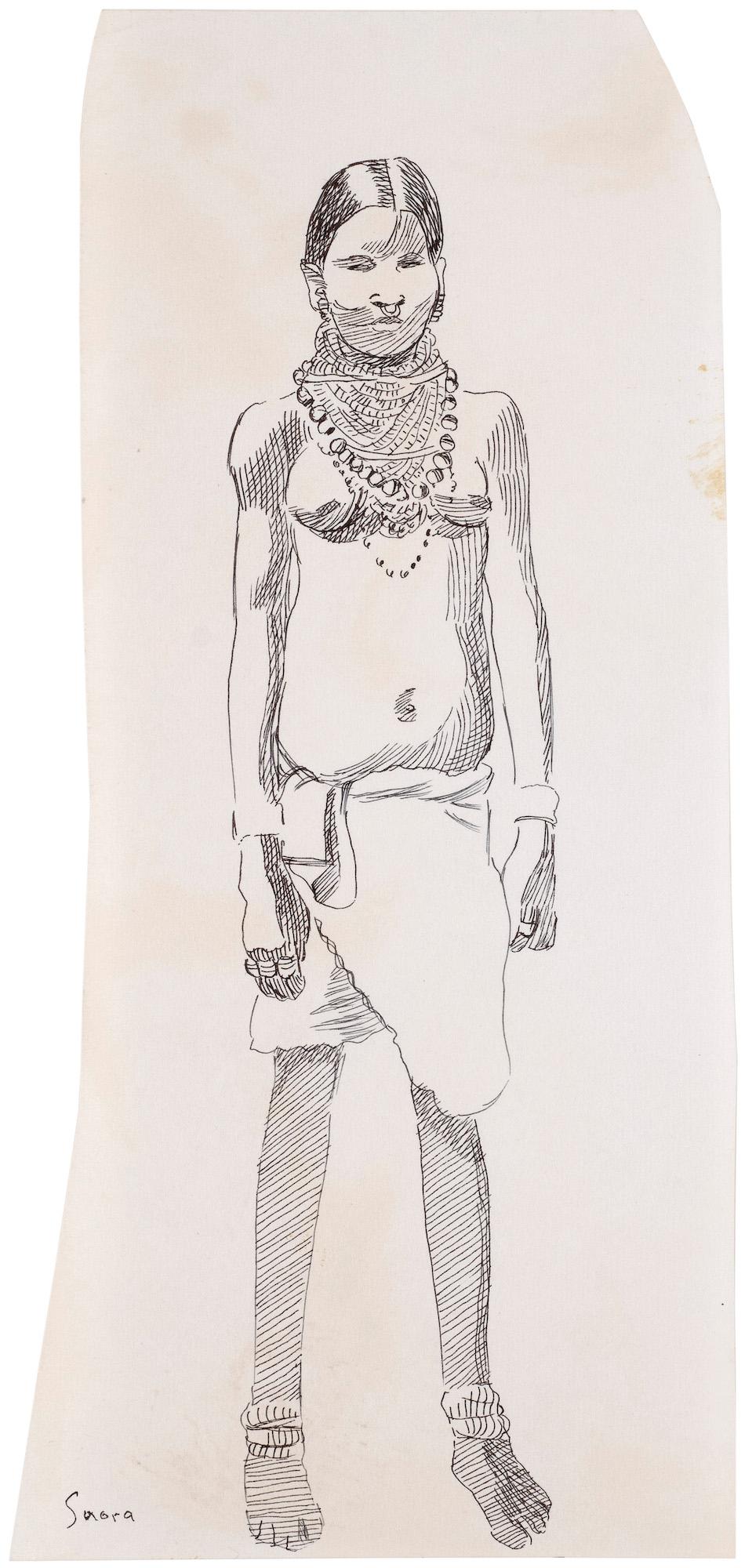
Jacqueline Ayer, Untitled (Young woman, Saora), c. 1973
Jacqueline Ayer (1930–2012) had a career that spanned many creative fields. She began as a fashion illustrator, and later turned her hand to children’s books, textiles and garments, as she worked in New York, Paris, London, Bangkok, Hong Kong and across India. This drawing was used as one of the final illustrations printed in Ayer's publication Oriental* Costume (1974). *The term ‘oriental’ has colonial and racist origins. It was established during a period when European powers took political control of other countries and defined non-European cultures as ‘inferior’ to their own. ‘Oriental’ was commonly used in English-speaking countries until the late 20th century to group together people, culture and places in Northern Africa, East Asia and Southeast Asia, as well as objects thought to have originated in these areas. The term has been widely rejected today as it exoticizes and ‘others’ these diverse cultures. Ayer used the term here to collectively refer to modes of dress from Cambodia, China, Japan, Mongolia, Nepal, Thailand and Tibet.
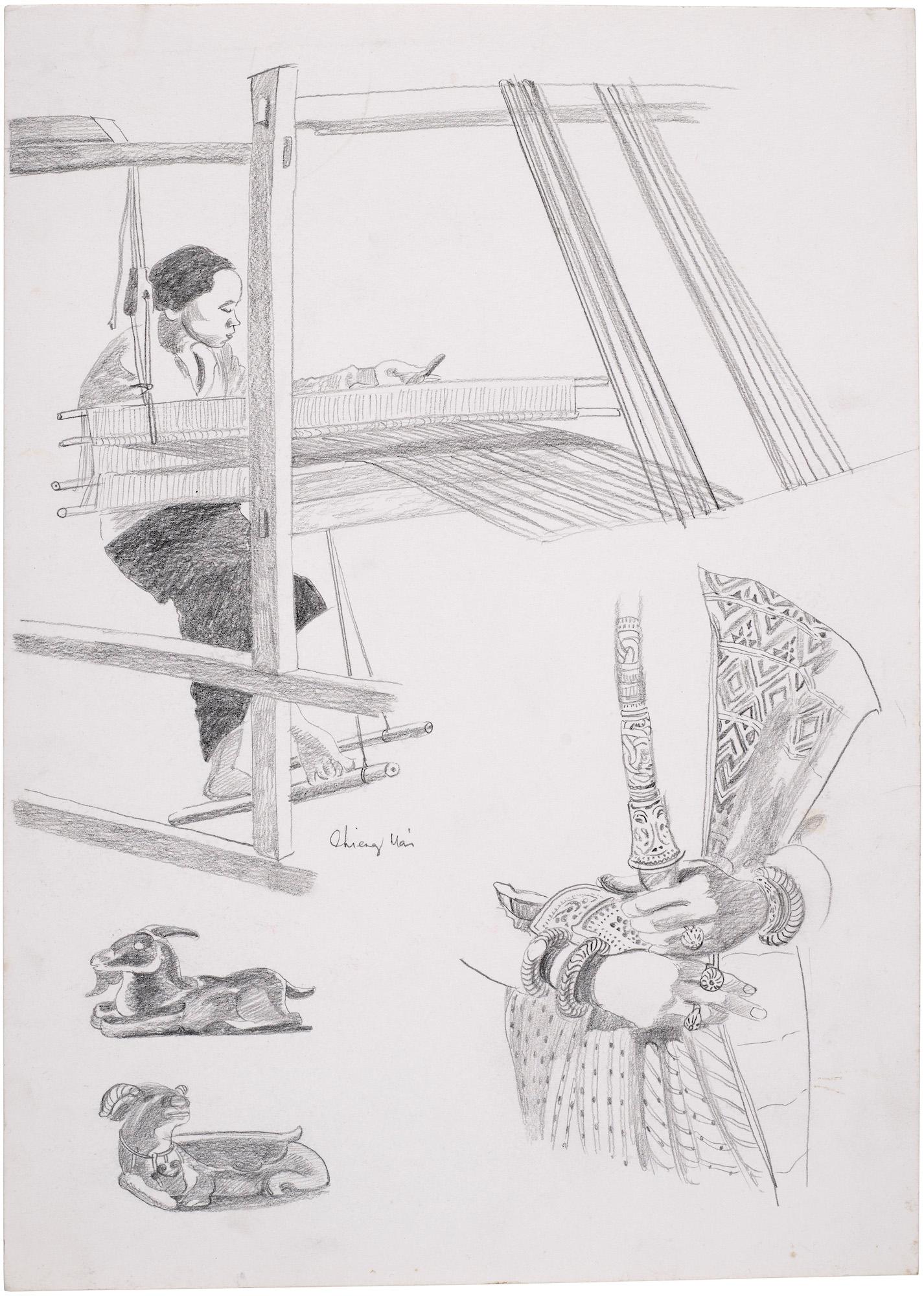
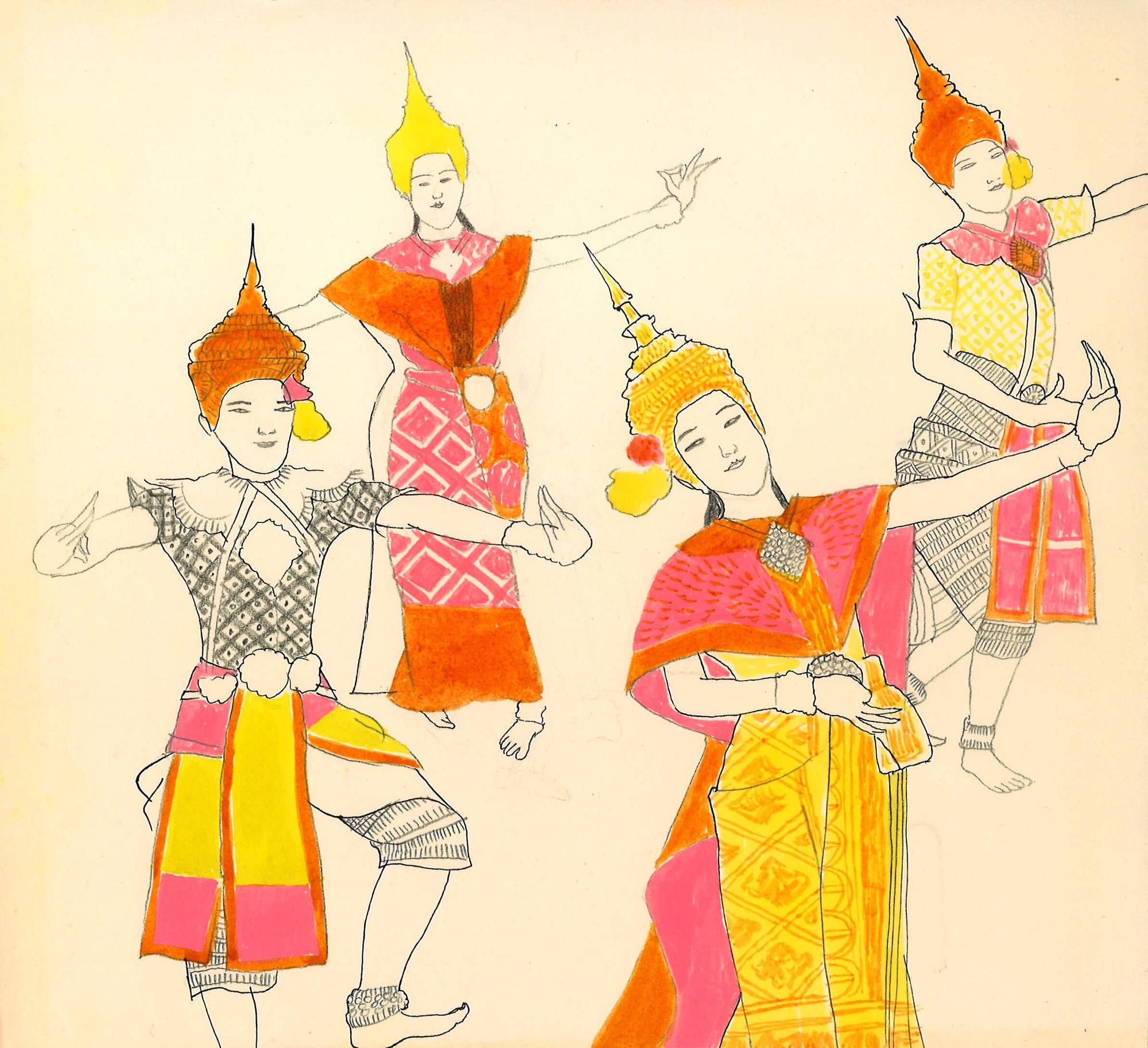
Jacqueline Ayer, Untitled, c. 1970s
Jacqueline Ayer (1930–2012) had a career that spanned many creative fields. She began as a fashion illustrator, and later turned her hand to children’s books, textiles and garments, as she worked in New York, Paris, London, Bangkok, Hong Kong and across India. Ayer often used a sketchbook to record her observations and ideas for book narratives and fashion designs. The context for this drawing is unknown.
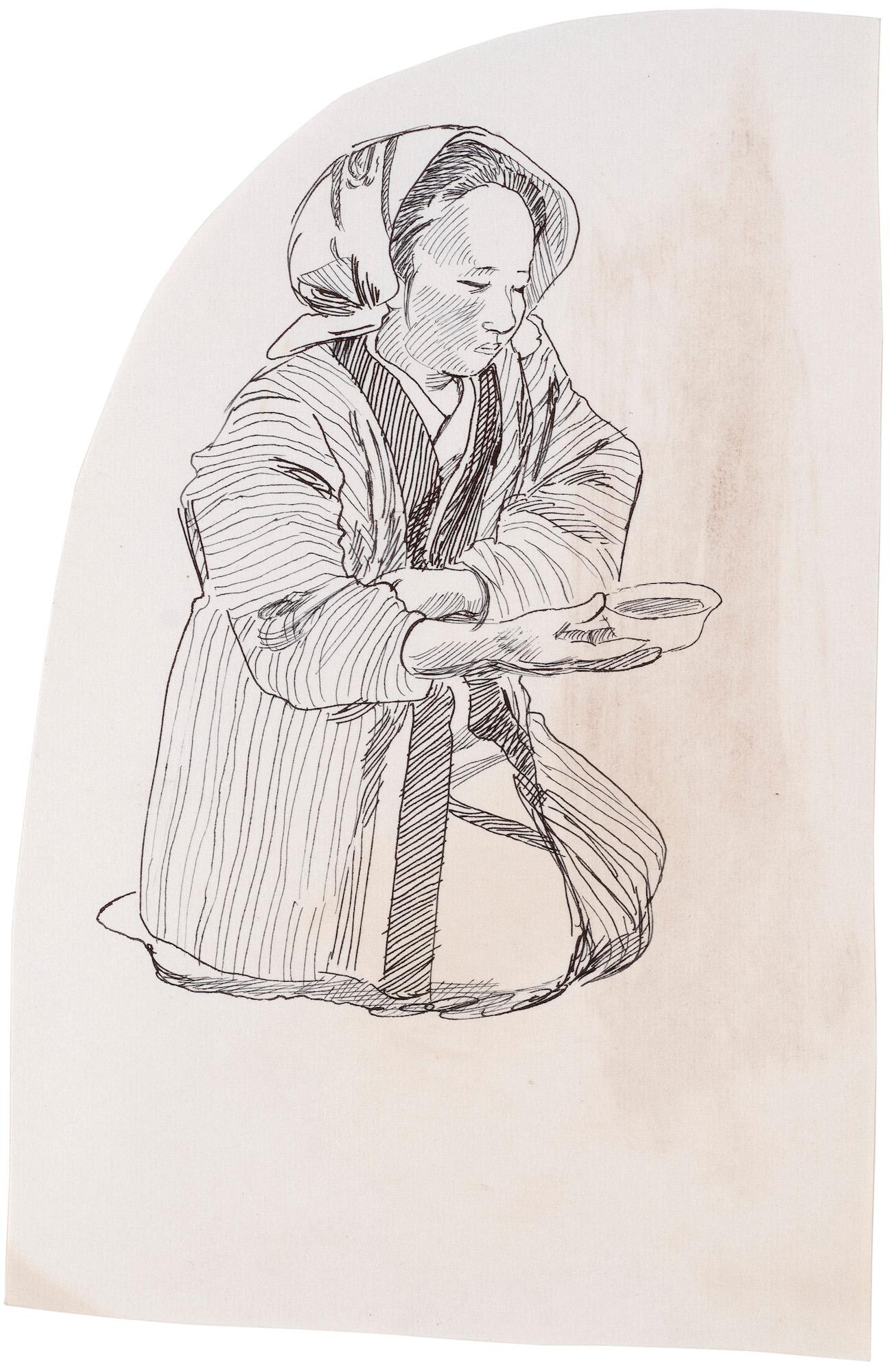
Jacqueline Ayer, Untitled (A farmer's wife), c. 1973
Jacqueline Ayer (1930–2012) had a career that spanned many creative fields. She began as a fashion illustrator, and later turned her hand to children’s books, textiles and garments, as she worked in New York, Paris, London, Bangkok, Hong Kong and across India. This drawing was used as one of the final illustrations printed in Ayer's publication Oriental* Costume (1974). *The term ‘oriental’ has colonial and racist origins. It was established during a period when European powers took political control of other countries and defined non-European cultures as ‘inferior’ to their own. ‘Oriental’ was commonly used in English-speaking countries until the late 20th century to group together people, culture and places in Northern Africa, East Asia and Southeast Asia, as well as objects thought to have originated in these areas. The term has been widely rejected today as it exoticizes and ‘others’ these diverse cultures. Ayer used the term here to collectively refer to modes of dress from Cambodia, China, Japan, Mongolia, Nepal, Thailand and Tibet.
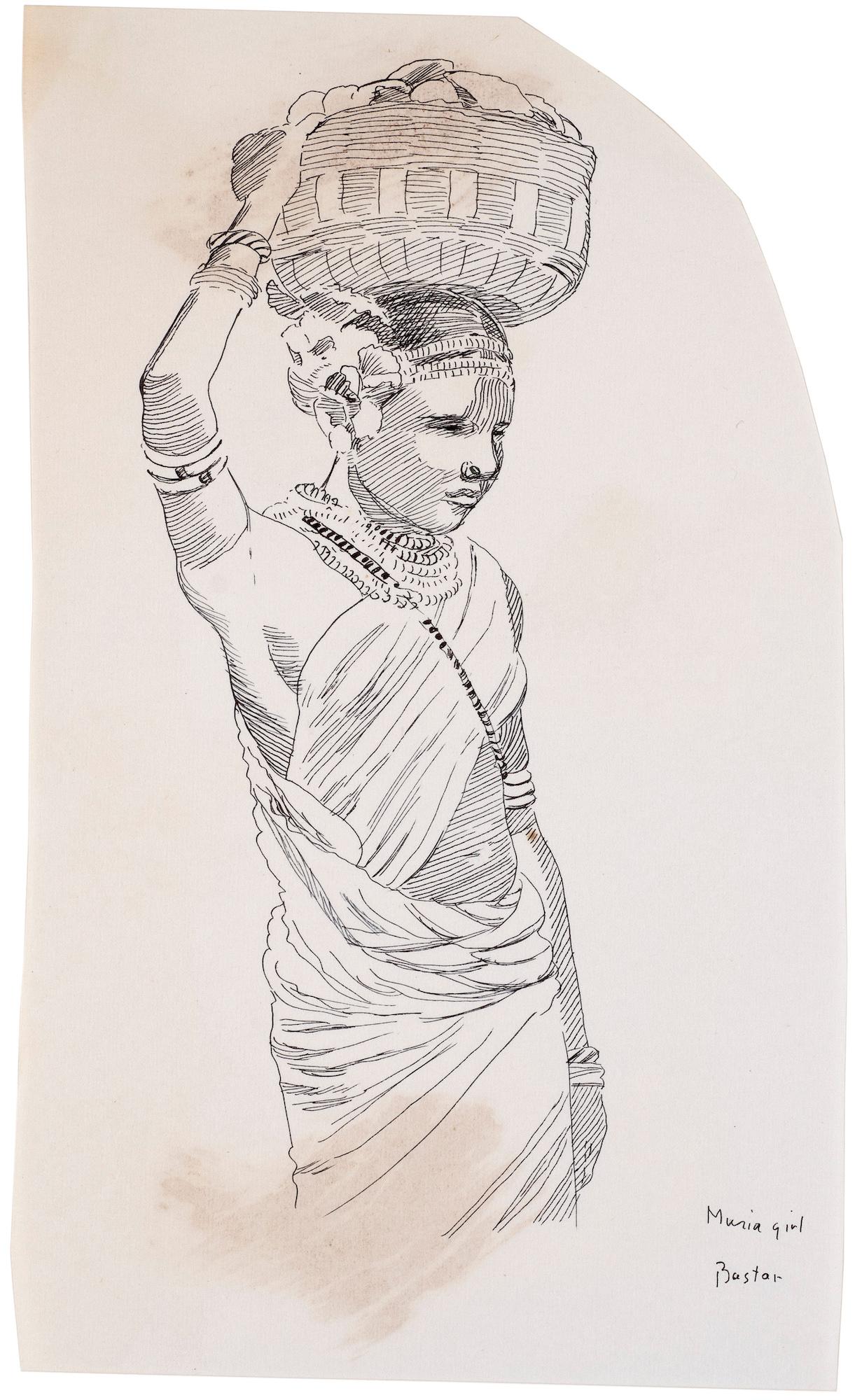
Jacqueline Ayer, Untitled (Muria girl, Bastar), c. 1973
Jacqueline Ayer (1930–2012) had a career that spanned many creative fields. She began as a fashion illustrator, and later turned her hand to children’s books, textiles and garments, as she worked in New York, Paris, London, Bangkok, Hong Kong and across India. This drawing was used as one of the final illustrations printed in Ayer's publication Oriental* Costume (1974). *The term ‘oriental’ has colonial and racist origins. It was established during a period when European powers took political control of other countries and defined non-European cultures as ‘inferior’ to their own. ‘Oriental’ was commonly used in English-speaking countries until the late 20th century to group together people, culture and places in Northern Africa, East Asia and Southeast Asia, as well as objects thought to have originated in these areas. The term has been widely rejected today as it exoticizes and ‘others’ these diverse cultures. Ayer used the term here to collectively refer to modes of dress from Cambodia, China, Japan, Mongolia, Nepal, Thailand and Tibet.
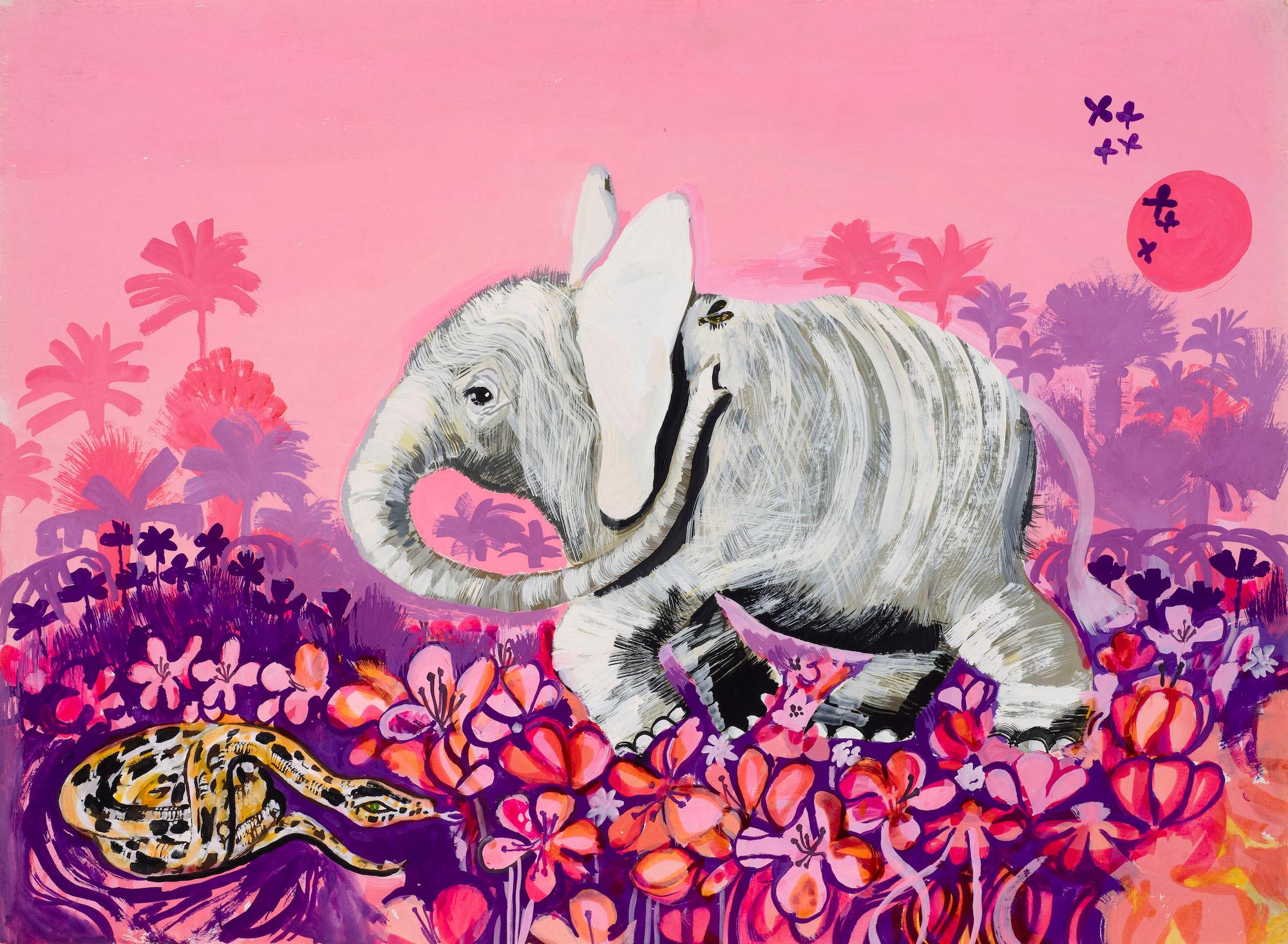
Untitled illustration for Jackanory (Just So Stories: The Elephant's Child), 1973
Janina Ede (1937-2018) created covers and illustrations for over 100 books in the 1960s, 70s and 80s. Many of her illustrations feature animals, which she drew from life. In the 1970s, Ede was commissioned to create large colourful illustrations for the BBC children’s television series, Jackanory. Each episode was dedicated to a story read by an actor, while specially commissioned illustrations were shown on screen during each programme. Some of these illustrations were for programmes featuring stories by author Rudyard Kipling. His ‘Just So’ stories were short tales that imagined how various animals attained their distinguishing features. Kipling set the stories in parts of India, West Asia and Africa. His descriptions of places and people included racist and exoticised stereotypes. Ede’s illustrations draw extensively on Kipling’s descriptions, and therefore reflect the racism in his work, as well as the prevailing stereotypical views that existed in 1970s Britain. Her own personal views are not documented. This storyboard illustration was produced by Janina Ede for Jackanory episode #1450, 'Just So Stories - The Elephant's Child'. It aired on 1 January 1973.

HIROSHIMA - DAY OF WORLD SOLIDARITY WITH THE STRUGGLE OF THE JAPANESE PEOPLE (August 6), 1972
Between the 1960s and 1990s, more than fifty designers worked at OSPAAAL (the Organisation of Solidarity with the People of Africa, Asia and Latin America). Based in Cuba, they made magazines and posters that were sent around the world. Their aim was to promote radical political ideas. Many of their posters celebrate socialist revolutions and liberation movements from the Global South. OSPAAAL marked the date of the atomic bombing of the city of Hiroshima by the U.S.A. as a day of solidarity with Japanese citizens.
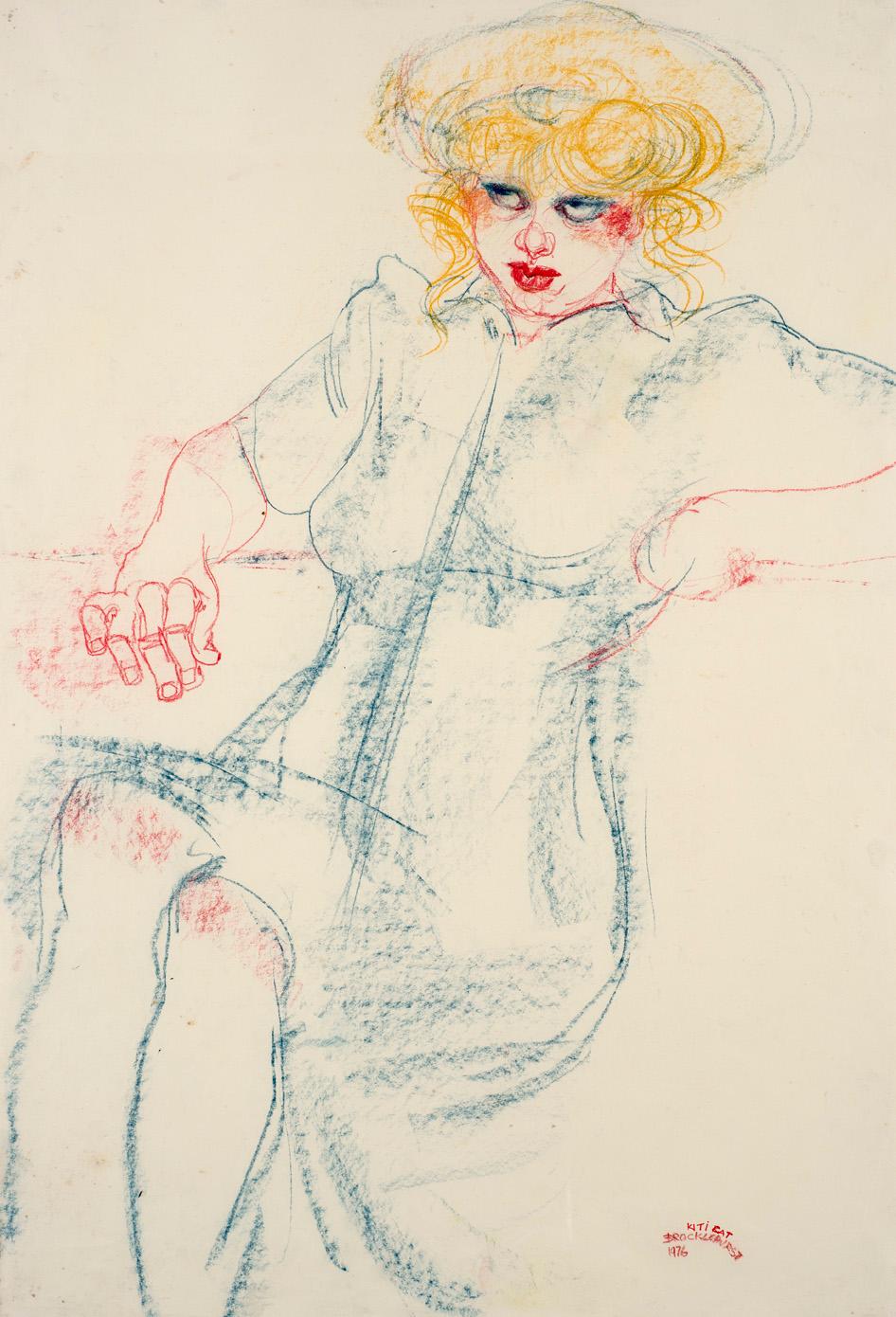
Jo Brocklehurst, Kiti Cat, 1976
Jo (Josephine) Brocklehurst (1935 - 2006) studied at Central Saint Martins and began her career as a fashion illustrator. She later focused on portraiture, drawing directly from models at her studio in West Hampstead and in nightclubs and theatres in Berlin, London and New York. Her work documents the alternative subcultures of the 1970s, 80s and 90s that went on to shape mainstream fashion and performance scenes.
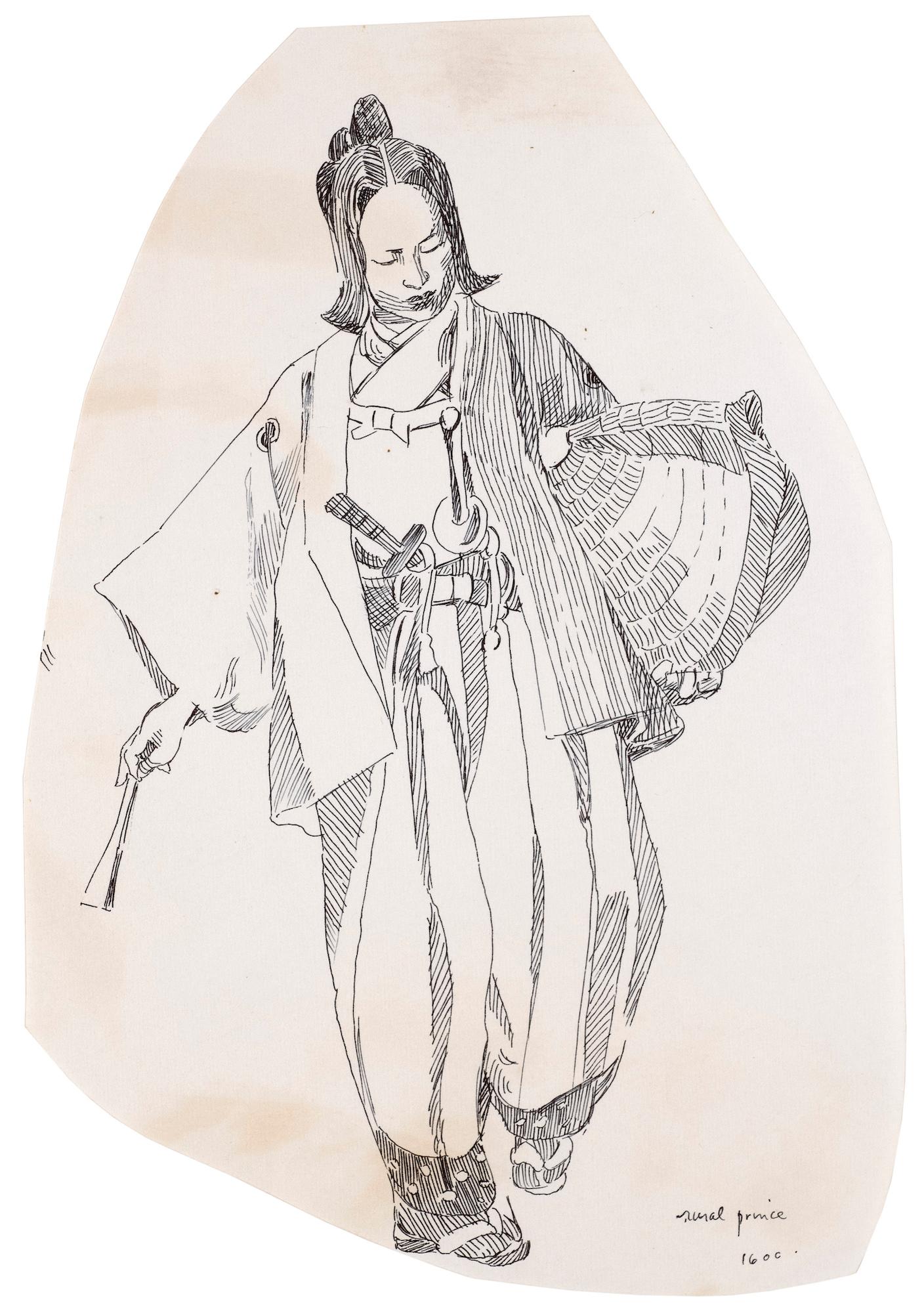
Jacqueline Ayer, Untitled (Provincial prince, 17th century), c. 1973
Jacqueline Ayer (1930–2012) had a career that spanned many creative fields. She began as a fashion illustrator, and later turned her hand to children’s books, textiles and garments, as she worked in New York, Paris, London, Bangkok, Hong Kong and across India. This drawing was used as one of the final illustrations printed in Ayer's publication Oriental* Costume (1974). *The term ‘oriental’ has colonial and racist origins. It was established during a period when European powers took political control of other countries and defined non-European cultures as ‘inferior’ to their own. ‘Oriental’ was commonly used in English-speaking countries until the late 20th century to group together people, culture and places in Northern Africa, East Asia and Southeast Asia, as well as objects thought to have originated in these areas. The term has been widely rejected today as it exoticizes and ‘others’ these diverse cultures. Ayer used the term here to collectively refer to modes of dress from Cambodia, China, Japan, Mongolia, Nepal, Thailand and Tibet.
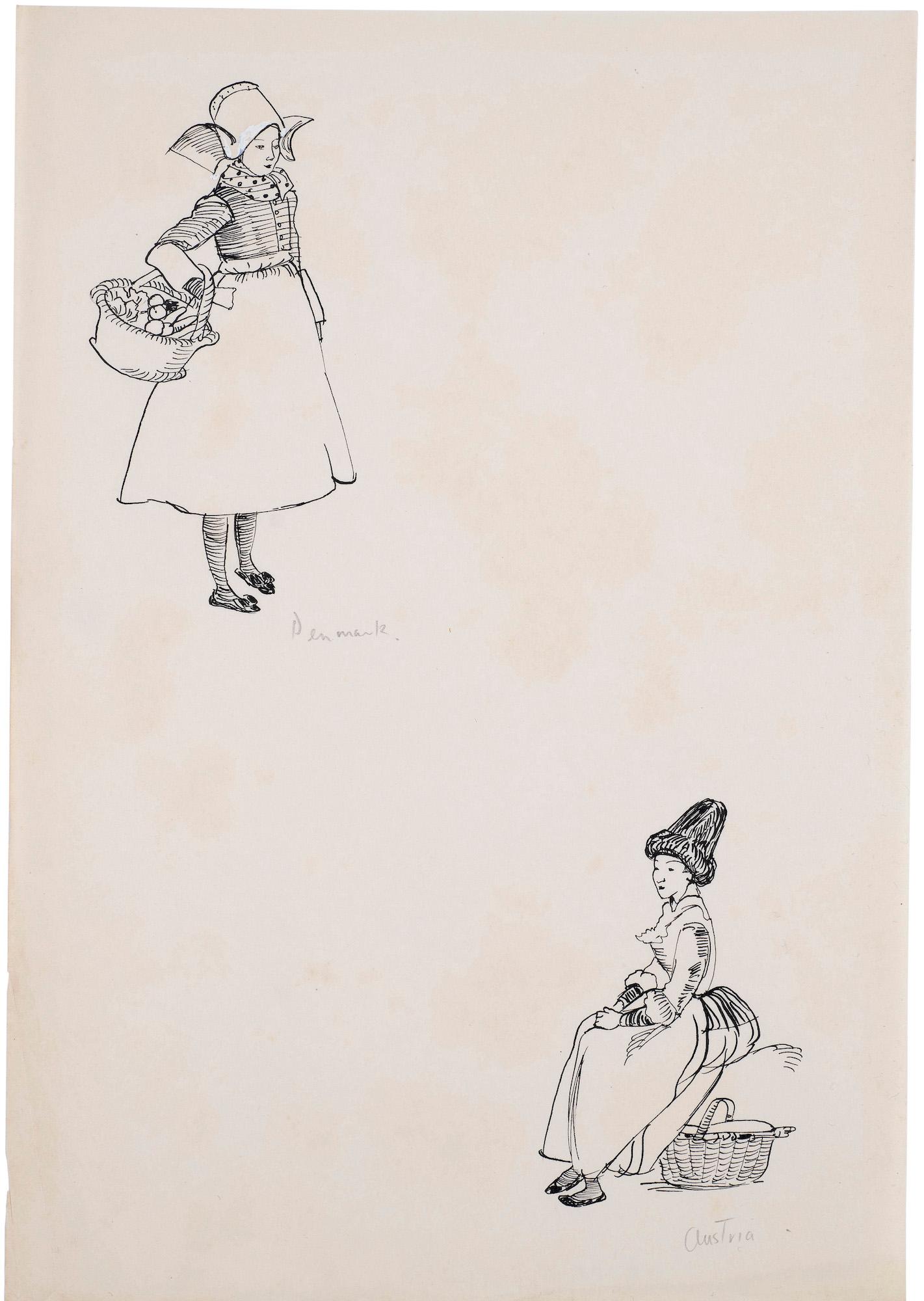
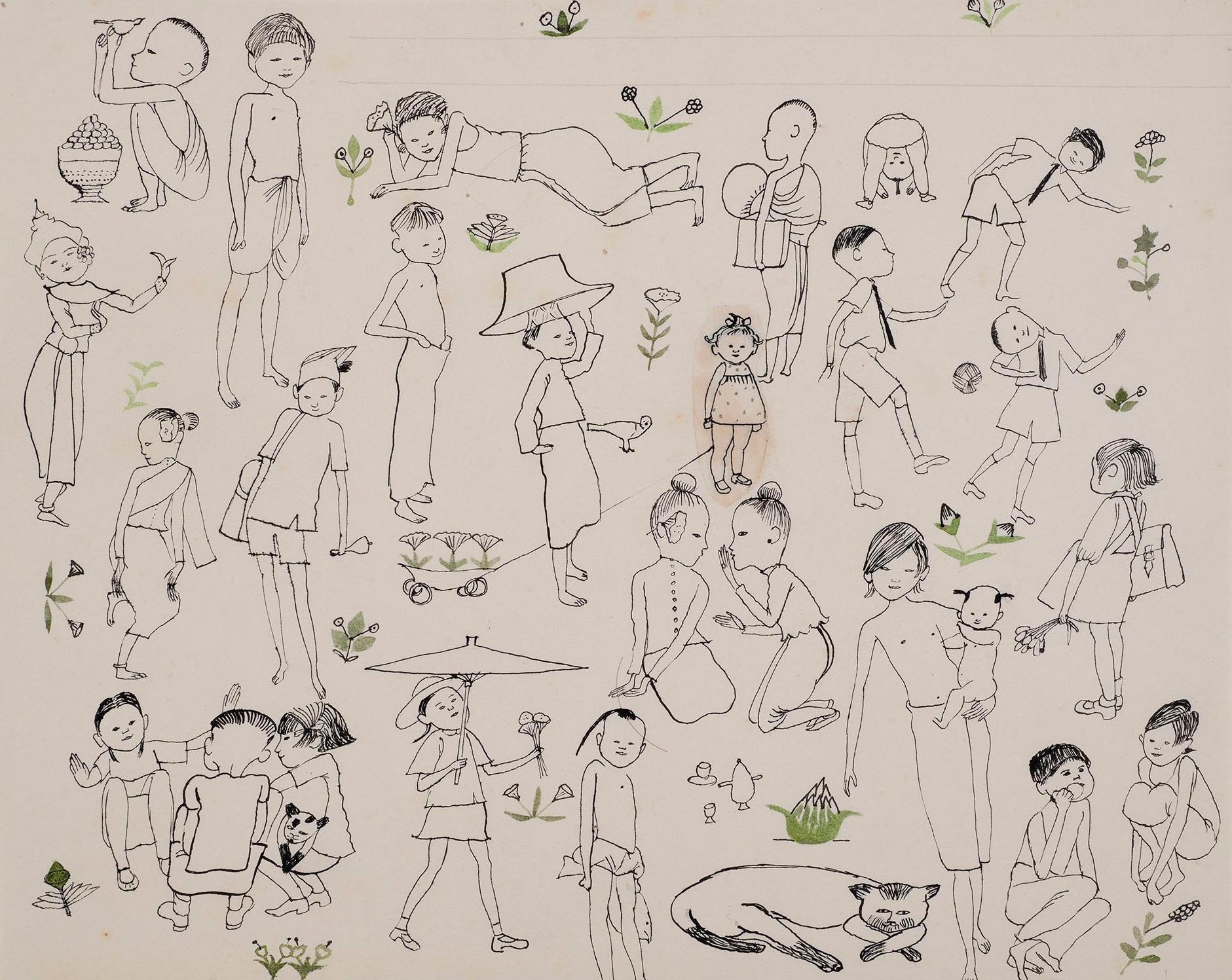
Jacqueline Ayer, Untitled, c. 1975
Jacqueline Ayer (1930–2012) had a career that spanned many creative fields. She began as a fashion illustrator, and later turned her hand to children’s books, textiles and garments, as she worked in New York, Paris, London, Bangkok, Hong Kong and across India.
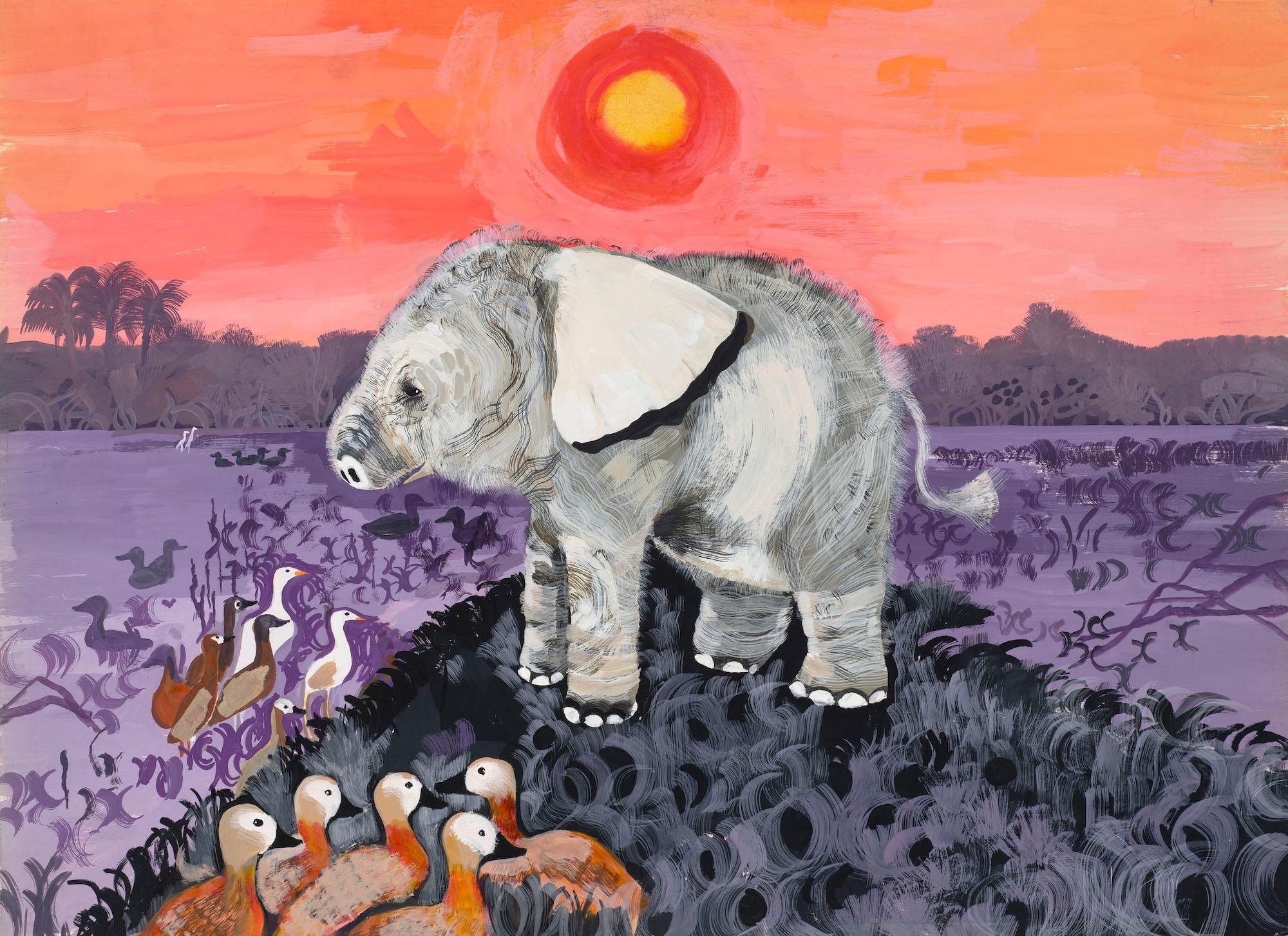
Untitled illustration for Jackanory (Just So Stories: The Elephant's Child), 1973
Janina Ede (1937-2018) created covers and illustrations for over 100 books in the 1960s, 70s and 80s. Many of her illustrations feature animals, which she drew from life. In the 1970s, Ede was commissioned to create large colourful illustrations for the BBC children’s television series, Jackanory. Each episode was dedicated to a story read by an actor, while specially commissioned illustrations were shown on screen during each programme. Some of these illustrations were for programmes featuring stories by author Rudyard Kipling. His ‘Just So’ stories were short tales that imagined how various animals attained their distinguishing features. Kipling set the stories in parts of India, West Asia and Africa. His descriptions of places and people included racist and exoticised stereotypes. Ede’s illustrations draw extensively on Kipling’s descriptions, and therefore reflect the racism in his work, as well as the prevailing stereotypical views that existed in 1970s Britain. Her own personal views are not documented. This storyboard illustration was produced by Janina Ede for Jackanory episode #1450, 'Just So Stories - The Elephant's Child'. It aired on 1 January 1973.
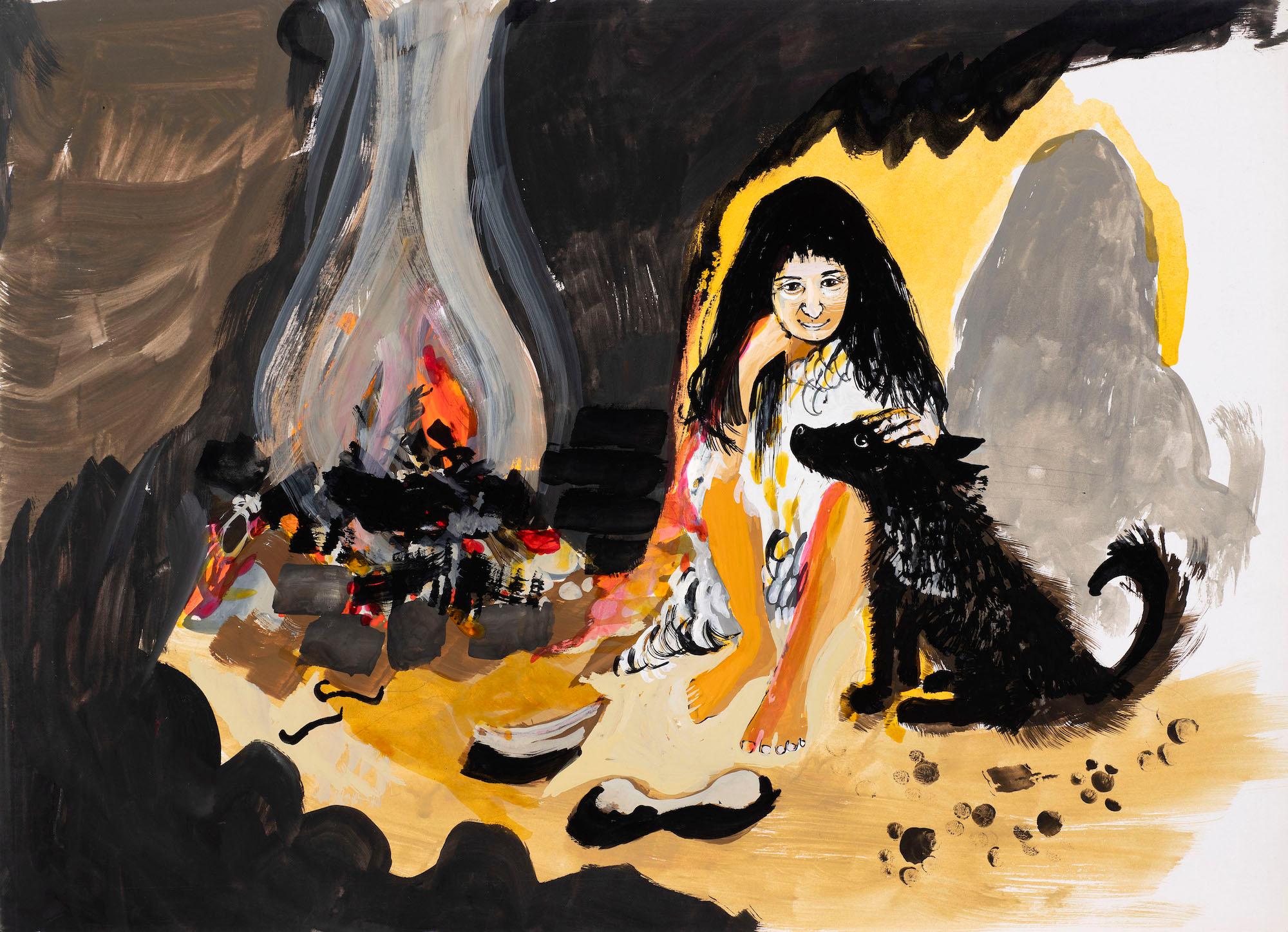
Untitled illustration for Jackanory (Just So Stories: The Cat who Walked by Himself), 1973
Janina Ede (1937-2018) created covers and illustrations for over 100 books in the 1960s, 70s and 80s. Many of her illustrations feature animals, which she drew from life. In the 1970s, Ede was commissioned to create large colourful illustrations for the BBC children’s television series, Jackanory. Each episode was dedicated to a story read by an actor, while specially commissioned illustrations were shown on screen during each programme. Some of these illustrations were for programmes featuring stories by author Rudyard Kipling. His ‘Just So’ stories were short tales that imagined how various animals attained their distinguishing features. Kipling set the stories in parts of India, West Asia and Africa. His descriptions of places and people included racist and exoticised stereotypes. Ede’s illustrations draw extensively on Kipling’s descriptions, and therefore reflect the racism in his work, as well as the prevailing stereotypical views that existed in 1970s Britain. Her own personal views are not documented. This storyboard illustration was produced by Janina Ede for Jackanory episode #1452, 'Just So Stories - The Cat that Walked by Himself'. It aired on 3 January 1973.
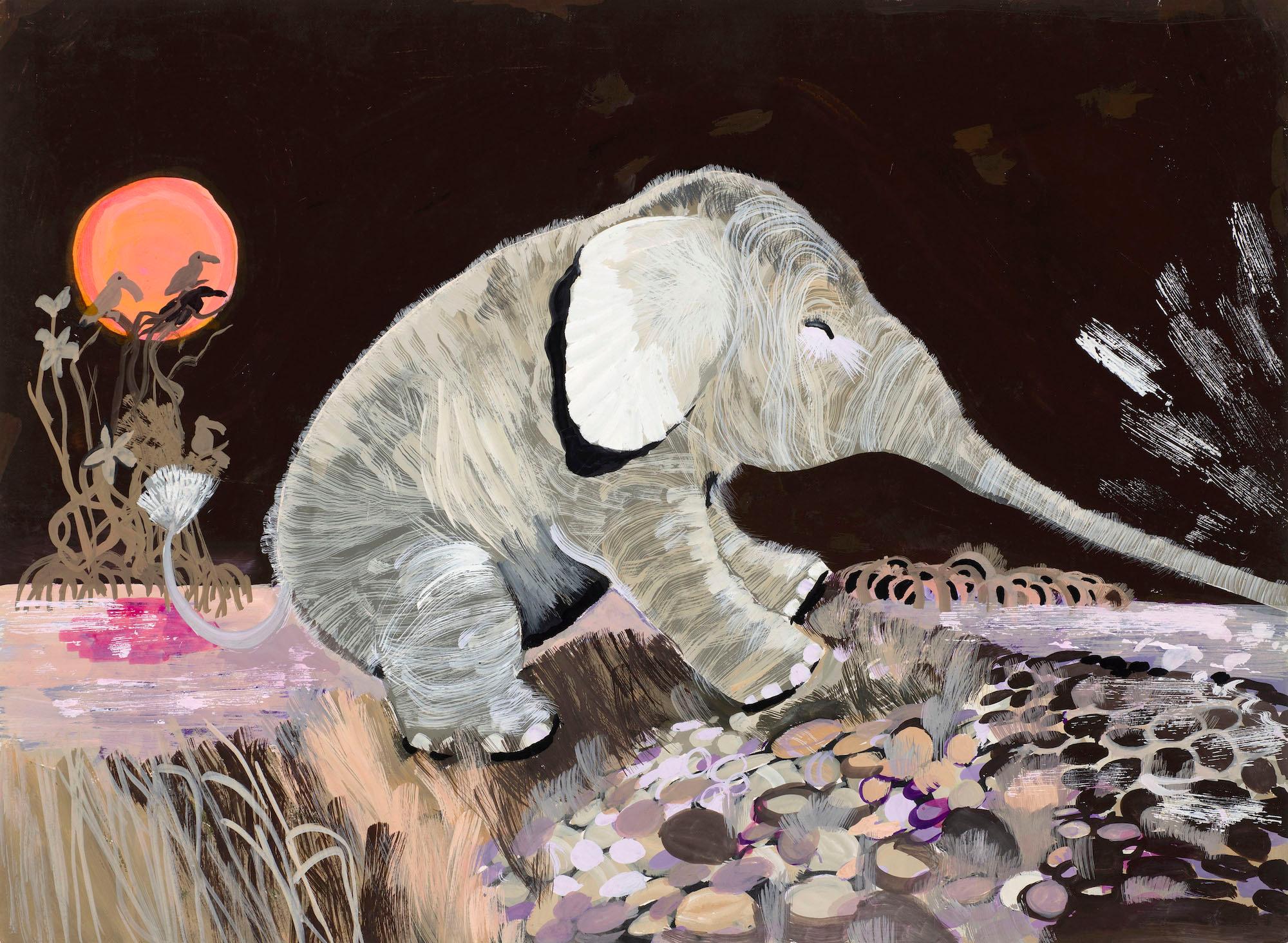
Untitled illustration for Jackanory (Just So Stories: The Elephant's Child), 1973
Janina Ede (1937-2018) created covers and illustrations for over 100 books in the 1960s, 70s and 80s. Many of her illustrations feature animals, which she drew from life. In the 1970s, Ede was commissioned to create large colourful illustrations for the BBC children’s television series, Jackanory. Each episode was dedicated to a story read by an actor, while specially commissioned illustrations were shown on screen during each programme. Some of these illustrations were for programmes featuring stories by author Rudyard Kipling. His ‘Just So’ stories were short tales that imagined how various animals attained their distinguishing features. Kipling set the stories in parts of India, West Asia and Africa. His descriptions of places and people included racist and exoticised stereotypes. Ede’s illustrations draw extensively on Kipling’s descriptions, and therefore reflect the racism in his work, as well as the prevailing stereotypical views that existed in 1970s Britain. Her own personal views are not documented. This storyboard illustration was produced by Janina Ede for Jackanory episode #1450, 'Just So Stories - The Elephant's Child'. It aired on 1 January 1973.
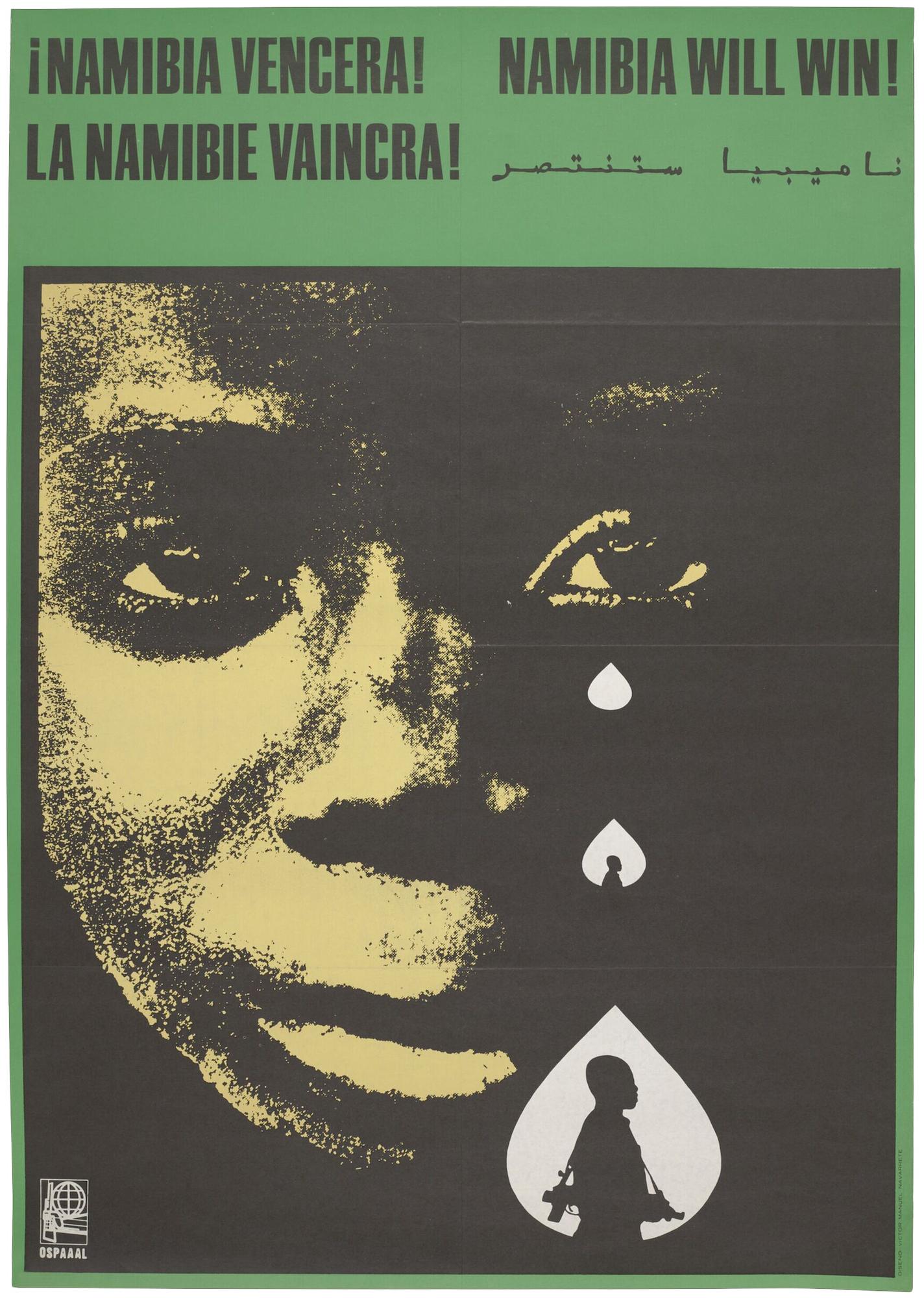
NAMIBIA WILL WIN!, 1977
Between the 1960s and 1990s, more than fifty designers worked at OSPAAAL (the Organisation of Solidarity with the People of Africa, Asia and Latin America). Based in Cuba, they made magazines and posters that were sent around the world. Their aim was to promote radical political ideas. Many of their posters celebrate socialist revolutions and liberation movements from the Global South. This poster was made in support of Namibia’s movement for independence from South African rule. OSPAAAL’s designers regularly used adapted photographs from the organisation’s news desk. Photographs were sometimes used out of context, with the same photographs appearing in posters and magazine illustrations to represent different themes. The identity of the child in this poster is not known.
Content warning: weaponry
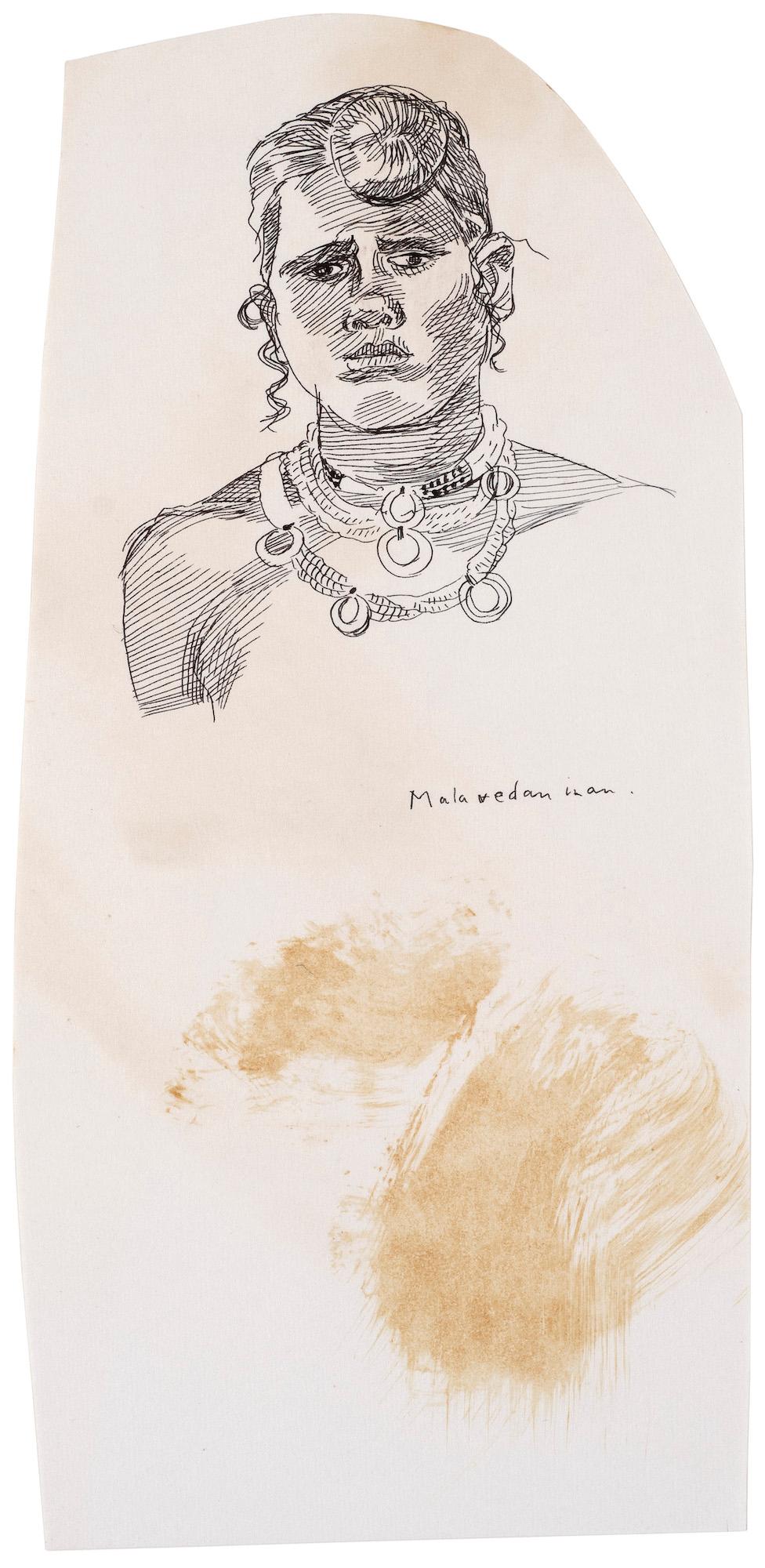
Jacqueline Ayer, Untitled (Malavedam man), c. 1973
Jacqueline Ayer (1930–2012) had a career that spanned many creative fields. She began as a fashion illustrator, and later turned her hand to children’s books, textiles and garments, as she worked in New York, Paris, London, Bangkok, Hong Kong and across India. This drawing was used as one of the final illustrations printed in Ayer's publication Oriental* Costume (1974). *The term ‘oriental’ has colonial and racist origins. It was established during a period when European powers took political control of other countries and defined non-European cultures as ‘inferior’ to their own. ‘Oriental’ was commonly used in English-speaking countries until the late 20th century to group together people, culture and places in Northern Africa, East Asia and Southeast Asia, as well as objects thought to have originated in these areas. The term has been widely rejected today as it exoticizes and ‘others’ these diverse cultures. Ayer used the term here to collectively refer to modes of dress from Cambodia, China, Japan, Mongolia, Nepal, Thailand and Tibet.
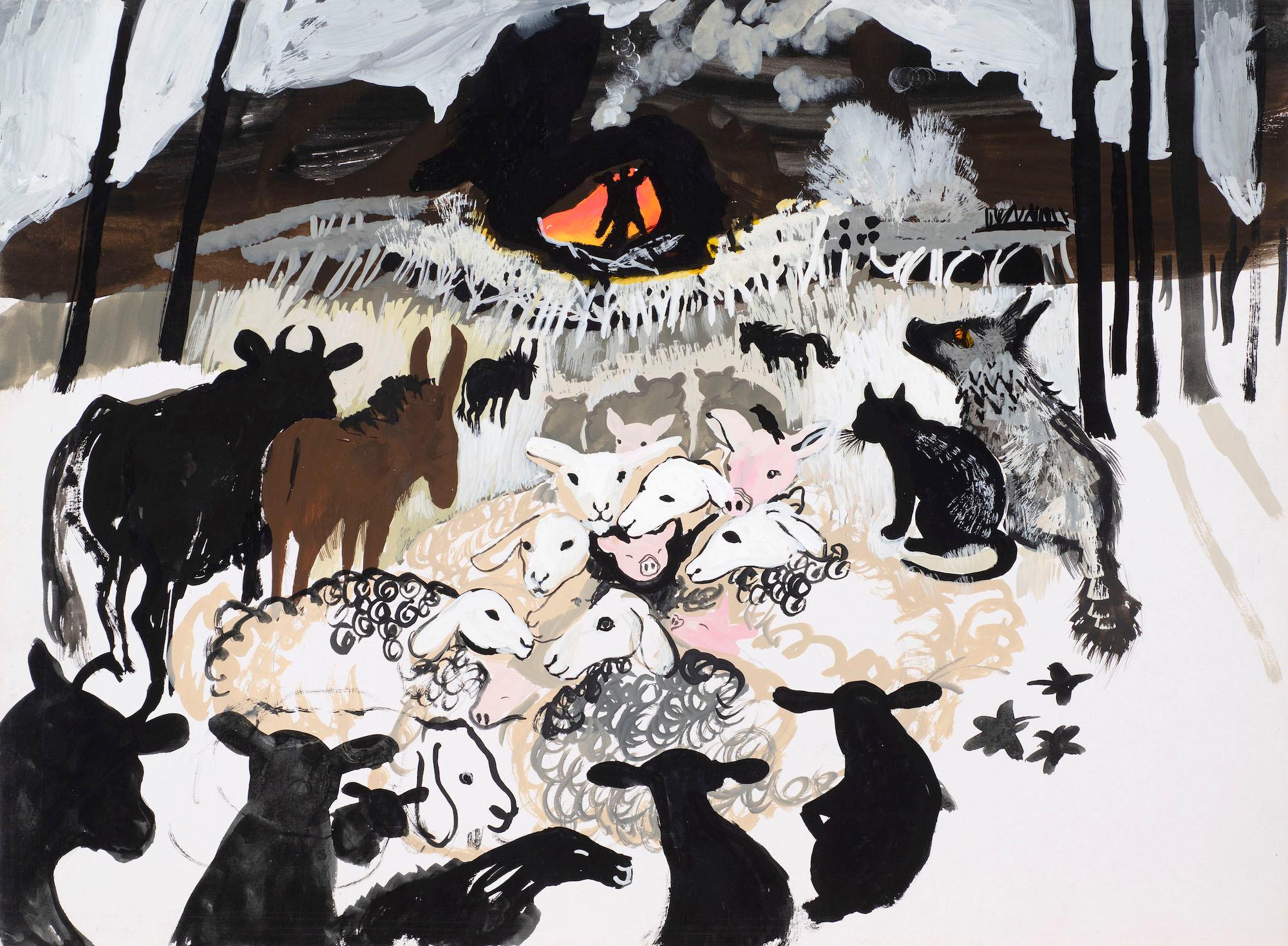
Untitled illustration for Jackanory (Just So Stories: The Cat who Walked by Himself), 1973
Janina Ede (1937-2018) created covers and illustrations for over 100 books in the 1960s, 70s and 80s. Many of her illustrations feature animals, which she drew from life. In the 1970s, Ede was commissioned to create large colourful illustrations for the BBC children’s television series, Jackanory. Each episode was dedicated to a story read by an actor, while specially commissioned illustrations were shown on screen during each programme. Some of these illustrations were for programmes featuring stories by author Rudyard Kipling. His ‘Just So’ stories were short tales that imagined how various animals attained their distinguishing features. Kipling set the stories in parts of India, West Asia and Africa. His descriptions of places and people included racist and exoticised stereotypes. Ede’s illustrations draw extensively on Kipling’s descriptions, and therefore reflect the racism in his work, as well as the prevailing stereotypical views that existed in 1970s Britain. Her own personal views are not documented. This storyboard illustration was produced by Janina Ede for Jackanory episode #1452, 'Just So Stories - The Cat that Walked by Himself'. It aired on 3 January 1973.
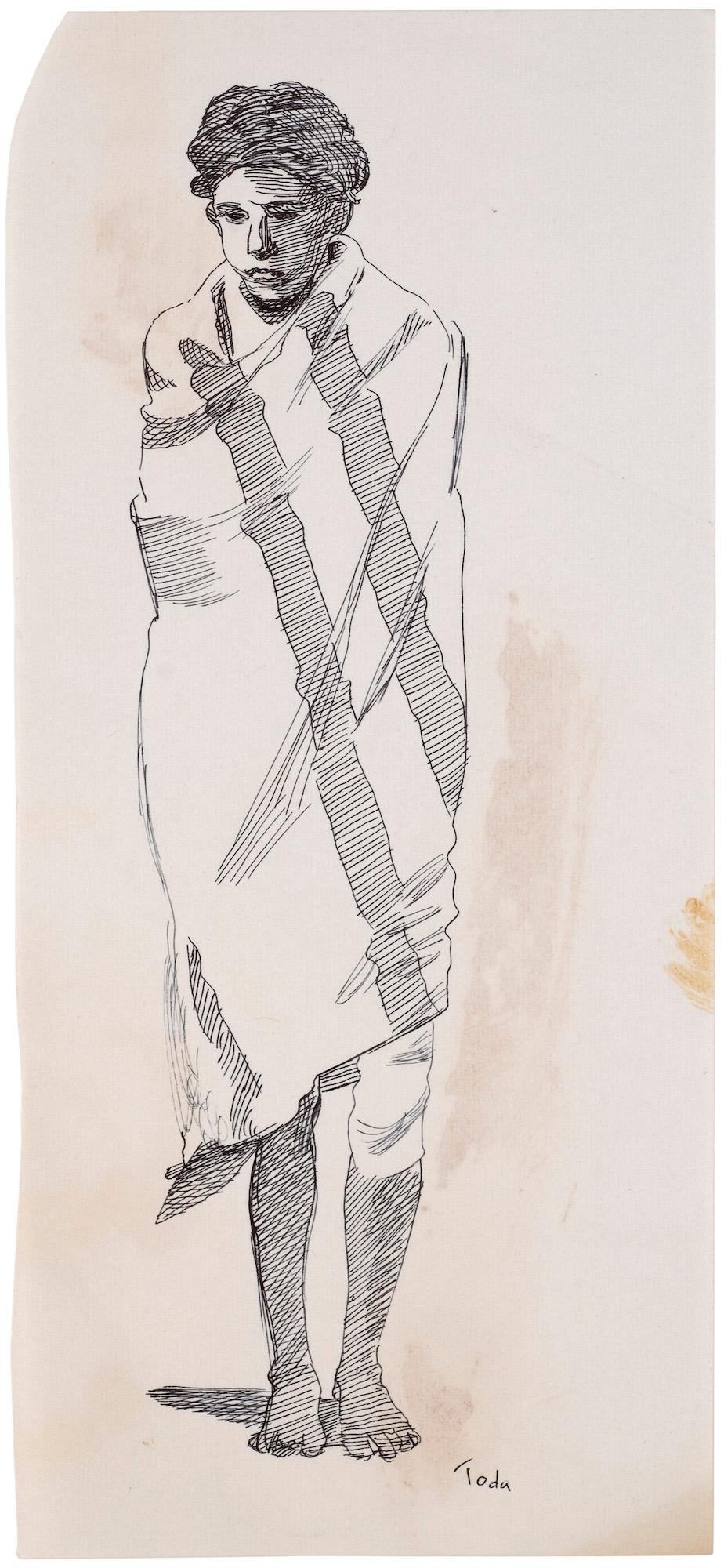
Jacqueline Ayer, Untitled (Toda man), c. 1973
Jacqueline Ayer (1930–2012) had a career that spanned many creative fields. She began as a fashion illustrator, and later turned her hand to children’s books, textiles and garments, as she worked in New York, Paris, London, Bangkok, Hong Kong and across India. This drawing was used as one of the final illustrations printed in Ayer's publication Oriental* Costume (1974). *The term ‘oriental’ has colonial and racist origins. It was established during a period when European powers took political control of other countries and defined non-European cultures as ‘inferior’ to their own. ‘Oriental’ was commonly used in English-speaking countries until the late 20th century to group together people, culture and places in Northern Africa, East Asia and Southeast Asia, as well as objects thought to have originated in these areas. The term has been widely rejected today as it exoticizes and ‘others’ these diverse cultures. Ayer used the term here to collectively refer to modes of dress from Cambodia, China, Japan, Mongolia, Nepal, Thailand and Tibet.
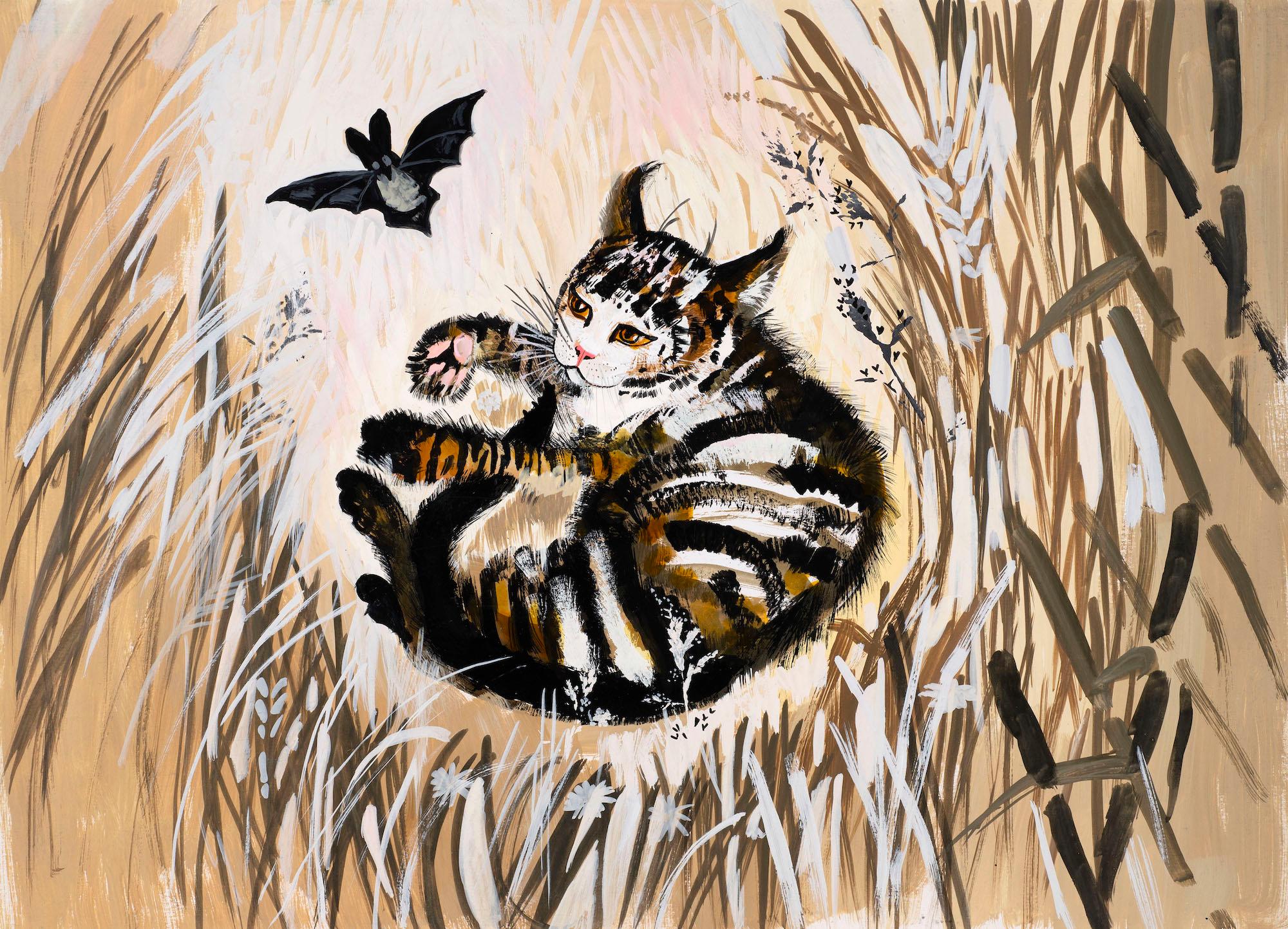
Untitled illustration for Jackanory (Just So Stories: The Cat who Walked by Himself), 1973
Janina Ede (1937-2018) created covers and illustrations for over 100 books in the 1960s, 70s and 80s. Many of her illustrations feature animals, which she drew from life. In the 1970s, Ede was commissioned to create large colourful illustrations for the BBC children’s television series, Jackanory. Each episode was dedicated to a story read by an actor, while specially commissioned illustrations were shown on screen during each programme. Some of these illustrations were for programmes featuring stories by author Rudyard Kipling. His ‘Just So’ stories were short tales that imagined how various animals attained their distinguishing features. Kipling set the stories in parts of India, West Asia and Africa. His descriptions of places and people included racist and exoticised stereotypes. Ede’s illustrations draw extensively on Kipling’s descriptions, and therefore reflect the racism in his work, as well as the prevailing stereotypical views that existed in 1970s Britain. Her own personal views are not documented. This storyboard illustration was produced by Janina Ede for Jackanory episode #1452, 'Just So Stories - The Cat that Walked by Himself'. It aired on 3 January 1973.
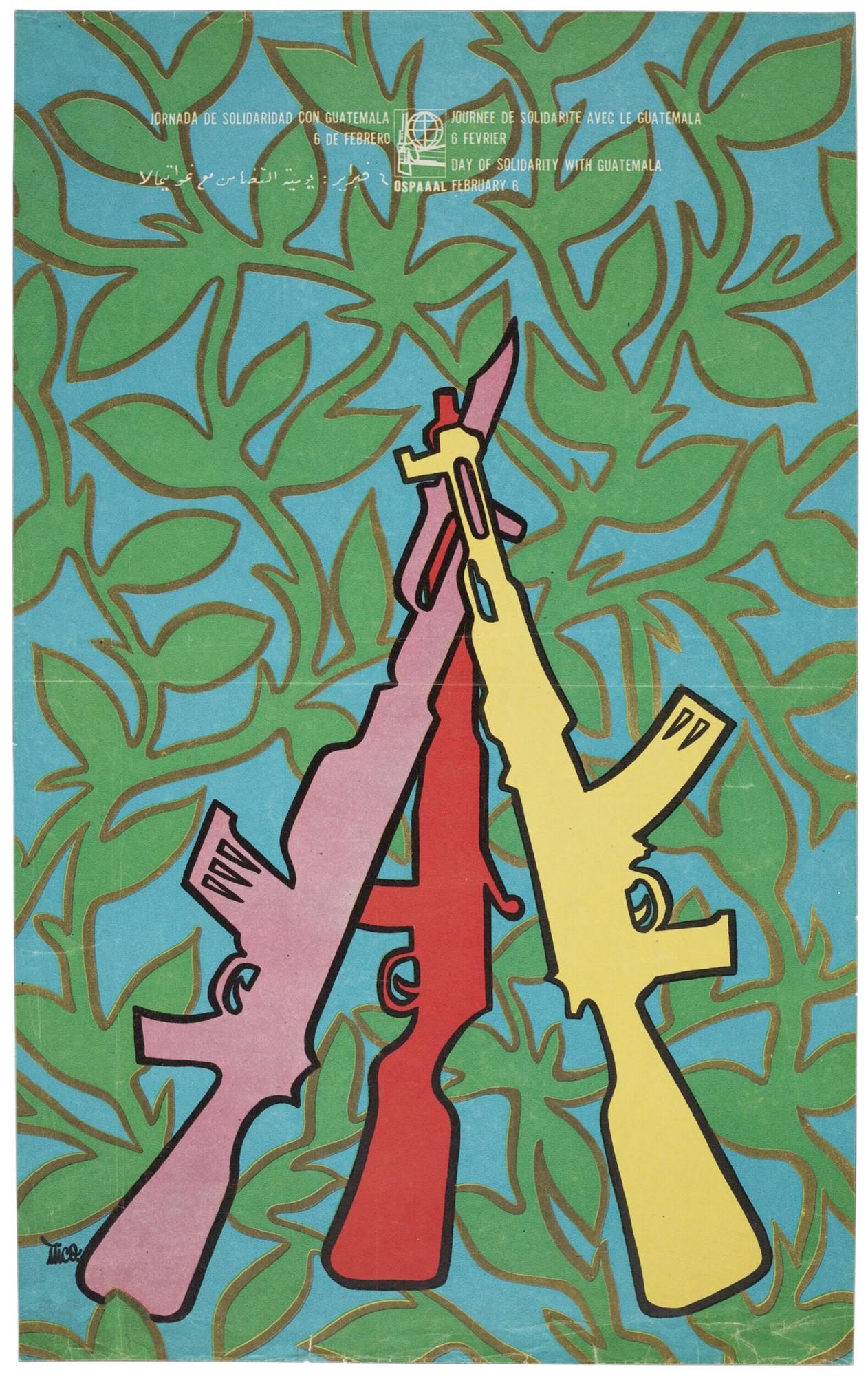
DAY OF SOLIDARITY WITH GUATEMALA - FEBRUARY 6, 1970
Between the 1960s and 1990s, more than fifty designers worked at OSPAAAL (the Organisation of Solidarity with the People of Africa, Asia and Latin America). Based in Cuba, they made magazines and posters that were sent around the world. Their aim was to promote radical political ideas. Many of their posters celebrate socialist revolutions and liberation movements from the Global South.
Content warning: weaponry
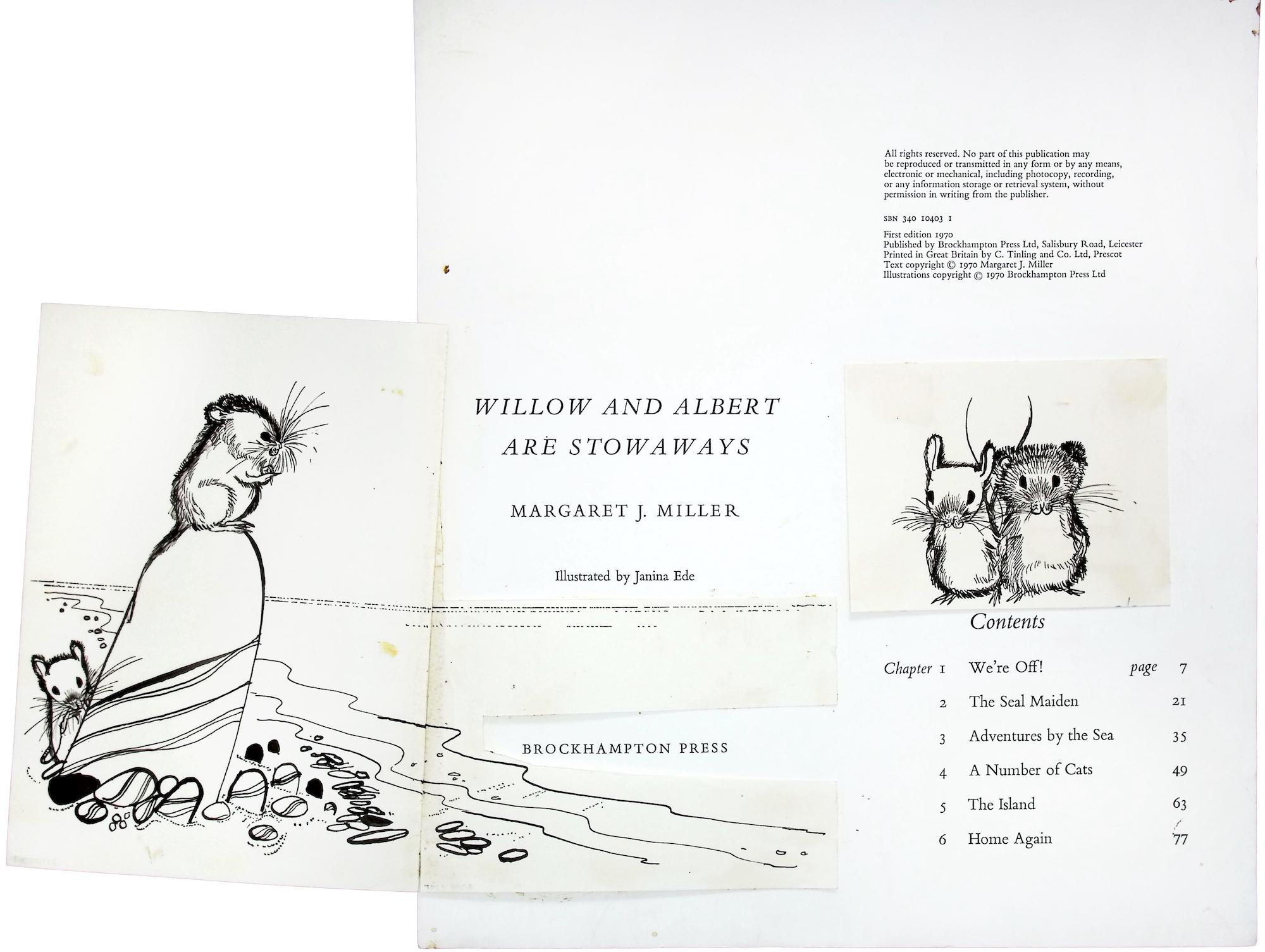
Layout proof for Willow and Albert are Stowaways, c. 1970
British illustrator Janina Ede (1937-2018) created covers and illustrations for over 100 books from the 1950s to the 1980s. Many of her illustrations feature animals, which she drew from life.
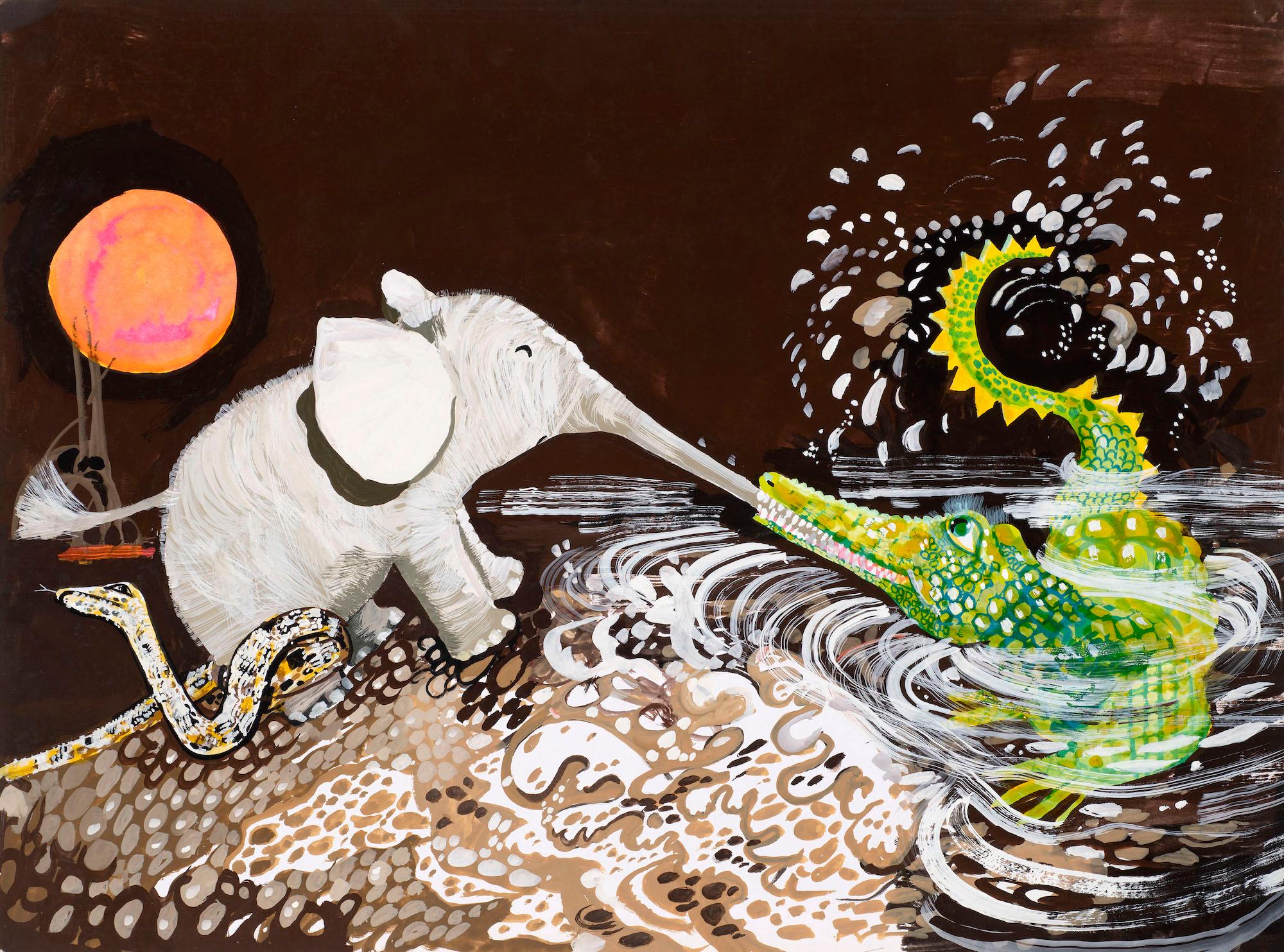
Untitled illustration for Jackanory (Just So Stories: The Elephant's Child), 1973
Janina Ede (1937-2018) created covers and illustrations for over 100 books in the 1960s, 70s and 80s. Many of her illustrations feature animals, which she drew from life. In the 1970s, Ede was commissioned to create large colourful illustrations for the BBC children’s television series, Jackanory. Each episode was dedicated to a story read by an actor, while specially commissioned illustrations were shown on screen during each programme. Some of these illustrations were for programmes featuring stories by author Rudyard Kipling. His ‘Just So’ stories were short tales that imagined how various animals attained their distinguishing features. Kipling set the stories in parts of India, West Asia and Africa. His descriptions of places and people included racist and exoticised stereotypes. Ede’s illustrations draw extensively on Kipling’s descriptions, and therefore reflect the racism in his work, as well as the prevailing stereotypical views that existed in 1970s Britain. Her own personal views are not documented. This storyboard illustration was produced by Janina Ede for Jackanory episode #1450, 'Just So Stories - The Elephant's Child'. It aired on 1 January 1973.
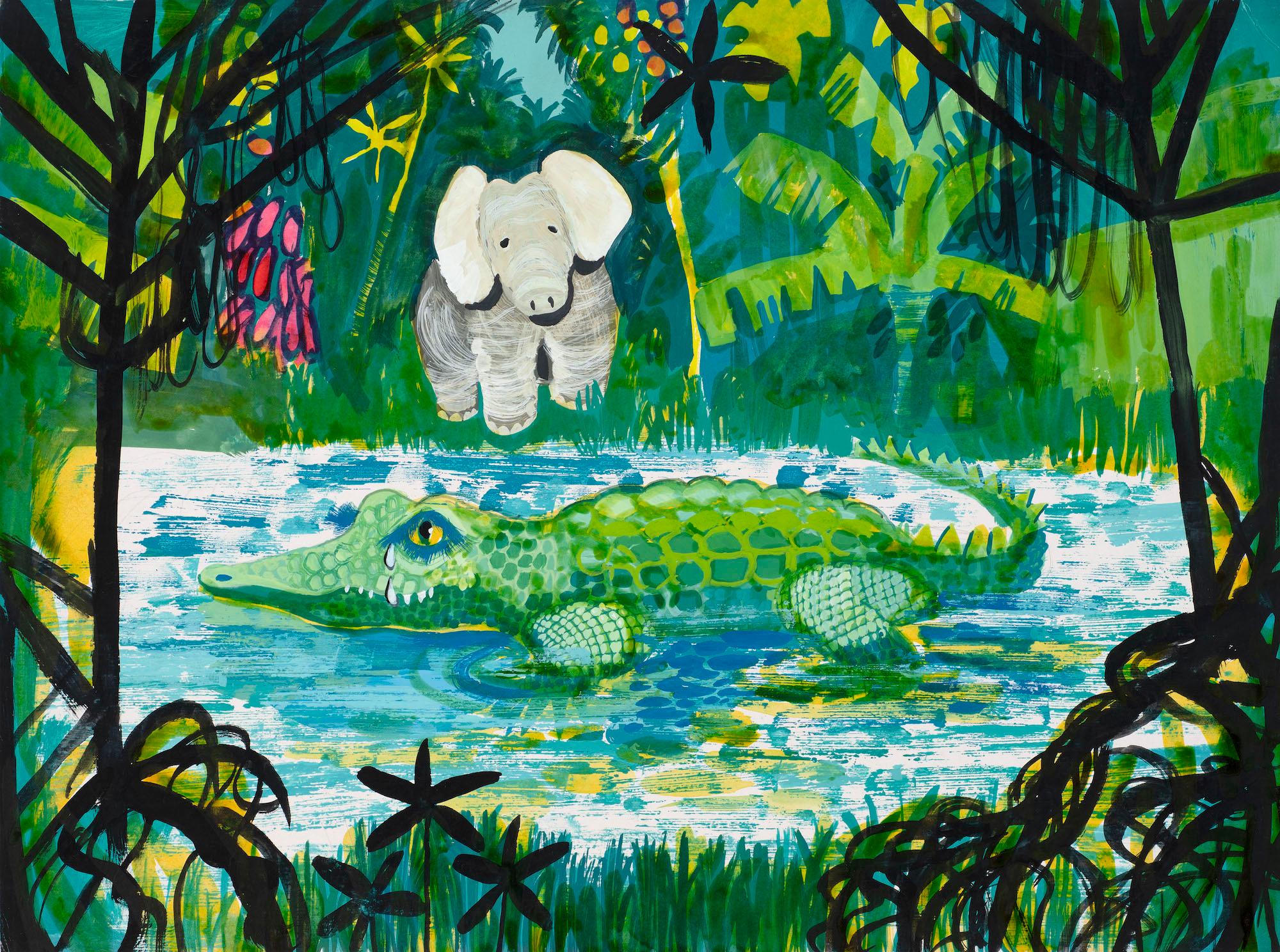
Untitled illustration for Jackanory (Just So Stories: The Elephant's Child), 1973
Janina Ede (1937-2018) created covers and illustrations for over 100 books in the 1960s, 70s and 80s. Many of her illustrations feature animals, which she drew from life. In the 1970s, Ede was commissioned to create large colourful illustrations for the BBC children’s television series, Jackanory. Each episode was dedicated to a story read by an actor, while specially commissioned illustrations were shown on screen during each programme. Some of these illustrations were for programmes featuring stories by author Rudyard Kipling. His ‘Just So’ stories were short tales that imagined how various animals attained their distinguishing features. Kipling set the stories in parts of India, West Asia and Africa. His descriptions of places and people included racist and exoticised stereotypes. Ede’s illustrations draw extensively on Kipling’s descriptions, and therefore reflect the racism in his work, as well as the prevailing stereotypical views that existed in 1970s Britain. Her own personal views are not documented. This storyboard illustration was produced by Janina Ede for Jackanory episode #1450, 'Just So Stories - The Elephant's Child'. It aired on 1 January 1973.
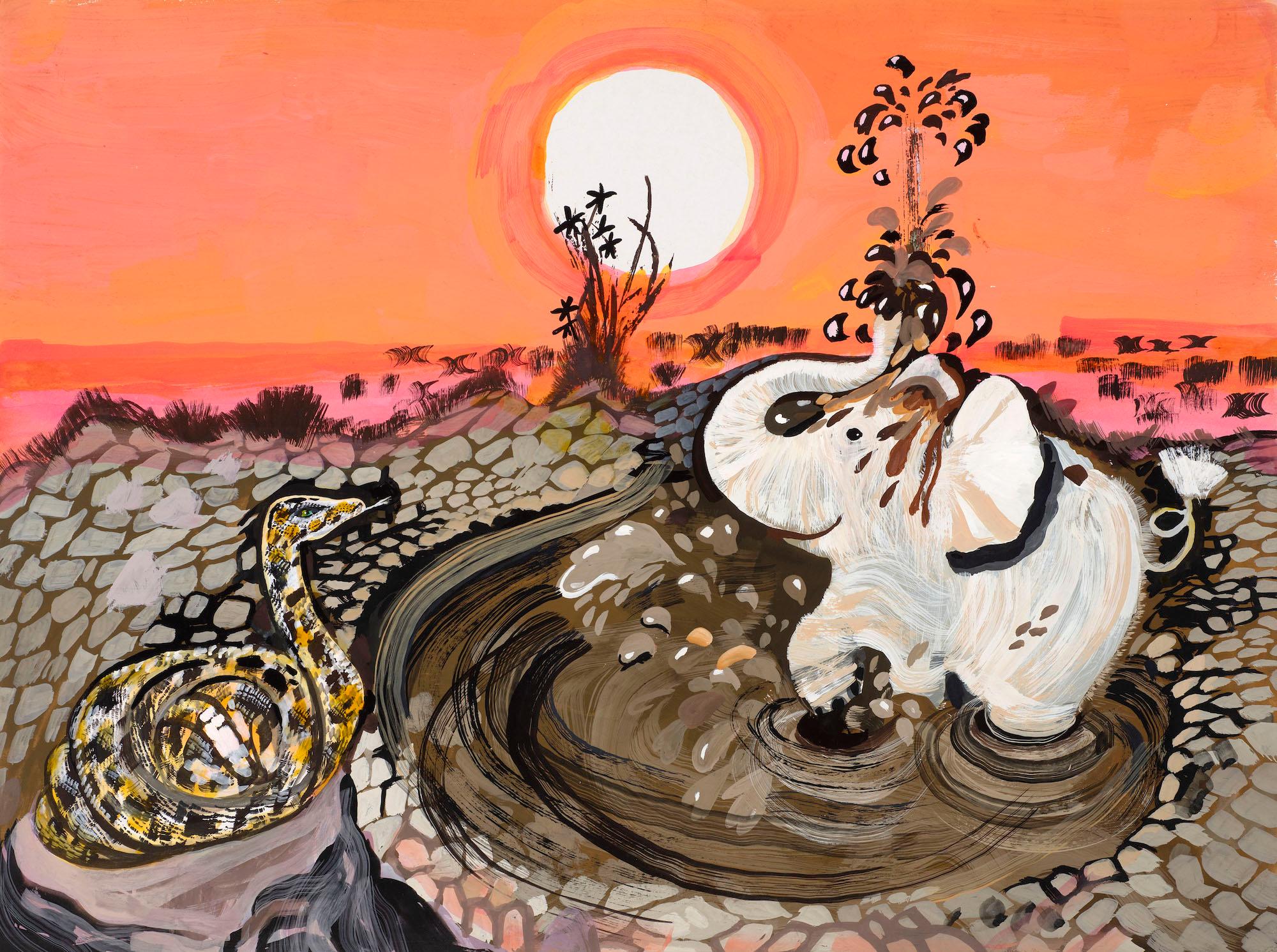
Untitled illustration for Jackanory (Just So Stories: The Elephant's Child), 1973
Janina Ede (1937-2018) created covers and illustrations for over 100 books in the 1960s, 70s and 80s. Many of her illustrations feature animals, which she drew from life. In the 1970s, Ede was commissioned to create large colourful illustrations for the BBC children’s television series, Jackanory. Each episode was dedicated to a story read by an actor, while specially commissioned illustrations were shown on screen during each programme. Some of these illustrations were for programmes featuring stories by author Rudyard Kipling. His ‘Just So’ stories were short tales that imagined how various animals attained their distinguishing features. Kipling set the stories in parts of India, West Asia and Africa. His descriptions of places and people included racist and exoticised stereotypes. Ede’s illustrations draw extensively on Kipling’s descriptions, and therefore reflect the racism in his work, as well as the prevailing stereotypical views that existed in 1970s Britain. Her own personal views are not documented. This storyboard illustration was produced by Janina Ede for Jackanory episode #1450, 'Just So Stories - The Elephant's Child'. It aired on 1 January 1973.
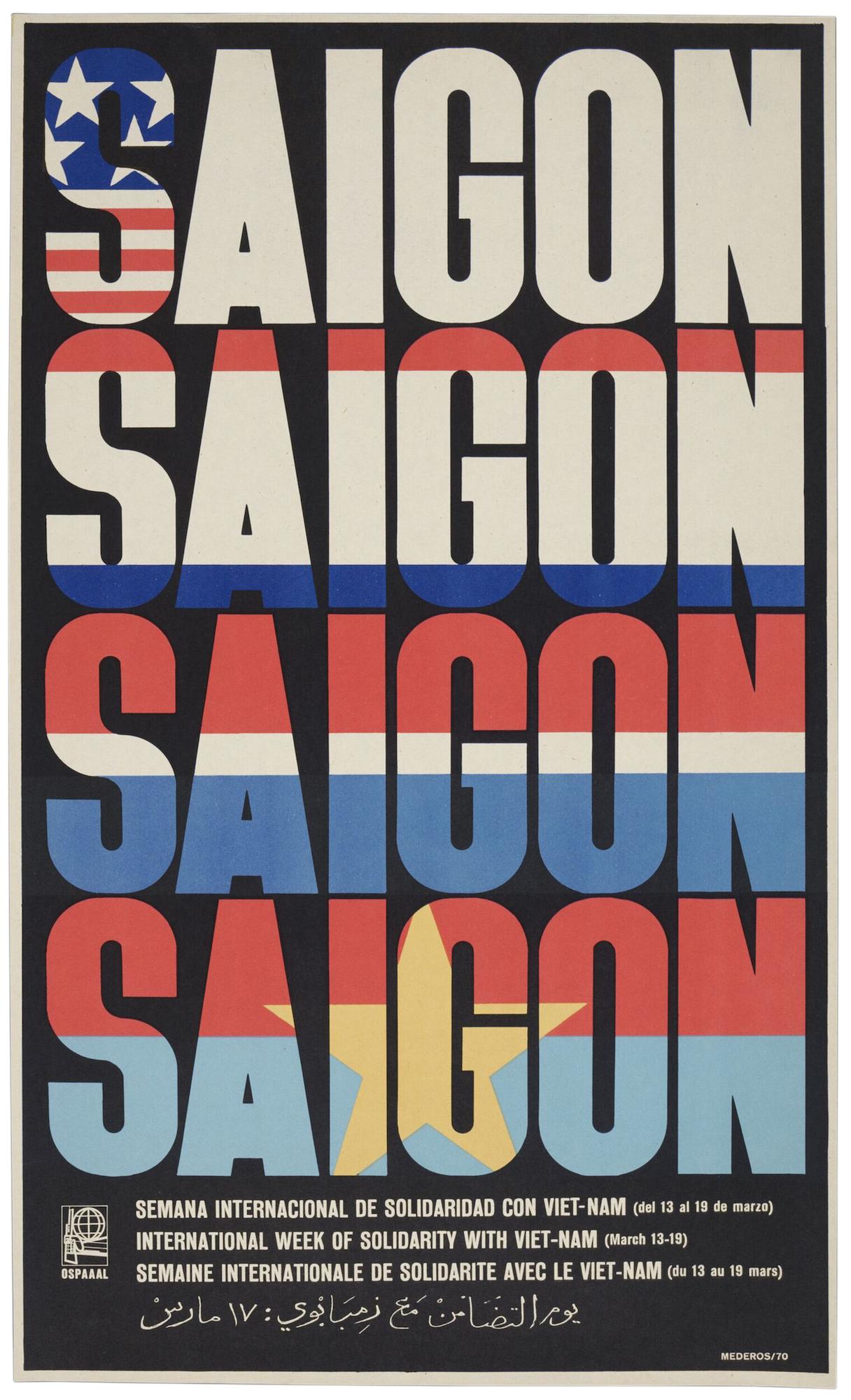
SAIGON - INTERNATIONAL WEEK OF SOLIDARITY WITH VIET-NAM (March 13-19), 1970
Between the 1960s and 1990s, more than fifty designers worked at OSPAAAL. Based in Cuba, they made magazines and posters that were sent around the world. Their aim was to promote radical political ideas. Many of their posters celebrate socialist revolutions and liberation movements from the Global South. This poster was made during the war between North Vietnam and South Vietnam, allied with the U.S.A. (known as the ‘Vietnam War’ and ‘War Against the Americans to Save the Nation’). René Mederos’ design repeats the word ‘Saigon’ (now Ho Chi Minh City). Behind the letters, the flag of the U.S.A. transitions into the flag of the group known as the ‘Việt Cộng’.
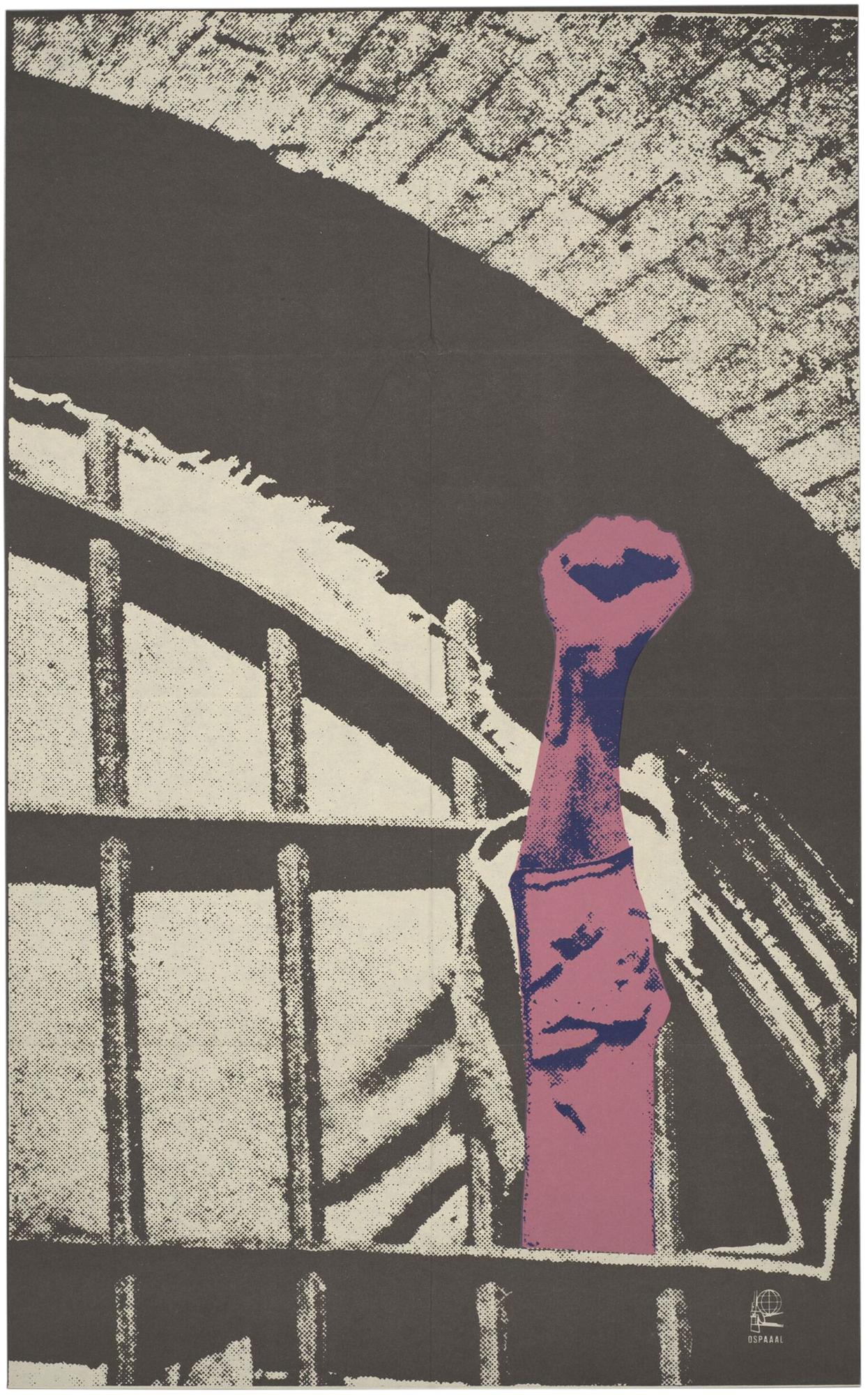
Untitled, 1974
Between the 1960s and 1990s, more than fifty designers worked at OSPAAAL (the Organisation of Solidarity with the People of Africa, Asia and Latin America). Based in Cuba, they made magazines and posters that were sent around the world. Their aim was to promote radical political ideas. Many of their posters celebrate socialist revolutions and liberation movements from the Global South.
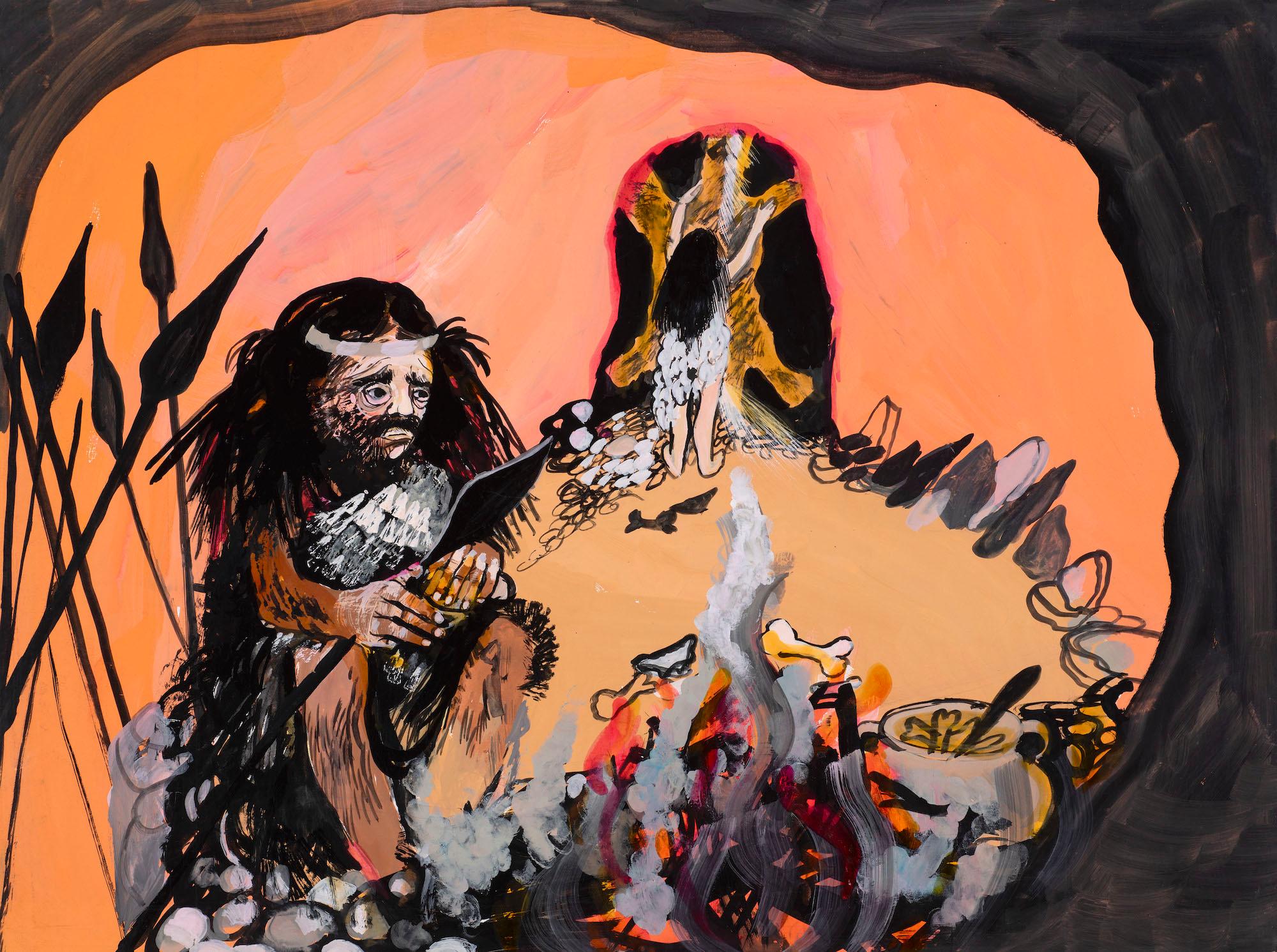
Untitled illustration for Jackanory (Just So Stories: The Cat who Walked by Himself), 1973
Janina Ede (1937-2018) created covers and illustrations for over 100 books in the 1960s, 70s and 80s. Many of her illustrations feature animals, which she drew from life. In the 1970s, Ede was commissioned to create large colourful illustrations for the BBC children’s television series, Jackanory. Each episode was dedicated to a story read by an actor, while specially commissioned illustrations were shown on screen during each programme. Some of these illustrations were for programmes featuring stories by author Rudyard Kipling. His ‘Just So’ stories were short tales that imagined how various animals attained their distinguishing features. Kipling set the stories in parts of India, West Asia and Africa. His descriptions of places and people included racist and exoticised stereotypes. Ede’s illustrations draw extensively on Kipling’s descriptions, and therefore reflect the racism in his work, as well as the prevailing stereotypical views that existed in 1970s Britain. Her own personal views are not documented. This storyboard illustration was produced by Janina Ede for Jackanory episode #1452, 'Just So Stories - The Cat that Walked by Himself'. It aired on 3 January 1973.
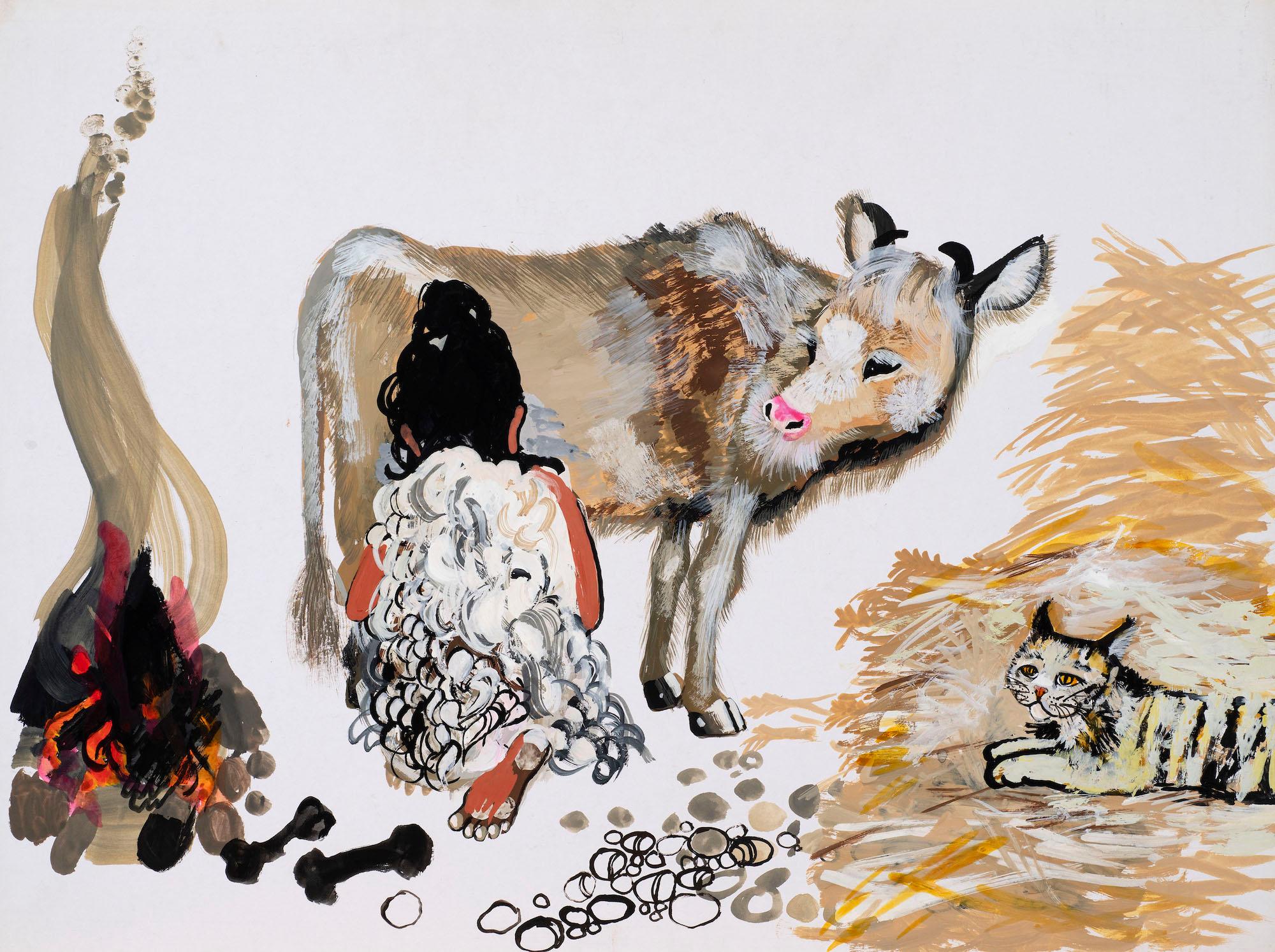
Untitled illustration for Jackanory (Just So Stories: The Cat who Walked by Himself), 1973
Janina Ede (1937-2018) created covers and illustrations for over 100 books in the 1960s, 70s and 80s. Many of her illustrations feature animals, which she drew from life. In the 1970s, Ede was commissioned to create large colourful illustrations for the BBC children’s television series, Jackanory. Each episode was dedicated to a story read by an actor, while specially commissioned illustrations were shown on screen during each programme. Some of these illustrations were for programmes featuring stories by author Rudyard Kipling. His ‘Just So’ stories were short tales that imagined how various animals attained their distinguishing features. Kipling set the stories in parts of India, West Asia and Africa. His descriptions of places and people included racist and exoticised stereotypes. Ede’s illustrations draw extensively on Kipling’s descriptions, and therefore reflect the racism in his work, as well as the prevailing stereotypical views that existed in 1970s Britain. Her own personal views are not documented. This storyboard illustration was produced by Janina Ede for Jackanory episode #1452, 'Just So Stories - The Cat that Walked by Himself'. It aired on 3 January 1973.
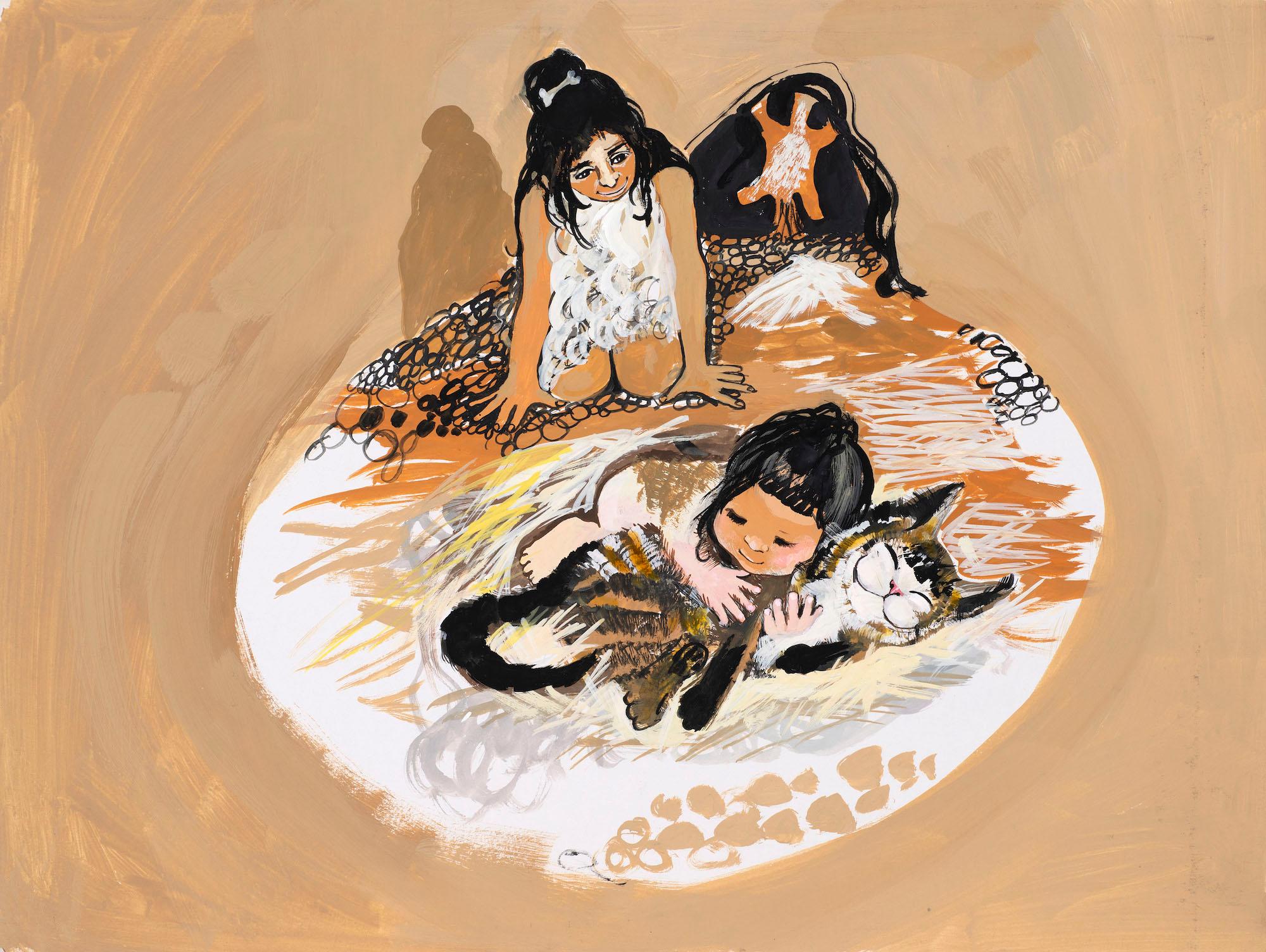
Untitled illustration for Jackanory (Just So Stories: The Cat who Walked by Himself), 1973
Janina Ede (1937-2018) created covers and illustrations for over 100 books in the 1960s, 70s and 80s. Many of her illustrations feature animals, which she drew from life. In the 1970s, Ede was commissioned to create large colourful illustrations for the BBC children’s television series, Jackanory. Each episode was dedicated to a story read by an actor, while specially commissioned illustrations were shown on screen during each programme. Some of these illustrations were for programmes featuring stories by author Rudyard Kipling. His ‘Just So’ stories were short tales that imagined how various animals attained their distinguishing features. Kipling set the stories in parts of India, West Asia and Africa. His descriptions of places and people included racist and exoticised stereotypes. Ede’s illustrations draw extensively on Kipling’s descriptions, and therefore reflect the racism in his work, as well as the prevailing stereotypical views that existed in 1970s Britain. Her own personal views are not documented. This storyboard illustration was produced by Janina Ede for Jackanory episode #1452, 'Just So Stories - The Cat that Walked by Himself'. It aired on 3 January 1973.
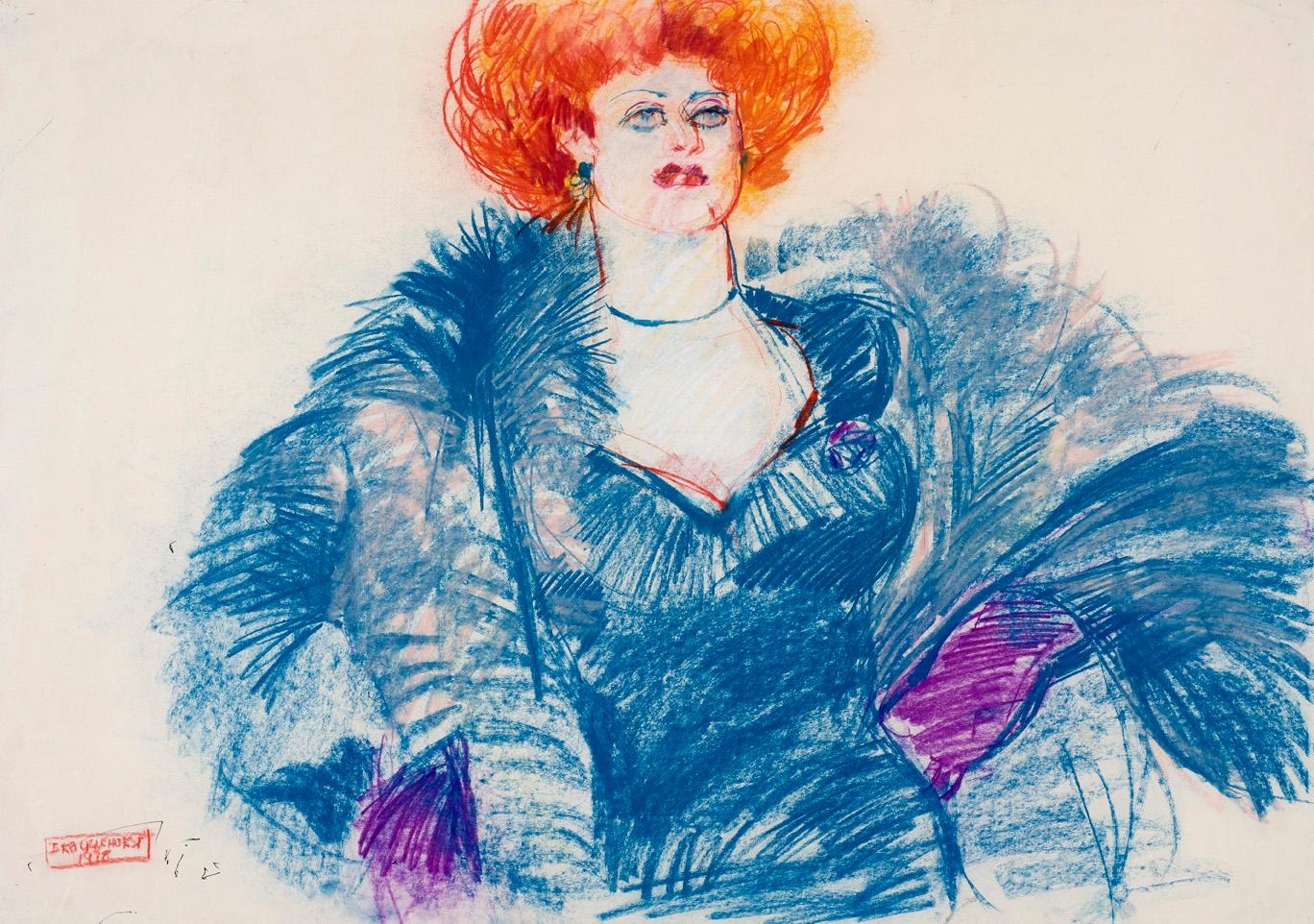
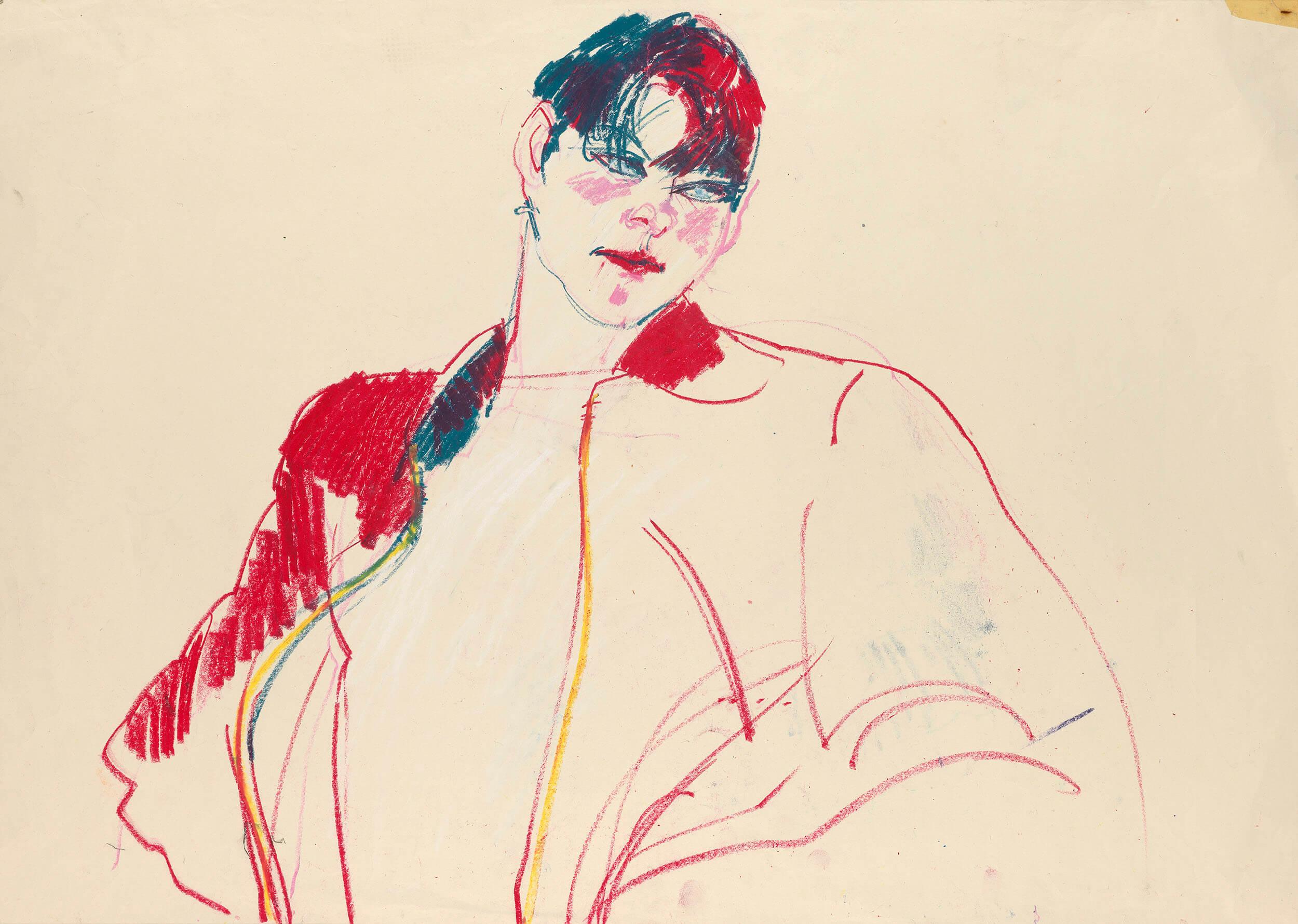
Jo Brocklehurst, Untitled (portrait of Eve Ferret), 1978
Jo (Josephine) Brocklehurst (1935 - 2006) studied at Central Saint Martins and began her career as a fashion illustrator. She later focused on portraiture, drawing directly from models at her studio in West Hampstead and in nightclubs and theatres in Berlin, London and New York. Her work documents the alternative subcultures of the 1970s, 80s and 90s that went on to shape mainstream fashion and performance scenes. This portrait of performer Eve Ferret was made around the time Ferret was performing cabaret at London’s Blitz Club with James ‘Biddie’ Biddlecombe.
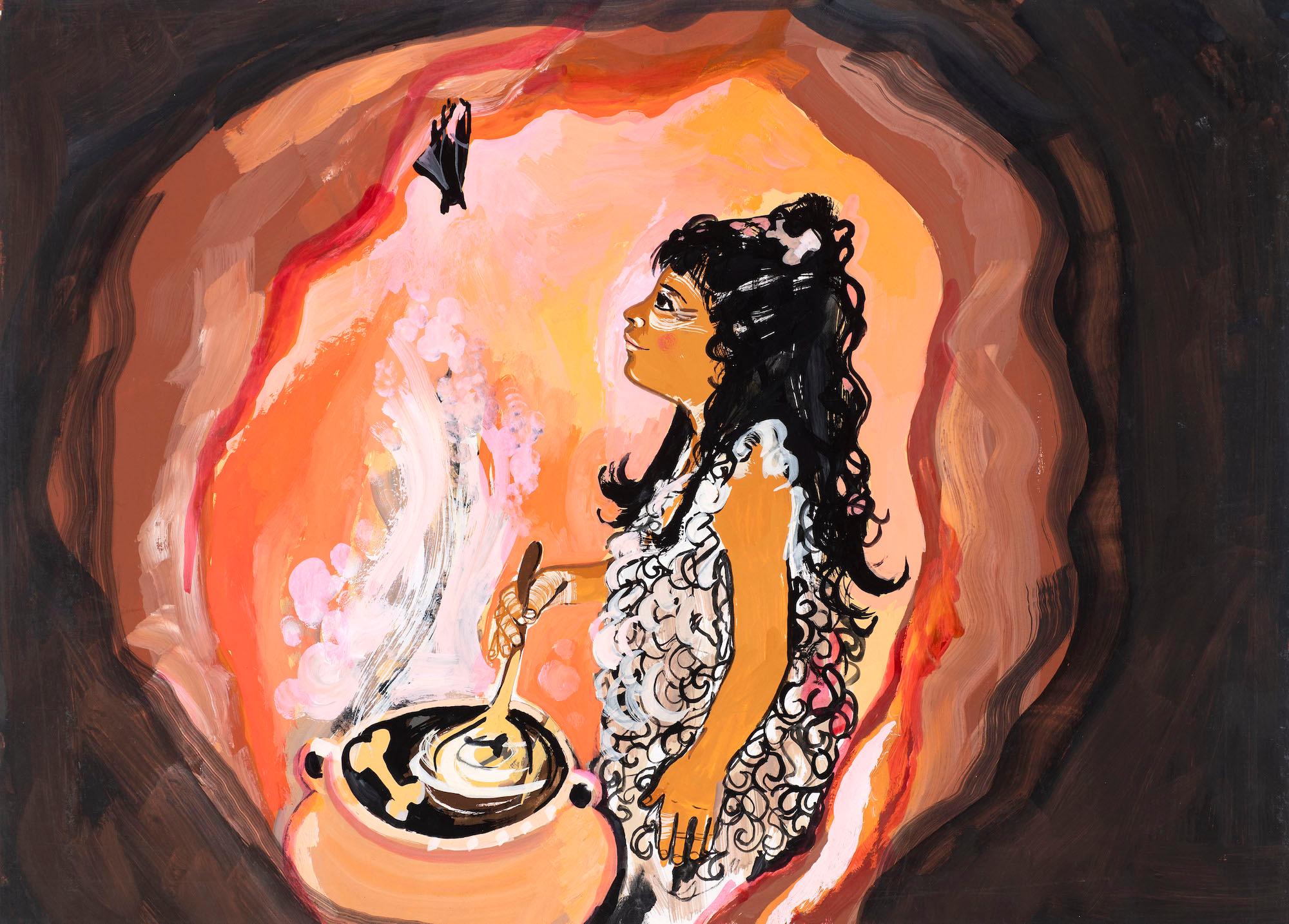
Untitled illustration for Jackanory (Just So Stories: The Cat who Walked by Himself), 1973
Janina Ede (1937-2018) created covers and illustrations for over 100 books in the 1960s, 70s and 80s. Many of her illustrations feature animals, which she drew from life. In the 1970s, Ede was commissioned to create large colourful illustrations for the BBC children’s television series, Jackanory. Each episode was dedicated to a story read by an actor, while specially commissioned illustrations were shown on screen during each programme. Some of these illustrations were for programmes featuring stories by author Rudyard Kipling. His ‘Just So’ stories were short tales that imagined how various animals attained their distinguishing features. Kipling set the stories in parts of India, West Asia and Africa. His descriptions of places and people included racist and exoticised stereotypes. Ede’s illustrations draw extensively on Kipling’s descriptions, and therefore reflect the racism in his work, as well as the prevailing stereotypical views that existed in 1970s Britain. Her own personal views are not documented. This storyboard illustration was produced by Janina Ede for Jackanory episode #1452, 'Just So Stories - The Cat that Walked by Himself'. It aired on 3 January 1973.
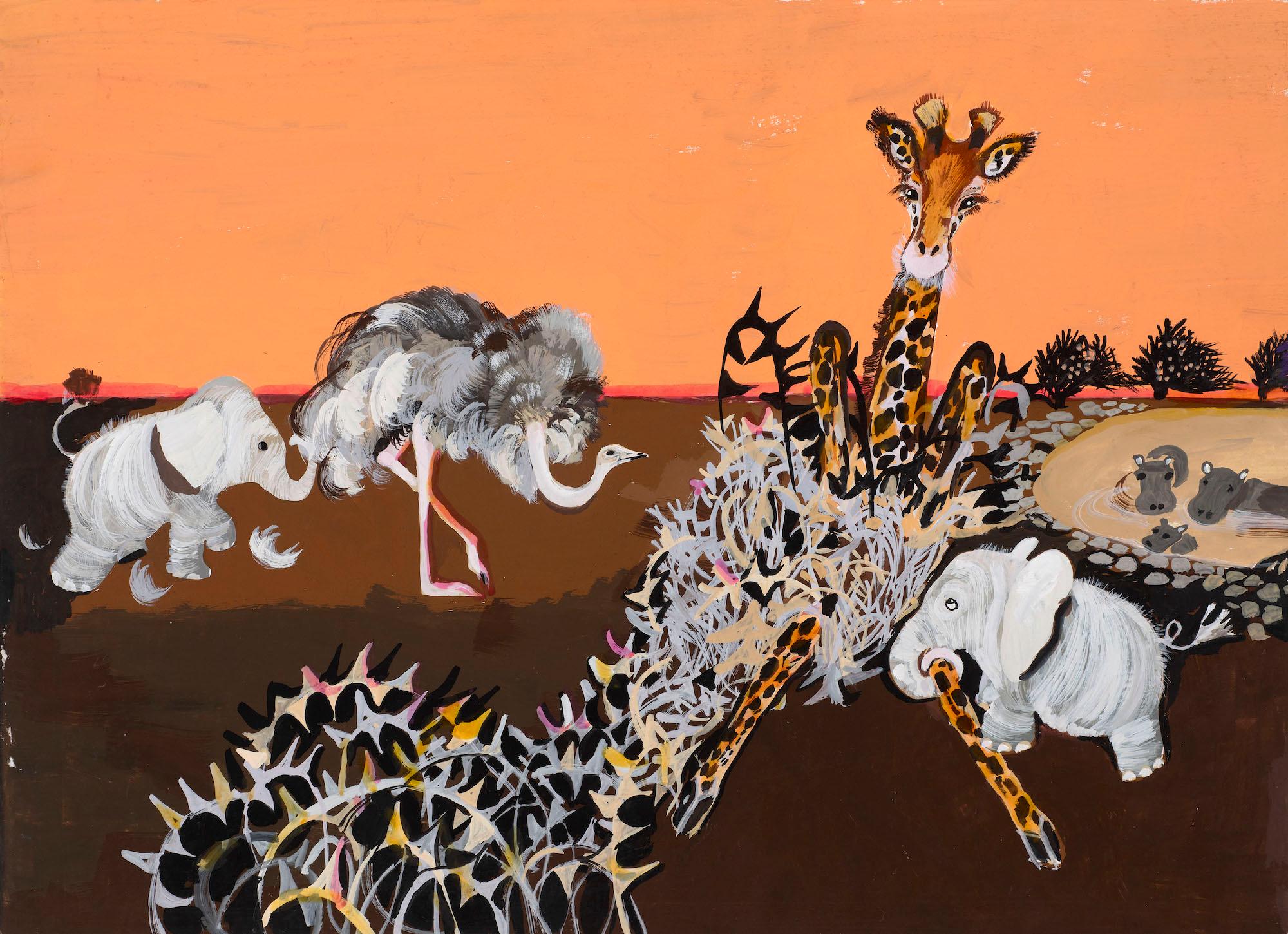
Untitled illustration for Jackanory (Just So Stories: The Elephant's Child), 1973
Janina Ede (1937-2018) created covers and illustrations for over 100 books in the 1960s, 70s and 80s. Many of her illustrations feature animals, which she drew from life. In the 1970s, Ede was commissioned to create large colourful illustrations for the BBC children’s television series, Jackanory. Each episode was dedicated to a story read by an actor, while specially commissioned illustrations were shown on screen during each programme. Some of these illustrations were for programmes featuring stories by author Rudyard Kipling. His ‘Just So’ stories were short tales that imagined how various animals attained their distinguishing features. Kipling set the stories in parts of India, West Asia and Africa. His descriptions of places and people included racist and exoticised stereotypes. Ede’s illustrations draw extensively on Kipling’s descriptions, and therefore reflect the racism in his work, as well as the prevailing stereotypical views that existed in 1970s Britain. Her own personal views are not documented. This storyboard illustration was produced by Janina Ede for Jackanory episode #1450, 'Just So Stories - The Elephant's Child'. It aired on 1 January 1973.
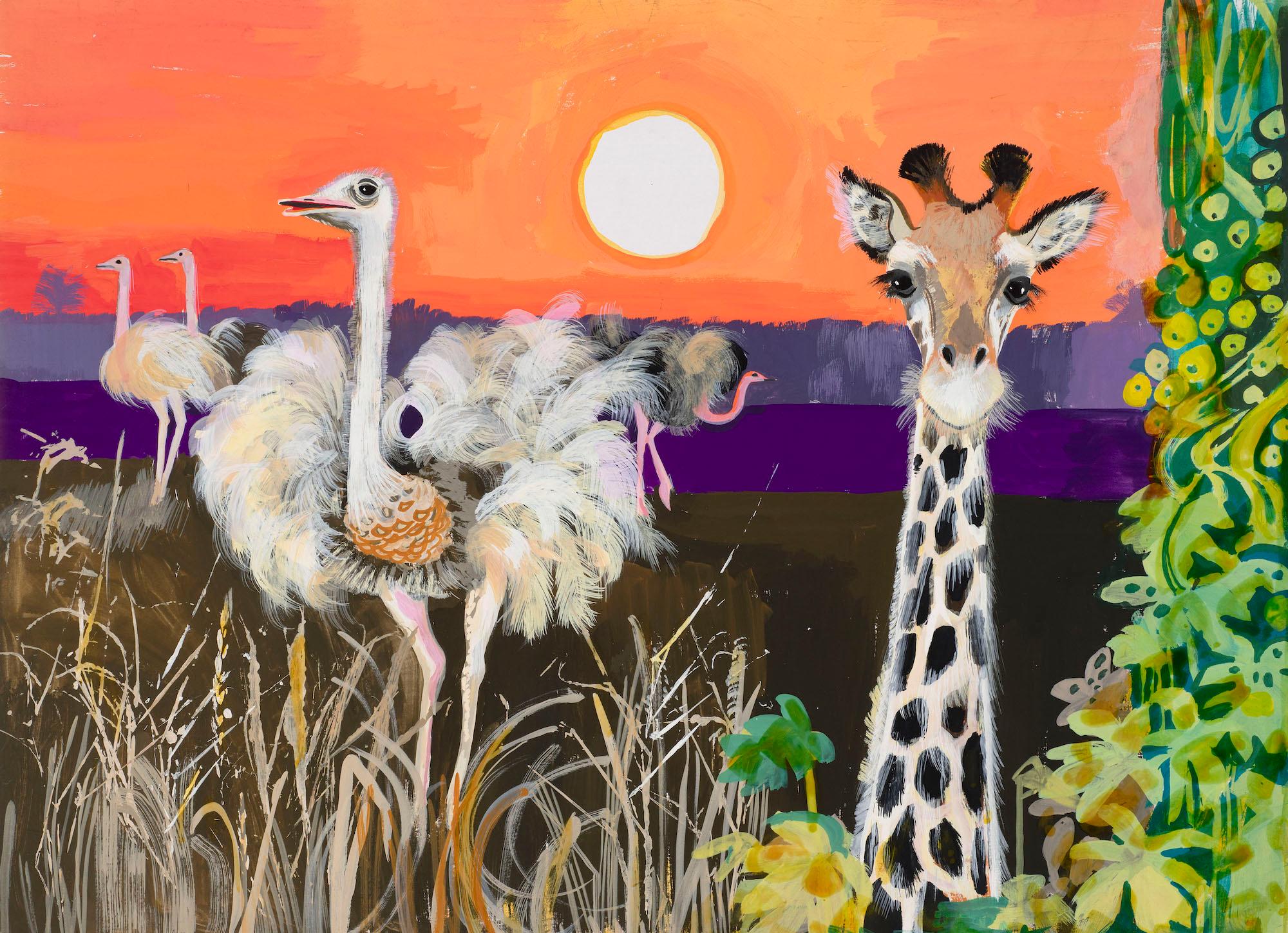
Untitled illustration for Jackanory (Just So Stories: The Elephant's Child), 1973
Janina Ede (1937-2018) created covers and illustrations for over 100 books in the 1960s, 70s and 80s. Many of her illustrations feature animals, which she drew from life. In the 1970s, Ede was commissioned to create large colourful illustrations for the BBC children’s television series, Jackanory. Each episode was dedicated to a story read by an actor, while specially commissioned illustrations were shown on screen during each programme. Some of these illustrations were for programmes featuring stories by author Rudyard Kipling. His ‘Just So’ stories were short tales that imagined how various animals attained their distinguishing features. Kipling set the stories in parts of India, West Asia and Africa. His descriptions of places and people included racist and exoticised stereotypes. Ede’s illustrations draw extensively on Kipling’s descriptions, and therefore reflect the racism in his work, as well as the prevailing stereotypical views that existed in 1970s Britain. Her own personal views are not documented. This storyboard illustration was produced by Janina Ede for Jackanory episode #1450, 'Just So Stories - The Elephant's Child'. It aired on 1 January 1973.
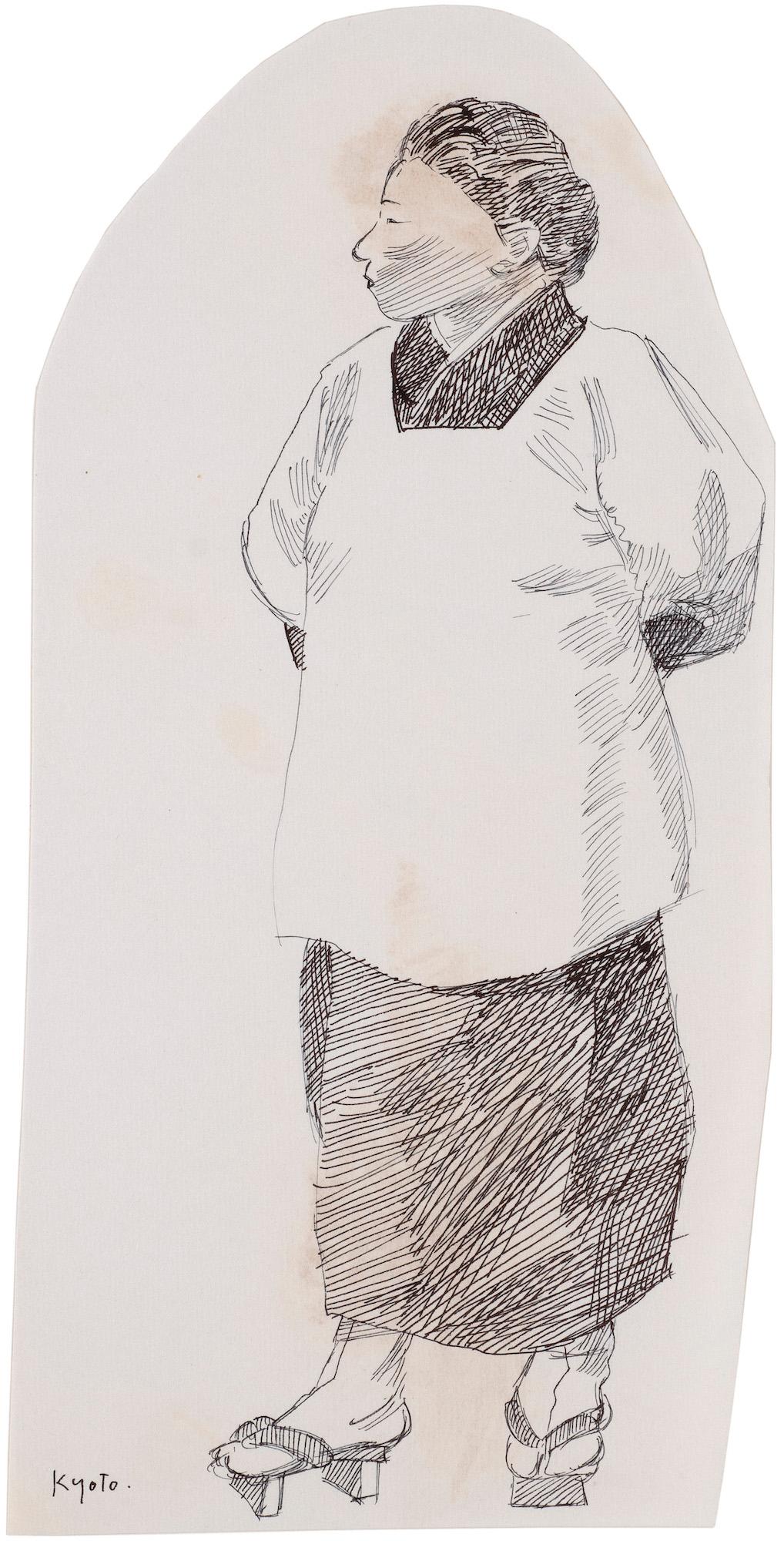
Jacqueline Ayer, Untitled (Shop keeper, Kyoto), c. 1973
Jacqueline Ayer (1930–2012) had a career that spanned many creative fields. She began as a fashion illustrator, and later turned her hand to children’s books, textiles and garments, as she worked in New York, Paris, London, Bangkok, Hong Kong and across India. This drawing was used as one of the final illustrations printed in Ayer's publication Oriental* Costume (1974). *The term ‘oriental’ has colonial and racist origins. It was established during a period when European powers took political control of other countries and defined non-European cultures as ‘inferior’ to their own. ‘Oriental’ was commonly used in English-speaking countries until the late 20th century to group together people, culture and places in Northern Africa, East Asia and Southeast Asia, as well as objects thought to have originated in these areas. The term has been widely rejected today as it exoticizes and ‘others’ these diverse cultures. Ayer used the term here to collectively refer to modes of dress from Cambodia, China, Japan, Mongolia, Nepal, Thailand and Tibet.
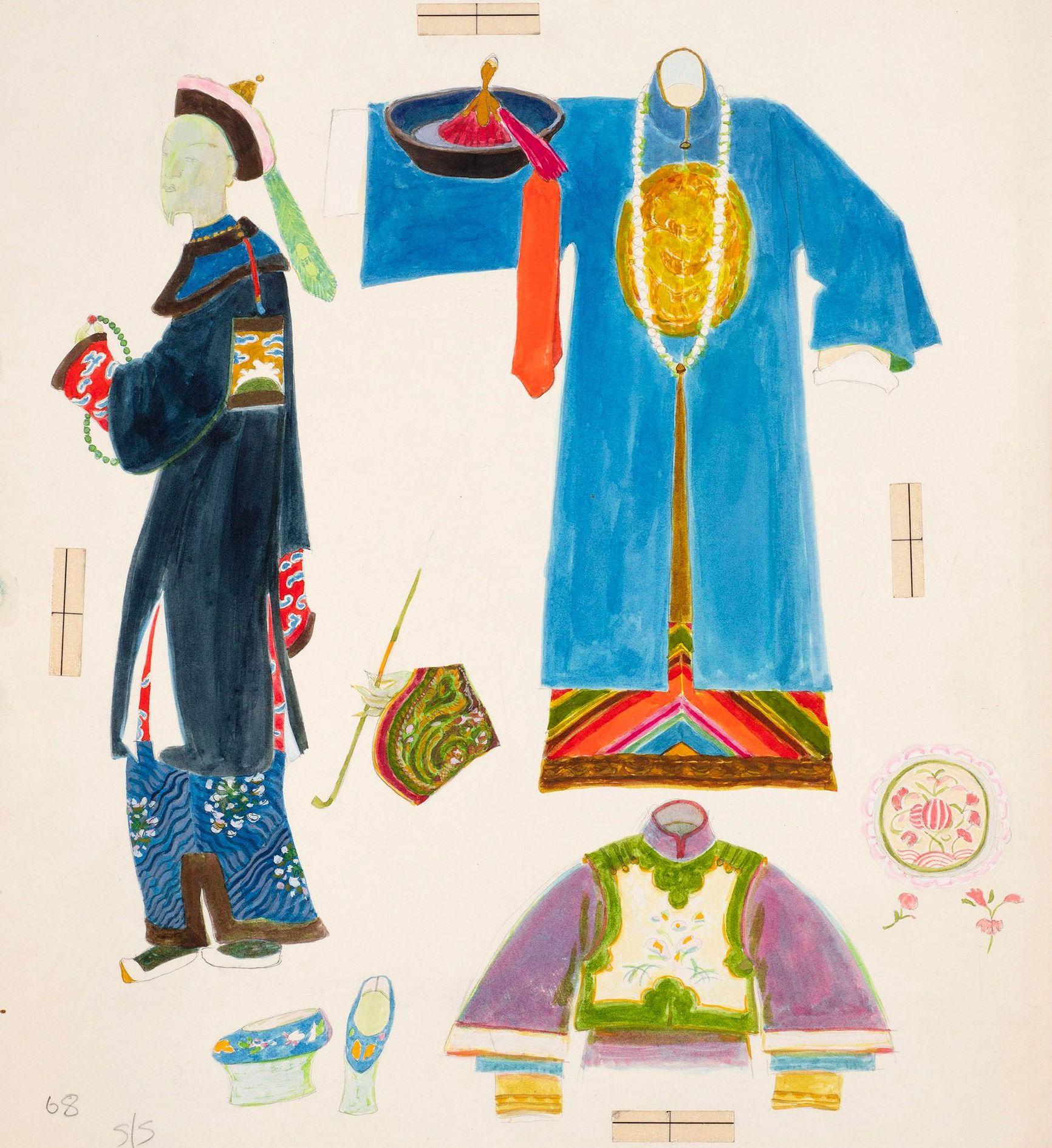
Jacqueline Ayer, Untitled (High-ranking mandarin in ceremonial court dress), c. 1973
Jacqueline Ayer (1930–2012) had a career that spanned many creative fields. She began as a fashion illustrator, and later turned her hand to children’s books, textiles and garments, as she worked in New York, Paris, London, Bangkok, Hong Kong and across India. This drawing was used as one of the final illustrations printed in Ayer's publication Oriental* Costume (1974). *The term ‘oriental’ has colonial and racist origins. It was established during a period when European powers took political control of other countries and defined non-European cultures as ‘inferior’ to their own. ‘Oriental’ was commonly used in English-speaking countries until the late 20th century to group together people, culture and places in Northern Africa, East Asia and Southeast Asia, as well as objects thought to have originated in these areas. The term has been widely rejected today as it exoticizes and ‘others’ these diverse cultures. Ayer used the term here to collectively refer to modes of dress from Cambodia, China, Japan, Mongolia, Nepal, Thailand and Tibet.
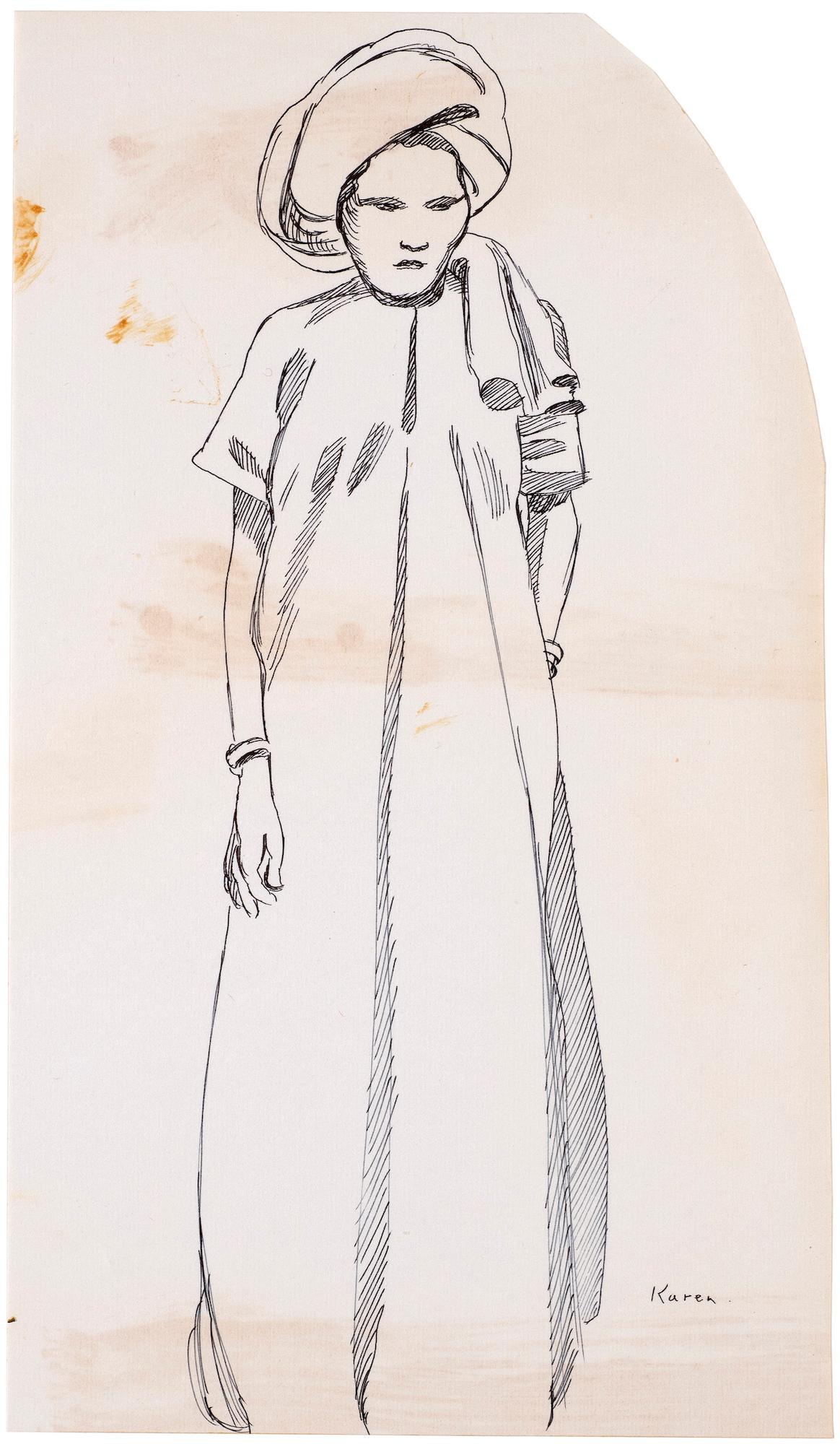
Jacqueline Ayer, Untitled (Karen woman, Thailand), c.1973
Jacqueline Ayer (1930–2012) had a career that spanned many creative fields. She began as a fashion illustrator, and later turned her hand to children’s books, textiles and garments, as she worked in New York, Paris, London, Bangkok, Hong Kong and across India. This drawing was used as one of the final illustrations printed in Ayer's publication Oriental* Costume (1974). *The term ‘oriental’ has colonial and racist origins. It was established during a period when European powers took political control of other countries and defined non-European cultures as ‘inferior’ to their own. ‘Oriental’ was commonly used in English-speaking countries until the late 20th century to group together people, culture and places in Northern Africa, East Asia and Southeast Asia, as well as objects thought to have originated in these areas. The term has been widely rejected today as it exoticizes and ‘others’ these diverse cultures. Ayer used the term here to collectively refer to modes of dress from Cambodia, China, Japan, Mongolia, Nepal, Thailand and Tibet.
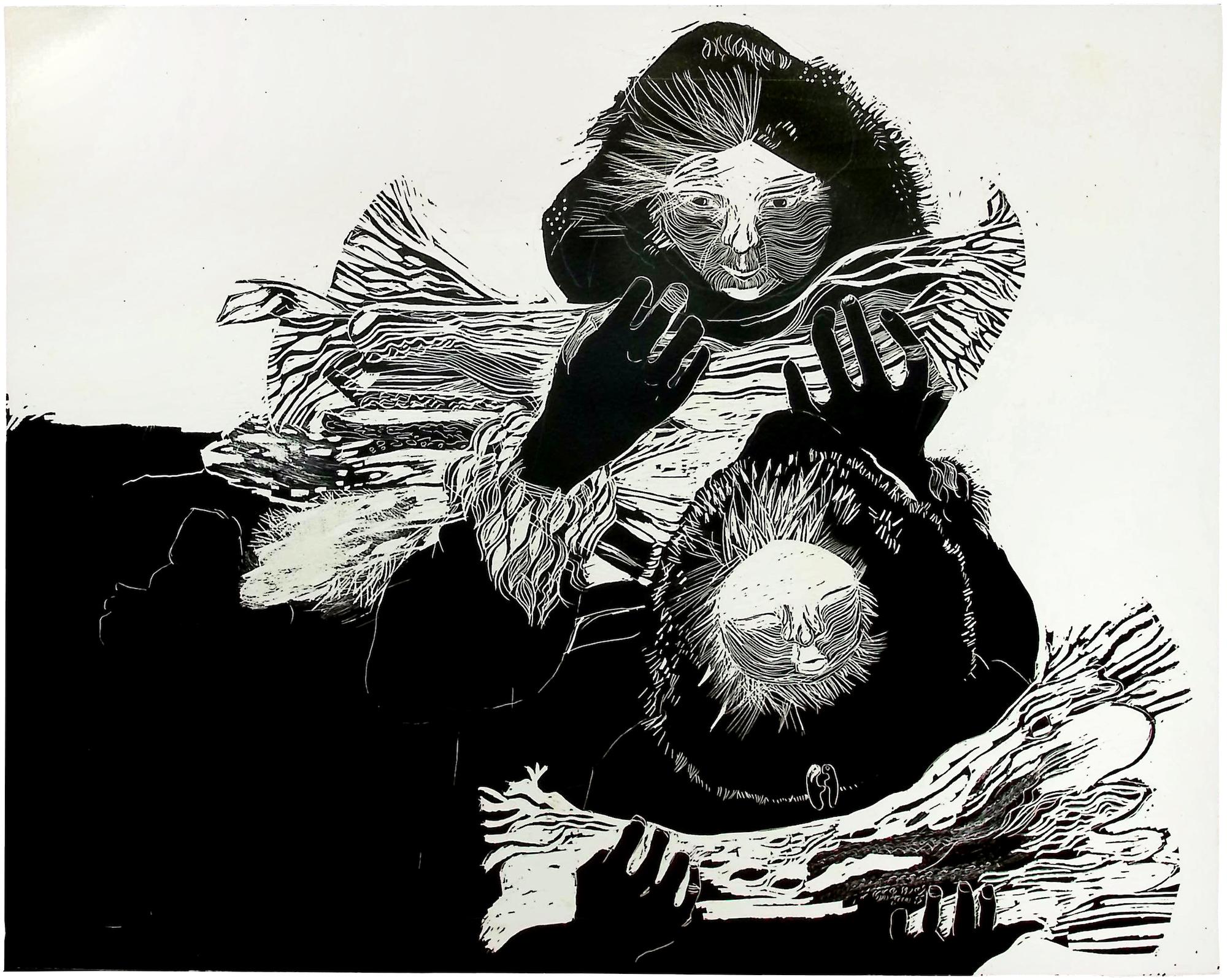
Untitled, c. 1977
British illustrator Janina Ede (1937-2018) created covers and illustrations for over 100 books from the 1950s to the 1980s. Her illustrations for Einar and the Seal (1977) used scraperboard, a material used to create a form of engraving. A board coated with a layer of dark ink is scraped to reveal a white or coloured area underneath.
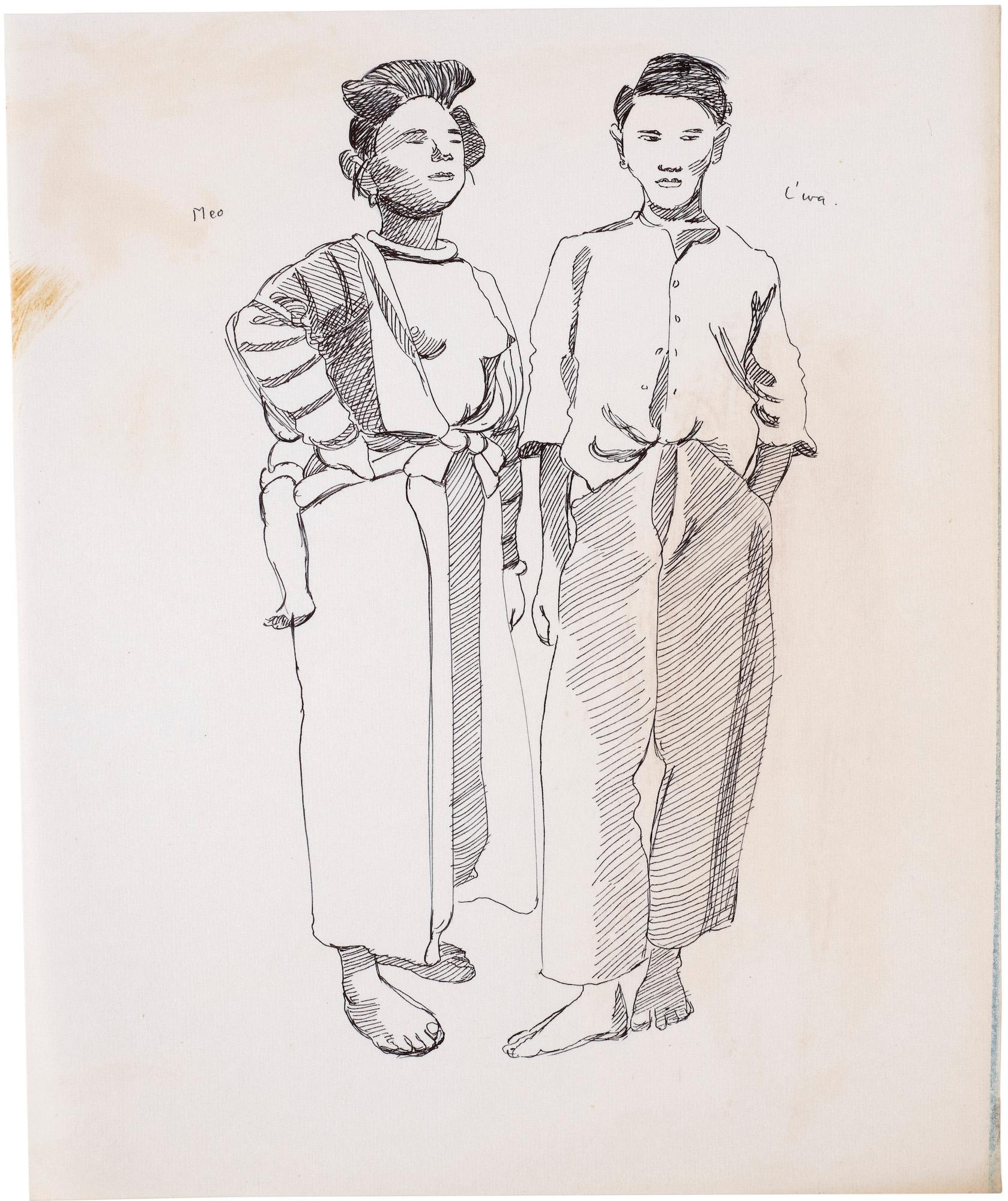
Jacqueline Ayer, Untitled (Meo woman and L'wa man, Thailand), c. 1973
Jacqueline Ayer (1930–2012) had a career that spanned many creative fields. She began as a fashion illustrator, and later turned her hand to children’s books, textiles and garments, as she worked in New York, Paris, London, Bangkok, Hong Kong and across India. This drawing was used as one of the final illustrations printed in Ayer's publication Oriental* Costume (1974). *The term ‘oriental’ has colonial and racist origins. It was established during a period when European powers took political control of other countries and defined non-European cultures as ‘inferior’ to their own. ‘Oriental’ was commonly used in English-speaking countries until the late 20th century to group together people, culture and places in Northern Africa, East Asia and Southeast Asia, as well as objects thought to have originated in these areas. The term has been widely rejected today as it exoticizes and ‘others’ these diverse cultures. Ayer used the term here to collectively refer to modes of dress from Cambodia, China, Japan, Mongolia, Nepal, Thailand and Tibet.
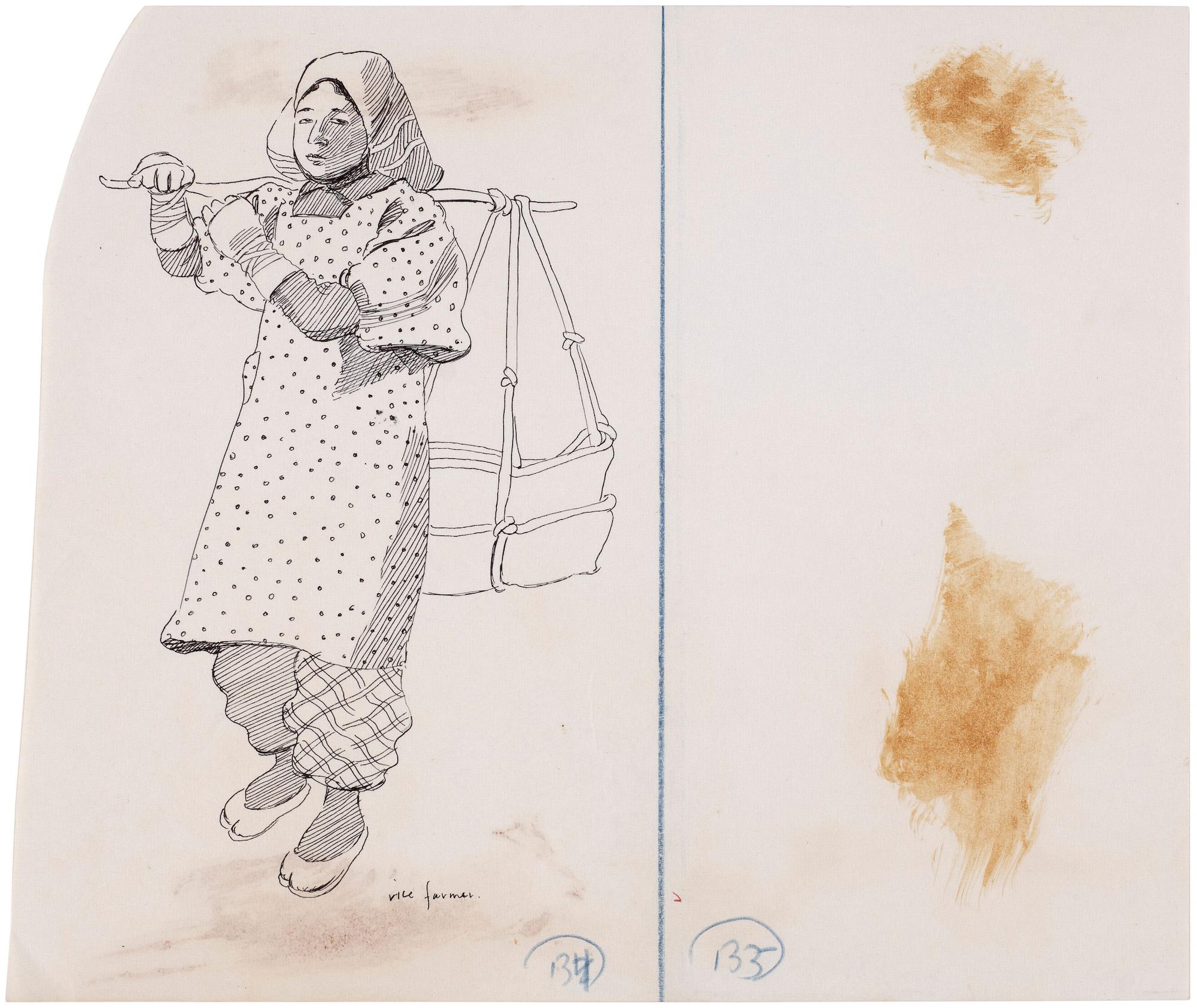
Jacqueline Ayer, Untitled (Rice farmer, Toyama prefecture), c. 1973
Jacqueline Ayer (1930–2012) had a career that spanned many creative fields. She began as a fashion illustrator, and later turned her hand to children’s books, textiles and garments, as she worked in New York, Paris, London, Bangkok, Hong Kong and across India. This drawing was used as one of the final illustrations printed in Ayer's publication Oriental* Costume (1974). *The term ‘oriental’ has colonial and racist origins. It was established during a period when European powers took political control of other countries and defined non-European cultures as ‘inferior’ to their own. ‘Oriental’ was commonly used in English-speaking countries until the late 20th century to group together people, culture and places in Northern Africa, East Asia and Southeast Asia, as well as objects thought to have originated in these areas. The term has been widely rejected today as it exoticizes and ‘others’ these diverse cultures. Ayer used the term here to collectively refer to modes of dress from Cambodia, China, Japan, Mongolia, Nepal, Thailand and Tibet.
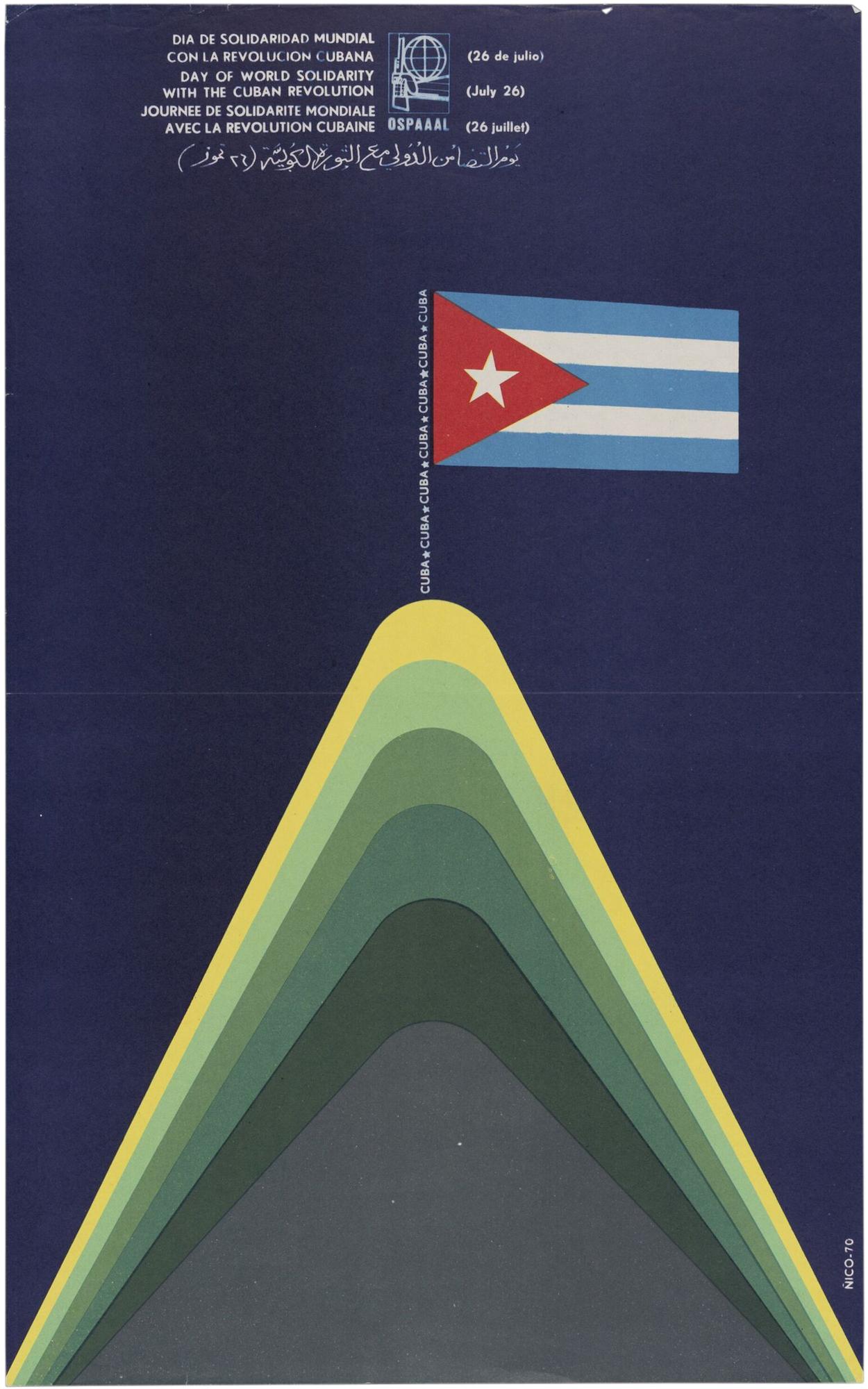
DAY OF THE WORLD SOLIDARITY WITH THE CUBAN REVOLUTION (July 26), 1970
Between the 1960s and 1990s, more than fifty designers worked at OSPAAAL. Based in Cuba, they made magazines and posters that were sent around the world. Their aim was to promote radical political ideas. Many of their posters celebrate socialist revolutions and liberation movements from the Global South. This design promotes 26 July as a day of solidarity with the Cuban Revolution. The revolutionary 26th of July Movement led by Fidel Castro took power in Cuba in 1959.
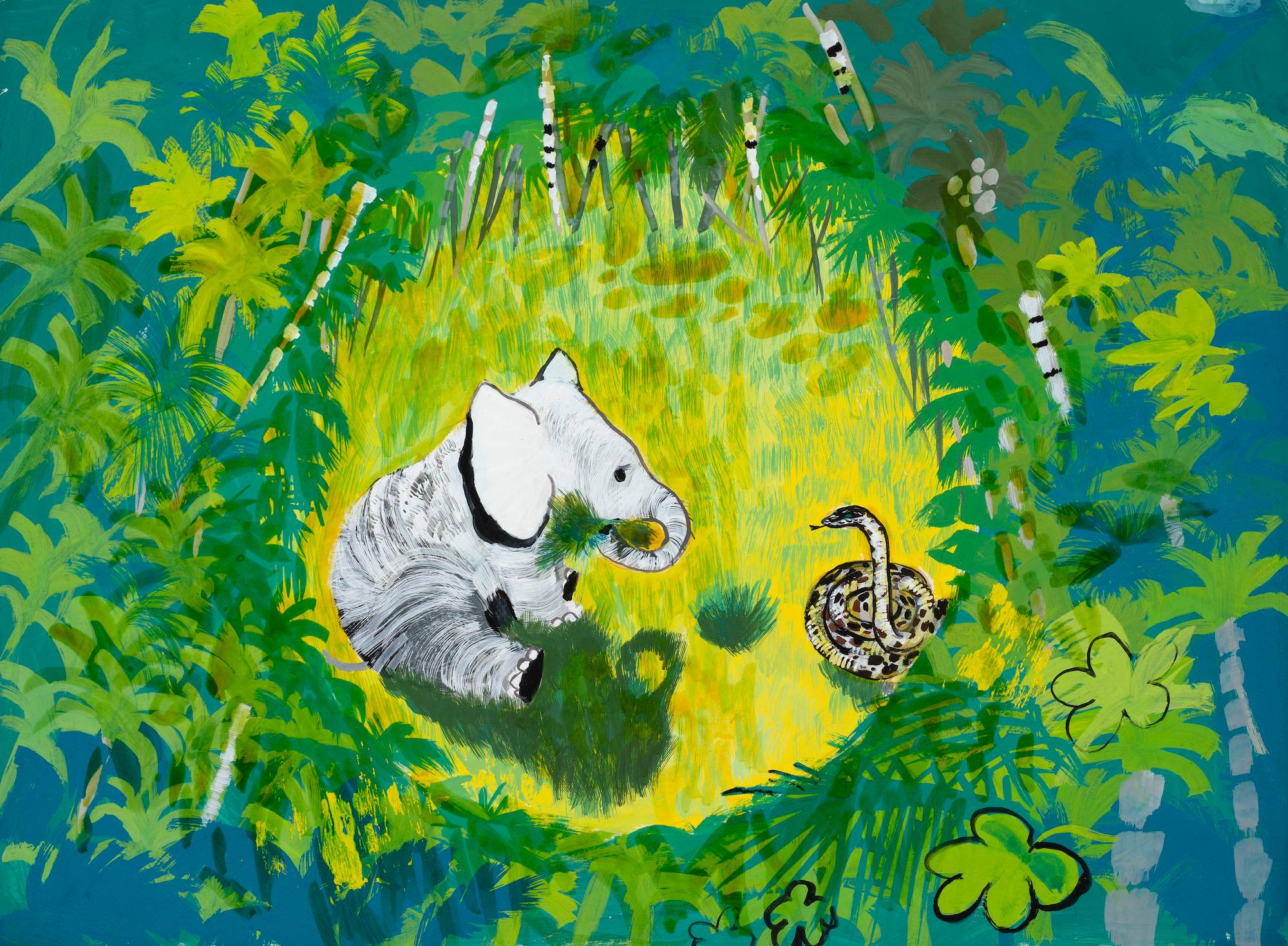
Untitled illustration for Jackanory (Just So Stories: The Elephant's Child), 1973
Janina Ede (1937-2018) created covers and illustrations for over 100 books in the 1960s, 70s and 80s. Many of her illustrations feature animals, which she drew from life. In the 1970s, Ede was commissioned to create large colourful illustrations for the BBC children’s television series, Jackanory. Each episode was dedicated to a story read by an actor, while specially commissioned illustrations were shown on screen during each programme. Some of these illustrations were for programmes featuring stories by author Rudyard Kipling. His ‘Just So’ stories were short tales that imagined how various animals attained their distinguishing features. Kipling set the stories in parts of India, West Asia and Africa. His descriptions of places and people included racist and exoticised stereotypes. Ede’s illustrations draw extensively on Kipling’s descriptions, and therefore reflect the racism in his work, as well as the prevailing stereotypical views that existed in 1970s Britain. Her own personal views are not documented. This storyboard illustration was produced by Janina Ede for Jackanory episode #1450, 'Just So Stories - The Elephant's Child'. It aired on 1 January 1973.
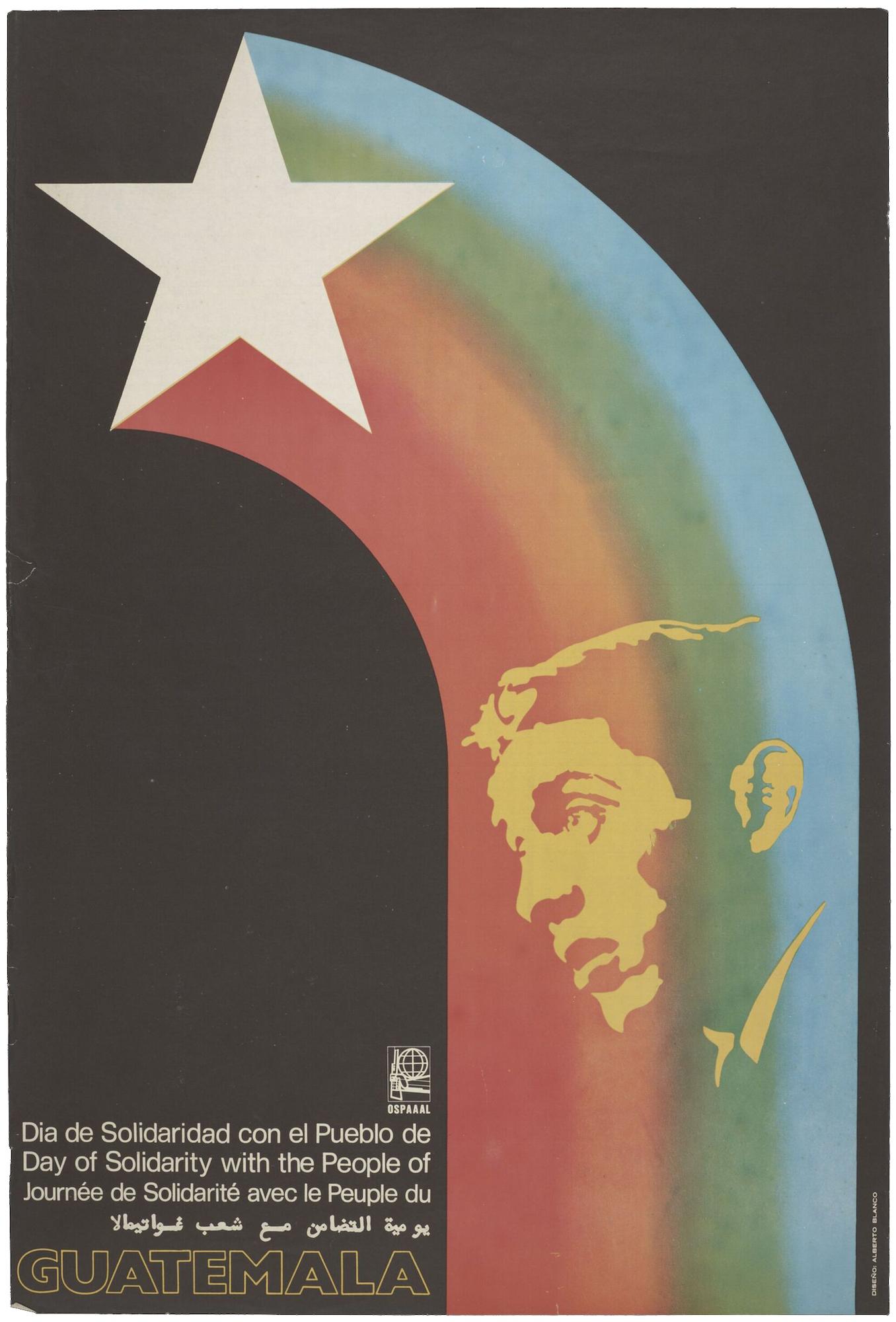
Day of Solidarity with the People of GUATEMALA, 1977
Between the 1960s and 1990s, more than fifty designers worked at OSPAAAL (the Organisation of Solidarity with the People of Africa, Asia and Latin America). Based in Cuba, they made magazines and posters that were sent around the world. Their aim was to promote radical political ideas. Many of their posters celebrate socialist revolutions and liberation movements from the Global South. For this poster, Alberto Blanco González used a photograph of Luis Augusto Turcios Lima taken at the 1966 Tricontinental conference. The 24-year-old was killed in a car accident later that year, but was remembered as a leader of the guerrilla group, the Rebel Armed Forces during the Guatemalan Civil War. Rather than creating formal portraits, many of OSPAAAL’s designers took inspiration from pop art and commercial advertising in their representations of political figures.
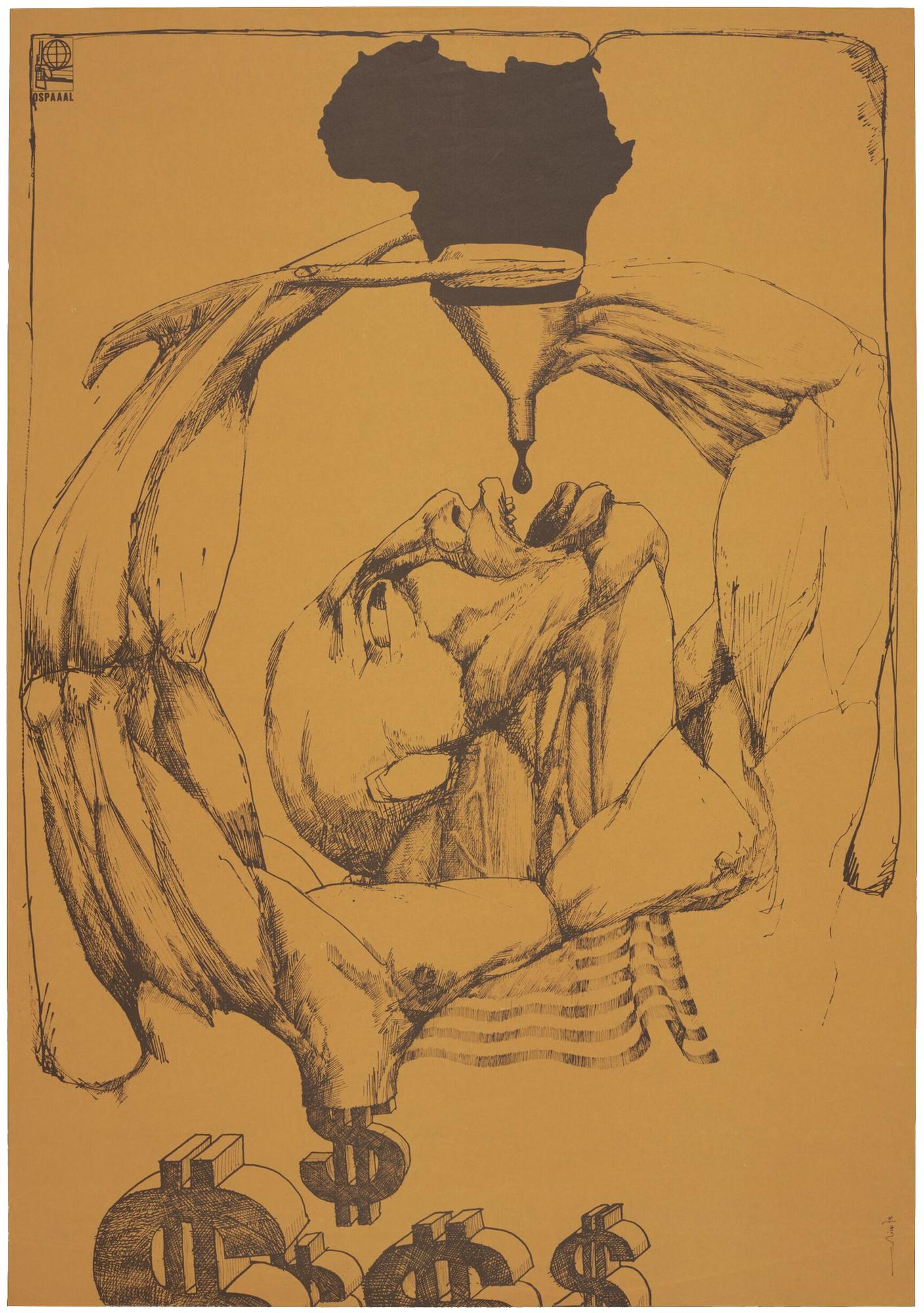
Untitled, 1971
Between the 1960s and 1990s, more than fifty designers worked at OSPAAAL (the Organisation of Solidarity with the People of Africa, Asia and Latin America). Based in Cuba, they made magazines and posters that were sent around the world. Their aim was to promote radical political ideas. Many of their posters celebrate socialist revolutions and liberation movements from the Global South. Olivio Martínez Viera’s design represents the U.S.A. as a monstrous organism extracting resources from Africa for financial gain.
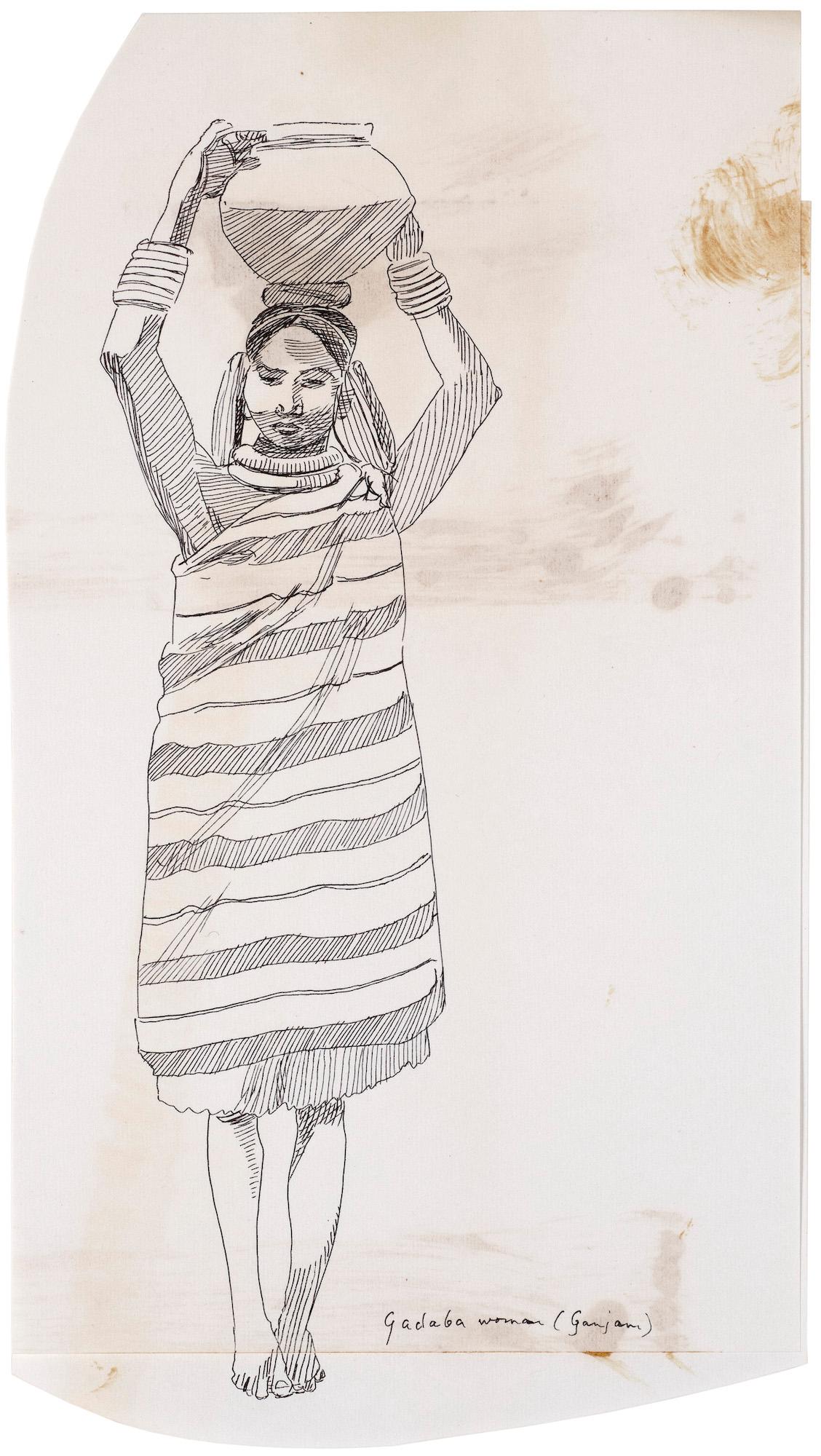
Jacqueline Ayer, Untitled (Gabada woman), c. 1973
Jacqueline Ayer (1930–2012) had a career that spanned many creative fields. She began as a fashion illustrator, and later turned her hand to children’s books, textiles and garments, as she worked in New York, Paris, London, Bangkok, Hong Kong and across India. This drawing was used as one of the final illustrations printed in Ayer's publication Oriental* Costume (1974). *The term ‘oriental’ has colonial and racist origins. It was established during a period when European powers took political control of other countries and defined non-European cultures as ‘inferior’ to their own. ‘Oriental’ was commonly used in English-speaking countries until the late 20th century to group together people, culture and places in Northern Africa, East Asia and Southeast Asia, as well as objects thought to have originated in these areas. The term has been widely rejected today as it exoticizes and ‘others’ these diverse cultures. Ayer used the term here to collectively refer to modes of dress from Cambodia, China, Japan, Mongolia, Nepal, Thailand and Tibet.
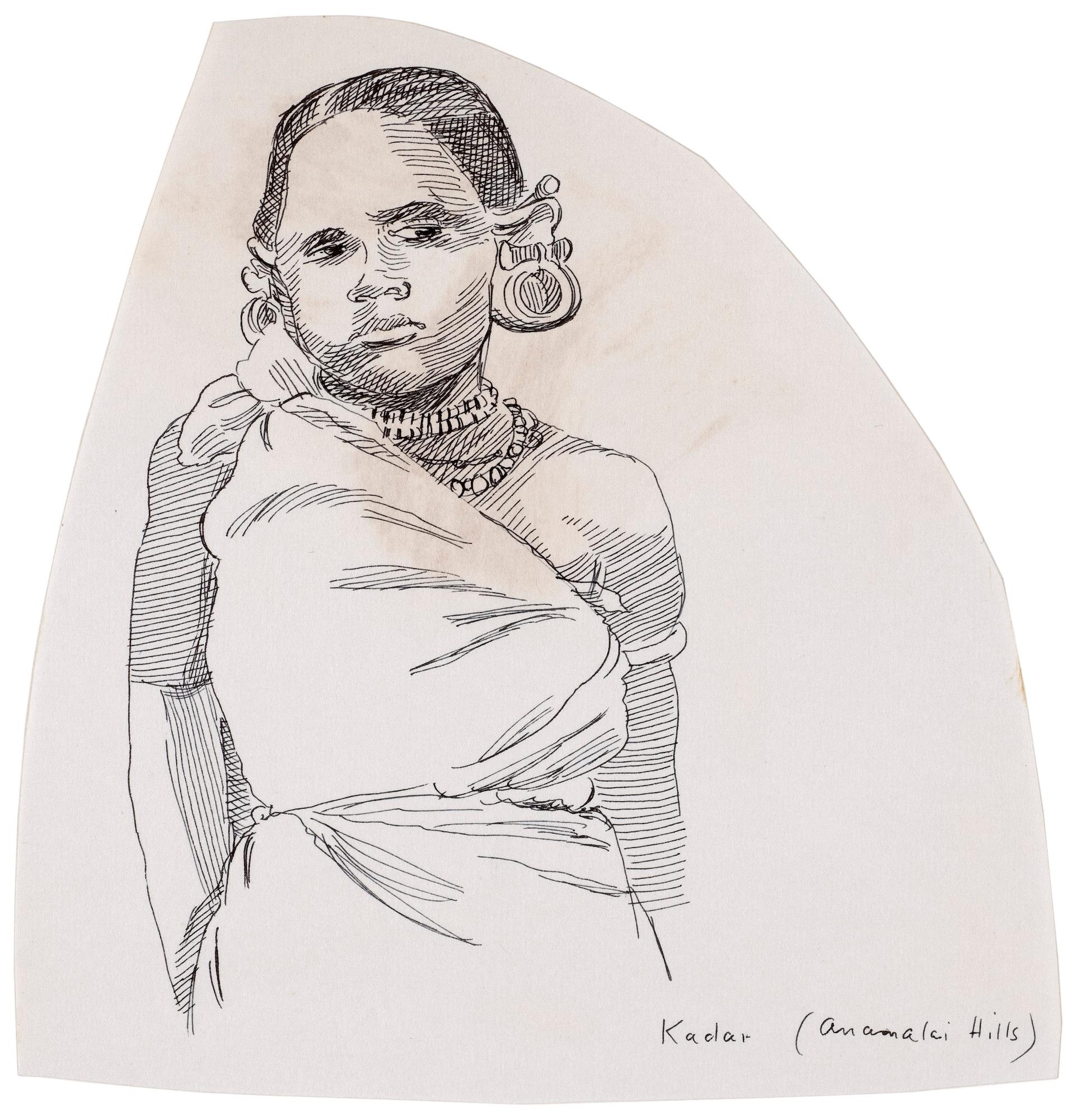
Jacqueline Ayer, Untitled (Married woman from the Anamalai hills, Kadar), c. 1973
Jacqueline Ayer (1930–2012) had a career that spanned many creative fields. She began as a fashion illustrator, and later turned her hand to children’s books, textiles and garments, as she worked in New York, Paris, London, Bangkok, Hong Kong and across India. This drawing was used as one of the final illustrations printed in Ayer's publication Oriental* Costume (1974). *The term ‘oriental’ has colonial and racist origins. It was established during a period when European powers took political control of other countries and defined non-European cultures as ‘inferior’ to their own. ‘Oriental’ was commonly used in English-speaking countries until the late 20th century to group together people, culture and places in Northern Africa, East Asia and Southeast Asia, as well as objects thought to have originated in these areas. The term has been widely rejected today as it exoticizes and ‘others’ these diverse cultures. Ayer used the term here to collectively refer to modes of dress from Cambodia, China, Japan, Mongolia, Nepal, Thailand and Tibet.
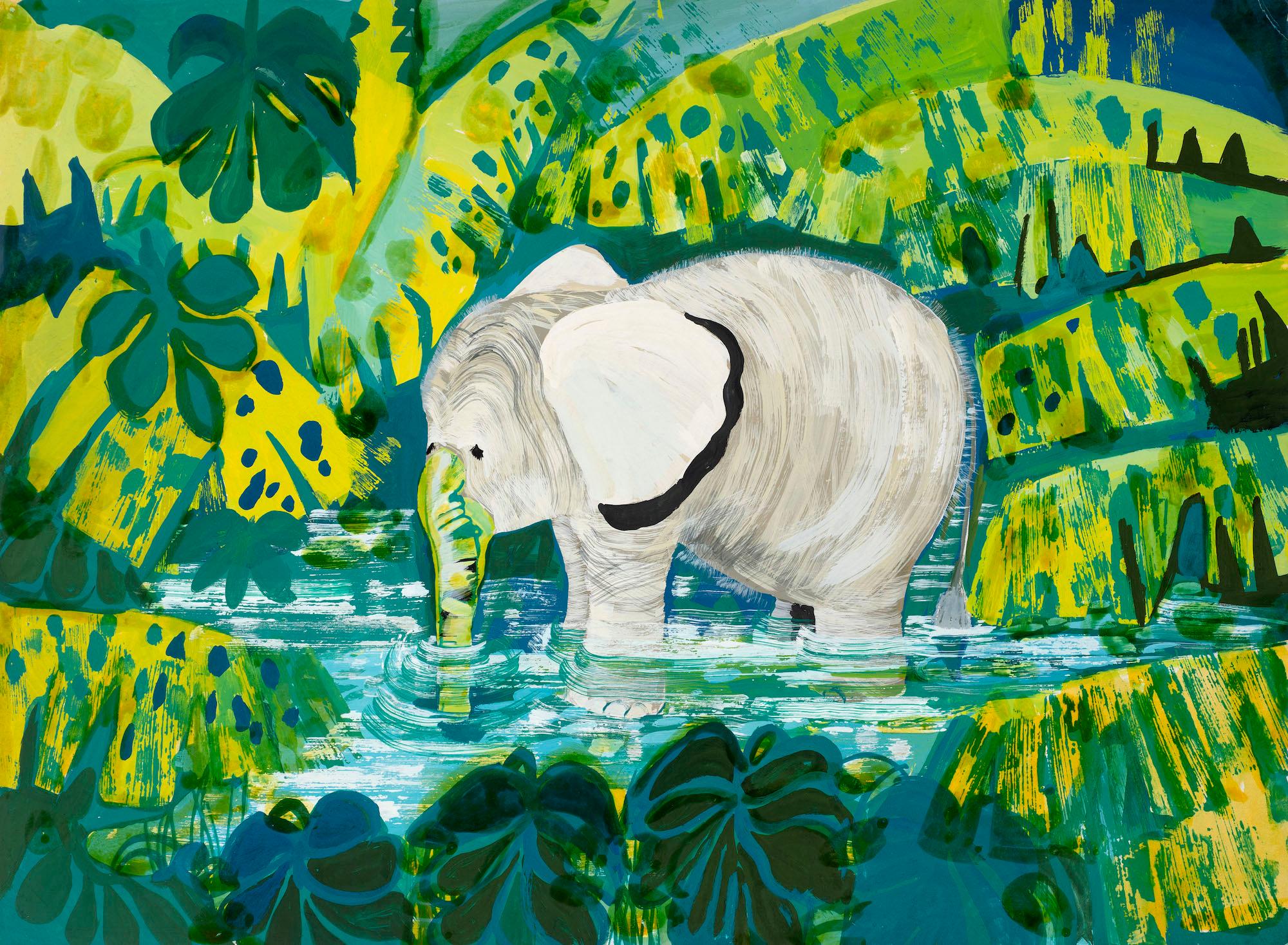
Untitled illustration for Jackanory (Just So Stories: The Elephant's Child), 1973
Janina Ede (1937-2018) created covers and illustrations for over 100 books in the 1960s, 70s and 80s. Many of her illustrations feature animals, which she drew from life. In the 1970s, Ede was commissioned to create large colourful illustrations for the BBC children’s television series, Jackanory. Each episode was dedicated to a story read by an actor, while specially commissioned illustrations were shown on screen during each programme. Some of these illustrations were for programmes featuring stories by author Rudyard Kipling. His ‘Just So’ stories were short tales that imagined how various animals attained their distinguishing features. Kipling set the stories in parts of India, West Asia and Africa. His descriptions of places and people included racist and exoticised stereotypes. Ede’s illustrations draw extensively on Kipling’s descriptions, and therefore reflect the racism in his work, as well as the prevailing stereotypical views that existed in 1970s Britain. Her own personal views are not documented. This storyboard illustration was produced by Janina Ede for Jackanory episode #1450, 'Just So Stories - The Elephant's Child'. It aired on 1 January 1973.
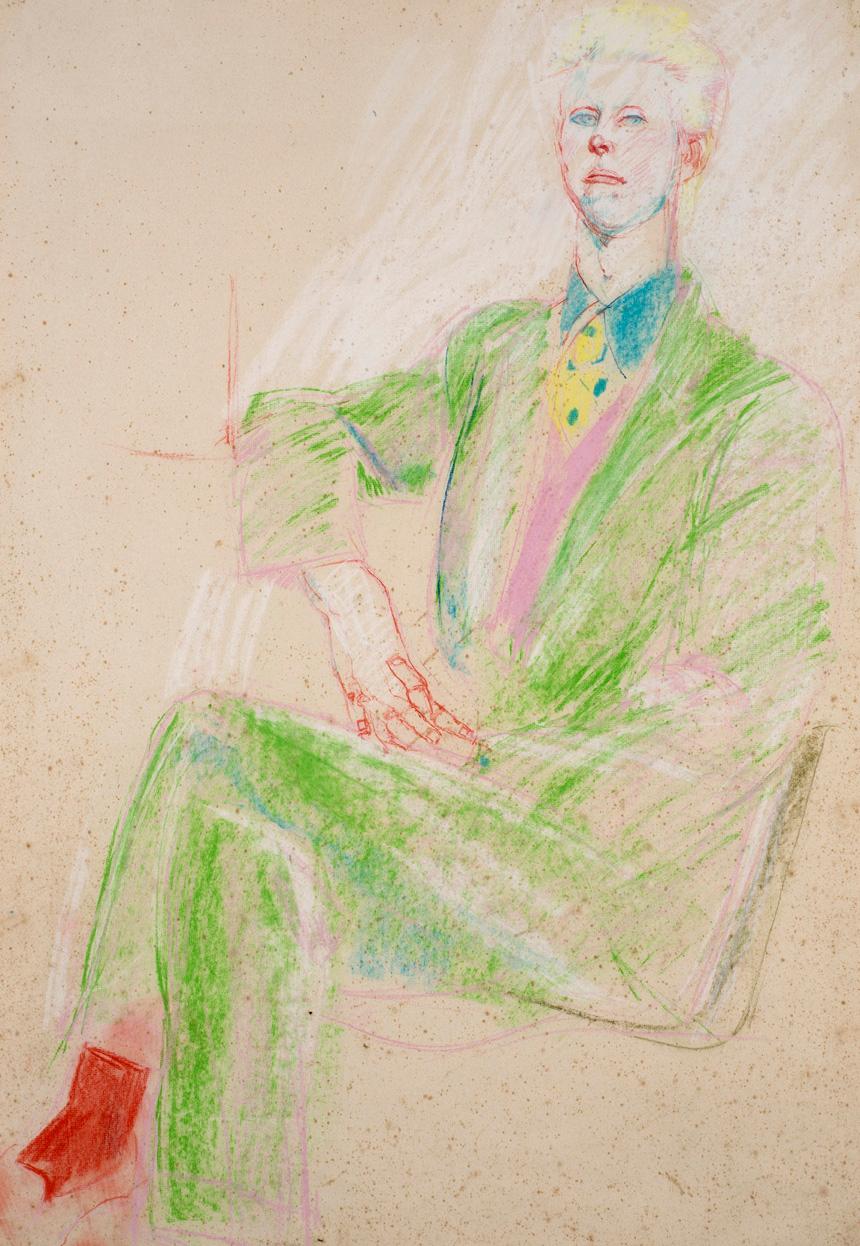
Jo Brocklehurst, Man in a Green Suit (portrait of James ‘Biddie’ Biddlecombe), 1979
Jo (Josephine) Brocklehurst (1935 - 2006) studied at Central Saint Martins and began her career as a fashion illustrator. She later focused on portraiture, drawing directly from models at her studio in West Hampstead and in nightclubs and theatres in Berlin, London and New York. Her work documents the alternative subcultures of the 1970s, 80s and 90s that went on to shape mainstream fashion and performance scenes. Man in a Green Suit is a portrait of performer James ‘Biddie’ Biddlecombe around the time he was performing cabaret at London’s Blitz Club with Eve Ferret. In 1980 it was shown in the ICA exhibition Women’s Images of Men.
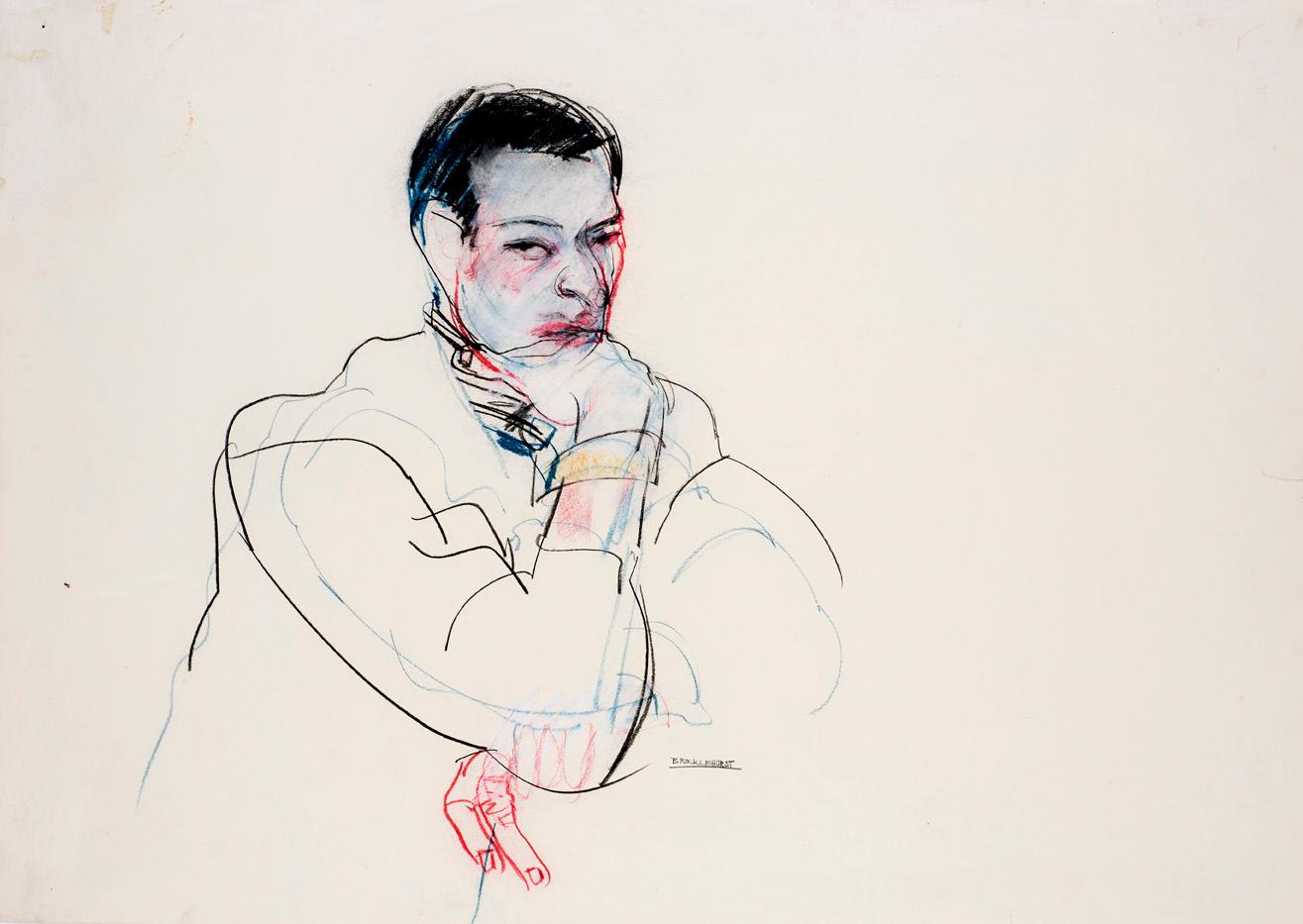
Jo Brocklehurst, Untitled (Portrait of Colin Swift), c.1976
Jo (Josephine) Brocklehurst (1935 - 2006) studied at Central Saint Martins and began her career as a fashion illustrator. She later focused on portraiture, drawing directly from models at her studio in West Hampstead and in nightclubs and theatres in Berlin, London and New York. Her work documents the alternative subcultures of the 1970s, 80s and 90s that went on to shape mainstream fashion and performance scenes.
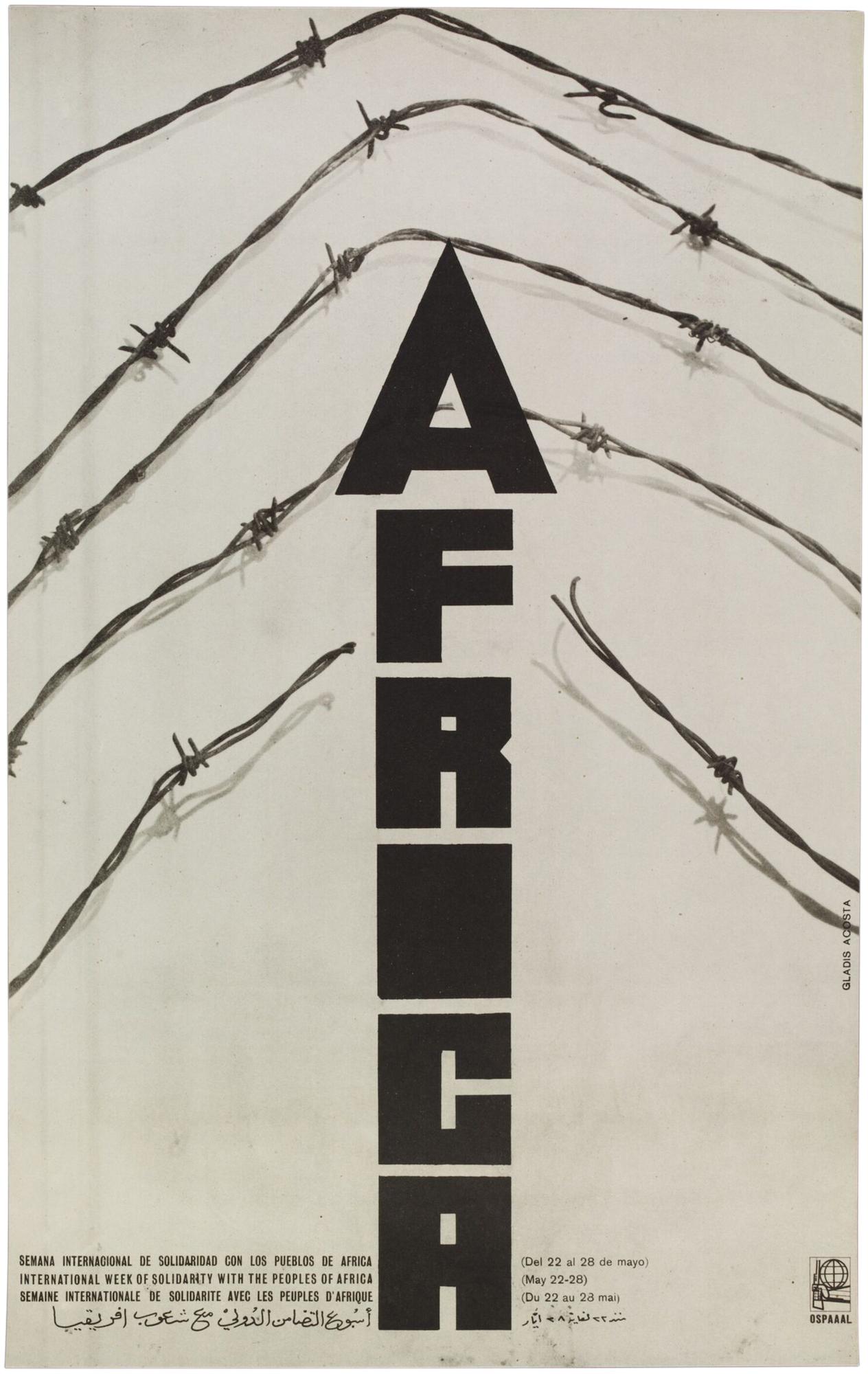
AFRICA - INTERNATIONAL WEEK OF SOLIDARITY WITH THE PEOPLES OF AFRICA (May 22-28), 1970
Between the 1960s and 1990s, more than fifty designers worked at OSPAAAL (the Organisation of Solidarity with the People of Africa, Asia and Latin America). Based in Cuba, they made magazines and posters that were sent around the world. Their aim was to promote radical political ideas. Many of their posters celebrate socialist revolutions and liberation movements from the Global South. This poster was issued in support of independent African nations and liberation movements, coinciding with Africa Liberation Day.
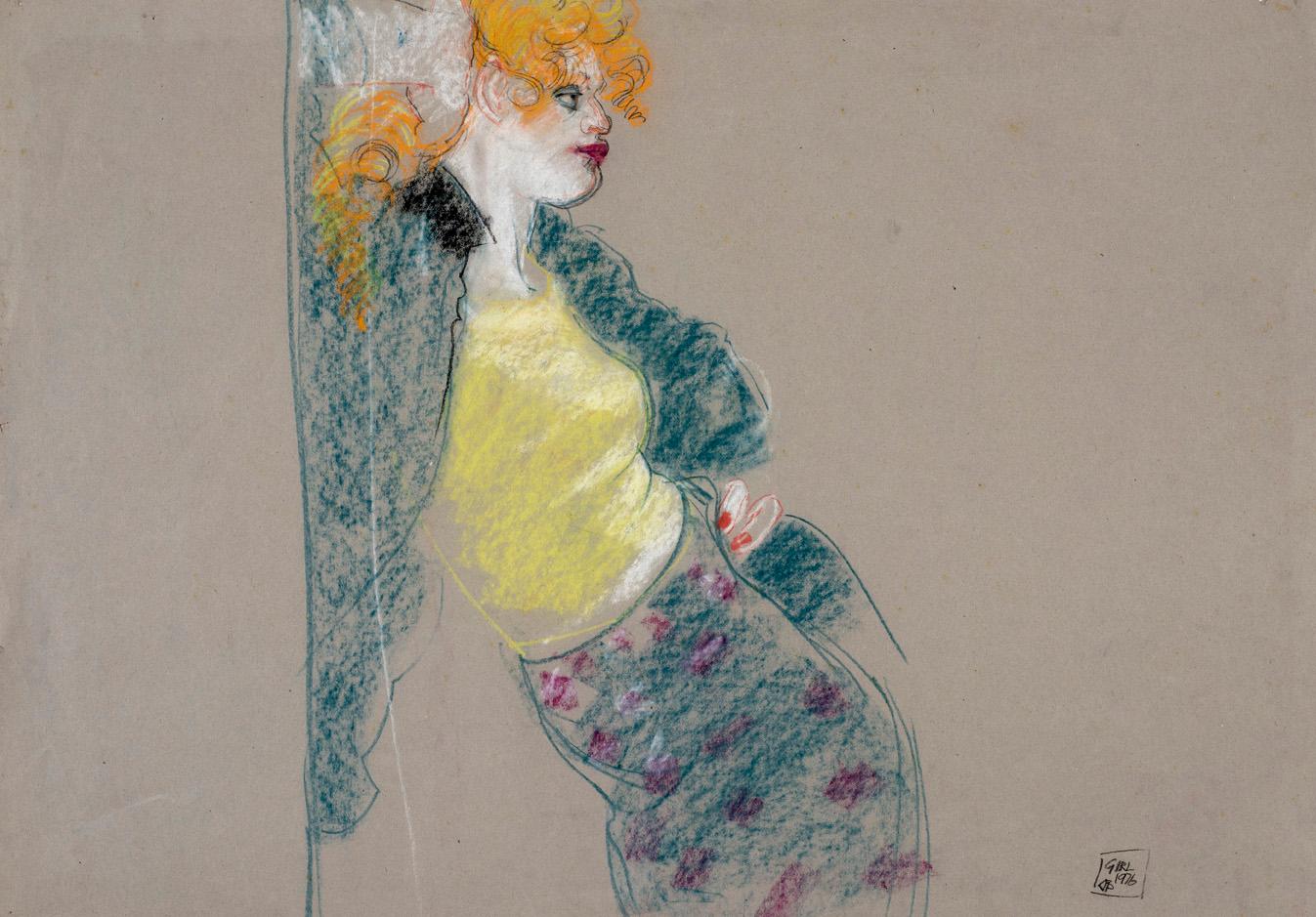
Jo Brocklehurst, Girl, 1976
Jo (Josephine) Brocklehurst (1935 - 2006) studied at Central Saint Martins and began her career as a fashion illustrator. She later focused on portraiture, drawing directly from models at her studio in West Hampstead and in nightclubs and theatres in Berlin, London and New York. Her work documents the alternative subcultures of the 1970s, 80s and 90s that went on to shape mainstream fashion and performance scenes.
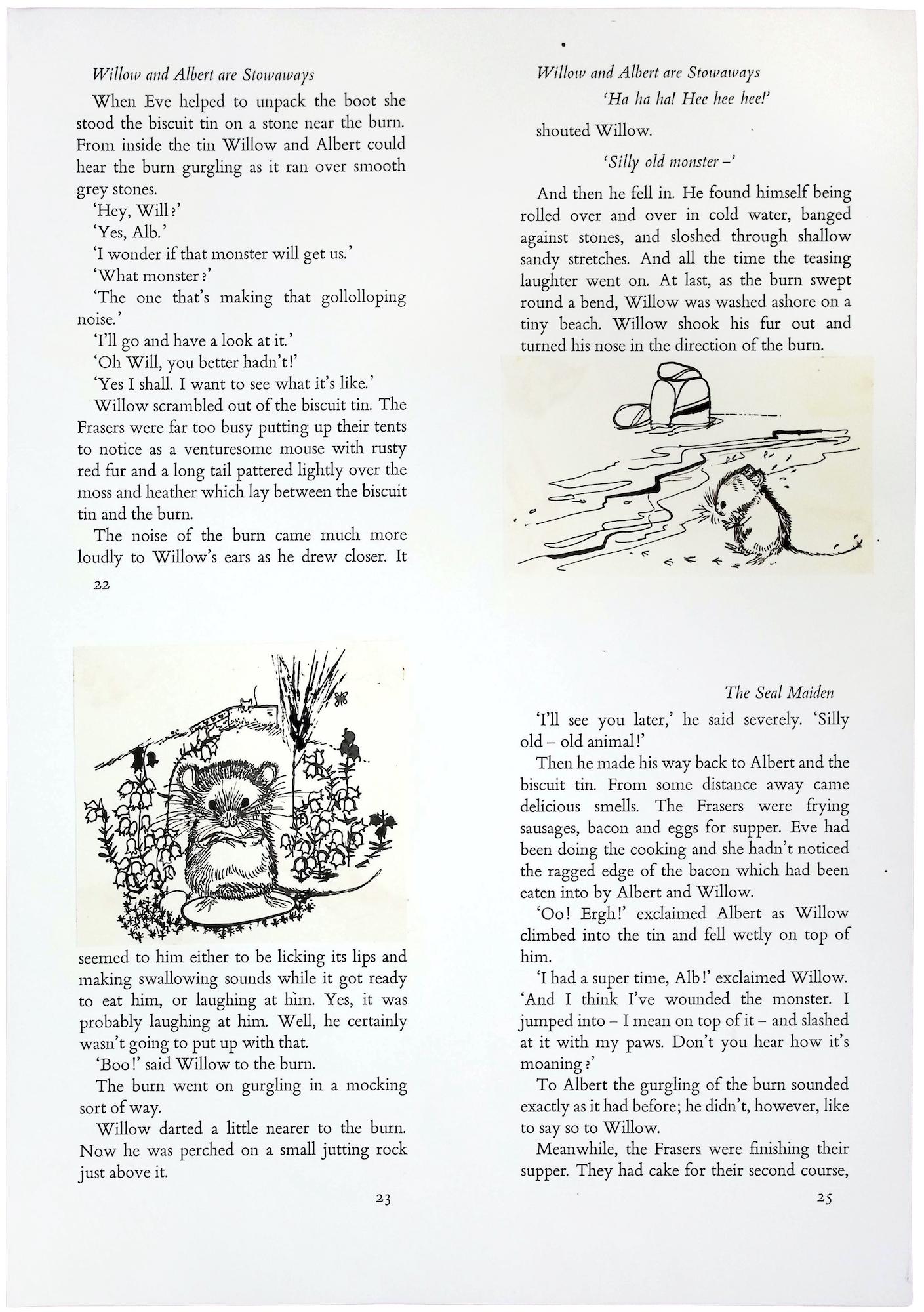
Layout proof for Willow and Albert are Stowaways, c. 1970
British illustrator Janina Ede (1937-2018) created covers and illustrations for over 100 books from the 1950s to the 1980s. Many of her illustrations feature animals, which she drew from life.
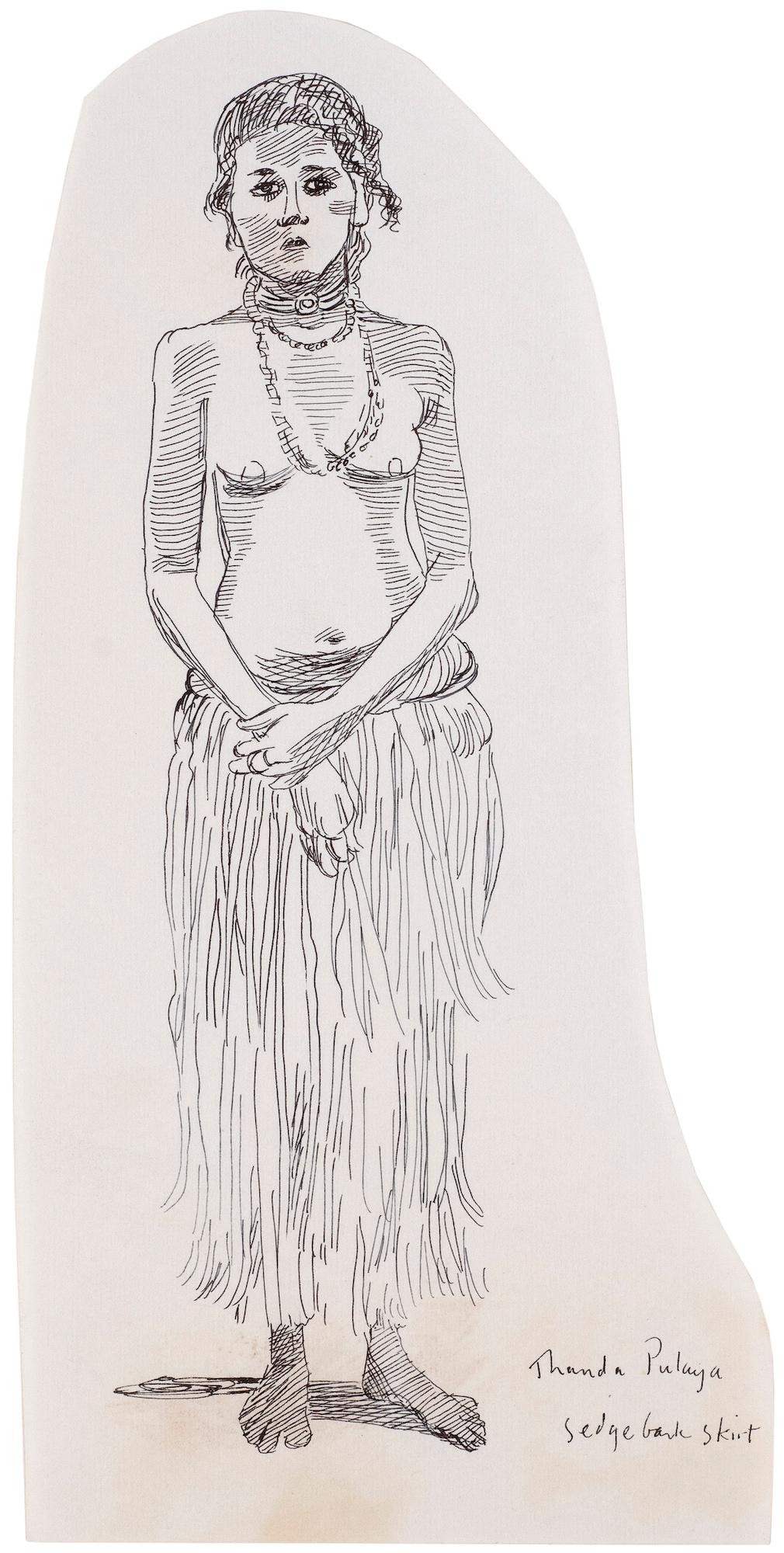
Jacqueline Ayer, Untitled (Thanda Pulaya, young woman in a sedgebark skirt), c. 1973
Jacqueline Ayer (1930–2012) had a career that spanned many creative fields. She began as a fashion illustrator, and later turned her hand to children’s books, textiles and garments, as she worked in New York, Paris, London, Bangkok, Hong Kong and across India. This drawing was used as one of the final illustrations printed in Ayer's publication Oriental* Costume (1974). *The term ‘oriental’ has colonial and racist origins. It was established during a period when European powers took political control of other countries and defined non-European cultures as ‘inferior’ to their own. ‘Oriental’ was commonly used in English-speaking countries until the late 20th century to group together people, culture and places in Northern Africa, East Asia and Southeast Asia, as well as objects thought to have originated in these areas. The term has been widely rejected today as it exoticizes and ‘others’ these diverse cultures. Ayer used the term here to collectively refer to modes of dress from Cambodia, China, Japan, Mongolia, Nepal, Thailand and Tibet.
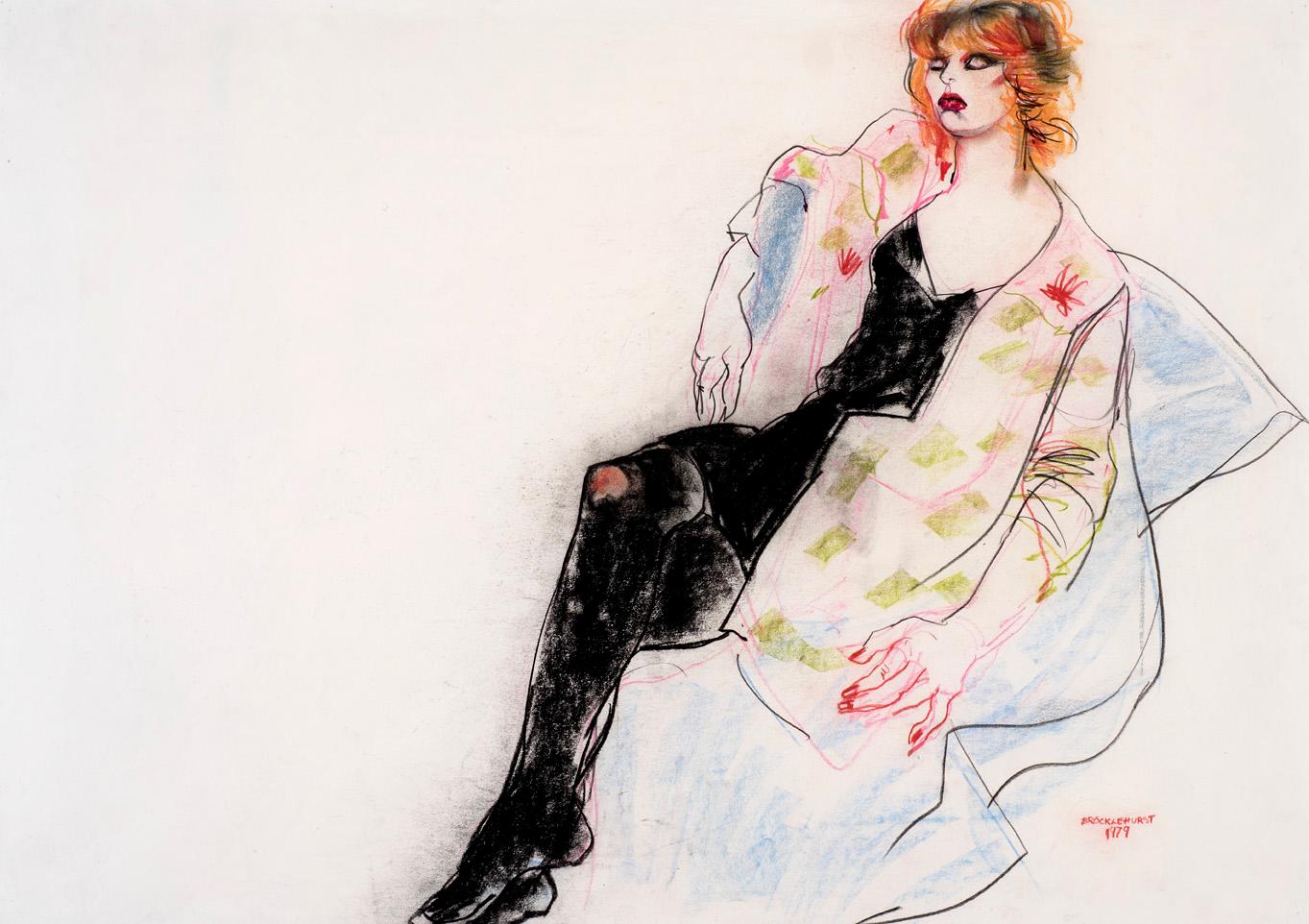
Jo Brocklehurst, Untitled, 1979
Jo (Josephine) Brocklehurst (1935 - 2006) studied at Central Saint Martins and began her career as a fashion illustrator. She later focused on portraiture, drawing directly from models at her studio in West Hampstead and in nightclubs and theatres in Berlin, London and New York. Her work documents the alternative subcultures of the 1970s, 80s and 90s that went on to shape mainstream fashion and performance scenes.
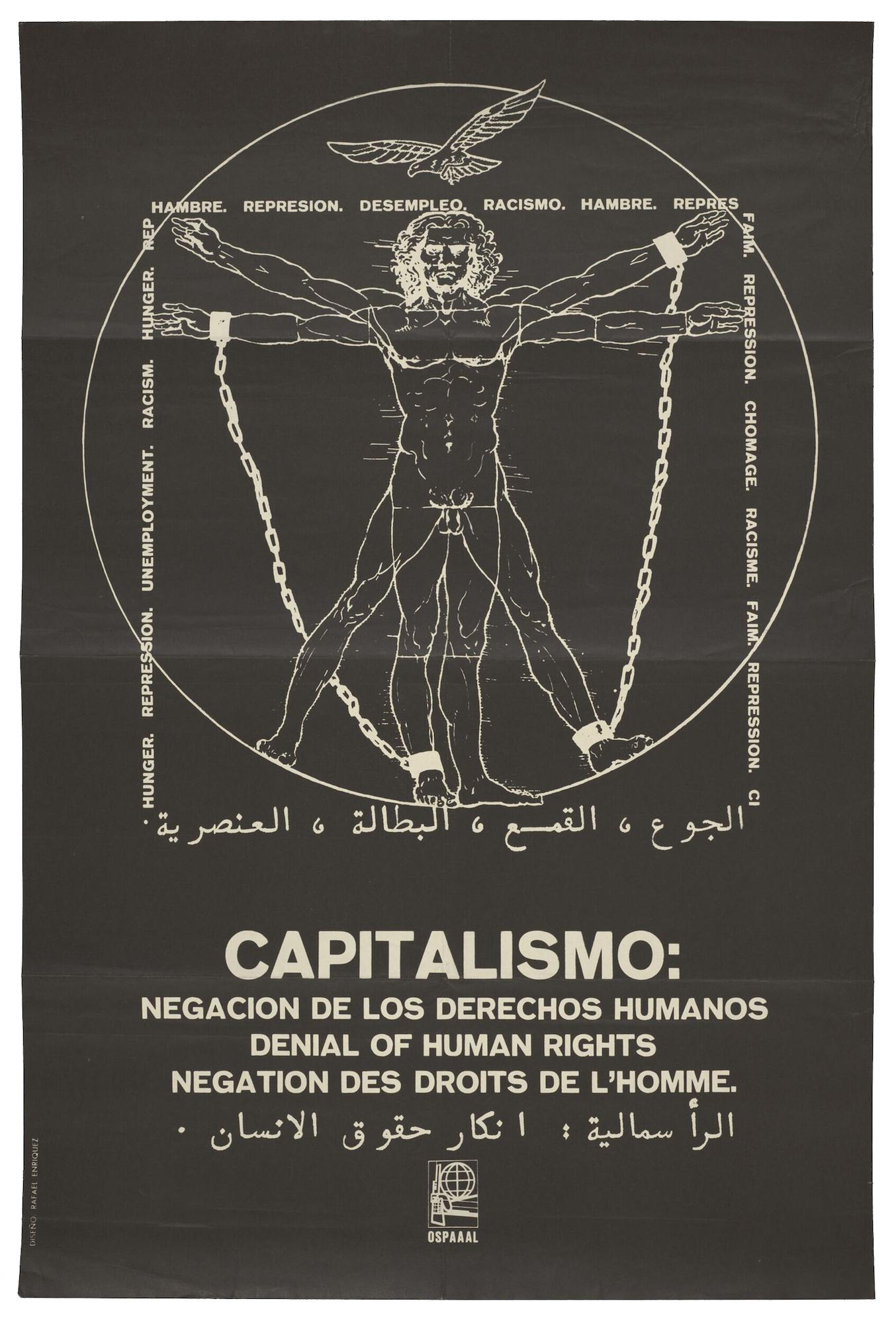
CAPITALISM: DENIAL OF HUMAN RIGHTS, 1977
Between the 1960s and 1990s, more than fifty designers worked at OSPAAAL (the Organisation of Solidarity with the People of Africa, Asia and Latin America). Based in Cuba, they made magazines and posters that were sent around the world. Their aim was to promote radical political ideas. Many of their posters celebrate socialist revolutions and liberation movements from the Global South. From 1977 onwards, Rafael Enríquez Vega was creative director at OSPAAAL and a prolific poster designer. For this design he used Leonardo da Vinci’s illustration of the Vitruvian Man, adding chains to represent the idea that capitalism enslaves people.
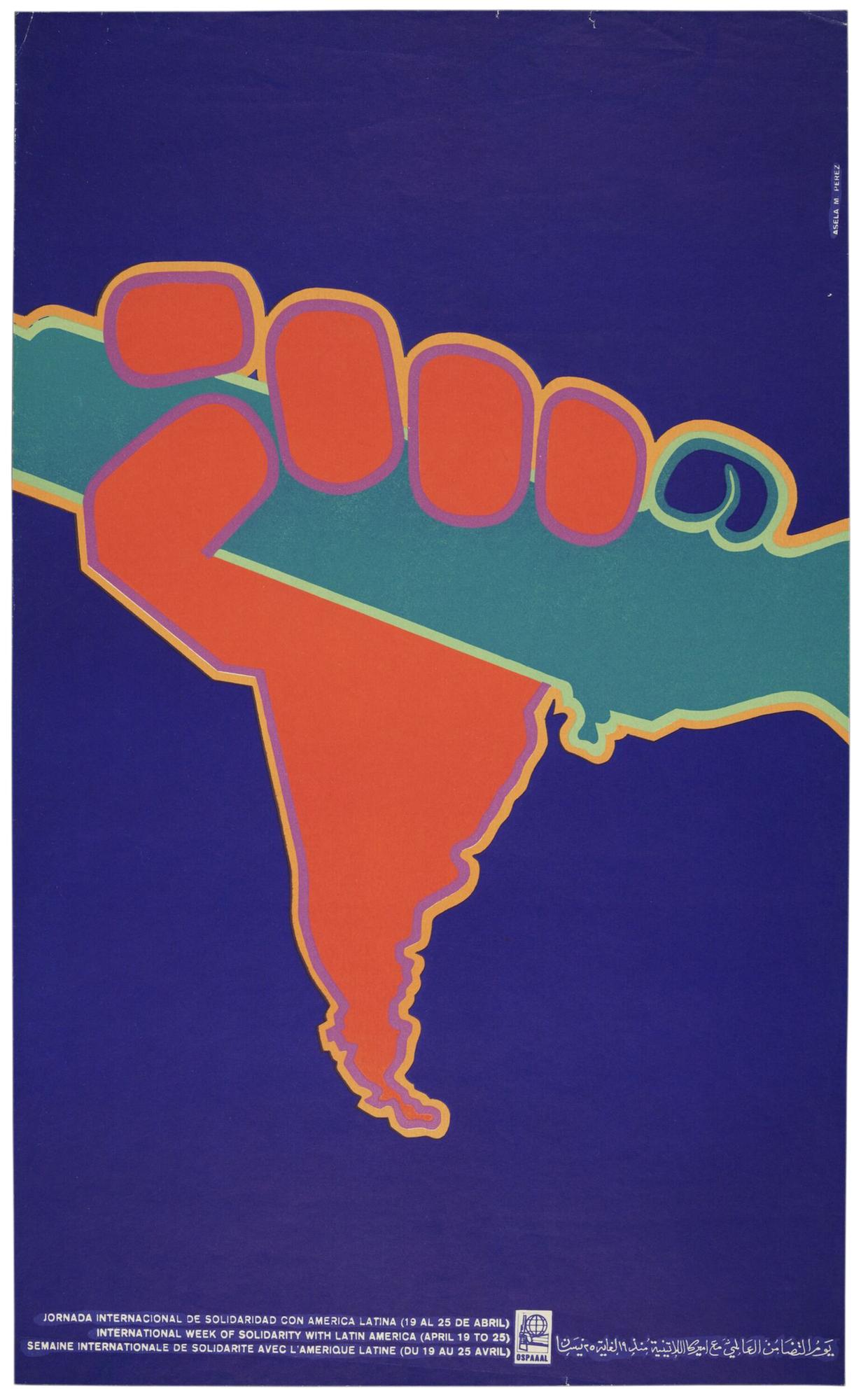
INTERNATIONAL WEEK OF SOLIDARITY WITH LATIN AMERICA (APRIL 19 TO 25), 1970
Between the 1960s and 1990s, more than fifty designers worked at OSPAAAL (the Organisation of Solidarity with the People of Africa, Asia and Latin America). Based in Cuba, they made magazines and posters that were sent around the world. Their aim was to promote radical political ideas. Many of their posters celebrate socialist revolutions and liberation movements from the Global South.
Content warning: weaponry
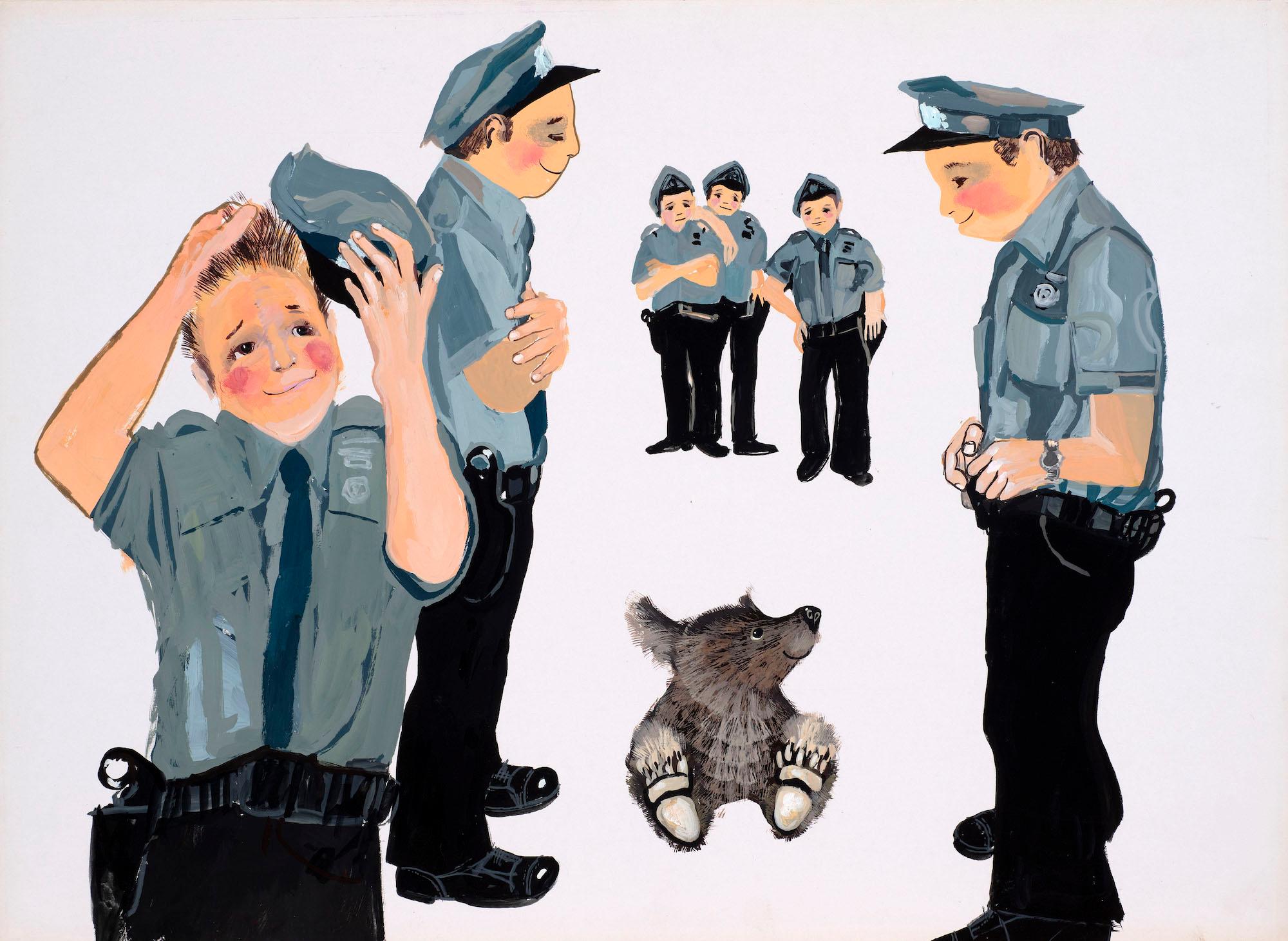
Untitled illustration for Jackanory (Mary Plain Goes to America) , 1972
British illustrator Janina Ede (1937-2018) created covers and illustrations for over 100 books from the 1950s to the 1980s. In the 1970s, she made illustrations for Jackanory, a BBC television programme. During each episode, an actor read a story, while specially-commissioned illustrations were shown on screen. For the televised version of Mary Plain Goes to America, Ede created paintings on large boards. These allowed the camera to pan across her image, showing a little at a time. BBC1 had only been in colour for three years, and so Ede used bold colours painted in gouache and reflective collaged foil to make the most of the new technology. This storyboard illustration was produced by Janina Ede for Jackanory episode #1427, 'Mary Plain Goes to America: Part 2 - The Most Popular Person on Board'. It aired on 14 November 1972.
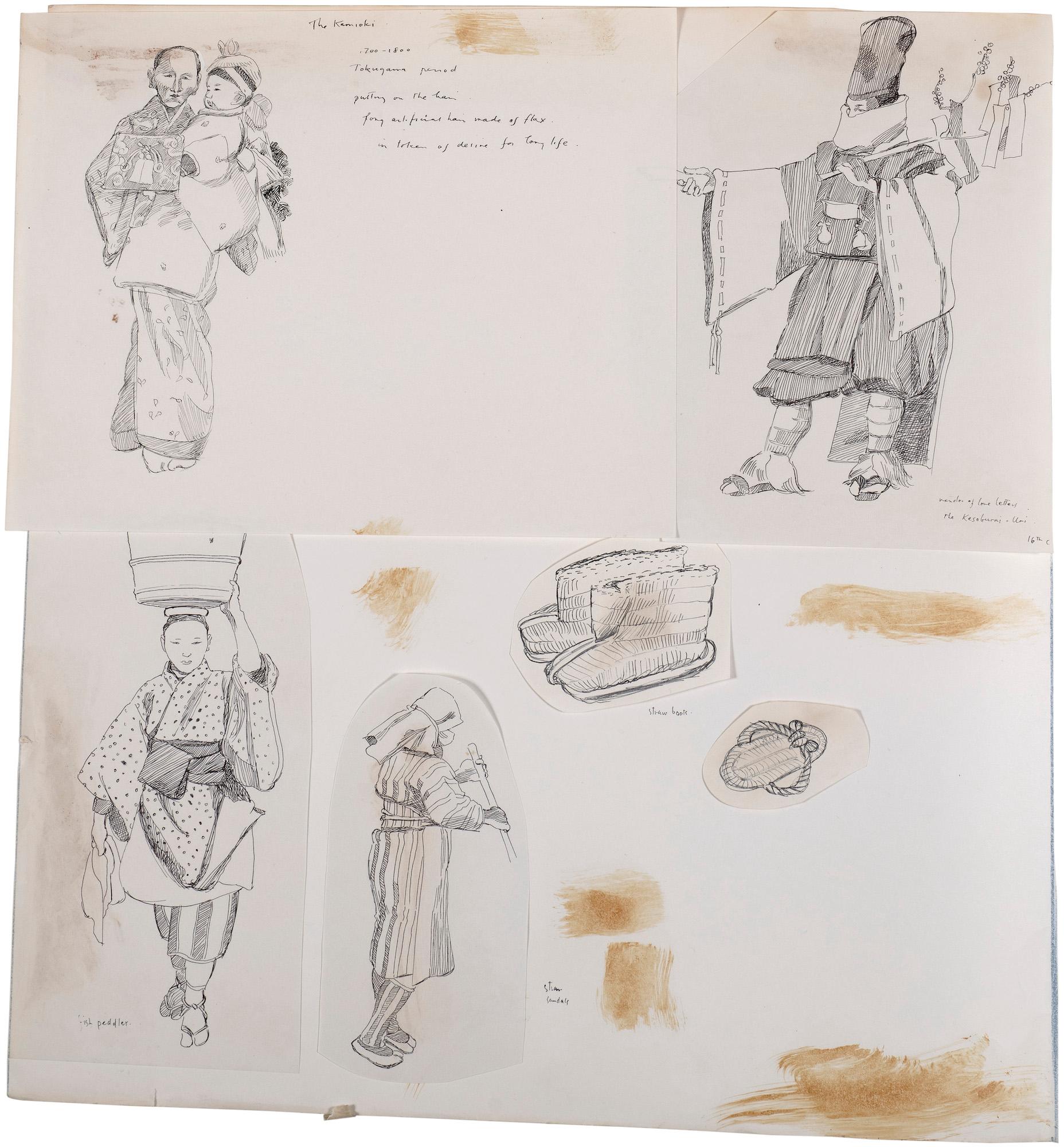
Jacqueline Ayer, Untitled (various clothing, Japan), c. 1973
Jacqueline Ayer (1930–2012) had a career that spanned many creative fields. She began as a fashion illustrator, and later turned her hand to children’s books, textiles and garments, as she worked in New York, Paris, London, Bangkok, Hong Kong and across India. These drawings were used as some of the final illustrations printed in Ayer's publication Oriental* Costume (1974). Descriptions from top left, clockwise: Grandmother and child. 19th century; Vendor of love letters, the 'Kasoburni-Uri', 16th century; Straw boots; Straw sandals; Fish pedlar, Iyo Ehime prefecture, contemporary. *The term ‘oriental’ has colonial and racist origins. It was established during a period when European powers took political control of other countries and defined non-European cultures as ‘inferior’ to their own. ‘Oriental’ was commonly used in English-speaking countries until the late 20th century to group together people, culture and places in Northern Africa, East Asia and Southeast Asia, as well as objects thought to have originated in these areas. The term has been widely rejected today as it exoticizes and ‘others’ these diverse cultures. Ayer used the term here to collectively refer to modes of dress from Cambodia, China, Japan, Mongolia, Nepal, Thailand and Tibet.
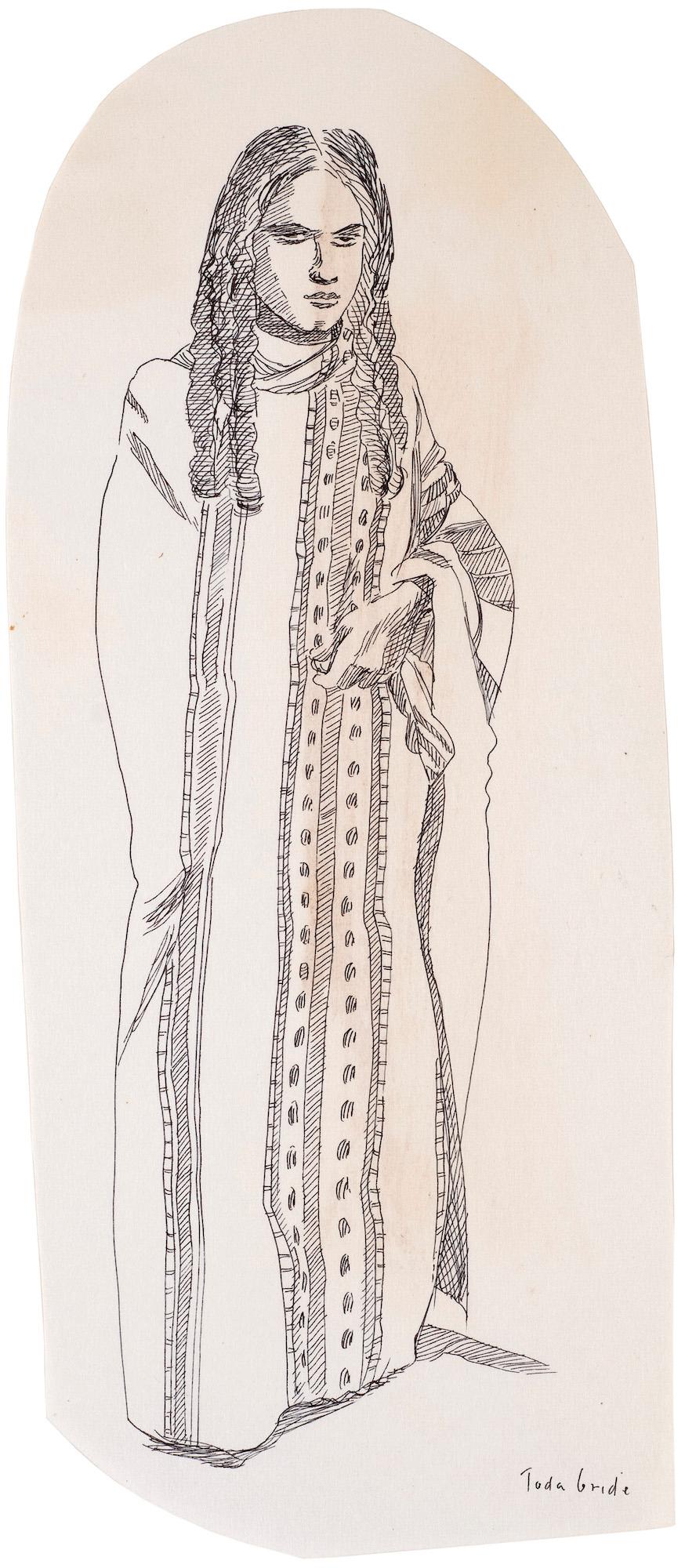
Jacqueline Ayer, Untitled (Toda bride), c. 1973
Jacqueline Ayer (1930–2012) had a career that spanned many creative fields. She began as a fashion illustrator, and later turned her hand to children’s books, textiles and garments, as she worked in New York, Paris, London, Bangkok, Hong Kong and across India. This drawing was used as one of the final illustrations printed in Ayer's publication Oriental* Costume (1974). *The term ‘oriental’ has colonial and racist origins. It was established during a period when European powers took political control of other countries and defined non-European cultures as ‘inferior’ to their own. ‘Oriental’ was commonly used in English-speaking countries until the late 20th century to group together people, culture and places in Northern Africa, East Asia and Southeast Asia, as well as objects thought to have originated in these areas. The term has been widely rejected today as it exoticizes and ‘others’ these diverse cultures. Ayer used the term here to collectively refer to modes of dress from Cambodia, China, Japan, Mongolia, Nepal, Thailand and Tibet.
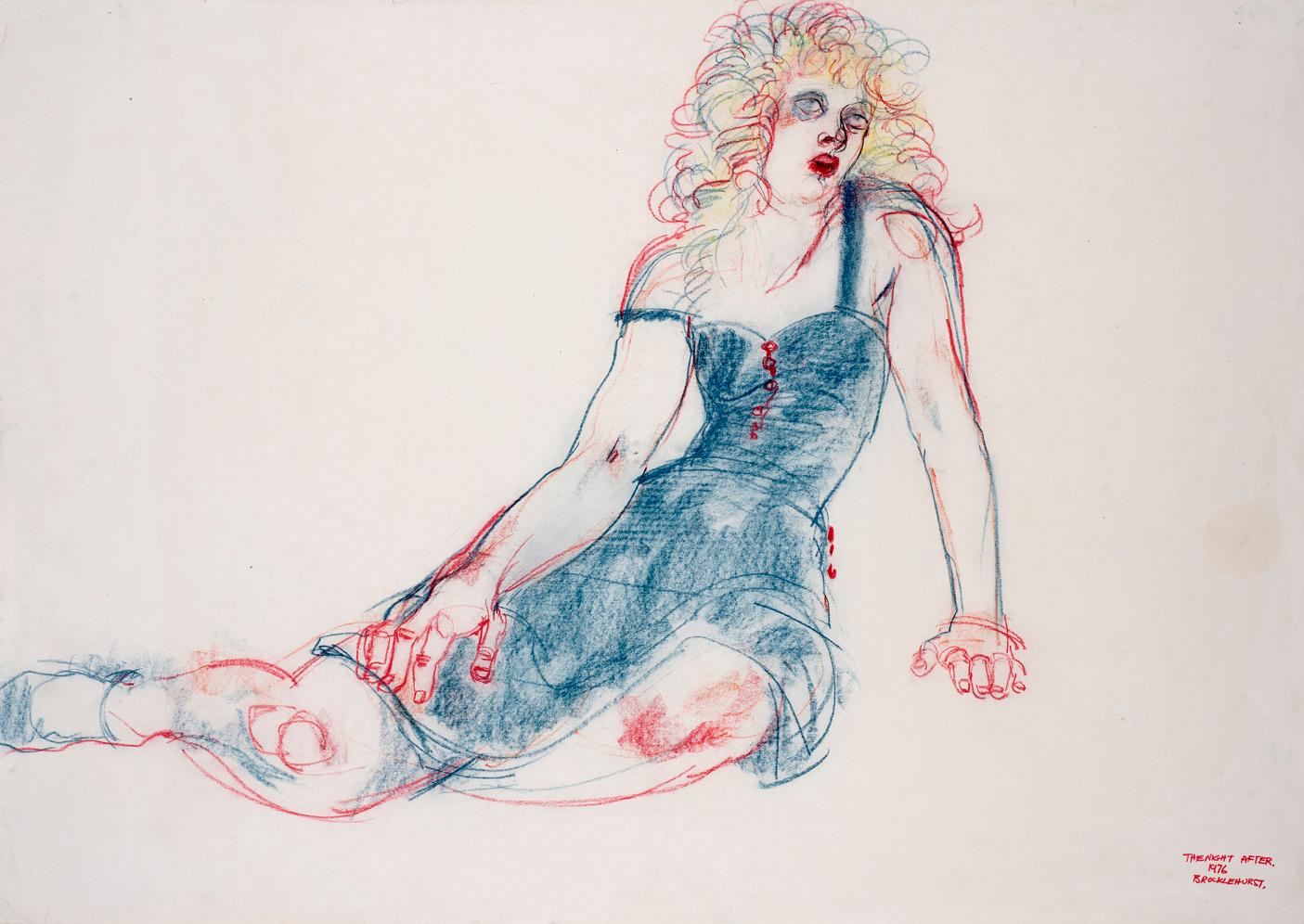
Jo Brocklehurst, The Night After, 1976
Jo (Josephine) Brocklehurst (1935 - 2006) studied at Central Saint Martins and began her career as a fashion illustrator. She later focused on portraiture, drawing directly from models at her studio in West Hampstead and in nightclubs and theatres in Berlin, London and New York. Her work documents the alternative subcultures of the 1970s, 80s and 90s that went on to shape mainstream fashion and performance scenes.
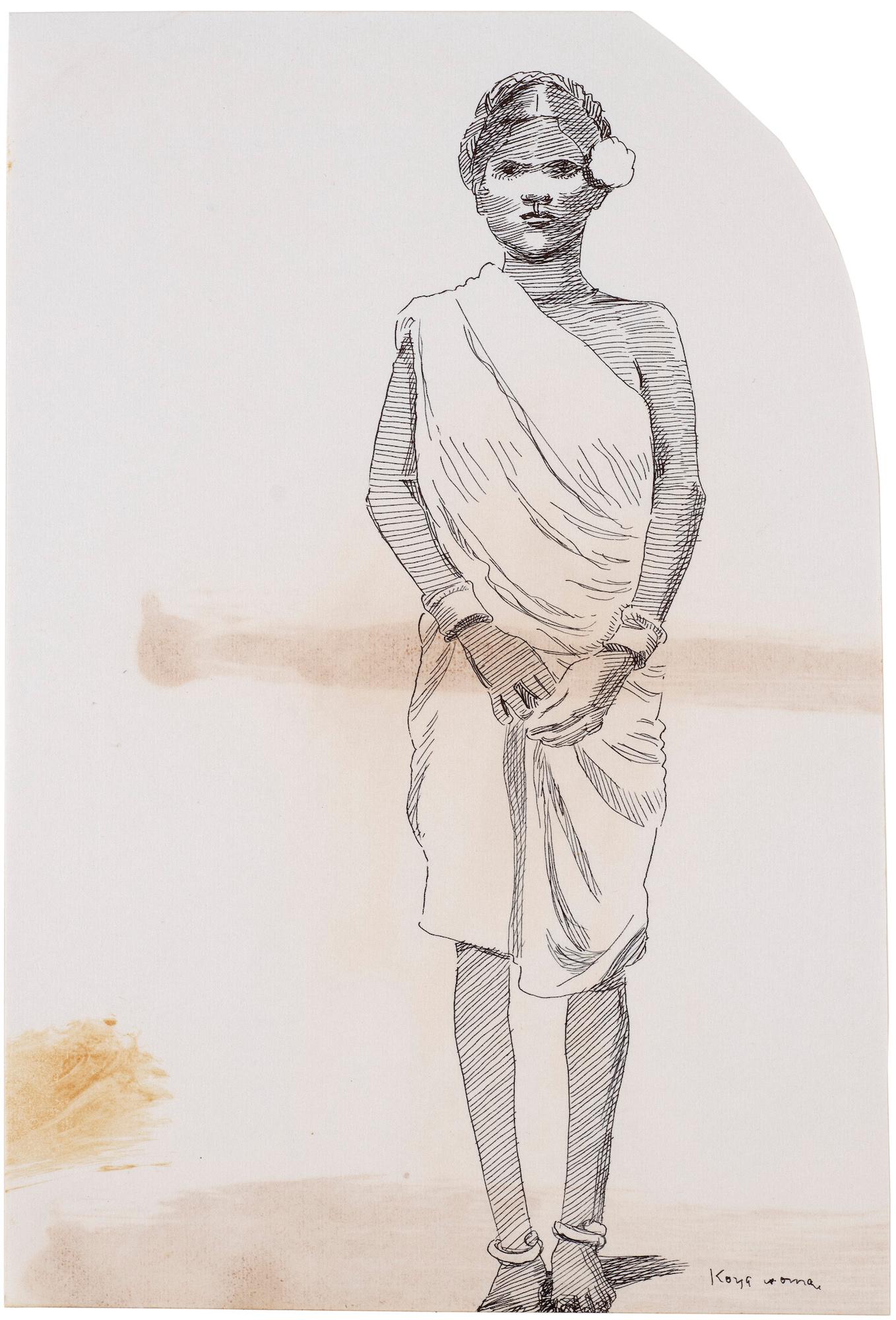
Jacqueline Ayer, Untitled (Koya woman), c. 1973
Jacqueline Ayer (1930–2012) had a career that spanned many creative fields. She began as a fashion illustrator, and later turned her hand to children’s books, textiles and garments, as she worked in New York, Paris, London, Bangkok, Hong Kong and across India. This drawing was used as one of the final illustrations printed in Ayer's publication Oriental* Costume (1974). *The term ‘oriental’ has colonial and racist origins. It was established during a period when European powers took political control of other countries and defined non-European cultures as ‘inferior’ to their own. ‘Oriental’ was commonly used in English-speaking countries until the late 20th century to group together people, culture and places in Northern Africa, East Asia and Southeast Asia, as well as objects thought to have originated in these areas. The term has been widely rejected today as it exoticizes and ‘others’ these diverse cultures. Ayer used the term here to collectively refer to modes of dress from Cambodia, China, Japan, Mongolia, Nepal, Thailand and Tibet.
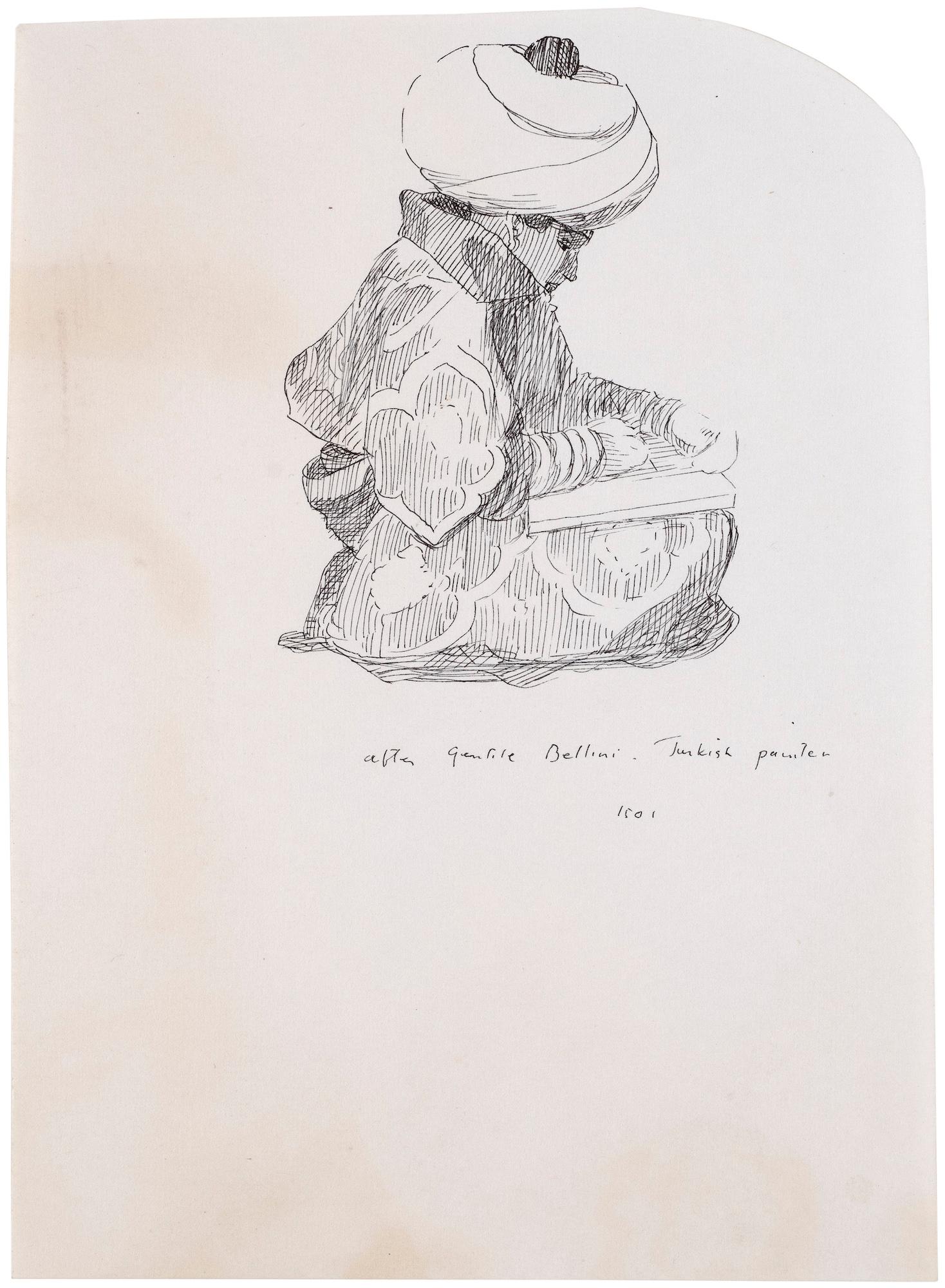
Jacqueline Ayer, Untitled (Turkish caftan, Turkey, 1501), c. 1973
Jacqueline Ayer (1930–2012) had a career that spanned many creative fields. She began as a fashion illustrator, and later turned her hand to children’s books, textiles and garments, as she worked in New York, Paris, London, Bangkok, Hong Kong and across India. This drawing was used as one of the final illustrations printed in Ayer's publication Oriental* Costume (1974). *The term ‘oriental’ has colonial and racist origins. It was established during a period when European powers took political control of other countries and defined non-European cultures as ‘inferior’ to their own. ‘Oriental’ was commonly used in English-speaking countries until the late 20th century to group together people, culture and places in Northern Africa, East Asia and Southeast Asia, as well as objects thought to have originated in these areas. The term has been widely rejected today as it exoticizes and ‘others’ these diverse cultures. Ayer used the term here to collectively refer to modes of dress from Cambodia, China, Japan, Mongolia, Nepal, Thailand and Tibet.
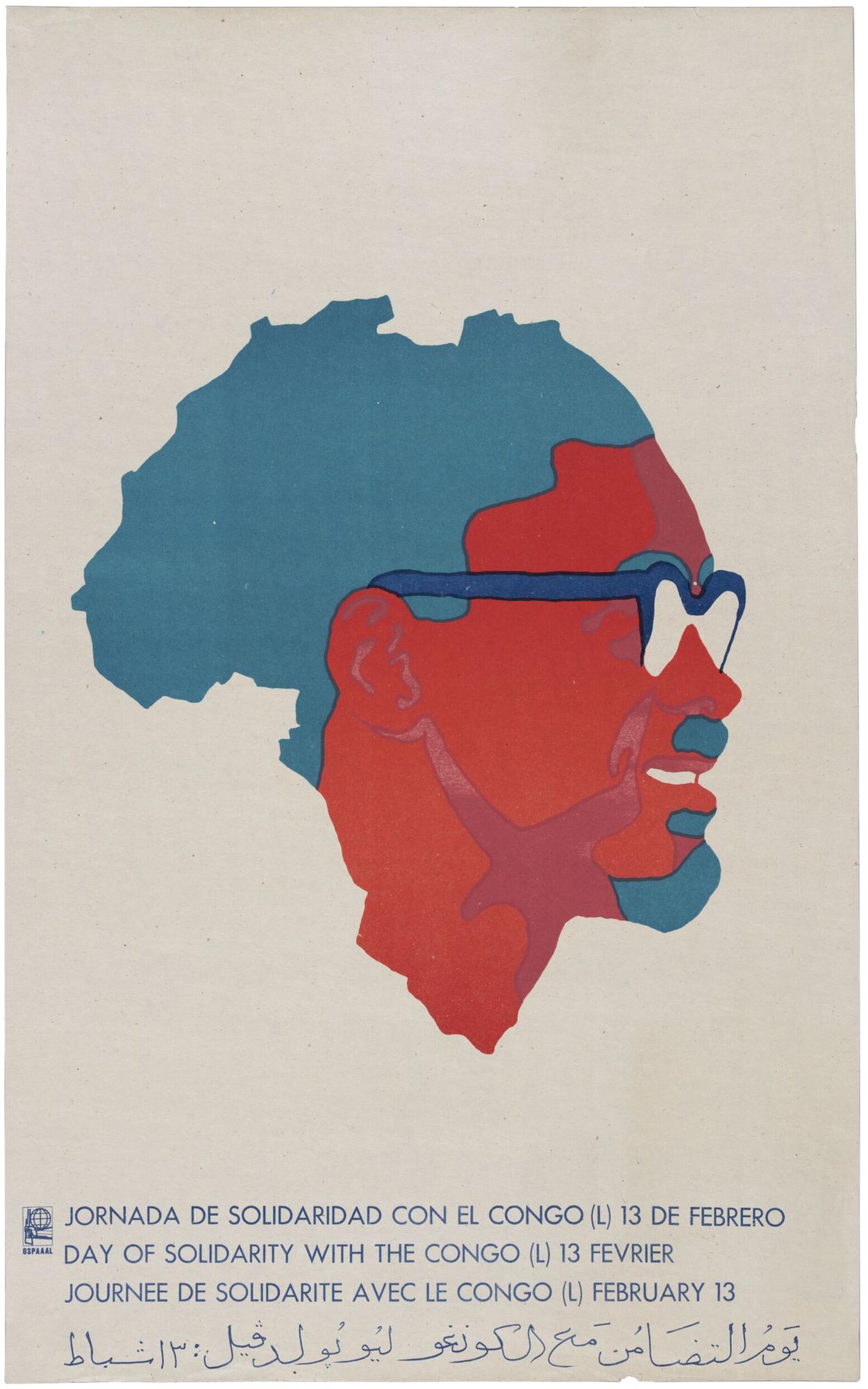
DAY OF SOLIDARITY WITH THE CONGO (L) FEBRUARY 13, 1972
Between the 1960s and 1990s, more than fifty designers worked at OSPAAAL (the Organisation of Solidarity with the People of Africa, Asia and Latin America). Based in Cuba, they made magazines and posters that were sent around the world. Their aim was to promote radical political ideas. Many of their posters celebrate socialist revolutions and liberation movements from the Global South. Patrice Lumumba was the first Prime Minister of the Democratic Republic of the Congo, following the country’s independence from Belgian colonial rule. This poster promotes a day of solidarity with the country on the date that Lumumba’s assassination was announced. It combines Lumumba’s profile with an outline of the African continent to recognise his role as a leader in the Pan-African movement.
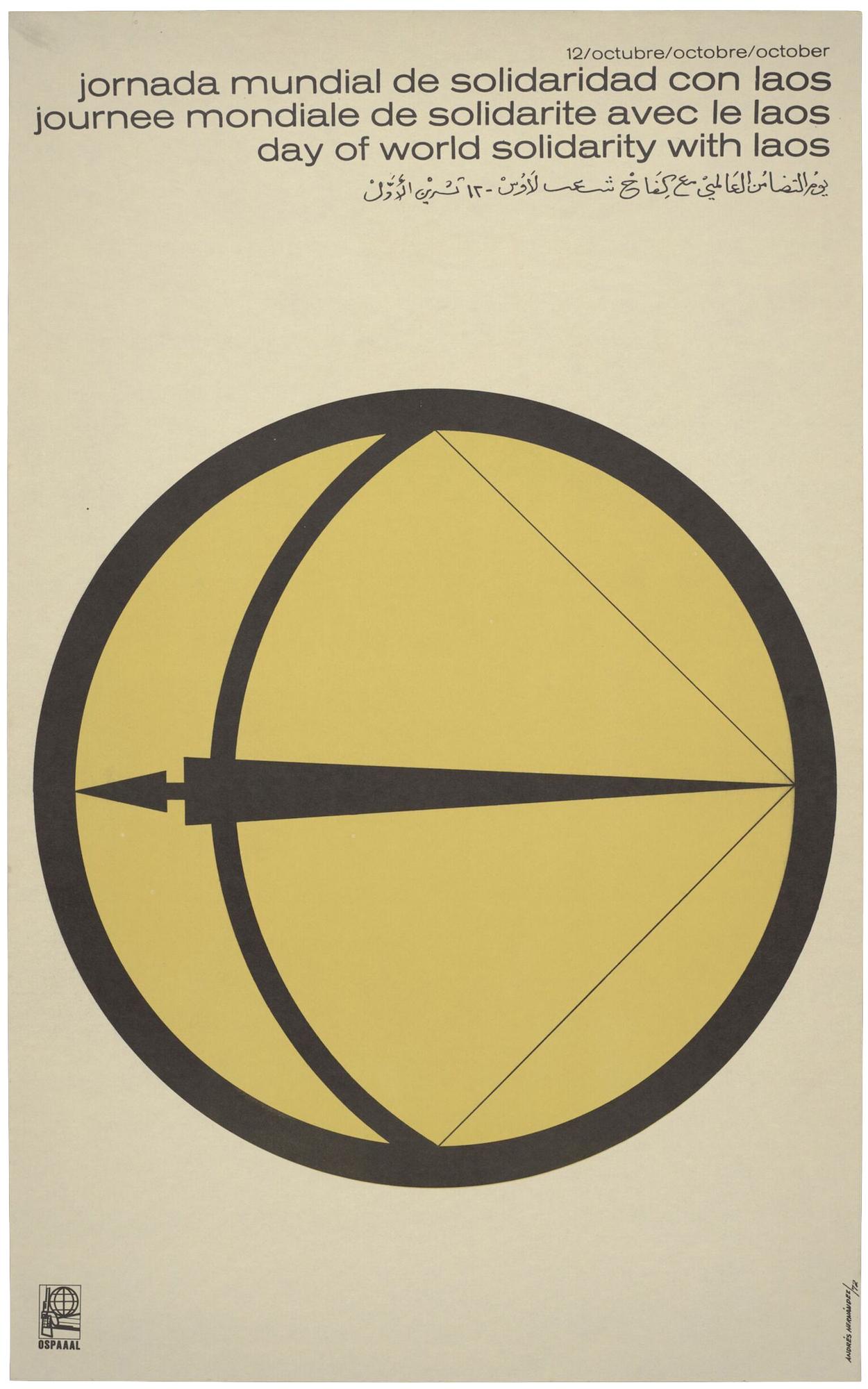
12 october - day of world solidarity with laos, 1972
Between the 1960s and 1990s, more than fifty designers worked at OSPAAAL. Based in Cuba, they made magazines and posters that were sent around the world. Their aim was to promote radical political ideas. Many of their posters celebrate socialist revolutions and liberation movements from the Global South. This design encouraged solidarity with Laotian people on the same date as the founding of the nationalist movement Lao Issara (‘Free Laos’) on 12 October 1945.
Content warning: weaponry
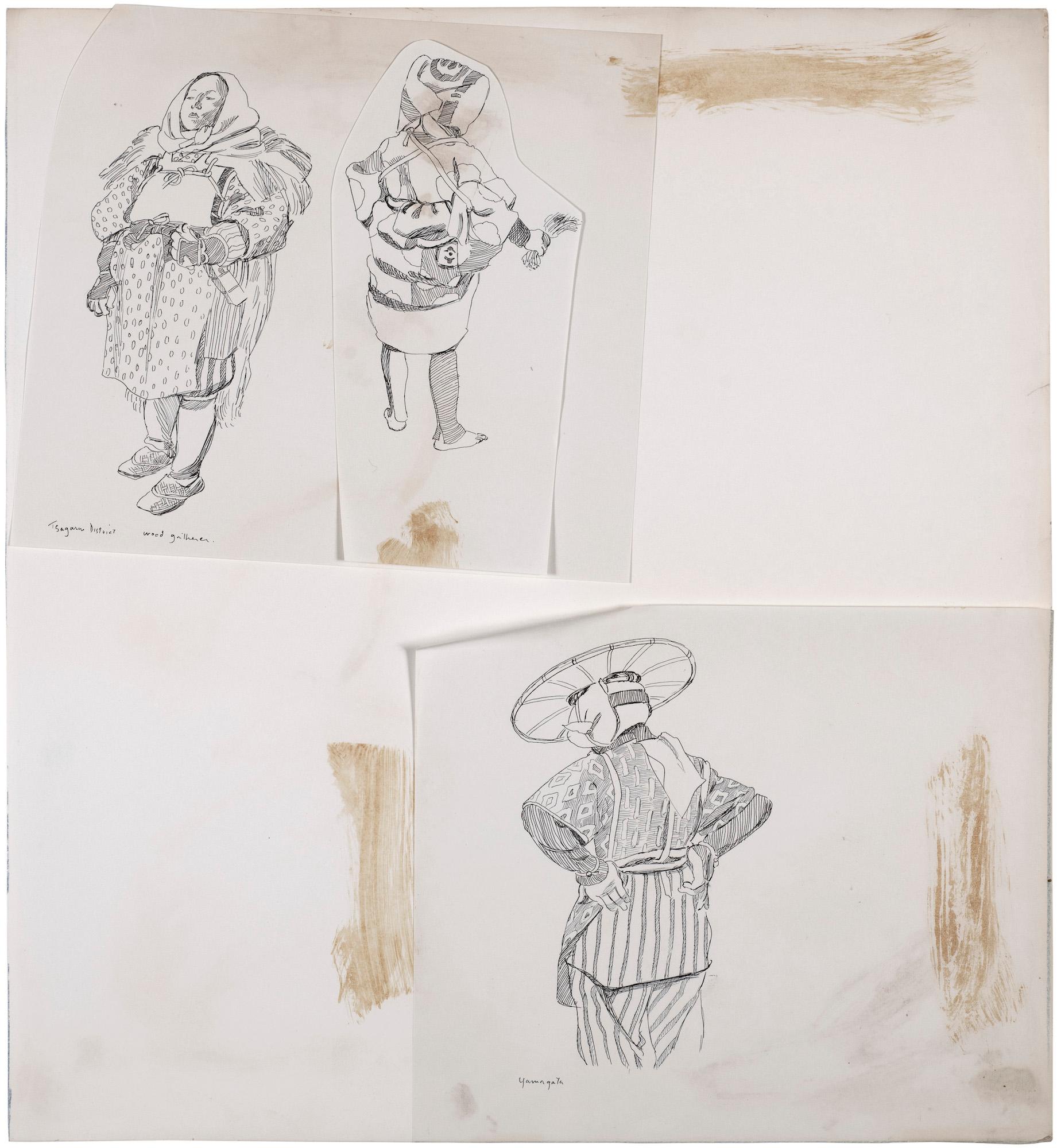
Jacqueline Ayer, Untitled (various Japanese working attire), c. 1973
Jacqueline Ayer (1930–2012) had a career that spanned many creative fields. She began as a fashion illustrator, and later turned her hand to children’s books, textiles and garments, as she worked in New York, Paris, London, Bangkok, Hong Kong and across India. These drawings were used as some of the final illustrations printed in Ayer's publication Oriental* Costume (1974). Descriptions from left: Tsaguru wood gatherer, Japan; Rice planter, Kochi; Yamagata field worker (back view). *The term ‘oriental’ has colonial and racist origins. It was established during a period when European powers took political control of other countries and defined non-European cultures as ‘inferior’ to their own. ‘Oriental’ was commonly used in English-speaking countries until the late 20th century to group together people, culture and places in Northern Africa, East Asia and Southeast Asia, as well as objects thought to have originated in these areas. The term has been widely rejected today as it exoticizes and ‘others’ these diverse cultures. Ayer used the term here to collectively refer to modes of dress from Cambodia, China, Japan, Mongolia, Nepal, Thailand and Tibet.
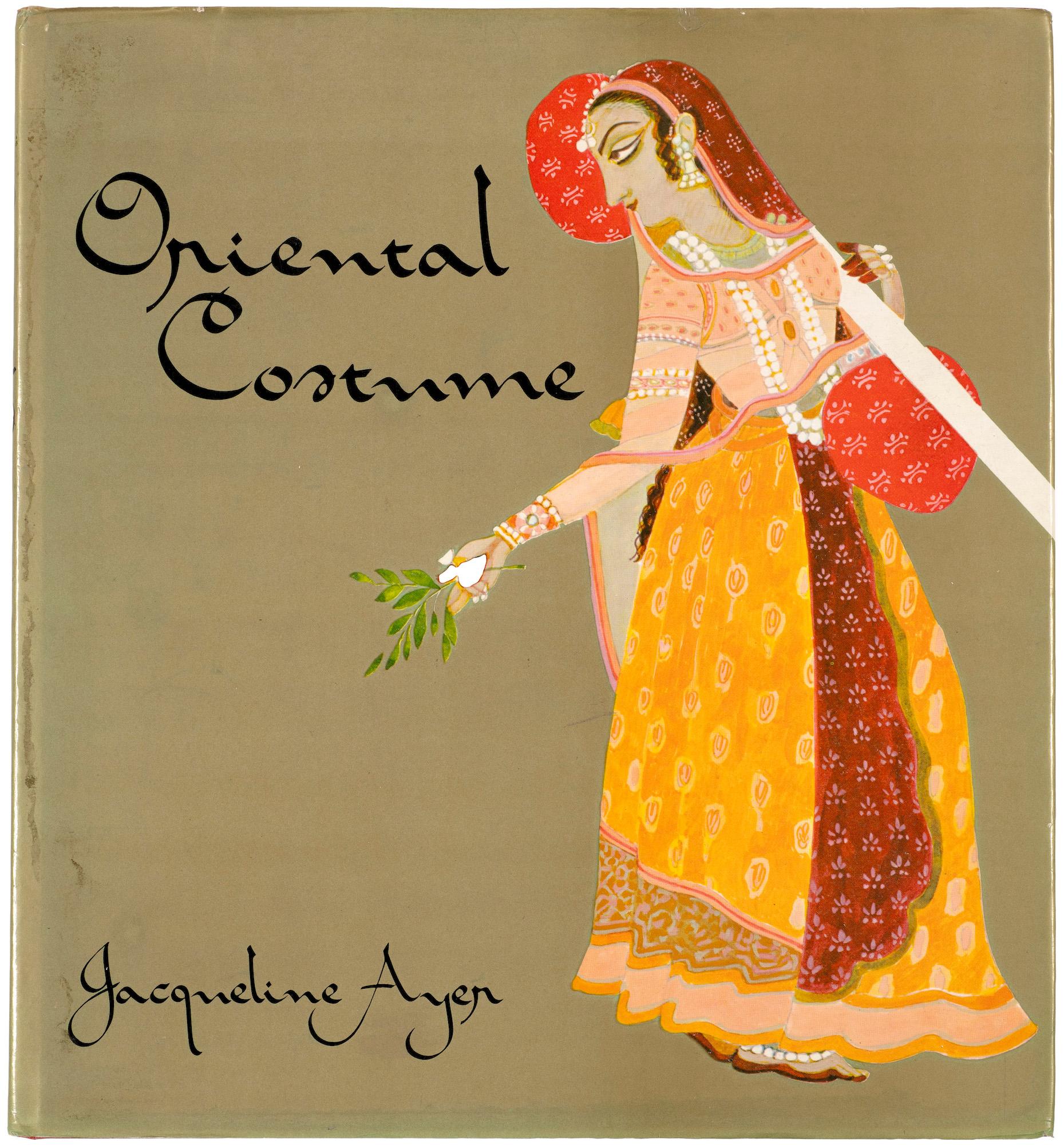
Jacqueline Ayer, Oriental Costume, 1974
Ayer originally intended to set a children’s book in India after travelling there as a design and production consultant for the Indian government. She decided instead to put together a book featuring sketches from life and historical artworks, that documented the clothing of different social and cultural groups. Ayer wrote, ‘I had seen prints done by the Victorian colonials of fierce ‘tribal leaders and village belles’. The English were very good record keepers, though not always reliable. Their basic message was often self-enhancing. Beautifully drawn though, it was inspiring to imagine what their view might have been if they were less involved in propaganda.’ Oriental* Costume (1974) aimed to show the diversity of types and uses of clothing in Cambodia, China, Japan, Mongolia, Nepal, Thailand and Tibet. Ayer hoped her book would be different from colonial representations, however the way that the book combines and categorises cultural groups carries a colonial influence. The illustration seen here is featured on the book's front cover and titled 'Noble lady, Rajasthan, 18th Century'. *The term ‘oriental’ has colonial and racist origins. It was established during a period when European powers took political control of other countries and defined non-European cultures as ‘inferior’ to their own. ‘Oriental’ was commonly used in English-speaking countries until the late 20th century to group together people, culture and places in Northern Africa, East Asia and Southeast Asia, as well as objects thought to have originated in these areas. The term has been widely rejected today as it exoticizes and ‘others’ these diverse cultures. Ayer used the term here to collectively refer to modes of dress from Cambodia, China, Japan, Mongolia, Nepal, Thailand and Tibet.
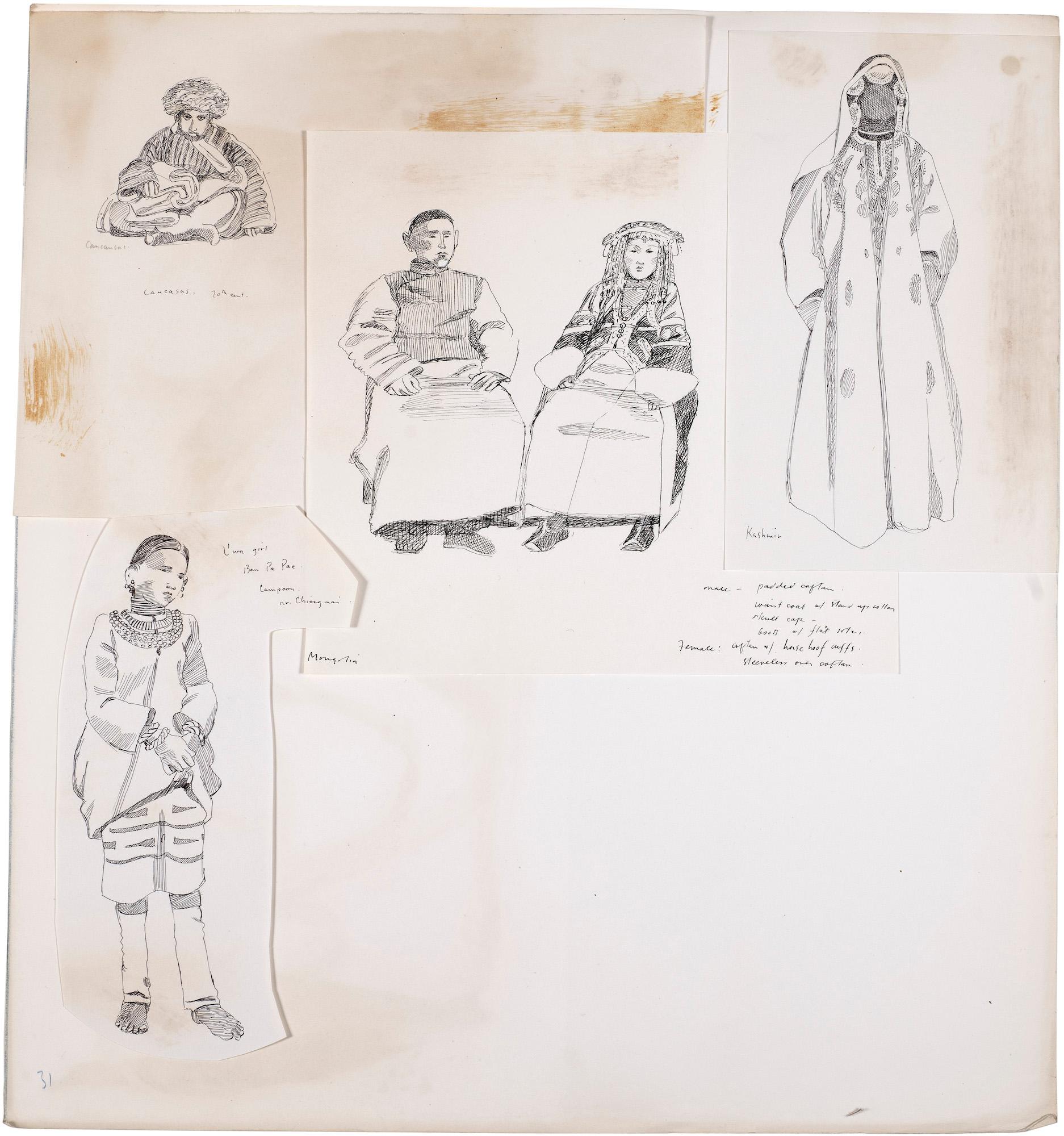
Jacqueline Ayer, Untitled (various clothing featured on page titled 'The Closed Sewn Garment', and Karen woman), c. 1973
Jacqueline Ayer (1930–2012) had a career that spanned many creative fields. She began as a fashion illustrator, and later turned her hand to children’s books, textiles and garments, as she worked in New York, Paris, London, Bangkok, Hong Kong and across India. This drawing was used as one of the final illustrations printed in Ayer's publication Oriental* Costume (1974). Descriptions from left: Padded loose robe, Caucasus, 19th century; Diagonal closed sewn garment, the layered caftan, Mongolia, 19th century; Closed sewn garment, Kashmir, contemporary; Karen woman. *The term ‘oriental’ has colonial and racist origins. It was established during a period when European powers took political control of other countries and defined non-European cultures as ‘inferior’ to their own. ‘Oriental’ was commonly used in English-speaking countries until the late 20th century to group together people, culture and places in Northern Africa, East Asia and Southeast Asia, as well as objects thought to have originated in these areas. The term has been widely rejected today as it exoticizes and ‘others’ these diverse cultures. Ayer used the term here to collectively refer to modes of dress from Cambodia, China, Japan, Mongolia, Nepal, Thailand and Tibet.
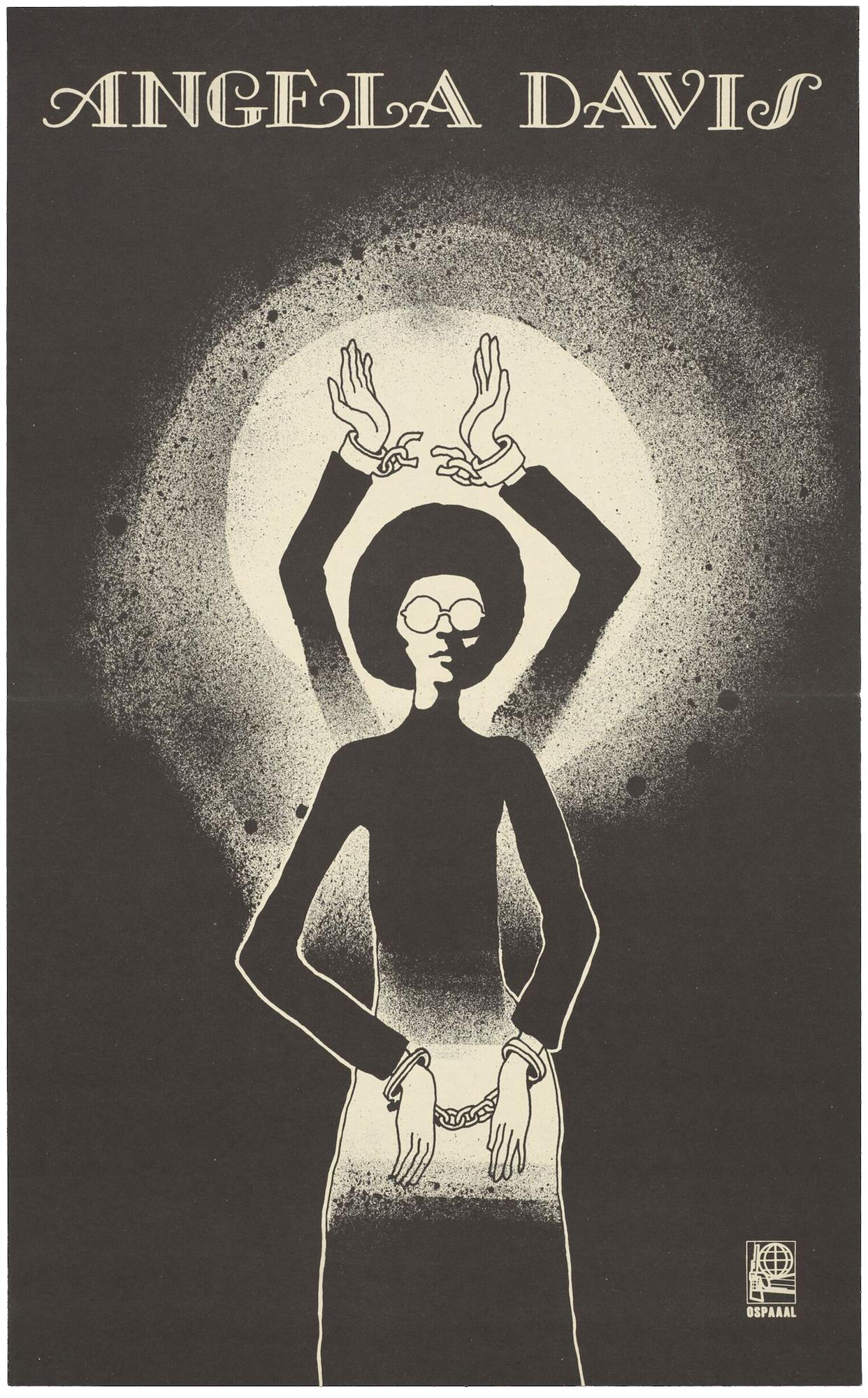
ANGELA DAVIS, 1970
Between the 1960s and 1990s, more than fifty designers worked at OSPAAAL (the Organisation of Solidarity with the People of Africa, Asia and Latin America). Based in Cuba, they made magazines and posters that were sent around the world. Their aim was to promote radical political ideas. Many of their posters celebrate socialist revolutions and liberation movements from the Global South. This poster was designed in support of North American activist and academic Angela Davis. She was arrested in New York City in 1970, accused of supplying arms that were used in a kidnap and murder. She protested her innocence and there was widespread protest at her incarceration. Davis was cleared of all charges in 1972.
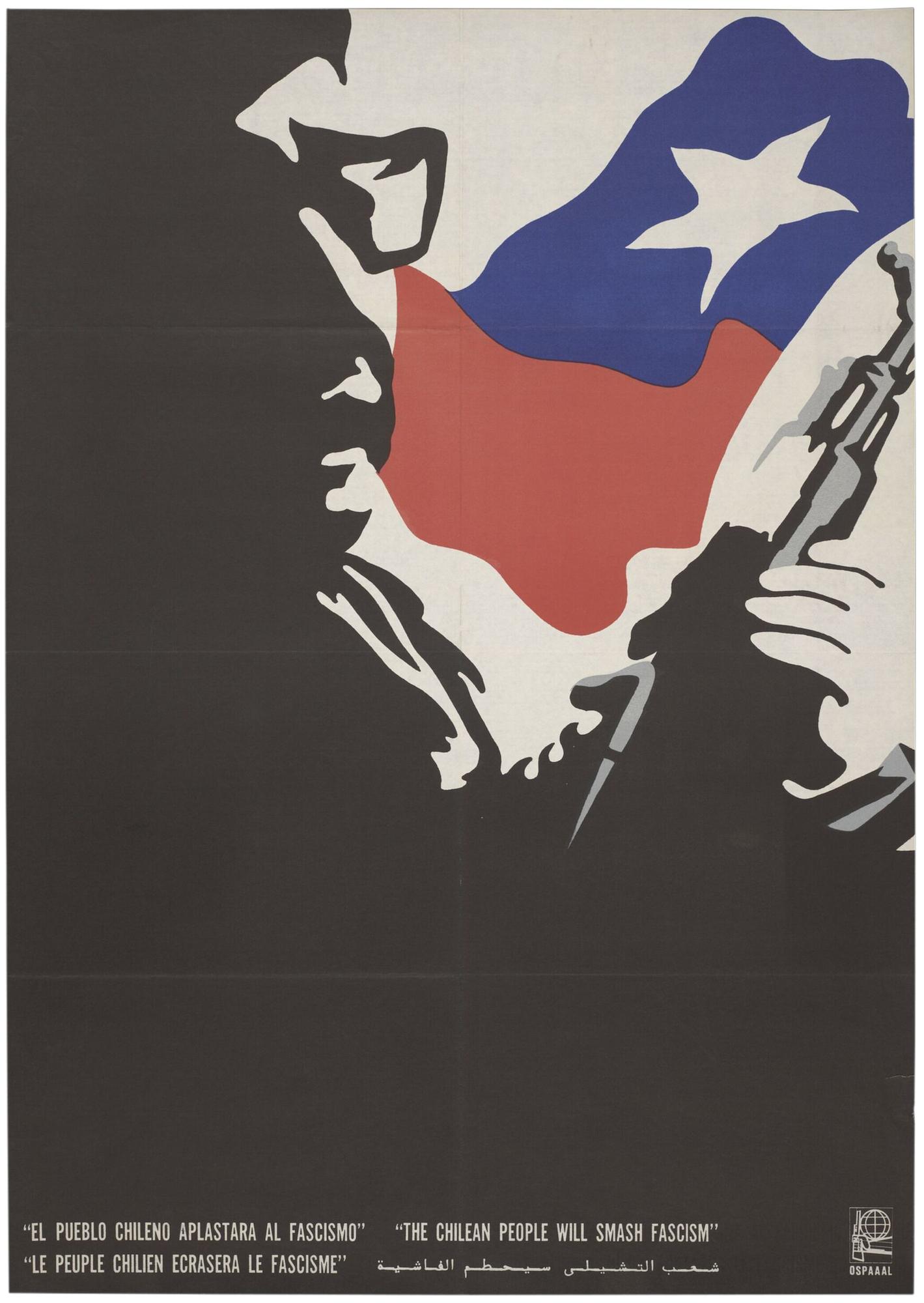
“THE CHILEAN PEOPLE WILL SMASH FASCISM”, 1976
Between the 1960s and 1990s, more than fifty designers worked at OSPAAAL. Based in Cuba, they made magazines and posters that were sent around the world. Their aim was to promote radical political ideas. Many of their posters celebrate socialist revolutions and liberation movements from the Global South. Figurative painter Ernesto García Peña’s only poster for OSPAAAL portrayed the socialist Chilean President Salvador Allende.
Content warning: weaponry
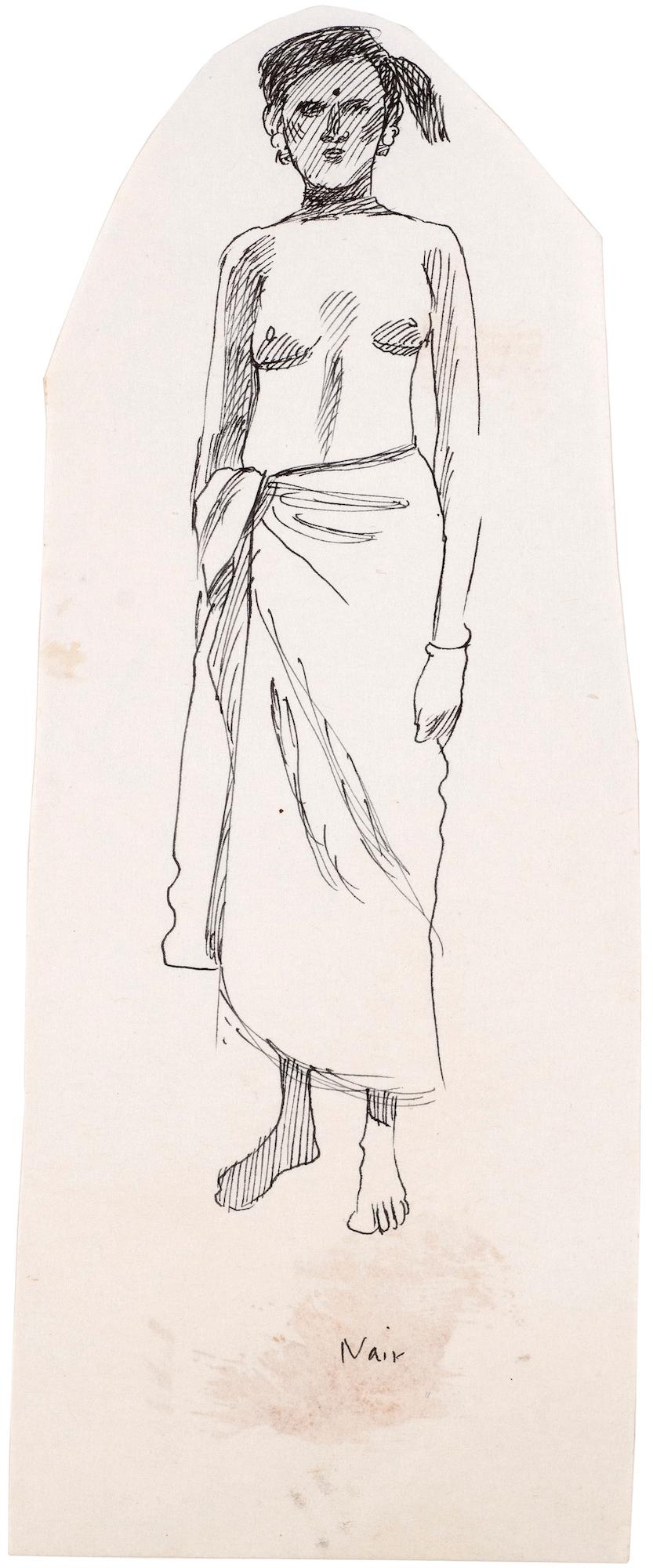
Jacqueline Ayer, Untitled (Nair woman), c. 1973
Jacqueline Ayer (1930–2012) had a career that spanned many creative fields. She began as a fashion illustrator, and later turned her hand to children’s books, textiles and garments, as she worked in New York, Paris, London, Bangkok, Hong Kong and across India. This drawing was used as one of the final illustrations printed in Ayer's publication Oriental* Costume (1974). *The term ‘oriental’ has colonial and racist origins. It was established during a period when European powers took political control of other countries and defined non-European cultures as ‘inferior’ to their own. ‘Oriental’ was commonly used in English-speaking countries until the late 20th century to group together people, culture and places in Northern Africa, East Asia and Southeast Asia, as well as objects thought to have originated in these areas. The term has been widely rejected today as it exoticizes and ‘others’ these diverse cultures. Ayer used the term here to collectively refer to modes of dress from Cambodia, China, Japan, Mongolia, Nepal, Thailand and Tibet.
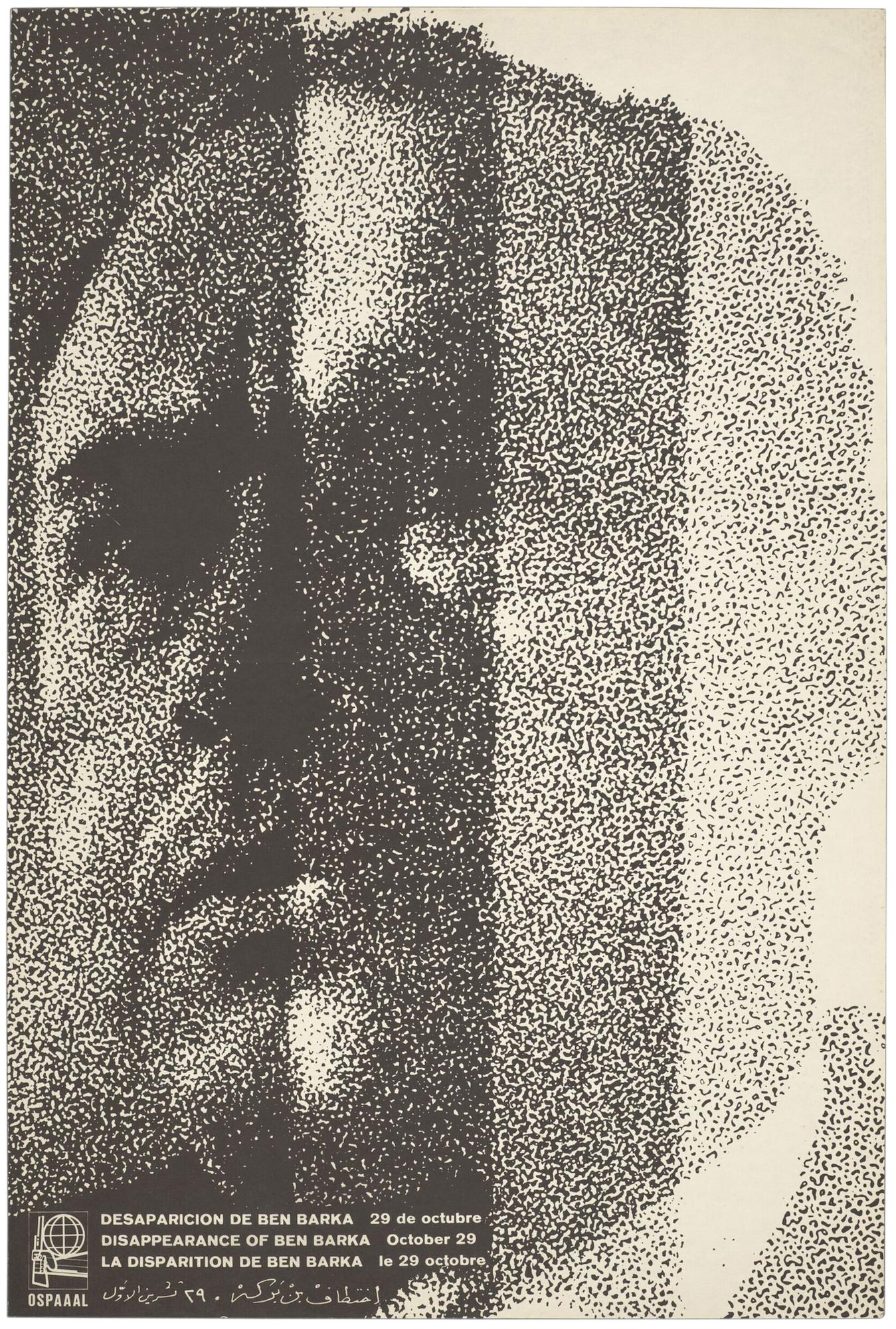
DISAPPEARANCE OF BEN BARKA - October 29, 1971
Between the 1960s and 1990s, more than fifty designers worked at OSPAAAL (the Organisation of Solidarity with the People of Africa, Asia and Latin America). Based in Cuba, they made magazines and posters that were sent around the world. Their aim was to promote radical political ideas. Many of their posters celebrate socialist revolutions and liberation movements from the Global South. Moroccan politician Mehdi Ben Barka led the preparation of the Tricontinental conference, but was assassinated before it began. Antonio Fernández Mariño represented his mysterious disappearance using photomontage to create a fading, ghostlike portrait.
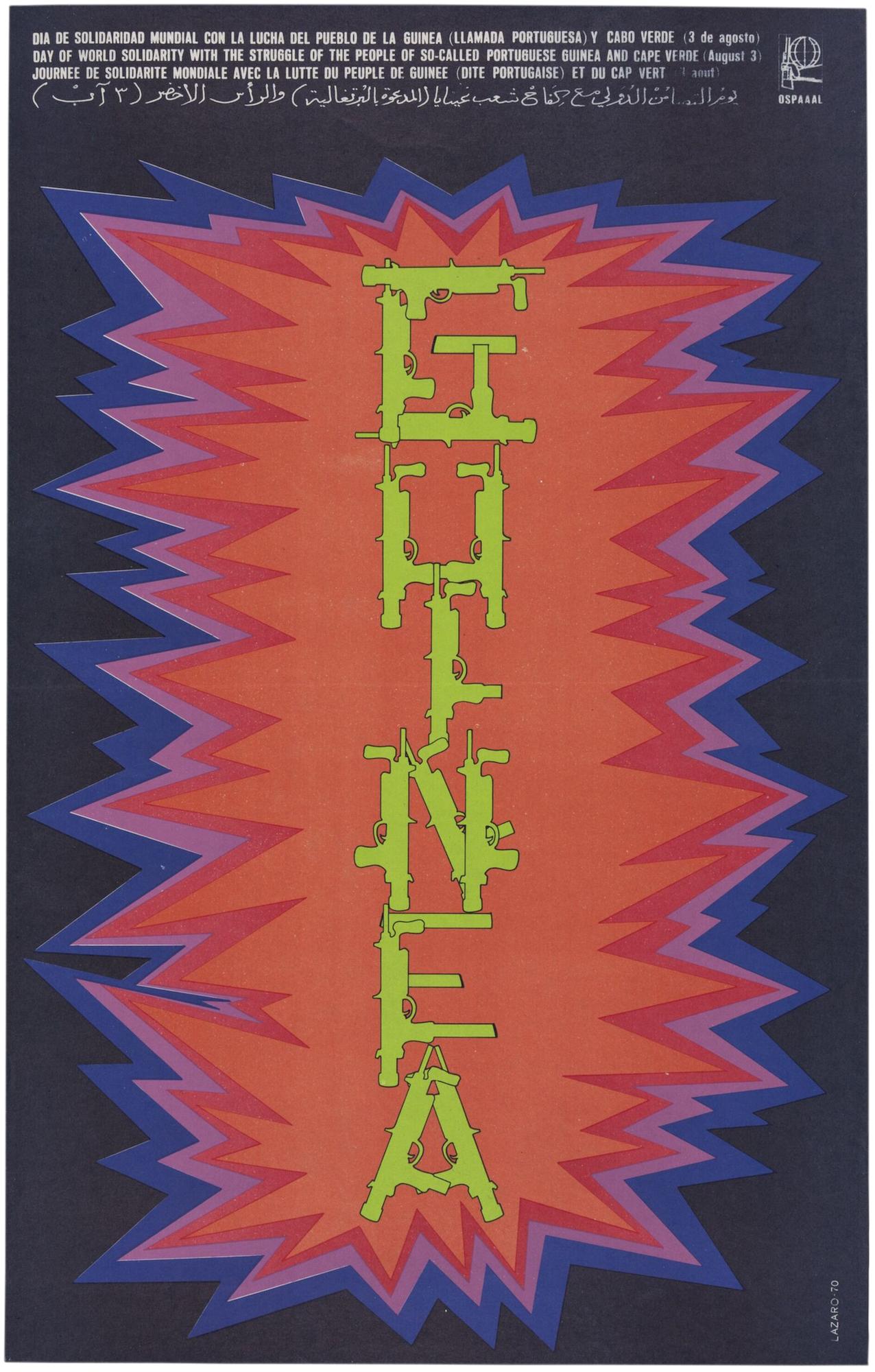
GUINEA - Day of World Solidarity with the Struggle of the People of so-called Portuguese Guinea and Cape Verde (August 3), 1970
Between the 1960s and 1990s, more than fifty designers worked at OSPAAAL (the Organisation of Solidarity with the People of Africa, Asia and Latin America). Based in Cuba, they made magazines and posters that were sent around the world. Their aim was to promote radical political ideas. Many of their posters celebrate socialist revolutions and liberation movements from the Global South. This poster was designed to mark a day of solidarity with liberation movements in Cape Verde and Guinea-Bissau seeking independence from Portuguese colonial rule, on the date of the Pidjiguiti massacre.
Content warning: weaponry
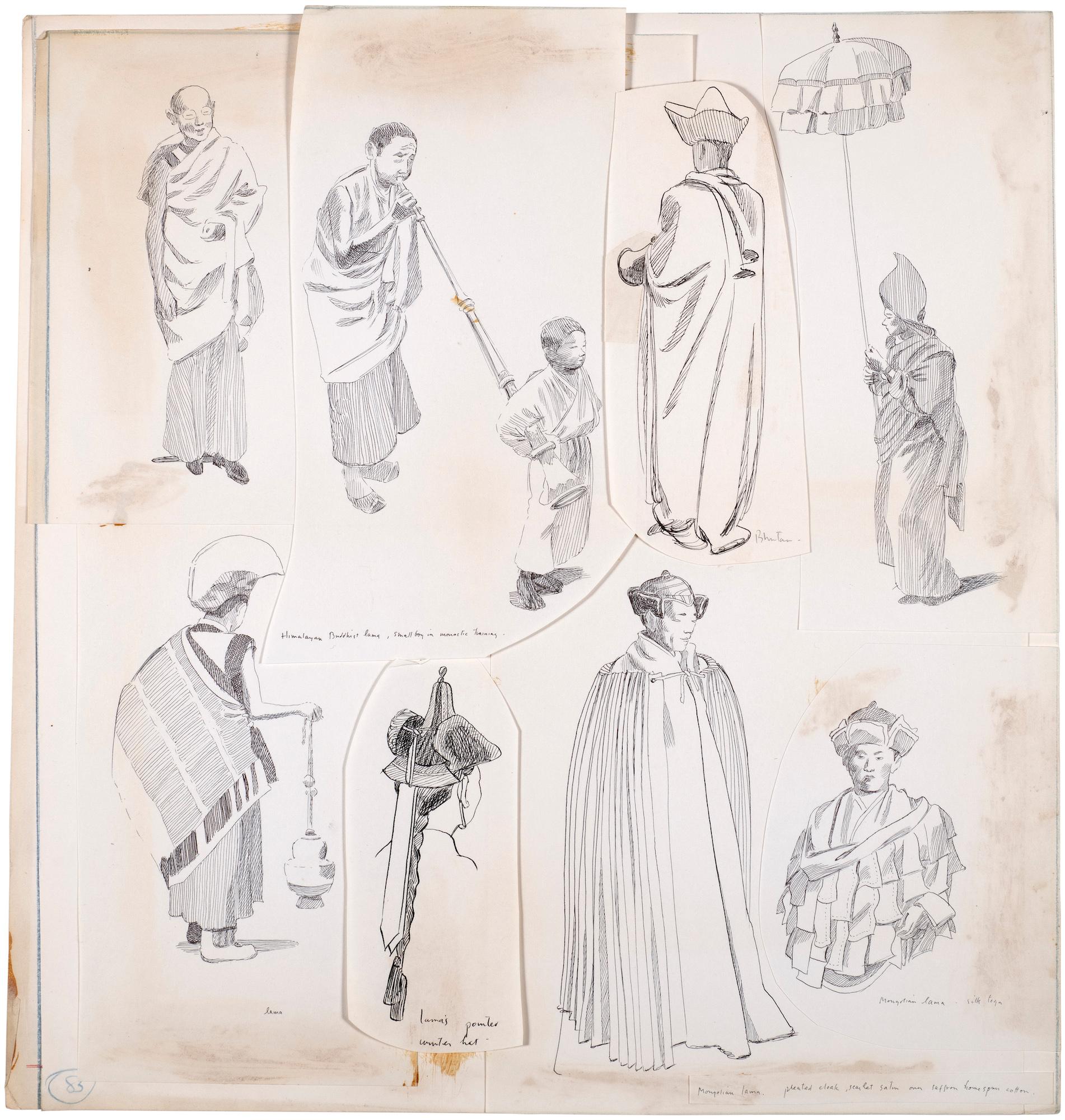
Jacqueline Ayer, Untitled (various Northern Buddhists clothing), c. 1973
Jacqueline Ayer (1930–2012) had a career that spanned many creative fields. She began as a fashion illustrator, and later turned her hand to children’s books, textiles and garments, as she worked in New York, Paris, London, Bangkok, Hong Kong and across India. This drawing was used as one of the final illustrations printed in Ayer's publication Oriental* Costume (1974). Descriptions from top left, clockwise: A high-ranking lama, Sikkim, 1971; Himalayan Buddhist lama, Sikkim, 1969; Lama calling morning prayers, Bhutan, contemporary; Lama in procession, Sikkim, contemporary; Mongolian lama, contemporary; Mongolian lama, contemporary; Ceremonial hat, winter style, Himalayan lama, contemporary; Ceremonial dress, Sikkim, contemporary. *The term ‘oriental’ has colonial and racist origins. It was established during a period when European powers took political control of other countries and defined non-European cultures as ‘inferior’ to their own. ‘Oriental’ was commonly used in English-speaking countries until the late 20th century to group together people, culture and places in Northern Africa, East Asia and Southeast Asia, as well as objects thought to have originated in these areas. The term has been widely rejected today as it exoticizes and ‘others’ these diverse cultures. Ayer used the term here to collectively refer to modes of dress from Cambodia, China, Japan, Mongolia, Nepal, Thailand and Tibet.
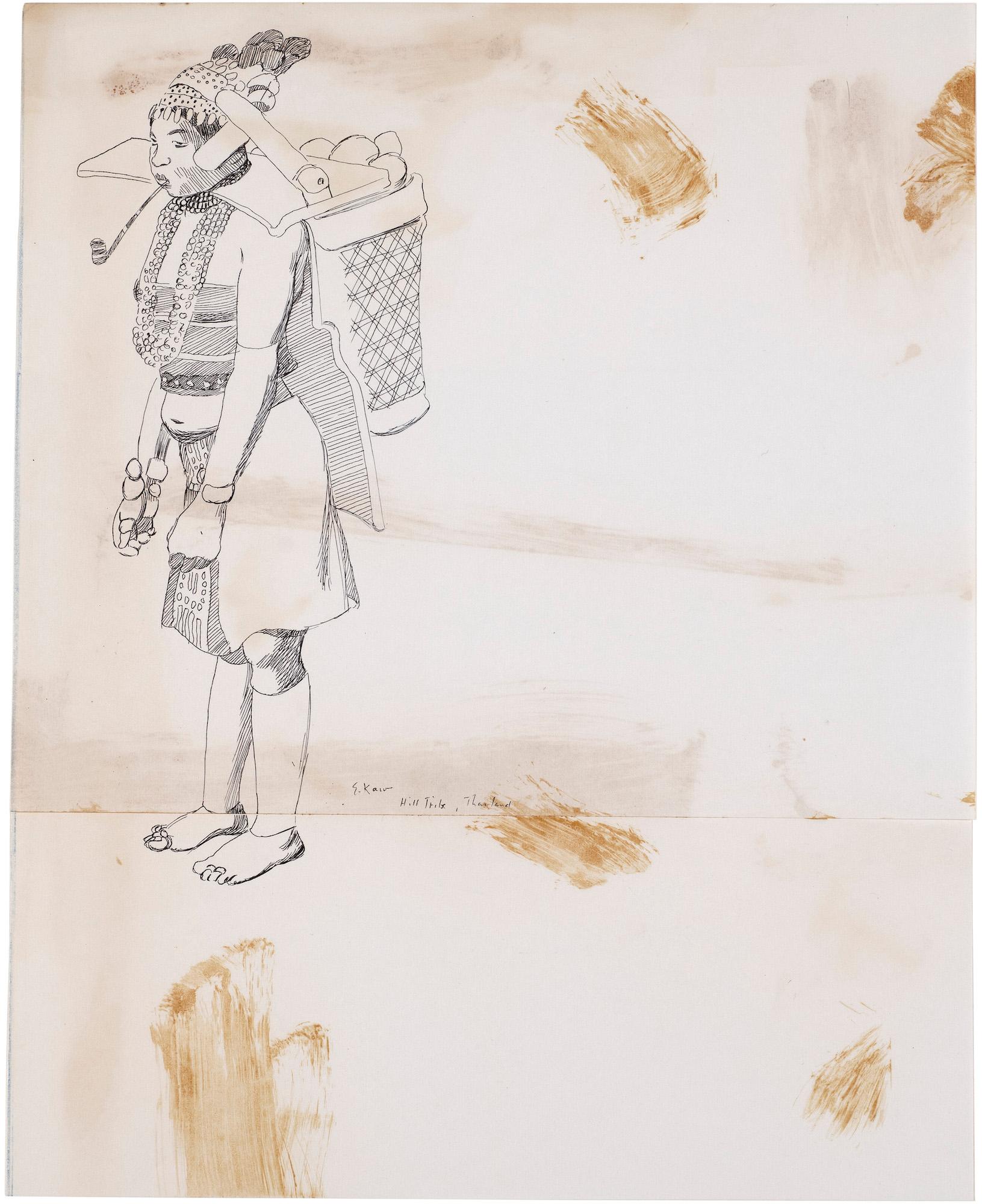
Jacqueline Ayer, Untitled (E Kaw, young girl, northern Thailand), c.1973
Jacqueline Ayer (1930–2012) had a career that spanned many creative fields. She began as a fashion illustrator, and later turned her hand to children’s books, textiles and garments, as she worked in New York, Paris, London, Bangkok, Hong Kong and across India. This drawing was used as one of the final illustrations printed in Ayer's publication Oriental* Costume (1974). *The term ‘oriental’ has colonial and racist origins. It was established during a period when European powers took political control of other countries and defined non-European cultures as ‘inferior’ to their own. ‘Oriental’ was commonly used in English-speaking countries until the late 20th century to group together people, culture and places in Northern Africa, East Asia and Southeast Asia, as well as objects thought to have originated in these areas. The term has been widely rejected today as it exoticizes and ‘others’ these diverse cultures. Ayer used the term here to collectively refer to modes of dress from Cambodia, China, Japan, Mongolia, Nepal, Thailand and Tibet.
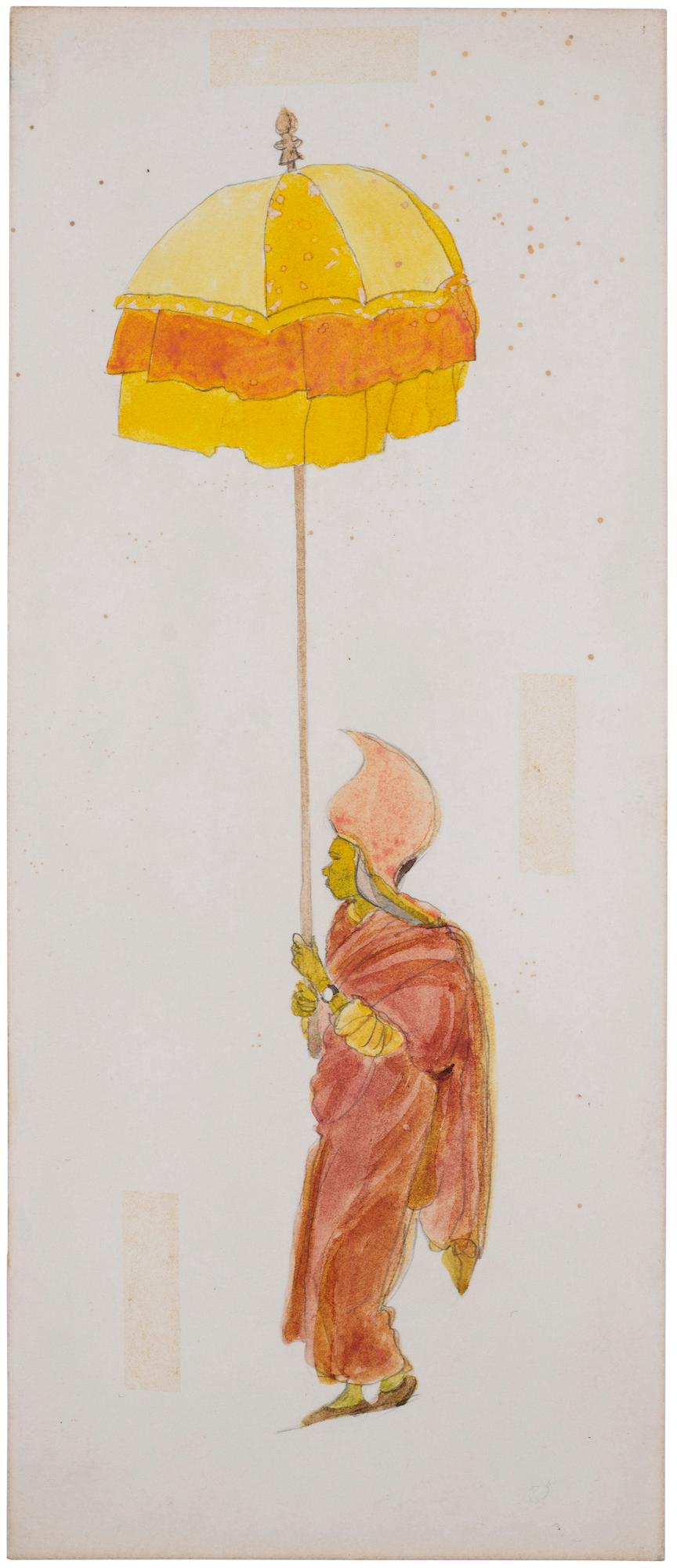
Jacqueline Ayer, Untitled (Himalayan lama in procession), 1974
Jacqueline Ayer (1930–2012) had a career that spanned many creative fields. She began as a fashion illustrator, and later turned her hand to children’s books, textiles and garments, as she worked in New York, Paris, London, Bangkok, Hong Kong and across India. This drawing was used as one of the final illustrations printed in Ayer's publication Oriental* Costume (1974). *The term ‘oriental’ has colonial and racist origins. It was established during a period when European powers took political control of other countries and defined non-European cultures as ‘inferior’ to their own. ‘Oriental’ was commonly used in English-speaking countries until the late 20th century to group together people, culture and places in Northern Africa, East Asia and Southeast Asia, as well as objects thought to have originated in these areas. The term has been widely rejected today as it exoticizes and ‘others’ these diverse cultures. Ayer used the term here to collectively refer to modes of dress from Cambodia, China, Japan, Mongolia, Nepal, Thailand and Tibet.
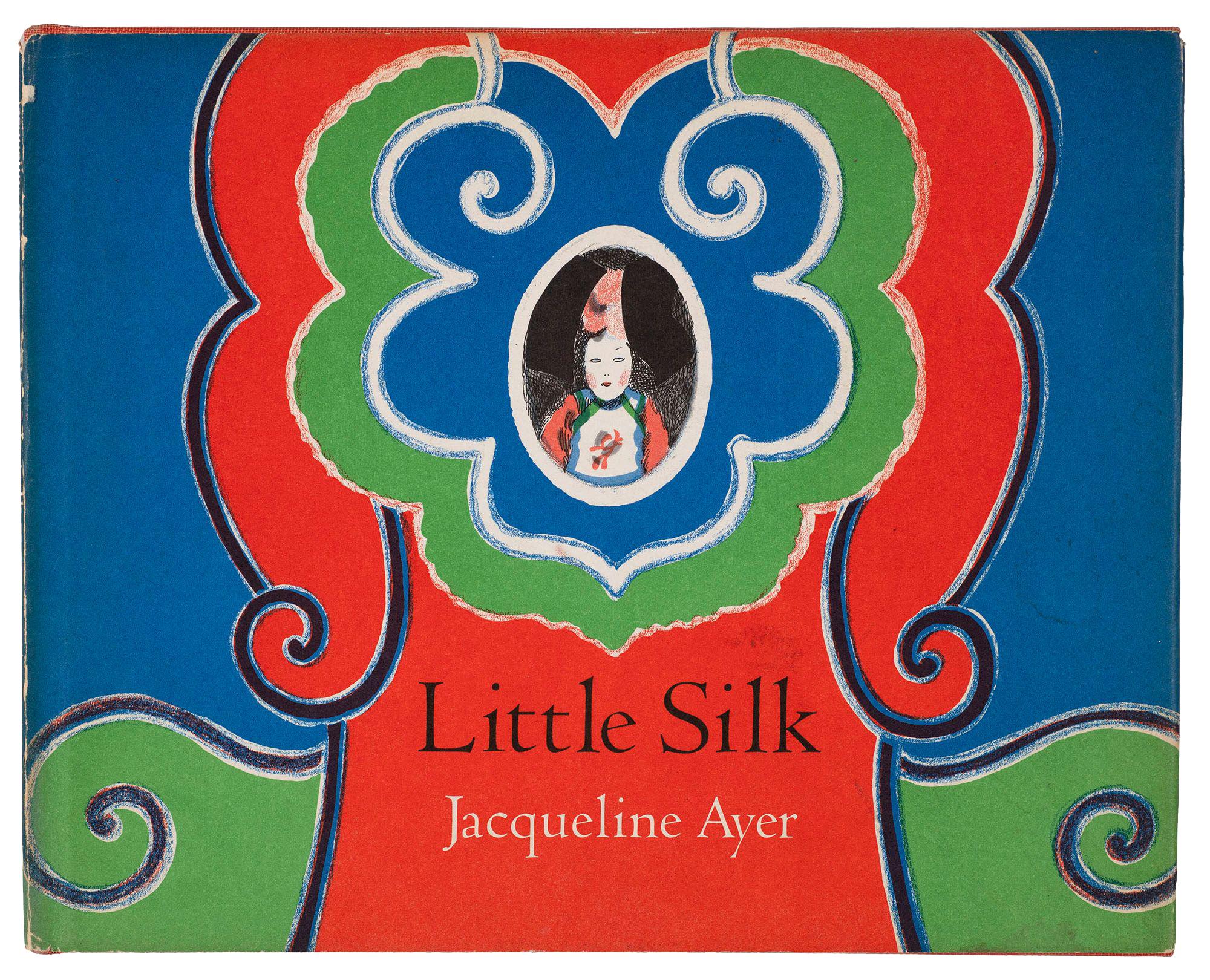
Jacqueline Ayer, Little Silk, 1970
Jacqueline Ayer (1930–2012) had a career that spanned many creative fields. She began as a fashion illustrator, and later turned her hand to children’s books, textiles and garments, as she worked in New York, Paris, London, Bangkok, Hong Kong and across India. Ayer’s fifth book, Little Silk, is about a lost doll who eventually finds her way to a loving home. It takes place in Hong Kong, where Ayer lived with her daughters from 1963 to 1965.
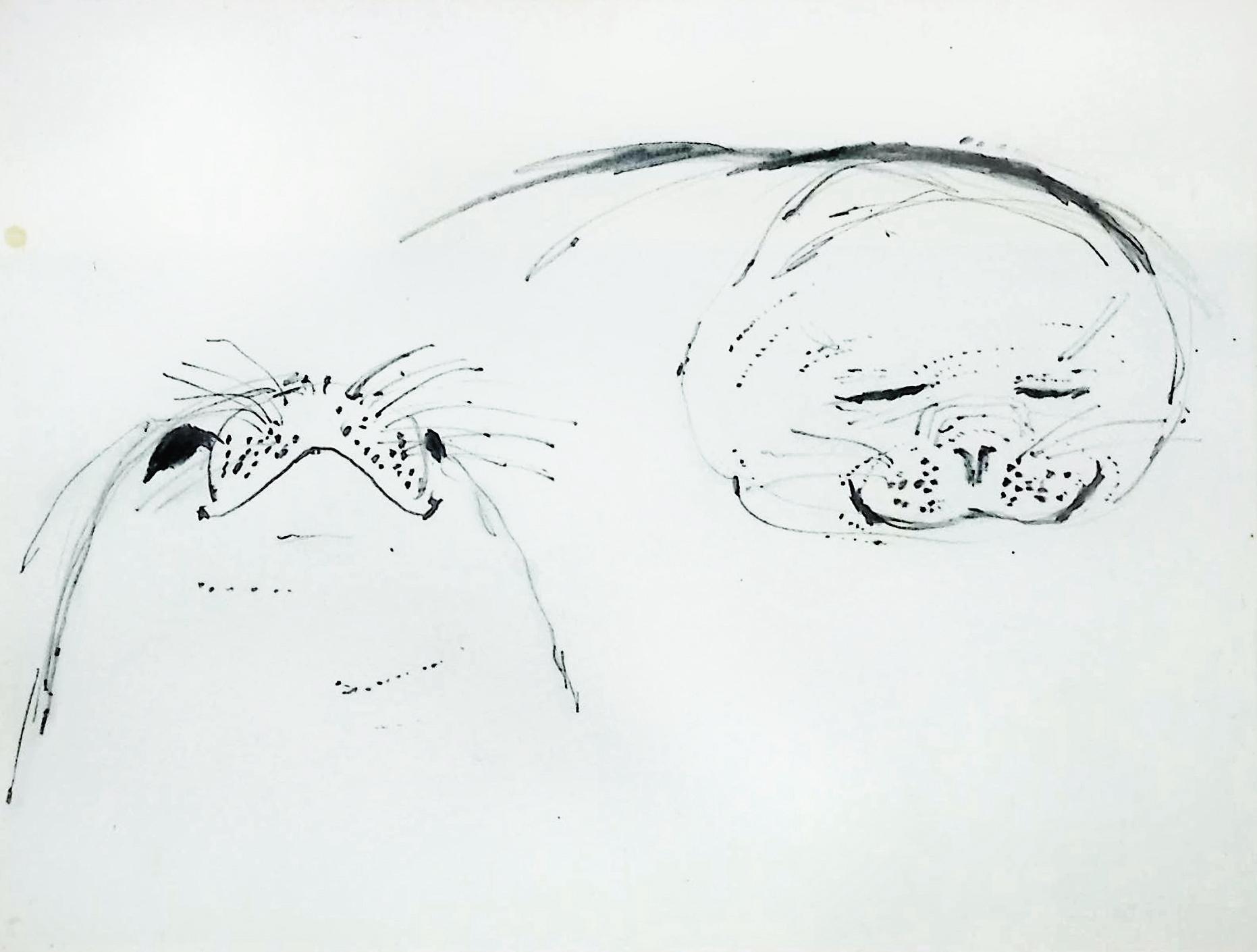
Untitled (illustration for "Einar and the Seal"), c. 1977
Janina Ede (1937-2018) created covers and illustrations for over 100 books from the 1950s to the 1980s. Many of her illustrations feature animals, which she drew from life.
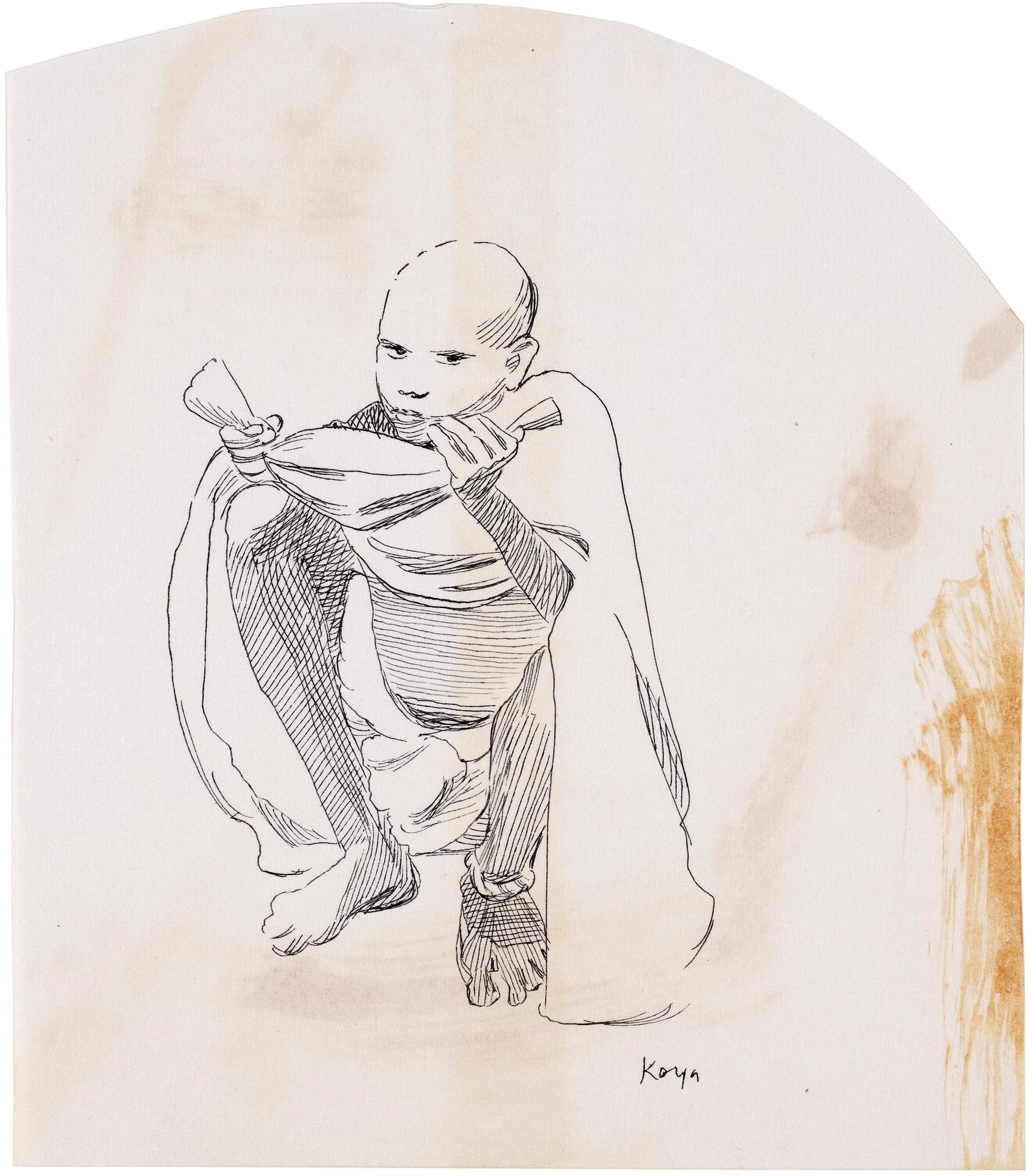
Jacqueline Ayer, Untitled (Koya man), c. 1973
Jacqueline Ayer (1930–2012) had a career that spanned many creative fields. She began as a fashion illustrator, and later turned her hand to children’s books, textiles and garments, as she worked in New York, Paris, London, Bangkok, Hong Kong and across India. This drawing was used as one of the final illustrations printed in Ayer's publication Oriental* Costume (1974). *The term ‘oriental’ has colonial and racist origins. It was established during a period when European powers took political control of other countries and defined non-European cultures as ‘inferior’ to their own. ‘Oriental’ was commonly used in English-speaking countries until the late 20th century to group together people, culture and places in Northern Africa, East Asia and Southeast Asia, as well as objects thought to have originated in these areas. The term has been widely rejected today as it exoticizes and ‘others’ these diverse cultures. Ayer used the term here to collectively refer to modes of dress from Cambodia, China, Japan, Mongolia, Nepal, Thailand and Tibet.
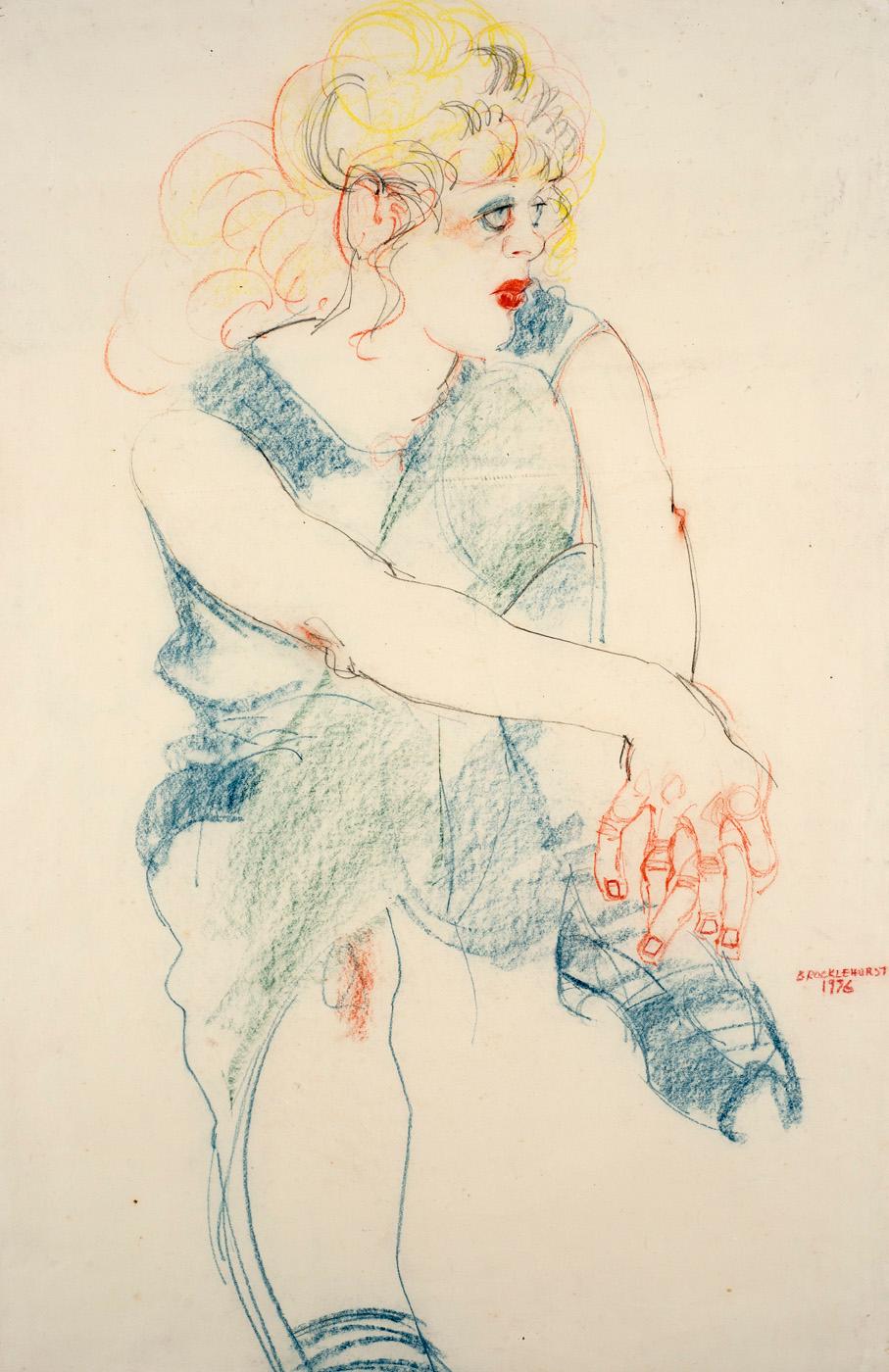
Jo Brocklehurst, Untitled, 1976
Jo (Josephine) Brocklehurst (1935 - 2006) studied at Central Saint Martins and began her career as a fashion illustrator. She later focused on portraiture, drawing directly from models at her studio in West Hampstead and in nightclubs and theatres in Berlin, London and New York. Her work documents the alternative subcultures of the 1970s, 80s and 90s that went on to shape mainstream fashion and performance scenes.
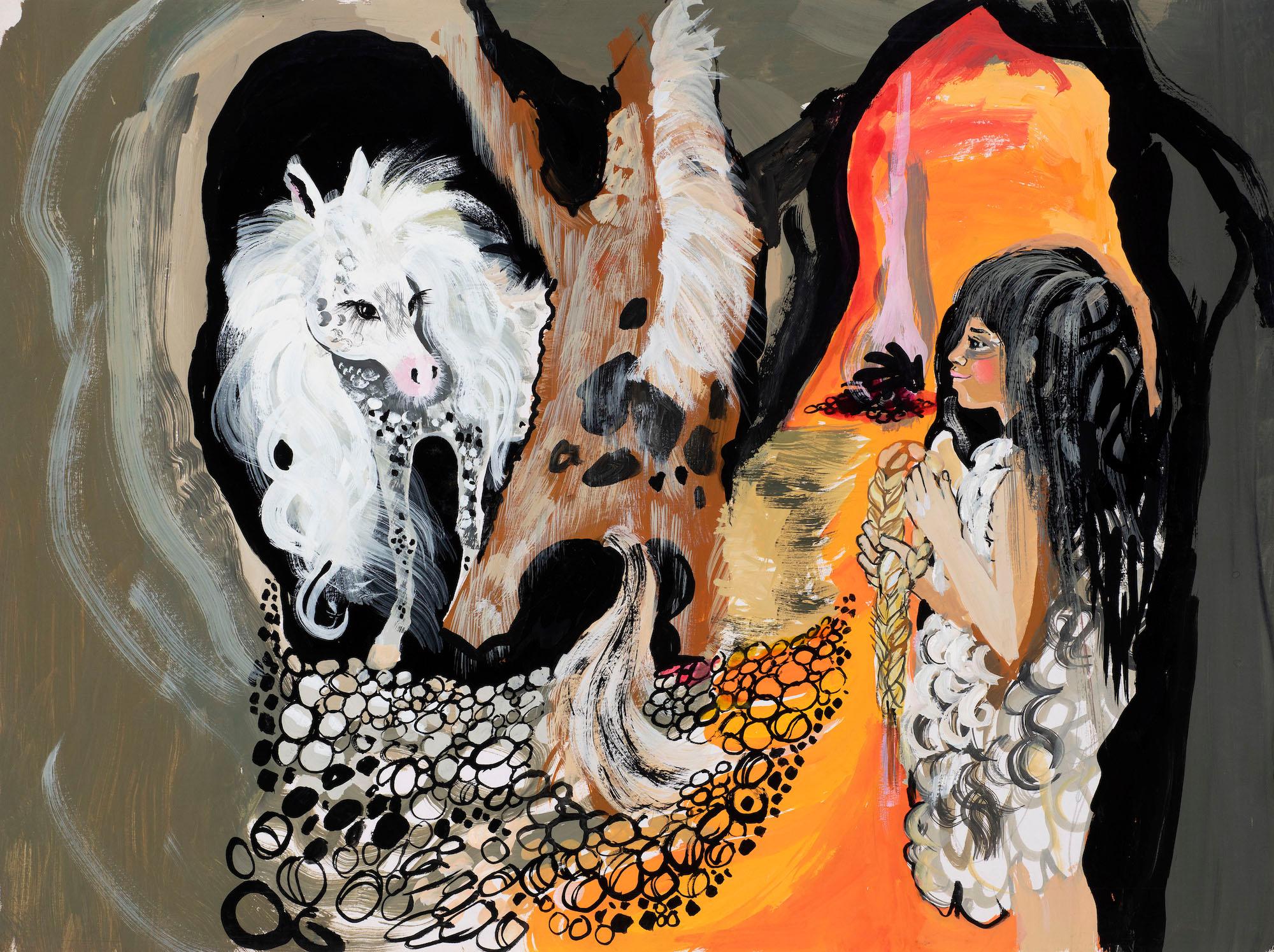
Untitled illustration for Jackanory (Just So Stories: The Cat who Walked by Himself), 1973
Janina Ede (1937-2018) created covers and illustrations for over 100 books in the 1960s, 70s and 80s. Many of her illustrations feature animals, which she drew from life. In the 1970s, Ede was commissioned to create large colourful illustrations for the BBC children’s television series, Jackanory. Each episode was dedicated to a story read by an actor, while specially commissioned illustrations were shown on screen during each programme. Some of these illustrations were for programmes featuring stories by author Rudyard Kipling. His ‘Just So’ stories were short tales that imagined how various animals attained their distinguishing features. Kipling set the stories in parts of India, West Asia and Africa. His descriptions of places and people included racist and exoticised stereotypes. Ede’s illustrations draw extensively on Kipling’s descriptions, and therefore reflect the racism in his work, as well as the prevailing stereotypical views that existed in 1970s Britain. Her own personal views are not documented. This storyboard illustration was produced by Janina Ede for Jackanory episode #1452, 'Just So Stories - The Cat that Walked by Himself'. It aired on 3 January 1973.
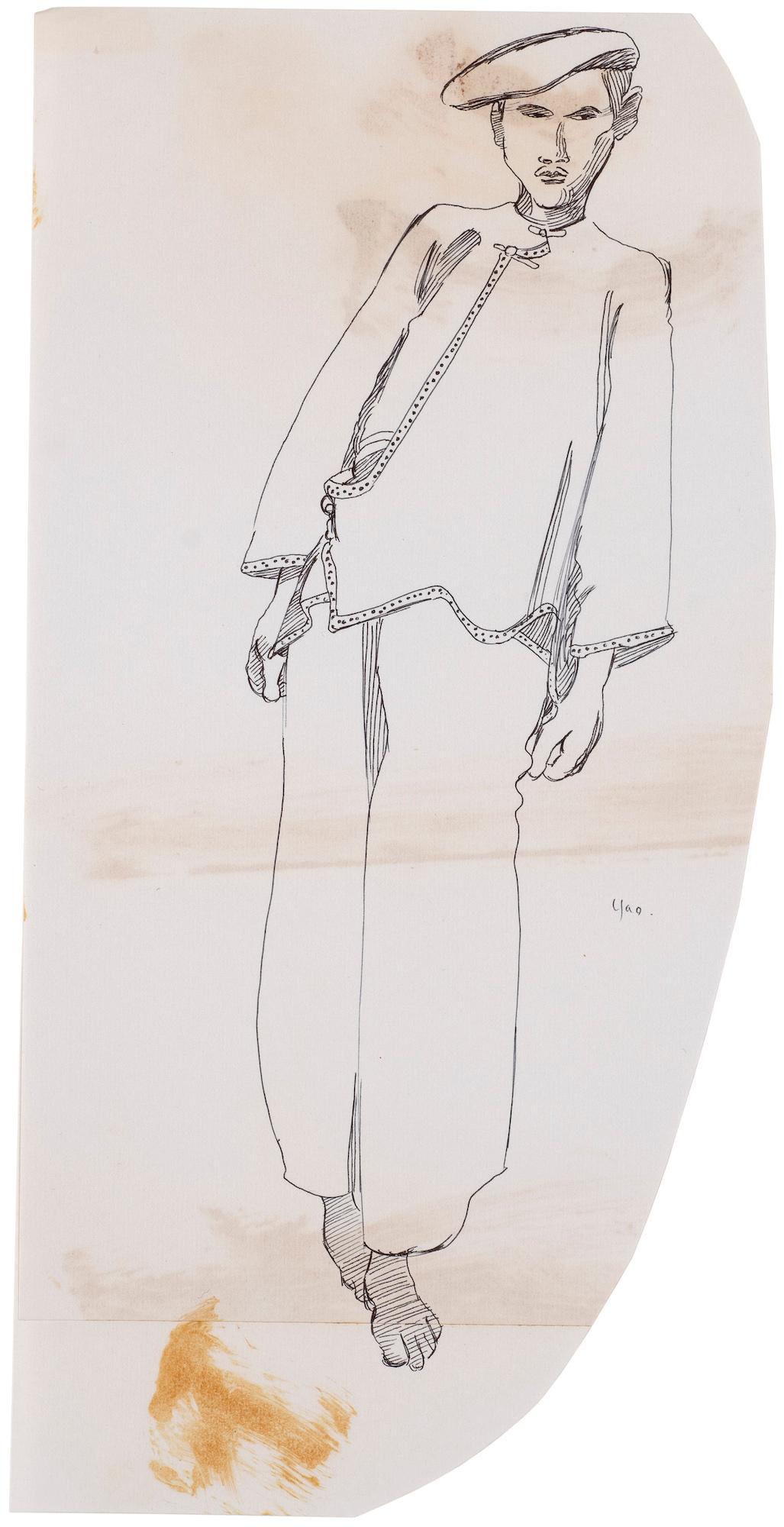
Jacqueline Ayer, Untitled (Yao man, Thailand), c. 1973
Jacqueline Ayer (1930–2012) had a career that spanned many creative fields. She began as a fashion illustrator, and later turned her hand to children’s books, textiles and garments, as she worked in New York, Paris, London, Bangkok, Hong Kong and across India. This drawing was used as one of the final illustrations printed in Ayer's publication Oriental* Costume (1974). *The term ‘oriental’ has colonial and racist origins. It was established during a period when European powers took political control of other countries and defined non-European cultures as ‘inferior’ to their own. ‘Oriental’ was commonly used in English-speaking countries until the late 20th century to group together people, culture and places in Northern Africa, East Asia and Southeast Asia, as well as objects thought to have originated in these areas. The term has been widely rejected today as it exoticizes and ‘others’ these diverse cultures. Ayer used the term here to collectively refer to modes of dress from Cambodia, China, Japan, Mongolia, Nepal, Thailand and Tibet.
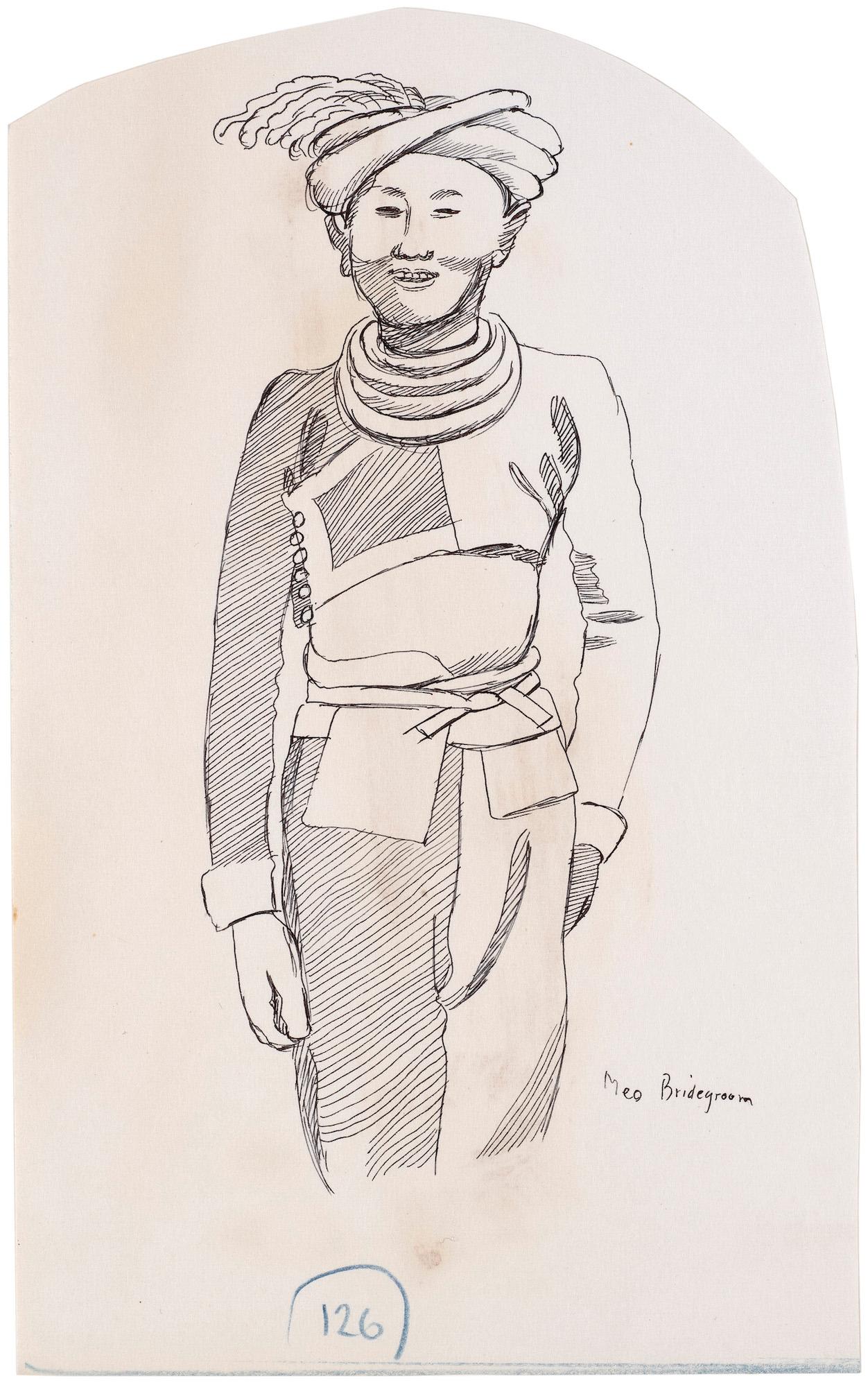
Jacqueline Ayer, Untitled (Meo bridegroom, Thailand), c. 1973
Jacqueline Ayer (1930–2012) had a career that spanned many creative fields. She began as a fashion illustrator, and later turned her hand to children’s books, textiles and garments, as she worked in New York, Paris, London, Bangkok, Hong Kong and across India. This drawing was used as one of the final illustrations printed in Ayer's publication Oriental* Costume (1974). *The term ‘oriental’ has colonial and racist origins. It was established during a period when European powers took political control of other countries and defined non-European cultures as ‘inferior’ to their own. ‘Oriental’ was commonly used in English-speaking countries until the late 20th century to group together people, culture and places in Northern Africa, East Asia and Southeast Asia, as well as objects thought to have originated in these areas. The term has been widely rejected today as it exoticizes and ‘others’ these diverse cultures. Ayer used the term here to collectively refer to modes of dress from Cambodia, China, Japan, Mongolia, Nepal, Thailand and Tibet.
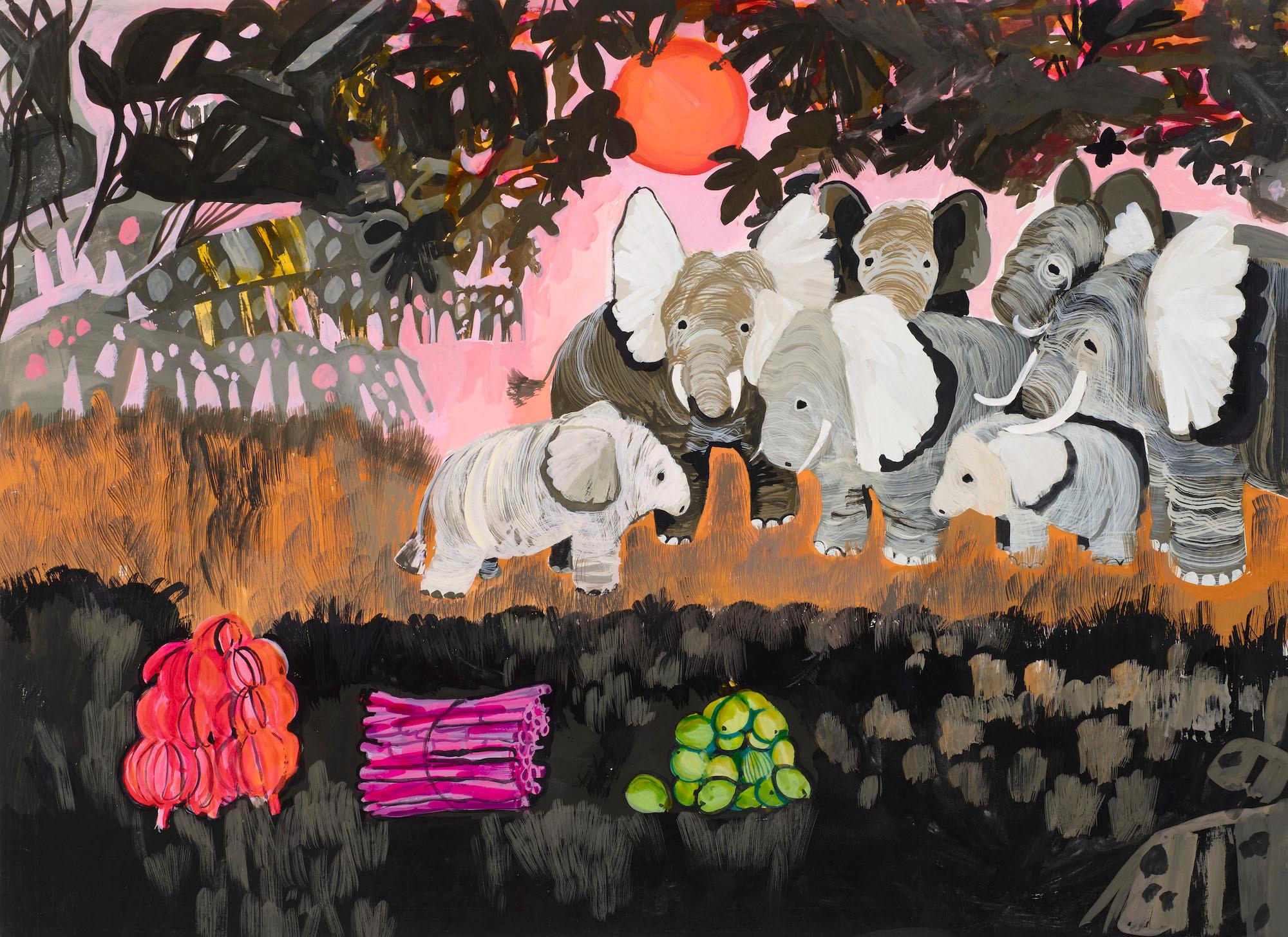
Untitled illustration for Jackanory (Just So Stories: The Elephant's Child), 1973
Janina Ede (1937-2018) created covers and illustrations for over 100 books in the 1960s, 70s and 80s. Many of her illustrations feature animals, which she drew from life. In the 1970s, Ede was commissioned to create large colourful illustrations for the BBC children’s television series, Jackanory. Each episode was dedicated to a story read by an actor, while specially commissioned illustrations were shown on screen during each programme. Some of these illustrations were for programmes featuring stories by author Rudyard Kipling. His ‘Just So’ stories were short tales that imagined how various animals attained their distinguishing features. Kipling set the stories in parts of India, West Asia and Africa. His descriptions of places and people included racist and exoticised stereotypes. Ede’s illustrations draw extensively on Kipling’s descriptions, and therefore reflect the racism in his work, as well as the prevailing stereotypical views that existed in 1970s Britain. Her own personal views are not documented. This storyboard illustration was produced by Janina Ede for Jackanory episode #1450, 'Just So Stories - The Elephant's Child'. It aired on 1 January 1973.
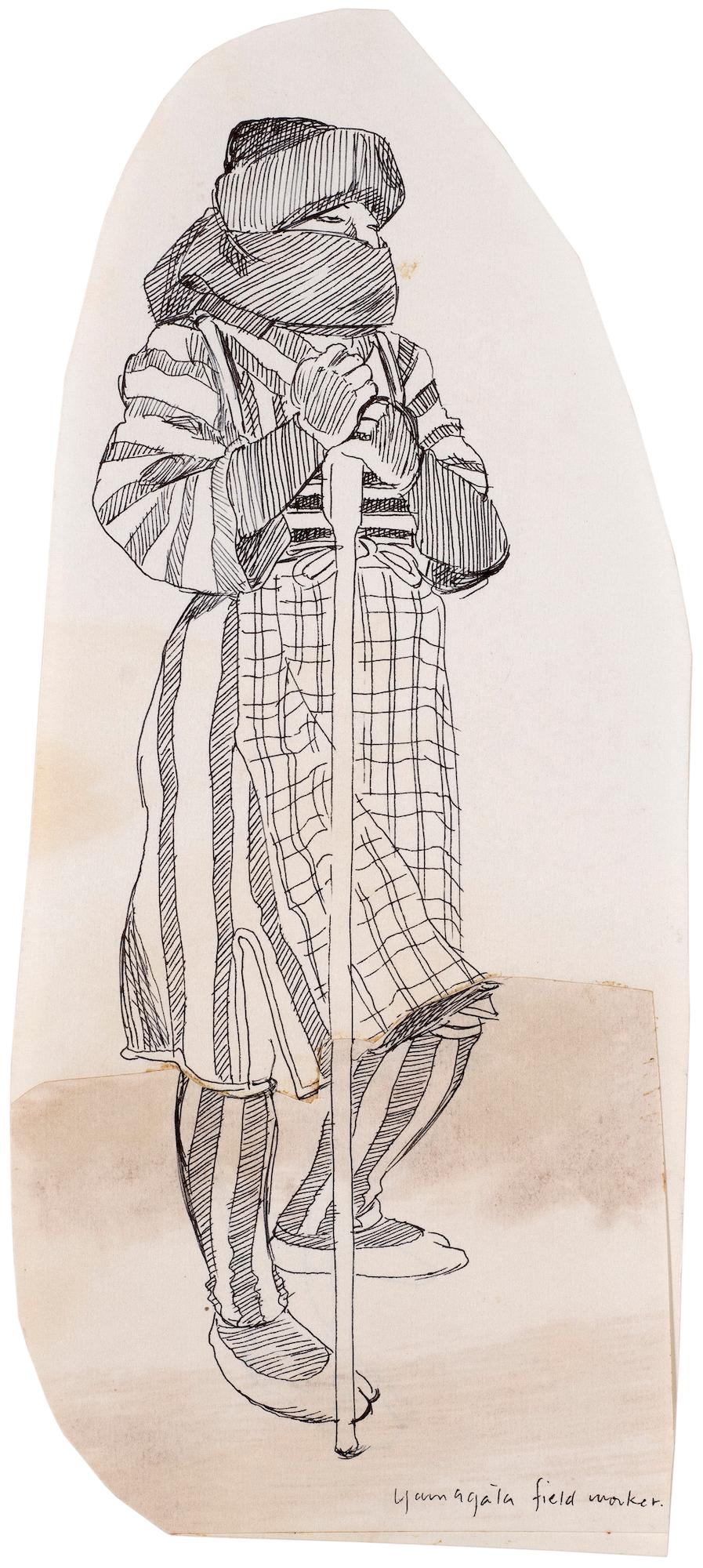
Jacqueline Ayer, Untitled (Yamagata field worker, contemporary), c. 1973
Jacqueline Ayer (1930–2012) had a career that spanned many creative fields. She began as a fashion illustrator, and later turned her hand to children’s books, textiles and garments, as she worked in New York, Paris, London, Bangkok, Hong Kong and across India. This drawing was used as one of the final illustrations printed in Ayer's publication Oriental* Costume (1974). *The term ‘oriental’ has colonial and racist origins. It was established during a period when European powers took political control of other countries and defined non-European cultures as ‘inferior’ to their own. ‘Oriental’ was commonly used in English-speaking countries until the late 20th century to group together people, culture and places in Northern Africa, East Asia and Southeast Asia, as well as objects thought to have originated in these areas. The term has been widely rejected today as it exoticizes and ‘others’ these diverse cultures. Ayer used the term here to collectively refer to modes of dress from Cambodia, China, Japan, Mongolia, Nepal, Thailand and Tibet.
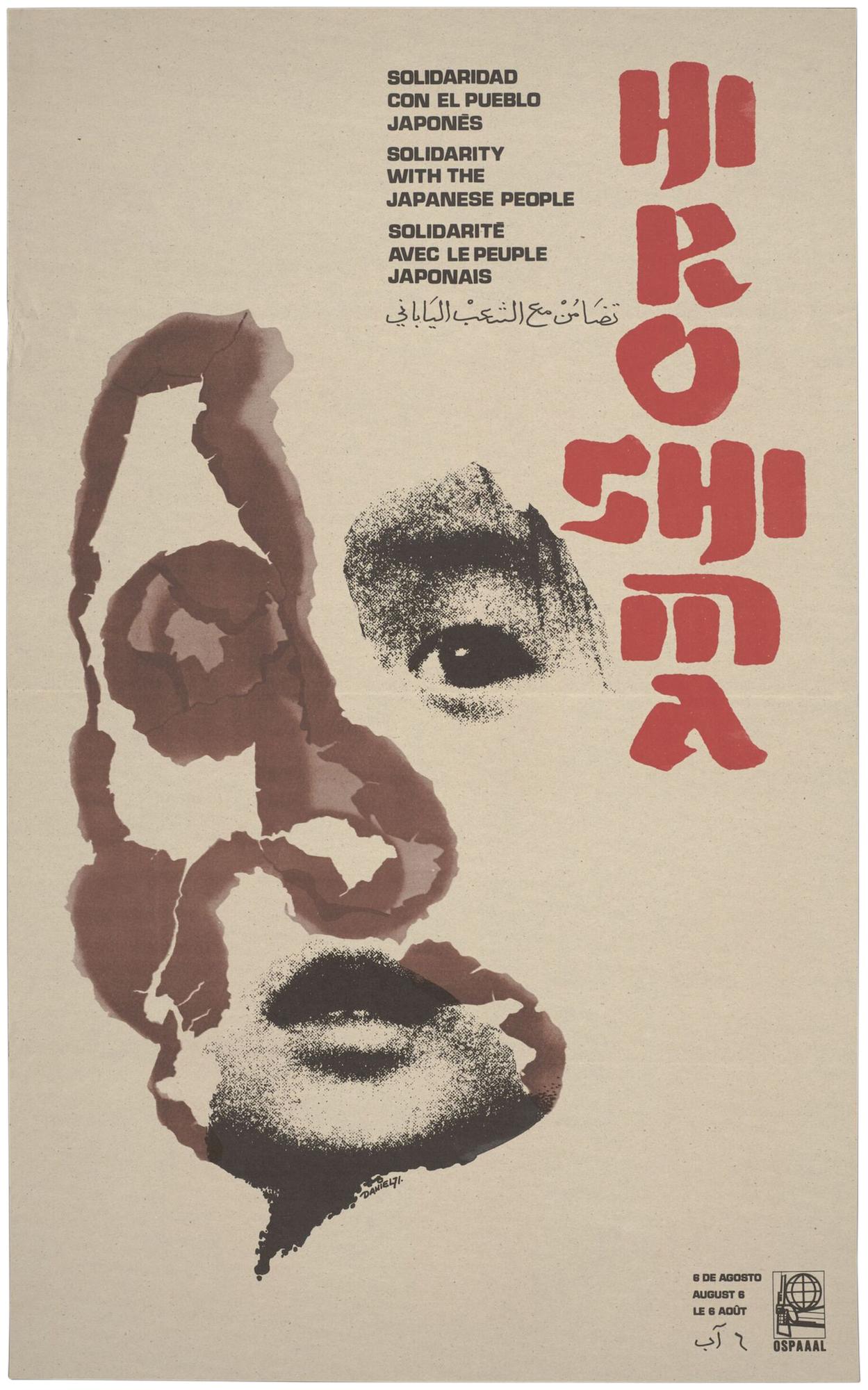
HIROSHIMA - SOLIDARITY WITH THE JAPANESE PEOPLE, 1972
Between the 1960s and 1990s, more than fifty designers worked at OSPAAAL (the Organisation of Solidarity with the People of Africa, Asia and Latin America). Based in Cuba, they made magazines and posters that were sent around the world. Their aim was to promote radical political ideas. Many of their posters celebrate socialist revolutions and liberation movements from the Global South. OSPAAAL marked the date of the atomic bombing of the city of Hiroshima by the U.S.A. as a day of solidarity with Japanese citizens. By collaging fragments of a photograph and burned paper, Daniel García stressed the horrific consequences of deploying nuclear weapons. OSPAAAL’s designers regularly used adapted photographs from the organisation’s news desk. Photographs were sometimes used out of context, with the same photographs appearing in posters and magazine illustrations to represent different themes. The identity of the person in this photograph is not recorded.
Content warning: Injury, burns
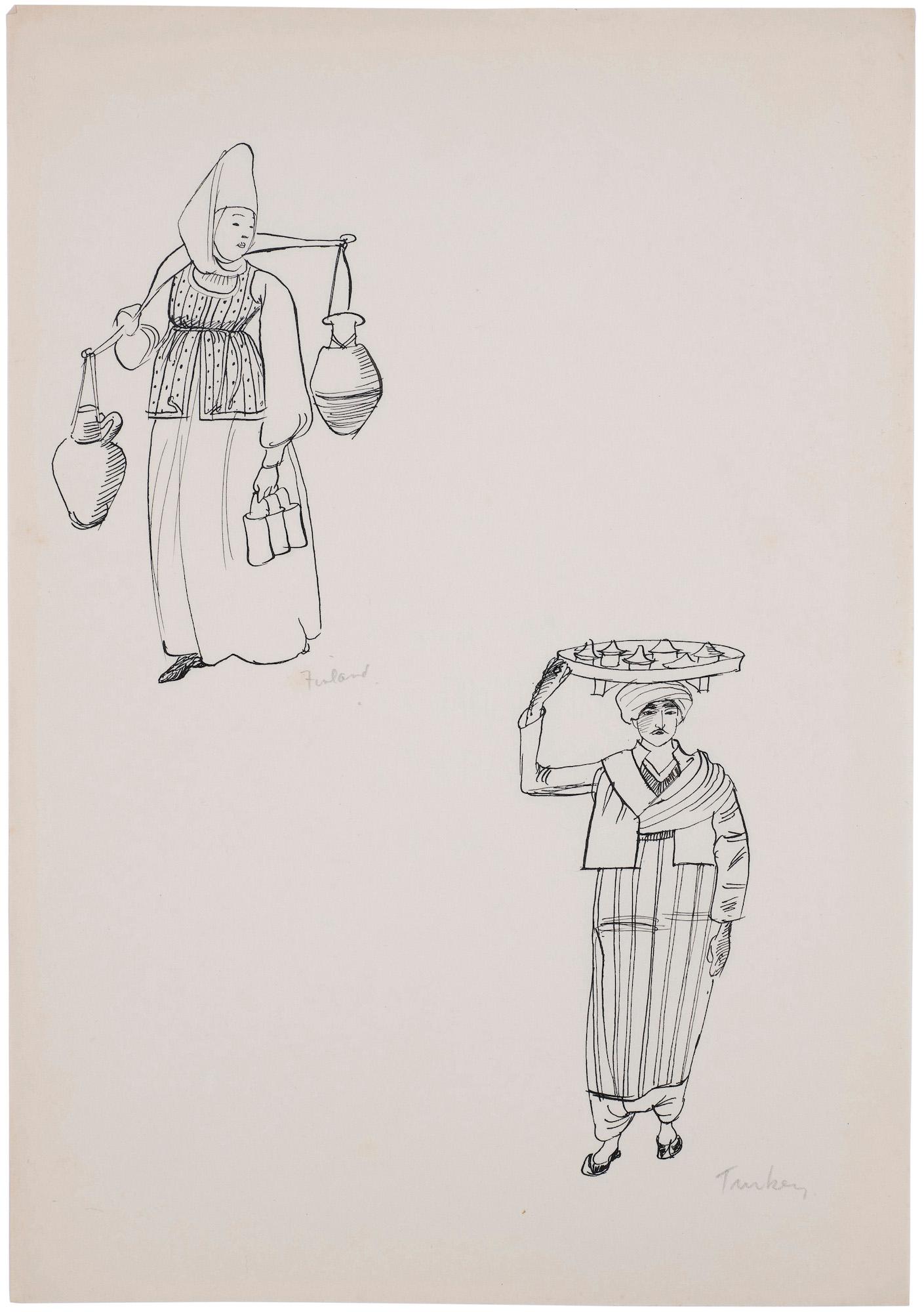
Jacqueline Ayer, Untitled, c.1975
Jacqueline Ayer (1930–2012) had a career that spanned many creative fields. She began as a fashion illustrator, and later turned her hand to children’s books, textiles and garments, as she worked in New York, Paris, London, Bangkok, Hong Kong and across India.
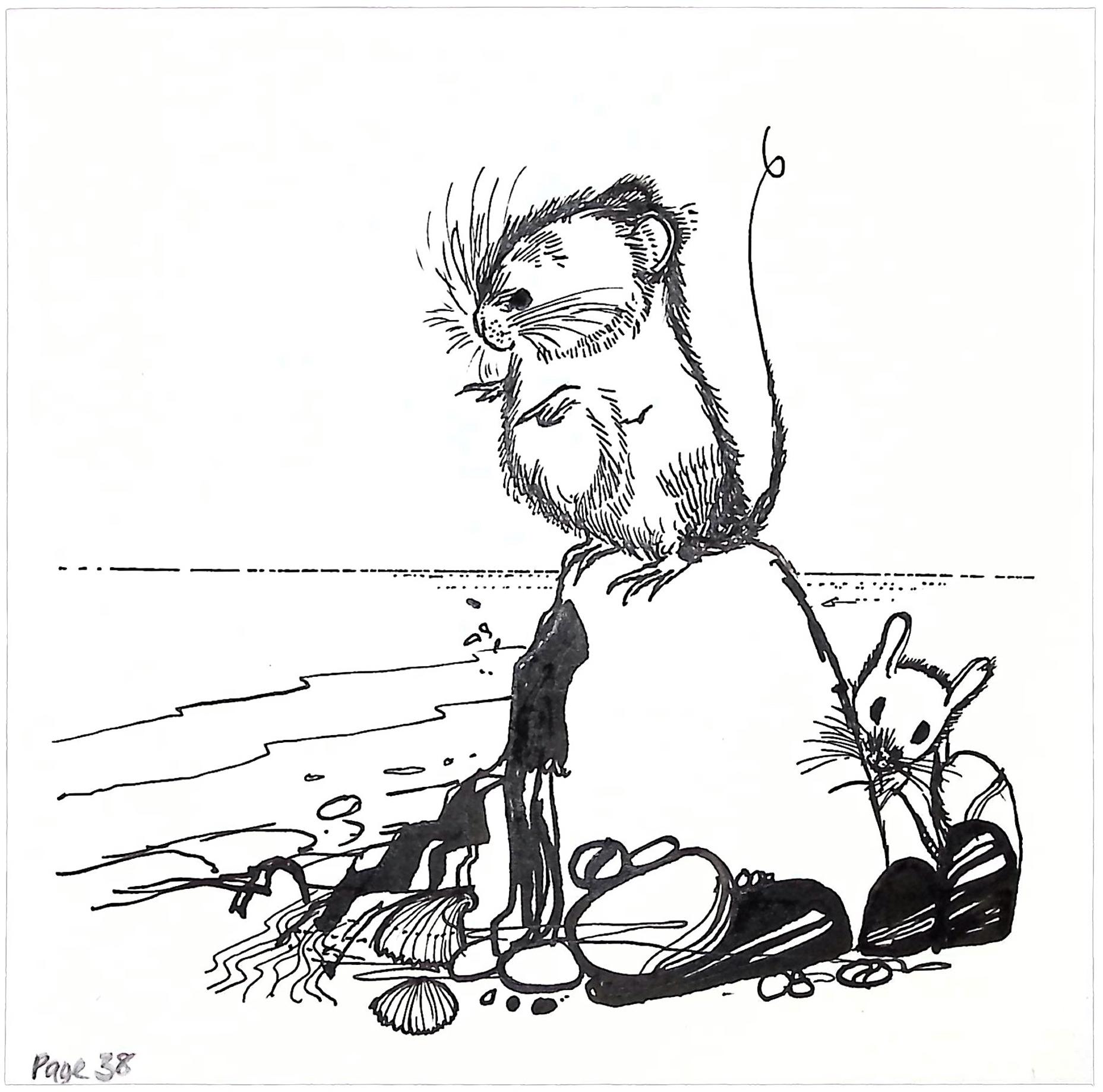
Illustration for Willow and Albert are Stowaways, c. 1970
British illustrator Janina Ede (1937-2018) created covers and illustrations for over 100 books from the 1950s to the 1980s. Many of her illustrations feature animals, which she drew from life.
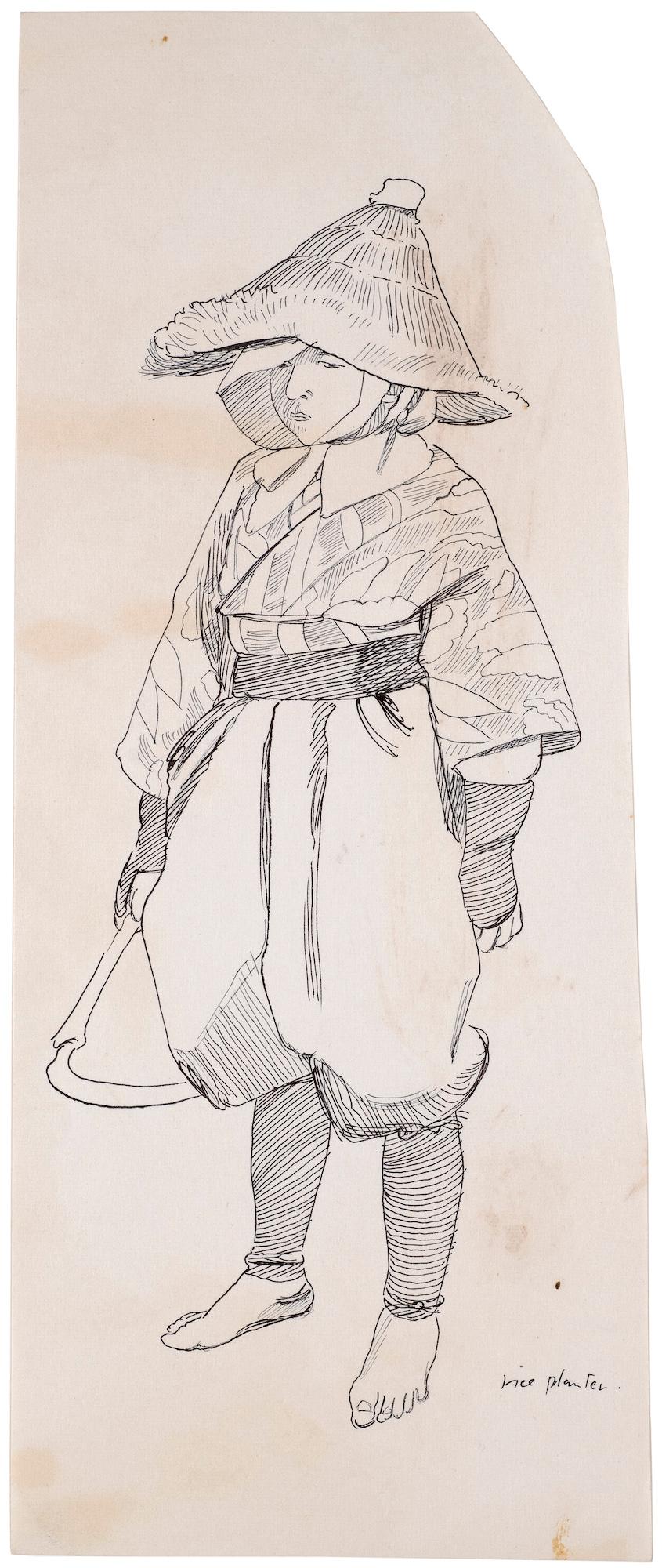
Jacqueline Ayer, Untitled (Rice planter, Himi), c. 1973
Jacqueline Ayer (1930–2012) had a career that spanned many creative fields. She began as a fashion illustrator, and later turned her hand to children’s books, textiles and garments, as she worked in New York, Paris, London, Bangkok, Hong Kong and across India. This drawing was used as one of the final illustrations printed in Ayer's publication Oriental* Costume (1974). *The term ‘oriental’ has colonial and racist origins. It was established during a period when European powers took political control of other countries and defined non-European cultures as ‘inferior’ to their own. ‘Oriental’ was commonly used in English-speaking countries until the late 20th century to group together people, culture and places in Northern Africa, East Asia and Southeast Asia, as well as objects thought to have originated in these areas. The term has been widely rejected today as it exoticizes and ‘others’ these diverse cultures. Ayer used the term here to collectively refer to modes of dress from Cambodia, China, Japan, Mongolia, Nepal, Thailand and Tibet.
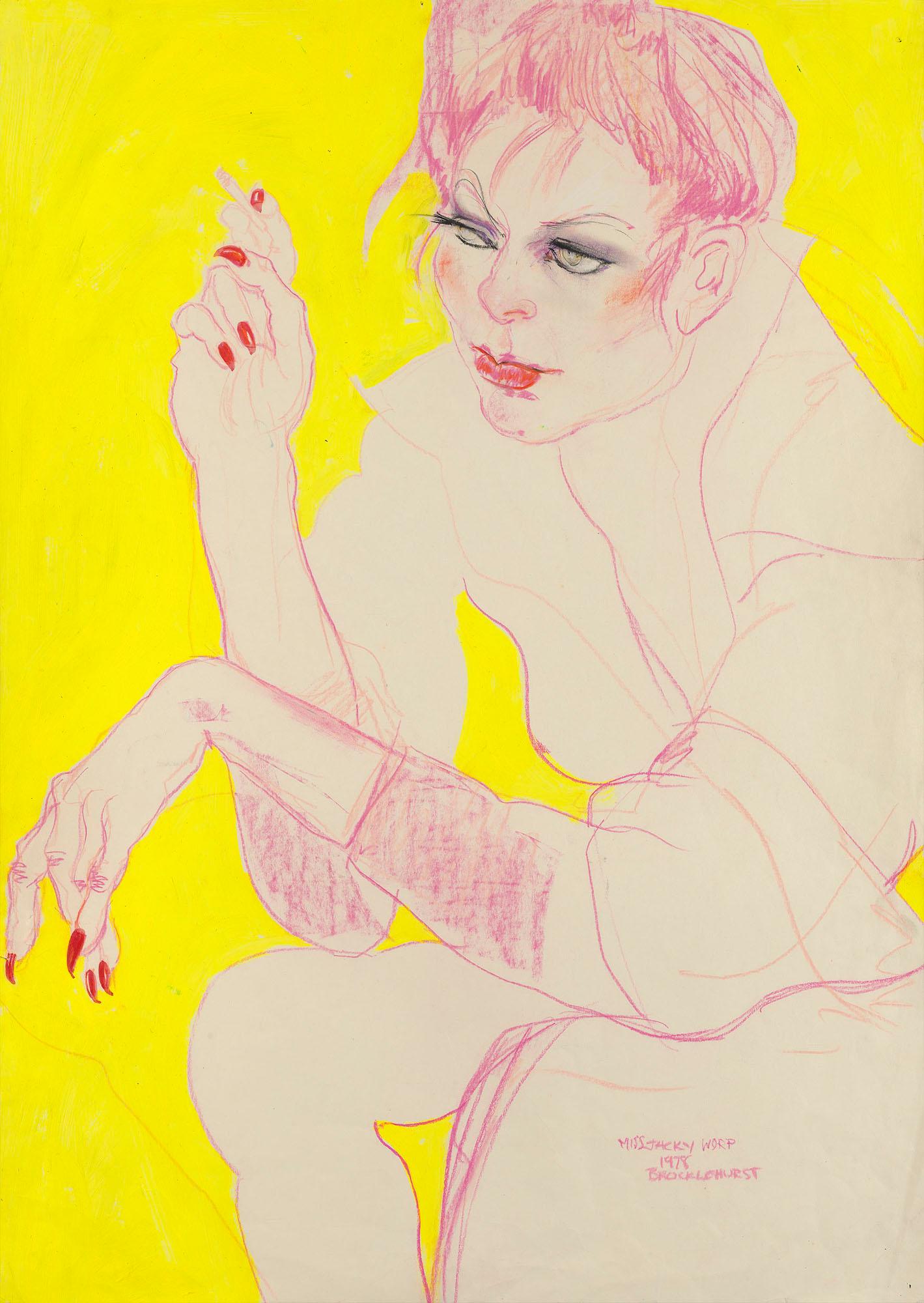
Jo Brocklehurst, Miss Jacky Worp, 1978
Jo (Josephine) Brocklehurst (1935 - 2006) studied at Central Saint Martins and began her career as a fashion illustrator. She later focused on portraiture, drawing directly from models at her studio in West Hampstead and in nightclubs and theatres in Berlin, London and New York. Her work documents the alternative subcultures of the 1970s, 80s and 90s that went on to shape mainstream fashion and performance scenes.
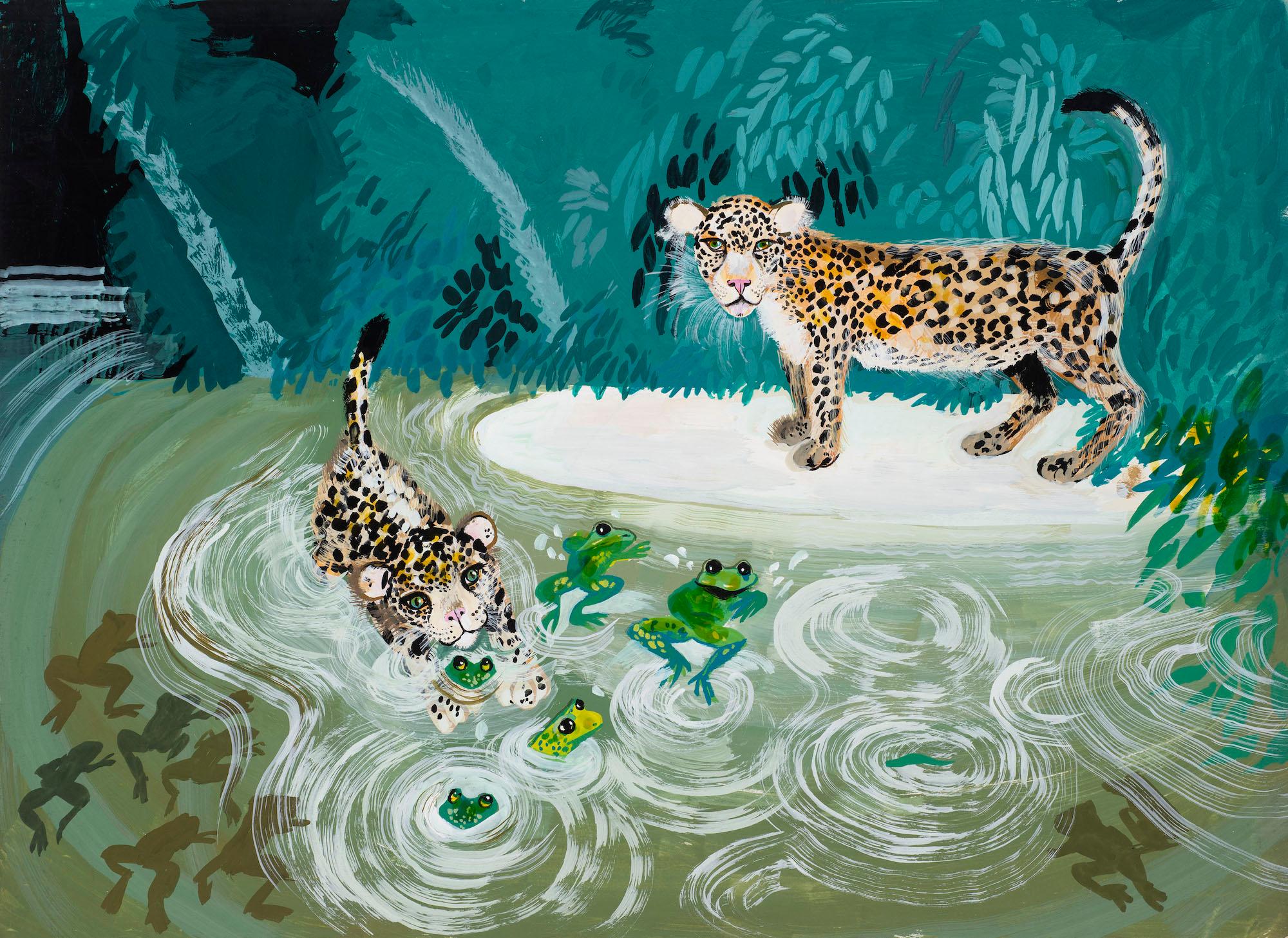
Untitled illustration for Jackanory (Just So Stories: The Beginning of the Armadillo), 1973
Janina Ede (1937-2018) created covers and illustrations for over 100 books in the 1960s, 70s and 80s. Many of her illustrations feature animals, which she drew from life. In the 1970s, Ede was commissioned to create large colourful illustrations for the BBC children’s television series, Jackanory. Each episode was dedicated to a story read by an actor, while specially commissioned illustrations were shown on screen during each programme. Some of these illustrations were for programmes featuring stories by author Rudyard Kipling. His ‘Just So’ stories were short tales that imagined how various animals attained their distinguishing features. Kipling set the stories in parts of India, West Asia and Africa. His descriptions of places and people included racist and exoticised stereotypes. Ede’s illustrations draw extensively on Kipling’s descriptions, and therefore reflect the racism in his work, as well as the prevailing stereotypical views that existed in 1970s Britain. Her own personal views are not documented. This storyboard illustration was produced by Janina Ede for Jackanory episode #1451, 'Just So Stories - The Beginning of the Armadillos'. It aired on 2 January 1973.
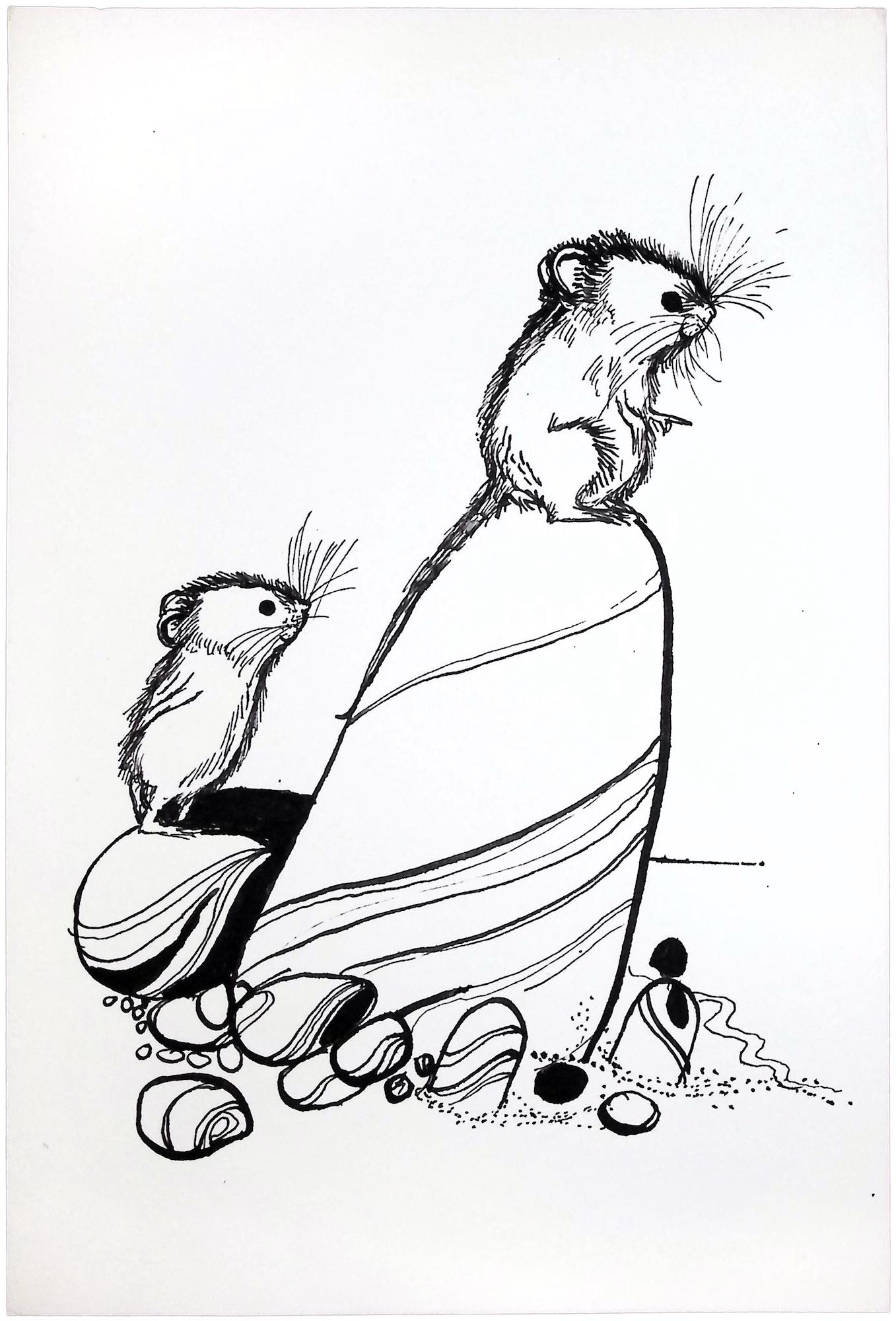
Illustration for Willow and Albert are Stowaways, c. 1970
British illustrator Janina Ede (1937-2018) created covers and illustrations for over 100 books from the 1950s to the 1980s. Many of her illustrations feature animals, which she drew from life.
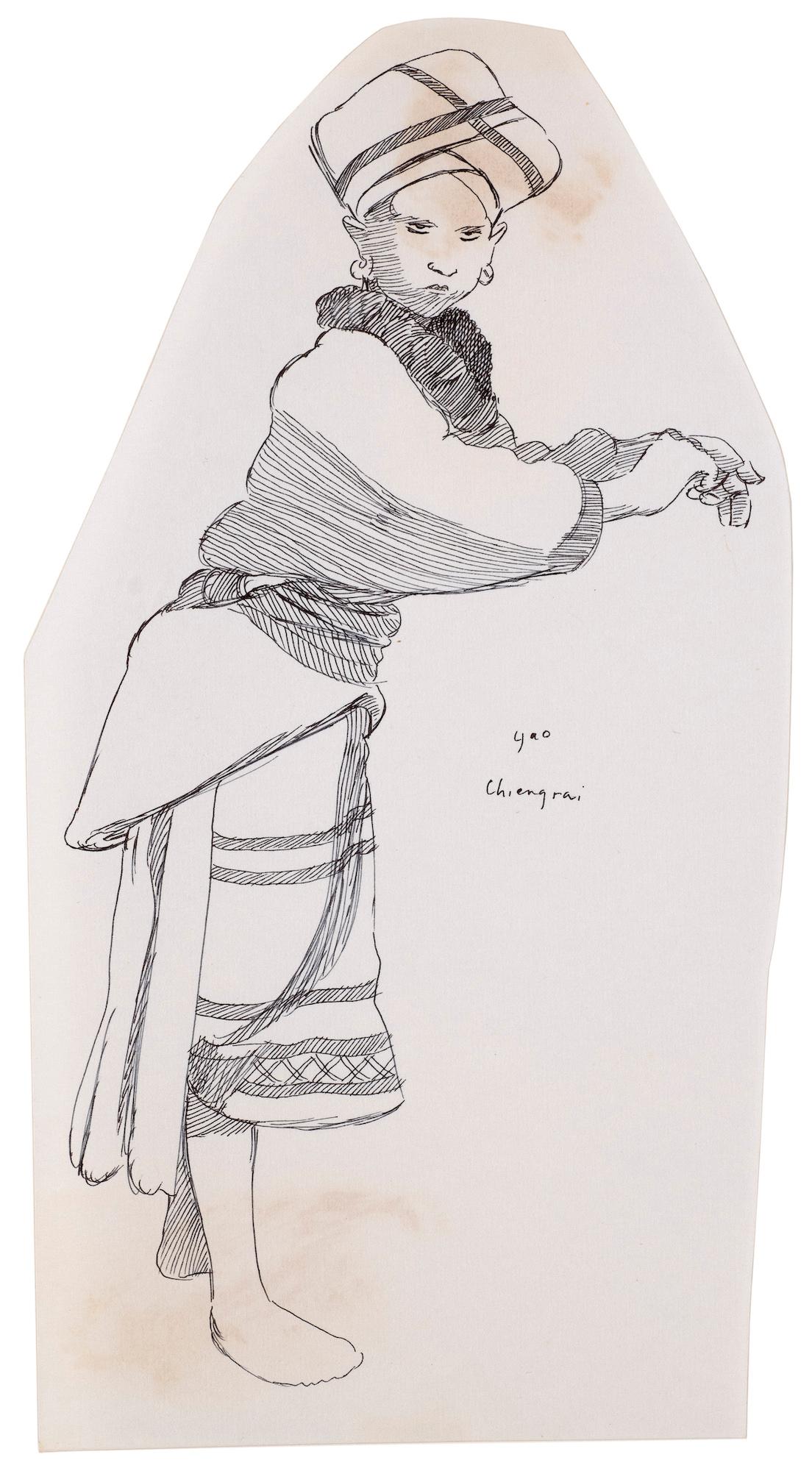
Jacqueline Ayer, Untitled (Yao girl, Thailand), c. 1973
Jacqueline Ayer (1930–2012) had a career that spanned many creative fields. She began as a fashion illustrator, and later turned her hand to children’s books, textiles and garments, as she worked in New York, Paris, London, Bangkok, Hong Kong and across India. This drawing was used as one of the final illustrations printed in Ayer's publication Oriental* Costume (1974). *The term ‘oriental’ has colonial and racist origins. It was established during a period when European powers took political control of other countries and defined non-European cultures as ‘inferior’ to their own. ‘Oriental’ was commonly used in English-speaking countries until the late 20th century to group together people, culture and places in Northern Africa, East Asia and Southeast Asia, as well as objects thought to have originated in these areas. The term has been widely rejected today as it exoticizes and ‘others’ these diverse cultures. Ayer used the term here to collectively refer to modes of dress from Cambodia, China, Japan, Mongolia, Nepal, Thailand and Tibet.