Star
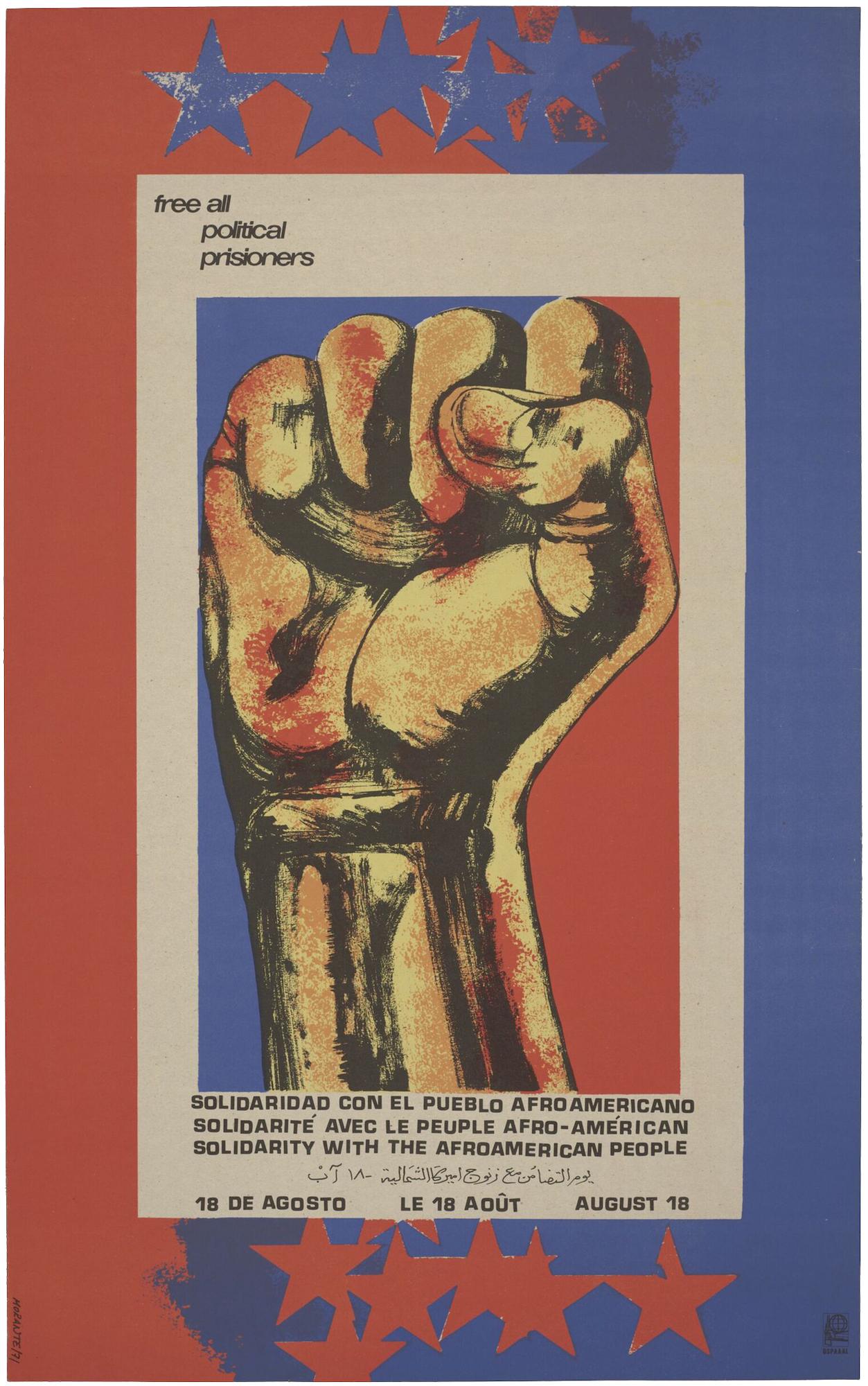
free all political prisoners - SOLIDARITY WITH THE AFROAMERICAN PEOPLE - AUGUST 18, 1971
Between the 1960s and 1990s, more than fifty designers worked at OSPAAAL. Based in Cuba, they made magazines and posters that were sent around the world. Their aim was to promote radical political ideas. Many of their posters celebrate socialist revolutions and liberation movements from the Global South. They also criticised the foreign policy of the U.S.A. and supported the Black Power movement.
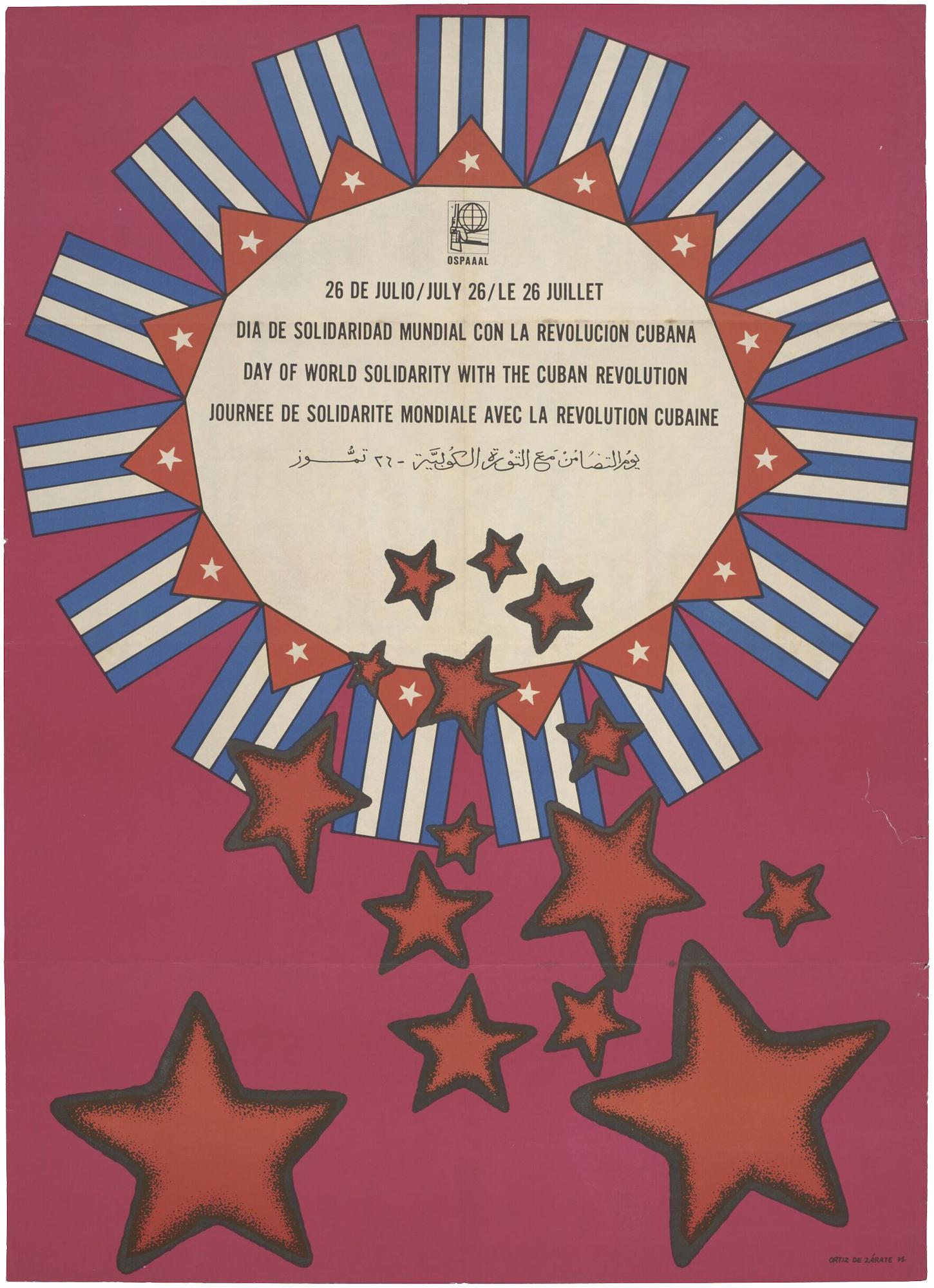
JULY 26 - DAY OF WORLD SOLIDARITY WITH THE CUBAN REVOLUTION, 1975
Between the 1960s and 1990s, more than fifty designers worked at OSPAAAL. Based in Cuba, they made magazines and posters that were sent around the world. Their aim was to promote radical political ideas. Many of their posters celebrate socialist revolutions and liberation movements from the Global South. This design promotes 26 July as a day of solidarity with the Cuban Revolution. The revolutionary 26th of July Movement led by Fidel Castro took power in Cuba in 1959.
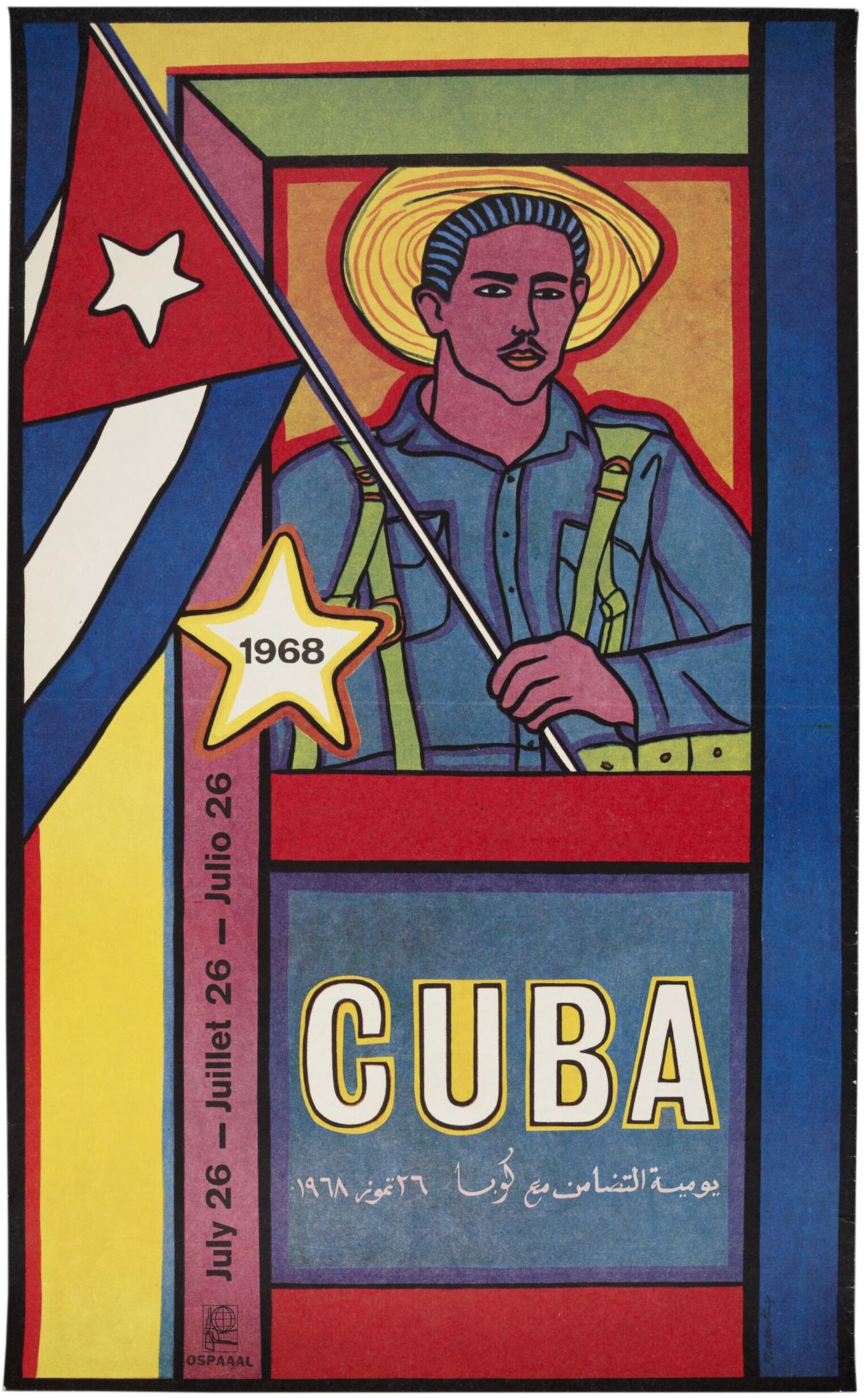
CUBA - July 26 - 1968, 1968
Between the 1960s and 1990s, more than fifty designers worked at OSPAAAL. Based in Cuba, they made magazines and posters that were sent around the world. Their aim was to promote radical political ideas. Many of their posters celebrate socialist revolutions and liberation movements from the Global South. From the 1960s, painter Raúl Martinez started working as a graphic designer, drawn to the social impact of posters and magazines. He was known for his portraits of well-known revolutionary icons, but to commemorate the 26th of July Movement he portrayed an anonymous Cuban patriot.
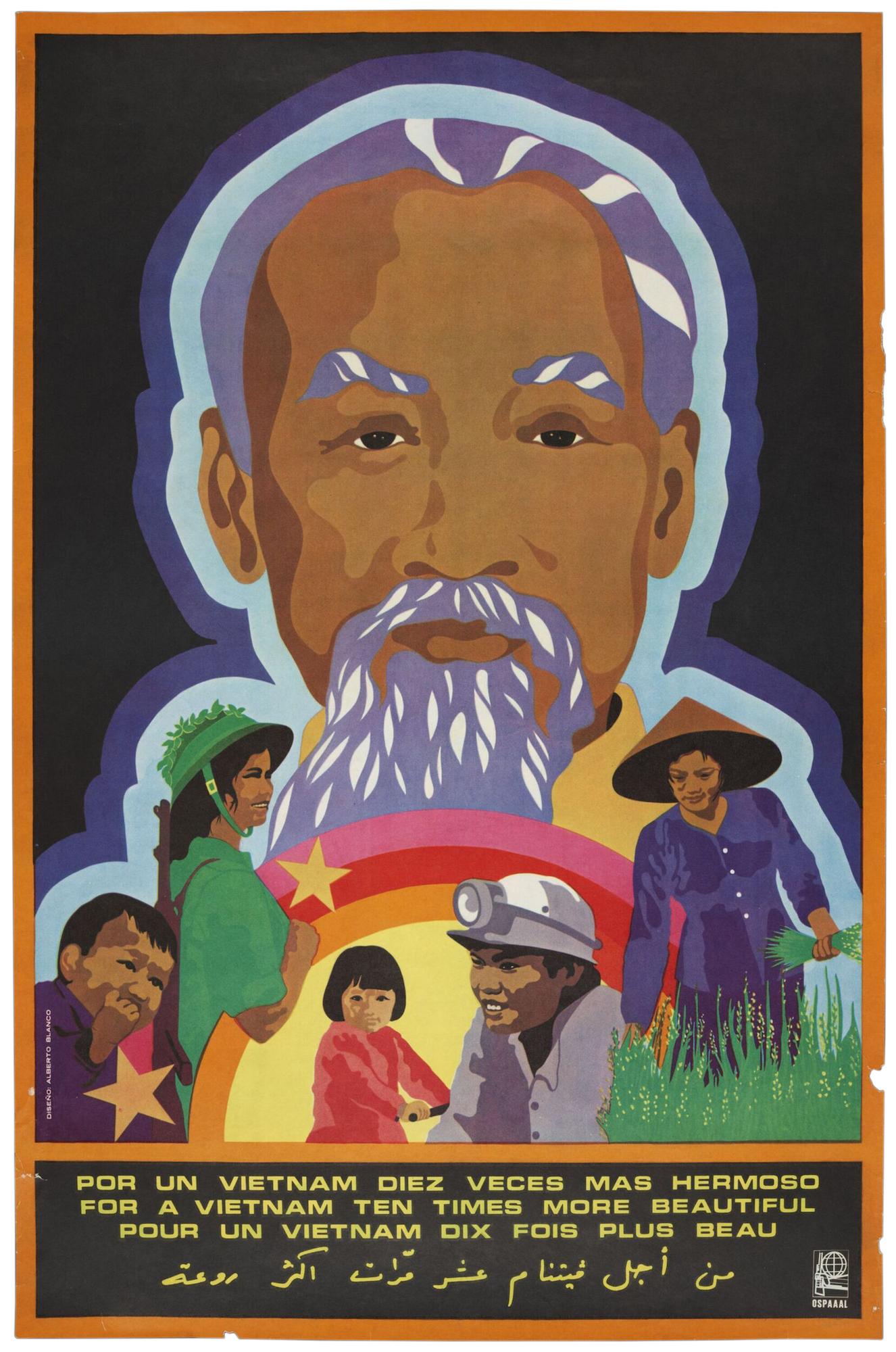
FOR A VIETNAM TEN TIMES MORE BEAUTIFUL, 1980
Between the 1960s and 1990s, more than fifty designers worked at OSPAAAL (the Organisation of Solidarity with the People of Africa, Asia and Latin America). Based in Cuba, they made magazines and posters that were sent around the world. Their aim was to promote radical political ideas. Many of their posters celebrate socialist revolutions and liberation movements from the Global South. President Hồ Chí Minh promised that a country “ten times more beautiful” would be rebuilt after the destruction caused by the war between North Vietnam and South Vietnam, allied with the U.S.A. (known as the ‘Vietnam War’ and ‘War Against the Americans to Save the Nation’).. This posthumous portrait of the leader pictures Vietnamese citizens in the socialist realist style used in propaganda posters from the Soviet Union and People’s Republic of China.
Content warning: weaponry
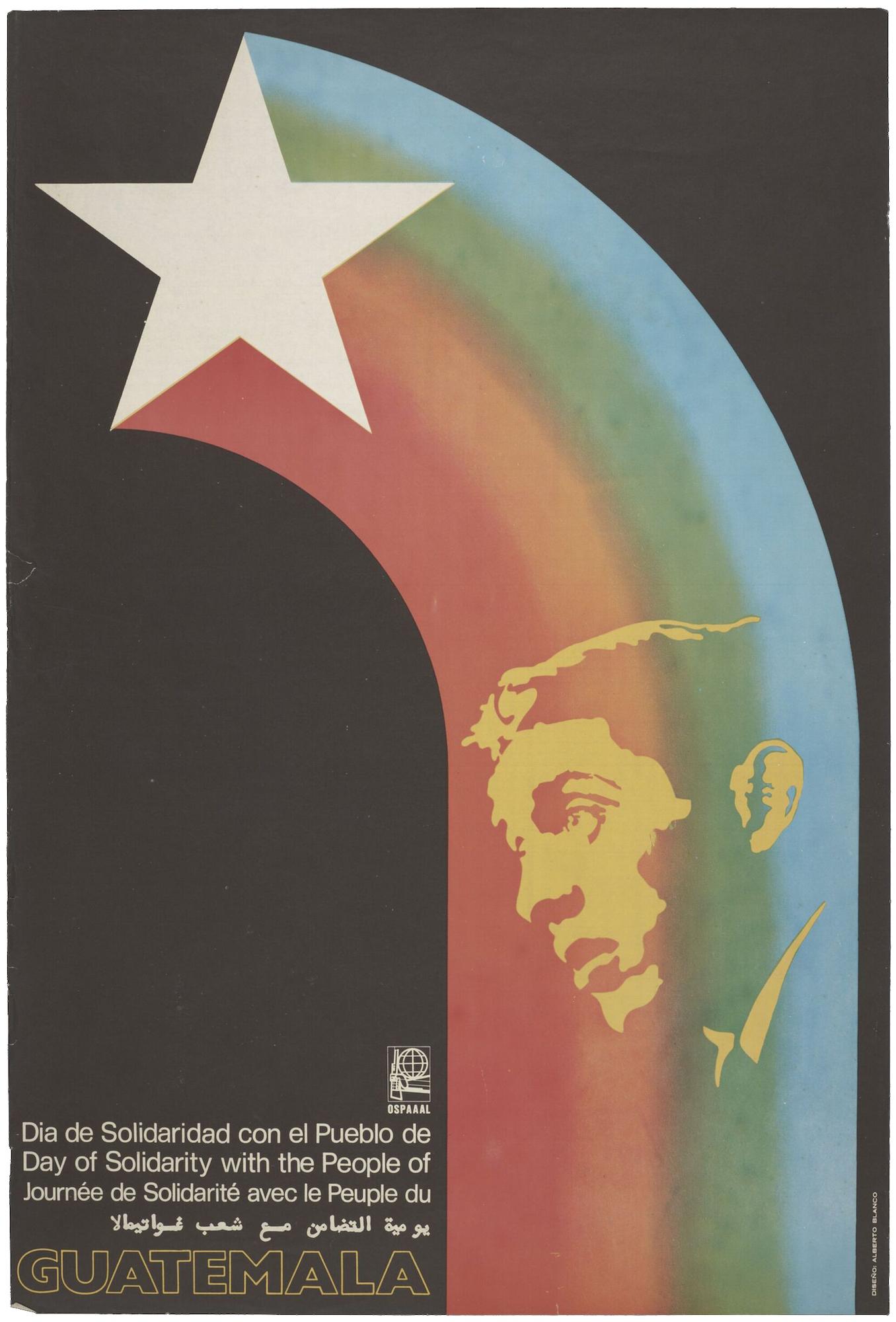
Day of Solidarity with the People of GUATEMALA, 1977
Between the 1960s and 1990s, more than fifty designers worked at OSPAAAL (the Organisation of Solidarity with the People of Africa, Asia and Latin America). Based in Cuba, they made magazines and posters that were sent around the world. Their aim was to promote radical political ideas. Many of their posters celebrate socialist revolutions and liberation movements from the Global South. For this poster, Alberto Blanco González used a photograph of Luis Augusto Turcios Lima taken at the 1966 Tricontinental conference. The 24-year-old was killed in a car accident later that year, but was remembered as a leader of the guerrilla group, the Rebel Armed Forces during the Guatemalan Civil War. Rather than creating formal portraits, many of OSPAAAL’s designers took inspiration from pop art and commercial advertising in their representations of political figures.
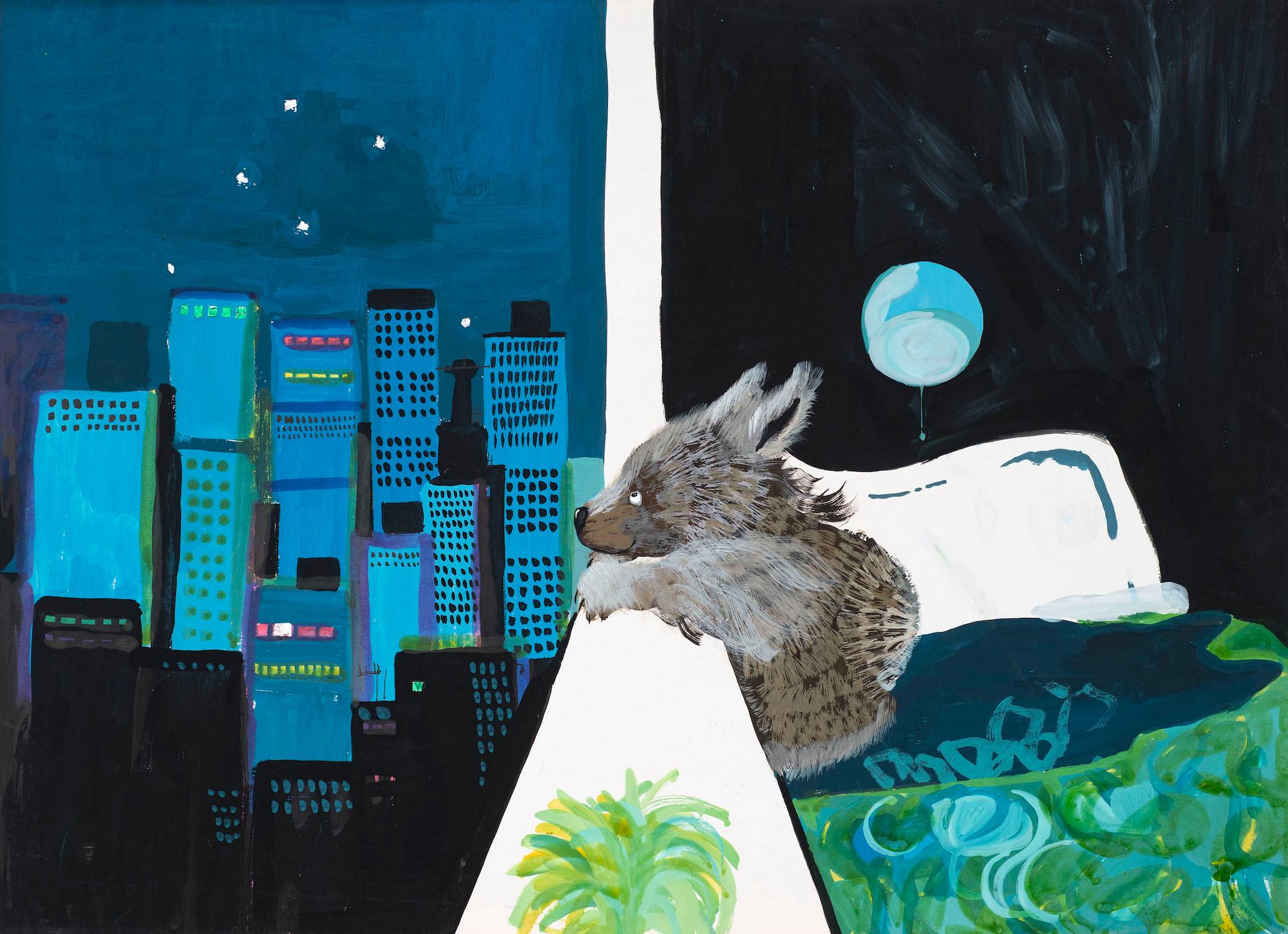
Untitled illustration for Jackanory (Mary Plain Goes to America) , 1972
British illustrator Janina Ede (1937-2018) created covers and illustrations for over 100 books from the 1950s to the 1980s. In the 1970s, she made illustrations for Jackanory, a BBC television programme. During each episode, an actor read a story, while specially-commissioned illustrations were shown on screen. For the televised version of Mary Plain Goes to America, Ede created paintings on large boards. These allowed the camera to pan across her image, showing a little at a time. BBC1 had only been in colour for three years, and so Ede used bold colours painted in gouache and reflective collaged foil to make the most of the new technology. This storyboard illustration was produced by Janina Ede for Jackanory episode #1429, 'Mary Plain Goes to America: Part 4 - Hollywood's Newest Star'. It aired on 16 November 1972.
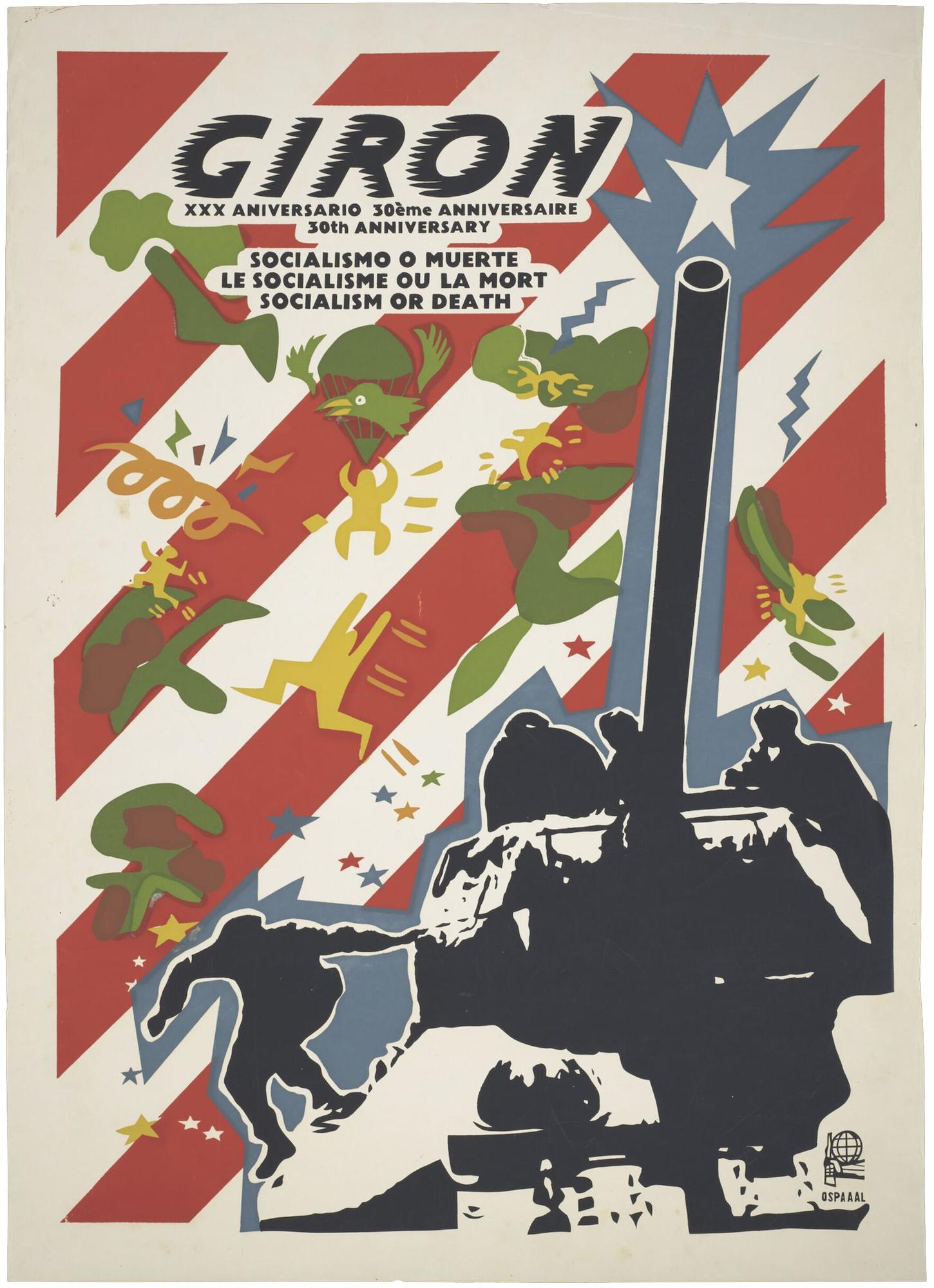
GIRON - 30th ANNIVERSARY - SOCIALISM OR DEATH, 1969
Between the 1960s and 1990s, more than fifty designers worked at OSPAAAL. Based in Cuba, they made magazines and posters that were sent around the world. Their aim was to promote radical political ideas. Many of their posters celebrate socialist revolutions and liberation movements from the Global South. In 1961, a military group sponsored by the U.S. Central Intelligence Agency invaded Cuba in an attempt to overthrow Fidel Castro. Eladio Rivadulla Pérez used a press photograph of Castro jumping from a tank for his commemorative poster design.
Content warning: weaponry
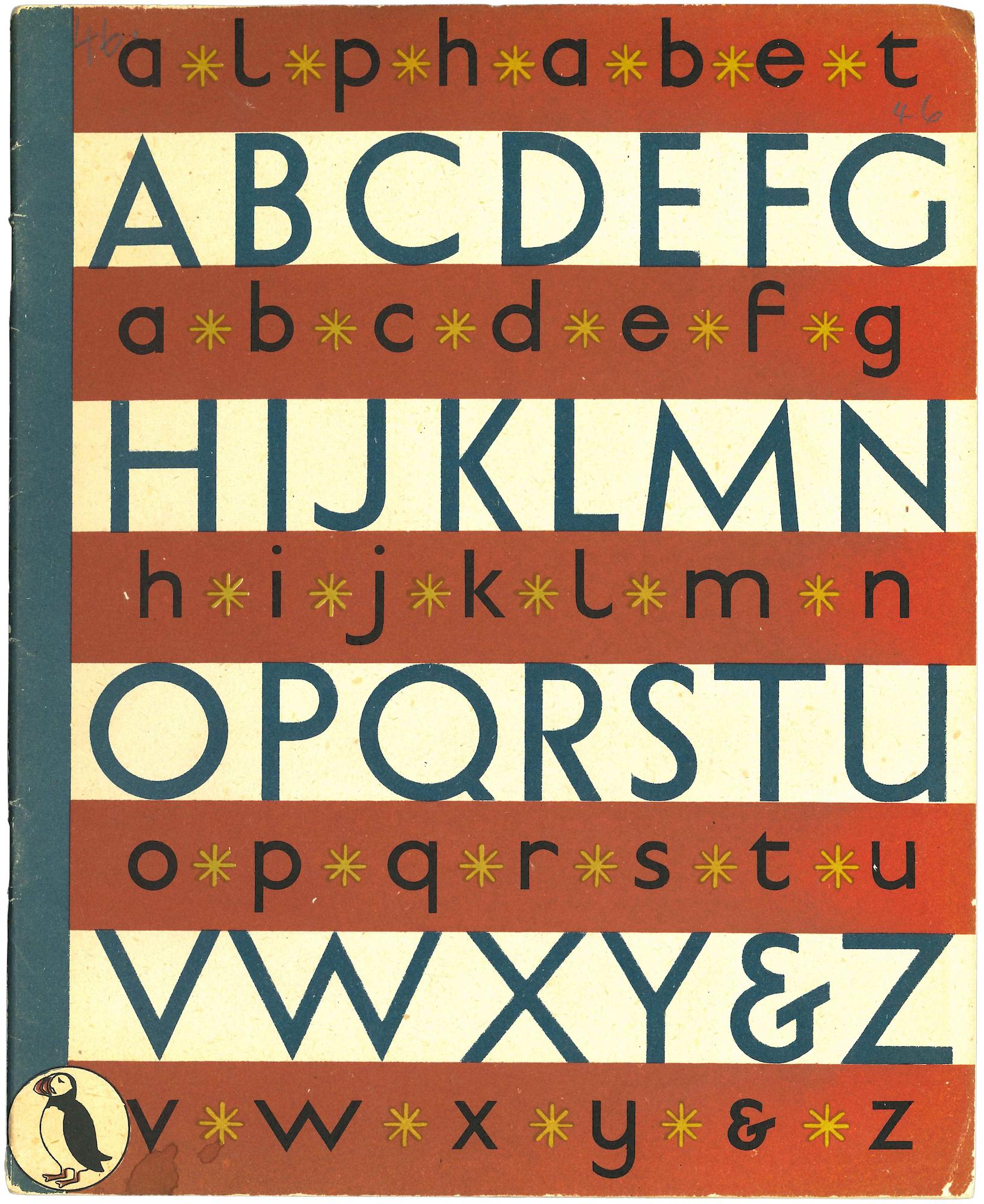
A Child’s Alphabet, 1945
The Puffin Picture Books series was established by designer and editor Noel Carrington (1895-1989). In 1933, artist Pearl Binder (1904-1990) sent Carrington a package of Soviet children’s books. “They were produced by the million on very cheap paper, but the drawings were vigorous and the colour delightful” he later remembered. These books inspired Carrington to edit a series of affordable books that would encourage “the child’s awakening interest in its surroundings... I felt that colour was essential, and that artists could... be more successful in books of this nature than the camera”. Many artists and illustrators worked on the series, adapting their ways of working to lithographic printing and the Puffin Picture Book format. Most of the 120 books in the series were printed on one large sheet of paper: one side in colour and one in black-and-white. Each sheet was cut, folded and stapled to create a softcover book.
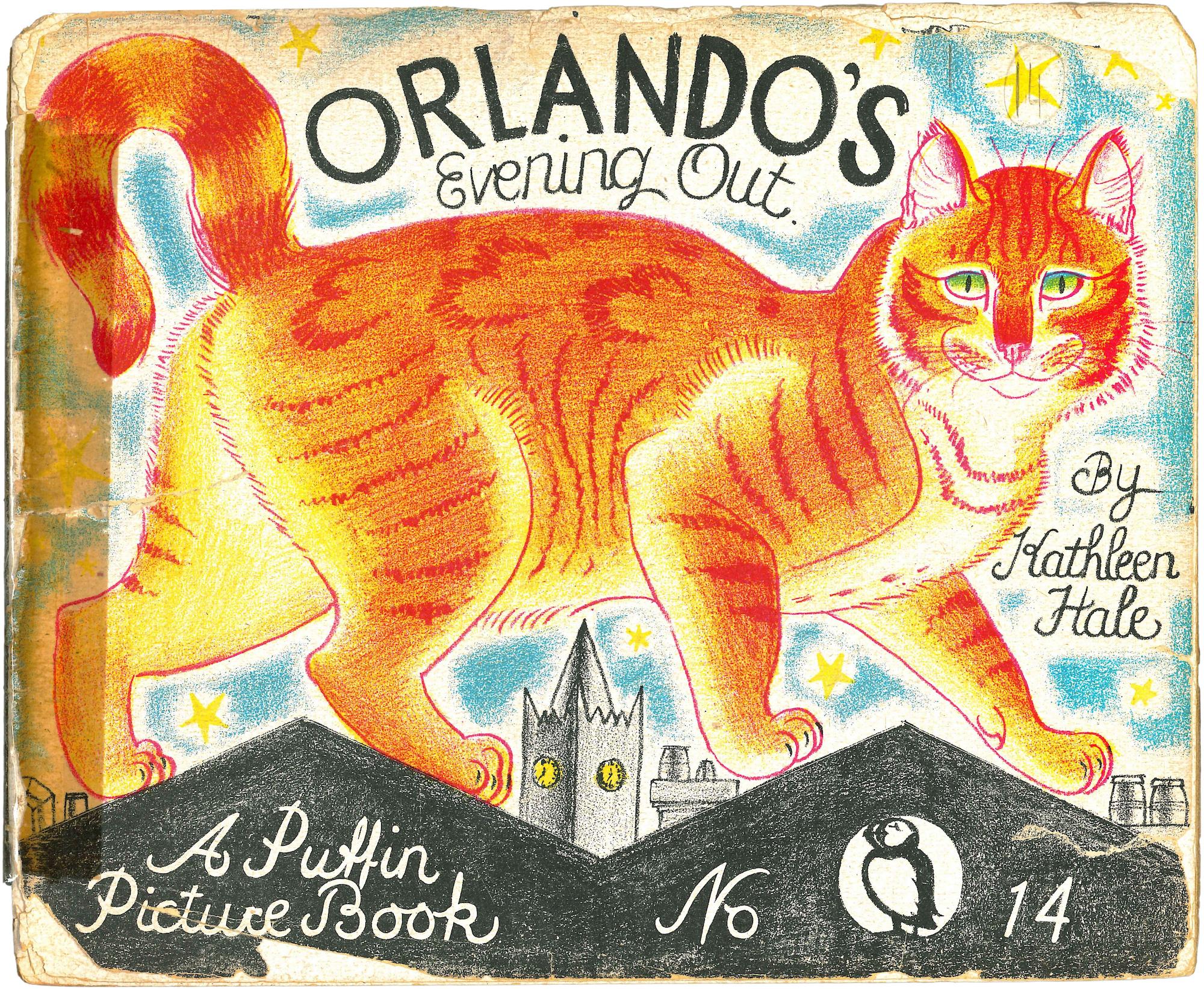
Orlando’s Evening Out, 1944
The Puffin Picture Books series was established by designer and editor Noel Carrington (1895-1989). In 1933, artist Pearl Binder (1904-1990) sent Carrington a package of Soviet children’s books. “They were produced by the million on very cheap paper, but the drawings were vigorous and the colour delightful” he later remembered. These books inspired Carrington to edit a series of affordable books that would encourage “the child’s awakening interest in its surroundings... I felt that colour was essential, and that artists could... be more successful in books of this nature than the camera”. Many artists and illustrators worked on the series, adapting their ways of working to lithographic printing and the Puffin Picture Book format. Most of the 120 books in the series were printed on one large sheet of paper: one side in colour and one in black-and-white. Each sheet was cut, folded and stapled to create a softcover book.