Performing
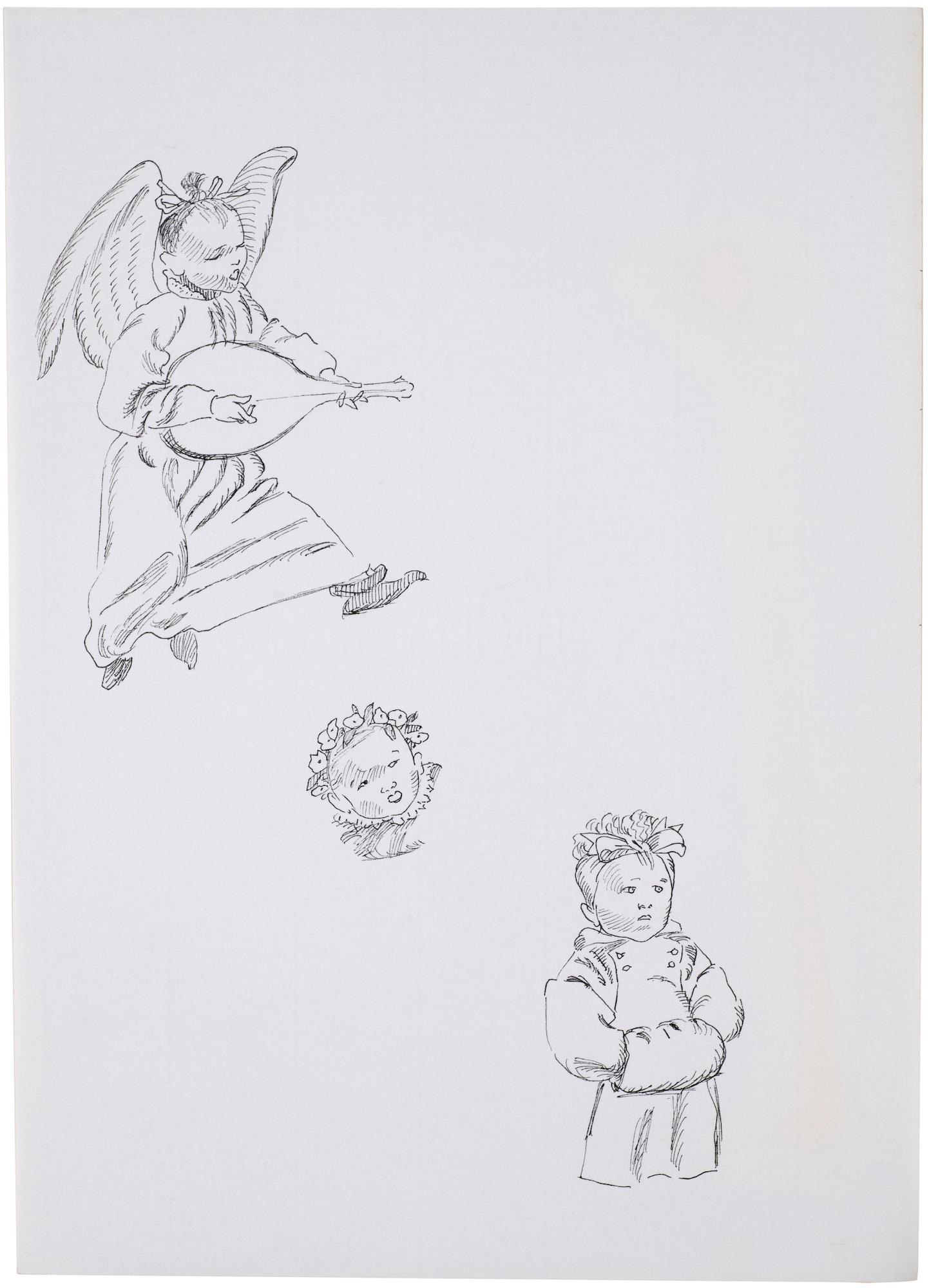
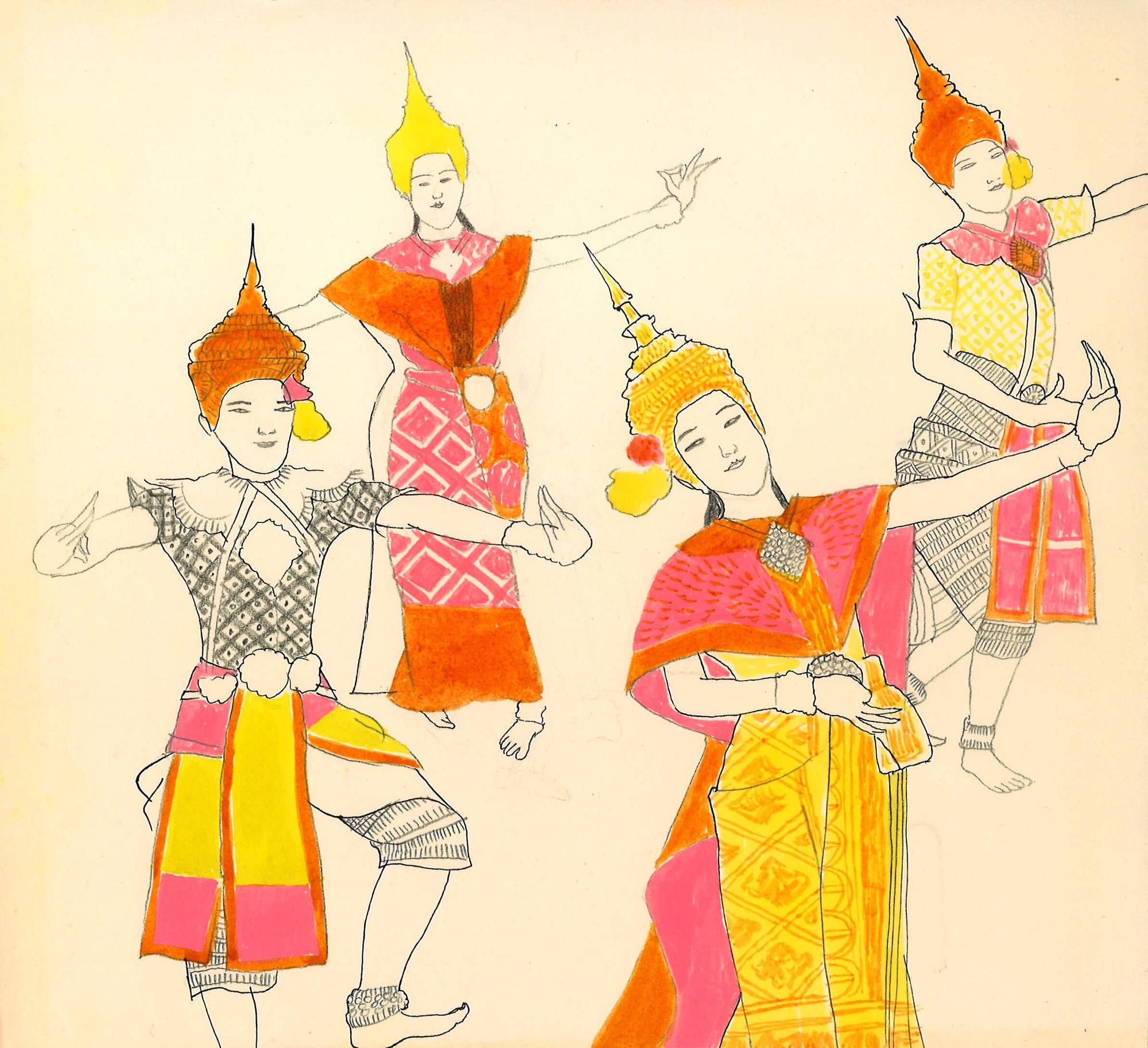
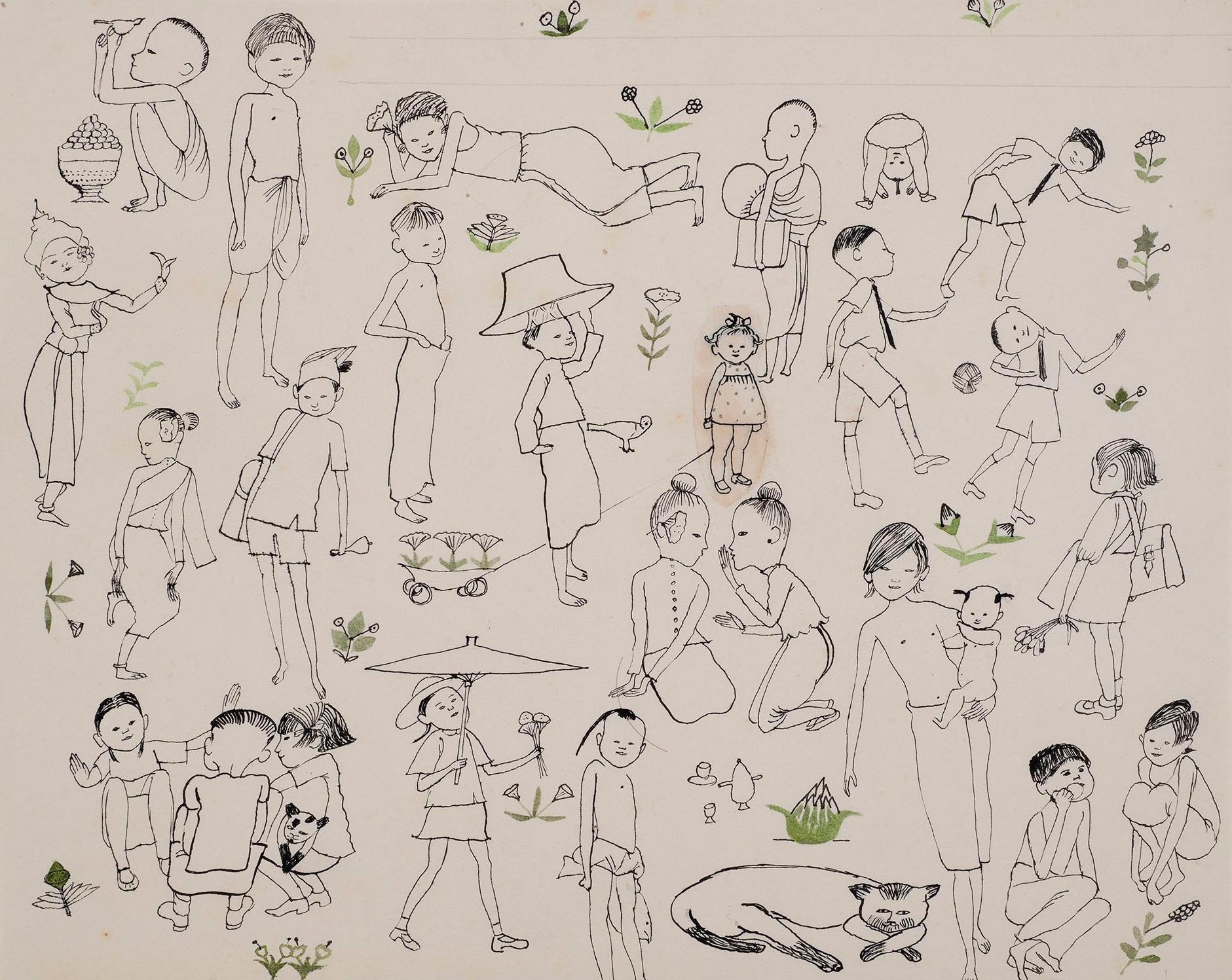
Jacqueline Ayer, Untitled, Date unknown
Jacqueline Ayer (1930–2012) had a career that spanned many creative fields. She began as a fashion illustrator, and later turned her hand to children’s books, textiles and garments, as she worked in New York, Paris, London, Bangkok, Hong Kong and across India. Ayer often used a sketchbook to record her observations and ideas for book narratives and fashion designs. The context for this drawing is unknown.
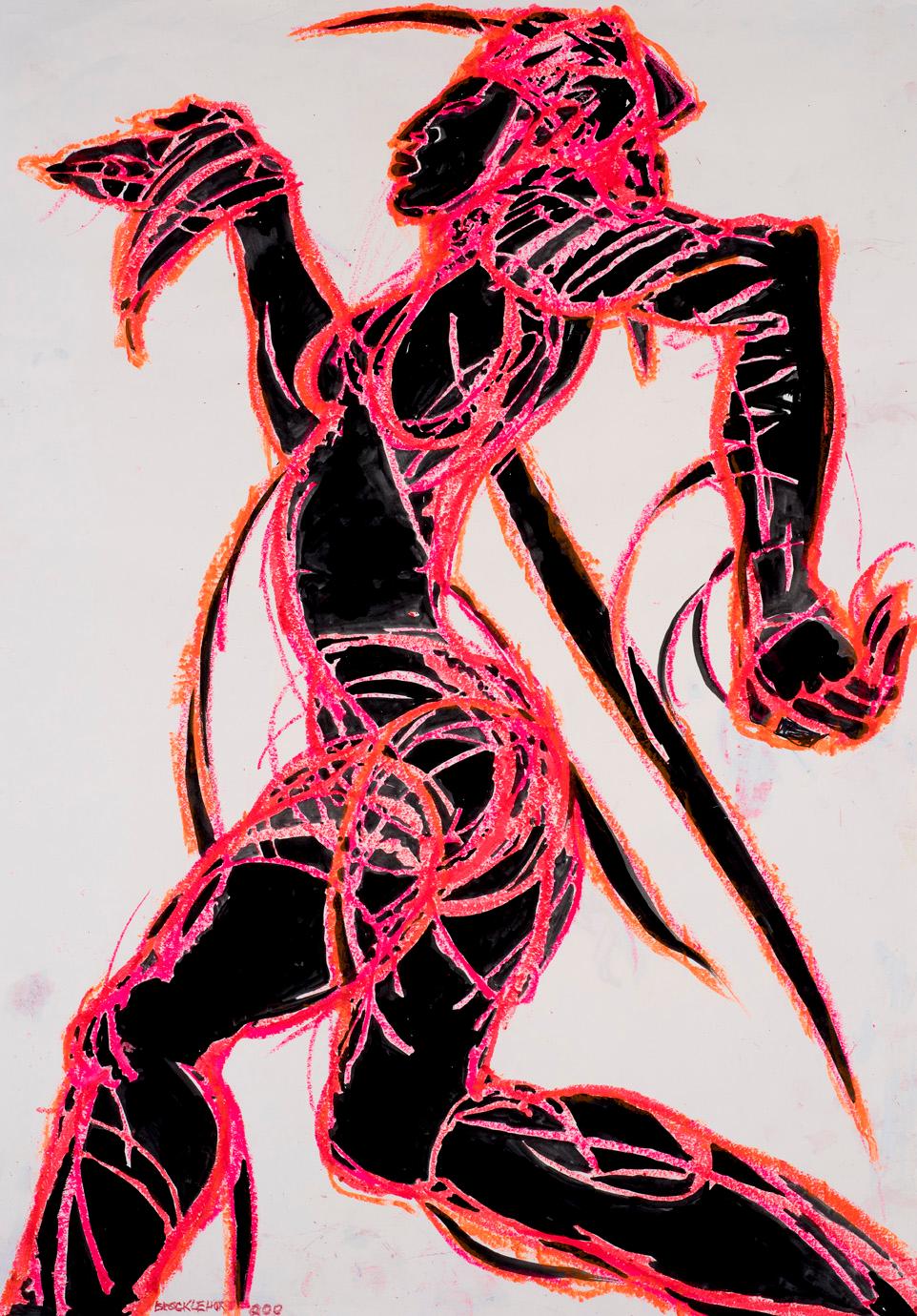
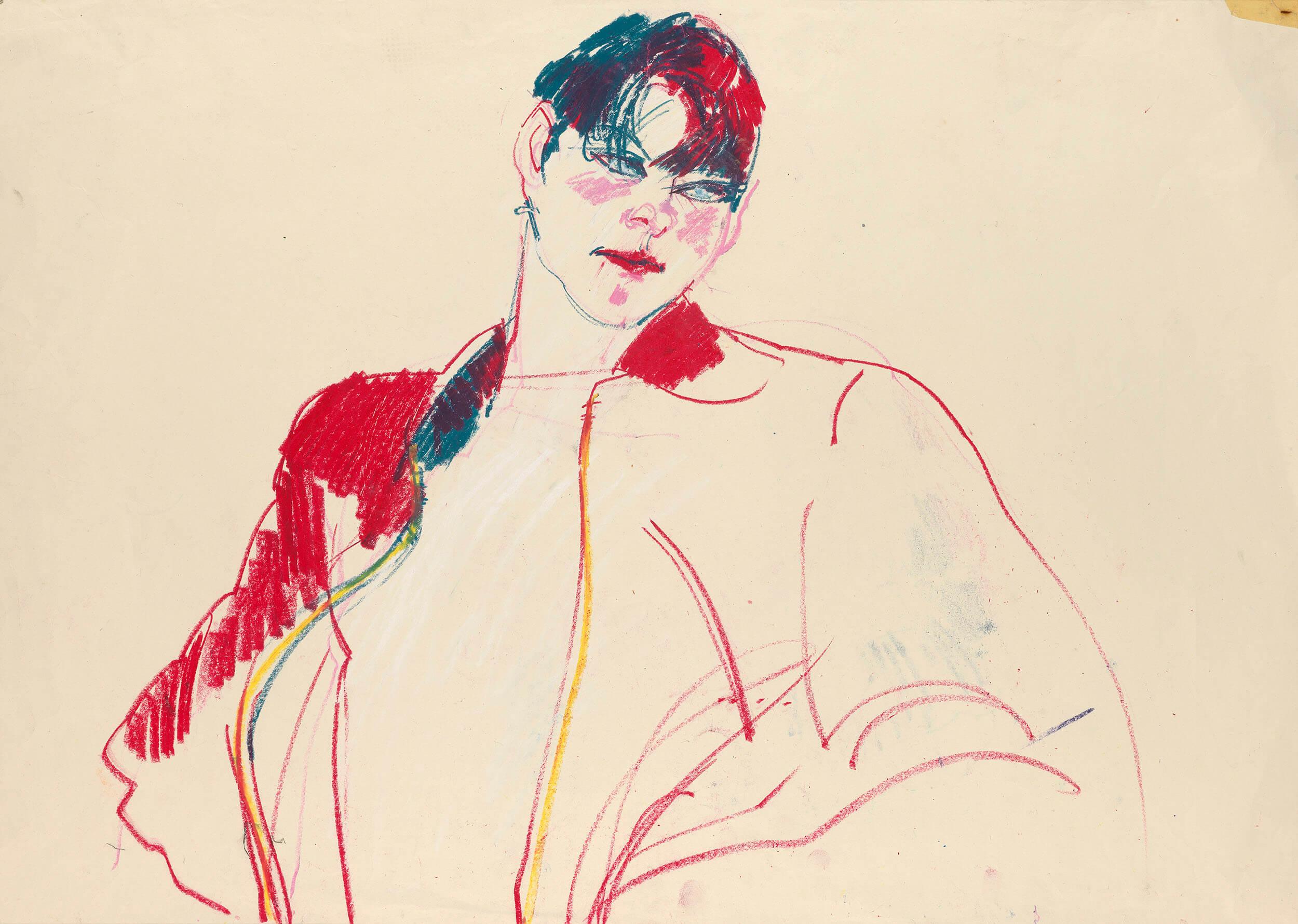
Jo Brocklehurst, Untitled (portrait of Josephine Leask), 2000
Jo (Josephine) Brocklehurst (1935 - 2006) studied at Central Saint Martins and began her career as a fashion illustrator. She later focused on portraiture, drawing directly from models at her studio in West Hampstead and in nightclubs and theatres in Berlin, London and New York. Her work documents the alternative subcultures of the 1970s, 80s and 90s that went on to shape mainstream fashion and performance scenes. In 2000, Brocklehurst created a series of drawings in sessions with dancer Josephine Leask. Leask’s 1999 article Welcome to the Club, published in ballettanz magazine, described the ways that nightclubs were acting as alternative theatres for cutting-edge contemporary dance. These drawings were shown as part of Leask’s lecture-performance on the same theme at the 2000 Salzburg Festival.
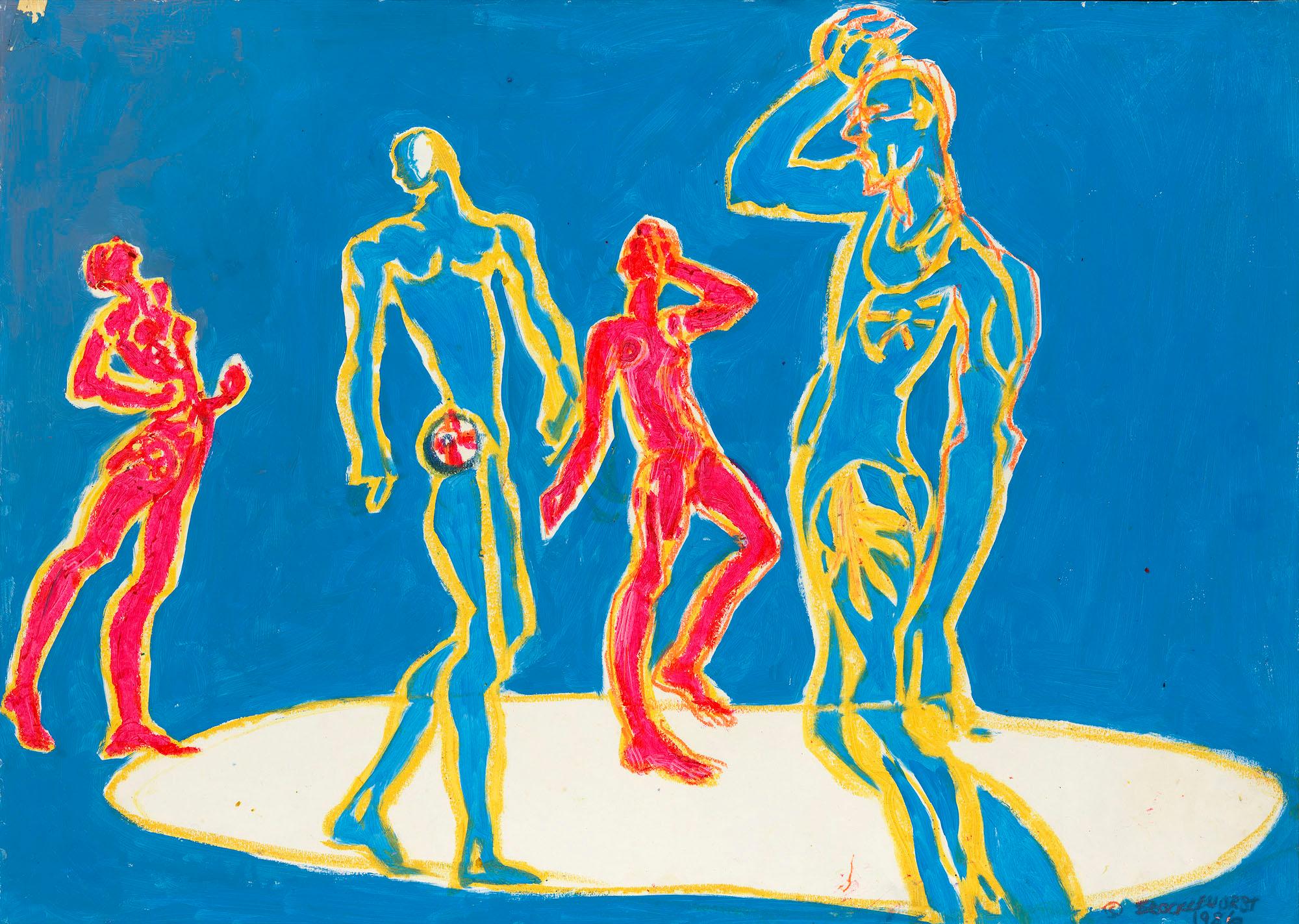
Jo Brocklehurst, Untitled, 1986
Jo (Josephine) Brocklehurst (1935 - 2006) studied at Central Saint Martins and began her career as a fashion illustrator. She later focused on portraiture, drawing directly from models at her studio in West Hampstead and in nightclubs and theatres in Berlin, London and New York. Her work documents the alternative subcultures of the 1970s, 80s and 90s that went on to shape mainstream fashion and performance scenes. In 1986 Brocklehurst visited the Institute of Applied Theatre Studies in Giessen, Germany during Diskurs Festival. She drew Karl Oppermann and his students performing The Crazy Locomotive, a play written by Stanisław Ignacy Witkiewicz.
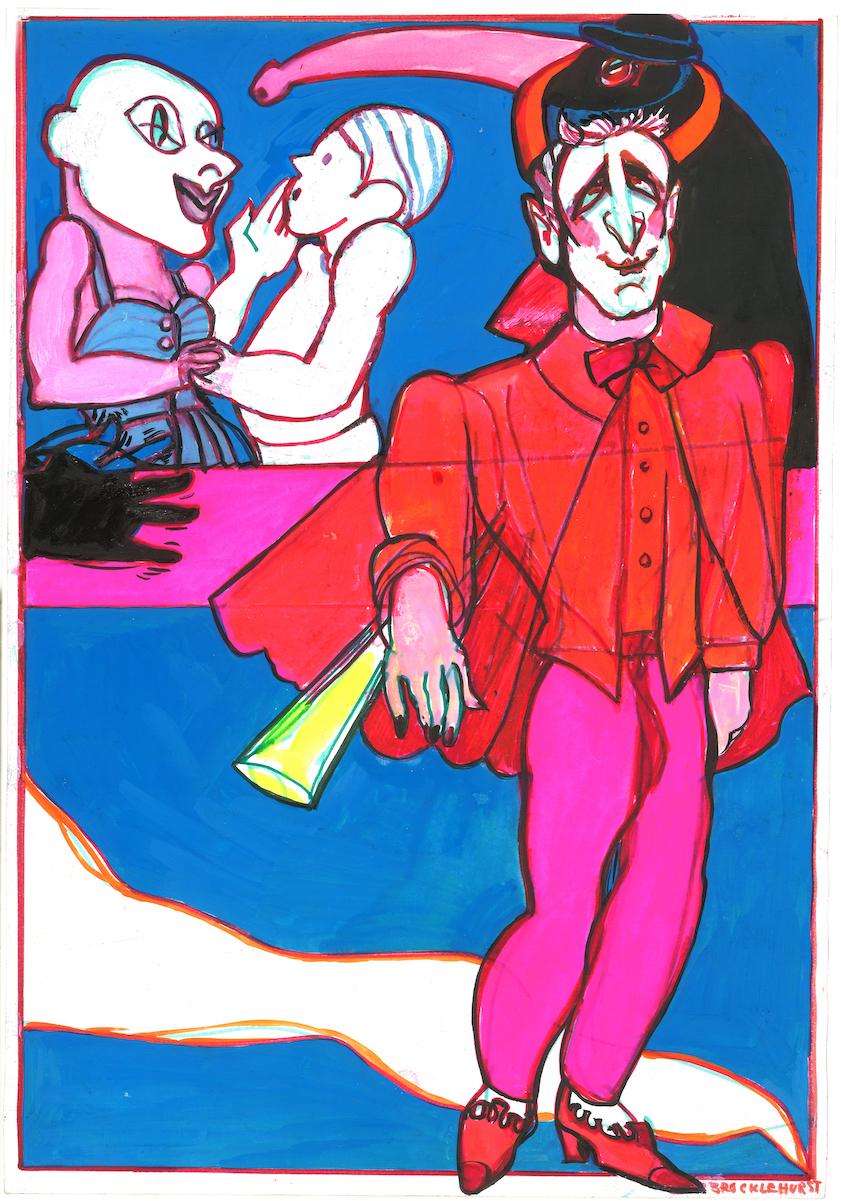
Jo Brocklehurst, Untitled (drawing of Die Eingeborene), 1999
Jo (Josephine) Brocklehurst (1935 - 2006) studied at Central Saint Martins and began her career as a fashion illustrator. She later focused on portraiture, drawing directly from models at her studio in West Hampstead and in nightclubs and theatres in Berlin, London and New York. Her work documents the alternative subcultures of the 1970s, 80s and 90s that went on to shape mainstream fashion and performance scenes. In 1999, Brocklehurst was artist in residence at newspaper Berliner Zeitung during Berliner Theatertreffen, a festival of new German theatre. The paper wanted to revive the Weimar tradition of theatre reviews being accompanied by illustrations, rather than using photographs. Brocklehurst drew behind the scenes and from her seat during performances. This drawing is from a performance of Die Eingeborene.
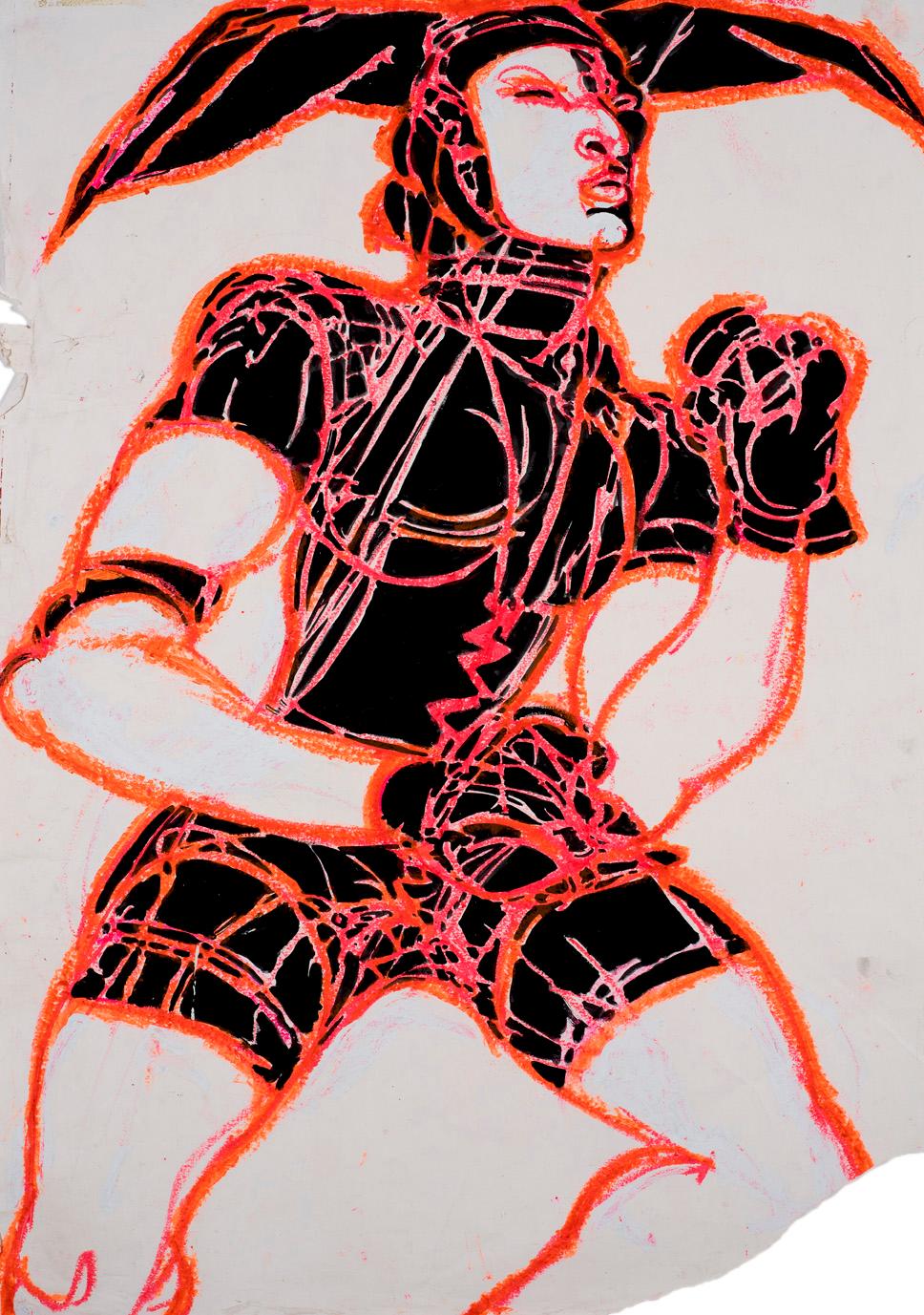
Jo Brocklehurst, Untitled (portrait of Josephine Leask), 2000
Jo (Josephine) Brocklehurst (1935 - 2006) studied at Central Saint Martins and began her career as a fashion illustrator. She later focused on portraiture, drawing directly from models at her studio in West Hampstead and in nightclubs and theatres in Berlin, London and New York. Her work documents the alternative subcultures of the 1970s, 80s and 90s that went on to shape mainstream fashion and performance scenes. In 2000, Brocklehurst created a series of drawings in sessions with dancer Josephine Leask. Leask’s 1999 article Welcome to the Club, published in ballettanz magazine, described the ways that nightclubs were acting as alternative theatres for cutting-edge contemporary dance. These drawings were shown as part of Leask’s lecture-performance on the same theme at the 2000 Salzburg Festival.
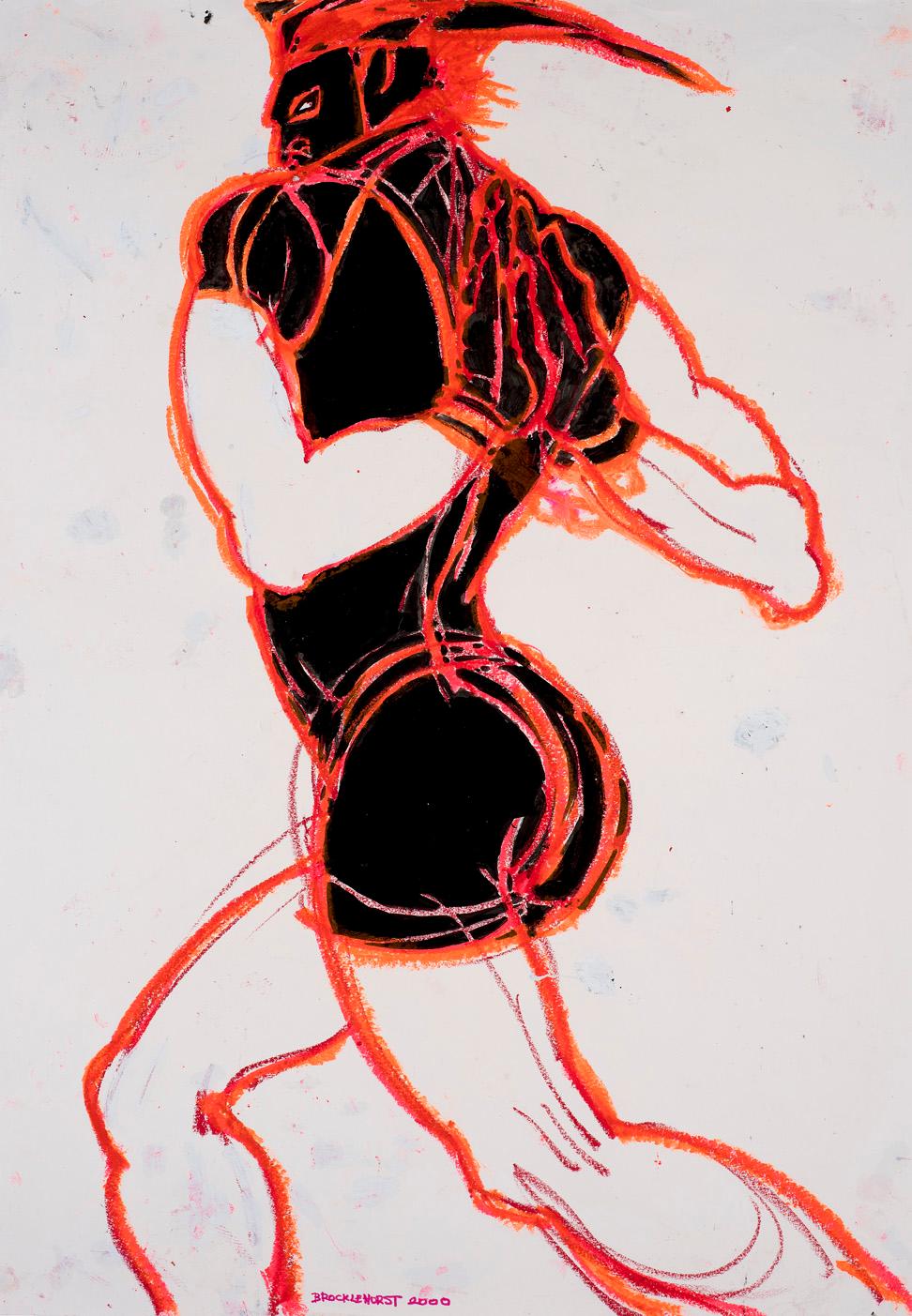
Jo Brocklehurst, Untitled (portrait of Josephine Leask), 2000
Jo (Josephine) Brocklehurst (1935 - 2006) studied at Central Saint Martins and began her career as a fashion illustrator. She later focused on portraiture, drawing directly from models at her studio in West Hampstead and in nightclubs and theatres in Berlin, London and New York. Her work documents the alternative subcultures of the 1970s, 80s and 90s that went on to shape mainstream fashion and performance scenes. In 2000, Brocklehurst created a series of drawings in sessions with dancer Josephine Leask. Leask’s 1999 article Welcome to the Club, published in ballettanz magazine, described the ways that nightclubs were acting as alternative theatres for cutting-edge contemporary dance. These drawings were shown as part of Leask’s lecture-performance on the same theme at the 2000 Salzburg Festival.
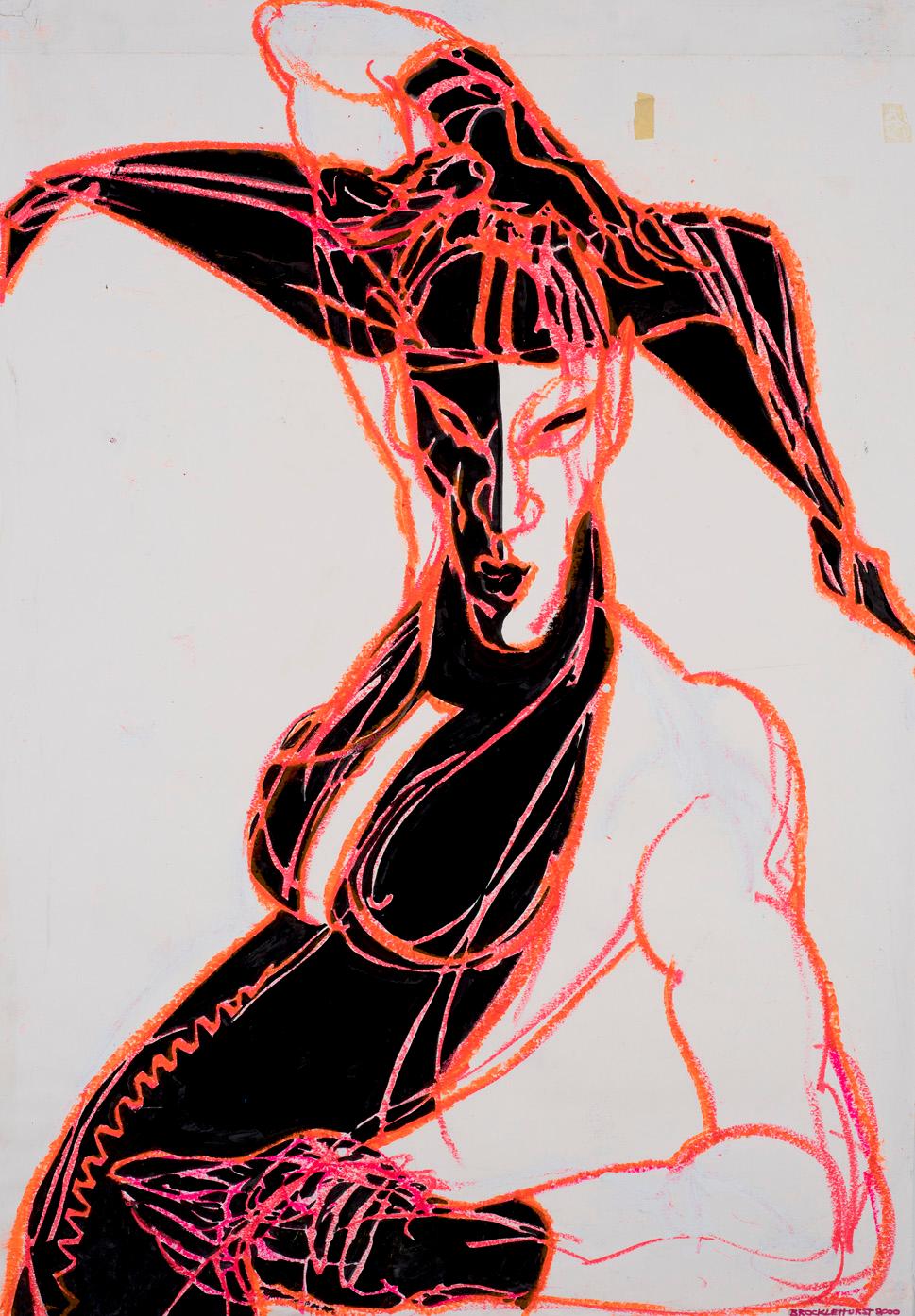
Jo Brocklehurst, Untitled (portrait of Josephine Leask), 2000
Jo (Josephine) Brocklehurst (1935 - 2006) studied at Central Saint Martins and began her career as a fashion illustrator. She later focused on portraiture, drawing directly from models at her studio in West Hampstead and in nightclubs and theatres in Berlin, London and New York. Her work documents the alternative subcultures of the 1970s, 80s and 90s that went on to shape mainstream fashion and performance scenes. In 2000, Brocklehurst created a series of drawings in sessions with dancer Josephine Leask. Leask’s 1999 article Welcome to the Club, published in ballettanz magazine, described the ways that nightclubs were acting as alternative theatres for cutting-edge contemporary dance. These drawings were shown as part of Leask’s lecture-performance on the same theme at the 2000 Salzburg Festival.
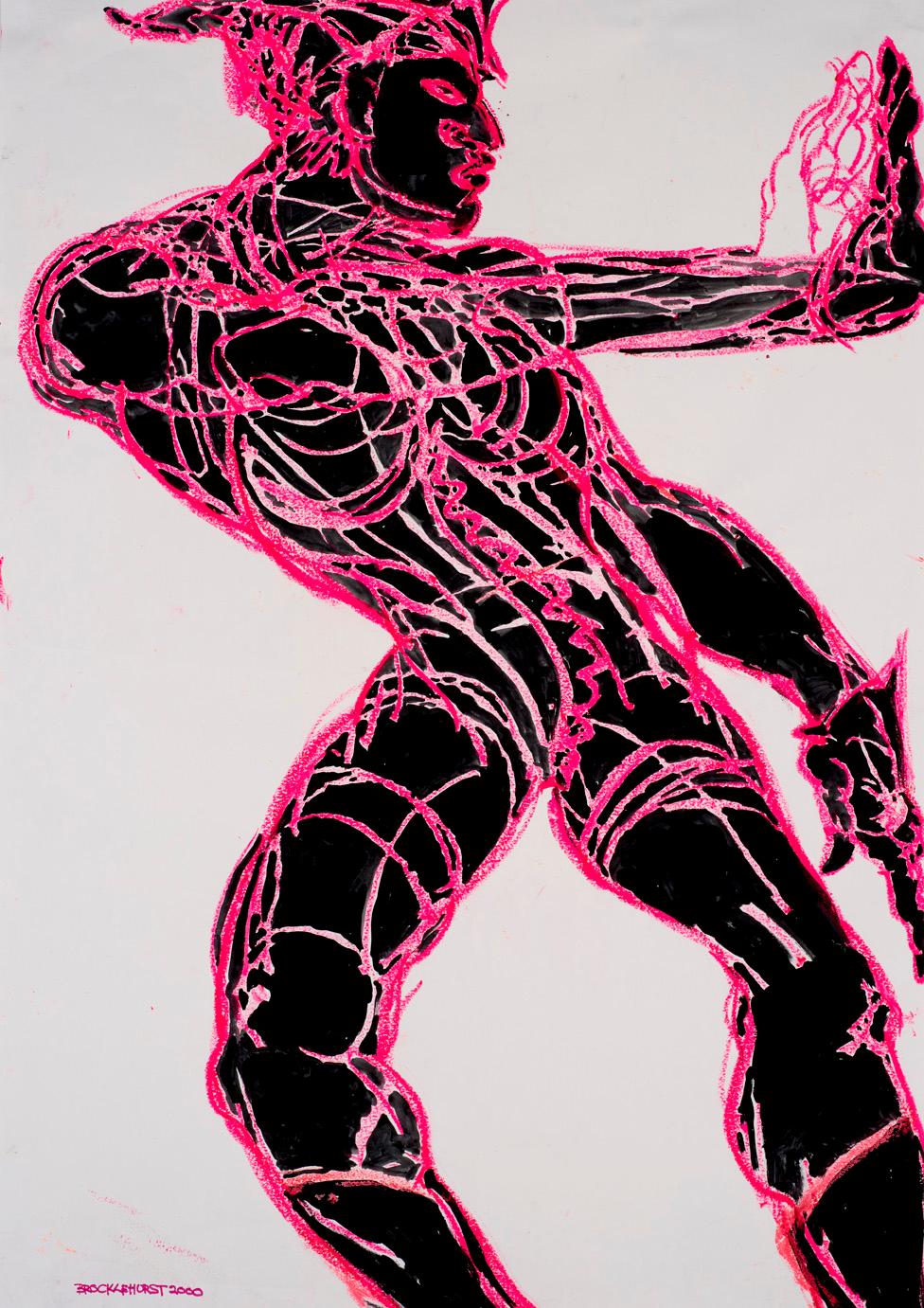
Jo Brocklehurst, Untitled (portrait of Josephine Leask), 2000
Jo (Josephine) Brocklehurst (1935 - 2006) studied at Central Saint Martins and began her career as a fashion illustrator. She later focused on portraiture, drawing directly from models at her studio in West Hampstead and in nightclubs and theatres in Berlin, London and New York. Her work documents the alternative subcultures of the 1970s, 80s and 90s that went on to shape mainstream fashion and performance scenes. In 2000, Brocklehurst created a series of drawings in sessions with dancer Josephine Leask. Leask’s 1999 article Welcome to the Club, published in ballettanz magazine, described the ways that nightclubs were acting as alternative theatres for cutting-edge contemporary dance. These drawings were shown as part of Leask’s lecture-performance on the same theme at the 2000 Salzburg Festival.
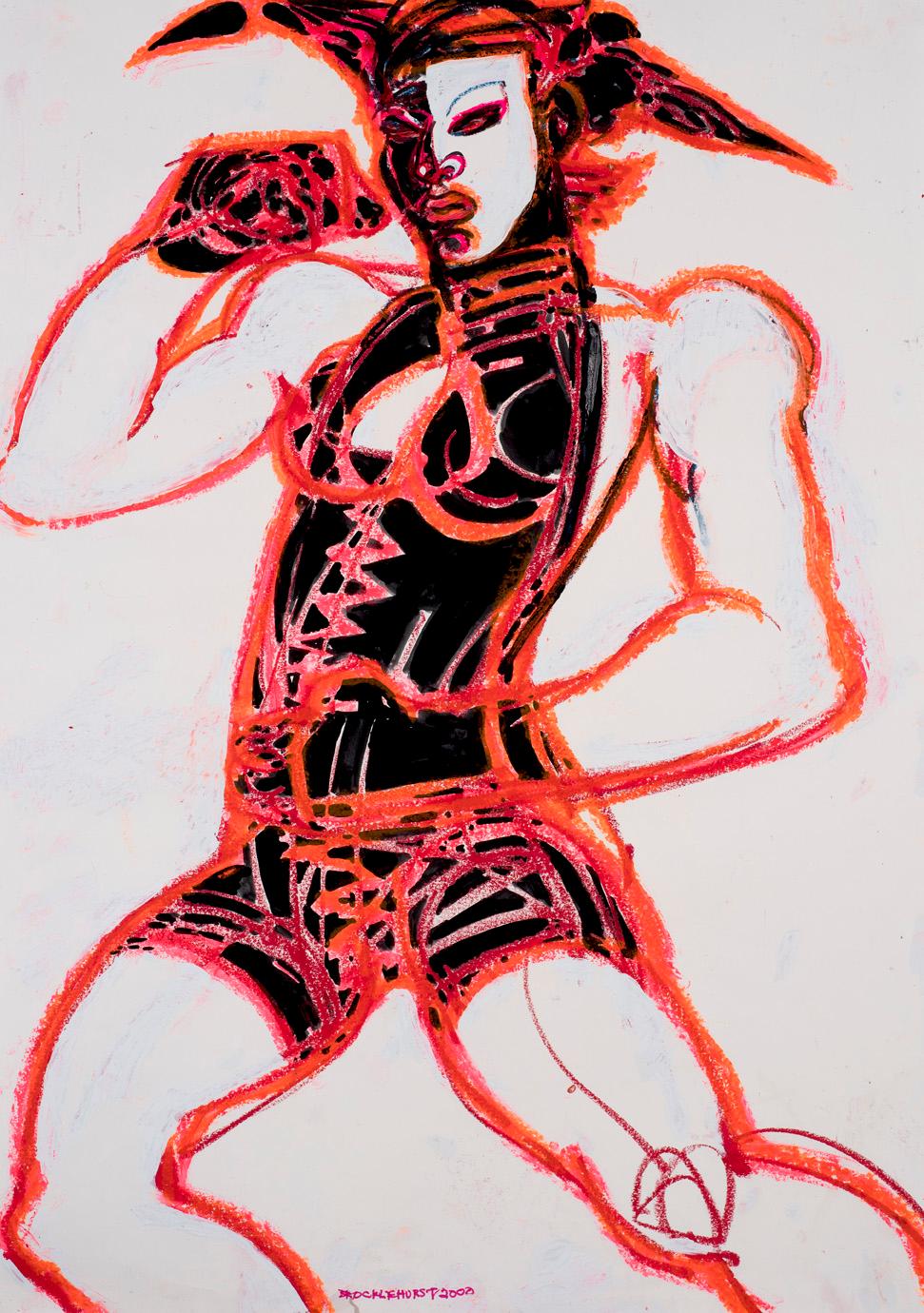
Jo Brocklehurst, Untitled (portrait of Josephine Leask), 2000
Jo (Josephine) Brocklehurst (1935 - 2006) studied at Central Saint Martins and began her career as a fashion illustrator. She later focused on portraiture, drawing directly from models at her studio in West Hampstead and in nightclubs and theatres in Berlin, London and New York. Her work documents the alternative subcultures of the 1970s, 80s and 90s that went on to shape mainstream fashion and performance scenes. In 2000, Brocklehurst created a series of drawings in sessions with dancer Josephine Leask. Leask’s 1999 article Welcome to the Club, published in ballettanz magazine, described the ways that nightclubs were acting as alternative theatres for cutting-edge contemporary dance. These drawings were shown as part of Leask’s lecture-performance on the same theme at the 2000 Salzburg Festival.