1990s
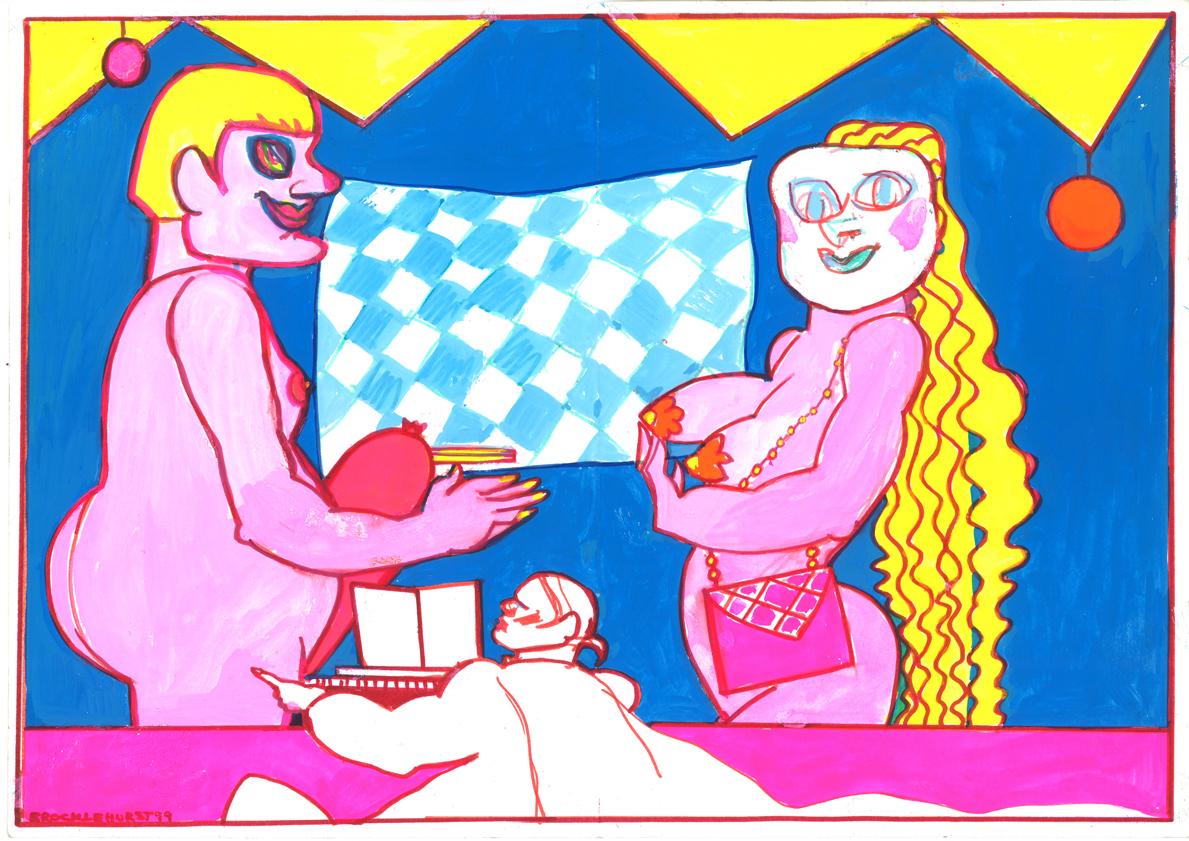
Jo Brocklehurst, Illustration for review of Die Eingeborene, 1999
Jo (Josephine) Brocklehurst (1935 - 2006) studied at Central Saint Martins and began her career as a fashion illustrator. She later focused on portraiture, drawing directly from models at her studio in West Hampstead and in nightclubs and theatres in Berlin, London and New York. Her work documents the alternative subcultures of the 1970s, 80s and 90s that went on to shape mainstream fashion and performance scenes. In 1999, Brocklehurst was artist in residence at newspaper Berliner Zeitung during Berliner Theatertreffen, a festival of new German theatre. The paper wanted to revive the Weimar tradition of theatre reviews being accompanied by illustrations, rather than using photographs. Brocklehurst drew behind the scenes and from her seat during performances. She worked up images like this one overnight for publication the following morning. This illustration accompanied a review of Die Eingeborene, published in Berliner Zeitung on 11 May 1999.
Content warning: sex references
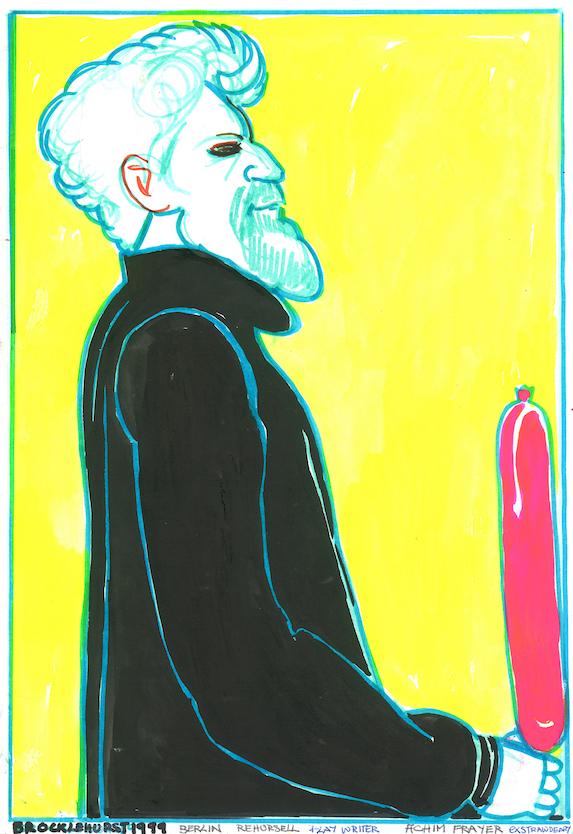
Jo Brocklehurst, Berlin Rehursell, Play Writer, Achim Frayer, Exstrawdeary, 1999
Jo (Josephine) Brocklehurst (1935 - 2006) studied at Central Saint Martins and began her career as a fashion illustrator. She later focused on portraiture, drawing directly from models at her studio in West Hampstead and in nightclubs and theatres in Berlin, London and New York. Her work documents the alternative subcultures of the 1970s, 80s and 90s that went on to shape mainstream fashion and performance scenes. In 1999, Brocklehurst was artist in residence at newspaper Berliner Zeitung during Berliner Theatertreffen, a festival of new German theatre. The paper wanted to revive the Weimar tradition of theatre reviews being accompanied by illustrations, rather than using photographs. Brocklehurst drew behind the scenes and from her seat during performances. Brocklehurst attended the a rehearsal and performance of the play Die Eingeborene and drew its director, Achim Frayer.
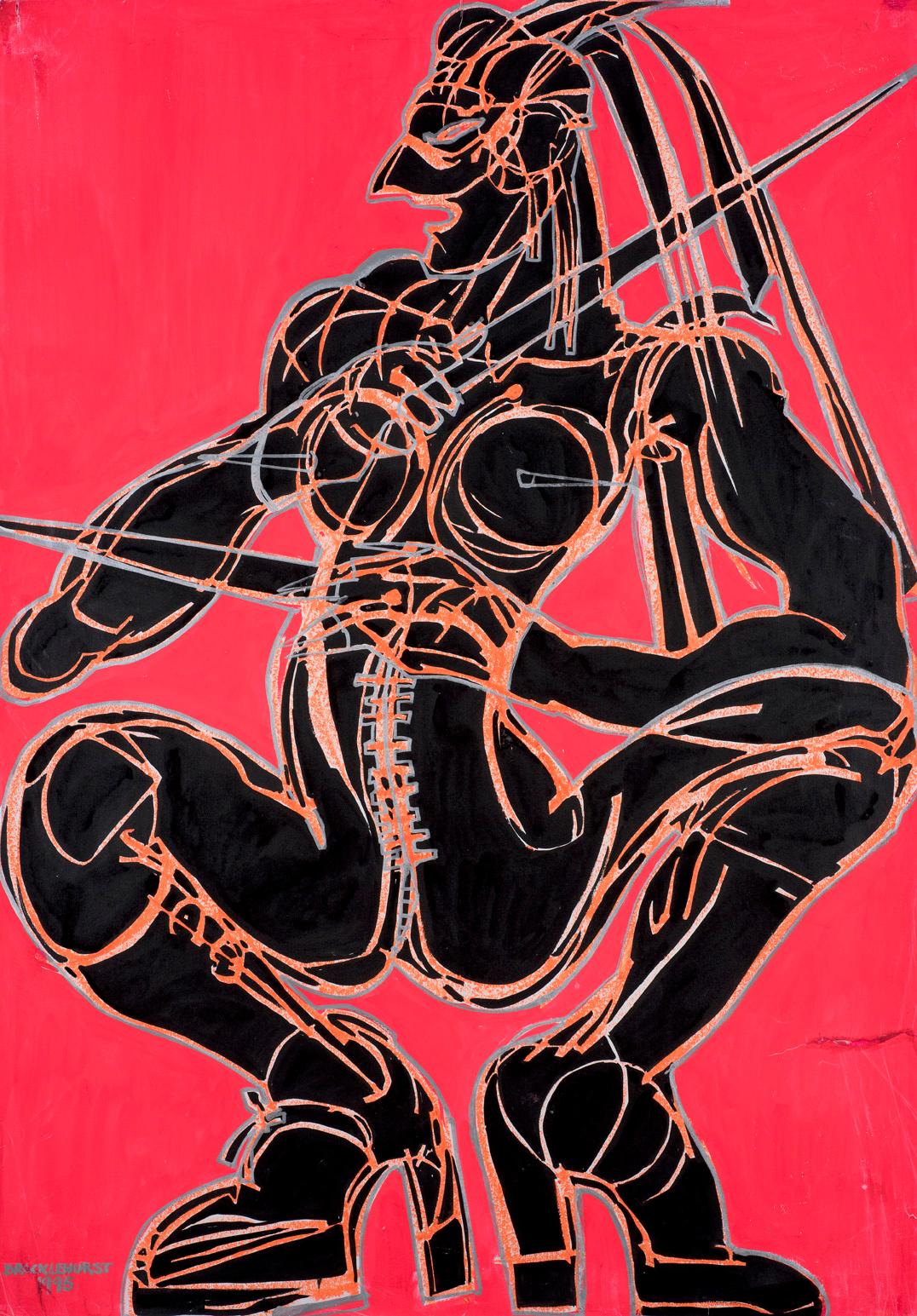
Jo Brocklehurst, Untitled (portrait of Eryka Isaak), 1995
Jo (Josephine) Brocklehurst (1935 - 2006) studied at Central Saint Martins and began her career as a fashion illustrator. She later focused on portraiture, drawing directly from models at her studio in West Hampstead and in nightclubs and theatres in Berlin, London and New York. Her work documents the alternative subcultures of the 1970s, 80s and 90s that went on to shape mainstream fashion and performance scenes. In the 1990s, Brocklehurst began drawing the fashion designers and performers finding space for experimentation in the fetish clubs of Soho and King’s Cross.
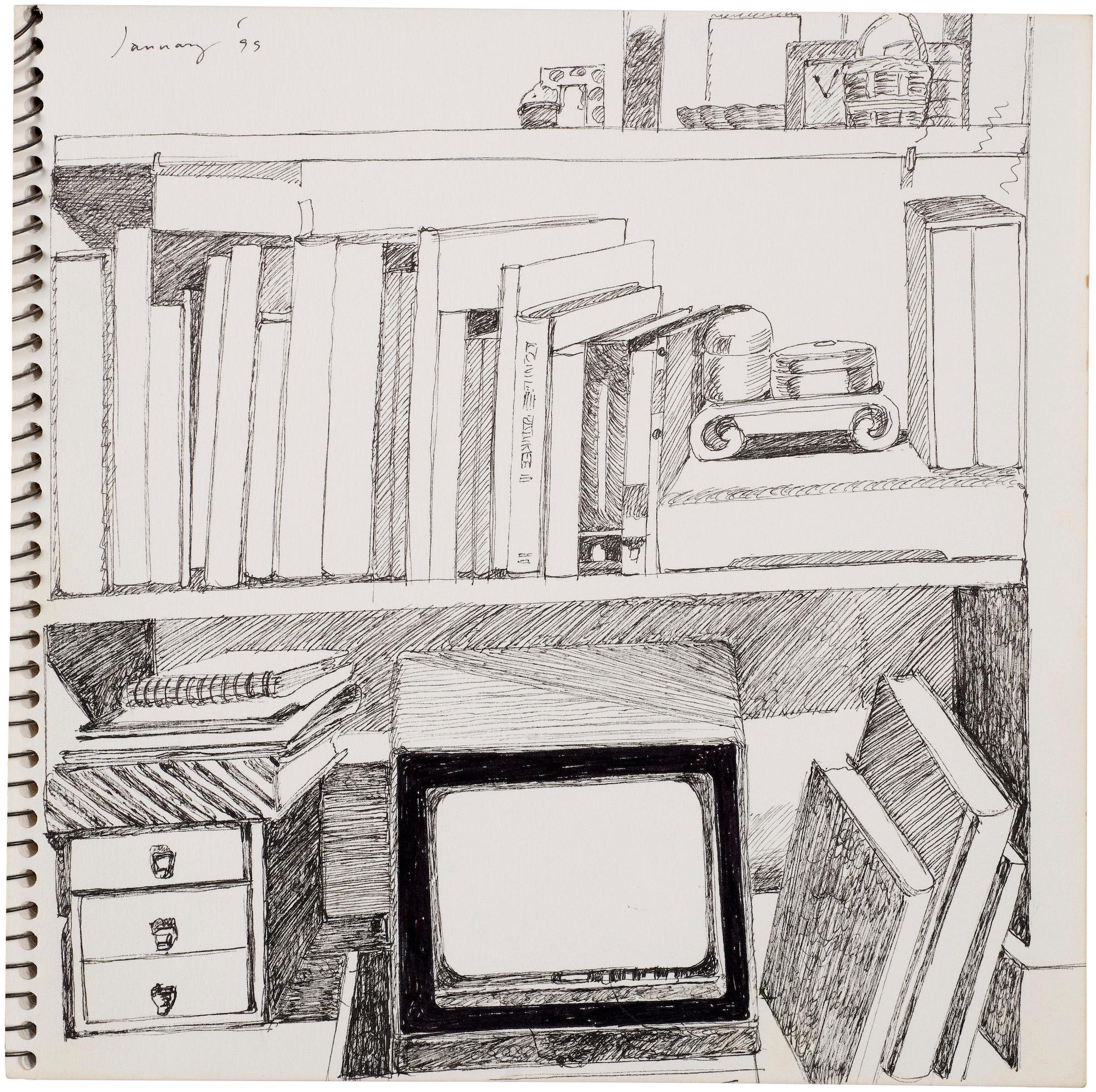
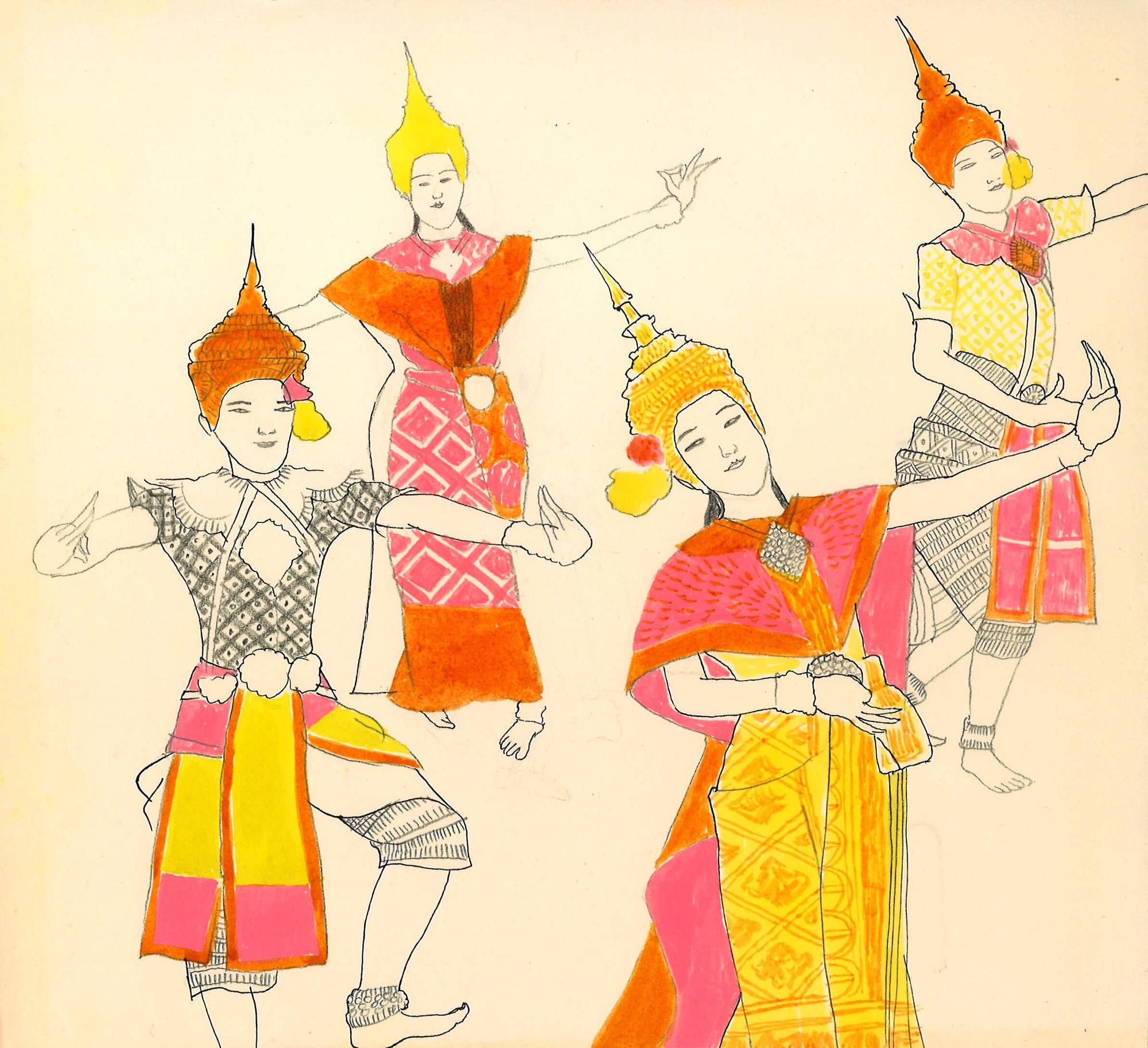
Jacqueline Ayer, Untitled, 1999
Jacqueline Ayer (1930–2012) had a career that spanned many creative fields. She began as a fashion illustrator, and later turned her hand to children’s books, textiles and garments, as she worked in New York, Paris, London, Bangkok, Hong Kong and across India. Ayer often used a sketchbook to record her observations and ideas for book narratives and fashion designs. The context for this drawing is unknown.
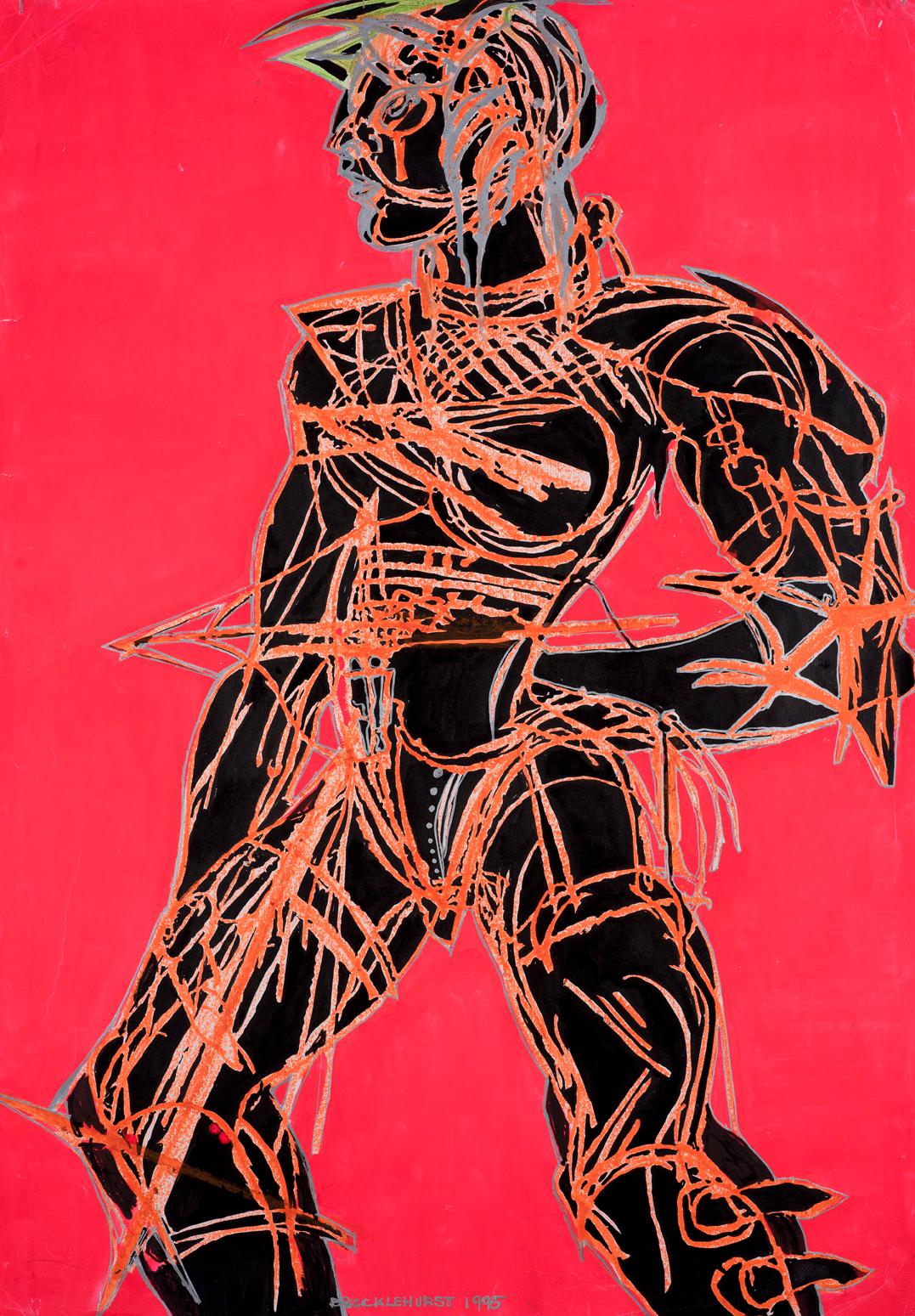
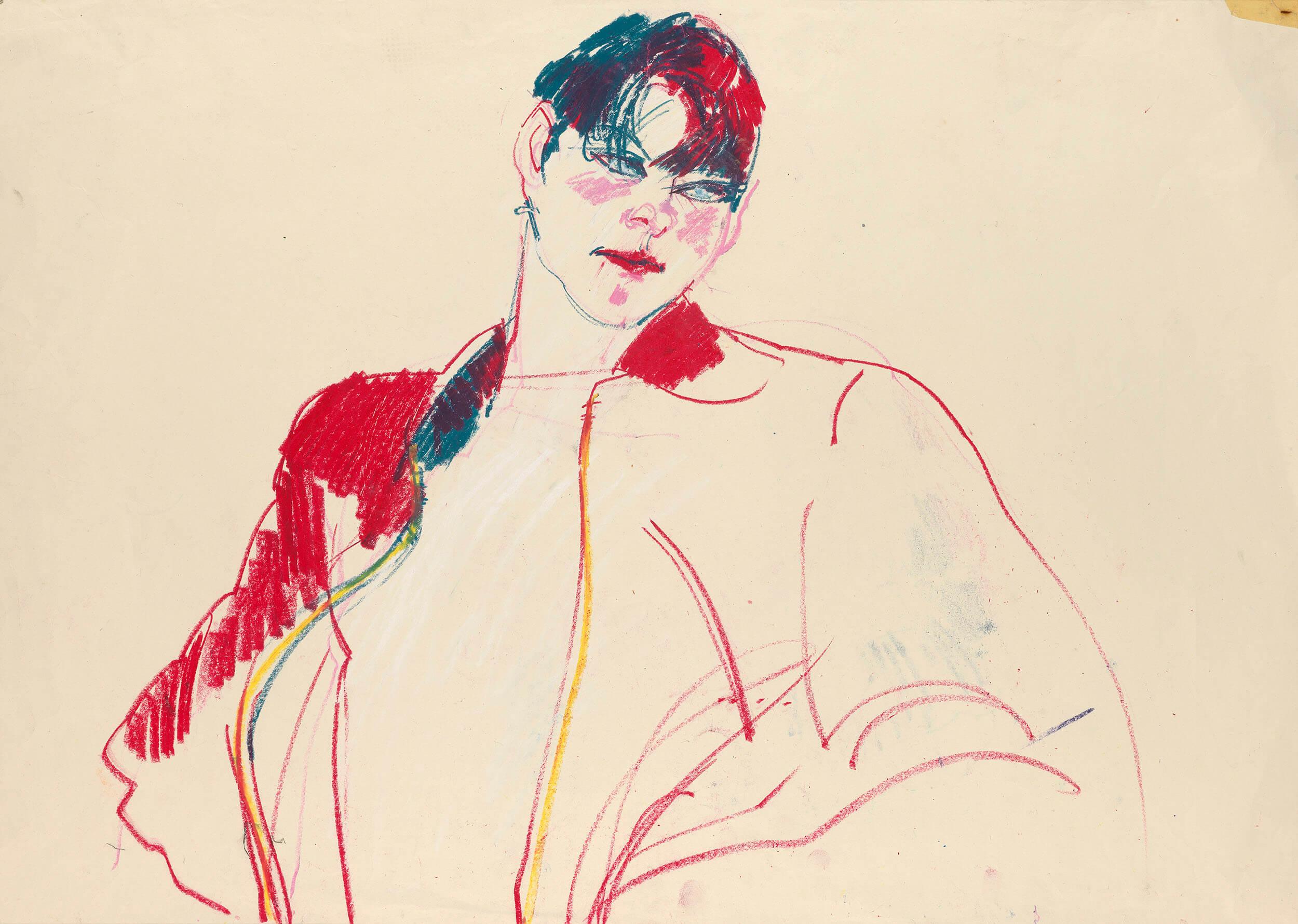
Jo Brocklehurst, Untitled (portrait of Liz de Havilland), 1995
Jo (Josephine) Brocklehurst (1935 - 2006) studied at Central Saint Martins and began her career as a fashion illustrator. She later focused on portraiture, drawing directly from models at her studio in West Hampstead and in nightclubs and theatres in Berlin, London and New York. Her work documents the alternative subcultures of the 1970s, 80s and 90s that went on to shape mainstream fashion and performance scenes. In the 1990s, Brocklehurst began drawing the fashion designers and performers finding space for experimentation in the fetish clubs of Soho and King’s Cross.
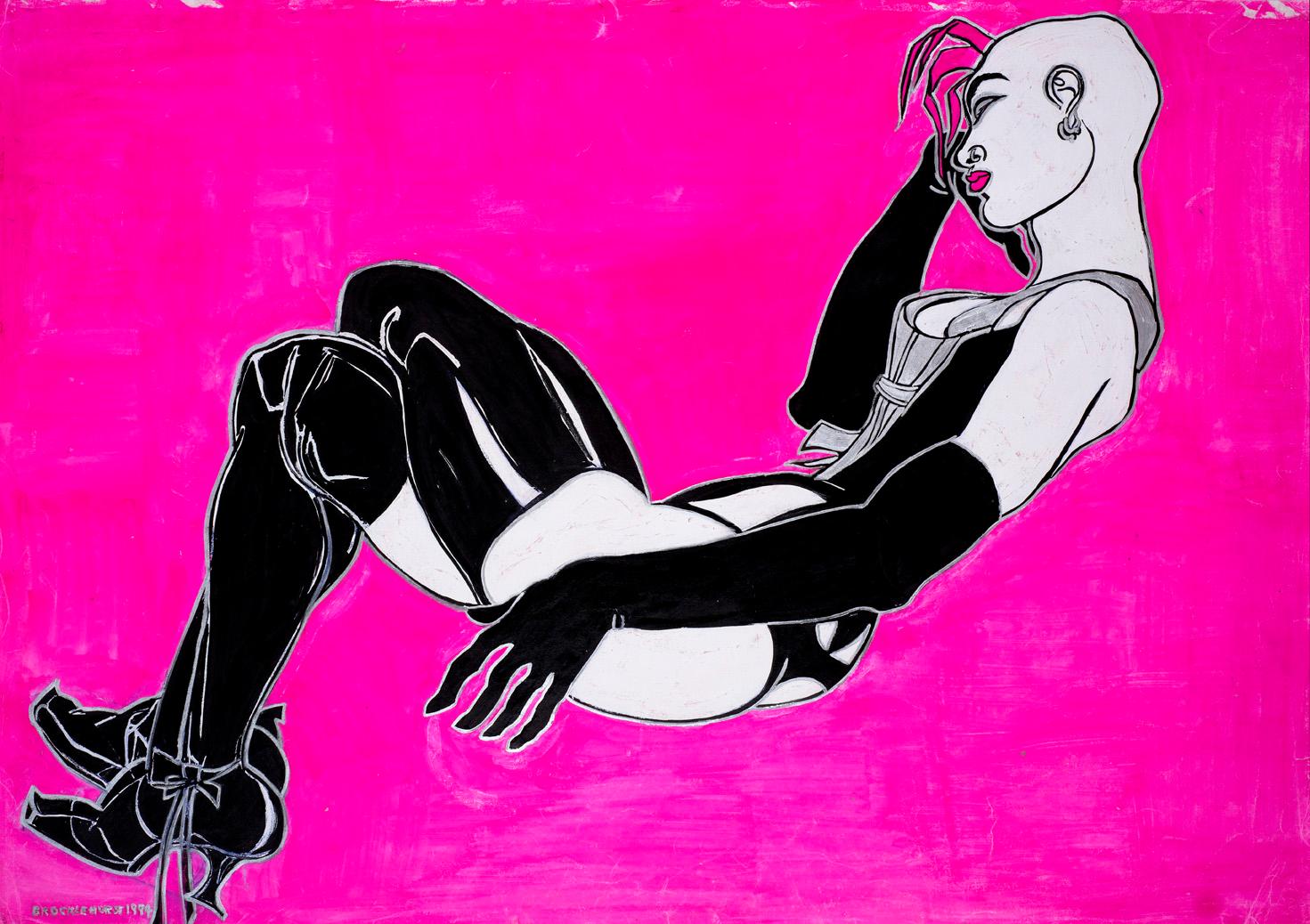
Jo Brocklehurst, Untitled (portrait of Betty Blue), 1994
Jo (Josephine) Brocklehurst (1935 - 2006) studied at Central Saint Martins and began her career as a fashion illustrator. She later focused on portraiture, drawing directly from models at her studio in West Hampstead and in nightclubs and theatres in Berlin, London and New York. Her work documents the alternative subcultures of the 1970s, 80s and 90s that went on to shape mainstream fashion and performance scenes. In the 1990s, Brocklehurst began drawing the fashion designers and performers finding space for experimentation in the fetish clubs of Soho and King’s Cross.
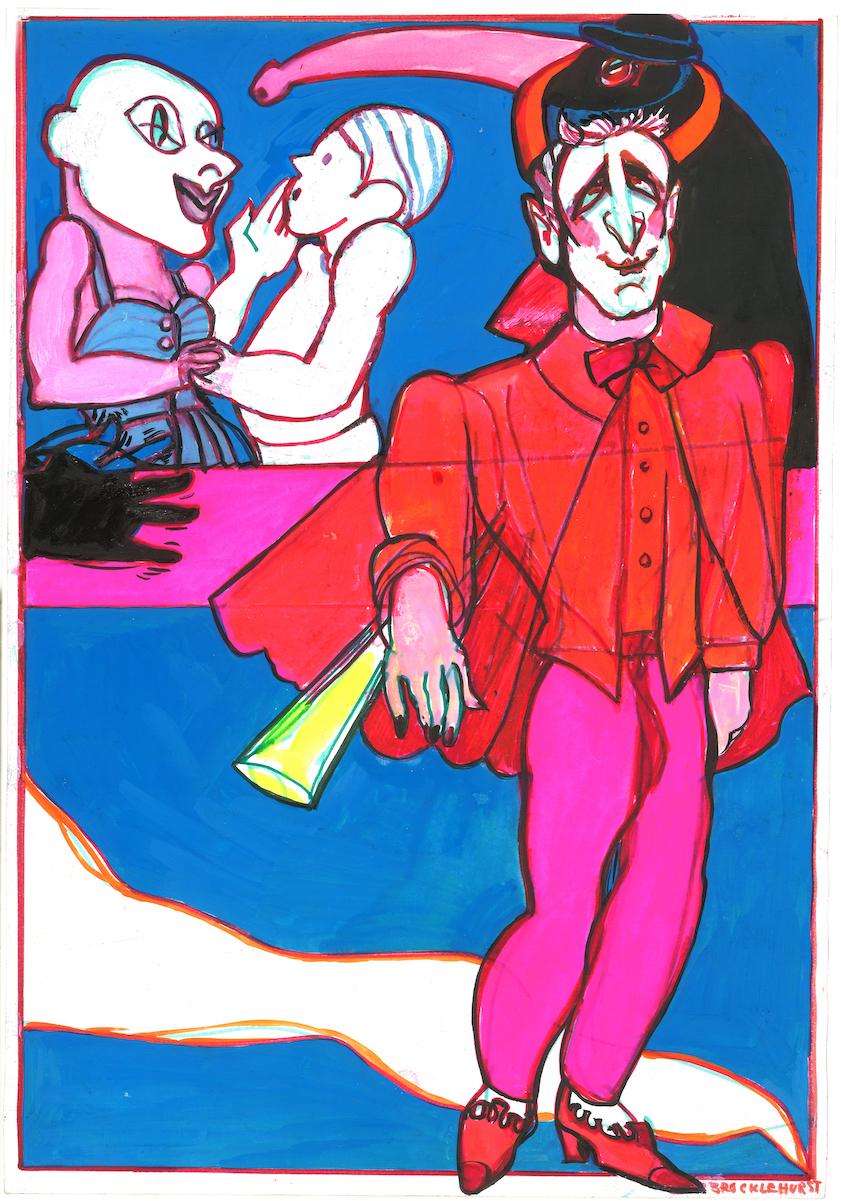
Jo Brocklehurst, Untitled (drawing of Die Eingeborene), 1999
Jo (Josephine) Brocklehurst (1935 - 2006) studied at Central Saint Martins and began her career as a fashion illustrator. She later focused on portraiture, drawing directly from models at her studio in West Hampstead and in nightclubs and theatres in Berlin, London and New York. Her work documents the alternative subcultures of the 1970s, 80s and 90s that went on to shape mainstream fashion and performance scenes. In 1999, Brocklehurst was artist in residence at newspaper Berliner Zeitung during Berliner Theatertreffen, a festival of new German theatre. The paper wanted to revive the Weimar tradition of theatre reviews being accompanied by illustrations, rather than using photographs. Brocklehurst drew behind the scenes and from her seat during performances. This drawing is from a performance of Die Eingeborene.
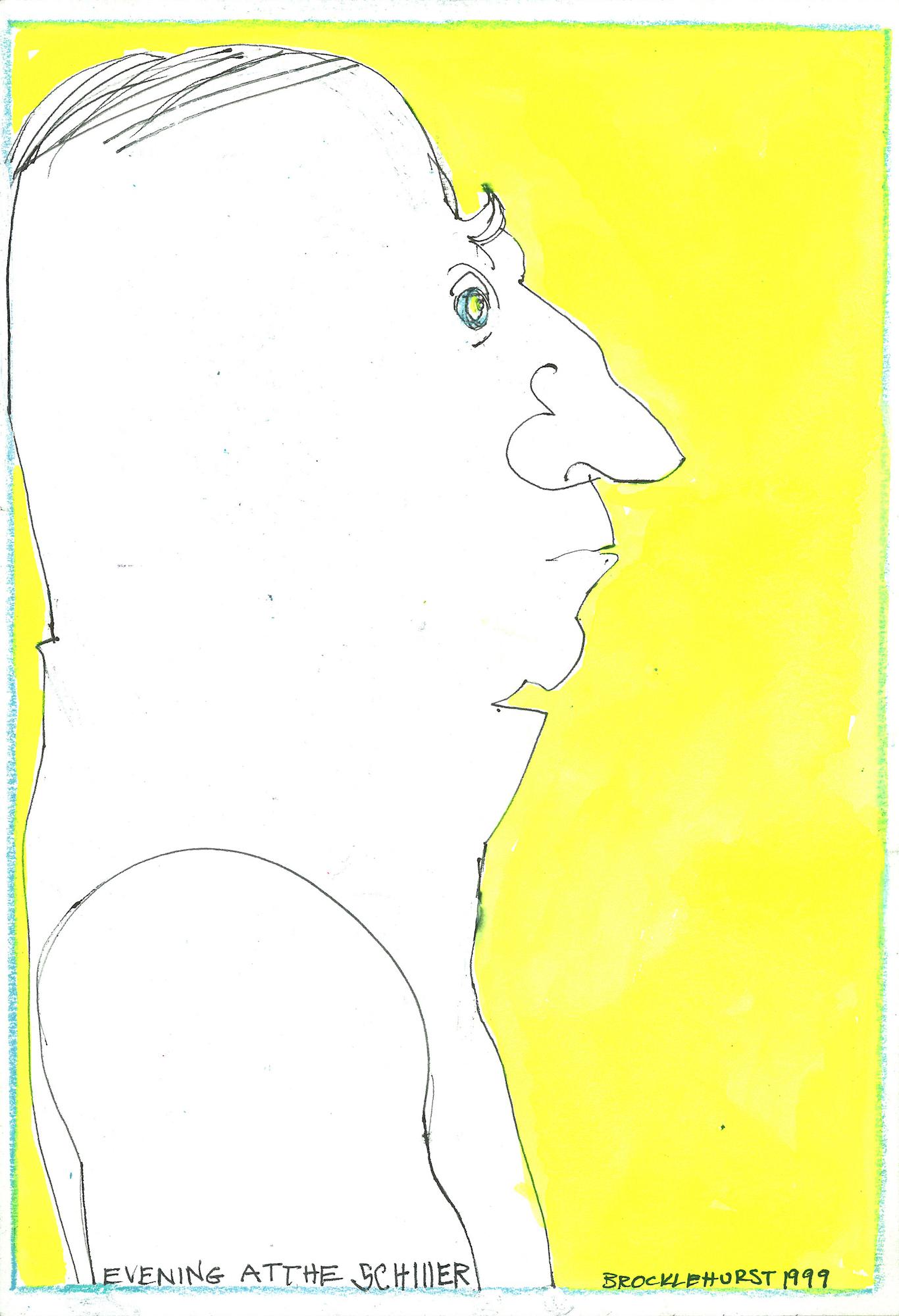
Jo Brocklehurst, Evening at the Schiller Theatre, 1999
Jo (Josephine) Brocklehurst (1935 - 2006) studied at Central Saint Martins and began her career as a fashion illustrator. She later focused on portraiture, drawing directly from models at her studio in West Hampstead and in nightclubs and theatres in Berlin, London and New York. Her work documents the alternative subcultures of the 1970s, 80s and 90s that went on to shape mainstream fashion and performance scenes. In 1999, Brocklehurst was artist in residence at newspaper Berliner Zeitung during Berliner Theatertreffen, a festival of new German theatre. The paper wanted to revive the Weimar tradition of theatre reviews being accompanied by illustrations, rather than using photographs. Brocklehurst drew behind the scenes and from her seat during performances. This drawing may have been made during the interval of a performance of play Die Eingeborene at the Schiller Theatre.
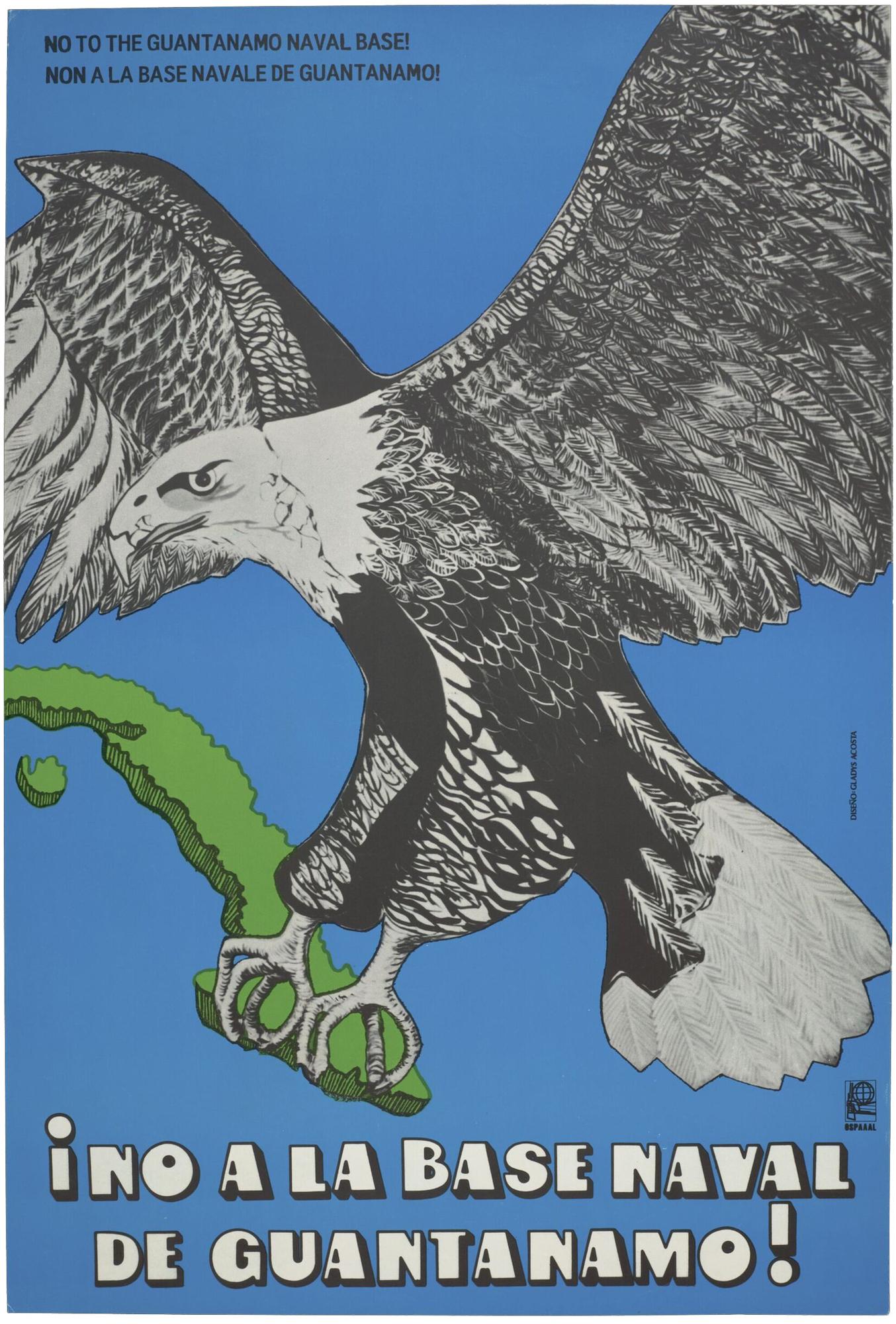
NO TO THE GUANTANAMO NAVAL BASE!, 1993
Between the 1960s and 1990s, more than fifty designers worked at OSPAAAL. Based in Cuba, they made magazines and posters that were sent around the world. Their aim was to promote radical political ideas. Many of their posters celebrate socialist revolutions and liberation movements from the Global South. In this design, Gladys Acosta Ávila uses an eagle to represent the U.S.A. Its talons are hovering over the south of Cuba where the U.S. military’s Guantanamo Bay Naval Base was established in 1903.
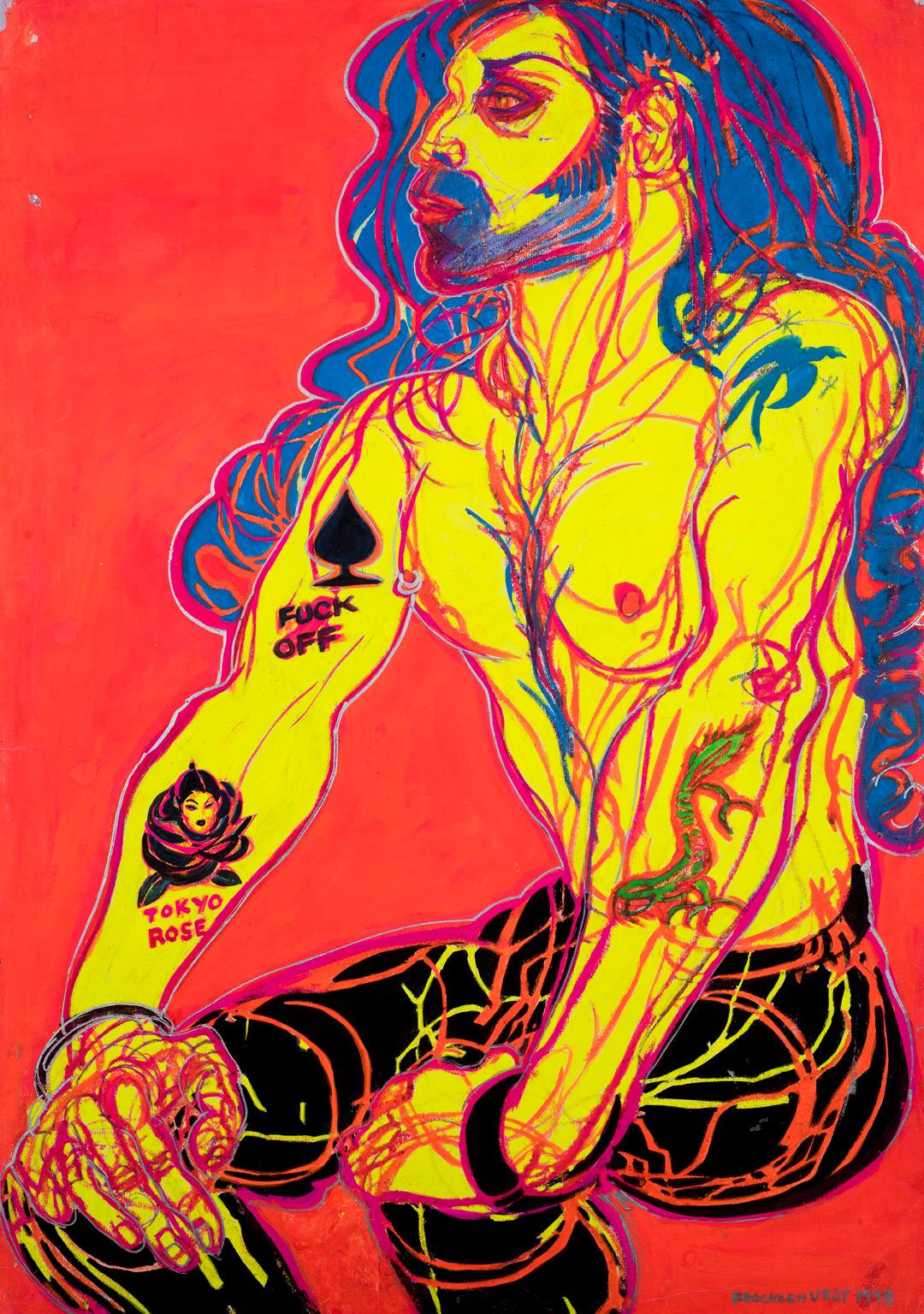
Jo Brocklehurst, Untitled (portrait of Anthony Gregory), 1995
Jo (Josephine) Brocklehurst (1935 - 2006) studied at Central Saint Martins and began her career as a fashion illustrator. She later focused on portraiture, drawing directly from models at her studio in West Hampstead and in nightclubs and theatres in Berlin, London and New York. Her work documents the alternative subcultures of the 1970s, 80s and 90s that went on to shape mainstream fashion and performance scenes. In the 1990s, Brocklehurst began drawing the fashion designers and performers finding space for experimentation in the fetish clubs of Soho and King’s Cross.
Content warning: strong language
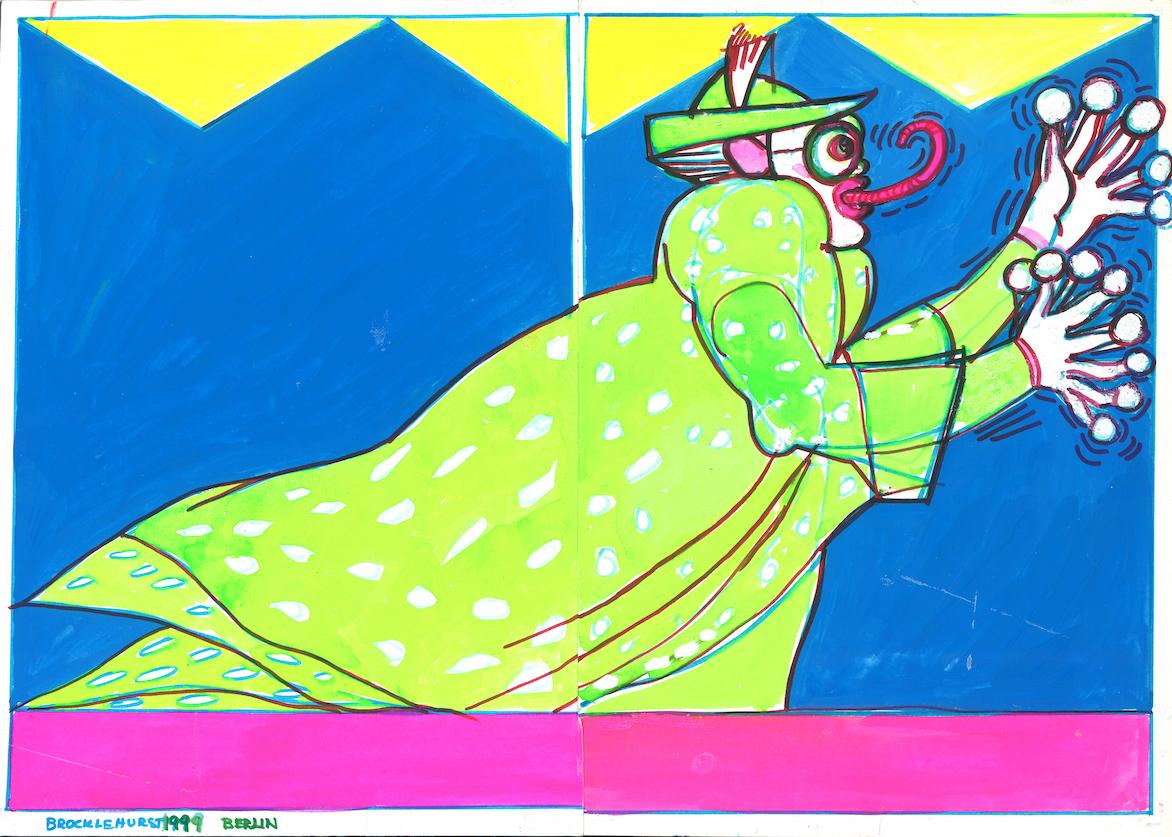
Jo Brocklehurst, Untitled (drawing of Die Eingeborene), 1999
Jo (Josephine) Brocklehurst (1935 - 2006) studied at Central Saint Martins and began her career as a fashion illustrator. She later focused on portraiture, drawing directly from models at her studio in West Hampstead and in nightclubs and theatres in Berlin, London and New York. Her work documents the alternative subcultures of the 1970s, 80s and 90s that went on to shape mainstream fashion and performance scenes. In 1999, Brocklehurst was artist in residence at newspaper Berliner Zeitung during Berliner Theatertreffen, a festival of new German theatre. The paper wanted to revive the Weimar tradition of theatre reviews being accompanied by illustrations, rather than using photographs. Brocklehurst drew behind the scenes and from her seat during performances. This drawing is from a performance of Die Eingeborene.
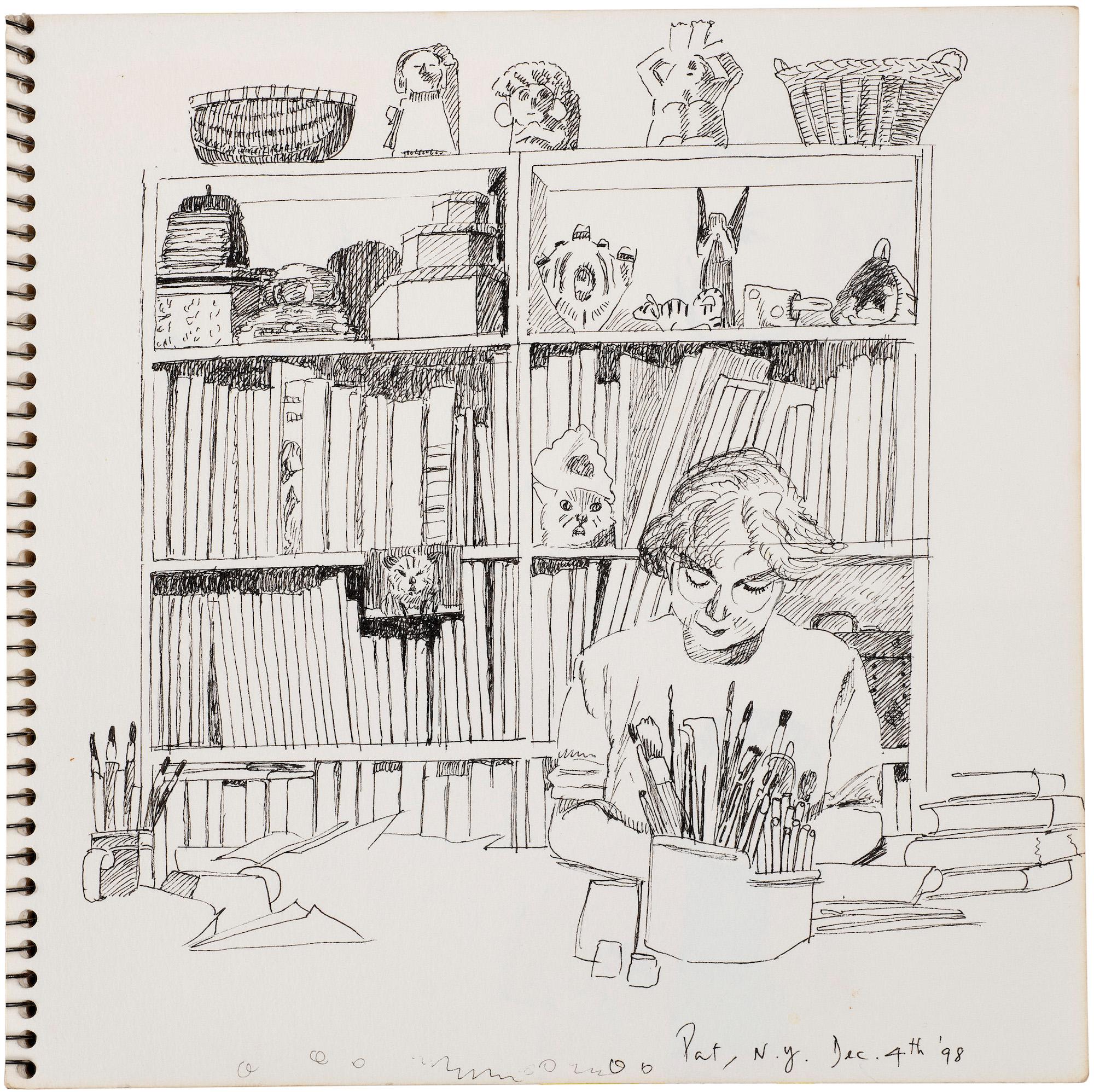
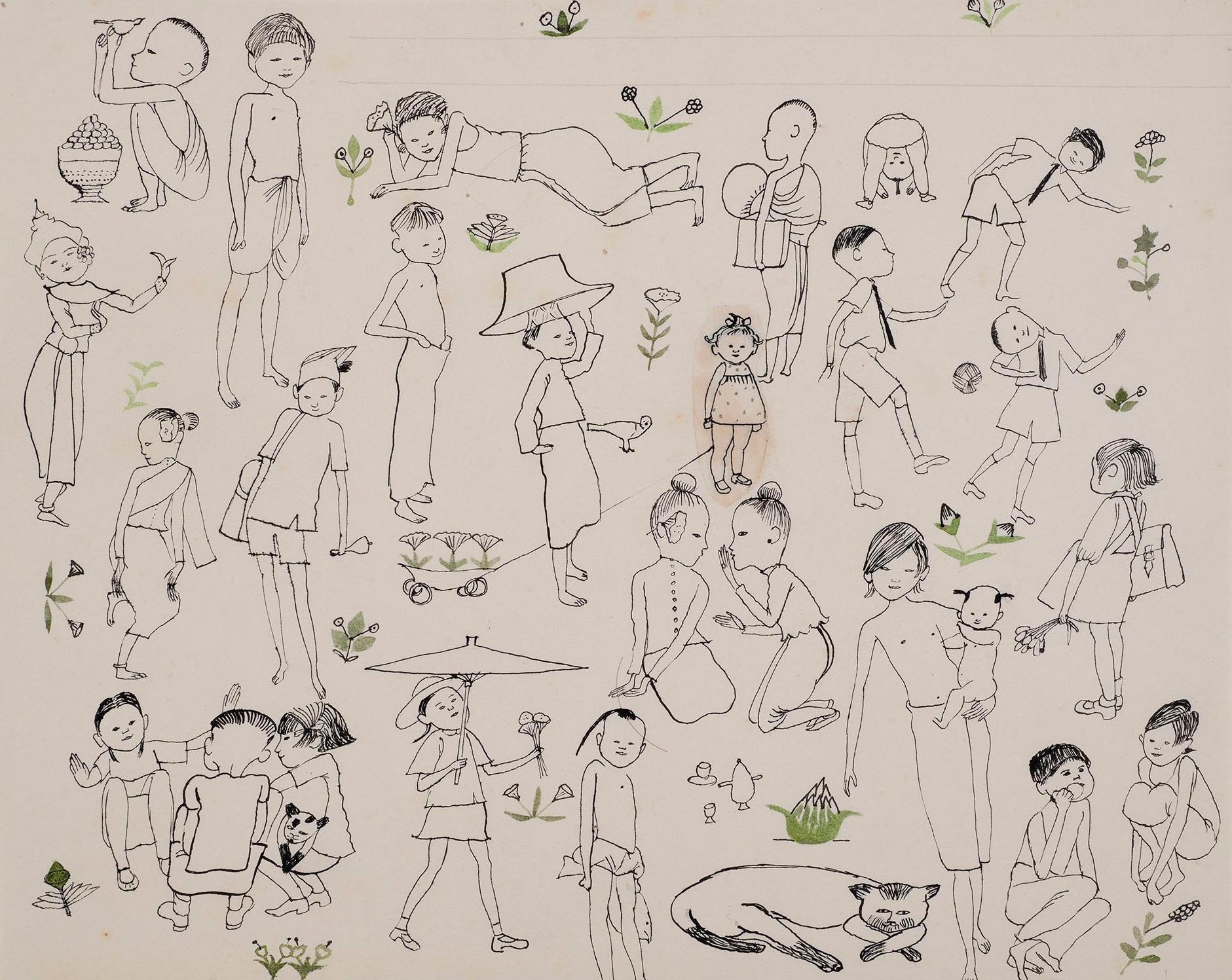
Jacqueline Ayer, Untitled, 1998
Jacqueline Ayer (1930–2012) had a career that spanned many creative fields. She began as a fashion illustrator, and later turned her hand to children’s books, textiles and garments, as she worked in New York, Paris, London, Bangkok, Hong Kong and across India. Ayer often used a sketchbook to record her observations and ideas for book narratives and fashion designs. The context for this drawing is unknown.
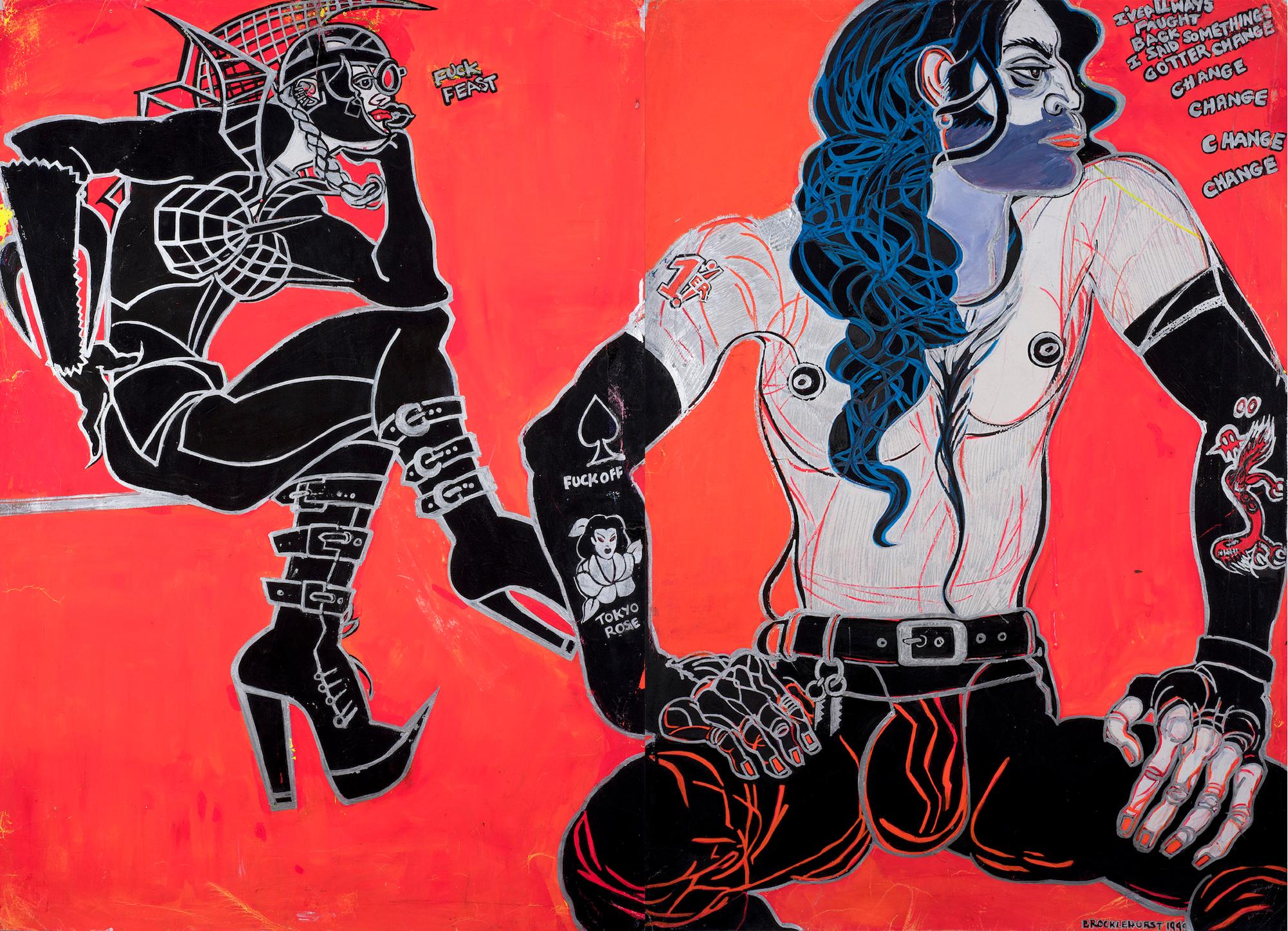
Jo Brocklehurst, Untitled (portrait of Isabelle Bricknall and Anthony Gregory), 1995
Jo (Josephine) Brocklehurst (1935 - 2006) studied at Central Saint Martins and began her career as a fashion illustrator. She later focused on portraiture, drawing directly from models at her studio in West Hampstead and in nightclubs and theatres in Berlin, London and New York. Her work documents the alternative subcultures of the 1970s, 80s and 90s that went on to shape mainstream fashion and performance scenes. In the 1990s, Brocklehurst began drawing the fashion designers and performers finding space for experimentation in the fetish clubs of Soho and King’s Cross. This portrait is of Brocklehurst’s regular collaborator Isabelle Bricknall, whose collection of steel ‘body armour’ (constructed by Anthony Gregory) was designed as ‘protection’ for nights on the fetish scene.
Content warning: strong language
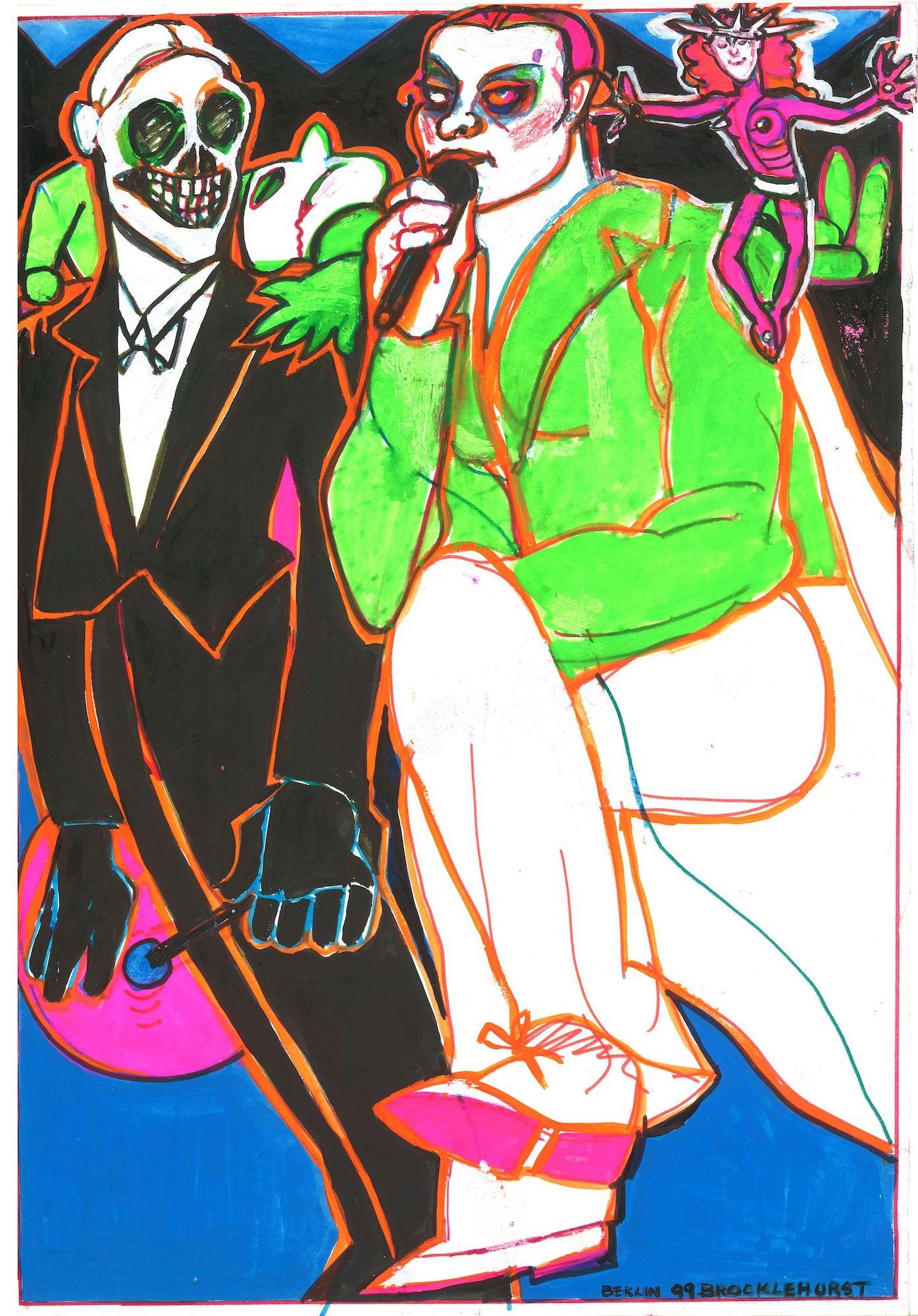
Jo Brocklehurst, Untitled (drawing of Die Eingeborene), 1999
Jo (Josephine) Brocklehurst (1935 - 2006) studied at Central Saint Martins and began her career as a fashion illustrator. She later focused on portraiture, drawing directly from models at her studio in West Hampstead and in nightclubs and theatres in Berlin, London and New York. Her work documents the alternative subcultures of the 1970s, 80s and 90s that went on to shape mainstream fashion and performance scenes. In 1999, Brocklehurst was artist in residence at newspaper Berliner Zeitung during Berliner Theatertreffen, a festival of new German theatre. The paper wanted to revive the Weimar tradition of theatre reviews being accompanied by illustrations, rather than using photographs. Brocklehurst drew behind the scenes and from her seat during performances. This drawing is from a performance of Die Eingeborene.
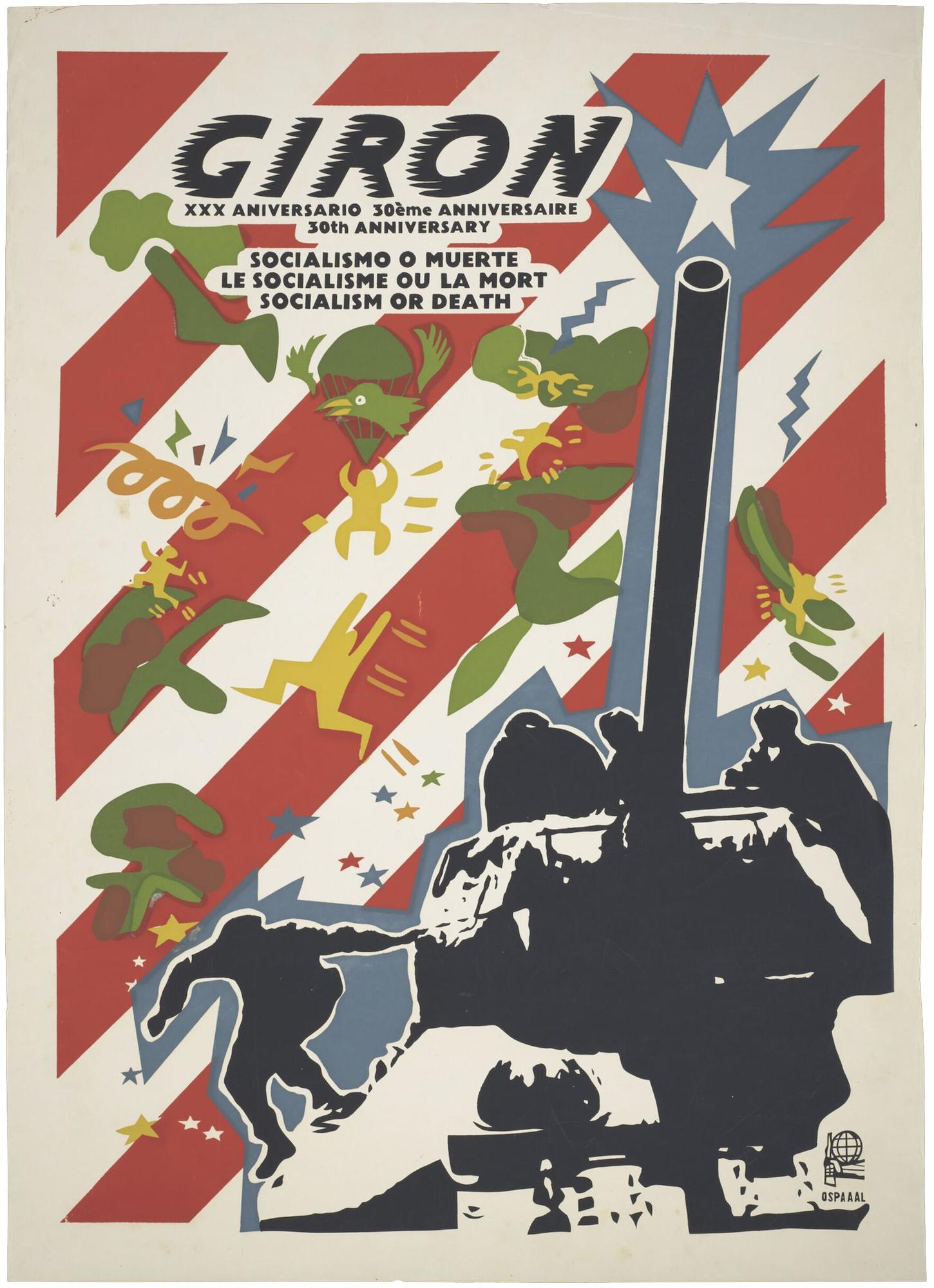
GIRON - 30th ANNIVERSARY - SOCIALISM OR DEATH, 1969
Between the 1960s and 1990s, more than fifty designers worked at OSPAAAL. Based in Cuba, they made magazines and posters that were sent around the world. Their aim was to promote radical political ideas. Many of their posters celebrate socialist revolutions and liberation movements from the Global South. In 1961, a military group sponsored by the U.S. Central Intelligence Agency invaded Cuba in an attempt to overthrow Fidel Castro. Eladio Rivadulla Pérez used a press photograph of Castro jumping from a tank for his commemorative poster design.
Content warning: weaponry
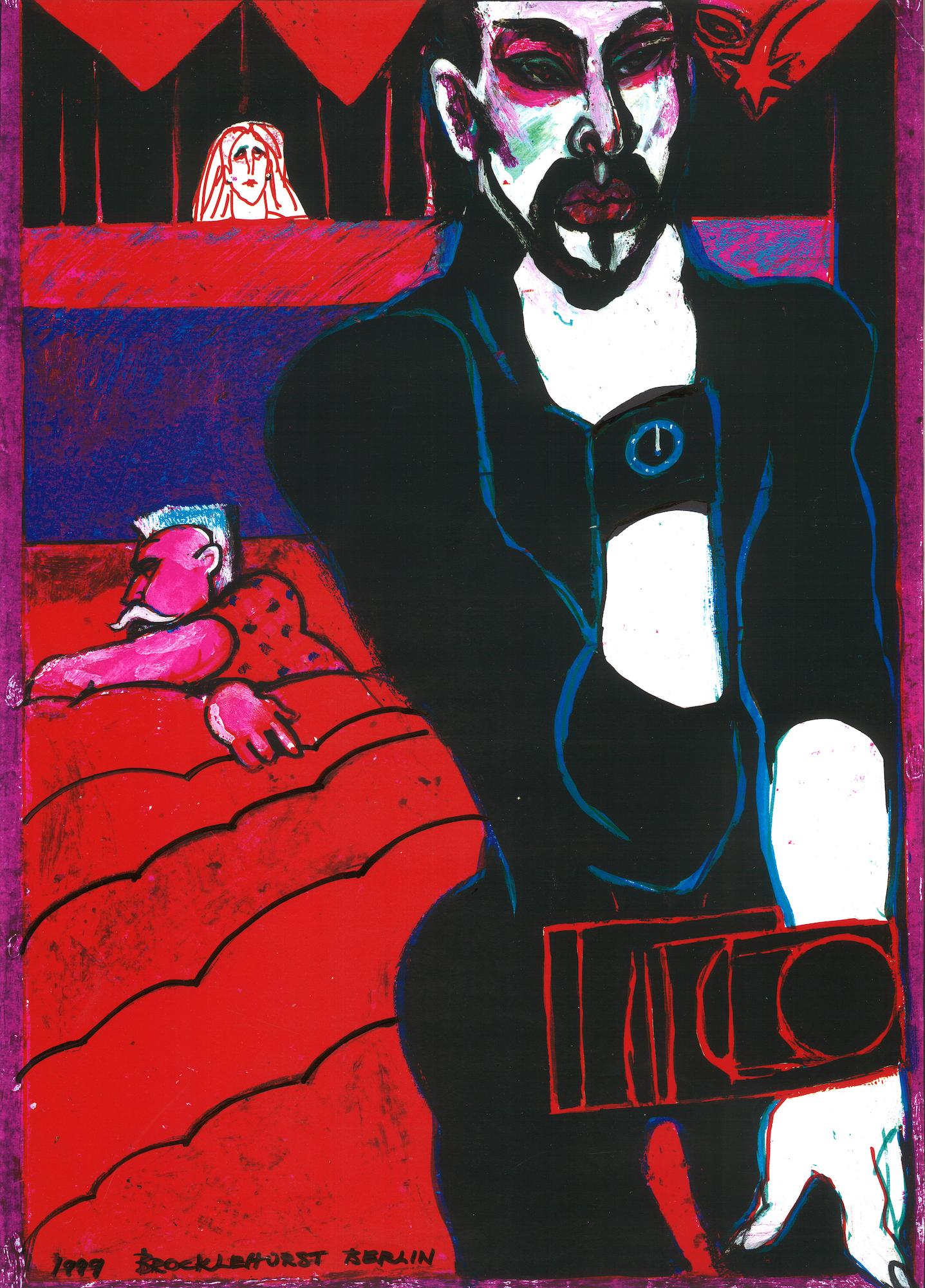
Jo Brocklehurst, Untitled, 1999
Jo (Josephine) Brocklehurst (1935 - 2006) studied at Central Saint Martins and began her career as a fashion illustrator. She later focused on portraiture, drawing directly from models at her studio in West Hampstead and in nightclubs and theatres in Berlin, London and New York. Her work documents the alternative subcultures of the 1970s, 80s and 90s that went on to shape mainstream fashion and performance scenes. In 1999, Brocklehurst was artist in residence at newspaper Berliner Zeitung during Berliner Theatertreffen, a festival of new German theatre. The paper wanted to revive the Weimar tradition of theatre reviews being accompanied by illustrations, rather than using photographs. Brocklehurst drew behind the scenes and from her seat during performances.
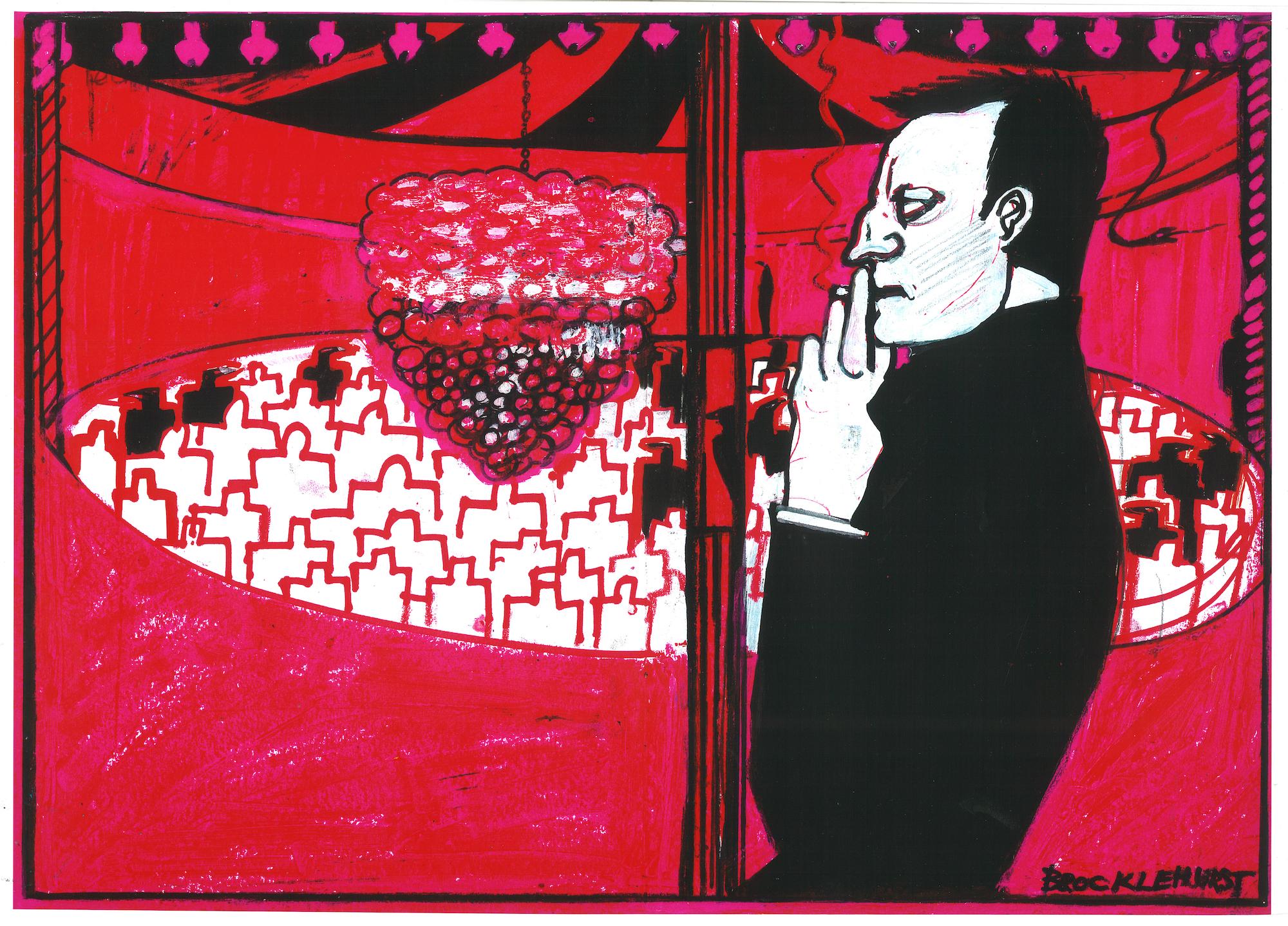
Jo Brocklehurst, Untitled (drawing of the Spiegelzelt), 1999
Jo (Josephine) Brocklehurst (1935 - 2006) studied at Central Saint Martins and began her career as a fashion illustrator. She later focused on portraiture, drawing directly from models at her studio in West Hampstead and in nightclubs and theatres in Berlin, London and New York. Her work documents the alternative subcultures of the 1970s, 80s and 90s that went on to shape mainstream fashion and performance scenes. In 1999, Brocklehurst was artist in residence at newspaper Berliner Zeitung during Berliner Theatertreffen, a festival of new German theatre. The paper wanted to revive the Weimar tradition of theatre reviews being accompanied by illustrations, rather than using photographs. Brocklehurst drew behind the scenes and from her seat during performances. This illustration accompanied a review of play Onkel Wanja, published in Berliner Zeitung on 5 May 1999, but is a drawing of the Spiegelzelt, a tent used for talks and evening events.
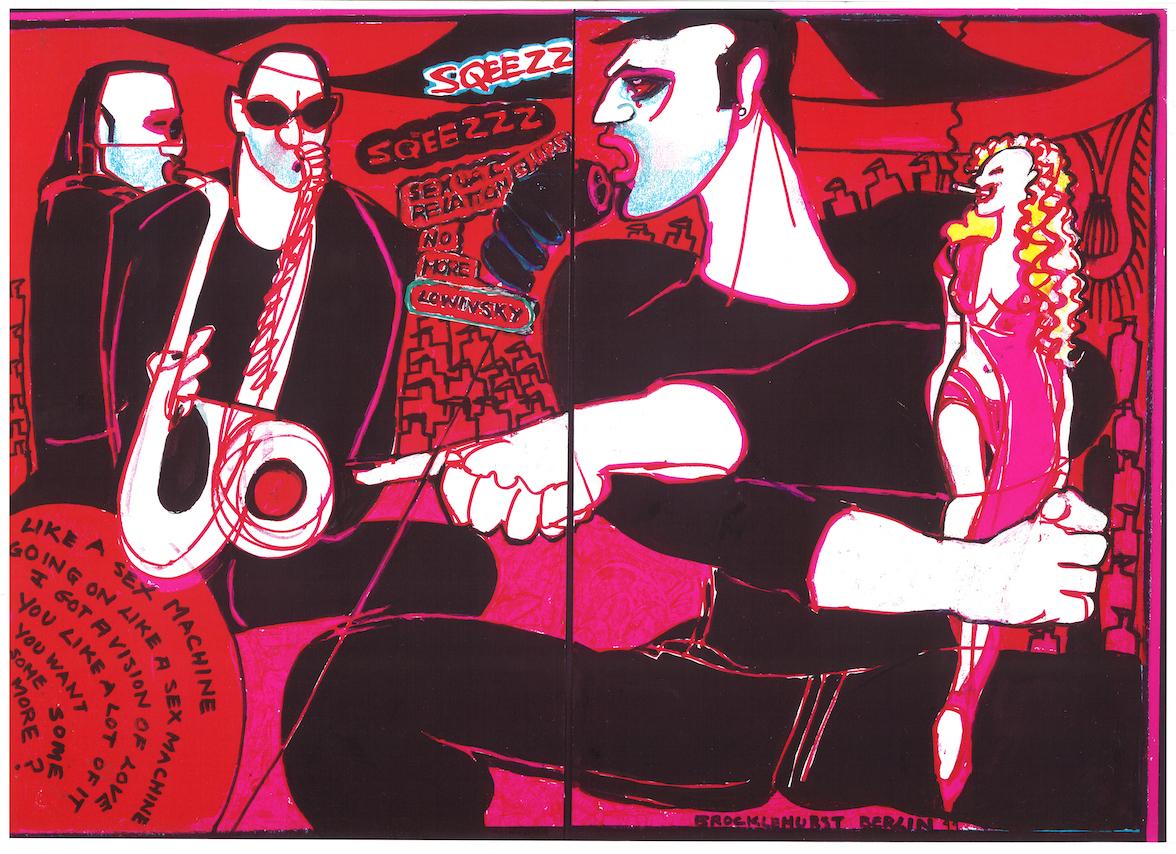
Jo Brocklehurst, Untitled (drawing of “Ich bin ja so allein”: Reflexionen mit und ohne Klavier), 1999
Jo (Josephine) Brocklehurst (1935 - 2006) studied at Central Saint Martins and began her career as a fashion illustrator. She later focused on portraiture, drawing directly from models at her studio in West Hampstead and in nightclubs and theatres in Berlin, London and New York. Her work documents the alternative subcultures of the 1970s, 80s and 90s that went on to shape mainstream fashion and performance scenes. In 1999, Brocklehurst was artist in residence at newspaper Berliner Zeitung during Berliner Theatertreffen, a festival of new German theatre. The paper wanted to revive the Weimar tradition of theatre reviews being accompanied by illustrations, rather than using photographs. Brocklehurst drew behind the scenes and from her seat during performances. This drawing is of a festival event, “Ich bin ja so allein”: Reflexionen mit und ohne Klavier.
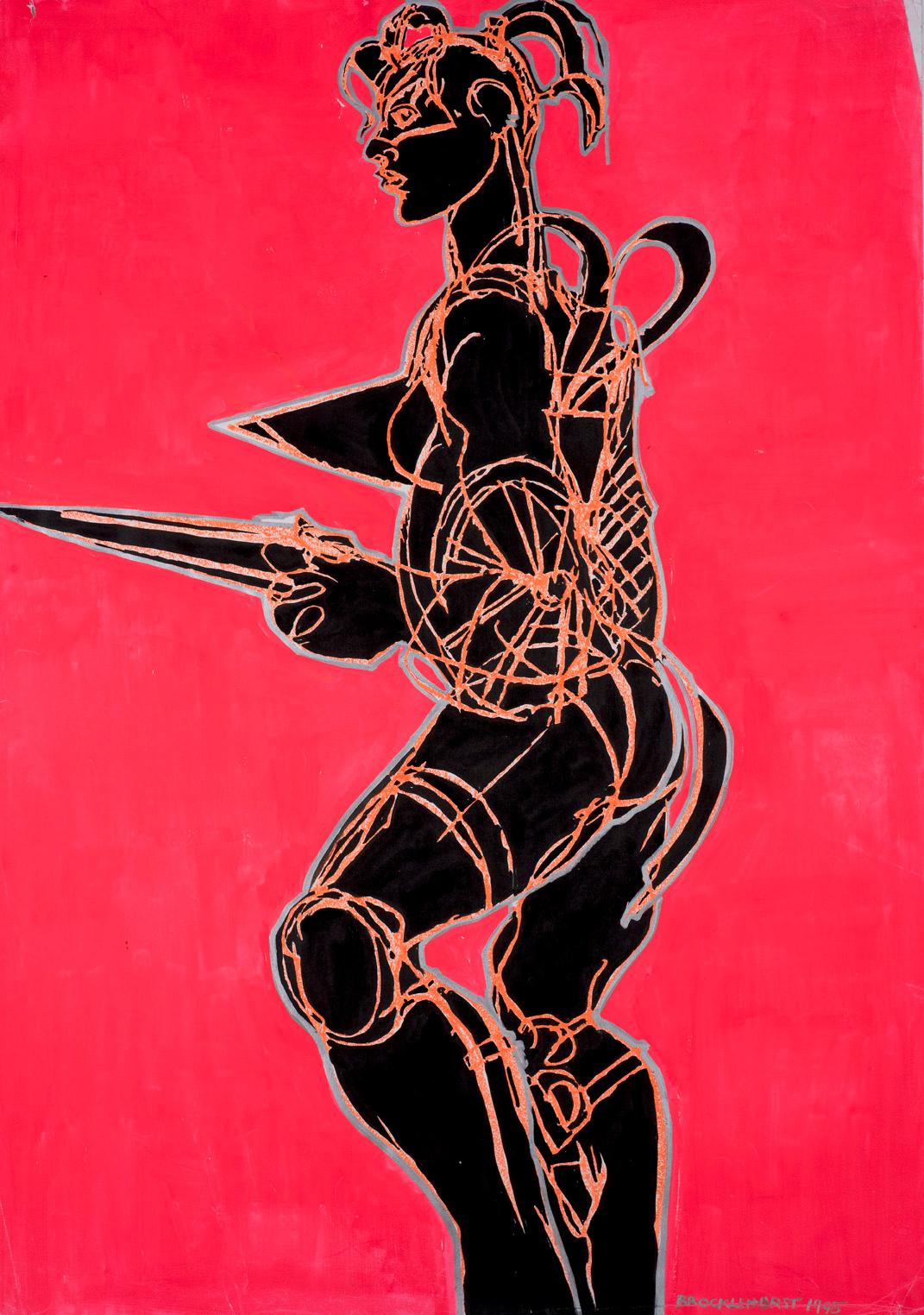
Jo Brocklehurst, Untitled (portrait of Fia Bergsren), 1995
Jo (Josephine) Brocklehurst (1935 - 2006) studied at Central Saint Martins and began her career as a fashion illustrator. She later focused on portraiture, drawing directly from models at her studio in West Hampstead and in nightclubs and theatres in Berlin, London and New York. Her work documents the alternative subcultures of the 1970s, 80s and 90s that went on to shape mainstream fashion and performance scenes. In the 1990s, Brocklehurst began drawing the fashion designers and performers finding space for experimentation in the fetish clubs of Soho and King’s Cross.
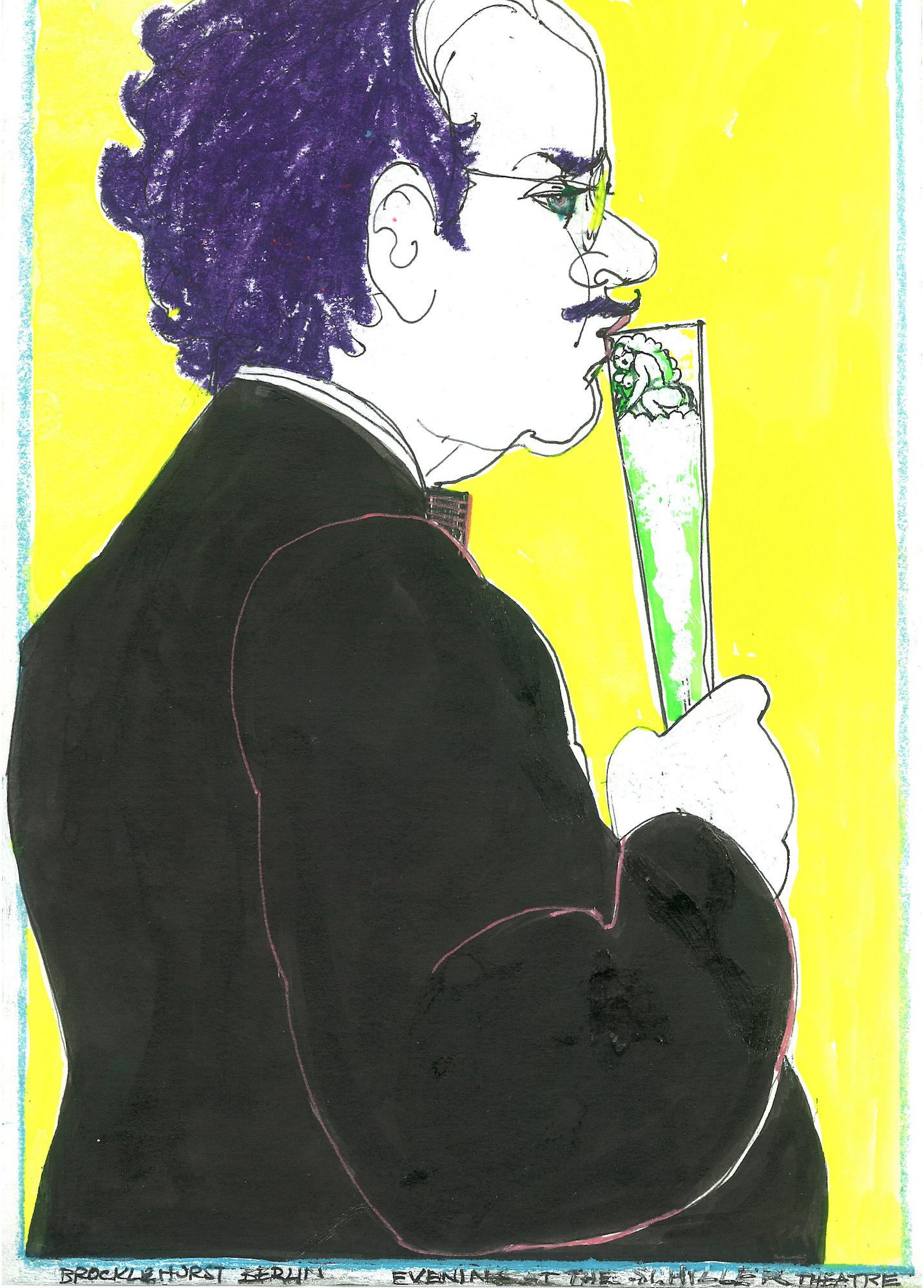
Jo Brocklehurst, Evening at the Schiller Theatre, 1999
Jo (Josephine) Brocklehurst (1935 - 2006) studied at Central Saint Martins and began her career as a fashion illustrator. She later focused on portraiture, drawing directly from models at her studio in West Hampstead and in nightclubs and theatres in Berlin, London and New York. Her work documents the alternative subcultures of the 1970s, 80s and 90s that went on to shape mainstream fashion and performance scenes. In 1999, Brocklehurst was artist in residence at newspaper Berliner Zeitung during Berliner Theatertreffen, a festival of new German theatre. The paper wanted to revive the Weimar tradition of theatre reviews being accompanied by illustrations, rather than using photographs. Brocklehurst drew behind the scenes and from her seat during performances. This drawing may have been made during the interval of a performance of play Die Eingeborene at the Schiller Theatre.
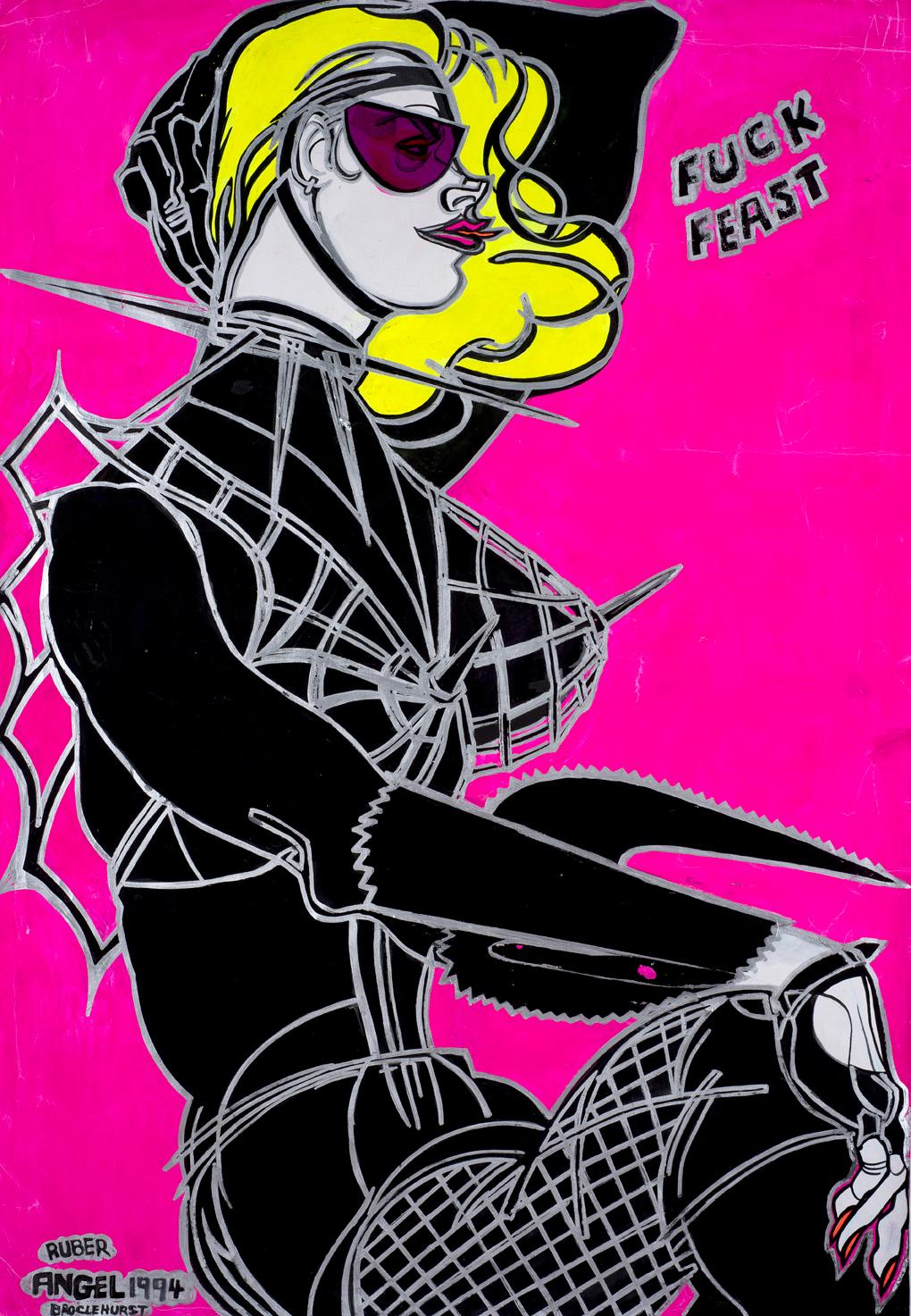
Jo Brocklehurst, Ruber Angel (portrait of Isabelle Bricknall), 1994
Jo (Josephine) Brocklehurst (1935 - 2006) studied at Central Saint Martins and began her career as a fashion illustrator. She later focused on portraiture, drawing directly from models at her studio in West Hampstead and in nightclubs and theatres in Berlin, London and New York. Her work documents the alternative subcultures of the 1970s, 80s and 90s that went on to shape mainstream fashion and performance scenes. In the 1990s, Brocklehurst began drawing the fashion designers and performers finding space for experimentation in the fetish clubs of Soho and King’s Cross. This portrait is of Brocklehurst’s regular collaborator Isabelle Bricknall, whose collection of steel ‘body armour’ (constructed by Anthony Gregory) was designed as ‘protection’ for nights on the fetish scene.
Content warning: strong language