1965
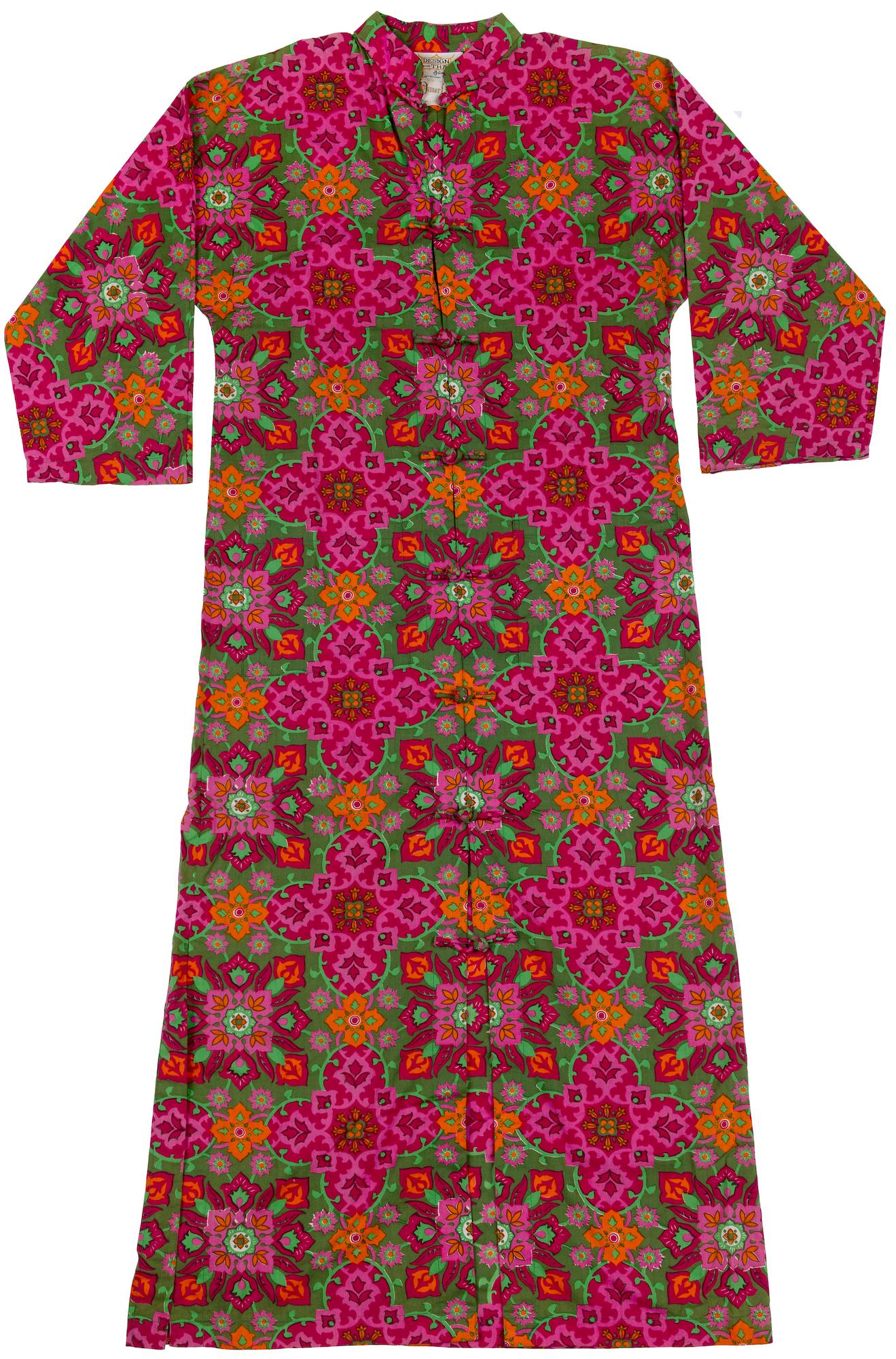
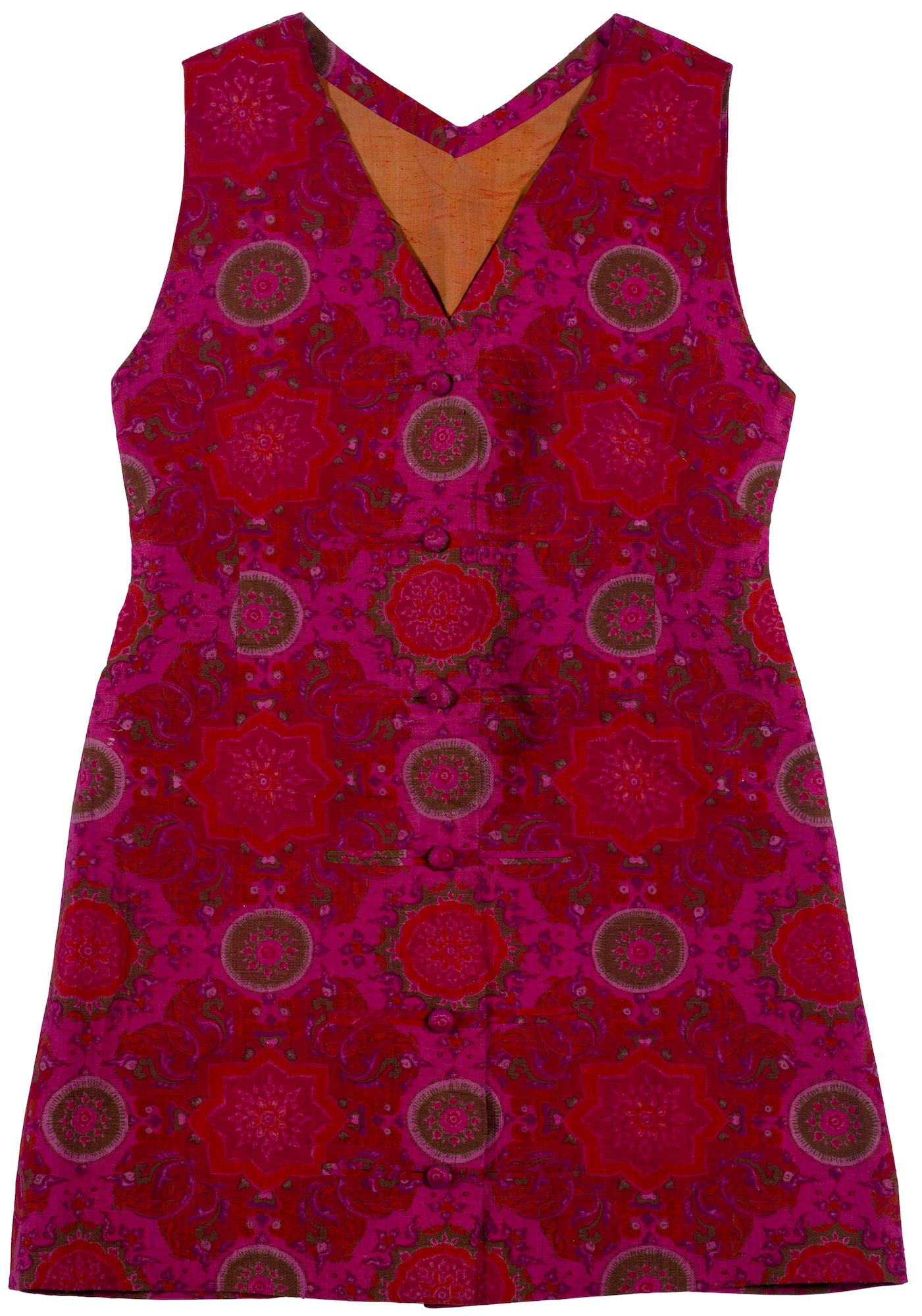
Jacqueline Ayer, Design Thai tunic, c. 1965
In the early 1960s, Jacqueline Ayer founded textile and garment company Design Thai, funded by IBEC (International Basic Economy Corporation) under Norman Rockefeller. The first printed fabrics were inspired by ancient Thai designs from carvings, temples, porcelains, and printed cloths in the vaults of the National Museum Bangkok. Design Thai opened a shop in Bangkok in 1962, and expanded to offer a line of ready-to-wear clothing. In the years that followed, Design Thai went from strength to strength, opening branches in New York and Hong Kong.
Jacqueline Ayer, Design Thai dress, c. 1965
In the early 1960s, Jacqueline Ayer founded textile and garment company Design Thai, funded by IBEC (International Basic Economy Corporation) under Norman Rockefeller. The first printed fabrics were inspired by ancient Thai designs from carvings, temples, porcelains, and printed cloths in the vaults of the National Museum Bangkok. Design Thai opened a shop in Bangkok in 1962, and expanded to offer a line of ready-to-wear clothing. In the years that followed, Design Thai went from strength to strength, opening branches in New York and Hong Kong.
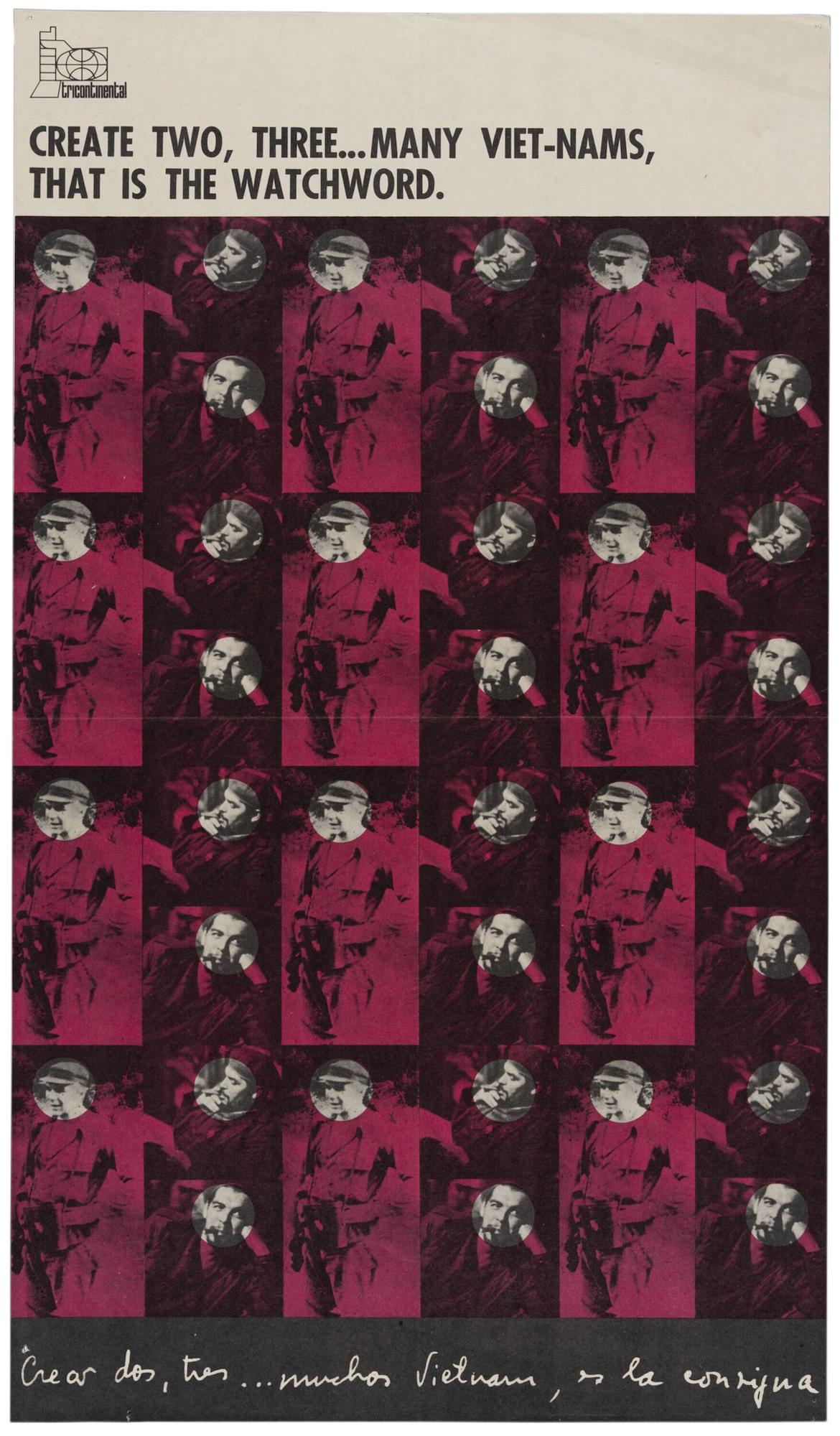
CREATE TWO, THREE...MANY VIET-NAMS, THAT IS THE WATCHWORD, 1967
Between the 1960s and 1990s, more than fifty designers worked at OSPAAAL (the Organisation of Solidarity with the People of Africa, Asia and Latin America). Based in Cuba, they made magazines and posters that were sent around the world. Their aim was to promote radical political ideas. Many of their posters celebrate socialist revolutions and liberation movements from the Global South. The first edition of OSPAAAL’s Tricontinental magazine was a special supplement dedicated to Che Guevara’s Message to the Tricontinental. His manifesto presented Vietnamese Communists opposing U.S. military forces in Vietnam as a model for patriotic resistance. It contained the only poster of the guerrilla leader made during his lifetime – Guevara was killed in Bolivia six months after its issue. OSPAAAL’s designers often used repetition of photographic as a way to create bold illustrations with limited resources. The studio’s first art director Alfredo Rostgaard said that “from the need to solve our material problems, we began to discover new forms”
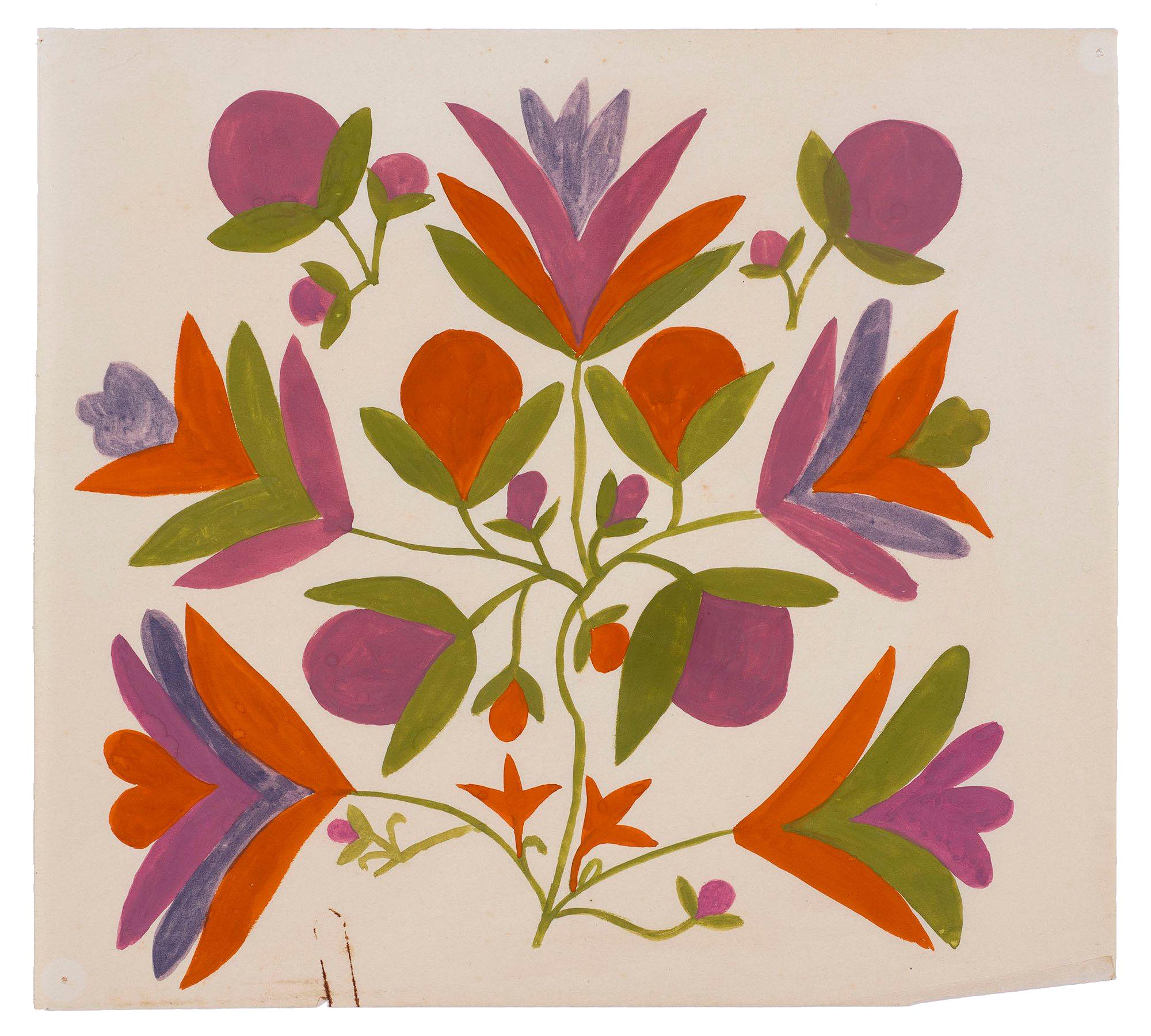
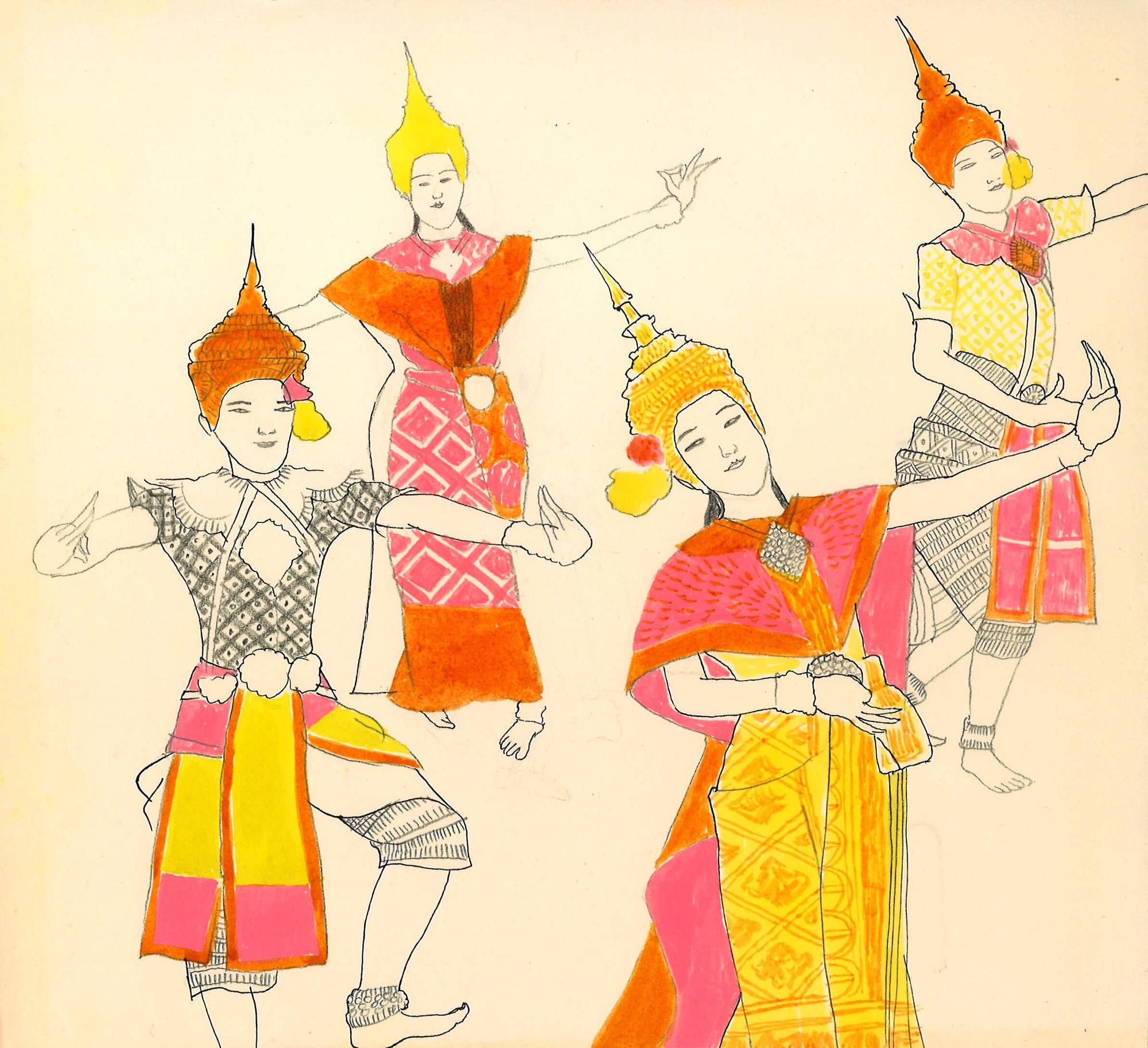
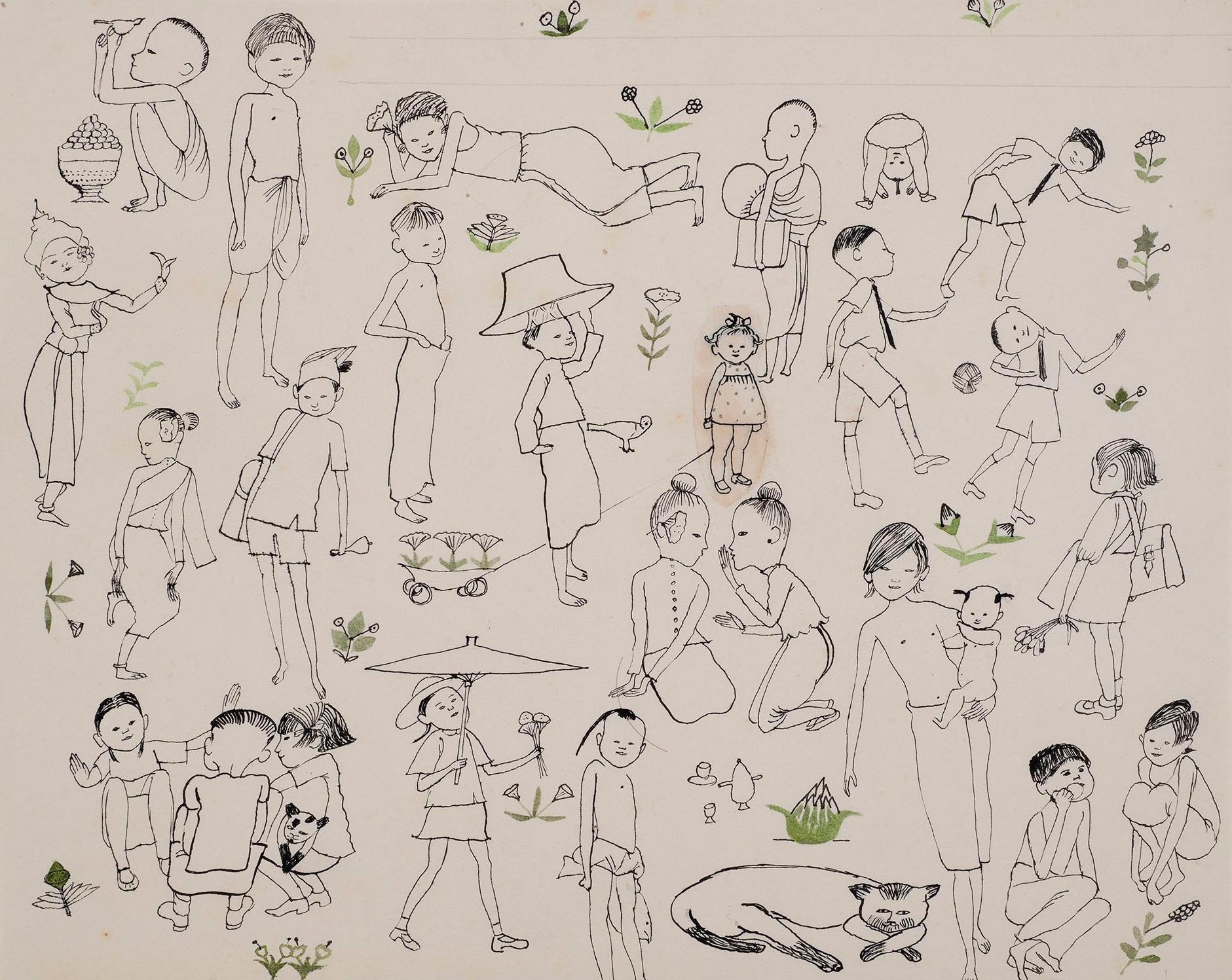
Jacqueline Ayer, Untitled, c. 1965
In the early 1960s, Jacqueline Ayer founded textile and garment company Design Thai, funded by IBEC (International Basic Economy Corporation) under Norman Rockefeller. The first printed fabrics were inspired by ancient Thai designs from carvings, temples, porcelains, and printed cloths in the vaults of the National Museum Bangkok. Design Thai opened a shop in Bangkok in 1962, and expanded to offer a line of ready-to-wear clothing. Design Thai's collection of garments showcased Ayer's own pattern designs within the textiles used. This drawing demonstrates her approach to forming a motif towards print production.
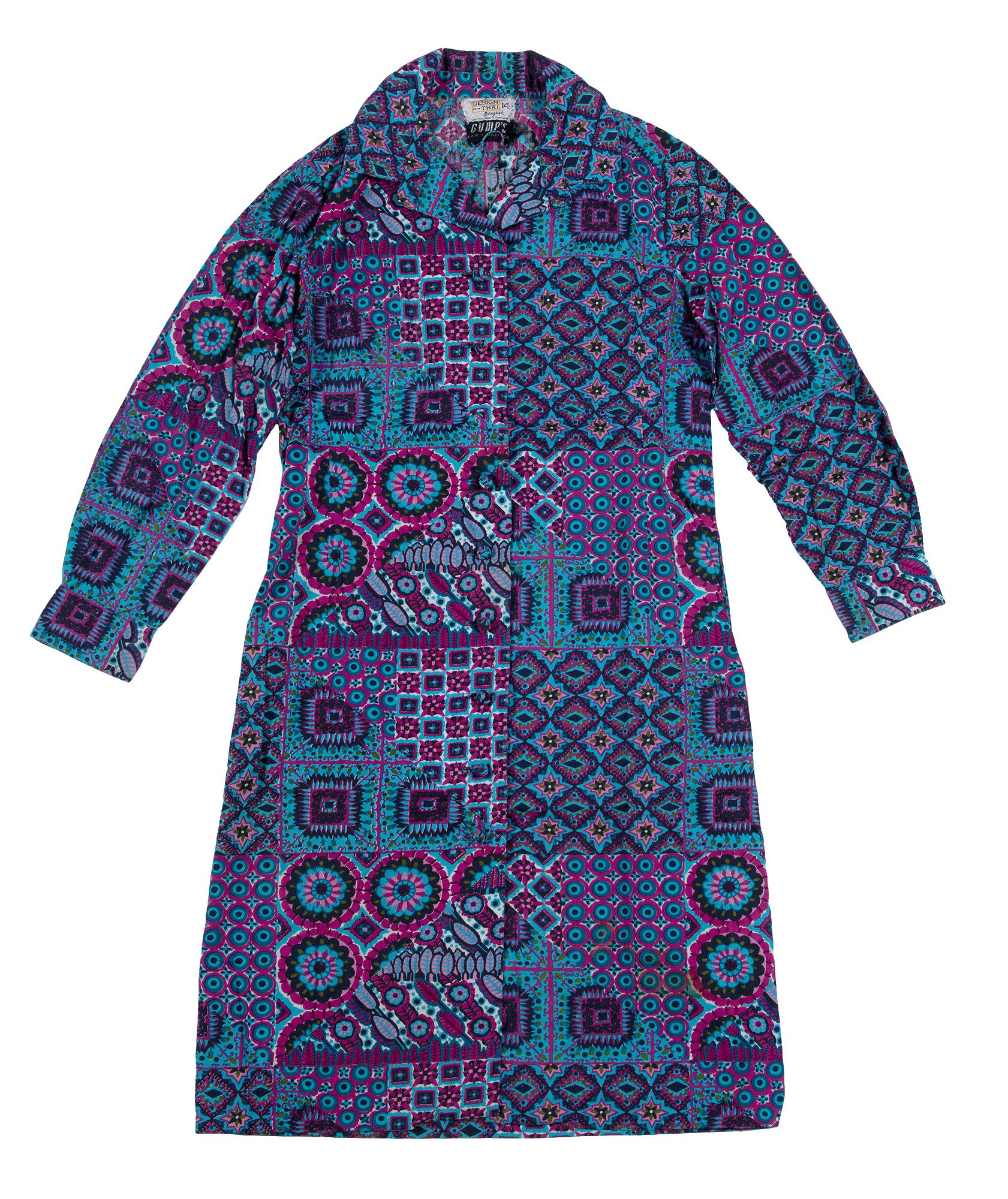
Jacqueline Ayer, Design Thai dress, c. 1965
In the early 1960s, Jacqueline Ayer founded textile and garment company Design Thai, funded by IBEC (International Basic Economy Corporation) under Norman Rockefeller. The first printed fabrics were inspired by ancient Thai designs from carvings, temples, porcelains, and printed cloths in the vaults of the National Museum Bangkok. Design Thai opened a shop in Bangkok in 1962, and expanded to offer a line of ready-to-wear clothing. In the years that followed, Design Thai went from strength to strength, opening branches in New York and Hong Kong.