United States
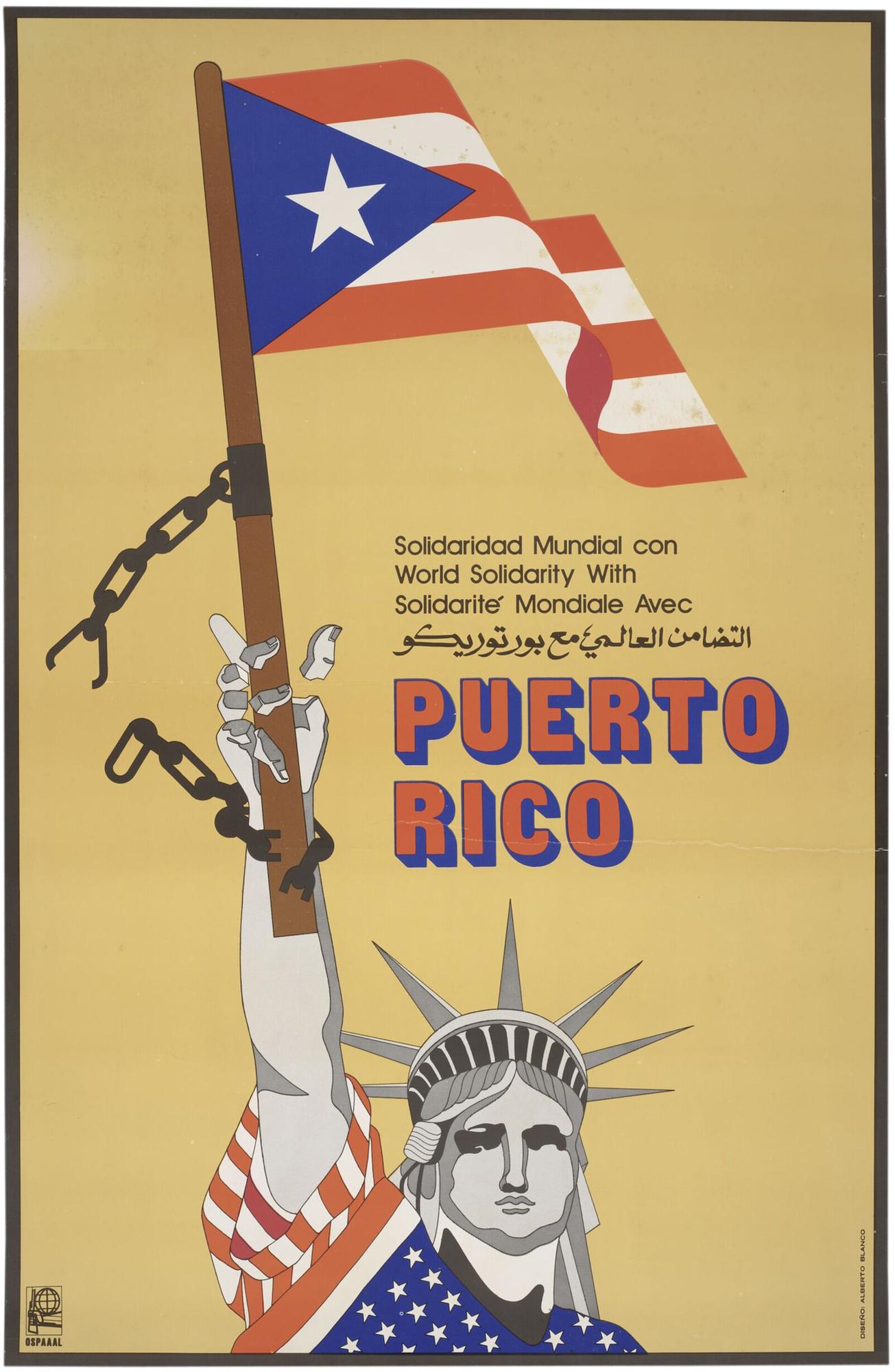
World Solidarity With PUERTO RICO, 1981
Between the 1960s and 1990s, more than fifty designers worked at OSPAAAL (the Organisation of Solidarity with the People of Africa, Asia and Latin America). Based in Cuba, they made magazines and posters that were sent around the world. Their aim was to promote radical political ideas. Many of their posters celebrate socialist revolutions and liberation movements from the Global South. They also criticised the foreign policy of the U.S.A., often using US icons as part of visual metaphors. This poster advocates for Puerto Rican independence from the U.S.A. The Statue of Liberty represents the U.S.A. Its crumbling hand releases the Puerto Rican flag.
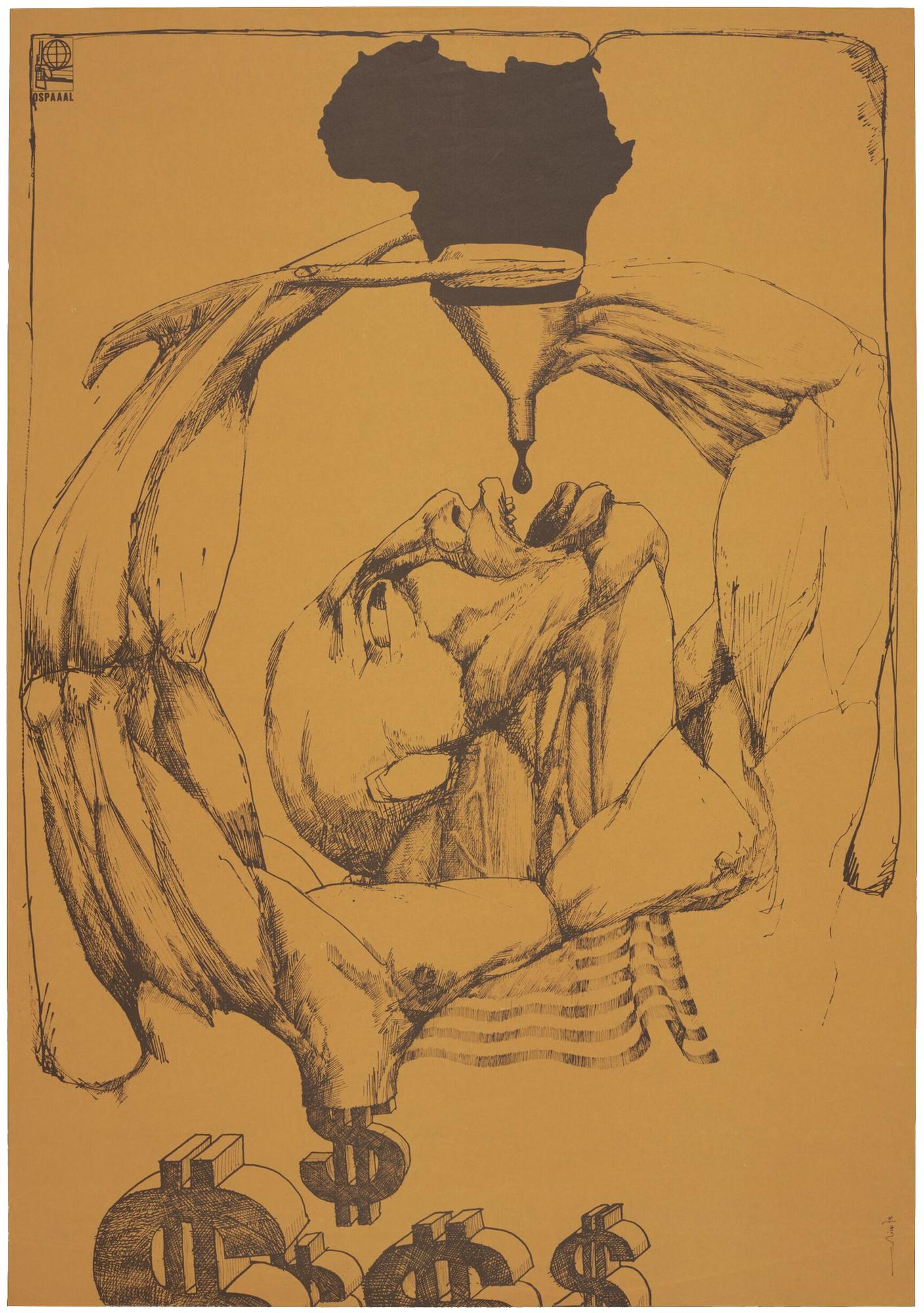
Untitled, 1971
Between the 1960s and 1990s, more than fifty designers worked at OSPAAAL (the Organisation of Solidarity with the People of Africa, Asia and Latin America). Based in Cuba, they made magazines and posters that were sent around the world. Their aim was to promote radical political ideas. Many of their posters celebrate socialist revolutions and liberation movements from the Global South. Olivio Martínez Viera’s design represents the U.S.A. as a monstrous organism extracting resources from Africa for financial gain.
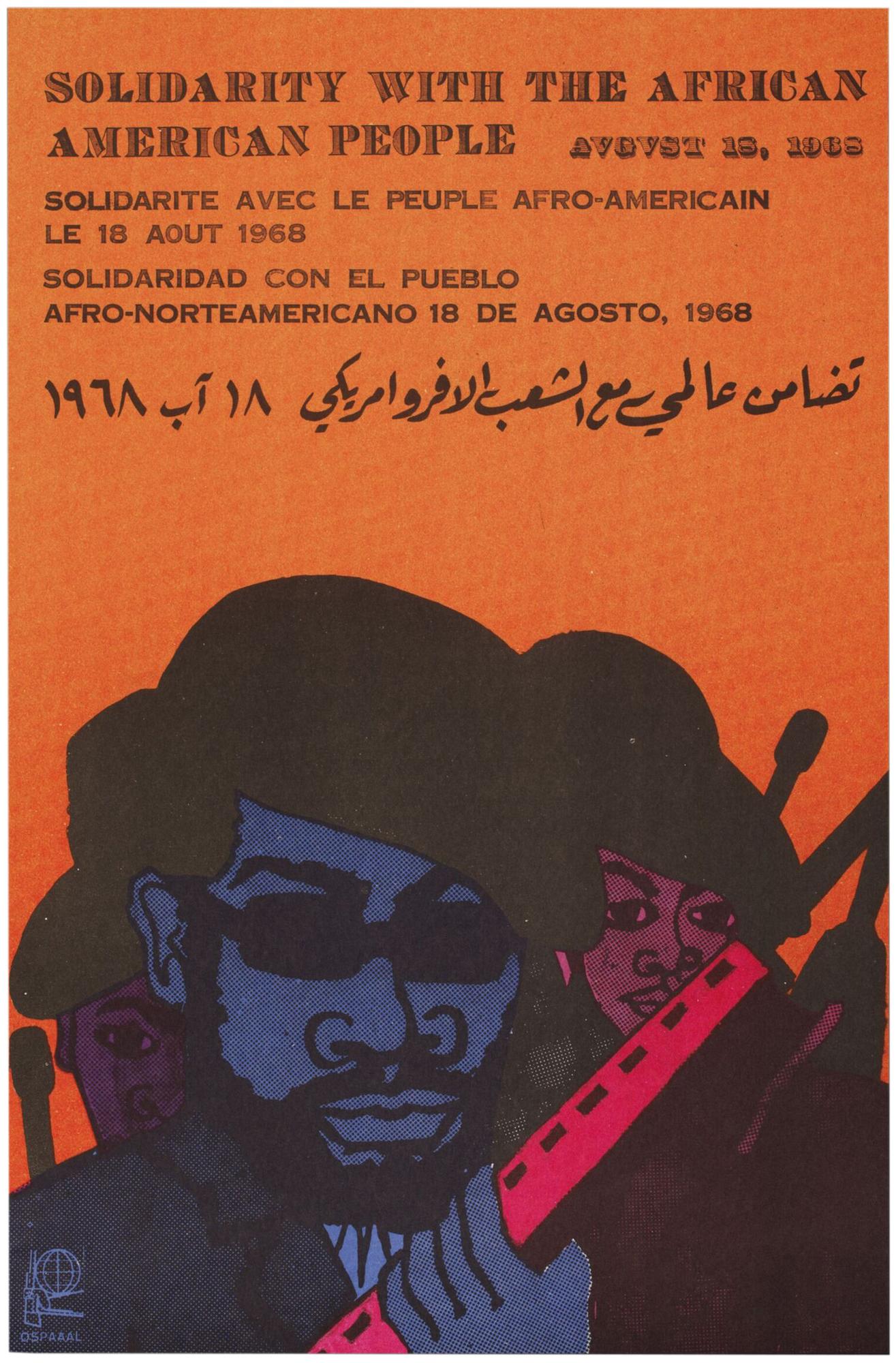
SOLIDARITY WITH THE AFRICAN AMERICAN PEOPLE - AUGUST 18, 1968, 1968
Between the 1960s and 1990s, more than fifty designers worked at OSPAAAL. Based in Cuba, they made magazines and posters that were sent around the world. Their aim was to promote radical political ideas. Many of their posters celebrate socialist revolutions and liberation movements from the Global South. They were also connected to the Black Panther Party, a political organisation based in Oakland, California. Designer Emory Douglas was “glad to see” his illustrations for the Black Panther Party’s newspaper repurposed by OSPAAAL. Douglas’ image reflects the party’s line on carrying arms: “we believe we can end police brutality... by organising black self-defence groups that are dedicated to defending our black community from racist police oppression and brutality.”
Content warning: weaponry
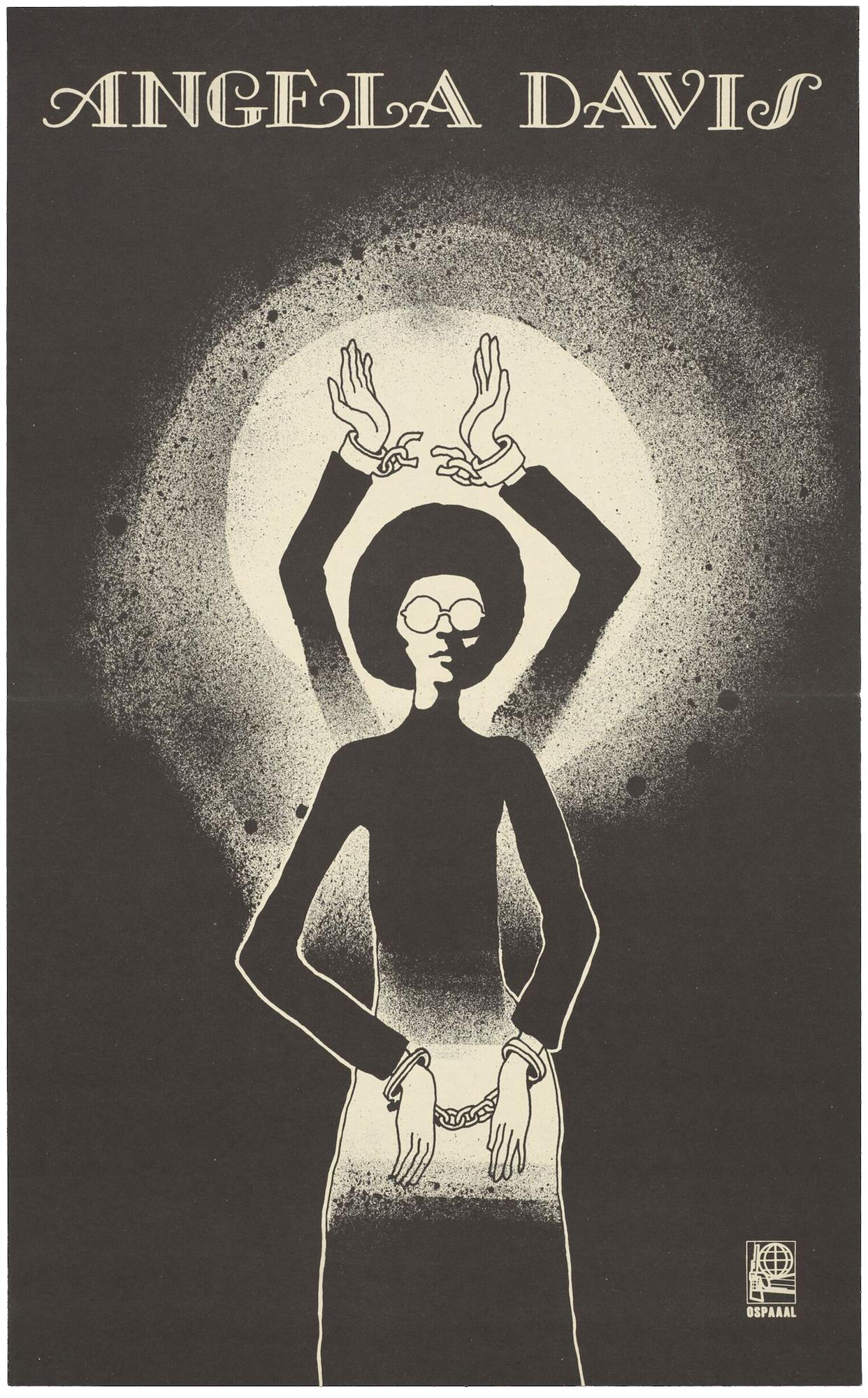
ANGELA DAVIS, 1970
Between the 1960s and 1990s, more than fifty designers worked at OSPAAAL (the Organisation of Solidarity with the People of Africa, Asia and Latin America). Based in Cuba, they made magazines and posters that were sent around the world. Their aim was to promote radical political ideas. Many of their posters celebrate socialist revolutions and liberation movements from the Global South. This poster was designed in support of North American activist and academic Angela Davis. She was arrested in New York City in 1970, accused of supplying arms that were used in a kidnap and murder. She protested her innocence and there was widespread protest at her incarceration. Davis was cleared of all charges in 1972.
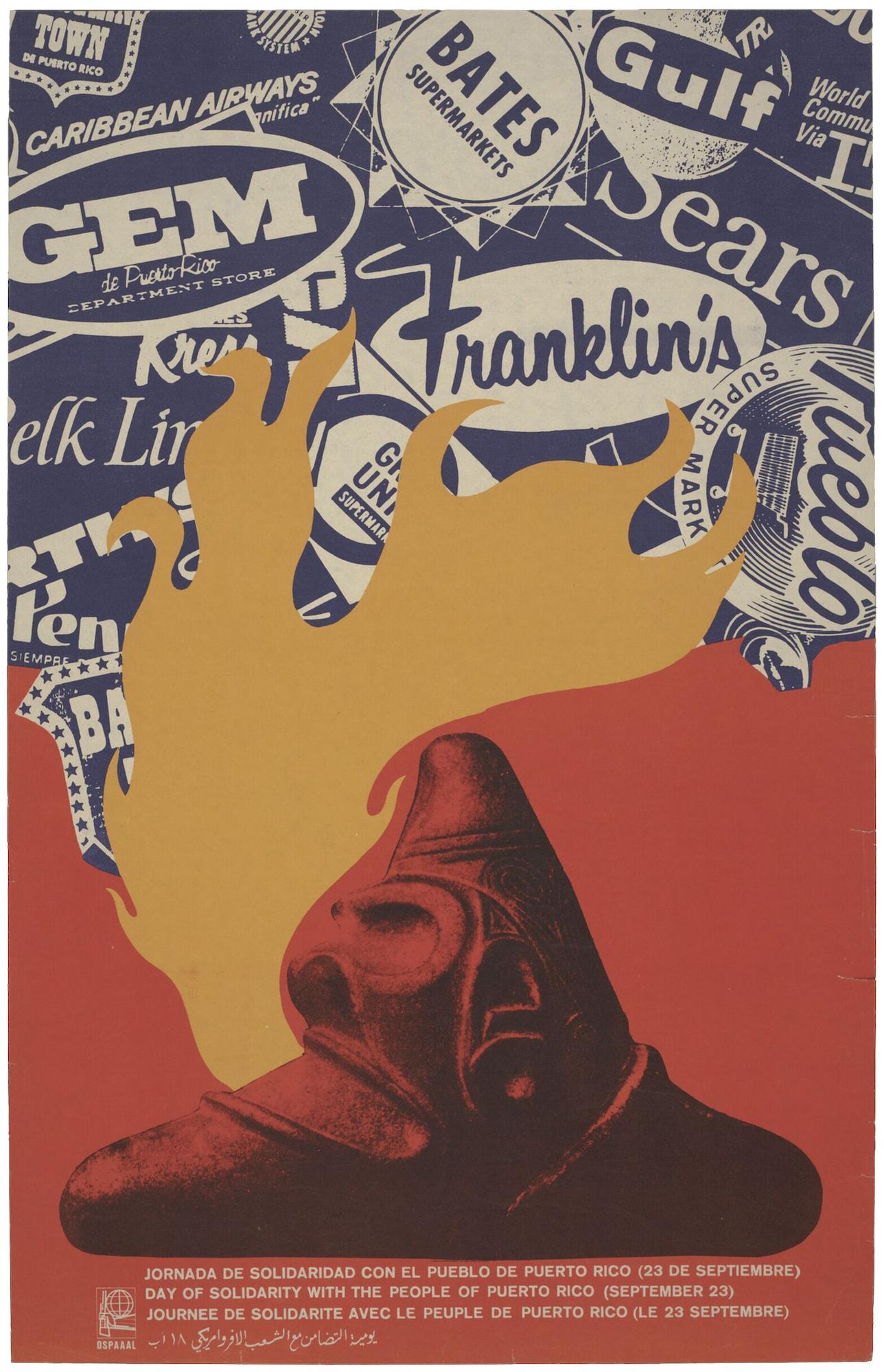
DAY OF SOLIDARITY WITH THE PEOPLE OF PUERTO RICO (SEPTEMBER 23), 1969
Between the 1960s and 1990s, more than fifty designers worked at OSPAAAL (the Organisation of Solidarity with the People of Africa, Asia and Latin America). Based in Cuba, they made magazines and posters that were sent around the world. Their aim was to promote radical political ideas. Many of their posters celebrate socialist revolutions and liberation movements from the Global South. In this design, a three-point cemí figure breathes fire in defiance of the U.S. corporations operating in Puerto Rico. For the Indigenous Taíno people of the Caribbean, a cemí is a representation of a deity, and at the same time a living being with its own vital force. Many OSPAAAL designers used Indigenous imagery to argue for the right to self-determination and support liberation movements opposing oppressive powers. However, the designers did not always know the full meaning or origin of the iconography they used.