Headdress
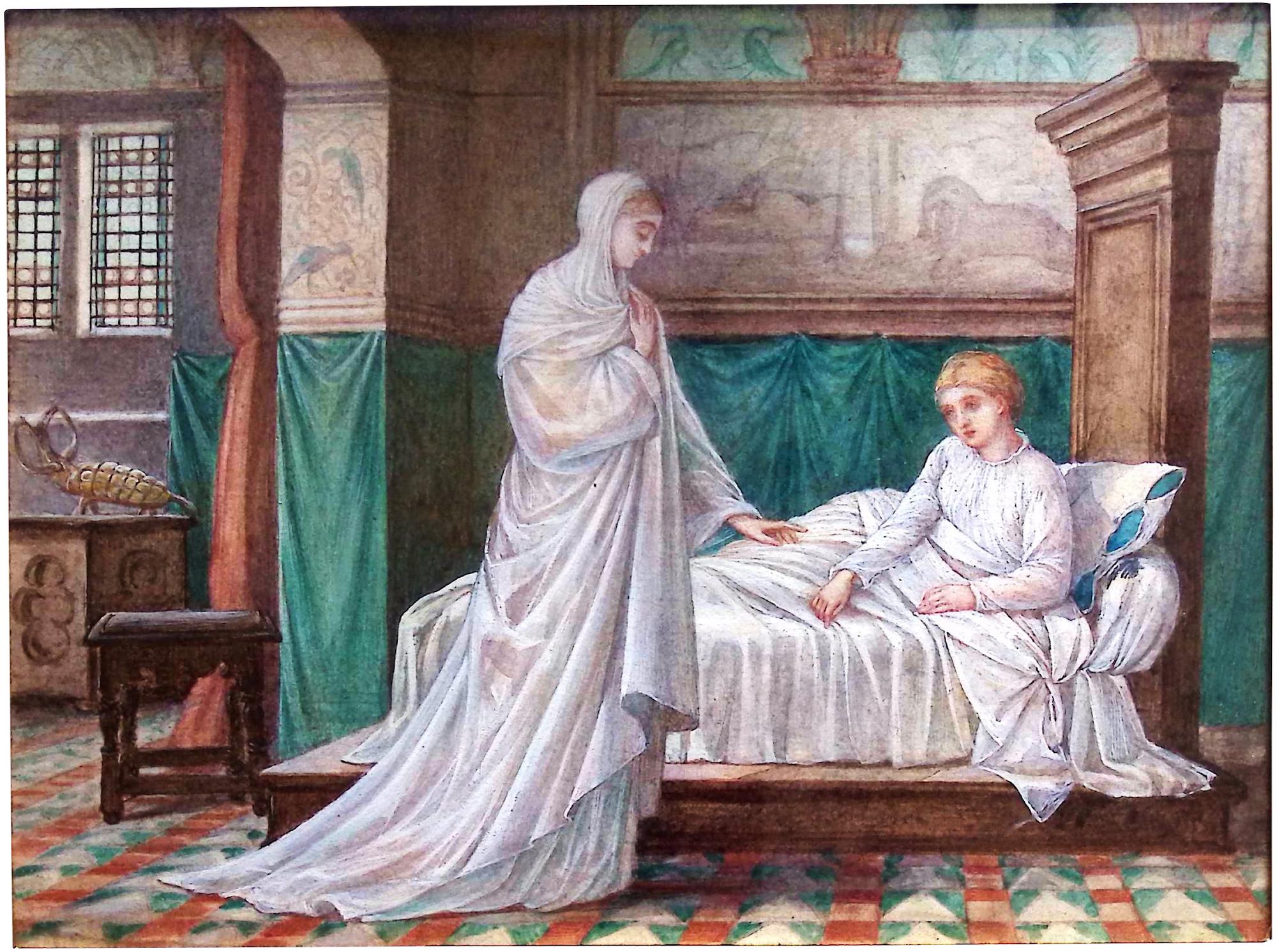
Illustration for Beauty and the Beast (a lady comforting Beauty), c. 1875
Eleanor Vere Boyle (1825 – 1916) illustrated poetry and prose by some of the most popular authors of her time. She regularly drew and painted using ink and watercolour, sketching landscapes, animals and her children from life. She also made drawings from her imagination, often reflecting spiritual themes. This illustration is from Boyle’s 1875 retelling of Beauty and the Beast, a fairy tale where a woman is imprisoned by a monster and falls in love with him. Unlike other illustrated versions before or since, Boyle gave her beast walrus-like tusks and flippers. In several of her illustrations, Boyle used shell gold – a mixture of finely ground gold powder and gum arabic (tree sap) that would have been stored in a shallow seashell. In the final publication, the caption for this illustration reads, "The room where Beauty slept. At dawn, a lady came to comfort her"
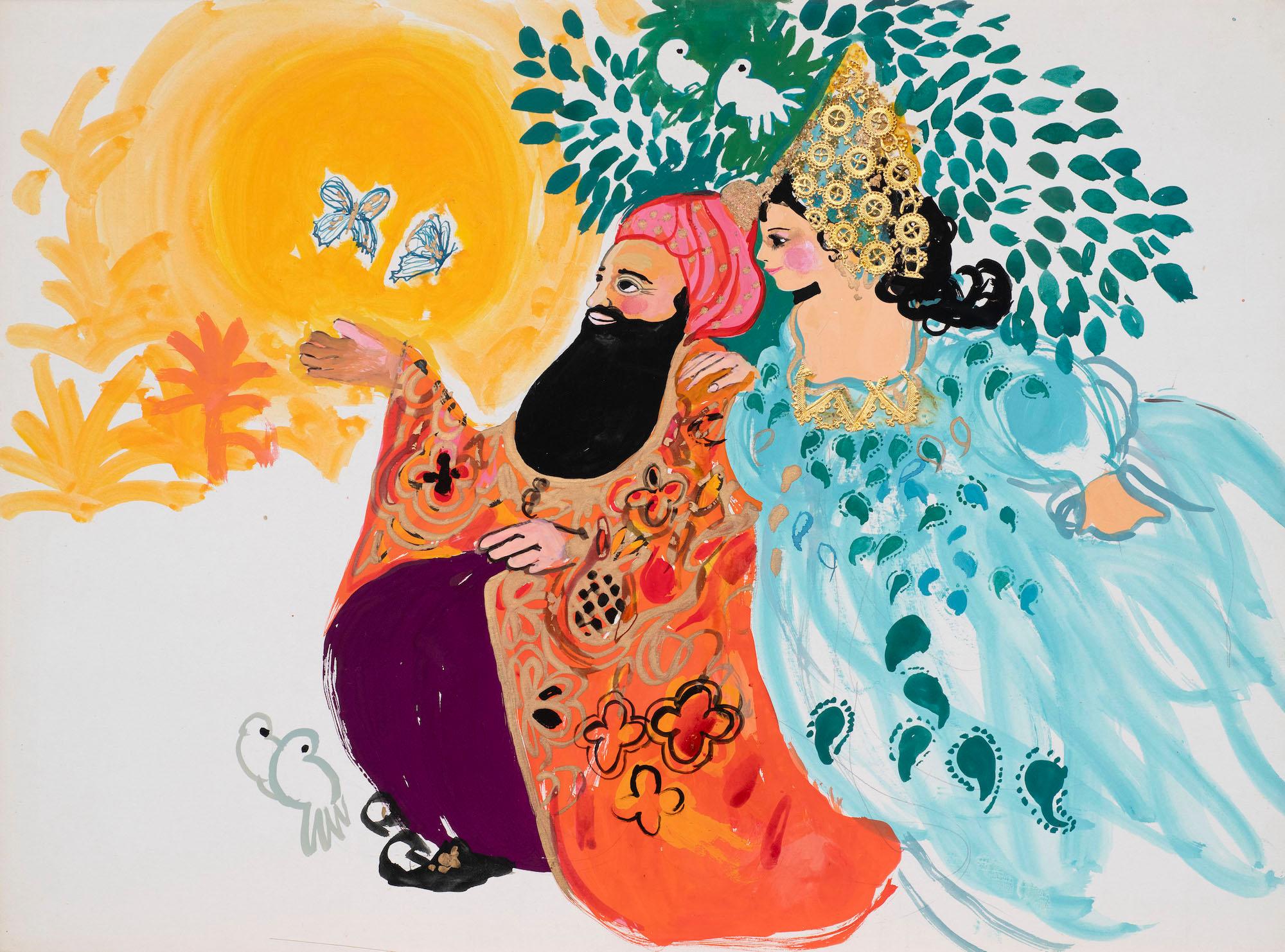
Untitled illustration for Jackanory (Just So Stories: The Butterfly who Stamped) , 1973
Janina Ede (1937-2018) created covers and illustrations for over 100 books in the 1960s, 70s and 80s. Many of her illustrations feature animals, which she drew from life. In the 1970s, Ede was commissioned to create large colourful illustrations for the BBC children’s television series, Jackanory. Each episode was dedicated to a story read by an actor, while specially commissioned illustrations were shown on screen during each programme. Some of these illustrations were for programmes featuring stories by author Rudyard Kipling. His ‘Just So’ stories were short tales that imagined how various animals attained their distinguishing features. Kipling set the stories in parts of India, West Asia and Africa. His descriptions of places and people included racist and exoticised stereotypes. Ede’s illustrations draw extensively on Kipling’s descriptions, and therefore reflect the racism in his work, as well as the prevailing stereotypical views that existed in 1970s Britain. Her own personal views are not documented. This storyboard illustration was produced by Janina Ede for Jackanory episode #1453, 'Just So Stories - The Butterfly that Stamped'. It aired on 4 January 1973.
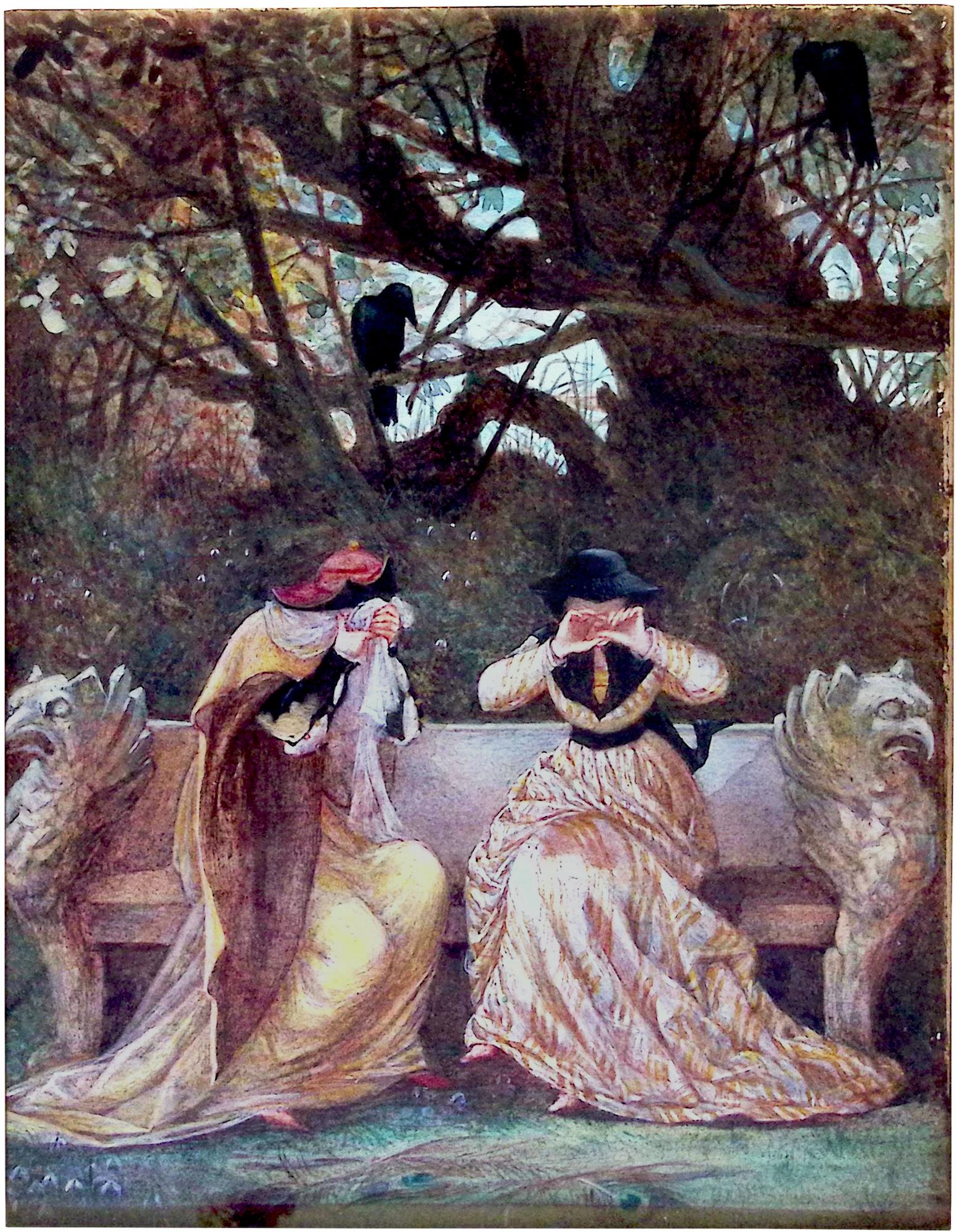
Illustration for Beauty and the Beast (two sisters weeping), c. 1875
Eleanor Vere Boyle (1825 – 1916) illustrated poetry and prose by some of the most popular authors of her time. She regularly drew and painted using ink and watercolour, sketching landscapes, animals and her children from life. She also made drawings from her imagination, often reflecting spiritual themes. This illustration is from Boyle’s 1875 retelling of Beauty and the Beast, a fairy tale where a woman is imprisoned by a monster and falls in love with him. Unlike other illustrated versions before or since, Boyle gave her beast walrus-like tusks and flippers. In several of her illustrations, Boyle used shell gold – a mixture of finely ground gold powder and gum arabic (tree sap) that would have been stored in a shallow seashell. In the final publication, the caption for this illustration reads, "Only the Raven in the brake, saw the sisters weep for rage, and heard them plot her death."
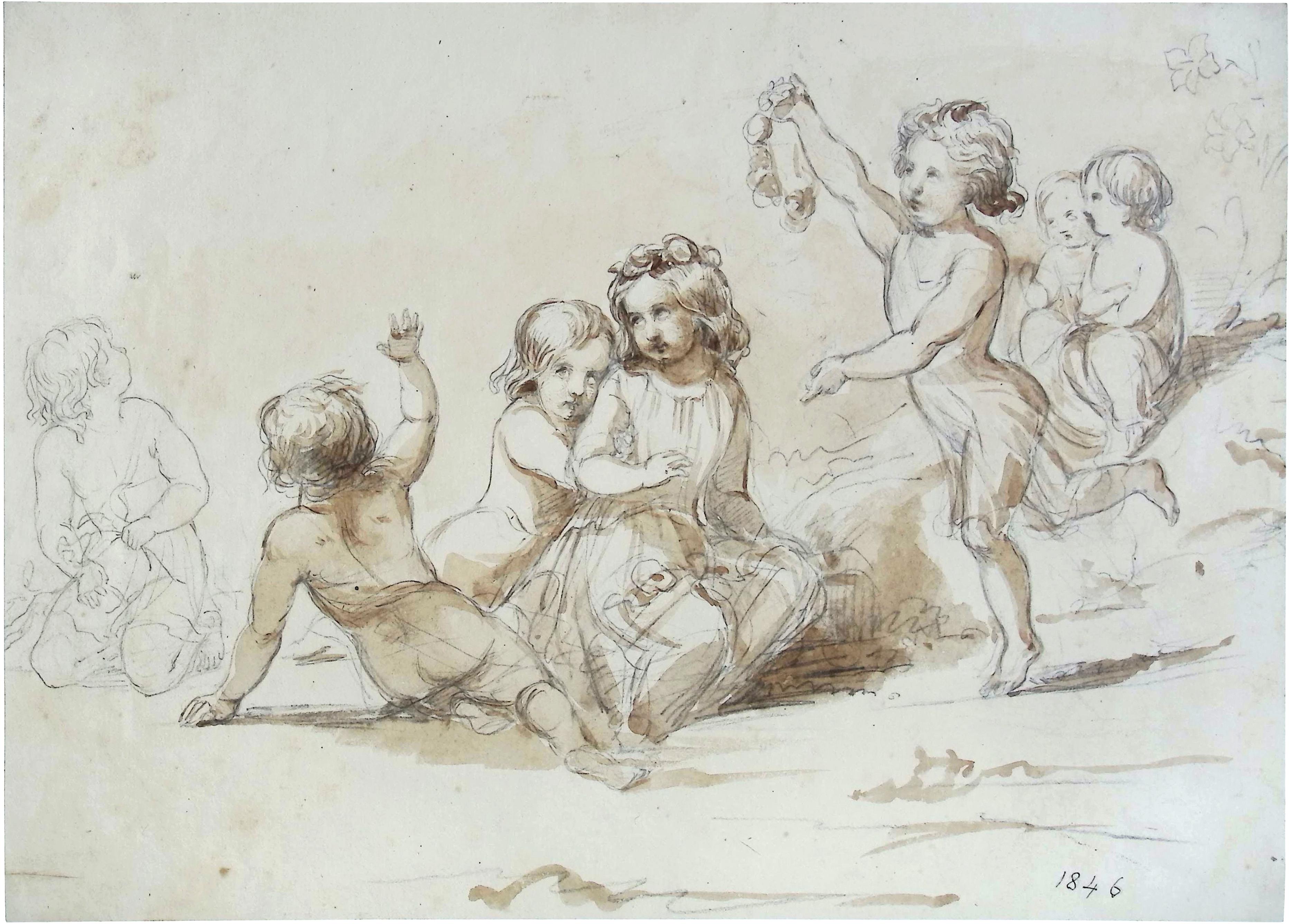
Untitled, 1846
Eleanor Vere Boyle (1825 – 1916) illustrated poetry and prose by some of the most popular authors of her time. She regularly drew and painted using ink and watercolour, sketching landscapes, animals and her children from life. She also made drawings from her imagination, often reflecting spiritual themes.
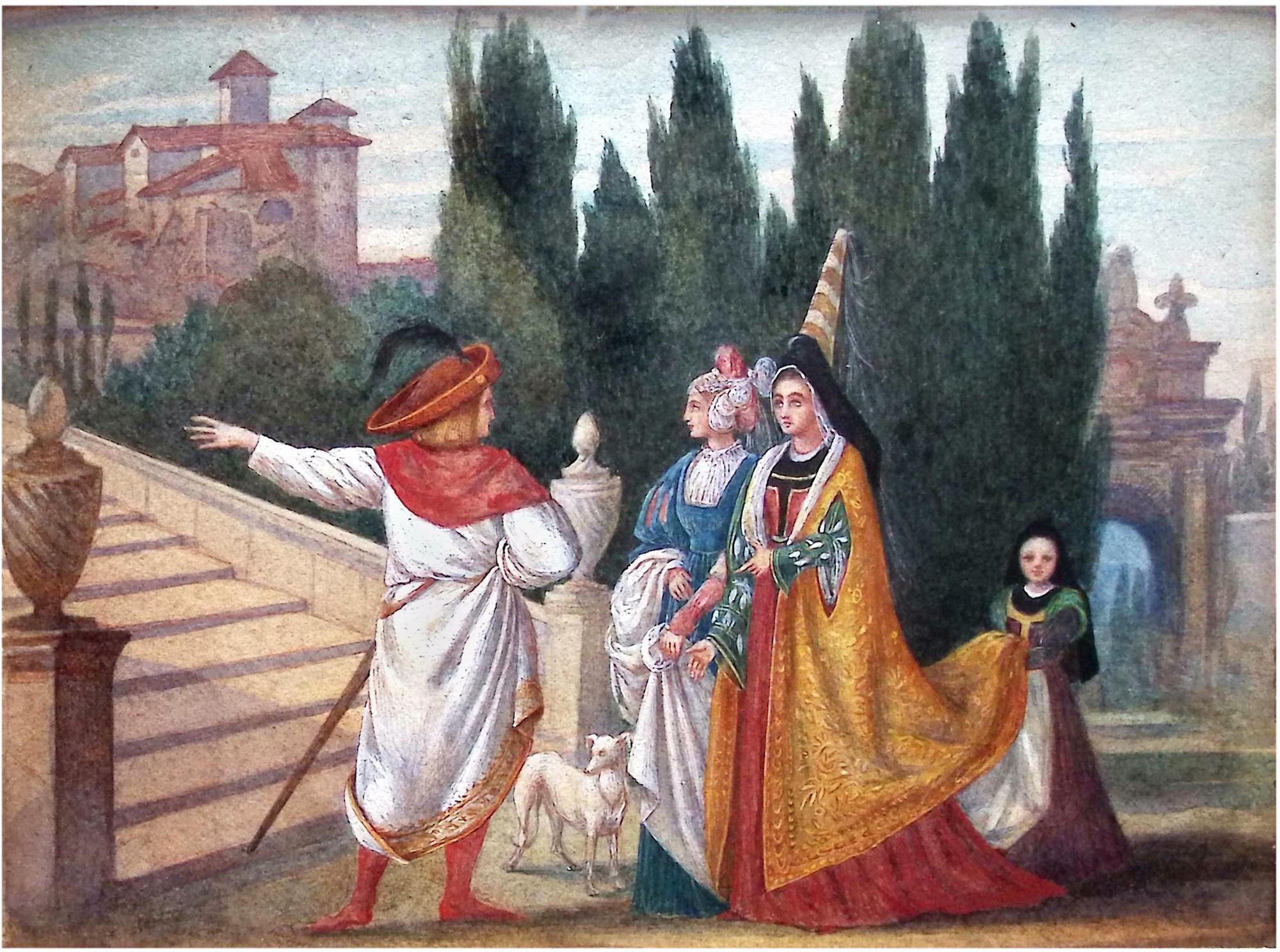
Illustration for Beauty and the Beast (Beauty and her two sisters), c. 1875
Eleanor Vere Boyle (1825 – 1916) illustrated poetry and prose by some of the most popular authors of her time. She regularly drew and painted using ink and watercolour, sketching landscapes, animals and her children from life. She also made drawings from her imagination, often reflecting spiritual themes. This illustration is from Boyle’s 1875 retelling of Beauty and the Beast, a fairy tale where a woman is imprisoned by a monster and falls in love with him. Unlike other illustrated versions before or since, Boyle gave her beast walrus-like tusks and flippers. In several of her illustrations, Boyle used shell gold – a mixture of finely ground gold powder and gum arabic (tree sap) that would have been stored in a shallow seashell. In the final publication, the caption for this illustration reads, "In the King's Garden the feast is ready, and the minstrels wait."