Flame
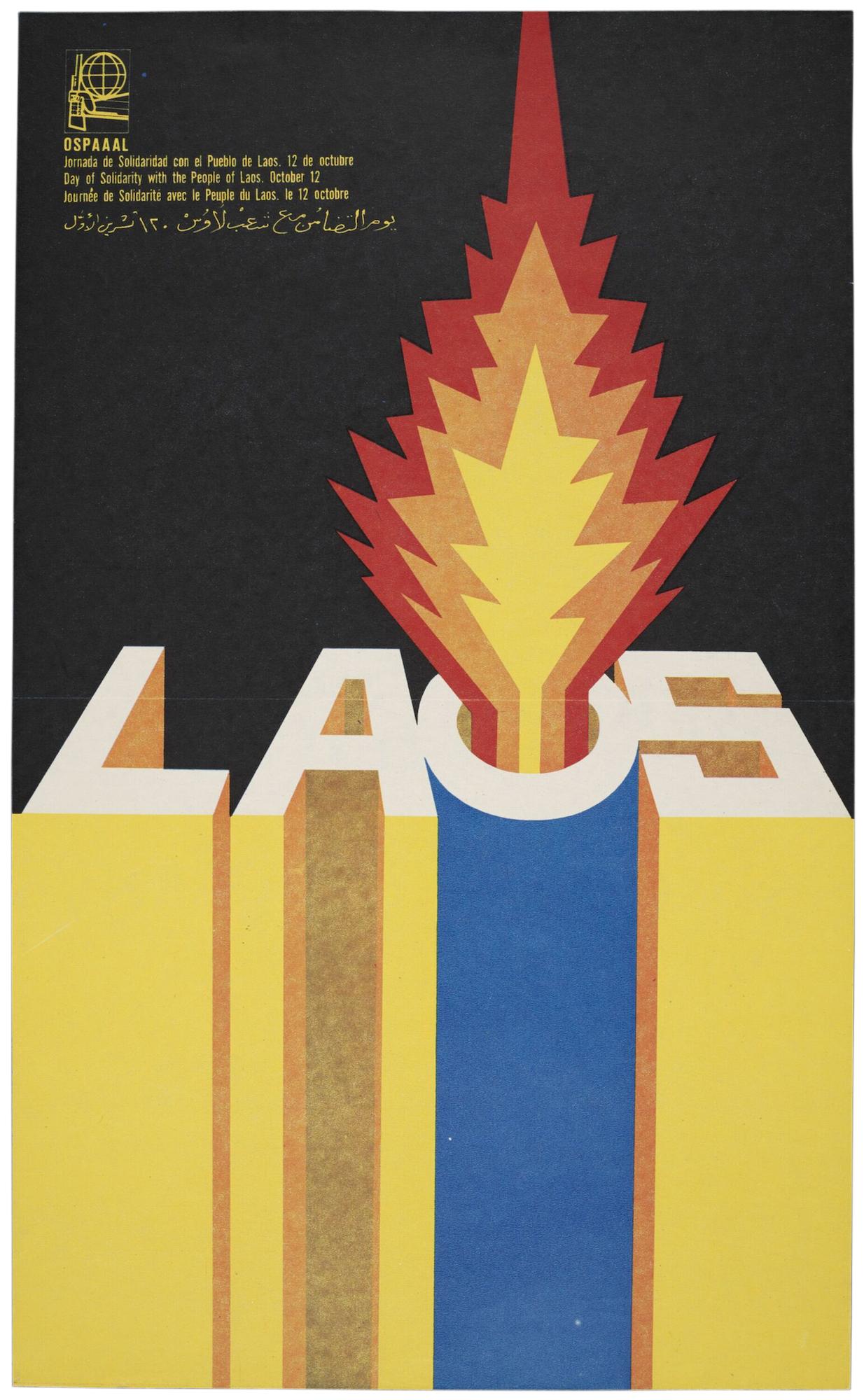
Day of Soldarity With The People Of Laos - October 12, 1970
Between the 1960s and 1990s, more than fifty designers worked at OSPAAAL. Based in Cuba, they made magazines and posters that were sent around the world. Their aim was to promote radical political ideas. Many of their posters celebrate socialist revolutions and liberation movements from the Global South. This design encouraged solidarity with Laotian people on the same date as the founding of the nationalist movement Lao Issara (‘Free Laos’) on 12 October 1945.
Content warning: weaponry

HIROSHIMA - DAY OF WORLD SOLIDARITY WITH THE STRUGGLE OF THE JAPANESE PEOPLE (August 6), 1972
Between the 1960s and 1990s, more than fifty designers worked at OSPAAAL (the Organisation of Solidarity with the People of Africa, Asia and Latin America). Based in Cuba, they made magazines and posters that were sent around the world. Their aim was to promote radical political ideas. Many of their posters celebrate socialist revolutions and liberation movements from the Global South. OSPAAAL marked the date of the atomic bombing of the city of Hiroshima by the U.S.A. as a day of solidarity with Japanese citizens.
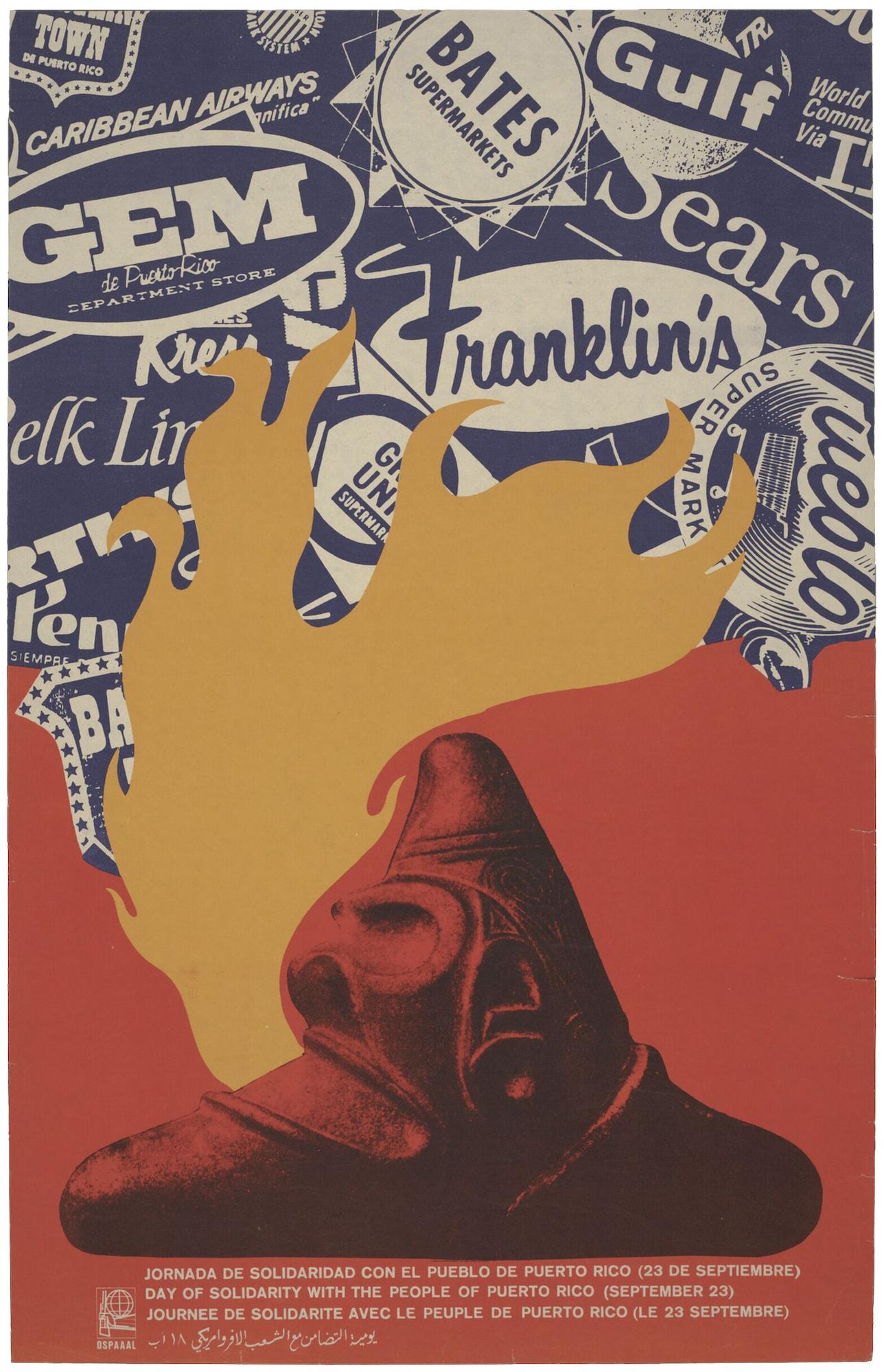
DAY OF SOLIDARITY WITH THE PEOPLE OF PUERTO RICO (SEPTEMBER 23), 1969
Between the 1960s and 1990s, more than fifty designers worked at OSPAAAL (the Organisation of Solidarity with the People of Africa, Asia and Latin America). Based in Cuba, they made magazines and posters that were sent around the world. Their aim was to promote radical political ideas. Many of their posters celebrate socialist revolutions and liberation movements from the Global South. In this design, a three-point cemí figure breathes fire in defiance of the U.S. corporations operating in Puerto Rico. For the Indigenous Taíno people of the Caribbean, a cemí is a representation of a deity, and at the same time a living being with its own vital force. Many OSPAAAL designers used Indigenous imagery to argue for the right to self-determination and support liberation movements opposing oppressive powers. However, the designers did not always know the full meaning or origin of the iconography they used.
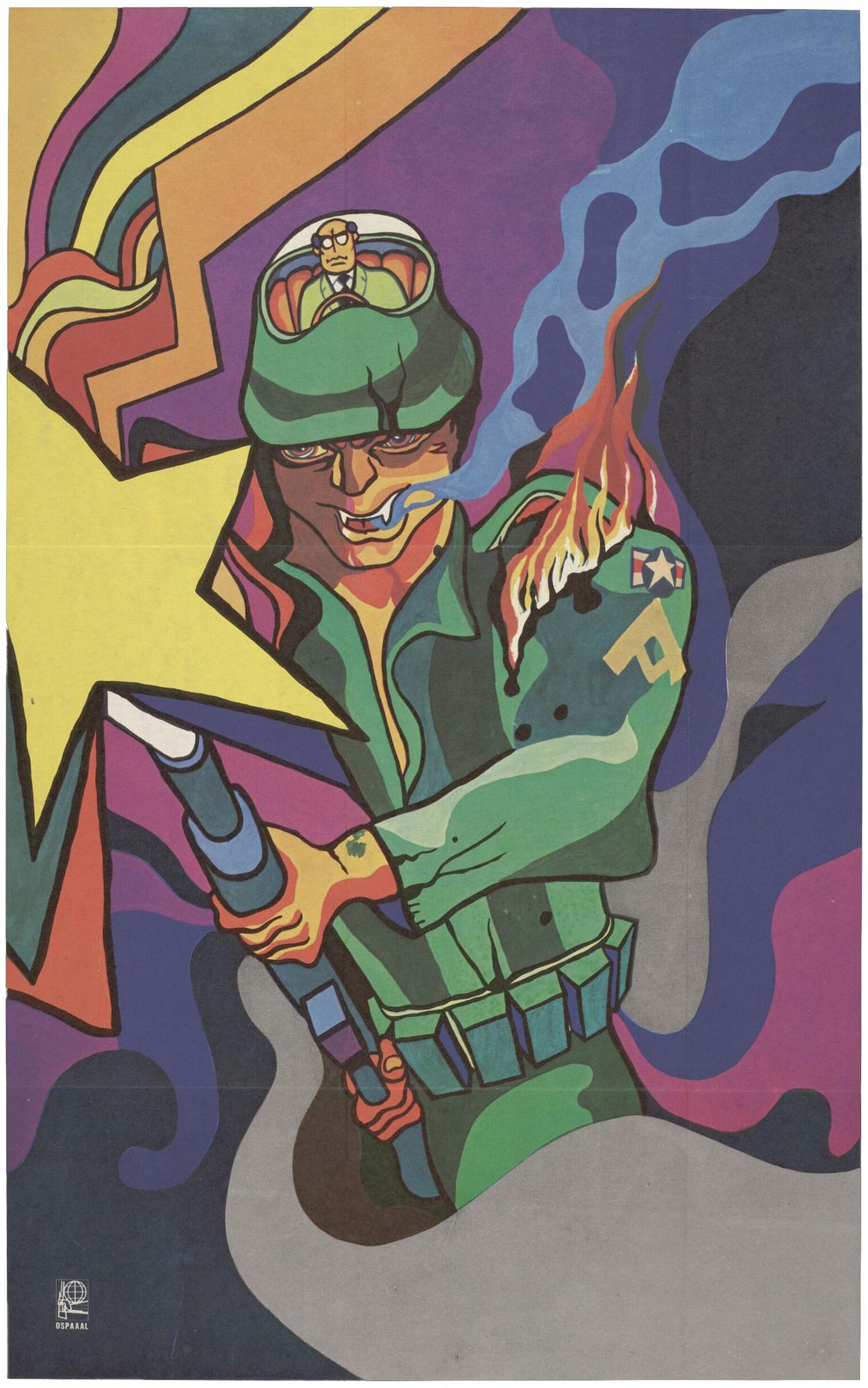
Untitled, 1969
Between the 1960s and 1990s, more than fifty designers worked at OSPAAAL. Based in Cuba, they made magazines and posters that were sent around the world. Their aim was to promote radical political ideas. Many of their posters celebrate socialist revolutions and liberation movements from the Global South. Alfredo Rostgaard was OSPAAAL’s creative director from 1966 to 1976. His began his career as a caricaturist for socialist children’s comic Mella. Rostgaard’s vampire-like US Air Force soldier is being driven like a machine. His design was used by OSPAAAL to criticise US military action.
Content warning: weaponry