Dancing
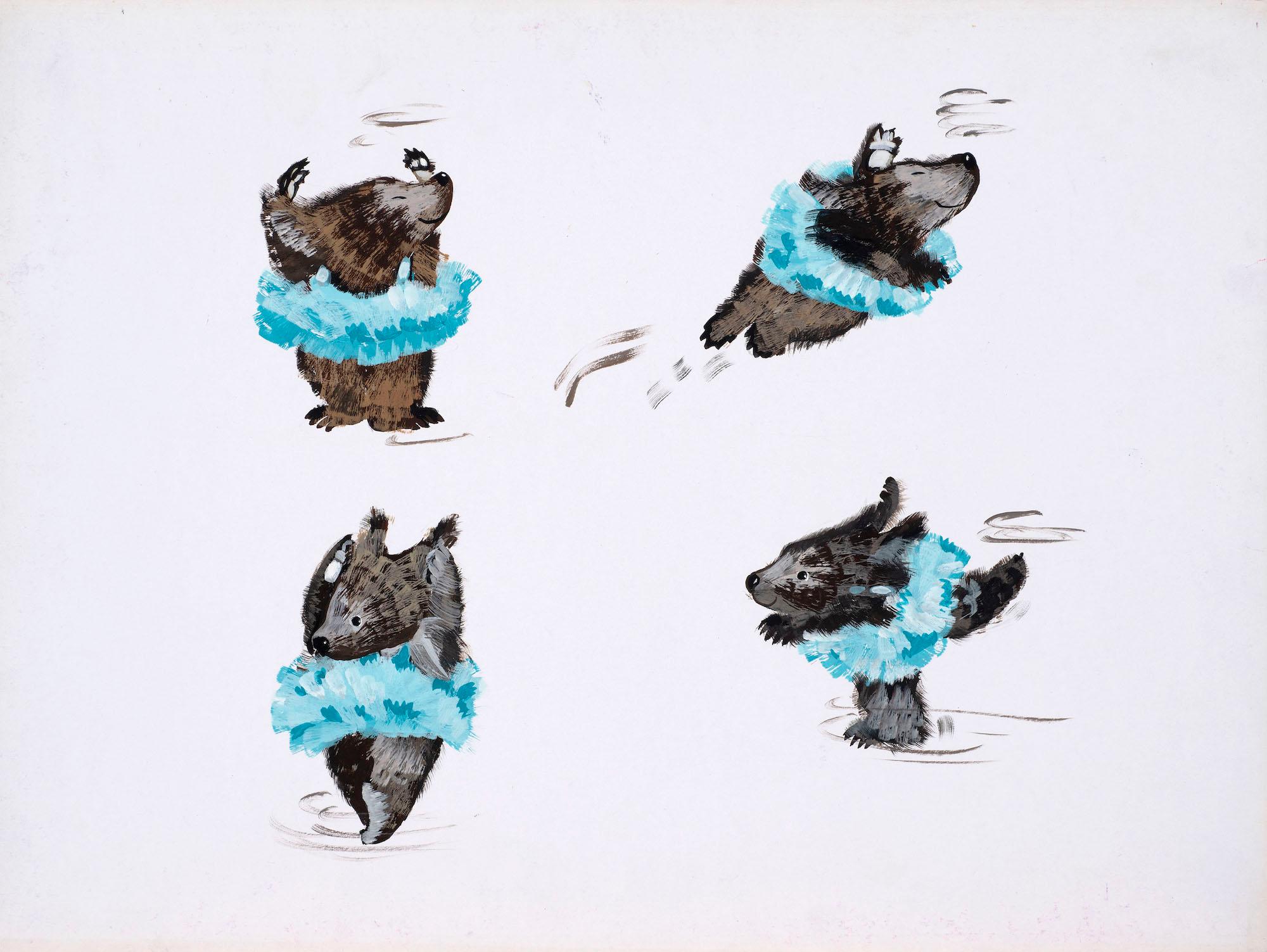
Untitled illustration for Jackanory (Mary Plain Goes to America) , 1972
British illustrator Janina Ede (1937-2018) created covers and illustrations for over 100 books from the 1950s to the 1980s. In the 1970s, she made illustrations for Jackanory, a BBC television programme. During each episode, an actor read a story, while specially-commissioned illustrations were shown on screen. For the televised version of Mary Plain Goes to America, Ede created paintings on large boards. These allowed the camera to pan across her image, showing a little at a time. BBC1 had only been in colour for three years, and so Ede used bold colours painted in gouache and reflective collaged foil to make the most of the new technology. This storyboard illustration was produced by Janina Ede for Jackanory episode #1429, 'Mary Plain Goes to America: Part 4 - Hollywood's Newest Star'. It aired on 16 November 1972.
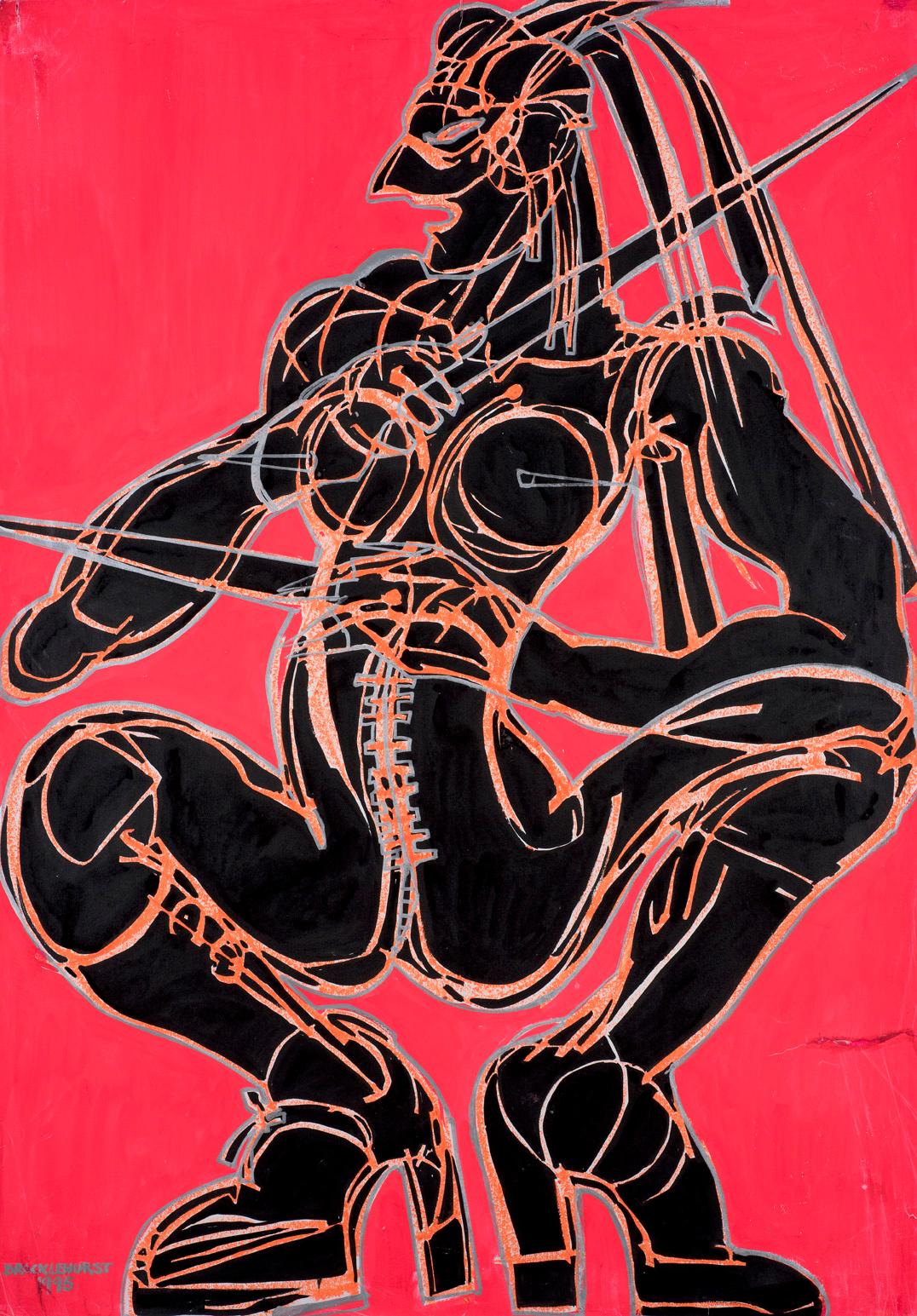
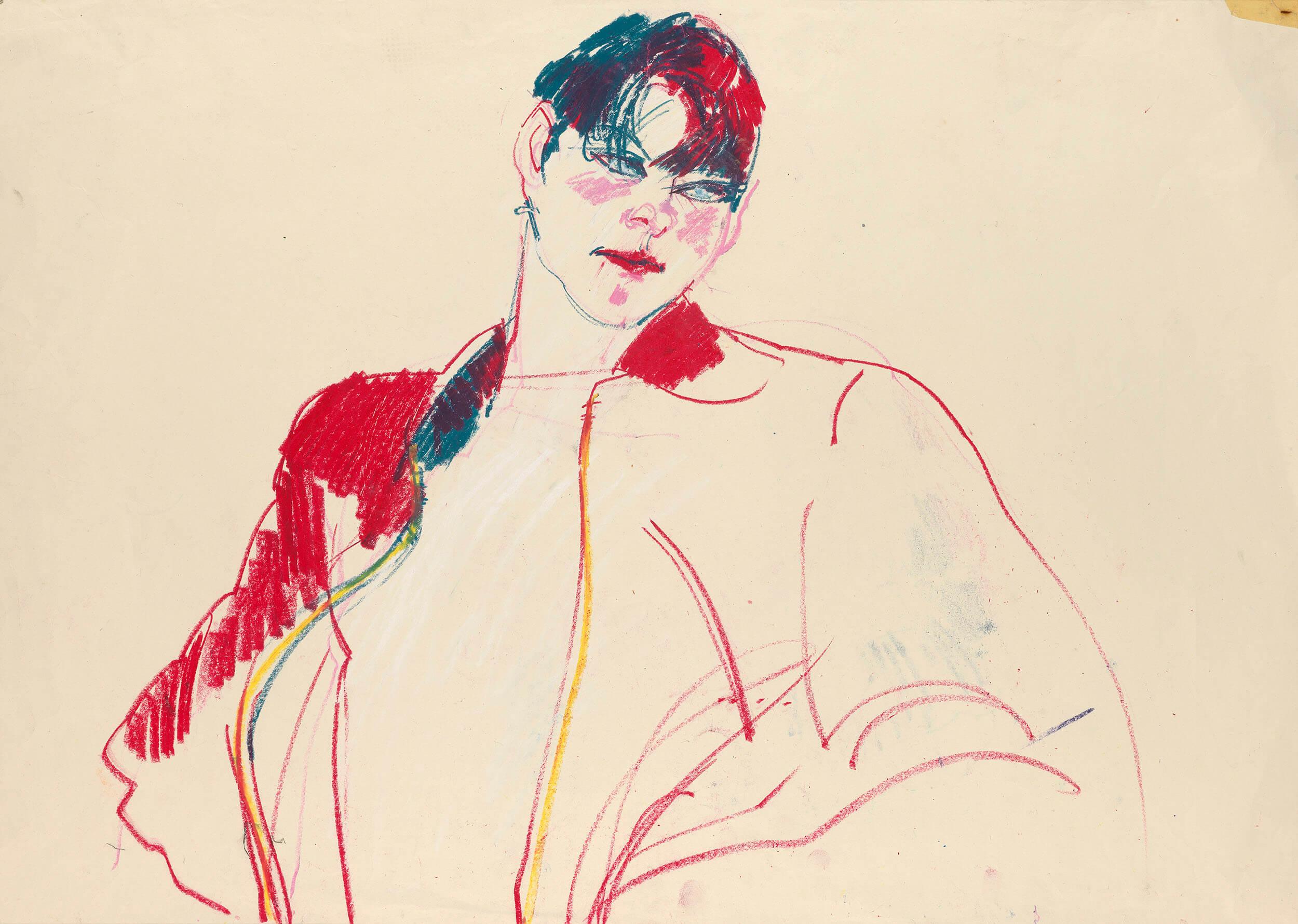
Jo Brocklehurst, Untitled (portrait of Eryka Isaak), 1995
Jo (Josephine) Brocklehurst (1935 - 2006) studied at Central Saint Martins and began her career as a fashion illustrator. She later focused on portraiture, drawing directly from models at her studio in West Hampstead and in nightclubs and theatres in Berlin, London and New York. Her work documents the alternative subcultures of the 1970s, 80s and 90s that went on to shape mainstream fashion and performance scenes. In the 1990s, Brocklehurst began drawing the fashion designers and performers finding space for experimentation in the fetish clubs of Soho and King’s Cross.
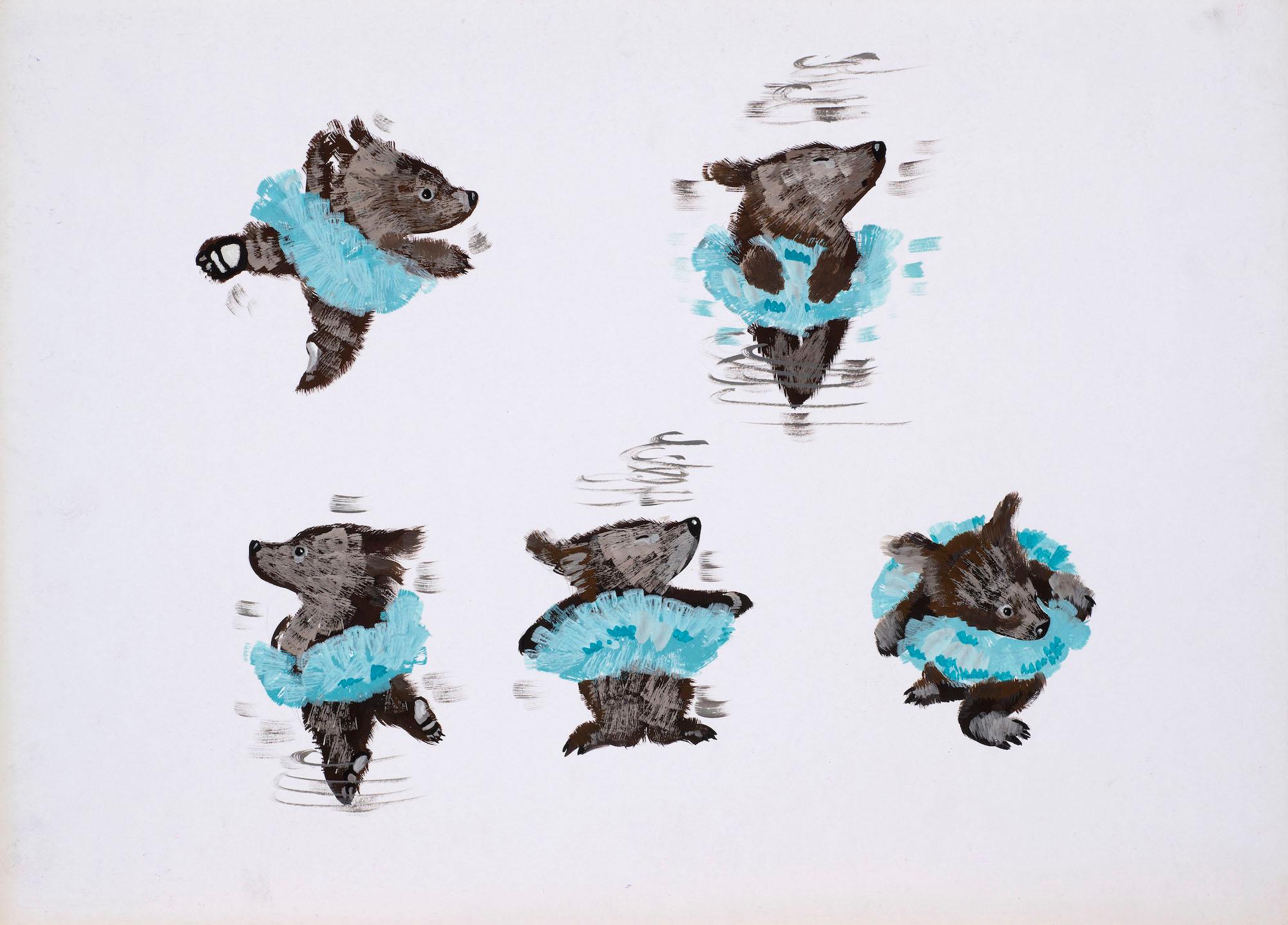
Untitled illustration for Jackanory (Mary Plain Goes to America) , 1972
British illustrator Janina Ede (1937-2018) created covers and illustrations for over 100 books from the 1950s to the 1980s. In the 1970s, she made illustrations for Jackanory, a BBC television programme. During each episode, an actor read a story, while specially-commissioned illustrations were shown on screen. For the televised version of Mary Plain Goes to America, Ede created paintings on large boards. These allowed the camera to pan across her image, showing a little at a time. BBC1 had only been in colour for three years, and so Ede used bold colours painted in gouache and reflective collaged foil to make the most of the new technology. This storyboard illustration was produced by Janina Ede for Jackanory episode #1429, 'Mary Plain Goes to America: Part 4 - Hollywood's Newest Star'. It aired on 16 November 1972.
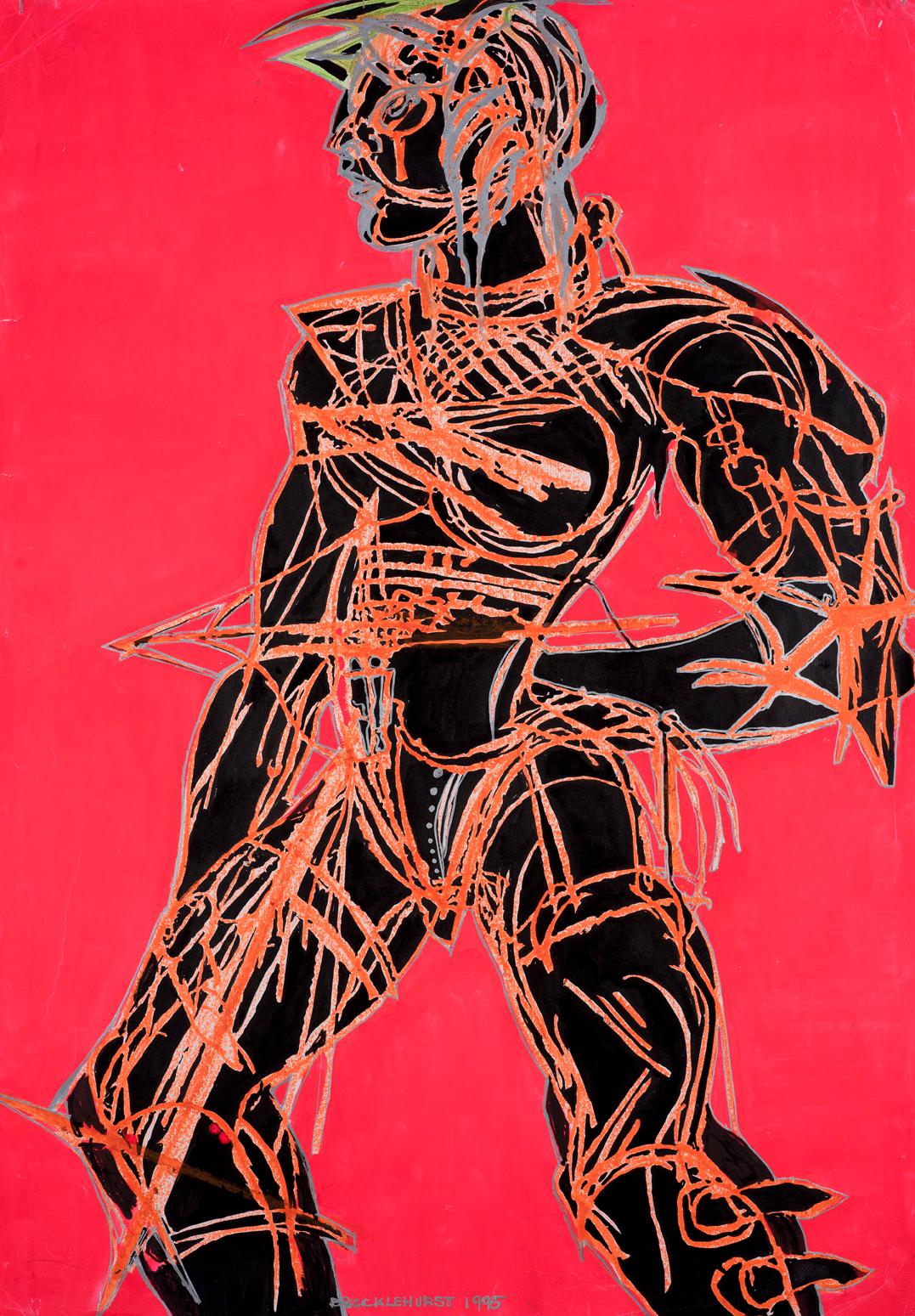
Jo Brocklehurst, Untitled (portrait of Liz de Havilland), 1995
Jo (Josephine) Brocklehurst (1935 - 2006) studied at Central Saint Martins and began her career as a fashion illustrator. She later focused on portraiture, drawing directly from models at her studio in West Hampstead and in nightclubs and theatres in Berlin, London and New York. Her work documents the alternative subcultures of the 1970s, 80s and 90s that went on to shape mainstream fashion and performance scenes. In the 1990s, Brocklehurst began drawing the fashion designers and performers finding space for experimentation in the fetish clubs of Soho and King’s Cross.
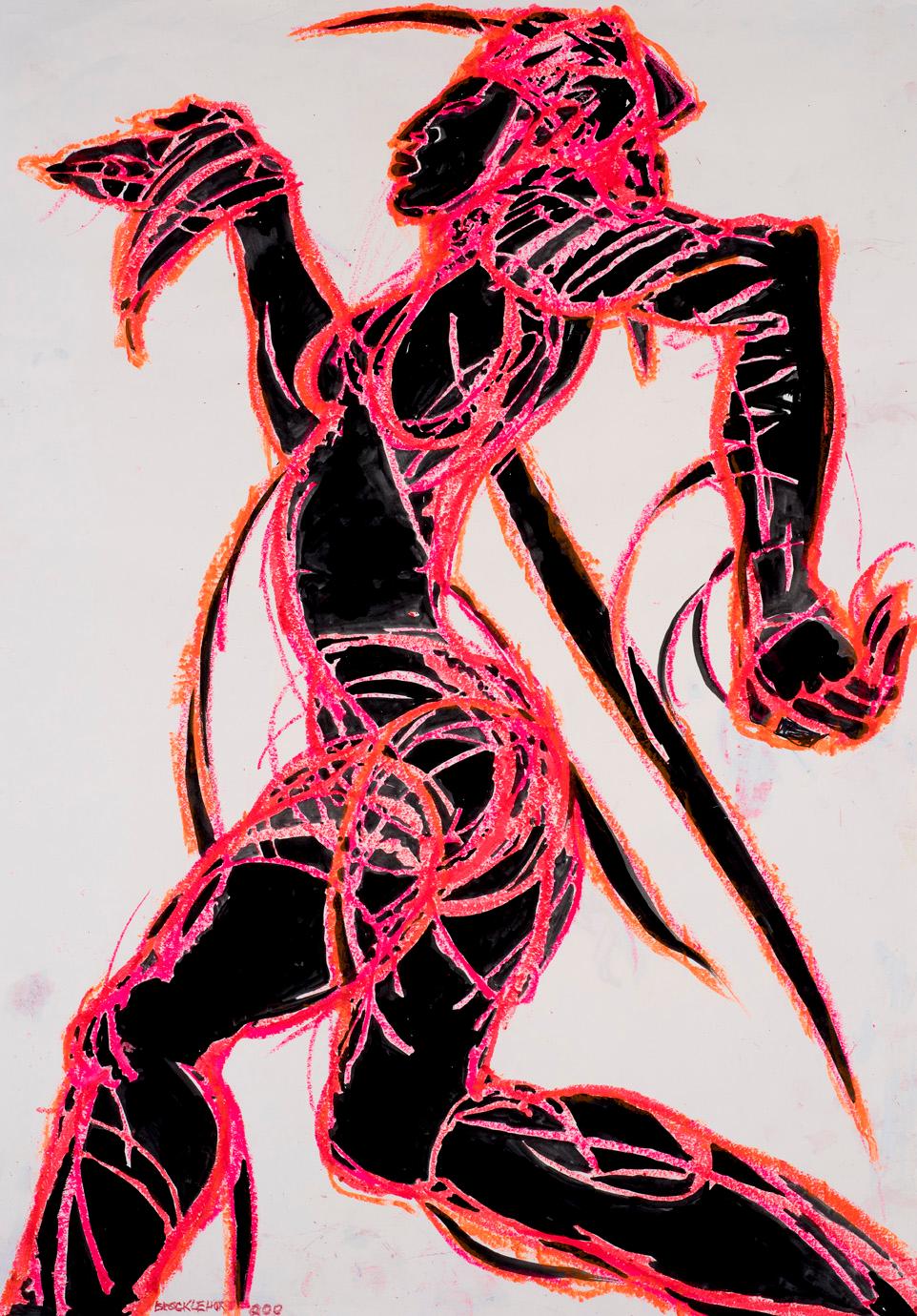
Jo Brocklehurst, Untitled (portrait of Josephine Leask), 2000
Jo (Josephine) Brocklehurst (1935 - 2006) studied at Central Saint Martins and began her career as a fashion illustrator. She later focused on portraiture, drawing directly from models at her studio in West Hampstead and in nightclubs and theatres in Berlin, London and New York. Her work documents the alternative subcultures of the 1970s, 80s and 90s that went on to shape mainstream fashion and performance scenes. In 2000, Brocklehurst created a series of drawings in sessions with dancer Josephine Leask. Leask’s 1999 article Welcome to the Club, published in ballettanz magazine, described the ways that nightclubs were acting as alternative theatres for cutting-edge contemporary dance. These drawings were shown as part of Leask’s lecture-performance on the same theme at the 2000 Salzburg Festival.
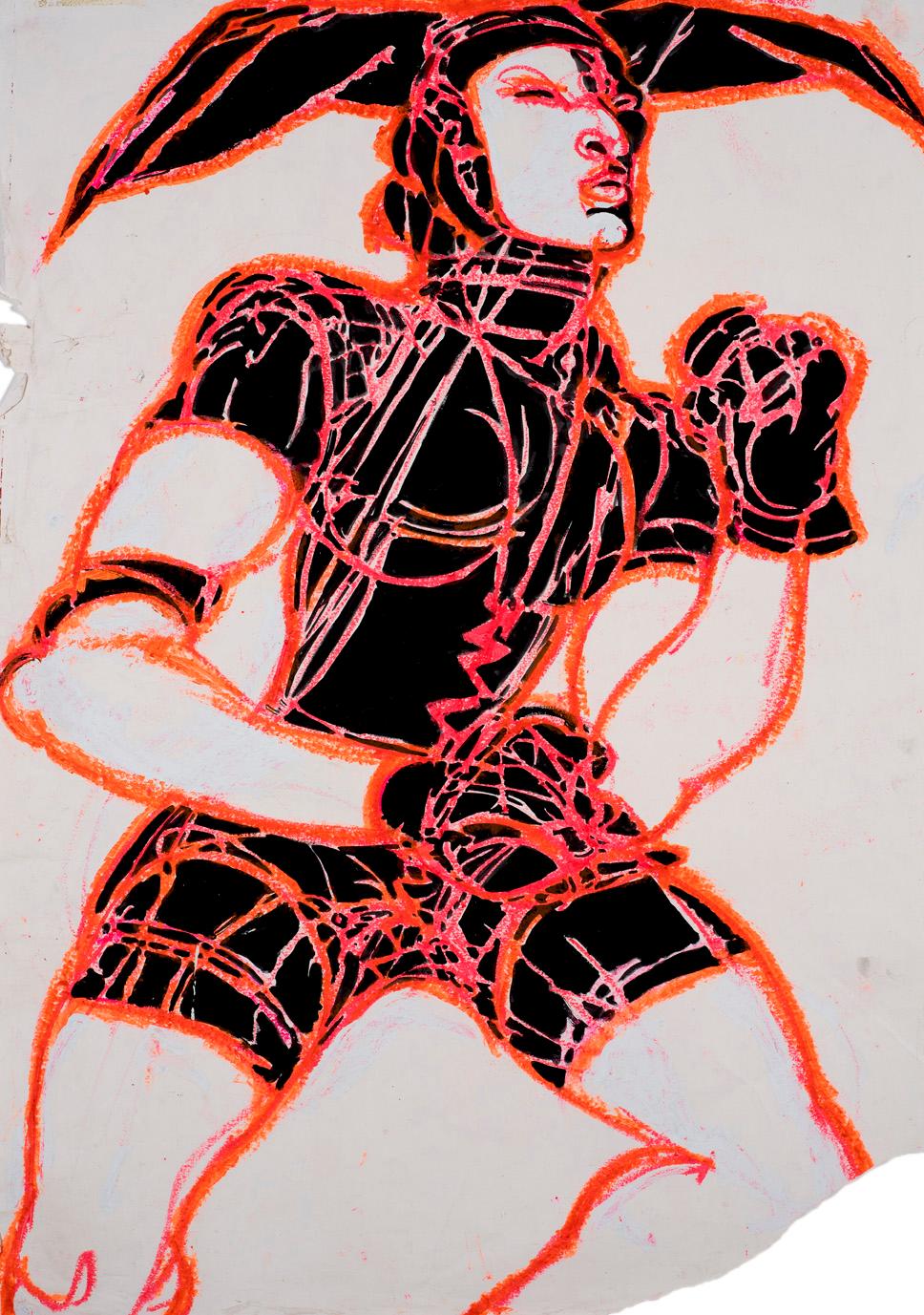
Jo Brocklehurst, Untitled (portrait of Josephine Leask), 2000
Jo (Josephine) Brocklehurst (1935 - 2006) studied at Central Saint Martins and began her career as a fashion illustrator. She later focused on portraiture, drawing directly from models at her studio in West Hampstead and in nightclubs and theatres in Berlin, London and New York. Her work documents the alternative subcultures of the 1970s, 80s and 90s that went on to shape mainstream fashion and performance scenes. In 2000, Brocklehurst created a series of drawings in sessions with dancer Josephine Leask. Leask’s 1999 article Welcome to the Club, published in ballettanz magazine, described the ways that nightclubs were acting as alternative theatres for cutting-edge contemporary dance. These drawings were shown as part of Leask’s lecture-performance on the same theme at the 2000 Salzburg Festival.
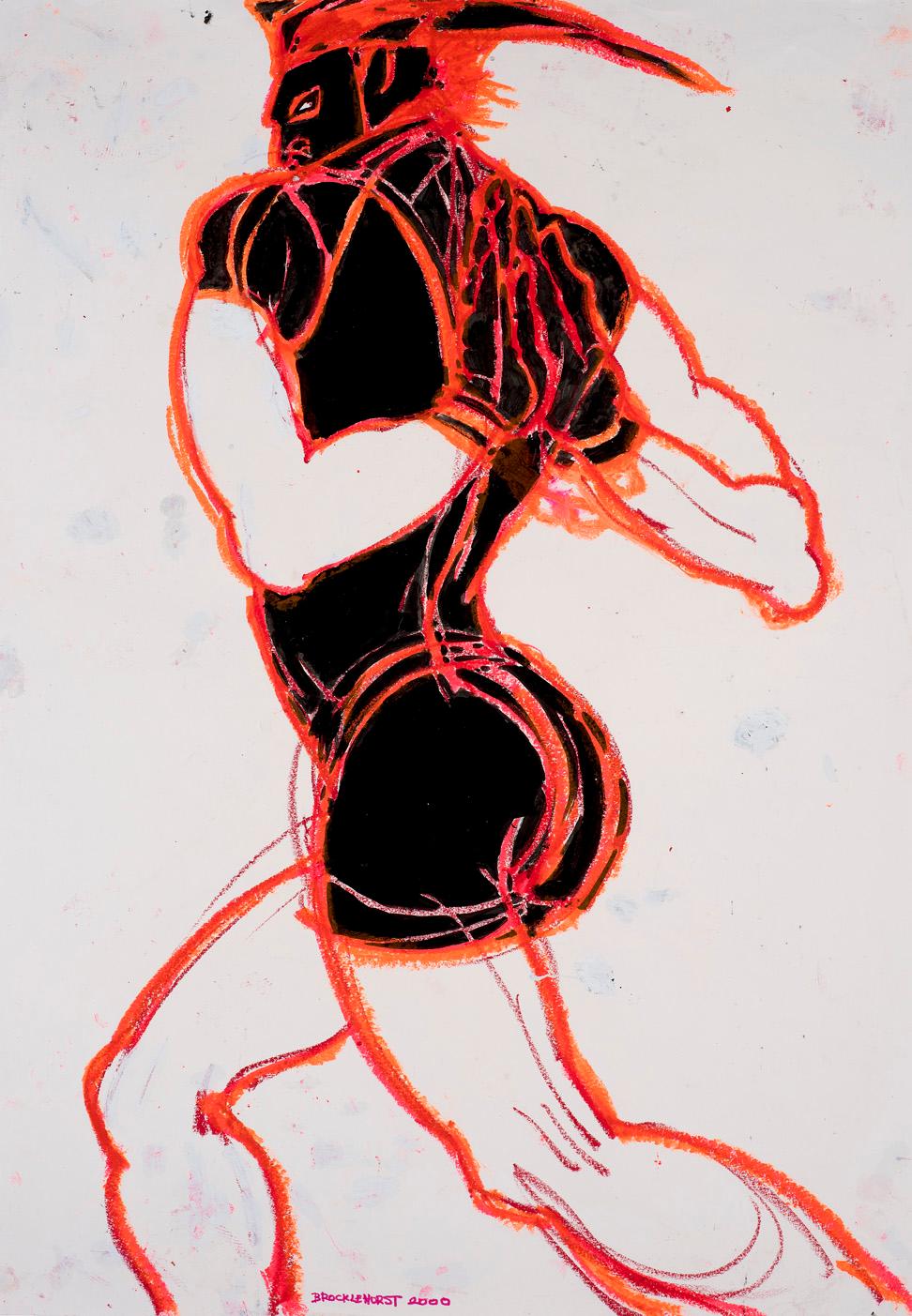
Jo Brocklehurst, Untitled (portrait of Josephine Leask), 2000
Jo (Josephine) Brocklehurst (1935 - 2006) studied at Central Saint Martins and began her career as a fashion illustrator. She later focused on portraiture, drawing directly from models at her studio in West Hampstead and in nightclubs and theatres in Berlin, London and New York. Her work documents the alternative subcultures of the 1970s, 80s and 90s that went on to shape mainstream fashion and performance scenes. In 2000, Brocklehurst created a series of drawings in sessions with dancer Josephine Leask. Leask’s 1999 article Welcome to the Club, published in ballettanz magazine, described the ways that nightclubs were acting as alternative theatres for cutting-edge contemporary dance. These drawings were shown as part of Leask’s lecture-performance on the same theme at the 2000 Salzburg Festival.
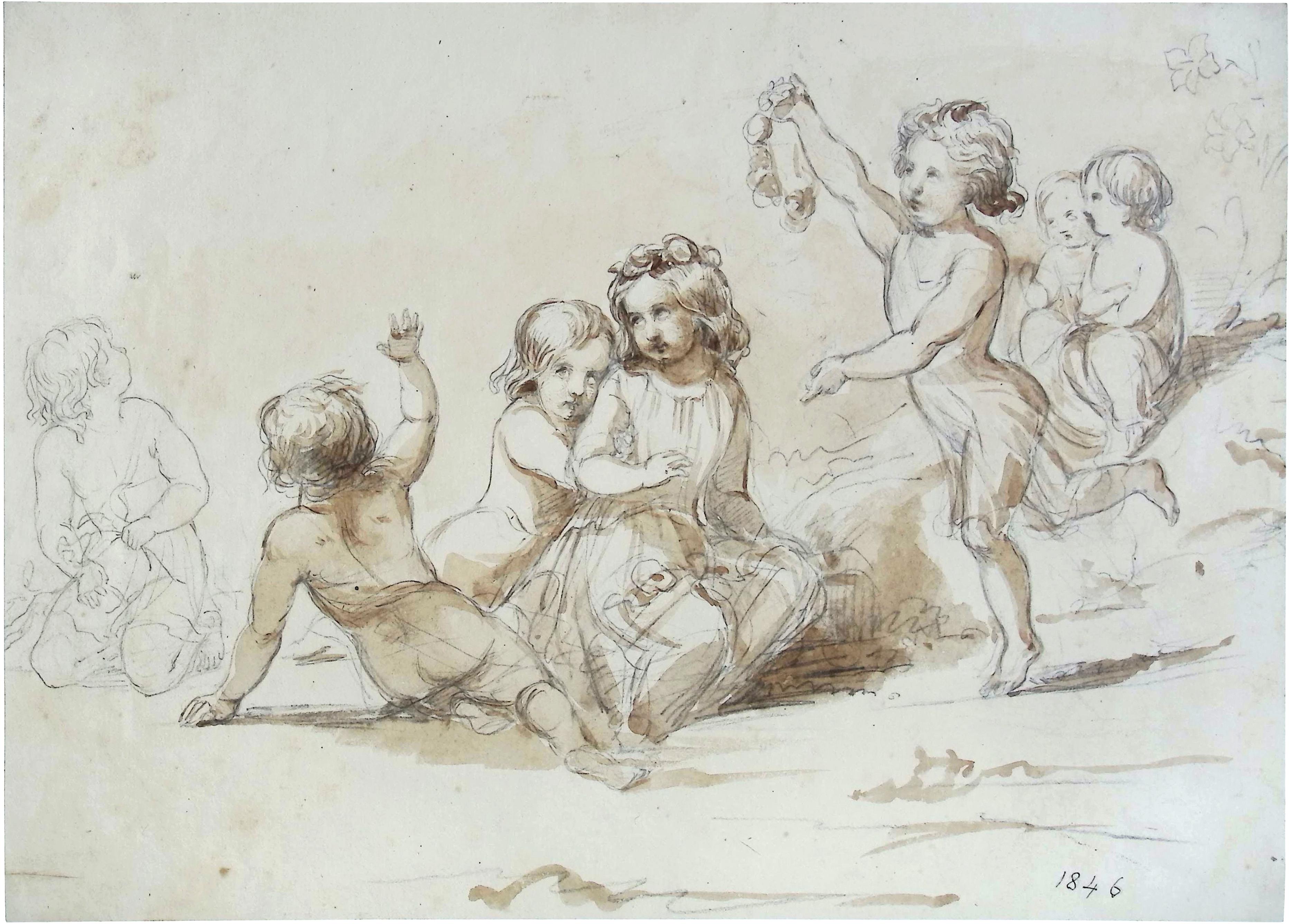
Untitled, 1846
Eleanor Vere Boyle (1825 – 1916) illustrated poetry and prose by some of the most popular authors of her time. She regularly drew and painted using ink and watercolour, sketching landscapes, animals and her children from life. She also made drawings from her imagination, often reflecting spiritual themes.
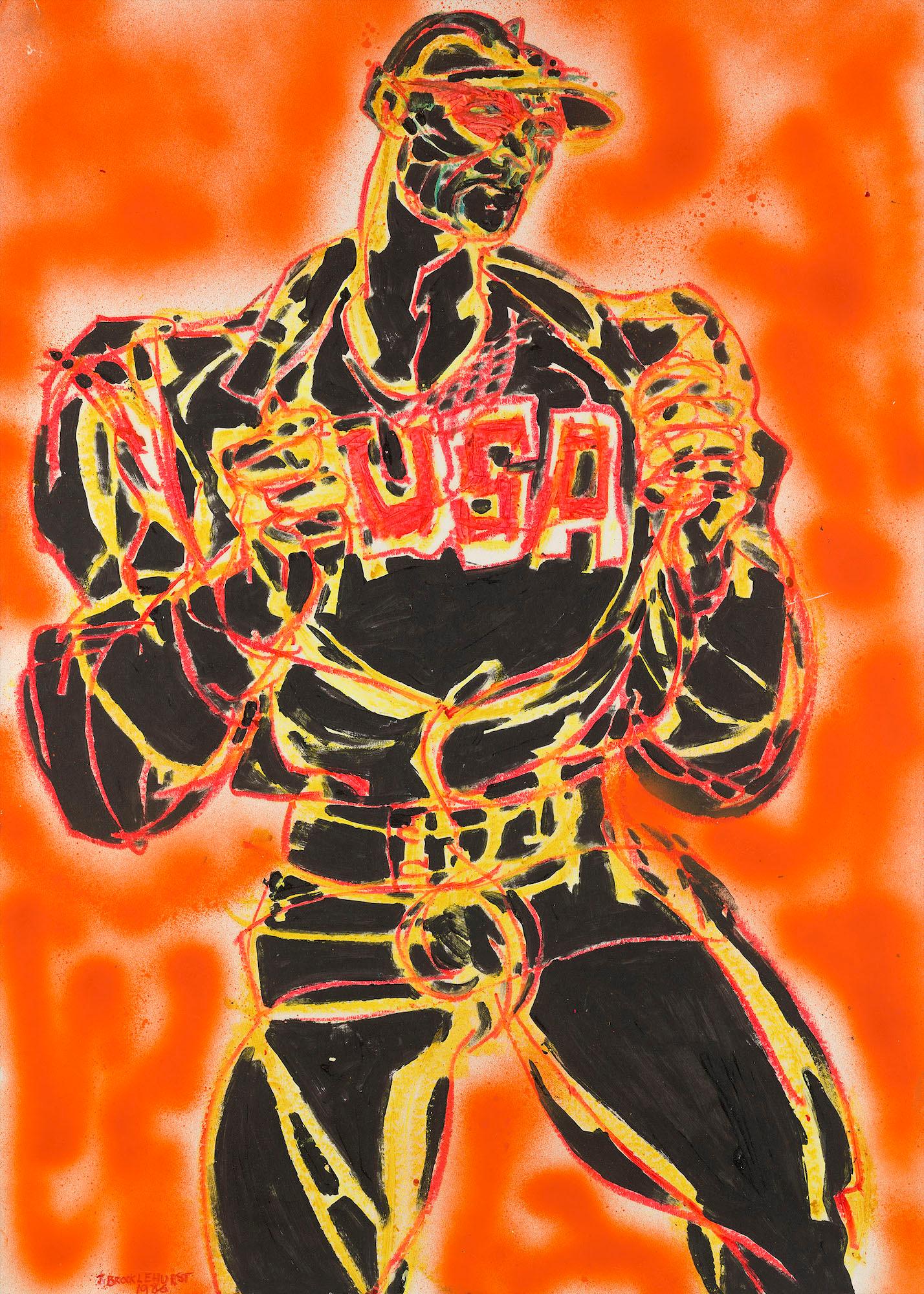
Jo Brocklehurst, Untitled, 1986
Jo (Josephine) Brocklehurst (1935 - 2006) studied at Central Saint Martins and began her career as a fashion illustrator. She later focused on portraiture, drawing directly from models at her studio in West Hampstead and in nightclubs and theatres in Berlin, London and New York. Her work documents the alternative subcultures of the 1970s, 80s and 90s that went on to shape mainstream fashion and performance scenes. Brocklehurst began working in New York following an exhibition of her work there in 1983. She took paper and materials to the gay nightclubs of the Meatpacking District, drawing clubgoers like this one. Brocklehurst used neon inks that she could see under the ultraviolet lights.
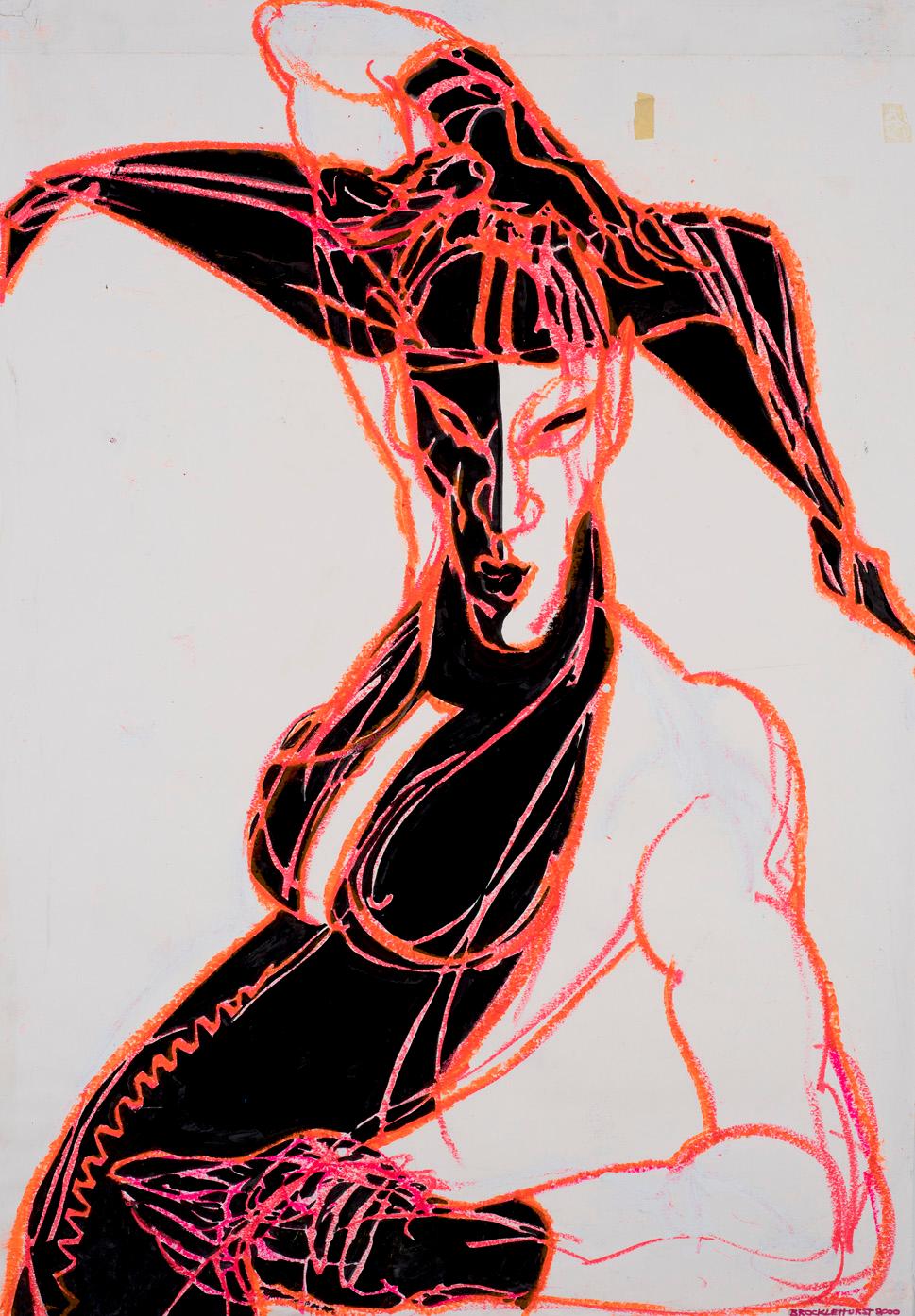
Jo Brocklehurst, Untitled (portrait of Josephine Leask), 2000
Jo (Josephine) Brocklehurst (1935 - 2006) studied at Central Saint Martins and began her career as a fashion illustrator. She later focused on portraiture, drawing directly from models at her studio in West Hampstead and in nightclubs and theatres in Berlin, London and New York. Her work documents the alternative subcultures of the 1970s, 80s and 90s that went on to shape mainstream fashion and performance scenes. In 2000, Brocklehurst created a series of drawings in sessions with dancer Josephine Leask. Leask’s 1999 article Welcome to the Club, published in ballettanz magazine, described the ways that nightclubs were acting as alternative theatres for cutting-edge contemporary dance. These drawings were shown as part of Leask’s lecture-performance on the same theme at the 2000 Salzburg Festival.
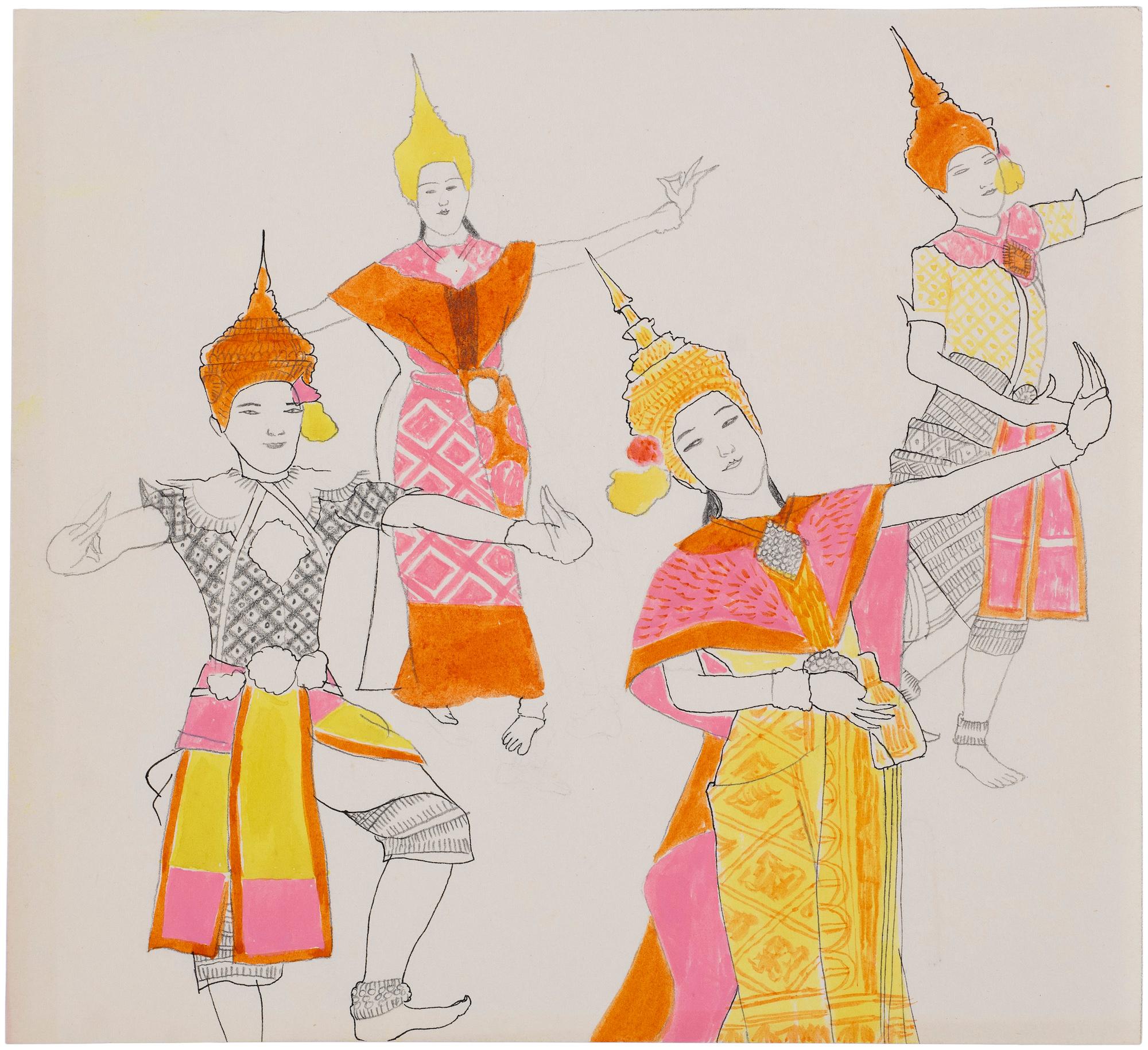
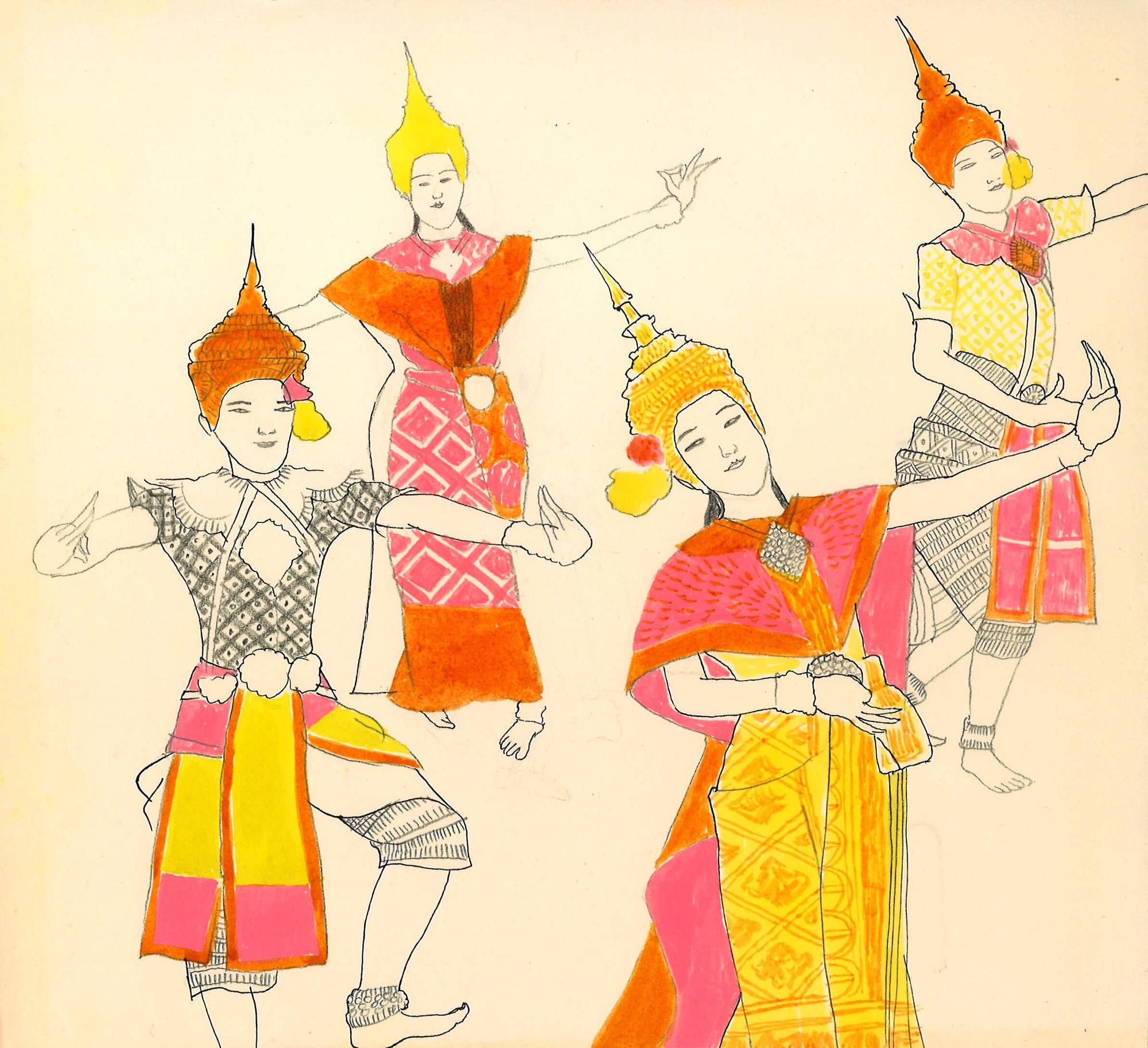
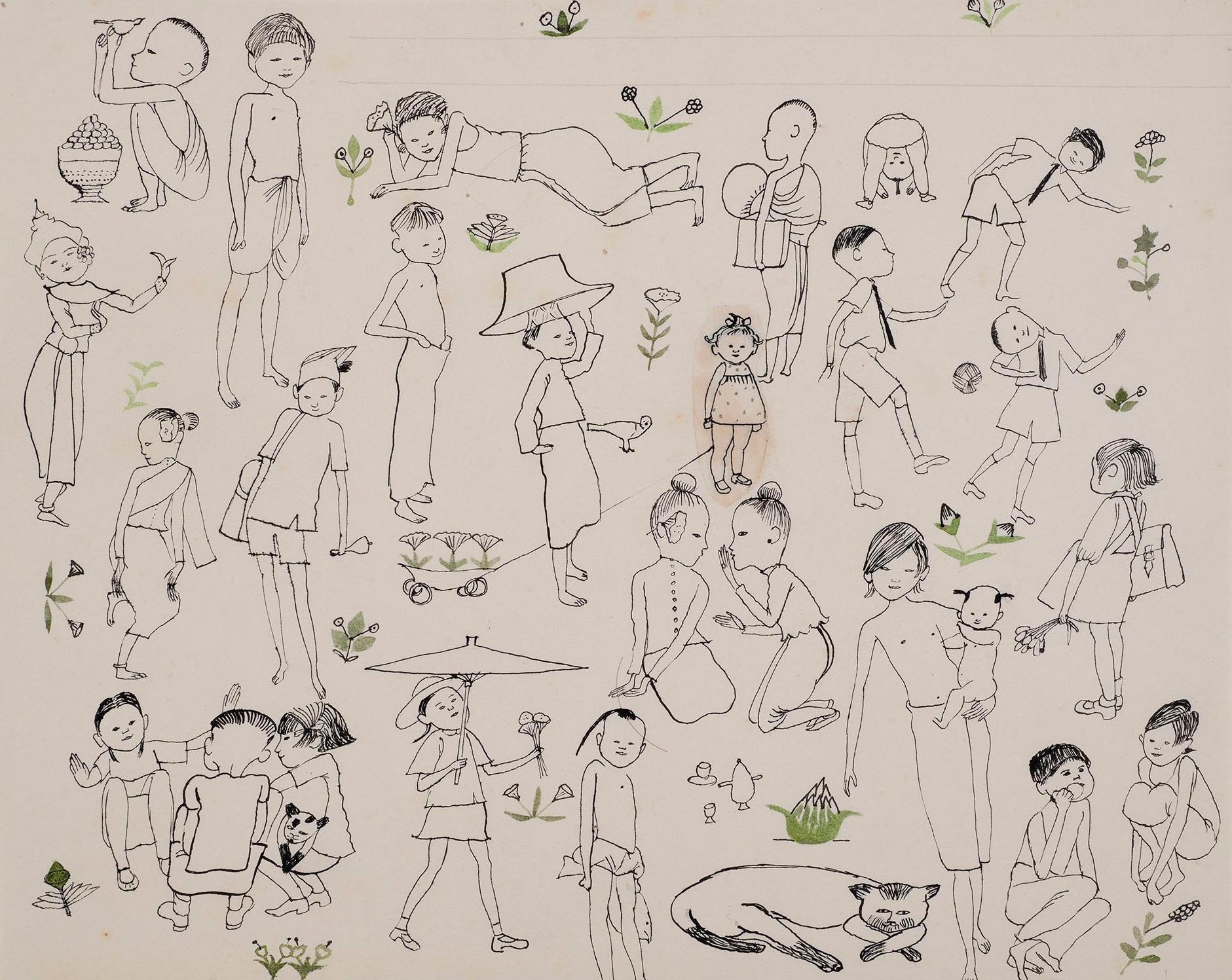
Jacqueline Ayer, Untitled, c. 1959
Jacqueline Ayer (1930–2012) had a career that spanned many creative fields. She began as a fashion illustrator, and later turned her hand to children’s books, textiles and garments, as she worked in New York, Paris, London, Bangkok, Hong Kong and across India.
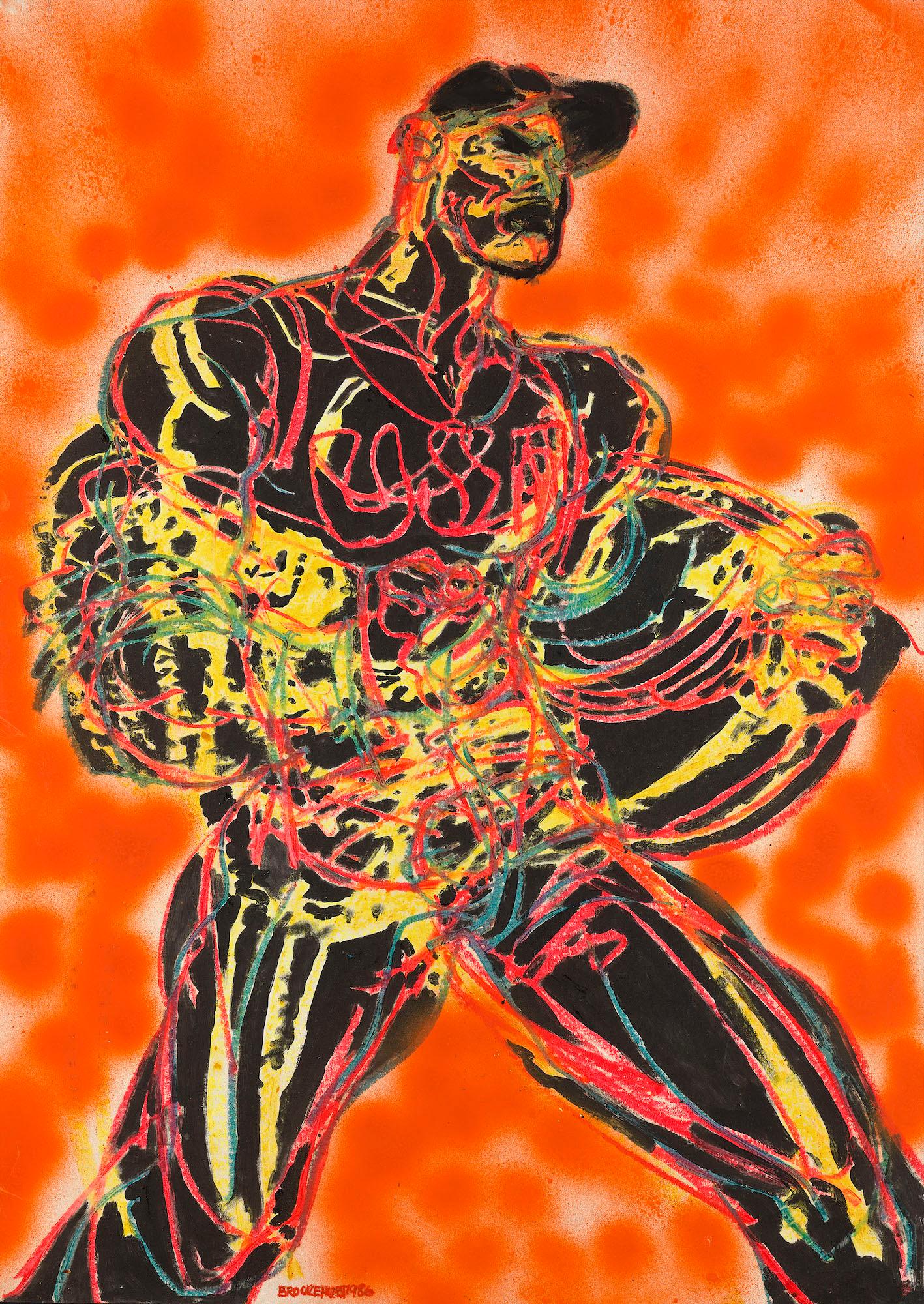
Jo Brocklehurst, Untitled, 1986
Jo (Josephine) Brocklehurst (1935 - 2006) studied at Central Saint Martins and began her career as a fashion illustrator. She later focused on portraiture, drawing directly from models at her studio in West Hampstead and in nightclubs and theatres in Berlin, London and New York. Her work documents the alternative subcultures of the 1970s, 80s and 90s that went on to shape mainstream fashion and performance scenes. Brocklehurst began working in New York following an exhibition of her work there in 1983. She took paper and materials to the gay nightclubs of the Meatpacking District, drawing clubgoers like this one. Brocklehurst used neon inks that she could see under the ultraviolet lights.
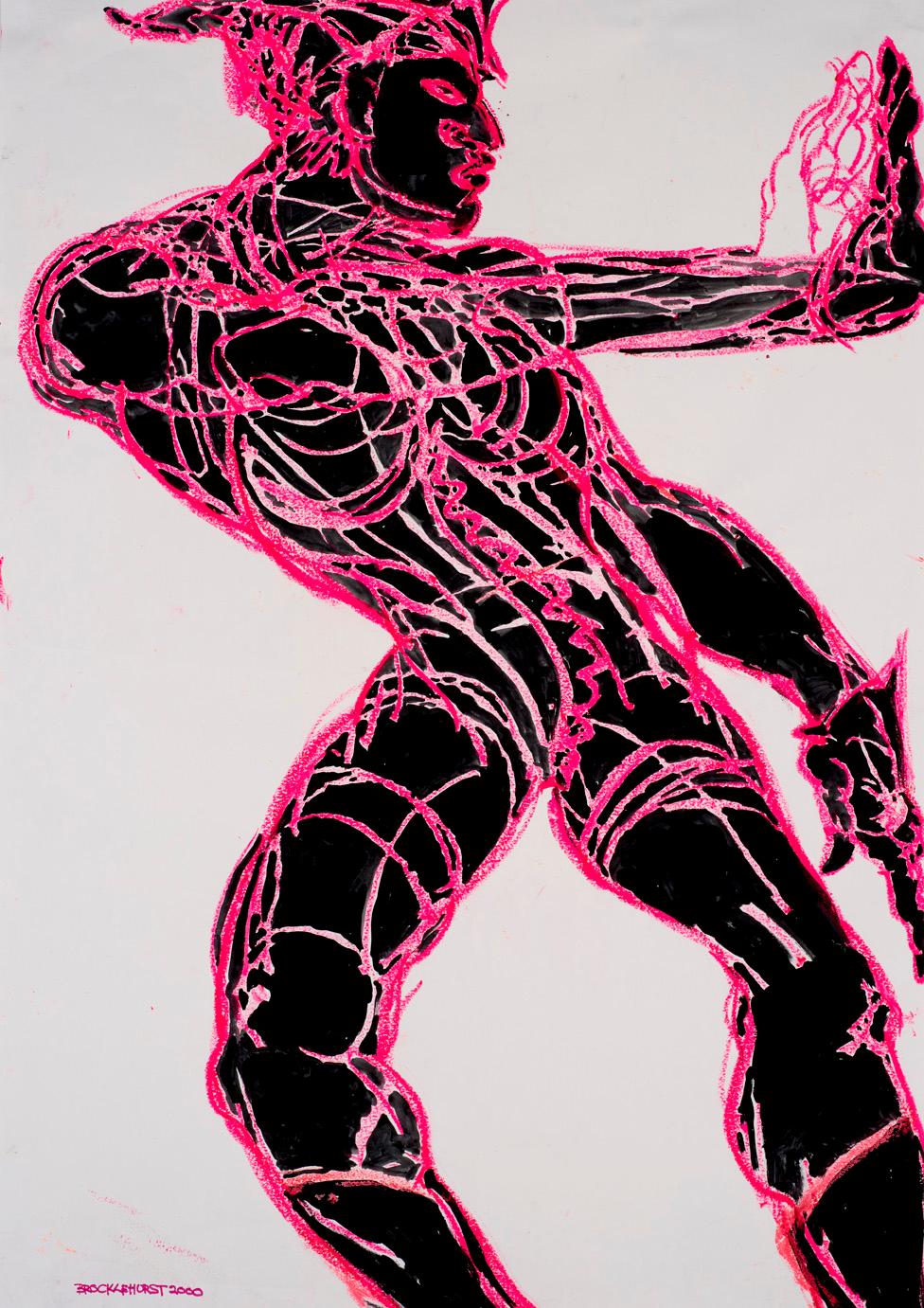
Jo Brocklehurst, Untitled (portrait of Josephine Leask), 2000
Jo (Josephine) Brocklehurst (1935 - 2006) studied at Central Saint Martins and began her career as a fashion illustrator. She later focused on portraiture, drawing directly from models at her studio in West Hampstead and in nightclubs and theatres in Berlin, London and New York. Her work documents the alternative subcultures of the 1970s, 80s and 90s that went on to shape mainstream fashion and performance scenes. In 2000, Brocklehurst created a series of drawings in sessions with dancer Josephine Leask. Leask’s 1999 article Welcome to the Club, published in ballettanz magazine, described the ways that nightclubs were acting as alternative theatres for cutting-edge contemporary dance. These drawings were shown as part of Leask’s lecture-performance on the same theme at the 2000 Salzburg Festival.
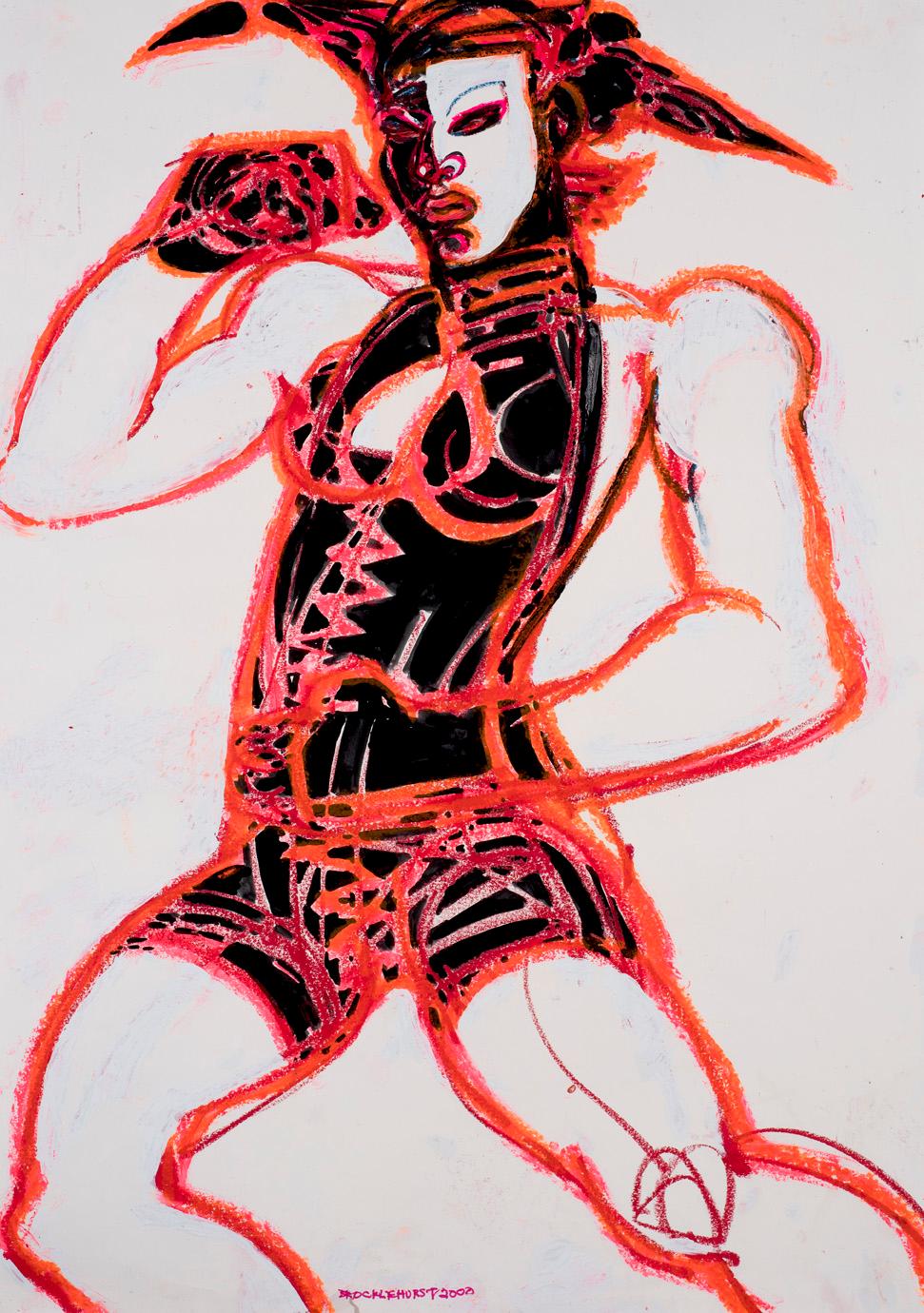
Jo Brocklehurst, Untitled (portrait of Josephine Leask), 2000
Jo (Josephine) Brocklehurst (1935 - 2006) studied at Central Saint Martins and began her career as a fashion illustrator. She later focused on portraiture, drawing directly from models at her studio in West Hampstead and in nightclubs and theatres in Berlin, London and New York. Her work documents the alternative subcultures of the 1970s, 80s and 90s that went on to shape mainstream fashion and performance scenes. In 2000, Brocklehurst created a series of drawings in sessions with dancer Josephine Leask. Leask’s 1999 article Welcome to the Club, published in ballettanz magazine, described the ways that nightclubs were acting as alternative theatres for cutting-edge contemporary dance. These drawings were shown as part of Leask’s lecture-performance on the same theme at the 2000 Salzburg Festival.
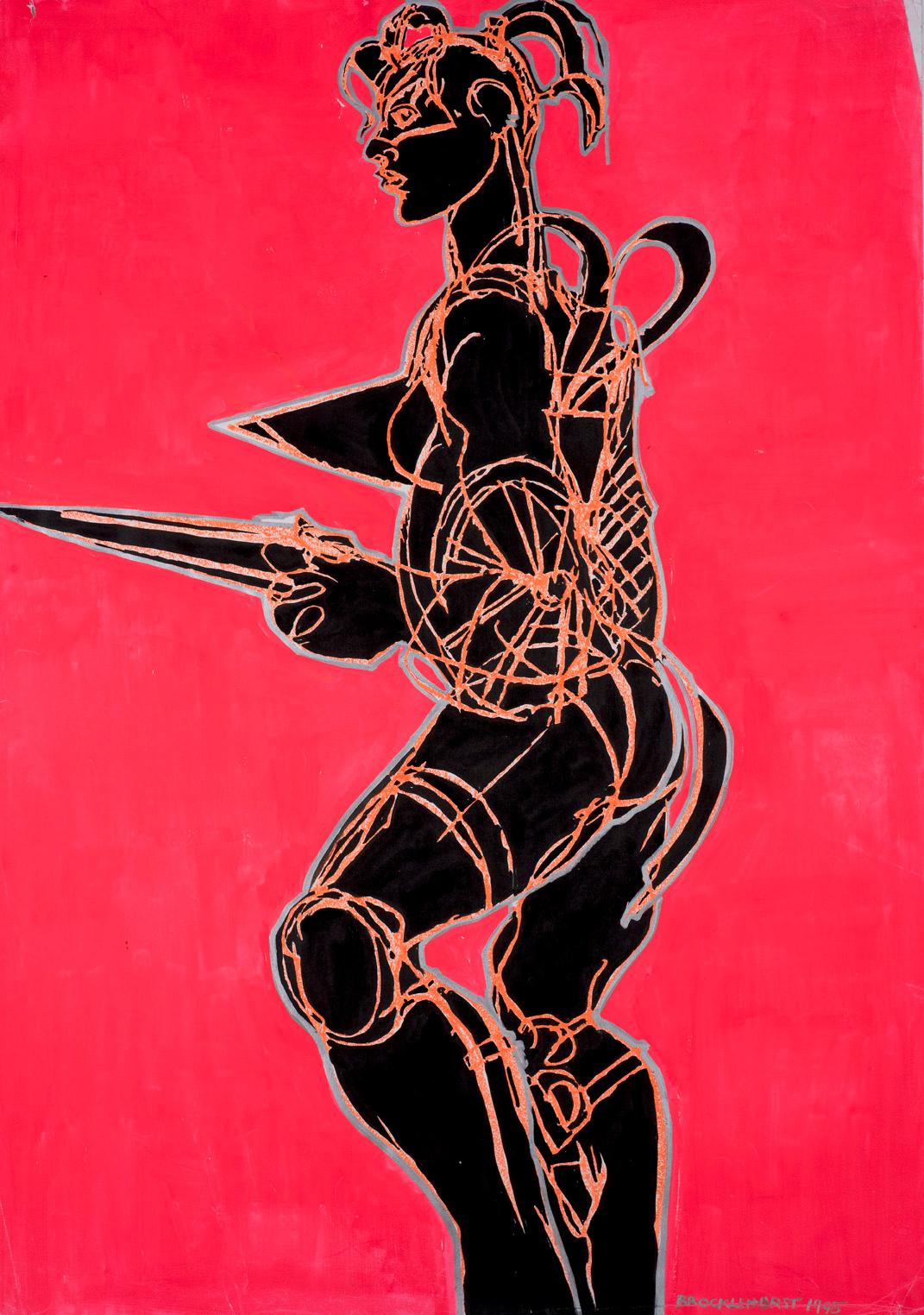
Jo Brocklehurst, Untitled (portrait of Fia Bergsren), 1995
Jo (Josephine) Brocklehurst (1935 - 2006) studied at Central Saint Martins and began her career as a fashion illustrator. She later focused on portraiture, drawing directly from models at her studio in West Hampstead and in nightclubs and theatres in Berlin, London and New York. Her work documents the alternative subcultures of the 1970s, 80s and 90s that went on to shape mainstream fashion and performance scenes. In the 1990s, Brocklehurst began drawing the fashion designers and performers finding space for experimentation in the fetish clubs of Soho and King’s Cross.