Cloak
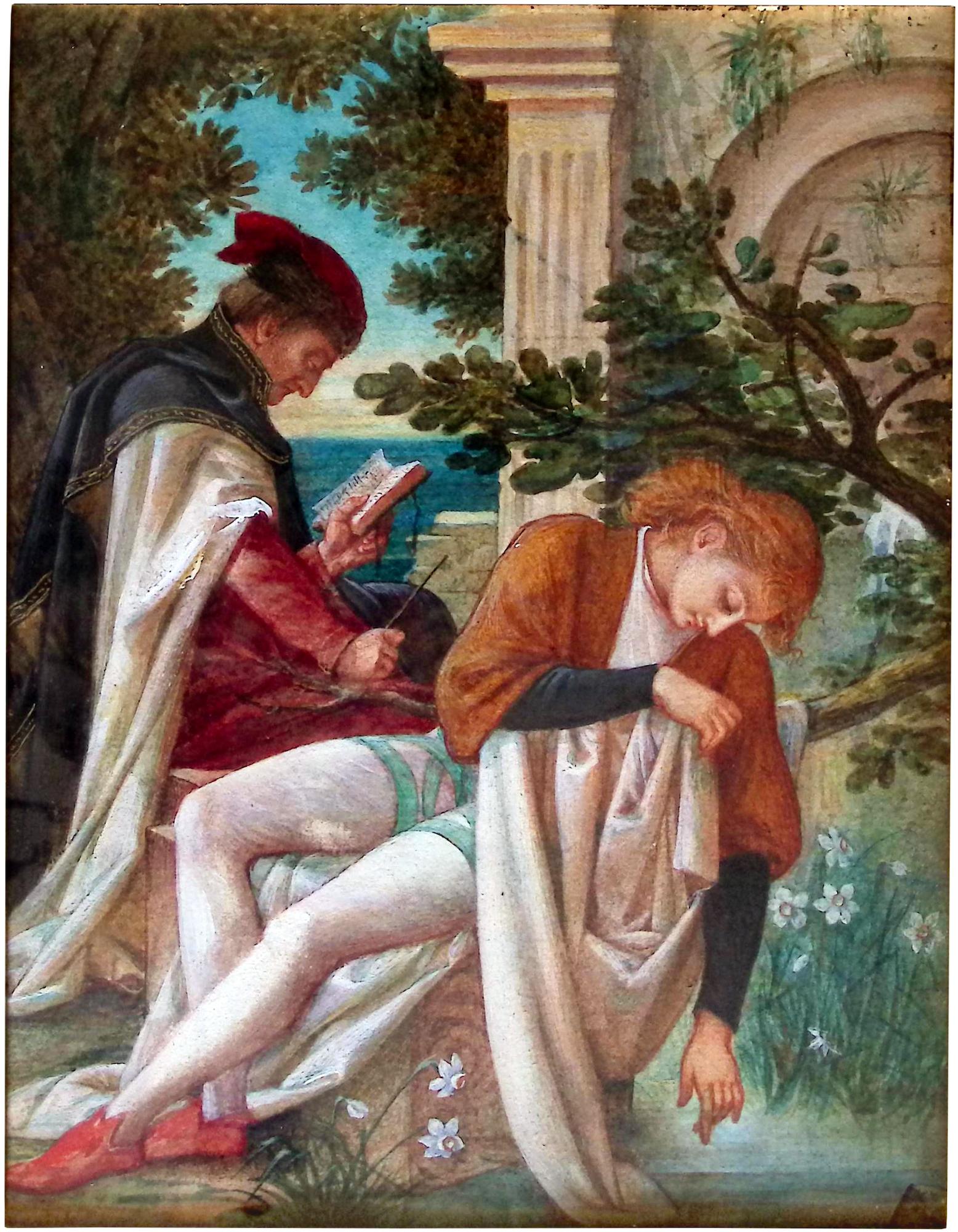
Illustration for Beauty and the Beast (the sisters' husbands), c. 1875
Eleanor Vere Boyle (1825 – 1916) illustrated poetry and prose by some of the most popular authors of her time. She regularly drew and painted using ink and watercolour, sketching landscapes, animals and her children from life. She also made drawings from her imagination, often reflecting spiritual themes. This illustration is from Boyle’s 1875 retelling of Beauty and the Beast, a fairy tale where a woman is imprisoned by a monster and falls in love with him. Unlike other illustrated versions before or since, Boyle gave her beast walrus-like tusks and flippers. In several of her illustrations, Boyle used shell gold – a mixture of finely ground gold powder and gum arabic (tree sap) that would have been stored in a shallow seashell. In the final publication, the caption for this illustration reads, "One sister's husband, like Narcissus of old, worshipped his own beauty. But the other was full of learning."
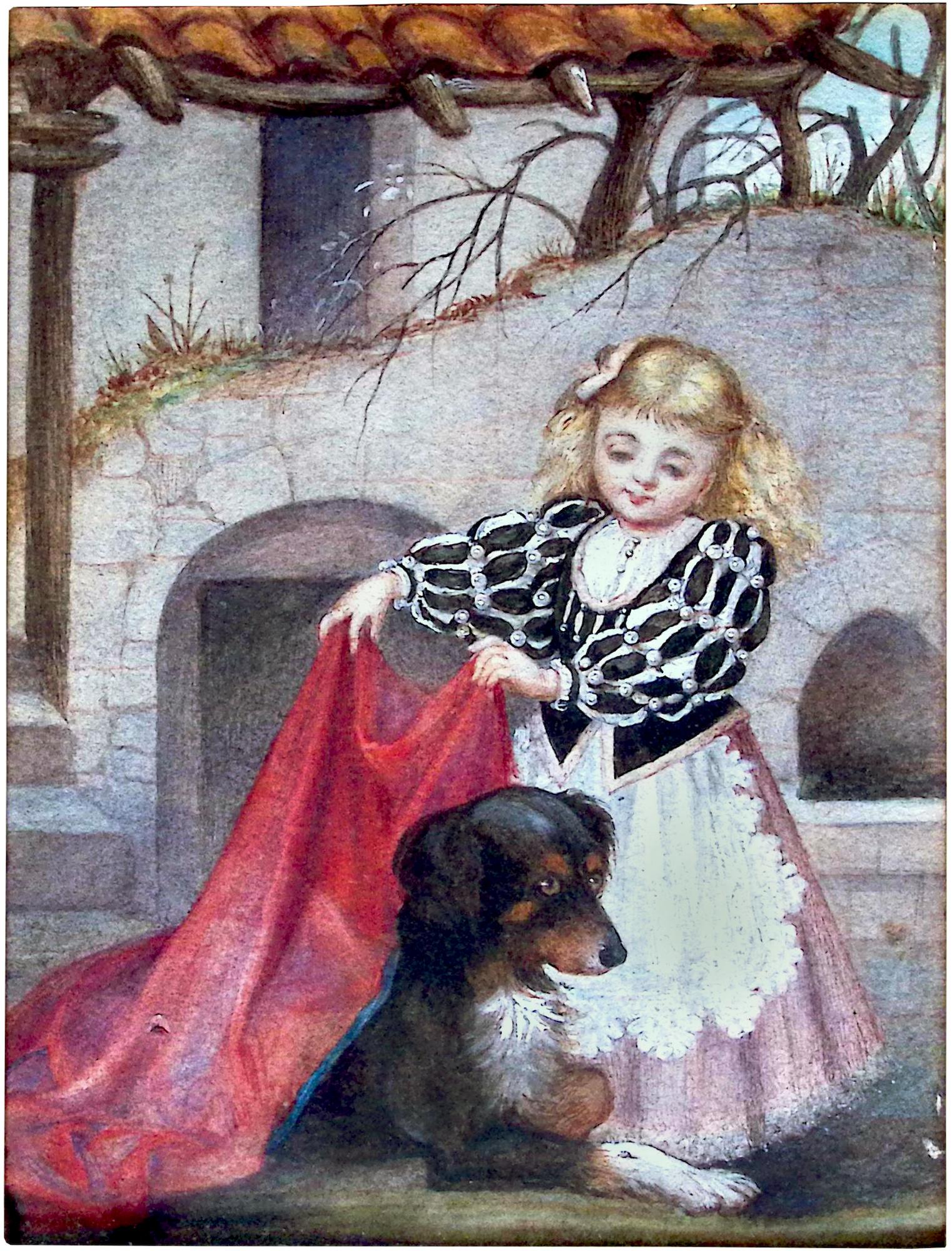
Illustration for Beauty and the Beast (Beauty with the watch dog), c. 1875
Eleanor Vere Boyle (1825 – 1916) illustrated poetry and prose by some of the most popular authors of her time. She regularly drew and painted using ink and watercolour, sketching landscapes, animals and her children from life. She also made drawings from her imagination, often reflecting spiritual themes. This illustration is from Boyle’s 1875 retelling of Beauty and the Beast, a fairy tale where a woman is imprisoned by a monster and falls in love with him. Unlike other illustrated versions before or since, Boyle gave her beast walrus-like tusks and flippers. In several of her illustrations, Boyle used shell gold – a mixture of finely ground gold powder and gum arabic (tree sap) that would have been stored in a shallow seashell. In the final publication, the caption for this illustration reads, "One cold March day, the little maid ran down to the outer court, with her new scarlet cloak, to wrap her friend the old watch dog in!"
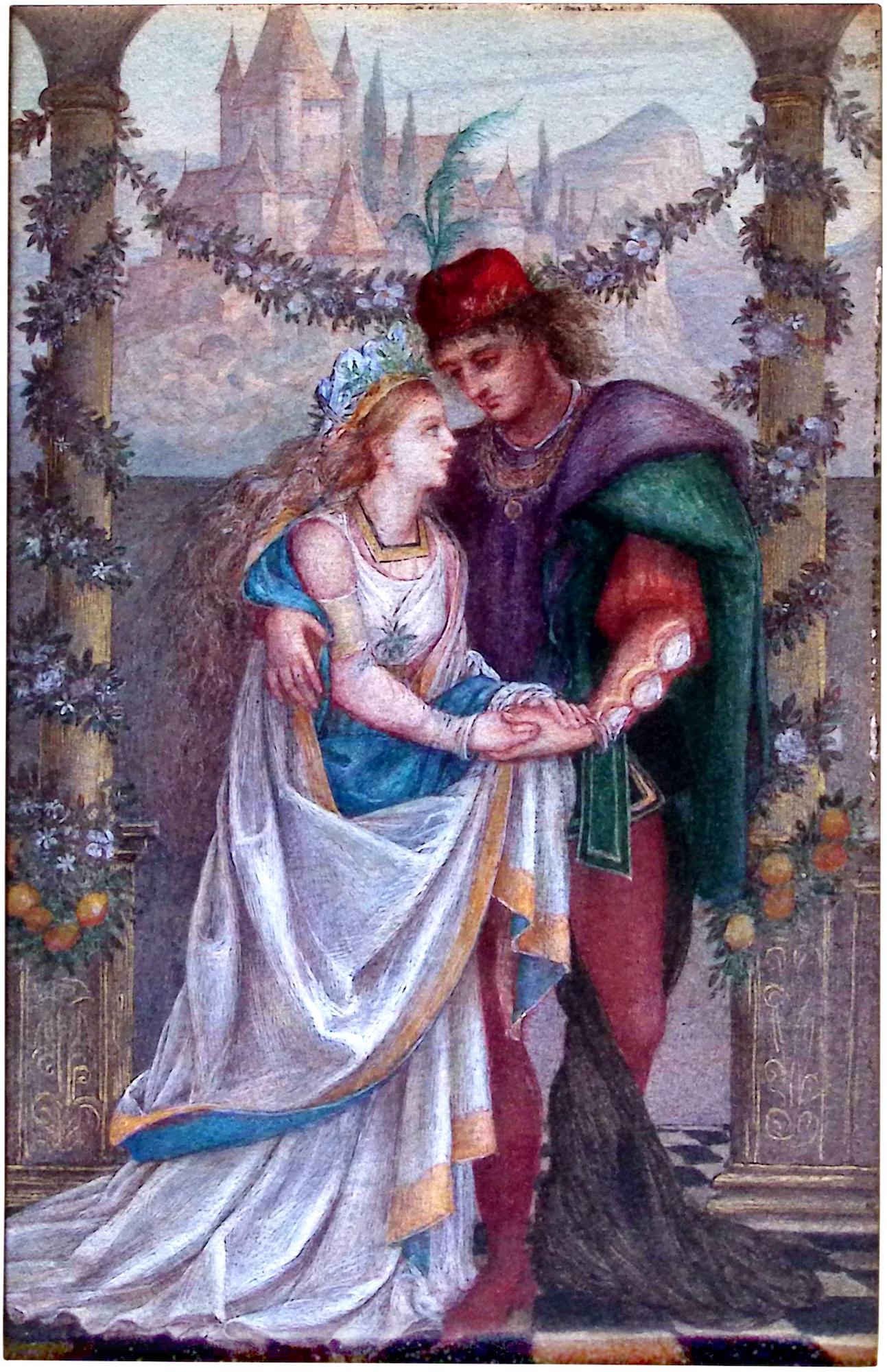
Illustration for Beauty and the Beast (the wedding), c. 1875
Eleanor Vere Boyle (1825 – 1916) illustrated poetry and prose by some of the most popular authors of her time. She regularly drew and painted using ink and watercolour, sketching landscapes, animals and her children from life. She also made drawings from her imagination, often reflecting spiritual themes. This illustration is from Boyle’s 1875 retelling of Beauty and the Beast, a fairy tale where a woman is imprisoned by a monster and falls in love with him. Unlike other illustrated versions before or since, Boyle gave her beast walrus-like tusks and flippers. In several of her illustrations, Boyle used shell gold – a mixture of finely ground gold powder and gum arabic (tree sap) that would have been stored in a shallow seashell. In the final publication, the caption for this illustration reads, "Love is the magic, that makes all things fair."
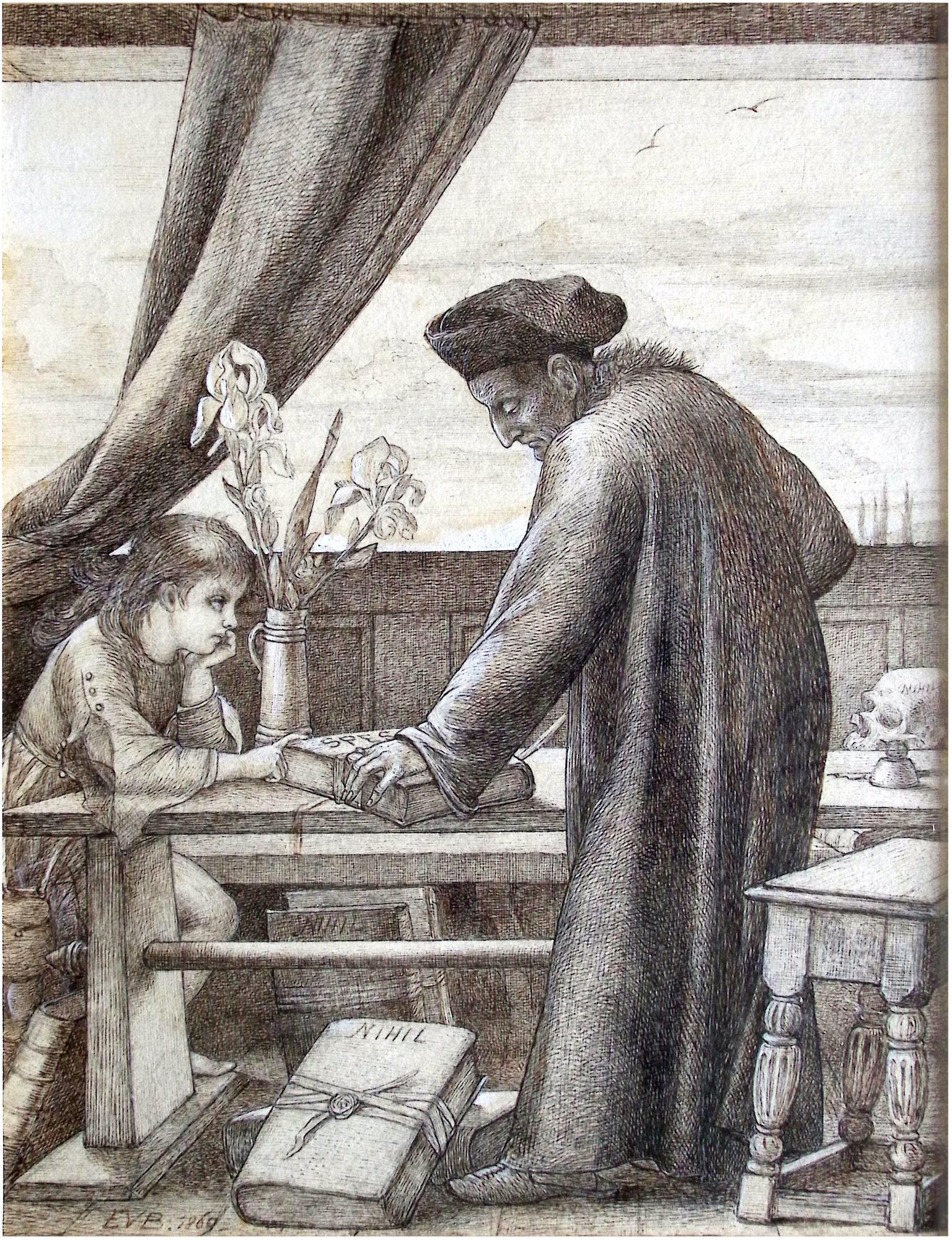
Illustration for 'A Dream Book', 1869
Eleanor Vere Boyle (1825 – 1916) illustrated poetry and prose by some of the most popular authors of her time. She regularly drew and painted using ink and watercolour, sketching landscapes, animals and her children from life. She also made drawings from her imagination, often reflecting spiritual themes.
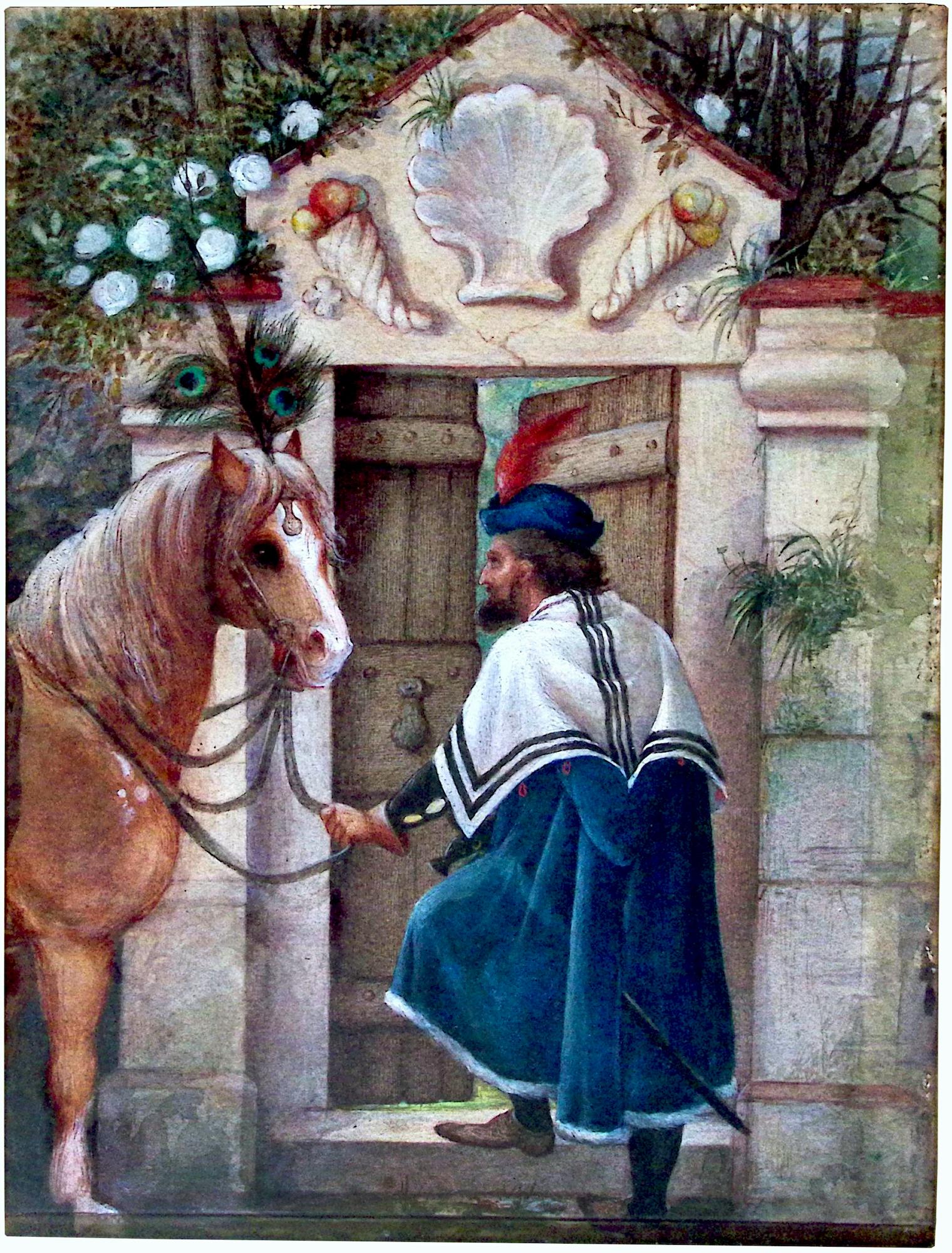
Illustration for Beauty and the Beast (the Merchant entering the Beast's Garden), c. 1875
Eleanor Vere Boyle (1825 – 1916) illustrated poetry and prose by some of the most popular authors of her time. She regularly drew and painted using ink and watercolour, sketching landscapes, animals and her children from life. She also made drawings from her imagination, often reflecting spiritual themes. This illustration is from Boyle’s 1875 retelling of Beauty and the Beast, a fairy tale where a woman is imprisoned by a monster and falls in love with him. Unlike other illustrated versions before or since, Boyle gave her beast walrus-like tusks and flippers. In several of her illustrations, Boyle used shell gold – a mixture of finely ground gold powder and gum arabic (tree sap) that would have been stored in a shallow seashell. In the final publication, the caption for this illustration reads, "The Merchant found a little door in the wall, and he opened it, and went into the Beast's Garden."