AK-47
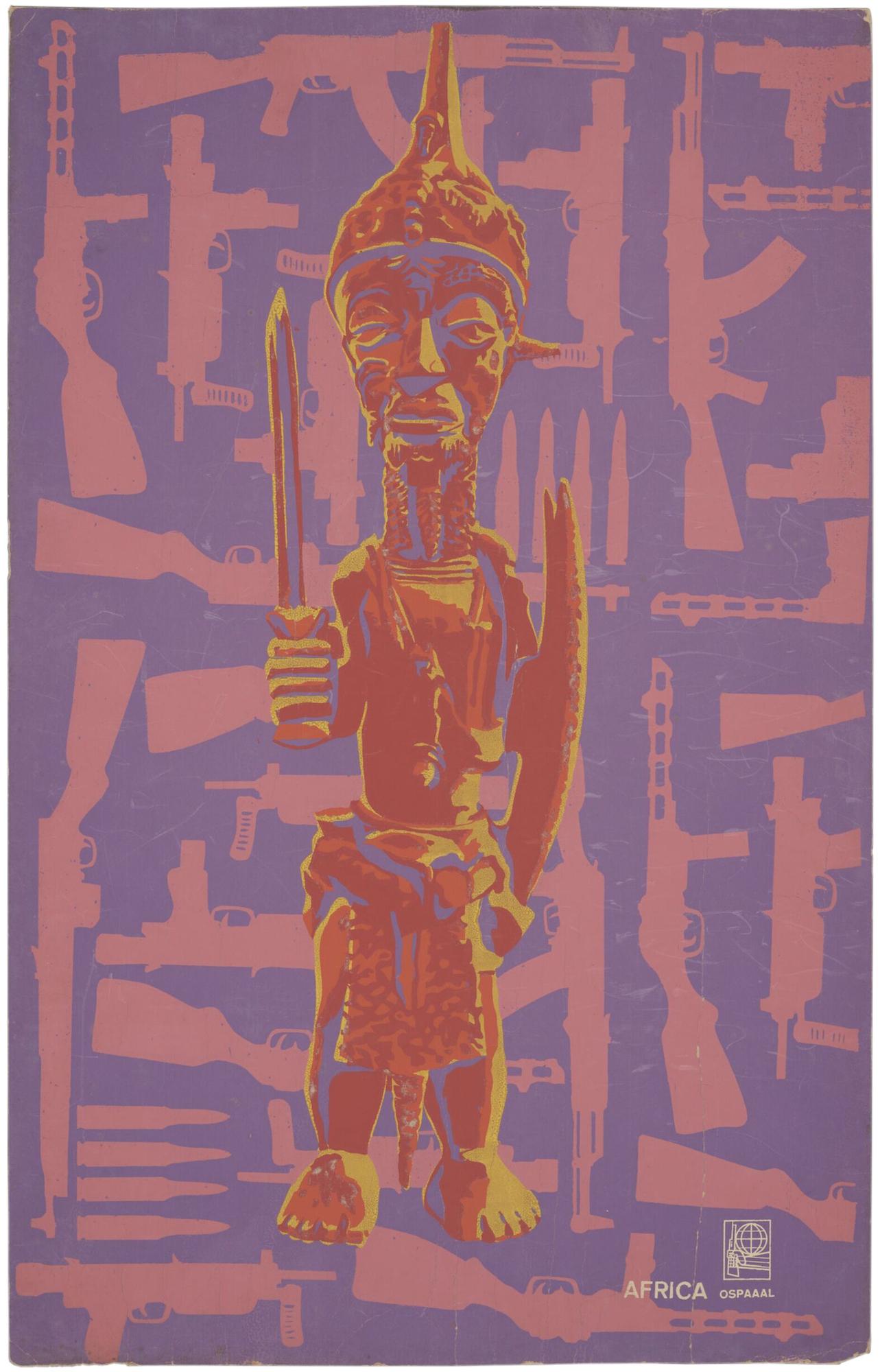
AFRICA, 1969
Between the 1960s and 1990s, more than fifty designers worked at OSPAAAL (the Organisation of Solidarity with the People of Africa, Asia and Latin America). Based in Cuba, they made magazines and posters that were sent around the world. Their aim was to promote radical political ideas. Many of their posters celebrate socialist revolutions and liberation movements from the Global South. Many OSPAAAL designers combined images of Indigenous art and craft with weaponry. Their aim was to argue for the right to self-determination and support liberation movements opposing colonial and imperial powers. However, the designers did not always know the meaning or origin of the iconography they used.
Content warning: weaponry

Untitled, 1969
Between the 1960s and 1990s, more than fifty designers worked at OSPAAAL (the Organisation of Solidarity with the People of Africa, Asia and Latin America). Based in Cuba, they made magazines and posters that were sent around the world. Their aim was to promote radical political ideas. Many of their posters celebrate socialist revolutions and liberation movements from the Global South. Alfredo Rostgaard’s poster depicts Jesus Christ carrying a rifle on his back. On the reverse of the poster is a quote from Camilo Torres, a Roman Catholic priest and guerrilla who fought with the revolutionary Colombian National Liberation Army. Torres combined his religious faith with Marxist politics and believed that “If Jesus were alive today, he would be a guerrillero”.
Content warning: weaponry
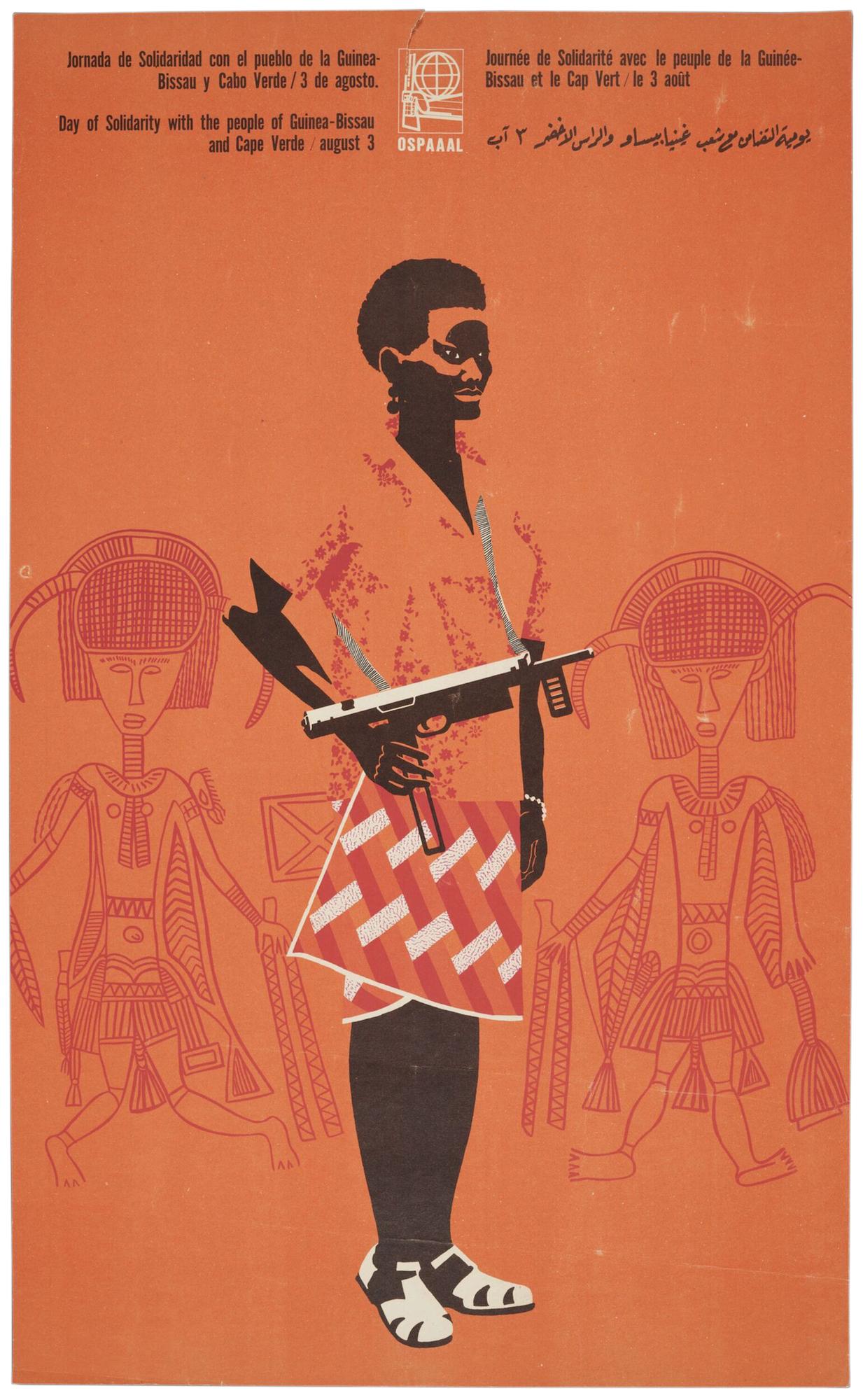
Day of Solidarity with the people of Guinea-Bissau and Cape Verde - august 3, 1968
Between the 1960s and 1990s, more than fifty designers worked at OSPAAAL (the Organisation of Solidarity with the People of Africa, Asia and Latin America). Based in Cuba, they made magazines and posters that were sent around the world. Their aim was to promote radical political ideas. Many of their posters celebrate socialist revolutions and liberation movements from the Global South. This poster was designed to mark a day of solidarity with liberation movements in Cape Verde and Guinea-Bissau seeking independence from Portuguese colonial rule, on the date of the Pidjiguiti massacre. Many OSPAAAL designers combined images of Indigenous art and craft with contemporary weaponry. Their aim was to argue for the right to self-determination and support liberation movements opposing colonial and imperial powers. However, the designers did not always know the meaning or origin of the iconography they used.
Content warning: weaponry
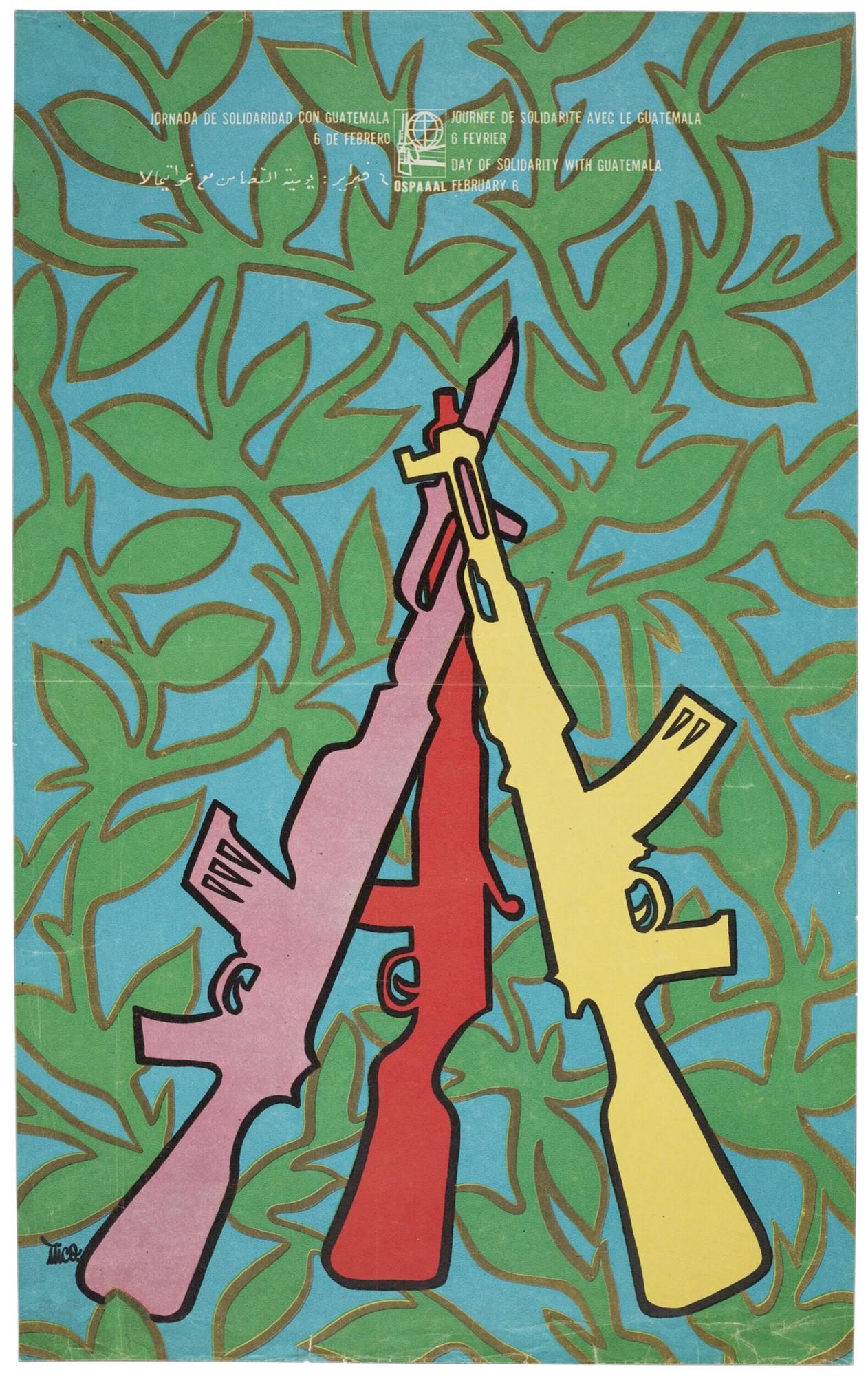
DAY OF SOLIDARITY WITH GUATEMALA - FEBRUARY 6, 1970
Between the 1960s and 1990s, more than fifty designers worked at OSPAAAL (the Organisation of Solidarity with the People of Africa, Asia and Latin America). Based in Cuba, they made magazines and posters that were sent around the world. Their aim was to promote radical political ideas. Many of their posters celebrate socialist revolutions and liberation movements from the Global South.
Content warning: weaponry
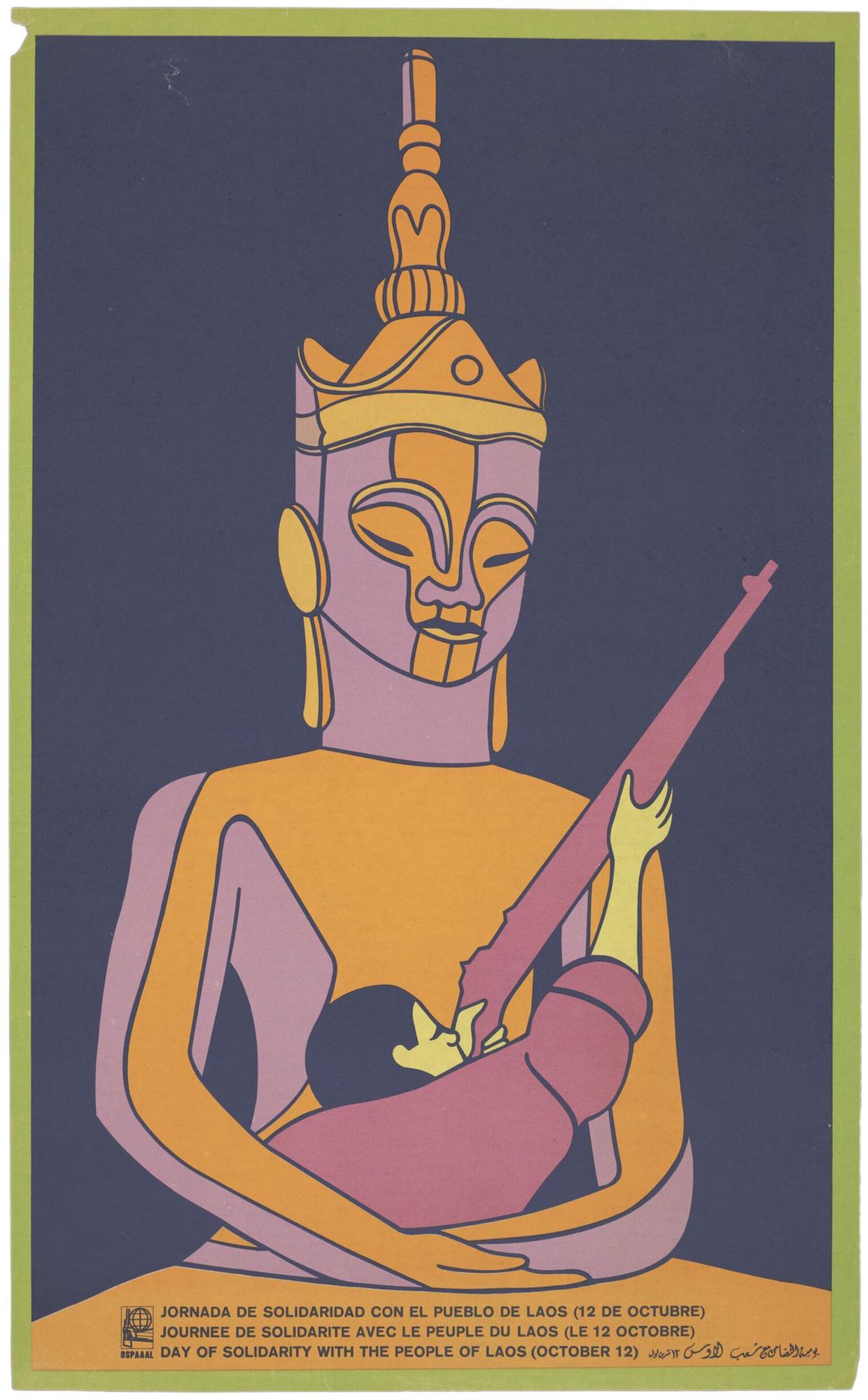
DAY OF SOLIDARITY WITH THE PEOPLE OF LAOS (OCTOBER 12), 1969
Between the 1960s and 1990s, more than fifty designers worked at OSPAAAL. Based in Cuba, they made magazines and posters that were sent around the world. Their aim was to promote radical political ideas. Many of their posters celebrate socialist revolutions and liberation movements from the Global South. This design encouraged solidarity with Laotian people on the same date as the founding of the nationalist movement Lao Issara (‘Free Laos’) on 12 October 1945.
Content warning: weaponry and religious iconography
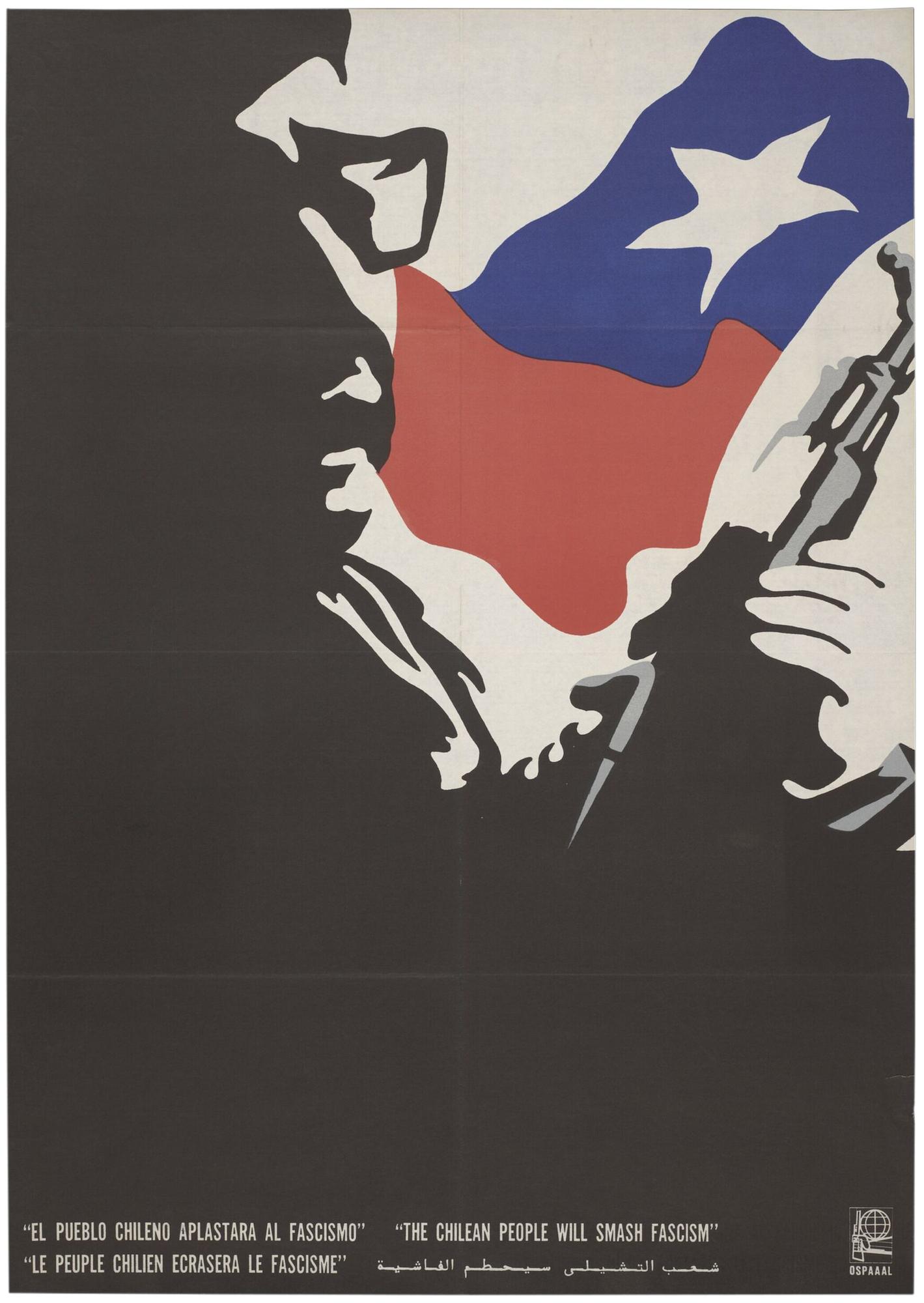
“THE CHILEAN PEOPLE WILL SMASH FASCISM”, 1976
Between the 1960s and 1990s, more than fifty designers worked at OSPAAAL. Based in Cuba, they made magazines and posters that were sent around the world. Their aim was to promote radical political ideas. Many of their posters celebrate socialist revolutions and liberation movements from the Global South. Figurative painter Ernesto García Peña’s only poster for OSPAAAL portrayed the socialist Chilean President Salvador Allende.
Content warning: weaponry
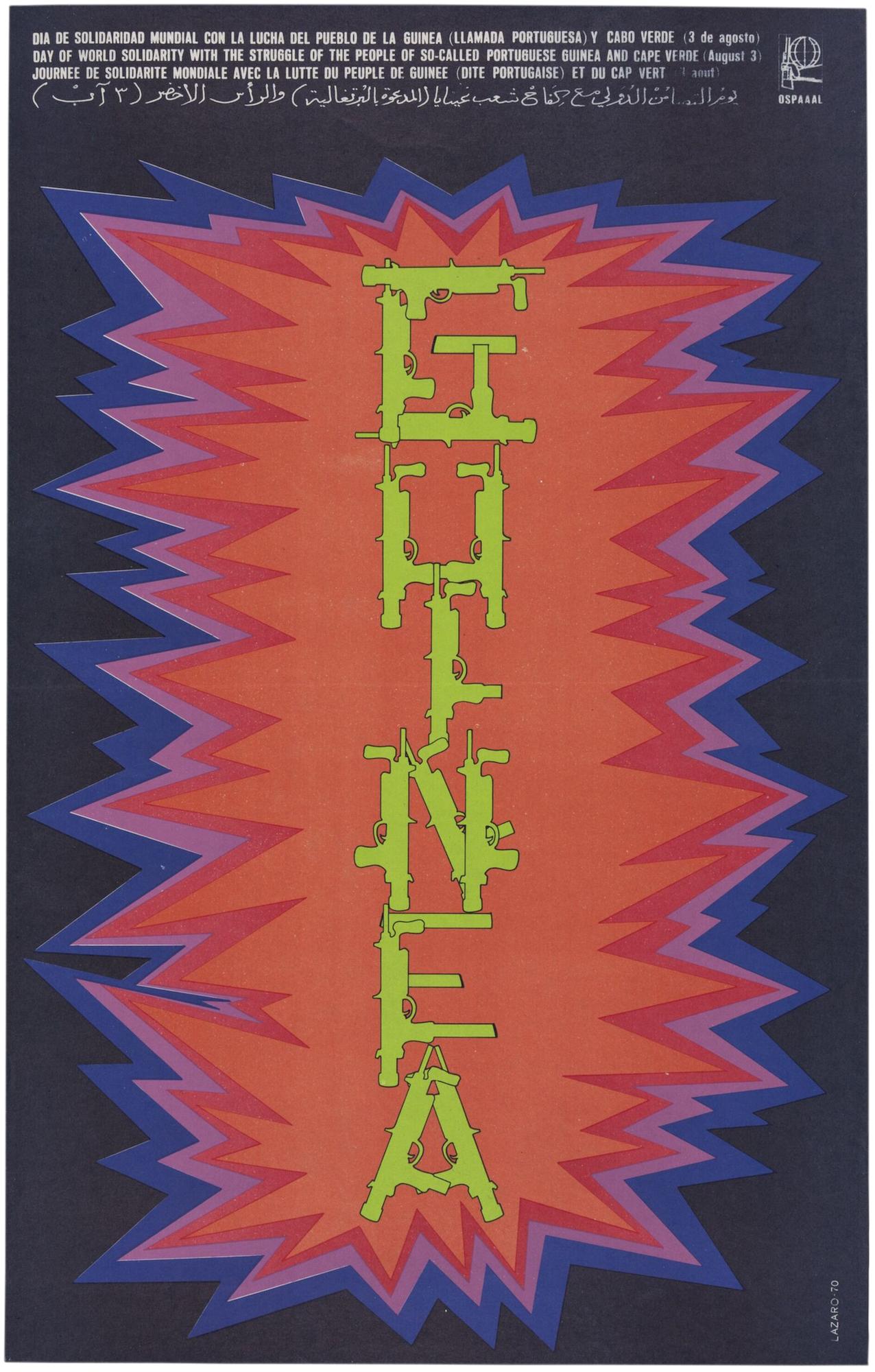
GUINEA - Day of World Solidarity with the Struggle of the People of so-called Portuguese Guinea and Cape Verde (August 3), 1970
Between the 1960s and 1990s, more than fifty designers worked at OSPAAAL (the Organisation of Solidarity with the People of Africa, Asia and Latin America). Based in Cuba, they made magazines and posters that were sent around the world. Their aim was to promote radical political ideas. Many of their posters celebrate socialist revolutions and liberation movements from the Global South. This poster was designed to mark a day of solidarity with liberation movements in Cape Verde and Guinea-Bissau seeking independence from Portuguese colonial rule, on the date of the Pidjiguiti massacre.
Content warning: weaponry
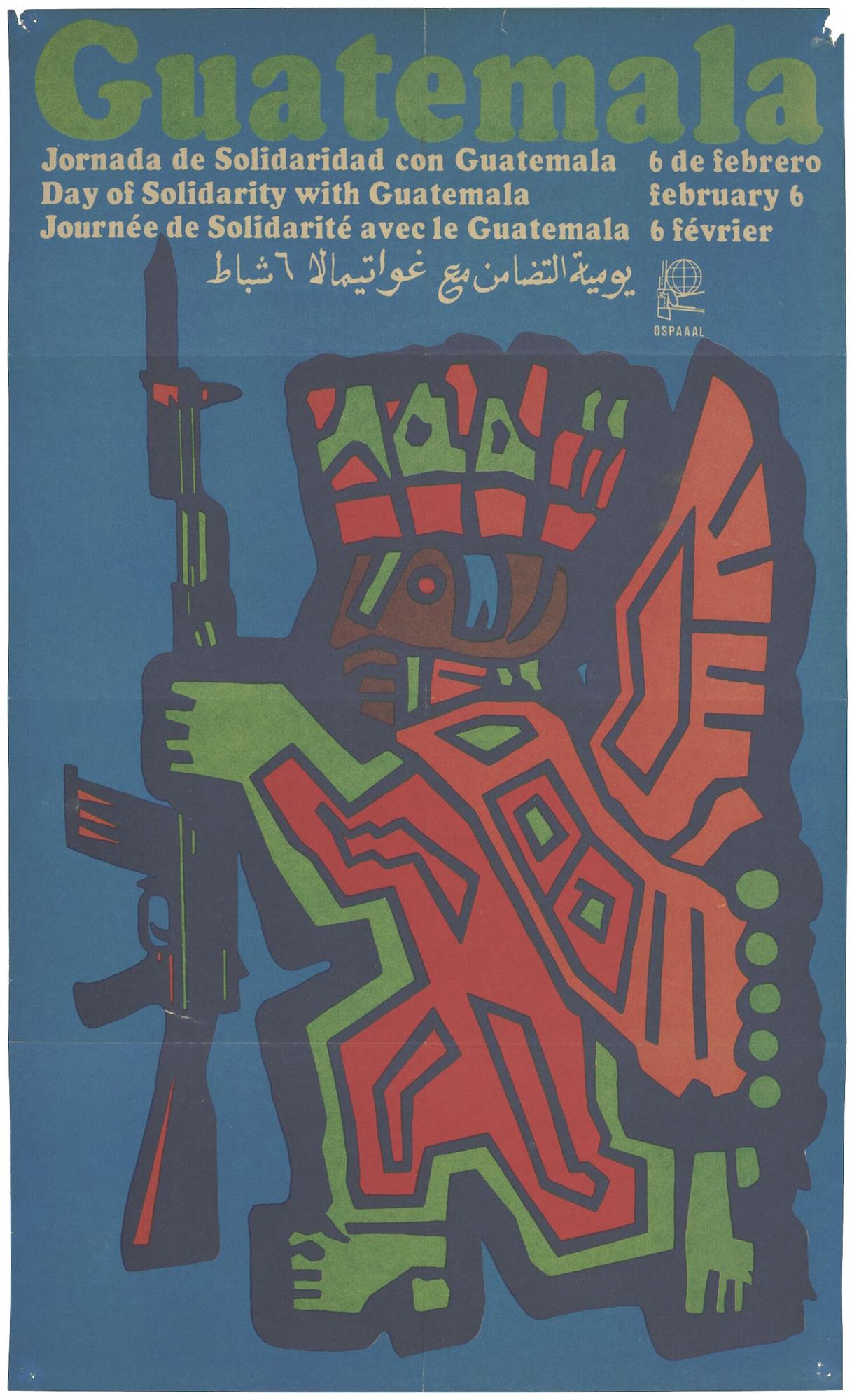
Day of Solidarity with Guatemala - february 6, 1968
Between the 1960s and 1990s, more than fifty designers worked at OSPAAAL. Based in Cuba, they made magazines and posters that were sent around the world. Their aim was to promote radical political ideas. Many of their posters celebrate socialist revolutions and liberation movements from the Global South. This poster was issued in support of leftist rebels fighting against the Guatemalan government during the Guatemalan Civil War. It shows a Mayan god holding an assault rifle. Many OSPAAAL designers combined images of Indigenous art and craft with weaponry. Their aim was to argue for the right to self-determination and support liberation movements opposing oppressive powers. However, the designers did not always know the meaning or origin of the iconography they used.
Content warning: weaponry