Resistance
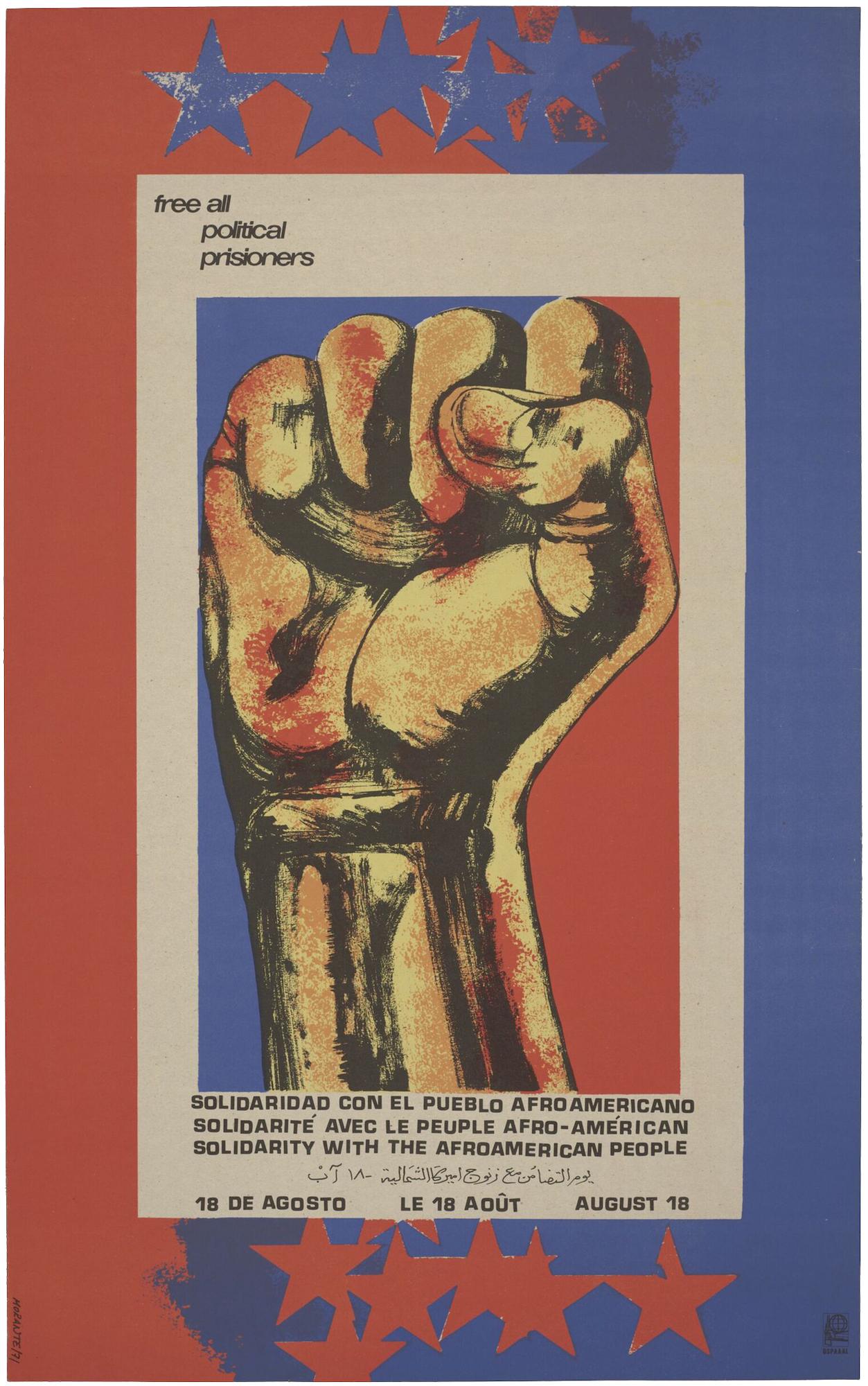
free all political prisoners - SOLIDARITY WITH THE AFROAMERICAN PEOPLE - AUGUST 18, 1971
Between the 1960s and 1990s, more than fifty designers worked at OSPAAAL. Based in Cuba, they made magazines and posters that were sent around the world. Their aim was to promote radical political ideas. Many of their posters celebrate socialist revolutions and liberation movements from the Global South. They also criticised the foreign policy of the U.S.A. and supported the Black Power movement.
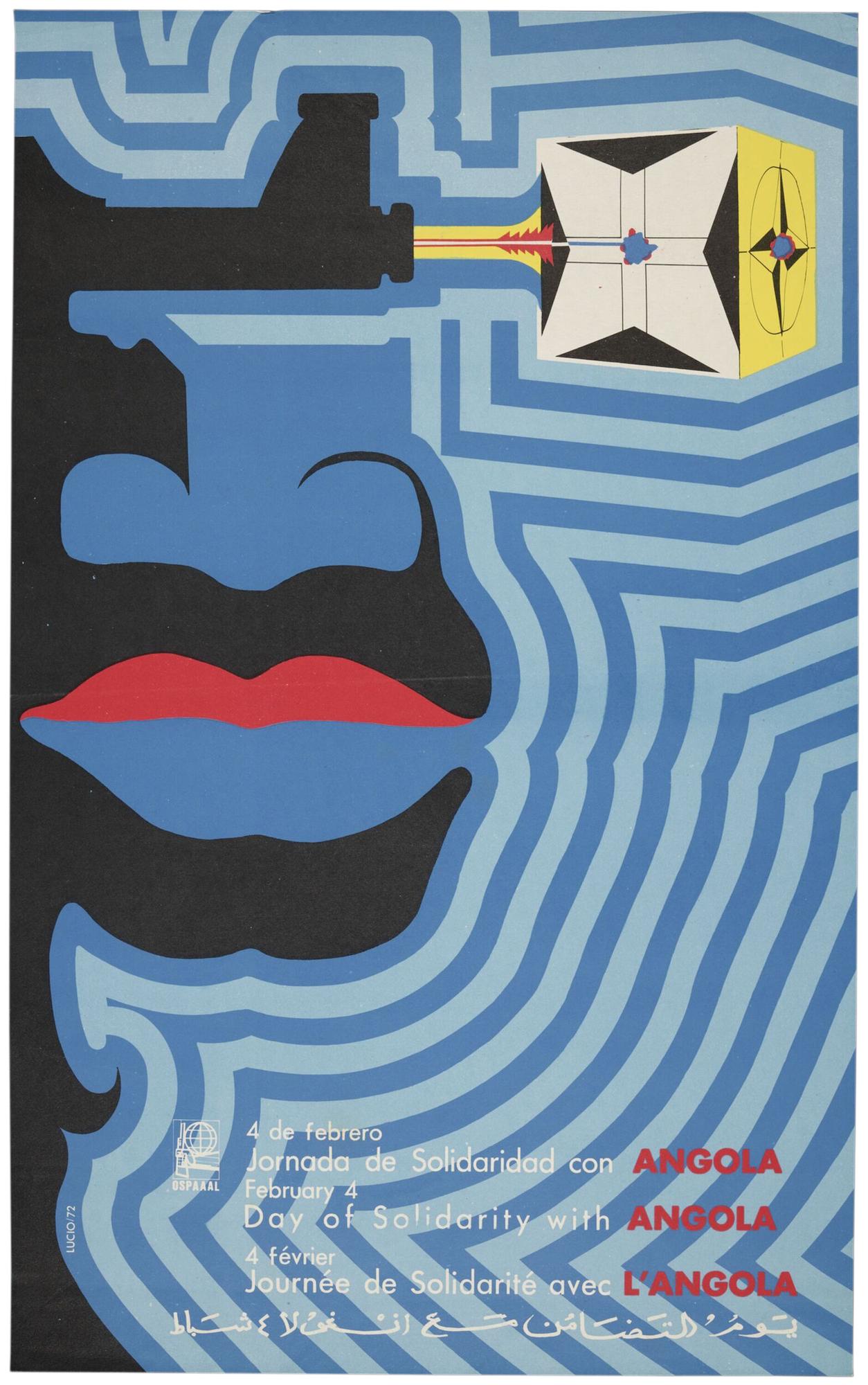
February 4 - Day of Solidarity with ANGOLA, 1972
Between the 1960s and 1990s, more than fifty designers worked at OSPAAAL. Based in Cuba, they made magazines and posters that were sent around the world. Their aim was to promote radical political ideas. Many of their posters celebrated socialist revolutions and liberation movements from the Global South. This poster commemorates the beginning of the Angolan War of Independence on 4 February 1961.
Content warning: weaponry
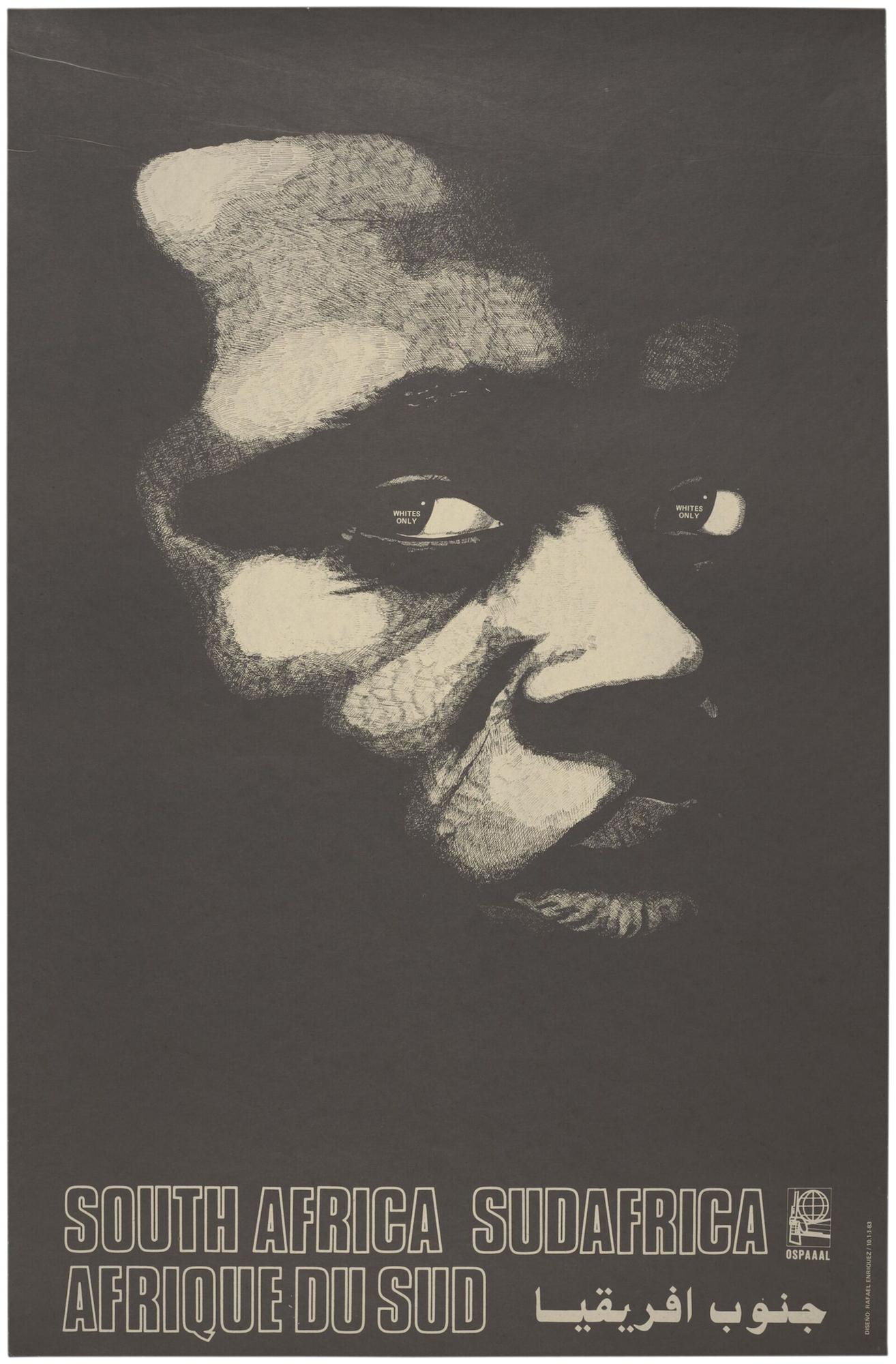
SOUTH AFRICA, 1983
Between the 1960s and 1990s, more than fifty designers worked at OSPAAAL (the Organisation of Solidarity with the People of Africa, Asia and Latin America). Based in Cuba, they made magazines and posters that were sent around the world. Their aim was to promote radical political ideas. Many of their posters celebrate socialist revolutions and liberation movements from the Global South. OSPAAAL opposed the apartheid system that enforced racial segregation in South Africa from 1948 to 1994. Rafael Enríquez Vega’s portrait of an unknown Black man with the words ‘Whites Only’ reflected in his eyes represents the denial of the rights of Black South Africans.
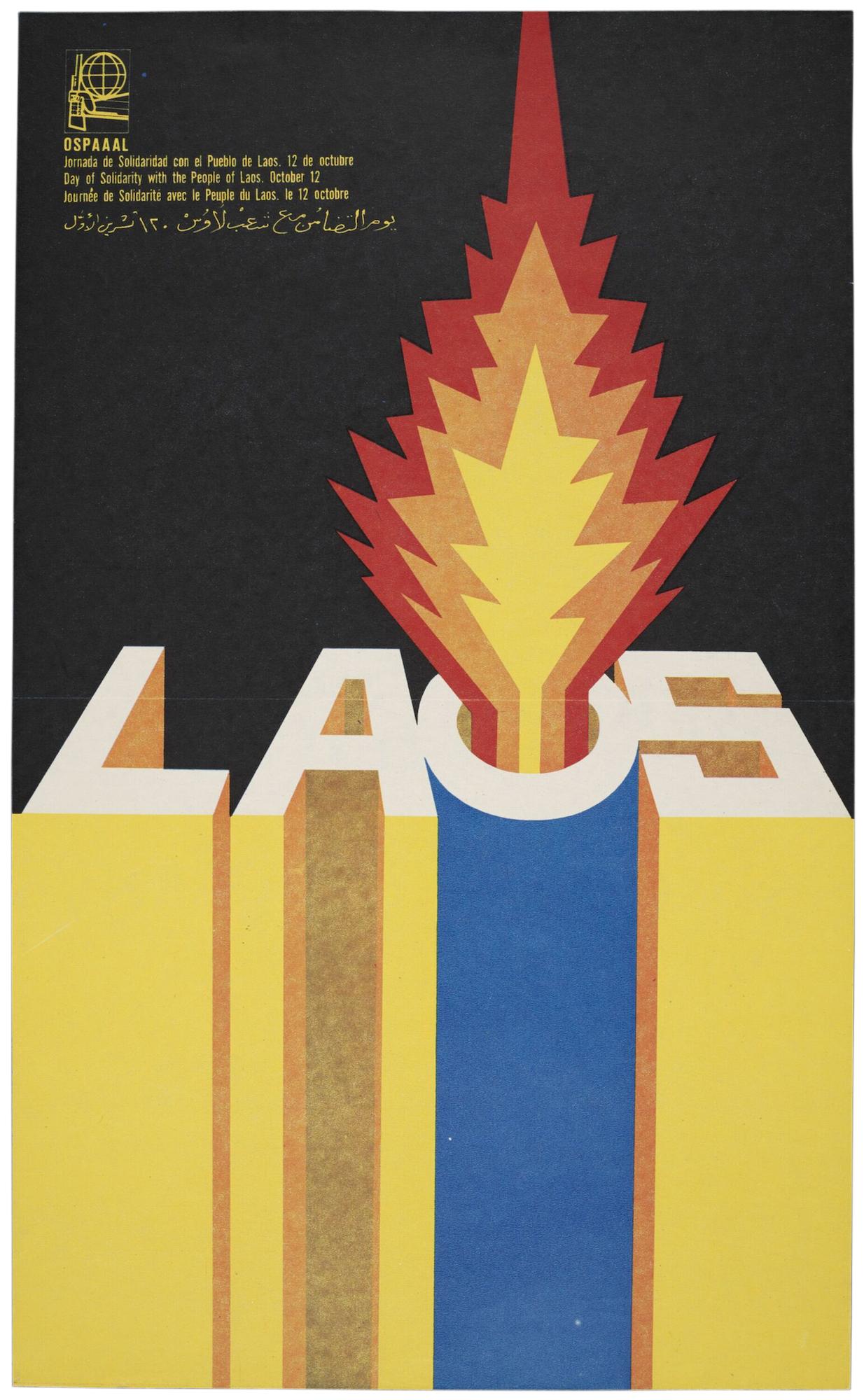
Day of Soldarity With The People Of Laos - October 12, 1970
Between the 1960s and 1990s, more than fifty designers worked at OSPAAAL. Based in Cuba, they made magazines and posters that were sent around the world. Their aim was to promote radical political ideas. Many of their posters celebrate socialist revolutions and liberation movements from the Global South. This design encouraged solidarity with Laotian people on the same date as the founding of the nationalist movement Lao Issara (‘Free Laos’) on 12 October 1945.
Content warning: weaponry
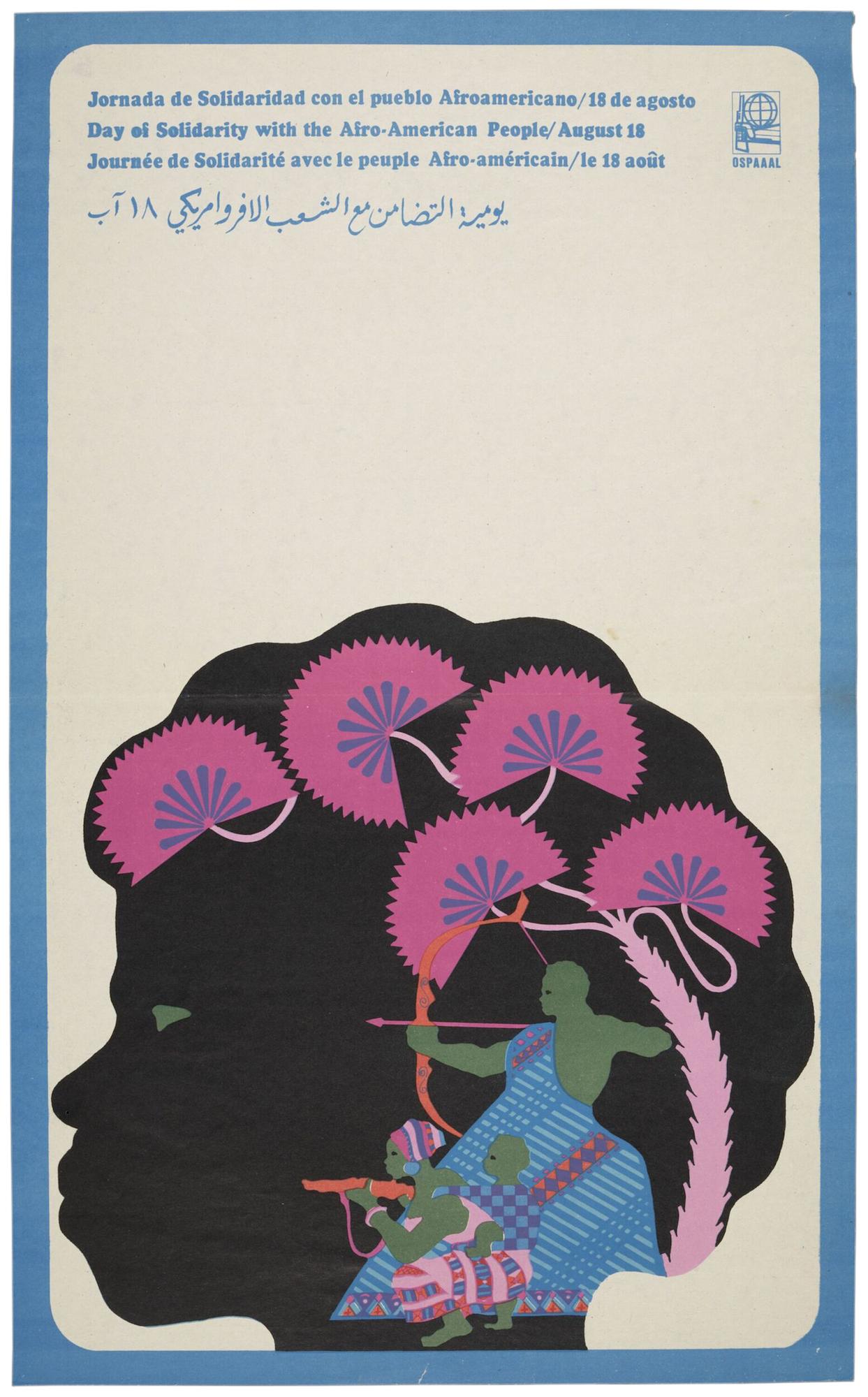
Day of Solidarity with the Afro-American People - August 18, 1969
Between the 1960s and 1990s, more than fifty designers worked at OSPAAAL (the Organisation of Solidarity with the People of Africa, Asia and Latin America). Based in Cuba, they made magazines and posters that were sent around the world. Their aim was to promote radical political ideas. Many of their posters celebrate socialist revolutions and liberation movements from the Global South. They also criticised the foreign policy of the U.S.A. and supported the Black Power movement.
Content warning: weaponry
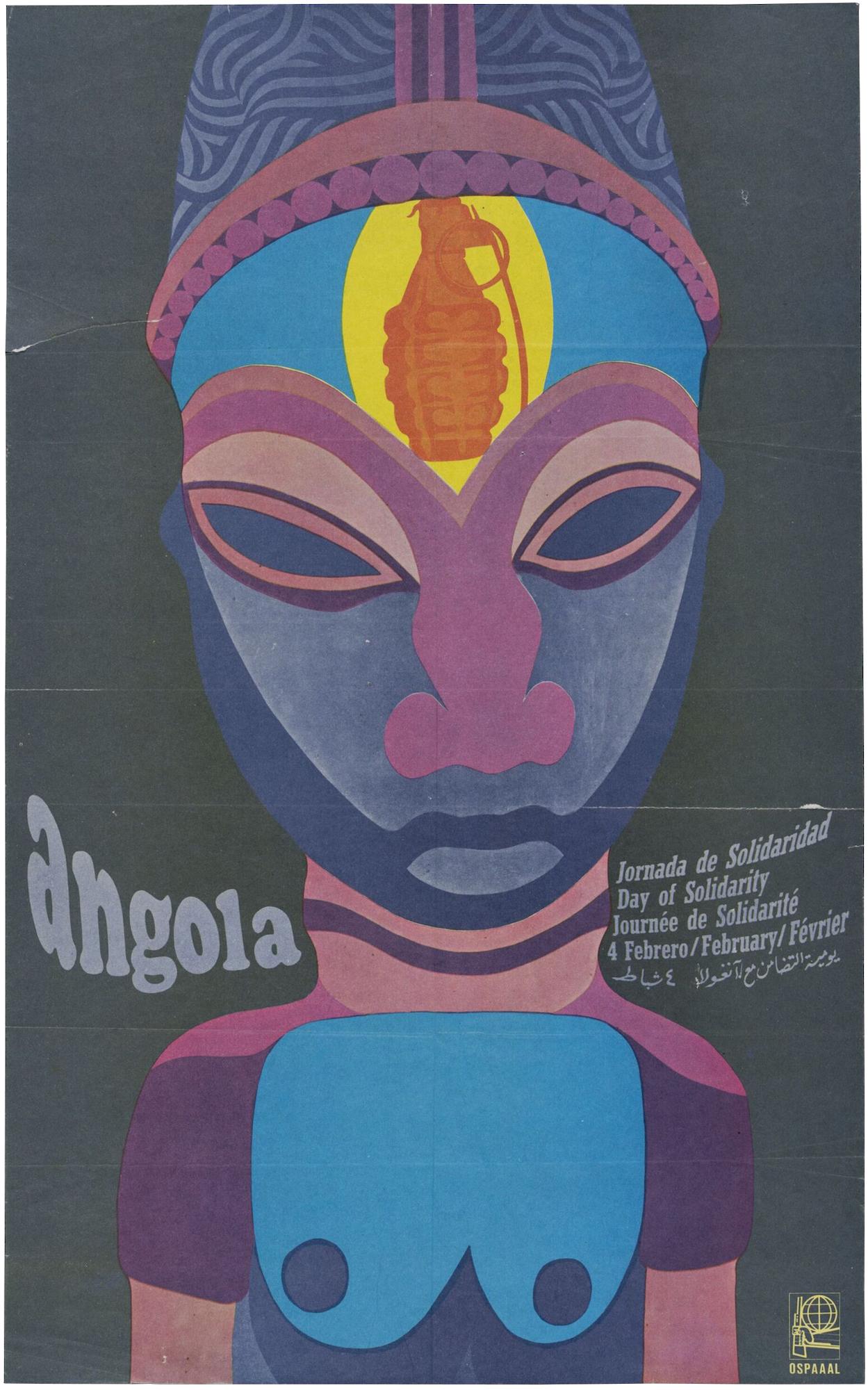
angola - Day of Solidarity - 4 February, 1969
Between the 1960s and 1990s, more than fifty designers worked at OSPAAAL. Based in Cuba, they made magazines and posters that were sent around the world. Their aim was to promote radical political ideas. Many of their posters celebrate socialist revolutions and liberation movements from the Global South. This poster commemorates the beginning of the Angolan War of Independence on 4 February 1961.
Content warning: weaponry
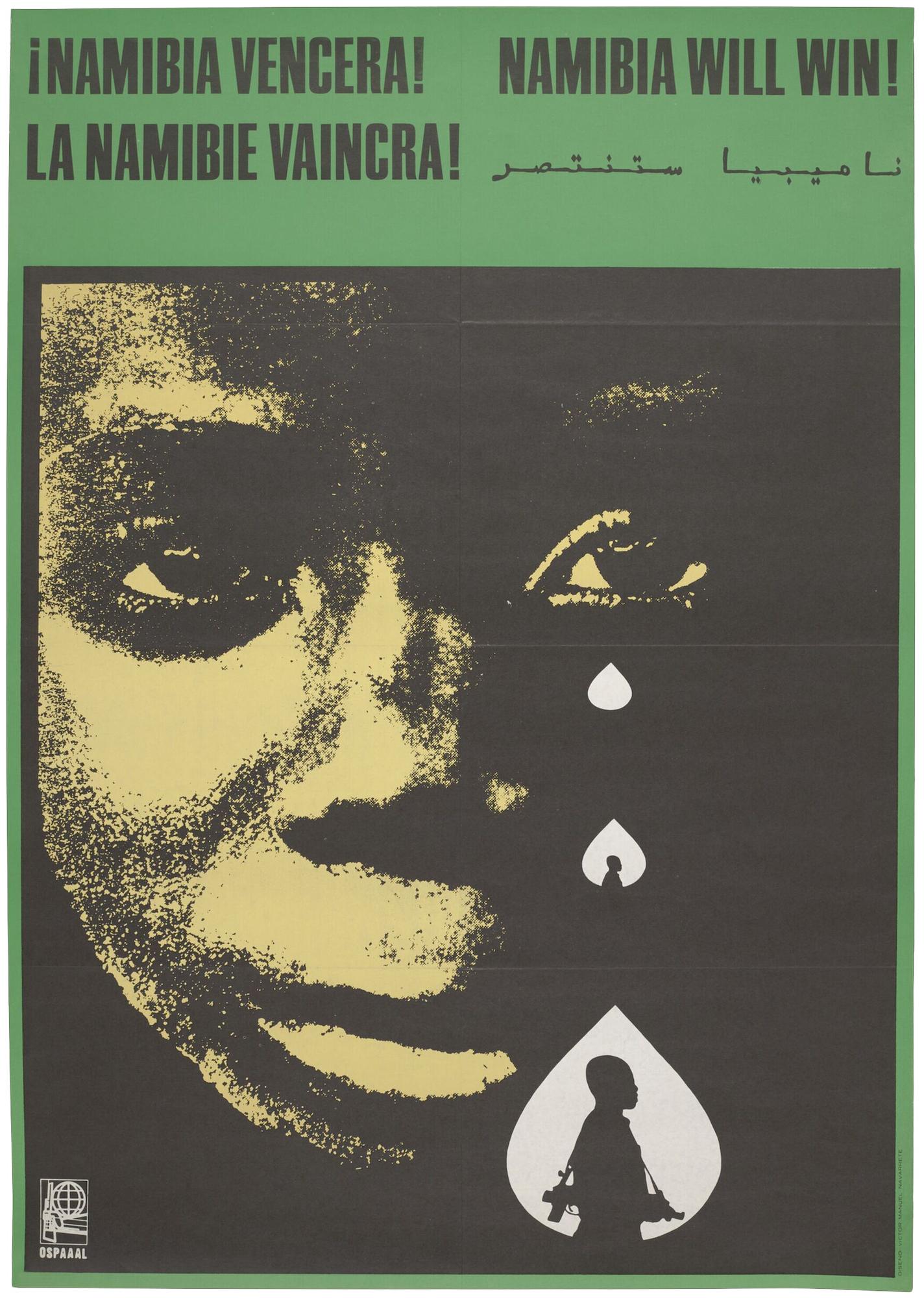
NAMIBIA WILL WIN!, 1977
Between the 1960s and 1990s, more than fifty designers worked at OSPAAAL (the Organisation of Solidarity with the People of Africa, Asia and Latin America). Based in Cuba, they made magazines and posters that were sent around the world. Their aim was to promote radical political ideas. Many of their posters celebrate socialist revolutions and liberation movements from the Global South. This poster was made in support of Namibia’s movement for independence from South African rule. OSPAAAL’s designers regularly used adapted photographs from the organisation’s news desk. Photographs were sometimes used out of context, with the same photographs appearing in posters and magazine illustrations to represent different themes. The identity of the child in this poster is not known.
Content warning: weaponry
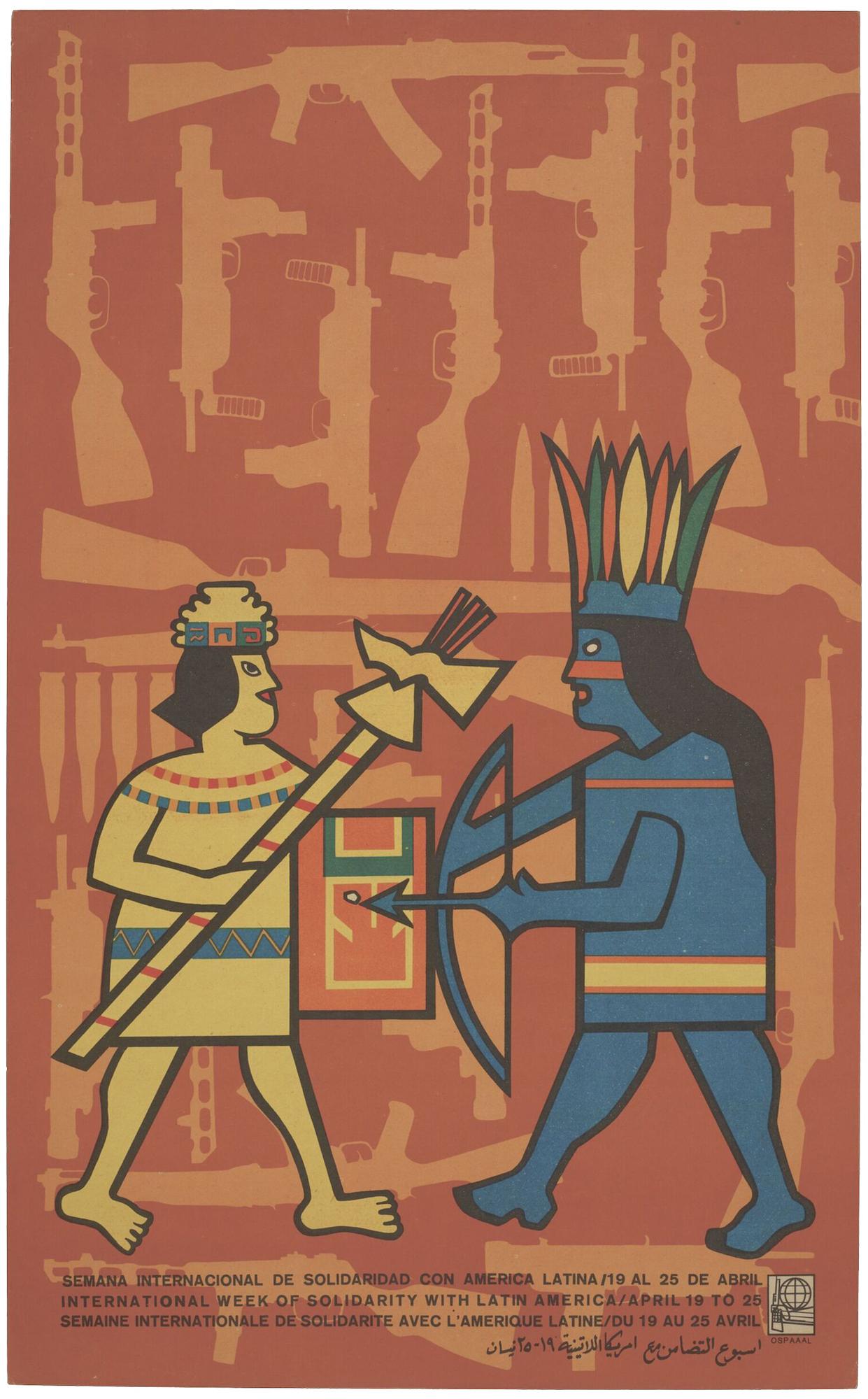
INTERNATIONAL WEEK OF SOLIDARITY WITH LATIN AMERICA - APRIL 19 TO 25, 1969
Between the 1960s and 1990s, more than fifty designers worked at OSPAAAL (the Organisation of Solidarity with the People of Africa, Asia and Latin America). Based in Cuba, they made magazines and posters that were sent around the world. Their aim was to promote radical political ideas. Many of their posters celebrate socialist revolutions and liberation movements from the Global South. Many OSPAAAL designers combined images of Indigenous art and craft with contemporary weaponry. Their aim was to argue for the right to self-determination and support liberation movements opposing colonial and imperial powers. However, the designers did not always know the meaning or origin of the iconography they used.
Content warning: weaponry
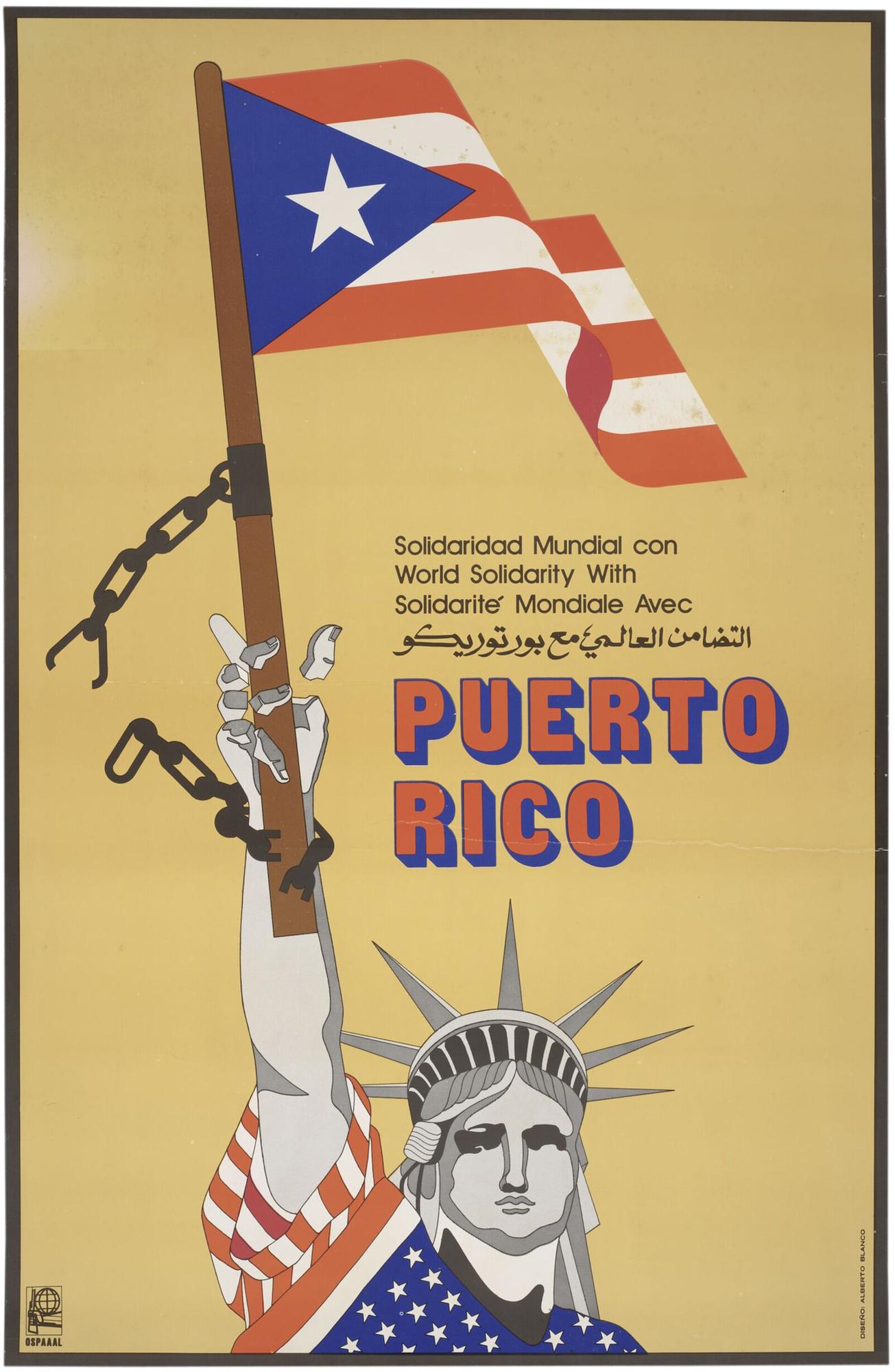
World Solidarity With PUERTO RICO, 1981
Between the 1960s and 1990s, more than fifty designers worked at OSPAAAL (the Organisation of Solidarity with the People of Africa, Asia and Latin America). Based in Cuba, they made magazines and posters that were sent around the world. Their aim was to promote radical political ideas. Many of their posters celebrate socialist revolutions and liberation movements from the Global South. They also criticised the foreign policy of the U.S.A., often using US icons as part of visual metaphors. This poster advocates for Puerto Rican independence from the U.S.A. The Statue of Liberty represents the U.S.A. Its crumbling hand releases the Puerto Rican flag.
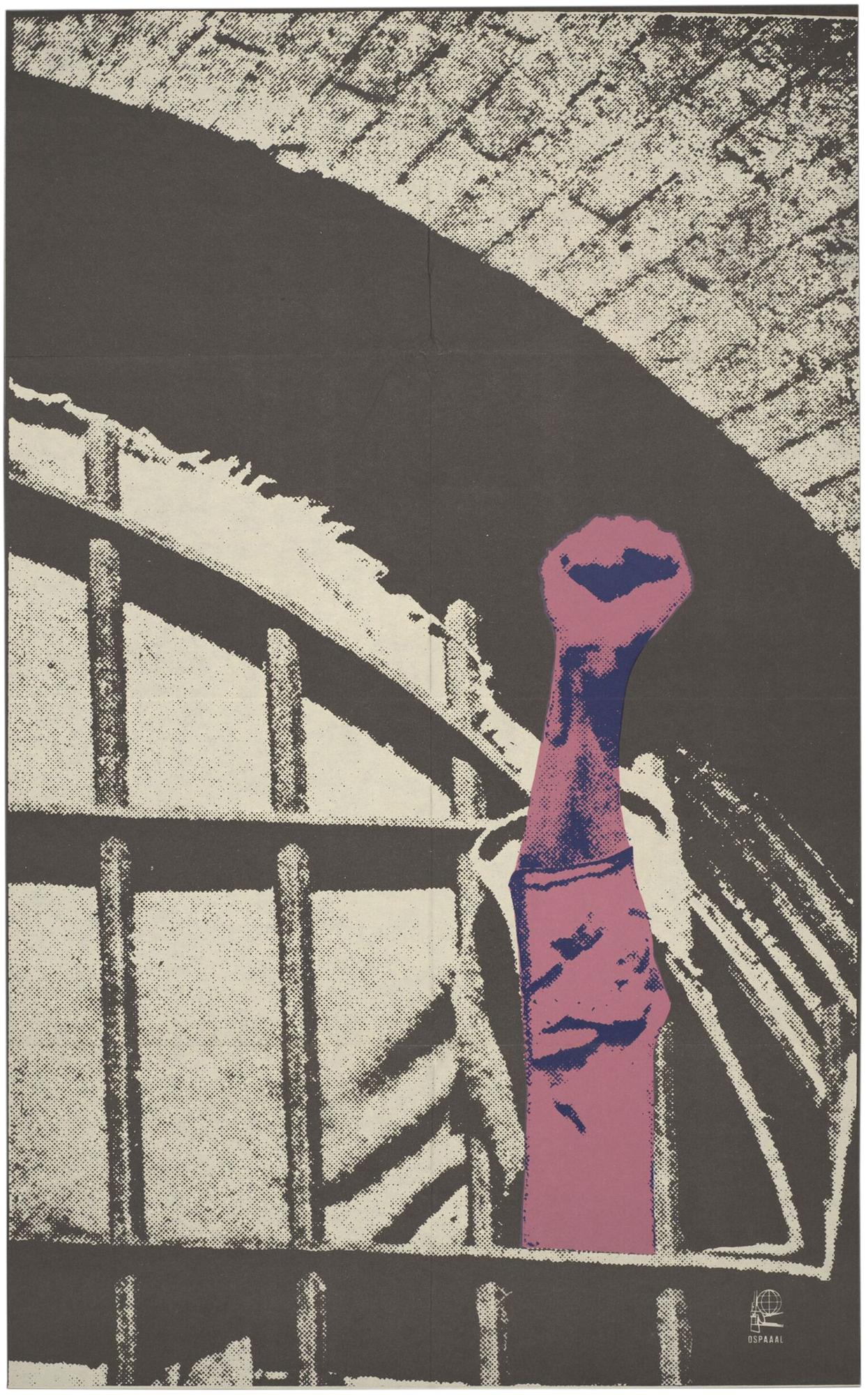
Untitled, 1974
Between the 1960s and 1990s, more than fifty designers worked at OSPAAAL (the Organisation of Solidarity with the People of Africa, Asia and Latin America). Based in Cuba, they made magazines and posters that were sent around the world. Their aim was to promote radical political ideas. Many of their posters celebrate socialist revolutions and liberation movements from the Global South.
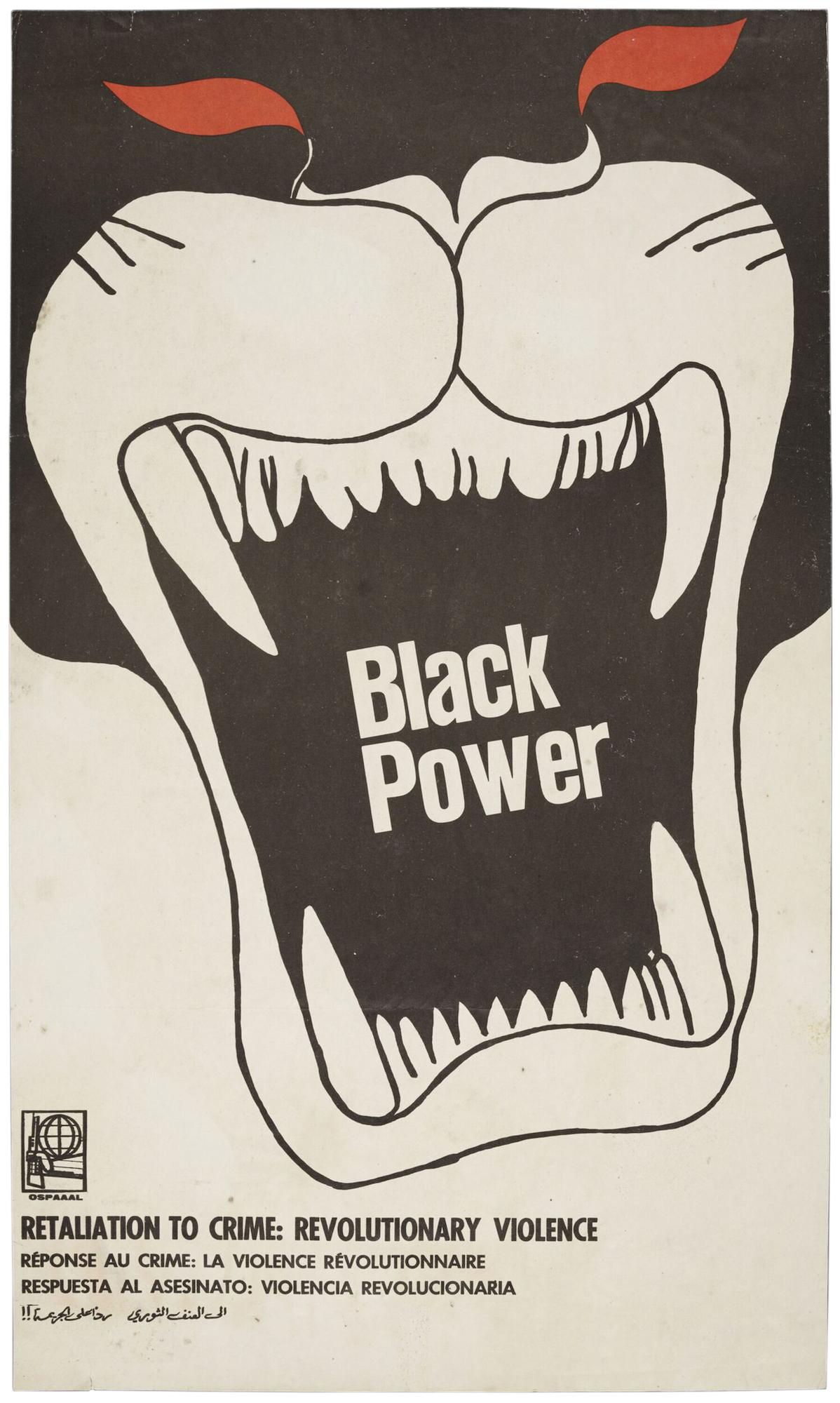
Black Power - RETALIATION TO CRIME: REVOLUTIONARY VIOLENCE, 1968
Between the 1960s and 1990s, more than fifty designers worked at OSPAAAL (the Organisation of Solidarity with the People of Africa, Asia and Latin America). Based in Cuba, they made magazines and posters that were sent around the world. Their aim was to promote radical political ideas. Many of their posters celebrate socialist revolutions and liberation movements from the Global South. They also criticised the foreign policy of the U.S.A. and supported the Black Power movement. Alfredo Rostgaard’s poster was inspired by the Black Panther Party logo. Some copies had a message printed on the back: “On the occasion of Dr. Martin Luther King’s assassination, we have published a poster that is now being circulated all over the world. We are sending you herewith a certain amount of these posters, which may be used in your country for the activities to be carried out in this regard.”
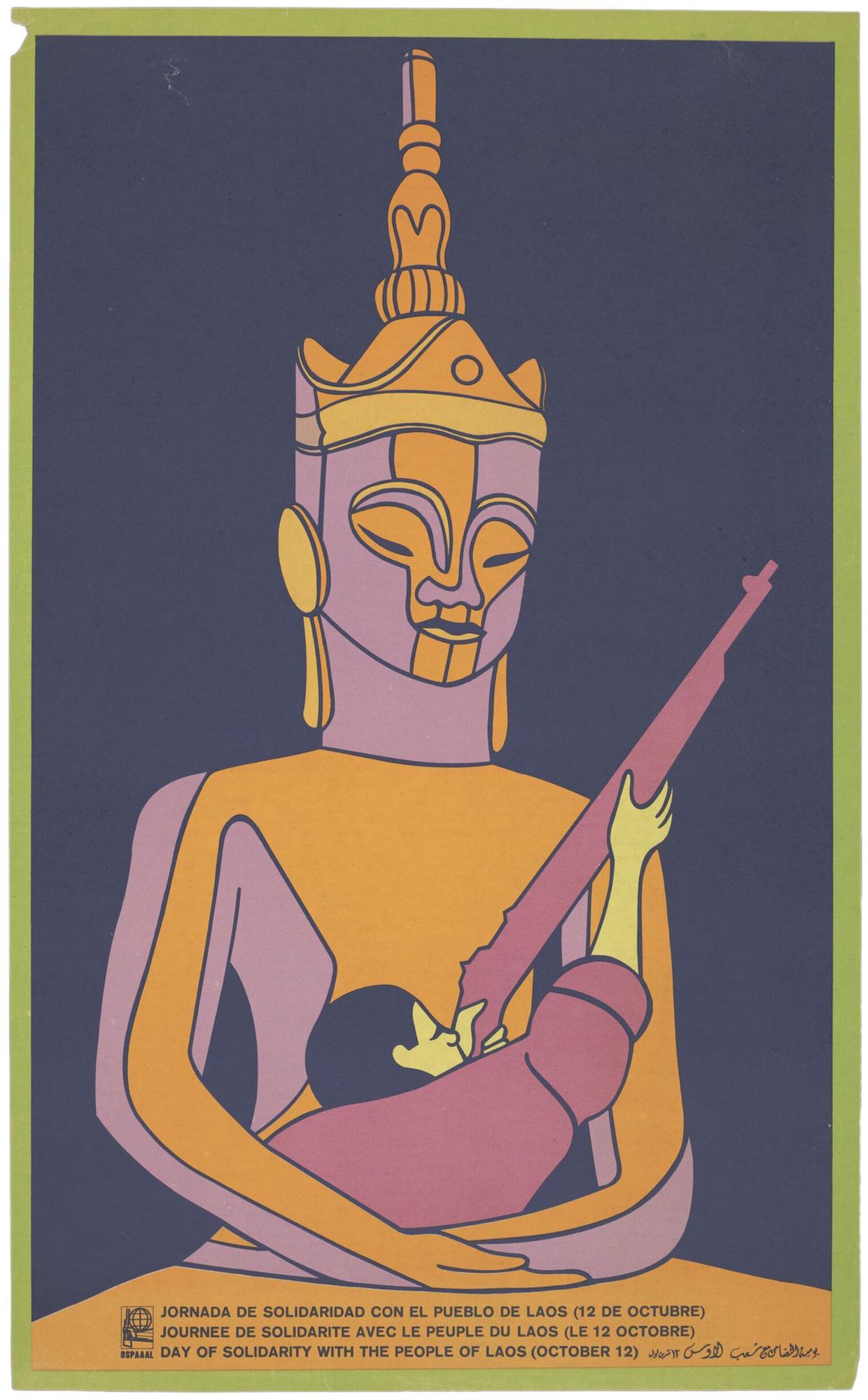
DAY OF SOLIDARITY WITH THE PEOPLE OF LAOS (OCTOBER 12), 1969
Between the 1960s and 1990s, more than fifty designers worked at OSPAAAL. Based in Cuba, they made magazines and posters that were sent around the world. Their aim was to promote radical political ideas. Many of their posters celebrate socialist revolutions and liberation movements from the Global South. This design encouraged solidarity with Laotian people on the same date as the founding of the nationalist movement Lao Issara (‘Free Laos’) on 12 October 1945.
Content warning: weaponry and religious iconography
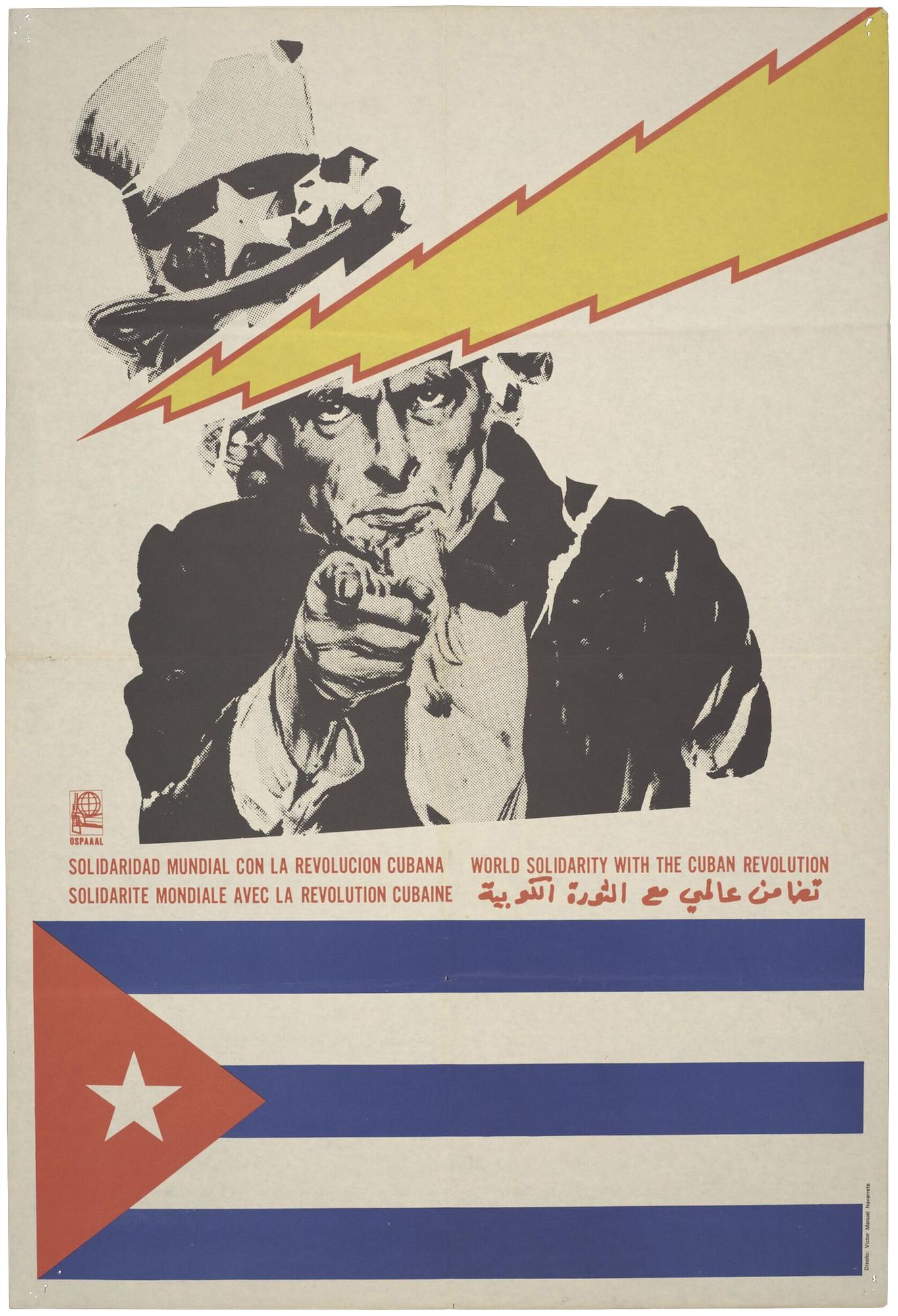
WORLD SOLIDARITY WITH THE CUBAN REVOLUTION, 1980
Between the 1960s and 1990s, more than fifty designers worked at OSPAAAL. Based in Cuba, they made magazines and posters that were sent around the world. Their aim was to promote radical political ideas. Many of their posters celebrate socialist revolutions and liberation movements from the Global South. Víctor Manuel Navarrete’s design uses an image of ‘Uncle Sam’ from a 1917 US army recruitment poster. In the U.S.A., Uncle Sam was a widely used character representing the government and national pride. OSPAAAL’s designers often distorted images of Uncle Sam to criticise or mock the U.S.A.
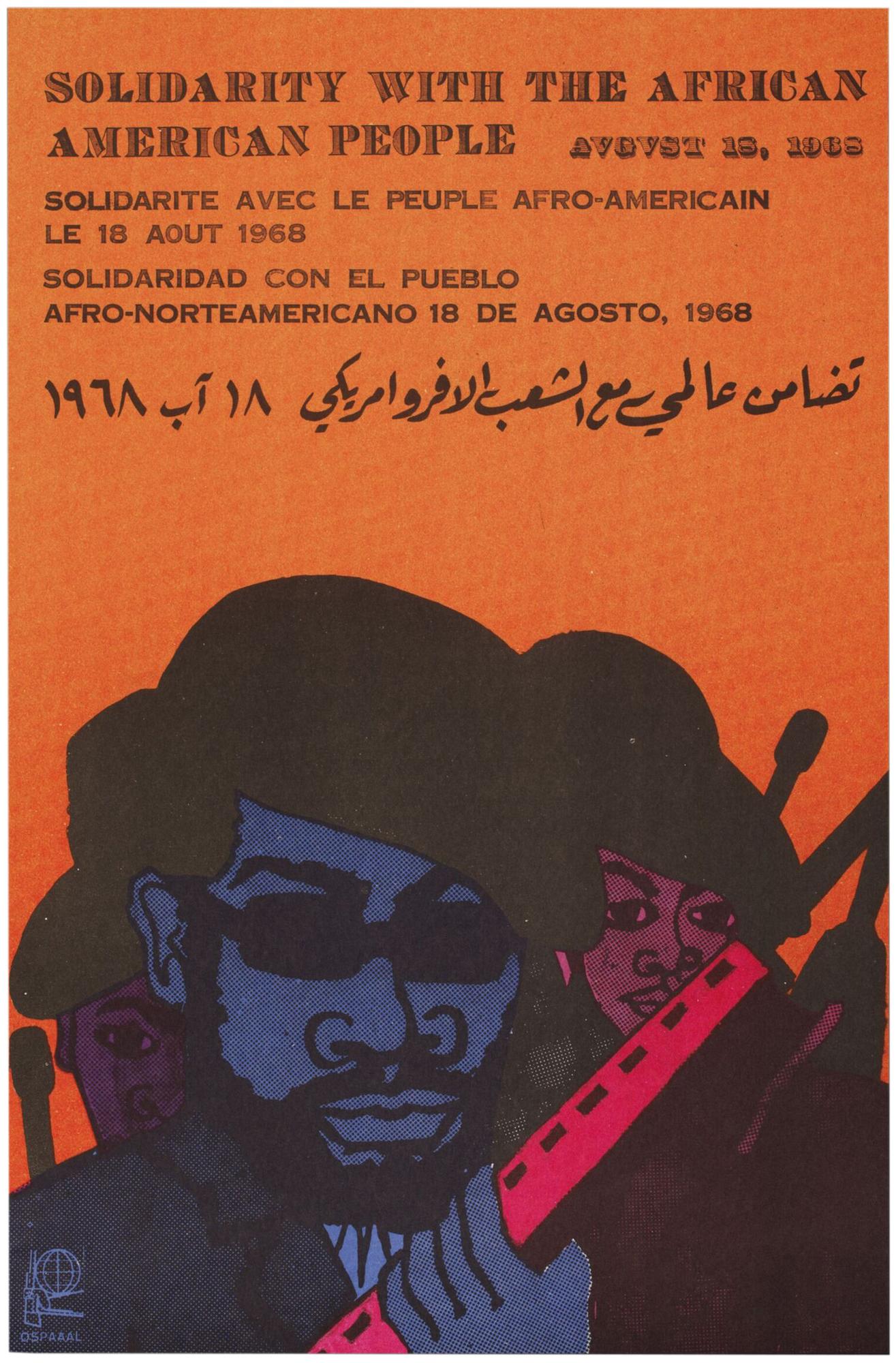
SOLIDARITY WITH THE AFRICAN AMERICAN PEOPLE - AUGUST 18, 1968, 1968
Between the 1960s and 1990s, more than fifty designers worked at OSPAAAL. Based in Cuba, they made magazines and posters that were sent around the world. Their aim was to promote radical political ideas. Many of their posters celebrate socialist revolutions and liberation movements from the Global South. They were also connected to the Black Panther Party, a political organisation based in Oakland, California. Designer Emory Douglas was “glad to see” his illustrations for the Black Panther Party’s newspaper repurposed by OSPAAAL. Douglas’ image reflects the party’s line on carrying arms: “we believe we can end police brutality... by organising black self-defence groups that are dedicated to defending our black community from racist police oppression and brutality.”
Content warning: weaponry
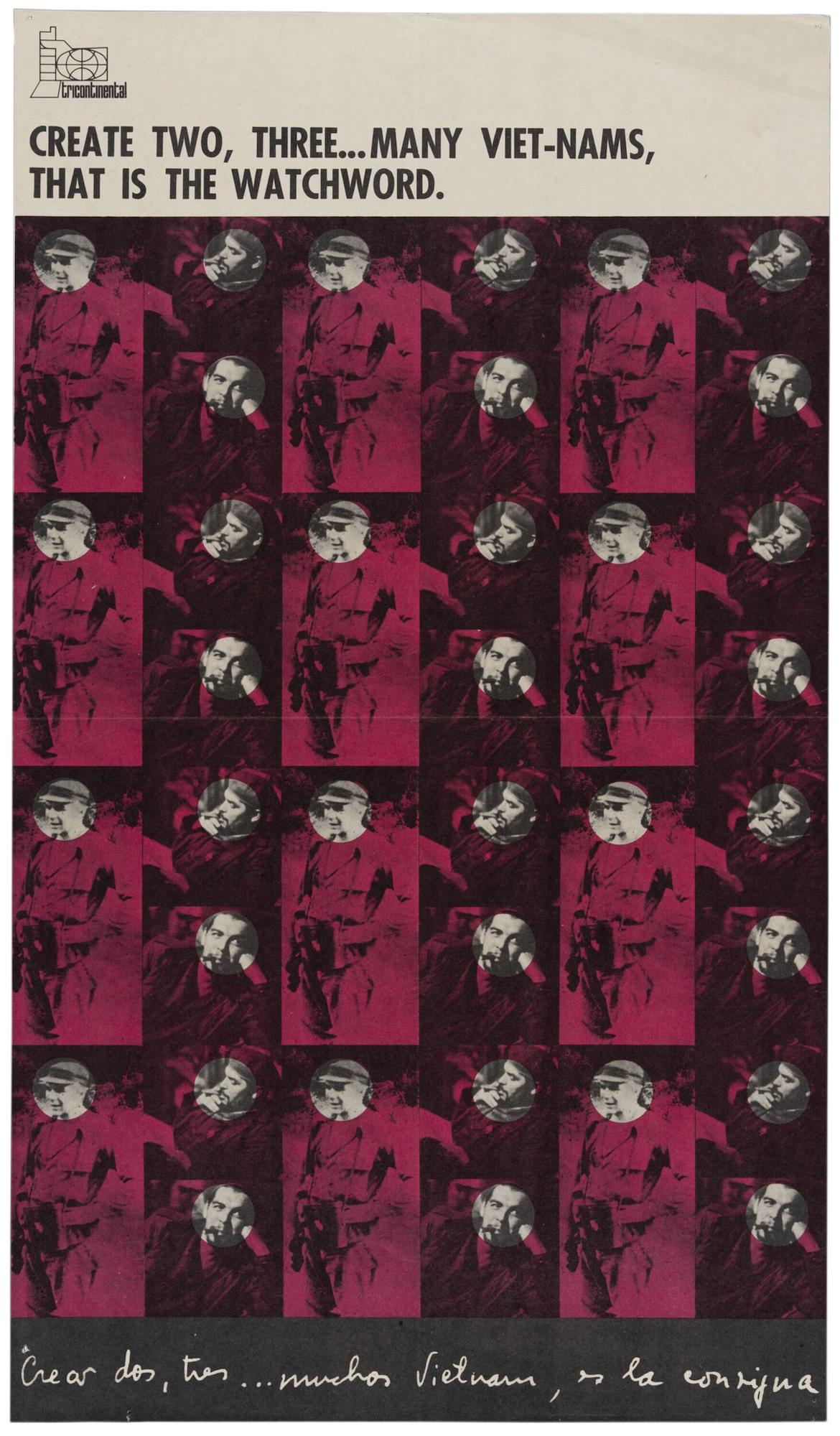
CREATE TWO, THREE...MANY VIET-NAMS, THAT IS THE WATCHWORD, 1967
Between the 1960s and 1990s, more than fifty designers worked at OSPAAAL (the Organisation of Solidarity with the People of Africa, Asia and Latin America). Based in Cuba, they made magazines and posters that were sent around the world. Their aim was to promote radical political ideas. Many of their posters celebrate socialist revolutions and liberation movements from the Global South. The first edition of OSPAAAL’s Tricontinental magazine was a special supplement dedicated to Che Guevara’s Message to the Tricontinental. His manifesto presented Vietnamese Communists opposing U.S. military forces in Vietnam as a model for patriotic resistance. It contained the only poster of the guerrilla leader made during his lifetime – Guevara was killed in Bolivia six months after its issue. OSPAAAL’s designers often used repetition of photographic as a way to create bold illustrations with limited resources. The studio’s first art director Alfredo Rostgaard said that “from the need to solve our material problems, we began to discover new forms”
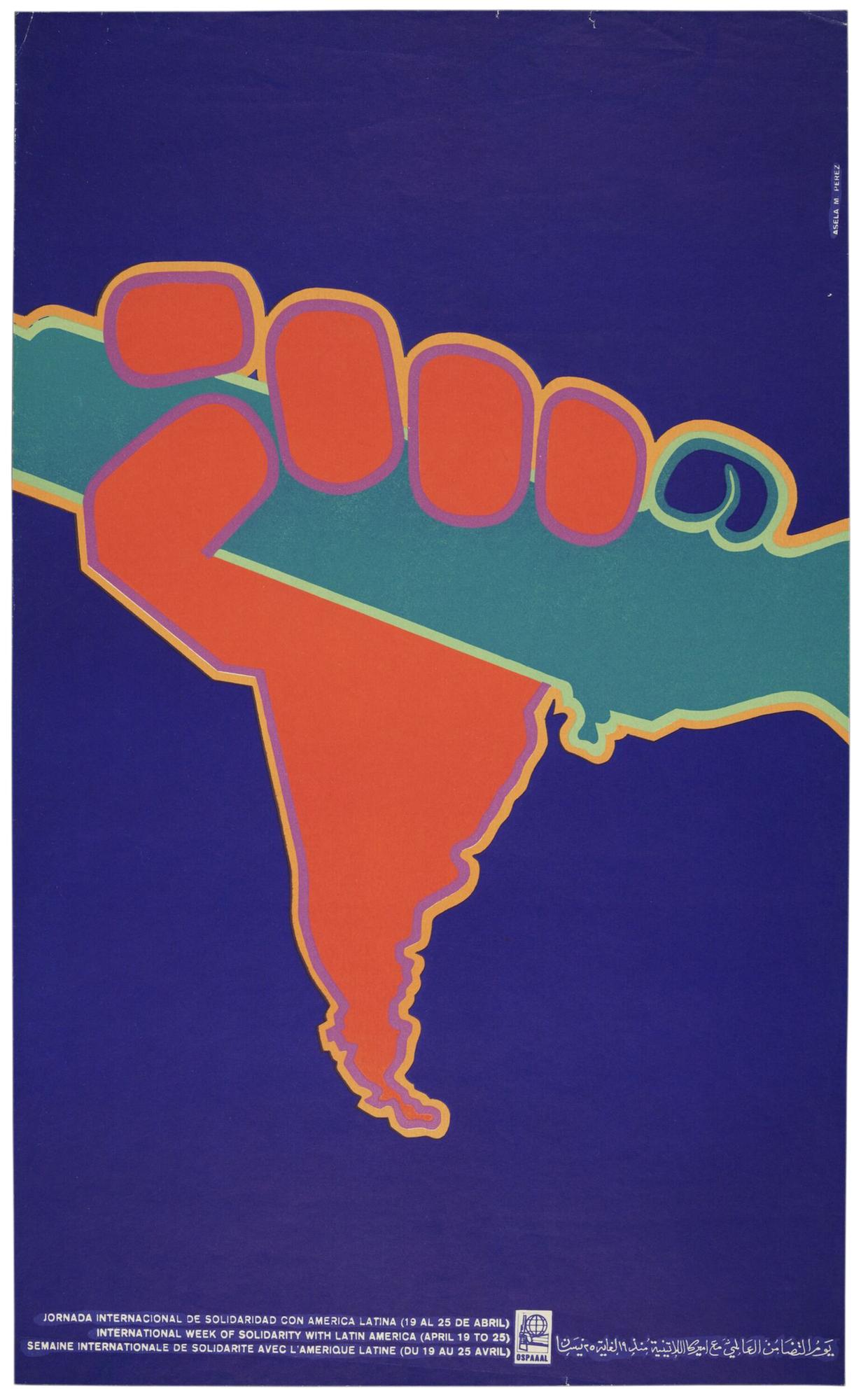
INTERNATIONAL WEEK OF SOLIDARITY WITH LATIN AMERICA (APRIL 19 TO 25), 1970
Between the 1960s and 1990s, more than fifty designers worked at OSPAAAL (the Organisation of Solidarity with the People of Africa, Asia and Latin America). Based in Cuba, they made magazines and posters that were sent around the world. Their aim was to promote radical political ideas. Many of their posters celebrate socialist revolutions and liberation movements from the Global South.
Content warning: weaponry
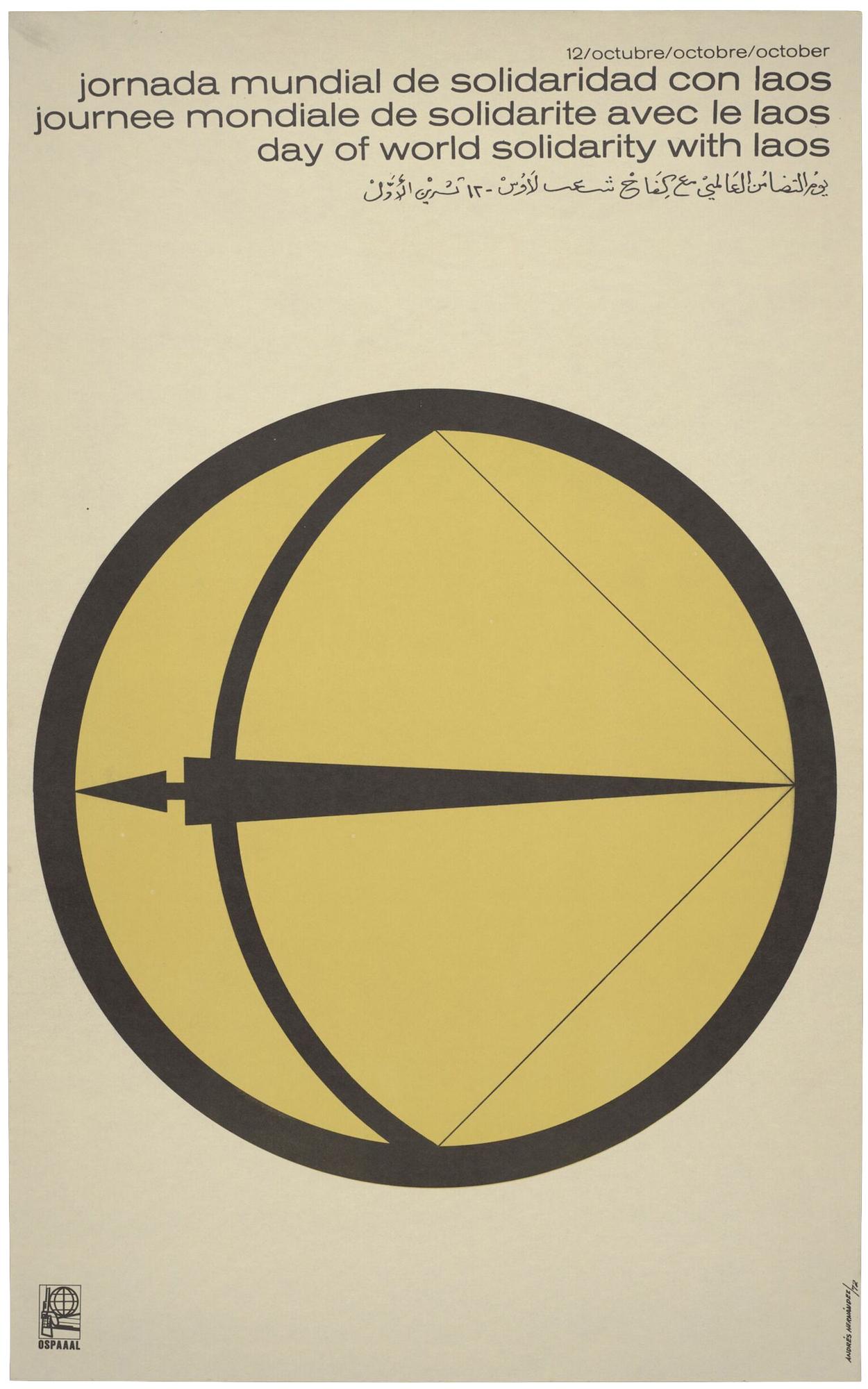
12 october - day of world solidarity with laos, 1972
Between the 1960s and 1990s, more than fifty designers worked at OSPAAAL. Based in Cuba, they made magazines and posters that were sent around the world. Their aim was to promote radical political ideas. Many of their posters celebrate socialist revolutions and liberation movements from the Global South. This design encouraged solidarity with Laotian people on the same date as the founding of the nationalist movement Lao Issara (‘Free Laos’) on 12 October 1945.
Content warning: weaponry
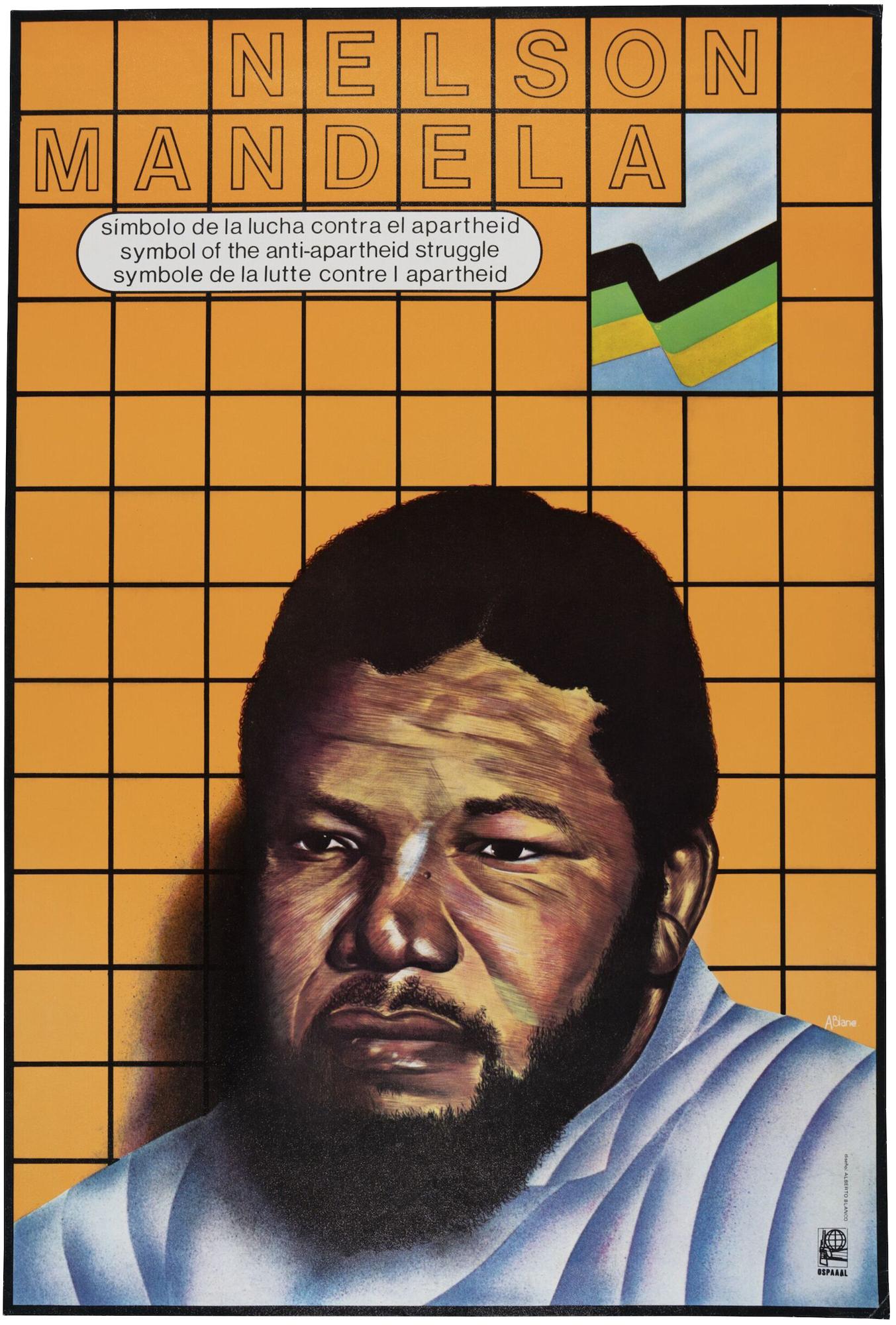
NELSON MANDELA - symbol of the anti-apartheid struggle, 1989
Between the 1960s and 1990s, more than fifty designers worked at OSPAAAL. Based in Cuba, they made magazines and posters that were sent around the world. Their aim was to promote radical political ideas. Many of their posters celebrate socialist revolutions and liberation movements from the Global South. This poster was issued to show support for anti-apartheid activist Nelson Mandela while he was imprisoned in South Africa. Through his prison window is the flag of the African National Congress; its three colours represent the people, land and resources of South Africa.
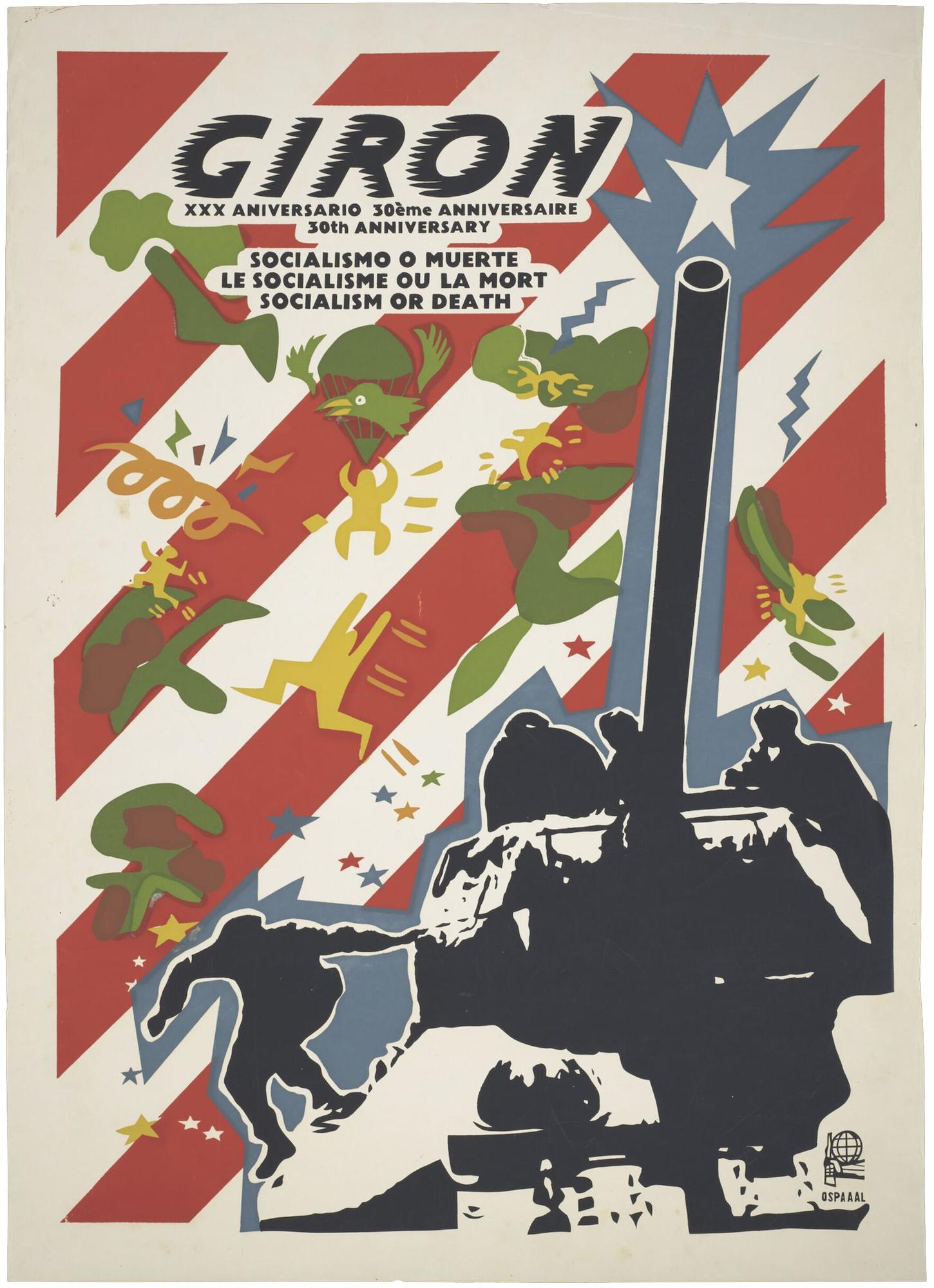
GIRON - 30th ANNIVERSARY - SOCIALISM OR DEATH, 1969
Between the 1960s and 1990s, more than fifty designers worked at OSPAAAL. Based in Cuba, they made magazines and posters that were sent around the world. Their aim was to promote radical political ideas. Many of their posters celebrate socialist revolutions and liberation movements from the Global South. In 1961, a military group sponsored by the U.S. Central Intelligence Agency invaded Cuba in an attempt to overthrow Fidel Castro. Eladio Rivadulla Pérez used a press photograph of Castro jumping from a tank for his commemorative poster design.
Content warning: weaponry
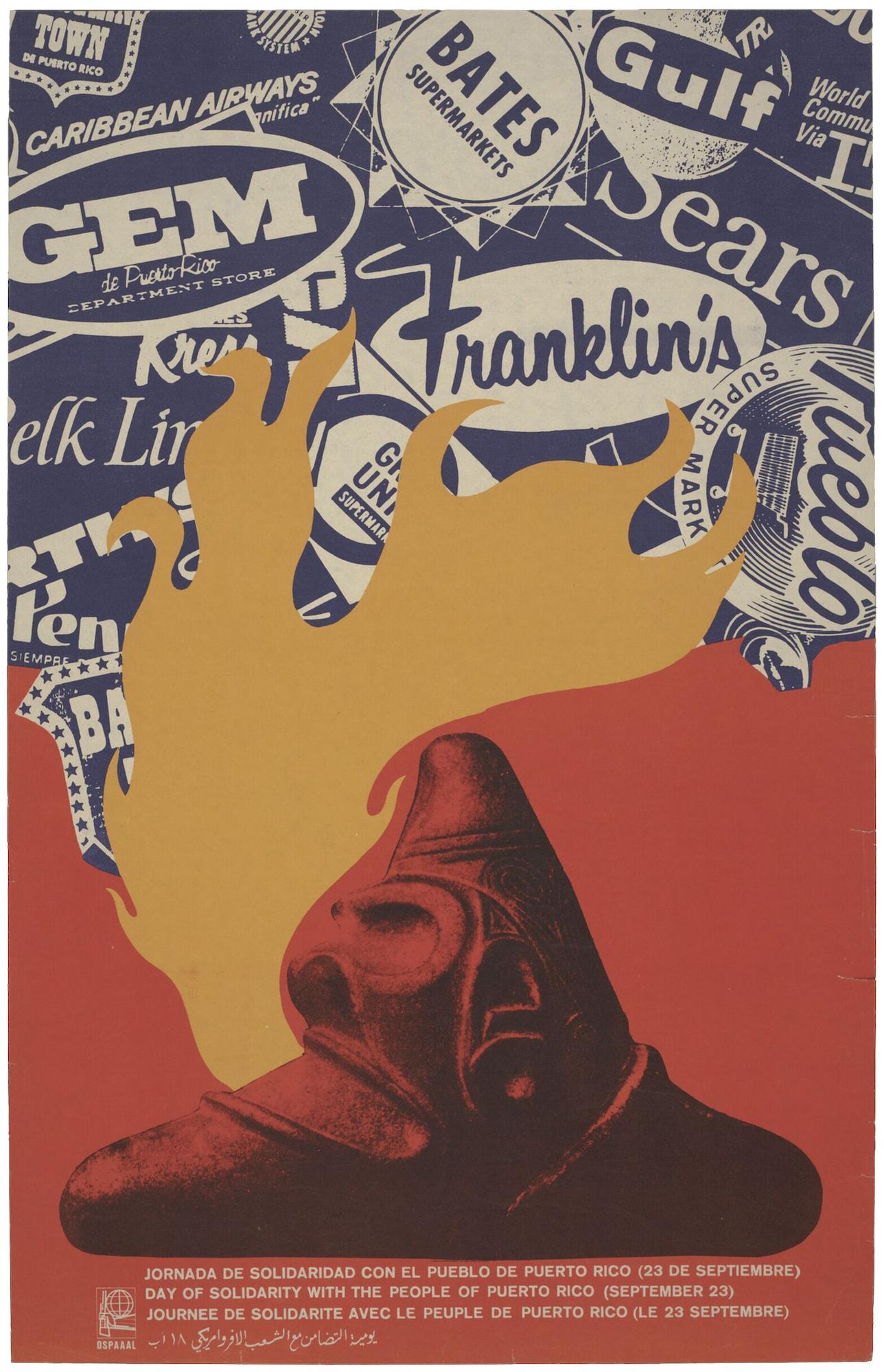
DAY OF SOLIDARITY WITH THE PEOPLE OF PUERTO RICO (SEPTEMBER 23), 1969
Between the 1960s and 1990s, more than fifty designers worked at OSPAAAL (the Organisation of Solidarity with the People of Africa, Asia and Latin America). Based in Cuba, they made magazines and posters that were sent around the world. Their aim was to promote radical political ideas. Many of their posters celebrate socialist revolutions and liberation movements from the Global South. In this design, a three-point cemí figure breathes fire in defiance of the U.S. corporations operating in Puerto Rico. For the Indigenous Taíno people of the Caribbean, a cemí is a representation of a deity, and at the same time a living being with its own vital force. Many OSPAAAL designers used Indigenous imagery to argue for the right to self-determination and support liberation movements opposing oppressive powers. However, the designers did not always know the full meaning or origin of the iconography they used.
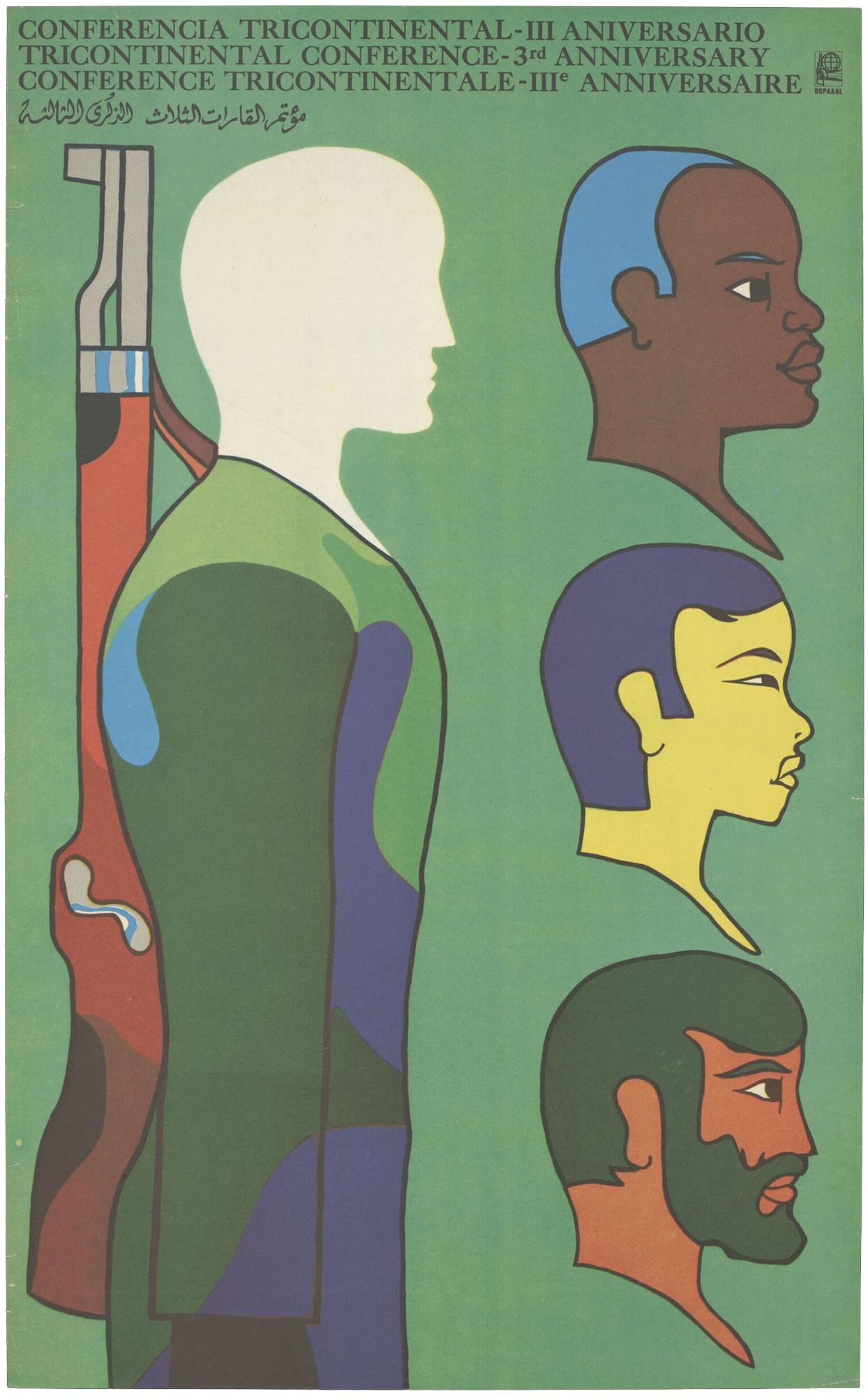
TRICONTINENTAL CONFERENCE - 3rd ANNIVERSARY, 1969
Between the 1960s and 1990s, more than fifty designers worked at OSPAAAL (the Organisation of Solidarity with the People of Africa, Asia and Latin America). Based in Cuba, they made magazines and posters that were sent around the world. Their aim was to promote radical political ideas. Many of their posters celebrate socialist revolutions and liberation movements from the Global South. OSPAAAL was established after the Tricontinental conference held in Havana in 1966. Representatives from 82 governments and national liberation movements discussed their positions on politics, economics, development and culture. Fidel Castro summarised their unifying aim as “the struggle against colonialism, racism and imperialism.” This commemorative poster uses three characters to represent Africa, Asia and Latin America as united by a common purpose.
Content warning: weaponry
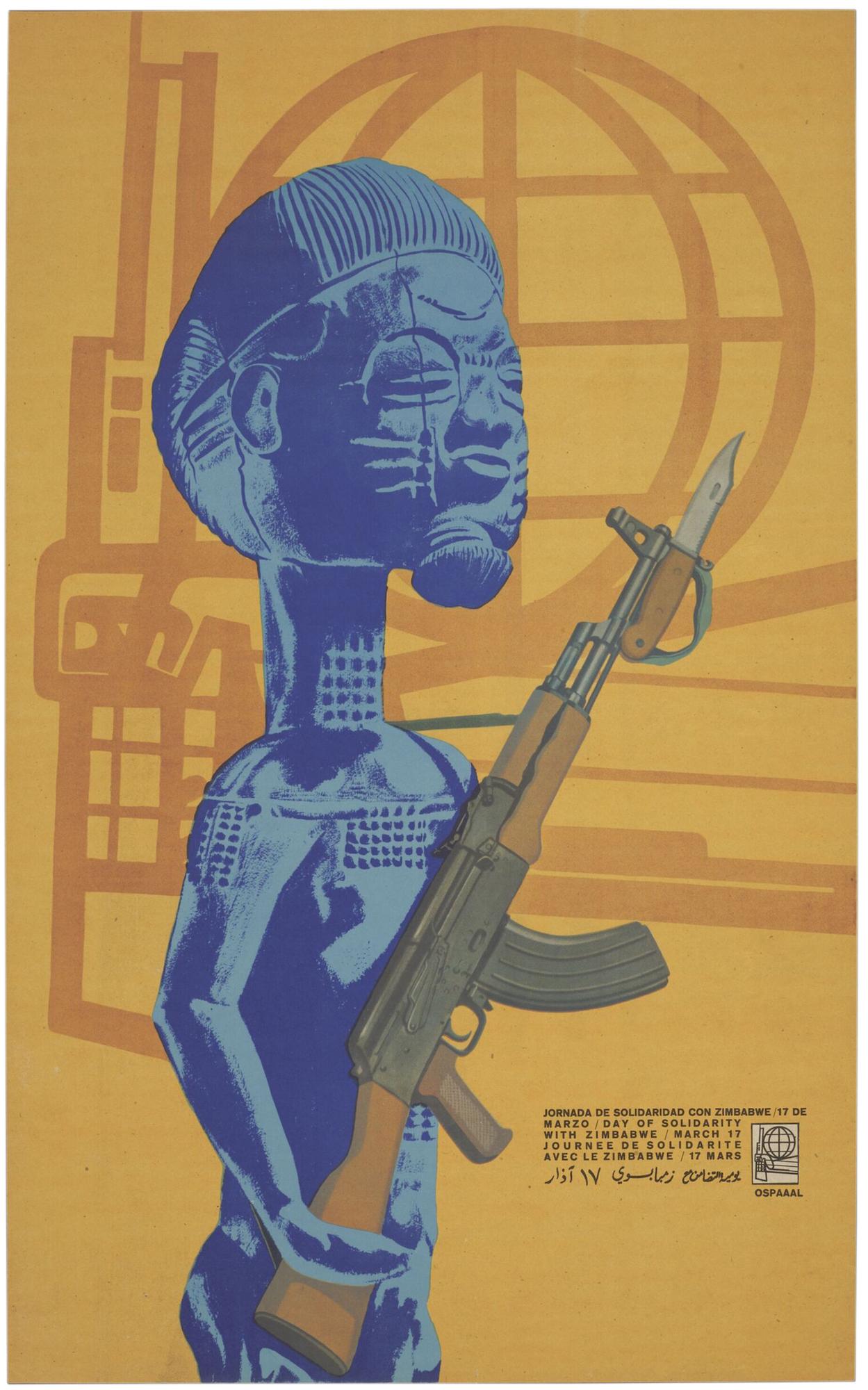
DAY OF SOLIDARITY WITH ZIMBABWE - MARCH 17, 1969
Between the 1960s and 1990s, more than fifty designers worked at OSPAAAL. Based in Cuba, they made magazines and posters that were sent around the world. Their aim was to promote radical political ideas. Many of their posters celebrate socialist revolutions and liberation movements from the Global South. Many OSPAAAL designers combined images of Indigenous art and craft with weaponry. Their aim was to argue for the right to self-determination and support liberation movements opposing colonial and imperial powers. However, the designers did not always know the meaning or origin of the iconography they used.
Content warning: weaponry